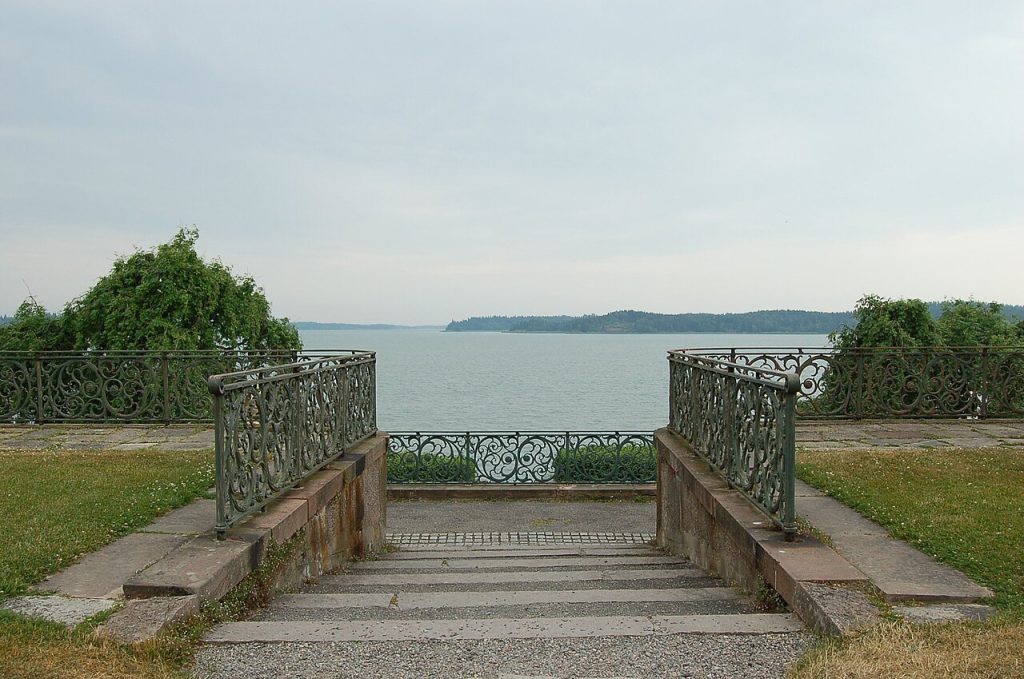
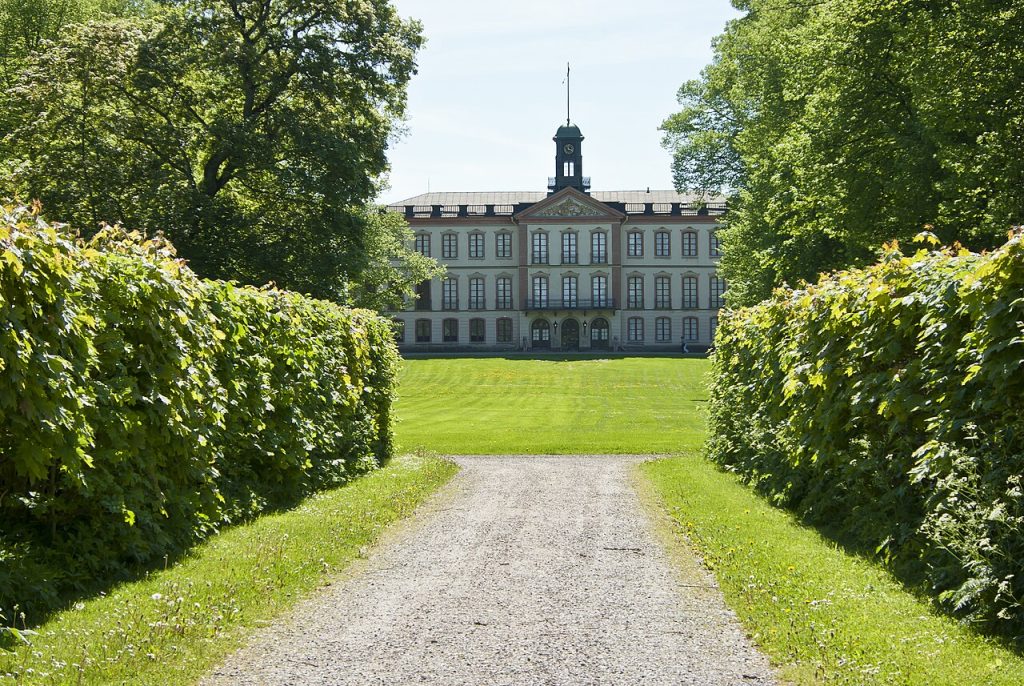
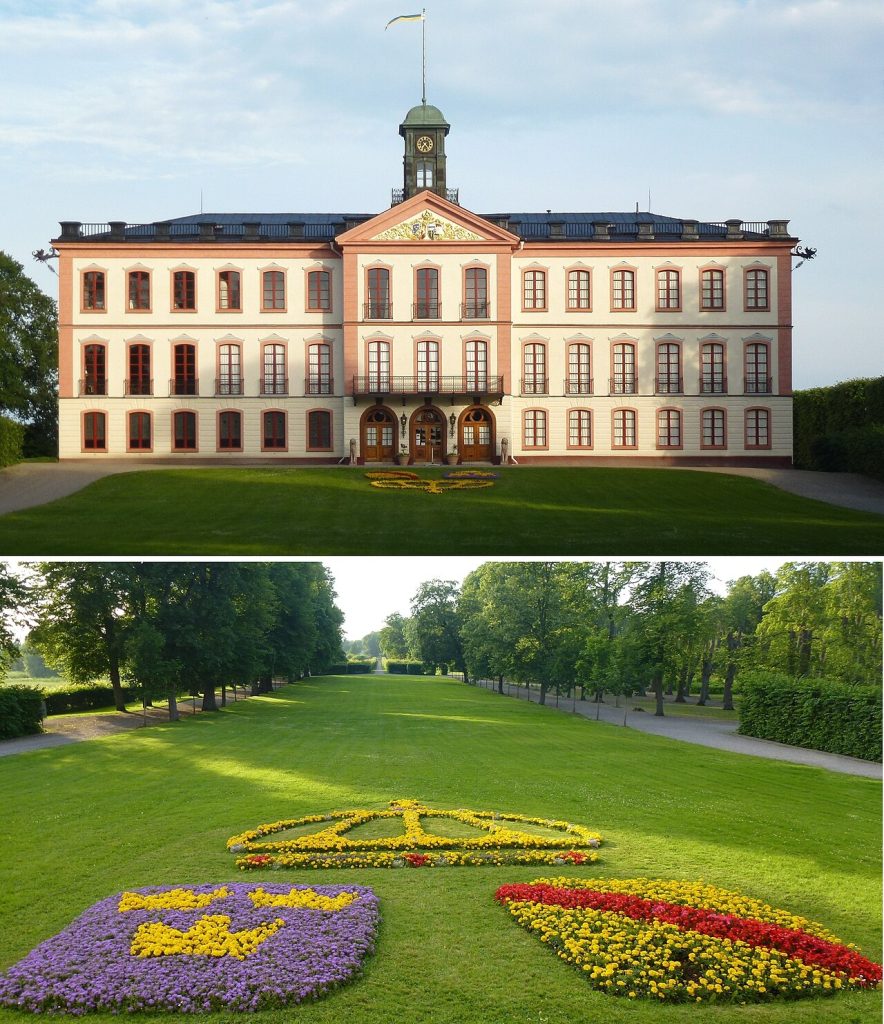
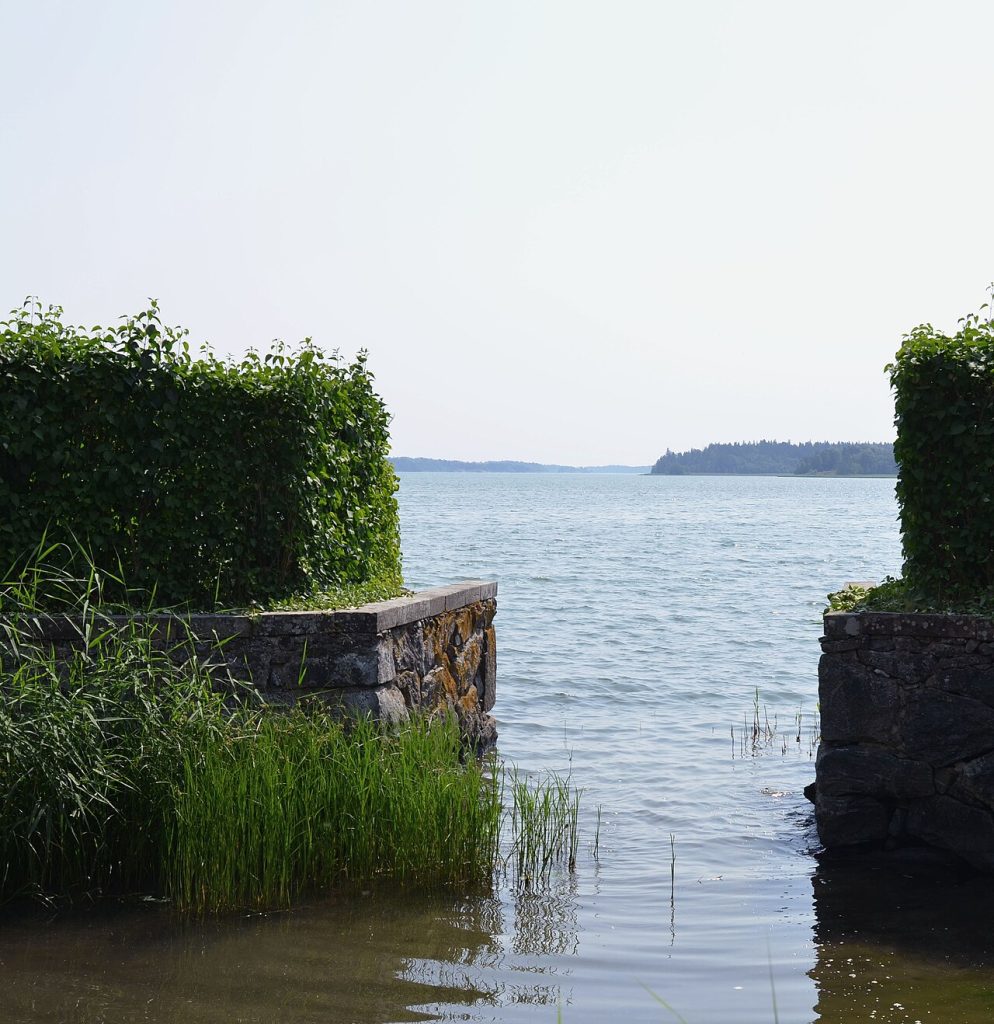
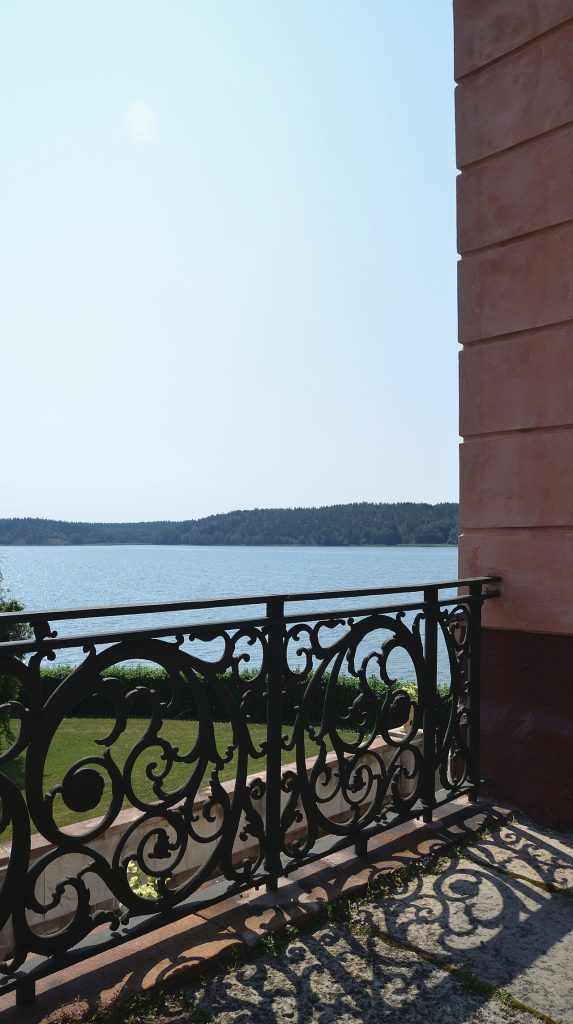
Now, stop where the drive opens and look past the palace to the water. Tullgarn sits above a narrow inlet of the Baltic, sixty kilometres south of Stockholm, and the sea is the reason it exists. This was a summer house reached by boat, in a country where summer is short and taken seriously.
Swedish royal palaces divide neatly by function. Stockholm is for ruling, Drottningholm for living, Gripsholm for the past and Tullgarn for August. It is the holiday house of a monarchy, and it has the slightly informal atmosphere that holiday houses keep even when they are enormous.
It is also the clearest surviving picture of how a royal family actually spent its private time around 1900, which is a rarer thing than another suite of state rooms.
- A Noble Estate on the Baltic
- The Rebuilding of the 1720s
- Duke Fredrik Adolf and the Gustavian Rooms
- Gustavian Taste at Its Purest
- Gustaf V and the Hunting Years
- Queen Victoria and the Search for Sun
- Summers, Children and Routine
- The Kitchen and the Service Rooms
- The Park, the Bay and the Oaks
- Hunting as a Royal Industry
- The Quiet Decades
- A Palace as Time Capsule
- Planning the Visit
A Noble Estate on the Baltic
There has been a manor at Tullgarn since the sixteenth century, held by noble families who farmed the surrounding land and used the sheltered inlet as a harbour. The medieval and Vasa-era economy of this coast ran on water transport, timber and iron.
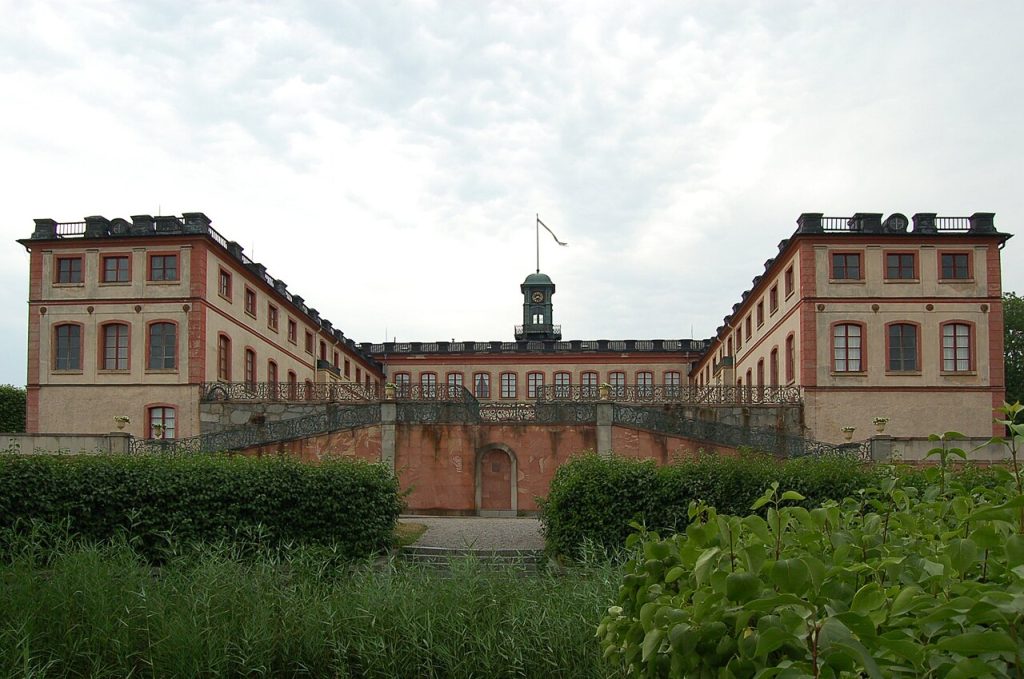
The present palace replaced an earlier house in the 1720s, built for Count Carl Gustaf Tessin’s circle of patrons and designed in the restrained classical manner that Sweden had learned from France and the Netherlands.
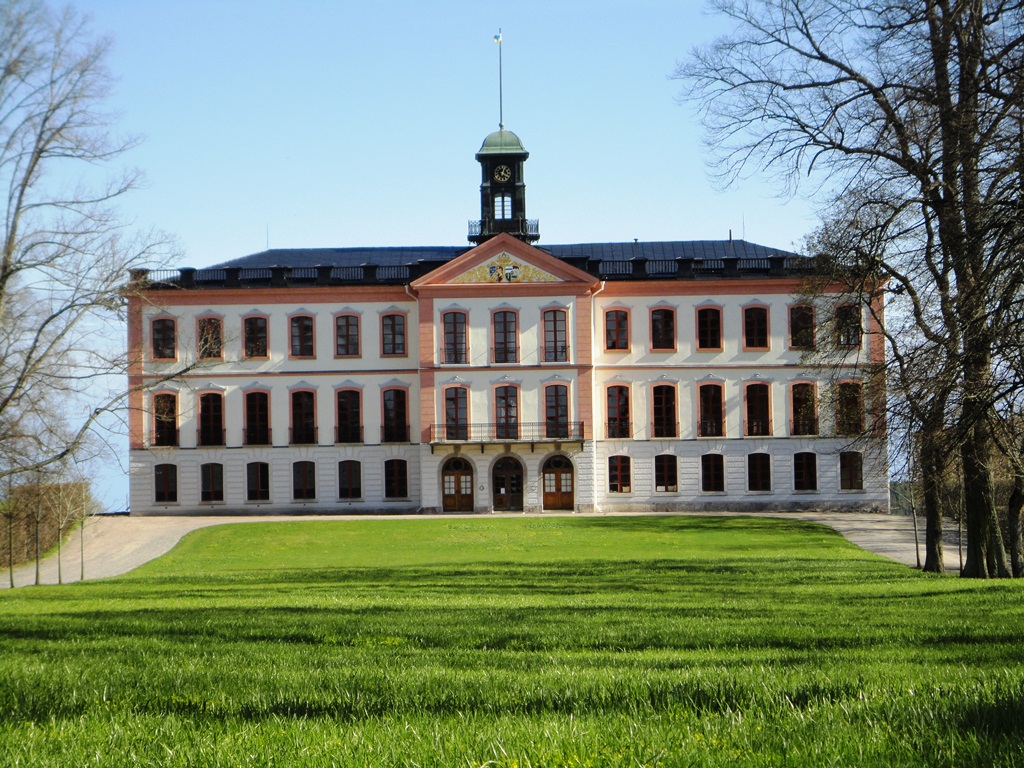
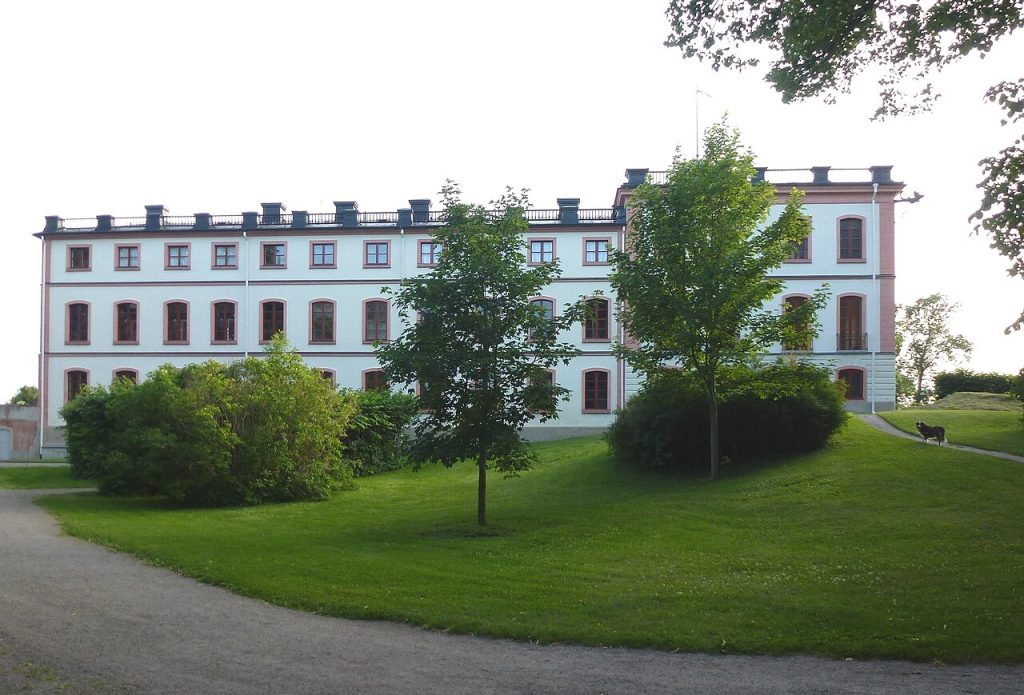
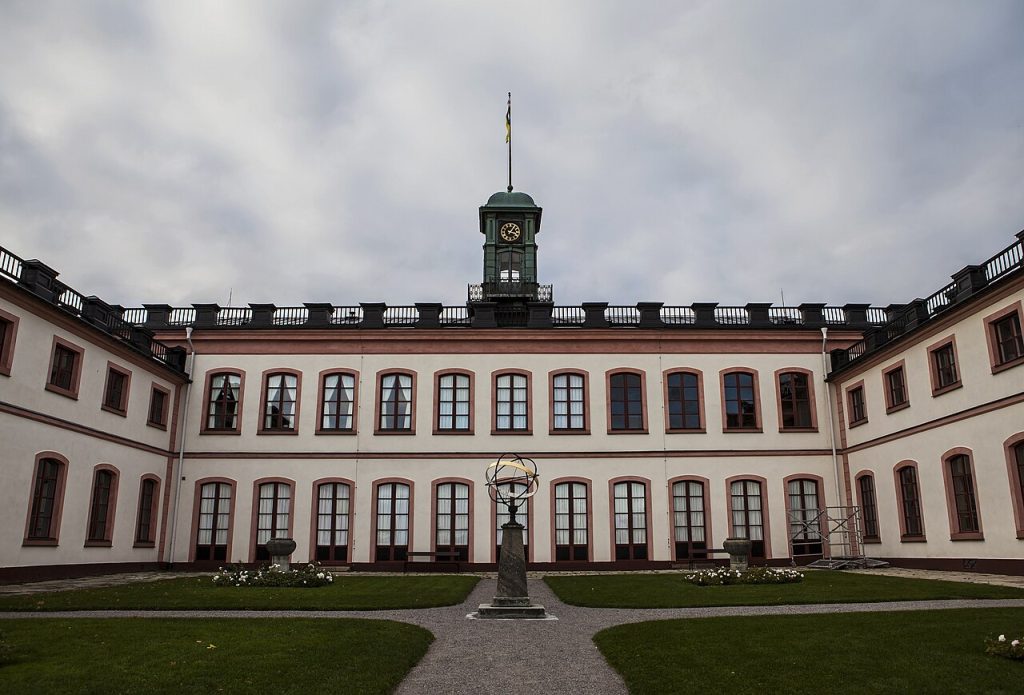
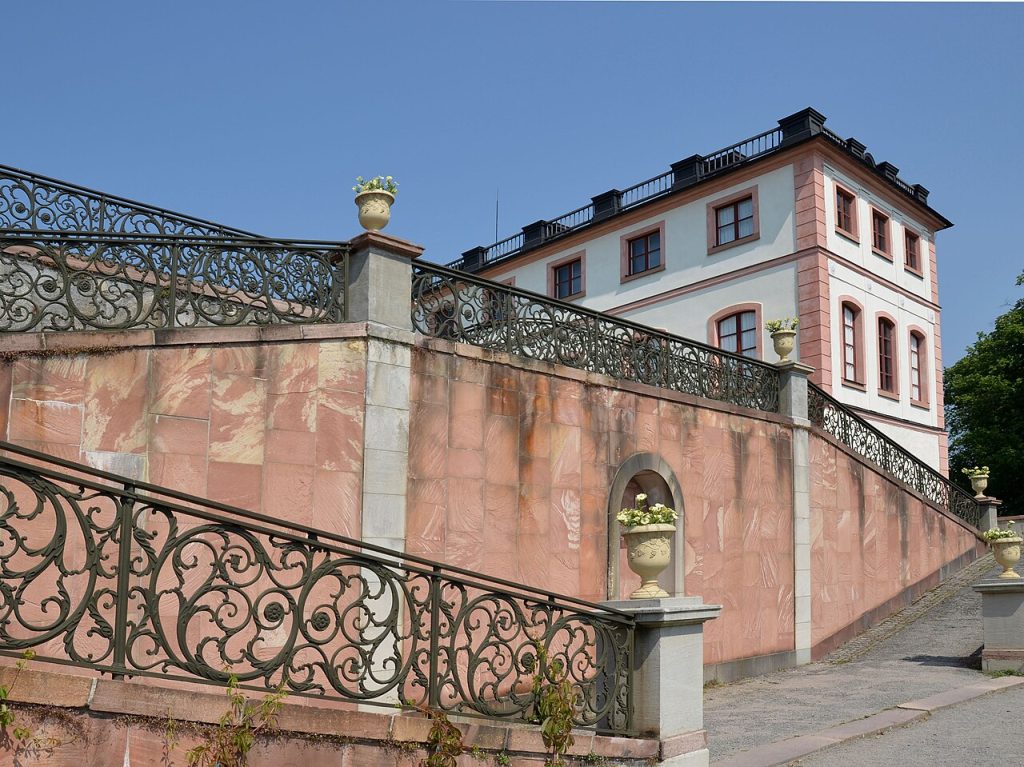
What survives from that period is the shape: a three-storey main block with flanking wings, set high enough above the water to command the view without catching the worst of the wind.
The Rebuilding of the 1720s
Sweden in the 1720s was a country recovering from catastrophe. The empire had collapsed, Karl XII was dead, the Great Northern War had ended in defeat, and the nobility were rebuilding on a reduced scale.
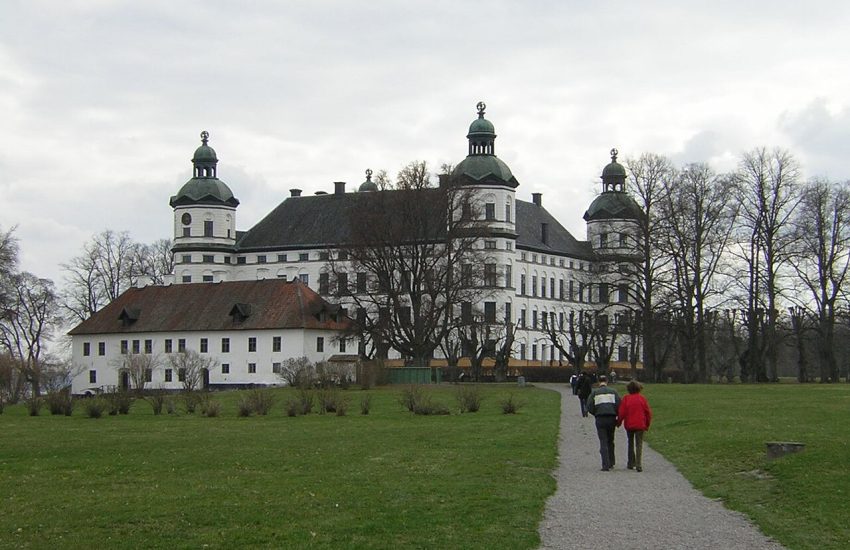
Tullgarn belongs to that moment. It is elegant without being ostentatious, and its proportions are those of a well-mannered country house rather than a statement of imperial power. Compare it with Skokloster, built seventy years earlier, and you can see an entire national reversal in architecture.
Modesty, here, was the new fashion because it was also the new necessity.
Duke Fredrik Adolf and the Gustavian Rooms
In 1772 the estate was bought for Duke Fredrik Adolf, youngest brother of Gustav III, and the interiors were remodelled in the style that Sweden still regards as its own: Gustavian, a cool northern neoclassicism of pale paint, straight lines and restrained ornament.
The duke spent heavily and died in 1803 leaving debts, which is the usual arc for a royal younger brother. What he left behind is one of the best-preserved Gustavian ensembles in the country.
Look at the colours: grey-blues, soft greens, off-whites, with gilding used sparingly. This palette was partly taste and partly light. In a country with long dark winters, pale rooms are a practical decision.
Gustavian Taste at Its Purest
The Gustavian style is the Swedish contribution to European interior design, and it is easiest to understand here. Take French neoclassicism, remove most of the gilding, replace marble with painted wood, lighten every colour, and keep the proportions.
The reasons are economic as much as aesthetic. Sweden had limited marble and limited money; it had excellent timber and skilled joiners. A style grew out of those facts and then became a national preference that has lasted two and a half centuries.
Anyone who has bought Scandinavian furniture is looking at a distant descendant of these rooms.
Gustaf V and the Hunting Years
From the 1880s Tullgarn became the summer home of the future Gustaf V and his wife Victoria, and the palace entered the phase that defines it today. Gustaf V reigned from 1907 to 1950, the longest reign in modern Swedish history, and he came here every summer for decades.
He was a passionate hunter and an enthusiastic tennis player, famous internationally as Mr G on the courts of the Riviera. At Tullgarn the hunting dominated: elk, deer, birds, with organised shoots on the estate.
The rooms carry his presence more than anyone else’s. Antlers, guns, photographs, trophies, and the comfortable heavy furniture of the turn of the century.
Queen Victoria and the Search for Sun
Queen Victoria of Baden, his wife, is the more complicated figure. She disliked the Swedish climate, suffered from poor health, and spent long periods abroad, particularly in Italy, where she eventually kept a villa on Capri.
She was also a serious amateur photographer, and the family albums she compiled are among the best visual records of royal domestic life in this period anywhere in Europe. Her rooms at Tullgarn reflect her taste: German, more ornate, with darker colours.
The marriage was not happy, and the palace quietly records that too. Separate apartments, separate interests, separate countries for much of the year.
Summers, Children and Routine
The couple’s three sons spent childhood summers here, and the routine was surprisingly ordinary: swimming in the bay, boats, riding, tennis, meals outdoors when the weather allowed, formal dinners when guests came.
Photographs show the family in white summer clothes on the lawns, looking very much like any wealthy family of the period. The informality was partly real and partly a careful construction of image, as it was for every monarchy adapting to the age of the newspaper.
Look for the small objects in the private rooms: board games, writing desks, children’s furniture. They do more to explain the period than the state rooms.
The Kitchen and the Service Rooms
Tullgarn preserves its late nineteenth-century kitchen, and it is one of the highlights of the tour. Copper pans, iron ranges, a cold room, serving corridors and the apparatus required to feed a household of dozens without electricity.
Service spaces are usually the first thing a palace loses, because they have no decorative value and every reason to be modernised. Their survival here is a result of the palace being frozen rather than upgraded after the 1950s.
Stand in it and count the staff that would have been needed. The elegance upstairs was a labour-intensive product.
The Park, the Bay and the Oaks
The park mixes formal terraces near the building with an English landscape park beyond, running down to the shore and out into oak woodland. Some of these oaks are several hundred years old, and the area is protected for its biodiversity.
Old oak forest is rare in Sweden, and estates like this one are the reason any survives. Noble landowners protected timber for their own use and prevented the clearance that happened on farmland.
Walk the shore path. The combination of water, reeds, oaks and open meadow is the classic landscape of the Sodermanland coast.
Hunting as a Royal Industry
Royal hunting was never only sport. It was estate management, diplomacy, patronage and theatre at once. Guests were invited, alliances maintained, game distributed, and the entire local economy of beaters, keepers and farmers was organised around the season.
At Tullgarn the apparatus survives: hunting lodges, kennels, equipment, and the meticulous record-keeping that shoots required. Gustaf V hunted into old age, and the estate’s rhythms followed his calendar.
Modern visitors often find the trophies uncomfortable. They are also the most honest record of what the building was used for.
The Quiet Decades
Gustaf V died in 1950, and Tullgarn’s role as a living royal home effectively ended. The palace passed into the care of the state property administration, was opened to visitors, and settled into the gentle decline that affects any large building used for three months a year.
Roofs, windows, heating and damp are the eternal problems. Several restoration campaigns have worked through the building since, and the interiors have been conserved rather than redecorated.
The effect is that a visitor today sees the palace essentially as it was in the 1930s and 1940s, which is precisely what makes it valuable.
A Palace as Time Capsule
Historians of everyday life rate Tullgarn highly for a specific reason: it documents the transition from nineteenth-century aristocratic living to twentieth-century comfort. Electric light installed beside oil lamps, early bathrooms, telephones, modern plumbing fitted into Gustavian rooms.
Most palaces have had these awkward intermediate layers stripped out in restoration. Here they remain, and they tell you how people actually lived through a century of technological change.
Ask the guides about the bathrooms. The answers are usually more interesting than the gilded ceilings.
Planning the Visit
Tullgarn is a summer palace and it remains, stubbornly, a summer destination. Opening is concentrated in the warm months, the park is the point as much as the interiors, and the whole experience depends on weather.
Go on a clear July or August day, take the guided tour, then walk the shore and eat at the inn. That is how the palace was used, and it is still the right way to see it.
Look back from the water’s edge before you leave. A yellow house above a blue inlet, with oaks on either side, is a very Swedish idea of happiness.
Visiting Tullgarn Palace Today
Tullgarn stands near Vagnharad in Sodermanland, about sixty kilometres south of Stockholm and close to the E4 motorway. Driving takes around an hour; by public transport, take a train to Vagnharad or Nykoping and continue by taxi or local bus, which requires planning.
The palace opens for guided tours in the summer season, typically from late spring to late August, with limited weekends outside that window. The park, inn and shoreline are accessible year-round.
Allow half a day, bring swimming things in high summer, and check the tour schedule in advance since interior access is guided only. Find it here: https://www.google.com/maps?q=58.9517,17.5456
Palaces Nearby
You May Like
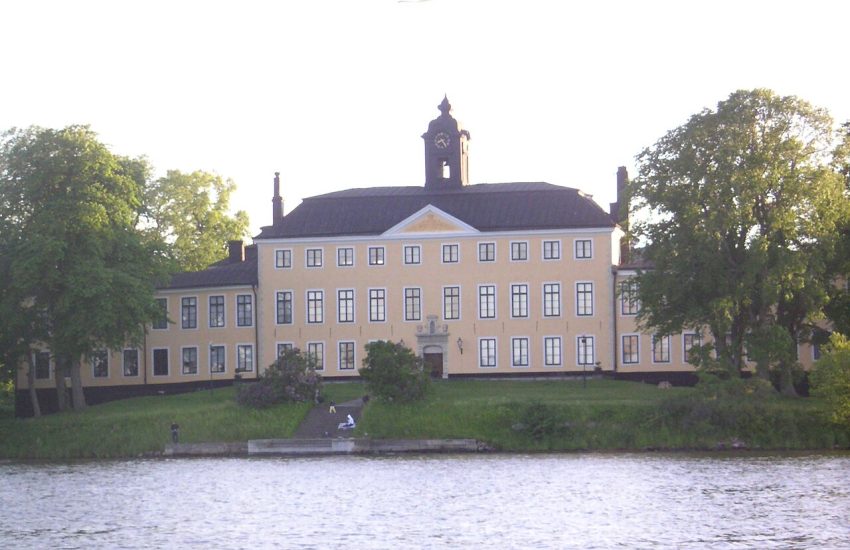
Ulriksdal Palace and the Swedish Kings Who Retreated There