Now, stop in the banqueting hall on the top floor and look down at the floor, because this is the strangest room in Scandinavia. Tools lie where the craftsmen left them. Blocks of unfinished stucco wait on the scaffolding. Paint pots sit beside the wall they were meant to cover. Nobody has worked here since 1676.
Skokloster is a baroque palace that stopped. Its owner died, the money went with him, and the building was simply closed up with the decoration half complete. Three and a half centuries later the unfinished hall is still unfinished, and it has become the most valuable thing in the house.
Everything else here is equally improbable. The furniture, the weapons, the books, the paintings: much of it was carried to Sweden in wagons during the Thirty Years War, and much of it has never left the rooms it was placed in.
- Carl Gustaf Wrangel, Soldier and Builder
- A House Built on Plunder
- The Design and Its Four Towers
- The Site on Lake Malaren
- The Hall That Was Never Finished
- An Armoury of Three Thousand Weapons
- The Library and the Looted Books
- Paintings, Curiosities and a Vegetable Man
- The Brahe Inheritance
- Two Centuries of Sleep
- Becoming a State Museum
- Conserving Without Restoring
- What the Place Feels Like
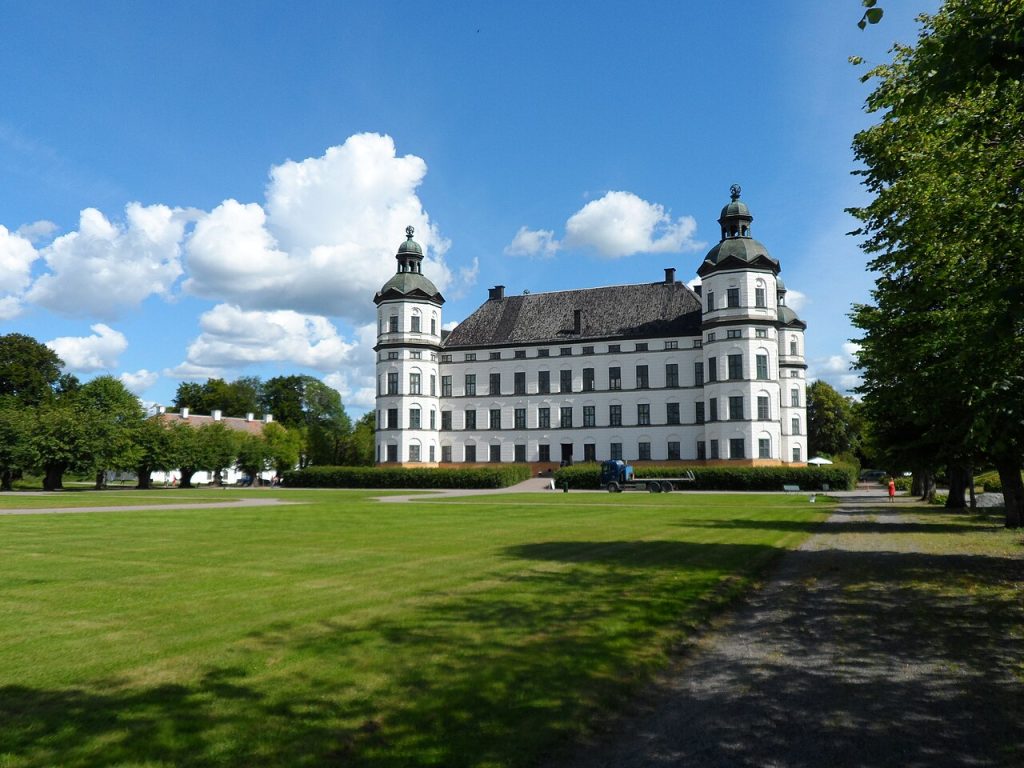
Carl Gustaf Wrangel, Soldier and Builder
Carl Gustaf Wrangel was one of the great commanders of the Swedish empire: field marshal, admiral, governor, and for a time the most powerful soldier in a country that had made itself the dominant power of northern Europe.
He was also an obsessive builder. He owned estates across Sweden and the German territories, and he rebuilt most of them. Skokloster, begun in 1654, was to be the greatest, a house that would state in stone what his career had achieved.
He supervised the work in minute detail by letter, from wherever his campaigns had taken him, which is why the archives of the building are so unusually complete. Few seventeenth-century houses can be followed so precisely through their own paperwork.
A House Built on Plunder
There is no polite way to describe the source of the contents. During the Thirty Years War, Swedish armies systematically removed libraries, art collections, scientific instruments and furniture from the cities they took in Germany, Bohemia and Poland, and shipped them home.
Wrangel took his share. Books from Prague, furniture from Pomerania, silver, arms, paintings, cabinets of curiosities: much of the Skokloster collection arrived in Sweden as the property of somebody else. This was standard practice, recorded openly at the time, and it built several of the great Swedish collections.
The result is an uncomfortable kind of preservation. Objects survive here precisely because they were taken from places that were later burned, bombed or dispersed.
The Design and Its Four Towers
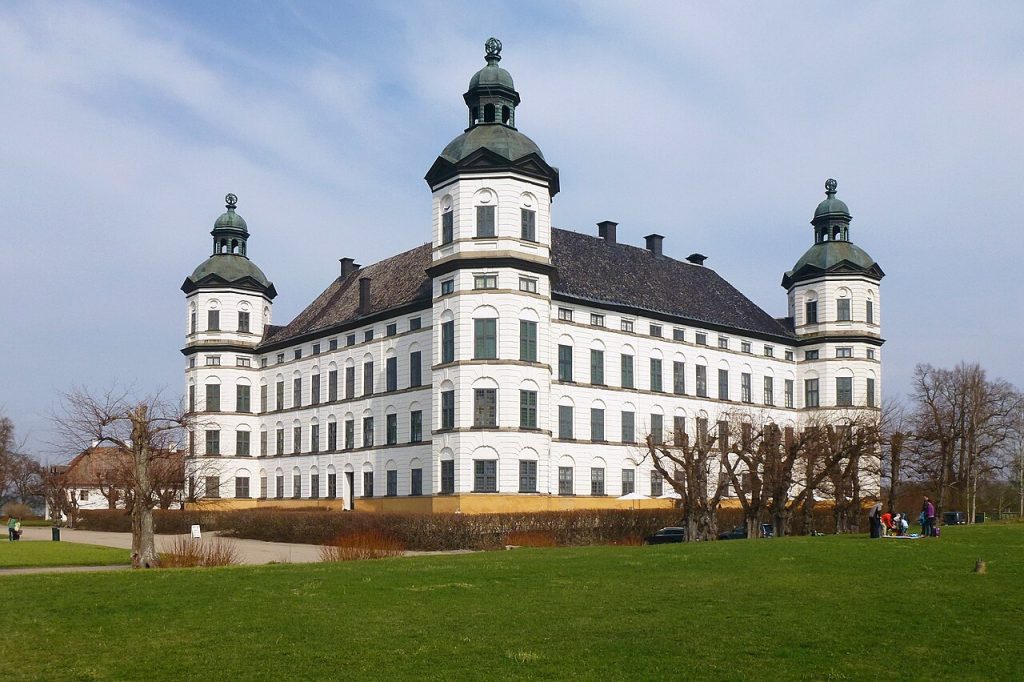
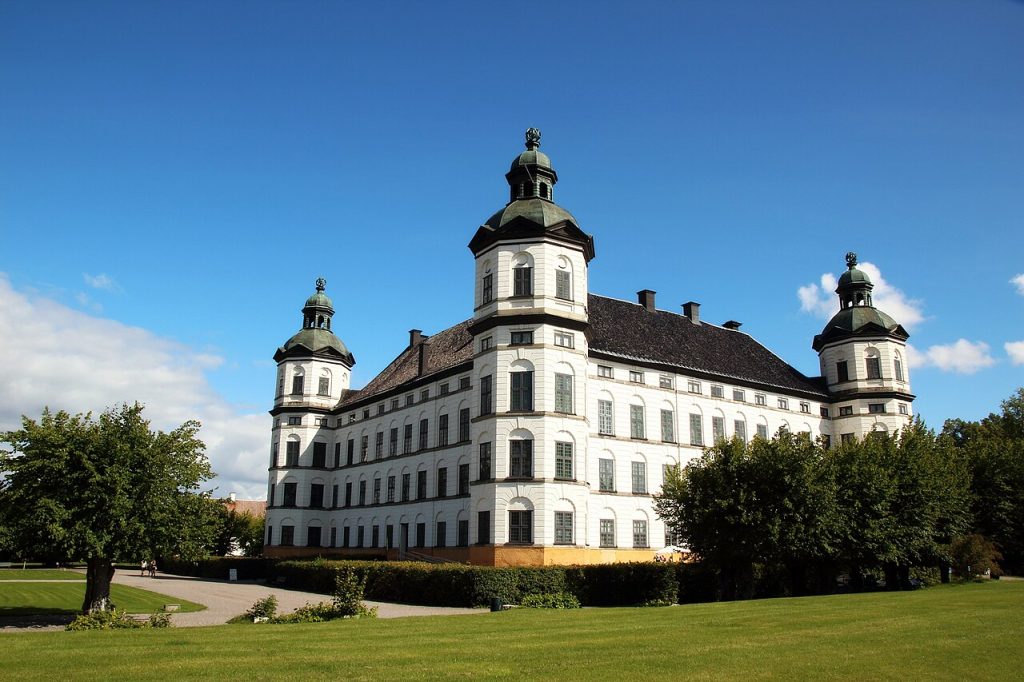
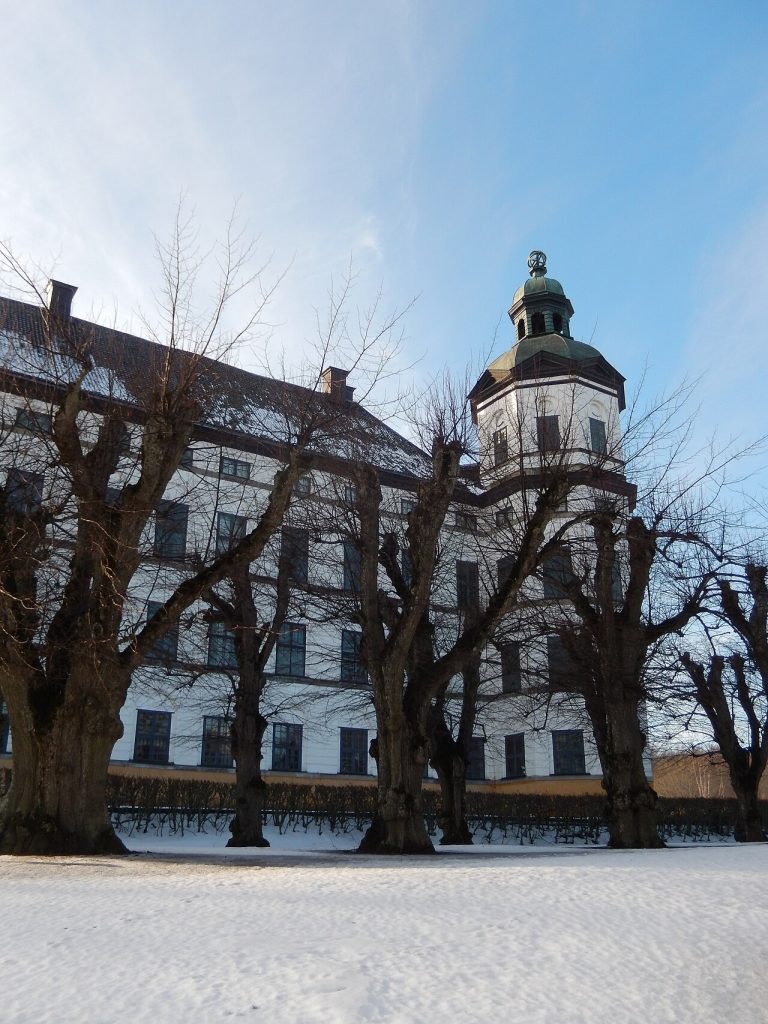
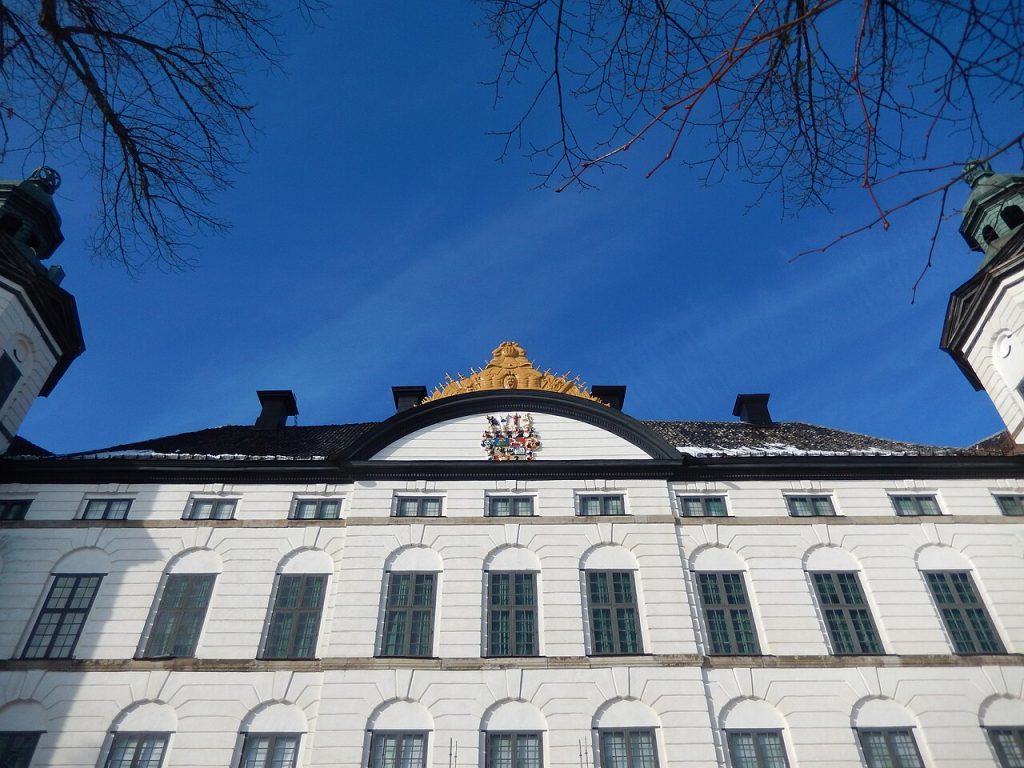
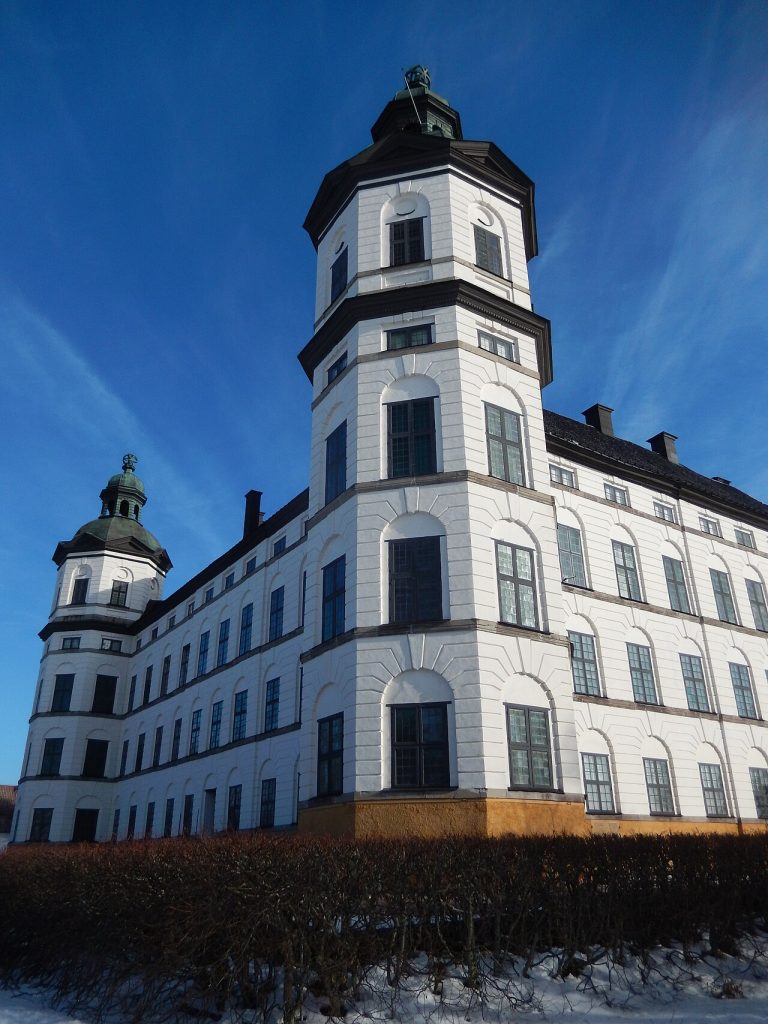
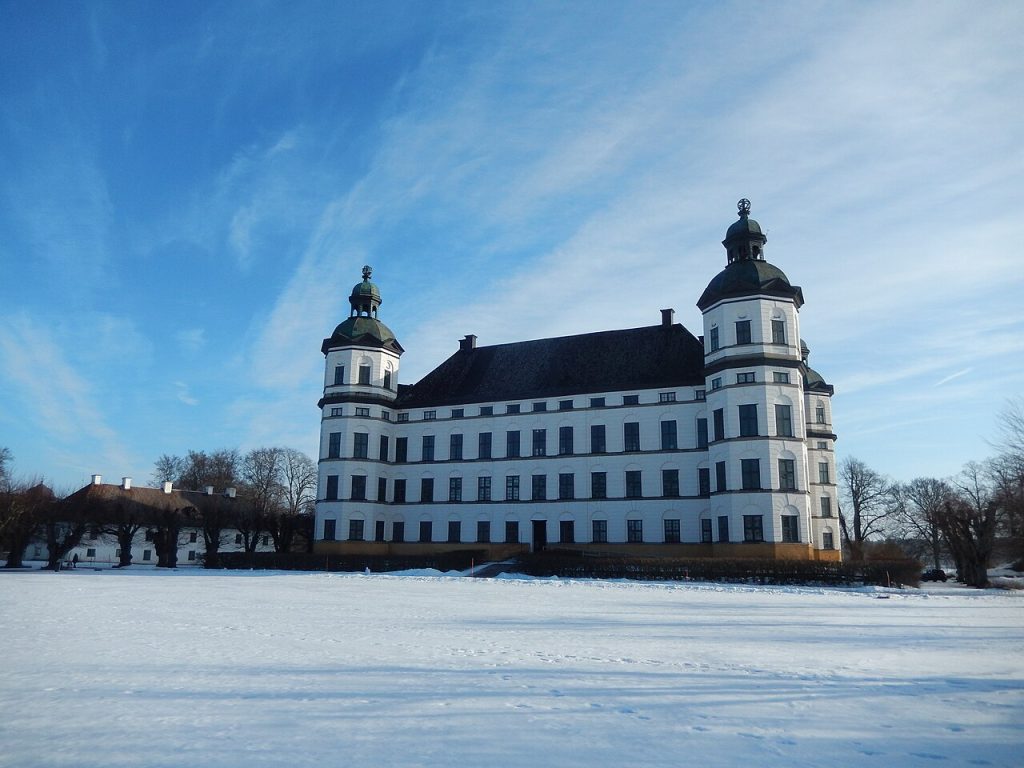
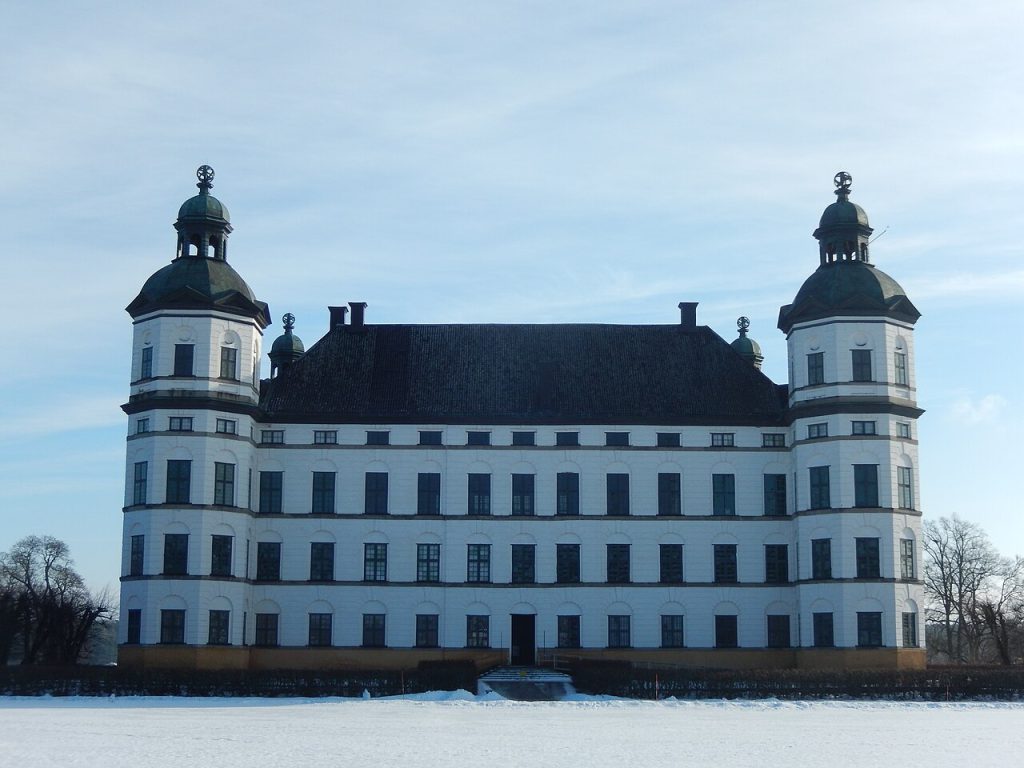
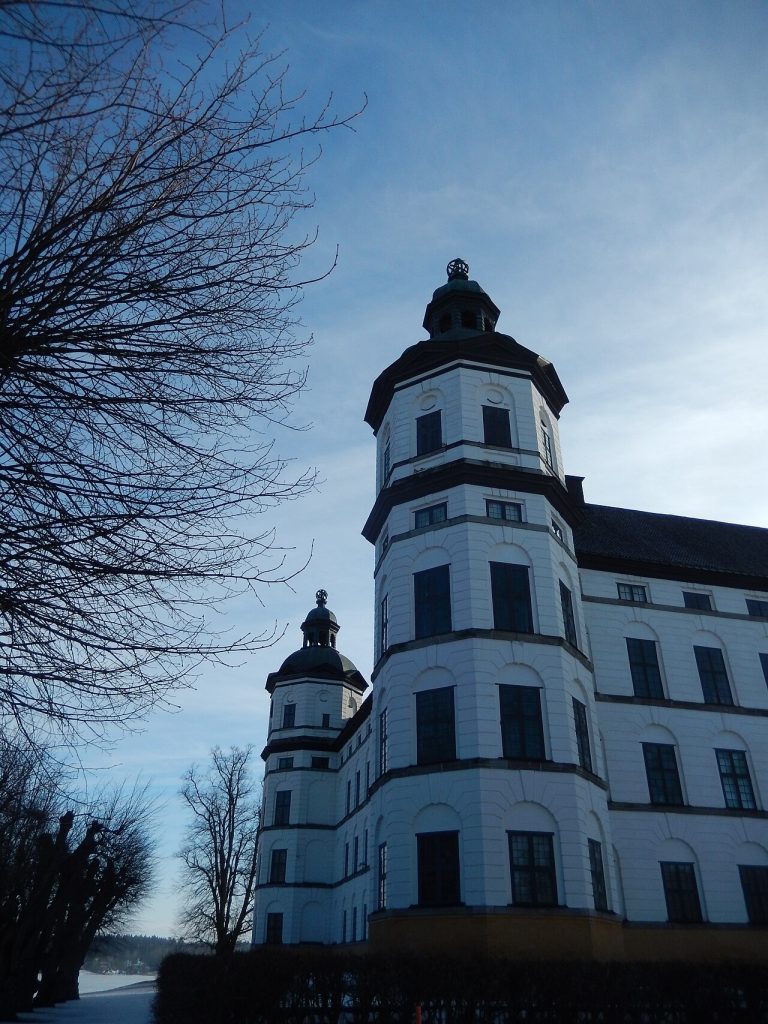
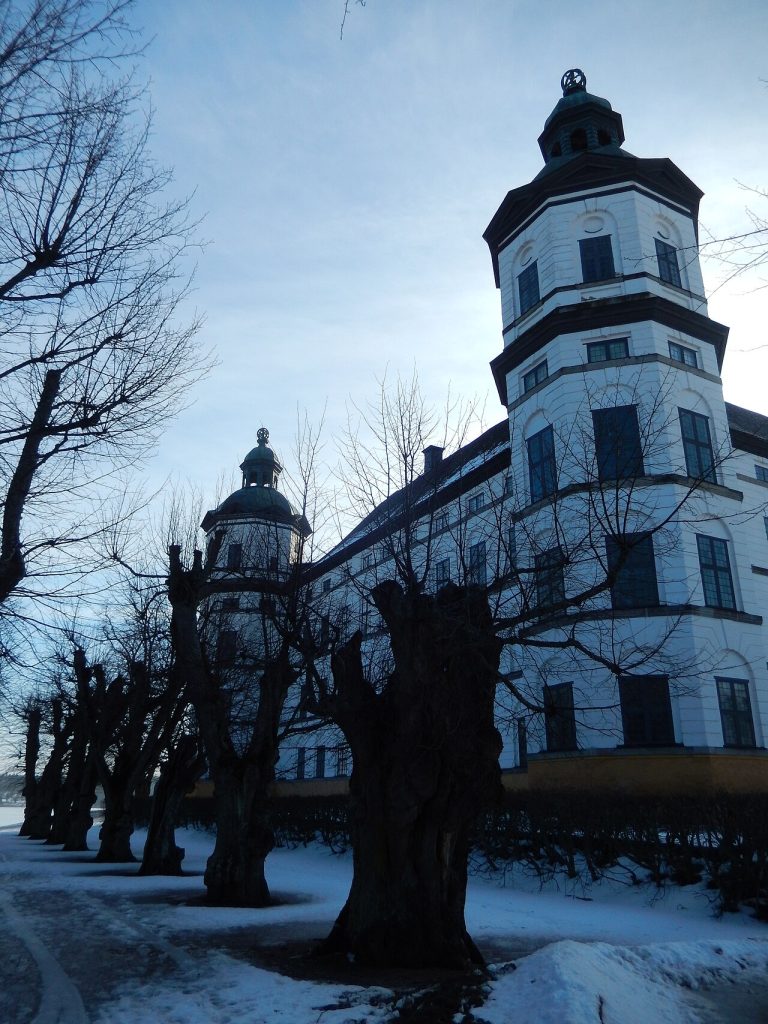
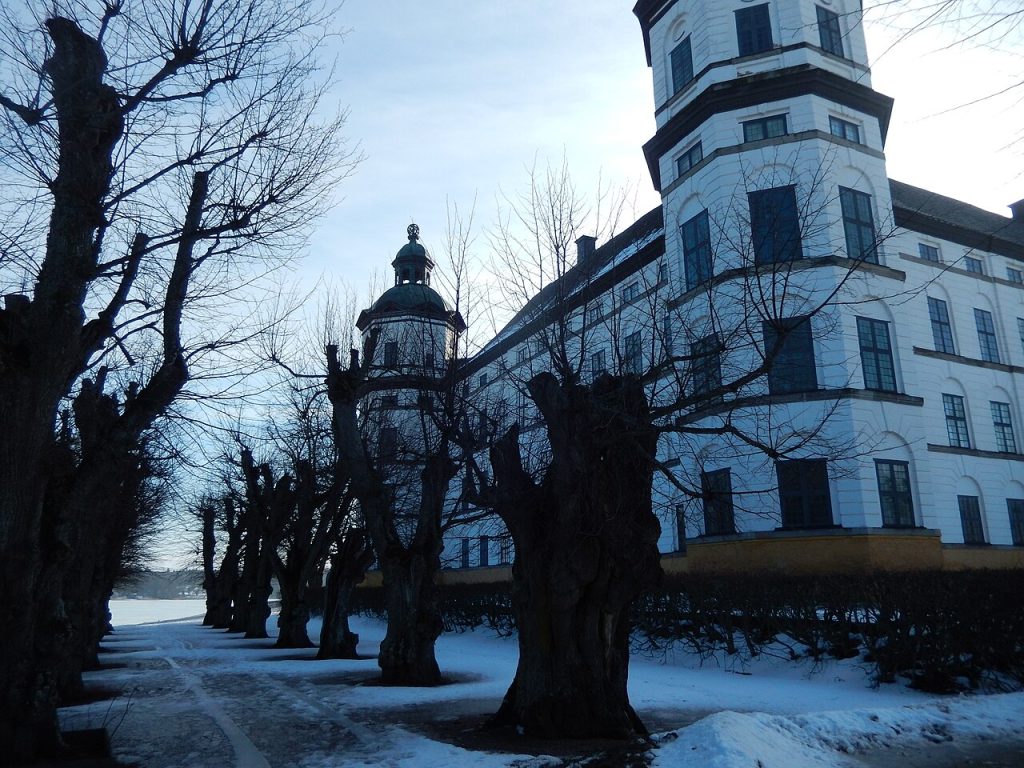
The plan is a square around a courtyard, with octagonal towers at the four corners topped by domes. It is Italian in ancestry, Dutch in detail and Swedish in execution, which is an accurate summary of mid-seventeenth-century Swedish taste.
Several architects were involved, including Caspar Vogel and Nicodemus Tessin the Elder, and the building shows the slight awkwardness of a design developed by correspondence between a demanding patron and professionals who rarely saw him.
Walk the courtyard. The arcades were meant to feel like an Italian palazzo transplanted north, and in July, with the sun on the white walls, they almost do.
The Site on Lake Malaren
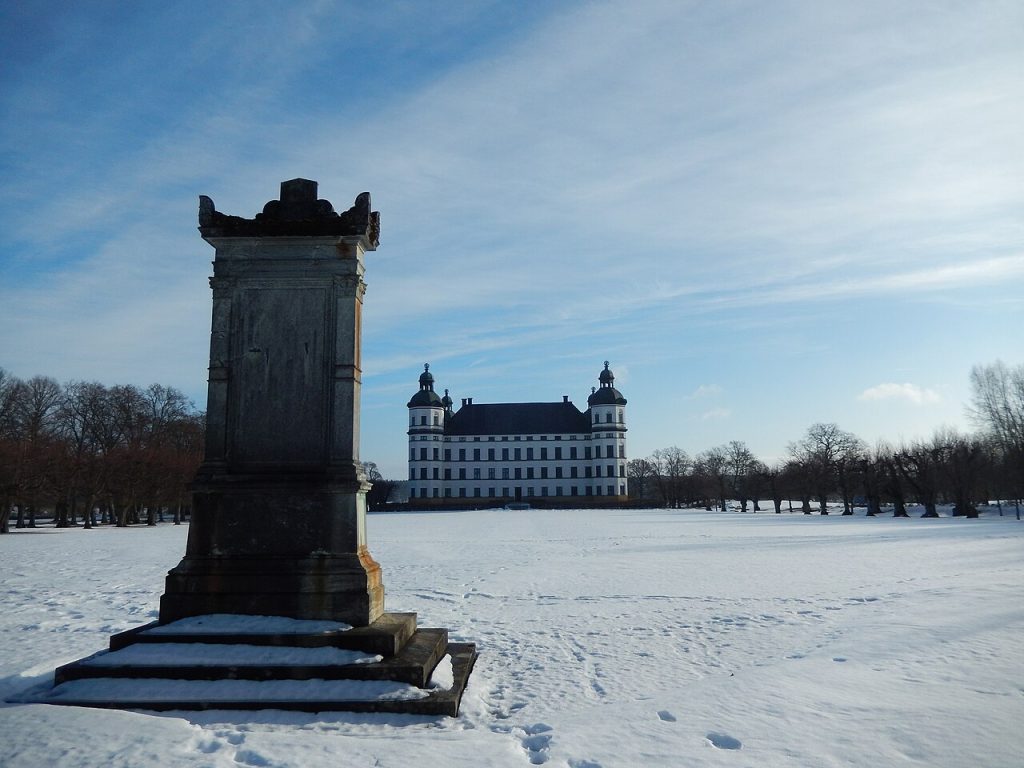
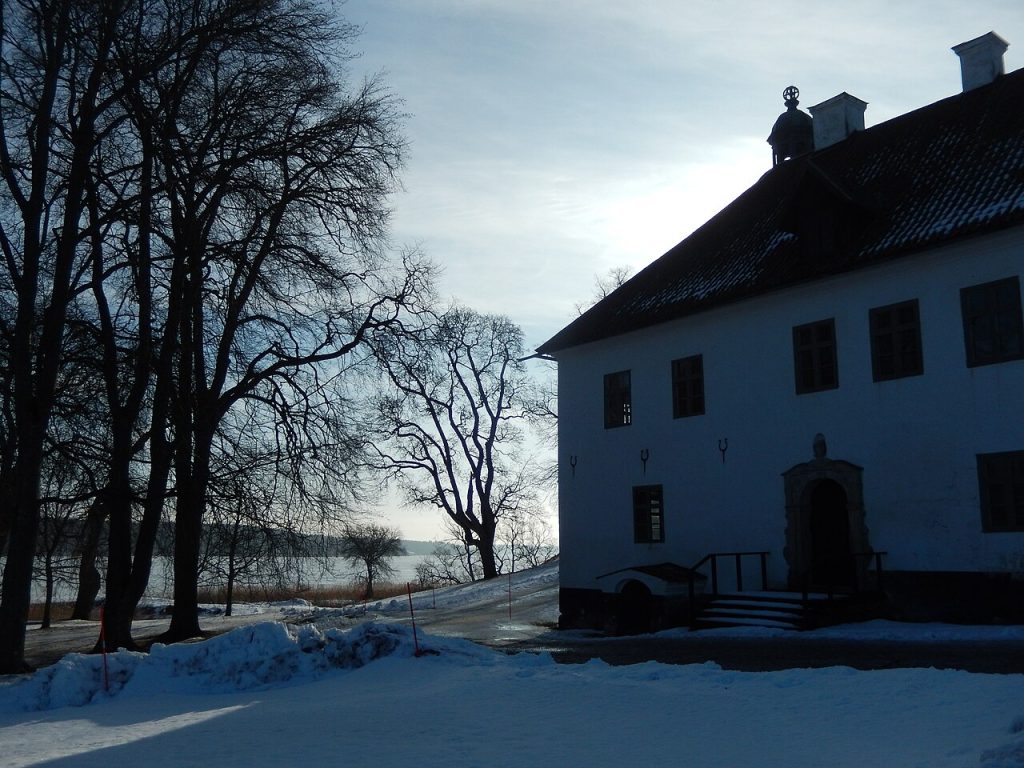
The castle stands on a peninsula in Lake Malaren, halfway between Stockholm and Uppsala, on land that had belonged to a Cistercian convent before the Reformation. The name means the cloister at Skokloster, and the medieval church still stands beside the castle.
Water mattered. In the seventeenth century the lake was the main road, and a house on its shore was connected to the capital in a way that a house inland was not. Building materials arrived by boat, and so did guests.
Arrive by water if you ever get the chance. The castle was designed to be seen from the lake, and from the land side you miss the composition entirely.
The Hall That Was Never Finished
Wrangel died in 1676 and the great banqueting hall was left exactly as the craftsmen had it that week. Scaffolding, tools, half-cut stone, unfinished stucco, materials stacked for the next day’s work.
It stayed that way because the heirs had neither the money nor the motive to continue. Later generations treated the room as a curiosity rather than an embarrassment, and by the nineteenth century it was already understood as a historical document.
For historians of craft it is priceless. You can see how baroque decoration was actually made: the order of operations, the tools used, the way plaster was laid up. Finished rooms hide all of that. This one shows the work.
An Armoury of Three Thousand Weapons
The armoury is among the largest private collections of arms and armour in Europe to survive in its original building. Muskets, pistols, swords, pikes, armour, powder flasks, captured standards, and the equipment of a commander who spent his life at war.
What makes it exceptional is context. Most historic weapons sit in museum cases, separated from their owners. Here they hang in the rooms of the man who used and collected them, arranged in a seventeenth-century manner.
Look for the wheellock mechanisms and the decorated stocks. These were status objects as much as tools, and the craftsmanship is extraordinary.
The Library and the Looted Books
The library holds roughly thirty thousand volumes, many of them taken during the war. There are incunabula, manuscripts, scientific works, atlases and the kind of practical books a working commander collected on fortification and artillery.
Provenance research here is a serious and ongoing discipline. Books carry the marks of their previous owners, and scholars from several countries work on identifying what came from where. Some volumes have been returned over the years; most remain.
The room itself, with its painted ceiling and long ranks of bindings, is one of the most atmospheric interiors in Sweden.
Paintings, Curiosities and a Vegetable Man
Among the paintings hangs one of the most reproduced images in Swedish collections: Giuseppe Arcimboldo’s Vertumnus, a portrait of the Emperor Rudolf II composed entirely of fruit, vegetables and flowers.
It came from Prague, where Swedish troops took the imperial collections in 1648. Today it is the single best-known object in the house, and it summarises the collection’s character: a masterpiece of European art, hanging in a Swedish castle, because of a war.
Beyond it there are cabinets of curiosities, scientific instruments, textiles and the accumulated oddities of a seventeenth-century grandee. Give the smaller rooms time.
The Brahe Inheritance
Wrangel left no surviving son, and the estate passed through his daughter to the Brahe family, one of the oldest noble houses in Sweden. They held it for two centuries, and crucially they had other principal residences.
That accident saved the interiors. A family that lives in a house modernises it: new heating, new wallpaper, new furniture, new fashions. A family that visits occasionally changes very little, and the Brahes changed very little.
The house therefore preserves not only the seventeenth-century collections but the seventeenth-century arrangement, which is far rarer.
Two Centuries of Sleep
From the eighteenth century until the twentieth, Skokloster slept. Caretakers maintained the roofs. Visitors came occasionally and wrote about the strange untouched rooms. Travellers in the romantic era loved it precisely because it felt abandoned.
There were losses, of course. Damp, insects, theft, the slow decay of textiles. But there was no fire, no demolition, no fashionable rebuilding, and no war on Swedish soil after 1809.
That long national peace is the quiet condition behind everything you see. Sweden avoided the catastrophes that destroyed comparable houses in Germany, Poland and Russia.
Becoming a State Museum
In 1967 the Swedish state bought the castle with its contents, and it opened as a national museum. The purchase was unusual in that it included the collections intact, which is why the rooms still read as a single ensemble.
The museum’s approach has been conservative in the best sense: keep what is there, explain it, resist the urge to improve. Visitors used to glossy restored palaces sometimes find it dim and worn. That is the point.
Guided tours are the normal way to see the main floors, and the guides are generally excellent on the awkward questions about provenance.
Conserving Without Restoring
Modern conservation here aims at stabilisation, not renewal. Climate control is minimal because the building cannot take it. Textiles are protected from light. Surfaces are cleaned rather than repainted. Nothing is reconstructed to look new.
This philosophy produces a visit that is darker, cooler and quieter than most palace tours. It also produces objects that will still exist in two hundred years, which is the actual job.
If you are interested in how historic houses are cared for, Skokloster is one of the best teaching examples in Europe.
What the Place Feels Like
Cold, is the honest first answer. Then dense, then unexpectedly moving. You move through rooms crowded with the possessions of a man who spent thirty years at war, and then you reach the top floor and find the work stopped mid-sentence.
Every palace in this series is about ambition. Most of them conceal the effort that ambition required. This one leaves the scaffolding up, and the effect is far more human than any finished state room.
Stand in the half-built hall for a while before you go down. It is the closest thing in Europe to walking into 1676 on a Tuesday afternoon.
Visiting Skokloster Castle Today
Skokloster lies on Lake Malaren between Stockholm and Uppsala, around an hour by car from either. Public transport is awkward: bus connections from Balsta or Uppsala run infrequently, so check timetables carefully or consider a summer boat from Stockholm.
The castle opens mainly in the summer season with guided tours of the historic floors, plus shorter opening periods in spring and autumn and occasional winter events. Tours are the only way into most rooms, and they are worth booking in advance in July and August.
Dress warmly even in summer, since the building is unheated. Allow three hours including the medieval church next door and a walk along the shore. Find it here: https://www.google.com/maps?q=59.7097,17.6294
Palaces Nearby
You May Like
Gaasbeek Castle and the Romantic Dream of a Marquise