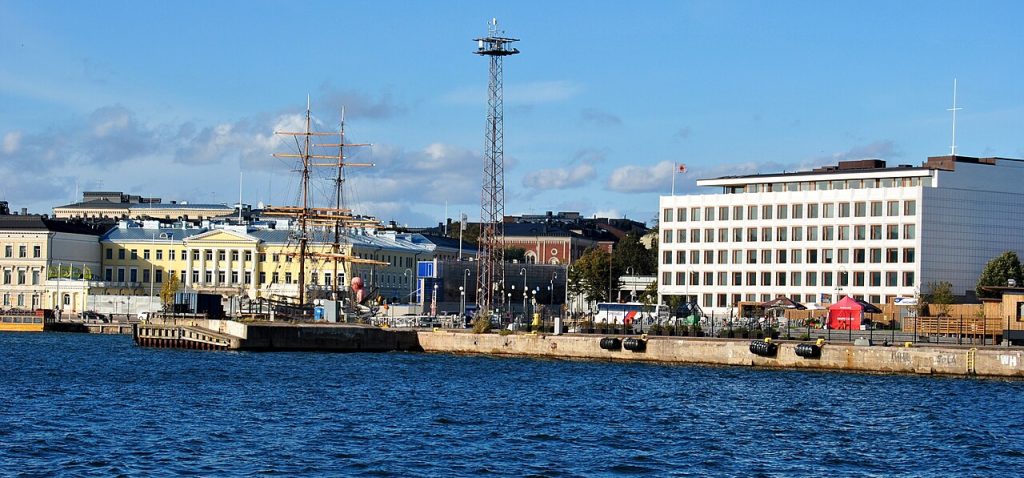
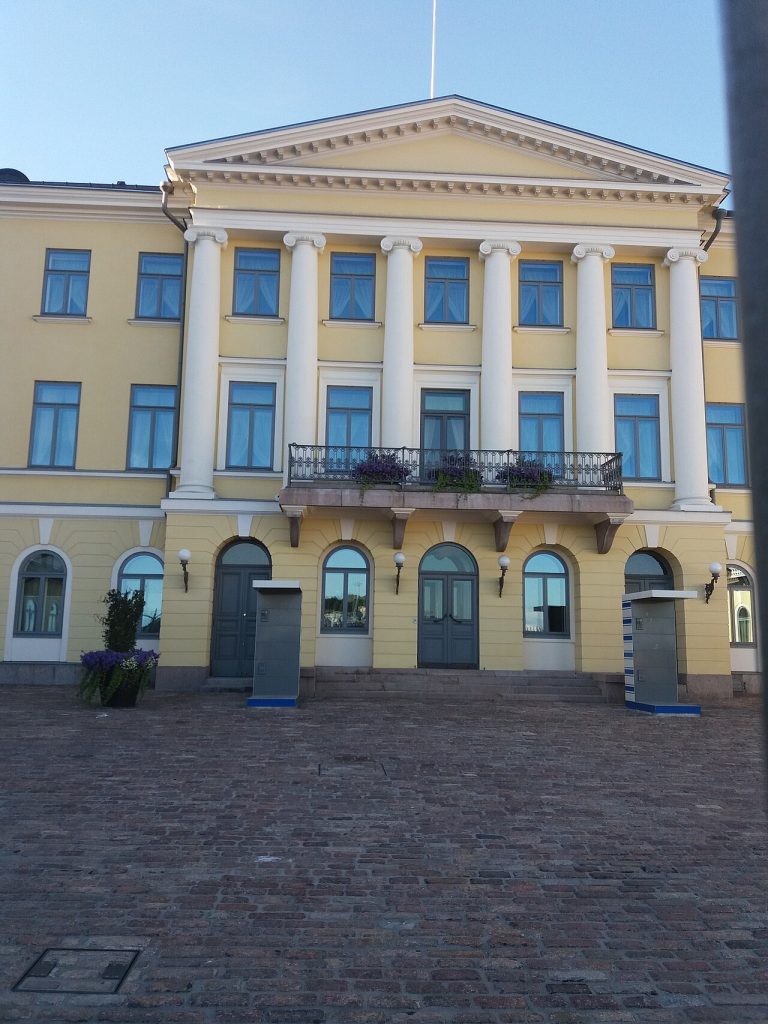
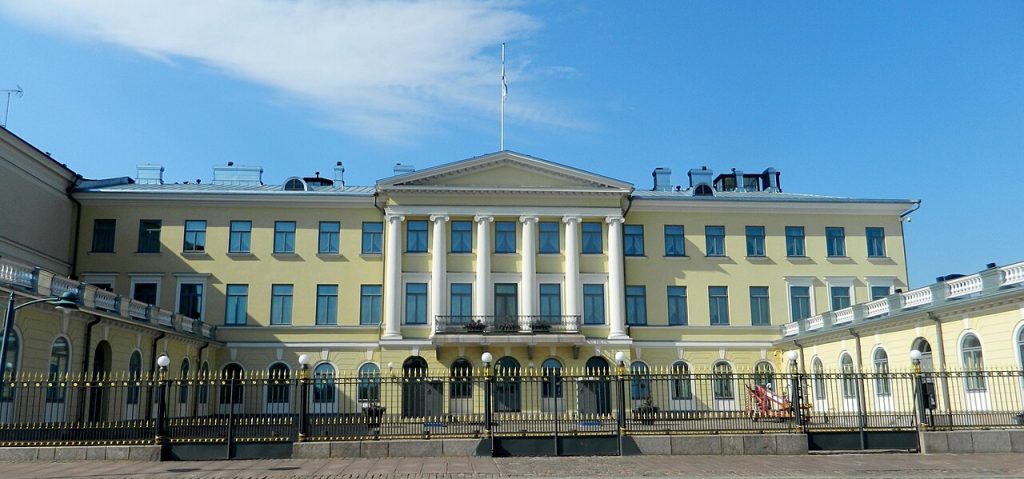
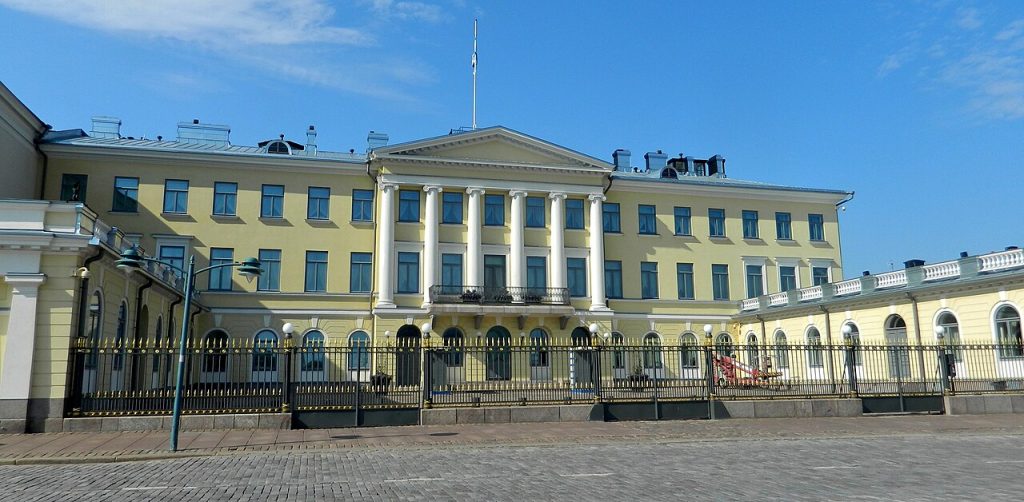
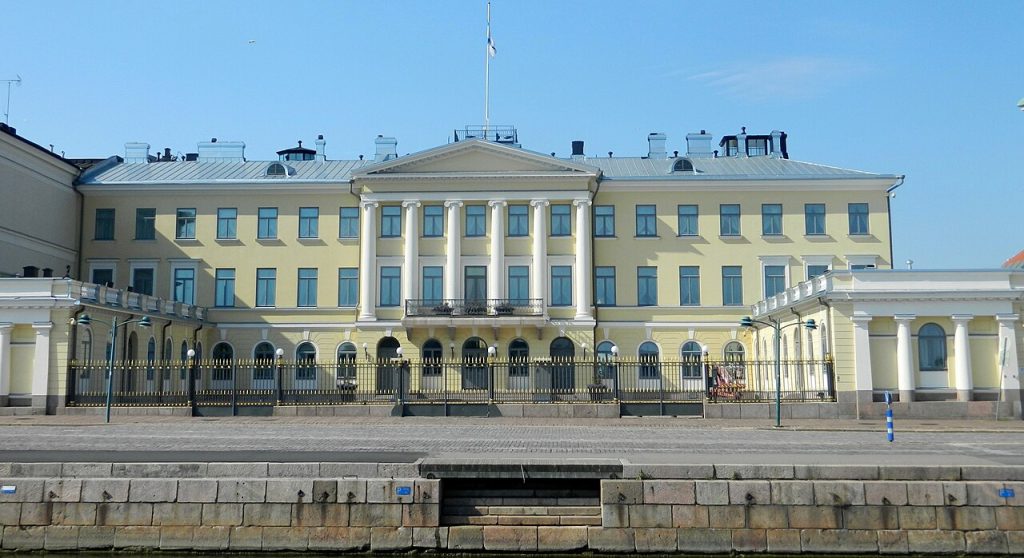
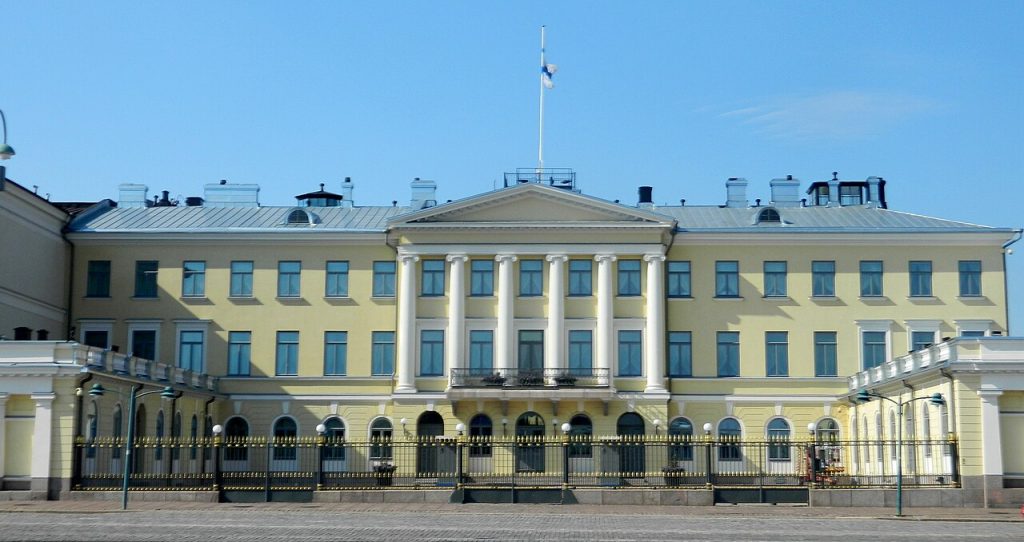
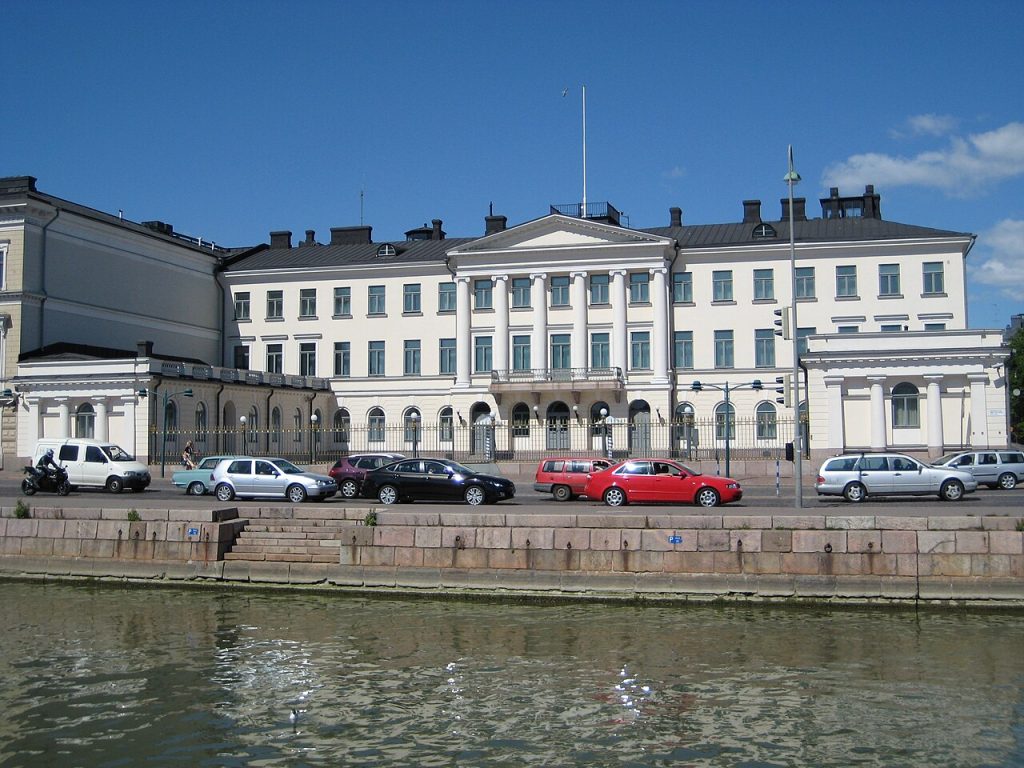
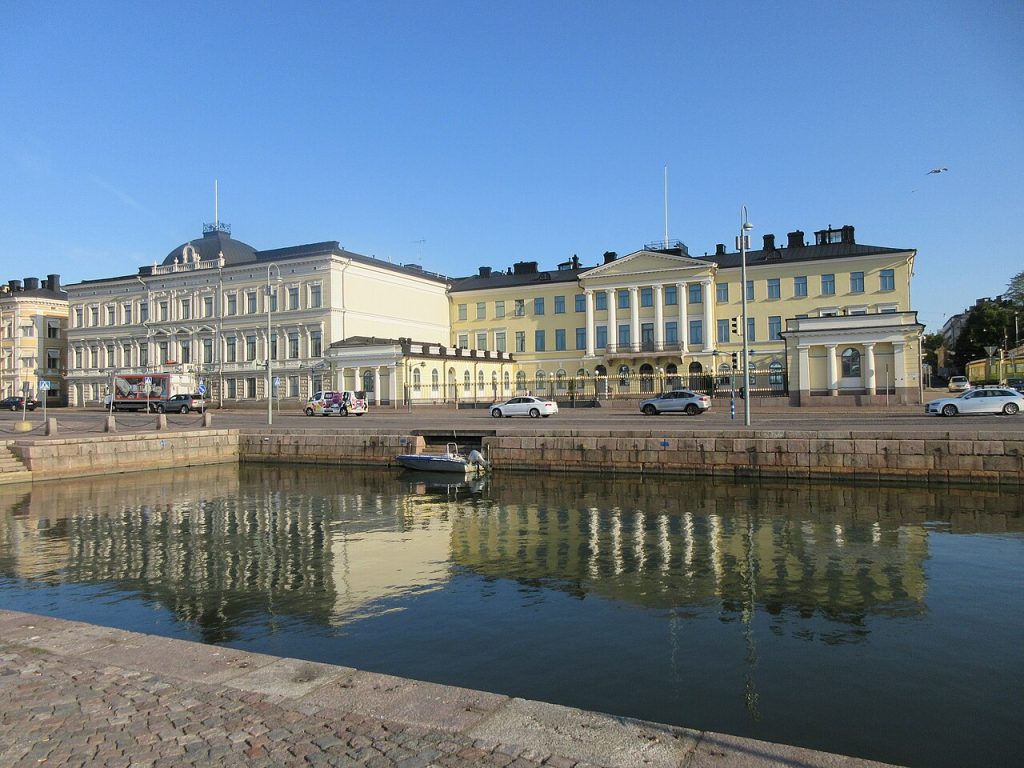
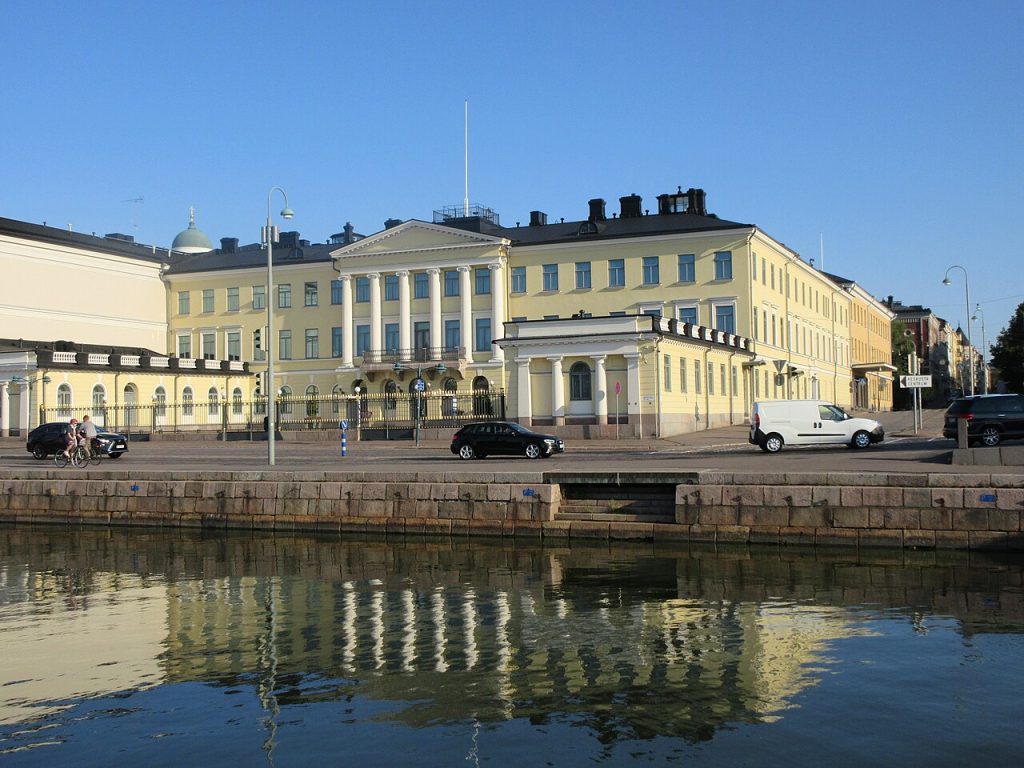
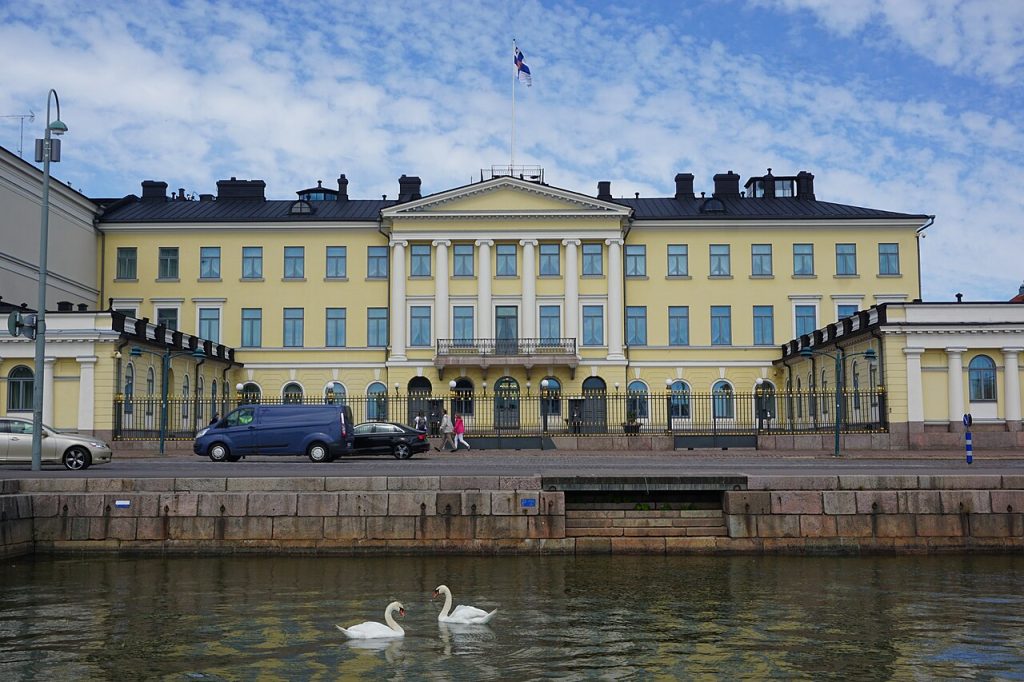
Now, stop on the market square with the harbour behind you and look at the long pale building facing the water. It is not enormous, it is not domed, and it has no gates designed to overawe. It looks like what it originally was: a rich merchant’s house on a working waterfront.
That building has been, in turn, a private mansion, the palace of the Russian emperor in Finland, the residence of the president of an independent republic, and the setting for the most watched television broadcast in the country every December.
Finland’s history is unusually compressed, and this facade has watched all of it from the same spot.
- The Merchant Who Built It
- Finland Inside the Russian Empire
- Carl Ludvig Engel and the New Capital
- An Imperial Palace in the North
- 1917 and a New Republic
- The Presidents Who Lived Here
- War, Negotiation and Survival
- The Long Kekkonen Era
- The Independence Day Ball
- The Great Renovation
- Inside the Rooms of State
- The Square, the Market and the Cathedral
- How to See It
The Merchant Who Built It
The original house was built between 1816 and 1820 for Johan Henrik Heidenstrauch, a wealthy merchant, in a city that was about to be transformed. Helsinki at the time was a small town recovering from fire and war.
Merchant houses of this period line waterfronts all around the Baltic, from Lubeck to Riga, and they share a vocabulary: classical, restrained, oriented to the harbour where the money came from.
Within a decade the state bought it, and a private fortune’s house became a public building, which is a pattern repeated in capitals across Europe.
Finland Inside the Russian Empire
Finland had been part of Sweden for six centuries. In 1809, after a war, it became a Grand Duchy of the Russian Empire, with the tsar as grand duke, its own laws, its own currency and a considerable degree of autonomy.
Helsinki became the capital in 1812, replacing Turku, because it was closer to St Petersburg and because a new capital could be built to a plan. The emperors wanted a loyal, modern, visibly imperial city.
Everything around this palace, including the cathedral and the senate square, belongs to that project.
Carl Ludvig Engel and the New Capital
The architect of that project was Carl Ludvig Engel, a German trained in Berlin, who designed the senate square, the cathedral, the university and the main government buildings, and who rebuilt this house as an imperial palace between 1837 and 1845.
Engel’s Helsinki is one of the most coherent neoclassical city centres in Europe, pale yellow and white, orderly, and built in under three decades.
Walk the few hundred metres from the palace to the senate square and you have seen most of his major work. Few architects get to shape an entire capital.
An Imperial Palace in the North
As the imperial palace, the building was used by the Russian emperors on their visits to Finland and by the governor-general who represented them. Rooms were decorated for state receptions, and the throne room was fitted out accordingly.
Imperial visits were rare but significant. The relationship between Finland and the empire was managed carefully, and a visit by the emperor was a political event with consequences for Finnish autonomy.
By the end of the nineteenth century that relationship was deteriorating. Russification policies from the 1890s onward provoked resistance, petitions and eventually the assassination of a governor-general in 1904.
1917 and a New Republic
When the Russian Empire collapsed in 1917, Finland declared independence in December of that year. A short, bitter civil war followed in 1918 between Reds and Whites, leaving divisions that took decades to heal.
In 1919 Finland became a republic with a strong presidency, and this palace became the president’s official residence. The transition from imperial palace to republican seat happened quickly and with relatively little alteration.
Note what that means architecturally: a republic chose to govern from the building of the empire it had just left, rather than building something new. Pragmatism over symbolism, which is a recurring Finnish theme.
The Presidents Who Lived Here
K. J. Stahlberg, the first president, set the tone: a constitutional lawyer who walked to work and insisted on modest ceremony. Later presidents varied, but the Finnish presidency has kept a plainness that surprises visitors from larger republics.
The palace has been used as both residence and office, though in recent decades presidents have lived elsewhere, at Mantyniemi, and used this building for official functions.
The distinction matters for visitors: this is a working state building, not a home, and it is used almost daily for receptions, credentials ceremonies and meetings.
War, Negotiation and Survival
The Winter War of 1939 to 1940 and the Continuation War that followed shaped modern Finland more than any other events. The country fought the Soviet Union, lost territory including Karelia, and kept its independence.
Much of the diplomacy of those years passed through this building: cabinet meetings, negotiations, the armistice of 1944 and the delicate post-war relationship with Moscow that Finns managed for half a century.
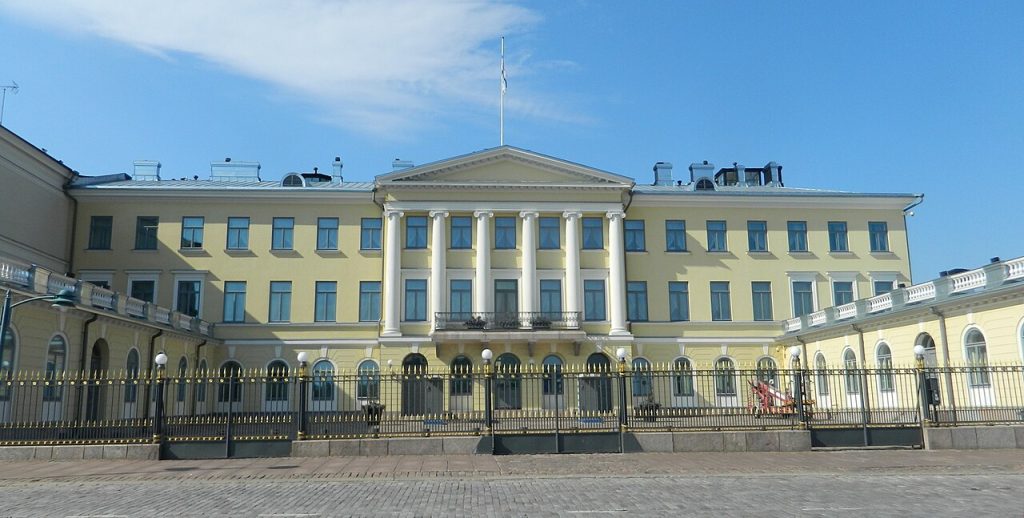
Helsinki was bombed but not occupied, and the palace survived. Photographs from the period show the same facade with sandbags and blackout.
The Long Kekkonen Era
Urho Kekkonen was president from 1956 to 1982, a quarter of a century, and his personality dominated Finnish public life. He managed relations with the Soviet Union through a policy of active neutrality that critics abroad called Finlandisation and Finns called survival.
He also hosted the Conference on Security and Co-operation in Europe in Helsinki in 1975, which produced the Helsinki Accords and gave the city a permanent place in Cold War diplomatic history.
The palace and the nearby Finlandia Hall were the physical settings for that long balancing act.
The Independence Day Ball
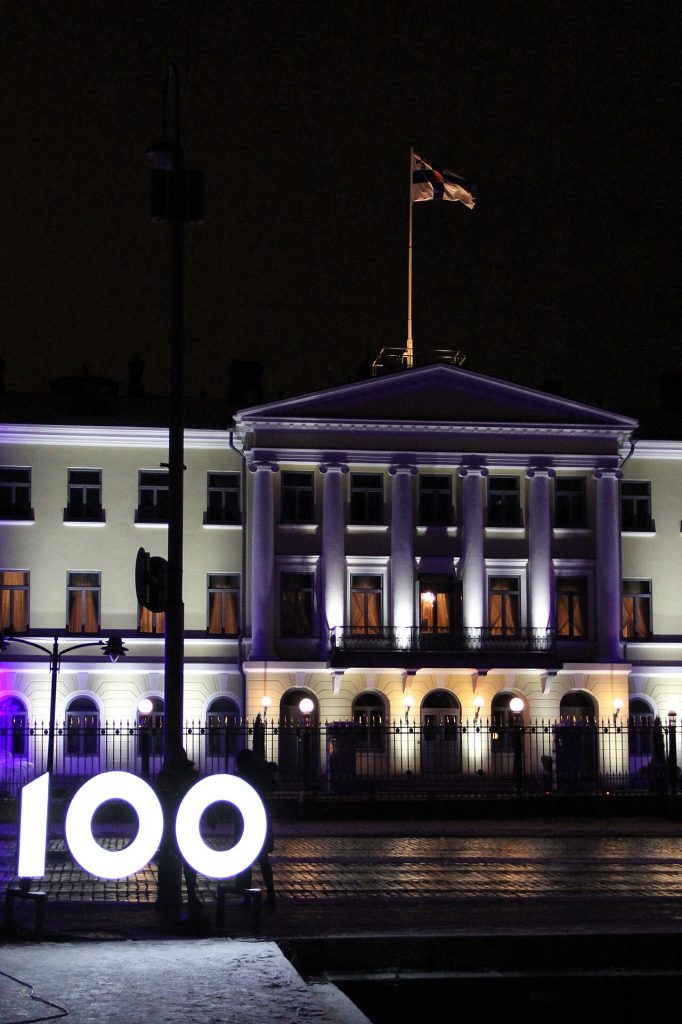
Every 6 December, Finland’s Independence Day, the president hosts a reception at the palace for roughly two thousand guests: veterans, politicians, athletes, artists, scientists, business figures and public personalities.
It is broadcast live, and a very large share of the Finnish population watches. People comment on the dresses, the handshakes, the music and who was invited. For a country of five and a half million, it functions as a national gathering.
Few state ceremonies anywhere command that kind of attention. It works because the guest list mixes the famous with the ordinary, and because Finns treat independence as something recently and expensively won.
The Great Renovation
Between 2012 and 2014 the palace underwent a thorough renovation covering structure, services, security and interiors. Buildings of this age that are also in constant official use accumulate problems faster than museums do.
The work restored historic rooms, modernised the technical systems and improved accessibility, and the palace reopened for the full ceremonial calendar.
Finnish restoration practice is careful and quietly expensive, and the results here are regarded as a model.
Inside the Rooms of State
The interiors include the Hall of Mirrors, the Gothic Room, the dining rooms and the state apartments, decorated across the nineteenth and twentieth centuries and furnished with Finnish design alongside imperial-era pieces.
That mixture is deliberate. Finnish design, from Aalto onward, is a core part of national identity, and placing modern Finnish craft inside an imperial palace makes a quiet argument about continuity and change.
Guided tours are offered in limited numbers, and demand is high. Booking well in advance is essential.
The Square, the Market and the Cathedral
Step outside and the context does half the work. The market square in front sells fish, berries and crafts; ferries leave for Suomenlinna and Tallinn; the Uspenski Orthodox cathedral stands on the hill opposite and Engel’s Lutheran cathedral above the senate square behind.
Two cathedrals, one Orthodox and one Lutheran, facing each other across a harbour, with the presidential palace between them, is a reasonable summary of Finland’s position between east and west.
Eat at the market. The salmon soup in the harbour hall is a better lunch than most restaurants in the city centre.
How to See It
Most visitors see the palace from outside, which is enough to understand it. Stand on the quay, look at the facade, and note that this modest building has been the seat of three political orders in two centuries.
If you want inside, watch for the tour bookings that open periodically, and be ready to plan around a fixed date.
And if you are in Helsinki on 6 December, find a television. You will learn more about Finland in two hours of ballroom footage than in a week of museums.
Watch the Palace on Film
Visiting the Presidential Palace Today
The palace stands on Pohjoisesplanadi facing the market square in central Helsinki, a few minutes on foot from the main tram routes, the harbour terminals and the senate square.
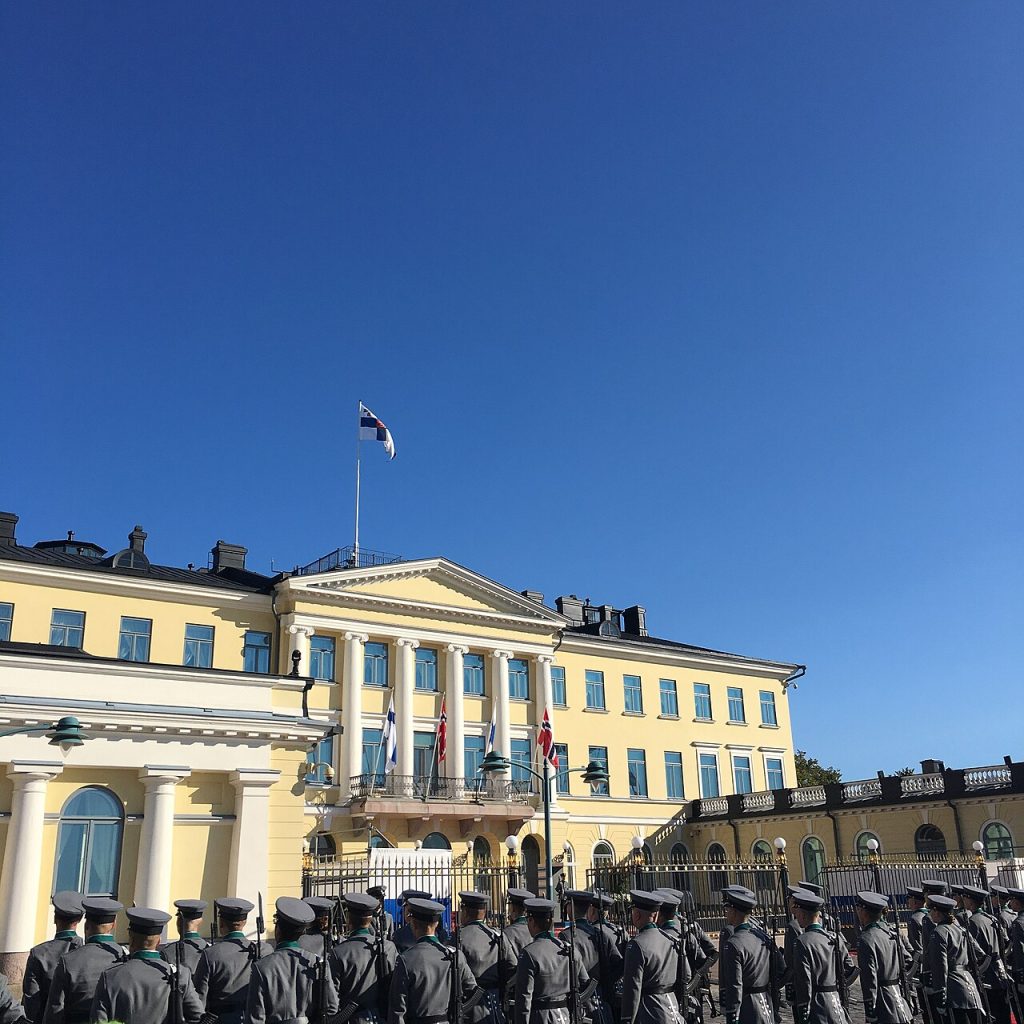
It is a working state building and is not routinely open. Guided tours are arranged in limited periods and must be booked in advance through the official channels; the guard outside changes regularly and can be watched freely.
Combine the visit with the market square, Uspenski Cathedral, the senate square and a ferry to Suomenlinna. Allow half a day for the whole waterfront. Find it here: https://www.google.com/maps?q=60.1686,24.9569
Palaces Nearby
You May Like
Frederiksberg Palace and the Garden That Became a City Park