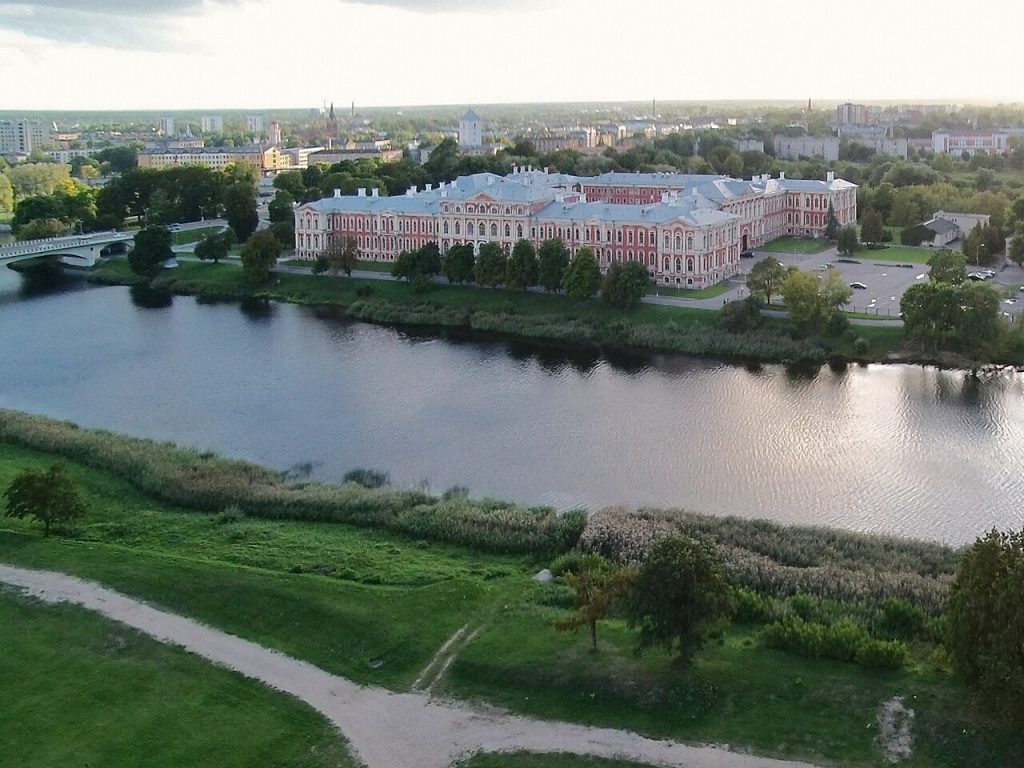
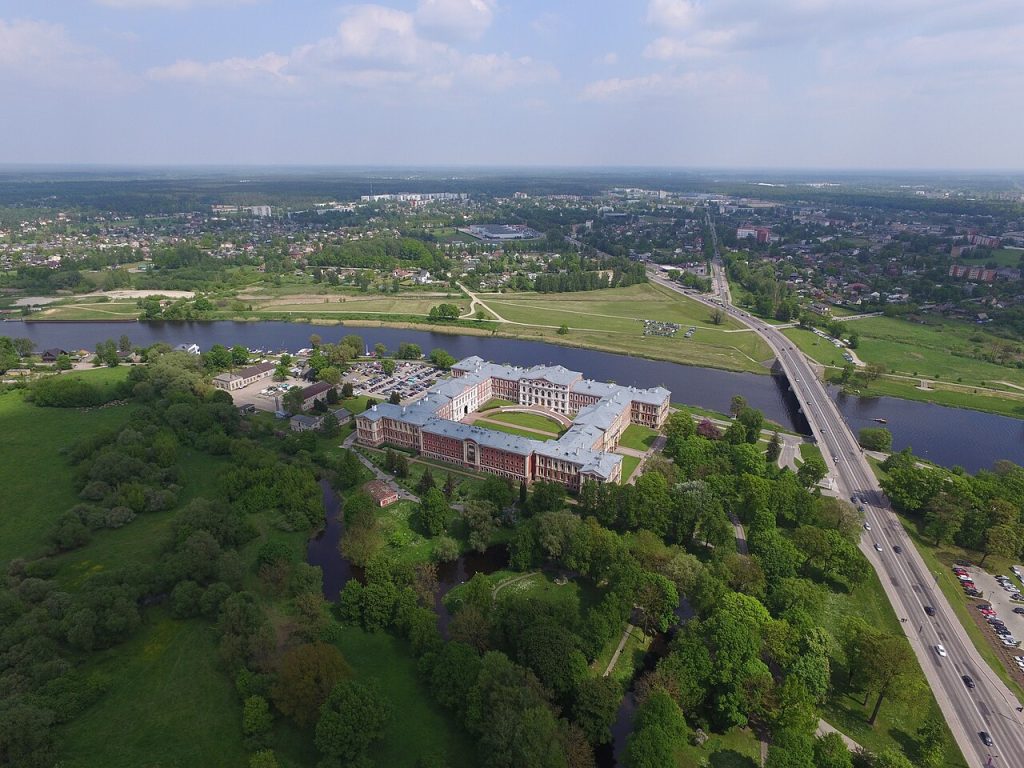
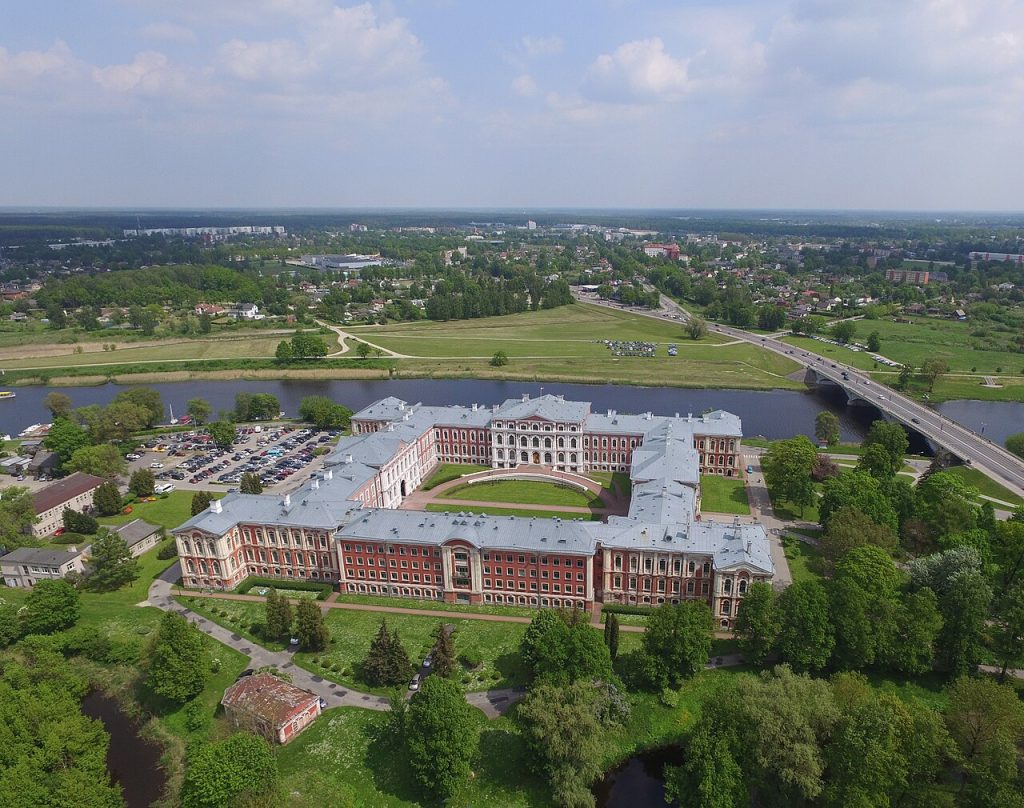
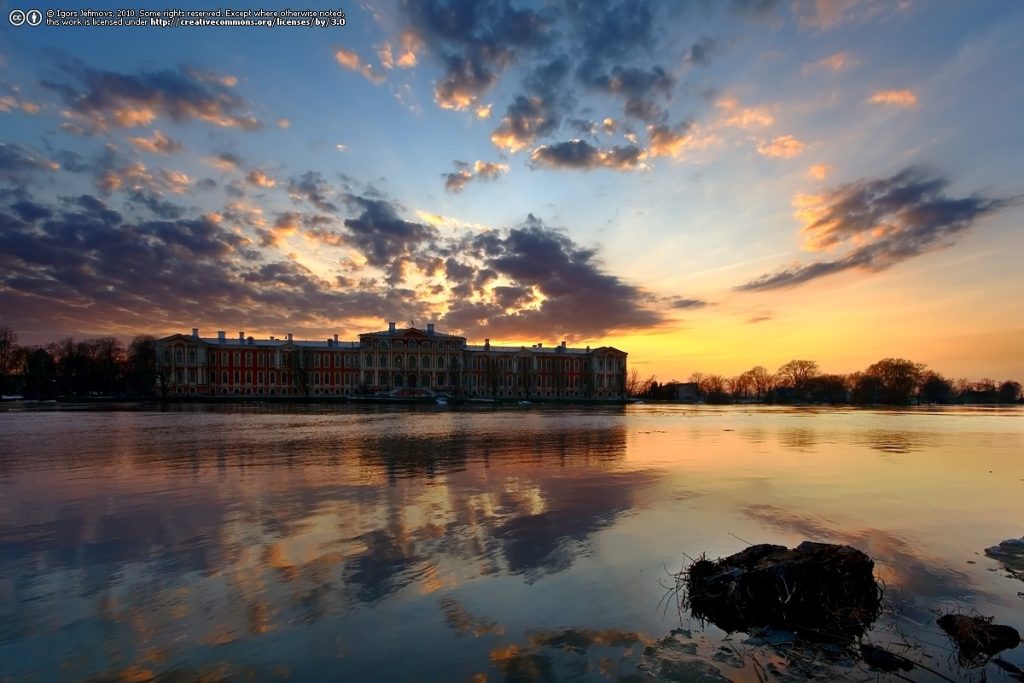
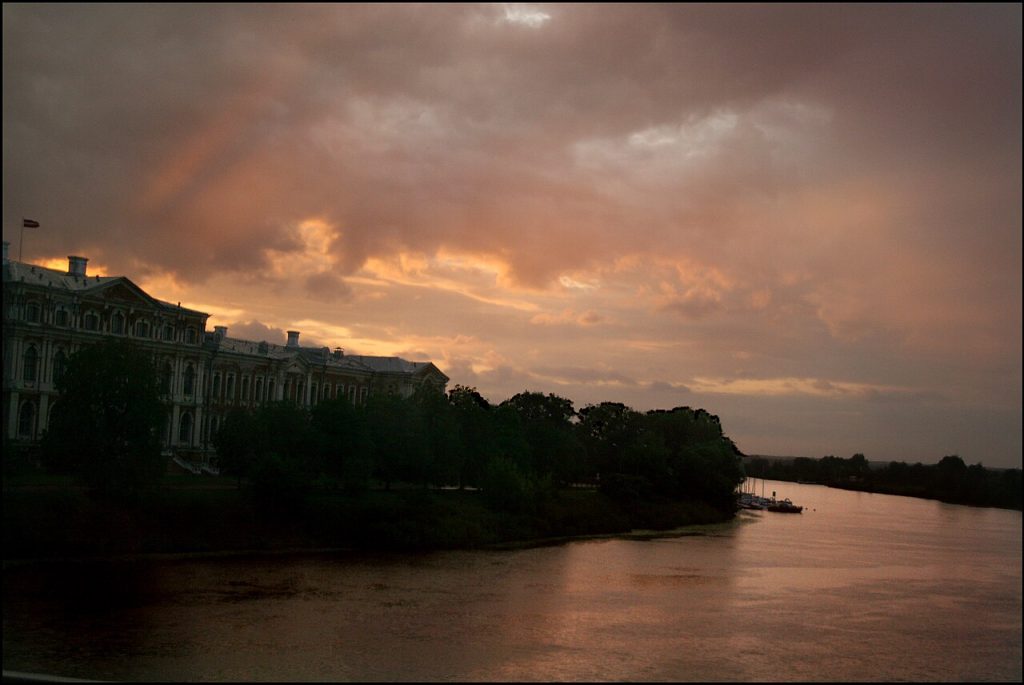
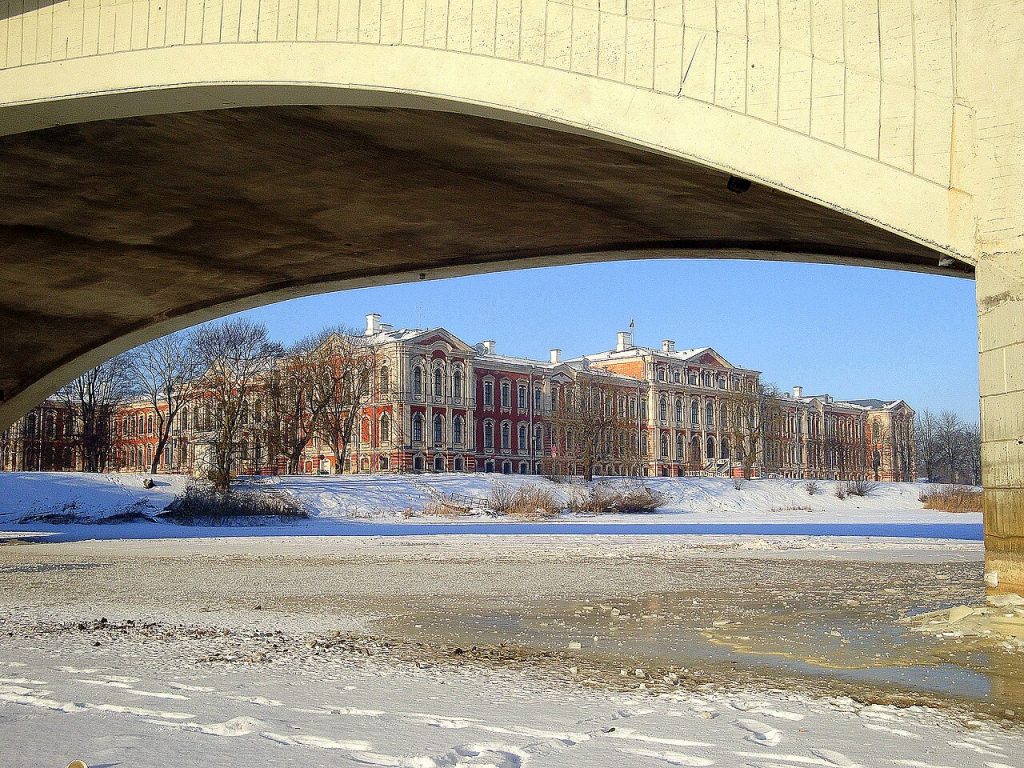
Now, stop on the bridge over the Lielupe and look at the length of the building. Jelgava Palace is enormous, a three-winged baroque block on a river island, and from this angle it looks less like a residence than like an institution, which is what it has become.
It was built by Bartolomeo Rastrelli, the architect of the Winter Palace, for a duke whose career is one of the most improbable in European history: a stable master who became a sovereign, then a Siberian exile, then a sovereign again.
Today it is the main building of the Latvia University of Life Sciences and Technologies, and its corridors are full of students of agronomy and veterinary medicine.
- The Duchy of Courland
- A Baltic Duchy With Colonies
- Ernst Johann von Biron
- Rastrelli on the Lielupe
- Siberia and Return
- Finishing the Palace
- Annexation by Russia
- The Exiled King of France
- The Ducal Crypt
- Two Wars and a Burned Shell
- An Agricultural University
- The City Around It
- Visiting Jelgava
The Duchy of Courland
Courland and Semigallia was a duchy in what is now western and southern Latvia, formed in 1561 out of the collapse of the Livonian Order, and existing as a vassal of Poland-Lithuania until 1795.
Its rulers were Baltic German, its peasantry Latvian, its official languages German and Latin, and its politics dominated by a German-speaking nobility that remained influential into the twentieth century.
Mitau, now Jelgava, was its capital, and this palace was the ducal seat.
A Baltic Duchy With Colonies
Under Duke Jacob in the seventeenth century, Courland acquired overseas colonies: Tobago in the Caribbean and St Andrews Island in the Gambia river. It built its own fleet and traded across the Atlantic.
It is one of the smallest states ever to attempt a colonial empire, and the episode is remembered with mixed feelings in Latvia today.
The colonies were lost within decades, but the shipbuilding and iron industries Jacob founded shaped the duchy’s economy for a century.
Ernst Johann von Biron
Ernst Johann von Biron was a minor Courland noble who became the favourite of Anna Ivanovna, duchess of Courland and later empress of Russia. When she took the Russian throne in 1730 he went with her and effectively ran the empire.
In 1737 he was elected duke of Courland. Three years later Anna died, and within weeks Biron was arrested, tried and exiled to Siberia.
He spent over twenty years in exile before Catherine the Great restored him to the duchy in 1763.
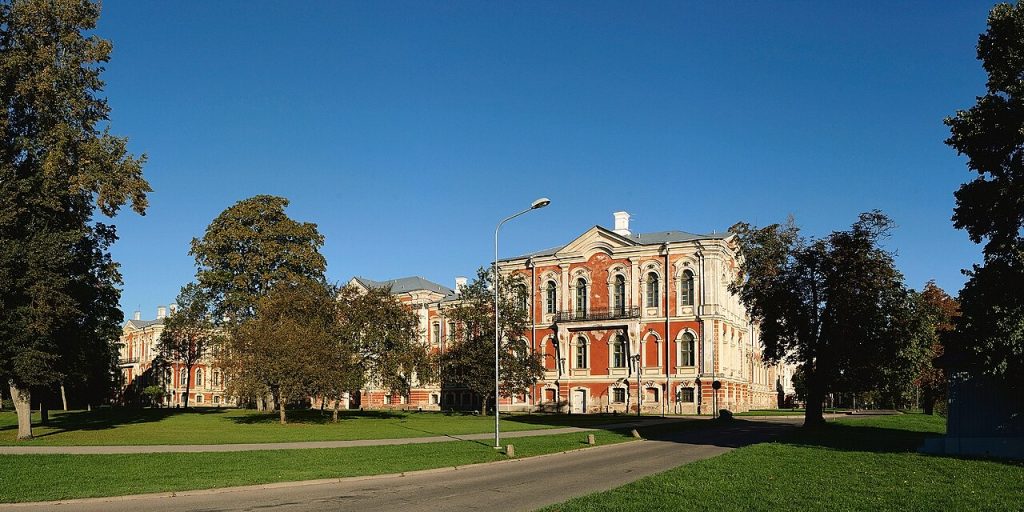
Rastrelli on the Lielupe
In 1738 Biron commissioned Bartolomeo Rastrelli, then at the start of the career that would produce the Winter Palace and Tsarskoye Selo, to design a new ducal palace on the site of the old castle.
Rastrelli produced a vast three-winged baroque block around a courtyard, with over three hundred rooms, intended to compete with the residences of far larger states.
Work began immediately, with thousands of labourers, and the old medieval castle was demolished to make room.
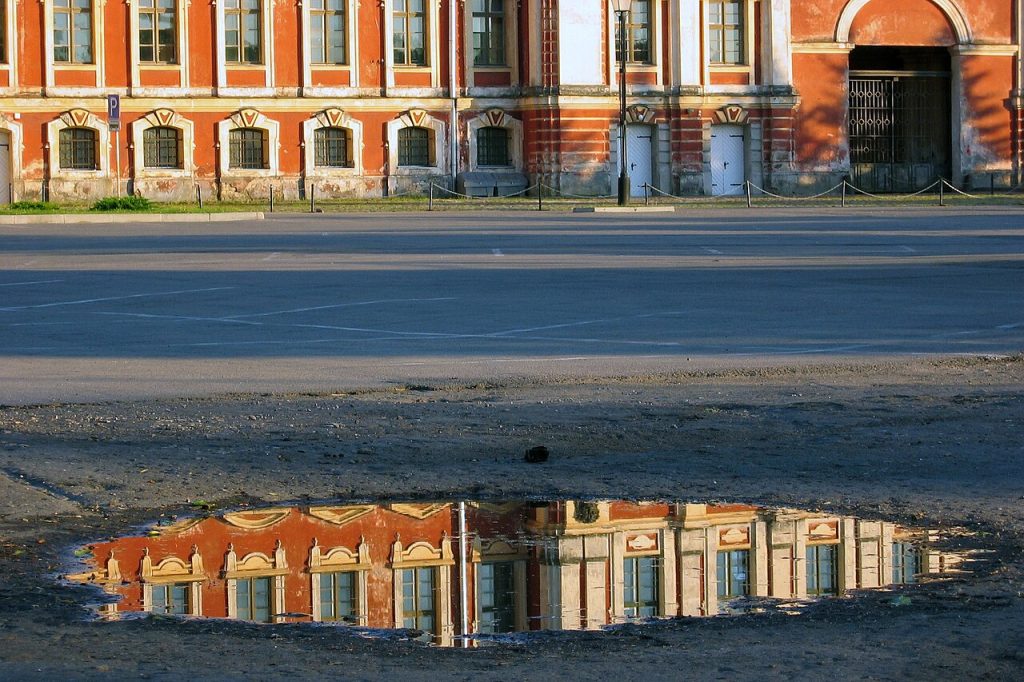
Siberia and Return
In 1740 Biron’s fall stopped the work. The palace stood half built for over two decades while its patron was in Siberia and then under house arrest in central Russia.
In 1763 Catherine II restored him, partly to secure Russian influence in Courland. He returned, and Rastrelli, now out of favour in St Petersburg after the death of Empress Elizabeth, came back to finish the building.
The two men completed in the 1760s a project begun in the 1730s, both of them having lost twenty years in between.
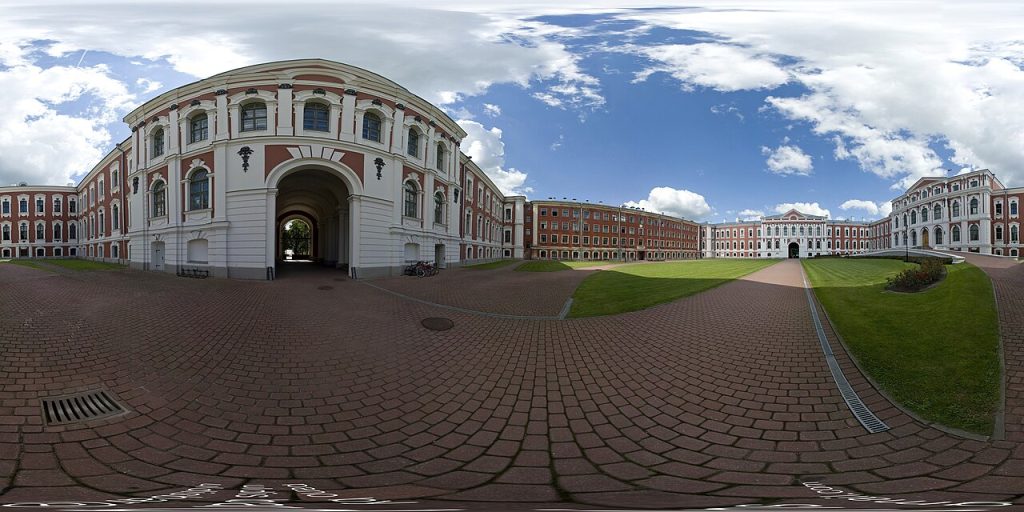
Finishing the Palace
The interiors were completed in the 1770s under Biron’s son Peter, with rococo and early classical decoration, a ballroom, galleries and ducal apartments.
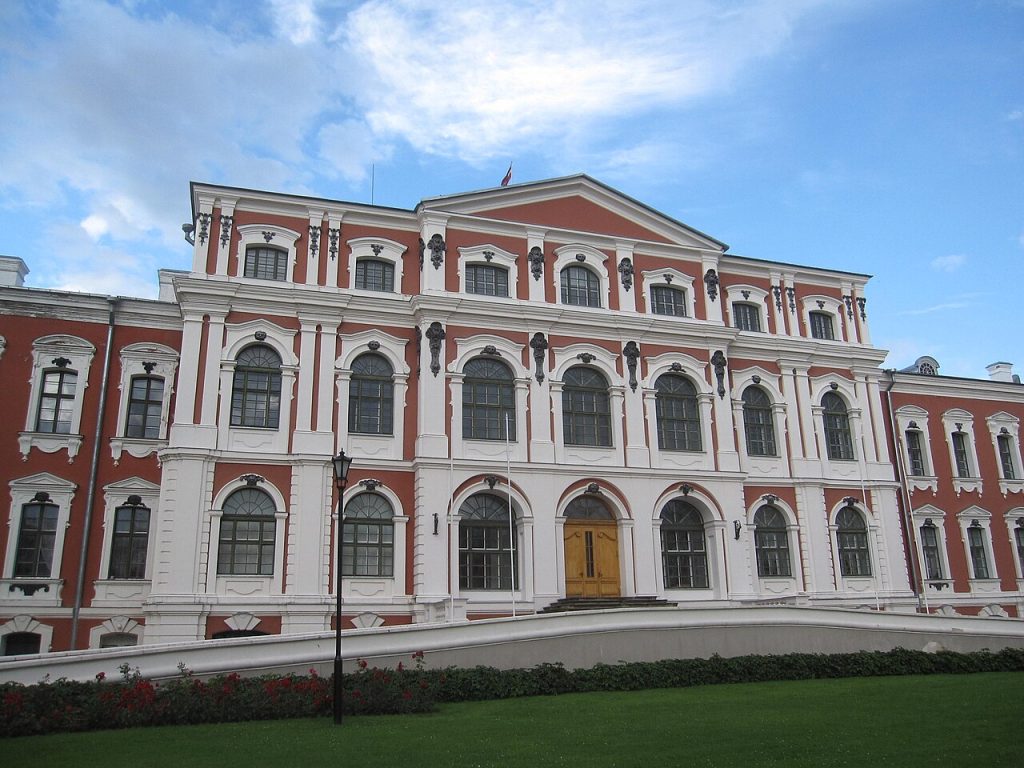
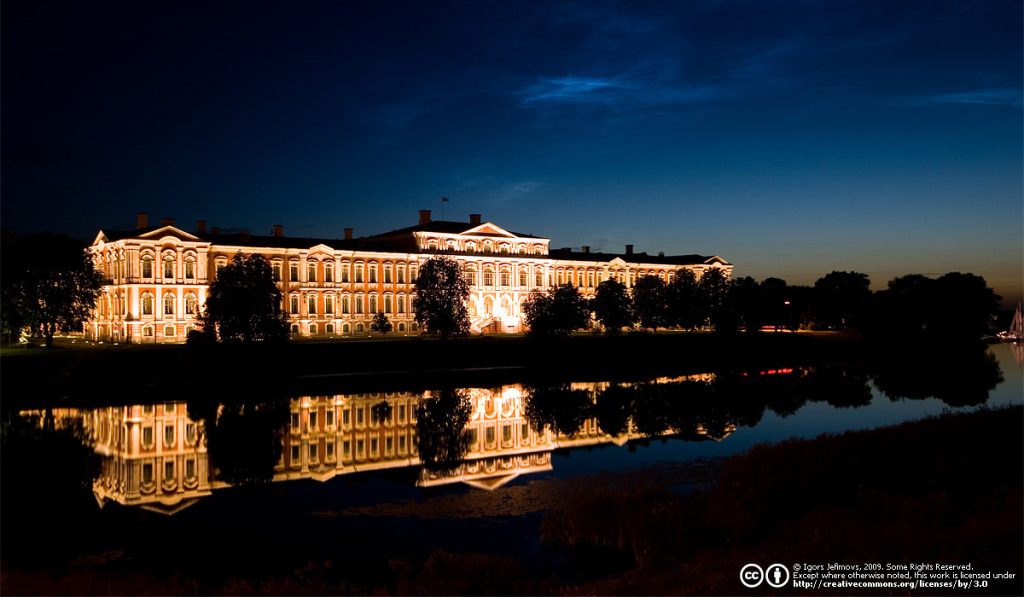
Very little of that decoration survives, for reasons that belong to the twentieth century. What survives is the shape: the enormous courtyard, the river frontage and the sheer length of the facades.
Even gutted, the scale tells you what the Birons were trying to say.
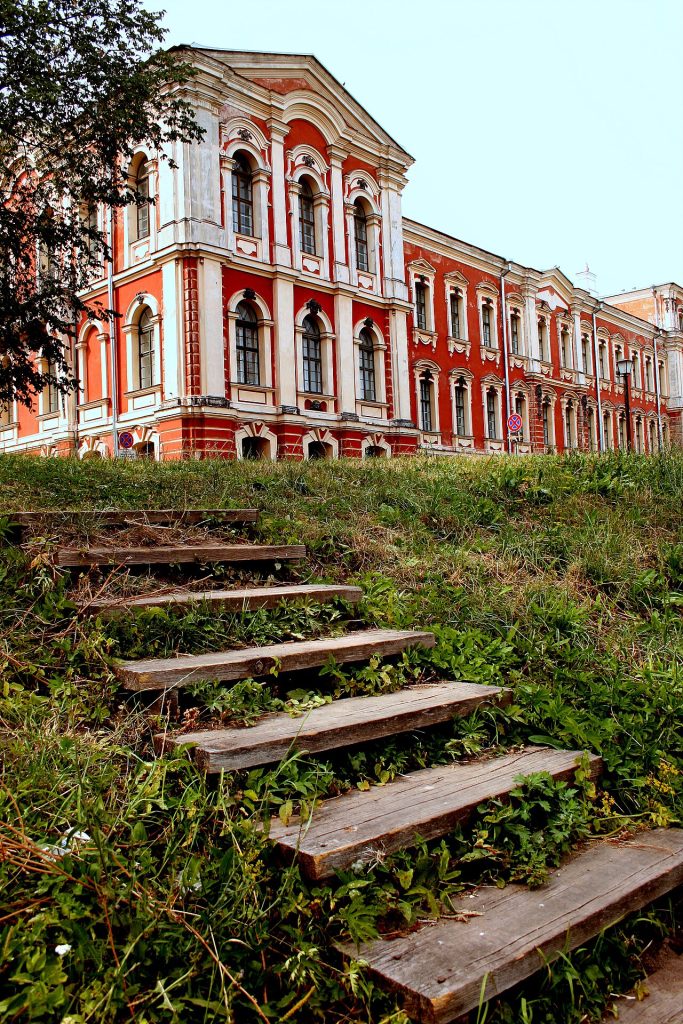
Annexation by Russia
In 1795, with the final partition of Poland, Courland was annexed by Russia. Duke Peter abdicated in exchange for a pension and estates in Silesia, and the duchy became a Russian province.
The palace passed to the Russian crown and was used for official purposes, as a residence for visiting dignitaries, and later for administration.
The Baltic German nobility retained local power under Russian rule until 1918, which is why the region’s architecture remains so German.
The Exiled King of France
Between 1798 and 1801, and again from 1804 to 1807, the exiled Louis XVIII of France lived in this palace with his court, as a guest of the Russian emperor.
The future king of France spent some of his most difficult years here, on the Baltic, waiting for a restoration that would not come until 1814. His niece married here in 1799.
Jelgava’s claim to European history rests largely on these years.
The Ducal Crypt
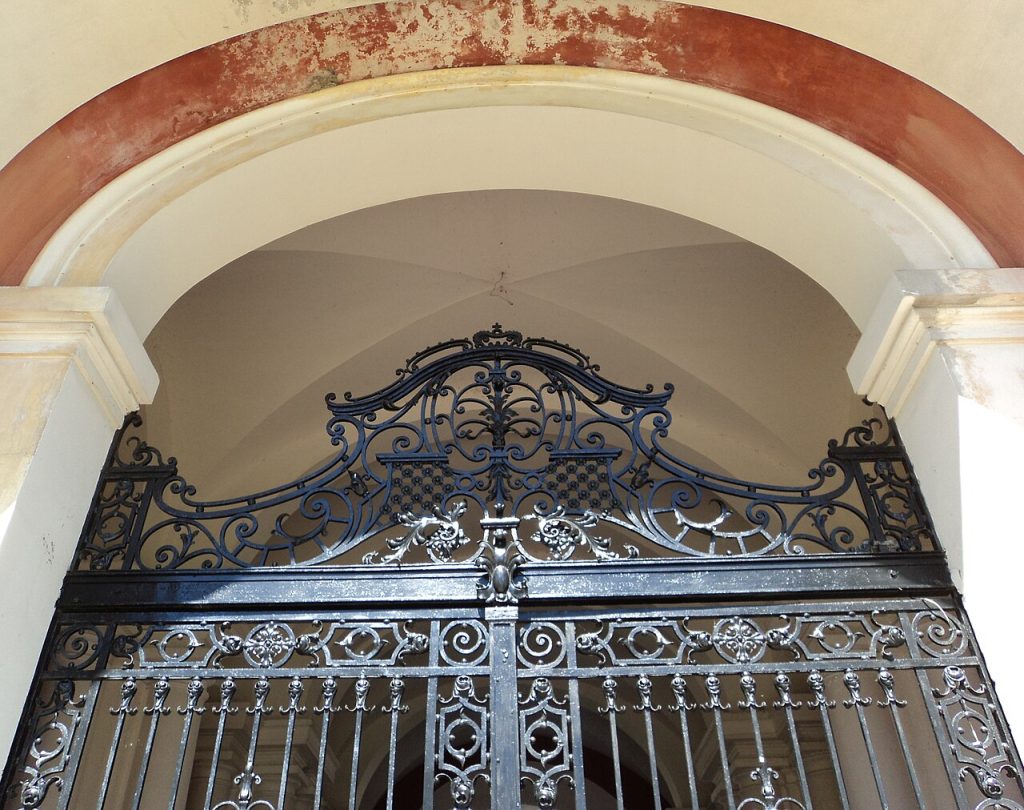
Beneath the palace lies the burial vault of the dukes of Courland, holding the sarcophagi of the Kettler and Biron families, some of them elaborate metalwork of the seventeenth and eighteenth centuries.
The crypt was looted during the First World War and again later, and the remains were disturbed. Restoration work in the twentieth century put the surviving coffins back in order, and the crypt is open to visitors.
It is the most atmospheric part of the building and the only place where the ducal period is physically present.
Two Wars and a Burned Shell
In 1919, during the Latvian War of Independence, fighting around Jelgava damaged the palace badly and it burned. Interwar Latvia restored it and installed the Jelgava Agricultural Academy.
In 1944 the city was almost destroyed in the fighting between German and Soviet forces, and the palace burned again, leaving a roofless shell.
Jelgava lost most of its historic centre in that year, which is why a town with such a long history looks so modern today.
An Agricultural University
Rebuilding ran through the 1950s and 1960s, with the exterior restored to its baroque form and the interior fitted out as a university. Since 1961 the building has housed what is now the Latvia University of Life Sciences and Technologies.
Agronomy, forestry, veterinary medicine, food technology and engineering are taught in Rastrelli’s palace, which is an unusual afterlife for a ducal residence.
It also guarantees maintenance. A university needs its main building to work.
The City Around It
Jelgava today is a working Latvian city of about fifty thousand people, with a reconstructed centre, a strong student population and the Lielupe river running through it.
Other survivals include the Academia Petrina, the eighteenth-century academy building, now a museum, and the Holy Trinity church tower with a viewing platform.
The city is forty minutes from Riga and makes an easy half-day trip.
Visiting Jelgava
The palace museum covers the history of Courland, the crypt, and exhibitions on the building and the university. Access is through the museum entrance rather than the main university doors.
Combine it with the Academia Petrina museum and the church tower, and if you have a car, continue to Rundale Palace, Rastrelli’s other Courland masterpiece, an hour south.
Rundale is the more spectacular building. Jelgava is the more interesting story.
Watch the Palace on Film
Visiting Jelgava Palace Today
Jelgava lies about forty kilometres southwest of Riga, with frequent trains and buses taking forty minutes to an hour, and the palace is a short walk from the station across the river.
The palace museum, including the ducal crypt, opens on set days with ticketed entry; the rest of the building is a working university and not open to visitors. Check opening hours before travelling, as they are limited.
Allow two hours, and combine it with Rundale Palace if you have a car. Find it here: https://www.google.com/maps?q=56.6539,23.7303
Palaces Nearby
You May Like
Arkhangelskoye and the Yusupov Collection Above the Moskva