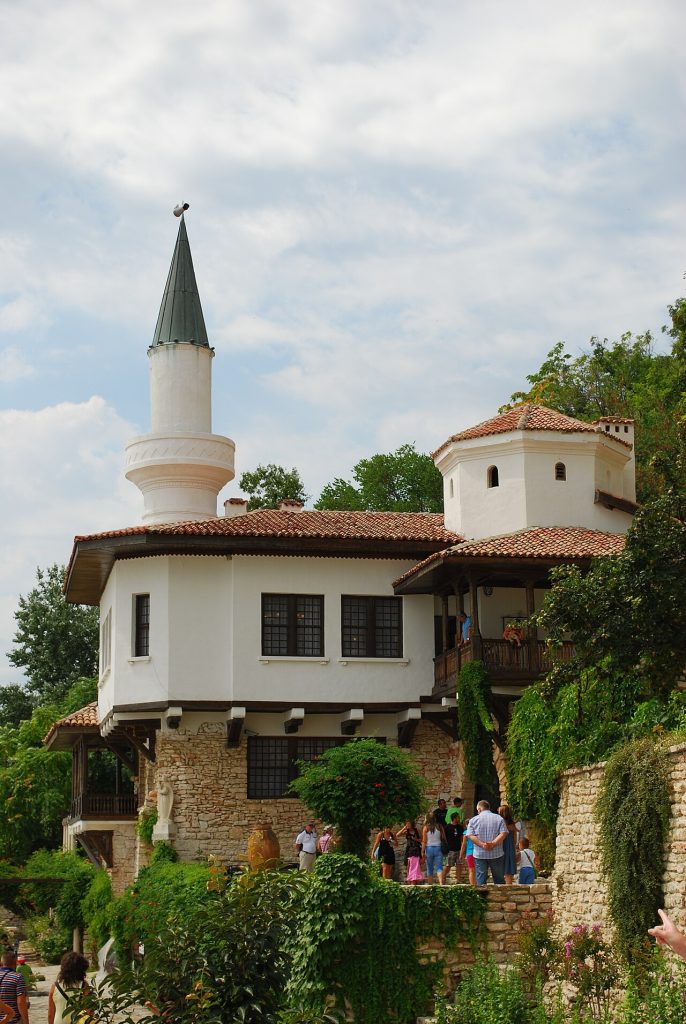
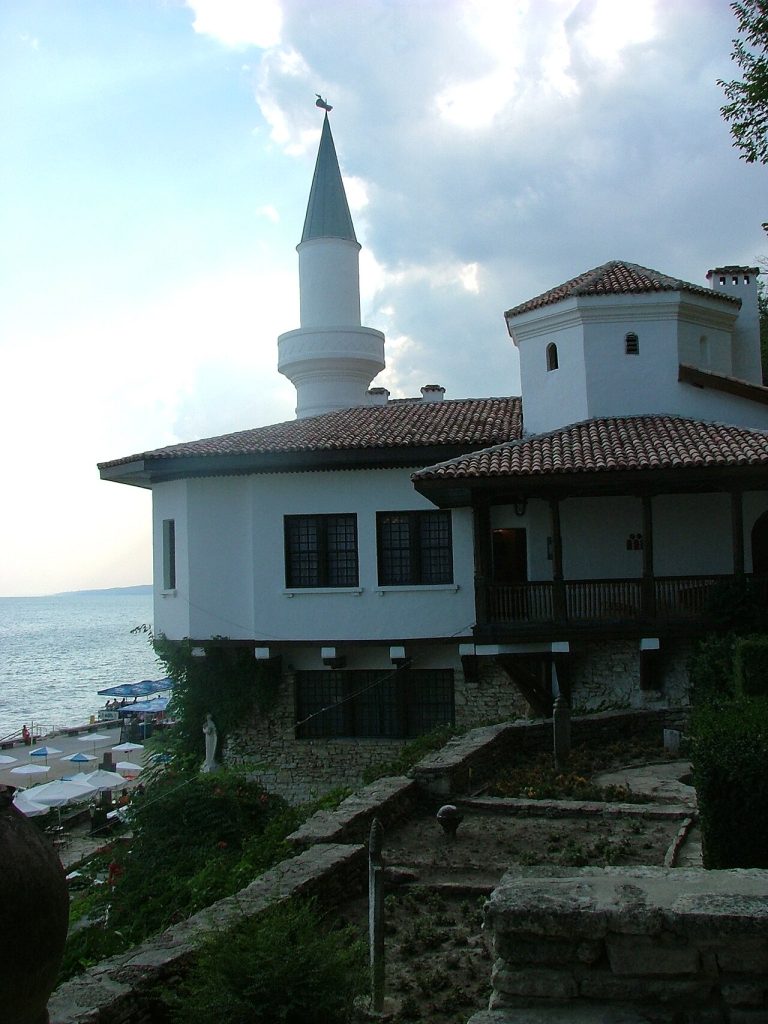
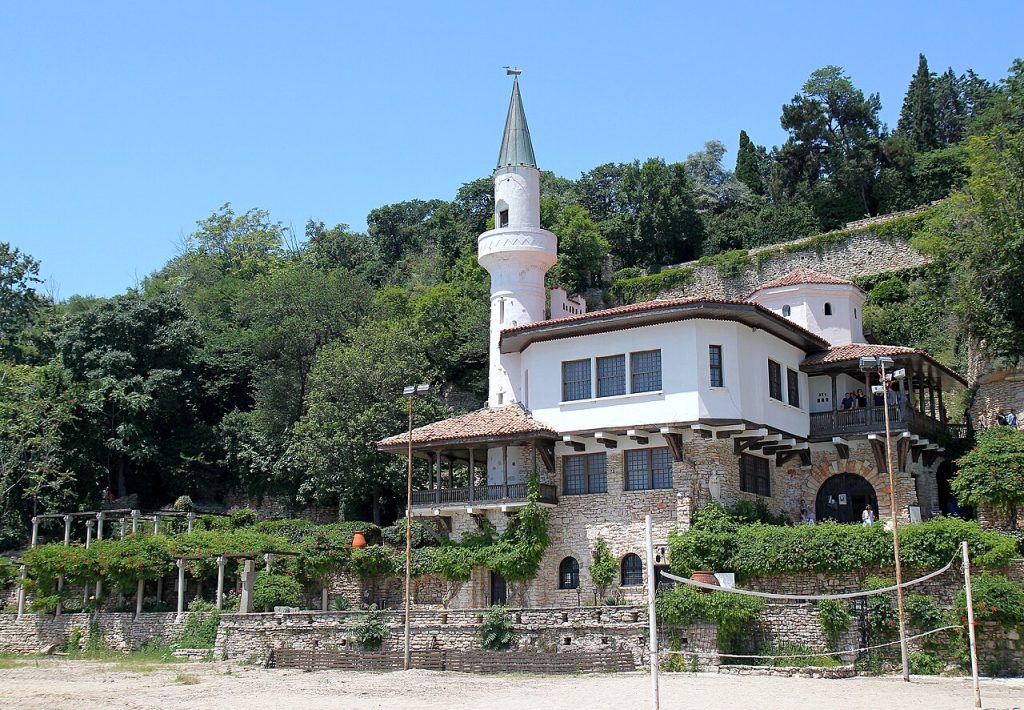
Now, stop on the terrace below the villa and look at the minaret. There is a slim white tower rising beside a Mediterranean-looking house, on a Bulgarian coast, built by a Romanian queen who was born in England and whose grandmother was Queen Victoria.
Balchik is the strangest small palace in this series, and the most personal. It was not built for the state, for ceremony or for dynasty. It was built because a woman in her fifties found a stretch of coastline she loved and decided to make a private world there.
She called it the Quiet Nest. Nothing about it is quiet now, because it is one of Bulgaria’s most visited gardens, but the intention is still legible everywhere.
- The Coast That Changed Countries
- Queen Marie and Her Second Life
- Finding Balchik
- Building the Quiet Nest
- The Minaret and the Chapel
- The Bahai Connection
- The Terraced Gardens
- Cactuses on the Black Sea
- The Heart in the Chapel
- 1940 and a New Border
- The Botanical Garden
- Balchik Today
- Visiting Notes
The Coast That Changed Countries
Southern Dobruja, the stretch of coast and farmland between the Danube and the Black Sea, has changed sovereignty repeatedly. Ottoman until 1878, Bulgarian until 1913, Romanian from 1913 to 1940, and Bulgarian since.
When Marie built her villa here in the 1920s, Balchik was in Romania. When she died in 1938 it still was. Two years later the Treaty of Craiova returned the region to Bulgaria, and the palace changed country without moving.
That fact explains the peculiar position of the site today: a Romanian royal house, deeply loved in Romania, maintained as a Bulgarian national monument.
Queen Marie and Her Second Life
We met Marie at Cotroceni, as the energetic queen who nursed in the First World War and lobbied at the Paris Peace Conference. Balchik belongs to her later years, after Ferdinand’s death in 1927, when her political role shrank and her son Carol II pushed her aside.
She responded by building. Balchik became her project, her refuge and her stage, and she spent long periods here with a small household.
Visitors described her walking in Turkish-influenced dress among the terraces, and the villa was deliberately informal: small rooms, low ceilings, no throne, no court.
Finding Balchik
She first visited the area in the early 1920s and was immediately taken by the white chalk cliffs, the quality of the light, the Turkish and Tatar villages along the coast and the sense of being at the edge of several cultures at once.
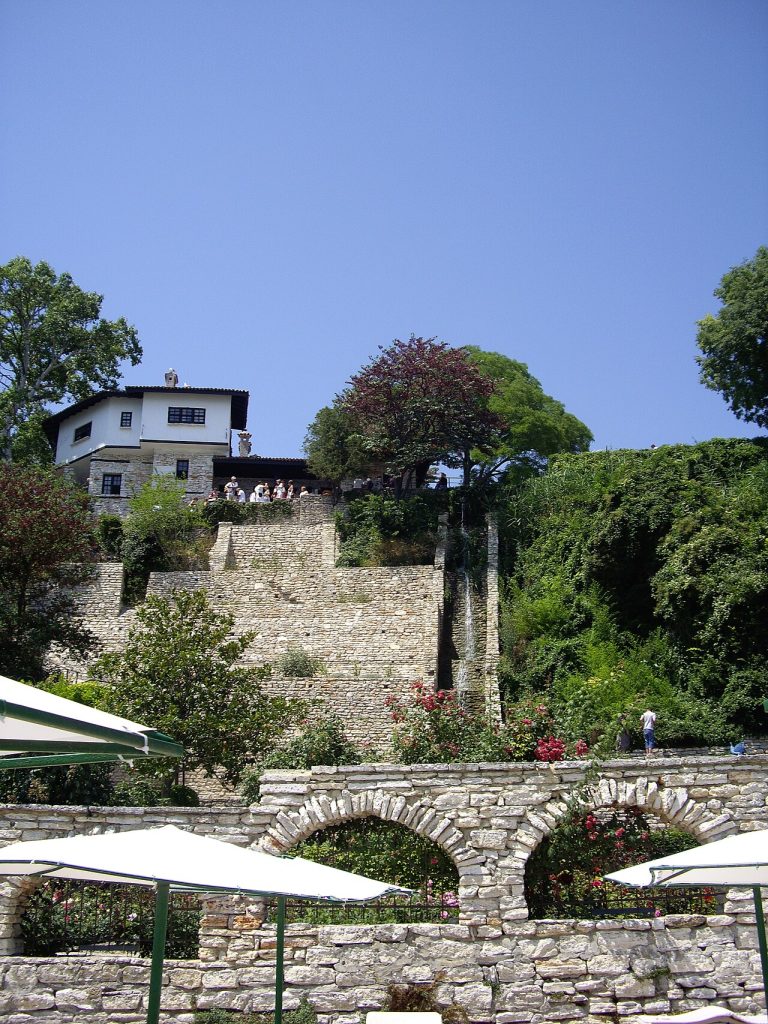
The site she chose was a steep slope running down to the water, difficult to build on and expensive to terrace, which is why the complex is a sequence of levels rather than a single house.
Buying land in a recently annexed region was politically useful as well as personally satisfying, and the Romanian state encouraged such investments in Dobruja.
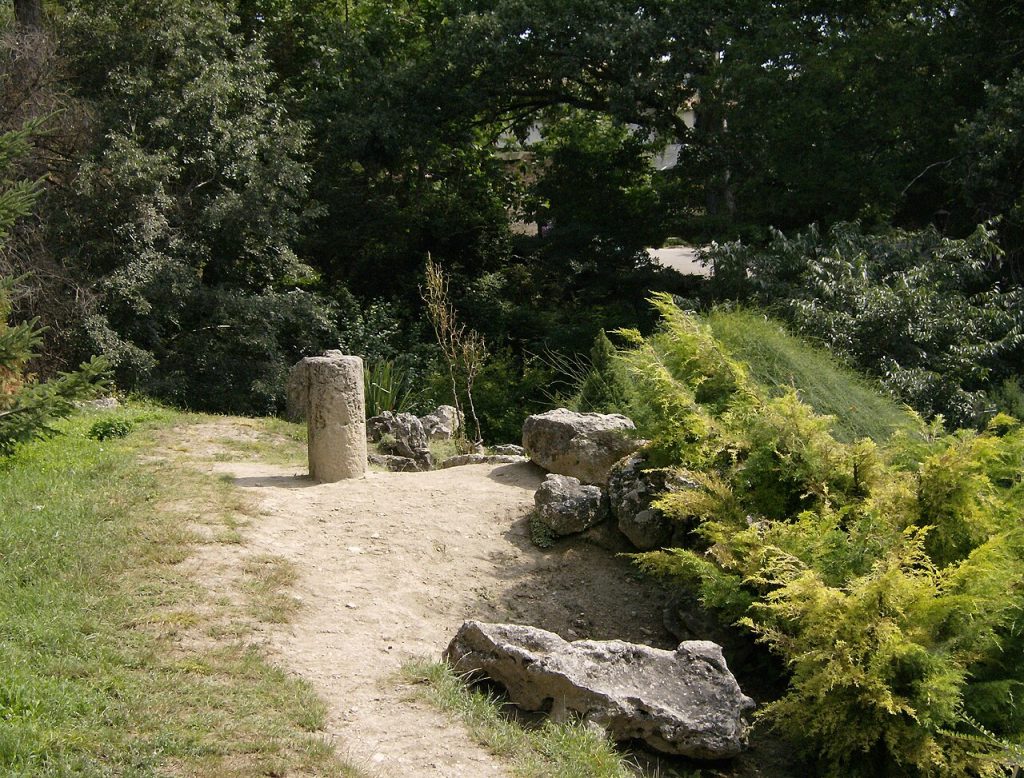
Building the Quiet Nest
Construction ran from 1924 into the 1930s, with the Italian architects Augustino Amerigo and Americo Ambiami working with Marie’s own ideas, which she supplied in quantity and detail.
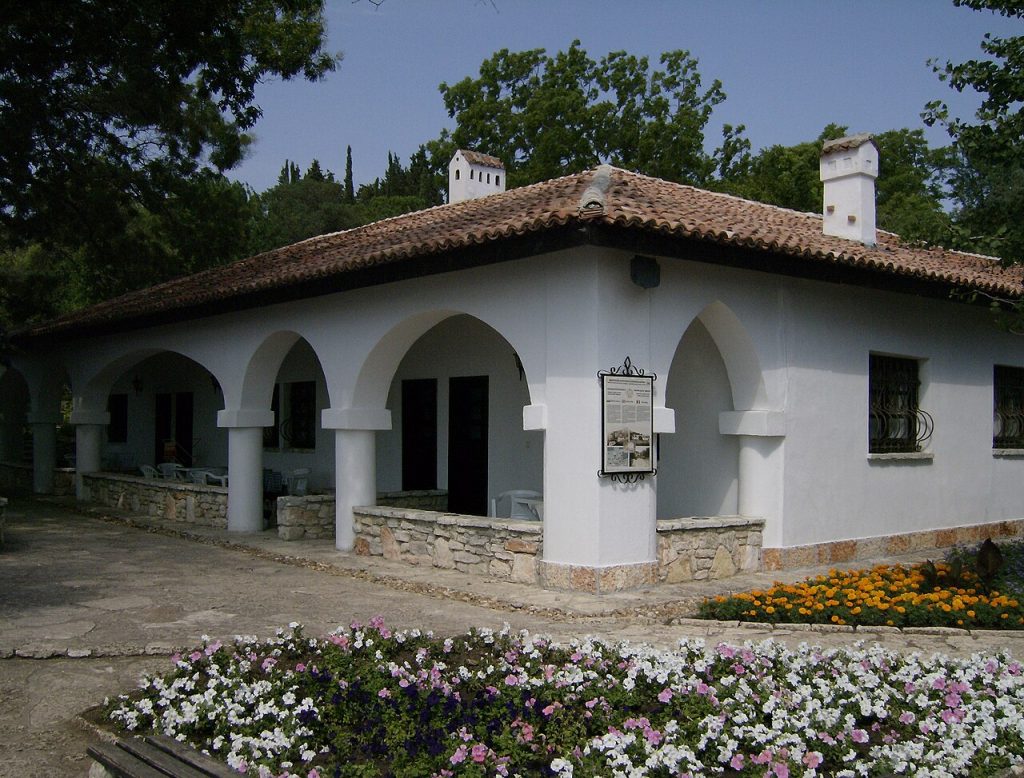
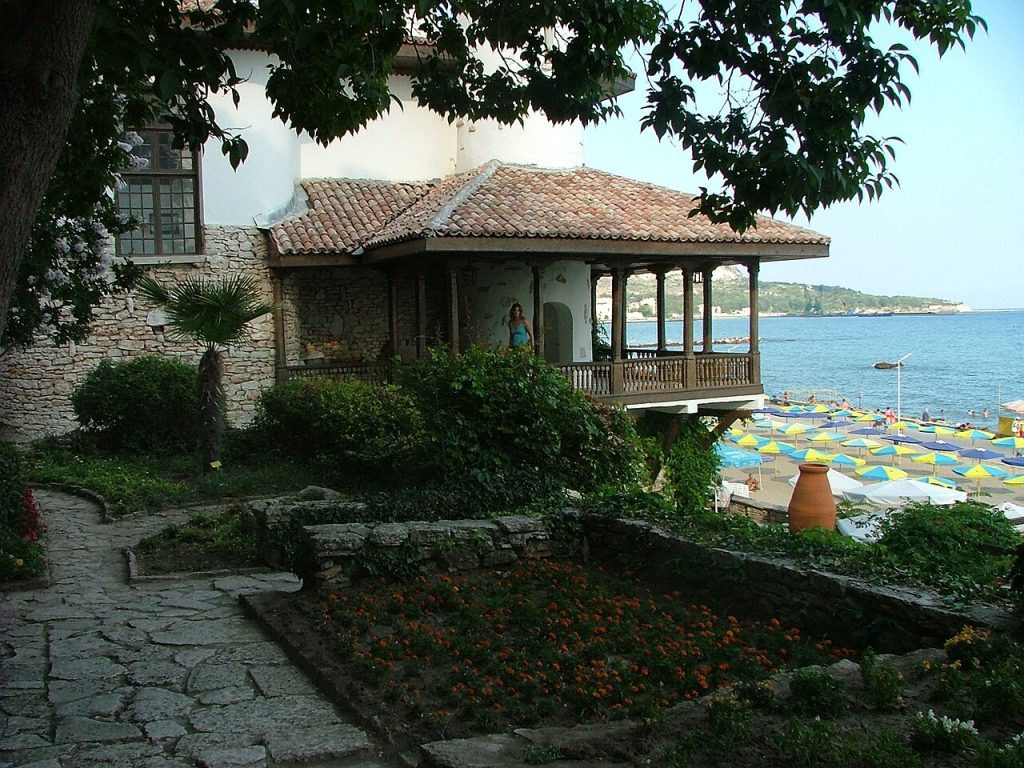
The main villa is small: a few rooms, a terrace, a tower. Around it she added guest houses, a wine cellar, a mill, a chapel, bridges, fountains and pavilions, each with its own name and character.
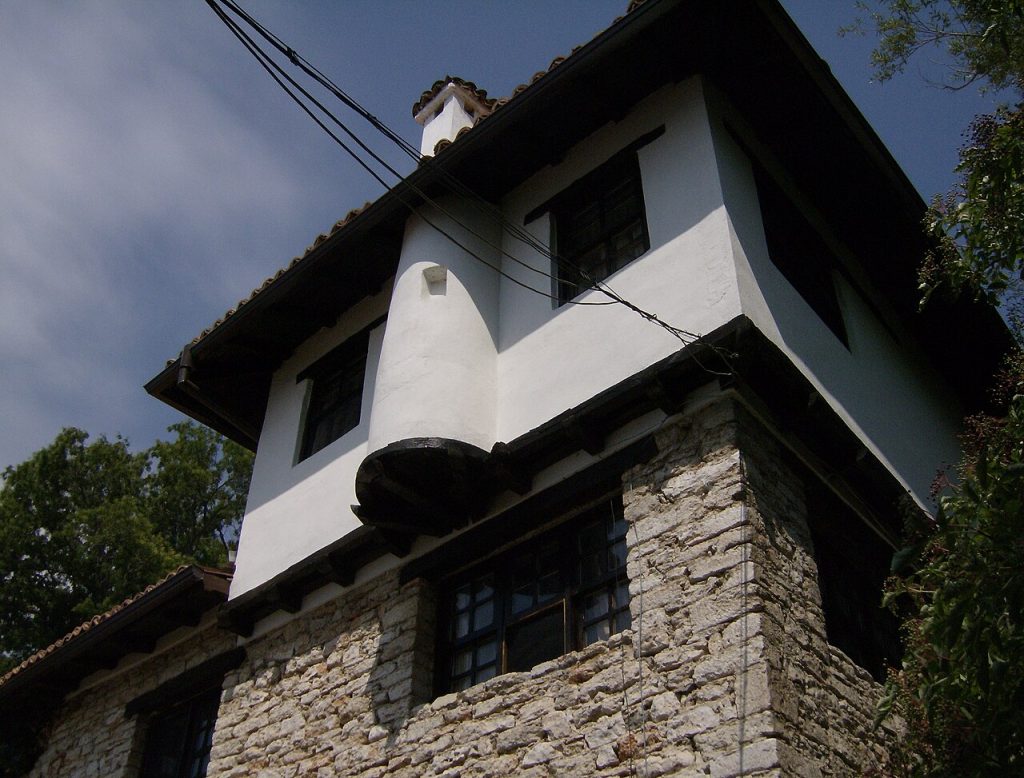
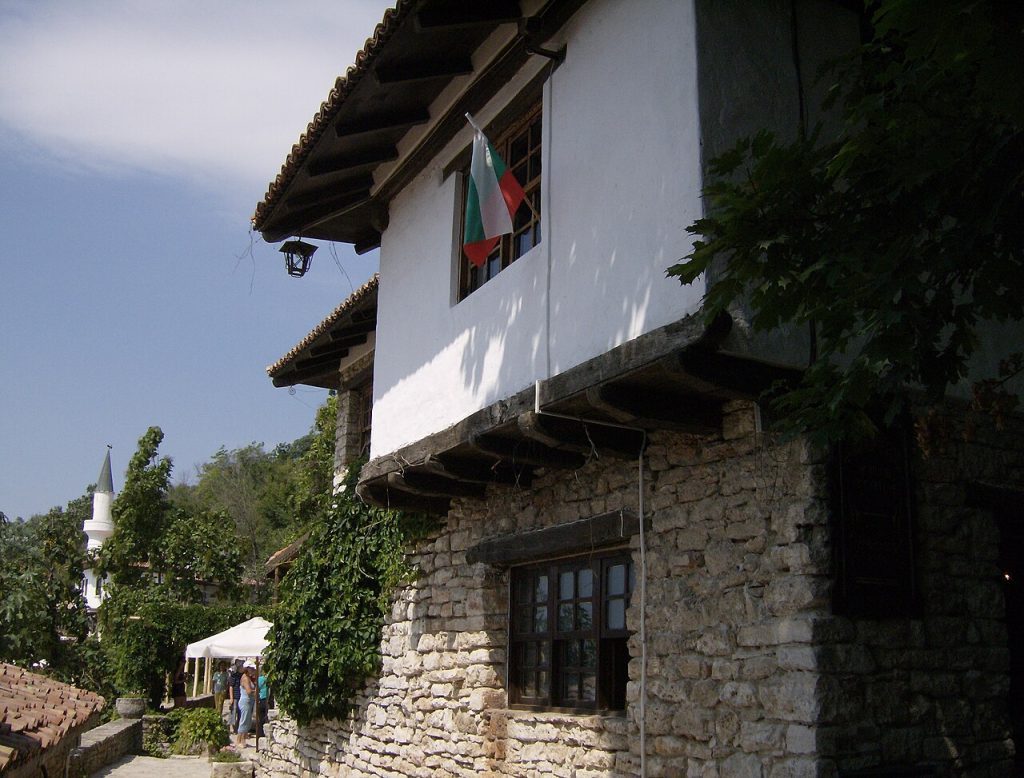
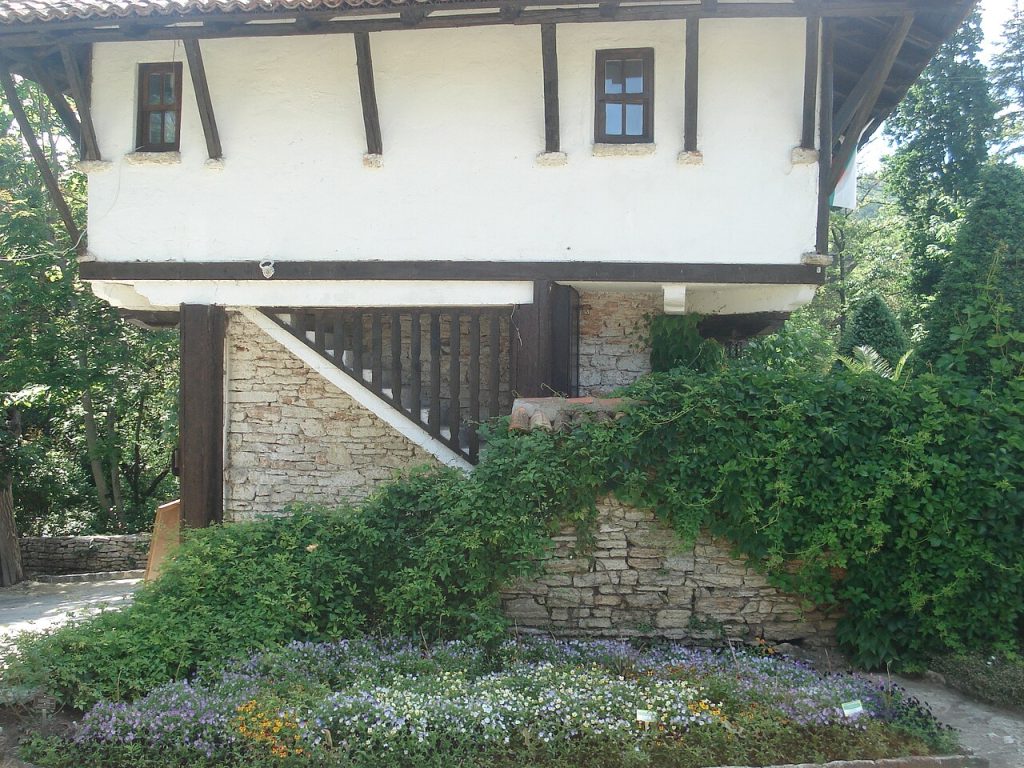
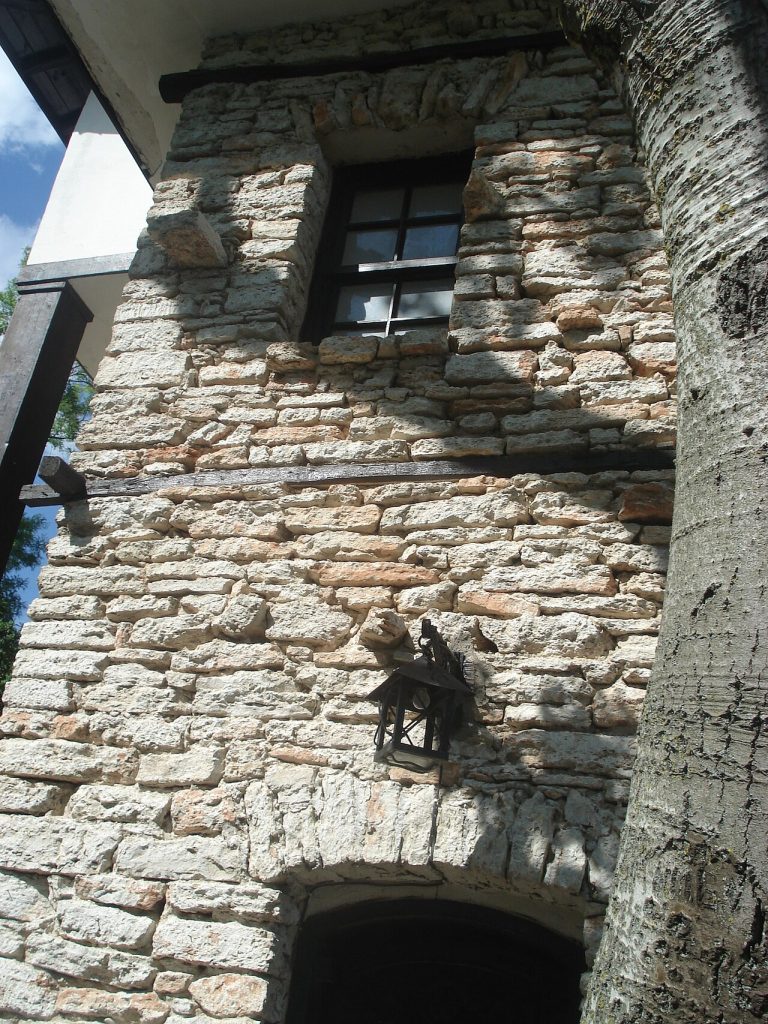
The architectural language is Mediterranean with strong Ottoman and Balkan elements, using local stone and white render, and it fits the coast far better than a European palace would have done.
The Minaret and the Chapel
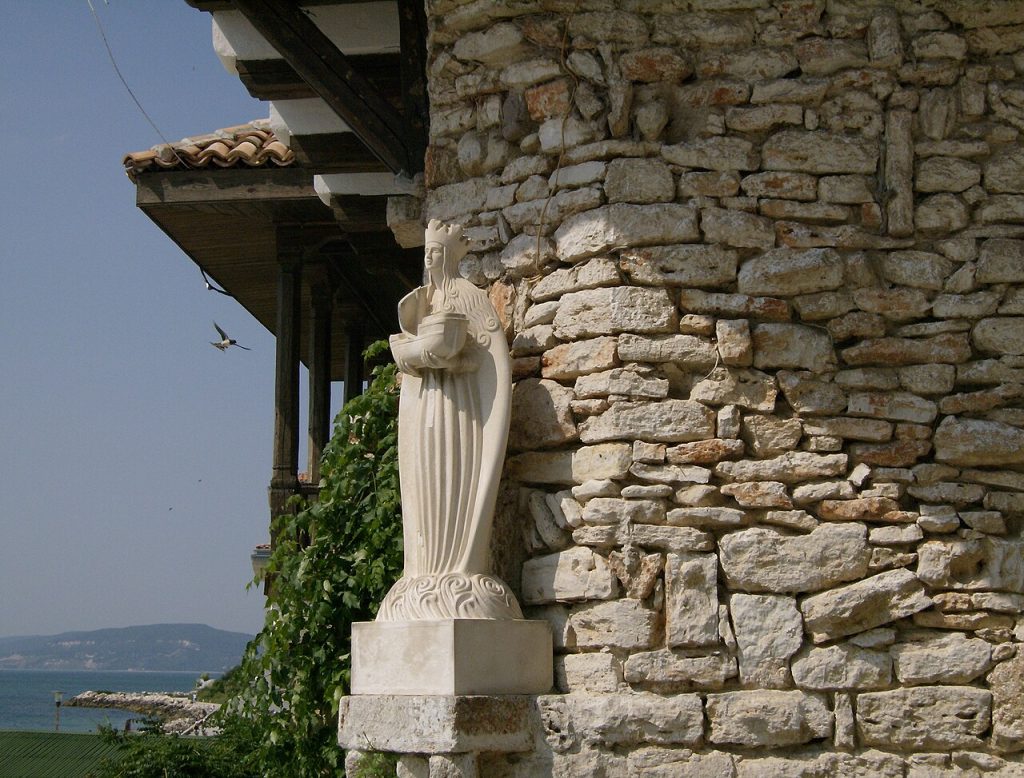
The minaret is the signature. It rises beside the villa, white and slender, and it is not a mosque tower but a decorative structure, built because Marie liked the form and because it tied the house to the region’s Ottoman past.
Beside it stands the chapel of Stella Maris, Orthodox in dedication but eclectic in decoration, mixing Byzantine, Catholic and folk elements.
Marie converted to Orthodoxy on marriage but kept an unusually syncretic religious outlook, and the buildings here reflect that.
The Bahai Connection
Marie was the first reigning royal to publicly express sympathy with the Bahai faith, after reading about it in the 1920s, and she corresponded with Bahai representatives and wrote appreciative statements.
Bahai sources treat her as an important early supporter. She never formally converted, and her published statements are more about universal religious sympathy than about doctrine.
The eclecticism at Balchik, with Orthodox chapel, minaret and Mediterranean villa on one site, is the architectural version of the same attitude.
The Terraced Gardens
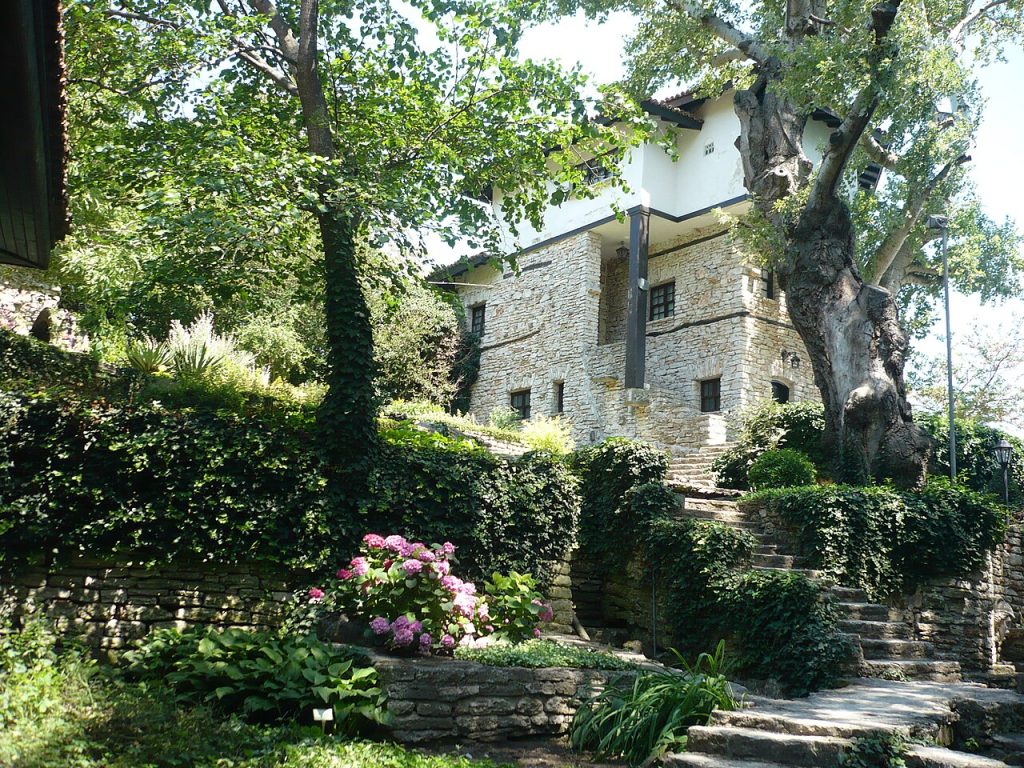
The gardens descend the slope in a series of terraces linked by stairs and paths, with water running through channels, pools and fountains, and planting that mixes Mediterranean, Balkan and exotic species.
The Swiss garden designer who worked here, along with Marie’s own instincts, produced something that feels like a Moorish garden adapted to the Black Sea.
It is the best surviving example of a royal private garden of this period in southeastern Europe.
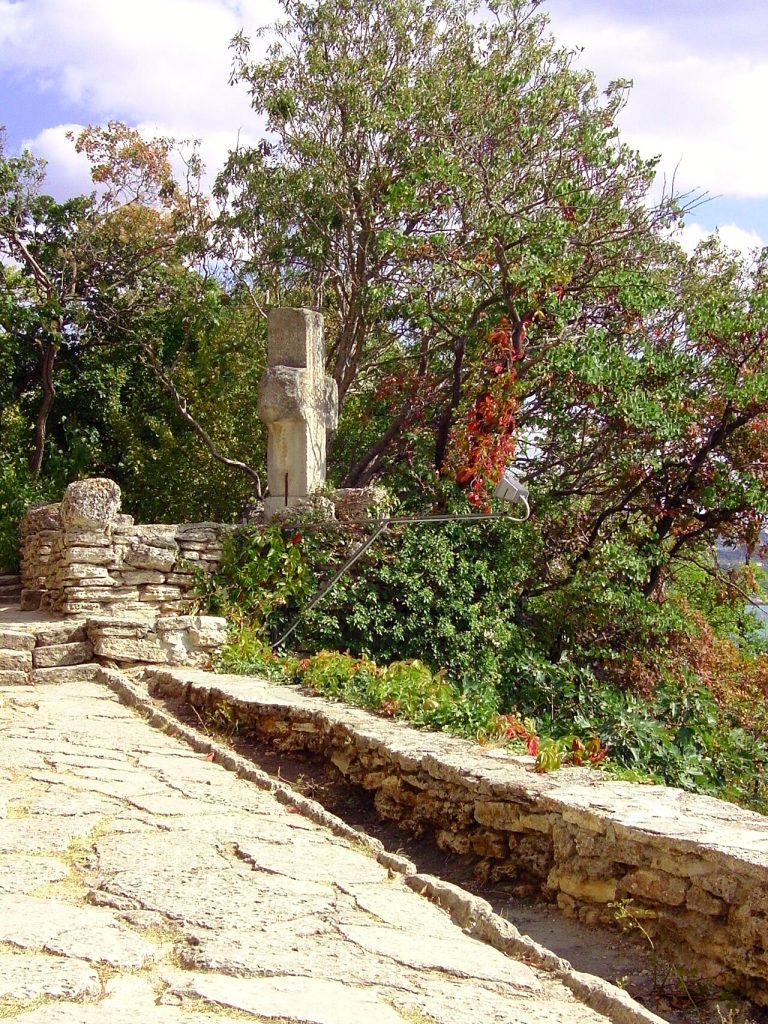
Cactuses on the Black Sea
Since the 1950s the site has housed a botanical garden under Sofia University, and one of its specialities is a large collection of cactuses and succulents, said to be among the biggest in southeastern Europe.
Seeing several hundred species of desert plant on a Bulgarian sea cliff is unexpected, and in summer the collection is displayed outdoors across the terraces.
The garden also holds rose collections, a Japanese section and a substantial tree collection, and it functions as a working scientific institution.
The Heart in the Chapel
Marie died in 1938 and asked that her heart be kept at Balchik, in the chapel of Stella Maris, in a silver casket. It was placed there, in the place she had made for herself.
When the region returned to Bulgaria in 1940, the casket was taken to Romania, eventually to Bran Castle, and later held by the National History Museum in Bucharest. In 2015 it was returned to Pelisor Castle at Sinaia.
The chapel at Balchik still carries the story, and Romanian visitors come specifically for it. Few royal relics have travelled so much in eighty years.
1940 and a New Border
The Treaty of Craiova in September 1940 transferred southern Dobruja from Romania to Bulgaria, with an agreed population exchange that moved tens of thousands of people in both directions.
It is one of the few border changes of that period that has not been seriously contested since, and it is cited as a rare example of a negotiated transfer that held.
The palace stayed where it was. Its owner’s family left, and the Bulgarian state took over the site.
The Botanical Garden
In 1955 the complex was given to Sofia University as a botanical garden, and that institutional home has protected it ever since. Scientific use gave the site a purpose that mere heritage status might not have done.
The garden covers around sixty-five thousand square metres and holds several thousand plant species, with the historic buildings integrated as part of the visitor route.
Restoration campaigns have worked on the villa, the chapel, the water systems and the terraces.
Balchik Today
The town of Balchik is a small Black Sea port with white cliffs, a long promenade and a reputation as the quieter alternative to the big resorts further south. Golf courses and hotels have arrived, but the centre remains modest.
The palace is the main attraction and gets busy in July and August, mostly with Bulgarian and Romanian visitors. Out of season it is calm and the light on the cliffs is extraordinary.
Go in late spring or September if you can choose.
Visiting Notes
Wear shoes that handle steps, because the site is all slope and stairs, and allow longer than you expect. Most people come for an hour and stay for three.
Start at the top, work down to the sea, and then climb back through a different route. The villa interiors are small and quickly seen; the gardens are the point.
Finish on the terrace by the water, which is where Marie spent her afternoons, and which has not changed much at all.
Watch the Palace on Film
Visiting Balchik Palace Today
Balchik lies on the northern Bulgarian Black Sea coast, about forty kilometres northeast of Varna and thirty from Albena, reachable by bus from Varna in under an hour or by car along the coast road.
The palace and botanical garden open daily with ticketed entry, longer hours in summer and shorter in winter; the villa interiors have their own ticket. Guided tours are available in season.
Allow two to three hours, go early or late in the day in summer, and combine it with Cape Kaliakra further north. Find it here: https://www.google.com/maps?q=43.4017,28.1636
Palaces Nearby
You May Like
Vrana Palace and the Bulgarian Kings Who Planted a Garden