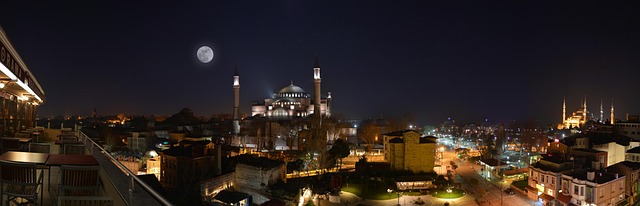
The year 1453 marked one of the great turning points in world history, and Hagia Sophia stood at its centre. When the Ottomans took Constantinople under the sultan later known as the Conqueror, the cathedral that had symbolised the Byzantine Empire was transformed into a mosque, beginning a new chapter that would last for centuries.
From Cathedral to Mosque
According to historical accounts, the great church was in a state of disrepair by the time of the conquest. The sultan gave particular importance to the building, ordering that it be cleaned and converted for Muslim worship without changing its essential name. The first minaret was added during his reign, and because it had to be raised quickly, it was built of brick rather than the stone the Ottomans usually preferred. Further minarets were added by later sultans, giving the building its now-familiar silhouette.
Ottoman Additions and Restoration
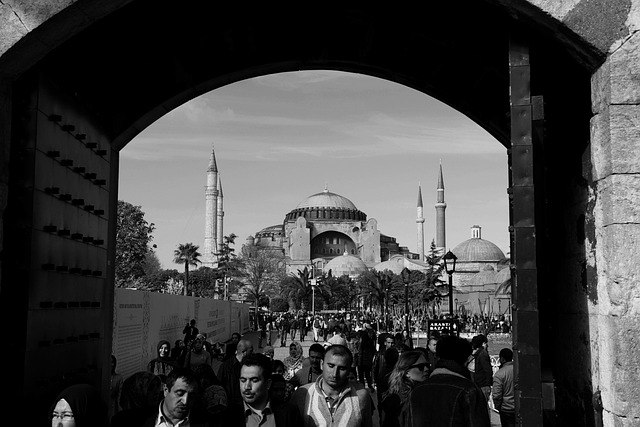
Over the following centuries the Ottomans enriched and strengthened the structure. A prayer niche, or mihrab, was set into the wall to mark the direction of Mecca, and enormous lamps brought from elsewhere in the empire were placed beside it. When the building showed signs of strain, the celebrated architect Sinan was brought in to reinforce it, adding buttresses that helped the ancient structure survive. Great round medallions bearing Arabic calligraphy were later hung in the interior, becoming some of its most recognisable features.
Museum and Mosque Again
In the twentieth century the building entered yet another phase, serving for several decades as a museum open to all. During this period efforts were made to uncover and conserve the Byzantine mosaics that had been covered over. In 2020 it was reopened as a working mosque, returning to the role it had held for so long while remaining a destination admired by visitors from around the globe.
More Hagia Sophia Guides
- Hagia Sophia: A Monument of Two Empires
- The Byzantine Cathedral: Origins and Architecture
- Around Hagia Sophia: Historic Sultanahmet
- Visiting Hagia Sophia: A Complete Guide


