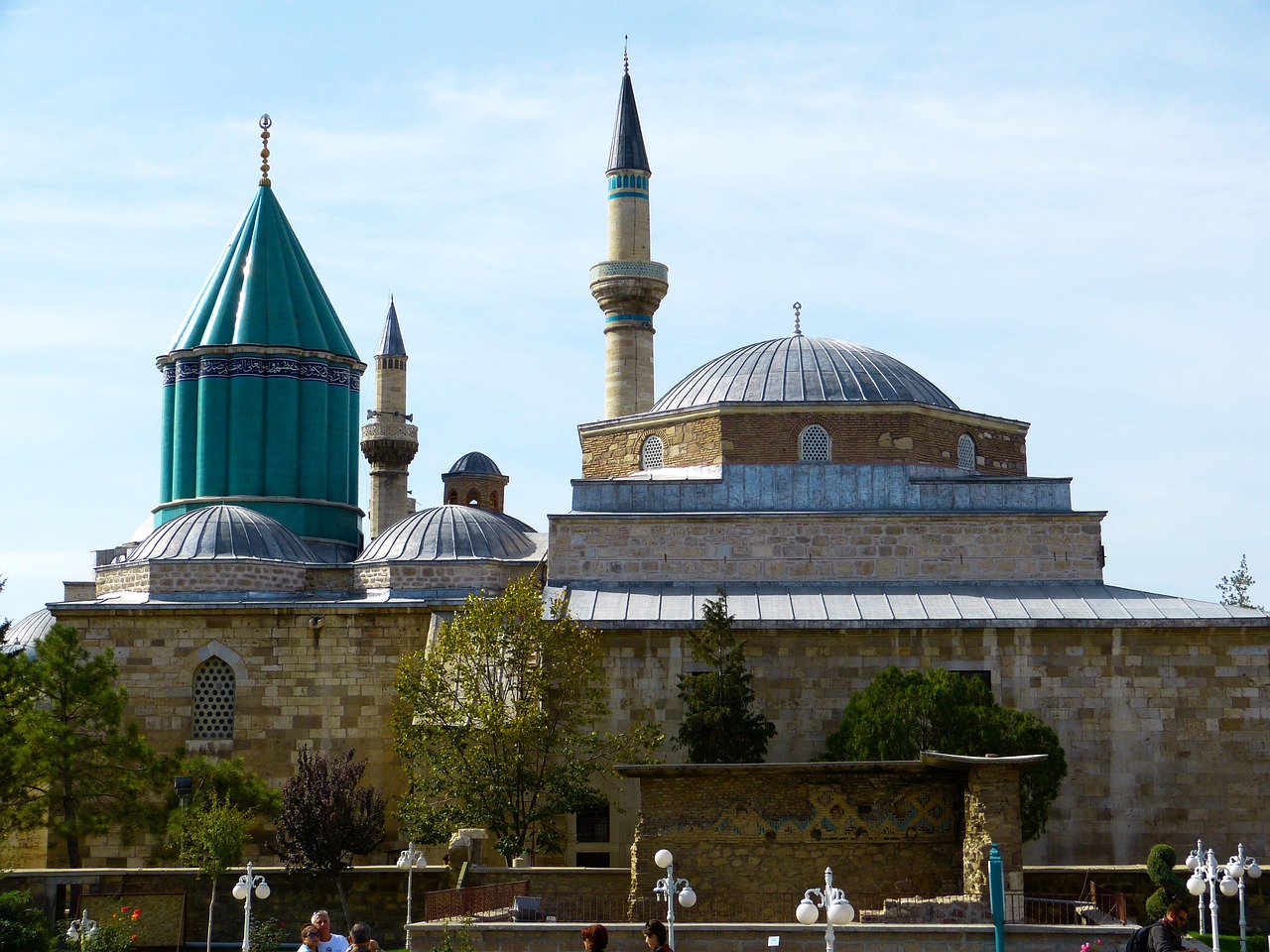
Rising above the rooftops of Konya in central Anatolia, the fluted turquoise dome of the Mevlana Mausoleum is one of the most recognisable silhouettes in Turkey. Beneath it rests Jalal al-Din Rumi, the thirteenth-century poet and mystic known across the Islamic world simply as Mevlana, “our master.” For centuries pilgrims and admirers have travelled here to pay their respects.
The Green Dome
The mausoleum, often called the Yesil Kubbe or Green Dome, was raised over Rumi’s grave after his death in 1273. Supported by sturdy columns and clad in distinctive turquoise tiles, the dome became the spiritual centre of a complex that grew over the following centuries. Ottoman sultans, several of whom were drawn to the Mevlevi order, lavished care on the site and helped preserve it through the ages.
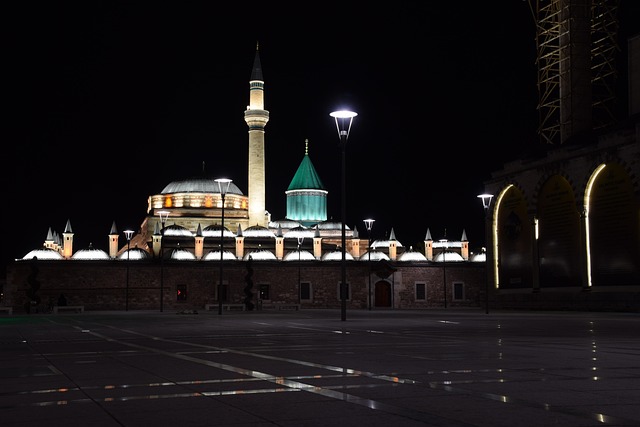
From Lodge to Museum
For generations the complex served as the dergah, or lodge, of the Mevlevi dervishes who gathered here to study, pray and perform their devotions. In 1926 it was reorganised as a museum, and today it welcomes visitors of every background. Inside, the tombs of Rumi and his family are draped in richly embroidered cloth, and cases display manuscripts, musical instruments and relics connected to the order.
A Place of Reflection
Despite its status as a museum, the site retains the atmosphere of a sanctuary. Many visitors come quietly to read a line of Rumi’s poetry, offer a prayer, or simply sit in the peaceful rose garden that surrounds the buildings. For travellers, it is both a major historical monument and a window into the gentle, inward-looking strand of Islamic spirituality that Rumi came to represent.


