On the right bank of the Tiber in Rome, a short walk from Saint Peter’s, stands one of the most extraordinary buildings in a city full of them. Castel Sant Angelo is a great cylindrical fortress crowned by a bronze angel, and its story spans nearly two thousand years, from the age of the Roman emperors to the present day. Few buildings anywhere have lived so many lives, and few carry so much of the history of a great city within their walls.
It began as something quite different from a castle: a magnificent tomb, the mausoleum of a Roman emperor, built to hold his ashes and those of his successors. But as the centuries passed and Rome changed, the great round tomb was transformed again and again, into a fortress, a papal stronghold and refuge, a prison, and finally a museum. Each age left its mark, and the building we see today is a palimpsest of Roman, medieval, and Renaissance history layered one upon another.
Above it all stands the angel that gives the castle its name, a bronze figure of the Archangel Michael sheathing his sword, commemorating a miracle that was said to have saved the city from plague. Come with me to the banks of the Tiber and we will explore this most Roman of castles, following its long journey from an emperor’s tomb to a papal fortress, and discovering why Castel Sant Angelo is one of the most fascinating buildings in all of Italy.
In This Article
- A Fortress on the River
- An Emperor’s Tomb
- From Mausoleum to Stronghold
- The Angel That Named the Castle
- The Popes’ Fortress and Refuge
- A Spiral Ramp and Painted Rooms
- A Prison of the Powerful
- The Terrace and the View
- The Bridge of Angels
- Bernini’s Heavenly Guard
- The Instruments of the Passion
- Tosca and the Fireworks
- Visiting Castel Sant’Angelo
A Fortress on the River
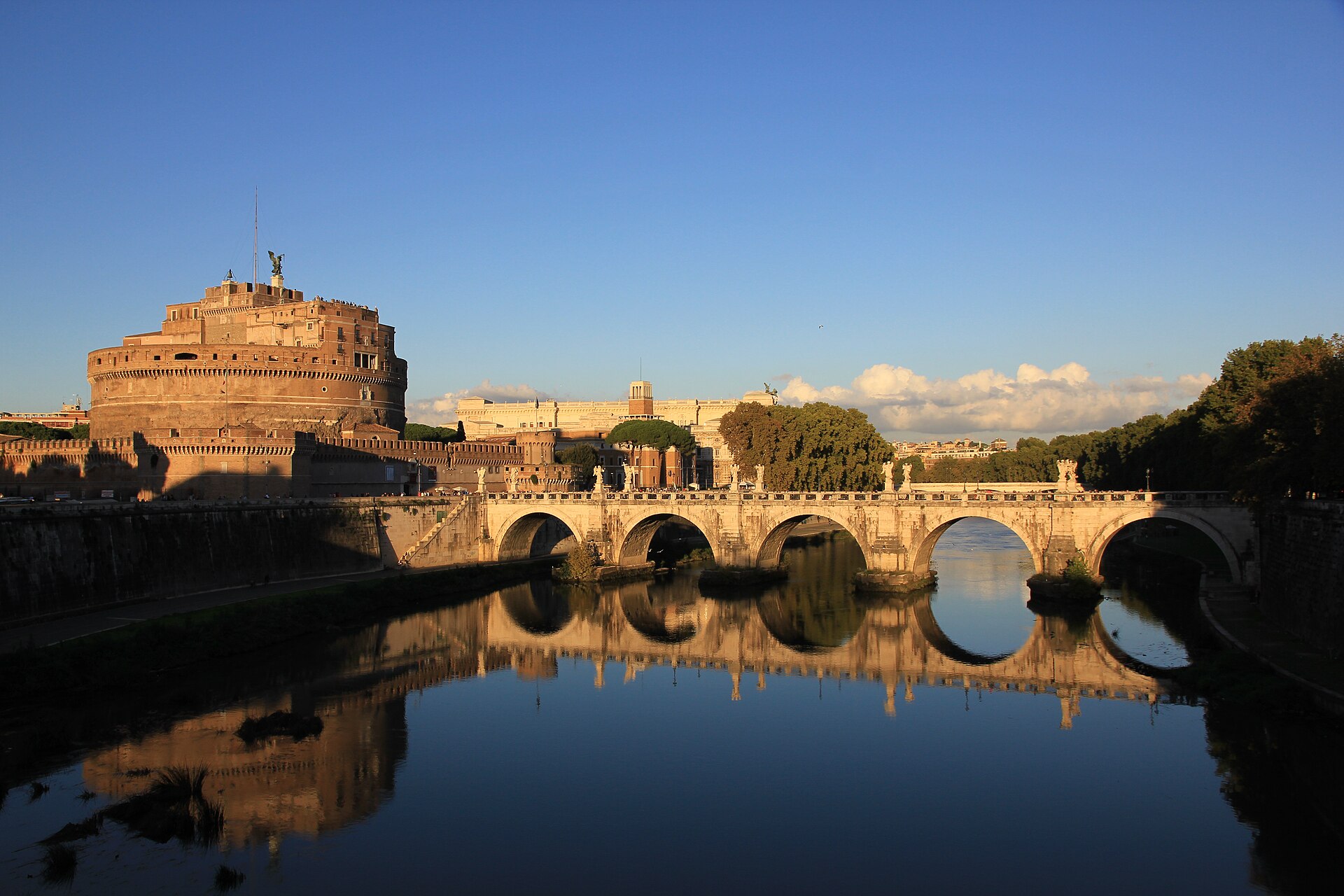
Castel Sant Angelo occupies one of the most commanding positions in Rome, on the bank of the Tiber close to the point where the river bends around the district that would become the Vatican. For a fortress, this was a position of great strategic value, controlling a crossing of the river and standing guard over the approaches to the heart of the city and, later, to the seat of the popes. Its situation made it, for many centuries, the key to Rome.
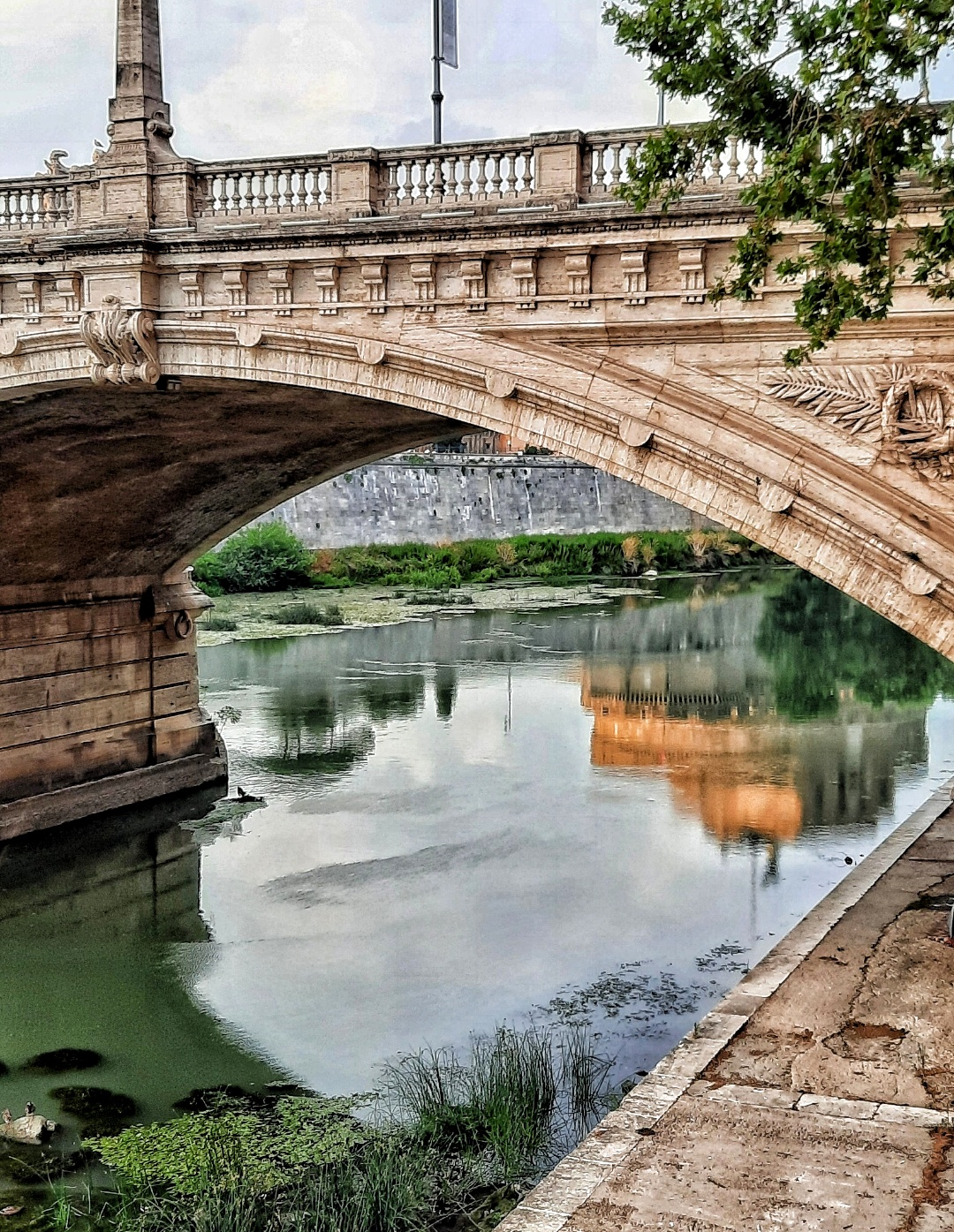
The river has always been part of the castle’s identity, wrapping around its base and reflecting its great bulk in the water. In a city built on the Tiber, the river was both a highway and a defence, and a stronghold on its banks commanded the life that flowed along it. Castel Sant Angelo, rising sheer above the water, dominated this vital artery, and the sight of the round fortress mirrored in the Tiber is one of the classic images of Rome.
The castle’s closeness to the Vatican would prove decisive in its later history, for it lay just far enough from Saint Peter’s to be a separate strongpoint and just close enough to serve as the popes’ refuge in times of danger. This position, on the river and near the papal seat, shaped the whole story of the building, turning an imperial tomb into the fortress of the popes and one of the most important defensive sites in the history of Rome.
In a city as densely built and as long-inhabited as Rome, a single dominant fortress on the river was of enormous importance, and whoever held Castel Sant Angelo held a decisive advantage in any struggle for control of the city. Time and again in Rome’s turbulent history the castle proved its worth, its command of the river and its nearness to the papal seat making it the pivot on which the fate of the city could turn.

An Emperor’s Tomb
The origins of Castel Sant Angelo lie not in war but in death, for it was built in the second century of our era as a mausoleum, a grand tomb for the Roman Emperor Hadrian and his family. Hadrian, one of the most cultured and well-travelled of the Roman emperors, planned it as his final resting place, and it was completed shortly after his death. Its great cylindrical form, raised on a square base, was designed to impress and to endure.
In its original state the mausoleum was even more magnificent than what survives today. The great drum was faced with fine marble, adorned with statues and decoration, and crowned, it is thought, with a garden and a grand sculptural monument. Within, the ashes of Hadrian and of the emperors who followed him were laid to rest, reached by a spiralling ramp that climbed through the heart of the structure, much of which can still be walked today.
For a time the mausoleum served its intended purpose as the tomb of emperors, a monument to the power and dignity of imperial Rome. But the empire that built it would not last forever, and as Rome’s fortunes changed, so did the fate of Hadrian’s great tomb. The building that had been raised to honour the dead would, in the troubled centuries that followed, be pressed into the service of the living, beginning the long transformation that would turn a mausoleum into a mighty fortress.
The choice of a great cylindrical form for the mausoleum drew on earlier Roman traditions of monumental tomb-building, and Hadrian, a great builder and admirer of architecture, intended his resting place to rival the grandest monuments of the past. That the structure was solid and imposing enough to be turned, centuries later, into a fortress is a testament to the ambition and skill of its original Roman builders.
The mausoleum was not built in isolation but was approached across a bridge over the Tiber constructed at the same time to give access to it, so that from its very beginning the tomb and its bridge formed a single grand composition. That ancient link between the building and its river crossing has endured, in transformed form, right down to the present day.
From Mausoleum to Stronghold
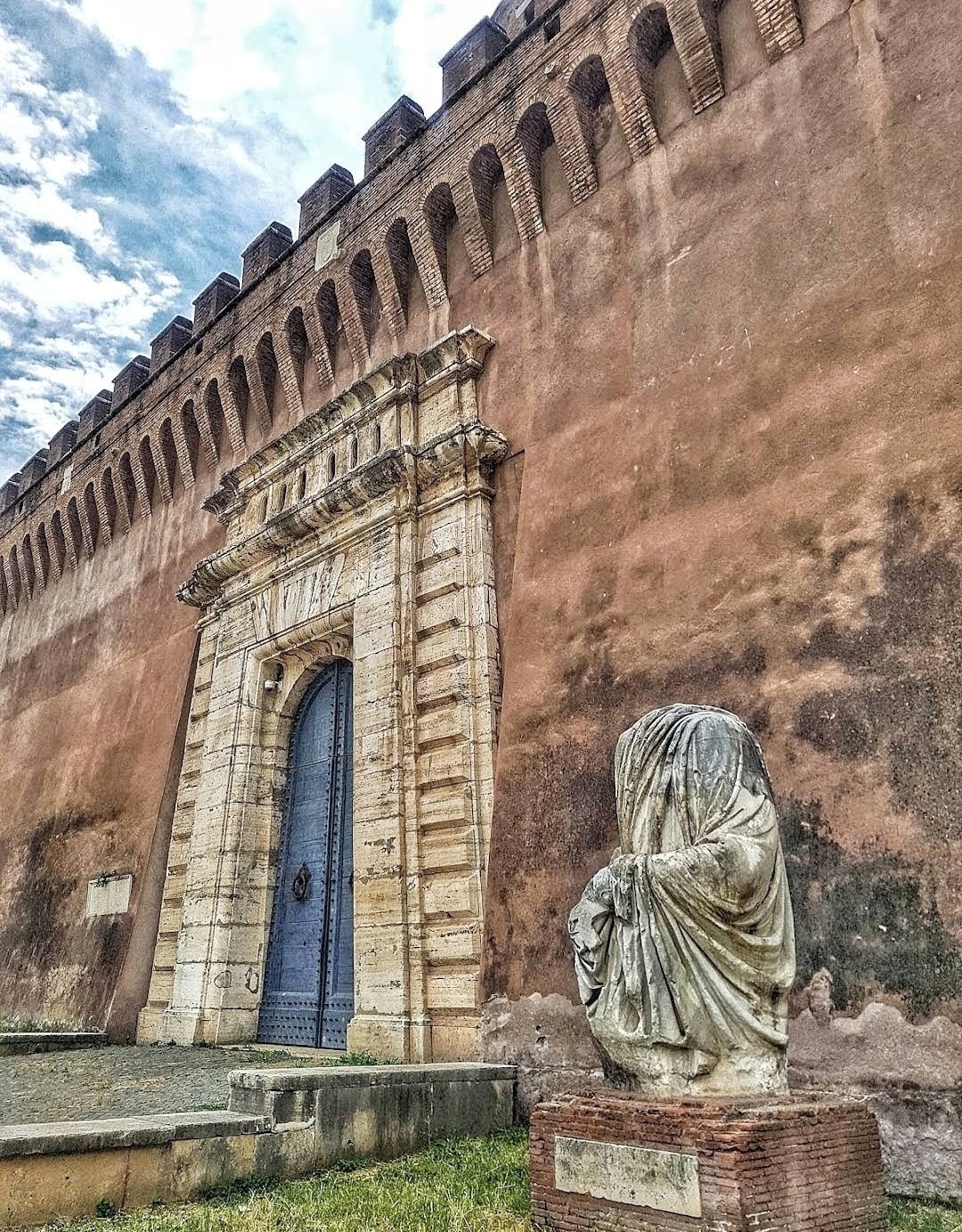
As the Roman Empire declined and the city faced repeated threats, the great tomb of Hadrian found a new and unexpected role. Its massive, solid construction made it a natural stronghold, and in the troubled centuries of the late empire it was incorporated into the defences of Rome, becoming a fortress guarding the approaches to the city. The tomb of an emperor became a bastion of war.
This transformation was the first of many. Over the following centuries the building was adapted again and again to serve as a fortress, its ancient walls strengthened and its interior reworked to meet the changing demands of defence. The marble and statues of the imperial tomb were stripped away or destroyed, and the great drum took on the grim, functional character of a military stronghold, a role it would play for well over a thousand years.
The conversion of Hadrian’s mausoleum into a fortress is a striking example of how the monuments of ancient Rome were reused and reshaped by the ages that followed. Rather than being demolished, the great tomb was given a new purpose, its solidity and its commanding position too valuable to waste. In this the castle mirrors the story of Rome itself, an ancient city continually rebuilding itself upon its own foundations, the past never quite erased but always transformed.
The successive layers of fortification added over the centuries gradually buried the elegant Roman tomb within an ever-growing shell of military architecture, so that the graceful mausoleum of Hadrian disappeared inside a bristling stronghold. Peeling back these layers in the imagination, as one explores the castle today, is part of the fascination of the place, a reminder of how completely the needs of war reshaped the monuments of peace.

The Angel That Named the Castle
The castle owes its name and its crowning ornament to a famous legend from the end of the sixth century. In that time, so the story goes, Rome was suffering from a terrible plague, and the pope led a great procession through the city to pray for deliverance. As the procession passed the old fortress, the pope is said to have seen a vision of the Archangel Michael standing atop the building, sheathing his sword as a sign that the plague was about to end.
Whether or not one believes the tale, its effect was lasting. The fortress came to be known as the Castle of the Holy Angel, in memory of the vision, and an image of the archangel was placed upon its summit to commemorate the miracle. Over the centuries several such statues have crowned the castle, the present one a fine bronze figure of Michael sheathing his sword, gazing out over the city he was believed to have saved.
This legend transformed the meaning of the building. What had been an imperial tomb and then a grim fortress became also a place of the sacred, linked to a story of divine mercy and protection. The angel on its roof gave the castle a spiritual dimension that has clung to it ever since, and it is the bronze archangel, more than anything else, that has given Castel Sant Angelo its enduring identity and its beautiful, evocative name.
The image of an angel sheathing rather than drawing his sword is a powerful one, a symbol of the end of wrath and the coming of mercy and peace. In choosing this moment to commemorate, the legend gave the castle an emblem of hope and deliverance, and it is fitting that so warlike a fortress should be crowned by an angel in the act of putting up his weapon, a sign of peace above a monument of war.
Several statues of the archangel have crowned the castle over the centuries, each replaced in turn as the years took their toll, so that the figure on the summit today is only the latest in a long line of angels to keep watch over Rome. This continuity of the guardian angel, renewed again and again across the ages, is a fitting emblem for a building that has itself been renewed and transformed so many times.

The Popes’ Fortress and Refuge
In the Middle Ages and the Renaissance, Castel Sant Angelo took on its most famous role, as the fortress and refuge of the popes. As the bishops of Rome grew into great temporal rulers, they needed a stronghold to which they could retreat in times of danger, and the massive old fortress on the Tiber, close to the Vatican, was ideally suited to the purpose. The popes made it their own, and it became the ultimate guarantee of their safety.
To make the castle a true refuge, it was linked to the Vatican by a remarkable feature, an elevated fortified passage running along the top of a wall, by which the pope could pass in secret and in safety from his palace to the fortress without ever setting foot in the streets. This passage allowed the popes to flee to the castle whenever the city became dangerous, and it played a dramatic part in some of the most turbulent episodes of Roman history.
The most famous of these came in the sixteenth century, when Rome was sacked by a rampaging imperial army and the pope of the day fled along the passage to the safety of Castel Sant Angelo, sheltering within its walls while the city was pillaged around him. Episodes like this cemented the castle’s reputation as the last refuge of the popes, the impregnable stronghold to which the head of the Church could retreat when all else failed. For centuries it was, quite literally, the popes’ castle.
The secret passage linking the castle to the Vatican is one of the most romantic features of the whole complex, a hidden road of escape running high above the streets. The knowledge that popes had fled along it in fear of their lives, while chaos reigned in the city below, gives the passage a powerful hold on the imagination, and it remains one of the most evocative reminders of the castle’s role as the last refuge of the papacy.
A Spiral Ramp and Painted Rooms
The interior of Castel Sant Angelo is as layered as its history, and exploring it is like ascending through time. At the base survives the ancient Roman core, including the great spiral ramp built to carry Hadrian’s funeral procession up through the heart of the mausoleum. To walk this ramp is to tread the same path along which the ashes of emperors were once borne, a direct and moving link to the building’s origins nearly two thousand years ago.
Higher up, the character of the interior changes entirely, for here the popes created a series of splendid apartments in which to live during their stays in the fortress. Far from the grim spaces one might expect in a castle, these rooms are richly decorated with frescoes, fine ceilings, and elegant furnishings, transforming the upper levels of the fortress into a Renaissance palace. The contrast between the ancient ramp below and the painted papal rooms above is one of the great pleasures of a visit.
This layering of Roman tomb, medieval fortress, and Renaissance palace within a single building is what makes Castel Sant Angelo so extraordinary. As you climb from the depths to the summit, you pass through the whole history of Rome, from the age of the emperors to the age of the popes, all preserved within the same great cylindrical structure. Few buildings anywhere offer so complete and so vivid a journey through the centuries.
The papal apartments were not merely places of refuge but genuine residences, fitted out with all the luxury and artistry that the Renaissance popes commanded. Skilled painters were employed to decorate their walls and ceilings, and the resulting frescoes are works of real beauty, turning the upper floors of a fortress into a palace worthy of the greatest patrons of the age. Art and defence meet here in a way found in few other buildings.

A Prison of the Powerful
For all its grandeur, Castel Sant Angelo also had a darker function, for over the centuries it served as one of the most notorious prisons in Rome. Its thick walls and secure cells held many prisoners, and among them were some of the most famous names of their age, philosophers, adventurers, and condemned nobles, held within the fortress before their trials or their deaths. The castle that sheltered popes also confined their enemies.
The list of those imprisoned here reads like a roll-call of dramatic and often tragic figures from Roman history. Some were held for their ideas and their defiance of the Church, others for crimes real or alleged, and some awaited execution within the castle’s walls. The contrast between the splendid papal apartments above and the grim cells below captures the double nature of the fortress, at once a palace and a prison, a place of both refuge and confinement.
These stories of imprisonment and death add a somber note to the castle’s history and have made it a place rich in legend and dark romance. The idea of prisoners gazing out through narrow windows at the beautiful city and the flowing river, so near and yet so unreachable, has fired the imagination of writers and artists for generations, and it has helped make Castel Sant Angelo one of the most evocative and atmospheric buildings in all of Rome.
Some of those held in the castle’s cells left their mark in more than memory, and inscriptions and traces of their confinement can still be seen, mute witnesses to the human dramas played out within these walls. The castle’s role as a prison lasted for centuries, and it forms an inseparable part of its history, the shadow side of a building that was also a palace and a place of sanctuary.
The dramatic possibilities of a fortress that was at once palace, refuge, and prison have proved irresistible to storytellers, and Castel Sant Angelo has featured in countless tales, novels, and works of art. Its combination of grandeur and menace, of beauty and darkness, makes it the perfect setting for drama, and its fame in the popular imagination owes as much to these stories as to its real history.
The Terrace and the View
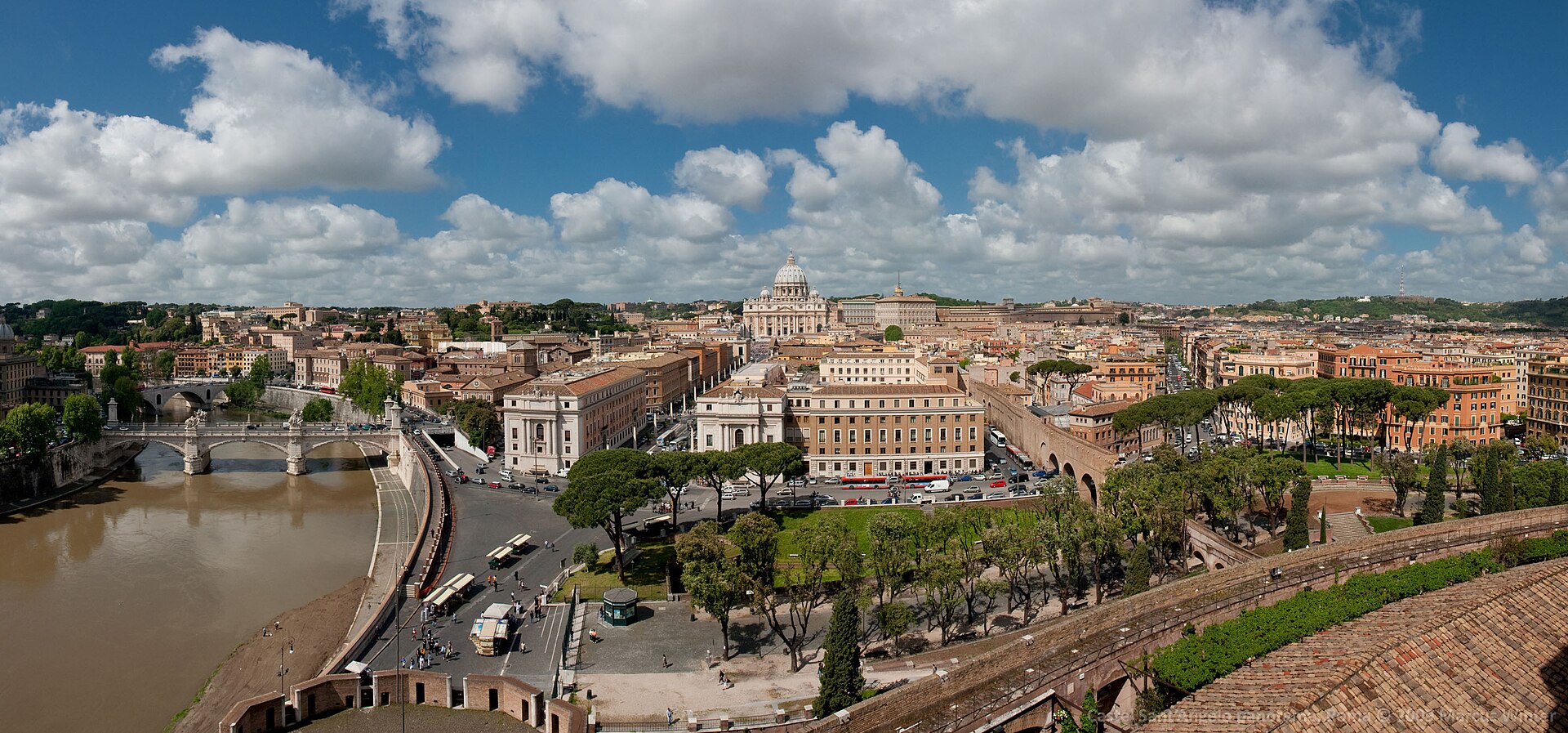
At the very top of Castel Sant Angelo, beneath the bronze angel, lies a terrace that offers one of the most magnificent views in all of Rome. From here the whole city spreads out below, the domes and towers and rooftops of the eternal city stretching to the horizon, with the great dome of Saint Peter’s rising close at hand. It is a view that rewards the climb through the layers of the castle with a breathtaking panorama.
This terrace has seen its share of history and drama, and it is forever associated with one of the most famous moments in opera, the climax of a celebrated tragic work in which the heroine, in despair, flings herself from the ramparts of the castle. Generations of opera-goers have thrilled to that scene, and it has bound the image of Castel Sant Angelo, and its dramatic terrace high above the city, into the cultural imagination of the world.
Standing on the terrace today, with the angel above and Rome below, you feel the full weight of the castle’s long and layered history. Here emperors were remembered, popes took refuge, prisoners despaired, and heroines leapt to their doom, and here, still, the visitor can stand and survey one of the greatest cities on earth. The terrace of Castel Sant Angelo is the fitting climax to a visit, the summit of a building that has watched over Rome for nearly two thousand years.
The climb to the terrace, up through the successive levels of the castle, is itself a memorable part of the experience, each stage revealing a different age and a different function of the building. By the time one emerges at the top, into the light and the great panorama of Rome, one has passed through nearly two thousand years of history, and the view is all the more powerful for the journey that has led to it.
The Bridge of Angels
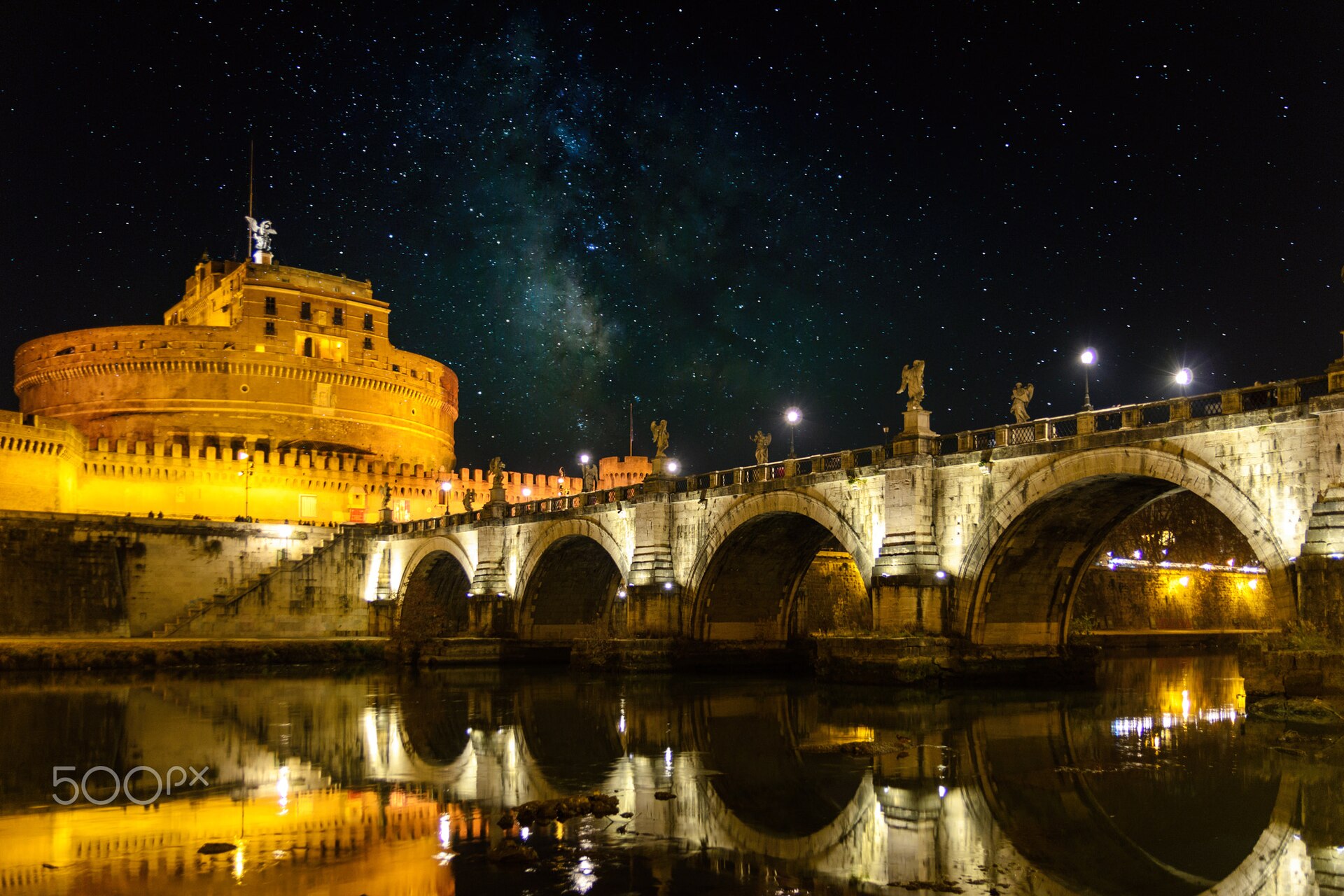
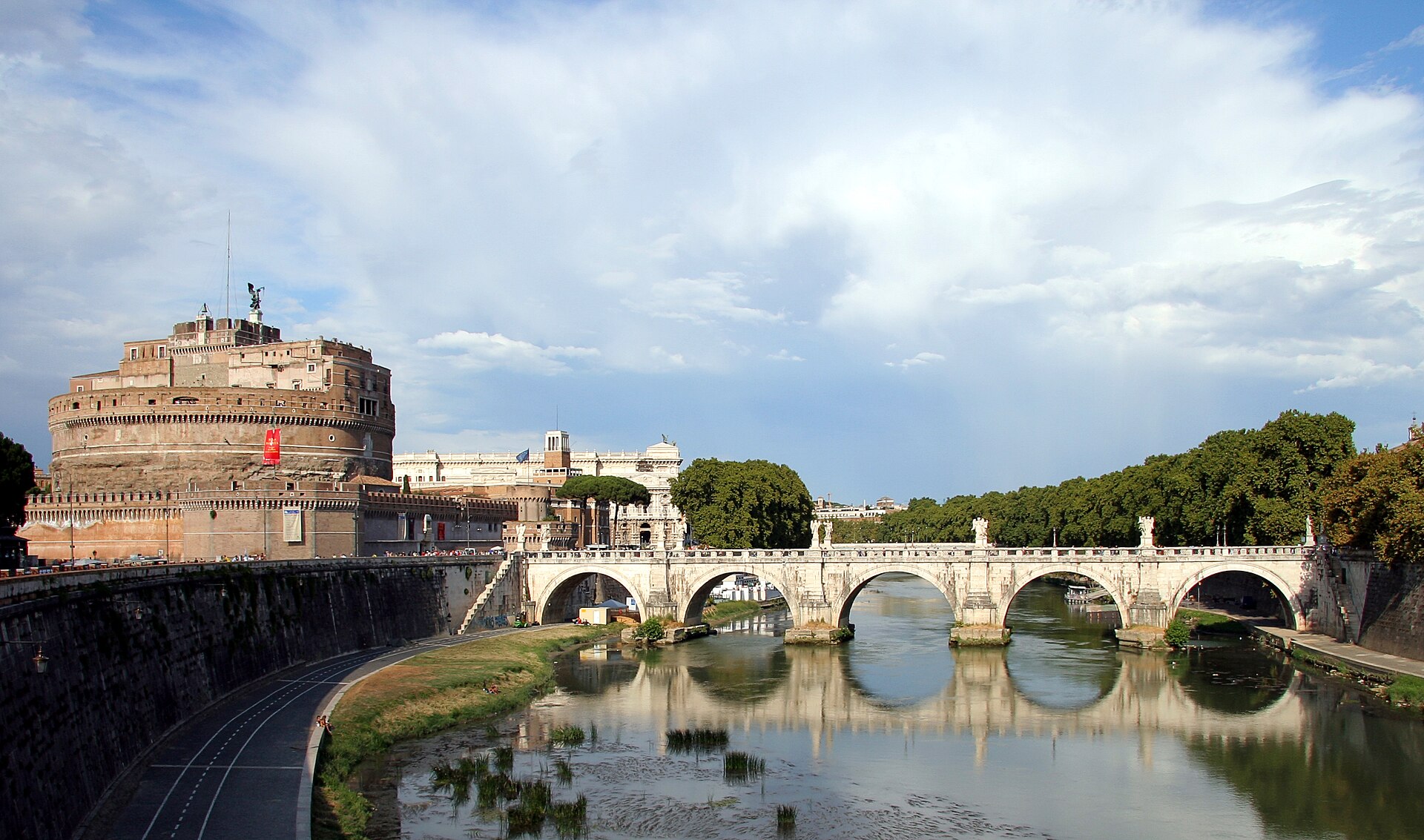
No account of Castel Sant Angelo is complete without its bridge, the beautiful Ponte Sant Angelo that carries visitors across the Tiber to the castle gates. The bridge is itself of ancient origin, built in Roman times to give access to Hadrian’s mausoleum, and it has carried pilgrims and travellers toward the castle and the Vatican beyond for nearly two thousand years. It remains one of the loveliest crossings of the Tiber.
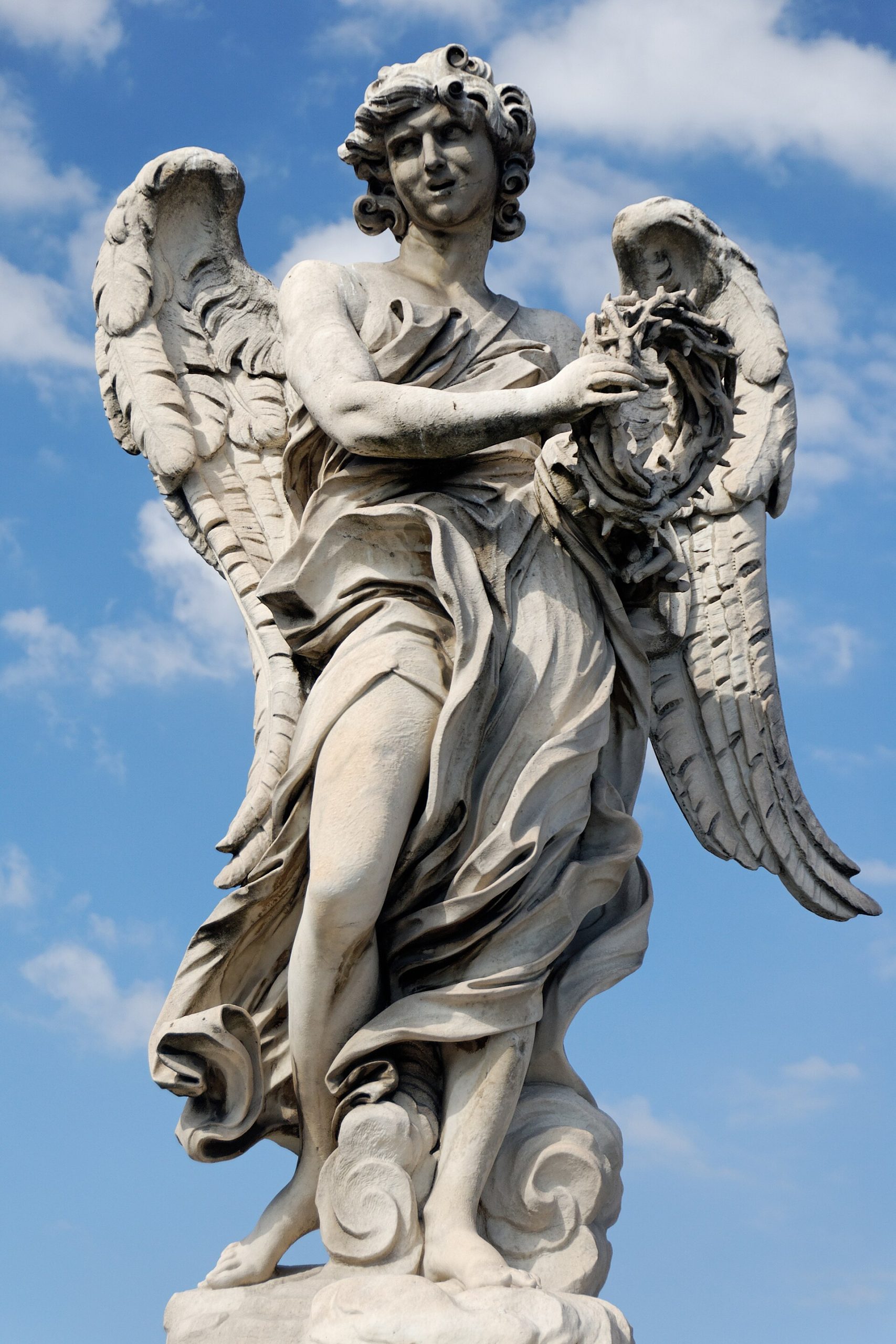
Over the centuries the bridge became a processional way, the route by which countless pilgrims approached Saint Peter’s, and it was adorned to match its sacred purpose. In its present form it is lined with a series of magnificent angel statues, each bearing a symbol of the story of the Passion, that turn the crossing into a kind of open-air gallery of Baroque sculpture and give the bridge its evocative name, the Bridge of Angels.
To approach the castle across this bridge, beneath the outstretched wings of the angels and with the great round fortress rising ahead, is one of the classic experiences of Rome. Bridge and castle belong together, the one leading to the other in a single grand composition that has drawn visitors for centuries. The Ponte Sant Angelo is not merely a way to reach the castle but an essential part of its beauty and its meaning.
The bridge has known dark moments as well as beauty, for in earlier centuries it was sometimes the scene of executions and of the display of the bodies of the condemned, a grim reminder of the castle’s role as a prison and place of punishment. Today, happily, it is a place only of beauty and pilgrimage, but its long history adds depth to the experience of crossing beneath the angels toward the ancient fortress.
Standing at the centre of the bridge and looking toward the castle, with the angels rising on either side and the great drum of the fortress ahead, you take in one of the most perfectly composed views in all of Rome. It is a scene that has been painted and photographed countless times, and yet it never loses its power to move, uniting river, sculpture, and ancient stone in a single harmonious whole.
Bernini’s Heavenly Guard
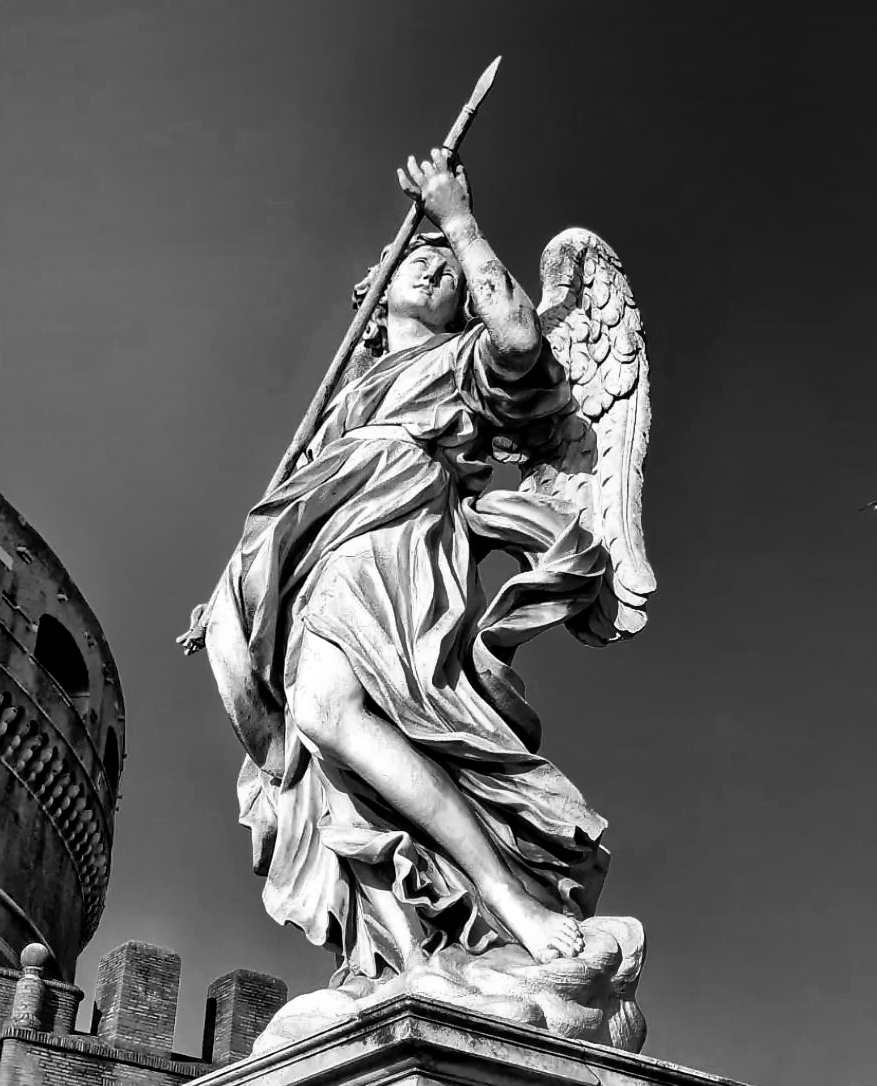
The angels that line the Ponte Sant Angelo are among the treasures of Baroque Rome, designed under the direction of one of the greatest sculptors of the age and executed by him and his workshop. Each angel is a masterpiece of movement and emotion, their robes swirling, their faces full of feeling, their wings spread against the Roman sky. They transform the bridge into a procession of heavenly figures escorting the visitor toward the castle and the Vatican.
The placing of such magnificent sculpture on the bridge was part of the great flowering of Baroque art that reshaped Rome in the seventeenth century, adorning the city with fountains, facades, and statues of unparalleled drama and beauty. The angels of the bridge belong to this golden age, and they show the Roman Baroque at its finest, uniting deep religious feeling with supreme artistic skill in figures of extraordinary grace.
Walking between the angels, you are in the presence of some of the finest sculpture in a city famous for its art. Each figure repays close attention, and together they create an effect of overwhelming beauty and devotion, a fitting approach to a castle so bound up with the history of the popes and the Church. The angels of the bridge are, in their way, as much a part of Castel Sant Angelo as its ancient walls.
The Instruments of the Passion
Each of the angels on the bridge carries a symbol connected with the suffering and death of Christ, the objects known as the instruments of the Passion. One bears the crown of thorns, another the cross, another the nails, another the lance, and so on, so that the whole sequence of angels tells, in symbols, the story of the Passion as the pilgrim crosses the bridge toward the holy places beyond.
This was a deeply meaningful arrangement in an age of profound religious devotion. As pilgrims made their way across the Tiber toward Saint Peter’s, the angels and their symbols led them to meditate on the central mystery of their faith, turning the physical crossing of the bridge into a spiritual journey. Art and devotion were fused, the beauty of the sculpture serving the deeper purpose of prayer and contemplation.
For the modern visitor, the meaning of the symbols may be less immediately familiar, but the beauty and power of the angels remain undiminished. Each figure, with its expressive face and its carefully carved emblem, is a work of art in its own right, and the sequence as a whole is one of the great achievements of Baroque Rome. To cross the bridge is to walk through a masterpiece of sacred art, angel by angel, toward the ancient castle on the far bank.
The idea of leading pilgrims through a sequence of sacred images was deeply characteristic of the religious art of the age, which sought to move the heart and instruct the soul through beauty. The angels of the bridge are a supreme example of this, using the highest art to serve the deepest devotion, and they remind us that in Baroque Rome, art and faith were not separate things but two aspects of a single vision.
Tosca and the Fireworks
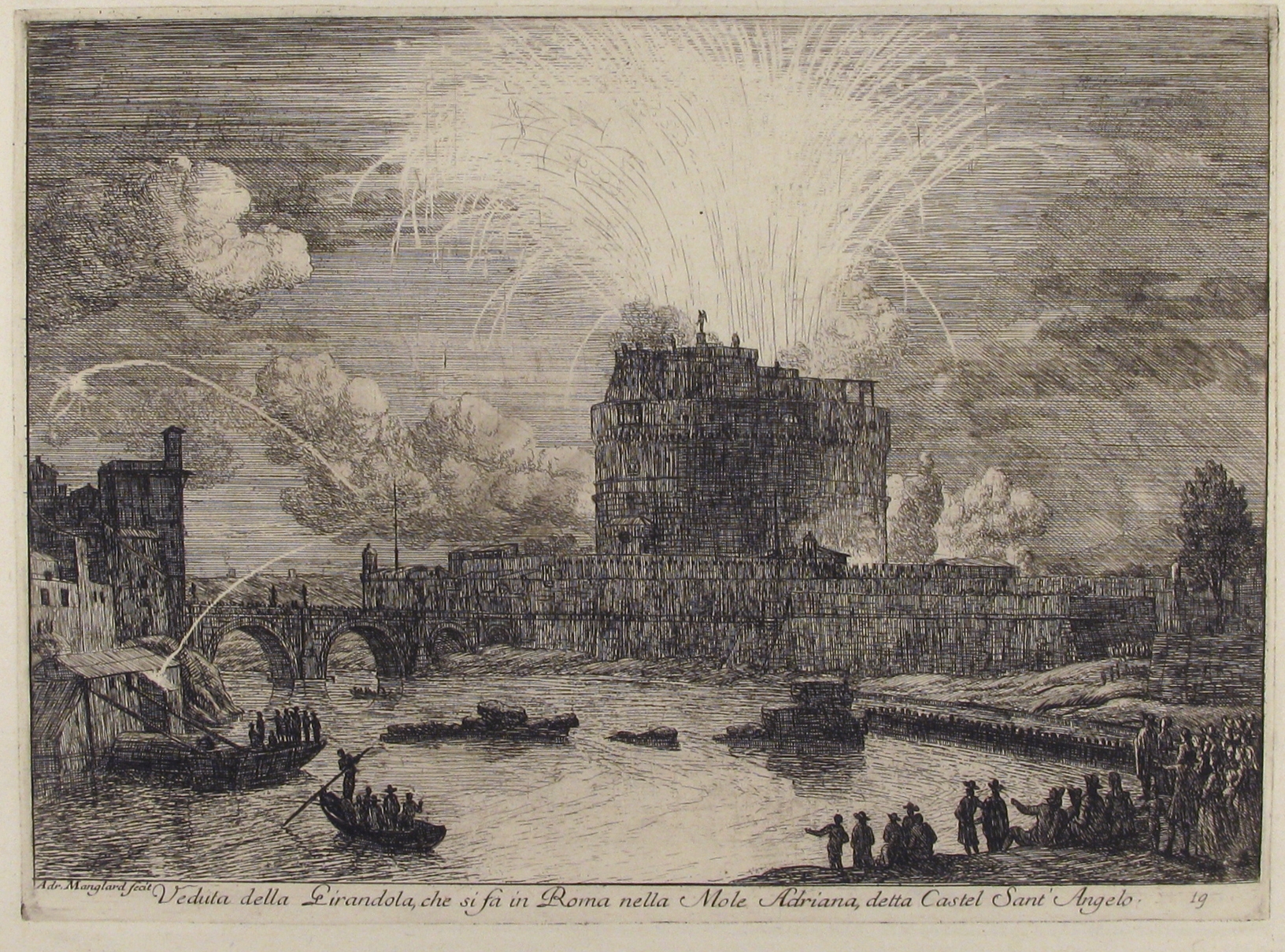
Castel Sant Angelo has long been associated with spectacle and celebration, and for centuries it was the setting for one of the most famous displays in Rome, a grand firework show that lit up the castle and the night sky on the great feast days of the city. This tradition of pyrotechnic splendour drew crowds from across Rome and beyond, and the image of fireworks bursting above the ancient fortress became one of the enduring pictures of the city at festival.
The castle’s dramatic associations extend into the world of art and opera as well. Its ramparts provide the setting for the tragic finale of one of the most beloved of all operas, and this connection has made Castel Sant Angelo famous to audiences around the world who may never have set foot in Rome. The fortress that began as a tomb has become, through art, a stage for some of the most dramatic moments in the cultural imagination.
These associations with spectacle, drama, and celebration add yet another layer to the rich meaning of the castle. It is a place of history and death, of refuge and imprisonment, but also of art, festival, and beauty, a building that has gathered to itself, over nearly two thousand years, an astonishing wealth of story and association. Few monuments anywhere are so densely woven into the life and imagination of a great city.
The great firework displays that once lit the castle drew on a Roman genius for spectacle that reached back to antiquity, and they made Castel Sant Angelo the natural focus of the city’s celebrations. To see the ancient fortress wreathed in fire against the night sky was to witness Rome at its most exuberant, and the tradition left an enduring association between the castle and the joyful drama of festival.
Visiting Castel Sant’Angelo
Castel Sant Angelo stands in the heart of Rome, on the right bank of the Tiber, within easy walking distance of Saint Peter’s and the Vatican, and it is one of the most accessible and rewarding of all the city’s great sights. Most visitors approach across the beautiful Ponte Sant Angelo with its Baroque angels, which makes for one of the most memorable arrivals in Rome, the round fortress growing ever larger as you cross the river.
The castle is now a national museum, and a visit allows you to explore its many layers, the ancient Roman ramp, the medieval fortress, the richly decorated papal apartments, the former prison cells, and the terrace at the summit with its glorious view over the city. Climbing through the building from bottom to top is a journey through two thousand years of history, and the terrace, with Saint Peter’s rising nearby, is a fitting climax to any visit.
If you would like to find it and plan your visit, here is the castle’s position on the Tiber: 41.9031, 12.4663. Try to allow time both for the interior and for simply admiring the castle from the bridge and the riverbank, and if you can, see it once by day and once floodlit at night, when it glows above the dark water. Castel Sant Angelo is one of the great monuments of Rome, an emperor’s tomb turned papal fortress, and it belongs on the itinerary of everyone who comes to the eternal city.
A visit pairs naturally with the nearby wonders of the Vatican and the historic centre of Rome, so many travellers fold the castle into a longer exploration of the city. But it deserves unhurried time of its own, for its layers of history reward patient attention, and few places in Rome offer so complete a sense of the city’s immense and continuous past within the walls of a single unforgettable building.

Castles Nearby
- Castel del Monte, the octagonal riddle of Frederick II
- Nuremberg Imperial Castle, seat of the Holy Roman Emperors
The Castle of Many Lives
Of all the castles of Italy, Castel Sant Angelo may be the one that has lived the most lives. It has been an emperor’s tomb, a Roman fortress, the refuge and stronghold of the popes, a prison for the famous and the doomed, a stage for opera and spectacle, and finally a museum, and each of these lives has left its mark on the great round building beside the Tiber. Few monuments anywhere carry so much history within a single structure.
To walk through it is to walk through the whole story of Rome, from the age of the emperors to the age of the popes and beyond, ascending from Hadrian’s ancient ramp to the painted papal rooms and the terrace beneath the angel. And to approach it across the Bridge of Angels, beneath Bernini’s soaring sculptures, is to experience one of the most beautiful arrivals in a city famous for its beauty. Castel Sant Angelo is history and art fused into a single unforgettable place.
So when you come to Rome, cross the Tiber to the castle of the angel and give yourself to its long and layered story. Climb through its centuries, stand on its terrace beneath the bronze archangel, and look out over the eternal city it has guarded for so long. Castel Sant Angelo is proof that a great building need not have a single purpose or a single age, but can gather to itself the whole history of a city, and stand, life after life, as one of its enduring wonders.
You May Like
Mafra, the Palace a King Built From a Vow