Rising alone on a low hill in the sun-baked country of southern Italy, Castel del Monte is unlike any other castle you have ever seen. It is a perfect octagon, an eight-sided crown of pale stone with eight eight-sided towers at its corners, so precise, so strange, and so beautiful that it looks less like a medieval fortress than like a geometric idea made solid. It has puzzled and fascinated visitors for nearly eight hundred years, and it remains one of the great enigmas of the Middle Ages.
The castle was built in the thirteenth century by one of the most remarkable rulers in European history, the Emperor Frederick the Second, a man so brilliant and so unusual that his own age called him the wonder of the world. A scholar, a scientist, a linguist, and a patron of art and learning as much as a warrior and a statesman, Frederick poured his extraordinary mind into this building, and the result is a castle that seems to be as much a work of philosophy and mathematics as of architecture.
To this day no one is entirely sure what Castel del Monte was for. It has no moat, no drawbridge, and few of the usual features of a fortress, and scholars have argued for centuries over whether it was a castle, a hunting lodge, an astronomical instrument, or a symbol in stone of some deeper idea. Come with me to the hills of Apulia and we will explore the octagonal mystery of Castel del Monte, the strangest and most fascinating of all the castles of Italy, and try to unravel a little of its enduring riddle.
In This Article
- A Crown on a Lonely Hill
- The Perfect Octagon
- Eight Sides, Eight Towers
- The Wonder of the World
- A Gateway Like a Roman Arch
- A Meeting of Three Worlds
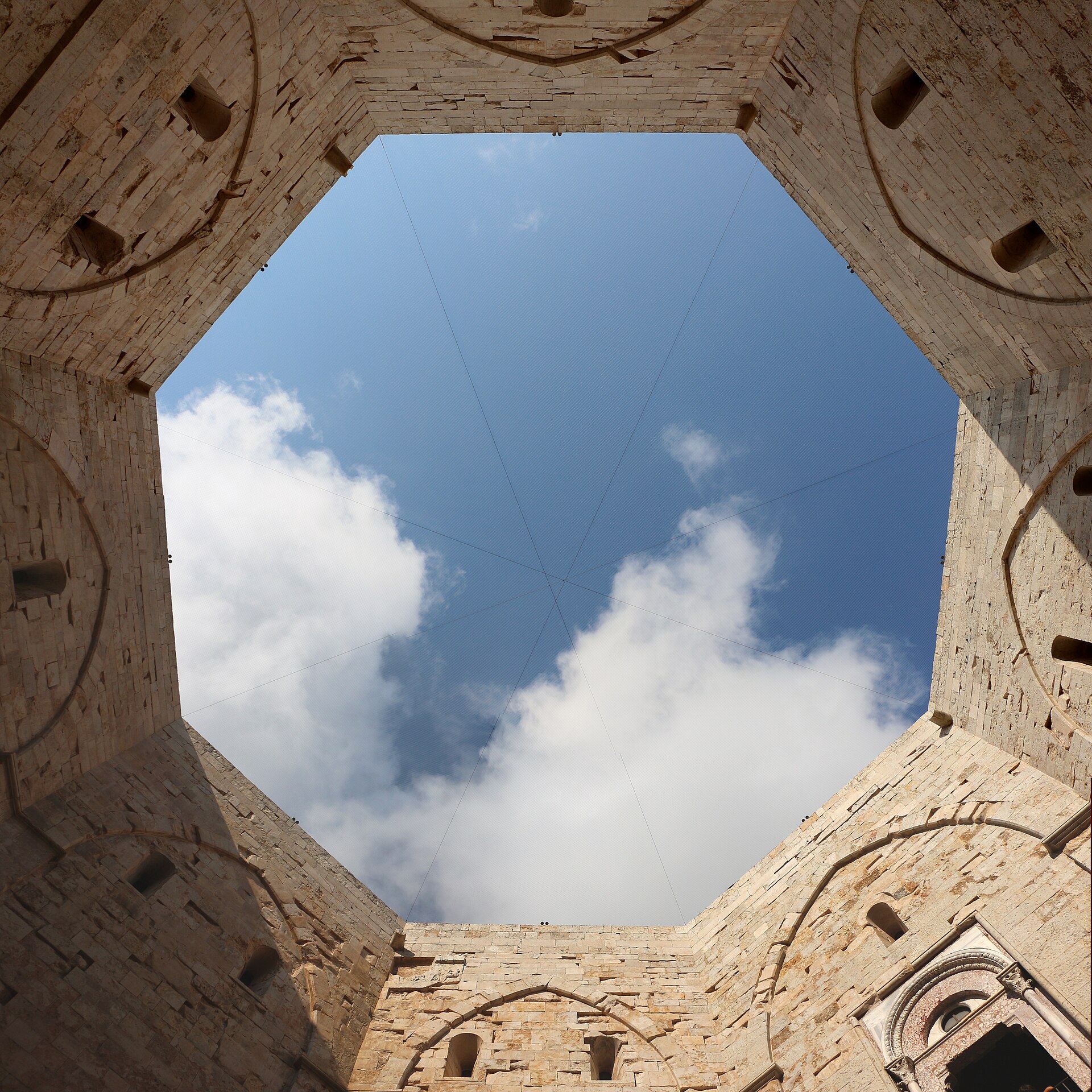
- The Octagonal Courtyard
- Light, Water and Geometry
- Eight Rooms of Mystery
- Fortress, Palace or Puzzle?
- Frederick’s Mind in Stone
- From Neglect to World Heritage
- Visiting Castel del Monte
A Crown on a Lonely Hill
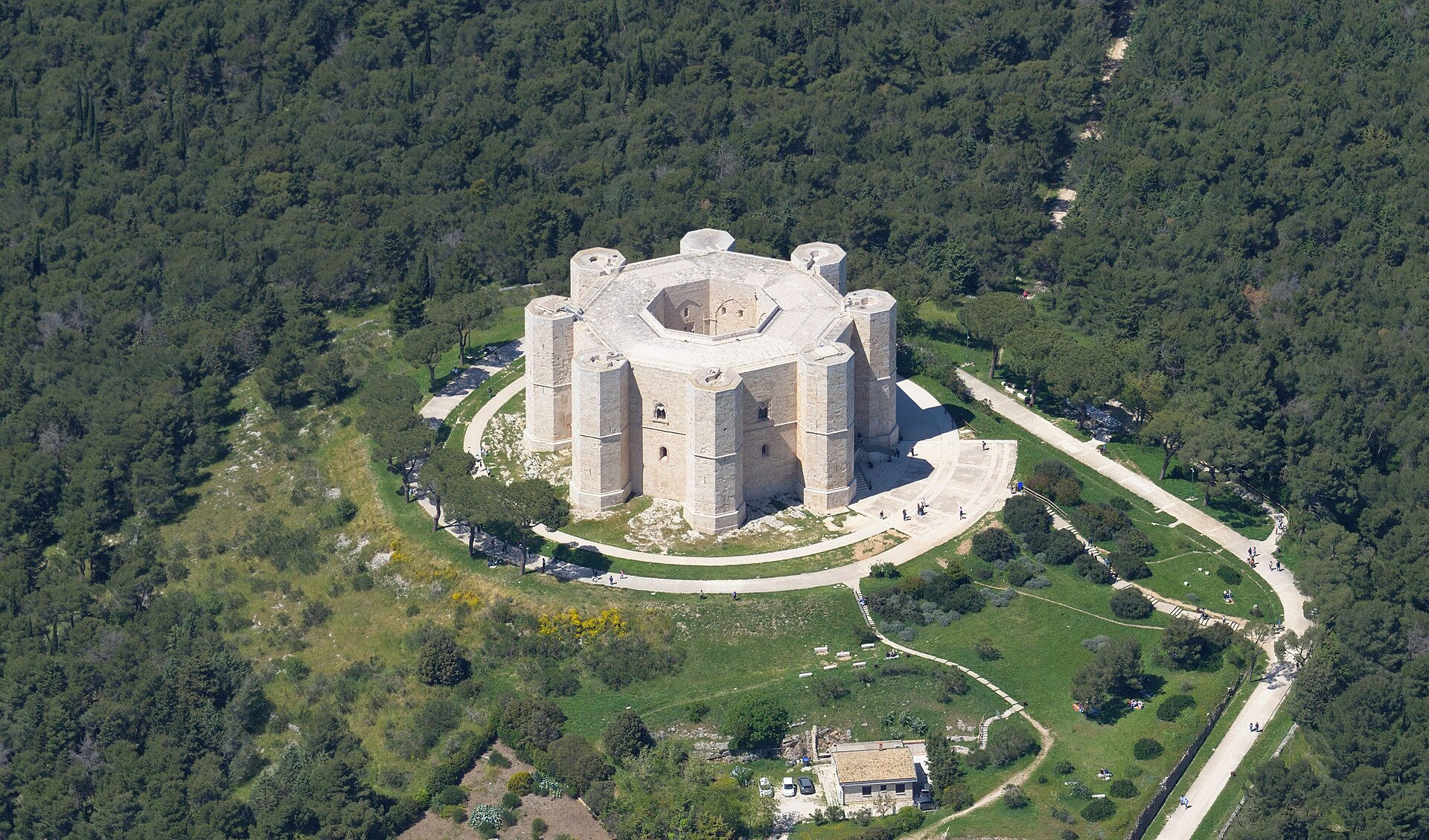
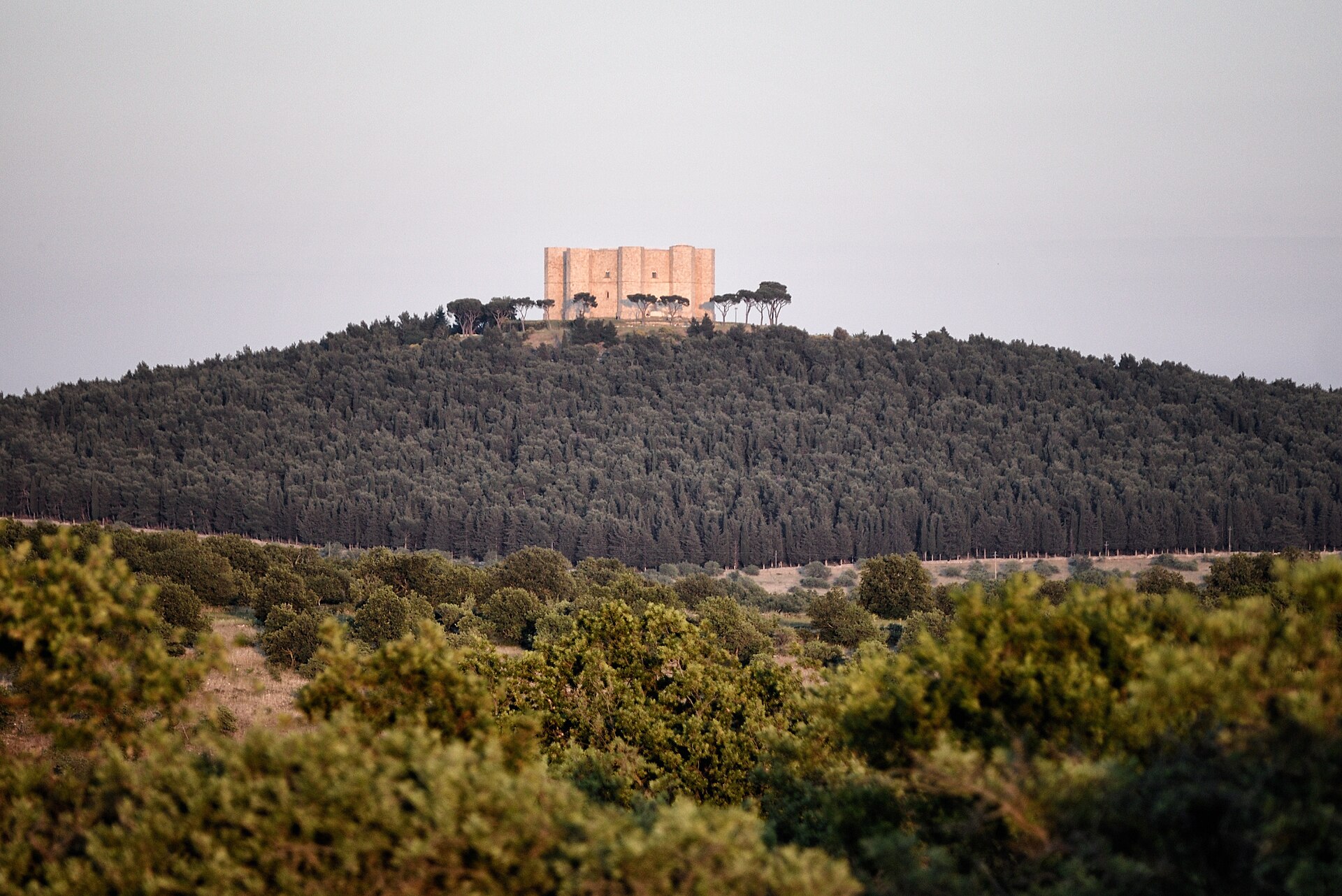
The setting of Castel del Monte is as striking as the building itself. It stands quite alone on the summit of a low hill in the Murge, the rolling limestone uplands of Apulia in the far south of Italy, with no town or village around it, only the wide, dry, sun-drenched country stretching away on every side. From a distance the castle appears as a pale crown on the horizon, isolated and mysterious, drawing the eye across the empty landscape.
This isolation is deliberate and part of the castle’s meaning. Frederick the Second chose a commanding but solitary spot, where his creation would stand apart from ordinary life, visible for miles and yet remote from any settlement. There is something almost otherworldly about a great building set down alone in the middle of an empty landscape, and Castel del Monte has that quality in full, a place that seems to belong to itself alone.
The approach across the countryside, with the octagonal castle growing slowly clearer on its hill, is one of the great pleasures of a visit. Unlike the castles that crowd above towns or guard river crossings, Castel del Monte keeps its own company, a solitary geometric jewel in a vast and ancient landscape. That sense of encountering something set apart, deliberately placed in isolation, is central to the strange and powerful impression the castle makes.
The region of Apulia, with its wide plains, its ancient olive groves, and its brilliant southern light, forms the perfect setting for such a building. This is a landscape of deep history, once part of the Greek and Roman worlds and later a crossroads of Mediterranean cultures, and the castle sits within it like a jewel, drawing on the timeless beauty of the south. The emptiness around it only sharpens its impact.
Local tradition and folklore have long attached tales and legends to so striking and solitary a building, and the castle’s air of mystery has made it a magnet for stories of hidden treasure, secret knowledge, and strange powers. Such legends are the natural response of the human imagination to a place this enigmatic, and they form yet another layer in the rich accumulation of meaning that surrounds Castel del Monte.
The Perfect Octagon
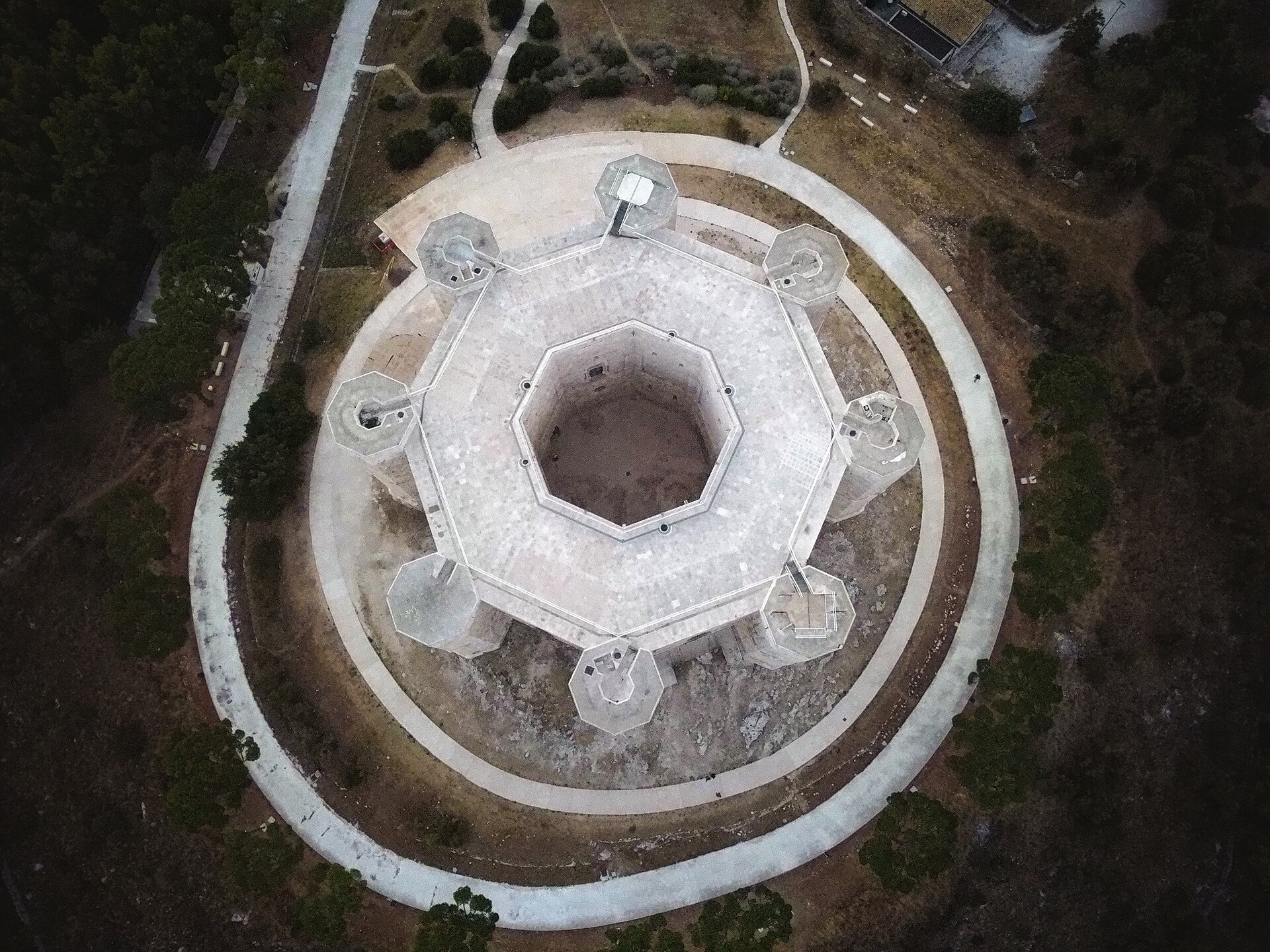
Seen from above, Castel del Monte reveals its true nature, and it is astonishing. The castle is a perfect octagon, an eight-sided building arranged around an eight-sided central courtyard, with an eight-sided tower rising at each of its eight corners. This relentless, flawless geometry is the key to the whole design, and once you grasp it, the castle reveals itself as one of the most mathematically precise buildings of the entire Middle Ages.
Nothing about this plan is accidental. In an age when most castles grew organically, shaped by the lie of the land and the needs of defence, Castel del Monte was conceived as a single pure geometric idea and executed with extraordinary rigour. The octagon governs every part of the building, from its overall shape to its courtyard to its towers, an obsessive repetition of the number eight that clearly carried deep meaning for its creator.
This perfect geometry is what sets Castel del Monte apart from every other castle. It is not a fortress that happens to be well designed but a work of pure form, a building that seems to exist to embody an idea rather than to serve a function. To understand the castle, you must begin with its shape, for the octagon is not merely how Castel del Monte looks but, in some sense, what it is.
The precision of the geometry is all the more remarkable given the age in which it was achieved. To lay out and build so exact an octagon, with eight matching octagonal towers, demanded advanced mathematical knowledge and great skill in construction, and it reflects the sophistication of Frederick’s court and the learning it commanded. This was building as a branch of mathematics, executed with a rigour rare in any age.
The number eight also links the square and the circle, the two most fundamental shapes in traditional geometry and symbolism, the square standing for the earth and the material world, the circle for the heavens and the divine. An octagon can be seen as a stage between the two, and some have read Castel del Monte as an image of that passage, a building poised between the earthly and the heavenly, which would fit its lonely, sky-open design perfectly.
Eight Sides, Eight Towers
The obsession with the number eight runs through every part of Castel del Monte, and it is worth pausing to take in just how thoroughly. The main building has eight sides. At each of its eight corners stands a tower, and each of those towers is itself eight-sided. The central courtyard is an octagon. Inside, each of the two floors is divided into eight rooms. Everywhere you look, the number eight repeats, deliberately and insistently.
Such relentless symbolism cannot be accidental, and it has fascinated scholars for centuries. The number eight has carried rich meaning in many traditions, associated with ideas of infinity, of resurrection and renewal, and of the link between the earthly and the heavenly, between the square of the material world and the circle of the divine. Whatever precise meaning Frederick intended, the castle was clearly built to embody it in stone.
This makes Castel del Monte something more than a building; it is a statement, a puzzle, perhaps even a kind of sacred or philosophical diagram rendered in architecture. The eight-sided form ties it to a whole world of medieval thought about number, geometry, and the order of the cosmos, and it is this dimension of hidden meaning, as much as the beauty of the design, that has given the castle its enduring air of mystery.
Whatever its precise significance, the insistent repetition of the octagon gives the castle a hypnotic, almost incantatory quality, as though the building were repeating a single word over and over in the language of geometry. This is quite unlike the varied, accretive character of most medieval castles, and it marks Castel del Monte as the product of a single, unified vision rather than of generations of piecemeal building.
The Wonder of the World
To understand Castel del Monte you must understand its creator, the Emperor Frederick the Second, one of the most extraordinary figures of the Middle Ages. Ruler of a vast realm that stretched from Germany to Sicily, Frederick was far more than a conventional medieval monarch. He was a man of dazzling intellect and boundless curiosity, so remarkable that his contemporaries called him stupor mundi, the wonder of the world.
Frederick spoke many languages, corresponded with scholars across the Christian and Islamic worlds, wrote a celebrated treatise on falconry based on his own careful observations, and gathered around him a brilliant court of poets, philosophers, mathematicians, and scientists. He was as interested in the natural world and in learning as in war and government, and his mind ranged freely across the boundaries of religion and culture that divided his age.
Castel del Monte is, in a sense, a portrait of that mind in stone. Its geometric perfection, its rich and mysterious symbolism, and its blending of influences from many cultures all reflect the character of the emperor who built it, a man fascinated by order, by knowledge, and by the deep patterns underlying the world. No ordinary ruler could have conceived such a building, and it stands as the most eloquent monument to one of history’s most fascinating minds.
Frederick’s court in southern Italy was one of the most brilliant of the age, a place where Latin, Greek, and Arabic learning met and mingled, where poetry flourished in the emerging Italian language, and where the sciences were pursued with real seriousness. Castel del Monte was one of the fruits of that remarkable cultural moment, and it carries within it the intellectual daring that made Frederick’s court so exceptional.
Frederick’s relationship with the papacy and much of the church was famously stormy, and his independent, questioning cast of mind earned him both admiration and condemnation in his own day. Yet whatever his contemporaries made of him, none doubted his brilliance, and Castel del Monte stands as the most enduring proof of it, a monument that has outlasted all the quarrels of his age to speak directly to ours.

A Gateway Like a Roman Arch
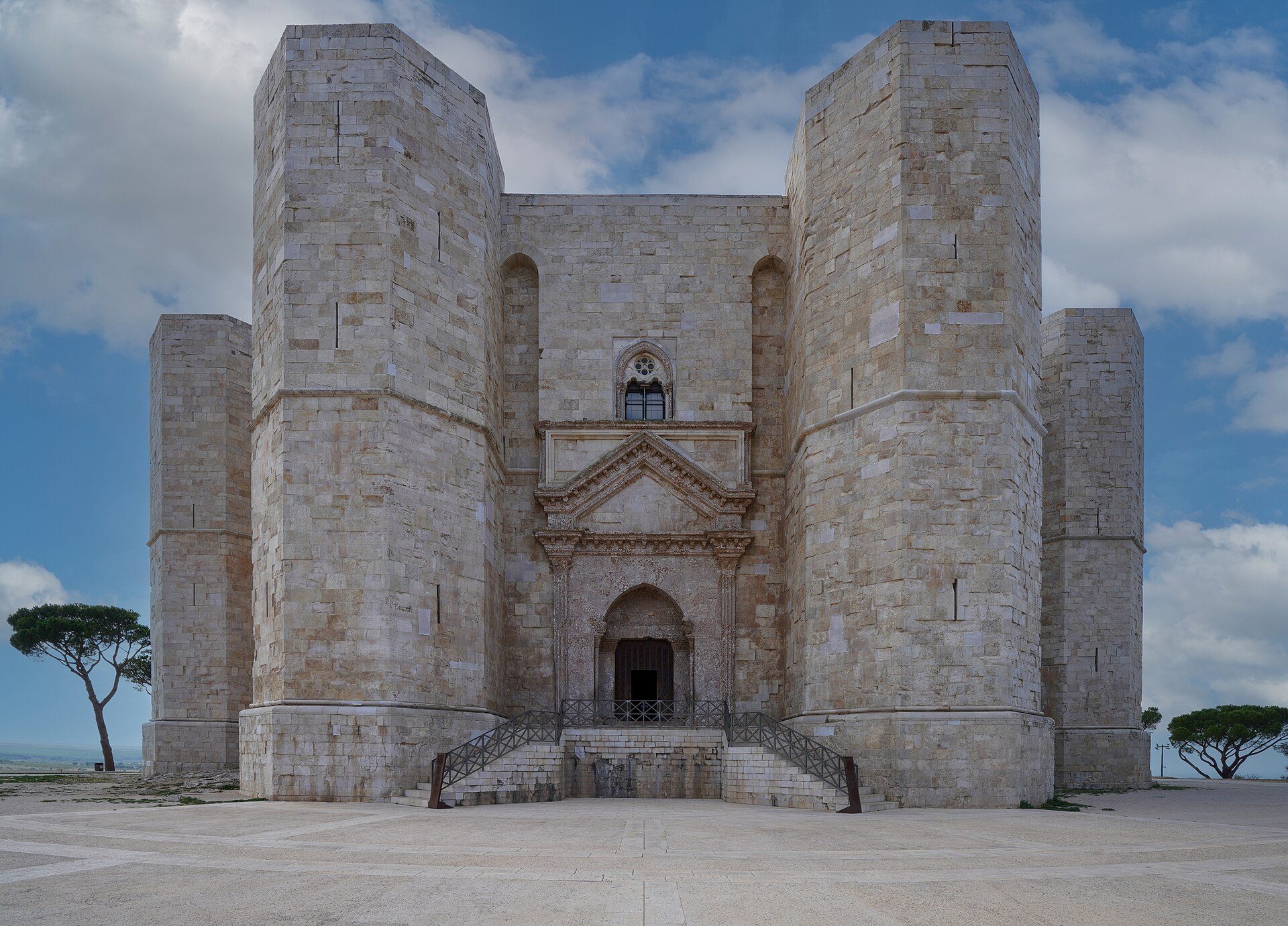
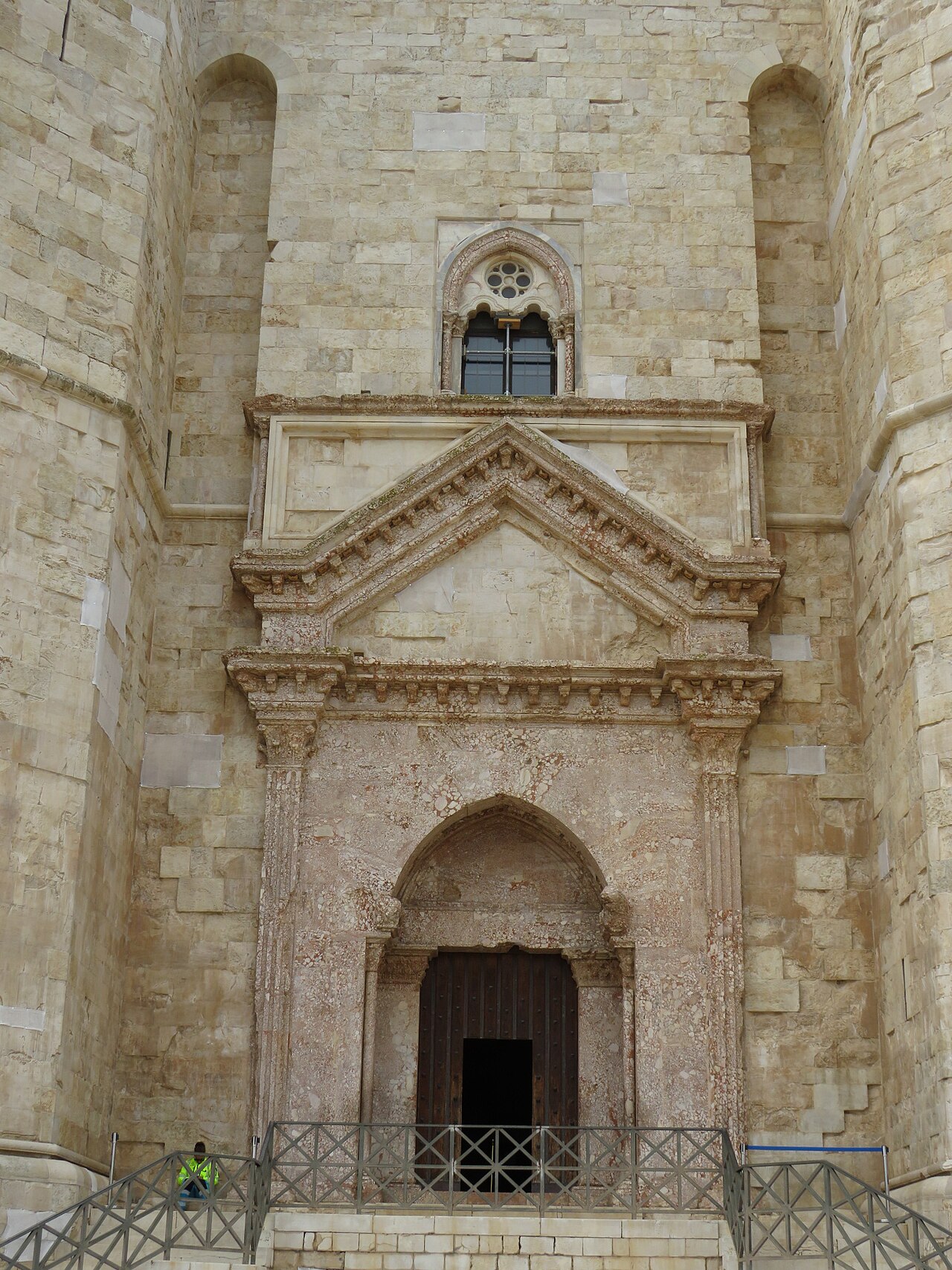
The main entrance to Castel del Monte is a thing of beauty in its own right, and it tells us much about the castle and its creator. Rather than the grim, functional gate of a typical fortress, the portal is a graceful and dignified composition that deliberately echoes the triumphal arches of ancient Rome, with classical proportions and finely worked stone. It announces at once that this is no ordinary castle.
Frederick the Second was deeply drawn to the heritage of the classical world, seeing himself in some ways as an heir to the Roman emperors, and this admiration is written into the architecture of Castel del Monte. The Roman flavour of the portal was a statement, linking the emperor and his creation to the grandeur and authority of antiquity, and asserting a continuity between his own rule and that of the ancient world he so admired.
The portal thus sets the tone for the whole building, a fusion of the medieval and the classical, of fortress and palace, of function and meaning. It prepares the visitor for a castle that is unlike any other, one that draws on the deep well of the past to create something entirely new. To pass beneath this Roman-inspired arch is to enter the singular world of Frederick’s imagination, where architecture becomes a language of ideas.
The use of finely cut and beautifully finished stone throughout the entrance and the building speaks of the resources and ambition behind the project. Frederick commanded the wealth of a great realm and the skills of craftsmen drawn from across his lands and beyond, and he spared no effort in the making of his masterpiece. The quality of the workmanship matches the boldness of the design, a rare and impressive combination.
A Meeting of Three Worlds
One of the most fascinating aspects of Castel del Monte is the way it brings together influences from several different cultures and traditions, reflecting the extraordinarily cosmopolitan world of its creator. In its design and decoration you can trace the meeting of the classical heritage of ancient Rome, the new Gothic architecture then spreading through Europe, and the rich artistic traditions of the Islamic world with which Frederick was so familiar.
This blending was not a matter of chance but of the emperor’s unique position and outlook. Ruling over a realm that included the meeting point of Christian Europe and the Islamic Mediterranean, and possessed of a mind that ranged freely across cultural boundaries, Frederick drew on all these traditions to create something new. Castel del Monte is a product of that openness, a building in which different worlds are woven together into a single harmonious whole.
The result is a castle that belongs to no single tradition but stands at the crossroads of several, a fitting monument to a ruler who himself lived at such a crossroads. In its stones you can read the astonishing cultural richness of Frederick’s world, a moment when the boundaries between Christian and Islamic, classical and medieval, could be crossed by a mind bold enough to do so. Few buildings anywhere embody so completely the possibility of cultures meeting and merging.
Frederick’s easy familiarity with the Islamic world was unusual and even scandalous to some of his contemporaries, but it was central to his outlook and to his art. He maintained close ties with Muslim scholars and rulers, kept a diverse court, and drew freely on the achievements of Islamic science and design. Castel del Monte quietly embodies that spirit of exchange, a monument to what could be created when cultures met rather than merely clashed.

The Octagonal Courtyard
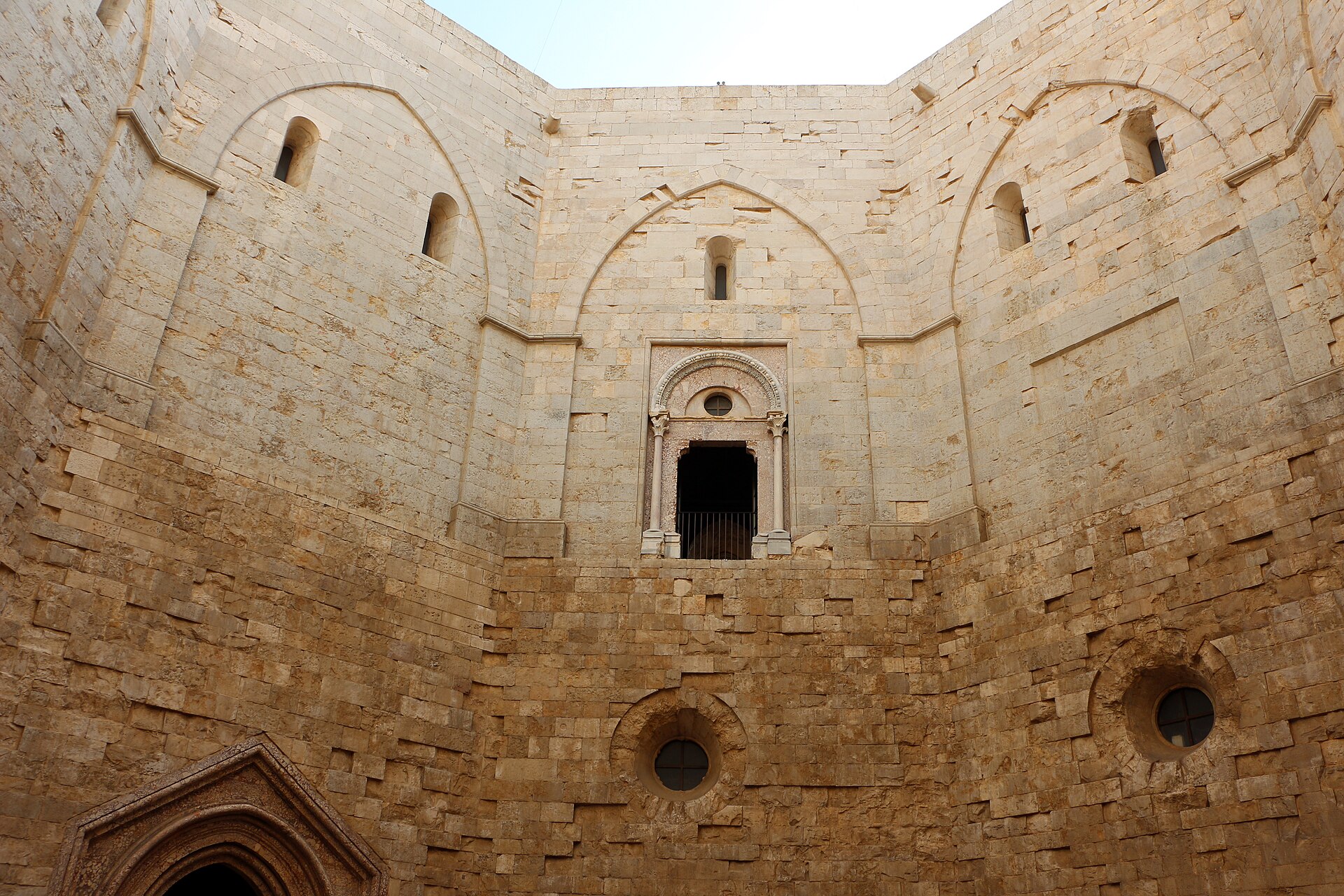
At the centre of Castel del Monte lies its octagonal courtyard, an enclosed eight-sided space open to the sky and ringed by the eight walls of the inner building. This courtyard is the still heart of the whole design, the point around which the entire geometric composition is organised, and standing within it you feel the full force of the castle’s obsessive, beautiful symmetry.
The courtyard would have been the focus of life within the castle, the space onto which the surrounding rooms opened and from which the building drew its light and air. Its perfectly regular eight-sided form, enclosed by high walls, creates an atmosphere at once serene and slightly uncanny, a space that feels ordered and contemplative rather than merely practical, in keeping with the whole character of the building.
Some have seen in the courtyard, with its opening to the sky, a deliberate link between the earthbound stone of the castle and the heavens above, another expression of the symbolism that runs through the whole design. Whether or not that was the intention, the octagonal courtyard is one of the most beautiful and evocative spaces in the castle, a place where the pure geometry of Castel del Monte can be felt most intensely.
In its original state the courtyard may have been even more striking than it is today, possibly faced with fine marble and richer decoration that has since been lost. Even stripped of such adornment, however, the space retains its extraordinary power, its pure geometry speaking directly to the eye and the mind. It is the kind of space that rewards quiet contemplation, drawing the visitor into the strange serenity of the design.
Looking up from within the courtyard, framed by the eight surrounding walls, the sky itself becomes part of the architecture, a shifting eighth surface of cloud and light above the seven of stone. It is a subtle and beautiful effect, and one that changes constantly with the weather and the hour, ensuring that no two visits to the heart of Castel del Monte are ever quite the same.
Light, Water and Geometry
For all its air of mystery, Castel del Monte was also a work of great practical sophistication, and its design reveals a deep concern with comfort, light, and water. The castle was fitted with systems for collecting and channelling rainwater, with cisterns and conduits that supplied the building, and its rooms were arranged and lit with a care that speaks of real luxury as well as symbolic intent. This was a place designed to be lived in, and lived in well.
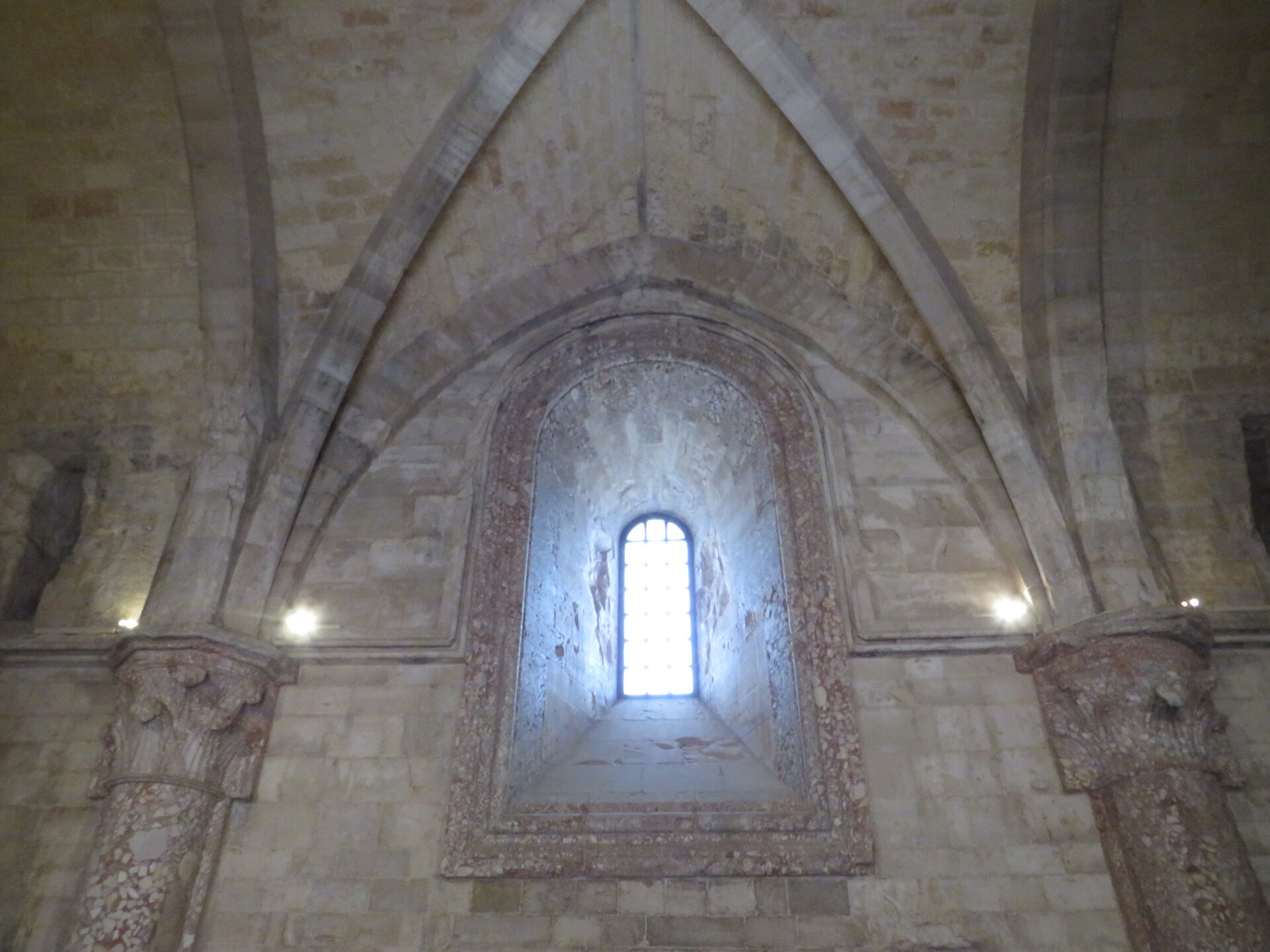
The play of light was clearly important to the builders. The windows and openings were arranged with precision, and some scholars have argued that the castle was oriented to align with the movements of the sun at certain times of the year, so that light would fall in particular ways on particular days. Whether or not these astronomical theories are correct, they reflect the genuine sophistication of a design in which nothing seems to have been left to chance.
This marriage of the symbolic and the practical is characteristic of Castel del Monte and of its creator. Frederick was interested in the deep order of the cosmos, but he was also a man of science and of the world, concerned with how things actually worked. The castle reflects both sides of his mind, a building that is at once a philosophical statement and a highly refined piece of engineering, geometry and comfort united in a single design.
The concern for water and comfort reminds us that, whatever its symbolic purpose, the castle was built to a very high standard of amenity for its time. Frederick was a ruler who appreciated luxury and refinement, and Castel del Monte would have offered its imperial occupant a level of comfort remarkable in the thirteenth century, combining the pleasures of a fine residence with the deeper satisfactions of its symbolic design.

Eight Rooms of Mystery
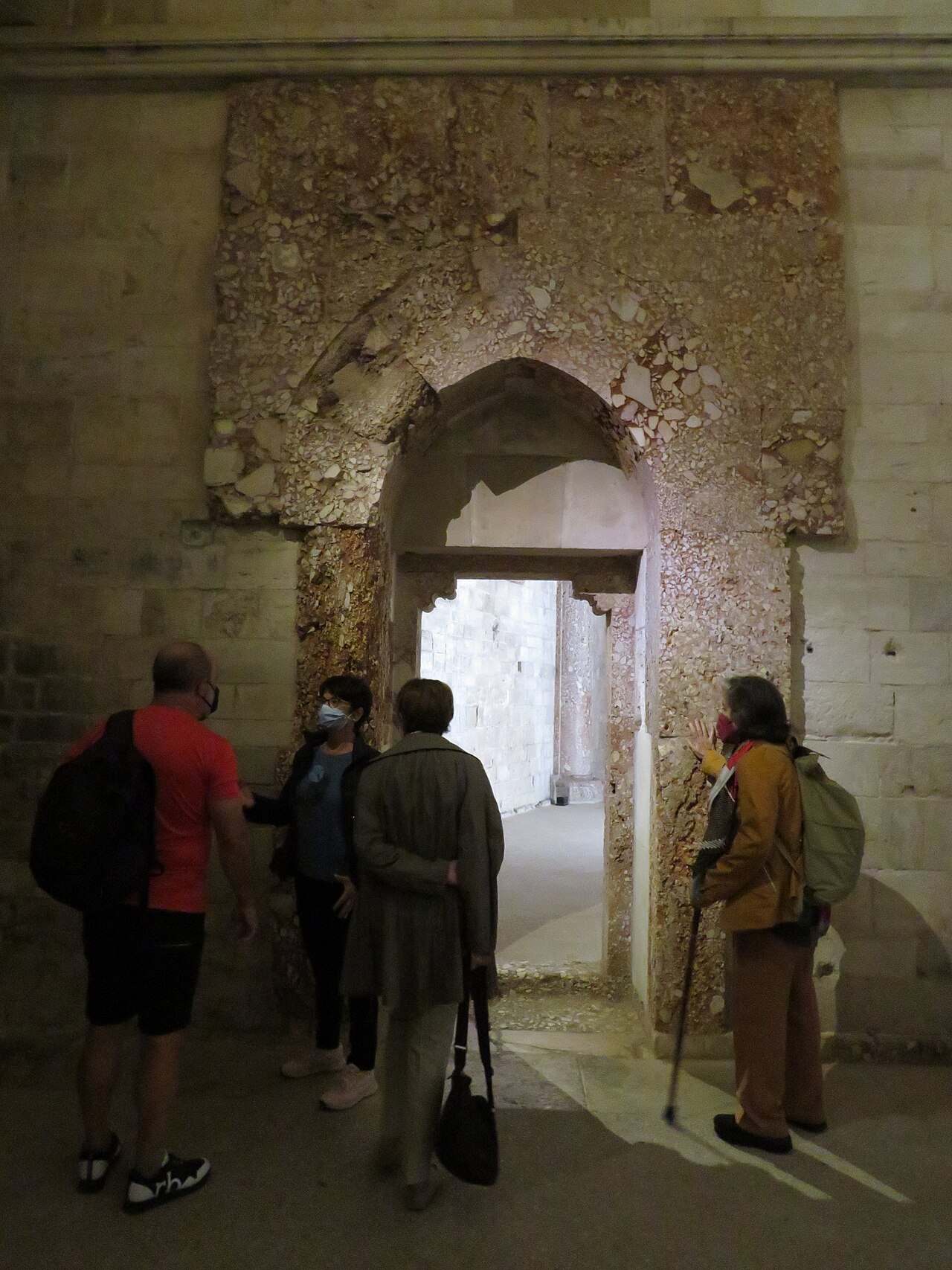
Inside, Castel del Monte is divided, on each of its two floors, into eight rooms, arranged around the central courtyard. Because the building is an octagon, these rooms are trapezoidal in shape, fitting together around the courtyard like the segments of a ring. They connect with one another, so that you can walk in a circuit around each floor, passing from room to room in an endless loop, a design that adds to the castle’s strange, almost dreamlike quality.
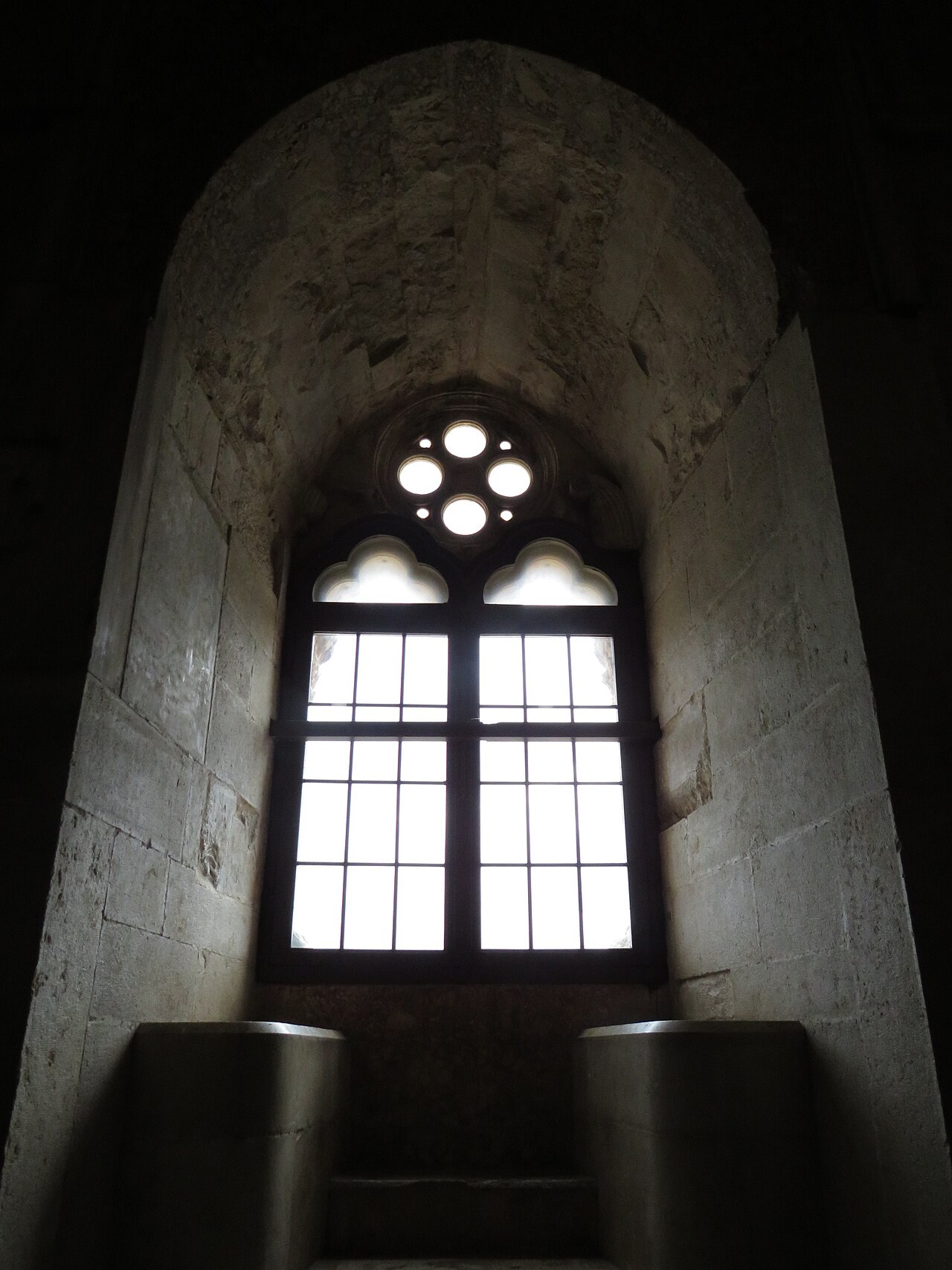
The rooms are handsome and dignified, their vaulted ceilings supported by columns and their walls once richly decorated, though much of that decoration has been lost over the centuries. Fireplaces, window seats, and other refinements show that these were spaces meant for comfortable living, not merely for defence or storage. Whatever the deeper purpose of the castle, its interior was clearly fitted out for a life of some elegance.
There is a peculiar fascination in the way the eight rooms circle endlessly around the courtyard, connected in a ring with no obvious beginning or end. It reinforces the sense of the castle as a kind of puzzle or symbol, a building whose form seems designed to make you think as much as to shelter you. Walking the circuit of the trapezoidal rooms, you feel yourself moving through the geometry of Frederick’s mind, room by room around the perfect octagon.
The circular arrangement of the rooms, allowing one to walk endlessly around each floor, has struck many visitors as symbolic in itself, an image of eternity or of the unbroken circle of the cosmos. Whether or not Frederick intended such a meaning, the experience of moving through the connected rooms is genuinely unusual, and it reinforces the sense that the castle was designed to be experienced and pondered, not merely inhabited.
Fortress, Palace or Puzzle?
For all that has been written about Castel del Monte, its true purpose remains genuinely uncertain, and this is one of the deepest sources of its fascination. It is called a castle, but it has almost none of the features one expects of a fortress. There is no moat, no drawbridge, no massive defensive walls, no arrangements for withstanding a siege. Whatever it was built for, it does not seem to have been serious warfare.
Scholars have proposed many alternatives. Some argue it was a hunting lodge, a luxurious retreat from which the emperor, a passionate falconer, could enjoy the chase in the surrounding country. Others see it as a symbolic or ceremonial building, a monument to Frederick’s power and ideas rather than a practical residence. Still others have suggested more esoteric purposes, from an astronomical observatory to a temple of hidden knowledge, though such theories are speculative.
The truth is that we may never know for certain, and perhaps the castle was meant to be several things at once, a residence, a symbol, a statement, and a puzzle. This very uncertainty is part of what makes Castel del Monte so compelling. Unlike a straightforward fortress whose purpose is obvious, it invites endless speculation, drawing each visitor into the mystery and refusing to give up its final secret. It remains, after nearly eight centuries, a beautiful and unsolved riddle.
It is worth noting that the very absence of strong defences may itself be significant. A ruler as powerful as Frederick, secure in his dominance of the region, may have felt no need to build a serious fortress, and could instead indulge his taste for beauty and meaning. The castle’s lack of military features may thus be not a puzzle to be explained away but a deliberate statement of confidence and of higher purpose.
The debate over the castle’s purpose has itself become part of its allure, generating a rich literature of scholarship and speculation that shows no sign of ending. Each generation brings its own theories and its own questions to the octagon on the hill, and each finds in it something new. Few buildings have so successfully kept their secrets, or so richly rewarded the effort to understand them.
Frederick’s Mind in Stone
Everything about Castel del Monte points back to the extraordinary intellect of the man who built it, and the more you look, the more the castle seems to be a physical expression of Frederick’s way of thinking. His fascination with mathematics and geometry is written in the octagonal plan; his interest in astronomy in the careful orientation of the building; his admiration for the classical past in the Roman-inspired portal; his openness to many cultures in the blending of styles.
Frederick lived in an age of faith and tradition, yet his mind was restless, questioning, and independent, and Castel del Monte reflects that spirit. It is a building that does not simply follow the conventions of its time but reworks them into something new and personal, guided by ideas rather than by mere custom. In this it is unique among medieval castles, most of which were shaped by necessity and habit rather than by a single powerful imagination.
To sit in one of the castle’s window seats, looking out over the wide Apulian landscape through openings placed with such care, is to feel a strange closeness to that long-vanished mind. The whole building is a kind of message from Frederick to those who would come after, an invitation to think, to wonder, and to seek the patterns beneath the surface of the world. It is less a fortress than a monument to human curiosity itself, cast in the golden stone of Apulia.
In an age often caricatured as one of unthinking faith and crude power, Castel del Monte stands as a reminder of the intellectual richness and curiosity that also flourished in the medieval world. It is the work of a mind that questioned, measured, and sought after knowledge, and it belongs as much to the history of ideas as to the history of architecture. Few buildings so completely embody the life of the mind.
From Neglect to World Heritage
The later history of Castel del Monte was not always kind. After the fall of Frederick’s dynasty, the castle passed through many hands and many uses, and over the centuries it declined from an imperial marvel to a neglected shell. It served at times as a prison and as a refuge, its rich decoration was stripped away, and for long periods it stood abandoned and decaying on its lonely hill, its purpose forgotten and its beauty ignored.
In time, however, the extraordinary quality of the building came to be recognised once more. Restoration work rescued the castle from ruin, and scholars began to study its mysteries in earnest, drawn by its unique design and its association with the fascinating emperor who built it. Gradually Castel del Monte was restored to something of its former dignity and took its place among the treasures of Italy.
That recognition reached its height when the castle was inscribed as a World Heritage Site, honoured for its unique architecture and its embodiment of the culture of Frederick’s age. Today its image is even known to millions who have never visited it, for it appears on one of the coins of Italy, a fitting tribute to a building of such singular beauty. From imperial wonder to neglected ruin to celebrated monument, the castle has come full circle, its mystery and its magic undimmed.
The recovery of the castle’s reputation owes much to the enduring fascination of Frederick himself, whose extraordinary character has drawn the interest of historians, novelists, and travellers for generations. As his story has been told and retold, the castle that most fully expresses his genius has shared in that renewed attention, until Castel del Monte has become one of the most celebrated medieval monuments in all of Italy.

Visiting Castel del Monte
Castel del Monte stands in the region of Apulia, the heel of the Italian boot, not far from the town of Andria and within reach of the coastal cities of the region. It sits on its hill somewhat apart from the main towns, and reaching it usually involves a drive through the Apulian countryside, followed in season by a short shuttle up to the castle itself, which is set within a protected area to preserve its solitary setting.
A visit allows you to explore the octagonal courtyard, the two floors of trapezoidal rooms, and the towers, taking in the geometry and the atmosphere of this most unusual of castles. There is not the furniture and rich decoration of a lived-in palace to see, for much has been lost, but there is something better: the pure form of the building itself, and the chance to walk through Frederick’s great riddle in stone and ponder its meaning for yourself.
If you would like to find it and plan your visit, here is the castle’s position on its Apulian hill: 41.0844, 16.2711. Try to come when the light is good, for the golden stone of the castle glows beautifully in the Mediterranean sun, and give yourself time simply to walk around the building and take in its perfect octagonal form from every side. Castel del Monte is the strangest and most thought-provoking of all Italian castles, and it rewards the curious visitor with a mystery that has endured for nearly eight hundred years.
A visit can be combined with the wider pleasures of Apulia, a region rich in distinctive architecture, from its whitewashed hill towns to the curious cone-roofed houses of the countryside, as well as fine food, wine, and a beautiful coastline. Seen against this backdrop, Castel del Monte takes its place as the crowning marvel of a region full of surprises, and a journey to it becomes a gateway to one of the most rewarding corners of southern Italy.
Castles Nearby
- Nuremberg Imperial Castle, seat of the Holy Roman Emperors
- Wartburg Castle, a stronghold of the medieval empire
The Riddle in the Apulian Sun
Among all the castles of Italy, and indeed of Europe, there is nothing quite like Castel del Monte. It is not the largest or the strongest or the most richly decorated, but it may be the most mysterious and the most intellectually captivating, a perfect octagon of golden stone standing alone on its hill, built by an emperor whose mind still fascinates the world eight centuries after his death.
What makes the castle so unforgettable is precisely that it refuses to be simply a castle. It is a puzzle, a symbol, a work of geometry and philosophy, a portrait of one of history’s most extraordinary minds rendered in architecture. To visit it is not merely to admire a beautiful building but to be drawn into a mystery, to stand before a riddle set in stone by a ruler called, with good reason, the wonder of the world.
So as we begin our journey among the castles of Italy, let it start here, in the sun-baked hills of Apulia, before this strange and beautiful octagon. Walk its endless ring of rooms, stand in its perfect courtyard, and let its enduring mystery work on your imagination. Castel del Monte is proof that a castle can be a work of the mind as much as of the sword, and it remains, after nearly eight hundred years, one of the great enigmas and one of the great wonders of the medieval world.
You May Like
Mafra, the Palace a King Built From a Vow


5 thoughts on “Castel del Monte: The Octagonal Riddle of Frederick II”