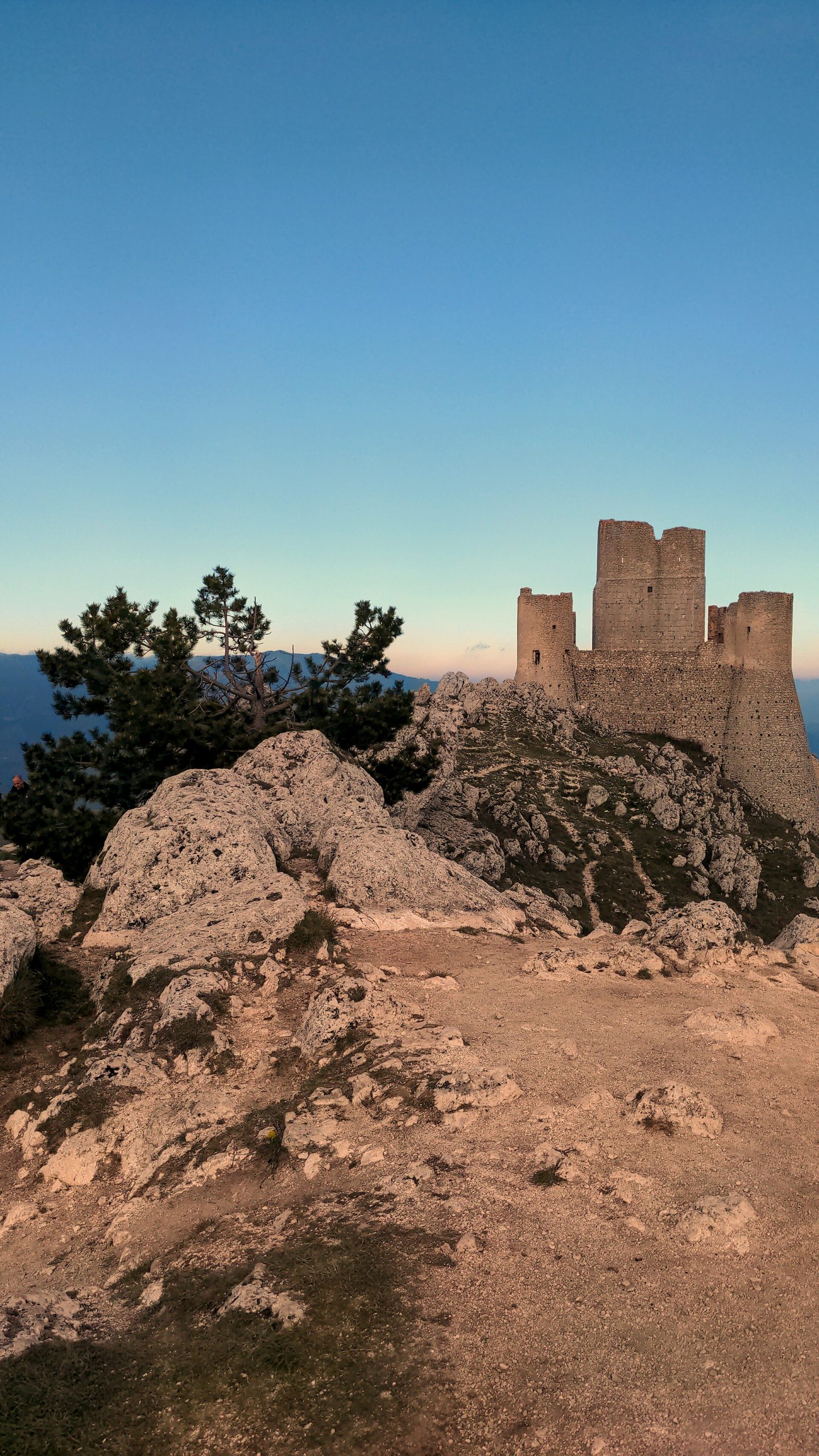
High in the mountains of Abruzzo, in the wild and beautiful heart of central Italy, stands one of the most spectacular castles in the whole country. Rocca Calascio is a ruined fortress perched on the summit of a lofty ridge, at one of the highest points reached by any castle in Italy, its pale stone walls and round towers rising against the sky with a vast panorama of mountains spread out below. It is a place of extraordinary drama and beauty, remote, silent, and unforgettable.
Unlike the great palaces and fortresses of the Italian cities, Rocca Calascio was never a place of courtly splendour. It was a watchtower and a stronghold, built to guard the high mountain passes and the routes of the shepherds who drove their flocks across these uplands, and its story is bound up with the hard, ancient life of the Abruzzo mountains. Weathered by centuries of wind and snow, damaged by earthquake, and long abandoned, it survives as a magnificent ruin in one of the loveliest landscapes in Italy.
In recent times the castle has found a new fame as one of the most beloved film locations in the country, its dramatic silhouette and its wild setting drawing filmmakers from around the world. Come with me high into the mountains of Abruzzo and we will explore this lofty fortress among the peaks, following its story from a lonely watchtower to a ruin beloved of travellers and filmmakers, and discovering why Rocca Calascio is one of the most spectacular castles in all of Italy.
In This Article
- The Highest Castle in Italy
- A Fortress in the Gran Sasso
- Four Towers on a Ridge
- A Watchtower of Stone
- Guarding the Shepherds’ Roads
- The Climb to the Rock
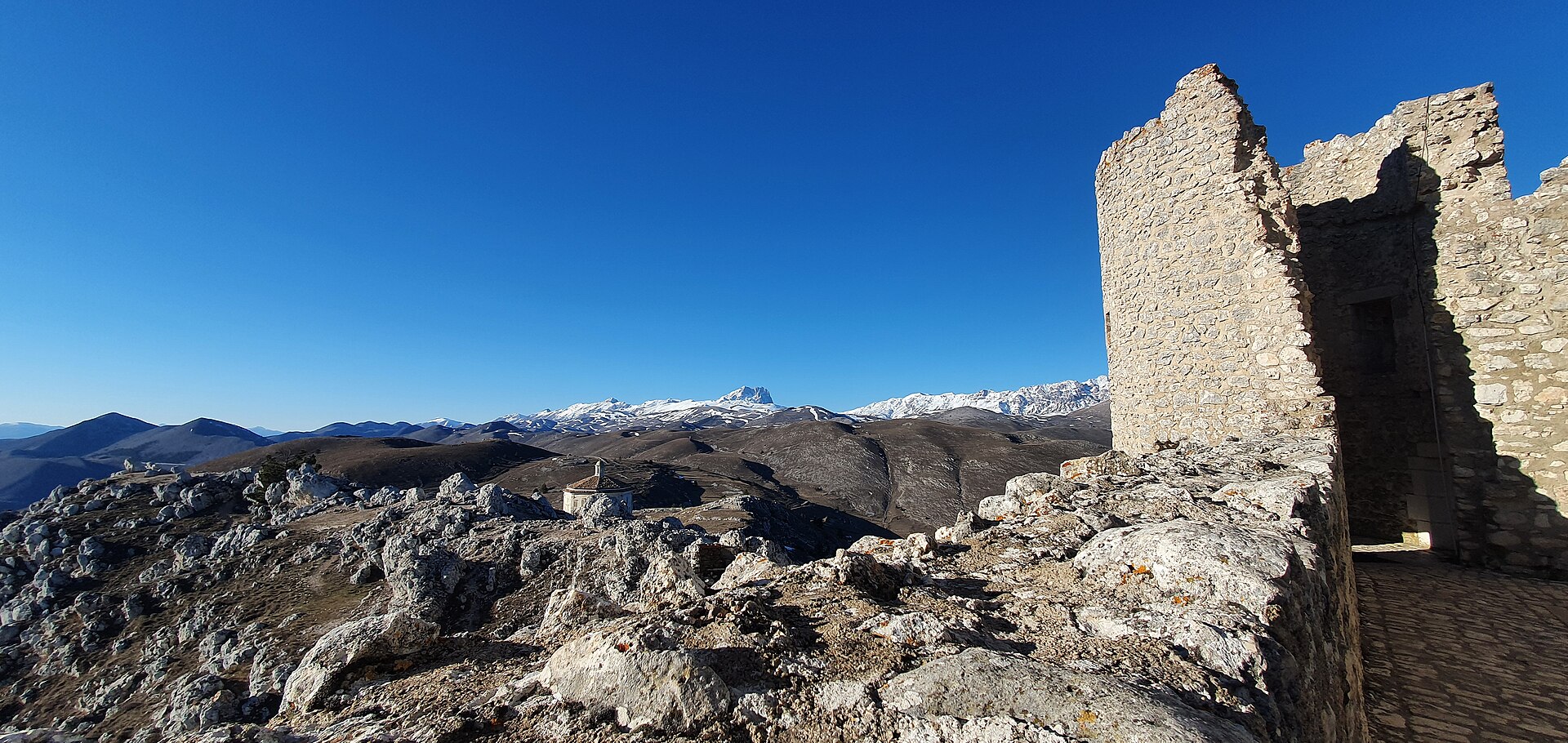
- Ruin and Earthquake
- The Abandoned Village
- The Octagonal Church
- A Sea of Mountains
- A Chapel and a Legend
- A Castle of the Movies
- Visiting Rocca Calascio
The Highest Castle in Italy
Rocca Calascio holds a remarkable distinction: it stands at one of the highest altitudes of any castle in Italy, perched on a mountain ridge nearly a mile and a half above the level of the sea. This great height is the key to the castle’s character and its drama, for it commands an immense panorama of mountains and valleys, and it stands in a world of wind, silence, and vast open space quite unlike the setting of any lowland fortress.
The altitude that makes the castle so spectacular also made it, in its day, formidably difficult to reach and to attack. Set high on its ridge, far above the valleys and the roads, the fortress commanded everything around it and could be approached only by a hard climb. Its position gave it an unrivalled view over the surrounding country and made it a perfect watchtower, able to spot any movement across a huge sweep of mountain landscape.
For the visitor today, the sense of height and space is overwhelming. To stand by the ruined walls, with the mountains falling away on every side and the great peaks of the Apennines ranged along the horizon, is to feel oneself at the very top of the world. The extraordinary altitude of Rocca Calascio, and the vast panorama it commands, are the first and greatest of the many things that make this lofty fortress so unforgettable.
The thin, clear air at such an altitude gives the light a special quality, sharp and brilliant, that makes the mountains and the castle stand out with startling clarity on a fine day. This luminous mountain light is part of the magic of Rocca Calascio, and it changes constantly through the day, from the golden glow of dawn and dusk to the hard bright light of noon, giving the fortress a different beauty at every hour.
A Fortress in the Gran Sasso
Rocca Calascio stands within one of the great mountain wildernesses of Italy, the national park that takes its name from the Gran Sasso, the highest peak of the Apennines, which rises not far away. This is a landscape of high ridges, deep valleys, and vast upland plains, a country of great beauty and, in winter, of great harshness, and the castle is set at its very heart, a work of human hands amid the grandeur of the mountains.
The mountains of Abruzzo have always been a world apart, remote from the cities and the coasts, a land of shepherds, of ancient traditions, and of a hard and enduring way of life. The castle belongs to this world, built not to guard a rich city or a trade route on the plain but to watch over the high mountain country and the people who lived and worked among the peaks. Its story is inseparable from the mountains that surround it.
Today the wildness of the setting is one of the castle’s greatest attractions. Set within a protected national park, far from any large town, Rocca Calascio stands in a landscape that has changed little for centuries, a place of golden grass, bare rock, and endless mountain views. To visit it is to enter a world of natural beauty and silence, and the fortress among the peaks is the crowning wonder of one of the loveliest mountain landscapes in all of Italy.
The national park that surrounds the castle is one of the largest protected areas in Italy, a refuge for wolves, bears, and eagles as well as for the ancient way of life of the mountain shepherds. To visit Rocca Calascio is thus to enter not only a place of history but a place of wild nature, where the works of man are set amid a landscape of great ecological as well as scenic value.
Four Towers on a Ridge
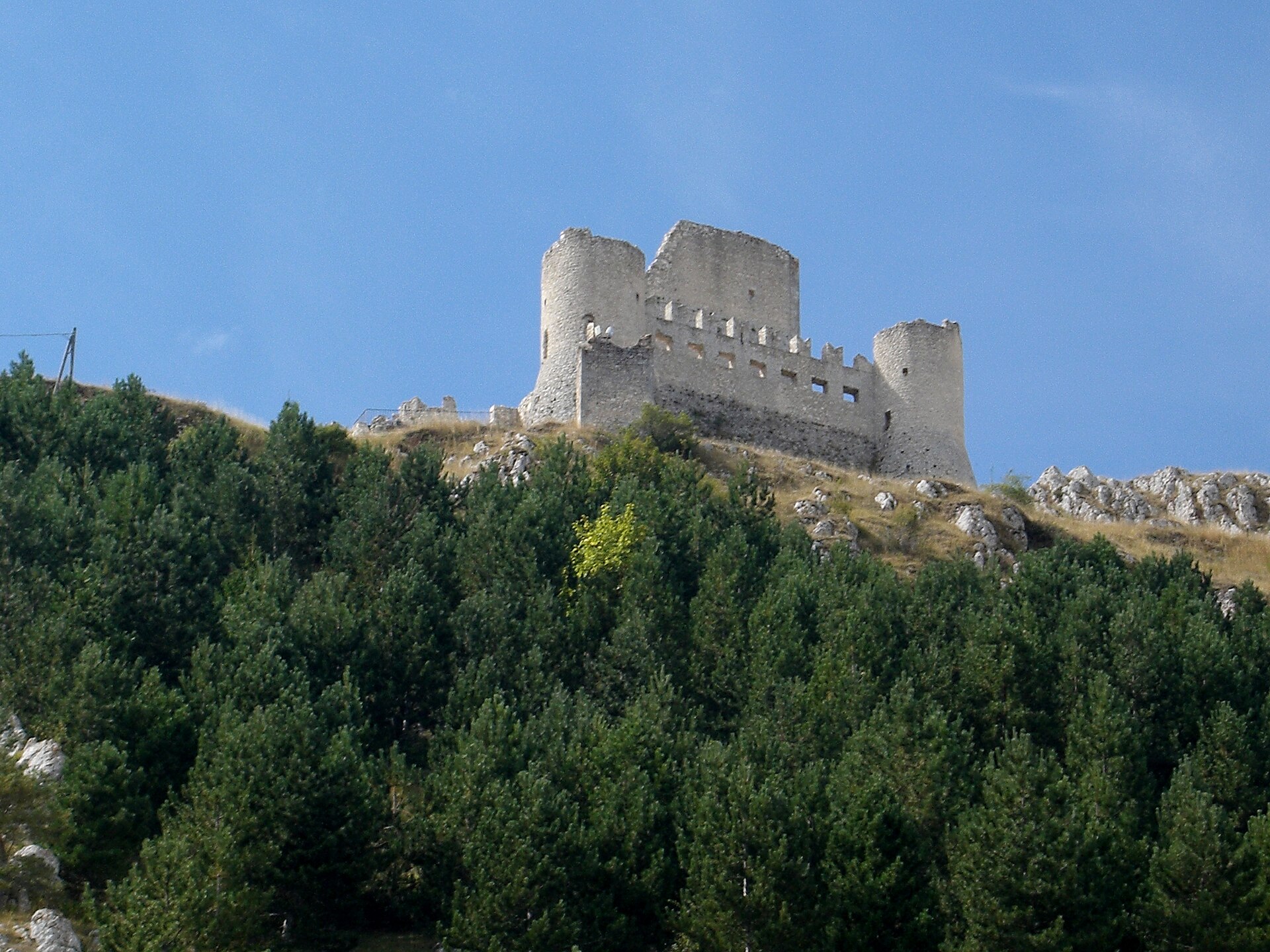
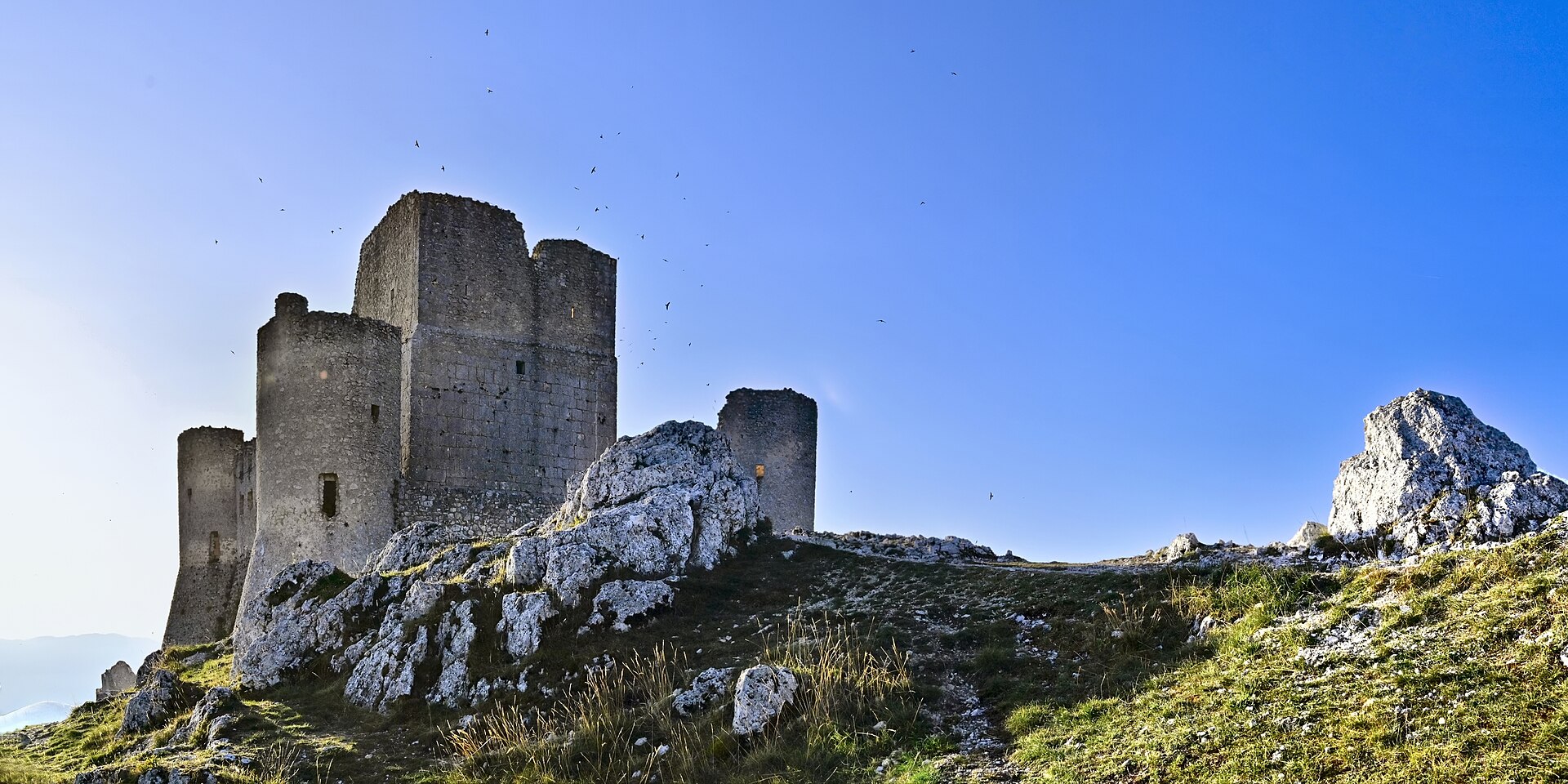
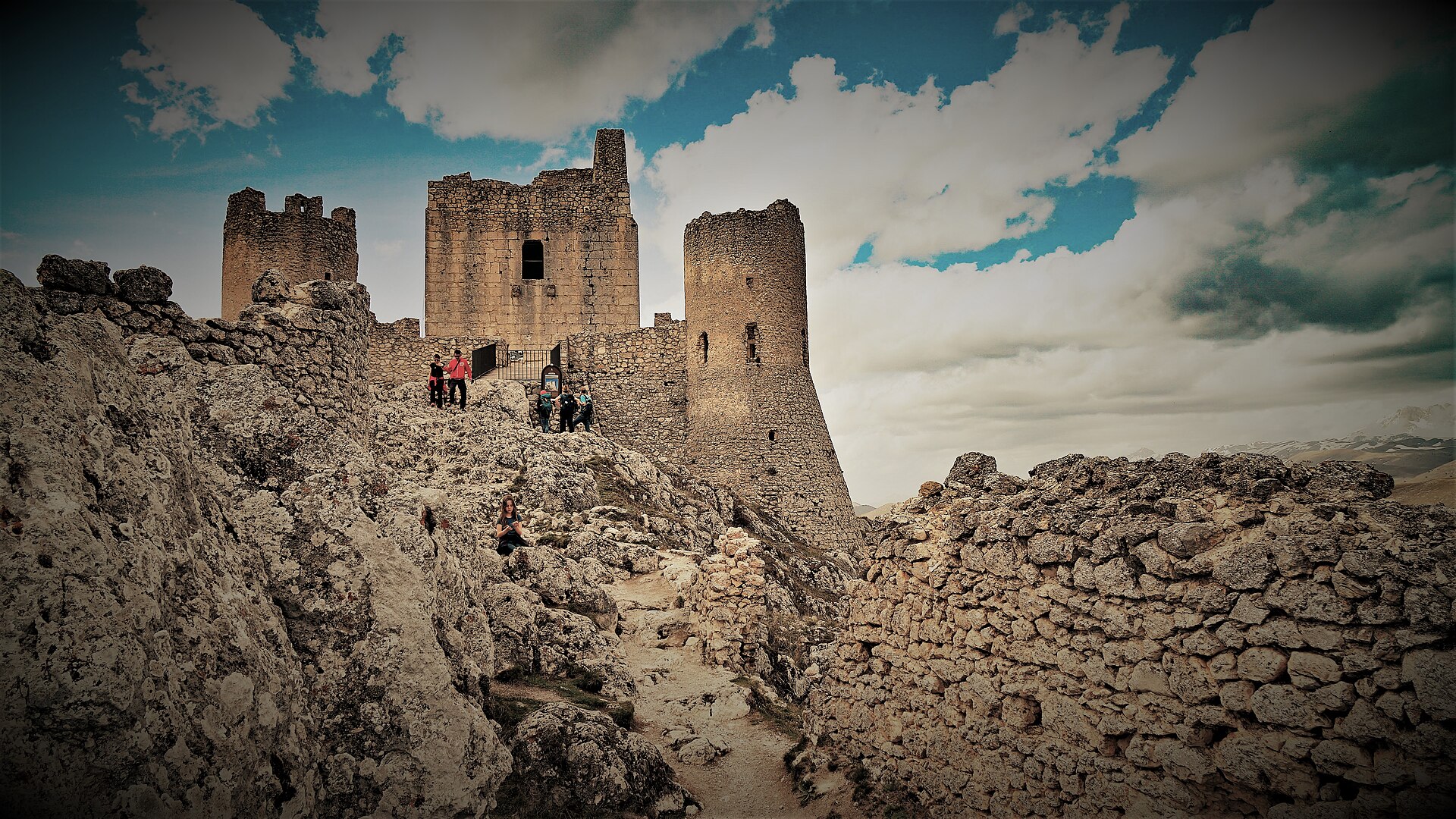
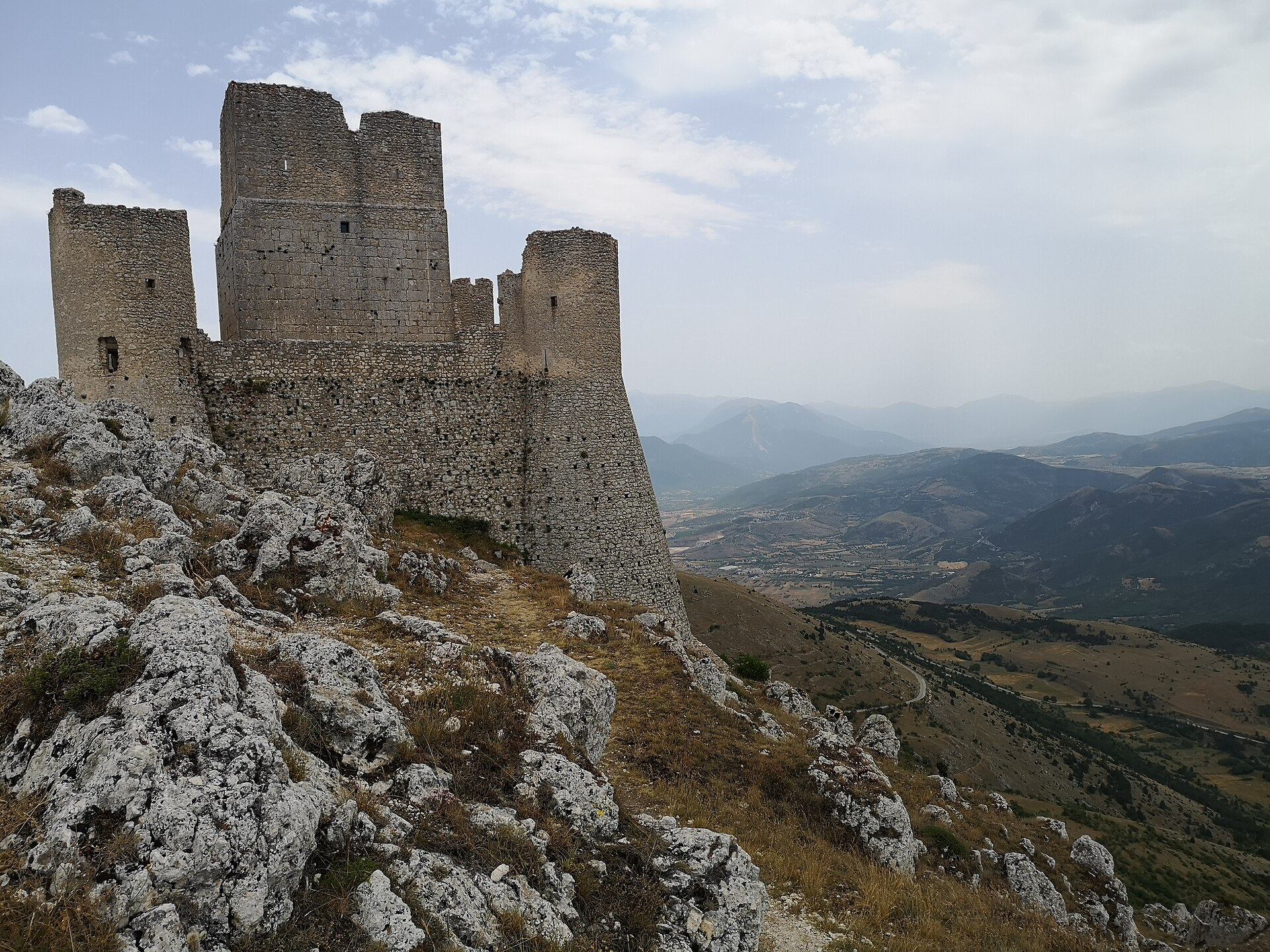
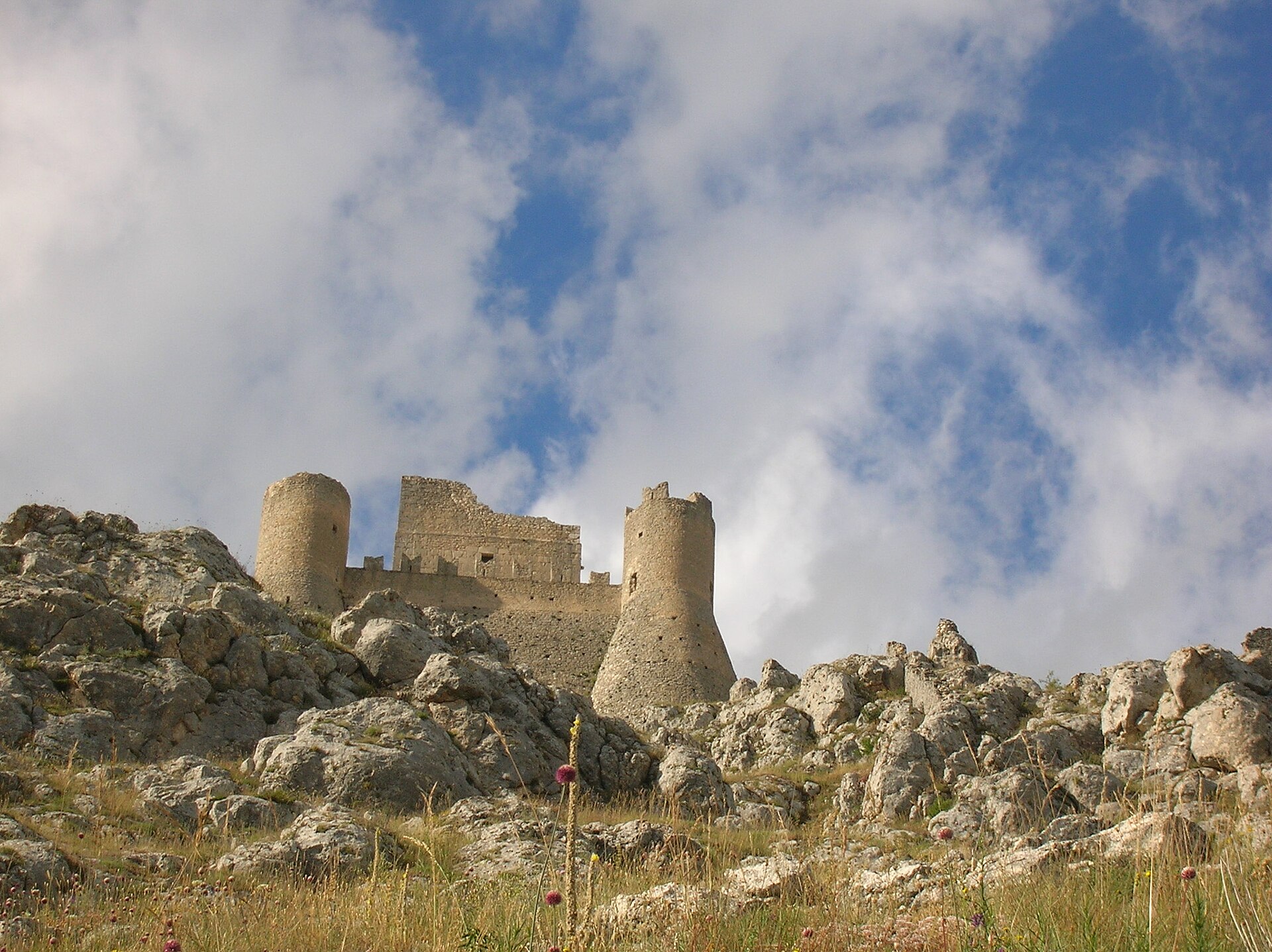
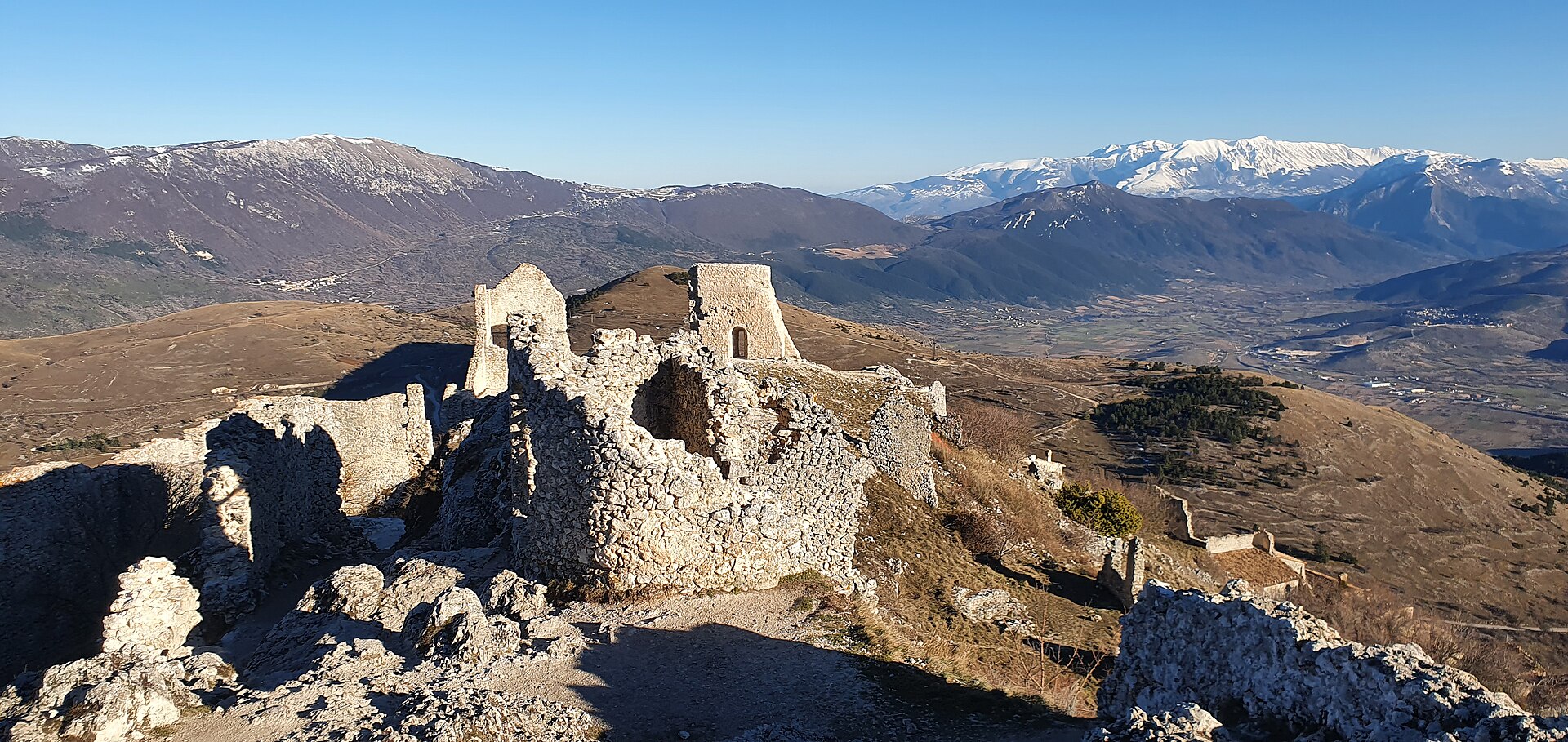
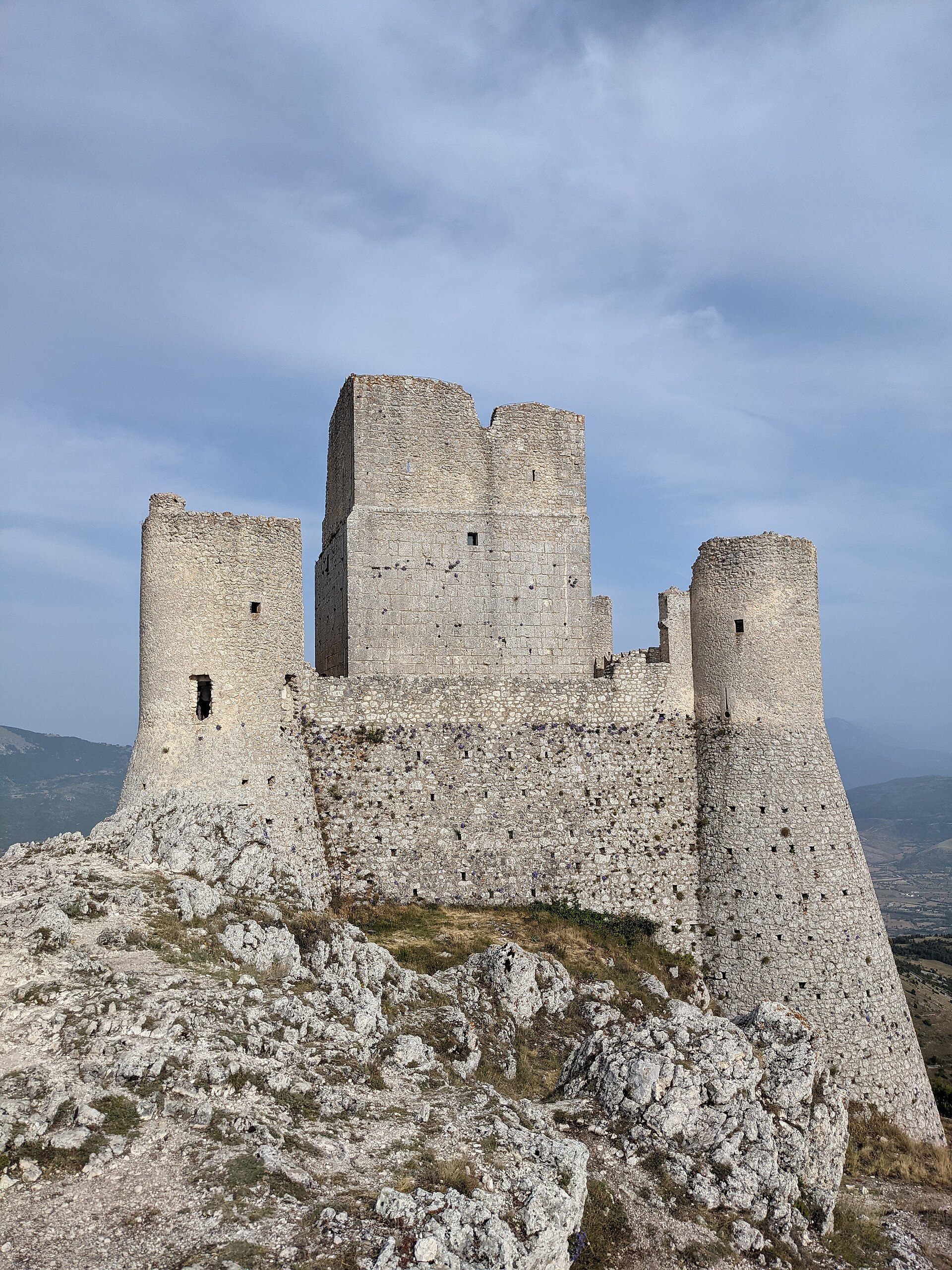
The fortress of Rocca Calascio, in its developed form, was a strong stone castle with a central keep and four round towers rising at its corners, all set within walls that followed the summit of the ridge. This compact, powerful design was well suited to its exposed mountain position, and the round towers, which offered no weak corners to an attacker and gave the defenders command of the walls from every angle, were a mark of the military architecture of the later Middle Ages.
The castle grew over time from a simpler beginning into this stronger form, as its owners strengthened and enlarged it to meet the changing demands of war. The addition of the round towers, in particular, brought the fortress up to date with the developing art of fortification, and gave it the striking silhouette that makes it so dramatic a sight today, its towers standing against the sky on the high ridge.
Though now a ruin, open to the sky and the wind, the castle preserves enough of its walls and towers to make its original strength and design clear. To walk among its stones is to appreciate the skill and effort that went into raising so strong a fortress in so remote and difficult a place, high on a mountain ridge far from any city. The four towers on the ridge are the enduring emblem of Rocca Calascio, and one of the most memorable castle silhouettes in all of Italy.
The round form of the towers, which replaced the square towers of an earlier age, reflected the advance of military engineering, for rounded walls deflected missiles better and offered no vulnerable corners to an attacker or a sapper. Even in so remote a spot, the builders of Rocca Calascio kept pace with the developing art of fortification, giving their mountain stronghold the most up-to-date defences of its day.
A Watchtower of Stone
The origins of Rocca Calascio lie not in a great castle but in a simple watchtower, raised in the early Middle Ages to keep watch over the high mountain country. From its lofty perch, a single tower could command an immense view and give warning of any approaching danger, and it was for this purpose, above all, that a stronghold was first raised on this remote and commanding ridge.
The role of the watchtower was central to the life of these mountains, where scattered communities and their flocks needed protection from raiders and warning of trouble. A network of towers and strongholds, of which Rocca Calascio was the highest and most commanding, watched over the uplands and passed signals across the country, and the great height of the fortress made it the perfect lookout, able to see and to be seen across a vast sweep of mountain landscape.
From these humble beginnings as a watchtower, the stronghold grew over the centuries into the powerful four-towered castle whose ruins we see today. But it never lost its essential character as a place of watching and warning, a fortress whose greatest weapon was its command of the view. To understand Rocca Calascio is to understand its role as the eye of the mountains, the high stone watchtower that kept its long vigil over the peaks and valleys of Abruzzo.
The strategic network of which Rocca Calascio was a part linked the towns and strongholds of the region, allowing signals to be passed swiftly across the mountains by fire or smoke. In an age without rapid communication, such a system was vital for the defence of a scattered and vulnerable population, and the great height of Rocca Calascio made it the key point in the network, the highest eye in a chain of watchful towers.
Over the centuries the ownership of the castle passed through the hands of various noble families who held sway over this part of the mountains, each maintaining and using the fortress as the guardian of their lands and their flocks. The castle thus served a succession of lords across the medieval and early modern centuries, always fulfilling its essential role as the watchtower and stronghold of the high mountain country.
Guarding the Shepherds’ Roads
The wealth and the life of these mountains depended for centuries on sheep, and on the great seasonal movement of flocks between the high summer pastures of the mountains and the warmer lowlands where they wintered. This ancient practice, the driving of vast flocks along broad droving roads across the country, was the economic heart of the region, and the wool it produced was a valuable trade. The castle guarded this world and the routes on which it depended.
From its commanding height, Rocca Calascio watched over the high pastures and the droving roads that crossed the mountains, protecting the flocks and the shepherds and the valuable trade in wool. The nearby towns grew rich on this trade, and the castle was the guardian of their prosperity, a stronghold that secured the mountain country and the ancient rhythms of movement that sustained it. Its purpose was practical and vital, bound up with the pastoral life of the mountains.
This connection to the world of the shepherds gives Rocca Calascio a character quite different from the castles of the cities and the plains. It was not a seat of courtly power or a guardian of a rich trade route, but a watchtower over a pastoral world, a fortress of the high mountain country and its ancient way of life. To understand its story is to understand the world of the Abruzzo shepherds, whose flocks and droving roads the castle was built to protect.
The droving roads that the castle guarded were among the most important features of the landscape of central and southern Italy, broad grassy highways along which flocks had been driven for thousands of years, since long before the Middle Ages. The wool trade they served brought real wealth to the mountain towns, and the fine wool of the region was prized far beyond Abruzzo, giving the castle a role in a trade that reached across Italy and beyond.
For centuries the great flocks of Abruzzo moved along the tratturi, the wide grassy droving roads that linked the summer pastures of the mountains with the winter lowlands of Puglia far to the south. Rocca Calascio sat above one of the busiest of these routes, and the men who held the castle watched the slow rivers of sheep pass below them season after season. The wool trade made this poor upland surprisingly wealthy, and the castle was as much a guardian of that trade as it was a military strongpoint.
The Climb to the Rock
Rocca Calascio cannot be reached by car, and the final approach to the castle must be made on foot, by a climb up the mountain to the summit ridge where the fortress stands. This walk, though not long, is part of the experience, taking the visitor up through the golden mountain grass, with the castle growing ever nearer and the views ever wider, until at last one reaches the ruined walls on their lofty perch.
The need to climb to the castle preserves something of its ancient remoteness and drama. Just as in the past the fortress could be reached only by a hard ascent, so today the visitor must make the effort to climb to it, and the reward is all the greater for the exertion. To arrive at the summit, a little breathless, and to see the castle and the vast panorama of mountains laid out around it, is a moment of real exhilaration.
The approach on foot also allows the visitor to appreciate the setting of the castle as no car could, moving slowly up through the mountain landscape and taking in the beauty of the surroundings. The little abandoned village below the castle, the golden slopes, the great peaks beyond, all unfold gradually as one climbs, building to the great revelation of the fortress on its ridge. The climb to the rock is an essential part of the magic of Rocca Calascio.
In winter the climb can be a very different matter, for snow lies deep on these mountains and the castle stands in a world of white, beautiful but harsh. The changing seasons transform the approach and the setting, from the flower-strewn slopes of spring and the golden grass of summer to the fiery colours of autumn and the snows of winter, and each brings its own beauty to the climb and its own reward at the summit.
Ruin and Earthquake
The castle we see today is a ruin, its walls broken and open to the sky, and the story of its ruin is bound up with the natural forces of these mountains. In the early eighteenth century a powerful earthquake struck the region, causing great destruction across Abruzzo, and the castle and its surrounding village were badly damaged. This disaster hastened the decline of the fortress and the abandonment of the community that had grown up around it.
Earthquakes are a recurring danger in this part of Italy, and over the centuries they have shaped the history of its towns and castles, bringing sudden destruction to buildings raised by generations of labour. The earthquake that damaged Rocca Calascio was one of many such events, and it left the castle weakened and the village depopulated, beginning the long process of decay that turned the once-strong fortress into the romantic ruin of today.
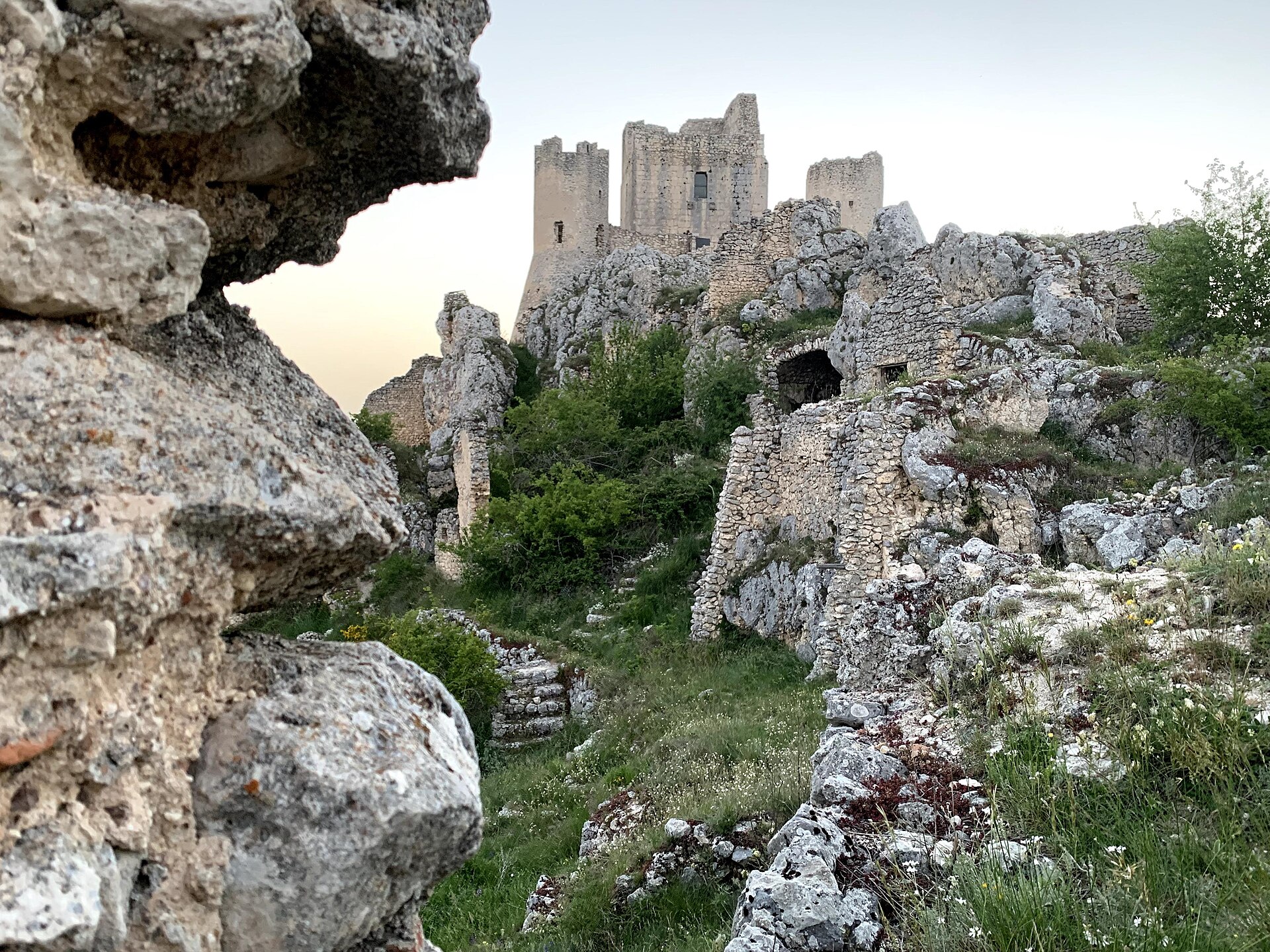
Yet the ruin has a beauty and a power of its own, and the broken walls, weathered by centuries of wind and snow, seem to belong to the wild mountain landscape as completely as the rocks themselves. The castle’s decline from a working fortress to a magnificent ruin is part of its story and its appeal, and the sight of its shattered walls standing against the sky on the high ridge is one of the most romantic and evocative in all of Italy.
The great earthquakes of this region are a reminder of the powerful natural forces at work beneath the beautiful mountains, forces that have shaped not only the landscape but the history of its people and their buildings. The ruin of Rocca Calascio is, in part, the work of these forces, and it links the castle to the deep geological life of the Apennines, a range still being slowly raised and shaken by the movements of the earth.
The Abandoned Village
Below the castle lies the little village of Rocca Calascio, which grew up in the shelter of the fortress and shared its fortunes over the centuries. As the castle declined and the dangers and hardships of life in so remote and lofty a place took their toll, the village was gradually abandoned, its people drifting away to easier lives in the valleys and the towns below, until it stood almost empty, a cluster of stone houses on the mountainside.
For a long time the village lay largely deserted, its houses falling into ruin alongside the castle above, a poignant image of a way of life that had passed away. The abandonment of such mountain villages was a common story in this part of Italy, as the hard life of the uplands lost its people to the modern world, and Rocca Calascio became one of the most striking examples, a ghost village beneath its ghostly castle.
In recent times, however, the village has begun to come back to life, as its beauty and its dramatic setting have drawn visitors and new interest. Some of the old stone houses have been restored, and the village once more sees life, though of a different kind from the pastoral world of the past. The story of the village, from prosperity to abandonment to a new life driven by its beauty, mirrors that of the castle above, and adds to the deep and moving atmosphere of the place.
The revival of the village and the castle in recent times reflects a wider rediscovery of the beauty and value of Italy’s mountain villages, many of which had been abandoned in the rush to the cities during the twentieth century. Rocca Calascio and its neighbours have become symbols of this rediscovery, drawing travellers in search of unspoiled landscapes and the traces of an older, slower way of life among the peaks.
Walking through the old streets of the village, among the restored and the ruined houses, one feels the presence of the generations who lived here in the shadow of the castle, enduring the hardships of mountain life for the sake of the flocks and the freedom of the high country. It is a moving place, full of the memory of a vanished world, and it deepens the atmosphere of the whole site.
The Octagonal Church
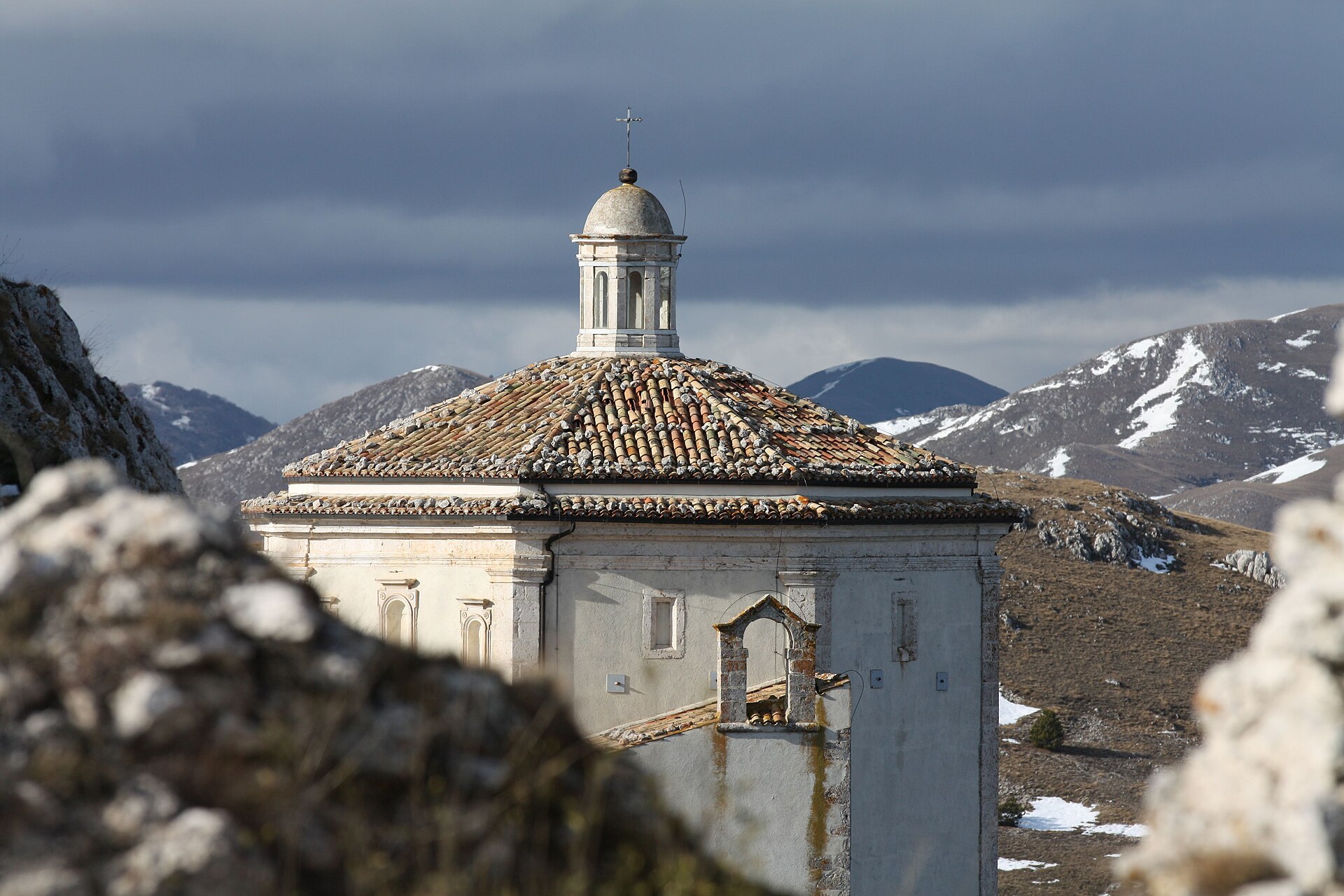
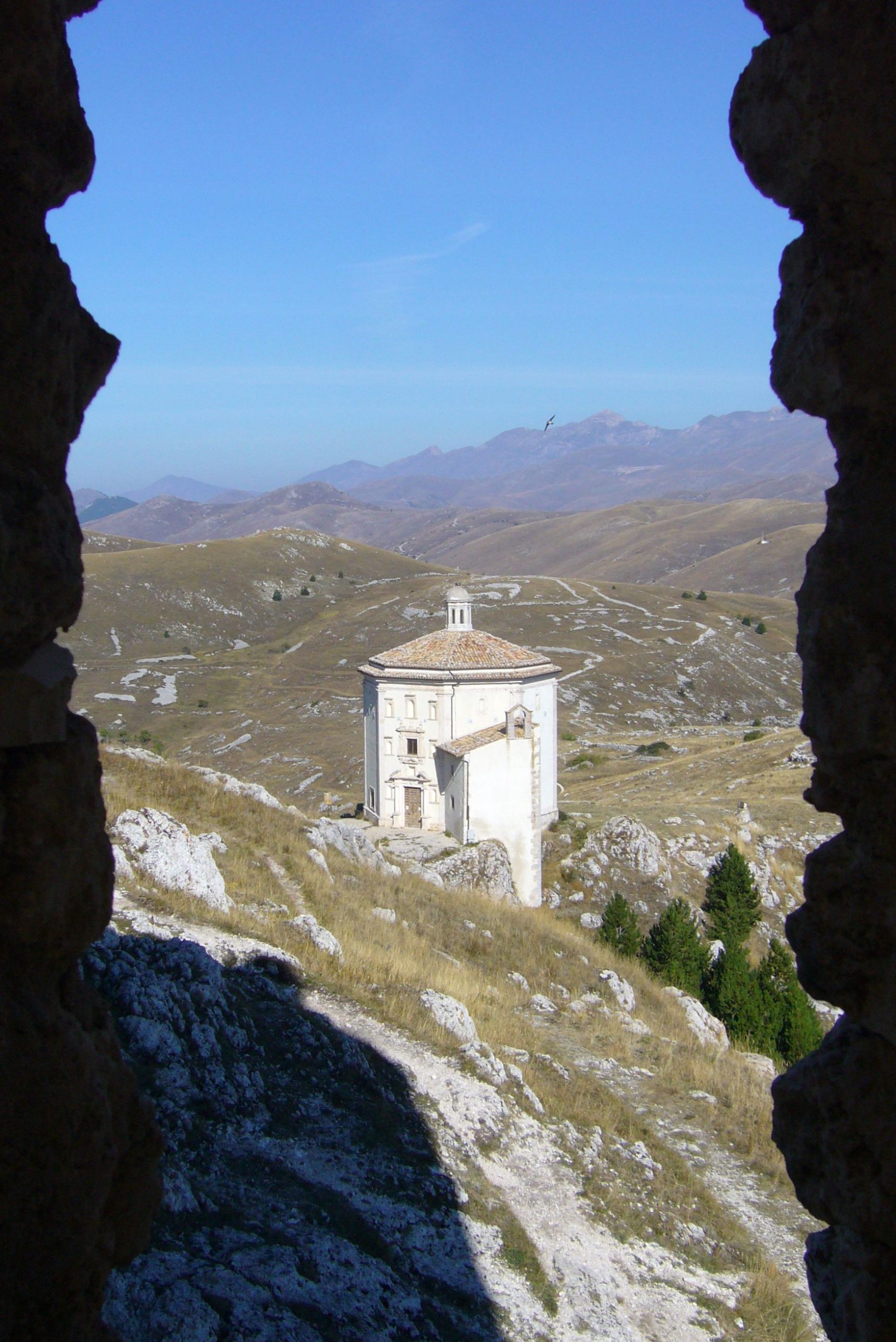
A short walk below the castle stands one of the most beautiful and unusual sights of Rocca Calascio, a small church of an unusual octagonal shape, set alone on the mountainside with the fortress rising behind it. This little church, dedicated to Saint Mary, is one of the most photographed and beloved features of the place, its simple, graceful form standing in perfect harmony with the wild landscape around it.
The church is linked by tradition to a legend of the mountains, a story of a miraculous event said to have taken place on this spot, in memory of which the church was raised. Such legends are common in these upland communities, where faith and the harshness of mountain life were closely bound together, and the little church stands as a monument to the piety of the people who lived and worked in this remote and beautiful place.
Set against the backdrop of the castle and the mountains, the octagonal church makes one of the loveliest compositions in all of Abruzzo, and it is an essential part of any visit to Rocca Calascio. Its solitary beauty, its unusual form, and its connection to the legends of the mountains give it a special charm, and the sight of the little church with the great fortress rising behind it is one of the enduring images of this magical place.
The eight-sided form of the church is unusual and striking, and it has made the little building one of the most recognisable and beloved sights of the region, endlessly photographed against the backdrop of the castle and the mountains. Its simple, harmonious shape seems perfectly suited to its lonely mountain setting, and it stands as a small masterpiece of humble religious architecture in one of the most beautiful spots in Italy.
The little church of Santa Maria della Pietà stands a short walk below the castle, its pale octagonal drum rising out of the bare ridge like something dropped from the sky. Local tradition says it was built on the spot where shepherds once drove off a band of brigands, and that the eight sides honour a vision seen during the fight. Whatever the truth, its isolation is the whole of its beauty: there is nothing around it but stone, grass, and the enormous sky.
A Sea of Mountains
The greatest reward of the climb to Rocca Calascio is the view, and it is one of the finest in all of Italy. From the ruined walls, high on their ridge, the eye travels over an immense sea of mountains, ridge beyond ridge stretching away to the horizon, with the great peak of the Gran Sasso rising nearby and the high mountain plains spreading out below. It is a panorama of overwhelming grandeur, and it is what draws many visitors to make the climb.
The high mountain plains around the castle, golden in summer and white with snow in winter, are among the most beautiful landscapes in Italy, vast open spaces ringed by peaks, empty and silent beneath the wide sky. From the castle one looks out over this world of mountain and plain, a landscape that has changed little for centuries, and the sense of space and freedom is exhilarating.
This great view was, of course, the whole purpose of the castle, which was built above all to command the surrounding country and to keep watch over the mountains. What was once a matter of defence and warning is now simply a source of wonder and delight, but the two are connected, for the castle stands where it does precisely because of the incomparable view it commands. To share that view, from the ruined walls high among the peaks, is one of the great experiences that Italy has to offer.
On a clear day the view from the castle can extend for a great distance across the ranges of the central Apennines, taking in peaks and valleys far beyond the immediate surroundings. This immense prospect, combined with the sense of height and isolation, gives the visitor an almost aerial view of the mountain world, and it is easy to spend a long time simply gazing out over the endless ridges and plains.
A Chapel and a Legend
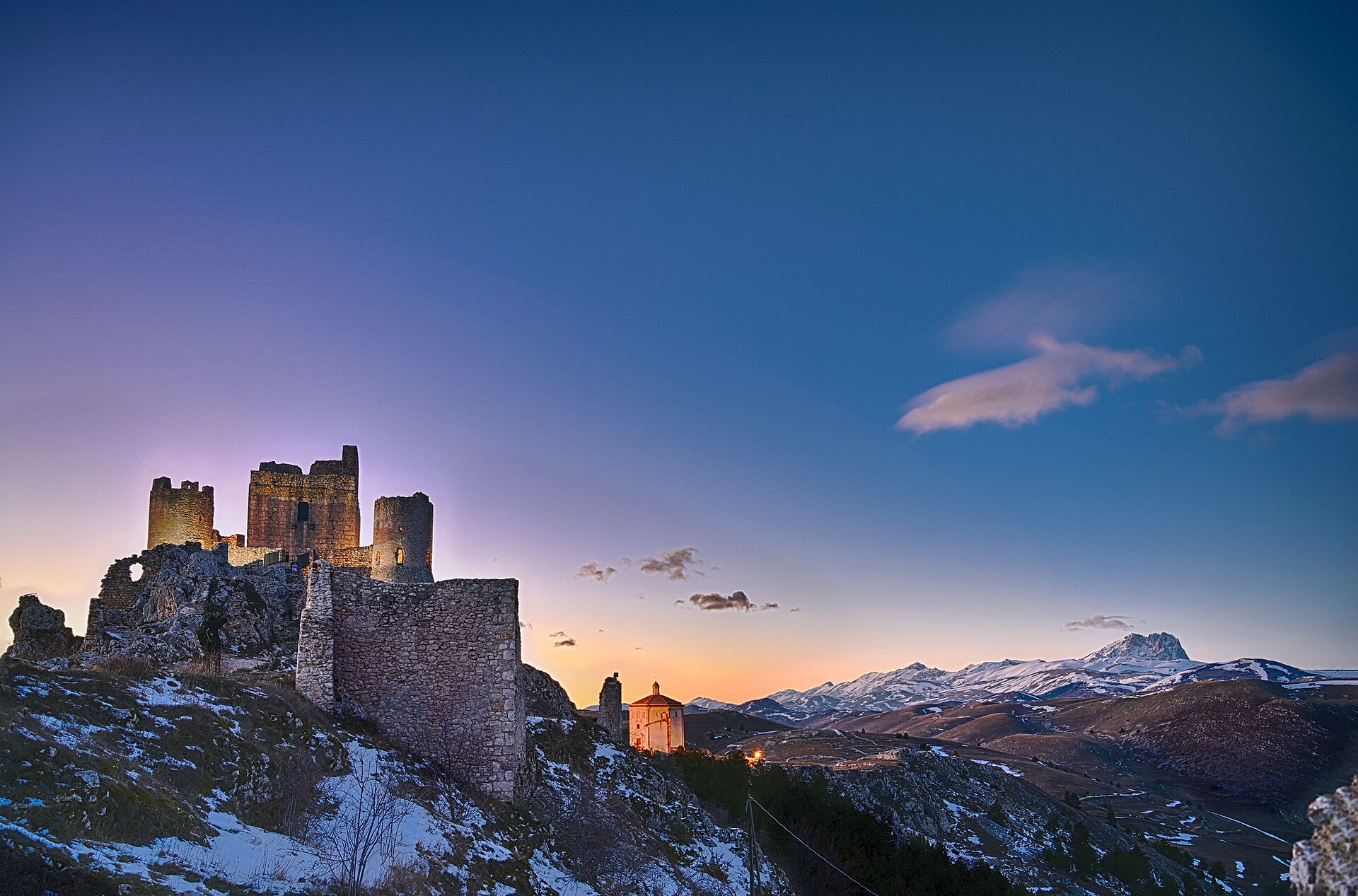
Seen from the castle above, the little octagonal church seems to float on the mountainside, a small point of human order in the vast wildness of the landscape. The relationship between the fortress and the church, the one a stronghold of war and watchfulness, the other a place of prayer and peace, captures something of the double life of these mountain communities, where the hard business of survival and defence went hand in hand with a deep and simple faith.
The legends that cling to the church and the castle are part of the rich folklore of the Abruzzo mountains, a world of tales and traditions handed down through generations of shepherds and villagers. In such remote and beautiful places, where the power of nature is always close at hand, stories of miracles and mysteries grew readily, and Rocca Calascio, with its lofty castle and its lonely church, has gathered its full share of such tales.
To descend from the castle to the little church, and to look back up at the fortress on its ridge, is to experience the full magic of the place, the union of dramatic architecture, wild landscape, and ancient legend. The church and the castle together, set among the mountains beneath the wide sky, make Rocca Calascio one of the most evocative and moving places in all of Italy, a spot where history, faith, and the grandeur of nature meet.
A Castle of the Movies
In recent decades Rocca Calascio has found an unexpected new fame as one of the most beloved film locations in Italy. Its dramatic silhouette, its wild and beautiful setting, and its air of romance and antiquity have made it irresistible to filmmakers, and it has appeared in a number of well-known films, standing in for the medieval castles and mountain strongholds of the imagination. Through the cinema, the image of Rocca Calascio has reached audiences around the world.
The castle’s most famous film appearances came in the nineteen-eighties, when it featured in celebrated historical and fantasy films that made the most of its spectacular setting, and it has continued to attract filmmakers ever since. Its combination of a genuine medieval ruin and an unspoiled mountain landscape offers exactly the kind of authentic and dramatic backdrop that the cinema loves, and it has proved a perfect setting for tales of knights, magic, and the Middle Ages.
This cinematic fame has helped to make Rocca Calascio one of the most visited and best-loved castles in Abruzzo, drawing travellers who come to see the setting of the films as well as the castle itself. It is a striking example of how the movies can bring new life and attention to a historic place, and it has added a modern layer of romance to a fortress already rich in history and legend. Rocca Calascio is, in every sense, a castle made for the imagination, on the mountain and on the screen alike.
The choice of Rocca Calascio by so many filmmakers is a tribute to the authenticity and drama of the place, which needs little embellishment to serve as a convincing medieval stronghold. Unlike the reconstructed and restored castles of many film sets, Rocca Calascio offers the genuine article, a real ruin in a real wilderness, and this authenticity is a large part of what makes its screen appearances so powerful and convincing.
Visiting Rocca Calascio
Rocca Calascio lies in the mountains of Abruzzo, in the province of L’Aquila, within the great Gran Sasso and Monti della Laga national park. It is reached by mountain roads that climb up from the valleys, and the final approach to the castle is made on foot, by a walk of some minutes up to the summit ridge. The nearby villages, including the beautiful old town of Santo Stefano di Sessanio, make good bases for a visit.
A visit to Rocca Calascio is above all an experience of landscape and atmosphere. There are no grand furnished rooms or museum displays here, but something rarer and more powerful: a genuine medieval ruin in one of the most spectacular mountain settings in Italy, with the little octagonal church nearby and the vast panorama of the mountains all around. Wear good shoes for the climb, and choose a clear day for the finest views.
If you would like to find it and plan your visit, here is the castle’s position high in the mountains of Abruzzo: 42.3436, 13.7053. Try to come early or late in the day, when the light is at its most beautiful and the crowds are fewest, and allow time simply to sit by the walls and take in the extraordinary view. Rocca Calascio is one of the most spectacular castles in all of Italy, a lofty fortress among the peaks, and it rewards everyone who makes the climb to its magnificent ruined walls.
A visit pairs naturally with exploring the wider region of the Gran Sasso, whose mountains, plains, and beautiful old towns offer some of the finest landscapes and most rewarding travel in central Italy. Seen against this backdrop, Rocca Calascio takes its place as the crowning wonder of a region that remains, even now, one of the least known and most unspoiled corners of the country.
Castles Nearby
- Castel del Monte, the octagonal riddle of Frederick II
- Castel Nuovo, the fortress of kings on the bay of Naples
The Castle Among the Peaks
Of all the castles of Italy, few are as spectacular, or as unforgettable, as Rocca Calascio. Perched at one of the highest points reached by any Italian castle, its ruined walls and round towers rising against the sky on a lofty mountain ridge, it is a place of extraordinary drama and beauty, set in one of the wildest and loveliest landscapes in the country. It is a castle that leaves a deep impression on everyone who makes the climb to its walls.
What makes it so moving is the union of the fortress and the mountains, of human history and wild nature. Rocca Calascio was a watchtower over a pastoral world, a guardian of the shepherds and their ancient droving roads, and though its working life has long passed away, and earthquake and time have reduced it to a ruin, it stands still on its ridge as magnificent as ever, wedded to the great landscape of peaks around it. The little octagonal church below and the abandoned village complete a scene of rare and haunting beauty.
So when you come to the mountains of Abruzzo, make the climb to Rocca Calascio and give yourself to its beauty and its silence. Walk among its ruined walls, visit the lonely church, and stand on the high ridge with the sea of mountains spread out around you. Rocca Calascio is the castle among the peaks, a lofty watchtower turned magnificent ruin, and it remains one of the most spectacular and beautiful castles in all of Italy.
You May Like
Mafra, the Palace a King Built From a Vow