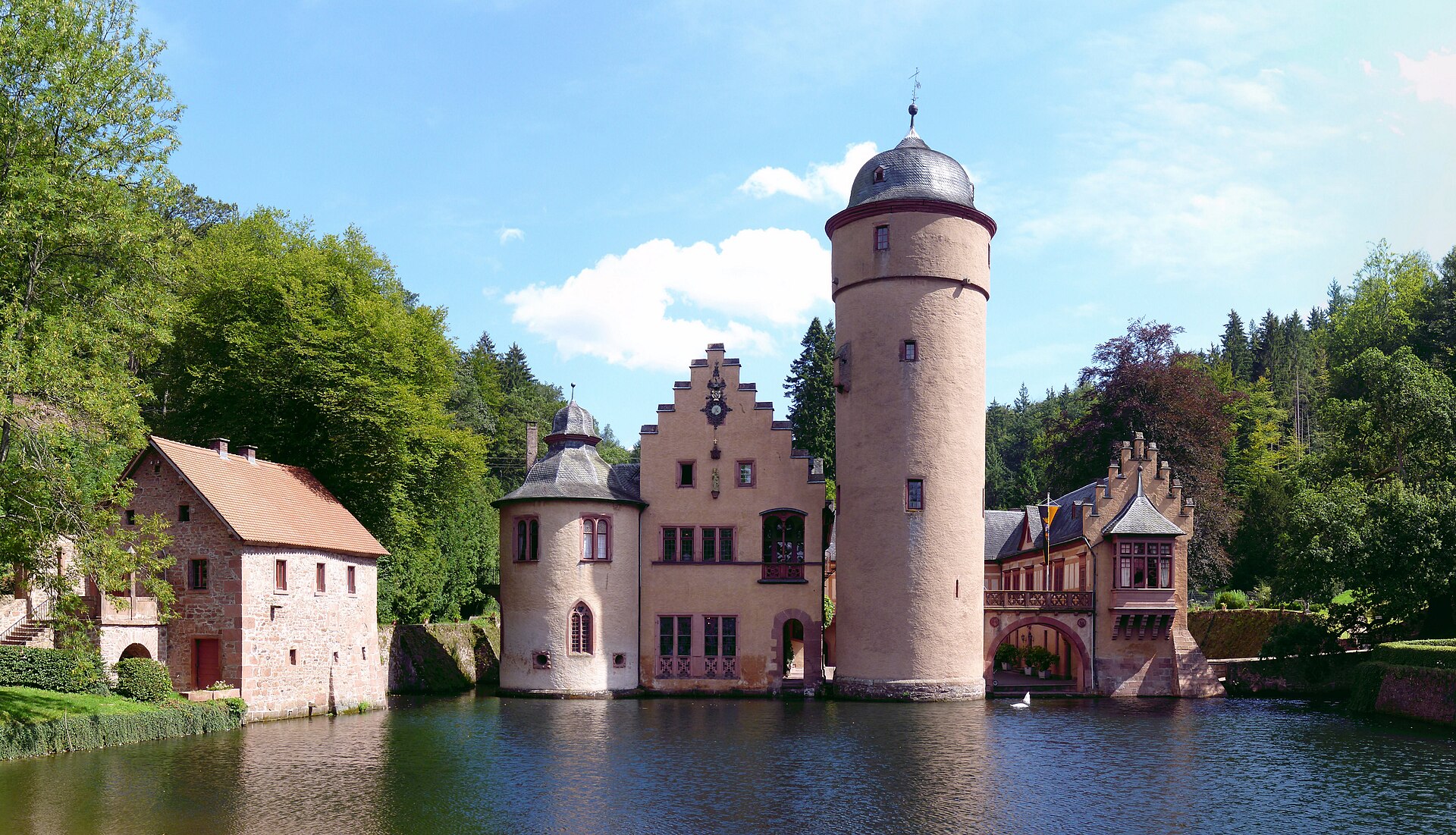
Deep in the wooded hills of the Spessart, in a hidden valley far from any main road, there is a castle so perfectly pretty and so perfectly placed that it hardly seems real. Schloss Mespelbrunn is a small moated castle, a jewel of a place, its towers and gabled roofs rising from a still green pond and doubled in the water below, all wrapped around by the dark forest on every side. It is one of the most beautiful and best-loved castles in Germany, and one of the most quietly magical.
Unlike the great imperial fortresses and the grand romantic palaces of this series, Mespelbrunn is a castle on an intimate, human scale. It was never a seat of emperors or a stage for great affairs of state; it was a country home, the residence of a knightly family who lived here for centuries in their secluded forest valley. That very modesty, combined with its enchanting setting, is what makes it so appealing. It is a fairy-tale castle not of kings but of a real family, tucked away in the woods.
Mespelbrunn is also famous for a more modern reason: it became one of the most beloved film locations in Germany, forever linked in the popular imagination with a classic tale of the robbers who once haunted the Spessart forest. Come with me down the wooded valley to this hidden water castle and we will explore the moated home of the Echter family, the prince-bishop who was born here, and the enduring charm of the loveliest little castle in the German forest.
In This Article
- A Castle on a Forest Pond
- Hidden in the Spessart
- A Moated Castle Complete
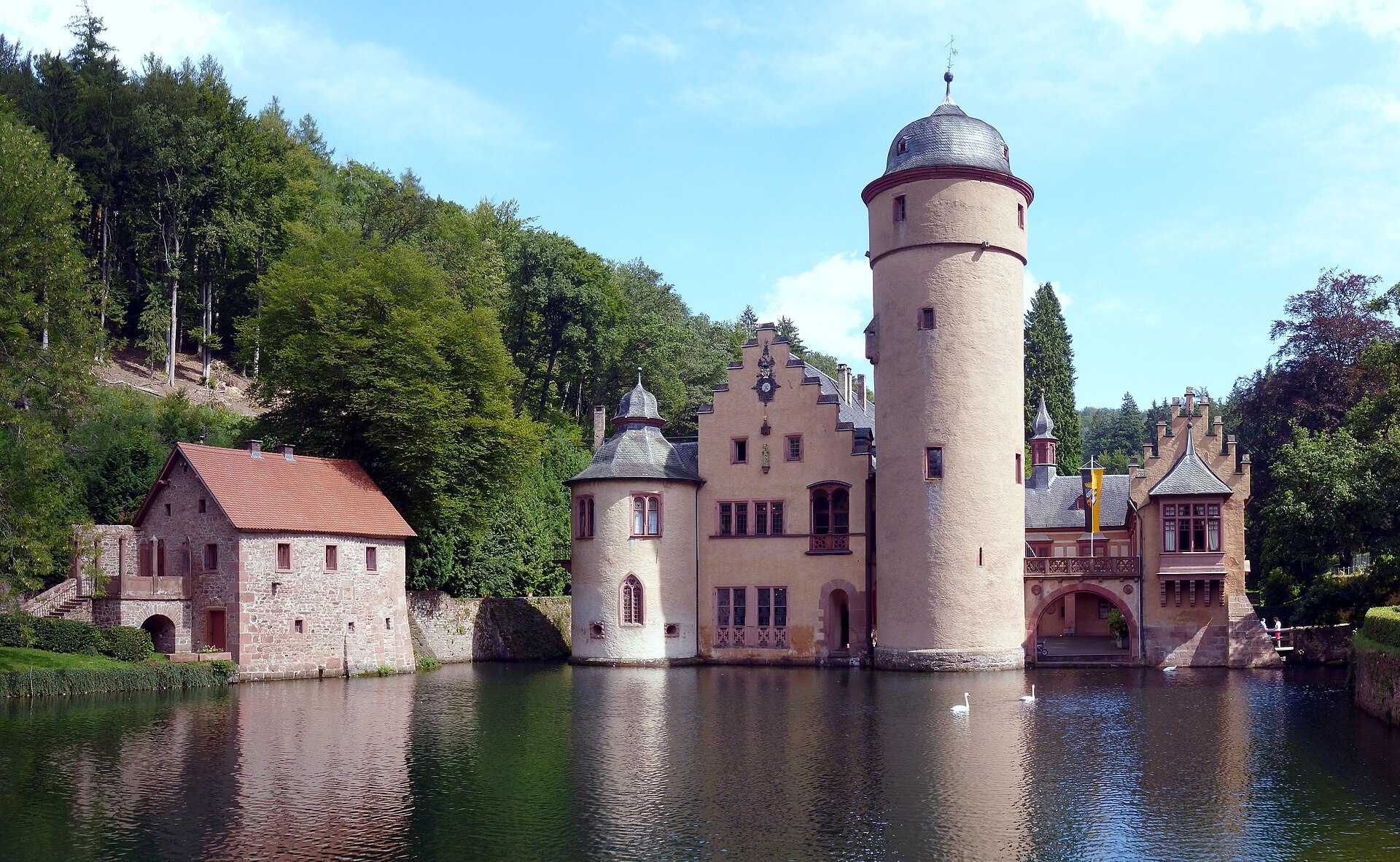
- The Round Tower on the Water
- Through the Gate to the Island
- Into the Courtyard
- A Renaissance Transformation
- Stone and Craft
- The Family That Never Left
- A Prince-Bishop Born Here
- Life at a Little Country Castle
- The Castle That Went to the Movies
- Visiting Schloss Mespelbrunn
A Castle on a Forest Pond
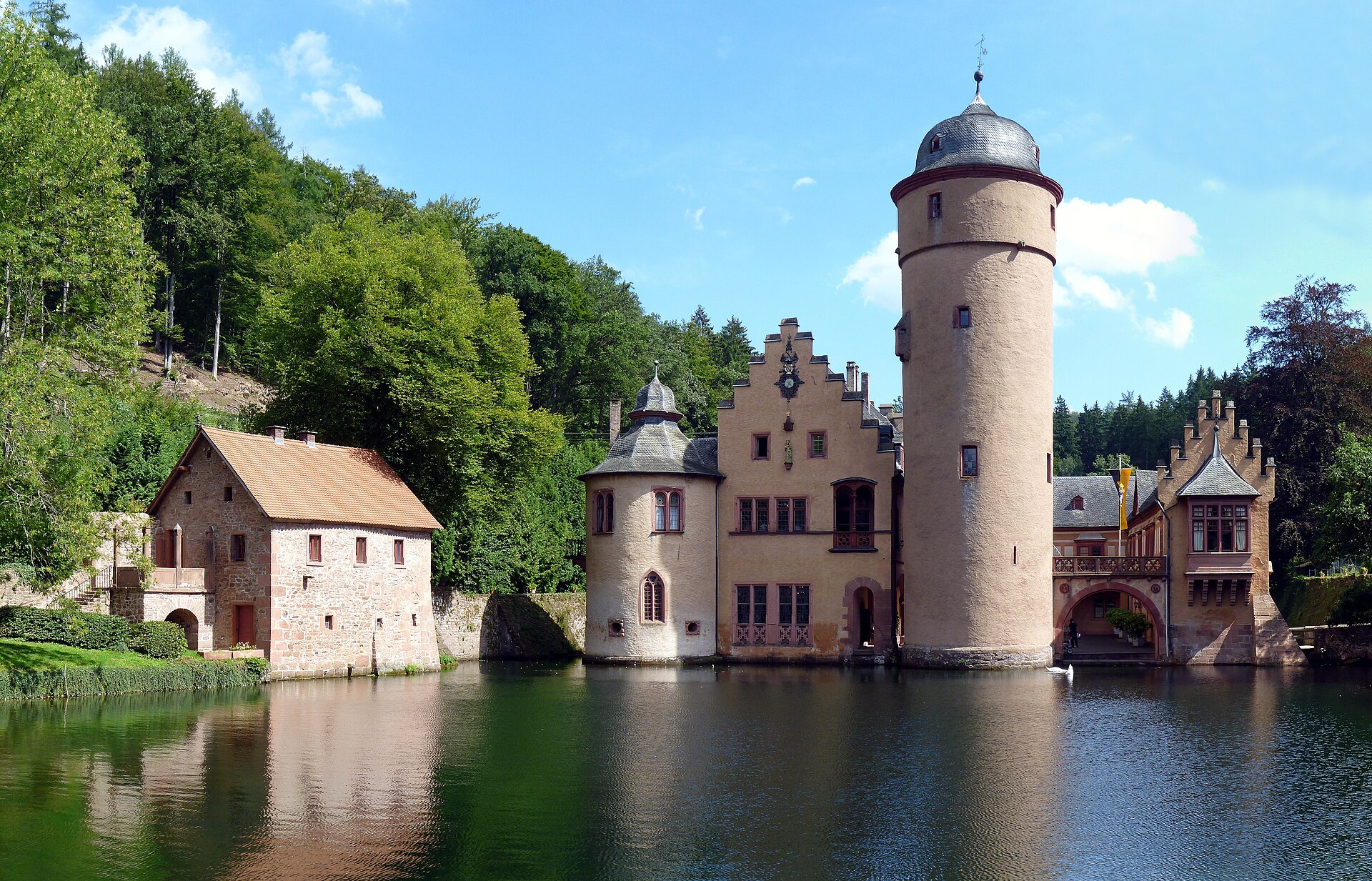
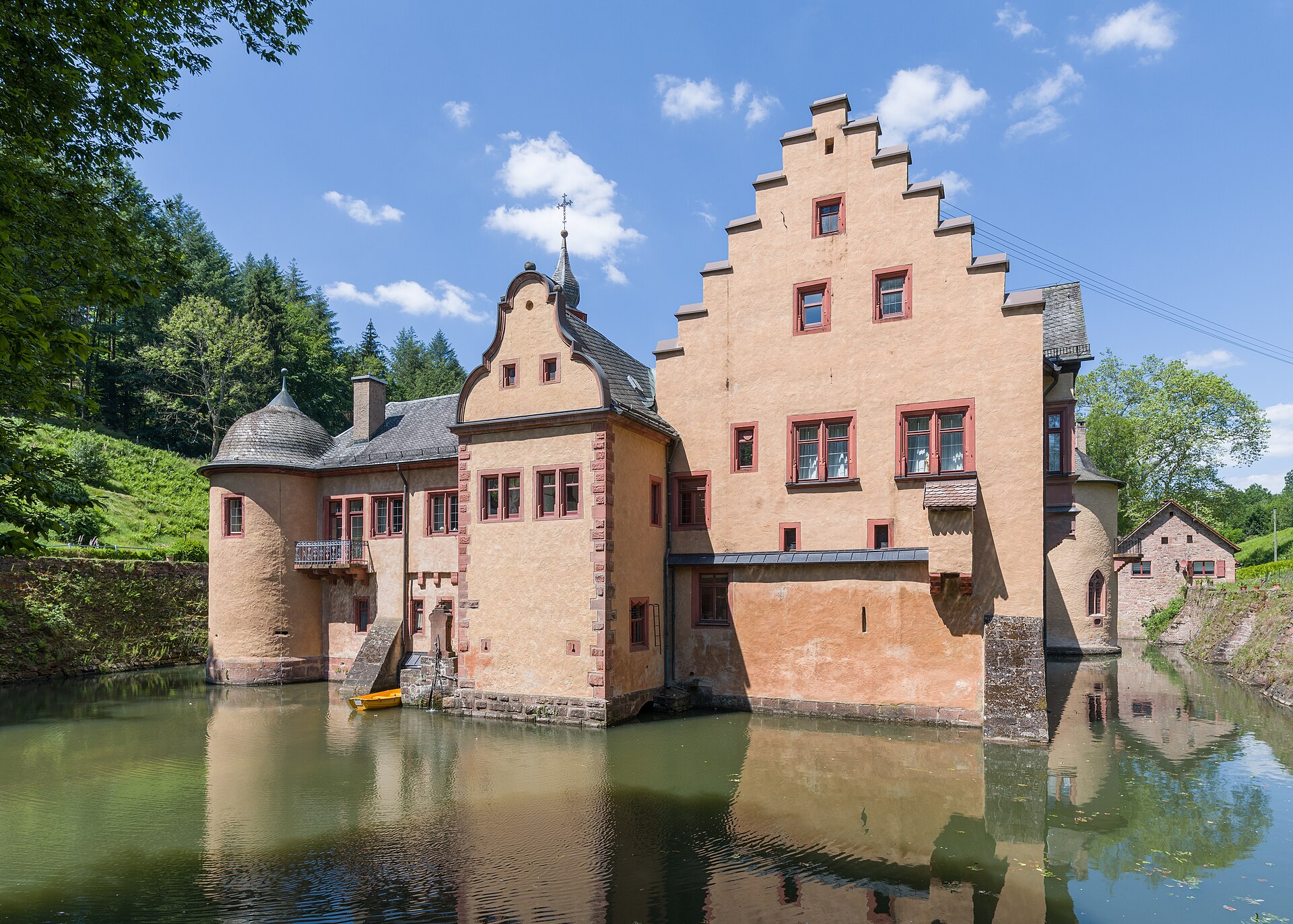
The first sight of Mespelbrunn is unforgettable. The castle sits on a small pond in a fold of the forest, its walls rising straight from the water so that it seems to float upon its own reflection. The still surface of the pond doubles the towers and gables, and on a calm day the castle and its image below form a single, perfect picture, framed by the greens of the surrounding trees. It is the very image of the enchanted castle in the woods.
Mespelbrunn is what the Germans call a Wasserschloss, a water castle, a type of fortress that used water rather than height for its defence. Where hill castles command their surroundings from above, a moated castle like this one hides in a valley and rings itself with water, the pond serving as a natural moat that made the castle difficult to attack. In the flat, forested country of the Spessart, water was the obvious defence, and Mespelbrunn used it to beautiful effect.
What began as a practical measure of security has become, over the centuries, the source of the castle’s greatest charm. The pond that once protected the family now simply makes the castle lovely, mirroring its walls and softening its lines, and turning a modest forest residence into one of the most photographed castles in Germany. Few buildings anywhere are so perfectly wedded to their setting, or so completely dependent on water for their beauty.
The reflection is so much a part of the castle’s identity that it appears in almost every photograph and painting of Mespelbrunn, the building and its mirror image forming a single symmetrical composition. On a windless morning, with mist rising from the water, the effect is especially magical, the castle seeming to hang suspended between the real world above and the reflected one below, in a scene of perfect stillness and beauty.
There is a reason moated castles feature so often in fairy tales and dreams, for water lends a building an air of mystery and enchantment that dry land cannot. A castle reflected in still water seems to belong half to the real world and half to some other, and Mespelbrunn draws deeply on that ancient magic, which is a large part of why it lingers so vividly in the memory of everyone who sees it.
Hidden in the Spessart
The setting of Mespelbrunn is inseparable from its character, and that setting is the Spessart, a great range of forested hills in the heart of Germany, between the rivers Main and the plains around Frankfurt. The Spessart is one of the largest wooded areas in the country, a landscape of deep forests, quiet valleys, and winding streams, long regarded as remote, mysterious, and more than a little wild.
For centuries the Spessart had a fearsome reputation, above all as the haunt of robbers and highwaymen who preyed on travellers passing through its lonely woods. The tales of the Spessart robbers became famous throughout Germany, a whole folklore of banditry and adventure in the dark forest, and they have coloured the popular image of the region ever since. To build a castle in such a place was to build in a landscape already rich with legend.
Tucked away in a hidden valley within this forest, Mespelbrunn was genuinely remote, far from the main roads and the centres of power. That seclusion shaped the whole life of the castle and its family, who lived quietly in their forest home away from the great events of the age. And it is that same seclusion, the sense of a secret castle hidden deep in the woods, that gives Mespelbrunn so much of its fairy-tale atmosphere today.
The very name of the region has become a byword for a certain kind of romantic wildness, and the tales of its robbers have been told and retold in stories, songs, and films. To visit Mespelbrunn is thus to enter a landscape already thick with legend, where every dark stand of trees seems to hold the possibility of adventure. The castle and its forest belong together in the imagination as completely as they do in fact.
Even today, driving down into the wooded valley toward the castle, you feel the world grow quieter and the trees close in, and it is easy to understand how such a place could breed legends. The Spessart keeps its air of secrecy still, and arriving at Mespelbrunn through the forest is a small journey into that older, more mysterious Germany of dark woods and hidden castles that the fairy tales remember.
A Moated Castle Complete
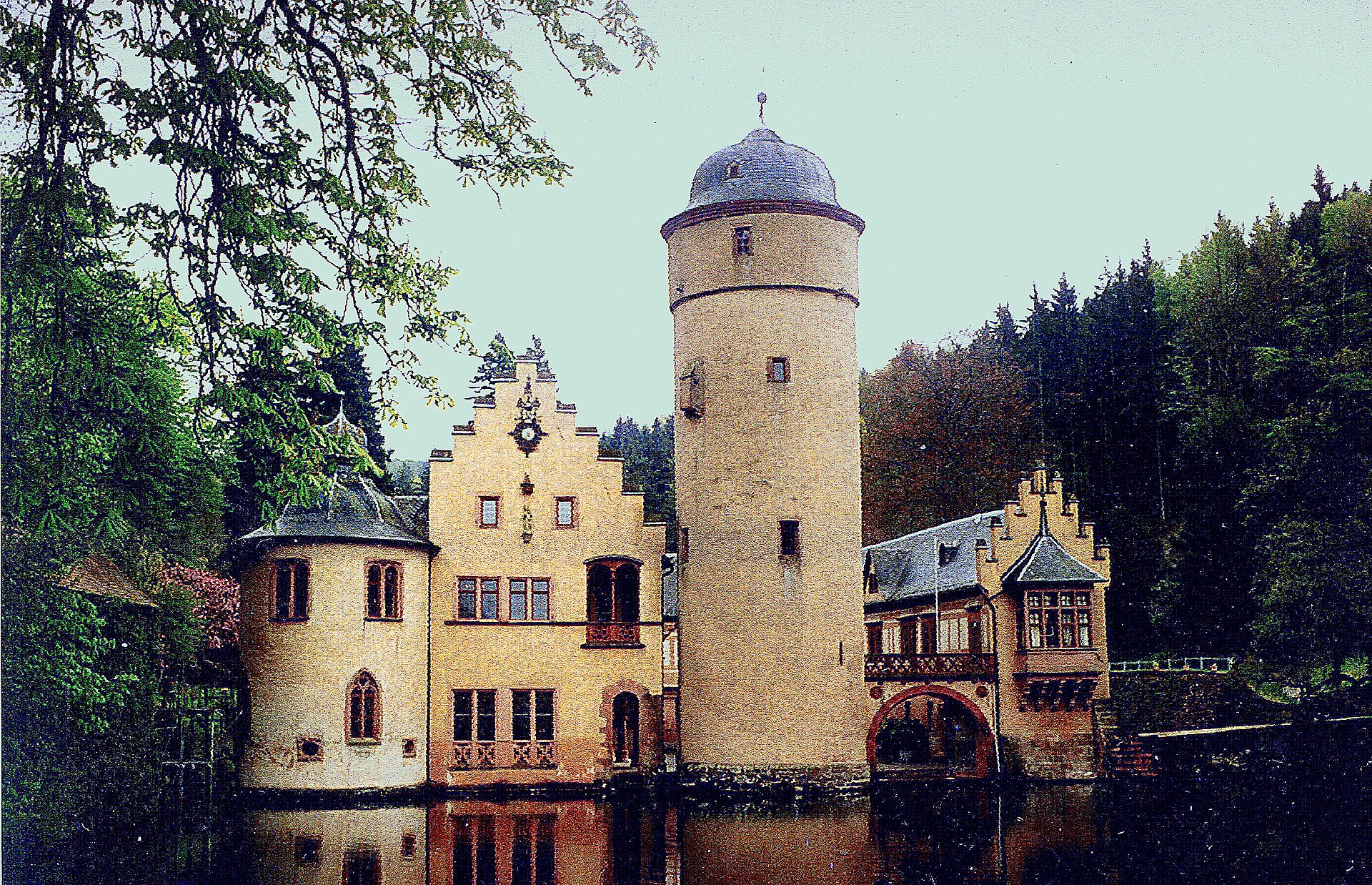
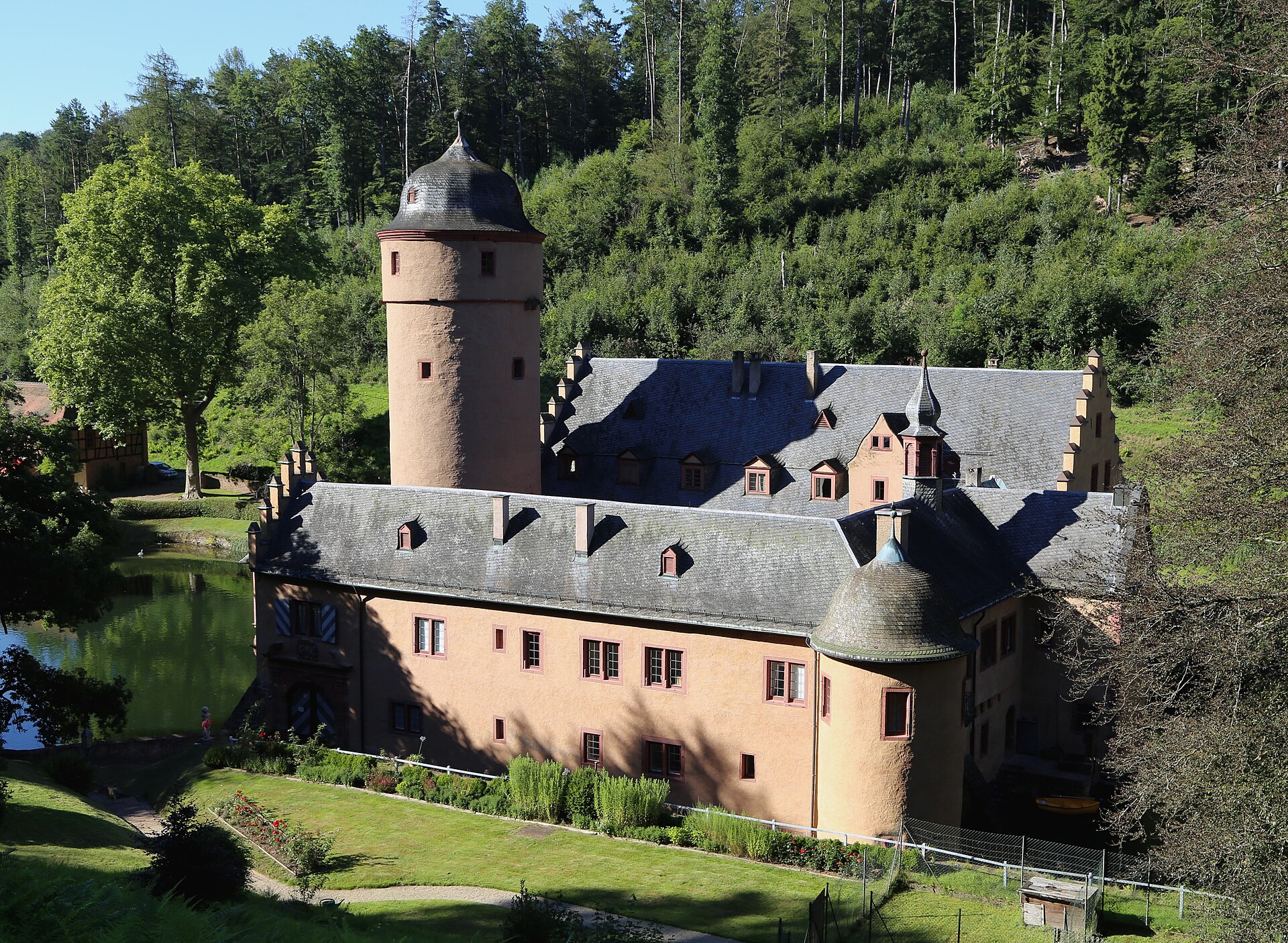
Seen from above, Mespelbrunn reveals itself as a compact and complete little castle, its buildings arranged in a tight group around a courtyard and ringed by the water of the pond. There is nothing sprawling or grandiose about it; it is a small, self-contained residence, beautifully composed, with just enough of tower and wall and gable to make a perfect miniature of a castle without ever becoming a great fortress.
This completeness is part of its appeal. Where many castles are jumbles of additions from many ages, or ruins that must be pieced together in the imagination, Mespelbrunn is a whole, harmonious building that has survived essentially intact. The water that surrounds it has helped to preserve it, protecting it through the centuries, and what you see is a real, entire castle of the late medieval and Renaissance period, complete down to its details.
The scale is human and inviting rather than overwhelming. You can take in the whole castle at a glance, walk around its pond in a few minutes, and grasp at once how the parts fit together. This intimacy is exactly what makes Mespelbrunn so lovable; it is a castle you can hold in your mind and your heart, a perfect small example of its kind, rather than a vast complex that dwarfs the visitor. It is, in the best sense, a castle on a human scale.
The survival of so complete a small castle is itself a piece of good fortune, for many buildings of this modest scale were lost, rebuilt beyond recognition, or allowed to decay over the centuries. Mespelbrunn came through intact, protected by its water, its remoteness, and above all by the continuous care of the family who owned it, and it stands today as one of the best-preserved small castles of its age in Germany.
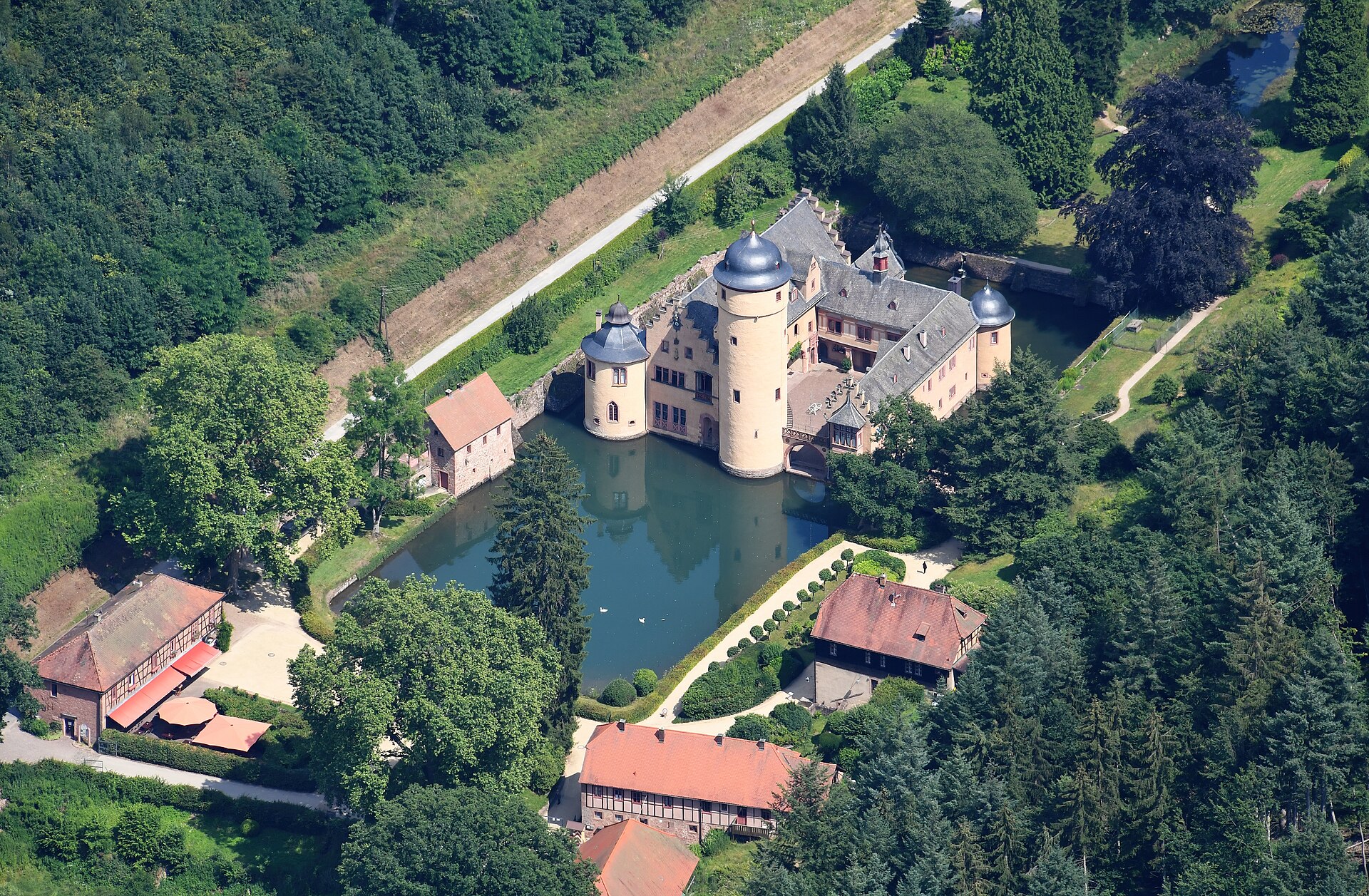
The Round Tower on the Water
Rising above the rest of the castle is its round tower, the keep, a sturdy cylinder of stone that is among the oldest parts of the building and a reminder of its origins as a fortified residence. In the manner of medieval keeps, it served as the strongpoint and symbol of the castle, the tower to which the household could look for security and which announced, even in this hidden valley, that this was a place of some standing.
The tower carries us back to the beginnings of Mespelbrunn in the early fifteenth century, when a member of the family that would hold the castle for centuries received permission to build a fortified house in this forest valley. What began then as a modest stronghold, defended by its water and its tower, would grow over the following generations into the more comfortable and elegant residence we see today, but the round keep remains as a link to those first days.
Reflected in the pond, the round tower is one of the most characteristic features of Mespelbrunn’s silhouette, its curve echoed in the water below. It gives the castle its air of gentle antiquity, a touch of the medieval fortress softened by the beauty of the setting. In its solidity and its age, the tower anchors the whole composition, a quiet reminder that beneath the picturesque charm lies a real castle with real medieval roots.
Water castles were once far more common than they are now, dotting the flatter and wetter parts of Germany where hills were scarce and moats were the natural form of defence. Many have since vanished or been drained and altered, which makes a perfectly preserved example like Mespelbrunn all the more precious. It is a rare surviving witness to a whole tradition of castle-building that flourished in the lowland forests and river valleys.
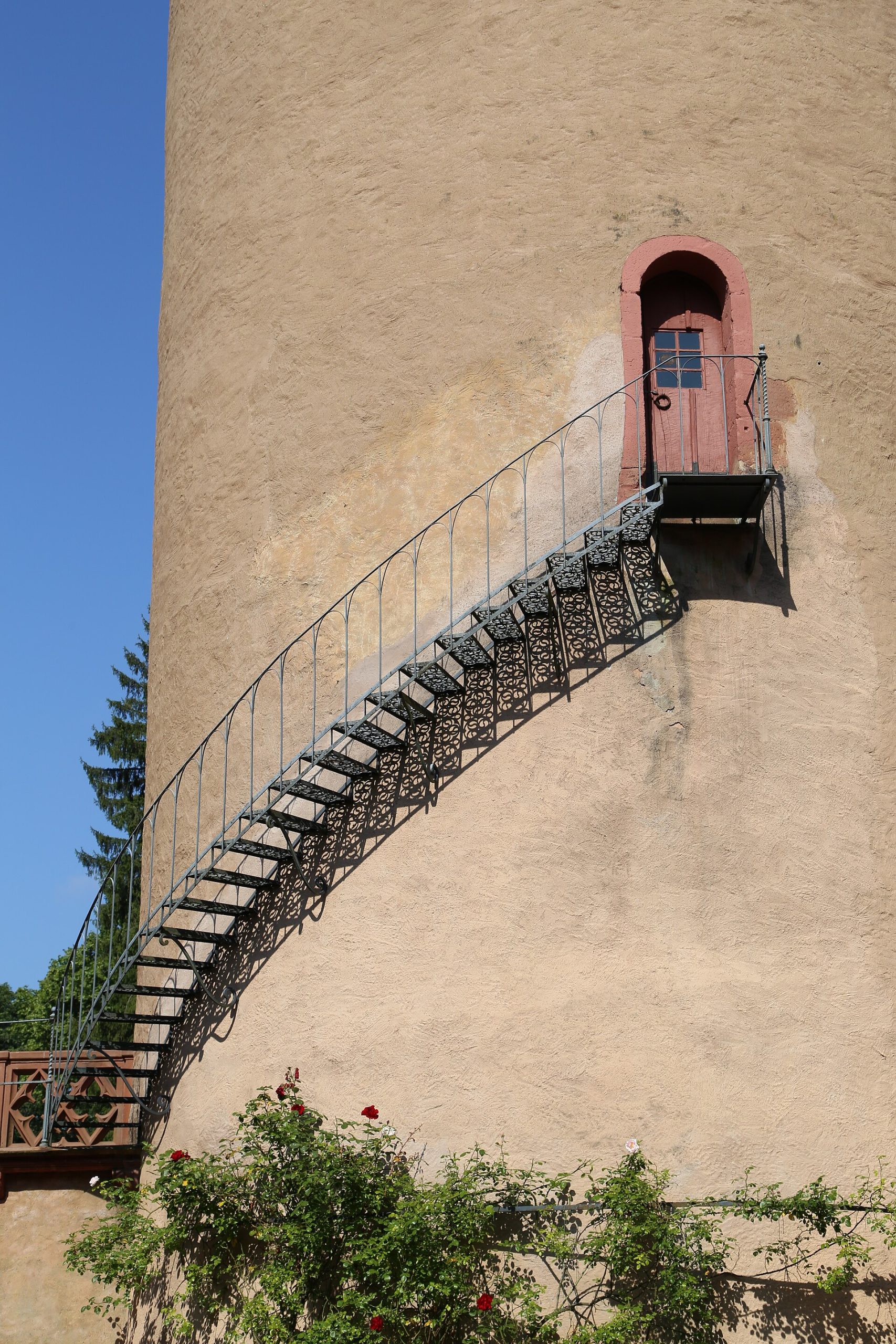
Through the Gate to the Island
To enter Mespelbrunn you cross from the wooded shore over to the castle on its island of stone, passing through the gate into the enclosed world within. In earlier times this crossing could be controlled and defended, the way in narrowed to a single guarded point, so that the water and the gate together kept the castle safe. Today the crossing simply heightens the pleasure of arrival, drawing you out of the forest and into the castle.
The approach is a modest, intimate affair, in keeping with the scale of the whole castle. There is no grand avenue or triumphal gateway, only the quiet path through the trees and the crossing over the water, and this understatement is part of the charm. Mespelbrunn does not announce itself with pomp; it reveals itself gently, a secret castle glimpsed through the woods and then entered almost as if by invitation.
Passing through the gate, you leave the forest behind and enter the private world of the castle, its courtyard and buildings gathered around you within the ring of water. There is a real sense of crossing a threshold, of stepping out of the wild woods into a place of order and shelter and long human habitation. It is the classic experience of arriving at a moated castle, and Mespelbrunn offers it in one of its most perfect and intimate forms.
The bridge and gate together once formed the castle’s main line of defence on the landward side, the point at which the security of the water could be breached only under the eyes of the household. Simple as they are, they embody the whole logic of the water castle, which relied not on great walls and towers but on the patient, encircling protection of the pond, with the crossing as its single guarded weak point.
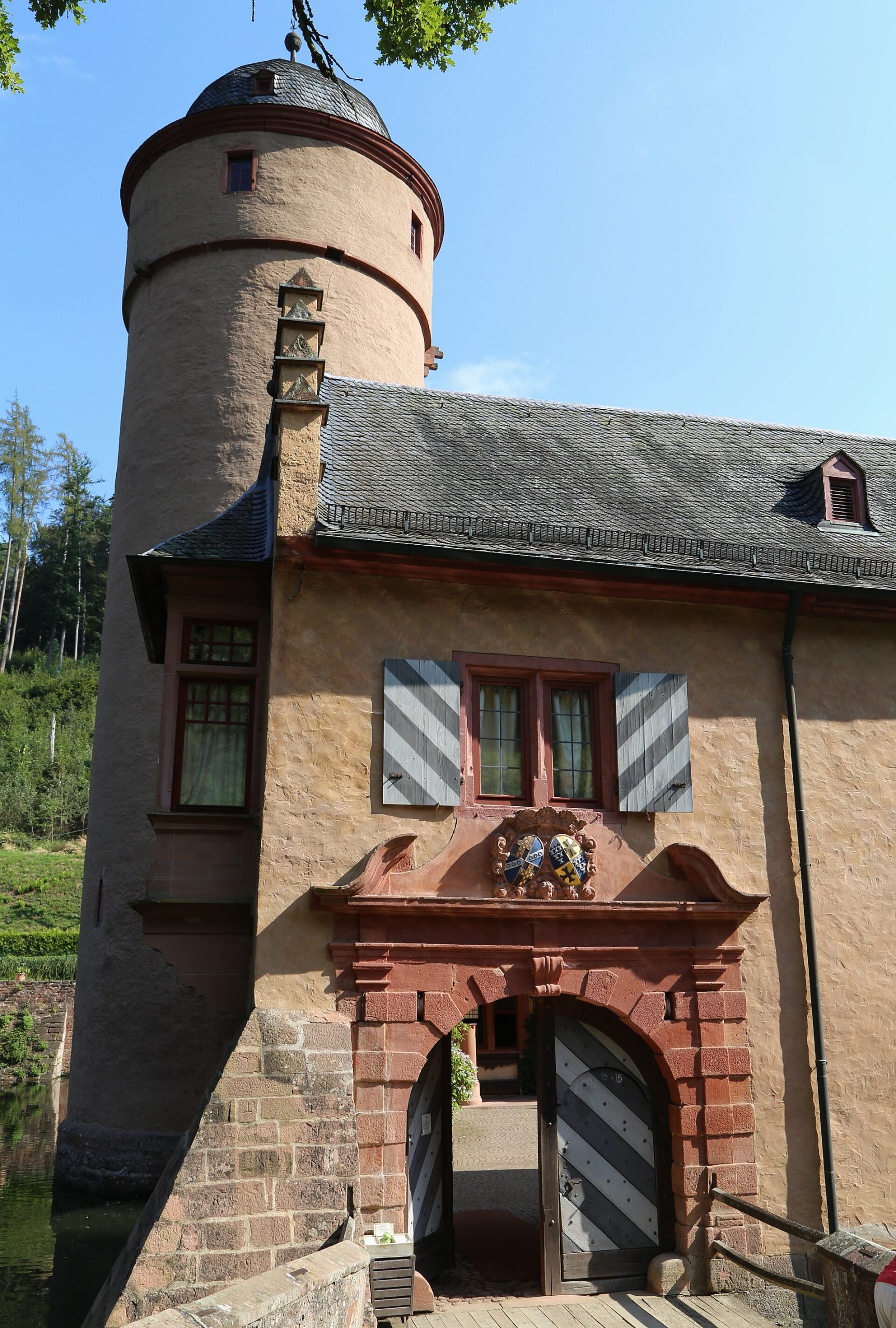
Into the Courtyard
Within the walls lies the courtyard, the sheltered heart of Mespelbrunn, enclosed by the buildings of the castle and open to the sky. Here, safe within the ring of water, the family lived out their domestic life across the centuries, and the courtyard has the calm, protected atmosphere of a place turned inward, away from the forest and toward the private world of the household.
The courtyard is the point from which the various parts of the castle open off, the residential wings, the tower, the chapel, and the practical buildings, all arranged around this central space. It is here that the intimate scale of Mespelbrunn is felt most strongly, for the courtyard is small and enclosing, a domestic space rather than a grand ceremonial one, in keeping with the character of the castle as a family home.
Standing in the courtyard, you feel the whole life of the castle gathered around you, and it is easy to imagine the generations of the family who lived here, going about their days within these sheltering walls. There is a warmth and a human intimacy to the space that the great fortresses lack, a sense of home rather than of power. It is the beating heart of Mespelbrunn, the still centre around which the whole beautiful little castle is composed.
In the confined space of the courtyard the different periods of the castle’s building can be read side by side, the older fortified fabric and the later Renaissance additions meeting around the same enclosed space. This gives the courtyard a pleasing depth of history, a sense of the castle’s growth across the centuries visible at a single glance, all gathered around the sheltered heart of the family home.
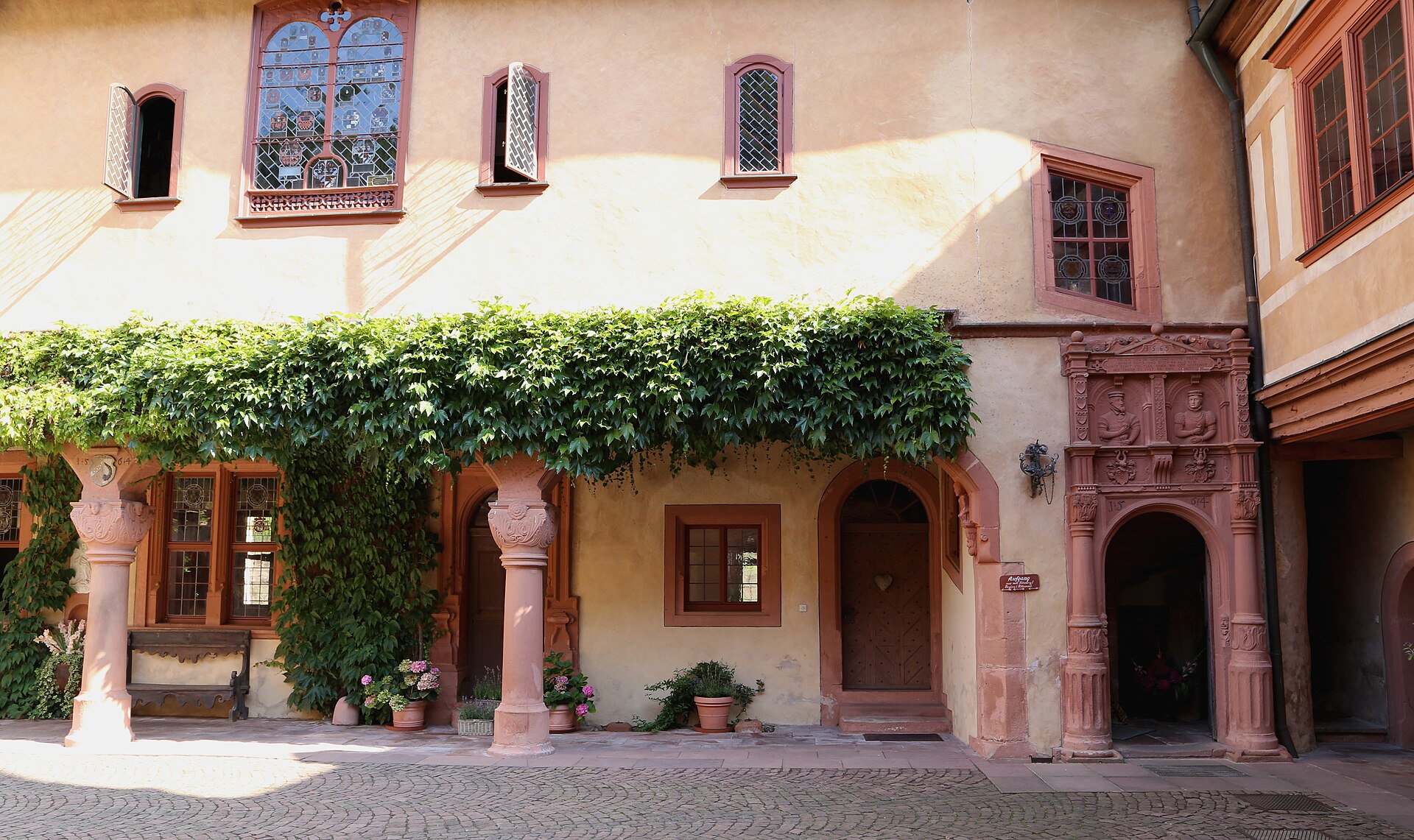
A Renaissance Transformation
Although Mespelbrunn began as a late-medieval fortified house, the castle we see today owes much of its elegance to a transformation in the sixteenth century, when the family rebuilt and embellished their home in the fashionable Renaissance style of the age. The severe fortified house of the fifteenth century became a more comfortable and graceful residence, its architecture softened and refined to suit the tastes of a new era.
The Renaissance touches are visible throughout the castle, in the arcades of the courtyard, the decorative details, and the gabled roofs that give Mespelbrunn its distinctive charm. This was the same movement that transformed castles and palaces across Germany and Europe, bringing the influence of Italian art and architecture to bear on the medieval forms, and at Mespelbrunn it produced a building of exceptional prettiness.
The result is a castle that blends the medieval and the Renaissance in perfect harmony, the old fortified core softened and adorned by the later rebuilding. This layering of ages is part of what makes Mespelbrunn so satisfying, a real castle that grew and changed with the times while keeping its essential character. The Renaissance transformation turned a forest stronghold into the exquisite little residence that has enchanted visitors ever since.
The decision to rebuild in the Renaissance style reflected the rising fortunes and the growing sophistication of the family, who by the sixteenth century were people of consequence with connections reaching far beyond their forest valley. Their remodelled castle was a statement of that standing, a way of showing that even in the depths of the Spessart they moved with the times and shared in the wider culture of the age.
Stone and Craft
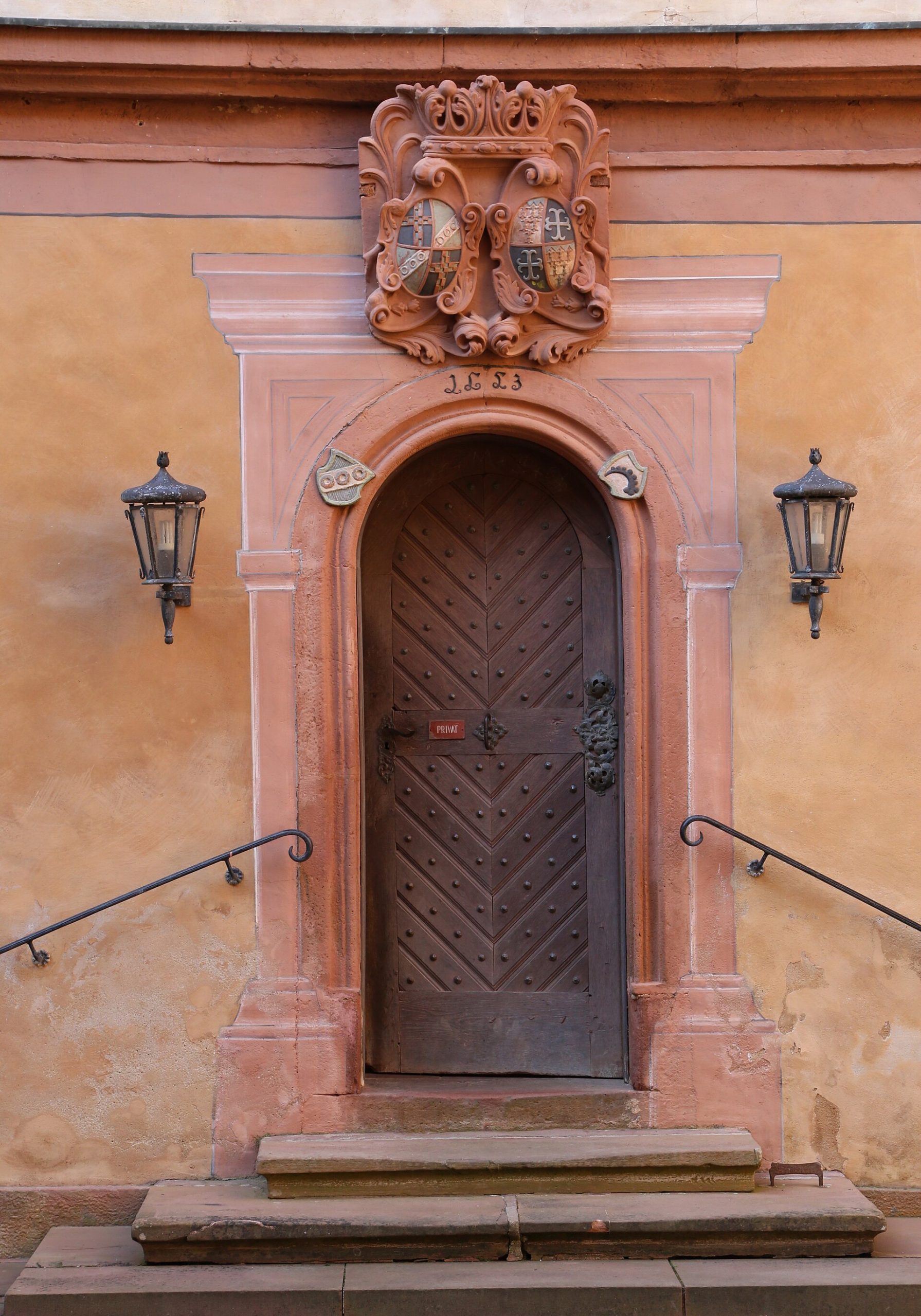
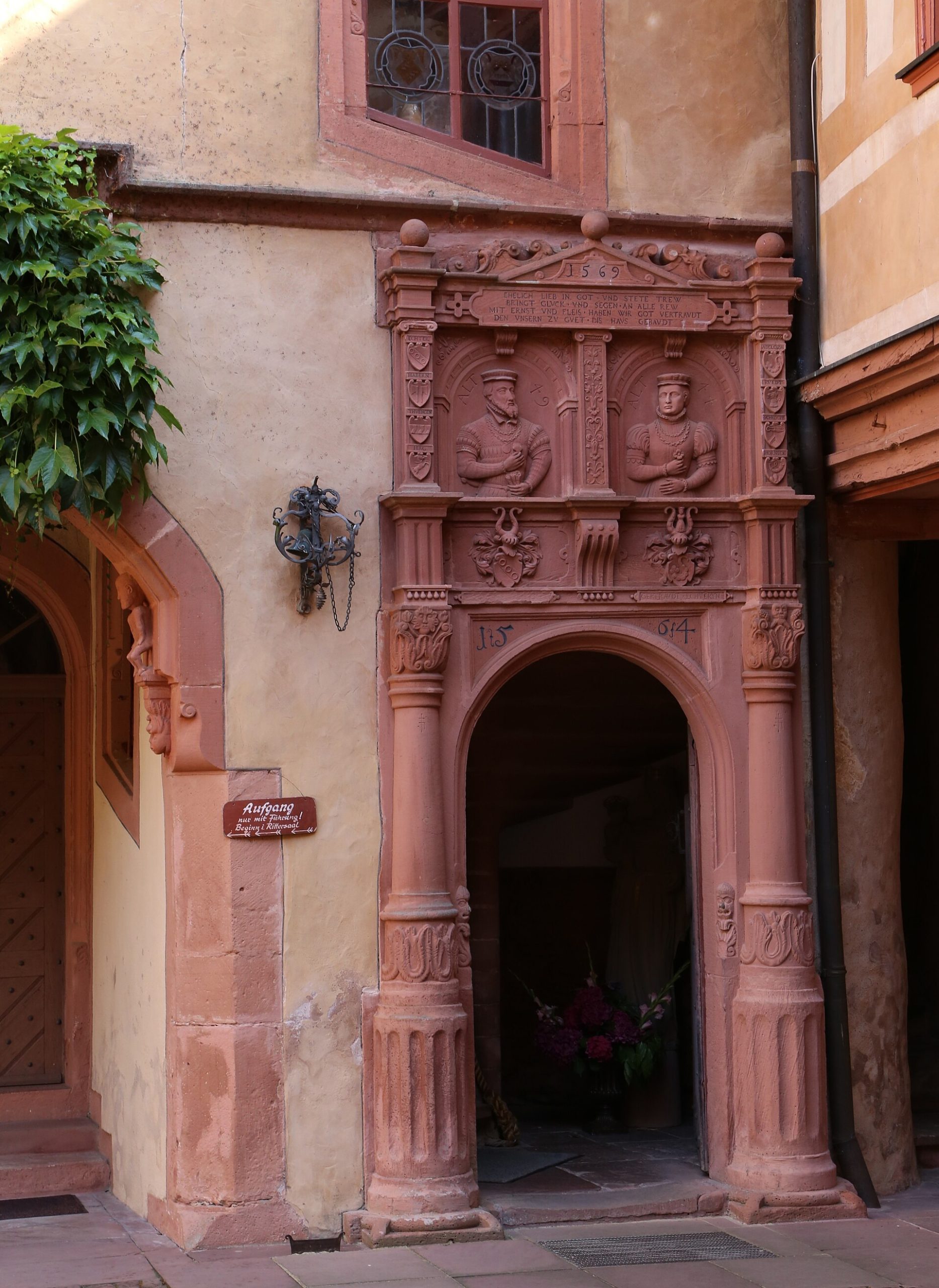
The quality of the craftsmanship at Mespelbrunn is one of its quiet delights, and nowhere is it clearer than in the finely worked stone of its portals and decorative details. The Renaissance rebuilding brought skilled craftsmen to this forest valley, and their work in carved stone and ornament gives the castle a refinement that repays close attention, elevating it from a mere fortified house to a work of art.
Such details were a mark of status and taste, a way for the family to show that even in their remote forest home they were people of cultivation, abreast of the artistic fashions of the age. The carved portals, the decorative elements, and the fine finishing throughout the castle all speak of a household that cared about beauty as well as security, and that had the means and the taste to indulge that care.
For the visitor, these details reward a slow and curious eye. Beyond the sweeping beauty of the castle and its pond, there is pleasure to be found in the smaller things, the carved stone, the worked detail, the evidence of skilled hands at work centuries ago. They are a reminder that Mespelbrunn, for all its fairy-tale appearance, is a real and carefully made building, the product of genuine craftsmanship and genuine pride.
It is worth remembering that bringing skilled craftsmen and fine materials to so remote a location was no small undertaking, and the quality of the work at Mespelbrunn testifies to the seriousness of the family’s ambitions for their home. Every carved detail represents an investment of effort and expense in a place far from the workshops and quarries of the great cities, a labour of love as much as of display.
The Family That Never Left
One of the most remarkable things about Mespelbrunn is the continuity of its ownership. The castle has belonged to the same family, and its descendants, for some six hundred years, ever since a member of the Echter family first built a fortified house in this valley in the early fifteenth century. Through all the centuries since, the castle has passed down within one connected line, never sold, never abandoned.
When the direct male line of the original family eventually died out, the castle passed by inheritance to a related noble house, the Counts of Ingelheim, who took on the family name and the castle together and who still own Mespelbrunn to this day. This unbroken continuity, from the fifteenth century to the present, is a rare and precious thing, and it gives the castle a warmth and an authenticity that few can match.
Because the family never left, Mespelbrunn was never stripped out, ruined, or turned into a mere museum. It remained a real home, cared for and lived in across the generations, and it still is, with part of the castle serving as the family’s private residence while other parts are opened to visitors. This living continuity is at the heart of Mespelbrunn’s charm, the sense that this is not a preserved relic but a genuine family home with six hundred years of history behind it.
Six hundred years of continuous ownership is an almost unimaginable span, reaching back past the Reformation, past the discovery of the Americas, into the world of the late Middle Ages, all centred on this one small castle in the woods. To keep a home in a single family for so long, through all the wars and upheavals of German history, is a rare achievement, and it gives Mespelbrunn a depth of belonging that no museum could ever create.
This continuity also means that the castle has never suffered the fate of so many others, of being emptied, sold off piecemeal, or left to ruin. The presence of a family with a personal stake in its survival has protected Mespelbrunn through good times and bad, and it is that living guardianship, quite as much as the water of the pond, that explains why the little castle has come down to us so complete.
A Prince-Bishop Born Here
For all its seclusion, Mespelbrunn produced one figure of real historical importance. In the sixteenth century a son of the family was born in the castle who would rise to become one of the most powerful and famous churchmen of his age, a prince-bishop who ruled a large territory and left a deep mark on the history of his region. From this quiet forest castle came a man who would shape the fortunes of a great German city and its lands.
As prince-bishop he combined spiritual and worldly power in the manner of the great churchmen of the Holy Roman Empire, ruling as both bishop and territorial prince. He was a formidable and energetic figure, a leading champion of the Catholic cause in an age of religious struggle, and he founded institutions of learning and charity that endured for centuries. His name became famous far beyond the Spessart, carried on the works he founded and the history he made.
That so influential a man was born in this small, hidden castle is a striking reminder that great lives can begin in modest and remote places. The prince-bishop is Mespelbrunn’s most famous son, and his birth here links the quiet forest castle to the wider currents of German history, to the religious conflicts and the great institutions of his age. The castle that seems so far from the world was, in this one life at least, connected to its very centre.
The institutions the prince-bishop founded, devoted to learning and to the care of the sick, long outlived him and continue in various forms to this day, a remarkable legacy for a man born in so remote a spot. His life is a reminder that the great churchmen of the empire were often also builders, patrons, and rulers of real consequence, and that the currents of history could reach even into a hidden forest castle like Mespelbrunn.
Life at a Little Country Castle
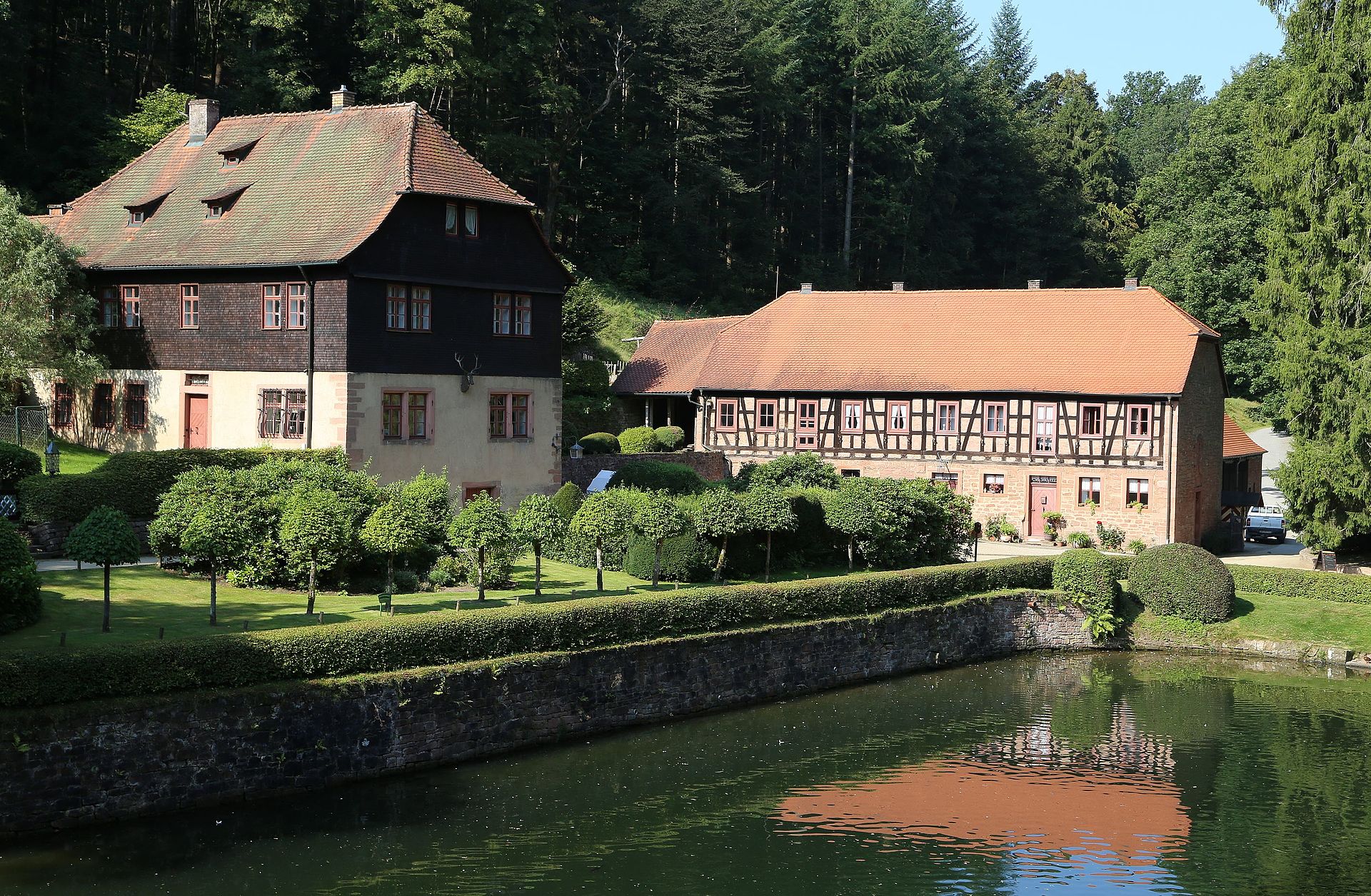
Mespelbrunn offers a rare and intimate picture of life at a small country castle, the domestic world of a knightly family living quietly on their forest estate. Unlike the grand fortresses built for war and government, this was a home, and its rooms, its courtyard, and its grounds all reflect the daily life of a household rather than the pomp of a great court. It is the human dimension of the castle that visitors remember.
The interiors, still furnished and lived-in, give a vivid sense of that domestic world, with their family portraits, their furniture, their weapons and hunting trophies, and the accumulated possessions of centuries. Because the family remained in continuous residence, these things survive in their proper setting, telling the story of the household across the generations and bringing the life of the castle vividly before the visitor.
The grounds and the setting complete the picture of a comfortable country life in a beautiful forest valley. This was a place to live, to raise a family, to hunt in the surrounding woods, and to enjoy the peace of a secluded and lovely spot, and that gentle, domestic character still clings to Mespelbrunn today. It is a castle that speaks not of power and conquest but of home and continuity, of a family living quietly and well in their forest for six hundred years.
The hunting that was so much a part of life here connected the family closely to the surrounding forest, which provided not only sport but food and a way of life. The Spessart was their larder and their playground as well as their protection, and the rhythms of the castle’s life were bound up with the woods and the seasons in a way that the great urban fortresses could never know. Mespelbrunn was, in the truest sense, a castle of the forest.
The rooms open to visitors give a real sense of this domestic world, neither grand nor humble but comfortable and cultivated, the home of a family of standing who lived well without ostentation. It is this quality of a genuine, inhabited home, rather than a showpiece, that so many visitors find the most affecting thing about Mespelbrunn, and that sets it apart from the grander and emptier palaces.
The Castle That Went to the Movies
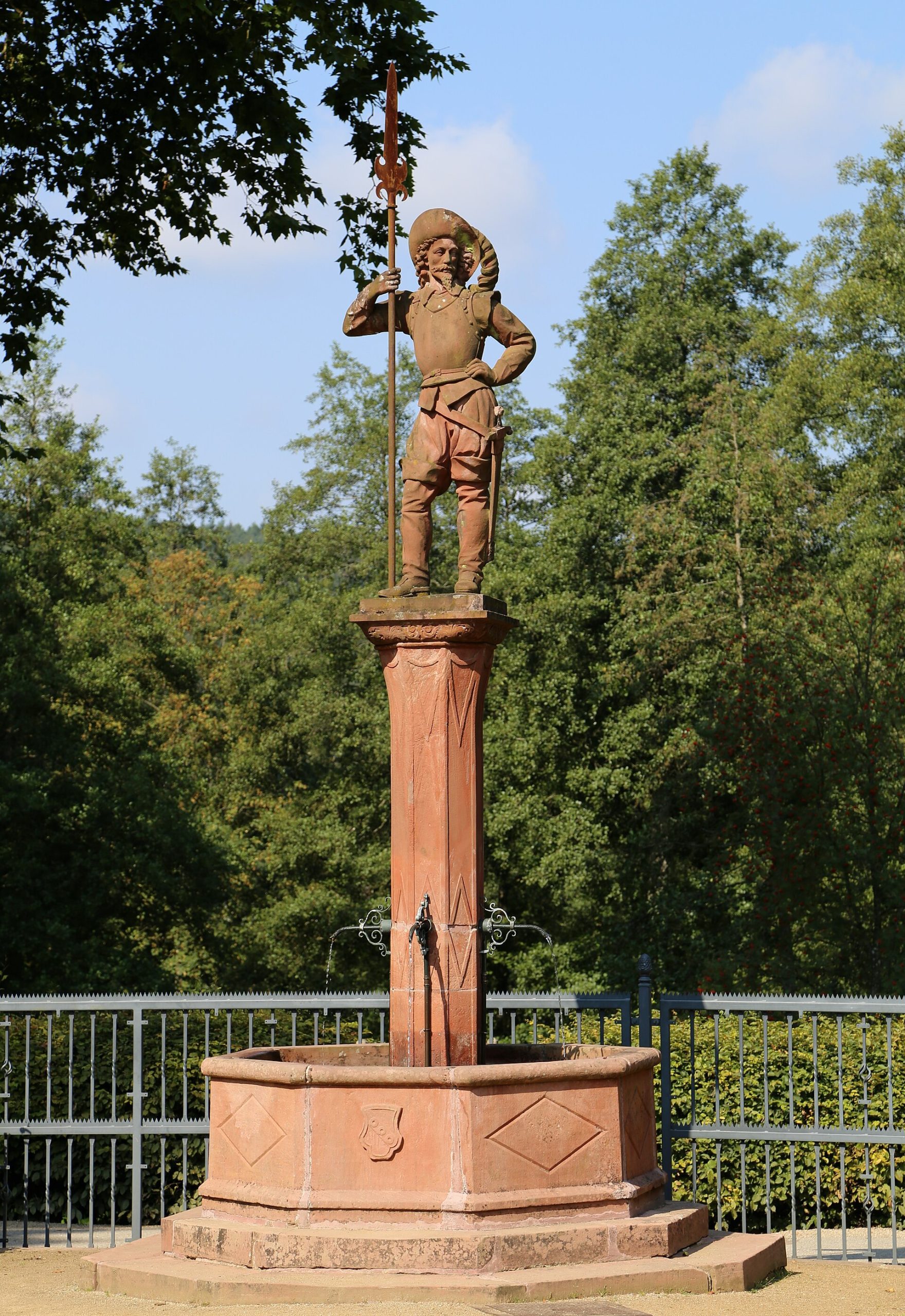
In the twentieth century Mespelbrunn found an unexpected new fame, for its storybook looks made it a natural film location, and it became forever associated with a beloved classic of German cinema. In the 1950s the castle and its forest setting starred in a popular comedy built around the old legends of the Spessart robbers, and the film was so successful and so cherished that it fixed Mespelbrunn in the affections of the whole country.
The film drew on the very folklore that had long clung to the Spessart, the tales of robbers and highwaymen in the dark forest, and it turned that folklore into light-hearted entertainment set against the picturesque backdrop of the castle. For generations of Germans, Mespelbrunn became the castle from the film, its image bound up with fond memories of a much-loved comedy and with the whole romantic legend of the robber-haunted Spessart.
This cinematic fame helped make Mespelbrunn one of the most visited private castles in Germany, drawing crowds who came to see the setting of the film as much as the castle itself. It is a striking example of how the movies can shape our attachment to a place, and it added a modern layer of story to a castle already rich in history and legend. Mespelbrunn is, in every sense, a castle made for storytelling, on the page, in history, and on the screen.
The enduring popularity of the film speaks to a deep affection in Germany for the romance of the Spessart and its legends, and Mespelbrunn became the visible focus of that affection. Even visitors who have never seen the film respond to the same qualities that made the castle so perfect for the screen, the storybook setting, the moated walls, the sense of stepping into a tale. The cinema simply recognised what was already there.
Visiting Schloss Mespelbrunn
Schloss Mespelbrunn lies in the Spessart forest in Lower Franconia, in the north-west of Bavaria, roughly between Frankfurt and Wurzburg. It is tucked into a wooded valley off the main roads, and reaching it means a journey into the forest, which is part of the pleasure. The castle is a popular destination, well signposted, and easily combined with a walk or a drive through the beautiful Spessart woods that surround it.
The castle is open to visitors through much of the year, and guided tours lead you through the furnished rooms, telling the story of the family, the prince-bishop, and the castle itself. Around the tour there is the simple, great pleasure of walking around the pond and taking in the castle from every angle, watching its towers and gables shift and double in the water. Photographers will find no shortage of perfect views, in every season and every light.
If you would like to find it and plan your visit, here is the castle’s position in its forest valley: 49.9203, 9.2892. Give yourself time to enjoy not just the castle but its setting, for the two are inseparable, and a walk in the surrounding Spessart is the ideal complement to a visit. Schloss Mespelbrunn is the loveliest of small castles, a moated jewel hidden in the German forest, and it makes a perfect and enchanting end to any journey among the castles of Germany.
The seasons each bring their own beauty to the castle and its pond, from the fresh greens of spring and the deep shade of summer to the gold and copper of the surrounding forest in autumn and the hushed stillness of winter. Many visitors find the quieter months especially rewarding, when the crowds thin and the castle can be enjoyed in peace, its reflection undisturbed on the calm water of the pond.
Castles Nearby
- Nuremberg Imperial Castle, the fortress at the heart of the empire
- Burg Eltz, the fairy-tale castle that is actually real
- Reichsburg Cochem, the Moselle castle that was built twice
The Jewel in the Forest
Of all the castles of Germany, few win the heart so quickly and so completely as Mespelbrunn. It has none of the grandeur of the imperial fortresses or the vast romance of the great fairy-tale palaces, and it needs none. Its magic lies in its intimacy and its perfection, a small moated castle rising from a still pond in a hidden forest valley, so lovely and so complete that it seems to have grown there by enchantment.
Behind that fairy-tale surface lies a real and human story: a knightly family who lived here for six hundred years, never leaving, caring for their forest home across the centuries; a famous son who rose from this quiet valley to shape the history of a region; and a whole folklore of the robber-haunted Spessart that the movies would one day carry to the whole nation. Mespelbrunn is a castle rich in story precisely because it is so real, so lived-in, and so loved.
So let this jewel in the forest be the last of our German castles, a gentle and enchanting close to a journey that has taken in fairy-tale palaces and imperial fortresses, ruined strongholds and dreaming towers. Come down the wooded valley, walk around the still pond, and let the little moated castle work its quiet magic. Of all the castles of Germany, Mespelbrunn may be the smallest to leave so large a place in the memory, the perfect jewel hidden in the heart of the German forest.
You May Like

Mafra, the Palace a King Built From a Vow