On a rocky point jutting out into the blue waters of the Gulf of Trieste, in the far north-east of Italy, stands a castle so white and so perfectly placed that it seems to float between the sea and the sky. The Castello di Miramare is one of the loveliest and most romantic castles in all of Italy, a gleaming white palace surrounded by a magnificent park, rising above the Adriatic like a vision from a fairy tale. But behind its beauty lies one of the saddest and most haunting stories of any castle in Europe.
Miramare is not an ancient fortress but a nineteenth-century dream, built in the middle of that century by a Habsburg archduke as a home for himself and his young wife. Unlike the grim strongholds and imperial palaces of earlier ages, it was raised purely for beauty and pleasure, a romantic retreat by the sea filled with light and art and surrounded by a garden gathered from around the world. It was to be a place of happiness, and for a few years it was.
But the archduke who built it was drawn away to a distant and fatal adventure, and his story ended in tragedy far across the ocean, giving rise to a legend of a curse said to hang over the beautiful castle. Come with me to the shores of the Adriatic and we will explore this white castle on the sea, following the story of the doomed prince who built it, and discovering why the Castello di Miramare is at once one of the most beautiful and one of the most melancholy castles in all of Italy.

In This Article
- A White Castle on the Adriatic
- Where the Land Meets the Sea
- A Romantic Dream in Stone
- The Archduke Who Built It
- A Sailor Prince
- Charlotte and the Happy Years
- Preserved in Time
- A Garden From Around the World
- Paths and Rare Trees
- Fountains and Quiet Corners
- A Refuge in the Park
- The Doomed Emperor and the Curse
- Visiting the Castello di Miramare
A White Castle on the Adriatic
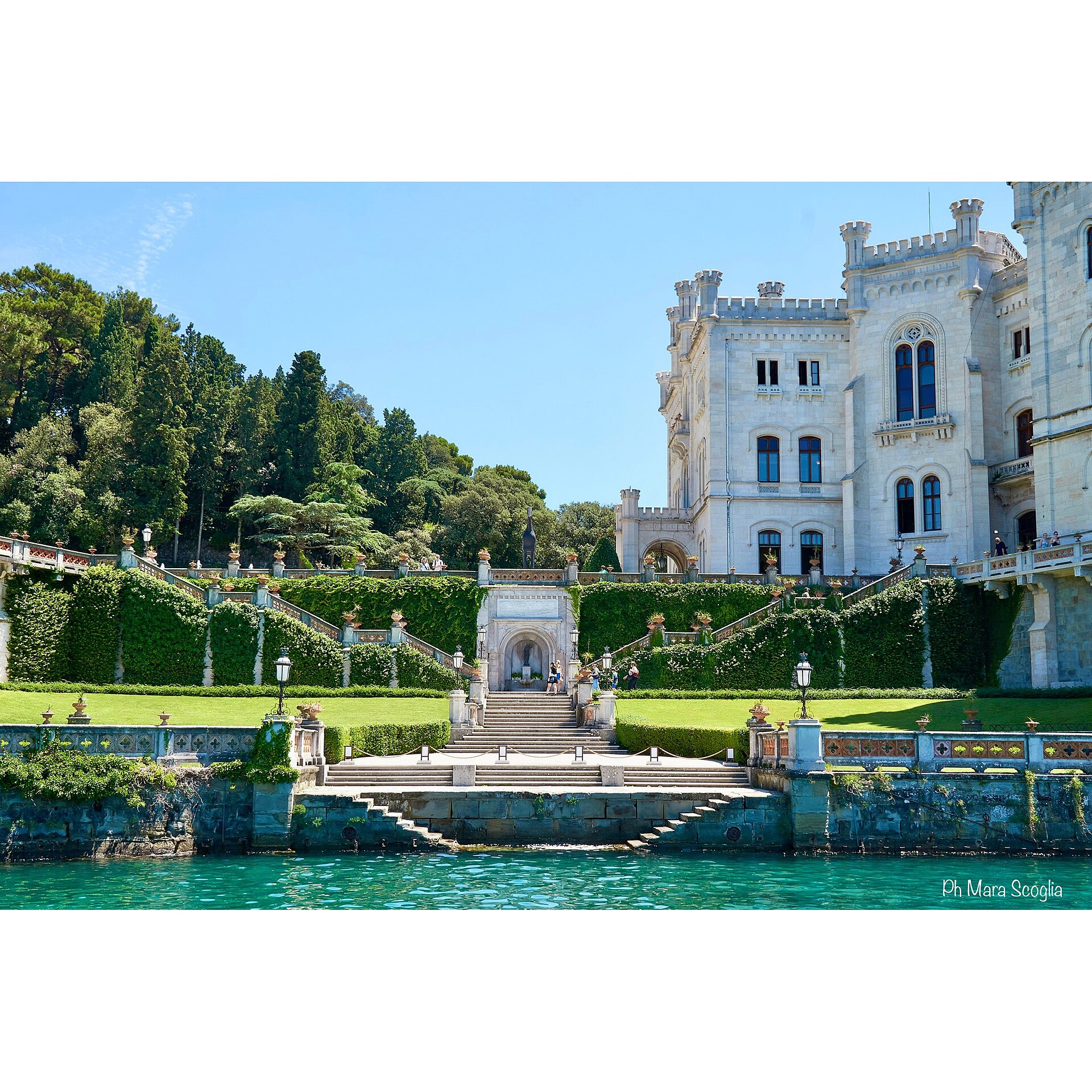
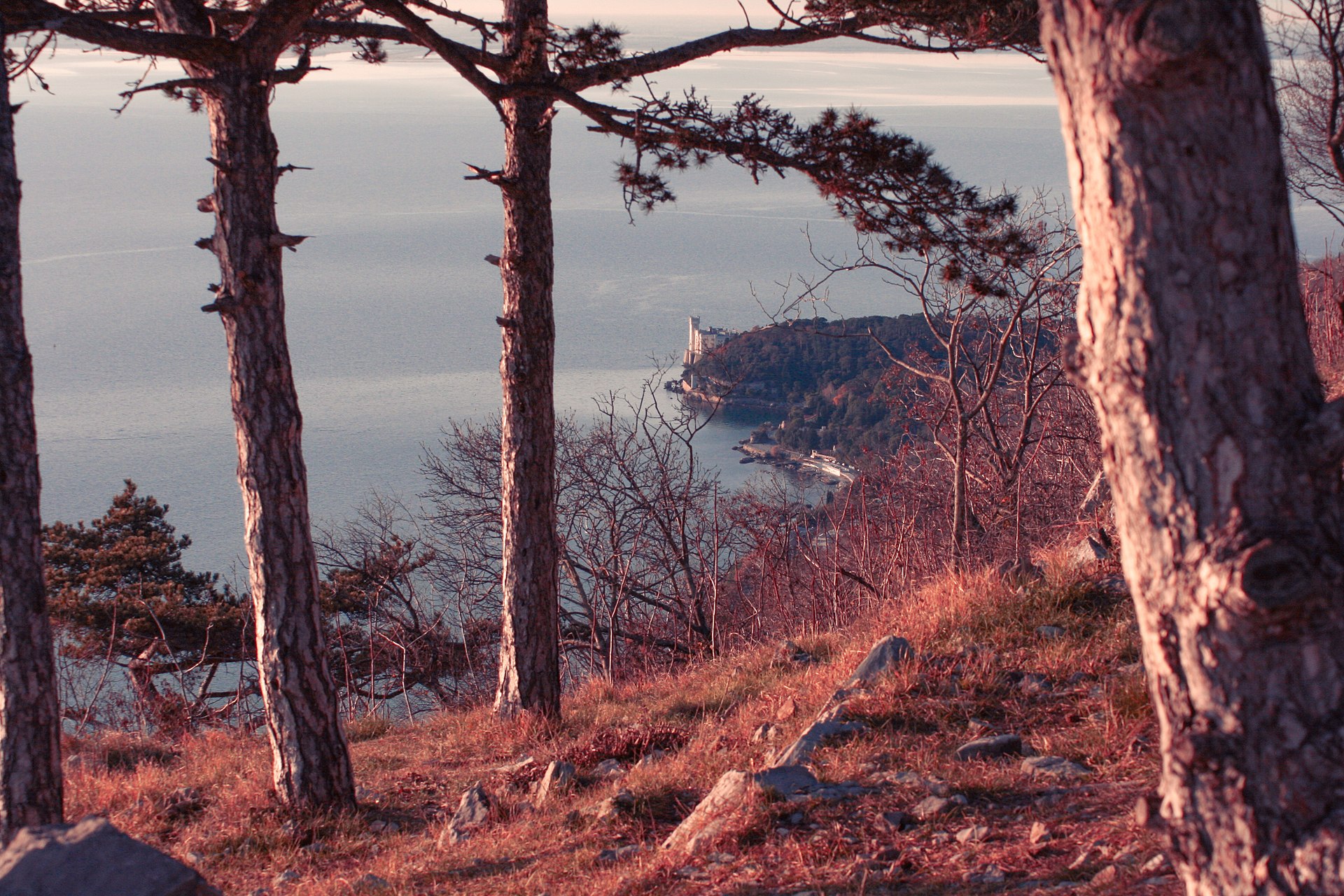
The first sight of Miramare is unforgettable. The castle stands on a promontory of rock that reaches out into the Gulf of Trieste, so that it is almost surrounded by the sea, its white walls rising directly above the blue water. Seen from the shore or from a boat, the gleaming castle against the deep blue of the Adriatic is one of the most beautiful images in all of Italy, a scene of pure romance.
The whiteness of the castle is one of its defining features. Built of pale limestone, it shines in the Mediterranean sun, and its bright walls stand out vividly against the sea and the green of the surrounding park. This luminous quality gives Miramare an almost magical air, quite unlike the dark, grim fortresses of earlier ages, and it perfectly suits the castle’s character as a romantic dream by the sea.
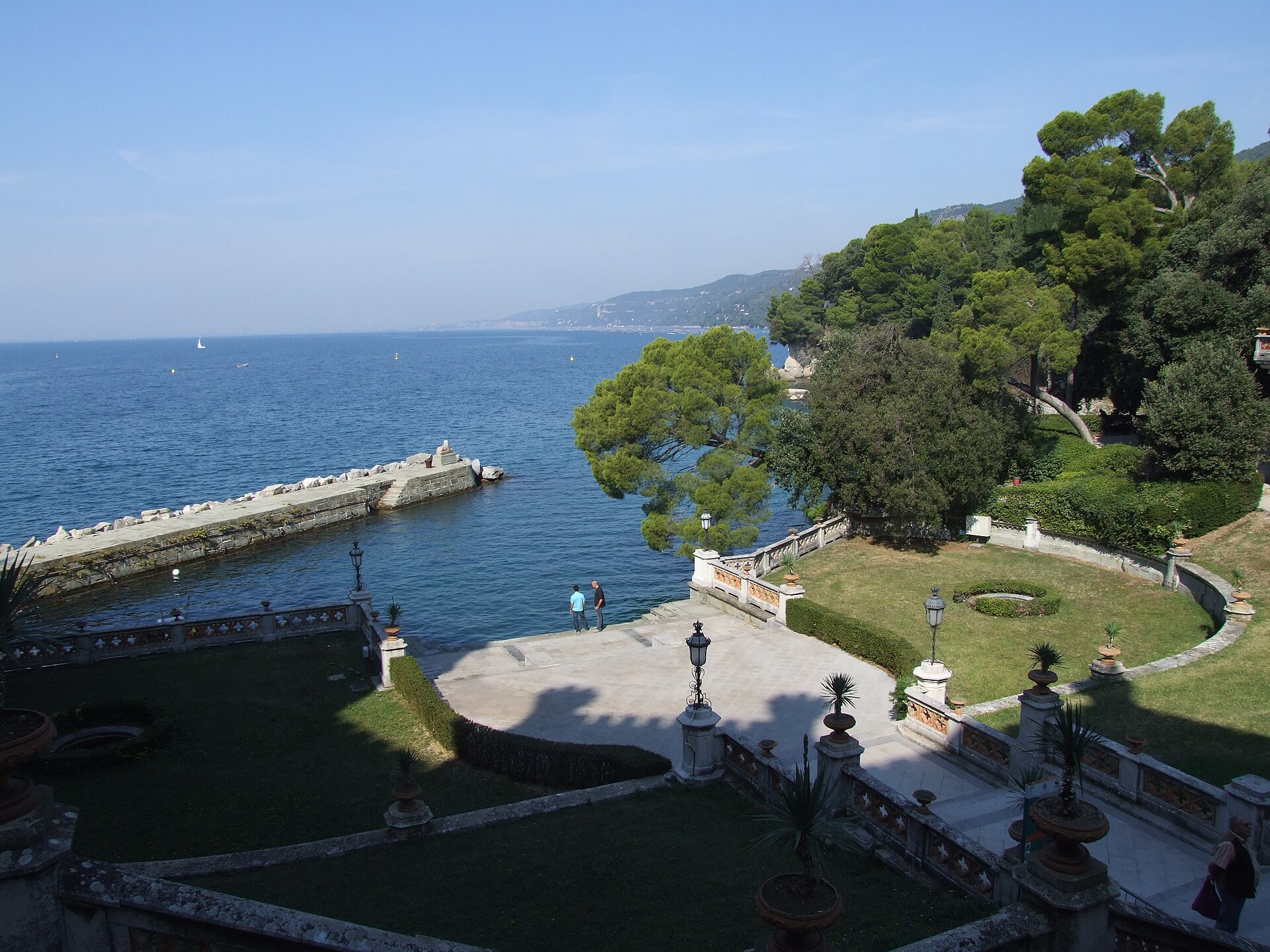
The setting was chosen with a lover’s eye for beauty. The castle turns its face to the sea, its terraces and windows opening onto the water, so that from within one is always aware of the Adriatic stretching away to the horizon. Miramare was built to enjoy the sea and the light, and everything about its position, on its rocky point above the blue water, is designed for beauty and delight. It is a castle made not for war but for the love of the sea.
The changing light of the sea and sky plays constantly across the white walls, so that the castle never looks quite the same twice, glowing golden at sunset, cool and bright at midday, softly luminous under a clouded sky. This ever-changing beauty, born of the meeting of stone, sea, and light, is one of the great pleasures of Miramare, and it rewards the visitor who lingers to watch the castle through the hours of the day.
Where the Land Meets the Sea
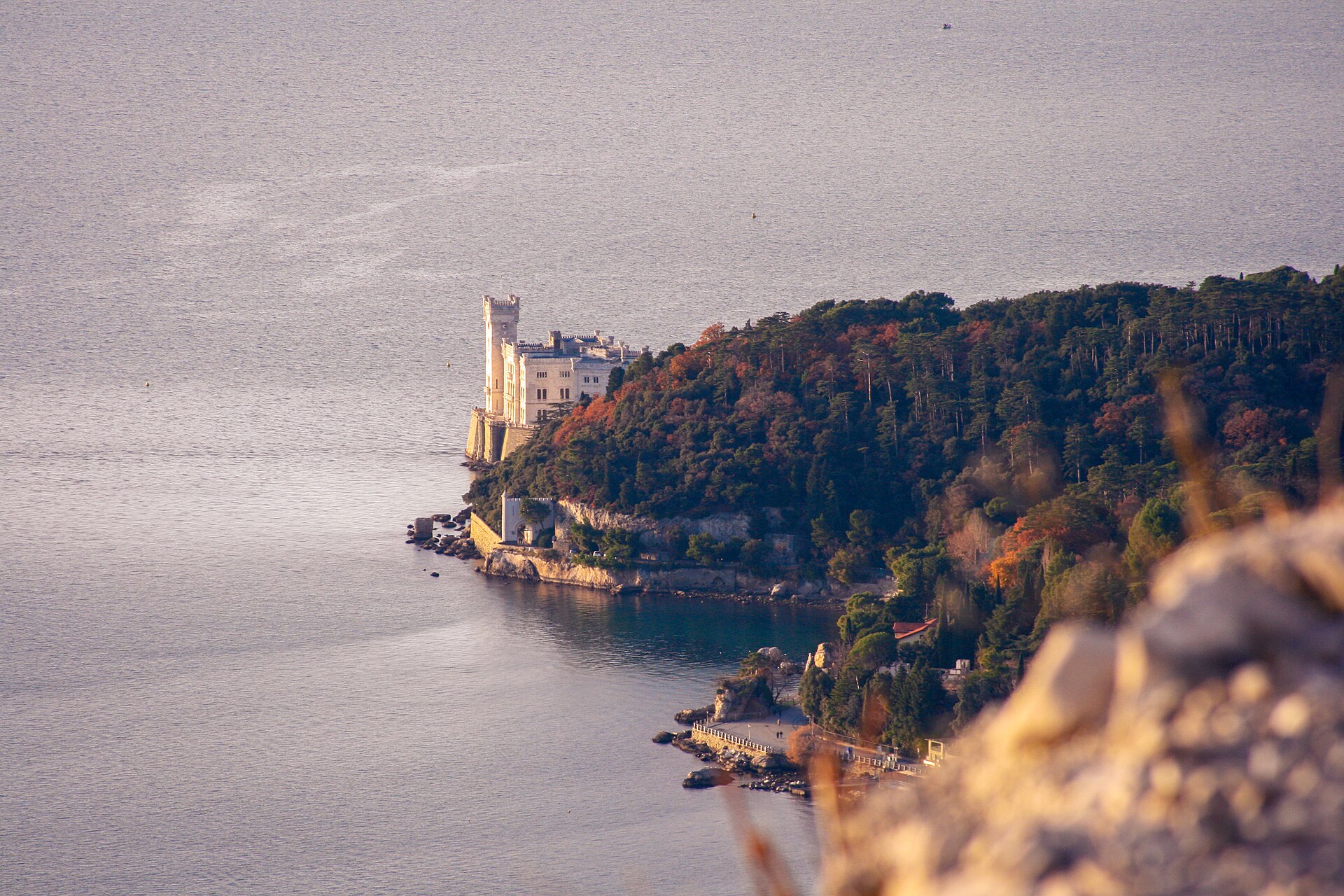
The dramatic position of Miramare, on a point of rock reaching out into the gulf, is the key to its beauty. The promontory gives the castle the sea on three sides, so that it seems to belong as much to the water as to the land, a white jewel set at the very edge of the Adriatic. This meeting of land and sea, of castle and water, is the essence of Miramare’s romantic charm.
The name of the castle captures this perfectly, for it means, in essence, a view of the sea, and the whole design of the place is oriented toward the water. The terraces reach out toward the sea, the windows frame views of the gulf, and even the gardens are laid out to make the most of the meeting of land and water. Miramare exists, above all, to enjoy its incomparable position between the shore and the sea.
For the visitor, the experience of the castle on its point is one of light, air, and water. To walk out onto the terraces, with the sea all around and the white walls rising behind, is to feel the full romance of the place, the sense of a castle poised at the very edge of the land, gazing out over the endless blue of the Adriatic. Few castles anywhere enjoy so beautiful and so dramatic a setting, and it is this, above all, that makes Miramare unforgettable.
In stormy weather the sea can dash against the rocks below the castle, sending up spray and surrounding the white walls with the drama of the waves, while on calm days the water lies still and blue, mirroring the castle and the sky. This range of moods, from serene to wild, is part of the character of a castle so intimately bound to the sea, and it gives Miramare a living, ever-shifting relationship with the element that surrounds it.
There is a small harbour and pier below the castle, from which Maximilian could step almost directly from his home onto the water, and from which, in the end, he departed on his fatal voyage. This intimate connection between the castle and the sea, the ability to pass so easily from one to the other, is central to the character of Miramare and to the life of the prince who built it.
A Romantic Dream in Stone
Miramare is a creation of the nineteenth century, that great age of romantic castle-building, and it belongs to the same spirit that produced the fairy-tale castles of Bavaria and the romantic reconstructions of the Rhine. It was built in the middle of the century for a prince who wished for a beautiful home by the sea, and it was designed by a talented architect to fulfil that romantic dream in gleaming white stone.
The style of the castle blends elements of various historical periods, as was the fashion of the age, drawing on medieval, Gothic, and Renaissance forms to create a building that looks back to the past while serving the comfort and taste of the modern world. It is a picturesque and romantic composition rather than a strict imitation of any single style, designed above all to please the eye and to create an atmosphere of beauty and refinement.
Unlike the great fortresses of earlier ages, Miramare was never meant for war. It has no serious defences, no moat or drawbridge or mighty towers built to withstand a siege. It is a castle in appearance and in spirit, but in reality a luxurious romantic villa by the sea, built for pleasure and beauty rather than for defence. In this it perfectly expresses the nineteenth-century love of the medieval past combined with the comforts and refinements of a new age.
The building of such a castle in the middle of the nineteenth century reflected the romantic longing of the age for the beauty and glamour of the past, combined with the wealth and comfort of the modern world. Miramare was a place where a prince could live out a dream of beauty and refinement, free from the harsh realities that had shaped the true castles of earlier ages, and it stands as one of the most graceful expressions of that romantic ideal.
The Archduke Who Built It
The man who built Miramare was Archduke Maximilian of Habsburg, a younger brother of the emperor of Austria, and a prince of romantic and artistic temperament. Cultivated, idealistic, and drawn to beauty and adventure, Maximilian was in many ways out of place in the rigid world of the imperial court, and in Miramare he created a private world of his own, a beautiful retreat where he could live according to his own tastes and dreams.
Maximilian chose the site himself, falling in love with the rocky promontory on the Gulf of Trieste, and he threw himself into the creation of his castle and its gardens with passion and care. He was closely involved in every detail of the design, from the architecture to the decoration to the planting of the park, and Miramare became the great project of his life, the expression of his romantic and artistic soul.
For a prince who felt himself an outsider at the imperial court, Miramare was a refuge and a realm of his own, a place where he could be the master of his own beautiful world. He filled it with art and books, surrounded it with a garden gathered from his travels, and made it a home of light and beauty by the sea. In building Miramare, Maximilian created not just a castle but a portrait of himself, his tastes, his dreams, and his longing for beauty and escape.
Maximilian’s position as the younger brother of a powerful emperor gave him wealth and standing but little real power, and something of the frustration of that position may be felt in his retreat to Miramare, where he could be master of his own world. The castle was, in a sense, his answer to a life spent in the shadow of the throne, a place where his own tastes and dreams, rather than the demands of the court, could hold sway.

A Sailor Prince
Maximilian’s love of the sea was not merely romantic sentiment; he was a sailor and a naval officer, who had risen to command the navy of the Austrian empire, and the sea was central to his life and his identity. This passion for the water helps explain the choice of Miramare’s setting, for the archduke wished to live surrounded by the sea he loved, with ships passing before his windows and the salt air always about him.
His naval career took Maximilian on voyages far from home, and he brought back to Miramare not only exotic plants for his garden but a wider vision of the world. The castle and its collections reflect this cosmopolitan outlook, the outlook of a prince who had sailed distant seas and gathered treasures and impressions from many lands, and who wished to bring something of that wider world home to his castle by the Adriatic.
The sea that Maximilian loved so much would also carry him to his doom, for it was from Miramare that he set sail on the fatal voyage that would end in tragedy far across the ocean. There is a terrible irony in this, that the sea which gave the archduke so much joy, and which shaped his beautiful castle, should also have borne him away to his death. But in the years when Miramare was his home, the sea was above all a source of delight, and the castle remains the monument of a prince who loved the water.
The rooms of the castle decorated in the style of a ship reflect this maritime passion in a charming and personal way, bringing the world of the sea into the heart of the castle. For a prince who had spent so much of his life aboard ship, these nautical rooms were a natural expression of his identity, and they give Miramare a distinctive character quite unlike that of any inland palace.
It is said that Maximilian even had a room at Miramare arranged to resemble the cabin of his flagship, so attached was he to the life of the sea, and such details reveal how deeply the maritime world had entered his imagination. The castle thus became a kind of ship anchored on the shore, a fitting home for a prince who was never so happy as when he was on or beside the water.

Charlotte and the Happy Years
Maximilian did not build Miramare for himself alone, but for himself and his young wife, Charlotte, a princess of Belgium whom he had married a few years before. The couple made Miramare their home, and for a few years they lived here in happiness, in the beautiful castle by the sea that Maximilian had created. These were the golden years of Miramare, when the castle fulfilled its purpose as a home of love and beauty.
Charlotte, like Maximilian, was cultivated and intelligent, and she shared his love of the castle and its gardens. Together they made Miramare a place of art, music, and refined pleasure, entertaining guests and enjoying the beauty of their seaside home. The castle preserves the memory of these happy years, the rooms still furnished as they were when the young couple lived here, full of light and looking out over the sea.
But the happiness was not to last. Maximilian’s romantic and idealistic temperament, and perhaps a certain restlessness, made him vulnerable to a fatal temptation, and when the offer came of a distant throne, he could not resist it. The happy years at Miramare came to an end when the archduke and his wife left their beloved castle for a far-off adventure, and neither of them would ever know such happiness again. The golden years of Miramare are preserved forever in its rooms, a memory of love and beauty before the coming of tragedy.
The marriage of Maximilian and Charlotte had begun with high hopes, uniting two cultivated and idealistic young people, and their years at Miramare were the happiest of their lives together. The castle preserves the memory of that happiness, and it is impossible to walk through its rooms without feeling the shadow of the tragedy that would later engulf them both, making the golden years at Miramare all the more precious and poignant in retrospect.
Charlotte would live on for many years after the death of her husband, but never again in happiness, and she never returned to Miramare, the scene of her brief joy. The castle thus became a memorial to a happiness that both its creators lost, preserved forever in its rooms while the two who had known it there were carried away, one to death and the other to a long twilight of sorrow.
Preserved in Time
One of the most remarkable things about Miramare is that its interior survives almost exactly as it was when the archduke and his wife lived here, preserved as a kind of time capsule of their world. Because the castle was never stripped out or greatly altered after their departure, the rooms remain furnished with their original furniture, decoration, and possessions, offering an extraordinarily vivid picture of aristocratic life in the mid nineteenth century.
The interiors are richly and beautifully decorated, reflecting the refined tastes of Maximilian and Charlotte and the romantic spirit of the age. There are elegant reception rooms, private apartments, and, fittingly for a sailor prince, rooms decorated in the manner of a ship’s cabin, recalling Maximilian’s love of the sea. Everywhere the visitor senses the presence of the couple who created and inhabited this beautiful home.
To walk through these preserved rooms is to step directly into the vanished world of the archduke and his wife, to see the very setting of their brief happiness at Miramare. Few castles offer so intimate and so complete a picture of the lives of their owners, and the survival of the interiors, just as they were, gives Miramare a poignancy that goes beyond its beauty. Here the happy years are frozen in time, preserved forever within the white walls above the sea.
The survival of the original furnishings is all the more remarkable given the upheavals that swept this region in the century and a half since the castle was built, through wars and changes of rule that saw Trieste pass from the Austrian empire to Italy. That Miramare came through these changes with its interiors intact is a piece of good fortune that allows us to see the castle almost exactly as its creators knew it.
A Garden From Around the World
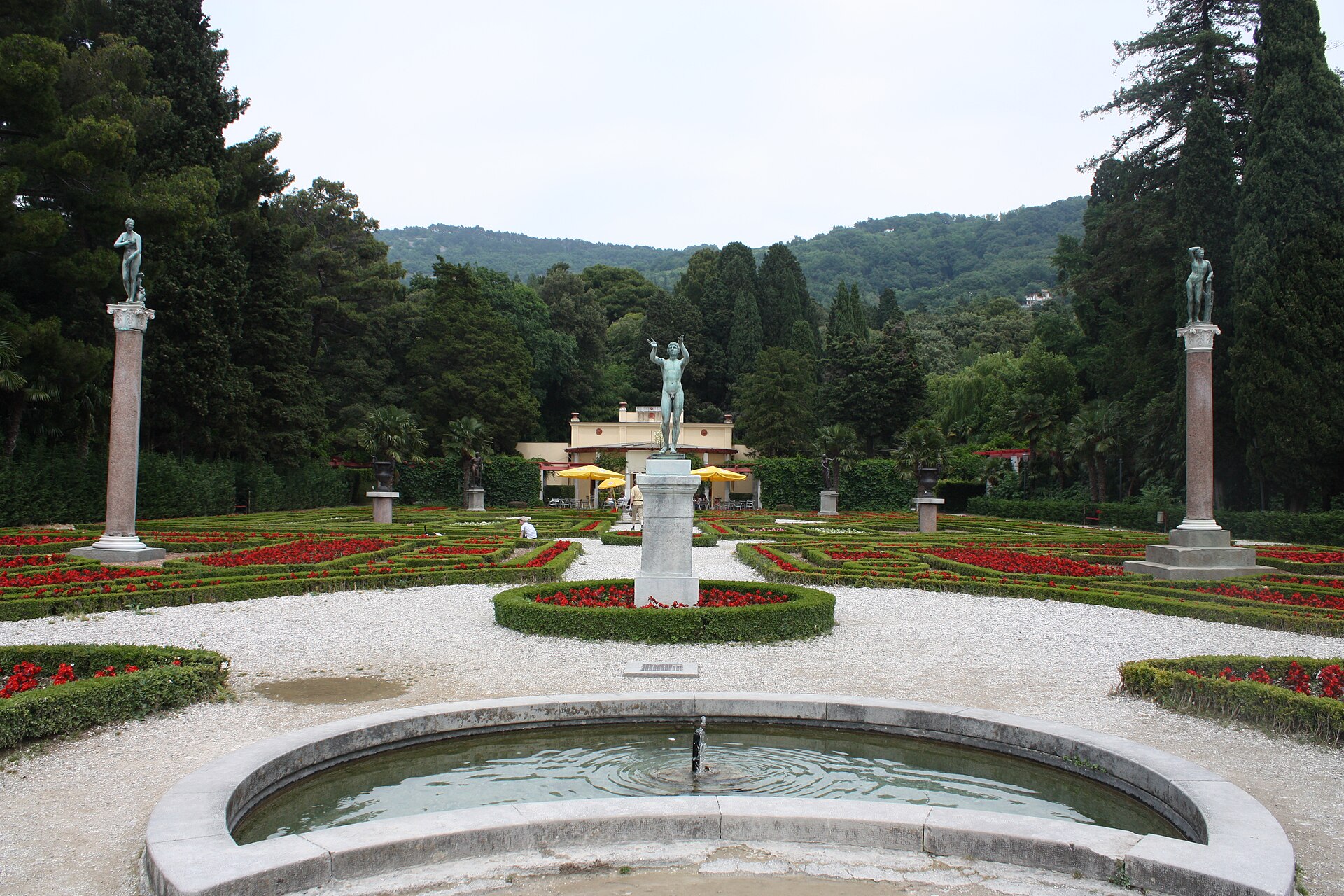
Miramare is not only a castle but a garden, and its magnificent park is one of its greatest glories. Maximilian, with his love of nature and his experience of distant lands, created around his castle an extraordinary garden filled with trees and plants gathered from around the world, transforming the once-barren rocky promontory into a lush and beautiful park that remains one of the finest in Italy.
The creation of the park was a huge undertaking, for the rocky point had little soil and few trees when Maximilian began. He had earth brought in, laid out paths and terraces, and planted a vast collection of trees and shrubs, many of them exotic species he had encountered on his voyages. Over the years the barren promontory was transformed into a green and shady paradise, a botanical treasure as well as a place of beauty.
Today the park of Miramare is a delight to explore, its paths winding among rare and beautiful trees, its terraces offering views of the sea, its quiet corners inviting rest and contemplation. It is a living monument to Maximilian’s love of nature and his cosmopolitan curiosity, a garden gathered from around the world and set on a rocky point above the Adriatic. For many visitors, the park is quite as memorable as the castle itself, and the two together make Miramare a place of rare and complete beauty.
The park was designed not only for beauty but as a scientific collection, reflecting the nineteenth century passion for botany and the gathering of plants from around the world. In this Miramare belongs to a great tradition of botanical gardens created by cultivated aristocrats and scholars, and its collection remains of real interest to those who love plants as well as to those who simply enjoy its beauty.

Paths and Rare Trees
The park of Miramare is a botanical treasure, home to a remarkable variety of trees and plants gathered from many parts of the world. Maximilian’s passion for nature and his travels as a naval officer gave him both the knowledge and the means to create an extraordinary collection, and the park became a kind of living museum of exotic and beautiful plants, laid out with care among terraces and paths.
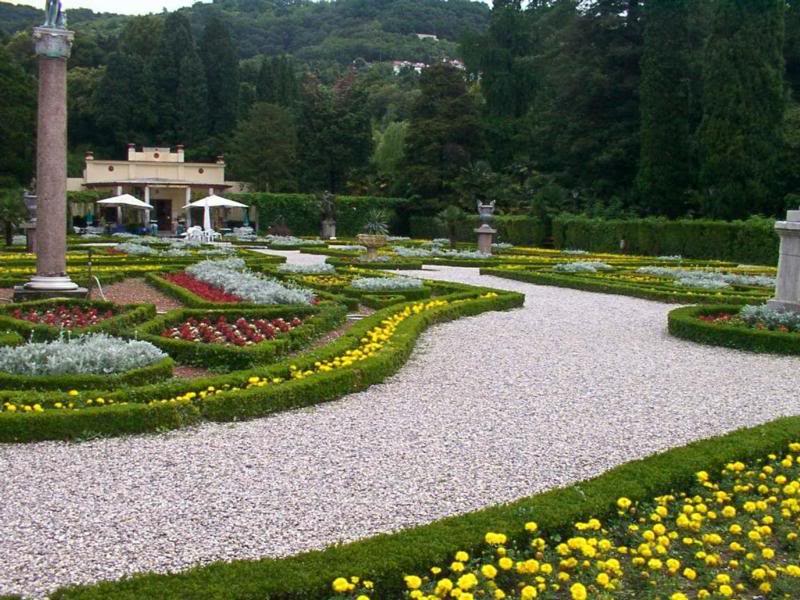
The design of the park combined formal gardens near the castle with wilder, more naturalistic plantings further out, in the romantic taste of the age, so that the visitor moves from ordered terraces to shady groves and winding paths. This variety, together with the beauty of the individual plants and the ever-present views of the sea, makes the park endlessly rewarding to explore, a place of constant delight and discovery.
That so lush a garden should flourish on a once-barren rocky point is a testament to Maximilian’s vision and determination, and to the care that has maintained the park in the years since. The trees he planted have grown to maturity, and the garden he dreamed of has become a reality, a green paradise by the sea that continues to enchant visitors more than a century and a half after it was created. The park is Maximilian’s living legacy, as beautiful and as enduring as the white castle at its heart.
Walking the paths of the park, one passes from the bright, sea-facing terraces near the castle into cooler, shadier groves where tall trees rise overhead, creating a constant variety of light and atmosphere. This careful orchestration of open and enclosed spaces is part of the art of the great romantic garden, and at Miramare it is combined with the ever-present beauty of the sea to create a garden of exceptional richness.
Fountains and Quiet Corners
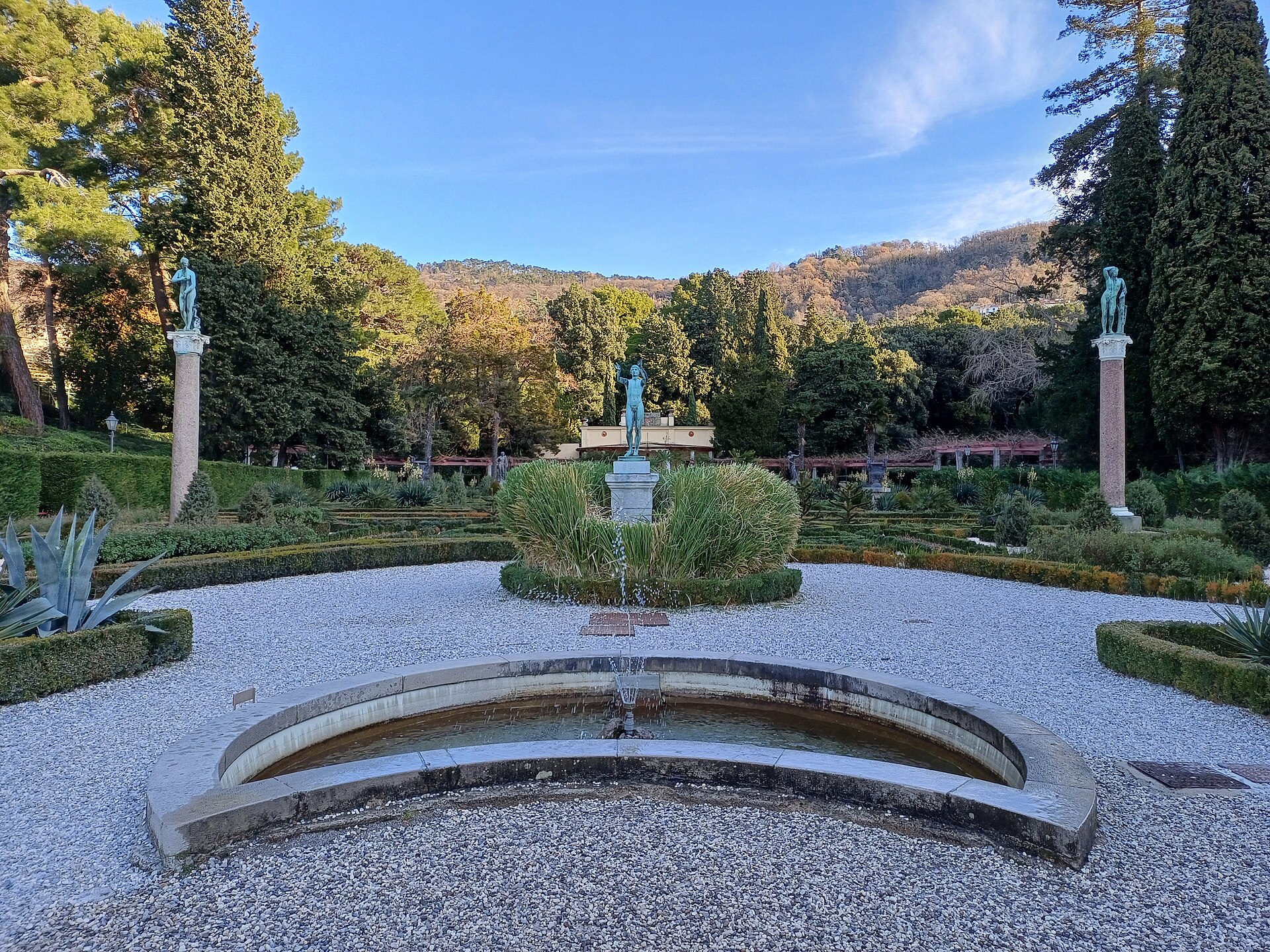
Scattered through the park of Miramare are fountains, statues, and other ornaments that add to its beauty and its air of romantic refinement. These features, placed with care among the trees and terraces, provide focal points for the eye and moments of surprise and delight as one wanders the garden, and they reflect the same love of beauty and detail that shaped the castle itself.
The fountains in particular bring the sound and movement of water into the garden, echoing the presence of the sea all around and adding a note of coolness and life to the shady groves. Water was a natural theme for a garden so closely bound to the sea, and its use in the fountains and pools of the park ties the garden to the surrounding element and to the sailor prince who created it.
These ornaments and quiet corners give the park its character as a place not only of botanical interest but of romantic beauty and repose. To come upon a fountain among the trees, with the sound of water and the glimpse of the sea beyond, is one of the many small pleasures of the garden, and it captures the spirit of Miramare as a whole, a place created with love and care for the enjoyment of beauty in all its forms.
Sculptures and ornaments placed through the garden reflect the classical and romantic tastes of the age, and they turn the park into a kind of open-air gallery to be discovered piece by piece as one wanders. These artful touches, set amid the natural beauty of the trees and the sea, show how completely Miramare united art and nature in a single harmonious vision.
A Refuge in the Park
While the great white castle was being built, Maximilian and Charlotte needed somewhere to live, and for this a smaller building was raised within the park, a charming little residence where the couple made their first home at Miramare. This lesser house allowed them to live on the spot and to oversee the creation of their castle and garden, and it became a beloved retreat in its own right.
This smaller dwelling, set among the trees of the park, has its own quiet charm, more intimate and domestic than the grand castle nearby. Here the young couple lived in the early years of their time at Miramare, close to the garden they were creating and the sea they loved, and the building preserves the memory of those first hopeful days, before the castle was finished and before tragedy came.
The presence of this smaller residence in the park adds another layer to the story of Miramare, a reminder of the human reality behind the grand romantic vision. Before the white castle rose in its full glory, there was a young couple living quietly among the trees, dreaming of the beautiful home they were building. It is a touching detail, and it deepens the poignancy of a place already heavy with the memory of happiness cut short.
The smaller residence in the park also reminds us of the practical realities of creating so grand a castle and garden, a task of many years that required its makers to live on the spot and oversee the work at first hand. The patience and dedication that Maximilian brought to the project are written into every part of Miramare, from the great castle to the humble house among the trees where it all began.

The Doomed Emperor and the Curse
The story of Miramare took its tragic turn when Maximilian was offered, and accepted, the throne of a distant empire across the ocean. Persuaded that he could bring good government and enlightenment to a troubled land, and drawn by ambition and idealism, the archduke agreed to become emperor of Mexico, and in the mid eighteen-sixties he and Charlotte set sail from Miramare for the New World, leaving their beloved castle behind.
The adventure ended in catastrophe. Maximilian’s rule in Mexico was opposed and ultimately doomed, and after a few years his short-lived empire collapsed. Captured by his enemies, the archduke was put to death by firing squad, dying far from the beautiful castle he had built, while his wife Charlotte, who had returned to Europe to seek help for him, descended into a madness from which she never recovered. The happy dream of Miramare had ended in the darkest tragedy.
From this terrible story grew the legend of the curse of Miramare, the belief that a shadow of misfortune hangs over the beautiful castle, and that those connected with it are fated to meet unhappy ends. Whether or not one believes in such things, the tragic fate of Maximilian and Charlotte has given Miramare an air of melancholy that clings to it still, and the white castle by the sea, for all its beauty, is forever haunted by the memory of the doomed prince who built it and the sorrow that overtook him.
The legend of the curse gathered further strength over the years as other members of the Habsburg family and later occupants of the castle met with misfortune, and the story of the curse of Miramare became firmly attached to the beautiful castle. Such legends often grow around places touched by great tragedy, and at Miramare the contrast between the beauty of the setting and the sorrow of its history makes the tale all the more compelling.
Visiting the Castello di Miramare
The Castello di Miramare stands a little way outside the city of Trieste, in the far north-east of Italy near the border with Slovenia, and it is easily reached by road or by public transport from the city. Trieste itself is a fascinating and beautiful city, long a great port of the Austrian empire, and a visit to Miramare pairs naturally with exploring its handsome streets and squares.
A visit to the castle allows you to explore both the preserved interiors, with their original furnishings and their poignant memories of Maximilian and Charlotte, and the magnificent park, with its exotic trees, its fountains, and its views of the sea. The combination of the beautiful castle, the intimate rooms, and the great garden makes for a rich and rewarding visit, and the setting on its rocky point above the Adriatic is one of the loveliest in all of Italy.
If you would like to find it and plan your visit, here is the castle’s position on the Gulf of Trieste: 45.7025, 13.7125. Allow time both for the interior and for the park, and take a moment on the terraces to look out over the sea that Maximilian loved and that carried him to his doom. The Castello di Miramare is one of the most beautiful and most moving castles in Italy, a white dream by the sea shadowed by tragedy, and it leaves a deep impression on everyone who comes to its rocky point above the Adriatic.
The seasons each bring their own beauty to Miramare, from the bright light and blue sea of summer to the softer moods of spring and autumn, when the park is at its loveliest. Whenever you come, the combination of the white castle, the great garden, and the ever-present sea makes for an unforgettable visit, and few places in Italy leave so strong an impression of beauty touched by sorrow.

Castles Nearby
- Castello Estense, the moated fortress of the Este dukes
- Castello Sforzesco, the Renaissance fortress of Milan
The White Castle of a Doomed Dream
Of all the castles of Italy, few are as beautiful, or as haunting, as the Castello di Miramare. It is not a fortress but a romantic dream, a white palace on a rocky point above the Adriatic, surrounded by a garden gathered from around the world, built by a prince who longed for beauty and happiness by the sea. In its gleaming walls and its lush park, it remains one of the loveliest sights in all of Italy.
But its beauty is shadowed by one of the saddest stories of any castle in Europe. The prince who built it as a home of love and happiness was drawn away to a distant throne and a terrible death, his wife lost her reason in grief, and the white castle by the sea became a monument to a doomed dream and the supposed curse that followed it. The happy years preserved in its rooms are all the more poignant for the tragedy that came after.
So when you come to the shores of the Adriatic near Trieste, seek out this white castle on its rocky point and give yourself to its beauty and its sorrow. Walk its preserved rooms, wander its garden from around the world, and stand on its terraces above the sea that gave it birth and carried its master to his doom. The Castello di Miramare is the white castle of a doomed dream, and it remains, for all its melancholy, one of the most beautiful and unforgettable castles in all of Italy.
You May Like
Castel Nuovo: The Fortress of Kings on the Bay of Naples


