Chan Chan is the largest adobe city ever built, a sprawling capital on Peru’s northern coast that once ruled the Kingdom of Chimor before the Inca Empire conquered it.
Spread across roughly twenty square kilometers near the modern city of Trujillo, Chan Chan was the political and ceremonial heart of the Chimu civilization, a coastal desert kingdom that rose to dominate a long stretch of Peru’s Pacific coastline in the centuries before European contact. Built almost entirely from sun-dried mud brick and adobe, the city housed tens of thousands of residents within a core of massive walled royal compounds decorated with some of the most striking relief carvings found anywhere in the pre-Columbian Americas, images of fish, seabirds, and ocean waves that reveal just how deeply the Chimu identified with the sea beside which they built their capital.
Contents
- The Largest Adobe City on Earth
- The Rise of the Kingdom of Chimor
- The Language the Chimu Spoke
- Ten Walled Palaces for Ten Kings
- Friezes of Fish, Waves, and Seabirds
- Worshipping the Moon Over the Sun
- Gold, Silver, and Master Metalworkers
- Taming a Desert With Canals
- Conquered by the Inca Empire
- A Fragile City Facing the Rain
- Nearby Places to Explore
- Why Chan Chan Still Matters
The Largest Adobe City on Earth
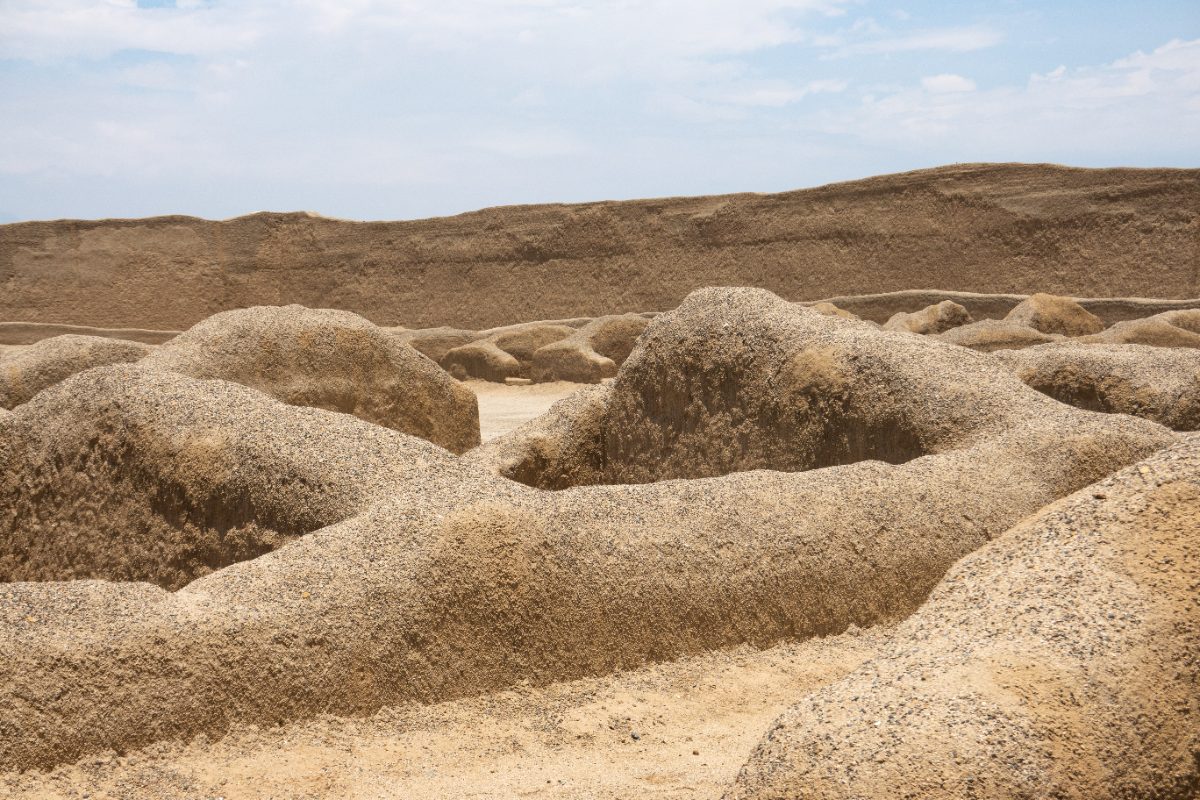
Chan Chan holds the distinction of being the largest city ever built primarily from adobe, unfired mud brick shaped and dried in the intense sun of Peru’s coastal desert. At its height, the city is estimated to have housed between thirty and sixty thousand people, making it the largest urban center in pre-Columbian South America and one of the largest cities anywhere in the world during the centuries it flourished. Its monumental core alone covered roughly six square kilometers, packed with towering walls, palace compounds, and residential neighborhoods built to support a dense urban population in an otherwise arid coastal environment.
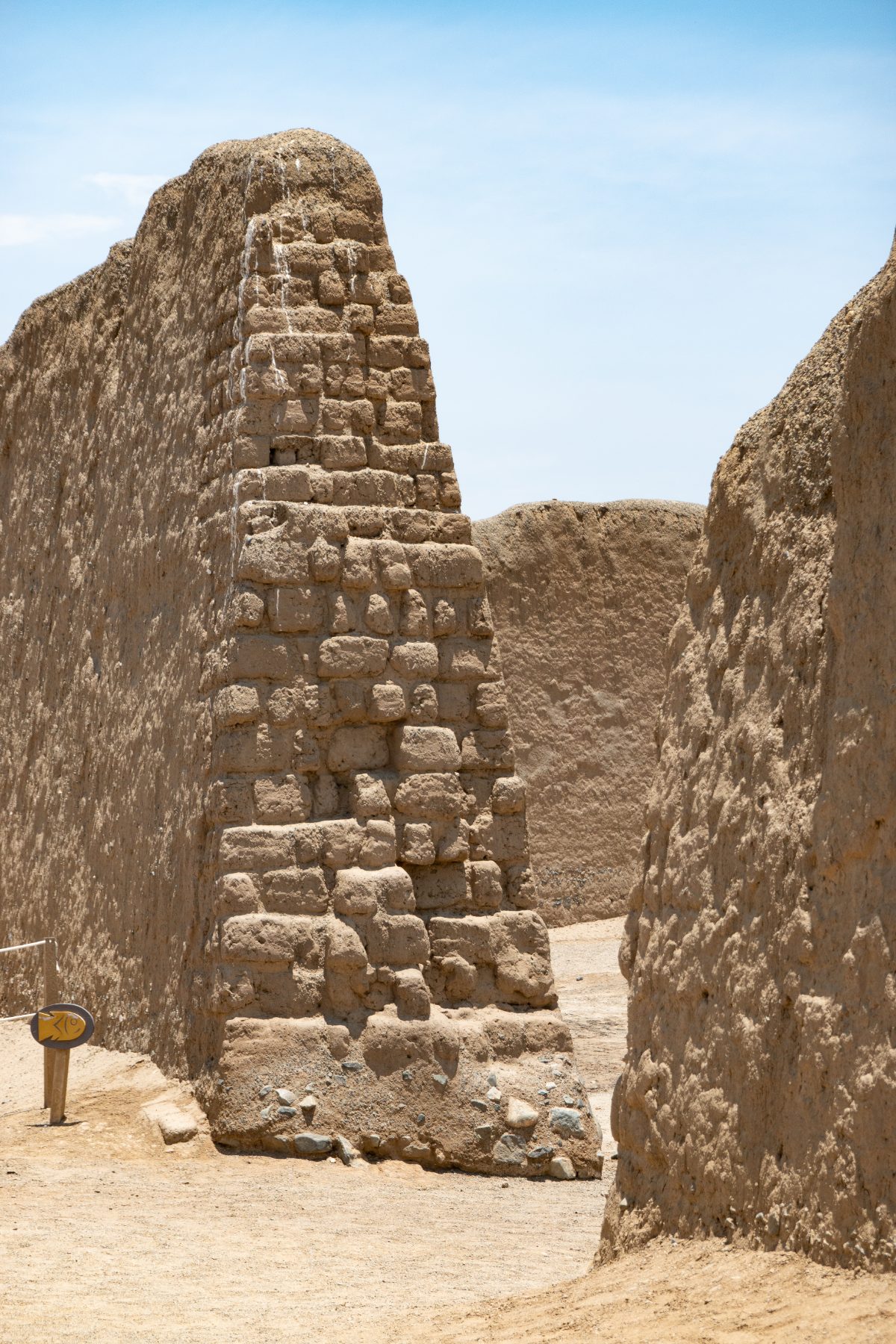
The choice of adobe as a primary building material reflected both the practical realities of the region, which offered abundant clay and sand but little accessible stone suitable for large-scale construction, and a long local building tradition stretching back centuries before Chan Chan’s founding. Chimu builders became remarkably skilled at working with this humble material, raising walls many meters high and decorating them with elaborate carved and molded relief work that has survived, in fragmented form, for over five hundred years despite the fragility of unfired mud brick.
Beyond the ten major royal compounds, Chan Chan’s urban fabric included distinct neighborhoods of smaller, less monumental architecture housing craftspeople, laborers, and lower-status residents, along with intermediate elite compounds occupying a social tier between the royal ciudadelas and ordinary residential areas. This layered urban structure, visible clearly in the surviving architectural remains, reflects a highly stratified society in which access to particular types of housing and particular parts of the city directly corresponded to an individual’s place within the Chimu social and political hierarchy.
Modern visitors to Chan Chan typically focus their time on the Tschudi compound, formally restored and opened for public access, since most of the site’s other nine ciudadelas remain in various states of erosion and partial excavation, some still substantially unexcavated beneath centuries of accumulated windblown sand. This selective preservation and presentation reflects both practical conservation priorities and the sheer scale of the site, which remains far larger than any single restoration project could realistically address in full.
The Rise of the Kingdom of Chimor
Chan Chan served as the capital of the Kingdom of Chimor, a state that emerged along Peru’s northern coast around 900 CE and gradually expanded to control a coastline stretching over one thousand kilometers by the time of its greatest extent in the fifteenth century. The Chimu built their kingdom in a region long shaped by earlier coastal cultures, including the Moche civilization, whose earlier settlements and irrigation systems in the same river valleys provided a foundation the Chimu built upon and expanded considerably during their own rise to power.
Chimor’s expansion depended heavily on conquering and administering a series of coastal river valleys, each capable of supporting substantial irrigated agriculture, and integrating them into a centralized political and economic system controlled from Chan Chan. Provincial administrative centers built in conquered valleys allowed the Chimu state to extract tribute, labor, and agricultural surplus from a much wider territory than the capital’s immediate surroundings could produce alone, funding the continued construction and expansion of Chan Chan’s monumental core across multiple generations of Chimu rulers.
By the time Chimor reached its greatest territorial extent in the mid-fifteenth century, the kingdom controlled roughly one thousand kilometers of Pacific coastline, an area larger than any previous coastal Andean state and rivaled in the region only by the rapidly expanding Inca Empire itself. This scale of political integration required a sophisticated administrative system capable of managing tribute collection, labor mobilization, and communication across a lengthy and geographically fragmented coastal territory divided by numerous river valleys and stretches of barren desert.
Provincial governance under Chimor combined direct administrative control in key valleys with more indirect arrangements relying on local elites who remained in place after conquest but answered to Chimu-appointed overseers, a flexible system that allowed the kingdom to manage a lengthy, ecologically fragmented coastline without requiring uniform direct rule everywhere. This adaptable approach to provincial administration likely contributed to Chimor’s relative stability and continued expansion over several centuries, even as it incorporated culturally and linguistically diverse populations along the wide stretch of coastline it eventually came to control.
The Language the Chimu Spoke
The Chimu spoke Quingnam, sometimes distinguished by linguists from the related Muchik or Yunga language documented further north along the coast, both now extinct and known today only through limited colonial-era word lists, place names, and brief observations recorded by early Spanish chroniclers. Neither language survived as a spoken tongue past the early colonial period, as Quechua, spread by the Inca conquest and later reinforced by Spanish colonial administration, gradually displaced the coastal languages that had once dominated the region Chan Chan governed.
This loss means that, much like several other major pre-Columbian civilizations discussed in this series, the Chimu cannot speak to historians directly through their own written words, since no confirmed indigenous Chimu writing system has been identified in the archaeological record. What survives instead is a rich material record, architecture, ceramics, textiles, and metalwork, that historians and archaeologists must interpret carefully, cross-referencing it against early colonial Spanish accounts that recorded Chimu oral history and administrative practices shortly after the kingdom’s conquest, while remaining aware that these secondhand accounts inevitably carry the biases and misunderstandings of their Spanish authors.
Some linguists have questioned whether Quingnam and Muchik represent genuinely distinct languages or closely related dialects of a single broader coastal language family, a debate complicated by the fragmentary nature of the surviving evidence. What remains clear is that both languages had disappeared as living tongues well before modern linguistic fieldwork could document them in detail, leaving historians dependent on brief, sometimes contradictory colonial records that were never intended to serve as comprehensive linguistic documentation in the first place.
Ten Walled Palaces for Ten Kings
Chan Chan’s monumental core is organized around ten massive rectangular compounds, known today as ciudadelas, each enclosed by towering adobe walls reaching up to nine meters high. Archaeologists believe each compound was built by, and for, a single Chimu king during his reign, serving as his royal residence, administrative center, and storage complex for tribute goods while he lived, and then functioning as his mausoleum and a memorial cult center after his death, while his successor built an entirely new compound rather than simply inheriting the previous ruler’s palace.
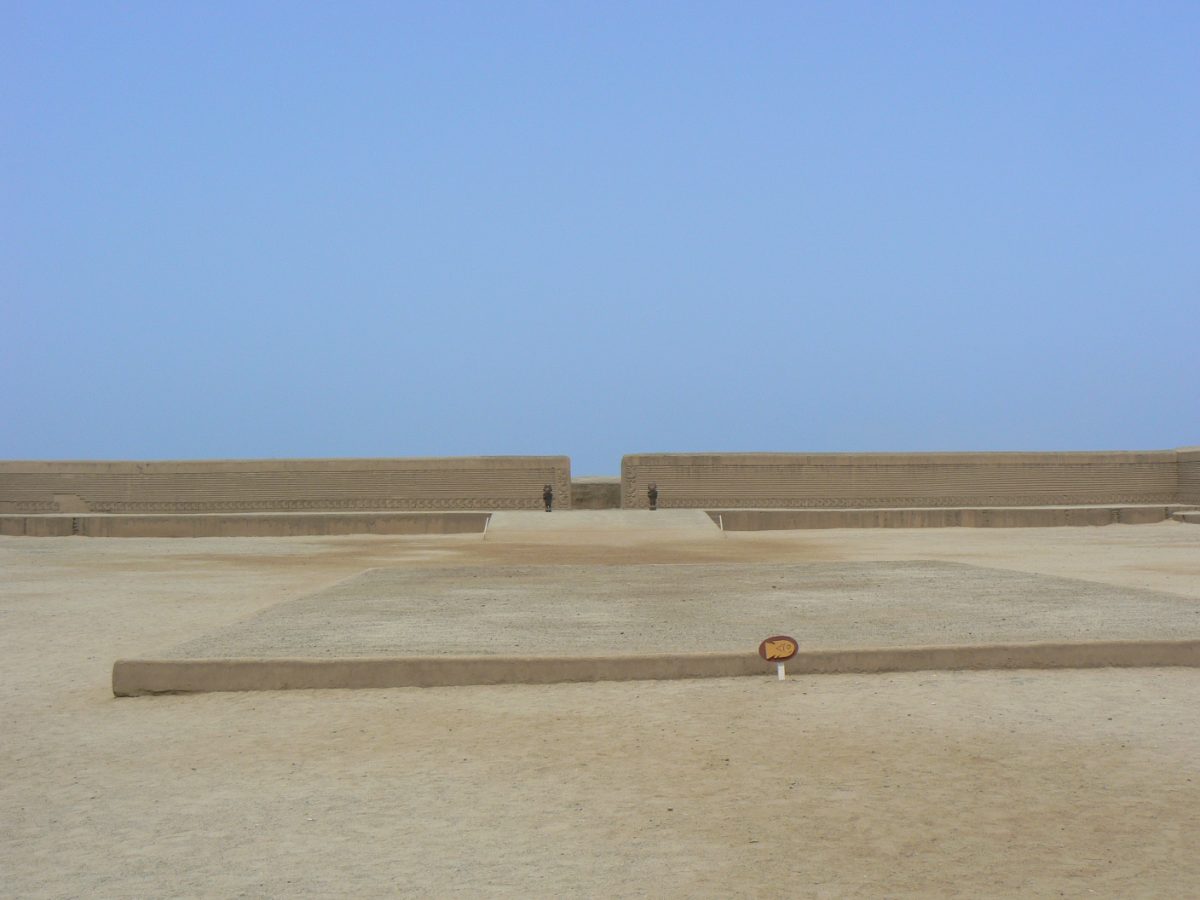
This practice, known as split inheritance, meant that each new Chimu king needed to generate his own wealth and construct his own monumental compound from scratch, since his predecessor’s palace, treasury, and attendants remained dedicated to maintaining that late ruler’s cult rather than passing directly to his heir. The same basic principle of split inheritance also shaped the later Inca Empire’s royal succession practices, and some historians believe the Inca may have adapted this administrative concept, among others, from the Chimu after conquering Chan Chan in the fifteenth century.
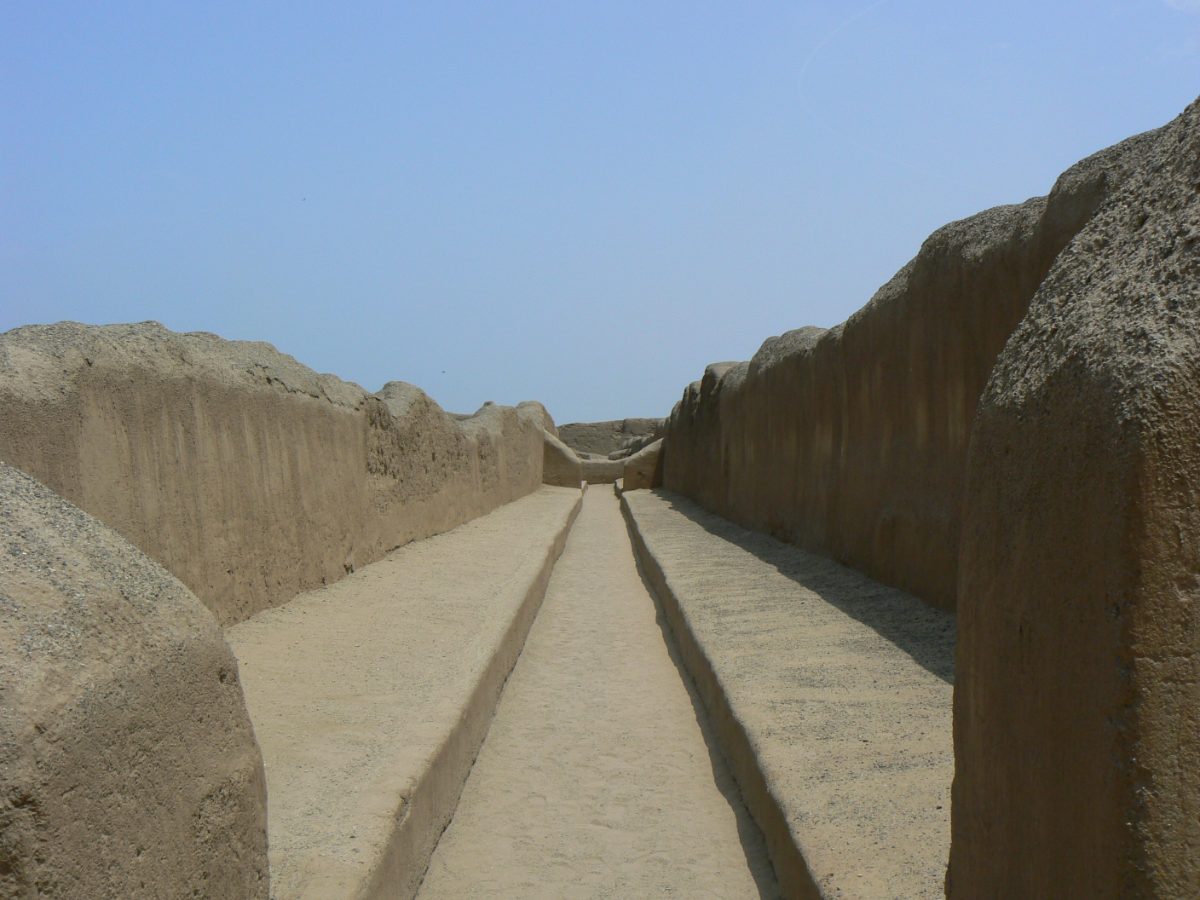
Each ciudadela typically included its own audiencia rooms, small U-shaped structures believed to have served administrative functions related to counting and recording tribute goods stored within the compound’s extensive warehouse facilities, a detail that points toward a sophisticated bureaucratic apparatus operating within each royal household even without a conventional writing system to support it. Some researchers propose that quipu-like cord-based recording devices, similar to those later used extensively by the Inca, may have played a role in Chimu administrative recordkeeping, though direct archaeological evidence for this practice at Chan Chan remains more limited than for the later Inca imperial system.
Friezes of Fish, Waves, and Seabirds
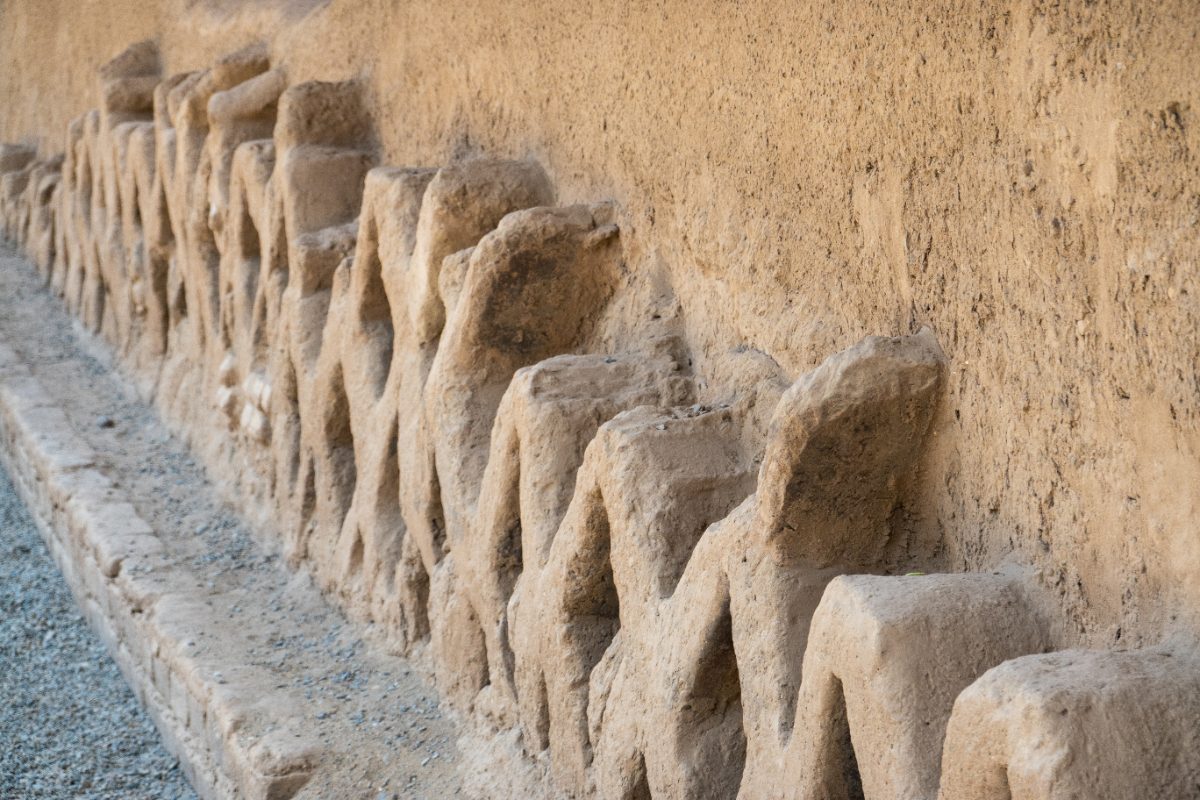
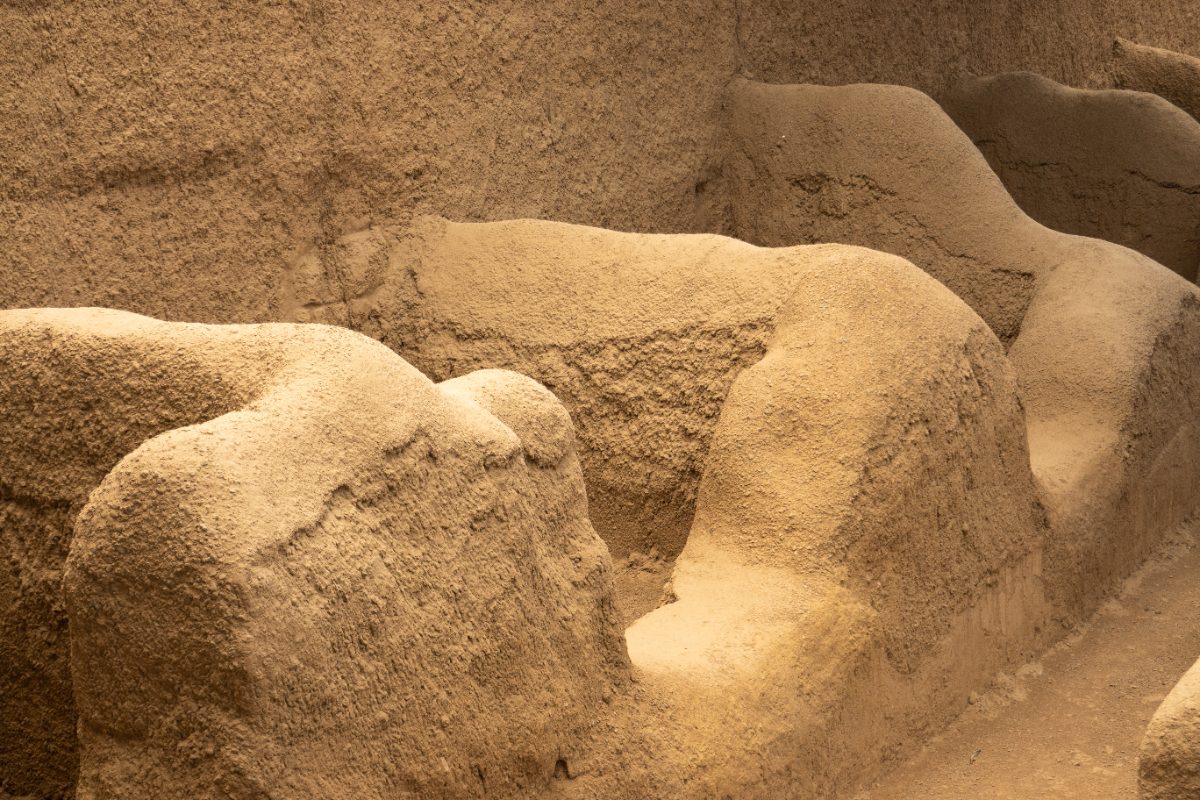
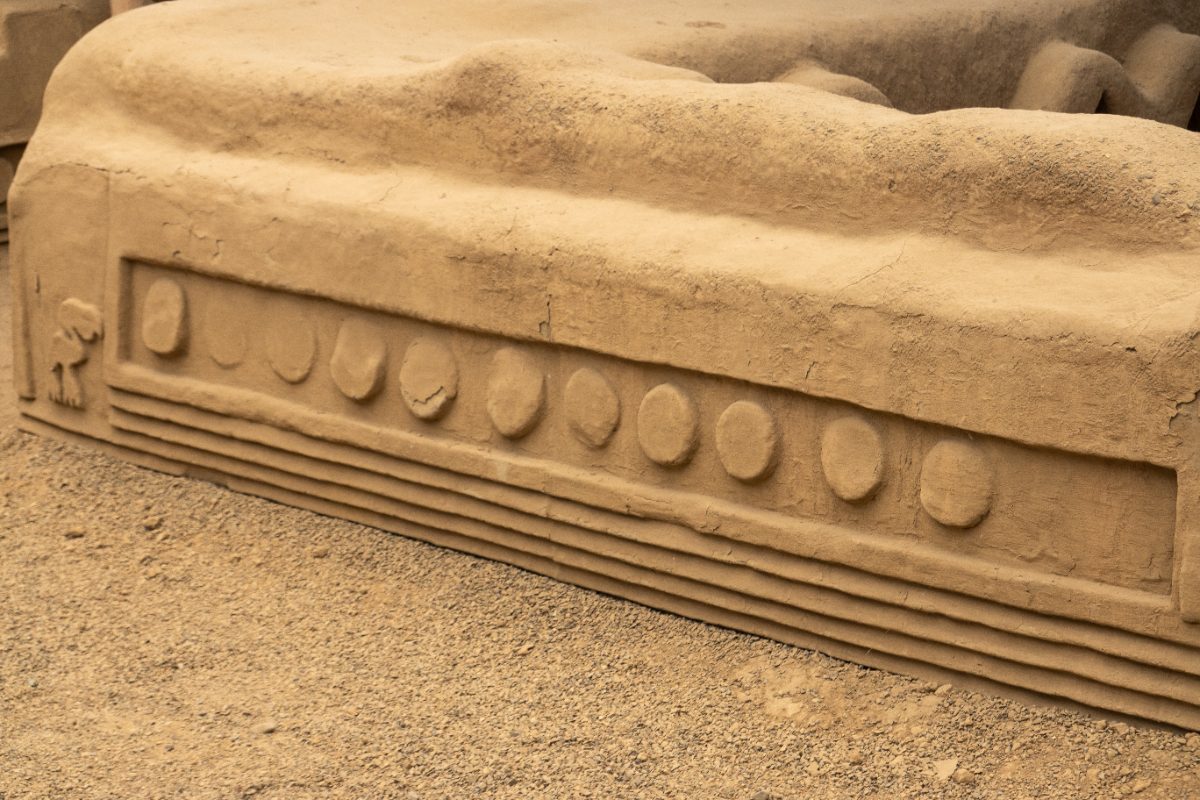
The most visually distinctive feature of Chan Chan’s architecture is its extensive adobe relief work, created by carving and molding wet clay into elaborate repeating patterns before it dried in the sun. The most celebrated examples, preserved best within the Tschudi compound, depict rows of fish, pelicans and other seabirds, waves, and geometric fret and lattice patterns running continuously along interior courtyard walls. These motifs directly reflect the maritime environment the Chimu depended on, celebrating the rich fishing grounds off Peru’s northern coast that provided a crucial food source supplementing the kingdom’s irrigated agriculture.
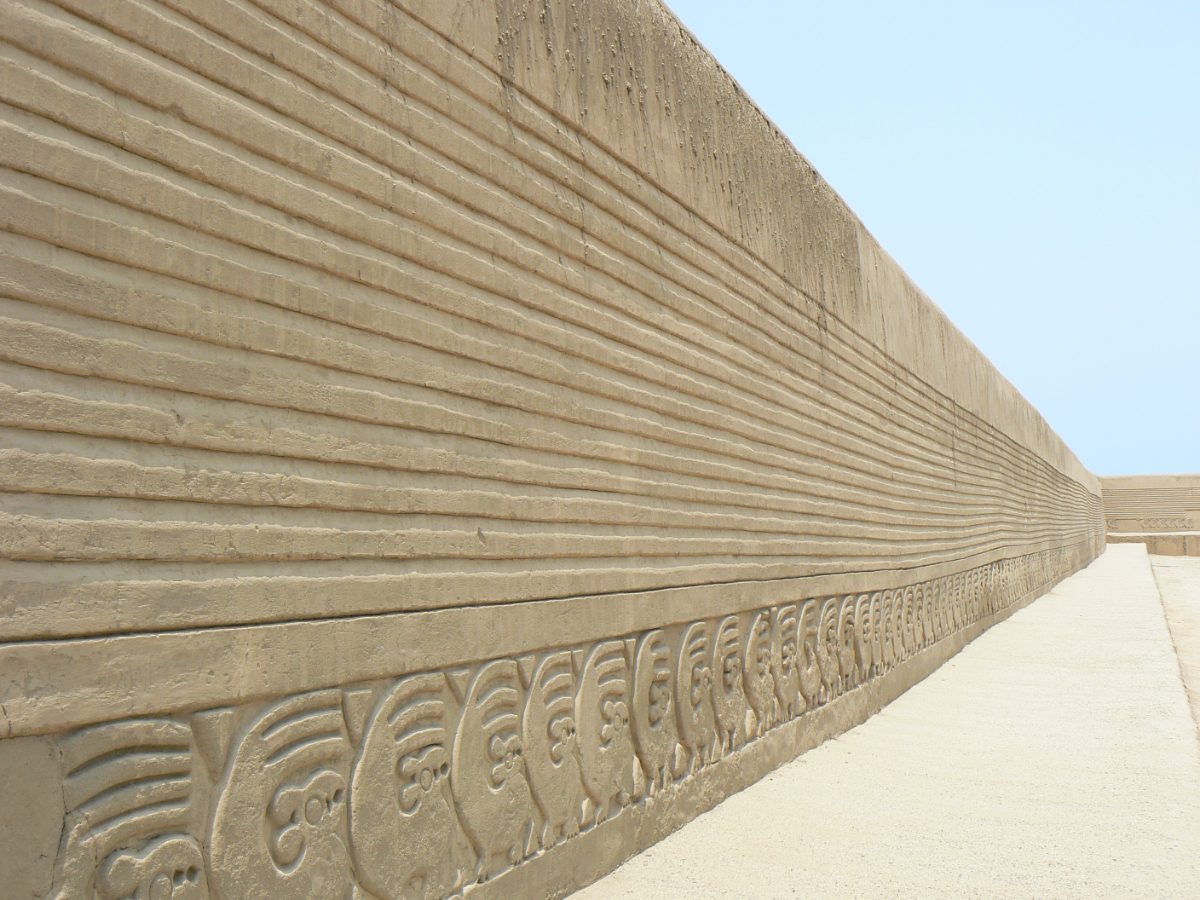
Beyond their decorative appeal, these friezes likely carried religious and symbolic meaning connected to Chimu beliefs about the sea, fertility, and the natural cycles that governed both fishing and farming along the coast. Similar fish and bird imagery appears across Chimu textiles, ceramics, and metalwork, suggesting a coherent, widely shared visual language rather than isolated decorative choices specific to any single building. Conservation teams today work continuously to protect these fragile carved surfaces, since exposure to rain, even the relatively rare rainfall typical of this desert coastline, can cause irreversible damage to unfired mud brick relief work that has already survived for over five centuries.
Producing these friezes required considerable planning and skilled labor, since the designs were built up in relief using wooden molds and hand-carving on wet clay applied directly to prepared wall surfaces, a technique demanding precise timing to work the material before it dried too much to shape. Teams of specialized craftsmen likely worked under the direction of master builders who maintained consistent design templates across different sections of a single compound, explaining the remarkable uniformity seen in repeating motifs stretching for dozens of meters along some of Chan Chan’s best-preserved walls.
Comparable adobe relief traditions appear at earlier northern Peruvian sites associated with the Moche civilization, whose own painted and molded adobe murals at sites like the Huaca de la Luna near modern Trujillo predate Chan Chan’s friezes by several centuries. The clear stylistic continuities between Moche and Chimu decorative traditions support the broader archaeological consensus that Chimor emerged from, and directly built upon, cultural and artistic foundations already well established along Peru’s northern coast long before Chan Chan itself rose to prominence as a major urban capital.
Worshipping the Moon Over the Sun
Unlike the Inca, who placed the sun god Inti at the center of their state religion, the Chimu regarded the moon as their principal deity, a god they called Si, believed to hold power over the weather, the tides, agricultural fertility, and even to be more powerful than the sun since it was visible both day and night and controlled the growth of crops and the movement of the sea. Spanish chroniclers recording Chimu religious beliefs shortly after the conquest specifically noted this emphasis on lunar worship as a distinguishing feature separating Chimu religion from that of the Inca who had subjugated them.
Religious ceremonies at Chan Chan likely took place within the walled compounds themselves, in dedicated courtyards and platform structures found throughout the ciudadelas, as well as at smaller huaca temple mounds scattered across the wider urban area and surrounding valley. Offerings recovered from these contexts, including fine ceramics, textiles, and metal objects, along with evidence of ritual feasting, point to a religious life that combined ancestor veneration, focused heavily on the deceased Chimu kings memorialized within their respective compounds, with broader cosmological beliefs centered on the moon, the sea, and the agricultural cycle.
Archaeologists have also identified evidence of astronomical observation built into certain structures at Chan Chan, potentially used to track lunar cycles relevant to the timing of religious festivals and agricultural activities tied to Chimu beliefs about the moon’s influence over tides and crop fertility. This attention to lunar movement fits naturally with the broader religious emphasis on Si, reinforcing the idea that careful observation of the night sky held direct practical as well as spiritual importance for a society whose religious calendar and agricultural planning were closely intertwined.
Gold, Silver, and Master Metalworkers
Chimu artisans earned a reputation, both among their contemporaries and among later Inca rulers, as some of the most accomplished metalworkers in the pre-Columbian Andes. Working in gold, silver, copper, and tumbaga, a gold-copper alloy prized for its workability and rich color, Chimu craftsmen produced elaborate ceremonial objects, personal ornaments, and ritual vessels, often decorated with the same fish, bird, and wave motifs found throughout the city’s architecture. Techniques including hammering, embossing, soldering, and gilding were all well established within Chimu workshops, reflecting generations of accumulated technical knowledge passed down through specialized craft lineages.
So valued were Chimu metalworkers that, after conquering Chan Chan, the Inca reportedly relocated skilled artisans from the city to Cuzco to work directly for the Inca state, a practice consistent with the broader Inca policy of redistributing specialized labor and expertise from conquered peoples to serve the capital’s needs. This forced relocation, while devastating for Chan Chan’s own economy and craft traditions, ensured that Chimu metalworking techniques and artistic styles continued to influence imperial Inca art even after the Kingdom of Chimor itself had ceased to exist as an independent state.
Chimu textile production also reached a high level of sophistication, with weavers producing finely patterned cotton and camelid fiber cloth decorated with the same repertoire of marine and geometric motifs found in the city’s architecture and metalwork. Textiles served practical, ceremonial, and status-marking purposes throughout Chimu society, and the finest examples, likely reserved for royalty and high elites, would have represented a significant investment of skilled labor comparable to the effort devoted to the kingdom’s celebrated metalworking traditions.
Surviving examples of Chimu goldwork, including ceremonial beakers, personal ornaments, and ritual knives sometimes referred to by their Quechua-derived name tumi, demonstrate a consistent aesthetic sensibility linking function and symbolic decoration, with even practical objects incorporating carefully rendered depictions of deities, animals, and geometric patterning. Museums throughout Peru and abroad now hold significant collections of Chimu metalwork, much of it recovered from burial contexts, providing some of the clearest surviving evidence of the artistic sophistication that once filled Chan Chan’s royal compounds before centuries of looting stripped away an untold quantity of comparable material.
Taming a Desert With Canals
Chan Chan sits within one of the driest coastal deserts on earth, receiving almost no rainfall in a typical year, yet the Chimu supported tens of thousands of urban residents alongside an even larger rural population through an extensive network of irrigation canals drawing water from nearby rivers fed by Andean snowmelt and highland rainfall far upstream. These canal systems, some inherited and expanded from earlier Moche-period infrastructure, transformed otherwise barren desert valleys into productive farmland capable of supporting the intensive agriculture needed to feed a major urban center.
At the height of their engineering ambitions, Chimu planners even attempted an enormous intervalley canal intended to carry water across a considerable distance to supplement irrigation in the valley surrounding Chan Chan itself. Archaeological evidence suggests this ambitious project was ultimately abandoned, likely due to a combination of surveying miscalculations and tectonic shifts in the landscape that altered the necessary gradient for water to flow correctly, a rare example of an infrastructure project that outstripped even the Chimu’s considerable engineering capabilities.
Maintaining these canal systems required constant, organized labor to clear silt buildup, repair erosion damage, and manage the seasonal variability of river flow that depended heavily on precipitation patterns in the distant Andean highlands where the rivers originated. This ongoing maintenance burden meant that Chimu agricultural success depended not just on the initial engineering achievement of building the canals but on a continuously functioning administrative system capable of mobilizing labor year after year, reinforcing the broader political importance of the centralized authority based at Chan Chan.
Conquered by the Inca Empire
The Kingdom of Chimor’s independence ended around 1470 CE, when Inca forces under the general Topa Inca Yupanqui conquered Chan Chan after a campaign that reportedly involved cutting off the city’s water supply to force its surrender rather than risking a prolonged siege against its formidable walls. The last independent Chimu king, Minchancaman, was captured and taken to the Inca capital at Cuzco, where he was kept largely as a symbolic hostage while the Inca absorbed his kingdom’s territory and administrative structure into their rapidly expanding empire.
Following the conquest, Chan Chan’s political importance declined sharply, though the city likely remained inhabited to some degree under Inca rule, repurposed as a regional administrative center within the broader Inca imperial system rather than continuing as an independent royal capital. By the time Spanish conquistadors arrived in the region in the 1530s, Chan Chan had already lost much of its former population and political significance, and the Spanish colonial period brought further decline as the city’s compounds were extensively looted for gold and silver, a process of treasure-hunting that continued for centuries and destroyed an enormous amount of irreplaceable archaeological evidence.
Some historical accounts suggest the Inca conquest of Chan Chan proceeded with relatively limited destruction compared to typical ancient conquests, since the Inca had a demonstrated interest in preserving and absorbing conquered administrative systems, skilled artisans, and useful infrastructure rather than razing captured cities outright. This pragmatic approach to conquest helps explain why so much of Chan Chan’s architecture survived intact into the colonial period, only to face far more severe and sustained destruction later at the hands of Spanish colonial treasure hunters searching the compounds for gold and silver.
A Fragile City Facing the Rain
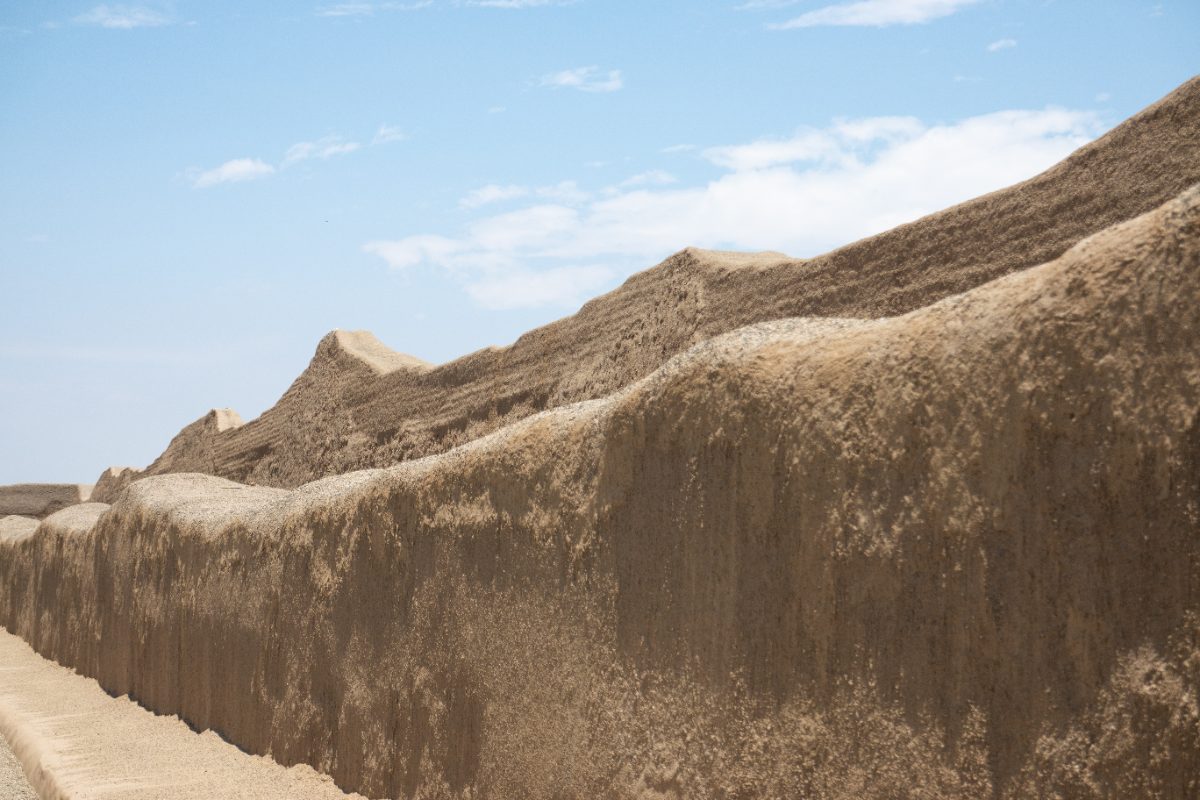
Chan Chan’s greatest conservation challenge comes from an unlikely source given its location in one of the driest deserts on the planet: rain. Periodic El Nino climate events bring occasional heavy rainfall to Peru’s normally arid northern coast, and even modest amounts of water can cause severe, sometimes irreversible damage to unfired mud brick walls and the delicate carved relief work that makes Chan Chan so visually distinctive. Conservation teams have developed specialized protective coverings and drainage systems to shield the most vulnerable and significant structures, particularly within the well-preserved Tschudi compound, during periods of heightened rainfall risk.
Recognizing both its extraordinary historical significance and its acute vulnerability, UNESCO designated Chan Chan a World Heritage Site in 1986, simultaneously placing it on the List of World Heritage in Danger due to the ongoing threats posed by erosion, looting, and encroaching urban development from nearby Trujillo. Ongoing archaeological and conservation work continues to balance the competing demands of protecting Chan Chan’s fragile adobe architecture, enabling continued scientific study, and allowing public access to one of the most important pre-Columbian urban sites anywhere in South America.
Community engagement has become an increasingly important part of Chan Chan’s preservation strategy, with local residents from nearby Trujillo and surrounding communities involved in site monitoring, tourism services, and traditional adobe construction techniques that inform modern conservation work. This connection between contemporary local knowledge of adobe building methods and the technical challenges of preserving an ancient adobe city represents a valuable, ongoing exchange between present-day craftsmanship and archaeological conservation science.
Nearby Places to Explore
Chan Chan represents one chapter in a much longer sequence of monumental building traditions along Peru’s coast and in the surrounding Andes, and readers interested in exploring earlier chapters of this same broader Andean story may want to visit the following related sites.
- Chavin de Huantar: The 3,000-Year-Old Andean Temple Built to Overwhelm the Senses
- Cerro Sechin: The 3,600-Year-Old Peruvian Temple Carved With Warriors and Their Victims
- Chankillo: The 2,300-Year-Old Peruvian Towers That Are the Americas’ Oldest Solar Observatory
Why Chan Chan Still Matters
Chan Chan demonstrates that some of the largest and most sophisticated cities in the pre-Columbian world were built not from stone but from humble sun-dried mud brick, shaped by builders who nonetheless achieved monumental scale, complex urban planning, and remarkably fine decorative artistry within that simple material. Its ten walled royal compounds, its distinctive lunar religion centered on the moon god Si, and its mastery of desert irrigation together reveal a civilization that adapted ingeniously to one of the harshest environments inhabited by any major ancient American culture.
Though conquered by the Inca and later looted extensively during the colonial period, Chan Chan’s surviving walls and friezes continue to tell the story of the Chimu, a people whose own language and voice were largely erased from history yet whose architectural and artistic achievements remain etched, quite literally, into the walls of the largest adobe city ever built.
You May Like
Mafra, the Palace a King Built From a Vow


2 thoughts on “Chan Chan: The Largest Adobe City in the World”