A little to the north of Semaphore, on the coast of the Lefevre Peninsula where the suburb of Taperoo meets the sea, stands a fortress that once represented the cutting edge of colonial coastal defence. Fort Largs was South Australia’s answer to a world in which artillery was advancing so fast that a fort could be outdated almost as soon as it was built. Armed with guns that could reach further than anything before them in the colony, it quickly became the true guardian of Port Adelaide.
Fort Largs is the companion and the rival of nearby Fort Glanville, and to understand one you really need to understand the other. Glanville came first, the colony’s pioneering fortress, but within a few years Largs had eclipsed it, its more modern guns outranging those of its older neighbour and shifting the centre of gravity of South Australia’s defences a little way up the coast. The two forts together tell the story of how quickly the science of war was moving.
Like so many Australian coastal forts, Largs was born of the anxious fear of attack by a foreign power, and like them it never fired a shot in anger. Yet its long life did not end when its guns fell silent. For decades it served an entirely different purpose as the training academy for the state’s police, giving generations of officers their start on the same ground that had been built to repel a naval raid.
In the pages ahead you will explore this fascinating fortress, from the Russian scare that raised it and the innovative guns that made it formidable, through its rivalry with Fort Glanville and its decades as a police academy, to its heritage protection and new life today. Fort Largs is a story of technology, anxiety, and reinvention, and a key piece of the puzzle of colonial defence in South Australia.
In This Article
- The Anxious Age That Built the Fort
- The Warship That Exposed the Colonies
- The Companion to Fort Glanville
- Designed by a Master of Defence
- The Guns That Outranged the Rest
- How the New Fort Took the Lead
- Guardian of Port Adelaide
- Ready for a War That Never Came
- A New Role in a Global War
- From Fortress to Police Academy
- A Fortress Worth Protecting
- The Fort’s Future
- Discovering Fort Largs
The Anxious Age That Built the Fort
Fort Largs was a child of the same fear that fortified coastlines across the Australian colonies, the dread that a hostile power might send warships to threaten distant and undefended ports. In the later nineteenth century, tensions between the British Empire and Imperial Russia repeatedly flared, and each crisis sent a shiver of anxiety through the colonies, which imagined enemy cruisers appearing off their shores.

South Australia had particular reason to worry about its economic lifeline. The colony’s prosperity depended on the shipping that passed through Port Adelaide, and defence experts concluded that an enemy might well strike at that shipping to cripple the colony’s economy. A raid on the port, or on the vessels that served it, could do enormous damage to a community that lived by trade.
There had already been reminders of how exposed the colonies were. Visits by foreign warships, arriving unannounced at Australian ports, had exposed embarrassing gaps in colonial defences and driven home the point that the colonies could not simply assume their remoteness would protect them. The lesson was clear enough, that a wealthy port left undefended was a temptation and a risk.
Out of this persistent anxiety came the decision to strengthen the defences of Port Adelaide, and Fort Largs was a central part of that response. It was built to close a gap in the colony’s armour, to ensure that the approaches to its most important port could be defended against any raider bold enough to test them. The fort was, in essence, a solid answer to a long-running fear.
The broader context was the great rivalry between Britain and Russia that played out across the globe, from the plains of Central Asia to the seas of the Pacific. The Australian colonies, as outposts of the British Empire, were caught up in this rivalry despite their distance from its main theatres, and every deterioration in relations between the two great powers reverberated as far as the shores of South Australia.
The Warship That Exposed the Colonies
One of the incidents that sharpened colonial anxieties involved a Russian warship arriving at an Australian port, a visit that laid bare just how unprepared the colonies were. When the vessel appeared, the local defences were found to be so lacking that there was not even sufficient gunpowder on hand for the ceremonial salute that custom required, an embarrassing revelation of weakness.
Such episodes drove home a point that colonial leaders could not ignore. If a friendly warship could expose such gaps in a colony’s readiness, what might a hostile one do? The visit was a wake-up call, a vivid demonstration that the colonies’ remoteness was no guarantee of safety and that their defences were badly in need of attention.
These moments of exposure fed directly into the push for proper fortifications. The realisation that a foreign warship could arrive and find the coast all but undefended lent urgency to the arguments of those who called for forts and guns to guard the colony’s ports, and helped overcome the reluctance to spend money on defence.
In this sense, incidents like the arrival of that warship were part of the chain of events that led to forts like Largs. The anxiety they provoked, the sense of vulnerability they exposed, all contributed to the climate in which the colony resolved to fortify its coast, so that never again would an enemy find the approaches to its ports so easily open.
Stories of this kind lingered in the colonial memory and were often invoked in the debates over defence spending. They gave defenders of coastal fortification a powerful argument, a concrete example of vulnerability that was hard to dismiss, and they helped shift public opinion toward accepting the cost of building forts like Largs to guard the colony’s ports.
The Companion to Fort Glanville
Fort Largs cannot be understood in isolation, for it was conceived as part of a system of defences that included the earlier Fort Glanville a little way to the south. Together the two forts were meant to guard the approaches to Port Adelaide, their guns covering the waters that any hostile vessel would have to cross to threaten the colony’s shipping and its port.
Glanville had been the colony’s first fort, the pioneering venture that established South Australia’s commitment to coastal defence. Largs followed as part of the same broad scheme, extending and strengthening the protection of the port. The two forts were siblings in a sense, born of the same fears and the same expert advice, built to work together in the defence of the peninsula.
Yet the relationship between the two forts was not simply one of cooperation but also of succession. Largs was built later, and it embodied the advances in military technology that had occurred in the interval, so that from the beginning it was in some respects the more capable of the pair. The younger fort was destined to overshadow the elder almost from the moment it was armed.
This close relationship between the two forts is part of what makes them so interesting to study together. They represent two moments in the rapid evolution of coastal defence, near neighbours on the same stretch of coast that nonetheless belonged to slightly different technological ages. To visit one is to be drawn naturally toward the other, for their stories are thoroughly intertwined.
The pairing of two forts on the same stretch of coast also reflected sound defensive thinking. A single fort could be outflanked or overwhelmed, but two working together could support one another and cover a wider expanse of water, catching a hostile vessel between their fields of fire. The relationship between Largs and Glanville was thus not merely sequential but strategic, the two forts conceived as parts of a single defensive whole.
Designed by a Master of Defence
Fort Largs was designed by the same distinguished military engineer responsible for its neighbour Fort Glanville, a Royal Engineer whose expertise in coastal defence shaped fortifications across the Australian colonies. His involvement ensured that the fort was built according to the most modern and professional thinking of the age, a serious and competent piece of military architecture.
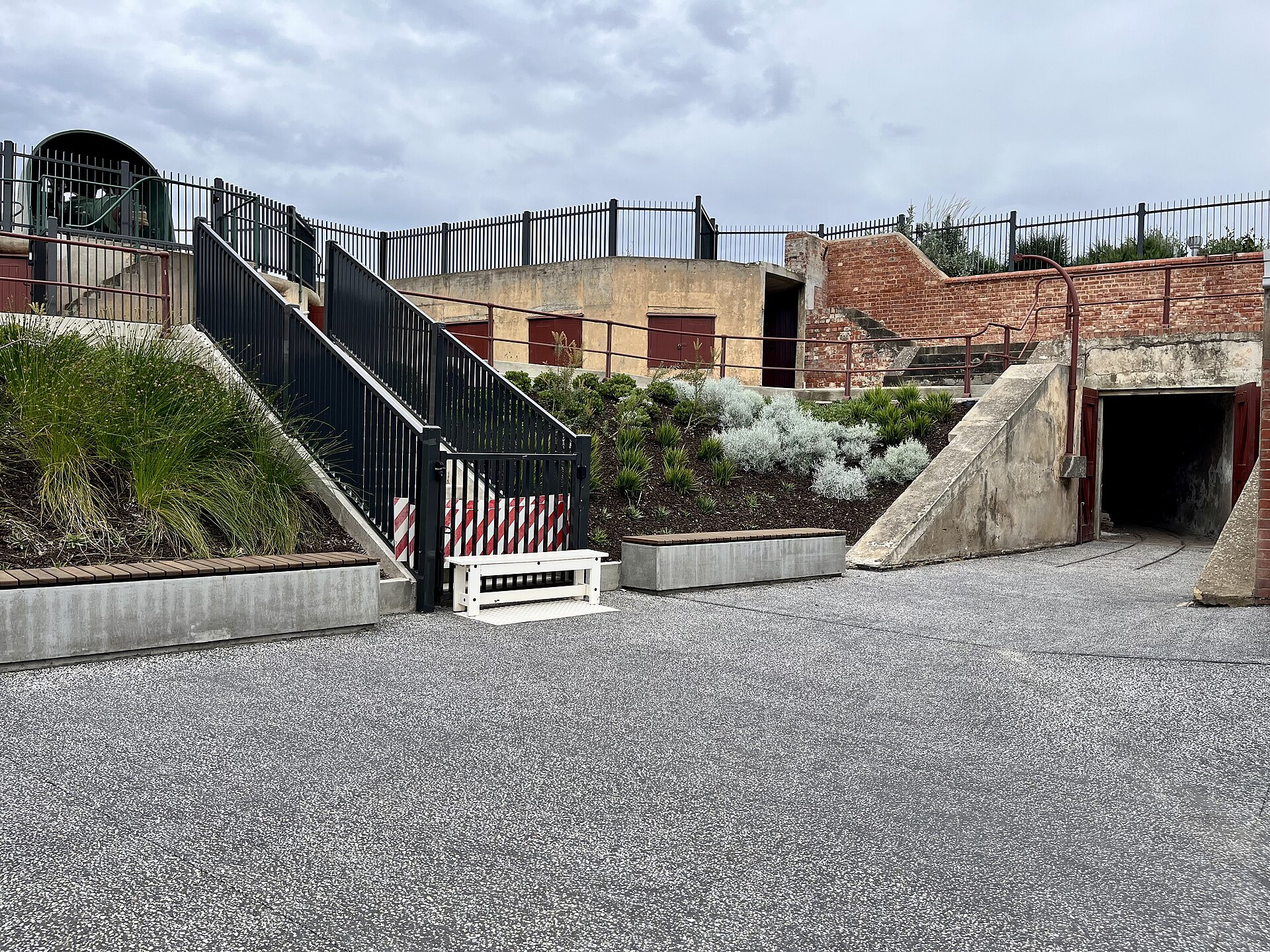
This engineer understood the modern philosophy of coastal defence, which favoured low, strong works that could survive bombardment while commanding the sea approaches with their guns. The design of Fort Largs reflected these principles, its defences arranged to protect the guns and their crews while allowing them to bring fire to bear on any vessel threatening the port.
Drawing on his experience designing defences elsewhere, the engineer adapted his approach to the specific needs of guarding Port Adelaide. The fort was to work in concert with Glanville and with the wider scheme of the colony’s defences, and its design reflected careful thought about how it would fit into that larger picture and about the particular threats it was meant to counter.
The result was a fort that shared much of its design philosophy with its neighbour but incorporated the latest advances in armament and layout. In following the recommendations of such an authority, the colony ensured that its newer fortress was built to a high standard, a worthy successor to Glanville and a fortress fit to take on the primary role in the defence of the port.
It is a notable feature of Australia’s colonial coastal defences that so many of them sprang from the judgement of a small circle of imperial experts. Their shared training and philosophy gave the forts of this era a common character, a family likeness born of a single professional tradition applied up and down the coasts of the colonies, and Fort Largs bears that stamp as clearly as any of its contemporaries.
The Guns That Outranged the Rest
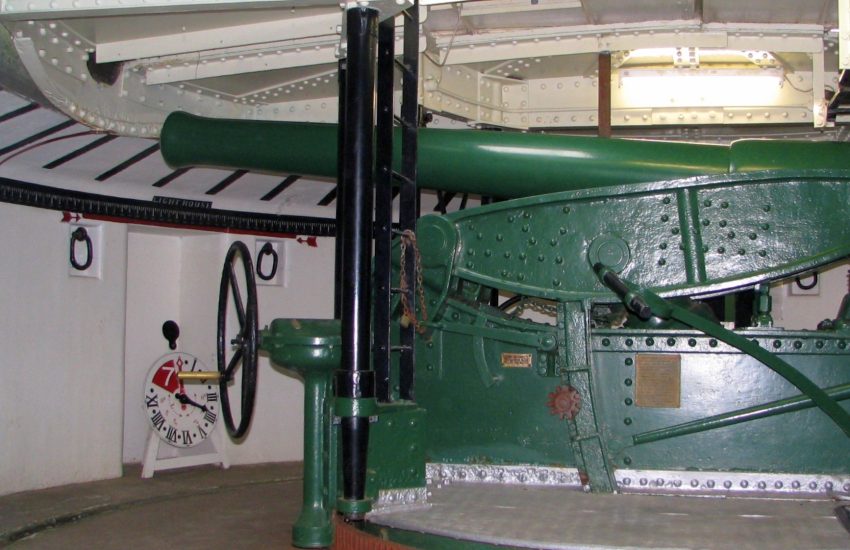
The feature that truly set Fort Largs apart was its armament, and in particular its disappearing guns. These were modern breech-loading weapons mounted on ingenious carriages that allowed the gun to rise up to fire and then sink back down behind the protecting earthworks to be reloaded out of an enemy’s sight. It was the height of coastal gunnery technology.
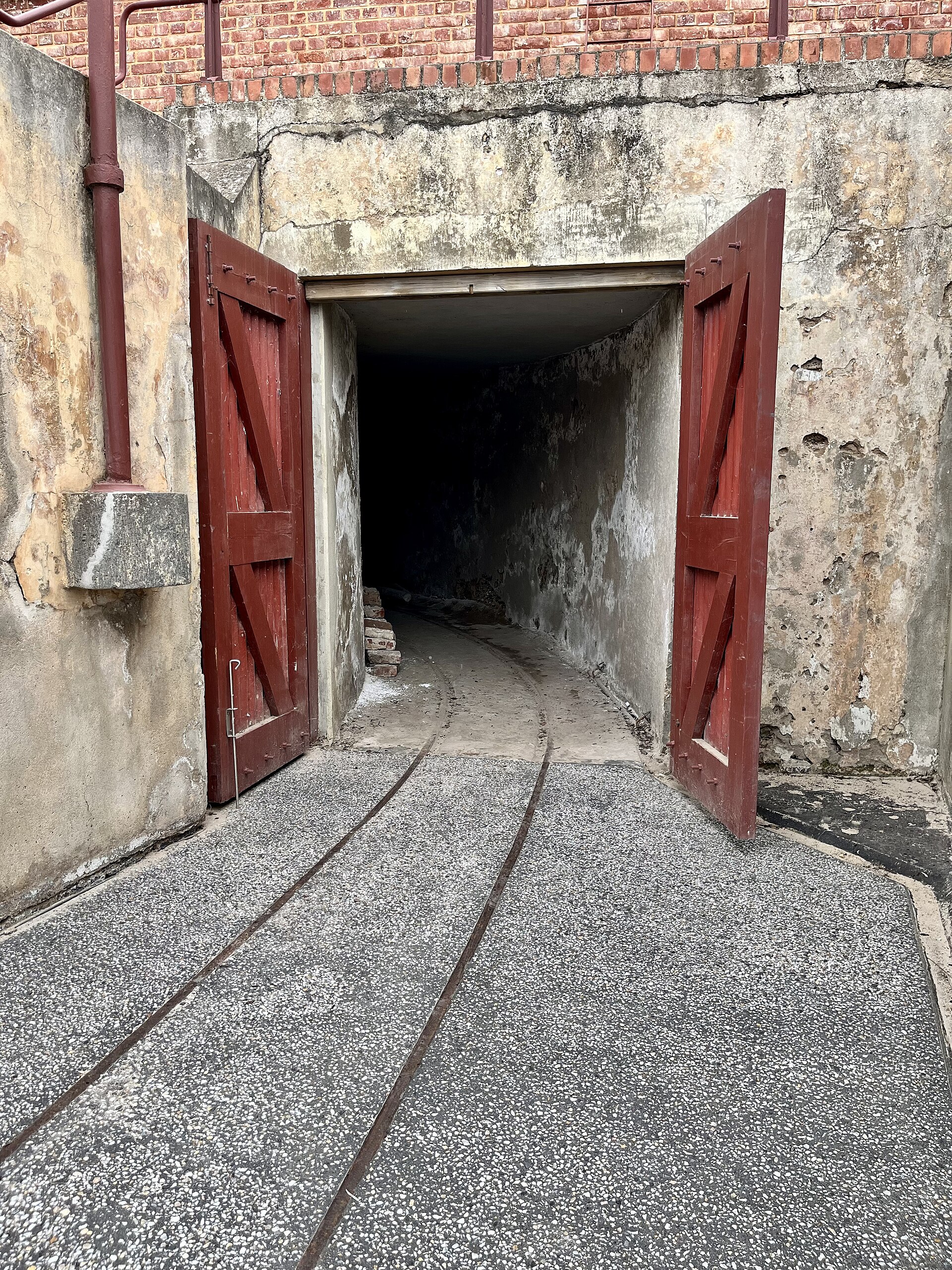
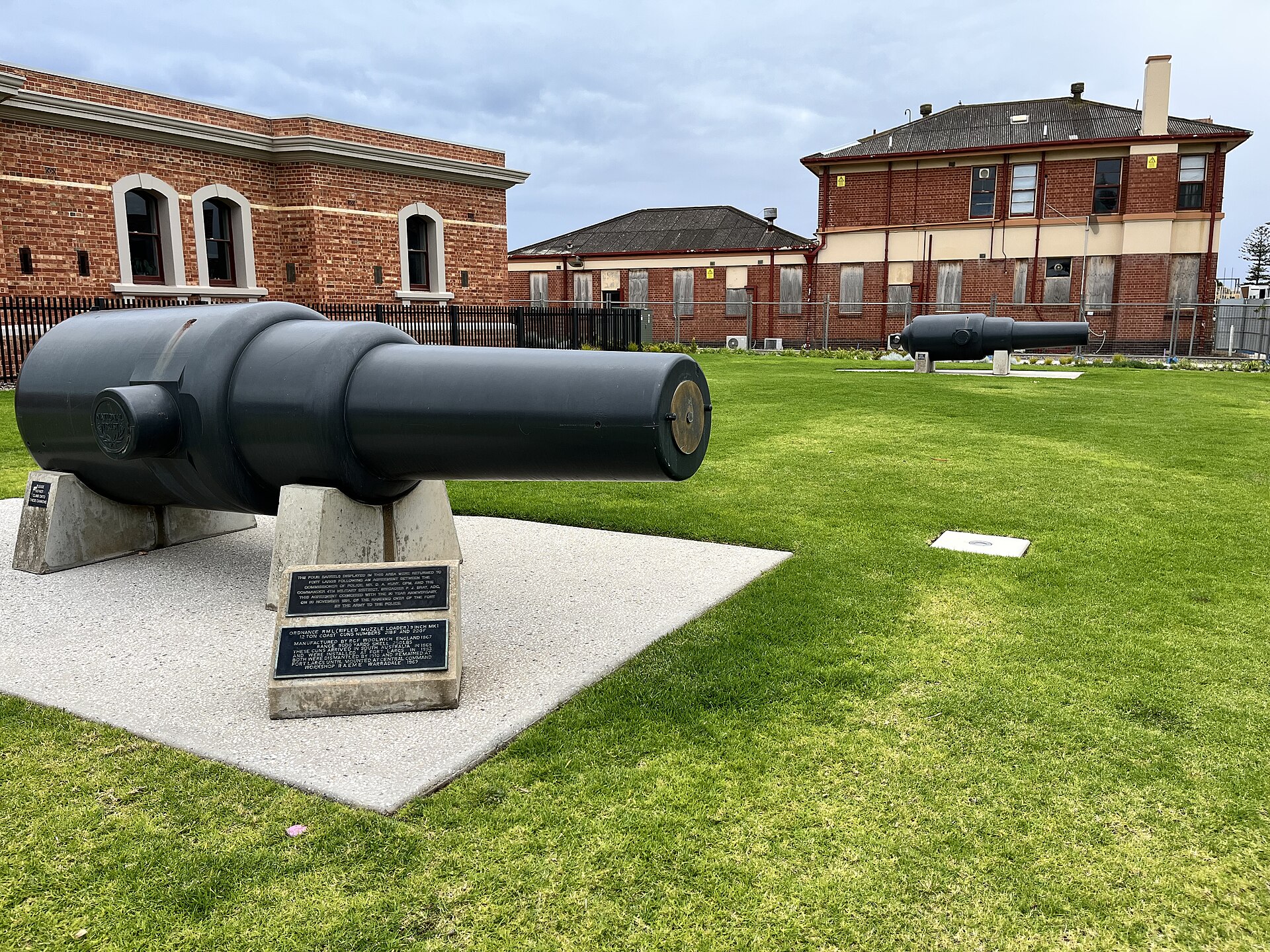
Crucially, these guns outranged the older armament of nearby Fort Glanville, able to strike at an enemy vessel from a greater distance. This superior reach was decisive, for it meant that Largs could engage a hostile ship before that ship came within range of the older fort, making Largs the more formidable and important of the two defences almost from the moment its guns were installed.
The disappearing mounting was a brilliant solution to the central problem of coastal defence, how to fire on an enemy while keeping the gun and its crew protected. For most of the loading cycle the weapon was hidden below the parapet, invisible and safe from return fire, rising only for the brief moment of firing before dropping back down to be reloaded. It combined offence and protection in a single elegant system.
This modern armament is what made Fort Largs the true guardian of Port Adelaide, the fort on which the colony’s coastal defence now really rested. Where Glanville had opened the story, Largs represented its more advanced continuation, its guns embodying the relentless progress of military technology that had, within a few short years, transformed what a coastal fort could do.
The engineering of these mounts was genuinely ingenious, using the force of the gun’s own recoil to lower it back into its protected position after firing. For the brief moment that the gun appeared above the parapet to fire, it exposed itself to the enemy, but for the rest of the time it lay hidden and safe, a moving target that was extraordinarily difficult for a warship’s gunners to hit. It was a beautiful marriage of offence and protection.
How the New Fort Took the Lead
The arrival of Fort Largs changed the balance of South Australia’s coastal defences almost overnight. With its superior guns, the new fort quickly surpassed Glanville in strategic importance, taking over as the principal defence of Port Adelaide and relegating its older neighbour to a secondary role. The centre of the colony’s defensive effort shifted a little way up the coast.
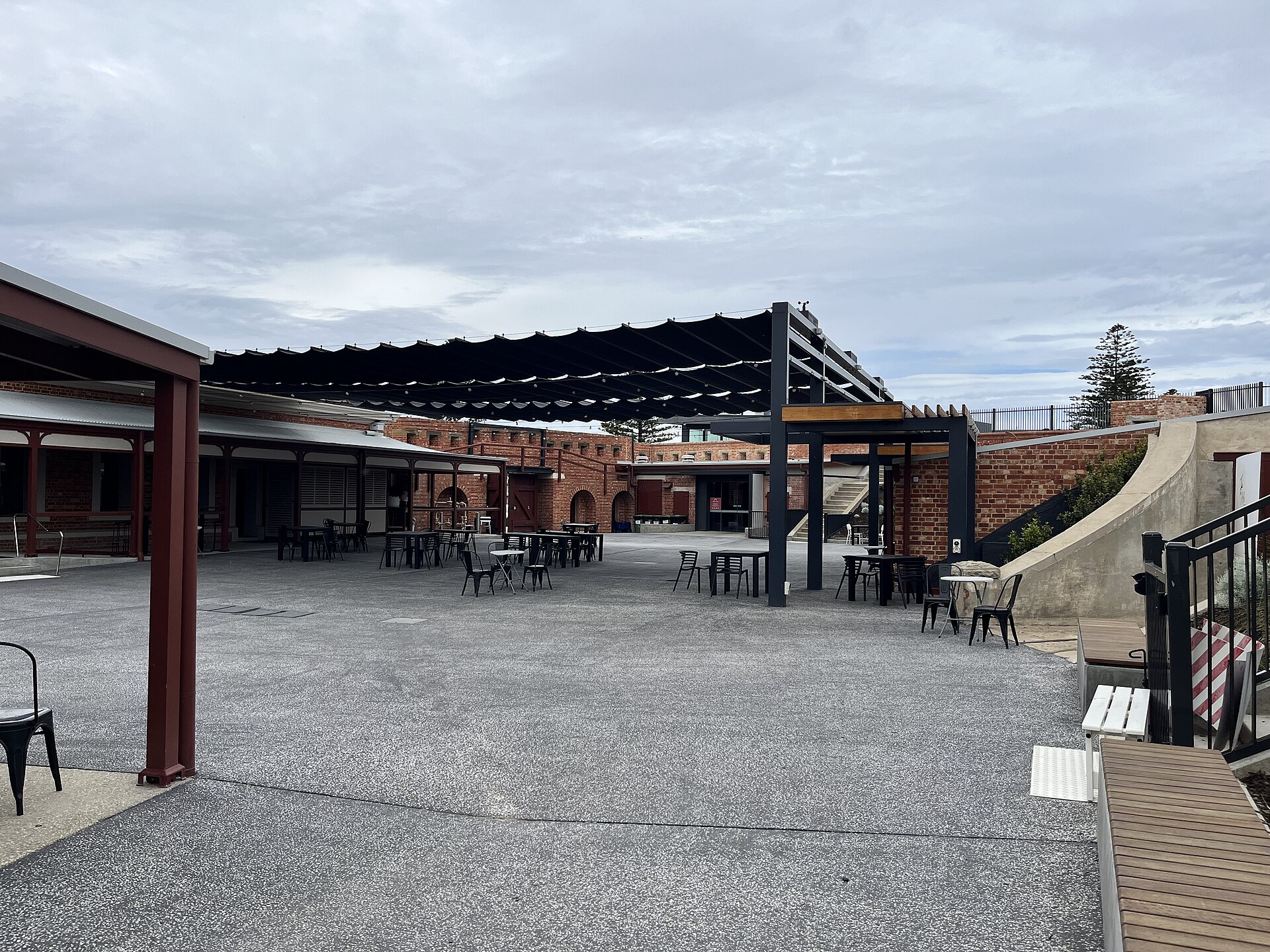
This shift was driven not only by the new fort’s better armament but also by changes to the port itself. As the approaches to Port Adelaide were altered to allow ships to berth directly at the wharves rather than anchoring offshore, the strategic situation evolved in ways that favoured the newer fort’s position and role, further diminishing the importance of the older battery.
For Fort Glanville, this meant a rapid decline from its pioneering prominence, but for Largs it meant taking up the mantle of the colony’s chief coastal fortress. The younger fort now bore the primary responsibility for guarding the port against attack, its modern guns standing as the main deterrent to any enemy contemplating a raid on the colony’s vital shipping.
The speed with which Largs eclipsed Glanville is a striking illustration of how fast military technology was advancing in this era. A fort that had been the colony’s proud first line of defence found itself overtaken within a few years by a newer neighbour, a pattern repeated across the world as the relentless improvement of guns rendered fortifications obsolete almost as quickly as they were built.
For the visitor today, this rivalry between the two neighbouring forts is one of the most interesting aspects of their shared story. To stand at Largs and know that its guns reached beyond those of Glanville down the coast is to grasp, in a very concrete way, the restless advance of military technology and the way it could reshuffle the importance of forts almost from one year to the next.
Guardian of Port Adelaide
At the heart of Fort Largs’s purpose was the defence of Port Adelaide, the commercial gateway through which the wealth of the colony flowed. The port was the beating heart of South Australia’s economy, and protecting it from attack was a matter of real importance, the whole reason that such expense and effort had been devoted to fortifying this stretch of coast.
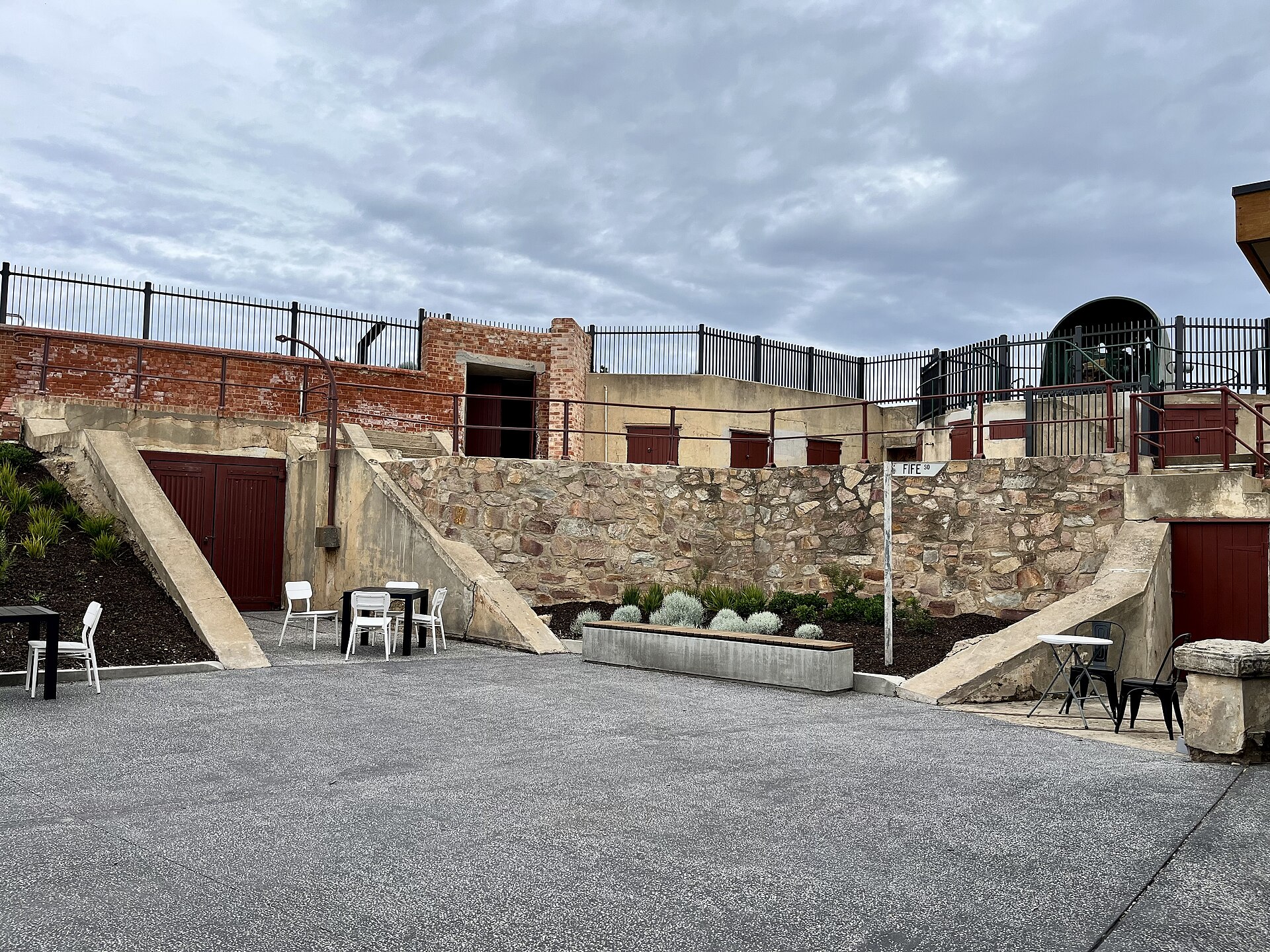
The fort’s guns were sited to command the sea approaches to the port, so that any hostile vessel attempting to threaten the shipping or the wharves would have to reckon with the fort’s fire. This command of the approaches was the essence of the fort’s deterrent value, the reason an enemy might think twice before risking an attack on the colony’s most vital asset.
Behind this defensive mission lay the everyday reality of a working military establishment, with soldiers to man the guns, magazines to store the ammunition, and all the routines of garrison life. The fort was a living military community as well as a set of guns, its people dedicated to maintaining the readiness that gave the port its protection.
In standing guard over Port Adelaide, Fort Largs performed the same essential service as coastal forts around the world, guarding the maritime lifeline of the community it served. That the feared attack never came does not diminish the role the fort played, for its value lay above all in the deterrence it provided, a strong presence that helped ensure the port could go about its business in safety.
The wealth that flowed through Port Adelaide made its defence a matter of genuine consequence for the whole colony. Wool, wheat, and other produce left through the port, and the goods the colony needed arrived the same way, so that an interruption to this traffic would have struck at the very foundations of South Australian prosperity. Guarding the port was, in effect, guarding the colony’s livelihood.
Ready for a War That Never Came
Like its neighbour Glanville, and indeed like most of Australia’s colonial coastal forts, Fort Largs never fired a shot at an enemy. The warships that its builders feared never appeared off the South Australian coast, and the fort’s modern guns, for all their power and reach, were never called upon to defend the port against a real attack.
This peaceful career should not be mistaken for a lack of purpose. A coastal fort of this kind existed above all as a deterrent, and its success was measured not in battles won but in attacks discouraged. That no enemy ever tested the defences of Port Adelaide may be counted, in a sense, as the fort fulfilling its function, presenting a face strong enough that an attack was never worth the risk.
For the soldiers who served at Largs, this meant a life of readiness rather than combat, of endless drill and practice against a day that never arrived. They maintained the guns, honed their skills, and stood their watch faithfully through the years, prepared for an attack that the colony hoped would never come and, in the event, never did.
There is a quiet dignity in this kind of service, the patient maintenance of a defence that is never put to the ultimate test. Fort Largs stood ready for decades, its guns loaded and its crews trained, a guardian whose greatest contribution was simply to be there, strong and vigilant, through the anxious years when the fear of attack hung over the colony.
It is worth reflecting that the peace these forts helped keep was, in its way, their true achievement. A gun that is never fired in anger, in a fort that never has to repel an attack, represents a kind of success rarely celebrated but genuinely valuable, the quiet deterrence that allows ordinary life and trade to carry on undisturbed behind a shield that is never actually tested.
A New Role in a Global War
Unlike some colonial forts that faded quietly into obsolescence, Fort Largs found itself pressed into service once more when the world went to war in the twentieth century. During the Second World War the fort’s armament was updated with modern naval guns, and it took up a renewed role in the defence of the coast at a time when the threat felt more real than ever before.
The war in the Pacific brought danger closer to Australian shores than the colonial fort-builders could ever have imagined, and the defence of ports like Adelaide took on a new urgency. Fort Largs, with its long history of guarding the approaches, was a natural part of this renewed effort, its position and purpose suddenly relevant again after decades of relative quiet.
New barracks and facilities were built to support the fort’s wartime garrison, reflecting the seriousness with which the defence of the coast was now taken. The fort became a busier and more active place than it had been for many years, its role as guardian of the port revived by the pressures of a global conflict that reached even to this distant shore.
This wartime service extended the fort’s active military life well beyond that of many of its contemporaries. Where other colonial forts had long since ceased to matter, Largs remained a functioning part of the coast’s defences into the era of world war, a testament to the enduring value of its position at the gateway to Port Adelaide.
The updating of the fort’s guns for this new conflict is itself a small illustration of how these old fortifications could be adapted to changing needs. Rather than being discarded, the fort was modernised to meet the threats of a different era, its bones proving flexible enough to carry new armament and to play a part in a war fought with weapons its original builders could scarcely have imagined.
From Fortress to Police Academy
When the fort’s days as a coastal defence finally ended, it embarked on the most unexpected chapter of its long life, becoming the training academy for the state’s police. For decades, the old fortress that had been built to repel a naval raid served instead as the place where generations of police officers began their careers, its barracks and grounds turned to an entirely new purpose.

This transformation gave the fort a whole new lease of life and wove it into the story of law enforcement in South Australia. Barrack rooms that had housed artillerymen became classrooms for police cadets, and the fort echoed with the training of recruits rather than the drilling of gunners. For many years, to become a police officer in the state was to pass through the gates of Fort Largs.
The academy era kept the fort in active use long after its military purpose had ended, and in doing so helped to preserve it. As a working institution, the fort remained maintained and occupied rather than left to decay, its buildings serving the needs of police training even as they stood as monuments to an earlier age of coastal defence.
For the many officers who trained here, Fort Largs must hold a particular place in memory, the setting where their careers began and where they learned their profession. This long association with the police gives the fort a significance beyond its military history, a second identity as a place of learning and formation that lasted far longer than its brief prime as a coastal fortress.
The choice of an old fort as a training academy was in some ways a natural one, for the site offered space, seclusion, and a ready-made complex of buildings suited to institutional use. What had been designed to house and train soldiers could be adapted, with relatively little difficulty, to house and train police recruits, and so the fort found a second working life that would last for many decades.
It is a curious thought that the discipline and drill of two very different services, the colonial artillery and the modern police, should have been instilled on the same patch of ground. In both cases the fort served as a place of formation, where recruits were shaped into the professionals their institutions required, and that continuity of purpose, however the details differed, gives the site a certain unity across its otherwise very different eras.
A Fortress Worth Protecting
The historical significance of Fort Largs came to be formally recognised, and the fort was entered onto the heritage registers that protect the state’s most important places. This recognition acknowledged the fort’s value as a monument to colonial coastal defence and as a key part of the story of South Australia’s development, ensuring that its future would be considered with care.

Heritage protection matters greatly for a place like Fort Largs, which might otherwise be vulnerable to the pressures of development on valuable coastal land. By recognising the fort’s significance, the authorities took a step toward safeguarding it, establishing that its history was worth preserving and that any changes to the site would have to reckon with its heritage value.
The fort’s importance rests on several foundations, from its role in the colony’s coastal defence to its long service as a police academy and its close relationship with neighbouring Fort Glanville. Together these give Largs a rich and layered significance, a place where several strands of the state’s history come together on a single stretch of coast.
Recognising and protecting this significance is an ongoing responsibility, but it is one that ensures the fort’s stories will not be lost. Whatever the future holds for the site, its heritage status marks Fort Largs as a place of genuine importance, a fortress whose long and varied history deserves to be remembered and whose fabric deserves to be cared for.
The layered heritage of the fort, spanning military and civil uses, makes it a particularly rich subject for those interested in the past. It is not simply a relic of one moment but a place shaped by successive eras, each of which left its mark, and understanding it fully means appreciating all these layers rather than any single one in isolation.
The Fort’s Future
In more recent times, Fort Largs has entered yet another chapter, as plans have been made for the future of the site that balance new development with the preservation of its historic heart. The fort itself is to be cared for by a heritage body, ensuring that the core of this important place is protected even as the surrounding land is put to new use.

Arrangements of this kind reflect a common challenge in dealing with historic sites on valuable land, the need to find a sustainable future that respects the past while meeting the needs of the present. By entrusting the fort to a heritage organisation, the plans aim to secure its long-term care, giving it a guardian dedicated to its preservation.
This new phase in the fort’s life continues the pattern of reinvention that has marked its whole history. From coastal fortress to police academy and now to a protected heritage site amid new development, Fort Largs has repeatedly found new purposes, adapting to the changing needs of the community around it while retaining its essential historic character.
For those who care about the fort, the priority is that its significance be honoured and its fabric preserved through whatever changes come. Fort Largs has survived the obsolescence of its guns and the end of its days as an academy, and the hope is that it will continue to stand as a witness to the layered history it embodies, cared for and valued into the future.
Balancing preservation with development is rarely simple, and such arrangements often involve difficult trade-offs between competing interests. What matters most, for those who value the fort, is that its historic core is protected and its story kept alive, so that whatever grows up around it, the fortress at the heart of the site endures as a link to the colonial past.
Discovering Fort Largs
For anyone interested in the coastal defences of colonial Australia, Fort Largs is a fascinating place, best appreciated alongside its neighbour Fort Glanville a little to the south. Together the two forts tell a rich story of how the colony sought to defend itself and of how quickly the technology of war was changing, and visiting them in tandem gives a fuller picture than either could alone.

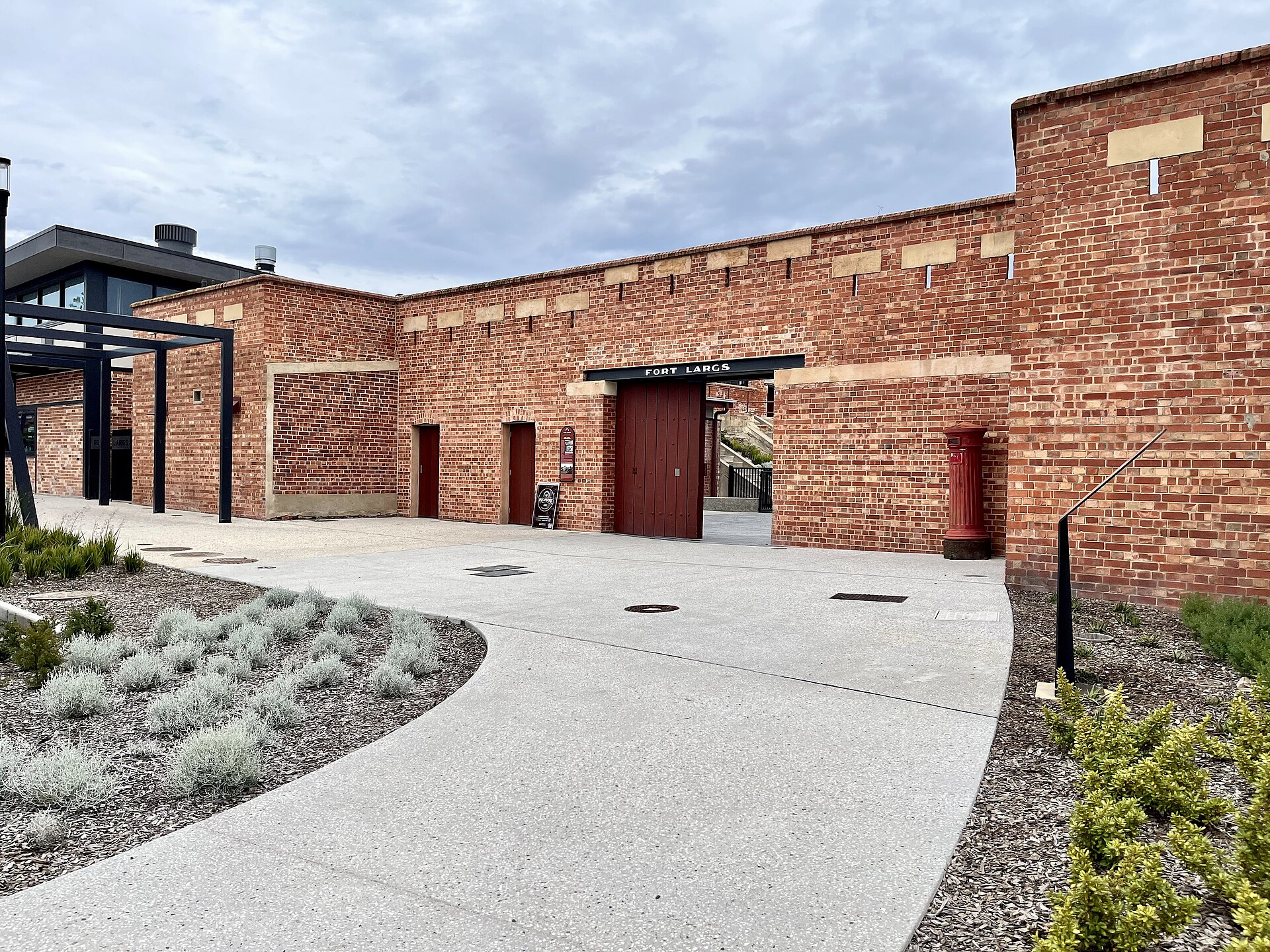
Largs is the more modern of the pair, the fort whose superior guns took over the primary defence of Port Adelaide, and exploring it gives a sense of the advances that made it so much more capable than its predecessor. Its earthworks, its emplacements, and its buildings speak of a fortress built at the cutting edge of its age, and of the many uses to which it was later put.
View the exact location on Google Maps
Approaching the fort with its neighbour in mind enriches the whole experience. The two fortresses, so close together yet belonging to slightly different technological moments, together form a kind of open-air lesson in the history of coastal defence, and a day spent visiting both offers a rounded picture of how South Australia guarded its shores in the anxious decades of the nineteenth century.
The fort’s long history as a police academy adds another dimension to a visit, a reminder that this place has meant different things to different generations. Where colonial gunners once trained, police cadets later learned their trade, and the layers of this history are part of what makes the site so intriguing to explore and to understand.
Standing at Fort Largs, with the sea beyond and neighbouring Glanville just down the coast, you are visiting a key piece of South Australia’s defensive history, the fort that took the lead in guarding Port Adelaide and that went on to serve the state in ways its builders never dreamed. It is a fortress of technology and reinvention, and a rewarding destination for anyone drawn to the story of how this coast was defended.
Castles Nearby
If Fort Largs has deepened your interest in the coastal defences of South Australia, two more forts make natural companions to explore:
You May Like
Kingston on Norfolk Island: The Beautiful Fortress of a Feared Penal Colony