On the western side of the narrow entrance to Port Phillip, where the little seaside town of Queenscliff looks across the water toward Point Nepean, stands one of the most complete and impressive coastal fortresses in Australia. Fort Queenscliff crowns Shortland’s Bluff, its bluestone walls, its dry moat, and its curious black lighthouse guarding the same treacherous channel that leads to Melbourne. For well over a century it was the nerve centre of the most heavily fortified harbour in the southern half of the world.
If Point Nepean was one jaw of the trap set at the entrance to Port Phillip, Fort Queenscliff was the other, and more besides. From here the whole system of forts and guns and minefields that guarded the Heads was commanded and coordinated, making Queenscliff not just a battery but the headquarters of an entire defensive network. When the guns of Point Nepean fired the opening shots of two world wars, they did so on orders that came from this fort.
Fort Queenscliff is also unusually beautiful and complete. Where many coastal forts survive only as fragments, this one endures almost whole, with its walls and keep, its guns, its lighthouse, and its parade ground all intact. It has the rare quality of feeling like a real fortress rather than a ruin, a place you can walk through and genuinely understand, and that completeness has made it a treasured museum and a magnet for visitors.
In the pages ahead you will explore this remarkable stronghold, from the anxious colonial years that built it, through its role as the brain of Port Phillip’s defences and its part in the dramatic first shots of two wars, to its long later life as a military college and its present role as one of the finest fortress museums in the country. It is the Gibraltar of the south, and it wears the title well.
In This Article
- Standing Guard at the Heads
- The First Guns on the Bluff
- Becoming a Real Fortress
- The Walls, the Keep, and the Moat
- The Great Guns of Queenscliff
- The Curious Black Lighthouse
- The Brain of a Fortified Port
- The Orders Behind the First Shots
- A Ring of Forts Around the Bay
- The Fort Through Two World Wars
- A School for the Army’s Leaders
- One of the Finest Fortress Museums
- Exploring the Gibraltar of the South
Standing Guard at the Heads
The entrance to Port Phillip is one of the great natural chokepoints of the Australian coast, a narrow gap between two headlands through which all the seaborne trade of Melbourne must pass. The water here is famously dangerous, a churning stretch known as the Rip, and the whole vast bay beyond can be reached only by threading this single perilous gate. Whoever held the Heads held the key to Melbourne.

Fort Queenscliff sits on the western side of this entrance, on a rise called Shortland’s Bluff, from where it commands a sweeping view of the channel and the shipping lanes. Directly across the water lies Point Nepean, and between them the two forts could sweep the entrance with their guns, catching any hostile vessel in a deadly crossfire as it attempted to force the narrow passage into the bay.
This position made Queenscliff a place of immense strategic value. Melbourne, enriched beyond measure by the Victorian gold rush, was one of the wealthiest cities in the British Empire, and all that wealth was reachable only through the Heads. A fort commanding the entrance was therefore a fort commanding the fortunes of the city, a lock upon the door to enormous riches.
Everything about Fort Queenscliff flows from this geography of the Heads. Its guns, its command role, its whole reason for being sprang from the need to guard the one narrow entrance through which an enemy might reach Melbourne. The fort was the western anchor of a defence built around a single, decisive fact of geography, the narrowness of the gate into Port Phillip.
The pairing of Queenscliff and Point Nepean across the narrow entrance was the heart of the whole scheme. Neither fort alone could have sealed the Heads, but together, firing from opposite sides, they could catch a ship in a crossfire from which there was no easy escape. That deadly geometry, two forts and a narrow gap, was what made the entrance to Port Phillip so formidable a barrier to any would-be attacker.
The First Guns on the Bluff
The military story of Shortland’s Bluff began modestly, with local volunteers rather than a grand imperial garrison. In the years around 1860, as the colony of Victoria grew wary of possible attack, a detachment of volunteer artillery formed at Queenscliff, and the first works were raised on the bluff, including a sea wall and an early battery armed with heavy muzzle-loading cannon.

These first guns were manned by local residents, ordinary townsfolk who took up the part-time work of soldiering to defend their coast. There is something appealing about this early chapter, a community arming itself against a distant and uncertain threat, laying the first stones of what would grow into a major fortress on the strength of local effort and colonial anxiety.
The early battery was a simple affair compared to what would come later, but it established the bluff as a place of defence and set the pattern for its future. The position had proven its worth, commanding the entrance to the bay, and it was only a matter of time before the modest volunteer works would be replaced by something far more formidable as the perceived threat grew.
This grassroots beginning gave Fort Queenscliff deep local roots that it never entirely lost. Even as it became a major military installation, the fort remained bound up with the town beside it, and the memory of those first volunteer gunners on the bluff is part of the fort’s long and layered story, a reminder that its origins lay in a community’s determination to guard its own shore.
It is striking to think that so mighty a fortress grew from such humble seeds. The volunteers who first drilled on the bluff could hardly have imagined the walls, keep, and heavy guns that would one day rise around their simple battery. Yet their early efforts proved the value of the position and laid the groundwork, quite literally, for everything that followed on Shortland’s Bluff.
Becoming a Real Fortress
The transformation of the modest volunteer battery into a serious fortress came in the closing decades of the nineteenth century, driven by the expert advice of leading military engineers who surveyed the colony’s defences. Their recommendations set in motion a great expansion at Queenscliff, turning the bluff into a properly engineered stronghold fit to guard the most important harbour in the colony.
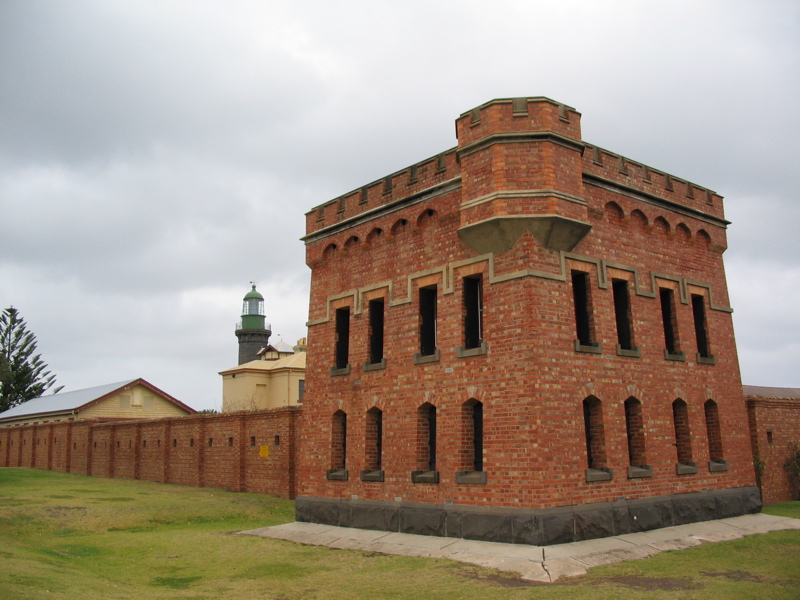
During these years new batteries were built, mounting heavier and more modern guns, and the fort acquired the walls, keep, and dry moat that give it its powerful presence today. This was no longer a simple gun position but a complete fortress, designed according to the best military thinking of the age and built to withstand and deliver serious fire.
The construction reflected the modern philosophy of coastal defence, which favoured strong, low works that could survive bombardment while commanding the approaches with their guns. The walls and keep gave the fort a solid heart, while the batteries were sited to make the most of the bluff’s command over the channel, combining strength and firepower in a carefully considered whole.
By the time this great expansion was complete, Fort Queenscliff had become the anchor of an extraordinary system of defences around the Heads. The bluff that had once carried a handful of volunteer guns now bristled with modern artillery and stood at the centre of a network that would soon make Port Phillip the most heavily fortified port in the entire southern hemisphere.
The scale of the investment reflected how seriously the colony took the defence of its golden capital. Building walls, batteries, a keep, and a moat was an expensive and demanding undertaking, and that the government committed such resources to Queenscliff shows the depth of the fear of naval attack and the value placed on the wealth that flowed through the Heads. The fort was, in every sense, a major statement of colonial resolve.
The Walls, the Keep, and the Moat
One of the things that makes Fort Queenscliff so satisfying to visit is the completeness of its fortifications, the walls, the keep, and the dry moat that together give it the feel of a genuine castle. These were built during the great expansion of the fort, and they survive remarkably intact, allowing visitors to experience the real architecture of nineteenth-century coastal defence.
The keep forms the strong core of the fort, a defensible heart from which the garrison could hold out even if the outer works were threatened. Around the fort runs a dry moat, a ditch designed to make any assault by land difficult and dangerous, forcing attackers into killing ground beneath the walls. It is textbook fortification, adapted to the needs of a coastal battery.
These defences were not mere decoration but practical military architecture, intended to protect the fort against attack from the land side as well as the sea. A coastal fort had to guard against the possibility of an enemy landing nearby and assaulting it from behind, and the walls and moat of Queenscliff were built with exactly that danger in mind, closing off the fort as a self-contained stronghold.
Walking among these works today, you get a rare and vivid sense of how such a fortress was meant to function. The solidity of the walls, the depth of the moat, and the strength of the keep all speak of an age when coastal defence was taken with deadly seriousness, and their survival makes Fort Queenscliff one of the best places anywhere to understand the reality of colonial fortification.
The dry moat in particular repays a close look, for it shows how carefully the designers thought about defence from every direction. Rather than relying on the guns alone, they built the fort to resist a determined assault by infantry, complete with the ditches and walls of a traditional fortress. This attention to all-round defence is part of what makes Queenscliff feel so complete and so genuinely castle-like today.
The Great Guns of Queenscliff
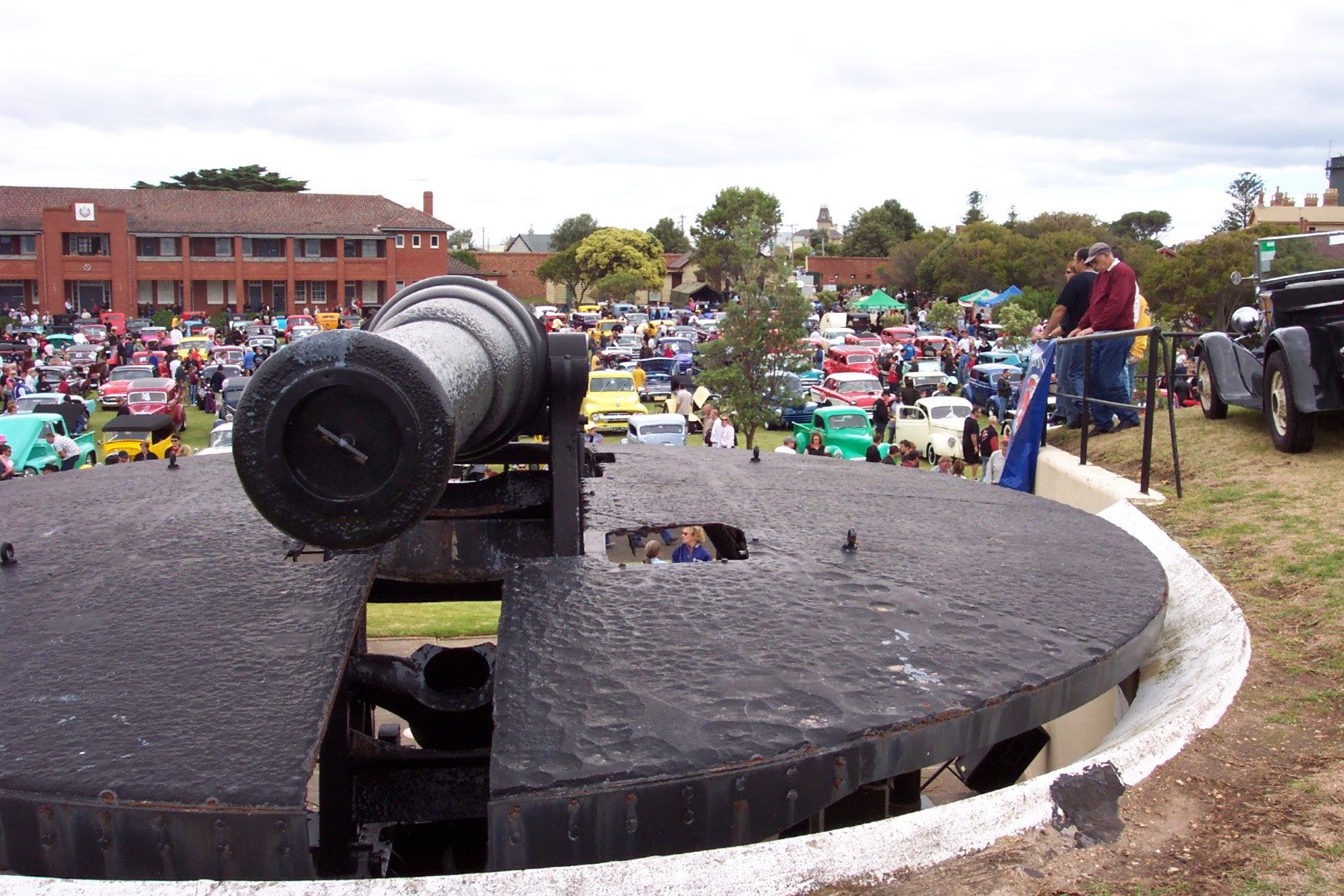
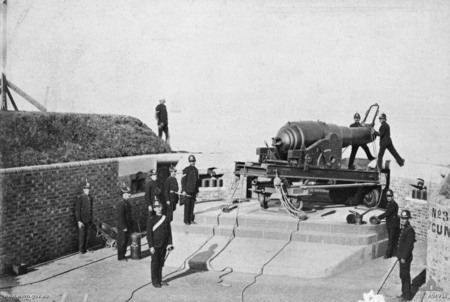
The purpose of all this fortification was to carry guns, and Fort Queenscliff mounted some of the most powerful coastal artillery in the colony. Over the decades its armament evolved from the early muzzle-loading cannon of the volunteer years to heavy rifled guns and finally to modern breech-loading weapons capable of striking a warship far out in the channel.
Among the fort’s most impressive weapons were large breech-loading guns, including one mounted on a disappearing carriage that allowed it to rise up to fire and then sink back down behind its protecting works to reload out of an enemy’s sight. This ingenious arrangement was the height of coastal gunnery, letting a crew serve its gun while remaining shielded for most of the firing cycle.
These guns were sited to command the entrance to the bay, positioned so that their fire would fall exactly where an enemy vessel would be most exposed as it tried to run the Heads. Combined with the guns of Point Nepean across the water, they created a formidable crossfire that no hostile captain could hope to survive unscathed, turning the entrance into a genuine killing ground.
Serving such weapons demanded skill and constant practice from the gunners of Queenscliff, who drilled endlessly against the day an enemy might appear. The great guns were the whole point of the fortress, and everything else, the walls, the magazines, the command structure, existed to keep them firing. In their silent survival today, these guns still speak of the serious purpose for which the fort was built.
The evolution of the fort’s armament over the decades mirrored the relentless advance of military technology. Each new generation of gun was heavier, longer-ranged, or cleverer than the last, and keeping the fort’s firepower current was a constant task. That the defenders went to such trouble underlines how real the threat felt, and how determined they were that the guns of Queenscliff should never be outmatched by the ships they might face.
The Curious Black Lighthouse
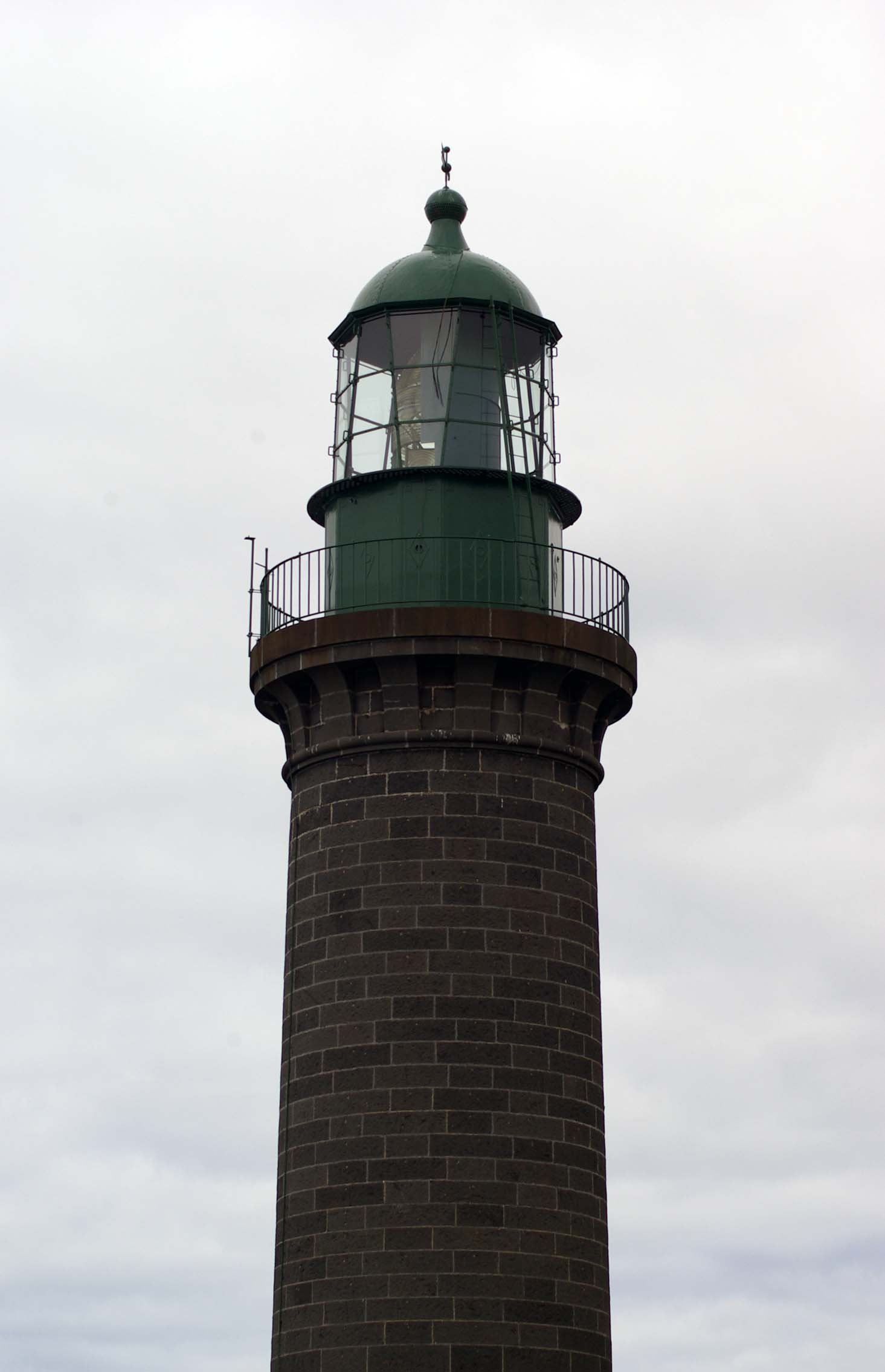
Fort Queenscliff possesses one of the most distinctive features of any fort in Australia, a black lighthouse rising from within its walls. Painted a striking dark colour that sets it apart from the usual white towers, this lighthouse is a genuine rarity, and it gives the fort an unmistakable silhouette against the sky above the Heads.
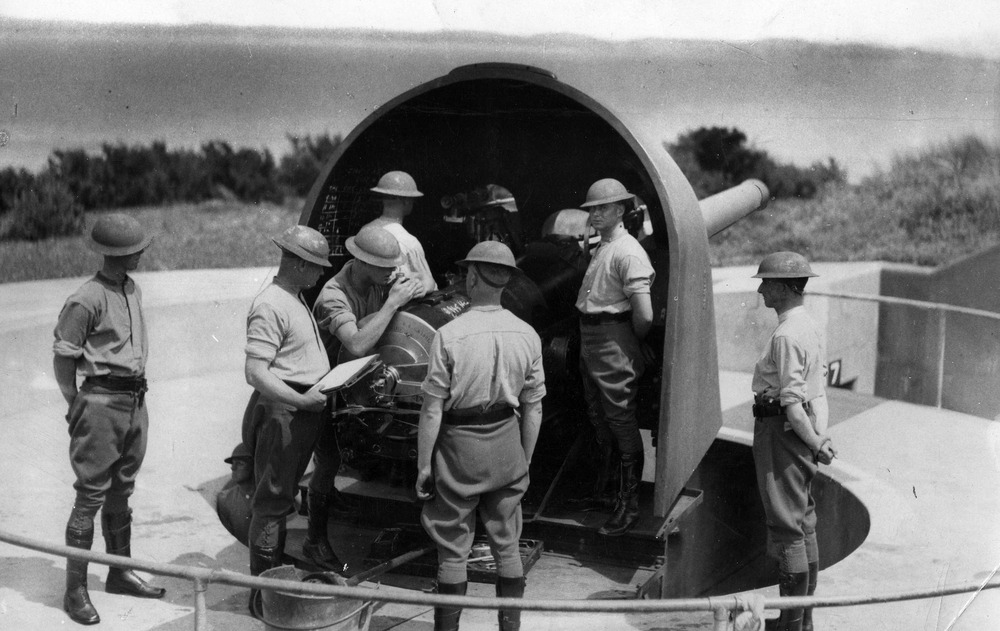
The presence of a working lighthouse inside a military fortress speaks to the dual character of this stretch of coast, at once a shipping gateway to be guided and a strategic entrance to be defended. The lights at Queenscliff helped vessels find the safe passage through the dangerous waters of the Rip, guiding friendly ships even as the fort’s guns stood ready to destroy hostile ones.
The black lighthouse and its companion formed part of a system of navigational aids that helped ships thread the treacherous entrance to the bay. That such aids should be woven into the very fabric of the fort is a reminder that the Heads were as much a place of commerce and seafaring as of war, and that the fort served the shipping it guarded as well as guarding against it.
For visitors today, the black lighthouse is one of the enduring images of Fort Queenscliff, a picturesque and unusual landmark that captures the fort’s peculiar blend of military and maritime purpose. Rare among lighthouses for its dark colour and its setting within a fortress, it is a fitting emblem for a place that guarded and guided in equal measure at the gateway to Melbourne.
Lighthouses of this dark colour are genuinely uncommon, and its presence within a fort makes it more unusual still. The combination gives Queenscliff a landmark quite unlike anything at the other forts around the bay, and for many visitors the black tower is the first thing they remember about the place, an emblem of the fort’s distinctive character at the gateway to Melbourne.
The Brain of a Fortified Port
Fort Queenscliff was more than a single battery; it was the command centre of an entire defensive system that ringed the entrance to Port Phillip. From here the whole network of forts, guns, and minefields around the Heads was coordinated, making Queenscliff the brain that directed the defence of the most fortified harbour in the southern hemisphere.

That network was extraordinary in its extent. Around the entrance and out into the bay stood a whole constellation of fortifications, from the great forts on either side of the Heads to smaller works on islands and shoals, together with minefields and other defences that could be deployed across the shipping channels. By its peak, Port Phillip was defended more heavily than any other port in the southern half of the world.
Commanding such a system required Queenscliff to serve as a headquarters as well as a fortress, a place where the threads of the whole defence were gathered and directed. Orders issued from here governed the actions of the other forts, and it was this command role that would give Queenscliff its part in one of the most famous episodes in Australian military history.
The fort’s position as the nerve centre of Port Phillip’s defences elevated it above the other works around the Heads. It was not merely one strong point among many but the place from which the entire system was run, a distinction that reflected its command of the western entrance and its role as the coordinating heart of an unmatched concentration of coastal firepower.
This concentration of command also made Queenscliff a busy and populous place, home to the staff and soldiers needed to run a major headquarters as well as a fighting fort. The fort was a small military community in its own right, with all the barracks, drill halls, and support buildings that such a role required, and much of that fabric survives today to tell the story of the many people who served here.
The Orders Behind the First Shots
The most celebrated moment in the story of the Heads belongs, in a sense, as much to Queenscliff as to Point Nepean. When the First World War broke out and a German ship attempted to flee the bay, it was a gun at Point Nepean that fired the shot across her bow, remembered as the first Allied shot of the war. But the order to fire came from the command at Fort Queenscliff.
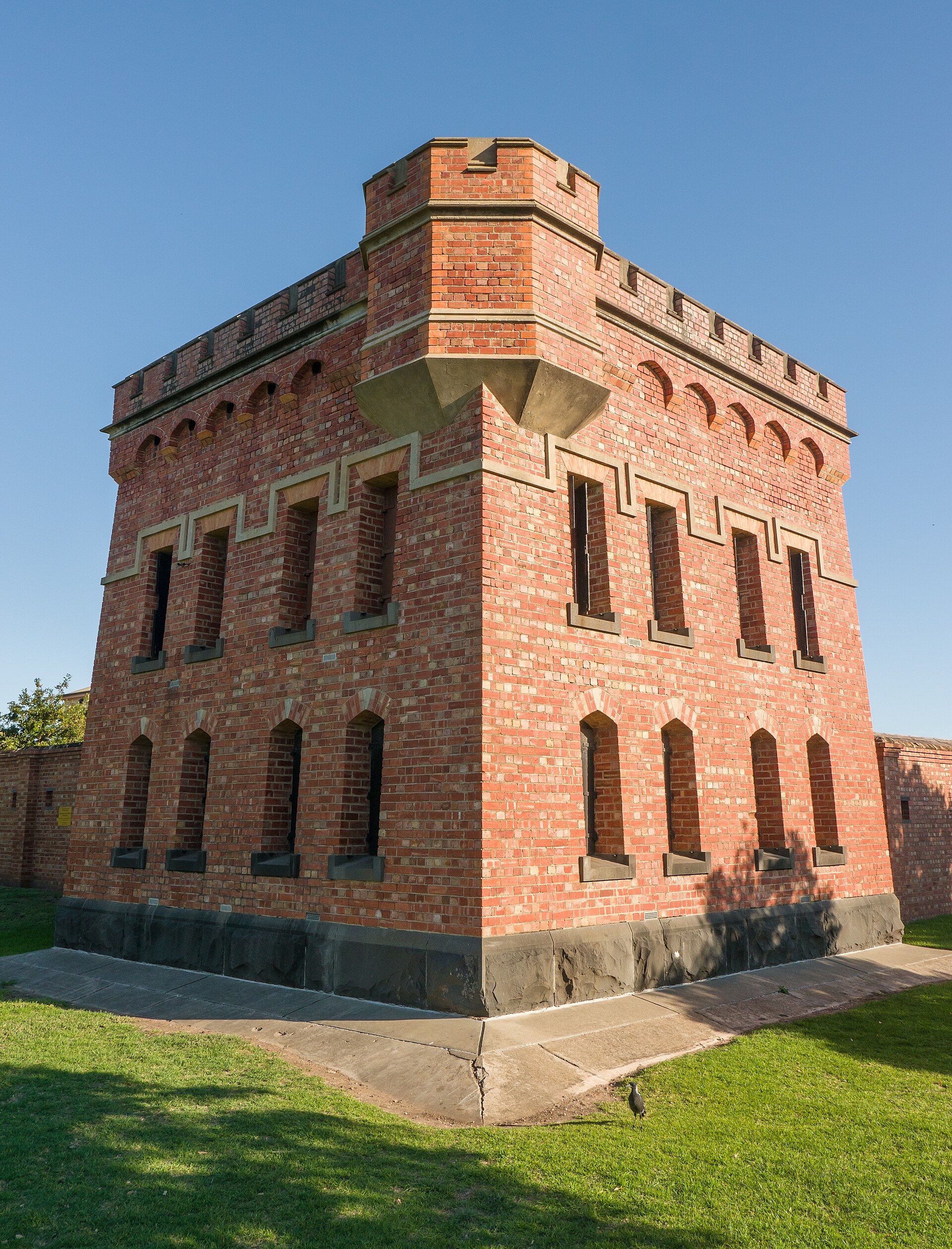
This is the fort’s proudest claim, its role as the commanding authority behind those famous opening shots. As the headquarters of the Port Phillip defences, Queenscliff directed the actions of the guns around the Heads, and so it was from here that the decision was made to stop the fleeing enemy vessel at the very outset of the war.
Remarkably, the pattern repeated itself a generation later. When the Second World War began, the guns at the Heads again fired an opening shot at a vessel in the entrance, and once more Queenscliff stood at the centre of the command that governed the defence. The fort thus shares in the extraordinary distinction of the Heads having opened both world wars.
This command role gives Fort Queenscliff a special place in the national memory. It was not the gun itself but the brain behind the gun, the headquarters from which the defence of Port Phillip was directed at the dramatic outbreaks of two global conflicts. Few forts can claim so central a part in such famous moments, and Queenscliff wears the distinction proudly.
There is a neat historical symmetry in the idea that the same command, at the same fort, presided over the opening shots of both the twentieth century’s great wars. It ties Queenscliff to the very hinge points of modern history, moments when the world tipped into conflict, and it gives this quiet fortress on the Victorian coast a claim to global significance out of all proportion to its remote setting.
A Ring of Forts Around the Bay
Fort Queenscliff did not stand alone but at the head of a whole ring of fortifications that guarded the entrance to Port Phillip and the waters beyond. Across the channel stood Point Nepean, and scattered around the entrance and out into the bay were other works, from island batteries to forts built on artificial foundations in the middle of the shipping channels.
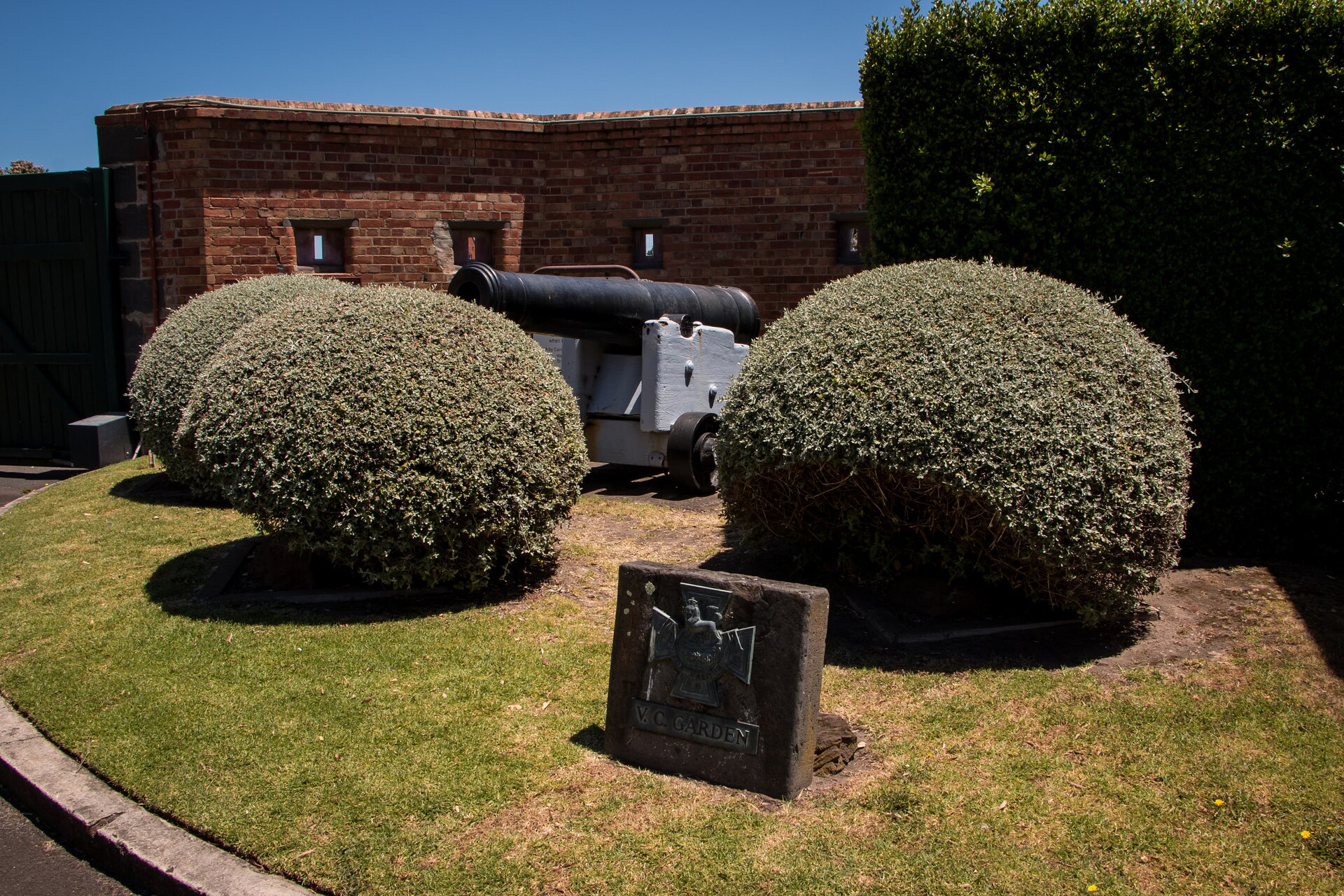
Some of these outlying forts were remarkable feats of engineering in their own right, raised on shoals and islands to command the channels that ships had to follow through the bay. Together with minefields and other defences that could be laid across the water, they formed a layered system that an enemy would have to penetrate not once but many times to reach Melbourne.
The purpose of this elaborate arrangement was to leave no safe path for a hostile vessel. Even a ship that somehow survived the crossfire at the Heads would find itself funnelled into channels covered by yet more guns and sown with mines, a gauntlet designed to make the passage to Melbourne suicidal for any attacker. It was defence in depth on a grand scale.
Coordinating this whole system fell to Queenscliff, which is what made the fort so much more than a single battery. To grasp the fort fully is to see it as the head of this ring of defences, the commanding point of a concentration of coastal firepower unmatched anywhere in the southern hemisphere, guarding the approaches to one of the empire’s richest cities.
The survival of parts of this wider system, alongside Queenscliff itself, allows visitors and historians to appreciate the full ambition of the scheme. It was not a single fort but an integrated web of defences, and understanding Queenscliff means understanding its place at the head of that web, directing a concentration of firepower assembled to guard one of the most valuable prizes in the colonial world.
The Fort Through Two World Wars
Beyond those famous first shots, Fort Queenscliff served steadily throughout both world wars as the operational heart of the defences guarding Melbourne’s harbour. Through the anxious years of each conflict, the fort remained fully active, its guns manned and its command function vital to the protection of a port that mattered greatly to the war effort.

During these years the defences around the Heads were maintained and strengthened to meet the threats of the day, and Queenscliff continued to coordinate the whole system. The fear that had built the fort in colonial times took on new and sharper forms in the age of world war, and the old fortress found its purpose renewed as the coast faced genuine danger.
The Second World War in particular brought the war closer to Australian shores than ever before, and the defence of Port Phillip took on real urgency. Queenscliff, as the command centre, stood at the heart of the effort to guard the entrance against any threat, its long experience of watching the Heads suddenly more relevant than it had been for decades.
The fort continued its coastal defence role until the years just after the Second World War, when the changing nature of warfare finally made fixed coastal artillery obsolete. By then Fort Queenscliff had served as the guardian of the Heads across the better part of a century, through peace and through two of the greatest conflicts in human history, a record of continuous service few forts could match.
For the townspeople of Queenscliff, living beside an active military fort through two world wars must have been a constant reminder of the dangers of the age. The presence of the guns and the garrison wove the anxieties of global conflict into the daily life of the little seaside town, binding the community ever more closely to the fortress that had grown up in its midst.
A School for the Army’s Leaders
When the age of coastal artillery ended, Fort Queenscliff found a distinguished second life as a place of military education. Rather than being abandoned, the fort became home to a staff college where the army trained its officers, turning the old fortress into a school for the leaders of the nation’s forces. For many years, promising officers passed through its gates to learn the higher arts of their profession.

This educational role kept the fort in active military hands long after its guns had fallen silent, and it wove Queenscliff into the careers of generations of army officers. The fortress that had once guarded the Heads now shaped the minds that would guide the army, a fitting new purpose for a place so steeped in military tradition and history.
The staff college era also helped preserve the fort, keeping it maintained and in use rather than left to decay. As a working military establishment, Queenscliff remained cared for and intact, its buildings and defences serving the needs of education even as they stood as monuments to an earlier age of coastal war. The continuity of military use was a large part of why the fort survives so complete today.
For the officers who studied here, Fort Queenscliff must have been an inspiring setting, a place where the weight of military history was tangible in the walls and guns around them. Learning the profession of arms within a genuine fortress, at the gateway to Melbourne, lent their studies a resonance that few other locations could provide, and tied the army’s future to its past in a very direct way.
In time the army’s higher education would move elsewhere, but the college years left their mark on the fort and on the many officers who had studied within its walls. The association with military learning added yet another layer to the fort’s identity, so that its story encompasses not only the defence of the Heads but also the training of the minds that would lead the army in later generations.
One of the Finest Fortress Museums
Today Fort Queenscliff is celebrated as a museum, one of the finest of its kind in the country, telling the story of coastal defence through a fortress preserved almost whole. The museum gathers together the guns, the buildings, and a rich collection of objects that bring the fort’s long history to life, from its colonial beginnings to its wars and its years as a college.

The completeness of the fort is what makes the museum so special. Visitors can walk through real fortifications, see genuine guns in their emplacements, and explore the walls, keep, and moat of an authentic nineteenth-century fortress, rather than piecing together the past from fragments. This authenticity gives a visit a power that reconstructed or ruined sites cannot match.
Among the museum’s treasures are objects that connect the fort to the wider sweep of military history, including items associated with notable soldiers and with the daily life of the garrison. These collections add a human dimension to the stone and iron, reminding visitors that the fort was home to real people whose service and stories are part of its meaning.
The recognition the fort has received as a museum reflects the care that has gone into preserving and presenting it. Fort Queenscliff draws many thousands of visitors each year, including many school groups, ensuring that its history reaches new generations. As a place to understand coastal defence, it has few equals, a complete fortress kept alive as a window into a vanished age.
The journey from working fortress to celebrated museum was not automatic, and it owed much to the efforts of those who recognised the fort’s significance and worked to preserve and present it. Their care ensured that Queenscliff was saved as a complete and authentic site rather than allowed to decay, and the result is a museum that lets visitors step directly into the world of colonial coastal defence.
Exploring the Gibraltar of the South
Visiting Fort Queenscliff is a rewarding experience for anyone drawn to history, all the more so because the fort survives in such complete condition. Guided tours lead visitors through the fortifications, revealing the walls, the keep, the guns, and the famous black lighthouse, and bringing to life the fort’s long career at the gateway to Melbourne.
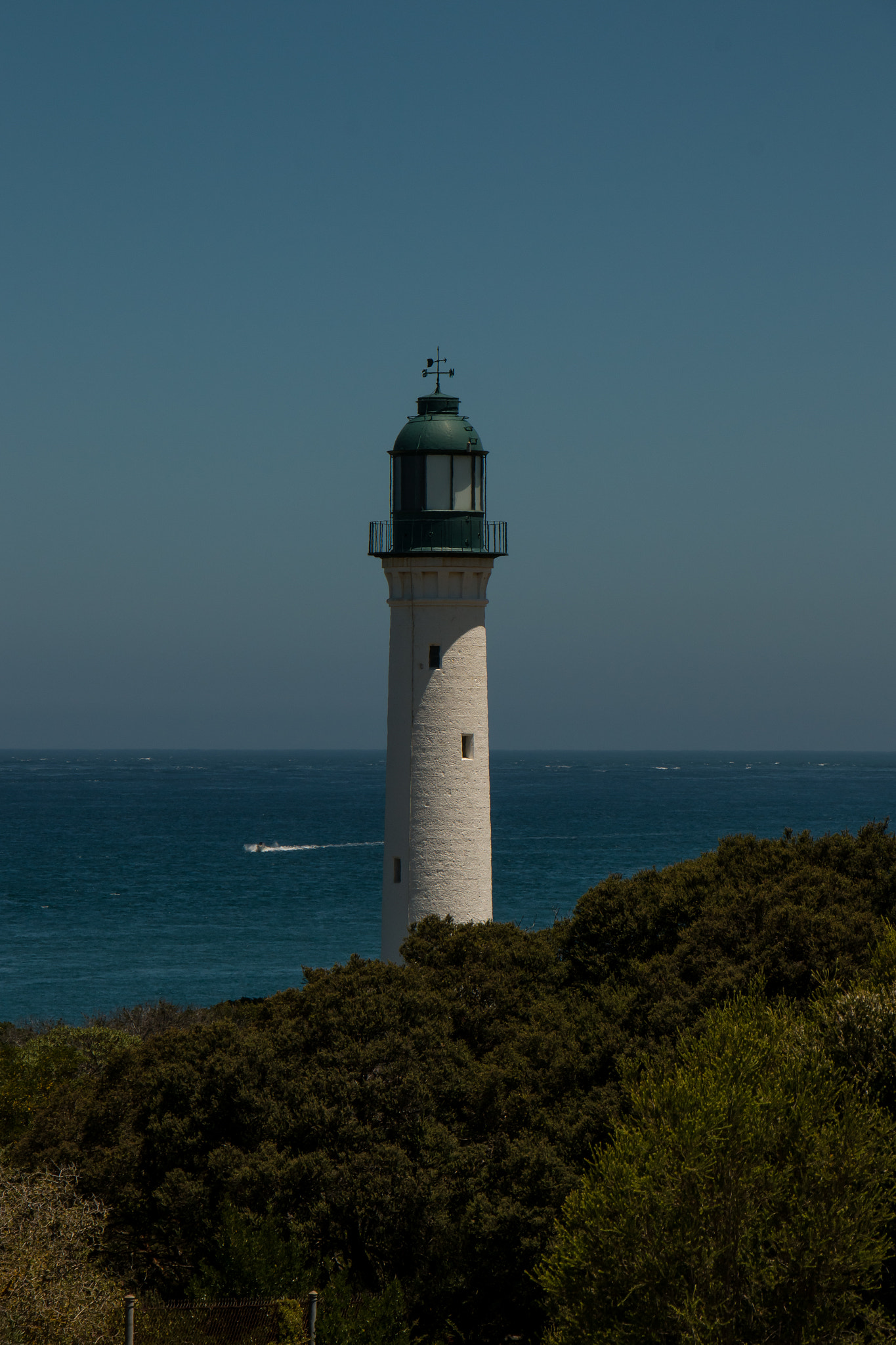
The setting alone is memorable, high on Shortland’s Bluff with sweeping views across the entrance to Port Phillip toward Point Nepean on the far side. From here you can see the whole strategic logic of the fort laid out before you, the narrow channel, the dangerous water of the Rip, and the position that made this bluff worth fortifying so heavily for so long.
Inside the fort, the completeness of the defences lets you truly understand how such a place worked, from the great guns commanding the channel to the walls and moat guarding against assault. It is a chance to walk through a genuine fortress and grasp the reality of coastal defence in a way that few other sites allow, with the added interest of the fort’s role as a command centre and its part in the first shots of two wars.
View the exact location on Google Maps
Take time, too, to enjoy the charming town of Queenscliff that grew up beside the fort, and to reflect on the extraordinary history of this place. Standing within the walls of the Gibraltar of the south, with the black lighthouse above you and the Heads spread out beyond, you are visiting one of the great fortresses of Australia, a stronghold that guarded the richest city in the colony and stood at the centre of the most fortified harbour in the southern world.
Castles Nearby
If Fort Queenscliff has captured your interest in the defences of Port Phillip, two more of Australia’s coastal fortresses make natural next visits:
You May Like
Kingston on Norfolk Island: The Beautiful Fortress of a Feared Penal Colony


One thought on “Fort Queenscliff: The Gibraltar of the South at the Heads of Port Phillip”