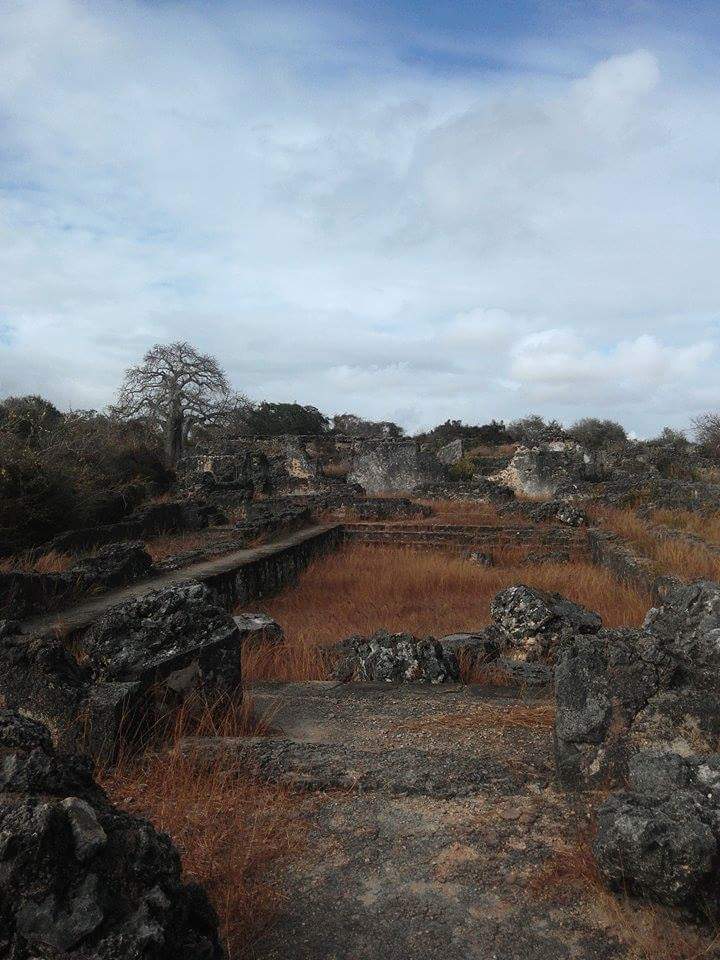
Picture yourself stepping off a small wooden boat onto a low, green island just off the coast of southern Tanzania. The water behind you is the colour of turquoise glass, mangroves crowd the shoreline, and ahead, half-swallowed by grass and baobab trees, stand the coral-stone ruins of what was once one of the richest cities in the medieval world. This is Kilwa Kisiwani, and for roughly five centuries it was the beating commercial heart of the East African coast.
You may never have heard its name, and that is part of what makes it so remarkable. Long before European ships rounded the Cape of Good Hope, Kilwa was minting its own coins, trading gold that came from deep in the African interior, and receiving merchants from Arabia, Persia, and India. The Moroccan traveller Ibn Battuta, who had seen the great cities of his age, visited in 1331 and came away deeply impressed. When you walk among these ruins, you are walking through the wreckage of a civilisation that connected the gold mines of Zimbabwe to the ports of the Indian Ocean.
In this guide you will trace Kilwa’s whole arc, from a modest fishing settlement to a sultanate that controlled the gold trade, through its magnificent stone mosques and palaces, its brutal conquest by the Portuguese, its long Omani afterlife, and its eventual decline into the quiet, haunting ruin you can visit today. Along the way you will get a real sense of why UNESCO placed this island on its World Heritage list and why archaeologists still argue about what happened here.
A quick word before you set out, whether in person or in imagination. Kilwa’s story is not a simple tale of a golden age followed by decline. It is a layered history of African enterprise, Indian Ocean connection, foreign conquest, and the darker trade in human beings, all stacked in the same few acres of coral stone. Holding all of that together, the splendour and the shadow, is what makes an honest visit to Kilwa so rewarding and so quietly moving.
In This Article
- A Civilisation Carried on the Monsoon Winds
- How a Fishing Island Became a Sultanate
- The Gold Road That Made Kilwa Rich
- Standing Inside the Great Mosque of Kilwa
- Husuni Kubwa: A Sultan’s Palace on the Cliff
- A City That Minted Its Own Money
- When Ibn Battuta Came to Kilwa
- Daily Life in a Coral-Stone City
- 1505: The Year the Portuguese Arrived
- The Gereza and the Age of Foreign Masters
- The Omani Era and the Slow Fade
- Rediscovery and a Place on the World’s List
- Visiting Kilwa Kisiwani Today
A Civilisation Carried on the Monsoon Winds
To understand Kilwa, you first have to understand the highway it sat on, and that highway was the wind. For most of the year the monsoon blows in a predictable rhythm across the Indian Ocean: from the northeast between roughly December and March, then reversing to blow from the southwest through the summer. Sailors learned this pattern thousands of years ago, and it turned the ocean into something closer to an inland sea, a space you could cross and return from within a single year if you timed it right.

That reliability gave birth to the Swahili coast, a chain of trading towns strung along the East African shoreline from what is now Somalia down to Mozambique. These were not colonies of some foreign power. They were African cities, built by African people who spoke Swahili, a Bantu language that absorbed Arabic, Persian, and later Portuguese words the way any trading tongue does. The people were overwhelmingly Muslim, cosmopolitan, and comfortable moving between worlds.
When you visit Kilwa, keep this context in mind. The city was not an accident and not an outpost. It was one node in a sophisticated network that stretched from the interior of Africa out to Arabia, the Persian Gulf, the coast of India, and ultimately to China. What made Kilwa special was not that it traded, but what it managed to control.
It helps to abandon the old idea that Africa’s coast simply waited passively for outsiders to arrive. The Swahili towns were active shapers of their own trade, setting terms, extending credit, and deciding who got access to the interior. Foreign merchants depended on local hosts and middlemen, married into local families, and often settled permanently, which is why the culture that emerged was genuinely blended rather than imported. Kilwa was the most successful expression of this self-directed, outward-facing African urbanism.
How a Fishing Island Became a Sultanate
The origins of Kilwa are wrapped in a mixture of archaeology and legend, and the two do not always agree. According to the Kilwa Chronicle, a later account written down by the city’s own elite, the town was founded around the end of the tenth century by Ali ibn al-Hasan, a prince said to have come from Shiraz in Persia. The story tells of him buying the island from a local mainland ruler, then cleverly securing it by having the connecting channel dug out so it could not easily be retaken.
Historians treat the Shirazi origin story with caution. The archaeology suggests a settlement that was African in character from the beginning, growing organically from a modest fishing and farming community rather than being planted by foreign royalty. What the legend does capture accurately is the sense of a founding moment, a point when Kilwa shifted from an ordinary coastal village into something with ambitions.
By the twelfth and thirteenth centuries those ambitions were being realised. A new ruling dynasty, the Mahdali, took power, and under them Kilwa reached for the prize that would define it. That prize lay hundreds of miles to the south, at a place called Sofala, and whoever controlled the trade through Sofala controlled one of the great flows of wealth in the medieval world: gold.
What let Kilwa outcompete its neighbours was probably a combination of location, timing, and shrewd leadership. Its island setting gave it natural defences and a fine harbour, while its rulers proved willing to invest in the infrastructure of trade and to project power southward when opportunity appeared. Cities like Mombasa and Zanzibar were rivals, but for a crucial couple of centuries none of them matched Kilwa’s grip on the one commodity that mattered most, and that grip is what turned a promising town into a genuine regional power.
The Gold Road That Made Kilwa Rich
Deep in the interior of southern Africa, in the highlands of what is now Zimbabwe, lay rich deposits of gold. That gold was mined and worked by the Shona kingdoms, including the state centred on Great Zimbabwe, and it made its way down river valleys and overland trails to the coast, emerging at the port of Sofala on the Mozambican shore. Whoever sat at Sofala’s outlet could tax and channel this precious stream.
Kilwa’s masterstroke, achieved sometime in the thirteenth century, was to gain control over Sofala and the gold trade that ran through it. Suddenly a modest island city held the key to the single most valuable commodity moving along the entire coast. Gold from the African interior now flowed north through Kilwa’s warehouses before continuing out across the Indian Ocean, and a share of it stuck to Kilwa’s fingers on the way.
The wealth this generated is written into the very stones of the city. It paid for the expansion of the Great Mosque, the construction of a cliff-top palace, and the minting of coins. When later Portuguese chroniclers described Kilwa, they wrote of a place of astonishing prosperity, its houses of coral stone, its merchants dripping with silk and gold. That prosperity had a single, unglamorous foundation: it was a middleman city, and it had positioned itself at the exact chokepoint of the gold road.
It is worth pausing on how indirect this wealth was. Kilwa’s merchants did not, for the most part, mine gold or even travel to the mines. They controlled a bottleneck, and control of a bottleneck can be as lucrative as control of a resource. The whole city was, in a sense, a toll gate dressed in coral stone, and its prosperity depended entirely on keeping the gold flowing through its particular gate rather than some rival’s. That dependence was Kilwa’s great strength and, ultimately, its fatal weakness.
None of this happened in isolation from the interior. The Shona states that supplied the gold were themselves sophisticated polities, and the relationship between coast and interior was a two-way commercial partnership, not a simple extraction. Beads, cloth, and coastal goods travelled inland in exchange for gold and ivory, weaving the highlands of the far interior into the same Indian Ocean economy that touched Arabia and India. Kilwa sat at the ocean end of a trade route that reached hundreds of miles into the African heartland.
Standing Inside the Great Mosque of Kilwa
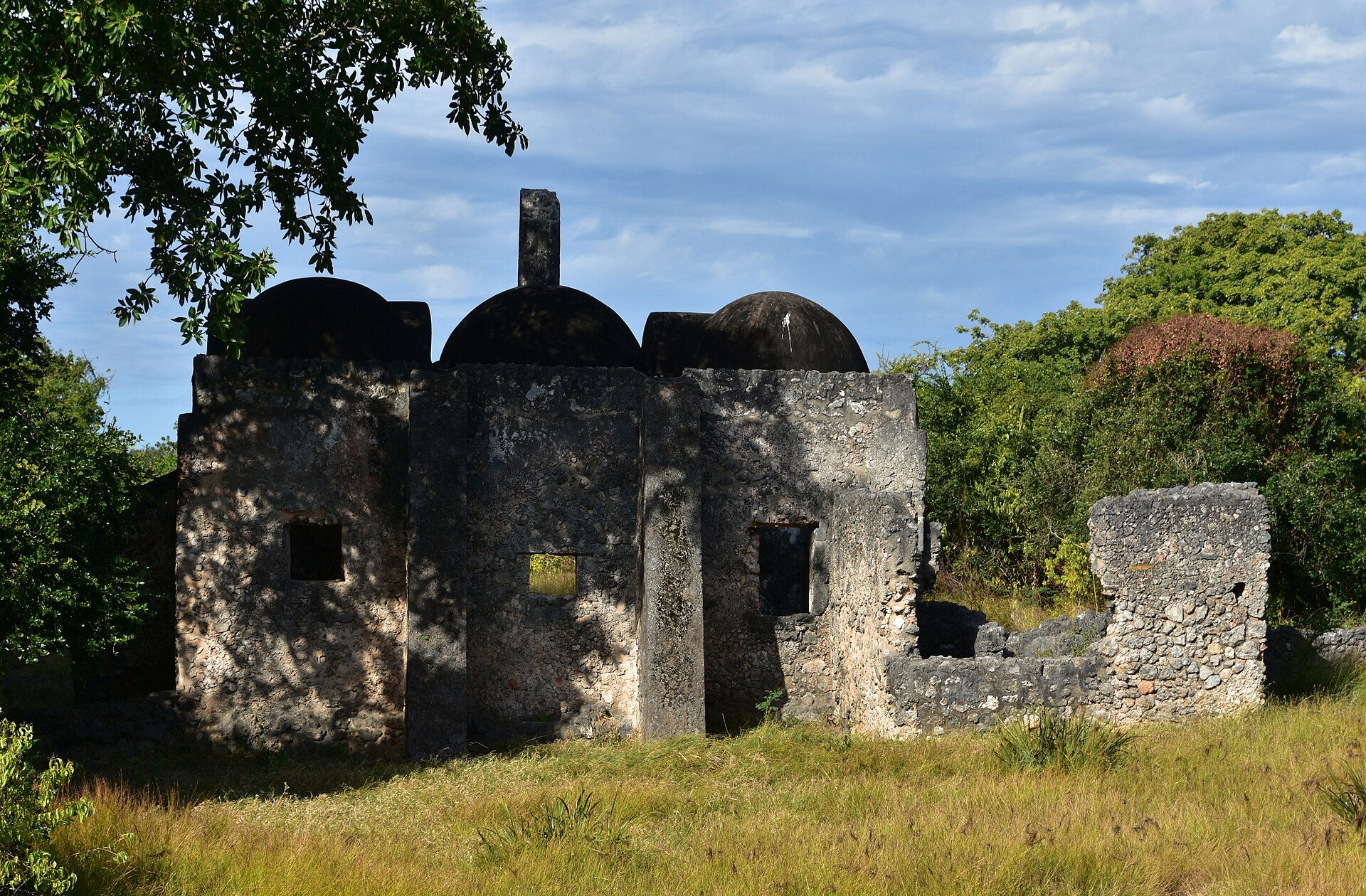
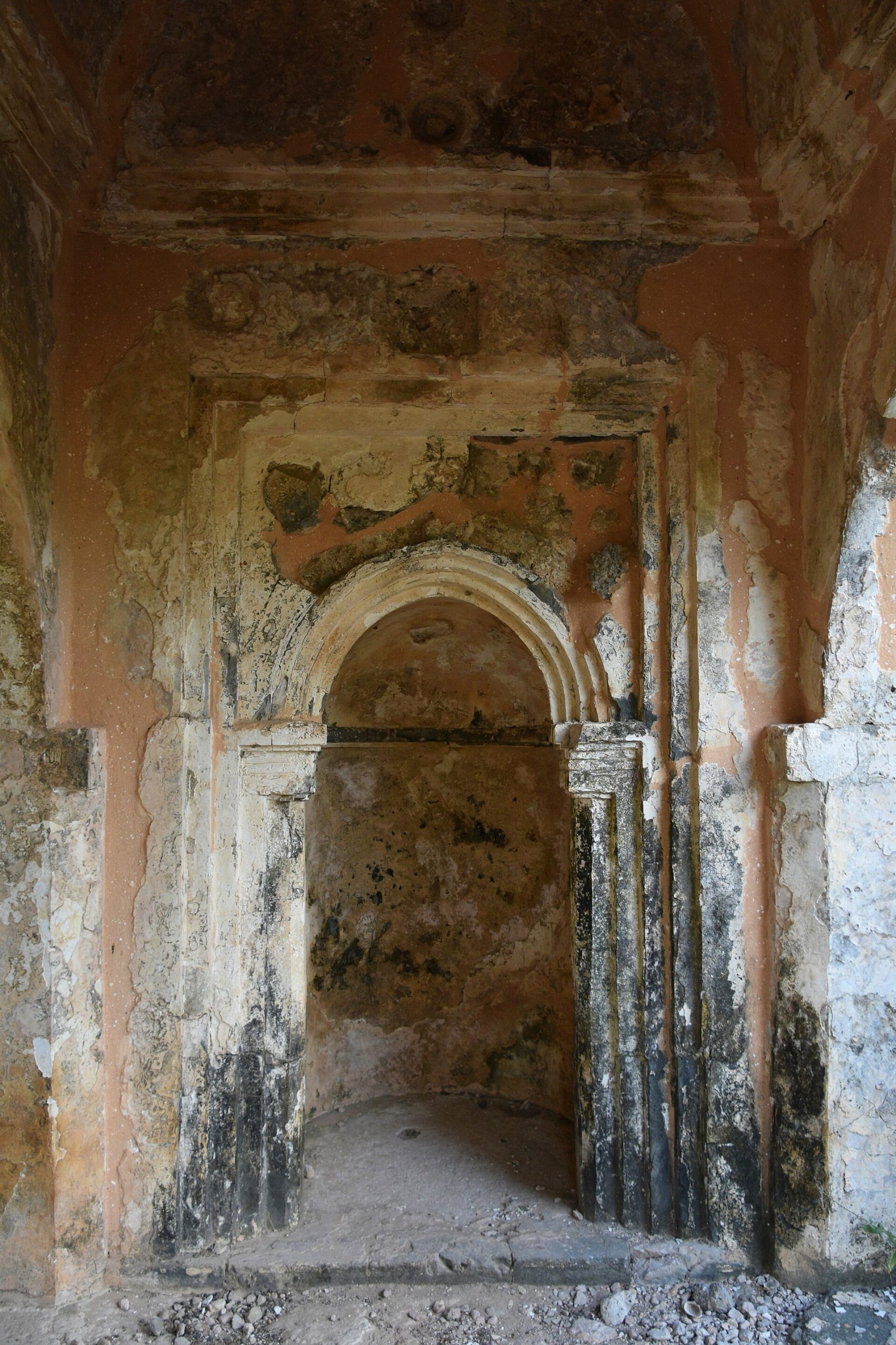
Of everything that survives on the island, the Great Mosque is the piece that most rewards a slow, careful visit. It is one of the earliest surviving mosques on the East African coast, with its oldest sections dating back to perhaps the eleventh century, and it was expanded over the following centuries as the city grew rich. To stand inside it is to stand inside the accumulated ambition of generations.
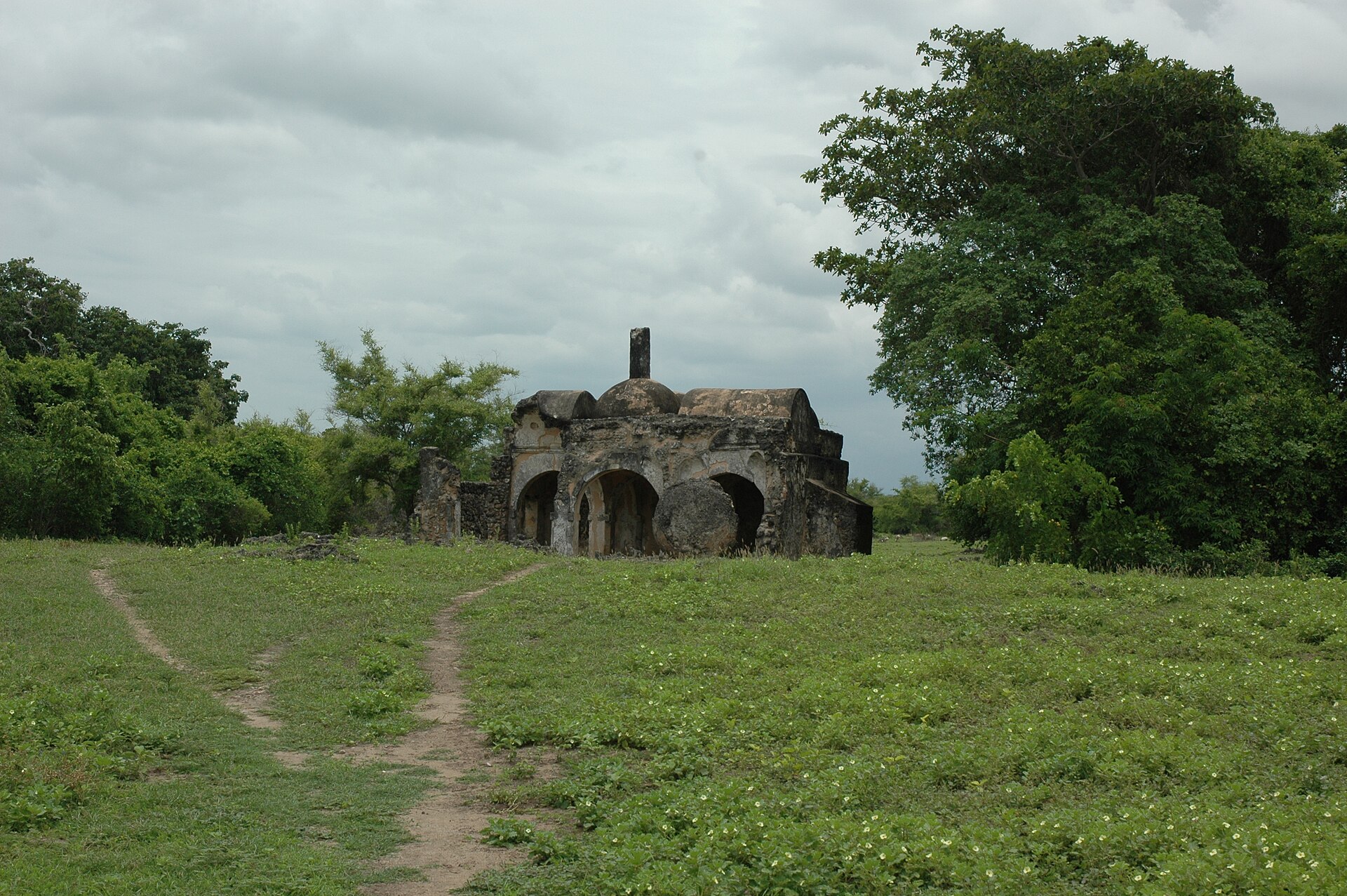
The building is made of coral stone, quarried from the reefs and set in lime mortar, a construction method typical of the Swahili coast. What makes the Great Mosque extraordinary is its roofing. The southern extension, built during Kilwa’s golden age, is covered by a forest of domes and barrel vaults supported on columns, an ambitious and technically demanding design for its time and place. Much of it later collapsed, but enough remains to read the intention.
Walk slowly here and notice how the light falls. These were not merely functional buildings; they were statements. A city that could raise a vaulted, domed mosque of this scale was announcing its wealth and its piety to every visiting merchant. The mosque told anyone who entered that Kilwa was a serious place, a proper Islamic city on a par with the great ports of Arabia and the Gulf.
Archaeologists have been able to read the mosque like a book, with different phases of construction stacked on top of one another. The earliest phase was relatively modest, and each later expansion reflects a surge of confidence and cash, so the building effectively charts the city’s economic history in stone. The collapse and rebuilding of parts of the roof also record moments of difficulty, reminding you that even at its height Kilwa faced setbacks and had to muster the resources to recover from them.
Husuni Kubwa: A Sultan’s Palace on the Cliff
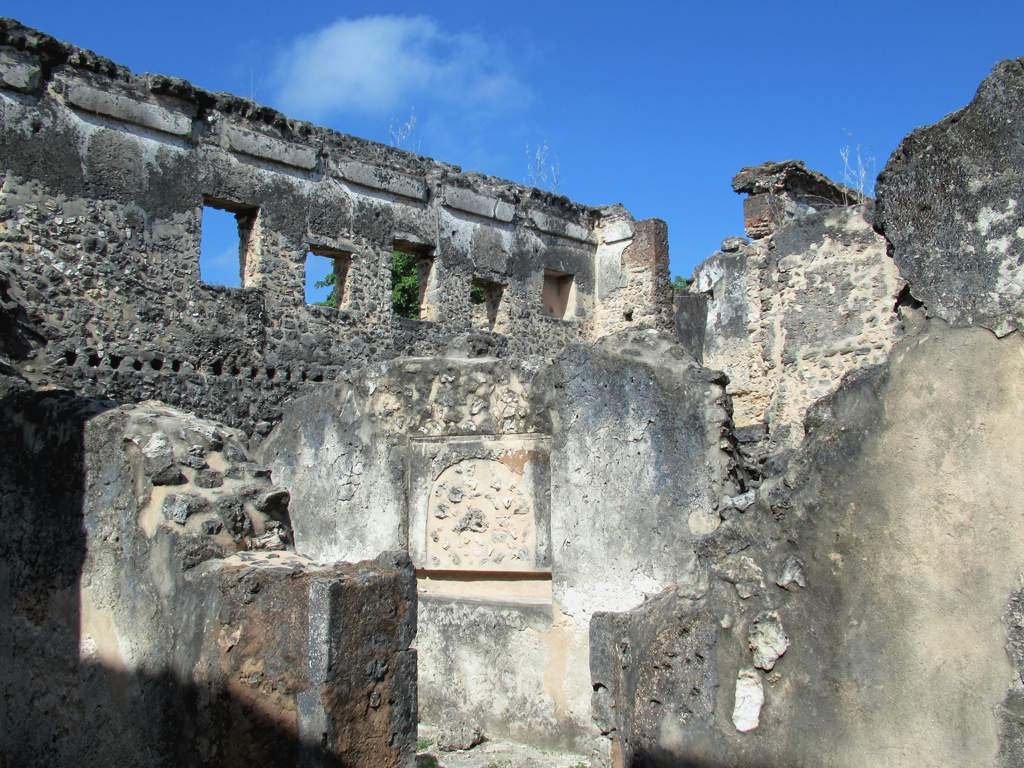
A short distance from the main town, on a bluff overlooking the sea, stand the ruins of Husuni Kubwa, the great palace complex built in the early fourteenth century under Sultan al-Hasan ibn Sulaiman. If the Great Mosque expressed Kilwa’s faith and communal pride, Husuni Kubwa expressed the raw ambition of its rulers, and it is one of the most remarkable secular buildings of medieval Africa.
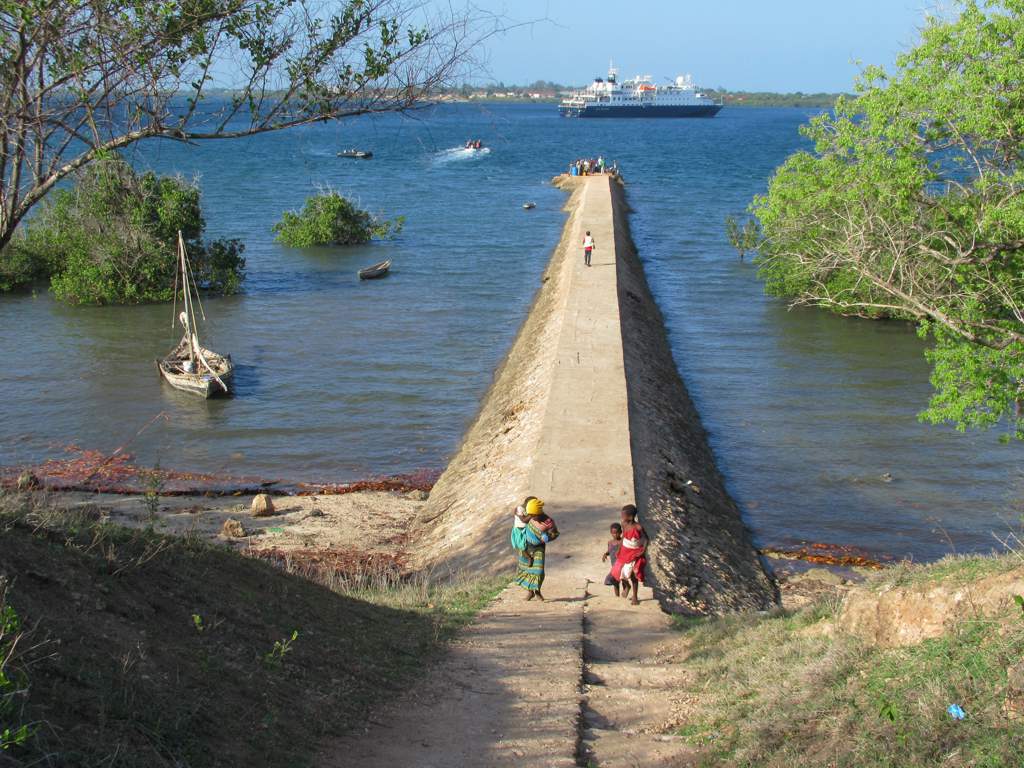
The complex is enormous and sprawling, with well over a hundred rooms arranged around courtyards, and it included features that speak of real luxury. There was a large audience court, domestic quarters, and, most strikingly, an octagonal bathing pool, a place where the sultan and his household could escape the coastal heat. Adjacent to the palace was a vast commercial section, apparently intended as a warehouse and trading hall, blurring the line between royal residence and business headquarters.
There is a poignancy to Husuni Kubwa, because it may never have been fully finished or long occupied. It seems to have been built in a burst of confidence and then, for reasons that remain debated, partly abandoned. When you walk its terraces today, with the sea breeze coming off the water and the walls crumbling into the grass, you are looking at a monument to a moment of supreme self-assurance that did not entirely last.
The name itself, Husuni Kubwa, simply means the large fort or large palace in Swahili, with a smaller nearby structure known as Husuni Ndogo. That smaller building is more enigmatic still, an austere walled enclosure whose purpose archaeologists have never conclusively settled, with theories ranging from a market to a barracks to a religious space. Together the two Husuni structures show a ruling class experimenting with monumental architecture on a scale rarely attempted elsewhere on the coast.
A City That Minted Its Own Money
One of the clearest signs of Kilwa’s sophistication is easy to overlook because it is so small: coins. From around the eleventh century, and especially during its heyday, Kilwa minted its own copper coinage, stamped with the names of its sultans. Very few places on the East African coast did this, and it puts Kilwa in rare company as a genuine minting authority rather than merely a user of foreign currency.

These coins have turned up not only across the Swahili coast but as far afield as Great Zimbabwe in the interior and, intriguingly, in northern Australia, carried there presumably by the long tendrils of Indian Ocean trade. Each little disc of copper is a fingerprint of the city’s reach, a physical trace of how far Kilwa’s commercial world extended in every direction.
For a visitor, the coins are worth thinking about because they reframe what the ruins represent. This was not a place of simple barter. It was a monetised, administered economy with a ruling authority confident enough to put its own name on the money that circulated through its markets. That is the mark of a state, not just a market town, and it helps explain why Kilwa punched so far above its physical size.
The dating and sequence of Kilwa’s coins have become one of the main tools archaeologists use to reconstruct the reigns of its sultans, since the coins carry rulers’ names even where written records fall silent. In that sense the humble copper pieces do double duty: they were money in their own time, and they are a chronology for ours. Few other African sites of this period hand historians such a direct line into their political succession, which makes Kilwa unusually legible.
When Ibn Battuta Came to Kilwa
In 1331 the most famous traveller of the medieval Muslim world stepped ashore at Kilwa. Ibn Battuta, the Moroccan scholar who spent decades journeying from West Africa to China, had seen more of the world than almost anyone alive, so his impressions carry real weight. He described Kilwa as one of the most beautiful and well-constructed towns he had encountered, and he was not a man easily impressed.
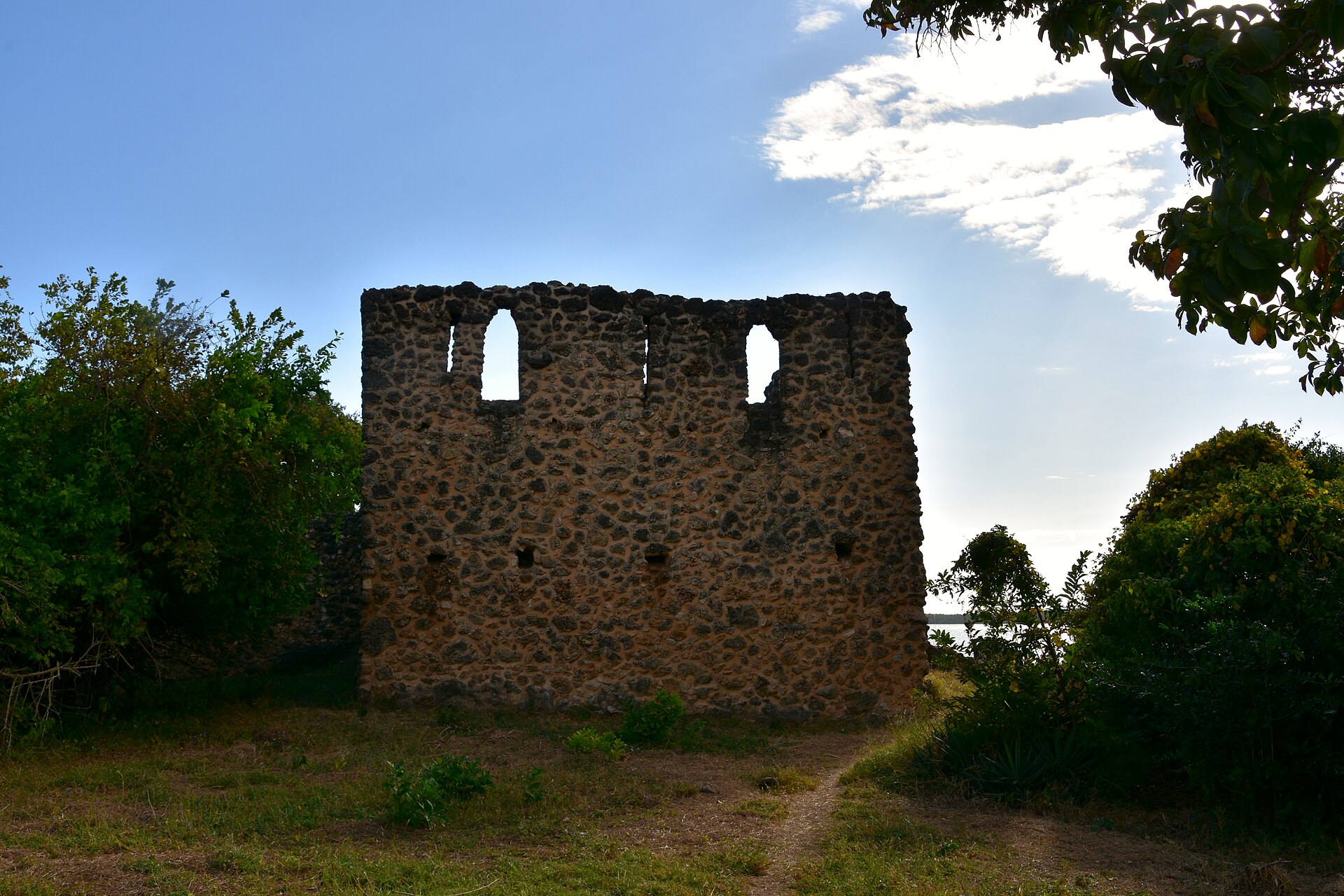
He arrived during the reign of Sultan al-Hasan ibn Sulaiman, the same ruler associated with Husuni Kubwa, and he praised the sultan’s humility and generosity, noting his habit of giving away much of what he received to the poor and to religious visitors. Ibn Battuta also recorded, with the eye of a devout Muslim, the piety of the city and the frequency with which its rulers raided and taxed the non-Muslim peoples of the mainland.
His account is precious precisely because it is an outside witness at the peak of Kilwa’s power. When you read his words while standing in the ruins, the empty stone rooms repopulate themselves for a moment. You can imagine the crowded harbour, the call to prayer echoing off the coral walls, and the generous, powerful sultan holding court in a city that a world traveller judged among the finest he had ever seen.
Ibn Battuta’s route to Kilwa is itself telling. He came down the coast from Mombasa, following the well-worn maritime path that bound the Swahili towns together, which shows how thoroughly integrated Kilwa was into a coastal system rather than standing alone. His willingness to make the journey, and the respect he paid the city once there, confirm that Kilwa’s reputation travelled far beyond its own waters and reached the wider Muslim world as a place of note.
Daily Life in a Coral-Stone City
It is easy, among grand mosques and palaces, to forget that Kilwa was above all a place where ordinary people lived and worked. The great stone buildings were the exception; most of the population lived in houses of mud and thatch that have long since vanished, leaving only the durable coral-stone structures of the elite to greet the modern visitor. The city you see is the skeleton of its wealthiest quarter, not the whole living body.
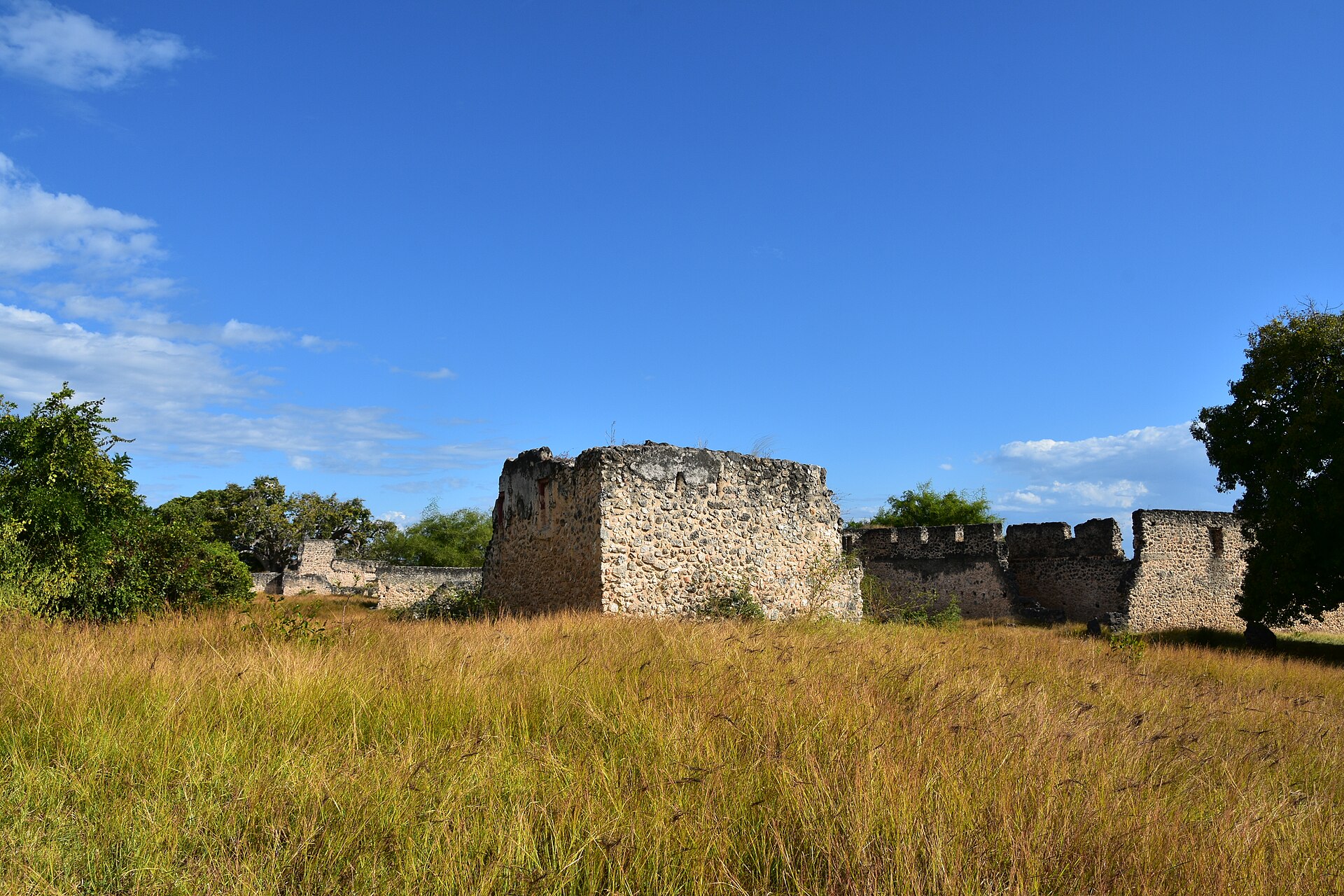
Life here revolved around the sea and the seasons of the monsoon. When the winds brought the trading fleets, the town filled with merchants, sailors, and goods: gold and ivory and slaves moving out, and cloth, ceramics, and beads coming in. Chinese porcelain and Persian pottery found on the island show just how far-flung the tastes of Kilwa’s households were. A wealthy family here might eat from a bowl made thousands of miles away.
Between the trading seasons the rhythm slowed. Fishermen worked the reefs, farmers tended crops on the island and the nearby mainland, and craftsmen produced the goods and buildings that kept the city running. Religion structured the days, and Islamic scholarship gave the town a cultural life beyond commerce. It was, in short, a rounded urban society, not merely a warehouse, and remembering that makes the ruins feel less like a monument and more like a home.
The social hierarchy of the city was real and visible. A merchant elite, often tracing prestigious ancestry and controlling the stone houses and the trade, sat above a broader population of craftsmen, sailors, fishermen, farmers, and enslaved people. Status showed itself in architecture, in access to imported luxuries, and in religious learning. Understanding this stratification keeps you from romanticising Kilwa; it was a wealthy and cultured city, but its wealth, like that of most premodern trading states, rested on sharp inequalities.
The presence of imported Chinese porcelain deserves special emphasis, because it collapses distance in a startling way. A fragment of celadon or blue-and-white ware found in the Kilwa soil began its life in a kiln in China, crossed the entire breadth of the Indian Ocean through a chain of merchants and ports, and ended up on a table on an African island. Every such shard is a small monument to how genuinely connected this supposedly remote place actually was.
1505: The Year the Portuguese Arrived
Kilwa’s world was shattered by ships appearing from a direction no one had worried about: the south. In 1498 the Portuguese, under Vasco da Gama, rounded the tip of Africa and sailed up the East African coast, and they quickly grasped what Kilwa’s position meant. Here was the gateway to the gold of Sofala, and if they controlled it, they could redirect one of the great wealth streams of the world into their own hands.
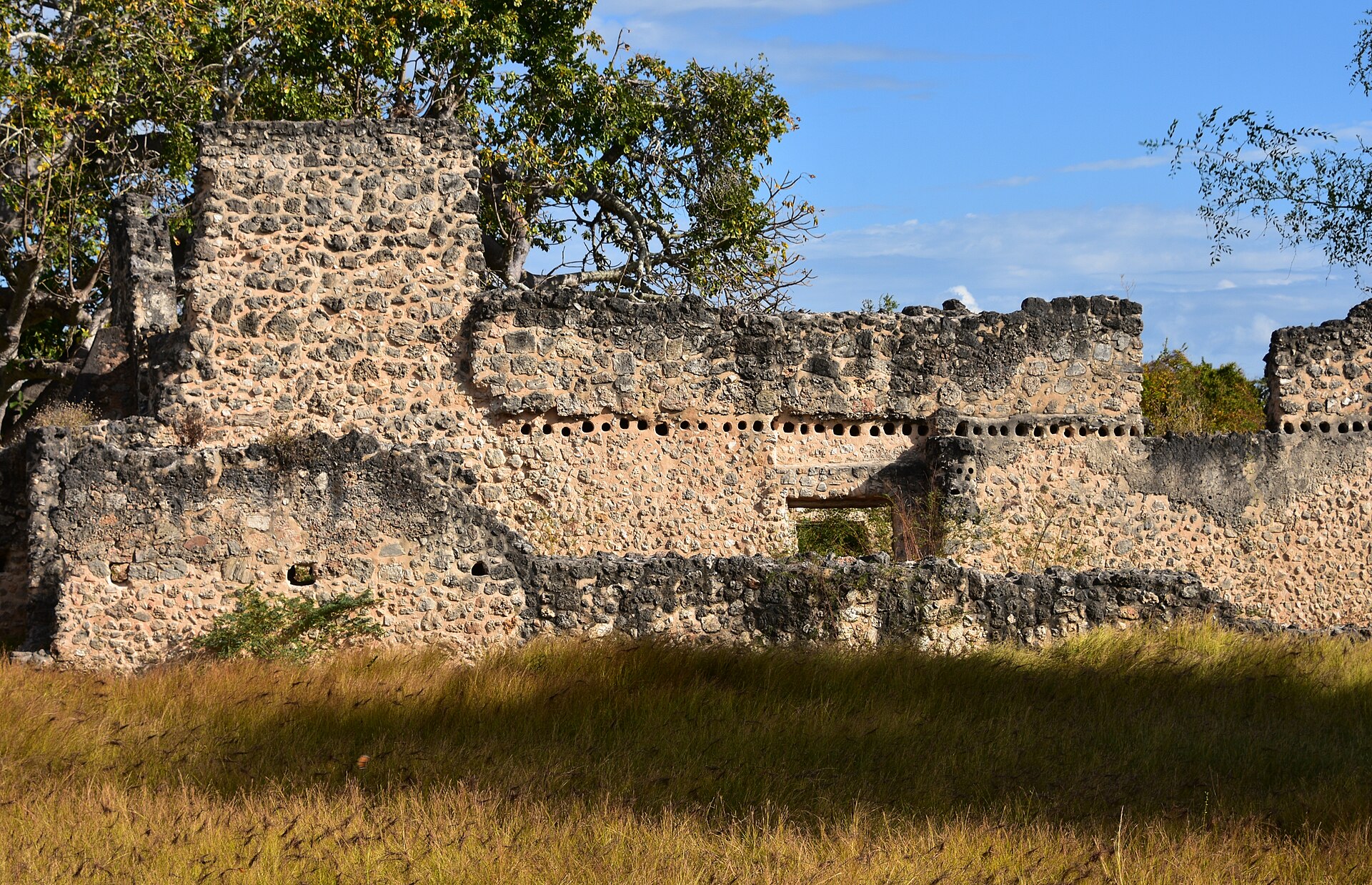
In 1505 a Portuguese fleet under Francisco de Almeida arrived and took the city by force. The sultan was deposed, a puppet installed, and the Portuguese set about doing what they did at strategic ports along the coast: they built a fort. The conquest was violent and the city was looted, and although the occupation of Kilwa itself did not last very many years, the damage to its position was permanent.
The deeper blow was economic rather than military. By seizing control of the coast and rerouting the gold trade to serve their own network, the Portuguese cut the artery that had fed Kilwa for centuries. A middleman city cannot survive once the goods stop flowing through its hands. The arrival of 1505 marks the moment when Kilwa’s long descent from greatness truly began, even though the city itself would linger on for centuries more.
The Portuguese assault fits a wider pattern of what happened across the Indian Ocean in the early sixteenth century. Armed with cannon and a ruthless strategy of seizing key ports, the Portuguese aimed not to trade politely within the existing system but to dominate and tax it by force. Kilwa was simply one early target among many. The shock was less that a single city fell and more that the entire self-regulating commercial world of the ocean was being violently reorganised around European power.
There is a bitter irony worth noting. The very feature that had made Kilwa great, its position astride the gold route, is exactly what made it a target. Prosperity built on controlling a chokepoint invites someone stronger to seize that chokepoint, and in the sixteenth century the Portuguese were that someone. Kilwa’s fate is a lesson in the fragility of middleman wealth: the day the goods find another path, or another hand grabs the toll gate, the whole edifice can come down.
The Gereza and the Age of Foreign Masters
The most visually dominant building on the island today is not medieval at all. It is the Gereza, a squat, thick-walled fort that guards the old harbour, and its very name tells a story: gereza comes from a Portuguese-derived word for prison or garrison, absorbed into Swahili. The structure you see was largely built later by the Omanis, but on Portuguese foundations, so it is a layered monument to Kilwa’s centuries under outside control.

Standing at the Gereza, you are at the hinge point of the city’s later history. The fort’s purpose was control: to command the anchorage, to project the authority of whoever held the coast, and to remind the local population where power now lay. Its heavy, martial architecture is a deliberate contrast to the elegant, open buildings of Kilwa’s golden age, and that contrast is the whole point.
For the visitor, the Gereza is a useful reminder that ruins are not frozen at a single date. Kilwa was conquered, re-conquered, and repurposed over and over, and each set of masters left their mark in stone. The fort is where the medieval African sultanate, the Portuguese empire, and the Omani state all overlap in one weathered building, which is exactly why it is worth lingering here.
If you look closely at the Gereza and the other later structures, you can trace how building techniques and priorities changed once defence and control became the dominant concerns. The graceful, light-filled architecture of the golden age gave way to thick walls, narrow openings, and a general air of wariness. Architecture is honest that way; it records what a society is worried about, and by the later centuries Kilwa’s rulers were worried above all about holding on to what power they had left.
The Omani Era and the Slow Fade
After the Portuguese were pushed out of much of the coast, authority over Kilwa eventually passed to the Omani Arabs, whose maritime empire came to dominate the Swahili shore from the seventeenth and eighteenth centuries onward. Under Omani influence a new settlement, Kilwa Kivinje, grew up on the mainland nearby, and the centre of activity gradually shifted away from the old island.
The eighteenth century brought a grim new source of wealth. Kilwa became caught up in the expanding Indian Ocean slave trade, with enslaved people brought from the interior and shipped out through the coast to markets in Arabia, the islands, and beyond. It is a dark chapter, and an honest visit to Kilwa has to hold it alongside the earlier story of gold and mosques, because the same geographic advantages that once moved gold later moved human beings.
By the nineteenth century the old island city was fading into irrelevance. The action had moved to the mainland and to other ports, the great stone buildings were crumbling, and the population dwindled. What had been one of the richest cities on the coast slipped quietly into the status of a ruin, its harbour empty of the fleets that had once made it the envy of the Indian Ocean world.
The rise of Kilwa Kivinje on the mainland is a neat illustration of how a place can migrate. The name Kilwa survived, and commerce continued, but it detached itself from the old island and reattached to a new site better suited to the trade of the day. For the traveller this means the story of Kilwa is really the story of a region, not a single spot, and the melancholy island ruins are only one chapter, the chapter of the city’s medieval glory, in a longer local history.
Rediscovery and a Place on the World’s List
For a long time Kilwa was remembered mostly in old chronicles and the accounts of travellers, its ruins left to the grass and the baobabs. But in the twentieth century archaeologists began serious excavation, most notably the work associated with Neville Chittick in the 1960s, which recovered the coins, the pottery, and the structural history that let scholars reconstruct the city’s rise and fall in detail.
In 1981 Kilwa Kisiwani, together with the nearby ruins of Songo Mnara, was inscribed on the UNESCO World Heritage List. The recognition placed these coral-stone remains among the treasures of humanity and acknowledged what they represent: outstanding testimony to the Swahili civilisation and the commercial world of the medieval Indian Ocean. For a time the site was also listed as in danger, as erosion and neglect threatened the fragile ruins, prompting conservation efforts.
That heritage status matters for the visitor because it frames what you are looking at. These are not just picturesque old walls. They are internationally recognised evidence of an African-led, globally connected civilisation that thrived for centuries. When you walk the island now, you are walking through a place that the world has formally agreed is worth preserving and understanding, which is a fitting second act for a city that once measured its worth in gold.
Conservation of a coral-stone site in a tropical, coastal environment is a genuine challenge, since salt, rain, vegetation, and erosion all work relentlessly against the ruins. Ongoing efforts have involved stabilising walls, managing the encroaching sea, and controlling the plant growth that both protects and damages the stone. The work is never finished, and part of what your visit supports, through permits and guided tourism, is the continued survival of a fragile and irreplaceable place.
There is also something fitting about the pairing with Songo Mnara in the World Heritage listing. Songo Mnara, a slightly later settlement on a neighbouring island, preserves house plans and street layouts with unusual clarity, so the two sites complement one another: Kilwa gives you the great monuments of a capital, while Songo Mnara gives you the texture of a whole planned town. Read together, they let archaeologists reconstruct Swahili urban life far more fully than either could alone.
Visiting Kilwa Kisiwani Today
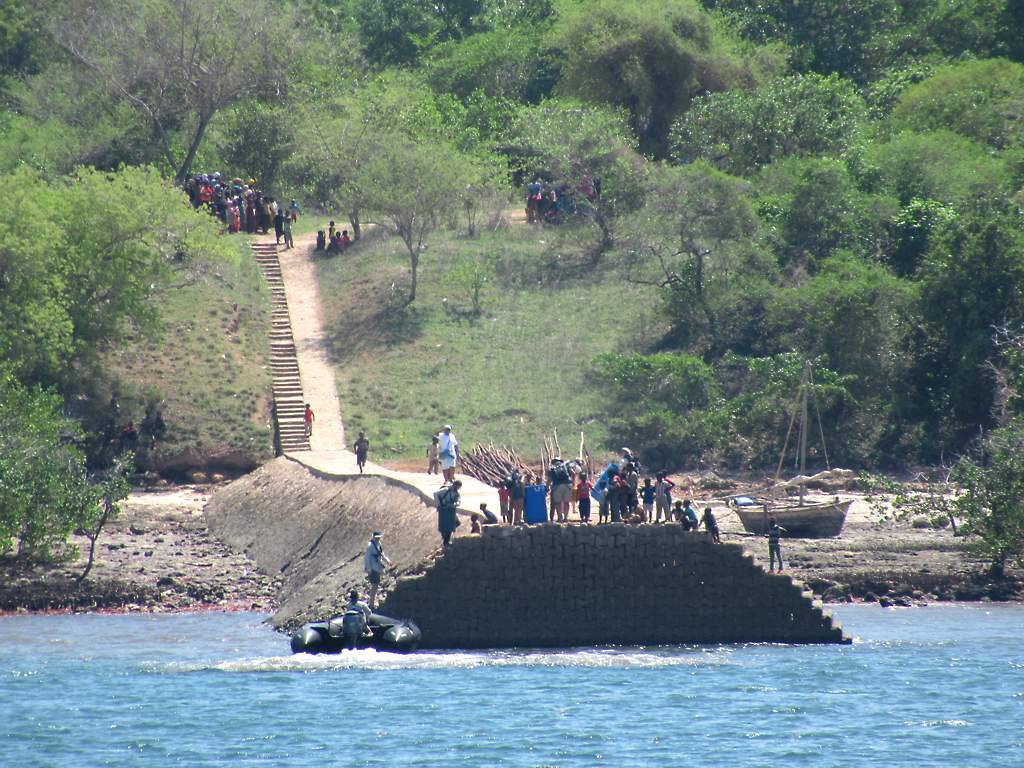
Reaching Kilwa takes some effort, and that is part of its charm. The ruins sit on an island just off the town of Kilwa Masoko in southern Tanzania, several hours by road south of Dar es Salaam. From Kilwa Masoko you cross to the island by boat, a short hop over shallow, brilliantly clear water, and because the site is a protected World Heritage property you will normally arrange a permit and a local guide before crossing.

Once on the island, give yourself time. The main sights, the Great Mosque, the Gereza fort, the Makutani palace, and the more distant Husuni Kubwa, are spread out, and the pleasure of the place lies in wandering slowly among them rather than rushing. Wear sturdy shoes, bring water and sun protection, and be prepared for an atmosphere that is quiet, green, and often almost deserted, which only deepens the sense of stepping into a lost world.
View -8.9600, 39.5128 on Google Maps
A good local guide transforms the visit, because much of Kilwa’s story is invisible in the bare stones without someone to explain it. Consider pairing the trip with a visit to Songo Mnara, the sister site nearby, whose ruins are in some ways even better preserved. However you plan it, Kilwa rewards the traveller willing to make the journey with something rare: the chance to stand, almost alone, in the heart of a medieval African city that once helped move the wealth of a continent.
Timing your visit around the weather pays off, since the same monsoon that built Kilwa still governs the coast. The drier months are generally more comfortable for exploring, and calmer seas make the boat crossing easier. Whenever you go, keep expectations calibrated to the nature of the site: this is a place of quiet ruins and big skies, not a manicured monument with crowds and facilities, and that rawness is precisely what makes standing among its stones feel like such a privilege.
Castles Nearby
You May Like
Castillo de San Marcos: The Coquina Fort That Cannonballs Could Not Break


One thought on “Kilwa Kisiwani: Inside the Medieval African City That Traded in Gold”