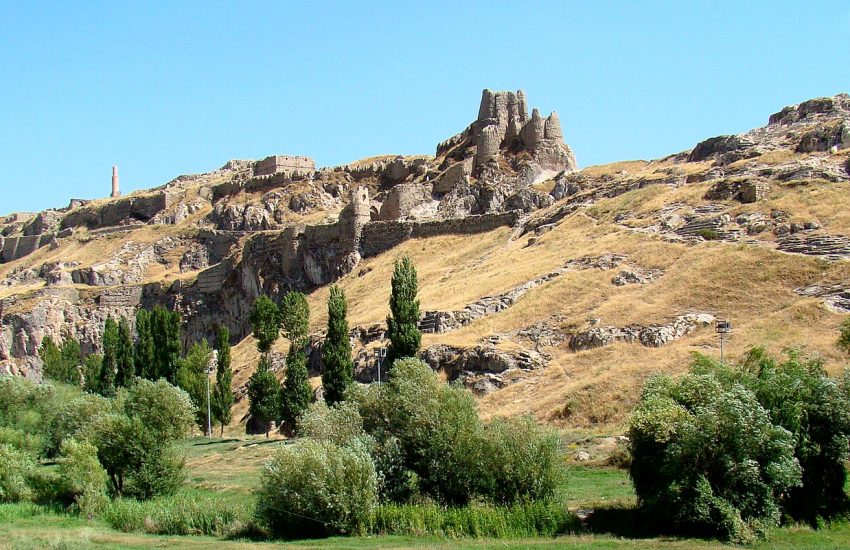
Rising from the very center of one of the oldest continuously inhabited cities on earth, the Citadel of Aleppo is not merely a castle but a mountain of memory. For more than four thousand years men have climbed this great oval hill to worship, to rule, and to defend themselves, and the fortress that crowns it today is only the latest chapter in a story that reaches back to the dawn of civilization itself. To stand at its foot and gaze up at the towering glacis of pale stone is to feel the weight of the ages pressing down upon you.
In this article you are invited to journey up that ancient hill and through the long centuries of its history, from the temple of a forgotten storm-god to the golden age of Saladin’s dynasty, from the terror of the Mongols to the quiet decline of the Ottoman years, and on into our own troubled times. The Citadel of Aleppo has seen empires rise and fall around it, and through it all it has endured, wounded but unbowed, the beating heart of a great and resilient city.
The citadel has drawn travelers, pilgrims, and conquerors to its slopes for longer than almost any other inhabited place on the planet, and it rewards close attention as few monuments can. Every wall and gate and tower has a tale to tell, and behind the visible fortress lie the buried remains of a dozen vanished worlds. Come, then, and let us climb the great hill together, and see what four thousand years have left upon its summit.
In This Article
- A Hill at the Heart of the City
- The Temple of the Storm God
- The Gateway and the Great Bridge
- The Gleaming Glacis
- Saladin’s Son and the Golden Age
- The Throne Hall of Sultans
- The Mosques on the Summit
- The Moat and the Towers
- Wells, Baths, and the Underground City
- The Coming of the Mongols and Timur
- The Mamluk and Ottoman Centuries
- War, Earthquake, and Survival
- The Enduring Symbol of Aleppo
- Castles Nearby
- An Iconic Landmark of Syria
A Hill at the Heart of the City
The first thing to understand about the Citadel of Aleppo is that it does not stand apart from the city, guarding it from a distance, as so many castles do. It rises instead from the very middle of Aleppo, a great oval hill of stone surrounded on every side by the streets and markets of one of the oldest cities on earth. For thousands of years the life of Aleppo has swirled around the foot of this hill, and the citadel has been at once its fortress, its palace, its temple, and its refuge.
The mound itself is enormous, an elliptical mass measuring some four hundred and fifty meters in length and three hundred and twenty-five meters across at its base, rising fifty meters above the surrounding city. Part of it is natural rock and part the accumulated debris of forty centuries of human occupation, layer upon layer of the past piled up beneath the fortress that crowns the summit. To climb it is quite literally to climb through history, ascending past the buried remains of countless vanished ages toward the light at the top.
There is a particular quality to standing in the streets of Aleppo and looking up to find the citadel looming over you at the end of nearly every view. It orients the whole city, a fixed point around which the tangle of ancient alleys and covered markets arranges itself. In this it resembles the acropolis of a Greek city or the great mound of some Mesopotamian temple, and indeed it is descended from exactly such things. The hill has always been the high place, the seat of the gods and then of kings, and the ordinary life of the city has always gone on in its shadow, drawing a kind of reassurance from its permanence.
Geologists and archaeologists have long debated how much of the great mound is the work of nature and how much the work of man. The answer, it seems, is that it is both, for a natural outcrop of rock has been raised higher still by the slow accumulation of forty centuries of building, demolition, and rebuilding upon the same spot. Each generation that lived and fought upon the hill left its debris behind, and upon that debris the next generation built anew, so that the mound has literally grown taller with the passing of the ages, a hill made as much of history as of stone.

The Temple of the Storm God
Long before the first knight or sultan ever set eyes upon this hill, it was a holy place. Archaeologists digging beneath the medieval fortress have uncovered the remains of a great temple dedicated to Hadad, the storm-god of the ancient Near East, and the cuneiform tablets of Ebla and Mari speak of Aleppo as the very City of Hadad. This temple was in active use from the twenty-fourth century before Christ down to at least the ninth century, a span of some fifteen hundred years of unbroken worship on a single sacred spot.
It is a humbling thought that the ground on which the Crusaders and the Ayyubids fought was already unimaginably ancient when they arrived. Arameans, Assyrians, Babylonians, and Persians all held this hill in their turn, and each left something of themselves behind in its deep and crowded soil. When Alexander the Great swept through the region, his successor Seleucus revived the city under the name of Beroia and made the hill a fortified acropolis, beginning its long career as a stronghold that has never really ended.
What makes the ancient origins of the hill so remarkable is the sheer continuity of its sacred character. Temple gave way to temple and shrine to shrine, but the hill remained holy through every change of religion and every change of ruler. The storm-god of the Bronze Age yielded in time to the gods of Greece and Rome, and they in turn to the Christ of the Byzantines and finally to the faith of Islam, yet always the summit of the hill was set apart for the worship of the divine. Few places on earth can claim so unbroken a record of human reverence, stretching back beyond the reach of written history itself.
The Gateway and the Great Bridge
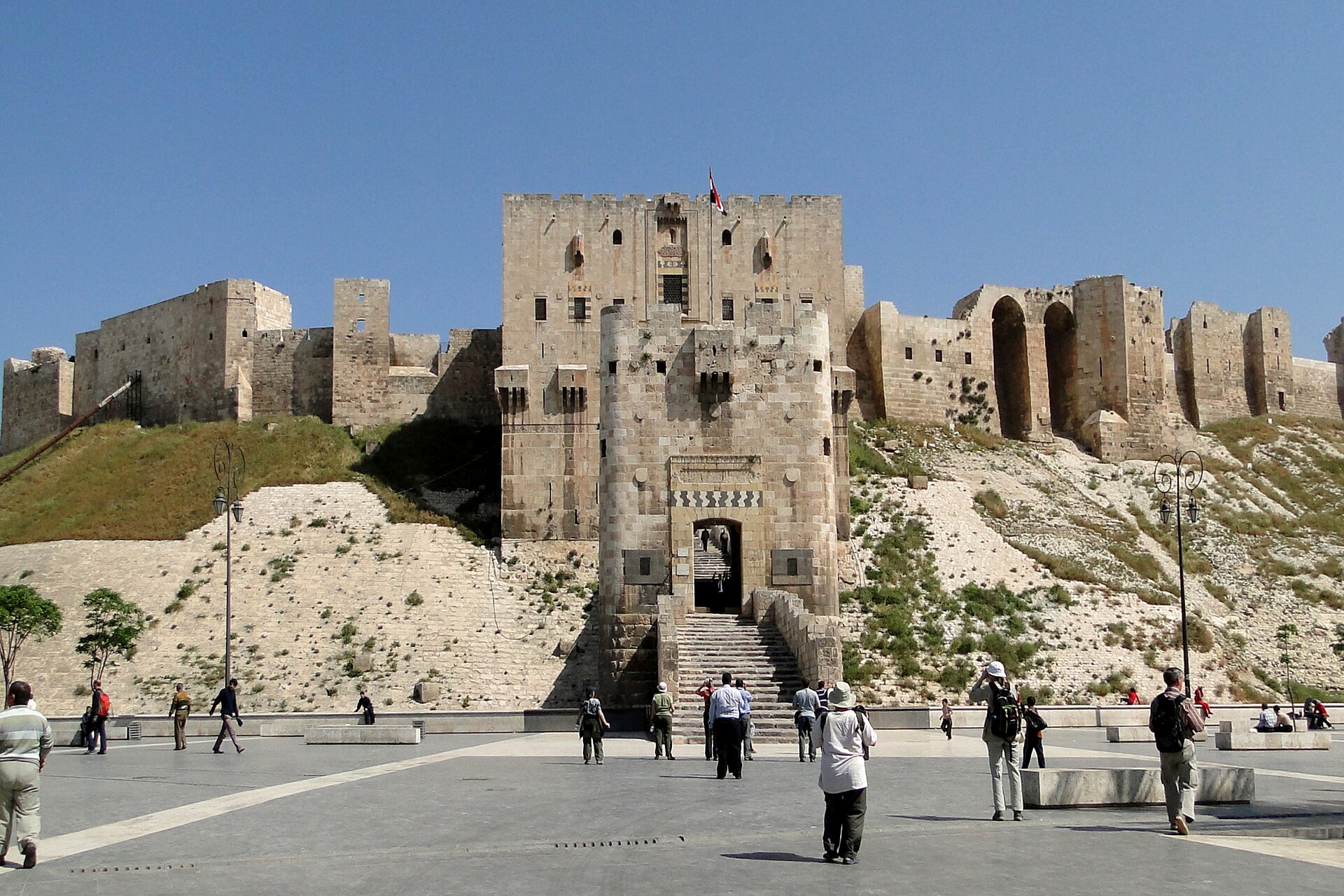
The approach to the Citadel of Aleppo is one of the most dramatic entrances of any castle in the world. From the city below, a great arched stone bridge strides across the deep moat to the towering gateway, and the effect, as you cross that bridge with the fortress rising sheer above you, is calculated to overawe. This was precisely the intention, for the gate was meant to proclaim the power of those who held the citadel and to strike fear into any enemy who dared approach it.
Beyond the outer gate the way does not run straight but twists through a succession of five right-angle turns and three great doors before it finally emerges into the fortress proper. Each turn was a trap, a place where attackers would be slowed, funneled, and exposed to the defenders above, and the whole approach was designed as a single deadly maze. Above the entrance, machicolations allowed the garrison to rain destruction upon anyone below, while carved reliefs of intertwined dragons and lions decorated the great doors, both a warning and a boast in stone.
To walk this entrance today, even in peace and safety, is to feel a flicker of the dread it was designed to instill. The passage is dim and close, the turns are sharp and blind, and at every step you sense the walls pressing in and the unseen defenders waiting above. It is architecture as psychology, a deliberate exercise in intimidation, and it worked. An attacking force, having crossed the bridge under a hail of missiles and forced the outer gate, would find itself trapped in this stone labyrinth, cut down at each turning, long before it ever reached the open ground of the fortress within.
The great door of the entrance was famously decorated with intertwined serpents and lions, carved in relief upon the stone, and these creatures were more than mere ornament. In the symbolic language of the medieval East they were talismans, guardians set to ward off evil and to warn away the enemy, and they lent the gate an air of brooding menace that words can scarcely convey. Even the horseshoe-shaped iron fittings and the massive bolts of the doors spoke of a strength meant to defy any battering ram, and the whole formed one of the most celebrated entrances in the entire history of military architecture.

The Gleaming Glacis
One of the most striking features of the citadel in its prime was its glacis, the great sloping skirt of stone that sheathed the sides of the mound. The entire hill was clad in gleaming blocks of polished limestone, laid so smoothly that they formed a surface no ladder could grip and no climber could scale. In the sunlight this vast slope of white stone must have shone like a beacon, visible for miles across the plain, a dazzling declaration of wealth and might.
The glacis was not merely for show. Its steep, slick surface made it all but impossible for an attacking army to reach the walls at the summit, for anyone who tried to climb it would slide helplessly back down into the moat, exposed all the while to the arrows of the defenders. Combined with the moat below and the walls above, the glacis formed part of a defensive system of extraordinary sophistication, one that made the Citadel of Aleppo one of the most formidable fortresses of the medieval world.
Sadly, much of the gleaming stone that once made the glacis so dazzling has been lost over the centuries, stripped away by earthquakes, by time, and by human hands. Yet enough survives, especially near the base of the mound, to give a sense of what the whole must once have looked like, and archaeologists and restorers have worked to conserve what remains. In the low light of morning or evening, when the sun strikes the slope at an angle, you can still catch something of the old brilliance, and imagine the hill as it appeared to a medieval traveler approaching across the plain, a shining crown of stone upon the horizon.

Saladin’s Son and the Golden Age
The citadel reached the height of its glory under al-Zahir Ghazi, the son of the great Saladin, who ruled Aleppo in the years around the turn of the thirteenth century. It was he who transformed the fortress into the magnificent complex whose remains we admire today, rebuilding the walls and the gate, raising palaces and mosques, and turning the summit of the hill into a self-contained royal city. His reign was the golden age of the citadel, and almost everything that gives it its character dates from his time.
Al-Zahir Ghazi’s citadel was a marvel of the builder’s art. Its entrances were crowned with muqarnas, the honeycomb vaulting so beloved of Islamic architects, and its courtyards were laid out in the elegant four-iwan plan and adorned with tilework. He built a great palace, which burned down on the very night of its completion but was promptly rebuilt more splendid than before, and he sank wells more than a hundred meters deep to ensure that the fortress could never be denied water. Under his hand the Citadel of Aleppo became not merely a stronghold but one of the wonders of the medieval Islamic world.
The reign of al-Zahir Ghazi was, in truth, a rare interlude of peace and prosperity in the violent history of the citadel, and it is fitting that so much of the fortress dates from that happier time. He was a patron of learning and the arts as well as a builder of walls, and under his rule Aleppo flourished as a center of scholarship and craftsmanship. The citadel he left behind was the physical expression of that flourishing, a place where the arts of war and the arts of peace were joined in a single magnificent whole. When we admire the citadel today, it is above all his citadel that we admire.
The palace that burned on the night of its completion and was rebuilt more splendid than before has become almost a parable of the citadel itself, a symbol of the resilience that runs through its whole long story. Fire, earthquake, siege, and conquest have all done their worst to the fortress, and each time it has risen again, rebuilt by hands unwilling to accept its loss. In the tilework and the muqarnas, the deep wells and the graceful iwans of al-Zahir Ghazi’s citadel, we see not only the wealth of a great dynasty but the enduring will of a city determined that its crowning glory should never be allowed to fall.
The Throne Hall of Sultans
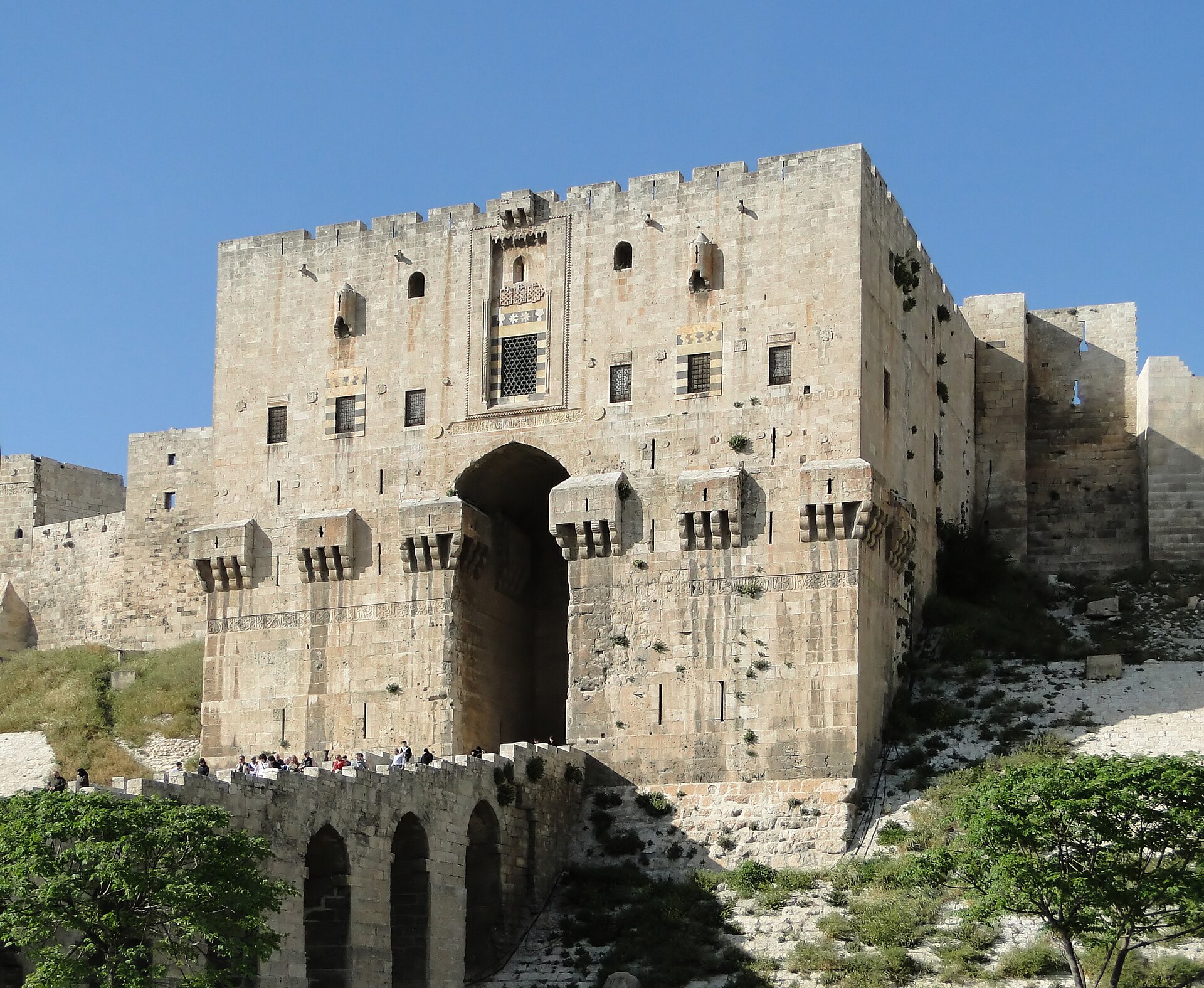
Among the grandest of all the buildings within the citadel is the Throne Hall, which rises above the very gateway itself. Here the rulers of Aleppo held their court, received ambassadors, dispensed justice, and entertained great audiences amid a splendor meant to reflect their power. The hall we see today was largely the work of the Mamluk sultans who ruled after the Ayyubids, built atop the earlier foundations and lavishly decorated in the rich style of their age.
The last of the Mamluk sultans, Qansuh al-Ghawri, replaced the flat ceiling of the hall with a magnificent array of nine domes, and later restorers gave it a new roof adorned in the ornate Damascene manner. To enter the Throne Hall even now is to sense something of the ceremony and majesty of the courts that once gathered here, a place where the business of ruling a great city was conducted with all the pomp that medieval kingship could command.
The position of the Throne Hall directly above the gateway was no accident. In placing the seat of power at the very entrance to the fortress, the rulers of Aleppo made a deliberate statement, for all who came to the citadel had to pass beneath the hall of the sultan before they could enter. It was a reminder, delivered in stone, of exactly where authority lay. The visitor, having struggled up through the maze of the gate, would emerge to find himself quite literally beneath the feet of the ruler, and the lesson would not have been lost on him.
The interior of the hall, with its lofty domes and its walls once bright with painted and inlaid decoration, was designed to overwhelm the visitor with a sense of the ruler’s magnificence. Light fell from high windows onto rich carpets and hangings, courtiers stood in ranks along the walls, and at the far end the sultan sat enthroned in majesty. Such halls were the theater of medieval power, where the drama of kingship was performed for the benefit of subjects and ambassadors alike, and the Throne Hall of Aleppo was among the grandest stages that any ruler of the age could command.

The Mosques on the Summit
The summit of the citadel is crowned by two mosques, for this has always been a holy place as well as a fortress. The smaller and older of the two is the Mosque of Abraham, built upon the site where, according to a cherished local tradition, the patriarch Abraham once milked his sheep, giving the city of Aleppo, Halab in Arabic, its very name. It was raised in the twelfth century upon the site of an earlier church that had itself replaced a still more ancient sanctuary.
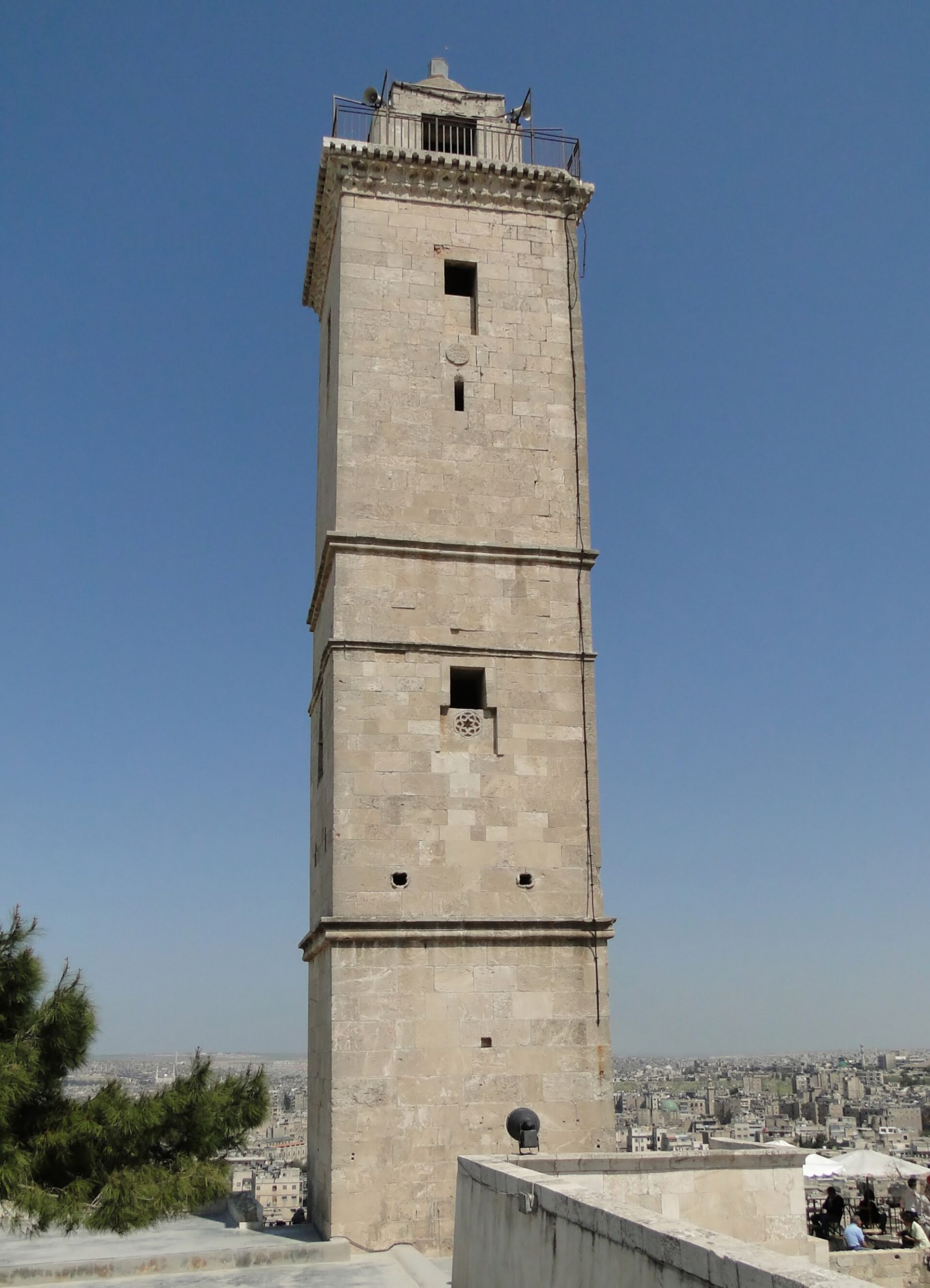
The larger of the two is the Great Mosque of the citadel, built by al-Zahir Ghazi in the early thirteenth century, its tall square minaret rising above the fortress as a landmark visible across the whole city. From its summit the call to prayer has floated out over the rooftops of Aleppo for eight hundred years, a sound as much a part of the city as the citadel itself. Together the two mosques remind us that the fortress was never only a place of war, but always also a place of faith.
The pairing of the two mosques upon the summit speaks to the layered history of the site, for each was raised upon the ruins of what came before. Beneath the Islamic sanctuaries lie the remains of Byzantine churches, and beneath those, in all likelihood, the traces of still older pagan temples reaching back to the storm-god himself. The hill has never ceased to be a place of worship, and the mosques that crown it today are only the latest expression of a devotion as old as the city. The muezzin who climbs the minaret follows, in a sense, in the footsteps of priests whose names have been forgotten for three thousand years.
For the people of Aleppo the Mosque of Abraham holds a special tenderness, bound up as it is with the legend that gives their city its name. The story that the patriarch milked his grey sheep here, and that the poor would gather to receive the milk, is woven deep into the identity of the city, and the little mosque upon the citadel keeps that memory alive. To visit it is to touch one of the oldest and gentlest of the traditions attached to this hill of so much war, a reminder that the citadel has always been a place of mercy as well as might.

The Moat and the Towers
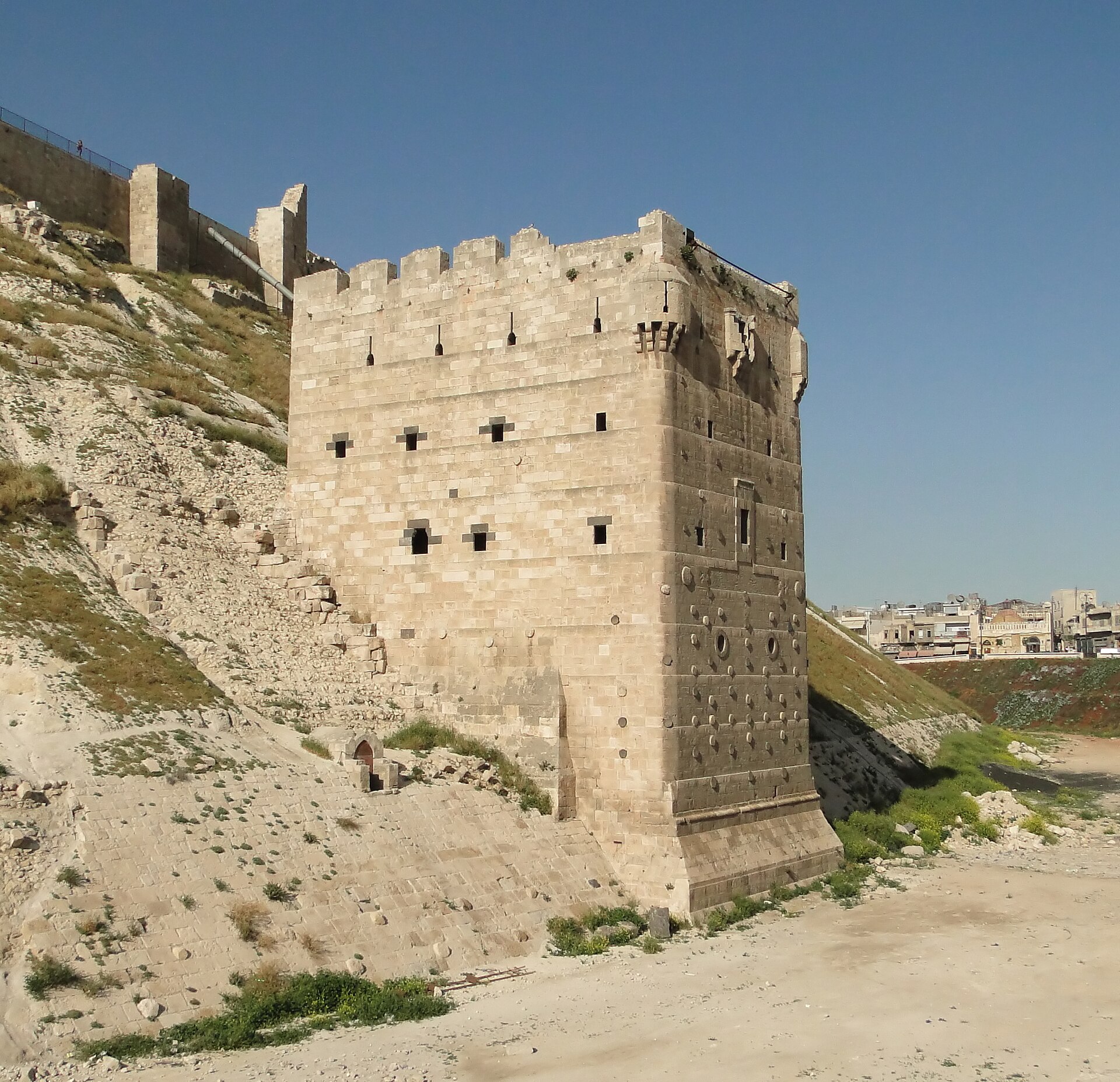
Around the base of the great mound runs a moat of formidable dimensions, some twenty-two meters deep and thirty meters wide, cut in the twelfth century to isolate the citadel completely from the city around it. The only way across was the single great bridge, and with that bridge held, the fortress was an island, unreachable by any attacker. The moat, the glacis, and the walls together formed a defensive scheme of remarkable depth, each element reinforcing the others.
Guarding the slopes of the mound stood massive advance towers, added by the Mamluks on the northern and southern sides, projecting outward to command the approaches and to provide platforms from which the defenders could sweep the ground below. These great blocks of masonry, square and uncompromising, still stand today as some of the most imposing features of the citadel, monuments to the military engineering of an age when Aleppo stood on the front line of a world at war.
The scale of the moat becomes truly apparent only when you stand at its edge and look down into its depths, or across to the sheer wall of the mound rising on the far side. It was an immense undertaking to cut, a labor of thousands of hands, and its purpose was absolute. With the drawbridge raised, no army could hope to reach the walls, for between them and the fortress yawned this great dry chasm, swept by the fire of the defenders. Together with the towers that flanked it, the moat made the base of the citadel as formidable as its summit, so that there was no easy way in at any point.

Wells, Baths, and the Underground City
A fortress is only as strong as its ability to endure, and the Citadel of Aleppo was built to endure for years. Beneath its summit lay a hidden world of wells, cisterns, and storerooms, hewn deep into the rock of the mound. Wells descended as much as a hundred and twenty-five meters below the crown of the hill to reach the water table far below, ensuring that no besieger could ever cut off the garrison’s supply, while vast granaries and cisterns held food and water enough to outlast the patience of any enemy.
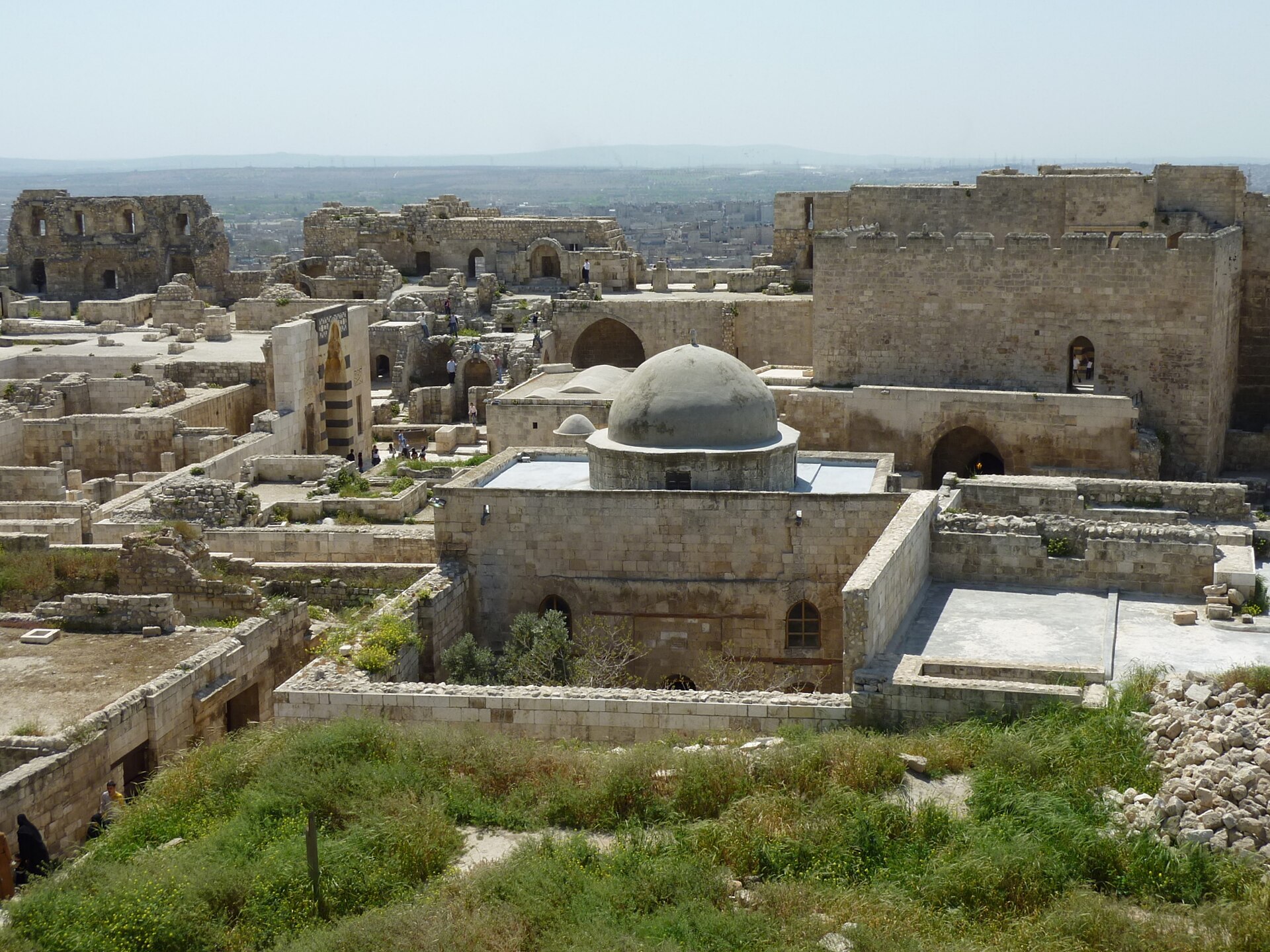
There was even a hammam, a traditional bathhouse of three chambers, where hot and cold water flowed through earthenware pipes to serve the men of the garrison. Underground passages are said to have run beneath the moat and out into the city, offering secret ways in and out of the fortress. All of this made the citadel a complete world unto itself, a city within a city, capable of holding out in splendid isolation while the storm of war raged around its walls.
The provision made for a long siege reveals the mind of the medieval military engineer at its most practical and far-sighted. Everything had been thought of, everything foreseen. Water was secured against any drought or blockade, food was stored against the longest investment, and even the comfort and cleanliness of the garrison were provided for in the bathhouse. It was understood that most sieges were decided not by assault but by attrition, by the slow contest of endurance between besieger and besieged, and the citadel was equipped to win that contest every time. This quiet, unglamorous foresight was as much a part of its strength as any wall or tower.
It is worth pausing to imagine the sheer labor involved in sinking a well a hundred and twenty-five meters into solid rock with the tools of the twelfth century, and to marvel at the determination that drove such an undertaking. The men who built the citadel spared no effort in making it self-sufficient, for they understood that a fortress cut off from water was a fortress already doomed, however thick its walls. In these hidden depths beneath the summit lay the true secret of the citadel’s endurance, the unseen foundation upon which all its outward strength was raised.

The Coming of the Mongols and Timur
For all its strength, the citadel could not always escape the great catastrophes that swept over the medieval East. In the year 1260 the Mongols burst into Syria, and Aleppo suffered terribly at their hands, the citadel itself sustaining grievous damage in the storm of that invasion. It was a foretaste of worse to come, for the Mongols were not the last of the conquerors from the steppe to fall upon the city.
Far more terrible was the coming of Timur, the dreaded Tamerlane, who descended upon Aleppo in the year 1400. His armies stormed the city and butchered its people, and the citadel, that great and ancient fortress, was in the words of the chroniclers all but completely destroyed. It seemed that the long story of the hill might have reached its end, and yet, as so often before and since, the citadel rose again from its ruin, rebuilt by hands that could not bear to see it fall.
The repeated destruction and rebuilding of the citadel is, in a strange way, the truest measure of its importance. A place of no consequence would have been left in ruins, abandoned to the wind and the weeds. But the Citadel of Aleppo was too vital to abandon, too central to the life and defense of the city to let it lie broken. And so each time it was cast down, hands were found to raise it up again, and the great hill that had seen so many conquerors came in the end to outlast them all. The Mongols and Timur passed like storms, but the citadel remained.
The Mamluk and Ottoman Centuries
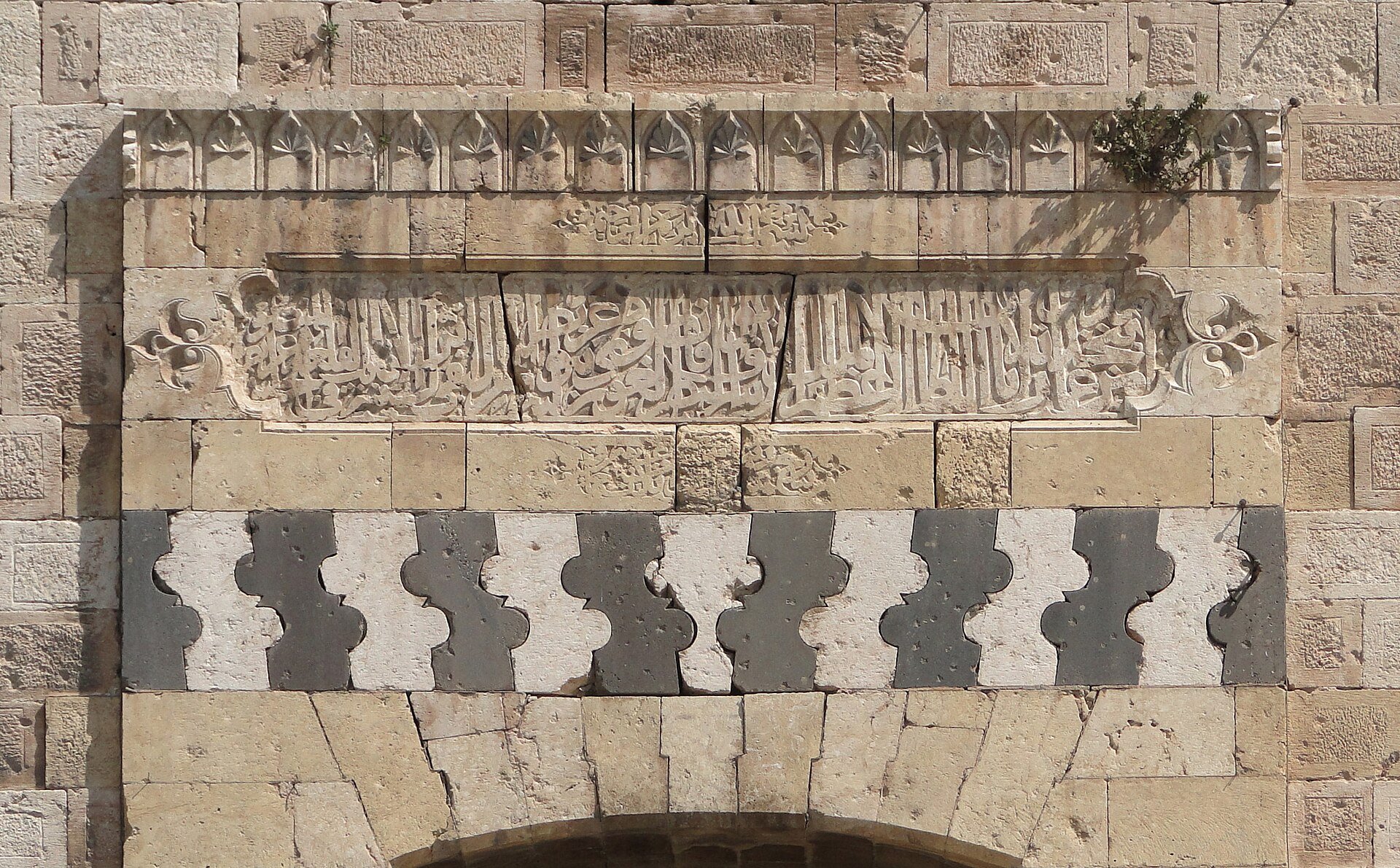
After the horror of Timur’s invasion, it fell to the Mamluk governors to raise the citadel once more. In 1415 the governor Sayf al-Din was granted permission to rebuild, and under his direction the fortress was restored, its walls repaired and its great advance towers added. Aleppo in those years was a flourishing city of many tens of thousands of souls, and its citadel once again became a worthy crown for so great a place.
When the Ottomans took Syria in the sixteenth century, the citadel began a long, slow decline in its military importance. As the city spread out beyond its old walls and the age of the great siege passed away, the fortress became less a bastion of war than a quiet garrison and administrative center. A Venetian traveler in 1556 counted some two thousand people living within its walls; by 1679 a French consul reported fourteen hundred, among them three hundred and fifty janissaries. The great days of the citadel were passing, but its life went on.
There is something poignant in the slow transformation of the citadel from a mighty engine of war into a sleepy provincial garrison. The fortress that had defied Saladin’s enemies and been rebuilt after Timur’s fury gradually settled into a gentler role, its great walls now enclosing the ordinary lives of a few thousand residents rather than the councils of sultans. Yet this quiet decline was, in its own way, a kind of victory, for it meant that the age of siege and slaughter had passed, and the citadel could stand at last not as a battlefield but simply as the ancient heart of a peaceful city.
War, Earthquake, and Survival
The modern history of the citadel has been as turbulent as its ancient past. The great earthquake of 1822 shattered much of Aleppo and left the fortress badly damaged, after which it served for a time as little more than a barracks, until the Ottoman sultan ordered its restoration in the middle of the nineteenth century. During the French Mandate in the twentieth century, archaeologists excavated and restored the fortress, uncovering much of what we see today.
In our own time the citadel has passed through fire once more. During the long and bitter battle for Aleppo in the Syrian civil war, the fortress was used as a military position and suffered shelling and blast damage, and then in February of 2023 a catastrophic earthquake struck the region, inflicting fresh wounds upon the ancient stones. Yet the citadel endured, as it always has, and by 2024 it had reopened its gates to visitors, its restoration continuing even as the world around it struggled to rebuild. The great hill abides, wounded but unbroken.
The wounds inflicted upon the citadel in recent years have been felt as personal injuries by the people of Aleppo, for whom the fortress is beloved almost as a living thing. Yet the response to each disaster has been the same, an immediate determination to repair, to restore, and to preserve. Teams of conservators have labored to shore up the damaged towers and gates, to mend the cracks opened by the earthquake, and to bring the citadel back to life. In this stubborn refusal to let the fortress fall we may see the same spirit that has raised it again and again across four thousand years of history.
Historians and archaeologists from around the world have followed the fate of the citadel through these recent trials with a mixture of anguish and hope, for it belongs, as UNESCO has recognized, not to Syria alone but to all of humanity. Its survival is a matter of concern to everyone who cares about the shared inheritance of the human past. That the fortress still stands, that its gates have reopened and its restoration continues even amid such hardship, is a source of quiet encouragement, a sign that some things at least can endure the worst that history throws at them and still remain.

The Enduring Symbol of Aleppo
It is difficult to overstate what the citadel means to the people of Aleppo. For them it is not simply a monument or a tourist attraction but the very soul of their city, the one great constant that has stood watch over their lives and the lives of their ancestors for thousands of years. When they see the great hill rising above the rooftops, they see the enduring spirit of Aleppo itself, and in the darkest of times it has been to the citadel that their hearts have turned.
As part of the Ancient City of Aleppo, the citadel has been recognized since 1986 as a UNESCO World Heritage Site, a treasure belonging not only to Syria but to all of humanity. Its long survival through war and earthquake, invasion and decay, is a testament to the resilience of a place that has refused, again and again, to die.
To grasp the full meaning of the Citadel of Aleppo, you must set aside the idea of it as a single building of a single age, and see it instead as an accumulation of all the ages, a place where four thousand years of human striving are gathered upon one hill. The temple of the storm-god, the acropolis of the Greeks, the palace of Saladin’s son, the throne hall of the Mamluks, the barracks of the Ottomans, all are present here, layer upon layer, in a density of history that few places on earth can rival. It is this, more than any single monument, that makes the citadel so precious.
If you wish to find this remarkable fortress on the map, you can see its exact position here:
View on Google Maps: 36.1997, 37.1625
Standing there in your imagination, at the heart of the ancient city, you can begin to grasp the sheer depth of the history gathered upon this single extraordinary hill.
Castles Nearby
If the Citadel of Aleppo has captured your imagination, you may enjoy these other great fortresses of the medieval Near East and the age of the Crusades:
- Krak des Chevaliers: The Finest Castle of the Crusaders
- Malbork Castle: The World’s Largest Brick Fortress of Warrior-Monks
An Iconic Landmark of Syria
The Citadel of Aleppo has survived four thousand years of history, and in our own century it has survived war and earthquake alike. It has been damaged, but it has not been destroyed, and even now the work of restoration goes on, stone by patient stone. The people of Aleppo have always regarded their citadel as the symbol of their city, and they cling to it still, for as long as the great hill stands, the spirit of Aleppo stands with it.
If ever you have the chance to visit this remarkable place, you will understand at once why it has captured the imagination of travelers for so many centuries. To climb the ramp, to pass through the mighty gate, and to stand at last upon the summit looking out over the rooftops of the ancient city is an experience like no other. The Citadel of Aleppo is one of the great fortresses of the world, and it deserves to be far better known than it is.
You May Like
Erbil Citadel: The Oldest Living City on Earth