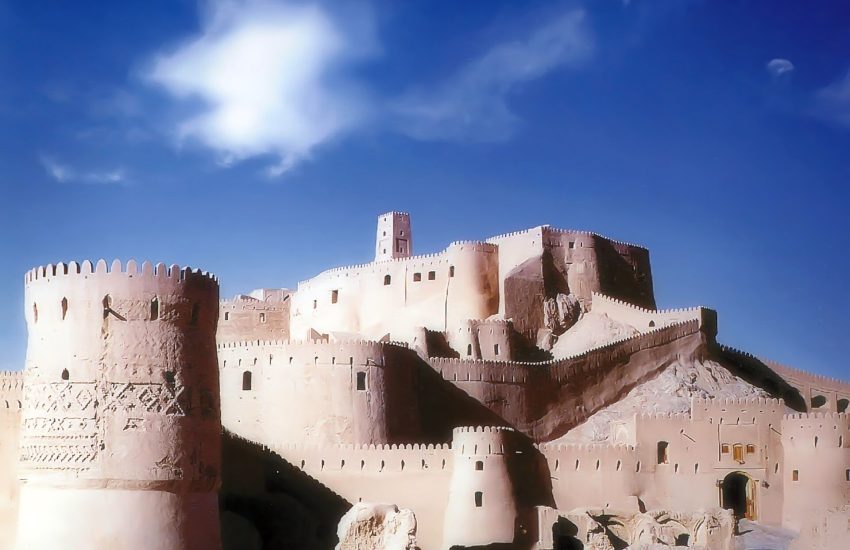
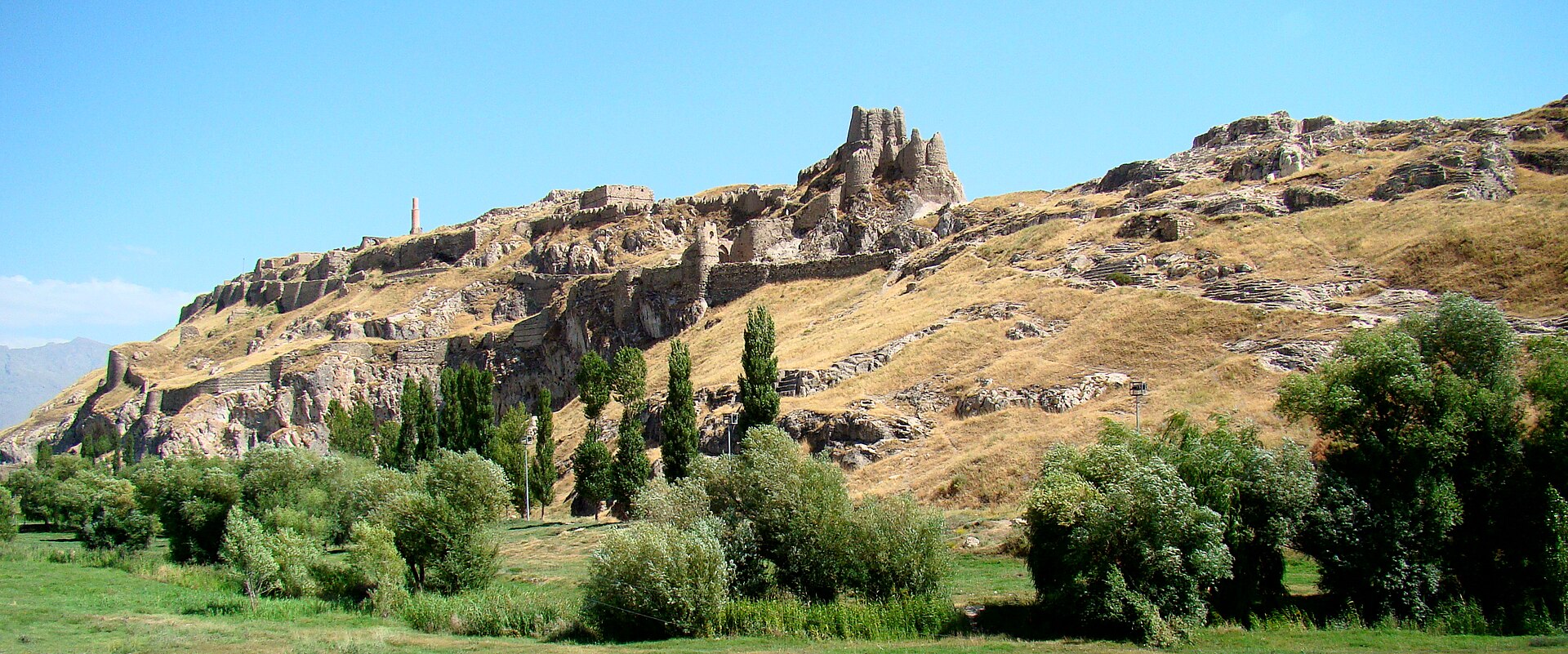
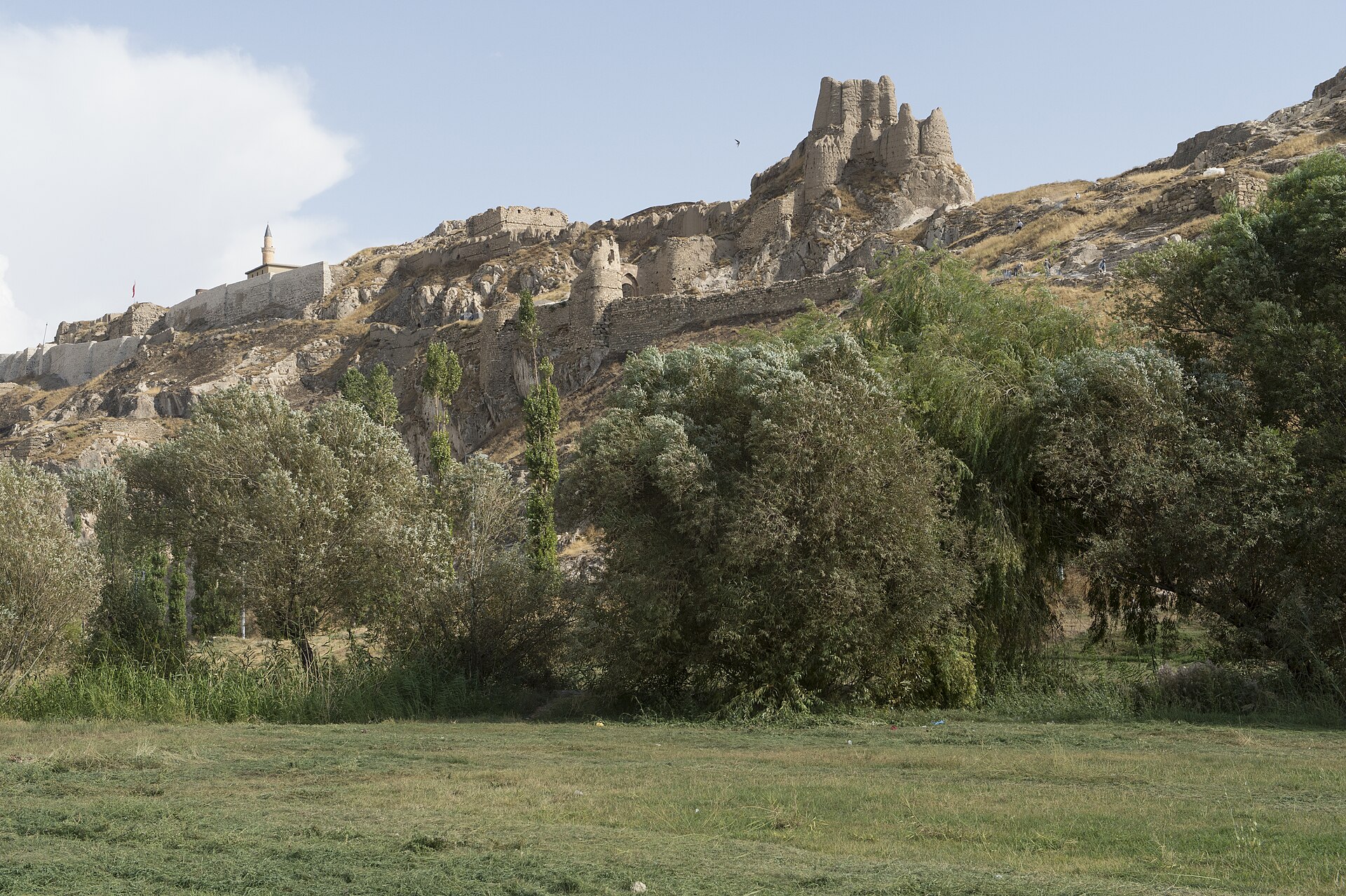
On a long, steep-sided ridge of rock rising from the plain beside the shimmering waters of Lake Van, in the far east of Turkey, stand the ruins of one of the most ancient fortresses in the entire world. Van Fortress, known in Turkish as Van Kalesi, is not a castle of the medieval age like most of the great strongholds of the region, but something far older, for its massive stone walls were first raised nearly three thousand years ago as the citadel of Tushpa, the capital of the mighty and mysterious kingdom of Urartu.
In this article you are invited to journey back into the deep antiquity of the Near East and to explore the history and the architecture of this extraordinary fortress, from its founding by the kings of Urartu in the ninth century before Christ, through the many empires that held it over the following millennia, down to the tragic destruction of the old city at its foot in the twentieth century. Van Fortress is a monument to one of the great forgotten civilizations of the ancient world, and it carries the visitor back to the very dawn of recorded history.
In This Article
- A Citadel above Lake Van
- Tushpa, Capital of Urartu
- King Sarduri and the Founding
- The Cyclopean Walls
- The Rock-Cut Tombs of the Kings
- Cuneiform in the Rock
- The Trilingual Inscription of Xerxes
- Mudbrick and Basalt
- A Fortress of Many Empires
- The Ottoman Centuries
- The Lost Old City of Van
- Lake Van and the Landscape
- Van Fortress Today
- Castles Nearby
- A Window into the Ancient World
A Citadel above Lake Van
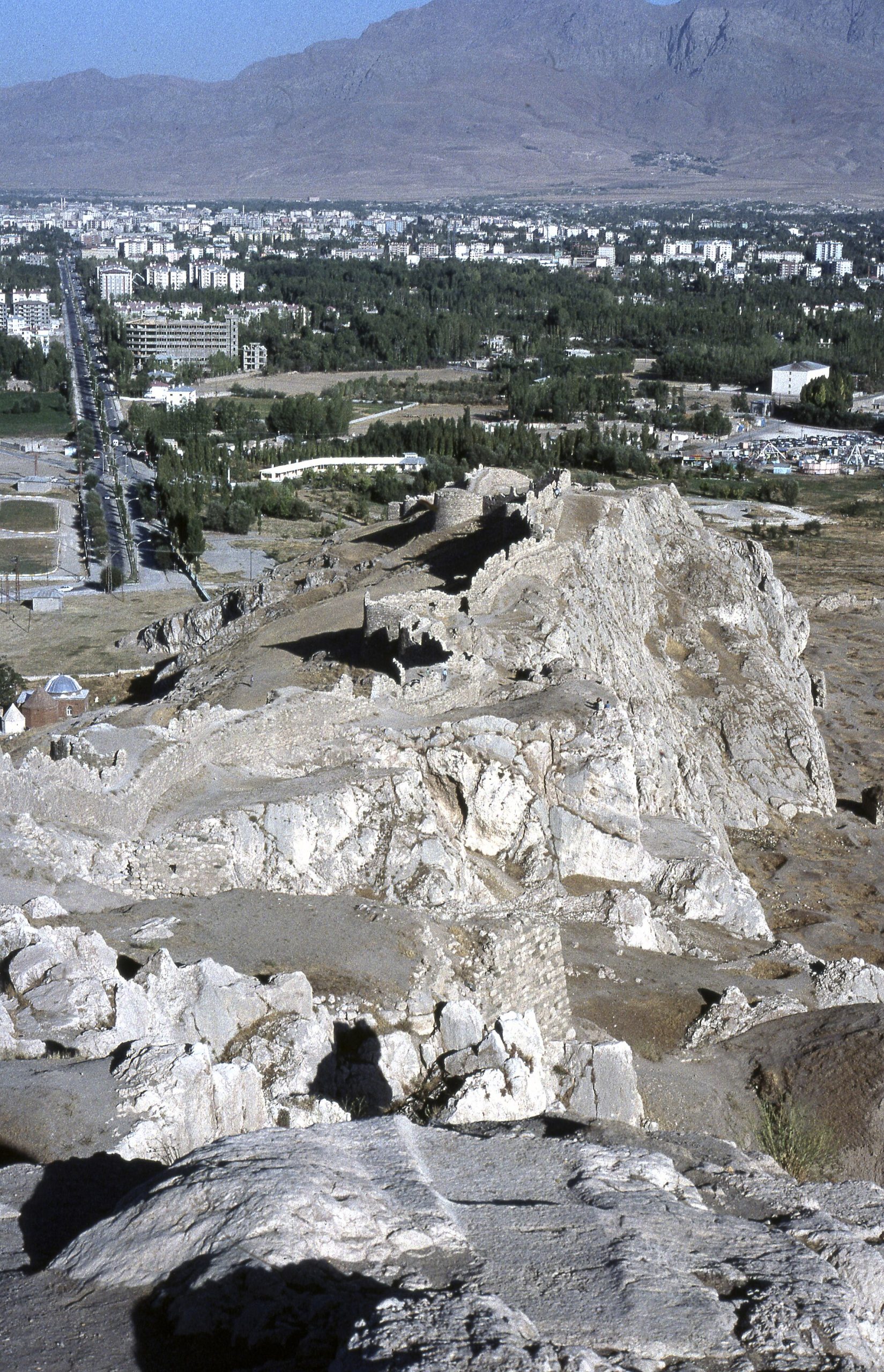
The fortress of Van occupies one of the most commanding natural positions imaginable, a long and narrow ridge of rock that rises abruptly from the flat plain beside Lake Van, the great inland sea of eastern Anatolia. The ridge runs for the better part of a kilometer, its steep sides falling away sheer on either hand, and it forms a natural stronghold of tremendous strength, a place that seems almost to have been designed by nature herself for the raising of a fortress.
From the summit of the ridge the eye takes in a vast panorama, the shining expanse of Lake Van stretching away to the horizon, the fertile plain below, and the distant mountains that ring the region. It was this combination of natural strength and commanding position that drew the ancient kings of Urartu to the site nearly three thousand years ago, and that has made the fortress a prize fought over by empire after empire ever since. Few places on earth have been continuously fortified for so long.
The ridge on which the fortress stands is a natural fortress in itself, a long spine of rock that dominates the surrounding plain and could be defended by a relatively small force against a much larger enemy. The ancient builders recognized this at once, and rather than fighting the terrain they worked with it, raising their walls along the crest and cutting their chambers into the flanks of the rock. The result is a stronghold that seems to grow organically out of the landscape, a marriage of nature and human art that has proved its worth across three thousand years of history.

Tushpa, Capital of Urartu
The fortress of Van was born as the citadel of Tushpa, the capital of the kingdom of Urartu, one of the great powers of the ancient Near East that flourished in the centuries around the first millennium before Christ. Urartu, centered upon the highlands around Lake Van, rose to become a formidable rival of the mighty Assyrian empire, and at the height of its power it dominated a vast swath of eastern Anatolia, the Caucasus, and northwestern Iran.
Tushpa was the heart of this kingdom, its royal capital and its greatest fortress, and the citadel upon the ridge of Van was the stronghold of the Urartian kings. Though the kingdom of Urartu has been largely forgotten by history, overshadowed by its more famous neighbors, it was in its day one of the great civilizations of the ancient world, with its own language, its own gods, and its own remarkable traditions of building and metalwork. The fortress of Van is the most impressive surviving monument of this vanished kingdom.
The rediscovery of Urartu by modern scholarship is one of the great romances of archaeology, for the kingdom had been so thoroughly forgotten that its very existence had to be pieced together from scattered references in the records of its enemies and from the mute testimony of its ruins. The excavation of Tushpa and the decipherment of the Urartian inscriptions gradually brought this lost civilization back into the light, revealing a sophisticated and powerful kingdom that had once dominated the highlands of eastern Anatolia. The fortress of Van stands at the very heart of this recovered history.
The Urartians were renowned above all for their extraordinary skill in metalwork, and the bronzes of Urartu, with their intricate designs of gods, kings, and fantastic creatures, are among the finest products of ancient Near Eastern art, prized in museums around the world. This mastery of bronze, together with their monumental architecture and their sophisticated engineering of water and agriculture, marks Urartu as a civilization of the first rank, whose achievements deserve to be far better known. The fortress of Van was the political heart of this brilliant and creative kingdom.

King Sarduri and the Founding
The founding of the fortress is attributed to King Sarduri the First, who ruled Urartu around the year 840 before Christ and who established Tushpa as his capital. It was Sarduri who first raised the great walls upon the ridge of Van, and he left behind an inscription, carved in the Assyrian cuneiform script, that records his achievement and proclaims his titles and his power. This inscription is among the oldest written records of the site, a direct voice from the very foundation of the fortress nearly three thousand years ago.
Sarduri the First was the founder of a dynasty that would rule Urartu for generations and lead the kingdom to the height of its power. Under his successors, kings with names such as Ishpuini, Menua, and Argishti, Urartu expanded its borders, built great fortresses and temples across its territory, and developed a sophisticated civilization that rivaled the Assyrians to the south. The fortress of Van remained throughout this age the royal capital, the seat from which these ancient kings ruled their mountain empire.
The inscription of Sarduri, carved in the Assyrian language and script, is a fascinating document, for it shows the young kingdom of Urartu borrowing the writing and the royal style of its great southern rival even as it set itself up as a competing power. Within a generation or two the Urartians would adapt the cuneiform script to write their own language, but at the very foundation of Tushpa they still used Assyrian, a telling sign of the cultural currents of the age. Sarduri’s words, boasting of his power and his building, still speak to us from the dawn of the kingdom’s history.
The dynasty founded by Sarduri would go on to make Urartu one of the two great powers of the northern Near East, locked in a long rivalry with Assyria that shaped the history of the region for centuries. The kings of this line campaigned far and wide, from the Caucasus to the shores of Lake Urmia, and adorned their capital with temples, palaces, and inscriptions. The fortress of Van, as the seat of this powerful dynasty, was the political and ceremonial center of a kingdom that at its height rivaled the greatest states of the ancient world.
The Cyclopean Walls
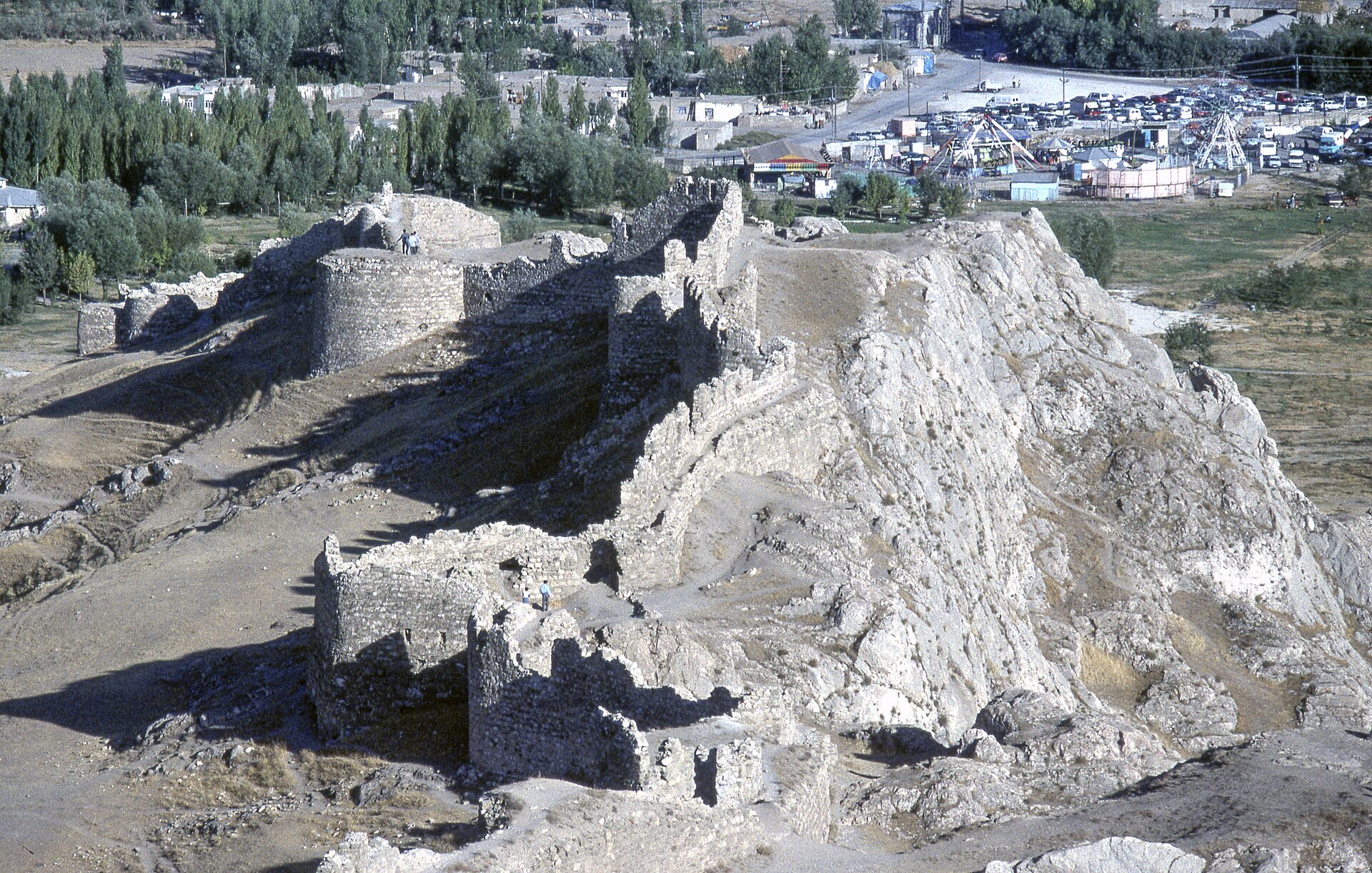
The most impressive surviving feature of the Urartian fortress is its walls, built in the massive style that archaeologists call cyclopean, from the ancient Greek belief that only the giant Cyclopes could have moved such enormous stones. The lower parts of the walls were constructed of great blocks of basalt, the hard volcanic rock of the region, laid without mortar and fitted together with remarkable precision, so that they have stood firm for nearly three thousand years.
These mighty walls are among the finest surviving examples of Urartian military architecture, and they testify to the skill and the resources of the ancient kingdom that raised them. The precision with which the great blocks were cut and fitted, without the aid of mortar, is a marvel of ancient engineering, and it reflects the same mastery of stone that the Urartians displayed in their rock-cut tombs and inscriptions. To stand before these walls is to touch the very fabric of one of the oldest fortresses on earth.
The transport and placement of the massive basalt blocks that make up the lower walls would have been an immense undertaking, requiring the organized labor of many hundreds of workers and a mastery of the techniques of moving and lifting great weights. That the Urartians accomplished this without iron tools of the modern kind, and fitted the blocks so precisely without mortar, is a testament to their engineering genius. The cyclopean walls of Van rank among the most impressive achievements of ancient architecture in the whole of the Near East, worthy to stand beside the great works of Egypt and Mesopotamia.
The survival of these walls across nearly three thousand years, through earthquakes, wars, and the slow erosion of time, is itself a remarkable testimony to the quality of their construction. Where the mudbrick and later additions have crumbled away, the great basalt blocks of the Urartian builders remain, as solid and as precisely fitted as the day they were laid. They are the enduring foundation of the fortress, the ancient bones of Van, upon which every later age has built and rebuilt in its turn.
The Rock-Cut Tombs of the Kings
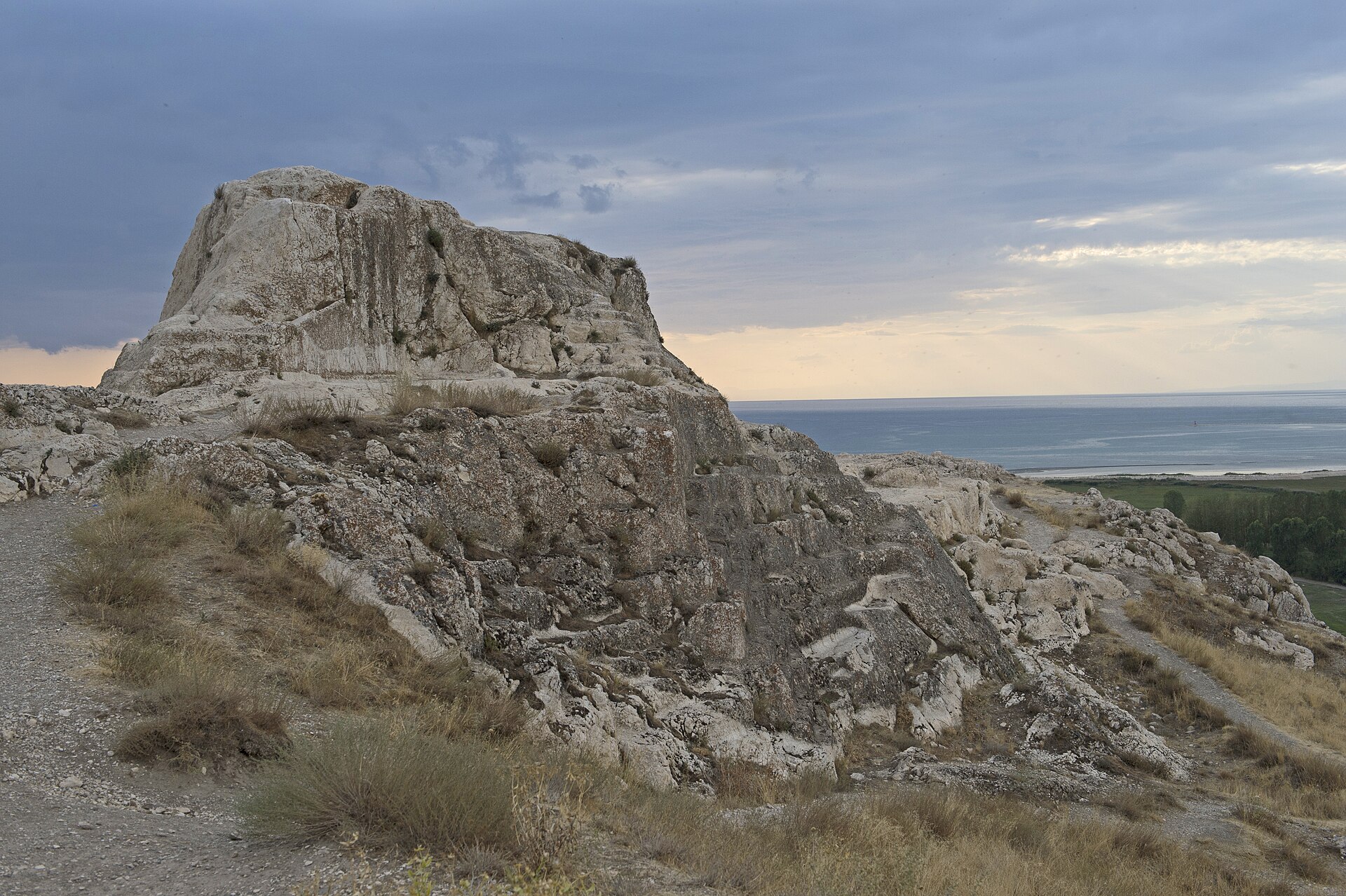
Among the most remarkable features of the fortress are the great tombs of the Urartian kings, cut deep into the living rock of the ridge. These are not simple graves but elaborate multi-chambered sepulchres, hewn with great labor and skill into the hard limestone, where the kings of Urartu were laid to rest with their treasures. The largest and most impressive of these tombs is attributed to King Argishti the First, one of the greatest of the Urartian monarchs.
To enter these rock-cut chambers is to descend into the world of the ancient dead, into spaces carved out of the mountain itself nearly three thousand years ago. The tombs are a striking testament to the Urartian mastery of working in stone, and to the beliefs and rituals surrounding death and kingship in this ancient civilization. That the kings should have chosen to be buried within the very rock of their capital fortress speaks of the deep bond between the rulers of Urartu and the stronghold from which they governed their realm.
The rock-cut tombs of Van belong to a wider tradition of monumental rock architecture that the Urartians shared with other peoples of the ancient Near East, but they carried it to a remarkable pitch of development. The great chambers, with their carefully squared walls and their multiple rooms, must have required an enormous investment of skilled labor, and they reflect the central importance of the cult of the royal dead in Urartian society. Empty now of their treasures, long since plundered, they still convey the power and the ambition of the kings who ordered them cut into the eternal rock.
Standing within one of these silent chambers, hewn from the heart of the mountain, the visitor feels the vast distance of time that separates us from the Urartian kings who commissioned them, and yet also a strange closeness, for the marks of the ancient stonemasons’ tools are still visible on the walls. These were the resting places of rulers who reigned when Rome was not yet founded and Greece was still emerging from its dark age, and to stand among them is to touch the deep antiquity of human civilization in this ancient land.

Cuneiform in the Rock
The rock of the fortress is inscribed in many places with the cuneiform writing of the Urartians, that ancient wedge-shaped script that was used across the Near East for thousands of years. These inscriptions, carved by order of the kings, record their names and titles, their conquests and their building works, and the offerings they made to their gods. They are a precious source for the history of Urartu, a kingdom whose written records are otherwise sparse, and they allow the voices of these ancient rulers to speak to us across the gulf of the millennia.
The Urartians adopted the cuneiform script from their Assyrian neighbors, adapting it to write their own language, which was unrelated to the languages of the surrounding peoples. The inscriptions of Van are thus doubly valuable, as historical records and as evidence for the Urartian tongue, which scholars have painstakingly deciphered over the past century and more. Every inscription is a window into the mind and the world of the ancient kingdom, and the fortress of Van is one of the richest repositories of these remarkable texts.
The decipherment of the Urartian language from these inscriptions has been one of the triumphs of modern scholarship, gradually revealing the words and the world of a people who would otherwise be entirely voiceless. Through their inscriptions we learn the names of their gods, chief among them Haldi, the great warrior deity of the kingdom, and we follow the campaigns and the building works of their kings. The rock of Van is, in effect, a great archive of the ancient kingdom, its history carved in stone by the very rulers who made it.
The god Haldi, to whom so many of the Urartian inscriptions are dedicated, was the supreme deity of the kingdom, a warrior god who led the armies of Urartu into battle and to whom the kings ascribed their victories. Great temples were raised in his honor across the kingdom, and his name appears again and again in the royal inscriptions. Through these carved words we glimpse the religious world of the Urartians, a world centered upon the worship of Haldi and the other gods of their pantheon, whose favor the kings so earnestly sought.
The Trilingual Inscription of Xerxes
The single most famous inscription at Van, however, was carved not by the kings of Urartu but by a later and more famous ruler, the Persian king Xerxes the Great, in the fifth century before Christ. High upon the rock face, some twenty meters above the ground, Xerxes ordered the carving of a great trilingual inscription, divided into three columns of twenty-seven lines each, written in the Old Persian, Elamite, and Babylonian languages, all in the cuneiform script.
This inscription, which survives in near perfect condition, is one of the most important monuments of the Achaemenid Persian empire, and it played a significant role in the modern decipherment of cuneiform writing. By comparing the three parallel versions of the same text, scholars were able to make progress in understanding these ancient scripts, much as the Rosetta Stone unlocked the hieroglyphs of Egypt. The inscription of Xerxes at Van is thus a monument of world importance, a key that helped to open the door to the recovery of the entire ancient Near East.
The choice of Van by Xerxes for so grand an inscription is itself significant, for it shows the importance that the Persian kings attached to this ancient stronghold, which they held as part of their vast empire. By carving his words high upon the rock of the old Urartian capital, Xerxes linked his own imperial glory to the deep antiquity of the site, associating the Achaemenid empire with the ancient traditions of the land. The inscription remains, twenty-five centuries later, exactly where he ordered it placed, a message from one of the greatest kings of antiquity to all who would come after.
It is a striking thought that the same cliff should bear both the cuneiform of the Urartian kings and the trilingual proclamation of a Persian emperor who ruled centuries later, the two separated by the fall of an entire civilization yet united by the rock on which they are carved. The fortress of Van thus preserves, in its inscriptions, a layered record of the successive powers that held it, each speaking in its own tongue and its own script. Nowhere is the immense depth of the site’s history more vividly displayed than in these carved words upon the ancient rock.
Mudbrick and Basalt
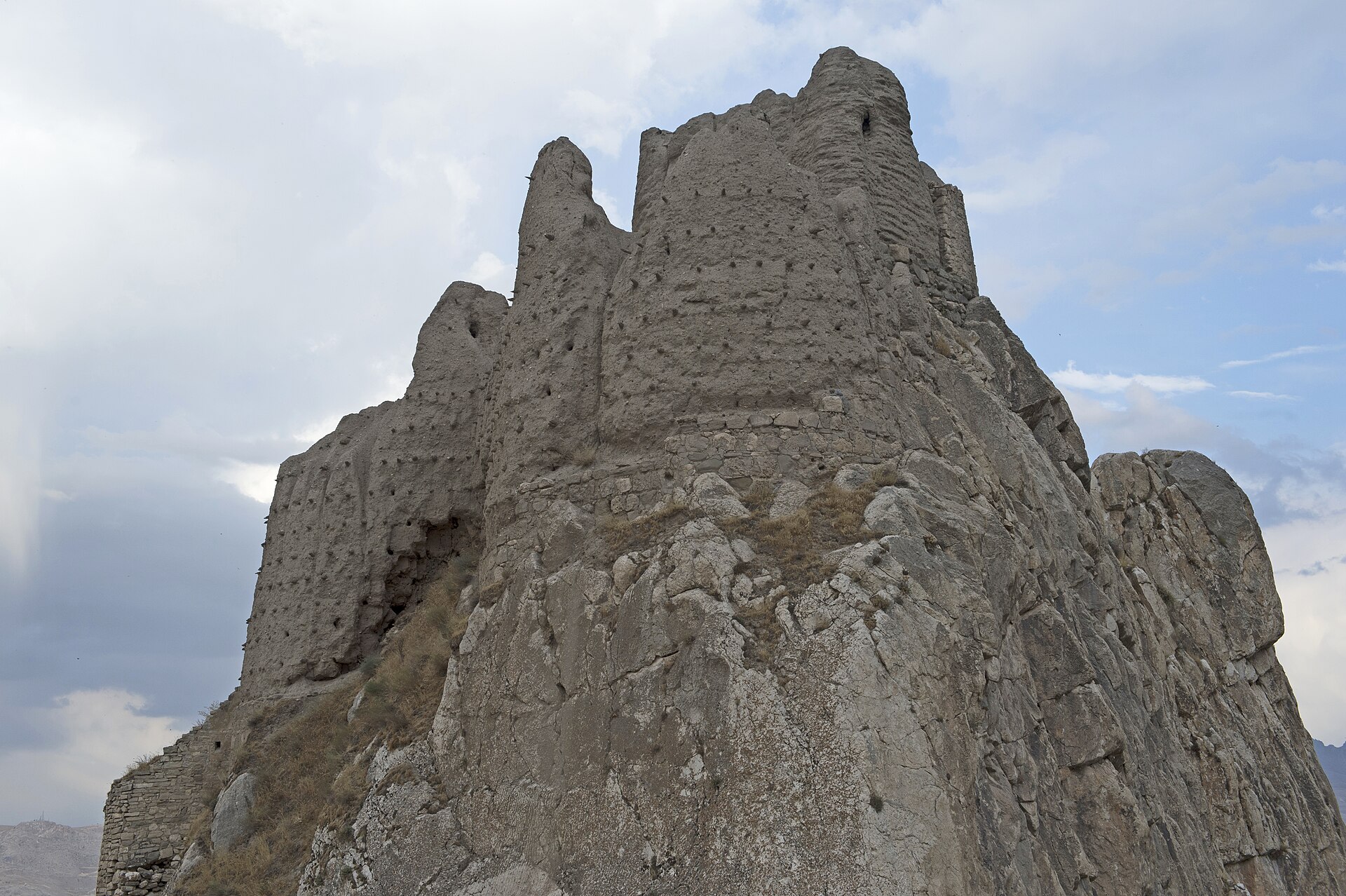
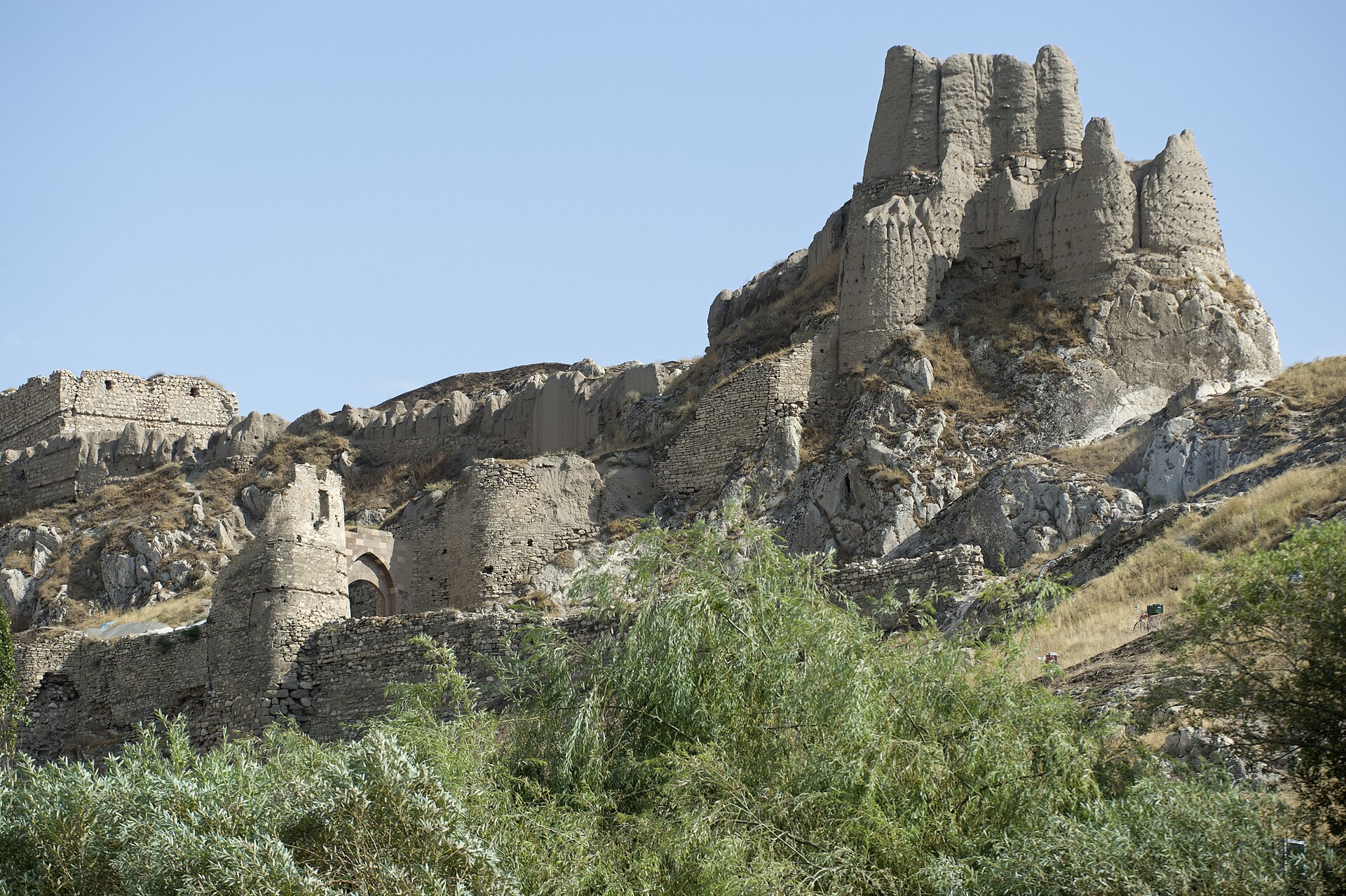
The fortress of Van was built in two distinct materials, reflecting the building traditions of the ancient Near East. The lower parts of the walls, as we have seen, were constructed of massive blocks of basalt, laid without mortar in the cyclopean style, and these have endured for nearly three thousand years. Above these stone foundations, however, the upper parts of the walls were built of sun-dried mudbrick, the cheap and abundant building material of the ancient world.
This combination of stone below and mudbrick above was typical of the great fortresses and cities of the ancient Near East, from Mesopotamia to Anatolia. The stone provided a strong and durable base that could resist assault and the damp of the ground, while the mudbrick above was quicker and cheaper to raise. Over the millennia, most of the mudbrick has long since crumbled away and washed back into the earth from which it came, leaving only the great stone foundations to mark the outline of the ancient walls upon the ridge.
The loss of the mudbrick upper walls, while regrettable, is entirely characteristic of the fate of ancient architecture in this part of the world, where the great cities of Mesopotamia have likewise melted back into the mounds from which they rose. Mudbrick, for all its convenience, is impermanent, and only the great stone foundations endure. What survives at Van is therefore the strong stone skeleton of the ancient fortress, stripped of its mudbrick flesh, but this very fact allows us to trace clearly the outline and the construction of the Urartian citadel upon its ridge.
A Fortress of Many Empires
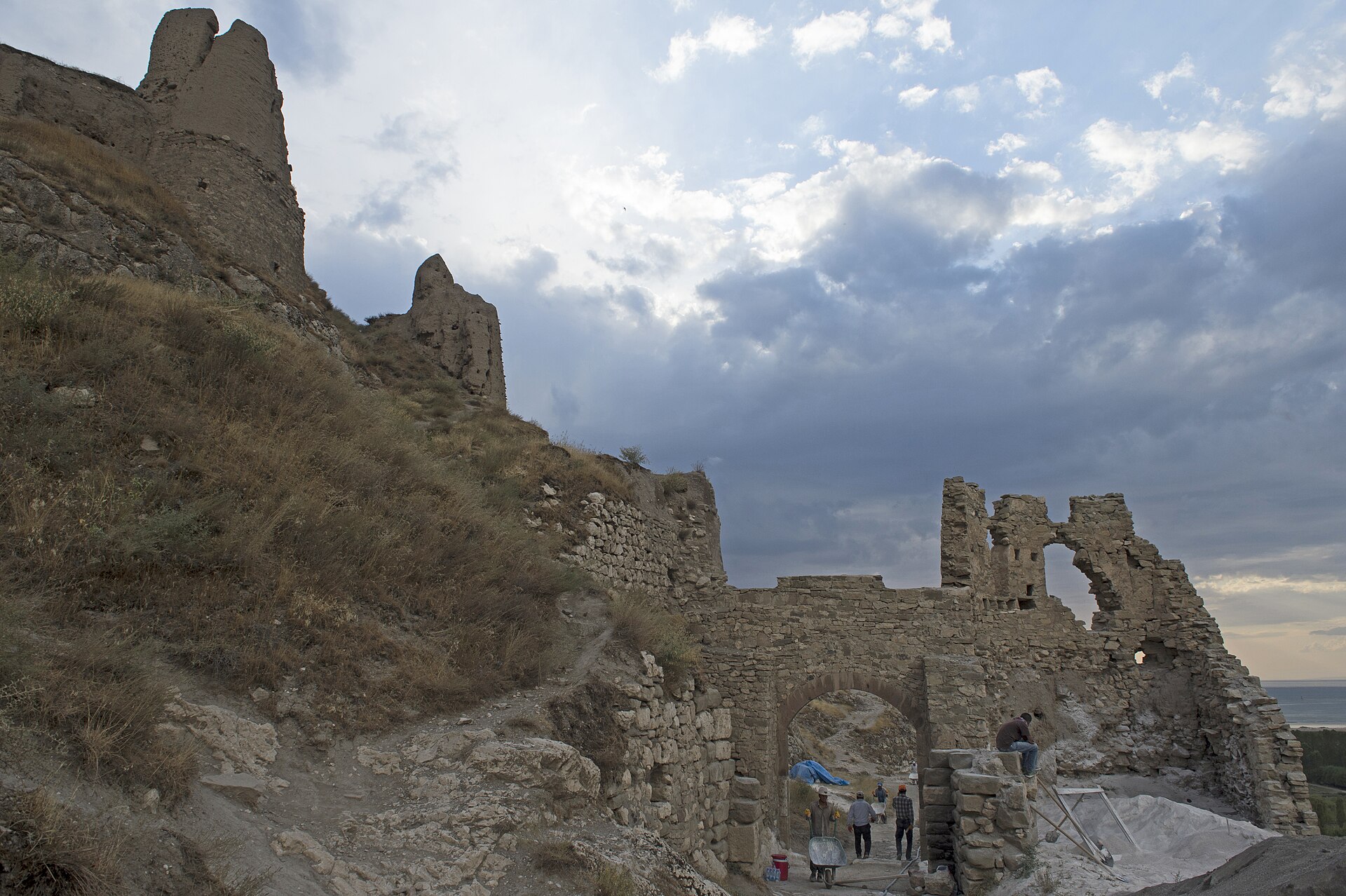
The kingdom of Urartu came to an end around the sixth century before Christ, overwhelmed by the rising powers of the age, but the fortress of Van did not fall silent with it. On the contrary, its commanding position ensured that it would be prized and held by empire after empire over the following two and a half thousand years. The Medes and the Persians, the Armenians and the Parthians, the Romans and the Sassanid Persians, the Byzantines and the Arabs, the Seljuks and the Safavids, the Ottomans and the Russians, all held the fortress in their turn.
Few strongholds anywhere can claim so long and so varied a history, and each of these peoples left something of themselves upon the ridge of Van. The fortress that had begun as the citadel of a Bronze Age mountain kingdom went on serving as a stronghold through classical antiquity, the Middle Ages, and into the modern era, a span of active life almost without parallel in the history of fortification. Its stones remember the passing of a dozen civilizations, a silent witness to the endless rise and fall of empires in this ancient land.
The extraordinary succession of empires that held Van is a reflection of its position at one of the great crossroads of history, where the routes between Anatolia, the Caucasus, Mesopotamia, and Persia met and crossed. Whoever aspired to dominate the region had to hold the fortress of Van, and so it passed from hand to hand as the great powers rose and fell around it. Its long list of masters reads like a roll-call of the great civilizations of the Near East, and its stones have witnessed the whole vast pageant of the region’s history from the Bronze Age to the modern era.
To walk the ridge of Van is to walk through this vast expanse of time, past Urartian walls and Persian inscriptions, medieval fortifications and Ottoman additions, all piled one upon another in a single dense accumulation of the past. The fortress is, in a sense, a stone chronicle of the entire history of the ancient and medieval Near East, written in the successive layers of its construction. Few places on earth offer so continuous and so tangible a link with so many ages of human history, from the Bronze Age to the twentieth century.
The Ottoman Centuries
In the later Middle Ages and the early modern period, the fortress of Van came under the control of the great Muslim empires that contested the region, above all the Ottomans and their Persian rivals, the Safavids. The fortress changed hands more than once in the long wars between these powers, and each adapted its defences to the needs of the age. The Ottomans in particular held Van for many centuries and made it an important military and administrative center on their eastern frontier.
Under Ottoman rule the ancient citadel was supplemented by new works suited to the age of gunpowder, and a substantial town grew up on the plain at the foot of the ridge, between the fortress and the lake. This old city of Van, with its mosques and churches, its markets and its houses, flourished for centuries in the shadow of the ancient fortress, a living community that carried on the immensely long history of settlement upon this spot. The fortress remained the strong point that guarded the city and the region around it.
The importance of Van to the Ottomans lay in its position on the sensitive eastern frontier, where the empire faced its great Persian rival across a contested borderland. For this reason the fortress and the city were maintained as a significant military center throughout the Ottoman centuries, and Van was the seat of an important provincial administration. The long Ottoman period was, for much of its duration, a time of relative stability and prosperity for the city, before the catastrophes of the early twentieth century brought this long chapter to a tragic close.

The Lost Old City of Van
One of the most poignant aspects of the history of Van Fortress is the fate of the old city that once stood at its foot. For centuries a thriving town spread across the plain between the ridge and the lake, home to a diverse population and adorned with mosques, churches, and fine buildings. But in the terrible upheavals that swept the region during the First World War, in the years between 1915 and 1918, the old city was almost entirely destroyed, and its population was lost or scattered.
Today the site of the old city is a largely empty plain at the foot of the fortress, dotted with the ruins of a few mosques and other buildings that survived the catastrophe, while the modern city of Van has grown up some distance away. The contrast between the ancient fortress, which has endured for three thousand years, and the vanished city at its foot, destroyed within living memory, is a sobering reminder of the fragility of human settlement and the tragedies that have marked the recent history of this ancient land.
The empty plain where the old city once stood is today one of the most melancholy and evocative sights in all of Turkey, a great silence at the foot of the ancient fortress where once a whole community lived and worked and worshipped. The few surviving ruins, the shells of old mosques standing alone amid the grass, speak eloquently of all that was lost. It is a place that invites reflection upon the fragility of human things, and upon the terrible events that emptied so ancient a city within the span of a few short years.
The story of the old city of Van is bound up with the wider tragedy that befell the diverse peoples of eastern Anatolia in the early twentieth century, a history of immense suffering and loss whose scars are still felt today. The empty plain at the foot of the fortress stands as a silent memorial to a vanished world, a world of many communities living together in the shadow of the ancient citadel. In contemplating it, the visitor is reminded that the history of Van is not only the deep history of Urartu but also the recent and painful history of our own age.

Lake Van and the Landscape
The setting of the fortress beside Lake Van is one of its greatest glories, for the lake is a natural wonder of the first order, the largest body of water in all of Turkey and one of the largest so-called soda lakes in the world. Its waters, rich in minerals, shine with an extraordinary blue that changes with the light and the weather, and the great expanse of the lake, ringed by mountains, forms a backdrop of tremendous beauty for the ancient fortress upon its ridge.
From the walls of the fortress the visitor gazes out over this magnificent inland sea, whose shores have been settled since the earliest times and whose islands bear the remains of ancient churches and monasteries. The combination of the ancient fortress, the vast blue lake, and the encircling mountains makes the region of Van one of the most beautiful in all of Turkey, and it lends the fortress a setting worthy of its immense age and its remarkable history. Landscape and monument here are joined in perfect harmony.
Lake Van has its own rich history and legend, and it has been central to the life of the region since the days of Urartu, whose kings built canals and waterworks to harness its resources. The lake is famous for its unique ecology, including a species of fish found nowhere else, and for the ancient churches upon its islands, most famously the exquisite Armenian church of Akdamar. Together with the fortress, the lake forms part of a landscape of extraordinary historical and natural richness, one of the great treasures of eastern Anatolia.
The islands of Lake Van, scattered across its shining waters, are among the treasures of the region, and the most famous of them, Akdamar, bears one of the masterpieces of medieval Armenian architecture, the tenth-century Church of the Holy Cross, whose walls are covered with remarkable carved reliefs. From the heights of Van Fortress the visitor can survey this whole magnificent inland sea, imagining the long history that has unfolded upon its shores and islands since the days of the ancient kingdom of Urartu.
Van Fortress Today
Today the fortress of Van stands as one of the most important and impressive ancient monuments in all of eastern Turkey, its great stone walls, its rock-cut tombs, and its cuneiform inscriptions drawing visitors and scholars from around the world. Large sections of the ancient walls are still standing, and the site is open to the public, so that the traveler can climb the ridge and walk among the works of the Urartian kings, marveling at their antiquity and their skill.
The fortress and the surrounding sites of Tushpa have been proposed for recognition as a World Heritage Site, in acknowledgment of their outstanding importance to the history of humanity. As one of the greatest surviving monuments of the kingdom of Urartu, and as a fortress that has been held by so many of the great empires of history, Van occupies a special place among the ancient sites of the world, a place that fully deserves to be far better known.
To visit Van Fortress is to make a pilgrimage to one of the true cradles of civilization, a place where the works of a great and ancient kingdom still stand upon their ridge above the timeless waters of the lake. It is a site that rewards the traveler who makes the long journey to the far east of Turkey with an encounter with the deep past of humanity, unmediated and direct. In the cyclopean walls, the rock-cut tombs, and the cuneiform inscriptions of Van, the ancient world speaks to us still, across a gulf of nearly three thousand years.
If you would like to see exactly where this ancient fortress stands upon the map, you can find it here:
View on Google Maps: 38.4993, 43.3389
From its long ridge above the blue waters of Lake Van, the fortress has kept its watch over this ancient land for nearly three thousand years, and it watches over it still.

Castles Nearby
If Van Fortress has drawn you to the ancient strongholds of the Caucasus and the highlands, you may enjoy these other remarkable fortresses:
A Window into the Ancient World
Van Fortress is one of the most remarkable ancient monuments in all of Turkey, a fortress whose origins reach back nearly three thousand years to the kingdom of Urartu, one of the great forgotten powers of the ancient Near East. To stand upon its ridge, among the cyclopean walls and the rock-cut tombs, with the inscription of Xerxes gleaming on the cliff and the blue expanse of Lake Van spread out below, is to be carried back across the millennia to the very dawn of history in this ancient land.
If you should travel to the far east of Turkey, the fortress of Van is one of the great sights the region has to offer, a place where the deep past of humanity is written large upon the rock. The climb to the summit is rewarded by tremendous views over the lake and the plain, and by the chance to walk among the works of a civilization that flourished when Rome was not yet founded. Van Fortress is a window into the ancient world, and it deserves to be far better known among the great historic sites of the earth.
Whether you come for the deep history of Urartu, for the famous inscription of Xerxes, or simply for the sublime views over the blue waters of Lake Van, the fortress of Van will reward your journey, and you will carry away the memory of this ancient citadel, standing upon its ridge above the lake as it has done for nearly three thousand years.
You May Like
Margat: The Black Fortress of the Knights Hospitaller