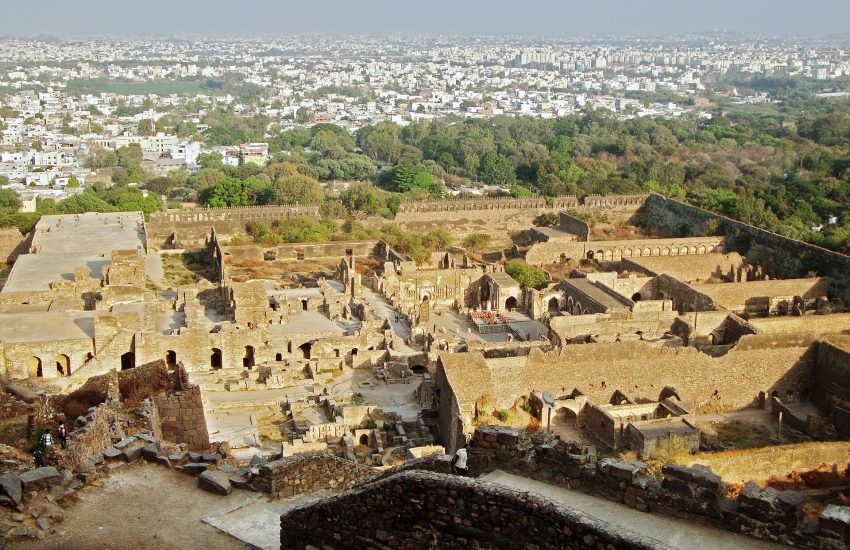
On a high hill of black volcanic rock overlooking the blue waters of the Mediterranean, in the coastal mountains of northern Syria, there rises one of the greatest of all the fortresses of the Crusaders. Margat, known in Arabic as Qalaat al-Marqab, the Castle of the Watchtower, was for a century the mighty Syrian headquarters of the Knights Hospitaller, a stronghold so vast and so strong that it was reckoned second only to the famous Krak des Chevaliers among all the castles of the Latin East. Built of the dark basalt of the extinct volcano on which it stands, it presents an aspect at once grim and magnificent.
In this article you are invited to explore the history and the architecture of this formidable fortress, from its founding by a Muslim ruler in the eleventh century, through its glory days as the great bastion of the Hospitallers, past the wars with Saladin and the Mamluks, down to its later centuries and its restoration in our own day. Margat is a castle of black stone and great towers, a fortress-machine of war raised to the highest pitch of medieval military science, and it is one of the most impressive monuments of the age of the Crusades.
In This Article
- A Black Fortress above the Sea
- The Volcano of Basalt
- Muslim Founding and Crusader Conquest
- The Knights Hospitaller
- Second Only to Krak
- The Great Round Donjon
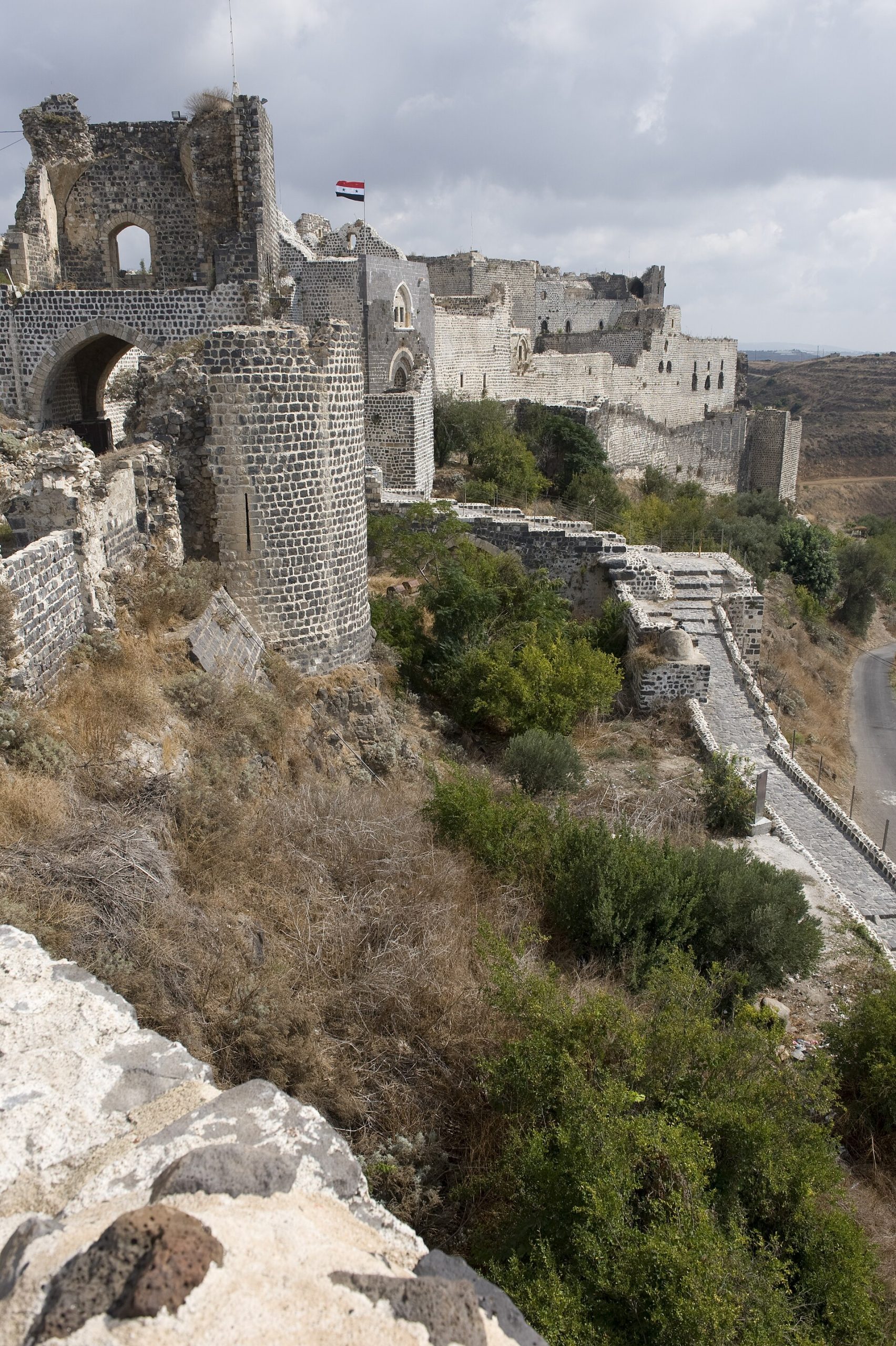
- The Concentric Walls and Towers
- The Chapel and the Great Hall
- A Garrison of a Thousand
- Defying Saladin
- The Siege of Qalawun
- The Mamluk and Ottoman Centuries
- Margat Today
- Castles Nearby
- The Black Fortress of the Hospitallers
A Black Fortress above the Sea
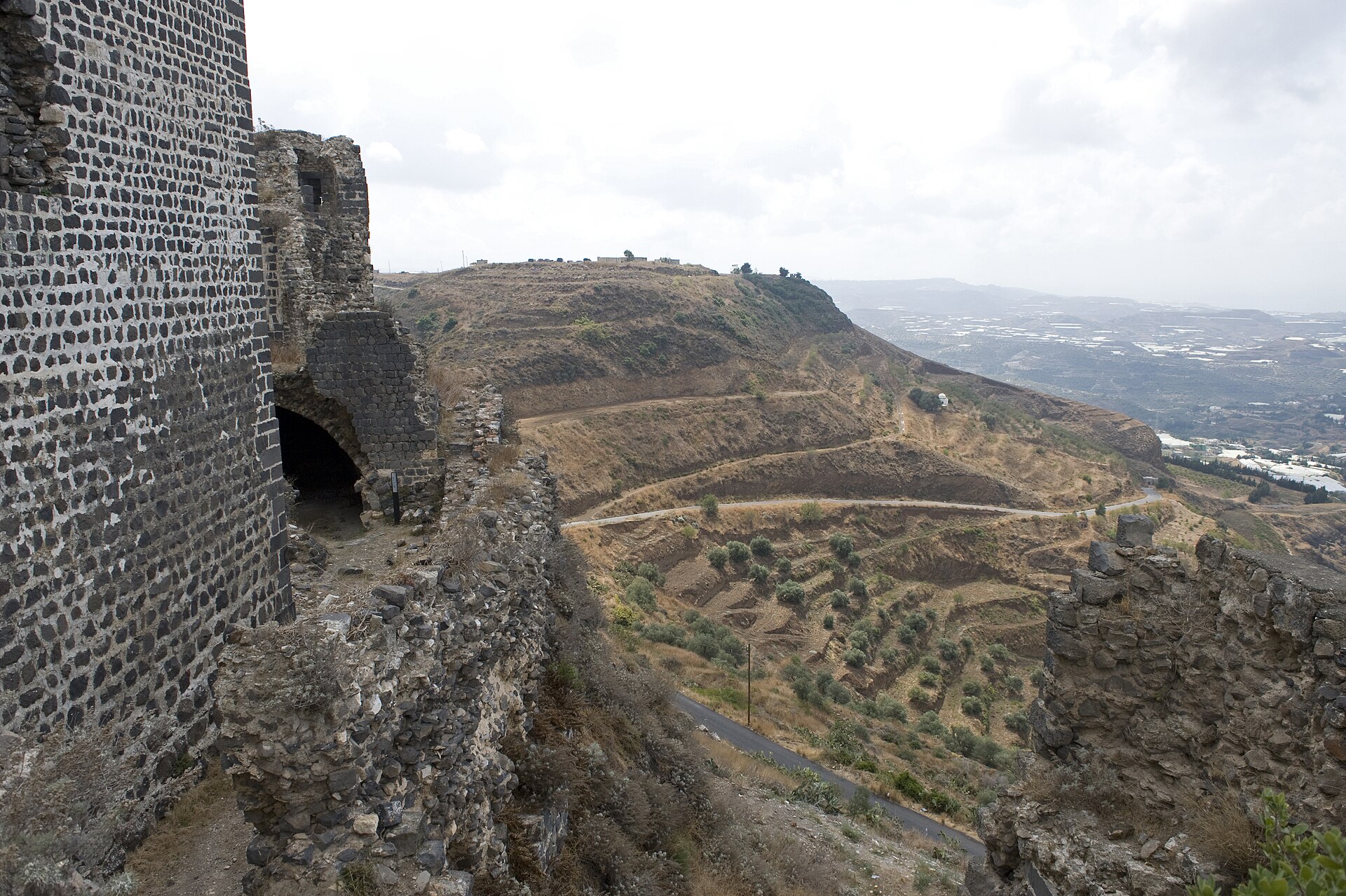
The fortress of Margat occupies one of the most commanding positions of any castle in the Crusader East, crowning the summit of a great hill that rises some three hundred and sixty meters above the sea, about two kilometers inland from the Mediterranean coast near the town of Baniyas. From this lofty height the castle dominates the coastal plain, the sea, and the mountain passes, commanding a tremendous sweep of the country and the vital routes that ran along the Syrian shore.
What sets Margat apart from most other great castles is its color, for it is built of the dark, almost black basalt of the extinct volcano on which it stands, giving it a grim and forbidding aspect quite unlike the pale limestone of Krak des Chevaliers and the other famous Crusader strongholds. Seen from below, the great black mass of the fortress rising against the sky is an awe-inspiring and even sinister sight, a fitting expression of the martial power of the warrior-monks who built and held it.
The strategic value of the site can hardly be overstated, for from its commanding height Margat controlled the vital coastal road that linked the Crusader territories of the north with those of the south, and it watched over the sea lanes along which so much of the trade and the reinforcement of the Latin East traveled. A castle in such a position could dominate the movement of armies and merchants alike, and its possession was a matter of the first strategic importance. It is little wonder that so mighty a fortress was raised upon so commanding a spot.
The town of Baniyas, on the coast below the castle, was the port that served Margat, linking the great fortress to the sea and to the wider world of Mediterranean trade and communication. From their height, the knights could watch over both the harbor and the coastal road, controlling the vital arteries of the region. The combination of the commanding hilltop and the nearby port made Margat not only a mighty fortress but a key node in the network of Crusader power along the Syrian shore.
The Volcano of Basalt
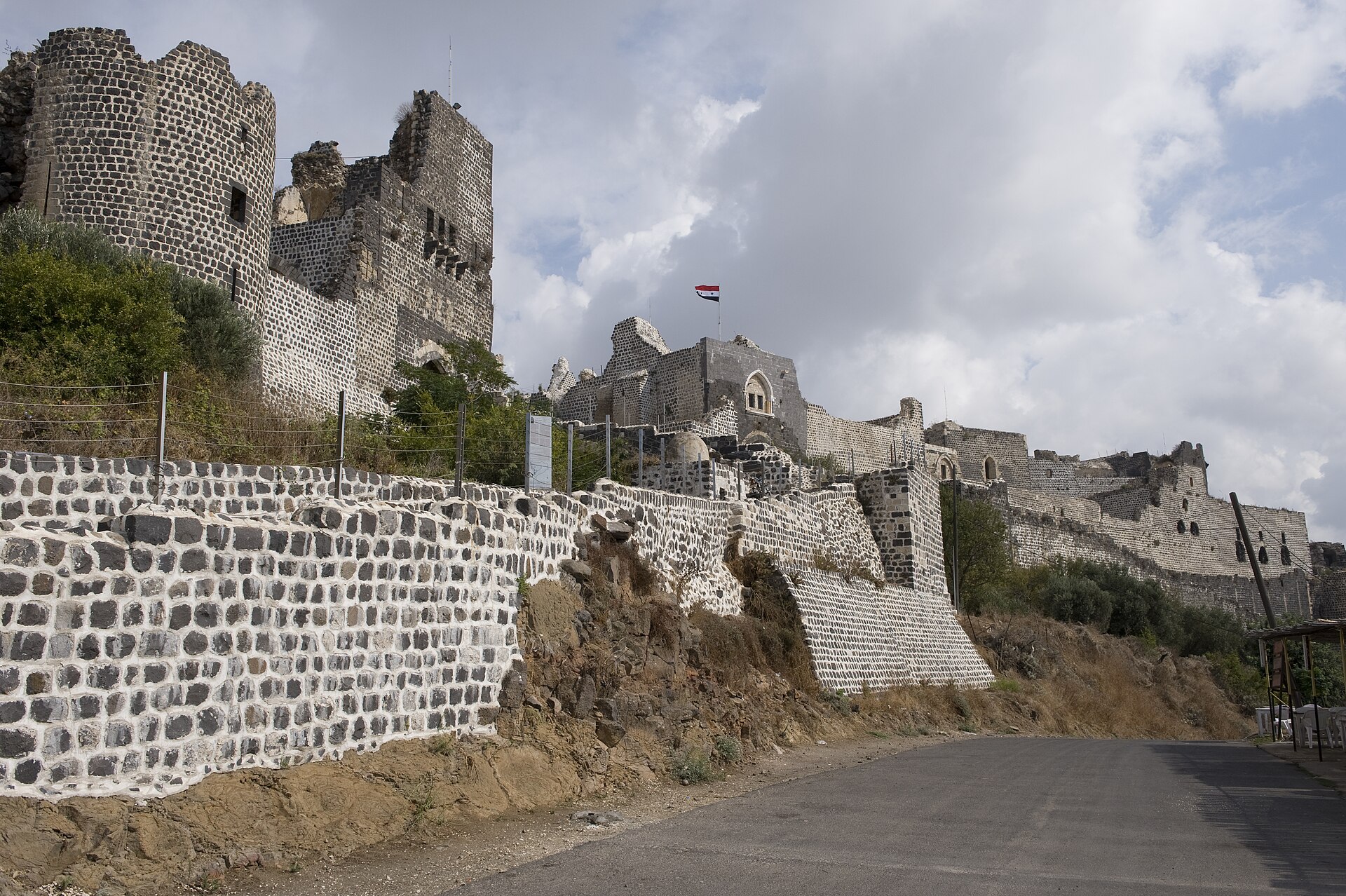
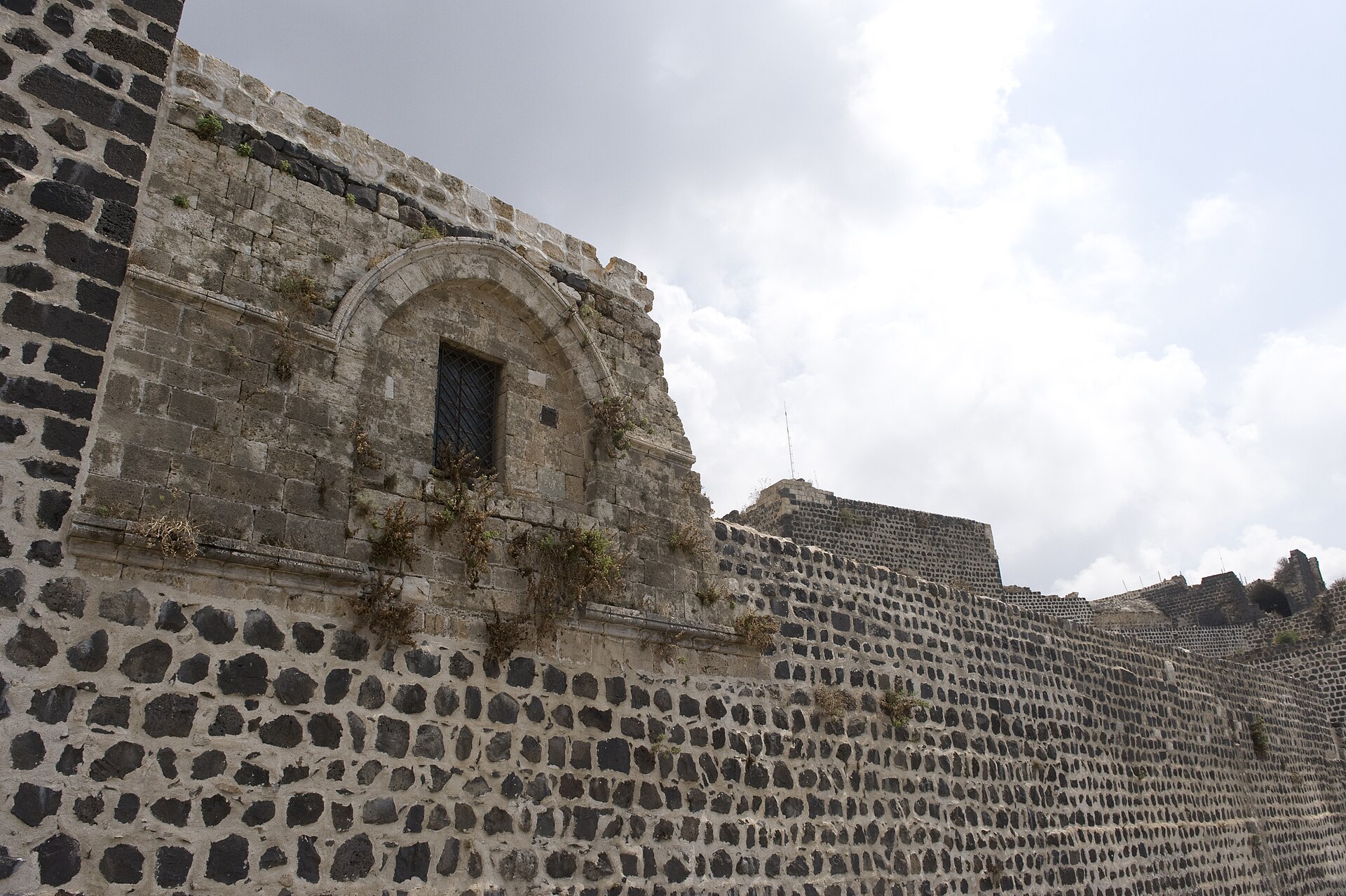
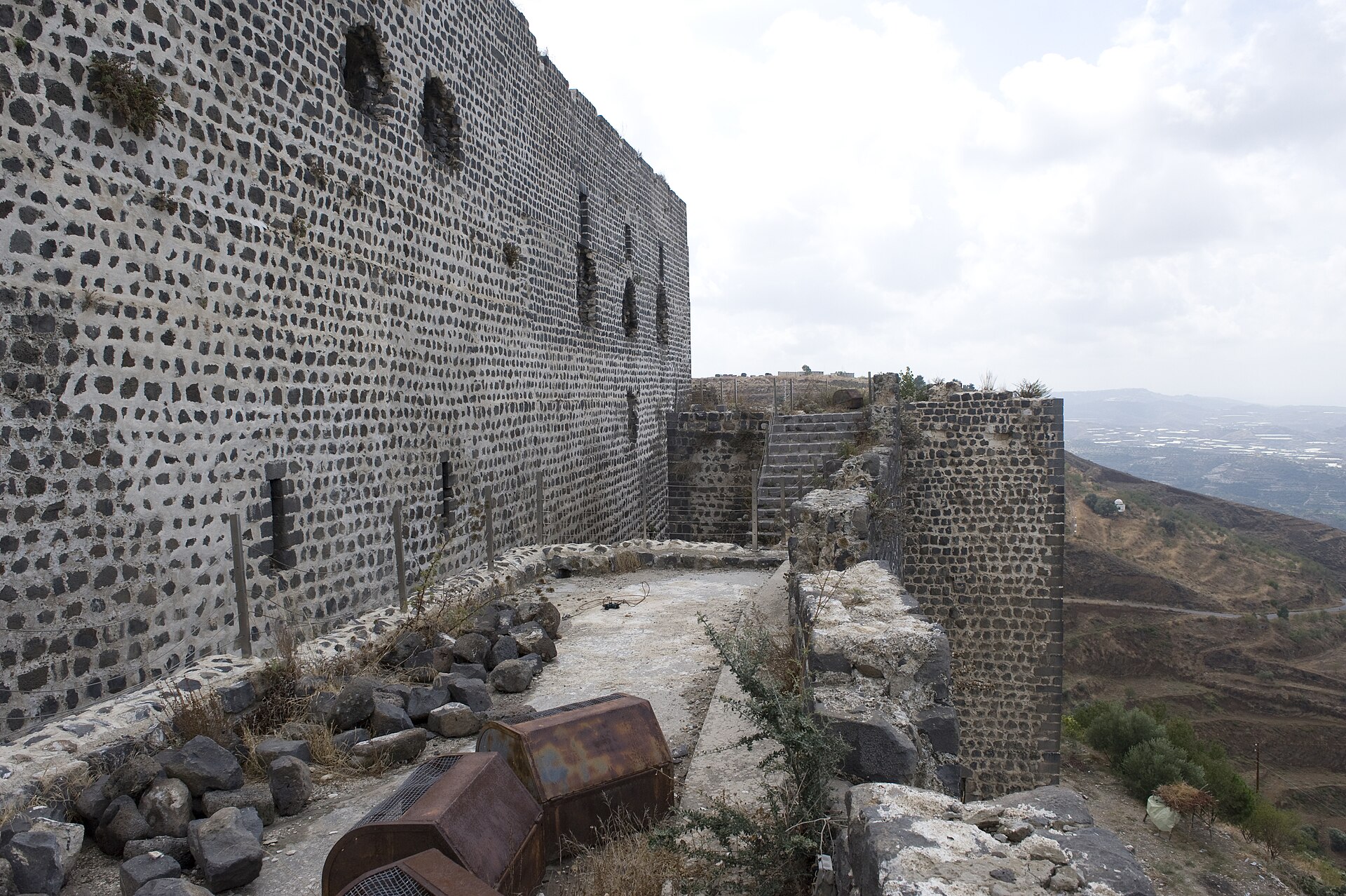
The dark stone from which Margat is built is basalt, the hard volcanic rock thrown up long ago by the extinct volcano whose hill the castle crowns. This local stone, quarried on the spot, gave the builders an abundant supply of strong and durable material, and it lends the fortress its distinctive and dramatic black coloring. The use of basalt, a difficult stone to work but immensely strong, is one of the defining features of Margat, and it sets the castle apart visually from every other great fortress of the region.
The choice of the volcanic hill as the site of the castle was dictated by its commanding height and its natural strength, for the steep sides of the hill made it difficult to approach and easy to defend. The builders exploited these natural advantages to the full, raising their black walls and towers upon the summit and the slopes of the hill to create a fortress of tremendous strength. In Margat, the very rock of the volcano was turned into a mighty instrument of war, the dark stone of the earth shaped into walls and towers of formidable power.
The dark basalt of Margat has weathered the centuries remarkably well, and the great black walls still rise strong and forbidding from the volcanic hill, little diminished by the passing of the ages. There is a stark beauty in the dark stone, especially when it catches the light of the setting sun or stands silhouetted against the blue of the sea and sky, and it gives Margat a character quite distinct from that of any other castle of the region. The fortress and the volcano are, in a sense, one, the black stronghold rising organically from the black rock of the hill.
The working of basalt, so much harder than the limestone used at most other castles, demanded great skill and labor from the masons of Margat, and the quality of the stonework that survives is a testament to their craft. That the builders chose to work in this difficult material, rather than bringing in softer stone from elsewhere, reflects both the abundance of basalt on the site and the desire to raise a fortress of the utmost strength and durability. The black stone has served its purpose well, enduring through nearly a thousand years of war and weather.
Muslim Founding and Crusader Conquest
The first fortress upon the hill of Margat was raised by a Muslim ruler in the year 1062, some decades before the coming of the Crusaders to the Holy Land. When the armies of the First Crusade swept through the region, the site changed hands, and after a period under Byzantine control it was incorporated by the Crusader prince Tancred into the Principality of Antioch, one of the states founded by the Crusaders in the Near East.
For much of the twelfth century Margat was held as a vassal lordship within the principality, controlled by the noble family of the Masoirs, who governed it with its own administrative structure and its own rear-vassals. It was already a strong and important fortress, guarding the southern approaches to the Principality of Antioch and the coastal route between the Crusader territories. But the greatest chapter of its history was still to come, with its acquisition by one of the great military orders of the Crusader world.
The complex history of Margat before the coming of the Hospitallers, passing from Muslim to Byzantine to Crusader hands, reflects the turbulent and contested nature of the Syrian coast in the age of the Crusades, a frontier region fought over by many powers. Each successive holder recognized the value of the site and added to its defences, so that the fortress that the Hospitallers acquired in 1186 was already a place of considerable strength. Upon these foundations the knights would raise the mighty castle whose remains we admire today.
The Knights Hospitaller
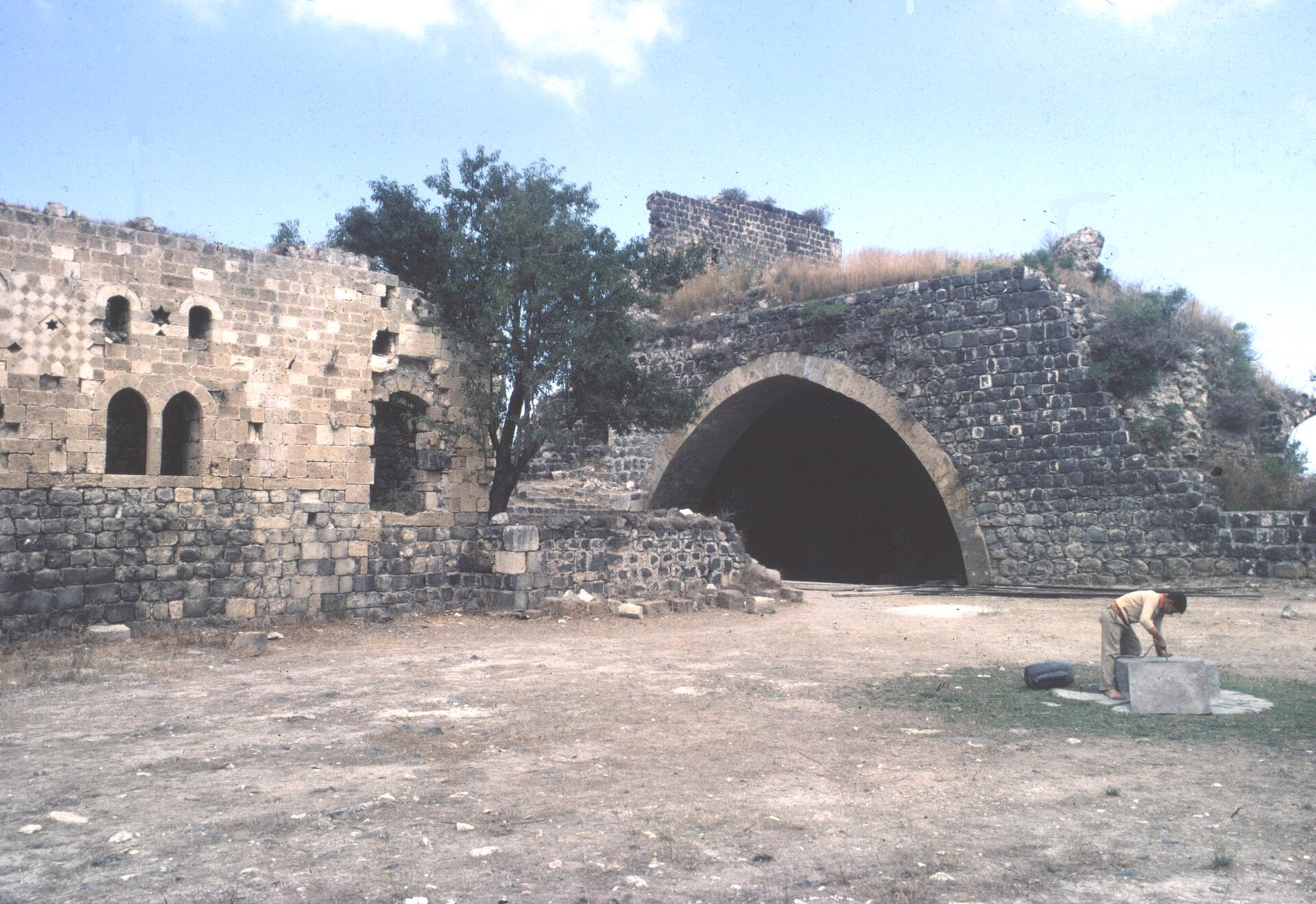
In the year 1186 the fortress of Margat passed into the hands of the Knights Hospitaller, the great military order of warrior-monks who had bought it from its lord, Bertrand Masoir, because the enormous cost of maintaining so great a castle had become too much for a single noble family to bear. For the Hospitallers, with their vast resources and their institutional permanence, the burden was one they could shoulder, and they set about rebuilding and expanding the fortress on a truly grand scale.
Under the Hospitallers, Margat was transformed into one of the mightiest strongholds of the entire Crusader East. The knights greatly enlarged and strengthened the castle, raising the great walls and towers whose remains still astonish the visitor today. As members of a religious order who had taken vows of poverty, chastity, and obedience, and who combined the life of the monk with that of the soldier, the Hospitallers brought to Margat a discipline and a permanence that made it a formidable bastion of Christian power in the Muslim lands.
The Knights Hospitaller, formally the Order of the Knights of the Hospital of Saint John of Jerusalem, had begun as a charitable order devoted to the care of sick and poor pilgrims, before evolving into one of the great military orders of the Crusader world. This dual character, combining the care of the sick with the waging of holy war, gave the order a distinctive ethos, and its members were among the most disciplined and formidable soldiers of the age. In acquiring Margat, the Hospitallers gained a stronghold worthy of their power and their ambitions.
The willingness of the Hospitallers to take on the crushing expense of maintaining Margat, which had defeated the resources of a noble family, illustrates the vast wealth and the long-term stability of the great military orders, which drew revenues from estates all across Europe. Only such an institution, wealthy and permanent, could afford to garrison and provision so enormous a fortress year after year. The acquisition of Margat by the Hospitallers thus transformed it from a burden into a bastion, and inaugurated the greatest chapter of its long history.
Second Only to Krak
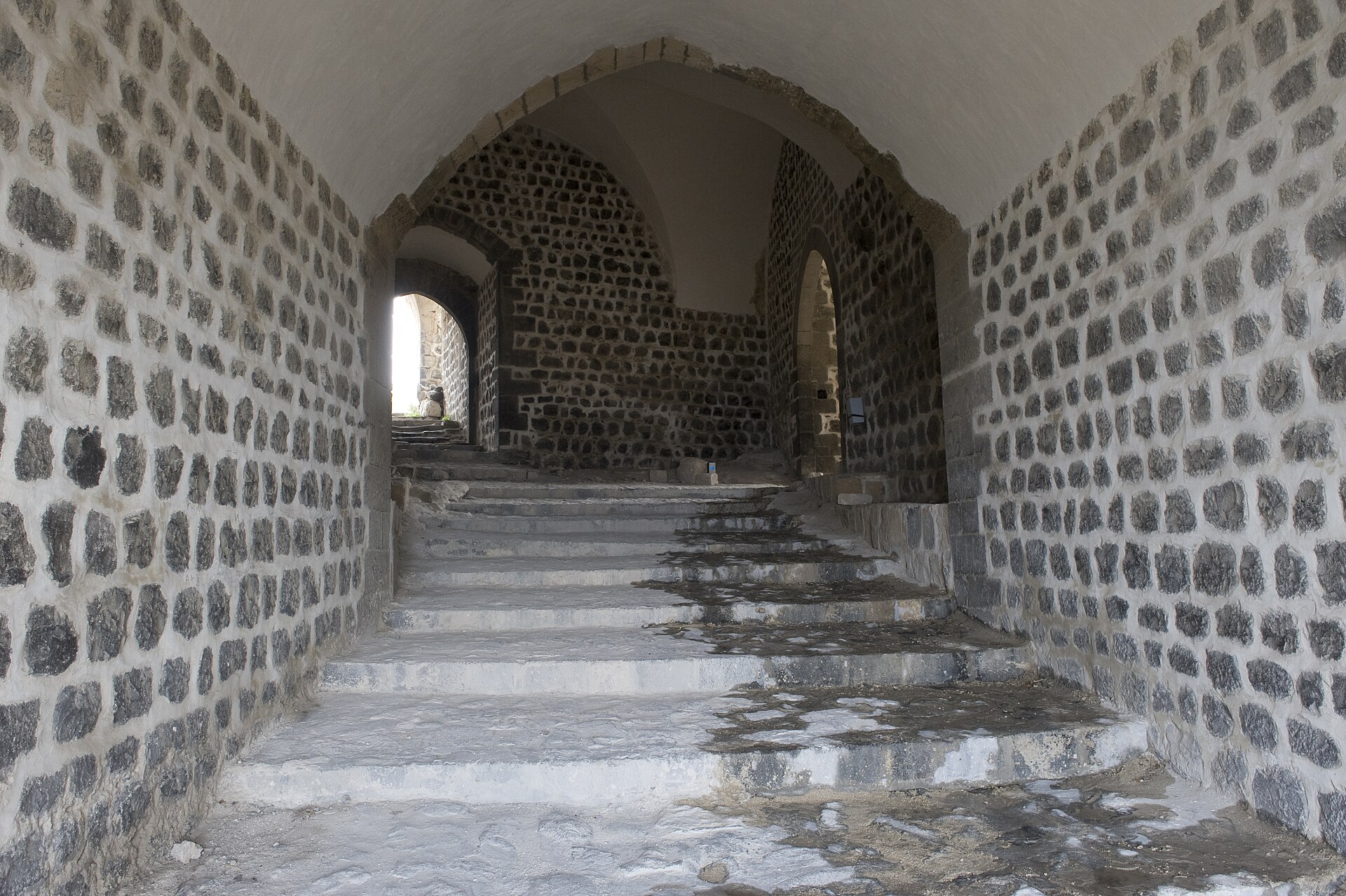
Under the rule of the Hospitallers, Margat rose to become one of the two greatest castles of the order in the Holy Land, its Syrian headquarters and a stronghold reckoned second in importance only to the famous Krak des Chevaliers to the south. The two great castles together anchored the Hospitaller presence in the region, and between them they dominated a vast stretch of the Syrian coast and its hinterland, projecting the power of the order across the whole area.
As a headquarters of the Hospitallers, Margat was not merely a fortress but a center of administration and a base for the order’s operations in the region. From here the knights governed their extensive lands, gathered their revenues, and directed their forces in the endless struggle against the surrounding Muslim powers. The castle was the seat of a great commander of the order, and its importance in the affairs of the Crusader East was second to none save that of Krak itself. It was, in every sense, one of the pillars of the Hospitaller state in Syria.
The rivalry and the partnership between Margat and Krak des Chevaliers, the two great Hospitaller castles of Syria, is one of the fascinating themes of the order’s history in the region. Together they formed a system of defence and control that dominated a vast area, and the fall of either would have been a grievous blow to the Hospitaller position. That Margat should be reckoned second only to Krak, the most famous castle of the entire Crusader world, is the measure of its greatness, for to be second to Krak was to stand above almost every other fortress of the age.
The Great Round Donjon
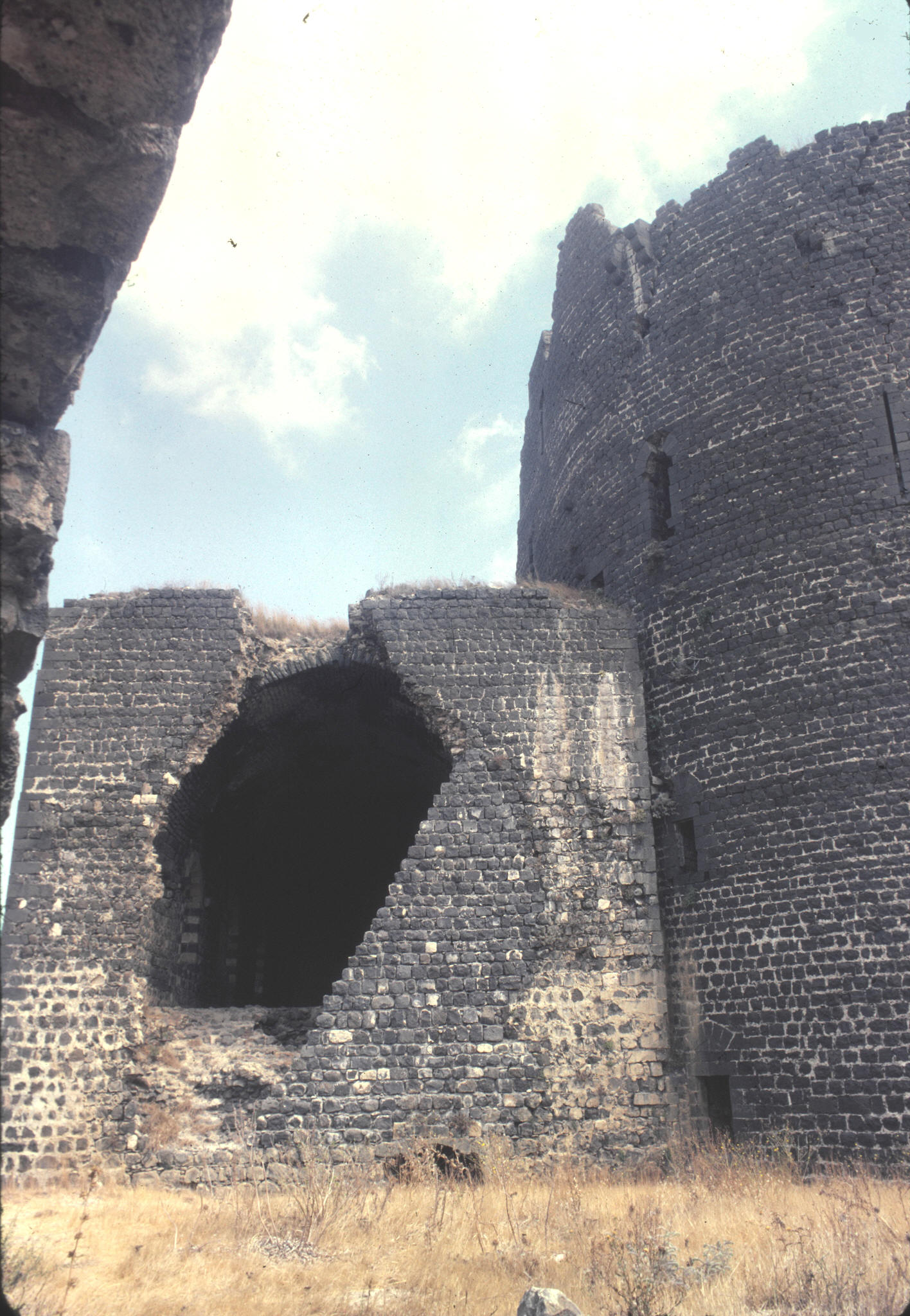
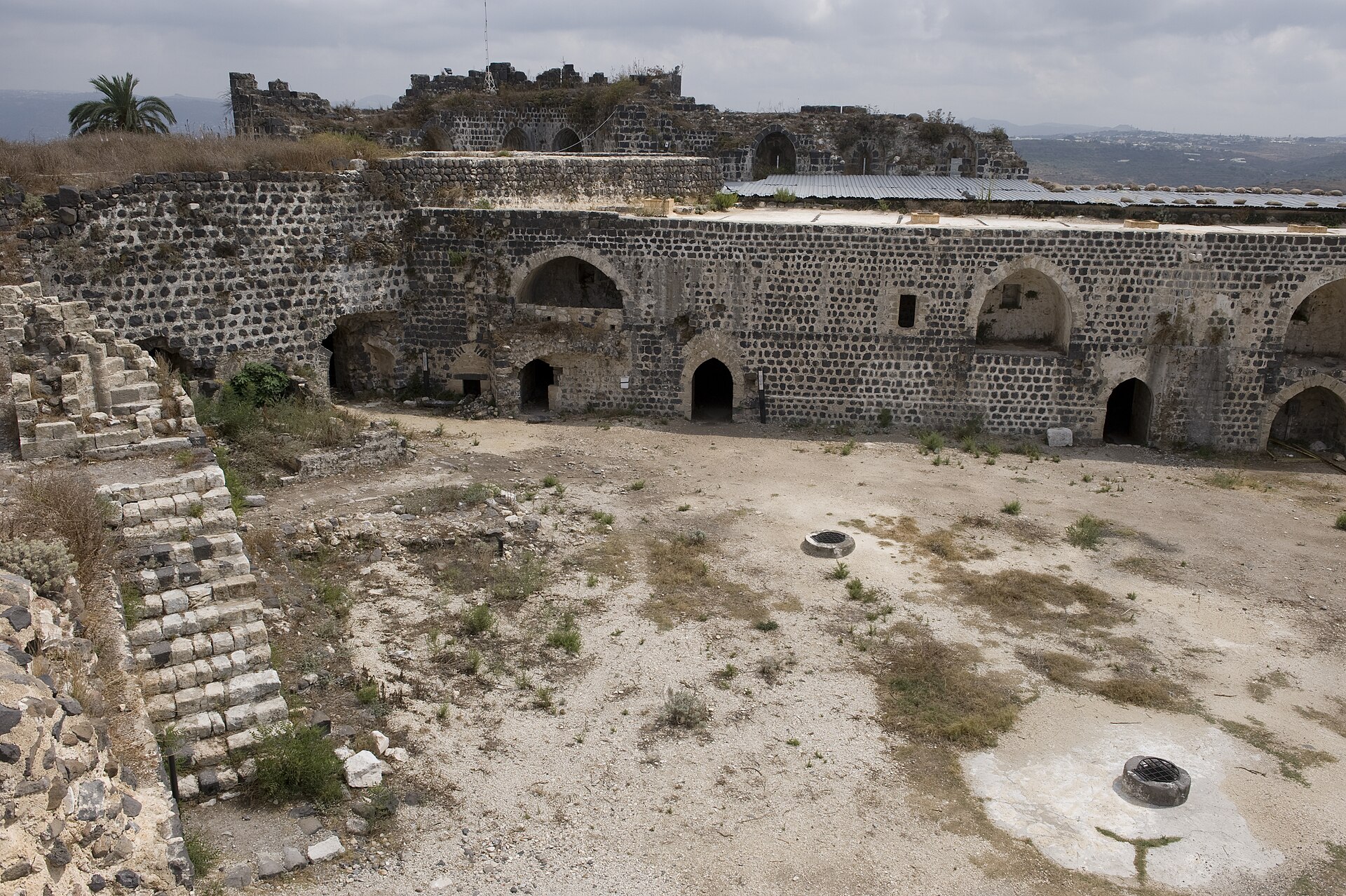
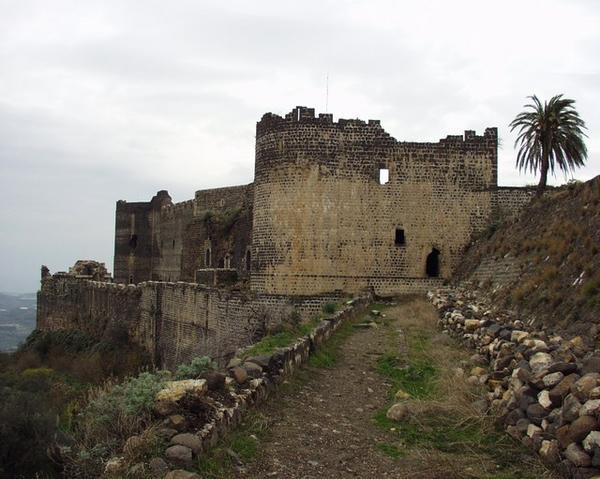
The strongest point of the whole fortress was its great circular keep, or donjon, a massive round tower of black basalt that formed the ultimate stronghold and last refuge of the castle. This mighty tower, rising above the inner ward, was the heart of the defences, a fortress within the fortress, built to withstand assault even if the rest of the castle should fall. Its rounded form was a deliberate feature of the most advanced military architecture of the age, for a round tower was harder to undermine and to batter than a square one.
The great donjon of Margat was among the most impressive structures of the whole castle, a symbol of the strength and the permanence of the Hospitaller order that held it. From its summit the defenders commanded a tremendous view over the surrounding country and the sea, and within its thick walls they could hold out against any enemy. The round keep was the culmination of the castle’s defences, the strongest and most vital of all its many towers, and it remains one of the most striking features of the fortress today.
The development of the great round keep represents one of the high points of medieval military engineering, for the round tower had been found to be far superior to the older square keep in resisting the two great threats of siege warfare, the battering ram and the mine. A round tower presented no vulnerable corners to the miner, and its curved surface could deflect the blows of the ram, so that it was both harder to bring down and harder to breach. The mighty donjon of Margat was a supreme example of this advanced design.
From the summit of the great donjon, the view extends over the whole of the castle, the surrounding hills, and the wide expanse of the Mediterranean, and it is easy to imagine the sentries of the order keeping their watch here, scanning the horizon for any sign of an approaching enemy fleet or army. The keep was not only the strongest point of the castle but its watchtower and its symbol, the dark heart of the black fortress, visible from far off across the sea and the land as a token of the power of the Hospitallers.
The Concentric Walls and Towers
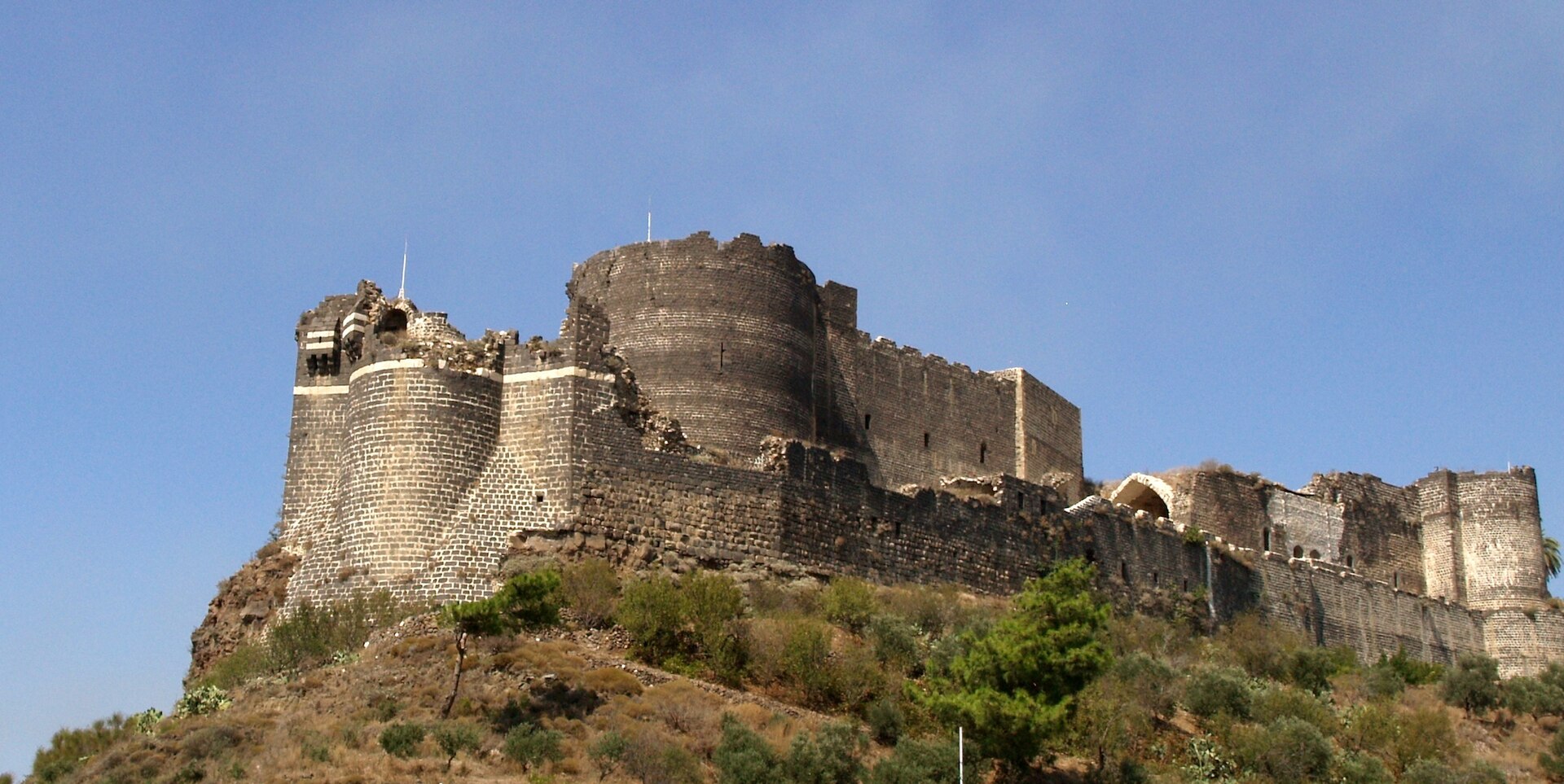
Margat was built as a concentric castle, one of the most sophisticated forms of medieval fortification, in which one complete circuit of walls was enclosed within another, so that an attacker who breached the outer defences found himself trapped between the walls, overlooked and assailed from the higher inner rampart. This principle of defence in depth, which the Hospitallers also employed at Krak des Chevaliers, made Margat exceptionally difficult to assault.
The fortress was defended by no fewer than fourteen great towers, placed around its walls so as to cover every approach and to support one another with their fire. These towers, together with the double walls and the natural strength of the volcanic hill, made Margat one of the most formidable strongholds of the age, a fortress that was reckoned nearly impregnable by the standards of medieval siege warfare. The scale and the sophistication of its defences reflected the vast resources and the military expertise of the Hospitaller order that raised them.
The concentric plan, in which the castle was defended by two complete rings of walls one within the other, was the most sophisticated form of fortification developed in the age of the Crusades, and its adoption at Margat reflects the wealth and the expertise of the Hospitaller order. An attacker faced not one obstacle but a whole series, each more formidable than the last, and the defenders could pour their fire down upon him from the higher inner walls as he struggled with the outer. It was a design that made the great castles of the Hospitallers all but impregnable.
The fourteen towers of Margat, ranged around its double walls, gave the defenders a tremendous concentration of firepower and ensured that no part of the perimeter was left undefended. Each tower could act as an independent strongpoint, holding out even if its neighbors were taken, so that the capture of the castle required the reduction of one obstacle after another in a long and costly process. It was this depth and redundancy of defence, as much as the height and thickness of any single wall, that made Margat so nearly impregnable.
The Chapel and the Great Hall
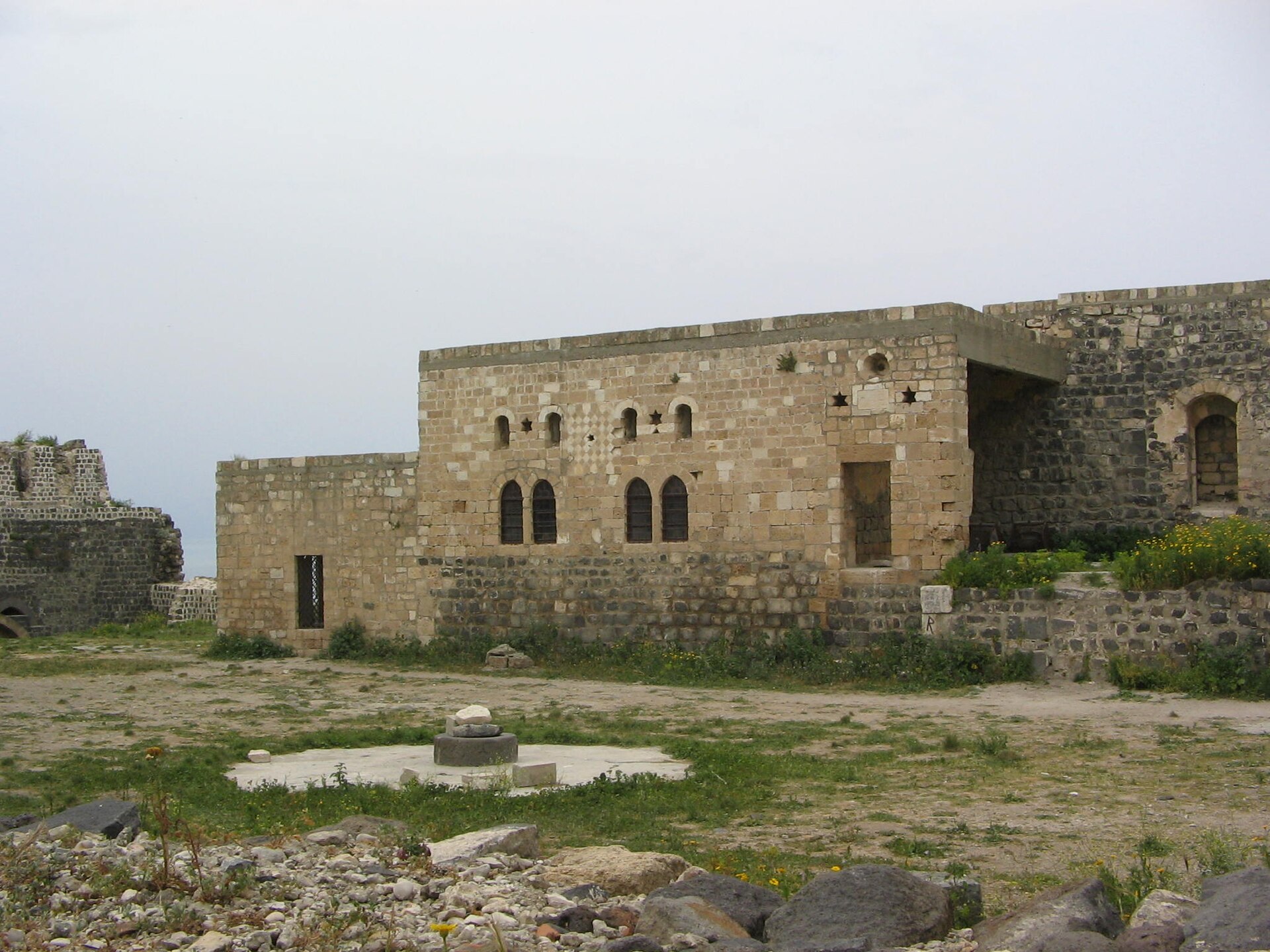
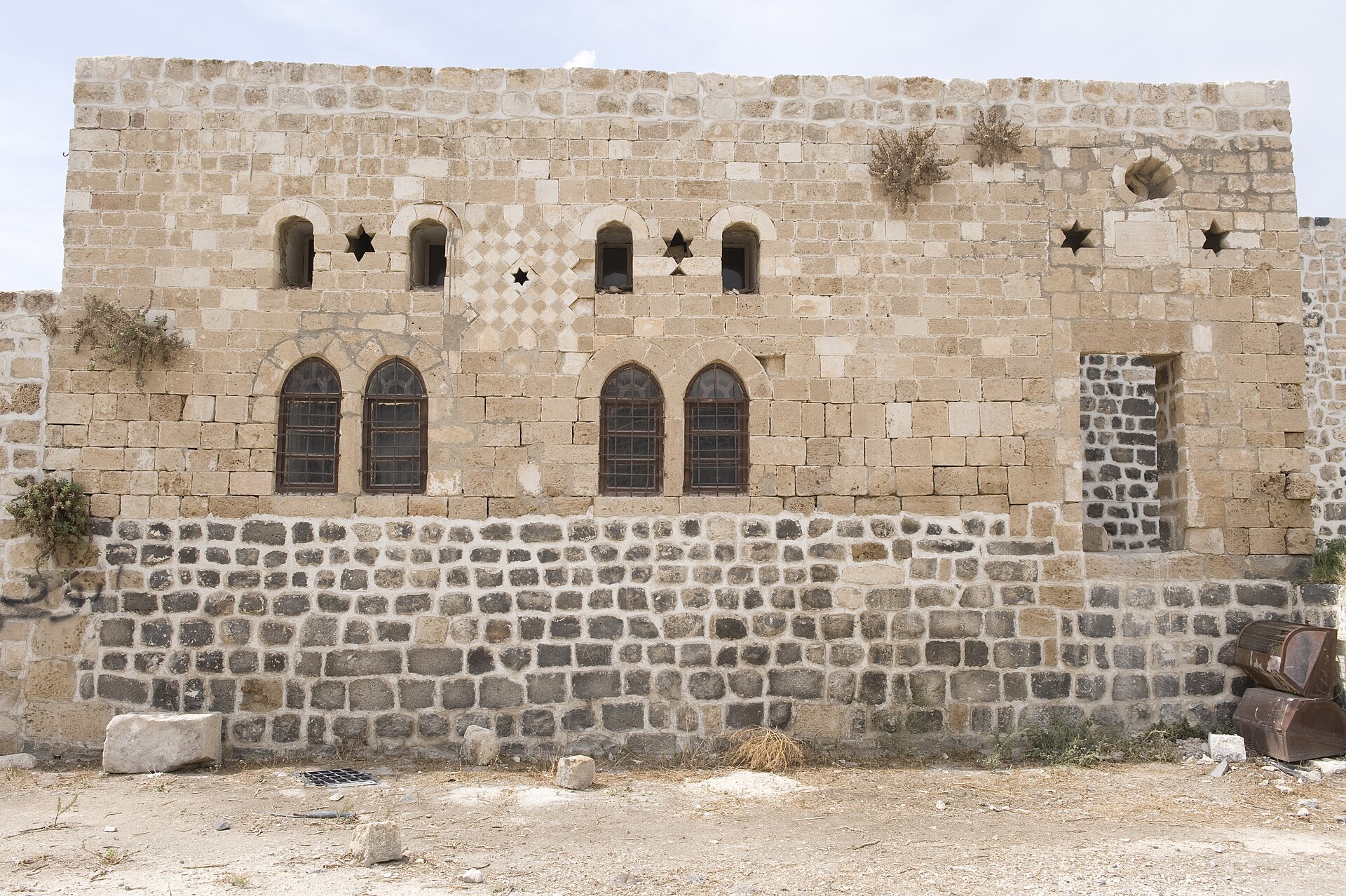
For all its martial strength, Margat was also a monastery, the home of a community of warrior-monks who lived according to a religious rule, and within its walls stood the buildings of their communal life, above all the chapel and the great hall. The chapel, a fine building in the Gothic style brought from the west, was the spiritual heart of the fortress, where the knights performed the daily round of prayer and worship that was as much a part of their calling as the waging of war.
The great hall served as the setting for the communal life of the order, for meals taken together, for the reception of guests, and for the councils at which the knights conducted their affairs. These buildings, elegant and well-appointed, reveal the other side of the life at Margat, the ordered monastic existence that lay behind the grim military exterior. In the chapel and the hall of Margat, as at Krak, the life of the cloister and the life of the battlefield were joined in the distinctive world of the military orders.
The Gothic chapel of Margat, with its pointed arches and its fine stonework, was a little piece of Western Europe transplanted to the Syrian coast, a reminder that the knights who held the fortress were the sons of a distant and very different world. Traces of painted decoration have survived in the chapel, giving a glimpse of the color and the splendor that once adorned the interior. In this beautiful building, amid the grim strength of the fortress, the warrior-monks found the spiritual sustenance that lay at the heart of their extraordinary way of life.
The daily life of the knights at Margat was governed by the rule of their order, which prescribed a strict routine of prayer, work, and military training, so that the fortress was at once a barracks, a monastery, and an administrative center. In the chapel and the hall, the community gathered for the offices of the day and the business of the order, living out the peculiar vocation of the warrior-monk. It was this fusion of the spiritual and the martial that gave the Hospitallers their extraordinary strength and cohesion, and that made fortresses like Margat possible.
A Garrison of a Thousand
The scale of Margat is reflected in the size of the garrison it could hold and the provisions it could store, for the great fortress was built to accommodate as many as a thousand men, together with all the supplies they would need to withstand a prolonged siege. It is said that the castle could store provisions enough to feed its garrison for a full five years, a measure of the vast scale of its storerooms and cisterns and of the seriousness with which its defence was planned.
This immense capacity for endurance was one of the keys to the strength of Margat, for the knights understood that most sieges were decided not by assault but by the slow contest of attrition, and a fortress that could hold out for years was all but impossible to reduce by blockade. The great stores of food and water, cut and built into the fabric of the castle, made Margat a self-contained world, able to defy the surrounding Muslim powers in splendid isolation for as long as its enemies had the patience to wait.
The logistics of maintaining so large a garrison, and of storing provisions enough to feed it for years, were formidable, and they reflect the sophisticated organization of the Hospitaller order, which functioned almost as a state in its own right. The great storerooms, cisterns, and granaries built into the fabric of Margat were as essential to its strength as any wall or tower, for they gave the fortress the capacity to endure. A castle, however strong its defences, could not hold out without food and water, and in this respect Margat was equipped to defy any enemy.
The comparison with Krak des Chevaliers, which was said to be able to hold out for a similar span of years, is instructive, for both castles were designed by the same order according to the same principles, and both were built to be self-sufficient fortresses capable of defying any siege. The great capacity of Margat for endurance was thus not accidental but the product of a deliberate and sophisticated military doctrine, in which the ability to outlast a besieging army was valued as highly as the strength of the walls themselves.
Defying Saladin
The strength of Margat was put to the test in the year 1188, in the great campaign that followed Saladin’s crushing victory over the Crusaders at the battle of Hattin, when the triumphant Muslim leader swept through the Crusader lands, taking castle after castle. But when Saladin came before Margat and looked upon its mighty black walls rising from the volcanic hill, he judged the fortress too strong to attack, and he passed it by, leaving it in the hands of the Hospitallers.
That the greatest Muslim leader of the age, at the very height of his power and success, should have declined to assault Margat is the surest testament to the formidable strength of the fortress. Where lesser castles fell before Saladin’s advance, Margat stood firm, its defences too daunting even for the conqueror of Jerusalem. The Hospitallers held their great stronghold through the storm that swept away so much of the Crusader kingdom, and Margat remained a bastion of Christian power on the Syrian coast for nearly a century more.
The decision of Saladin to pass Margat by in 1188 stands in vivid contrast to his capture of so many other Crusader strongholds in that campaign, and it underlines the exceptional strength of the fortress. Saladin was no rash commander, and he understood that to besiege so mighty a castle would cost him dearly in time and men, with no certainty of success. His prudence in leaving Margat alone is itself a tribute to the skill of the Hospitallers who had made their black fortress so daunting a prospect even for the greatest soldier of the age.
The survival of Margat through Saladin’s campaign meant that the Hospitallers retained a powerful base on the Syrian coast even after the loss of Jerusalem and so much else, from which they could continue the struggle in the decades that followed. The great black fortress remained a thorn in the side of the Muslim powers, a symbol of Christian defiance that endured long after the tide had turned against the Crusaders. For nearly a century after Saladin passed it by, Margat held firm, until the coming of the Mamluks at last brought its proud independence to an end.
The Siege of Qalawun
The end of Hospitaller Margat came in the year 1285, when the Mamluk sultan Qalawun, determined to punish the knights for their support of a Mongol invasion, brought a great army against the fortress. The siege began on the seventeenth of April, and for thirty-eight days the mighty castle resisted all the efforts of the Mamluks, its great walls and towers proving as formidable as their reputation. But Qalawun’s engineers set to work mining beneath the southernmost tower, and at last they succeeded in bringing down a section of the wall.
With the breach opened and further resistance hopeless, the defenders surrendered on the twenty-third of May. Qalawun, in recognition of the courage of the garrison, permitted the knights to withdraw with honor, and he preserved the great fortress rather than destroying it, recognizing its strategic value. Thus, after a century as the great bastion of the Hospitallers on the Syrian coast, Margat passed into Muslim hands, its fall a part of the long twilight of the Crusader presence in the Holy Land.
The fall of Margat in 1285 was part of the final Mamluk offensive that would, within a few years, extinguish the Crusader presence in the Holy Land altogether, culminating in the fall of Acre in 1291. The great Hospitaller castles, which had for so long anchored the Christian position, fell one by one before the resurgent power of the Mamluks, and Margat was among them. Its capture, after so long and proud a history, marked the beginning of the end for the warrior-monks on the Syrian coast, and the twilight of the whole Crusader enterprise.
The honorable treatment of the defeated garrison by Qalawun, permitting the knights to depart with their lives and their dignity, was in keeping with the code of chivalry that, remarkably, both sides could observe even in the bitter warfare of the age. It also reflected the sultan’s respect for the courage with which the Hospitallers had defended their fortress. That Qalawun chose to preserve rather than destroy the great castle is a further tribute to its value, and it is the reason that so much of Margat survives to be admired today.
The Mamluk and Ottoman Centuries
After its capture by Qalawun, Margat continued to serve as an important stronghold under the rule of the Mamluks, who made it the center of a district and used it, among other things, as a prison. The great fortress that the Hospitallers had built retained its strategic value, and the Mamluk sultans maintained and garrisoned it as a key point in their control of the Syrian coast. The black walls that had defied Saladin now guarded the interests of the Mamluk state.
Under the Ottomans, who succeeded the Mamluks as masters of Syria, Margat continued to serve as an administrative center, the seat of a district administration, until the later nineteenth century, when the administration was transferred to the nearby town of Baniyas. In its later years the great fortress gradually lost its importance and fell into decline, though its massive black walls and towers, built to last, endured through the centuries as a prominent landmark on the Syrian coast.
The long afterlife of Margat as a Mamluk and Ottoman administrative center and prison is a common fate for the great fortresses of the region, which were too valuable to abandon even as their military importance declined. For centuries the black castle continued to serve the rulers of Syria, its great walls now guarding prisoners and housing officials rather than warrior-monks. This continuity of use, running across the great divides of dynasty and faith, is one of the recurring themes in the history of the castles of the Near East.
Margat Today
In modern times the great fortress of Margat, after long neglect, has become the subject of programs of restoration and conservation, beginning in the year 2007, aimed at preserving this magnificent monument of the Crusader age for future generations. The work has sought to stabilize the great walls and towers and to make the castle safe and accessible for the visitors who come to marvel at its grim black grandeur.
Like so much of Syria’s heritage, Margat has faced new dangers in recent years, and the great earthquake of February 2023 caused significant damage to the ancient fortress, a fresh blow to a monument that has stood for nearly a thousand years. Yet the great castle endures, as it has endured so much before, and it remains one of the finest and most impressive of all the Crusader castles that survive in Syria, a worthy companion to the famous Krak des Chevaliers.
The preservation of Margat is a matter of concern to all who value the heritage of the Crusader age, for the fortress is one of the finest and most complete examples of the military architecture of the period that survives anywhere in the world. The damage inflicted by the recent earthquake is a reminder of the fragility even of so mighty a structure, and of the importance of the ongoing work of conservation. Margat, standing black and grim upon its volcanic hill, remains one of the great treasures of Syria and of the whole medieval world.
To stand within the walls of Margat today, amid the dark basalt towers and the ruined halls, with the Mediterranean glittering far below, is to feel the powerful atmosphere of the place and to sense the presence of the warrior-monks who lived and prayed and fought here for a hundred years. Few castles convey so vividly the grim reality of the military orders and the age of the Crusades, and few command so magnificent a setting. Margat is a fortress that repays the traveler who seeks it out with an unforgettable encounter with the medieval past.
If you would like to see exactly where this mighty fortress stands upon the map, you can find it here:
View on Google Maps: 35.1503, 35.9497
From its black volcanic hill above the Mediterranean, Margat has kept its watch over the Syrian coast for the better part of a thousand years, and its great towers stand there yet, a monument to the age of the warrior-monks.
Castles Nearby
If Margat has drawn you into the world of the Crusader castles and the warrior-monks, you may enjoy these other great fortresses of medieval Syria:
- Krak des Chevaliers: The Finest Castle of the Crusaders
- The Citadel of Aleppo: Four Thousand Years on a Single Hill
The Black Fortress of the Hospitallers
Margat is one of the great fortresses of the age of the Crusades, a mighty stronghold of black basalt that was for a century the Syrian headquarters of the Knights Hospitaller, second in importance only to the famous Krak des Chevaliers. Its great round keep, its concentric walls, and its fourteen towers made it a masterpiece of medieval military architecture, a fortress-machine designed with consummate skill for the single purpose of war. Even in ruin, it retains a grim and awe-inspiring grandeur.
If you should travel to the coast of Syria, Margat is one of the most impressive historic sights the region has to offer, a great black castle rising from its volcanic hill above the shining sea. To walk among its walls and towers, and to climb to the summit of its mighty keep, is to enter the world of the warrior-monks who held it against the might of Islam for a hundred years. Margat is a fortress worthy to stand beside the greatest castles of the Crusaders, and it deserves to be far better known among the strongholds of the world.
Whether you come for the epic history of the Hospitallers, for the grim magnificence of the black basalt architecture, or for the breathtaking views over the Mediterranean, Margat will reward your journey, and you will carry away the memory of this mighty fortress, standing dark and proud upon its volcanic hill above the Syrian coast as it has done for nearly a thousand years.
You May Like
Chittorgarh Fort: The Largest Fort in India and the Legend of the Jauhar