Spread across the summit of a great hill above the plains of southern Rajasthan, covering an area so vast that a whole city once flourished within its walls, Chittorgarh is the largest fort in India and one of the most storied strongholds in all the world. The ancient capital of the kingdom of Mewar and the seat of the proud Sisodia Rajputs, it is a place of soaring victory towers and ruined palaces, of ancient temples and, above all, of the terrible and heroic legends of the jauhar, the mass self-sacrifice of its women in the face of defeat.
In this article you are invited to explore the history and the architecture of this immense and tragic fortress, from its legendary origins in the mists of antiquity, through its role as the heart of the Rajput resistance, to the three great sieges and the three jauhars that have made its name a byword for Rajput valor and sacrifice. Chittorgarh is a fortress unlike any other, a monument not only to power and art but to a code of honor so absolute that its defenders chose death before dishonor, again and again, across the centuries.
In This Article
- The Largest Fort in India
- Ancient Origins
- Capital of Mewar
- The Seven Gates
- The Tower of Victory
- The Tower of Fame
- Alauddin Khalji and the First Jauhar
- Bahadur Shah and the Second Jauhar
- Akbar and the Third Jauhar
- The Palaces of the Ranas
- Meerabai and the Temples
- Water and the Gaumukh Reservoir
- Chittorgarh Today
- Castles Nearby
- The Great Fort of Mewar
The Largest Fort in India
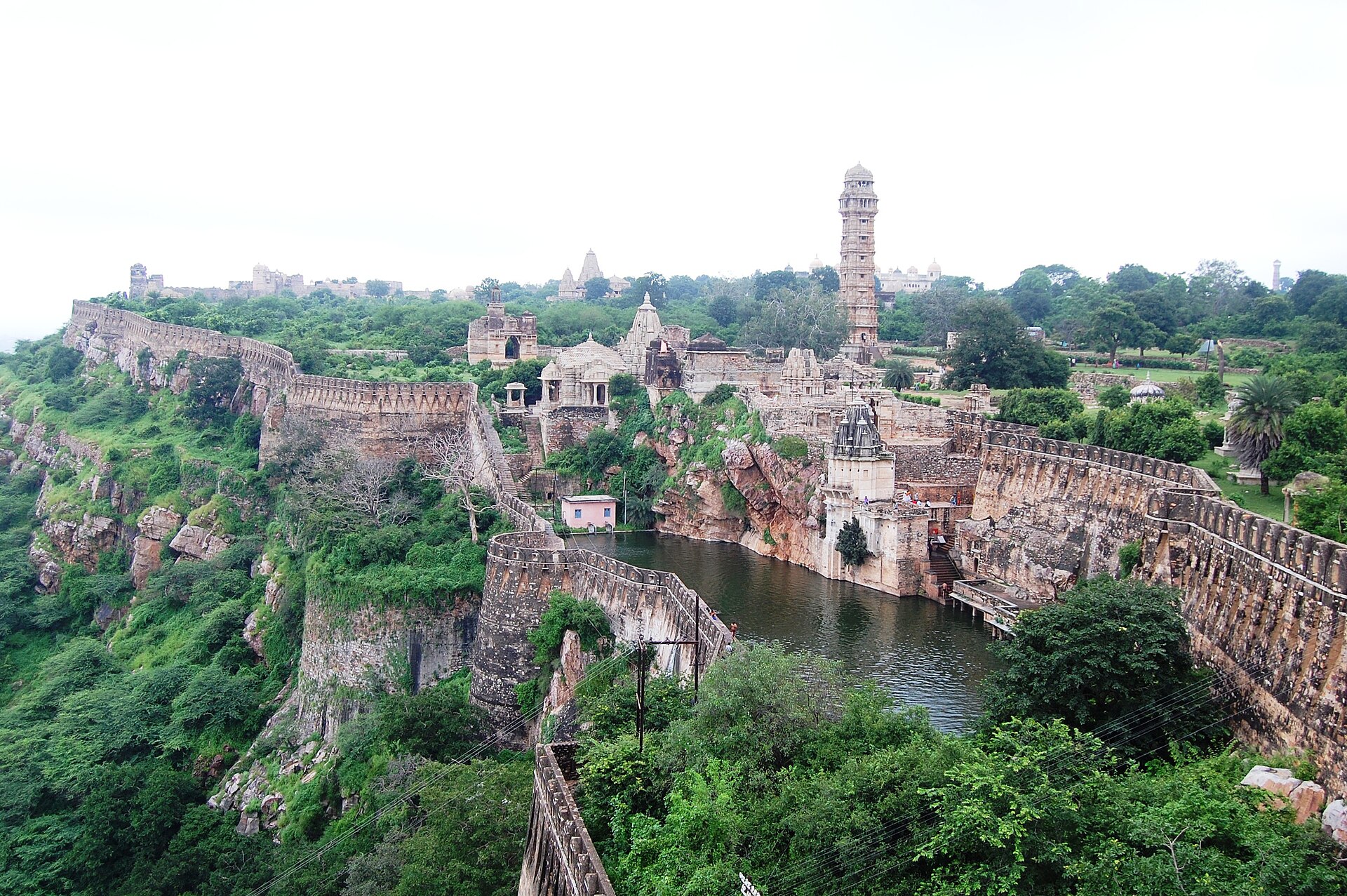
Chittorgarh holds the distinction of being the largest fort in all of India, a fortress of truly colossal scale that spreads across the entire summit of a great hill, covering some two hundred and eighty hectares, or seven hundred acres, of ground. Rising a hundred and eighty meters above the surrounding plains, the fortress is so vast that it once contained a whole thriving city within its walls, with palaces, temples, markets, and reservoirs, a self-contained world upon its lofty plateau.
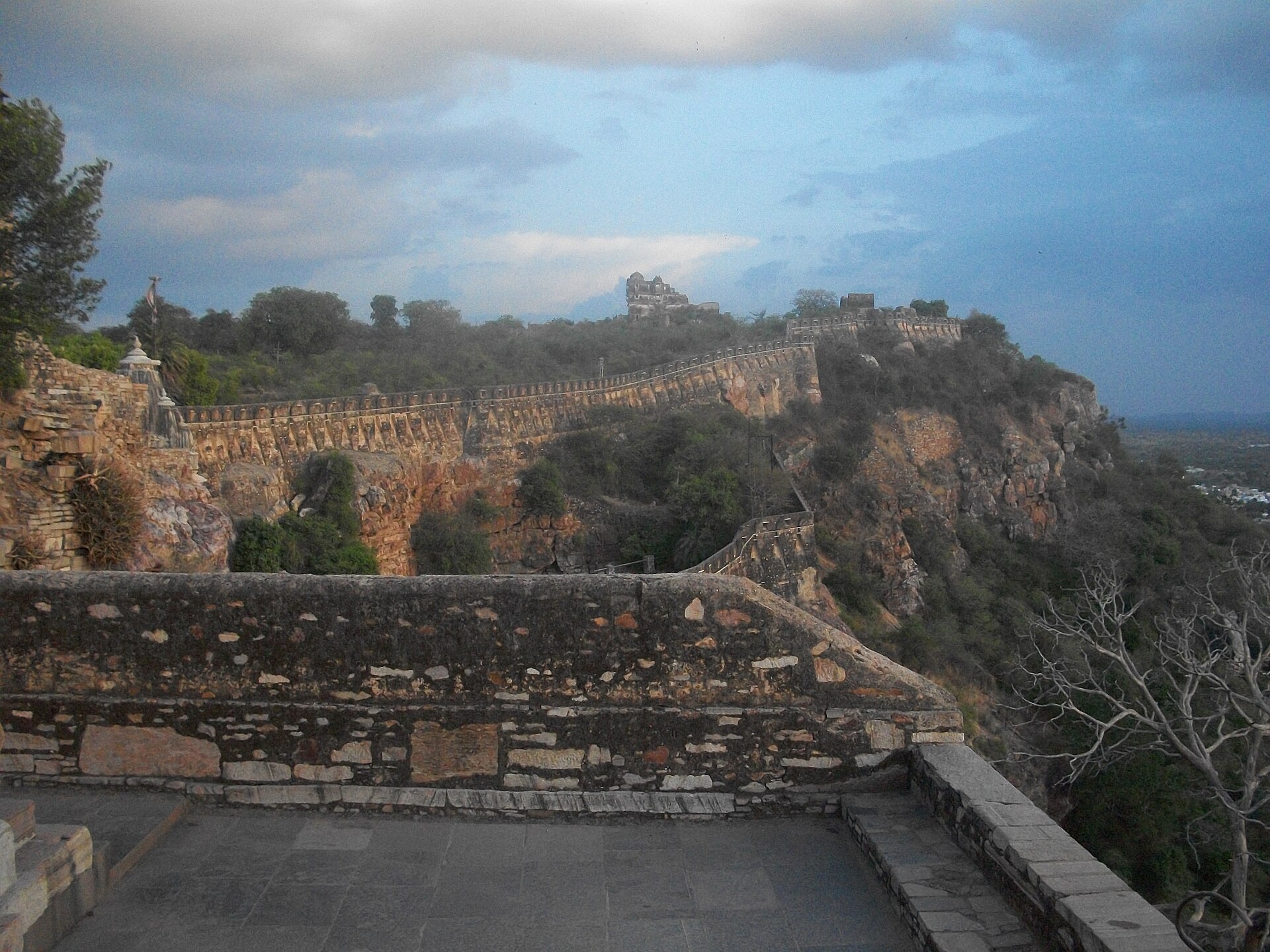
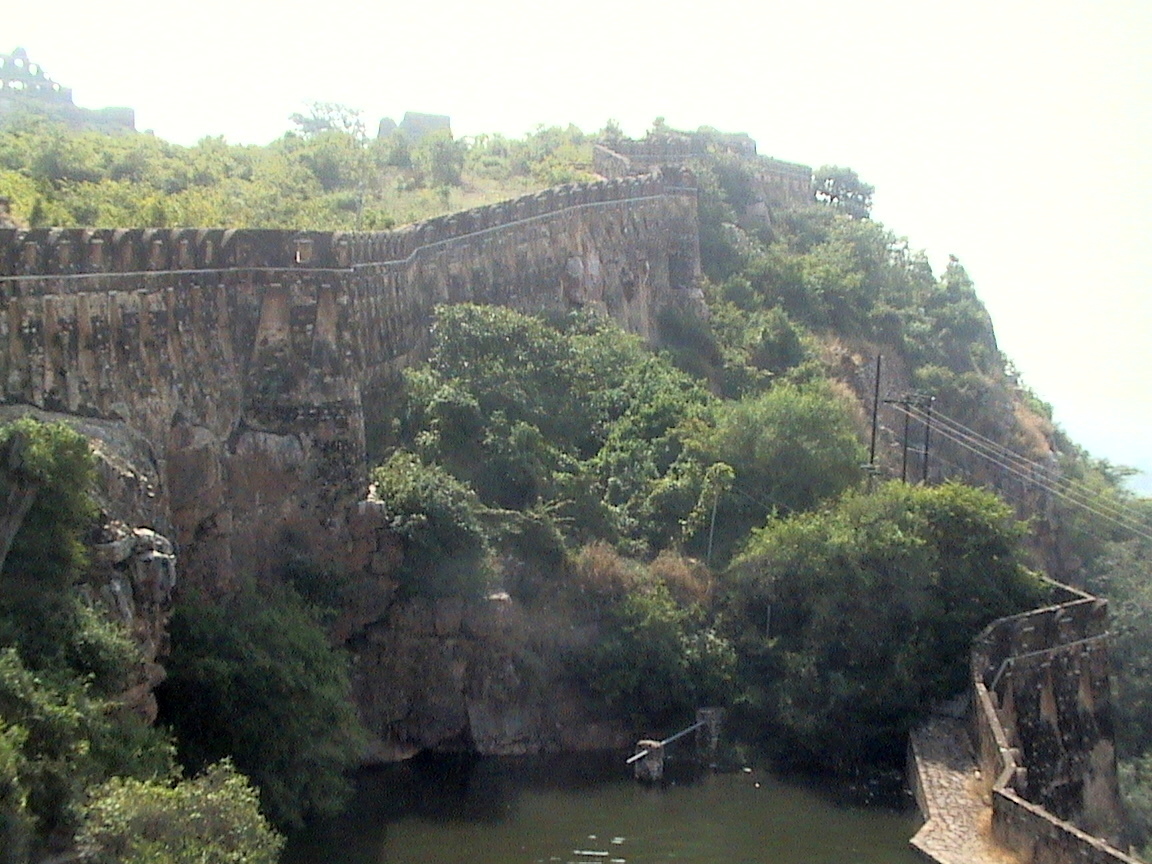
The circumference of the fortress measures some thirteen kilometers, and its walls, rising along the edge of the hill, enclose an area that beggars belief for those accustomed to the more compact castles of Europe. The approach to the fortress winds up a difficult, zig-zagging path more than a kilometer long, crossing a river by an ancient bridge of many arches and climbing through a succession of great gates. Chittorgarh is less a castle than a fortified mountain, a whole landscape of stone and history raised high above the plains of Mewar.
To walk across the summit of Chittorgarh is to traverse the ruins of a whole vanished city, for at the height of its glory the fortress was home to a substantial population, and its plateau was covered with palaces, temples, houses, markets, and gardens. Even today a small community lives within the walls, and the visitor may spend many hours exploring the vast expanse of the fortress without exhausting its wonders. The sheer scale of Chittorgarh sets it apart from almost every other fortress in the world, a stronghold that is truly a fortified world unto itself.
The great length of the fortress, stretching some five kilometers from end to end along the summit of the hill, means that the various monuments and palaces are spread far apart, and a full exploration requires either a long walk or a vehicle. This immensity is itself part of the experience of Chittorgarh, for it conveys, as no compact fortress could, the sense of a whole kingdom gathered upon a single defensible height. The scale of the place is a measure of the power and the ambition of the rulers of Mewar who made it their capital.
Ancient Origins
The origins of Chittorgarh are lost in the mists of legend and antiquity, but tradition attributes the founding of the fortress to a ruler named Chitrangada Mori, from whom the fort is said to take its name, and its earliest name was Chitrakut. In the early Middle Ages the fortress is said to have been taken by Bappa Rawal, the legendary founder of the Guhila dynasty, around the eighth century, though historians debate the details of these ancient accounts.
Whatever its precise beginnings, Chittorgarh was already an ancient and important stronghold by the time it emerges clearly into the light of recorded history, its great hill having been recognized as a place of strategic value from the earliest times. The deep antiquity of the fortress, reaching back into the age of legend, adds to its aura and its mystique, and it means that the great fort we see today is the culmination of many centuries of building and fortification upon a site hallowed by immense age.
The great antiquity of the site is reflected in the ancient temples and structures that survive within the fortress, some dating back more than a thousand years, and in the many layers of history that have accumulated upon the hill. Chittorgarh was never a single creation of a single age, but the work of many centuries and many dynasties, each adding to the fortress according to the needs and the tastes of its time. The result is a monument of extraordinary richness and depth, in which the whole long history of Mewar is written upon a single hill.

Capital of Mewar
For centuries Chittorgarh was the capital of the kingdom of Mewar, one of the most important and most proudly independent of all the Rajput states, and the seat of the Sisodia dynasty, a branch of the Guhilas who rose to prominence in the fourteenth century. The Sisodia rulers of Mewar were among the most celebrated of all the Rajput princes, renowned for their fierce refusal to submit to the Muslim powers that dominated much of India, and for their unyielding defence of their honor and independence.
Under great rulers such as Rana Kumbha in the fifteenth century and Rana Sanga in the early sixteenth, Mewar reached the height of its power, and Chittorgarh was adorned with the great towers, palaces, and temples that still astonish the visitor. The Sisodias regarded themselves as the leaders of the Rajput cause, and their capital of Chittorgarh was the symbol and the stronghold of Rajput resistance. It is this proud and defiant history that gives the fortress its special place in the memory of the Rajput people.
The Sisodia rulers of Mewar held a unique position among the Rajput dynasties, for they alone among the great houses steadfastly refused to give their daughters in marriage to the Mughal emperors, as other Rajput rulers did, maintaining a proud and often costly independence. This unbending stance made Mewar the very symbol of Rajput resistance, and it brought upon Chittorgarh the repeated assaults that culminated in the three great jauhars. The fortress was thus not merely the capital of a kingdom but the citadel of an ideal, the unyielding Rajput refusal to submit.
The rivalry between Mewar and the great empires of Delhi, first the Delhi Sultanate and later the Mughals, forms the central thread of the history of Chittorgarh, for it was the determination of the Sisodias to resist submission that brought upon their capital the three great sieges. Even after the loss of Chittorgarh, the rulers of Mewar continued the struggle from their new capital at Udaipur, and Mewar never truly bowed to the Mughals, maintaining its proud independence longer than any other Rajput state. The fortress of Chittorgarh was the great symbol of this unyielding spirit.
The Seven Gates
The approach to the summit of Chittorgarh leads through a series of seven great fortified gates, or pols, guarding the long and difficult ascent up the hill. Built by Rana Kumbha of dressed stone and lime mortar, these gates rise one above another along the winding path, each a formidable obstacle in itself, so that any attacker had to fight his way through gate after gate to reach the fortress above. The gates bear the names Padal Pol, Bhairon Pol, Hanuman Pol, Ganesh Pol, Jorla Pol, Laxman Pol, and finally the great Ram Pol, the main entrance.
The zig-zag path that climbs through these gates was itself a key element of the fortress’s defences, forcing an attacker to advance slowly and in the open, exposed at every turn to the fire of the defenders above. Near two of the gates stand memorials, or chhatris, to the great heroes Jaimal and Patta, who died defending the fortress against the Mughals. The passage up through the seven gates is a dramatic journey into the heart of Chittorgarh, and it sets the scene for the wonders that await upon the summit.
The memorials to Jaimal and Patta near the gates are among the most poignant monuments of the fortress, for these two young commanders became, through their heroic death in the defence of Chittorgarh against Akbar, the very embodiments of Rajput valor. Their statues, raised by the victorious Akbar himself in tribute to their courage, and later placed at the gates of the imperial forts, testify to the respect that even their enemies felt for their sacrifice. To pass their memorials on the way up the hill is to be reminded, at the very threshold, of the heroism that hallows Chittorgarh.
The bridge that carries the approach across the Gambhiri river at the foot of the hill, with its many stone arches, is itself an impressive structure and the first stage of the long and dramatic ascent to the fortress. From the bridge, the road climbs steeply through the successive gates, and the visitor gains an ever-widening view over the plains below as the fortress rises above. This carefully controlled and heavily defended approach was designed to make the taking of Chittorgarh as difficult and as costly as possible for any attacker.
The Tower of Victory
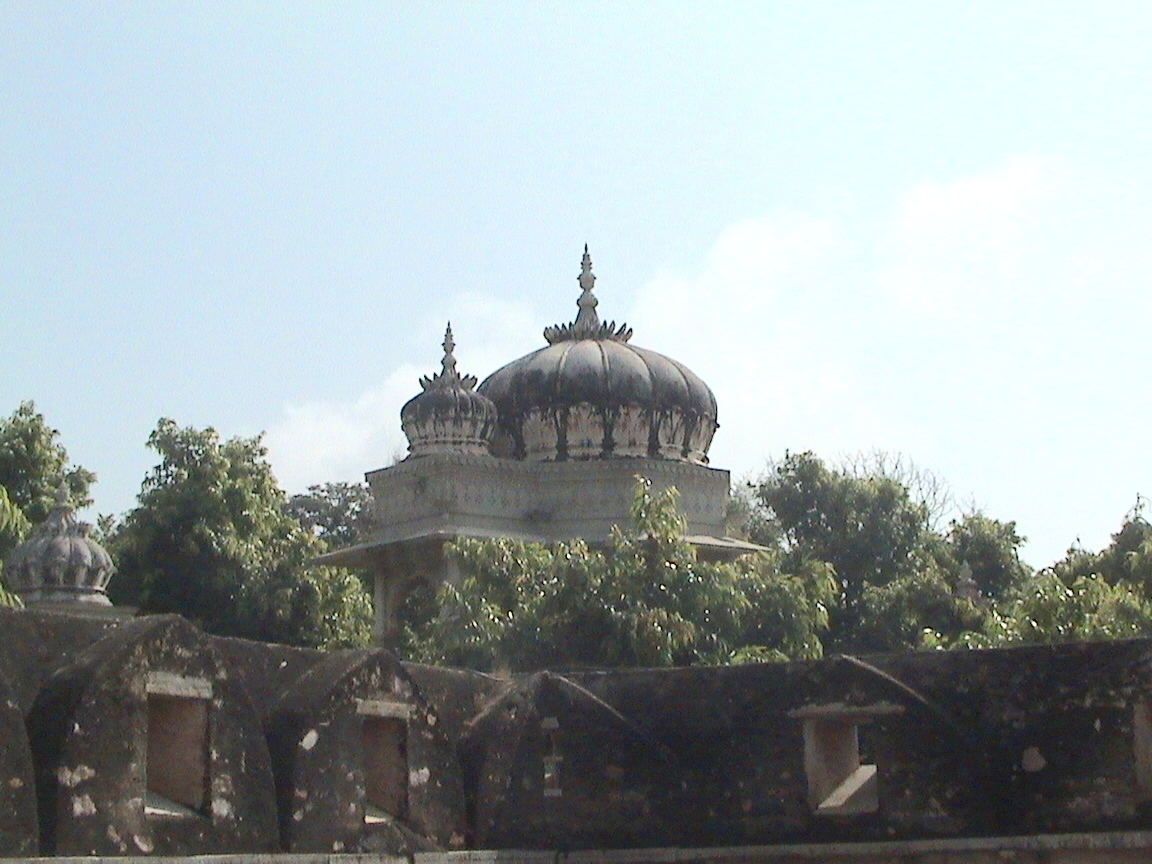
The most magnificent structure in all of Chittorgarh, and its very symbol, is the Vijaya Stambha, the Tower of Victory, a soaring column of stone that rises some thirty-seven meters over nine storeys, built by Rana Kumbha between 1458 and 1468 to commemorate his great victory over the Sultan of Malwa. The tower is covered from top to bottom with intricate sculptures of gods, goddesses, and figures from Hindu mythology, a veritable encyclopedia of the religious art of the age carved in stone.
A staircase of a hundred and fifty-seven steps winds up through the interior of the tower to the top, from which there is a magnificent view over the whole vast fortress and the plains beyond. The Vijaya Stambha is one of the masterpieces of Rajput architecture, a monument that combines the celebration of military triumph with the expression of deep religious devotion, and it stands as the proud emblem of Chittorgarh and of the kingdom of Mewar. Its soaring form, visible from far across the fortress, is the first thing that catches the eye and the last that lingers in the memory.
The Vijaya Stambha is not only a monument of victory but a treasury of Hindu iconography, for its nine storeys are covered inside and out with sculptures depicting the whole pantheon of Hindu gods and goddesses, along with scenes from mythology and everyday life. It has been described as a veritable textbook of Hindu religion and art, and scholars have studied its carvings for the wealth of information they provide about the beliefs and the culture of fifteenth-century Rajasthan. As a work of art and a monument of faith, as well as a celebration of military triumph, the Tower of Victory is unrivaled.
The Tower of Victory has become the very emblem of Chittorgarh and of the martial glory of Mewar, and its image is reproduced throughout Rajasthan as a symbol of Rajput pride and achievement. Rising high above the fortress, visible from far across the plains, it proclaims the triumph of Rana Kumbha and the greatness of the kingdom he ruled. That so magnificent a monument should have been raised to commemorate a single victory speaks of the importance the Rajputs attached to martial glory, and of the wealth and artistry they could command.

The Tower of Fame
Standing elsewhere within the fortress is a second, older tower, the Kirti Stambha, the Tower of Fame, a structure that rises some twenty-two meters and dates from around the twelfth century, considerably older than the great Tower of Victory. This tower is a Jain monument, built by a wealthy merchant and dedicated to Adinath, the first of the Jain saints known as the tirthankaras, and it is adorned with numerous sculptures of Jain figures.
The presence of this ancient Jain tower alongside the Hindu Tower of Victory reflects the religious diversity of Chittorgarh, where Jainism, one of the great ancient religions of India, flourished alongside Hinduism. The Kirti Stambha is a beautiful and dignified structure, less ornate than the later Tower of Victory but of great historical and religious importance, and it is a reminder of the long and layered history of the fortress, and of the many faiths and communities that have found a home within its mighty walls.
The survival of the ancient Jain Tower of Fame alongside the Hindu monuments of Chittorgarh testifies to the important place that the Jain community held in the life of the fortress and the kingdom of Mewar, particularly as merchants and financiers whose wealth supported the state. Jainism, with its emphasis on non-violence and asceticism, made a distinctive contribution to the culture of Rajasthan, and the Kirti Stambha is one of its finest monuments. Its dignified form, older than the great Tower of Victory, is a reminder of the deep and varied religious heritage of the fortress.

Alauddin Khalji and the First Jauhar
The first of the three great sieges and jauhars that have made Chittorgarh immortal came in the year 1303, when Alauddin Khalji, the powerful sultan of Delhi, brought his army against the fortress and, after a siege of some eight months, captured it from its Rajput defenders. This siege is associated, in the most famous of all the legends of Chittorgarh, with the beautiful queen Rani Padmini, whose fabled beauty is said to have inspired the sultan’s assault, though most modern historians regard the romantic tale as a later invention.
According to the legend, when the fall of the fortress became inevitable, Rani Padmini and the other women of the court, rather than fall into the hands of the enemy, chose to end their lives in the terrible rite of jauhar, casting themselves into a great fire, while the men rode out to certain death in a final charge. Whether or not the details of the legend are true, the story of Padmini and the first jauhar of Chittorgarh has become one of the most powerful and enduring tales of Rajput honor and sacrifice, retold for centuries in song and story.
The legend of Rani Padmini, whether or not it is founded in historical fact, has become one of the most powerful and enduring stories in all of Indian culture, retold in epic poems, songs, plays, and films, and it has shaped the image of Chittorgarh in the popular imagination more than any other tale. The story of the beautiful queen who chose death by fire over dishonor at the hands of the conqueror embodies the Rajput ideal of honor in its most extreme and tragic form, and it has moved and inspired countless generations.
The tale of Padmini has been given new life in recent times through films and popular culture, ensuring that the legend continues to captivate the imagination of India, even as historians debate how much, if any, of it is founded in fact. But whether history or legend, the story expresses a truth about the values of the world that built Chittorgarh, a world in which honor was prized above life itself, and in which the ultimate defiance of the conqueror was to deny him even the bodies of the vanquished. In this sense the legend is truer than mere fact.
Bahadur Shah and the Second Jauhar
The second great jauhar of Chittorgarh came in the year 1535, when the fortress was besieged by Bahadur Shah, the Sultan of Gujarat, at a time when the ruler of Mewar was a minor and the defence was led by the queen mother, Rani Karnavati. When the fortress could hold out no longer, Rani Karnavati is said to have led some thirteen thousand of the women of Chittorgarh in the terrible rite of jauhar, while the men, in a final act of defiance known as the saka, rode out to die in battle against the overwhelming forces of the enemy.
The story of Rani Karnavati and the second jauhar is another of the great tragic legends of Chittorgarh, a tale of desperate courage and terrible sacrifice in the face of hopeless odds. It is said that in her extremity Rani Karnavati appealed for help to the Mughal emperor Humayun, sending him a rakhi, the thread that symbolizes the bond between a brother and sister, but that his aid arrived too late to save the fortress. The second jauhar added another layer to the tragic legend of Chittorgarh.
The rite of jauhar, in which the women of a besieged Rajput fortress collectively took their own lives by fire rather than risk capture, was one of the most extreme expressions of the Rajput code of honor, undertaken when defeat had become certain and the men prepared for their own death in the final saka. Terrible as it appears to modern eyes, it was regarded by the Rajputs as the ultimate act of courage and honor, a refusal to submit that was celebrated rather than mourned. The three jauhars of Chittorgarh are the supreme instances of this tragic and heroic tradition.

Akbar and the Third Jauhar
The third and final great jauhar of Chittorgarh came in the years 1567 and 1568, when the fortress was besieged by the mightiest of all the Mughal emperors, Akbar, in his campaign to bring the proud kingdom of Mewar under his rule. The ruler of Mewar, Rana Udai Singh, withdrew from the fortress to continue the resistance elsewhere, leaving its defence in the hands of two great heroes, the commanders Jaimal and Patta, who held it with some eight thousand warriors.
The siege lasted four months, and it is said that the turning point came when Jaimal was struck down by a musket shot fired by the emperor Akbar himself. With the defence broken, the women of the fortress performed the third jauhar, and the surviving warriors fought to the death in a final saka. The slaughter that followed was terrible, and many thousands perished. The heroism of Jaimal and Patta so impressed even the victorious Akbar that he raised statues in their honor, and their memorials still stand within the fortress they died to defend.
The tribute paid by the emperor Akbar to the fallen heroes Jaimal and Patta, whose valor so impressed him that he had statues of them raised at his own fortress of Agra, is a striking illustration of the respect that could exist even between the bitterest of enemies in the warfare of the age. Akbar was a conqueror of great magnanimity as well as great power, and his admiration for the courage of the defenders of Chittorgarh, even as he destroyed them, is a testament to the extraordinary heroism of the fortress’s last defence.
The fall of Chittorgarh to Akbar in 1568 marked the effective end of the fortress as the capital of Mewar, for Rana Udai Singh had already founded a new capital at Udaipur, to which the center of the kingdom now shifted. Chittorgarh, though later restored to Mewar, never regained its former role, and it gradually became the great historic monument and place of pilgrimage that it remains today. The third jauhar was thus the last great tragedy of the fortress as a living capital, the final act in its long and heroic history.
The Palaces of the Ranas
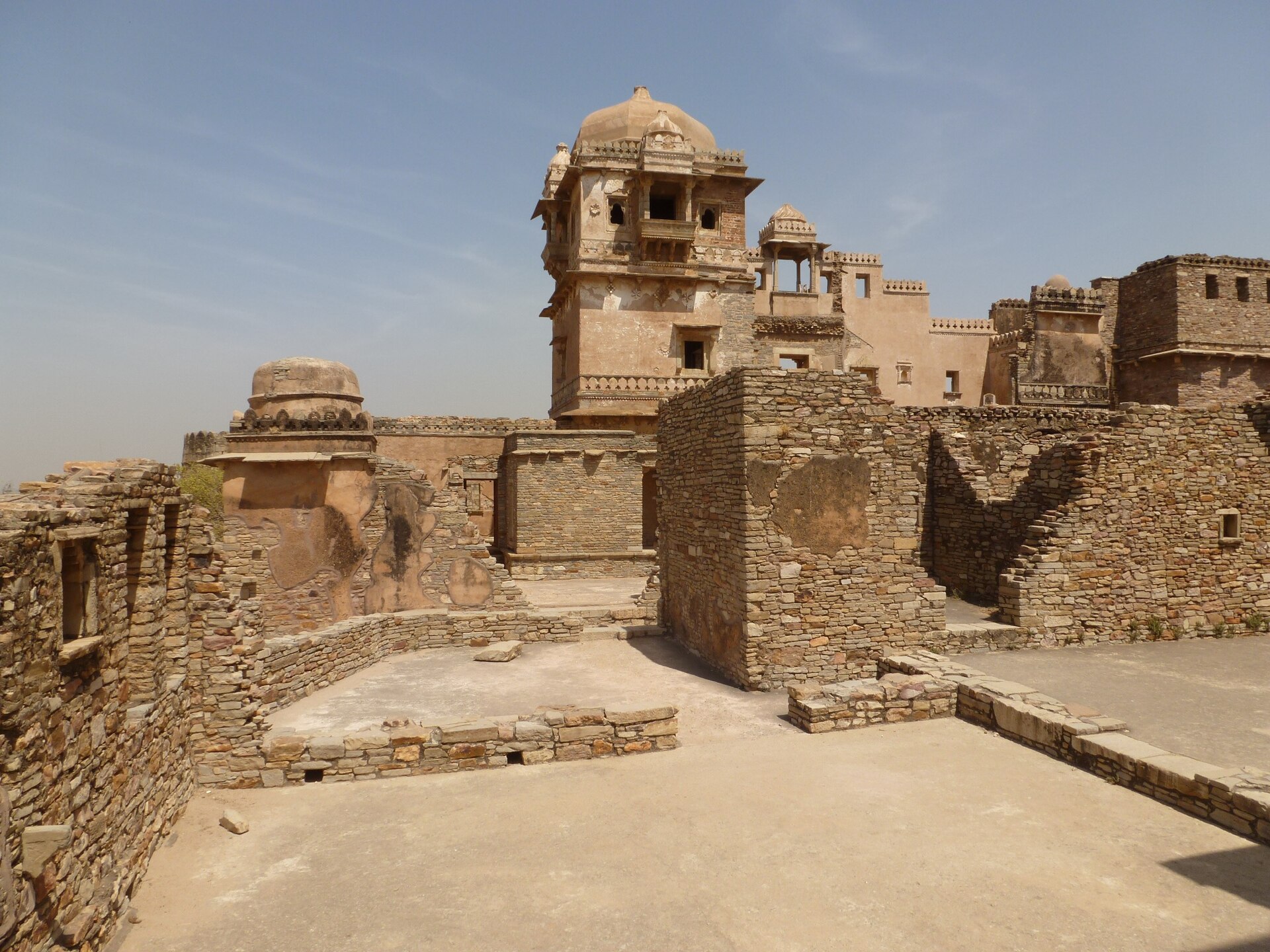
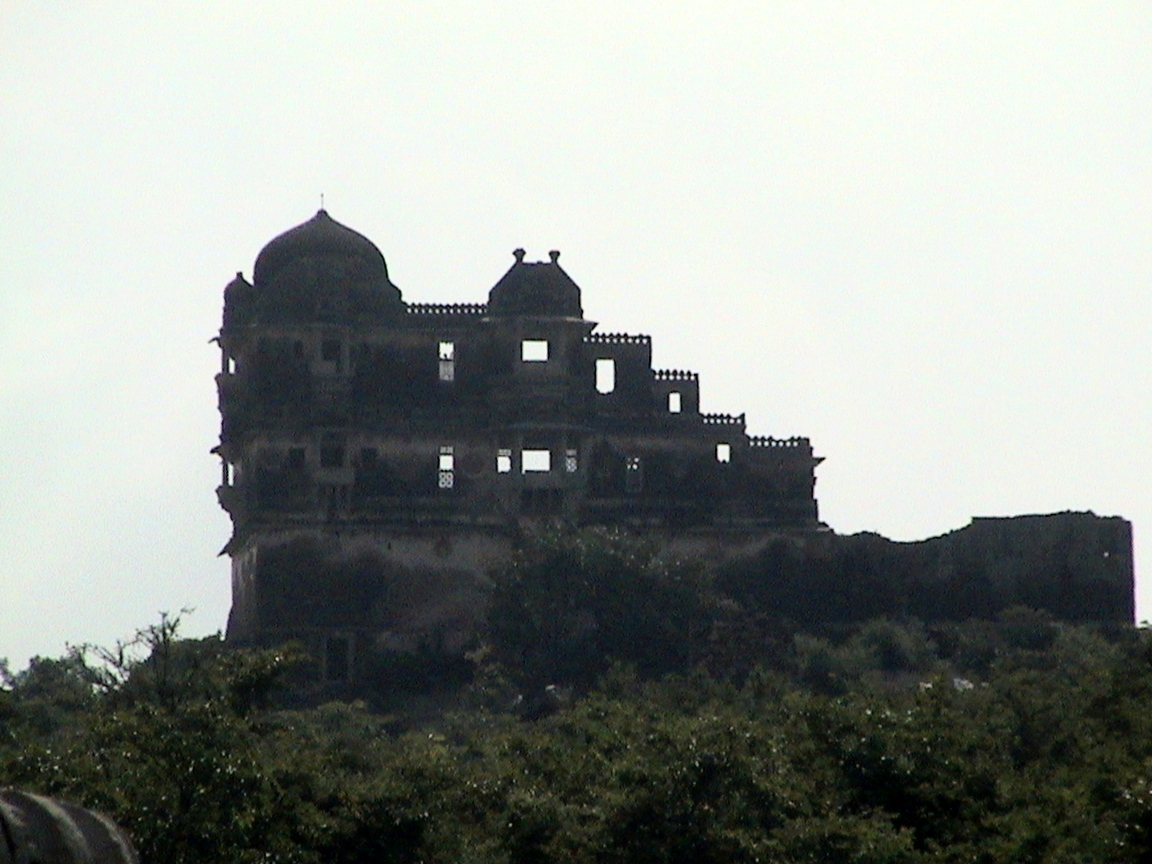
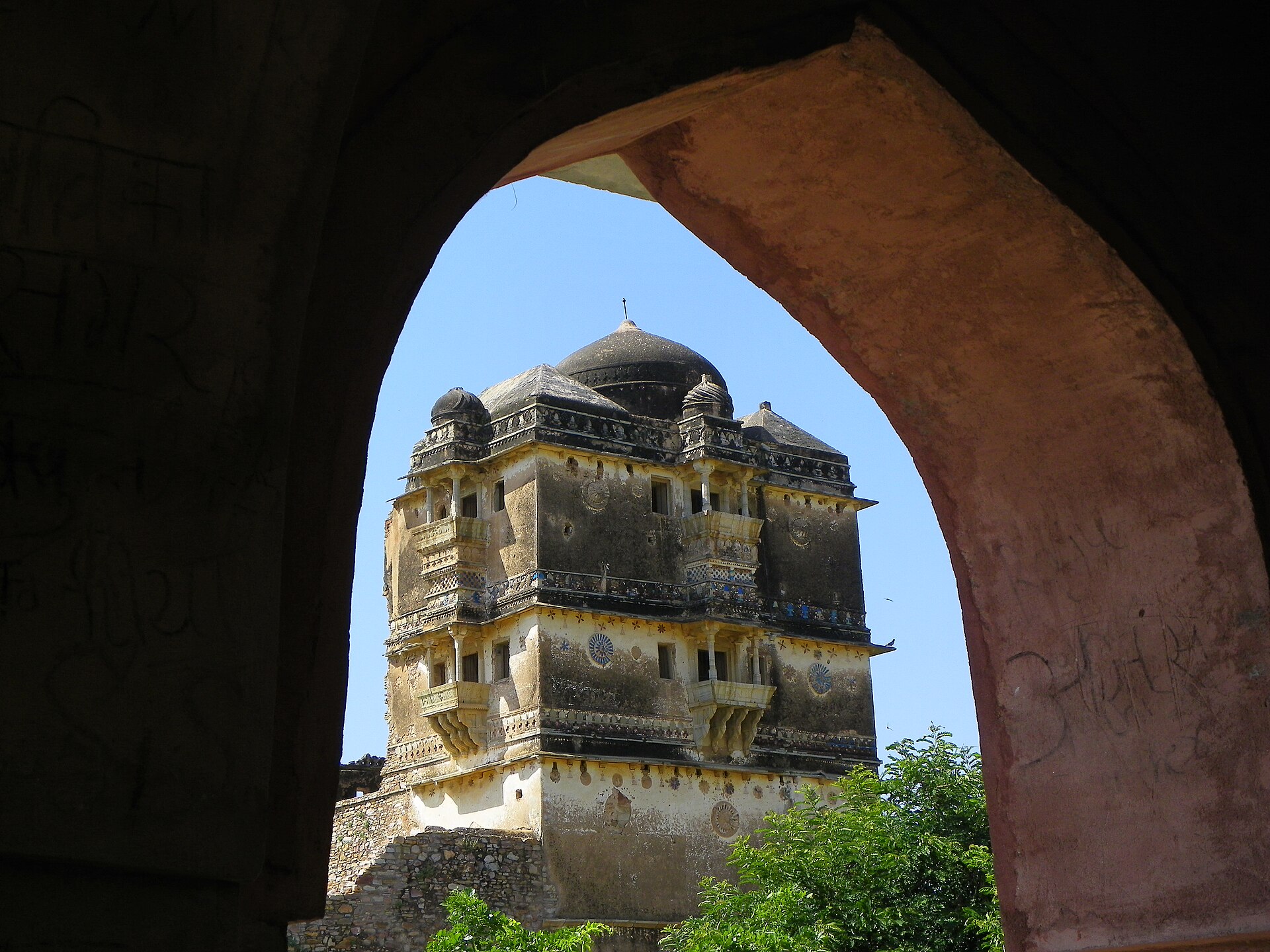
Among the many buildings that crowd the summit of Chittorgarh are the ruined palaces of the Ranas of Mewar, the greatest of which is the Rana Kumbha Palace, a sprawling complex that was the residence of the rulers and the heart of the court. Though now in ruins, the palace still displays the remains of its former grandeur, with its halls, its courtyards, and its underground chambers, and it is associated with many of the great figures and events of the history of Mewar.
It is within the Rana Kumbha Palace, according to tradition, that Rani Padmini and the women of the court performed the first jauhar, casting themselves into the flames in the underground chambers of the palace. The Padmini Palace, a graceful white structure set beside a pool of water, is another of the famous buildings of the fortress, associated with the legendary queen and much reconstructed in later times. Together, the ruined palaces of Chittorgarh evoke the vanished splendor and the tragic history of the court of Mewar.
The underground chambers of the Rana Kumbha Palace, where the first jauhar is said to have taken place, are among the most solemn and affecting spots in all of Chittorgarh, for it was here, according to tradition, that the women of the court met their terrible end in the flames. To descend into these dark chambers is to feel the weight of the tragic history of the fortress with peculiar intensity. The ruined palaces of the Ranas, for all their vanished splendor, are haunted by the memory of the sacrifices made within their walls.
Meerabai and the Temples
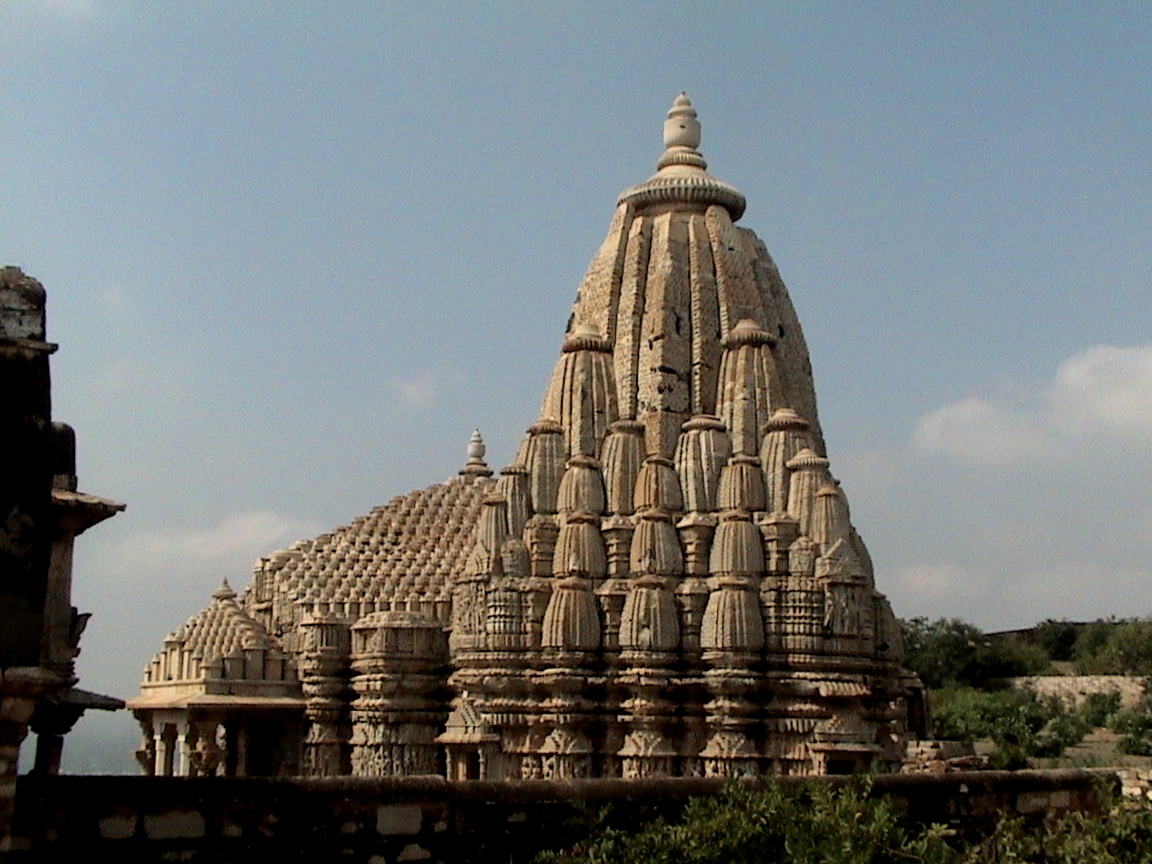
Chittorgarh is rich in temples, for the fortress was a great center of religious devotion as well as of political and military power, and its summit is dotted with shrines of great antiquity and beauty. Among the most famous is the temple associated with Meerabai, the celebrated saint-poet and mystic of the sixteenth century, who was a princess of Mewar and a passionate devotee of the god Krishna, and whose devotional songs are still sung and cherished throughout India to this day.
The Meera Temple, with its distinctive pyramidal tower, honors this remarkable woman, whose life of devotion and whose beautiful poetry have made her one of the most beloved figures in the religious history of India. Nearby stands the ancient Kalika Mata Temple, originally a temple of the sun dating from the eighth century and later dedicated to the goddess. These temples, and the many others within the fortress, reflect the deep and living religious traditions of Chittorgarh, and they add a dimension of spiritual richness to the martial grandeur of the fortress.
The story of Meerabai, the princess who abandoned the pomp of the court for a life of devotion to Krishna, and whose ecstatic devotional poetry has become part of the spiritual heritage of all India, adds a note of transcendent beauty to the often tragic history of Chittorgarh. Her defiance of the conventions of her royal station in pursuit of her love for the divine has made her a beloved and inspiring figure, and her temple within the fortress is a place of special devotion. In Meerabai, Chittorgarh gave to India one of its greatest saints and poets.
The devotional poetry of Meerabai, composed in the language of the common people rather than in courtly Sanskrit, has ensured that her songs have been sung and loved across the centuries by ordinary Indians of every station, and her figure has become a symbol of pure and selfless devotion. That so beloved a saint should be associated with Chittorgarh adds a dimension of spiritual sweetness to the fortress, balancing the martial and tragic character of its history with the gentle radiance of her faith and her song.
Water and the Gaumukh Reservoir
A fortress as vast as Chittorgarh, capable of sheltering a great population through a long siege, required an abundant supply of water, and the fortress was once provided with more than eighty water bodies, of which some twenty-two survive today. These reservoirs, tanks, and wells, fed by rainfall and natural springs, held a combined store of water so great that it was said to be capable of sustaining a garrison of fifty thousand for four years, a vital reserve in the dry climate of Rajasthan.
The most famous of these water bodies is the Gaumukh reservoir, a sacred tank fed by a spring that flows from a carved stone cow’s mouth in the cliff face, from which it takes its name, for gaumukh means the mouth of the cow. This sacred reservoir was a place of pilgrimage and ritual as well as a vital source of water, and it remains one of the most revered spots in the fortress. The elaborate water system of Chittorgarh was one of the keys to its ability to withstand the great sieges of its history, and its reservoirs are among the most fascinating features of the fortress.
The elaborate water management of Chittorgarh, with its scores of reservoirs and tanks fed by rain and spring, was a remarkable feat of engineering, and it was essential to the survival of so large a fortress and its population, especially during the long sieges that punctuated its history. The ability to store such vast quantities of water was one of the reasons the fortress could hold out for months against its enemies. The reservoirs, many of them beautifully constructed and some considered sacred, are among the most important and most fascinating features of the great fortress.
The sacred character of the Gaumukh reservoir, and of many of the other water bodies of the fortress, reflects the deep connection in Indian culture between water and the divine, and these tanks were places of ritual bathing and worship as well as practical sources of supply. Pilgrims came to the Gaumukh to bathe in its sacred waters, and it remains a revered spot to this day. The combination of the practical and the sacred in the water system of Chittorgarh is characteristic of the fortress as a whole, where every feature served both the needs of the body and the aspirations of the spirit.

Chittorgarh Today
Today Chittorgarh stands as one of the most revered and most visited historic sites in all of India, a place of pilgrimage for those who honor the memory of the Rajput heroes and heroines who lived and died within its walls. In the year 2013 the fortress was inscribed upon the list of World Heritage Sites, as part of the group of Hill Forts of Rajasthan, in recognition of its outstanding importance as a monument of Rajput history and culture.
Each year the annual Jauhar Mela festival commemorates the three great jauhars of the fortress, drawing descendants of the Rajput warriors and members of the princely families in a solemn procession to honor the sacrifice of their ancestors. In this way the memory of Chittorgarh’s tragic and heroic past is kept alive, and the fortress remains a living symbol of the Rajput ideals of honor, courage, and sacrifice, cherished by a whole people.
The Jauhar Mela, held each year at Chittorgarh, is a moving expression of the enduring hold that the fortress and its tragic history retain upon the Rajput people and upon the wider culture of India. The commemoration of the three jauhars, and of the countless men and women who died in the defence of the fortress, keeps alive the memory of a code of honor and sacrifice that, however alien to modern sensibilities in its extreme forms, continues to command deep respect and admiration. In Chittorgarh, the past is not dead but living, honored anew by each generation.
The enduring fame of Chittorgarh, kept alive through legend, poetry, and film, has made it one of the most recognized and most revered of all the historic sites of India, a place that embodies, more than any other, the ideals and the tragedies of the Rajput past. Its vast ruins, its soaring towers, and its haunting memories combine to make it a monument of extraordinary power, one that speaks not only of architecture and history but of the deepest values and the most profound sorrows of a great and proud people.
If you would like to see exactly where this immense fortress stands upon the map, you can find it here:
View on Google Maps: 24.8887, 74.6469
From its great hill above the plains of Mewar, Chittorgarh has watched over the land of the Sisodia Rajputs for many centuries, and it stands there yet, the largest and most storied fort in all of India.
Castles Nearby
If the history of Chittorgarh has moved you, you may enjoy these other great forts of Rajasthan:
- Mehrangarh Fort: The Mighty Fort of the Sun above Jodhpur
- Amber Fort: The Golden Palace-Fortress of Rajasthan
The Great Fort of Mewar
Chittorgarh is one of the most extraordinary fortresses in the world, the largest in India and the most storied of all the strongholds of Rajasthan, a place where the proud history of the Rajputs, with all its glory and all its tragedy, is written large upon a single great hill. Its victory towers, its palaces and temples, and above all the memory of its three jauhars, make it a monument not merely to architecture but to a whole heroic and tragic ideal of honor and sacrifice.
If you should travel to Rajasthan, Chittorgarh is one of the most moving and most impressive of all the sights the region has to offer, a fortress vast enough to lose oneself in and deep enough in history to fill many days of exploration. To climb its seven gates, to gaze up at the Tower of Victory, and to stand at the site of the jauhars is to touch the very soul of the Rajput people. Chittorgarh is a monument to a vanished world of valor and sacrifice, and it deserves its place among the greatest fortresses on earth.
Whether you come for the immense scale of the largest fort in India, for the soaring beauty of the Tower of Victory, or for the profound and moving history of the three jauhars, Chittorgarh will stay with you long after you have descended from its hill, and you will carry away the memory of this great fortress of Mewar as one of the most powerful and affecting experiences of any journey to India.
You May Like

Mafra, the Palace a King Built From a Vow