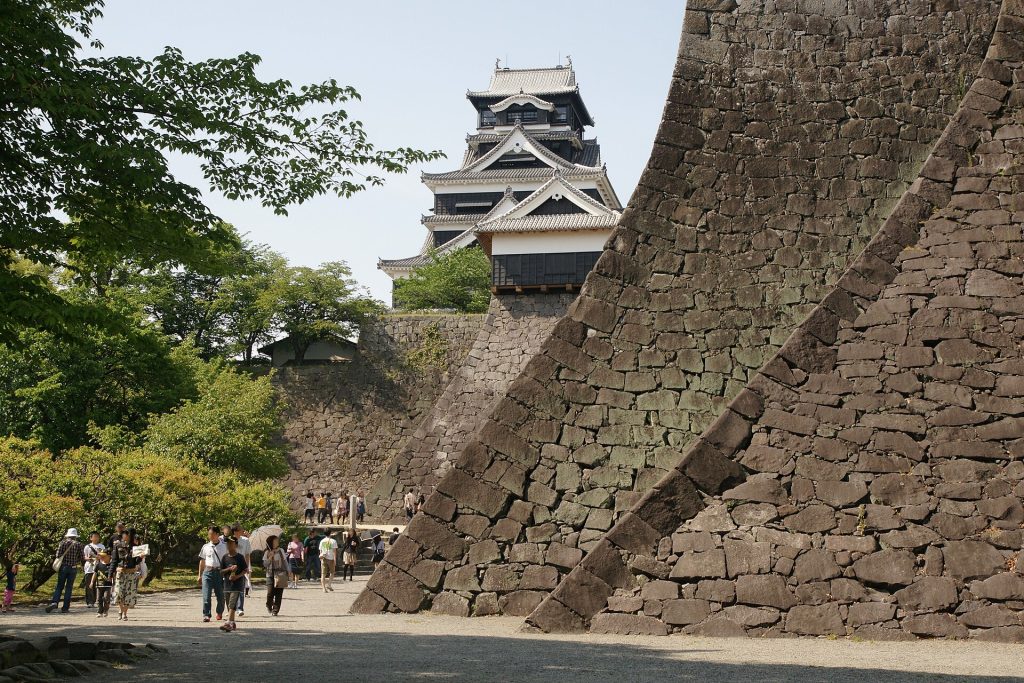
There are castles that were built to be admired and castles that were built to be feared, and Kumamoto belongs firmly, unforgettably, to the second kind. Rising black and stern over the city that shares its name, on the southern island of Kyushu, it is one of the greatest fighting fortresses Japan ever produced, and its story is a saga of siege, fire, earthquake, and stubborn resurrection that reads almost like a legend.
You may arrive expecting a pretty old building and instead find yourself standing before something closer to a work of terrible genius, a fortress whose every curve and angle was calculated to break an army. And you will leave carrying a story that spans four centuries, from the soldier who built it to the hero who could not take it to the earthquakes that nearly brought it down, and the patient love that is raising it up again.
This is the story of Kumamoto Castle, of the walls that turned away warriors, of a defeated hero’s rueful tribute to a man dead two hundred years, and of a city that has defined itself by the great black fortress on its hill. Come and walk it with me, and meet one of the truest castles in all of Japan.
In This Article
- The Black Fortress That Watches Over Kyushu
- The Hill Fort That Came Before the Legend
- The Wars That Taught a Builder His Craft
- The City That Grew in the Fortress’s Shadow
- The Soldier Who Built to Never Lose
- The Curving Walls That Defeated Armies
- A City of Turrets, Gates, and Hidden Defenses
- The Long Peace Under the Hosokawa Lords
- The Rebellion That Put the Walls to the Test
- The Words a Defeated Hero Left Behind
- Raising the Black Keep From Its Ashes
- When the Earth Itself Attacked the Castle
- Walking the Grounds of a Fighting Legend
The Black Fortress That Watches Over Kyushu
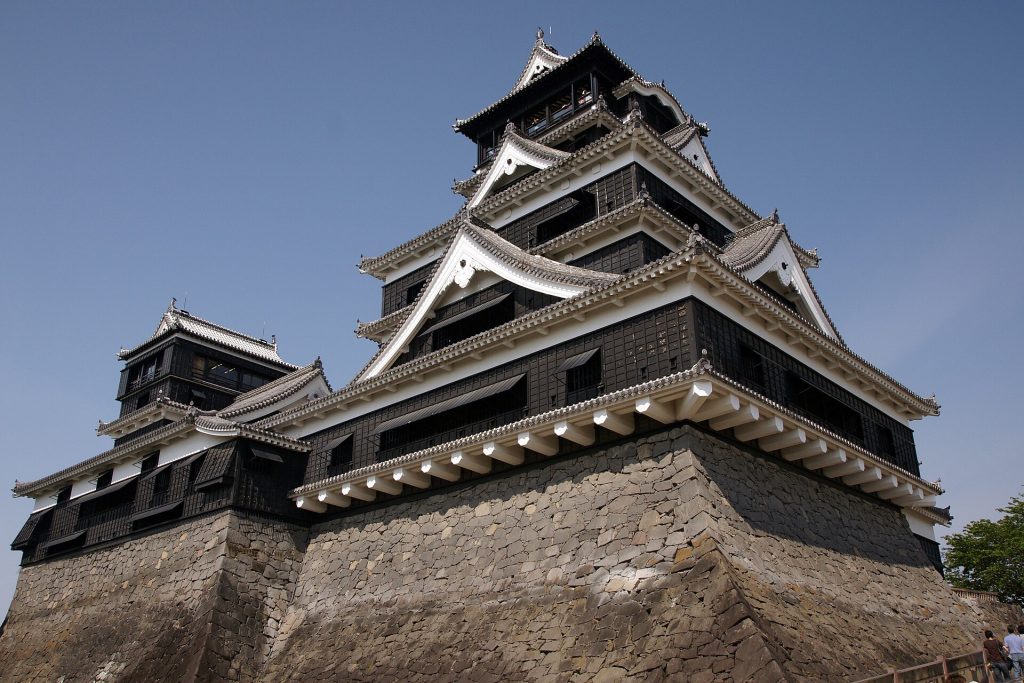
You feel Kumamoto Castle before you fully see it, because it looms over the modern city of Kumamoto with a dark, brooding presence that no photograph quite prepares you for. Where some Japanese castles float white and delicate against the sky, this one broods, its keeps clad in black wooden boards that give it a stern, martial dignity. This was never a castle built to charm ambassadors with gold. It was built by a soldier, for soldiers, to be as close to unconquerable as human ingenuity could make it.
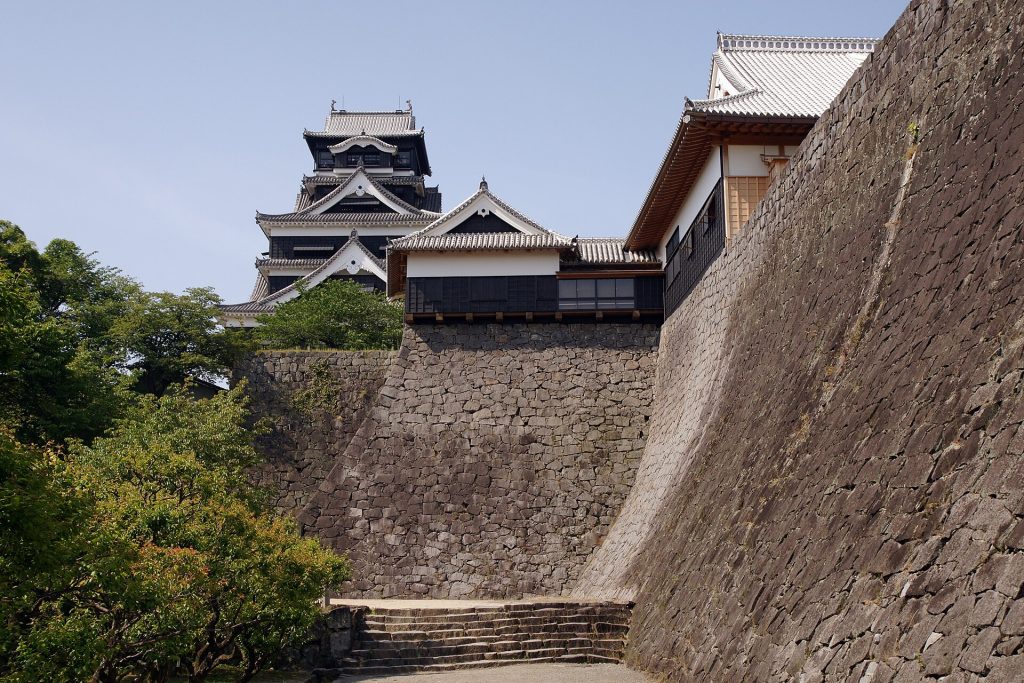
The first thing that seizes your attention is the sweep of the stone walls, rising in long graceful curves that seem almost too elegant for something so purely defensive. These curves are not decoration. They are the castle’s most famous weapon, a design so effective that it earned its own name and a fearsome reputation among anyone foolish enough to attempt the climb. Above them the great and lesser keeps stand shoulder to shoulder, black and severe, crowned with golden fish that catch the light.
To walk toward the castle is to feel the intention of its builder reaching across four centuries. Every angle of the walls, every gate set into a trapping courtyard, every turret positioned to command a field of fire, speaks of a mind obsessed with the question of how to stop an army. And as its later history would prove in the most dramatic fashion, that mind succeeded almost beyond belief. This is one of the great fighting castles of Japan, and it has the scars and the legends to prove it.
Give yourself a moment, before you go looking for the famous details, simply to absorb the whole. The black keeps against the sky, the long pale curves of the walls, the density of turrets and gates, all of it composes into a single overwhelming impression of strength. Other castles ask to be liked. Kumamoto asks to be respected, and it earns that respect the instant you lay eyes on it.
The Hill Fort That Came Before the Legend
Long before Kato Kiyomasa raised his masterpiece, the hill on which Kumamoto Castle stands had already been recognized as a place of strategic worth. Earlier fortifications occupied the elevated ground, modest works compared to what would come, but enough to mark the site as one that commanded the surrounding plain and the routes that crossed it. The land itself seemed to invite a fortress, rising above the flatlands with a natural authority that no builder could ignore.
These early strongholds belonged to the restless world of medieval Japan, an age of shifting alliances and constant local warfare in which every advantageous hill tended to sprout defenses sooner or later. The fortifications here were part of that landscape, changing hands and evolving as the fortunes of local lords rose and fell. They were the seedbed from which the great castle would eventually grow.
When Kiyomasa arrived at the turn of the seventeenth century, he did not build on empty ground but on this inheritance of fortification, transforming and vastly expanding what earlier hands had begun. In this the site echoes the pattern of great castles the world over, where a strong position, once chosen, tends to be built and rebuilt across generations, each age adding its own ambitions to the accumulated defenses of the past.
To appreciate Kumamoto fully is to remember that its towering achievement rested on older foundations, both literal and strategic. Kiyomasa’s genius lay not in discovering the site but in seeing, more clearly than anyone before him, exactly what this commanding ground could become in the hands of a master.
The Wars That Taught a Builder His Craft
Kato Kiyomasa did not learn to build castles in comfort. He learned it in the crucible of war, and above all in the brutal Japanese invasions of Korea at the close of the sixteenth century, where he served as one of the leading commanders. In those campaigns he saw sieges from both sides, watched fortifications hold and fail, and absorbed hard practical lessons about what made a stronghold survivable and what made it a death trap for its defenders.
The experience marked him deeply. On the Korean peninsula, Japanese forces built and defended fortifications under desperate conditions, and Kiyomasa observed firsthand which features saved lives and which cost them. The curving walls, the trapping gates, the dense interlocking fields of fire that would later define Kumamoto were not abstract theories to him. They were solutions to problems he had watched play out in blood.
When he returned to Japan and turned to building his own castle, he poured this accumulated wisdom into the design. Kumamoto is, in a sense, the distilled lesson of a warrior’s whole career, a fortress shaped by everything its builder had learned about how attacks succeed and how they can be made to fail. That is why it works so completely as a fighting structure, because it was designed by a man who had personally paid the price of getting such things wrong.
There is a sober weight to this heritage. The elegance of the curved walls and the beauty of the black keeps were born from harsh and often terrible experience, and the castle’s near-perfection as a defensive work is inseparable from the wars that taught its maker his craft. Kumamoto is a beautiful thing built on hard knowledge, and knowing that only deepens the impression it makes.
The City That Grew in the Fortress’s Shadow
A great castle is never only a military structure. It is the seed around which a city grows, and Kumamoto is no exception. As Kiyomasa and then the Hosokawa ruled from behind these walls, a substantial castle town took shape in the fortress’s shadow, home to the samurai retainers, merchants, artisans, and laborers whose lives were bound up with the domain. The castle was the heart, and the city was the body that grew around it.
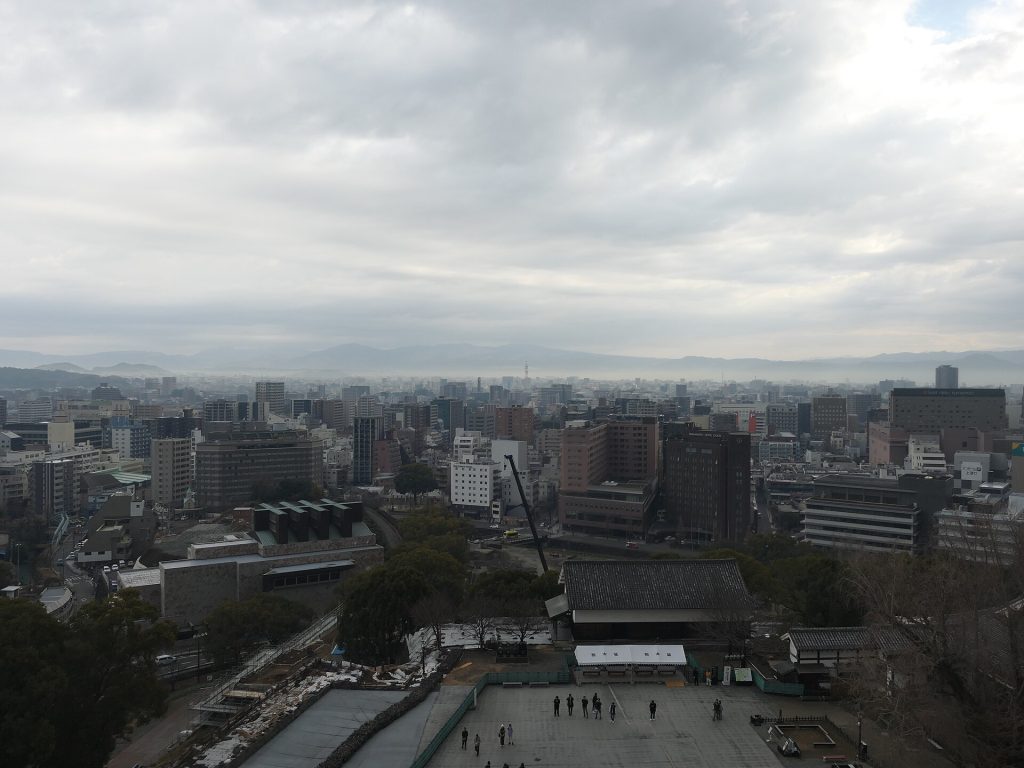
The layout of old Kumamoto was shaped by the castle’s needs and defenses, with districts arranged according to rank and function and streets planned with an eye to both commerce and security. This intimate relationship between fortress and town is common to castle cities across Japan, and it means that the modern city of Kumamoto carries the imprint of its castle in ways that go far deeper than the visible walls.
Over the centuries the town prospered as the administrative and commercial center of a large and fertile region, its fortunes rising and falling with those of the castle at its core. When the fortress won its great siege in 1877, it was defending not only itself but the city that had grown up around it, and when the earthquakes struck in 2016, the wounding of the castle was felt as a wound to the whole community’s identity.
That bond endures today. The people of Kumamoto regard their castle with a devotion that goes well beyond tourism or civic pride, and the long, patient work of restoration is in many ways an expression of that love. To visit the castle is to visit the beating heart of a city that has defined itself, for four hundred years, by the great black fortress on the hill.
The Soldier Who Built to Never Lose
The genius behind Kumamoto Castle was Kato Kiyomasa, one of the most formidable warriors of his generation and a man whose name is still spoken here with something close to reverence. He had fought in Japan’s great campaigns and in the brutal invasions of Korea, and those experiences taught him hard lessons about siege warfare that he poured into stone when he came to build his own stronghold. Between 1601 and 1607 he transformed an existing fortification into one of the mightiest castle complexes the country had ever seen.
The scale of what he built is staggering. The complex bristled with dozens of turrets, numerous fortified gates, and a maze of walls and courtyards designed to funnel, trap, and destroy any attacker who managed to breach the outer defenses. The Honmaru Palace, completed a few years later, added a residence of great refinement to the martial heart of the fortress. Kiyomasa did not build a single keep and call it done. He built a system, a machine of interlocking defenses that could fight on even as parts of it fell.
Kiyomasa was more than a soldier, though. He was a builder and an administrator who cared for the prosperity of his domain, and stories of his foresight cling to the castle to this day. It is said he planted the grounds with trees that could feed the garrison in a long siege and used materials that would sustain defenders through desperate times. Whether every tale is literally true or not, they capture something real about the man: he thought in terms of survival, of enduring the worst that could come, and he built accordingly.
When you understand Kiyomasa, you understand the castle, because the two are inseparable. This is not an anonymous fortress. It is the physical expression of one exceptional man’s determination that whoever held these walls should never, ever lose.
The famous name given to these walls, warriors turned away, is not a boast invented by admirers but a plain description of what they were built to do, and history proved the description exact. When you learn that armies genuinely could not climb them, the poetry of the name gives way to something more sobering: this is a beautiful shape that was, in the most literal sense, a matter of life and death.
The Curving Walls That Defeated Armies
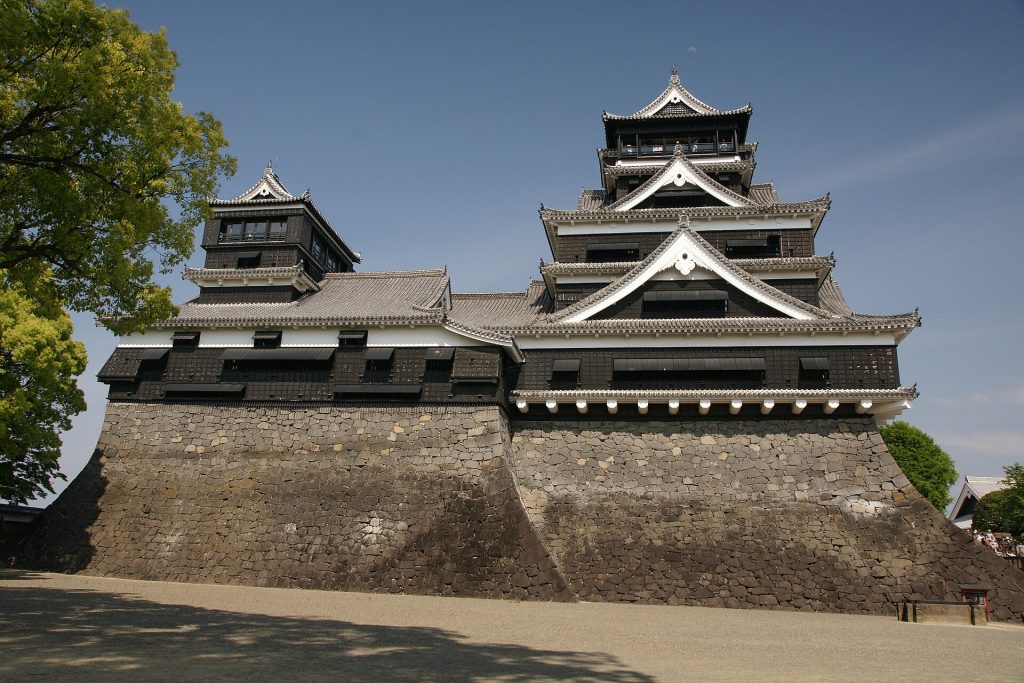
If you learn only one thing about Kumamoto Castle, let it be the walls, because they are its masterpiece. Known as musha-gaeshi, which can be understood as walls that turn away warriors, they begin their rise gently from the ground and then curve ever more sharply upward until the topmost section is very nearly vertical, even overhanging. To a climber, they are a nightmare. What starts as a manageable slope becomes, near the top, an impossible wall that seems to lean out over you, throwing you back.
The engineering is deceptively brilliant. The gentle base invites an attacker to begin climbing, drawing him upward until he is committed and exposed, and then the wall betrays him precisely where he is most vulnerable, high off the ground and unable to advance or easily retreat. All the while, defenders above could rain down stones, arrows, and worse upon the trapped attackers. It is a design that turns the very act of assault into a trap, and it made these walls the terror of any force that dared approach them.
Take the time to stand at the foot of one of these great curves and simply look up. Trace the line of the stones with your eye, watching how the angle steepens, and imagine trying to scale it under fire, in armor, with defenders overhead. The hopelessness of it becomes obvious in an instant. This is not a wall so much as a sustained argument, made in granite, about the futility of attacking Kato Kiyomasa’s castle.
The walls also carry a strange beauty entirely apart from their function. Those long, sweeping curves have an organic grace that softens the castle’s severity, so that the fortress reads as both menacing and elegant at once. Generations of visitors have found themselves moved by the sight, admiring as art what was conceived as a killing device. That doubleness, deadly and lovely together, is the essence of Kumamoto.
A City of Turrets, Gates, and Hidden Defenses
Beyond the two great keeps that dominate its silhouette, Kumamoto Castle was a whole city of defensive structures, and understanding that density is key to appreciating what Kiyomasa achieved. At its height the complex counted dozens of turrets and a great many gates, each one positioned to support the others so that an attacker who took one strongpoint found himself immediately exposed to fire from three more. There were no soft spots, no blind corners the defenders had failed to cover.
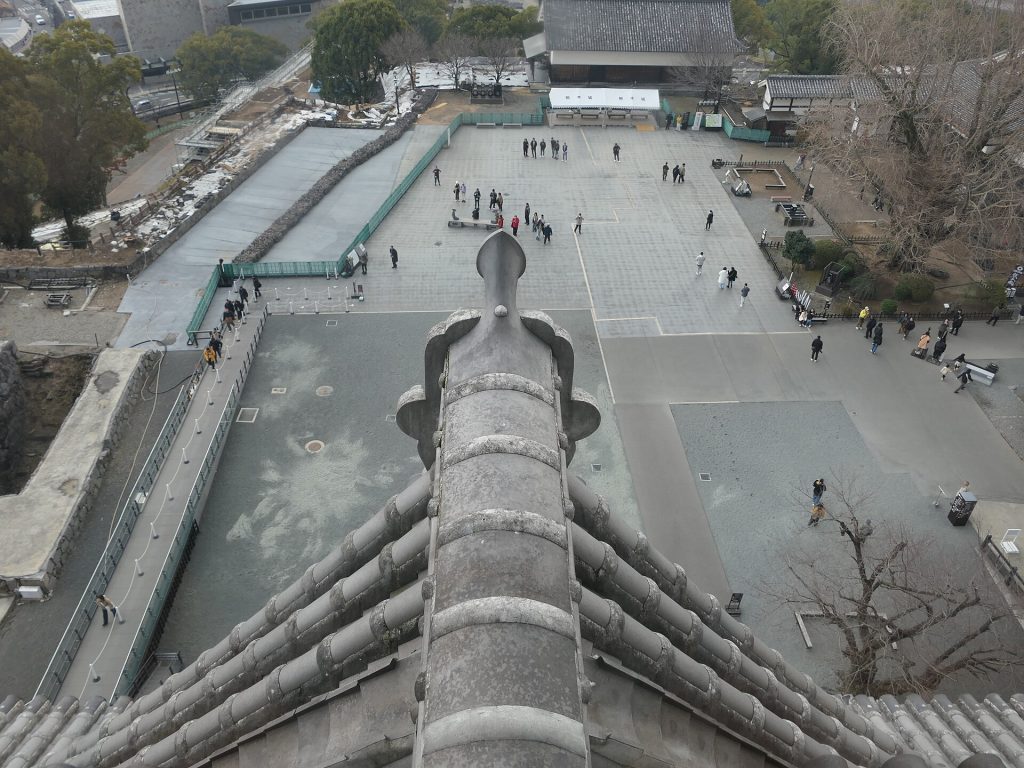
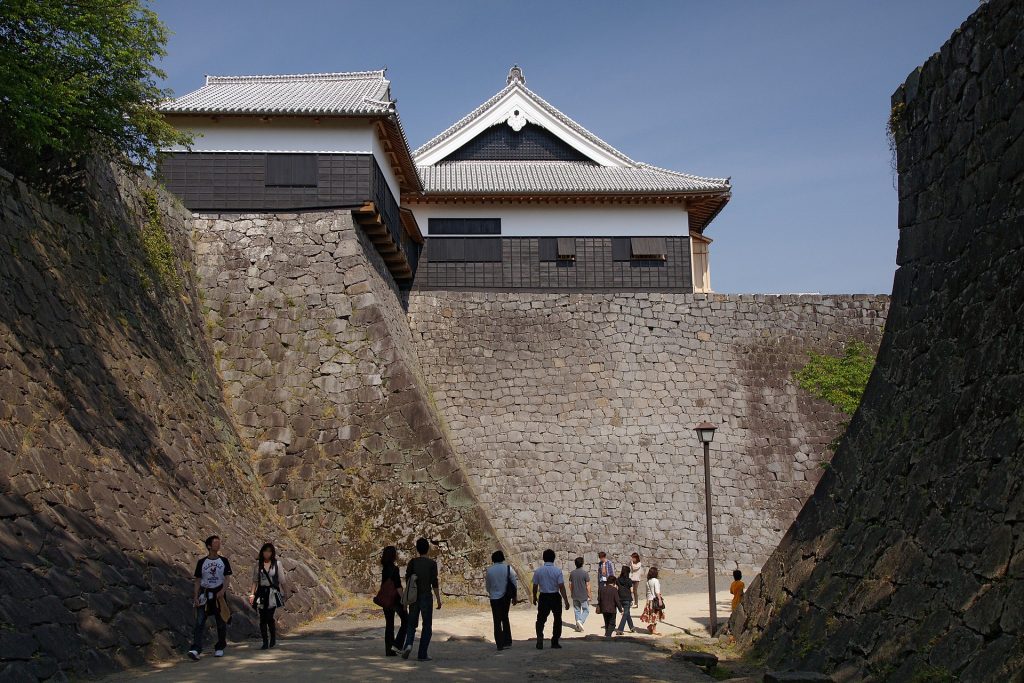
The gates deserve particular attention, because they embody the castle’s philosophy in miniature. Rather than opening straight through the walls, they were set into tight enclosed courtyards where an attacker breaking through the first gate would find himself boxed in, surrounded on all sides by walls lined with defenders, facing a second gate he could not easily force. These killing boxes turned every entrance into a trap, and a determined assault could bleed to death in the space between two doors.
Among the surviving structures, the Uto turret is the great treasure, one of the few original buildings to come down to us through fire, war, and earthquake. Sometimes called a small keep in its own right, it gives a precious sense of what the original seventeenth-century fortress looked and felt like, its weathered timbers and stone base carrying the authentic weight of age that reconstructions, however faithful, can only approximate.
As you move through the grounds, try to see the castle not as a single building but as this dense, interlocking web of defenses. The two black keeps are the crown, but the true genius lies in everything around them, the turrets and gates and walls all working together as one organism designed for a single purpose: to make the taking of this castle cost more than any enemy could bear to pay.
The siege lasted nearly two months, a grinding ordeal for the garrison who held on against fierce pressure and dwindling supplies until relief forces could break through. Their endurance, resting on the strength of Kiyomasa’s walls, transformed the whole course of the rebellion, and it is remembered as one of the defining episodes of Japan’s turbulent passage into the modern age. The castle did not merely survive; it decided the fate of a war.
The Long Peace Under the Hosokawa Lords
Kato Kiyomasa did not hold his masterpiece for long after completing it, and his family’s tenure ended within a generation. In 1632 the castle and its domain passed to the Hosokawa clan, one of the great and cultured families of Japan, and it was under their long stewardship that Kumamoto entered its most stable era. For more than two centuries the Hosokawa ruled from behind these walls, and the fortress that had been designed for war settled into the quieter rhythms of administration and provincial life.
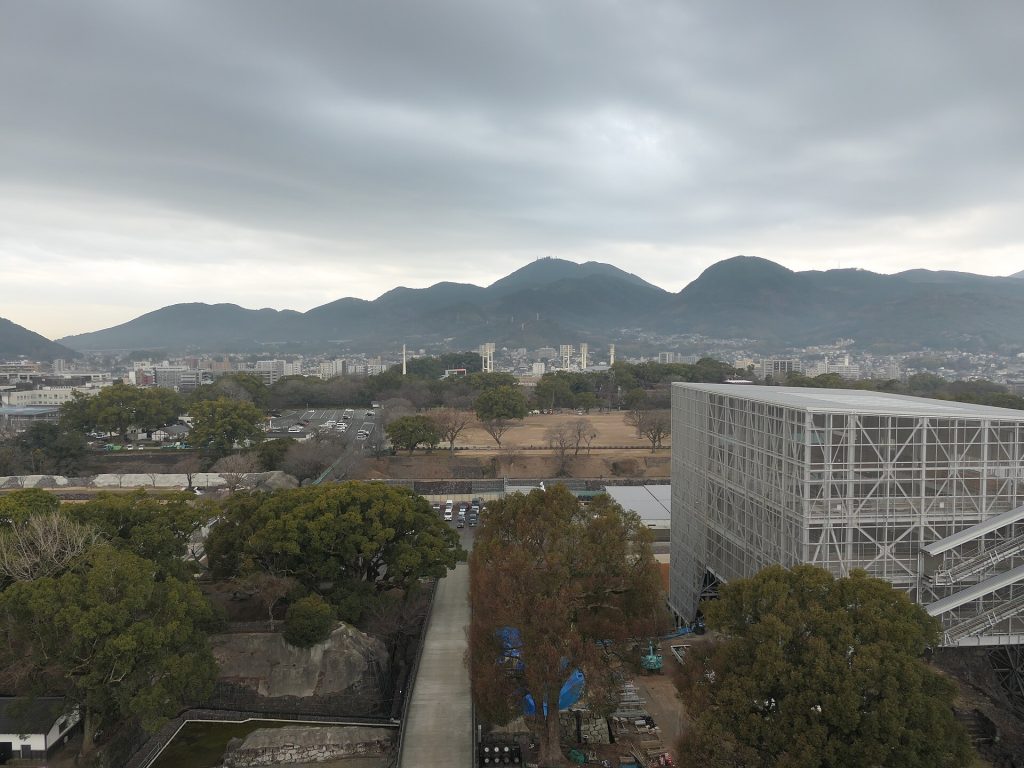
The Hosokawa were famous not only as capable rulers but as patrons of the arts, and their era brought a certain refinement to the domain. The castle became the center of a prosperous region, its garrison and officials managing the affairs of a large territory during the long peace of the Tokugawa age. The great walls that had been built to repel armies now looked out mostly on the ordinary business of a country at rest, and the castle’s fighting purpose faded into the background of daily life.
Yet the fortress was never allowed to decay into mere ornament. Its defenses were maintained, its structures kept in repair, and the martial identity Kiyomasa had stamped upon it endured beneath the surface of peacetime. The Hosokawa understood what they had inherited, and they preserved it, so that when the time came, as it eventually did, the castle would be ready to prove itself in the way its builder had always intended.
For most of the Hosokawa centuries, though, that time seemed to belong to the past. The age of great sieges appeared to be over, and Kumamoto Castle looked like a magnificent relic of a vanished way of war. History, however, had one more great test in store for Kiyomasa’s walls, and it would come not from an old rival but from the convulsions of a nation being dragged into the modern world.
The Rebellion That Put the Walls to the Test
In 1877, more than two and a half centuries after Kiyomasa built his walls, Kumamoto Castle faced the war it had always been waiting for. Japan was in the throes of the Meiji Restoration, the wrenching transformation that swept away the samurai order and remade the country as a modern state. Many former samurai bitterly resented the loss of their world, and in the southern island of Kyushu their discontent erupted into open rebellion under the leadership of Saigo Takamori, one of the most revered figures of the age.
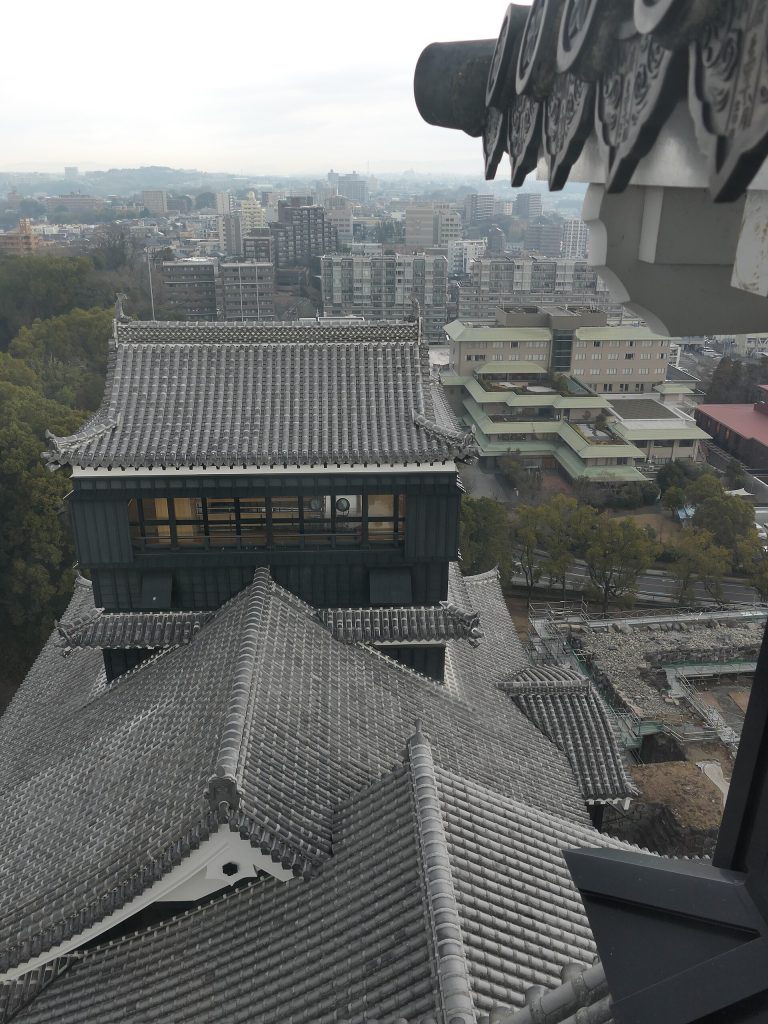
Saigo led a formidable army of rebel samurai northward, and Kumamoto Castle, held by the forces of the new imperial government, stood squarely in his path. The rebels laid siege to the fortress, expecting to overwhelm its garrison and sweep on toward the capital. What followed became one of the most famous sieges in modern Japanese history, and it was, in the end, a triumphant vindication of everything Kato Kiyomasa had built the castle to do.
The garrison held. Despite fierce assaults, despite the passion and skill of Saigo’s samurai, the great walls and defenses did exactly what they had been designed to do, and the rebels could not take the castle. The siege pinned Saigo’s army in place and blunted the momentum of the rebellion, and the failure to capture Kumamoto proved a decisive turning point in the war. The fortress that had stood as a peaceful relic became, in its old age, the anchor of the government’s victory.
There is a bitter irony woven through this triumph, though, and it centers on the great keep. During the siege, before the main assault, the castle’s keep and many of its structures were consumed by a mysterious fire, so that the fortress won its greatest victory even as its crowning symbol burned. The walls held, but the tower was lost, and the castle that had never fallen to an enemy was scarred by flame in the very hour of its finest hour.
It is worth remembering, too, that the survival of the Uto turret through fire, war, and earthquake is very nearly a miracle. So much of the original fortress has been lost and lovingly recreated that these genuinely old survivors carry an almost sacred value, links to the hand of Kiyomasa’s own age that no reconstruction can replace. Seek them out and give them their due.
The Words a Defeated Hero Left Behind
The most famous story of the siege belongs not to the victors but to the defeated. Saigo Takamori, the noble and tragic leader of the rebellion, is said to have reflected on his failure to take the fortress with words that have echoed ever since. According to the beloved tradition, he declared that he had not lost to the Meiji government at all. He had lost, he said, to Lord Kiyomasa.

Whether or not Saigo spoke those exact words, they capture a profound truth, and that is why they have been treasured for so long. In failing to take the castle, Saigo was not defeated by the soldiers of his own era or by superior modern weaponry. He was defeated by the foresight of a man who had been dead for more than two centuries, by walls and defenses conceived in an age of swords and matchlocks that still functioned perfectly against a nineteenth-century army. Kiyomasa reached out of the grave to win one last battle.
There is something deeply moving in this across-the-centuries duel between two great warriors who never met. Saigo, the last champion of the dying samurai world, hurled himself against the masterpiece of Kiyomasa, an earlier master of that same world, and the older man’s genius prevailed. It is a fitting epitaph for both of them, and for the whole tradition of the samurai castle that Kumamoto so perfectly embodies.
When you stand within these walls, that story is worth carrying with you, because it explains why this fortress matters so much to the people of Japan. It is not merely a beautiful old building. It is proof, written in stone and remembered in a hero’s own rueful words, that true craftsmanship can outlast its maker and triumph in ages he never lived to see.
Consider what it means that a man dead for over two centuries could still win a battle through the works of his hands. Few builders in history can claim such a legacy, and fewer still can point to a moment when their craftsmanship, long after their death, turned the tide of a nation’s history. Kiyomasa’s victory over Saigo is the ultimate proof of the castle-builder’s art, and Kumamoto is the monument that proves it.
Raising the Black Keep From Its Ashes
For decades after the fire of 1877, the castle stood without its great keep, its silhouette broken and incomplete much as Osaka Castle had once stood keepless for centuries. The walls that had won the siege remained, along with a number of the original turrets and structures, but the crowning towers that gave the fortress its identity were gone, lost to the flames in the hour of victory.

In 1960, the people of Kumamoto rebuilt the great and lesser keeps in ferroconcrete, restoring the iconic black profile to the city’s skyline. Like the reconstruction at Osaka, the choice of concrete has drawn debate from those who long for authentic timber, but the rebuilt keeps gave the castle back its face, and they house a museum that tells the fortress’s remarkable story to the many visitors who climb their floors.
A further and more ambitious phase of restoration between 1998 and 2008 rebuilt many of the seventeenth-century structures with great care, recreating gates, turrets, and the Honmaru Palace, and steadily returning the complex toward the density and grandeur of Kiyomasa’s original vision. Alongside these reconstructions, a precious handful of genuinely original buildings survive as designated cultural properties, anchoring the restored fortress to its authentic past.
The result, by the early twenty-first century, was a castle magnificently restored, its black keeps rising once more, its walls and turrets crowding the grounds, its long history legible in every stone. Kumamoto had reclaimed its greatest treasure, and it seemed the fortress had finally come safely through its long ordeal of fire and war. But nature, indifferent to human triumphs, was preparing one more trial, and this one would strike from below.
When the Earth Itself Attacked the Castle
In April 2016, a series of powerful earthquakes struck the Kumamoto region, and the castle that had withstood siege and fire for four centuries met an enemy that no wall could turn away. The violent shaking, including a magnitude 7.3 quake, tore through the fortress with devastating force. Roofs collapsed, turrets toppled, and long stretches of the famous curved walls crumbled and slid, the great stones that had defeated armies scattered like gravel by the movement of the earth.

The images of the damage struck deep into the hearts of people across Japan and beyond. Photographs of the beloved Uto turret clinging to a single narrow column of surviving stones, of walls reduced to rubble, of the proud keeps standing amid ruin, became symbols of both loss and resilience. The castle that had been the pride of Kumamoto lay grievously wounded, and the scale of the harm made the task of repair look almost impossible.
Yet the response was immediate and determined. Restoration work began within months, and the recovery became a source of national pride and a demonstration of extraordinary patience and skill. The great keep was repaired and reopened in 2019, once again crowning the skyline, and the work continued through the surrounding structures and the enormous, painstaking task of rebuilding the fallen walls stone by numbered stone.
The full restoration is a project measured in decades, with completion planned many years into the future, because the walls cannot simply be rebuilt but must be carefully reconstructed to preserve their historic form and strength. When you visit today, you are witnessing a fortress in the midst of its most patient battle, one fought not against an army but against the aftermath of catastrophe, and the sight of the ongoing work is itself a moving testament to how much this place is loved.
View on Google Maps (32.8064, 130.7059)
Reconstruction on this scale is an act of faith as much as engineering, a bet that the fortress matters enough to justify decades of labor and expense. That the people of Kumamoto have made that bet, again and again, tells you everything about what the castle means to them. It is not a monument to be preserved at arm’s length but a living heart to be nursed back to full health, however long it takes.
Walking the Grounds of a Fighting Legend
Visiting Kumamoto Castle today is an experience layered with history, resilience, and quiet wonder, and the ongoing restoration only adds to its power. Special walkways and viewpoints have been created so that visitors can see both the magnificent restored keeps and the painstaking recovery work still underway, and there is something unexpectedly moving in watching craftsmen tend to the great walls with such devotion. You are seeing not a finished monument but a living act of care.

Begin, if you can, by taking in the great curved walls, the musha-gaeshi that made the castle legendary. Stand at their feet, look up their impossible sweep, and let the genius of the design register in your body as much as your mind. Then make your way to the great keep, climb through its museum floors, and study the models, armor, and artifacts that bring Kiyomasa’s world and the drama of the Satsuma Rebellion vividly to life.
Seek out the original Uto turret, one of the true survivors, and give it the attention it deserves, because in its weathered timbers you are touching the authentic seventeenth-century fortress in a way the reconstructions cannot quite offer. The restored Honmaru Palace, with its richly decorated chambers, shows the more refined and residential side of the castle, a reminder that these walls sheltered not only soldiers but the whole life of a great domain.
The grounds are especially glorious in cherry blossom season, when the dark keeps rise from clouds of pink flowers in a contrast that is almost impossibly beautiful, the severe black fortress softened by the gentlest of blooms. Come in any season, though, and Kumamoto rewards you. It is a castle that has been besieged, burned, and shaken to its foundations, and it stands still, black and proud and patiently healing, one of the truest and most stirring fortresses in all of Japan.
Castles Nearby
If Kumamoto has deepened your love of Japan’s great castles, two more legendary fortresses await your discovery:
You May Like

Mafra, the Palace a King Built From a Vow