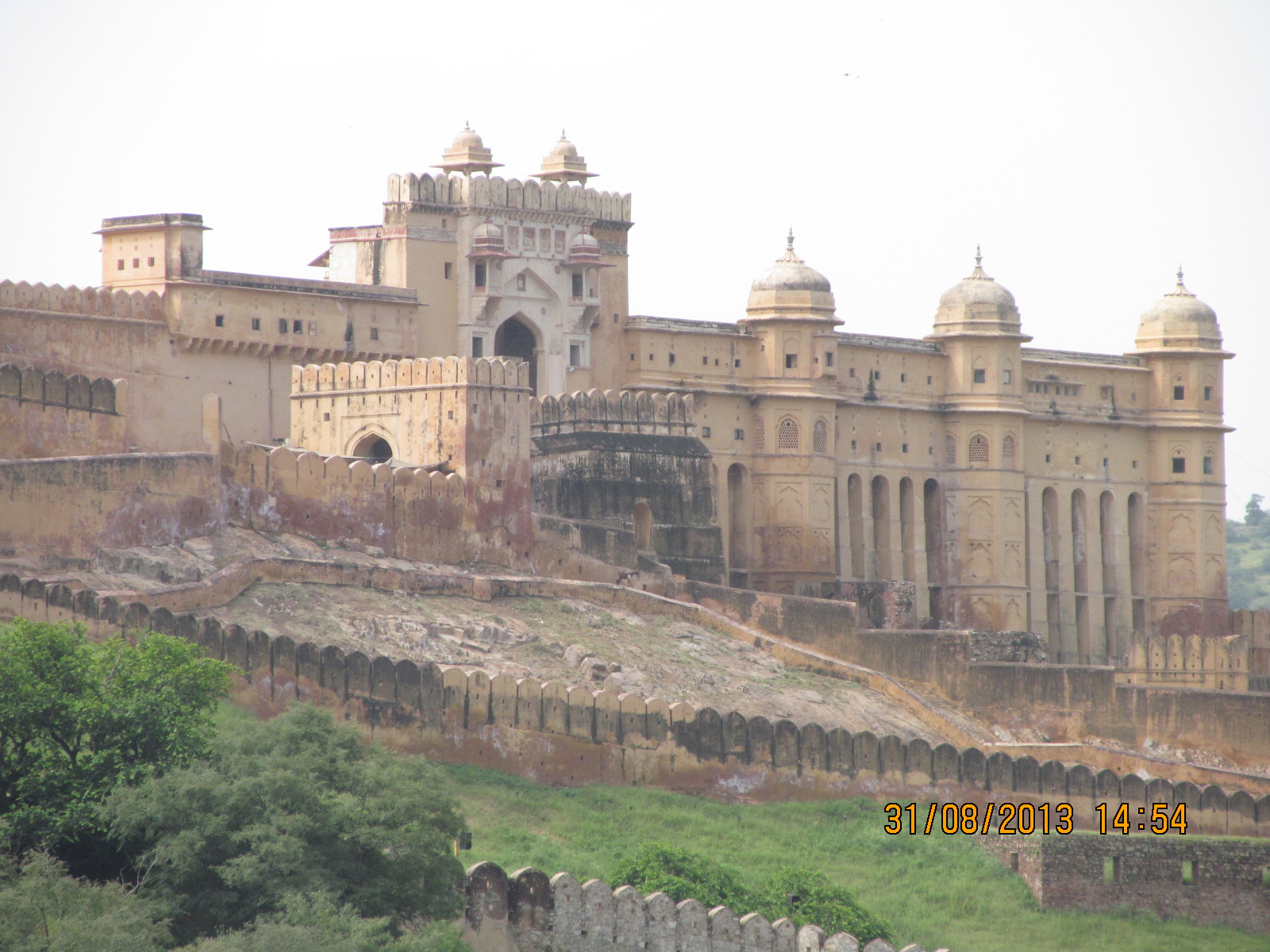
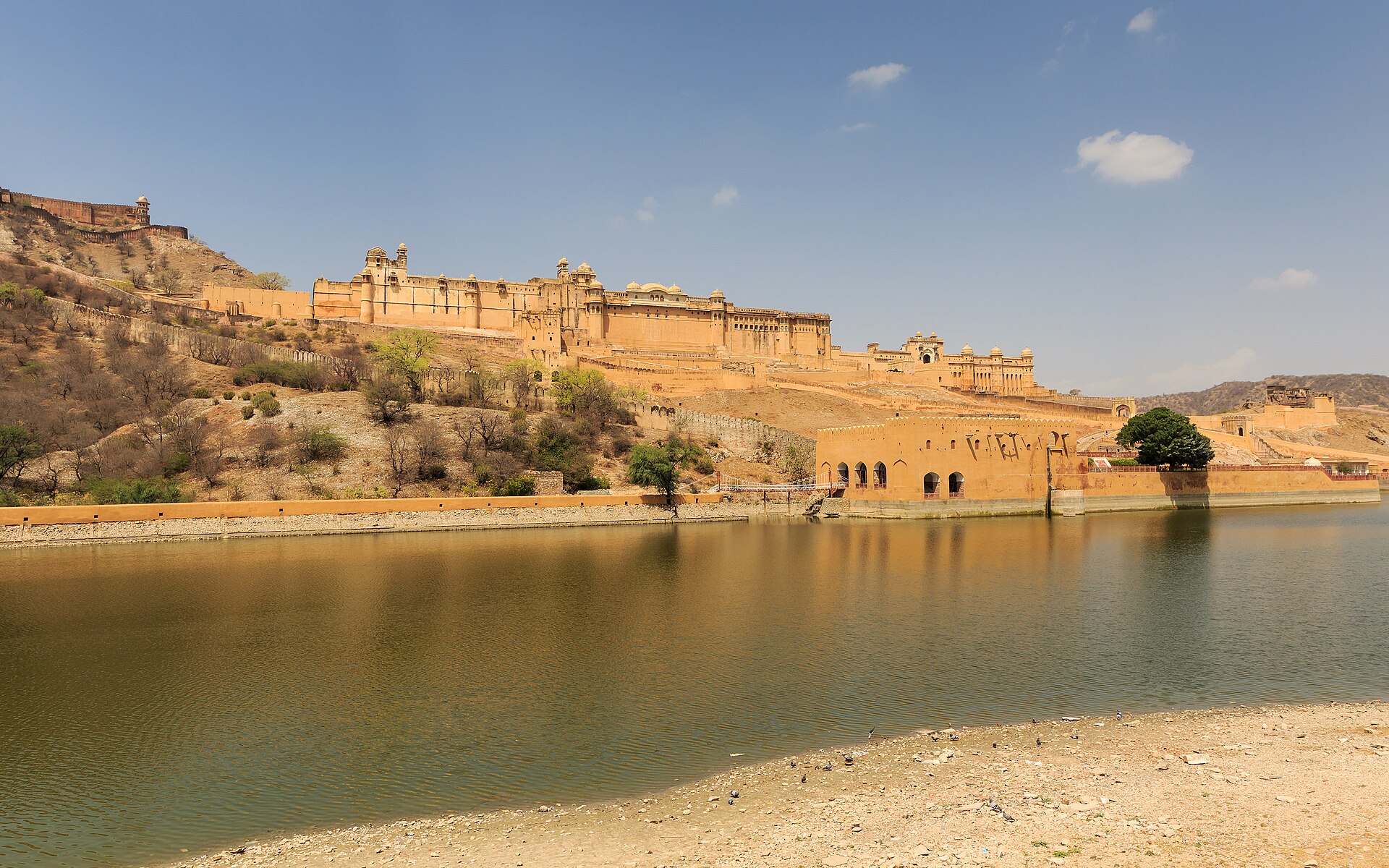
Rising in tiers of honey-colored sandstone and white marble upon a forested hill above the still waters of the Maota Lake, in the desert state of Rajasthan in northern India, Amber Fort is one of the most magnificent and romantic of all the palace-fortresses of the East. The great citadel of the Kachwaha Rajputs, the warrior clan that ruled the region for centuries before founding the pink city of Jaipur, it is a place of soaring gates and mirrored halls, of cooling water channels and sacred temples, where the martial strength of the Rajput and the delicate artistry of the Mughal are married in a single breathtaking whole.
In this article you are invited to explore the history and the architecture of this extraordinary fortress-palace, from its construction by a great Rajput general in the sixteenth century, through its role as the seat of a proud warrior dynasty, to the exquisite halls and courtyards that make it one of the wonders of India. Amber is a fortress that is also a palace, a stronghold that is also a work of art, and it stands as one of the supreme achievements of the architecture of Rajasthan.
In This Article
- A Palace-Fortress above the Lake
- Raja Man Singh’s Vision
- Capital of the Kachwaha Rajputs
- The Sun Gate and the Courtyards
- The Hall of Public Audience
- The Ganesh Gate
- The Sheesh Mahal: Palace of Mirrors
- The Hall of Pleasure
- The Temple of Sila Devi
- The Zenana: Women’s Quarters
- Rajput and Mughal Fusion
- The Passage to Jaigarh
- Amber Today
- Castles Nearby
- The Jewel of Rajasthan
A Palace-Fortress above the Lake
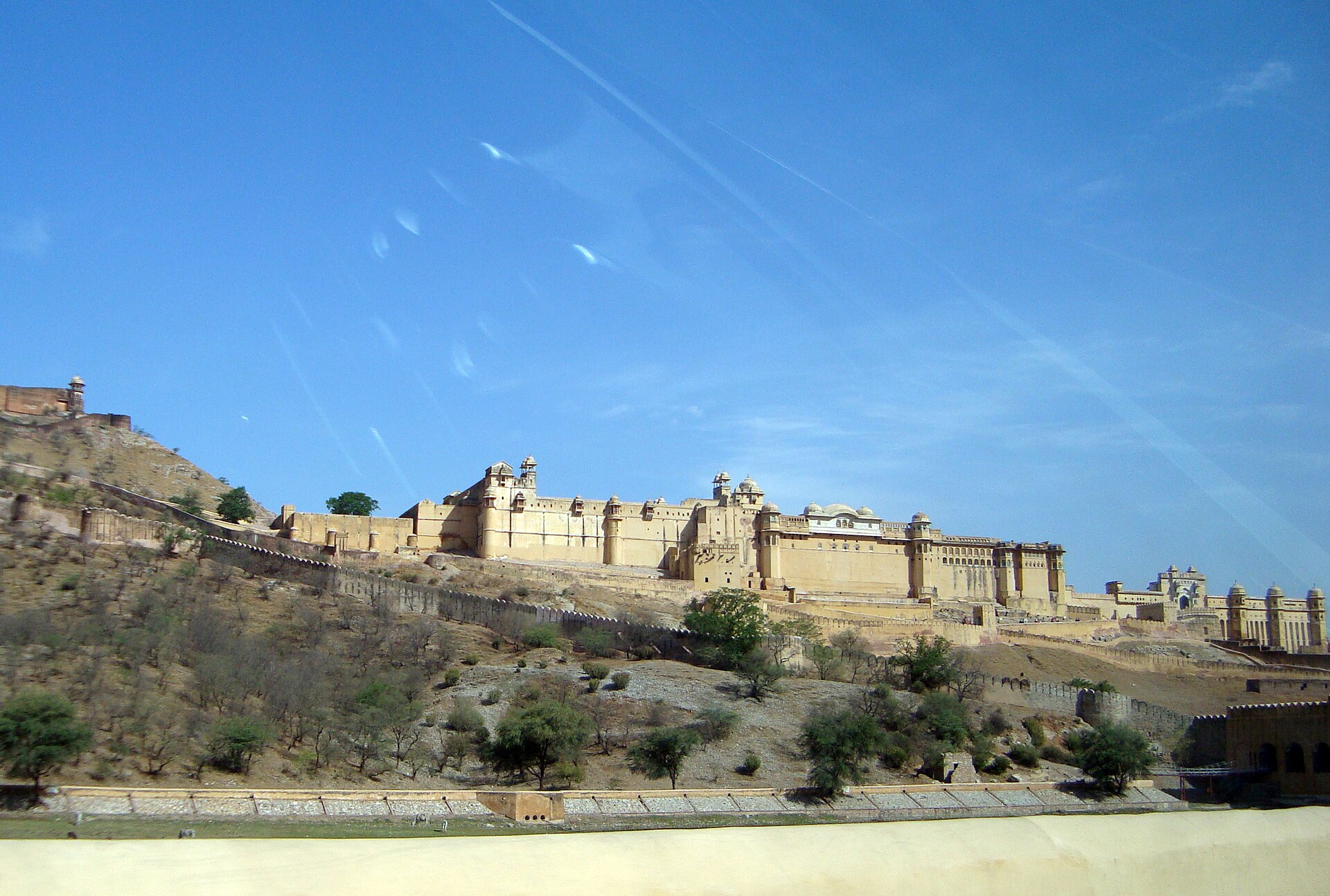
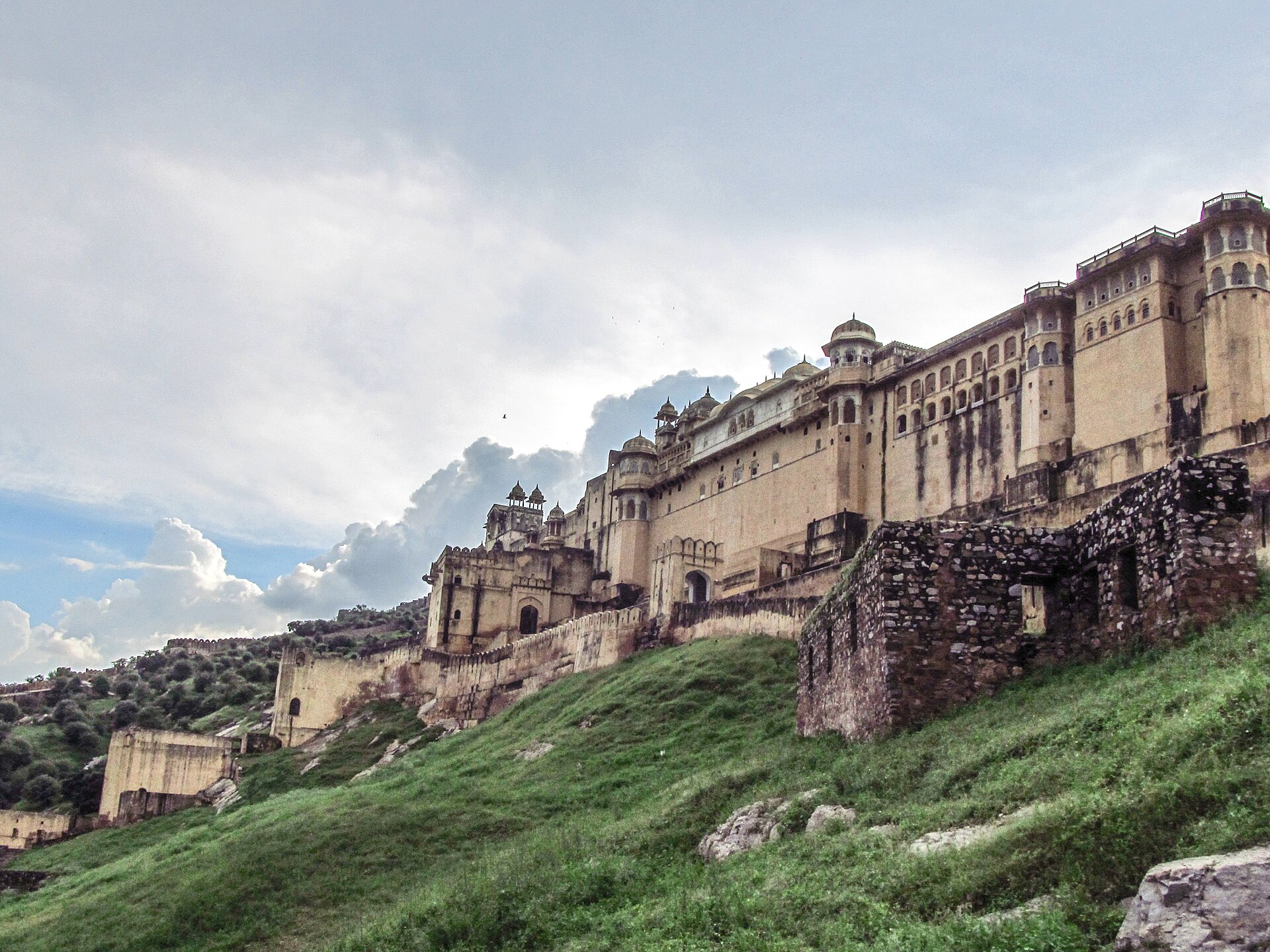
The setting of Amber Fort is one of extraordinary beauty, for the great palace-fortress rises in tiers up the slope of a forested hill, overlooking the still, reflecting waters of the Maota Lake below. Built of warm red and yellow sandstone and gleaming white marble, the fortress catches the light of the Rajasthan sun and glows with a golden warmth, its walls and towers and pavilions climbing the hillside in a magnificent architectural cascade.
The reflection of the fortress in the calm waters of the lake, especially in the soft light of morning or evening, is one of the classic images of Rajasthan, and it draws visitors and photographers from all over the world. The fortress is at once a mighty stronghold, guarding the approaches to the region, and a palace of the utmost refinement and beauty, and this dual character, of strength and grace combined, is the very essence of Amber. It is a fortress built by warriors who were also great patrons of art and architecture.
The name Amber, sometimes spelled Amer, is thought to derive from Ambikeshwara, a name of the Hindu god Shiva, or perhaps from the mother goddess Amba, and it lends the fortress an air of ancient sanctity. The town of Amer that spreads at the foot of the hill was itself an important settlement long before the great palace was built, and the whole area is rich in temples and monuments. The fortress rising above the lake and the town is the crowning glory of this ancient and sacred landscape.
The Maota Lake below the fortress was not merely ornamental but served as the principal source of water for the palace, and its still surface was designed to mirror the fortress above, doubling its beauty. A charming garden, the Kesar Kyari, laid out in a star-shaped pattern on an island in the lake, added to the loveliness of the scene. The relationship between the fortress and the water below is one of the most carefully considered aspects of the whole design, and it contributes greatly to the romantic beauty of Amber.
Raja Man Singh’s Vision
The great palace-fortress of Amber was begun in the year 1592 by Raja Man Singh the First, one of the most powerful and celebrated figures of his age, a Rajput prince who served as one of the leading generals of the great Mughal emperor Akbar. Man Singh was a warrior of tremendous renown, who led Akbar’s armies to victory across the length and breadth of India, and the fortune and prestige he gained in this service he lavished upon the building of his magnificent new palace at Amber.
Man Singh’s palace took some twenty-five years to complete, and it was continued and expanded by his successors, above all Raja Jai Singh the First, over the following century and more. Successive rulers added new courtyards, halls, and pavilions, adorning the fortress with ever greater splendor, until it became the magnificent complex that we see today. The vision of Man Singh, a warrior-prince of great wealth and refined taste, set Amber upon the path to becoming one of the architectural wonders of India.
Raja Man Singh was not only a great general but also one of the most trusted advisers of the emperor Akbar, a member of his inner circle and one of the famous Navaratnas, or Nine Jewels, of the imperial court. His extraordinary position in the Mughal empire, unusual for a Hindu Rajput, reflects the wisdom of Akbar’s policy of alliance and tolerance, and it brought immense wealth and prestige to Amber. The palace that Man Singh built was a fitting expression of the greatness he had achieved in the service of the empire.
The twenty-five years and more that it took to complete the palace of Man Singh, and the further century of additions by his successors, meant that Amber was not the creation of a single moment but the accumulated work of many generations of the Kachwaha dynasty. Each ruler left his mark upon the fortress, adding new halls, courtyards, and decorations according to the taste and the resources of his age, so that the whole is a rich palimpsest of the history of the dynasty, written in stone and marble and mirror-glass.
Capital of the Kachwaha Rajputs
For centuries, Amber was the capital of the Kachwaha Rajputs, one of the great warrior clans of Rajasthan, who ruled the region from this stronghold until they moved their capital to the newly founded city of Jaipur in the year 1727. The Rajputs were the proud martial aristocracy of northern India, famed for their courage, their code of honor, and their fierce independence, and Amber was the seat of one of the most important of their dynasties.
The Kachwaha rulers of Amber walked a careful path in the age of Mughal supremacy, forming a close alliance with the great emperors of Delhi while preserving their own identity, their own faith, and a large measure of their own power. This alliance brought them wealth, prestige, and high position in the Mughal empire, as the career of Man Singh so vividly shows, and it was this that made possible the building of the great palace-fortress. Amber stands as a monument to the proud and sophisticated dynasty that raised it.
The Kachwaha claimed descent from Kush, one of the sons of the god-king Rama, the hero of the great epic the Ramayana, and this illustrious lineage was a source of great pride to the dynasty. Their alliance with the Mughals, sealed by marriage as well as by service, was one of the cornerstones of Mughal power in Rajasthan, and it allowed the Kachwaha to flourish while so many other Rajput clans resisted and suffered. The sophistication of this policy is written in the magnificence of Amber.
The move of the capital to Jaipur in 1727 was undertaken partly because Amber, hemmed in by its hills, could no longer accommodate the growing population and the needs of a modern capital, and partly out of a desire to build a planned city on the open plain. Jaipur, laid out on a grid according to ancient principles, became one of the great cities of India, but the old fortress of Amber remained the ancestral seat and the spiritual home of the dynasty, a link to the deep roots of the Kachwaha in the land of Rajasthan.
The Sun Gate and the Courtyards
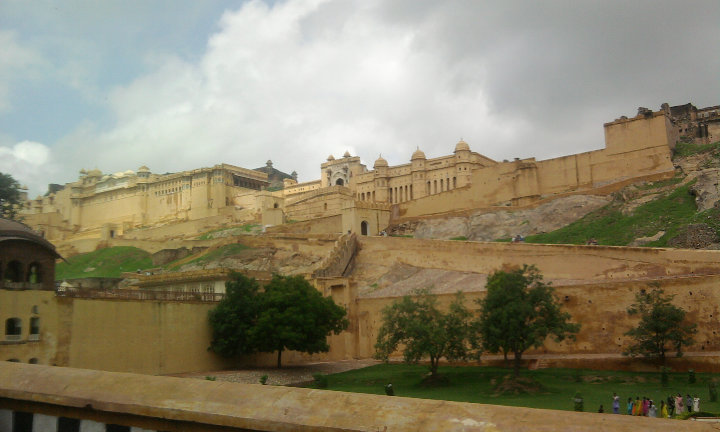
The great palace-fortress of Amber is arranged around a series of four main courtyards, each rising above the last as one ascends the hill, and each with its own character and purpose. The main entrance to the fortress is through the Suraj Pol, the Sun Gate, which opens into the first great courtyard, a large open space that in former times was used for the assembly of armies and for the great victory parades of the Rajput lords returning from their campaigns.
From this first courtyard, a grand staircase leads up to the higher levels of the palace, and to the successive courtyards that contain the public and private apartments of the rulers. This arrangement, in which the fortress rises in stages up the hill, with the more private and important areas set higher and further within, is characteristic of the palace-fortresses of Rajasthan, and it combined defensive strength with a clear hierarchy of spaces, from the public assembly grounds below to the private royal quarters above.
The ascent through the successive courtyards of Amber was designed as a journey from the public to the private, from the great open assembly ground of the first courtyard to the intimate and secluded women’s quarters at the summit. This spatial progression mirrored the social hierarchy of the court and the increasing exclusivity of access as one moved deeper into the palace. It is a masterly piece of architectural planning, in which the very layout of the fortress expressed the order and the values of the world that built it.
The Hall of Public Audience
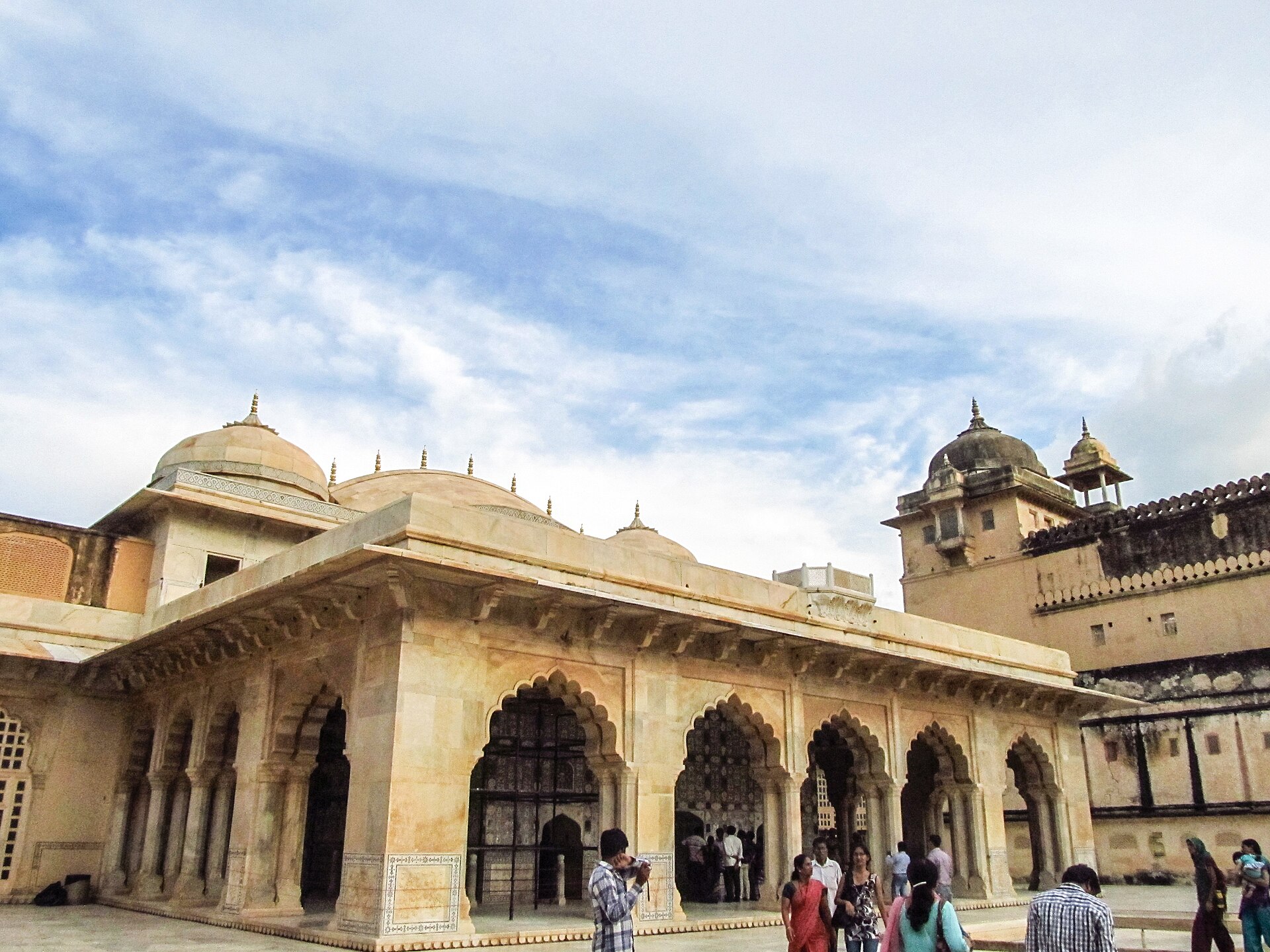
The second courtyard of the fortress contains the Diwan-i-Aam, the Hall of Public Audience, where the ruler would sit in state to hear the petitions and grievances of his people and to conduct the public business of his realm. This great hall, open on its sides and supported by rows of elegant columns, some twenty-seven in number, was the setting for the public face of royal government, where the lord of Amber displayed his justice and his majesty before his subjects.
The Hall of Public Audience was a vital institution in the government of a Rajput state, for it was here that the ruler made himself accessible to his people and dispensed the justice that was one of the chief duties of a king. The elegant colonnaded hall, open to the air and the light, provided a fitting setting for these ceremonies of state, combining dignity with accessibility. It is one of the great public spaces of the fortress, a place where the power of the ruler was displayed in all its splendor.
The open, colonnaded design of the Hall of Public Audience, allowing the free circulation of air, was well suited to the climate of Rajasthan, and it created a space that was at once dignified and comfortable. The double rows of columns, some of red sandstone and some of marble, supported by elephant-shaped capitals, gave the hall an air of elegant strength. Here the ruler sat enthroned to receive his people, and the hall was the theater of the public rituals of kingship that bound the ruler to his subjects.
A famous legend attaches to the Hall of Public Audience, telling that its beauty so aroused the jealousy of the Mughal emperor that the ruler of Amber was obliged to cover its splendor with a coat of plaster to disguise it, lest the emperor take offense or covet it for himself. Whether or not the tale is true, it reflects the delicate balance that the Rajput rulers had to maintain in their relations with their powerful Mughal overlords, displaying their wealth and refinement while taking care not to appear to rival the imperial court itself.
The Ganesh Gate
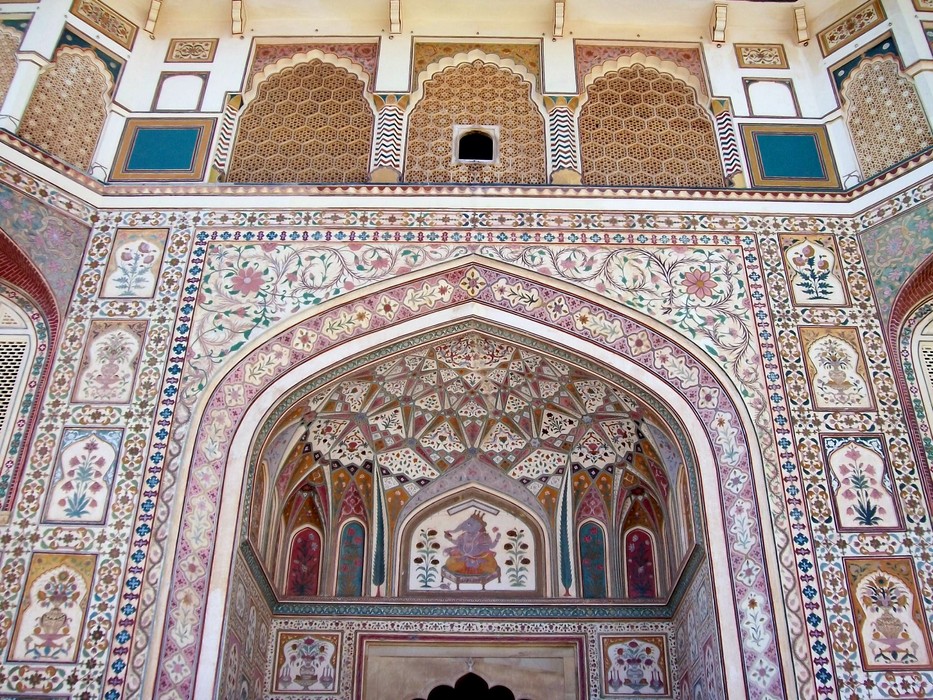
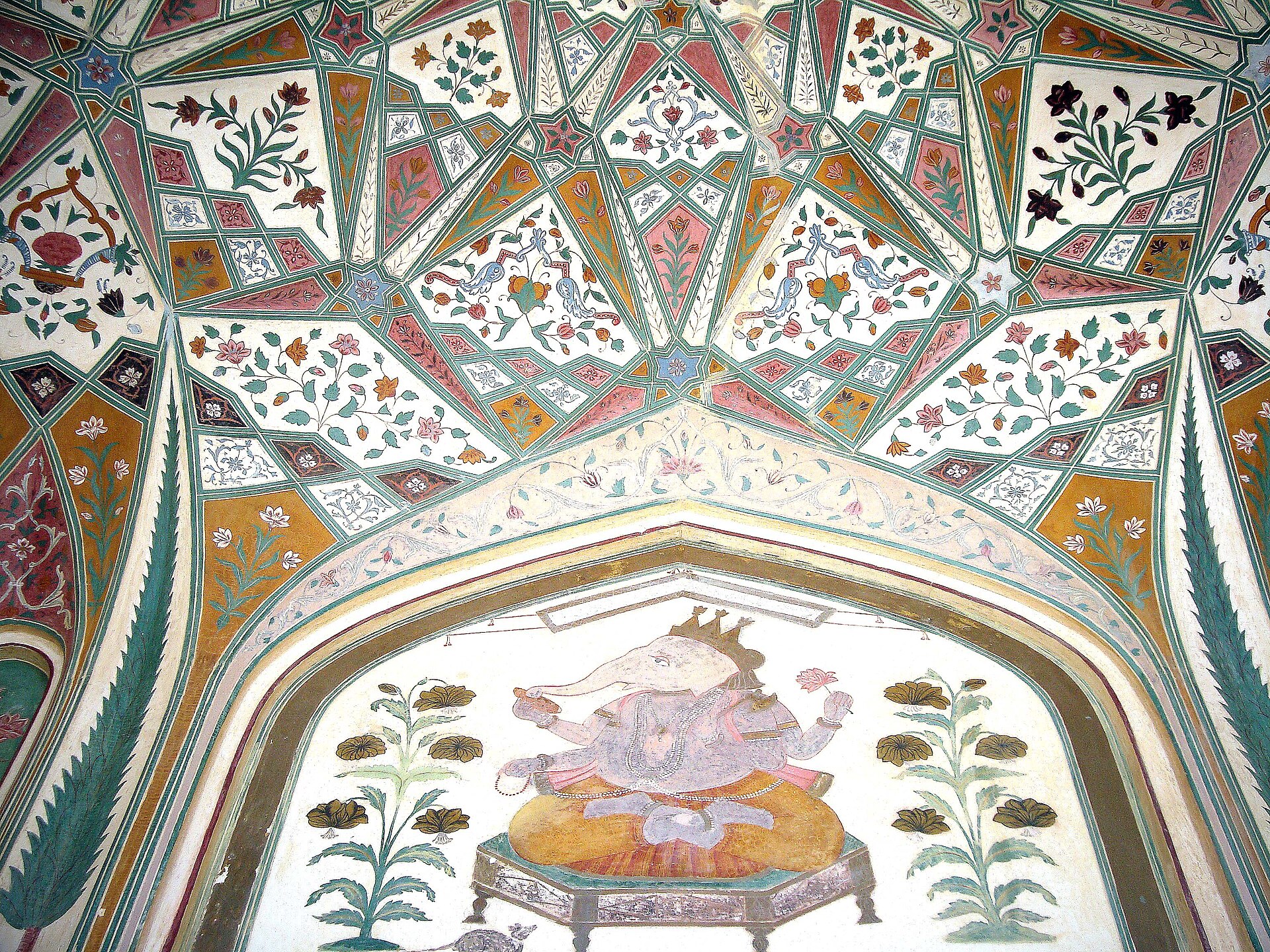
One of the most magnificent structures in the whole of Amber is the Ganesh Pol, the Ganesh Gate, a great three-storeyed gateway richly adorned with frescoes and painted decoration, which guards the entrance to the private palaces of the rulers. Named for the elephant-headed Hindu god Ganesha, the remover of obstacles, whose image adorns it, the gate is a riot of color and pattern, one of the most beautiful painted gateways in all of India.
Above the gate is the Suhag Mandir, a chamber with latticed windows through which the royal ladies, who lived in strict seclusion, could look down upon the ceremonies and audiences held in the courtyard below without being seen themselves. The Ganesh Gate thus served both as a magnificent ceremonial entrance and as a screen between the public and private worlds of the palace. Its exuberant decoration, glowing with color, makes it one of the visual highlights of any visit to the fortress.
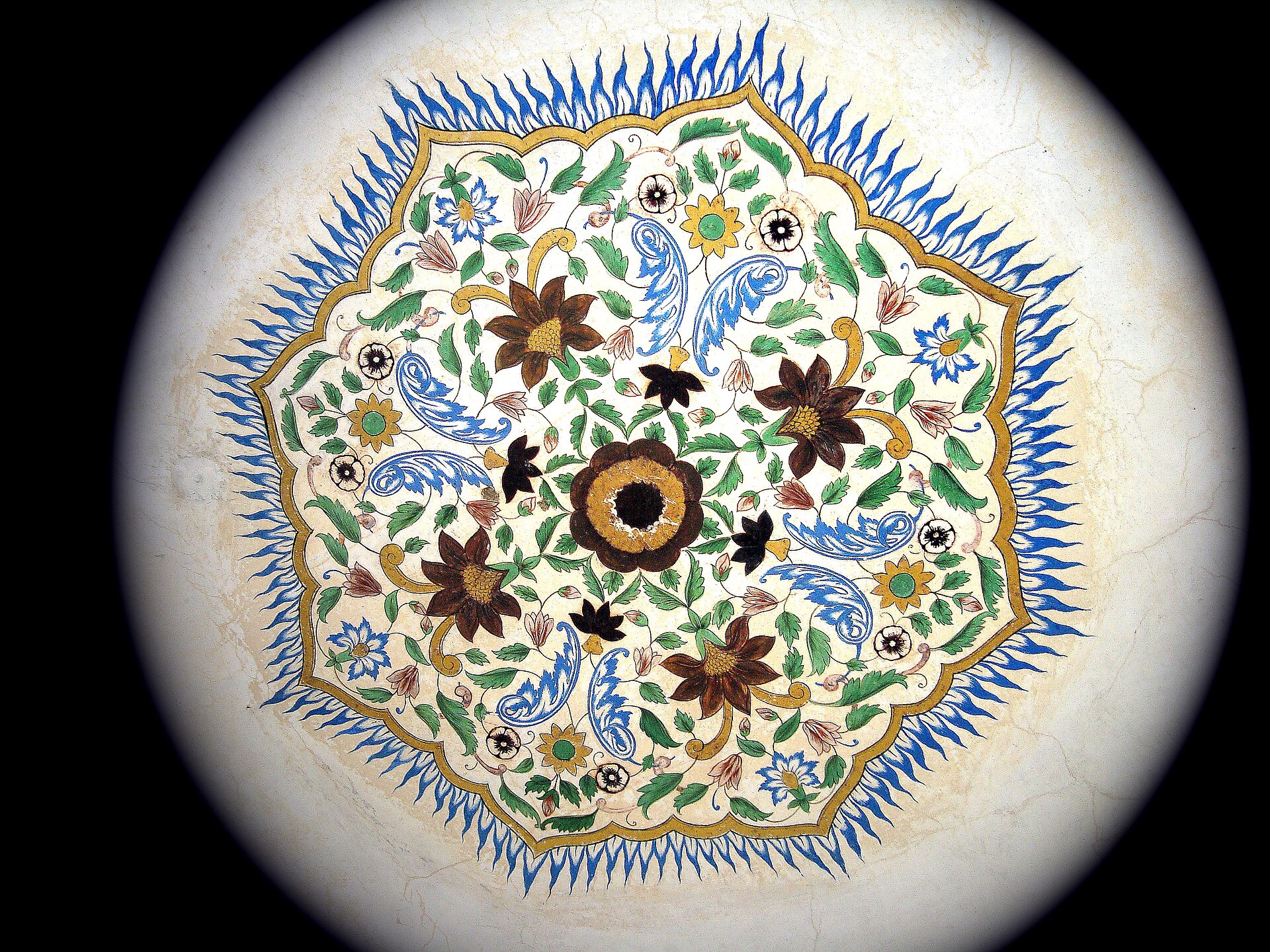
The painted decoration of the Ganesh Gate, with its floral and figurative designs in brilliant colors, is among the finest surviving examples of the mural art of Rajasthan, and it has been carefully restored to preserve its original splendor. The gate marked the threshold between the public and private realms of the palace, and its magnificence was intended to impress upon all who passed through it the wealth and the refinement of the rulers of Amber. It remains one of the most photographed features of the entire fortress.
The name of the gate, honoring the god Ganesha, the remover of obstacles and the bringer of good fortune, was well chosen for a threshold that all who entered the private palace had to cross, and the god’s image was placed there to bless and protect those who passed beneath. The invocation of Ganesha at the entrance reflects the deep religious devotion that permeated every aspect of life in the Rajput court, where the gods were present at every threshold and every important moment.
The Sheesh Mahal: Palace of Mirrors
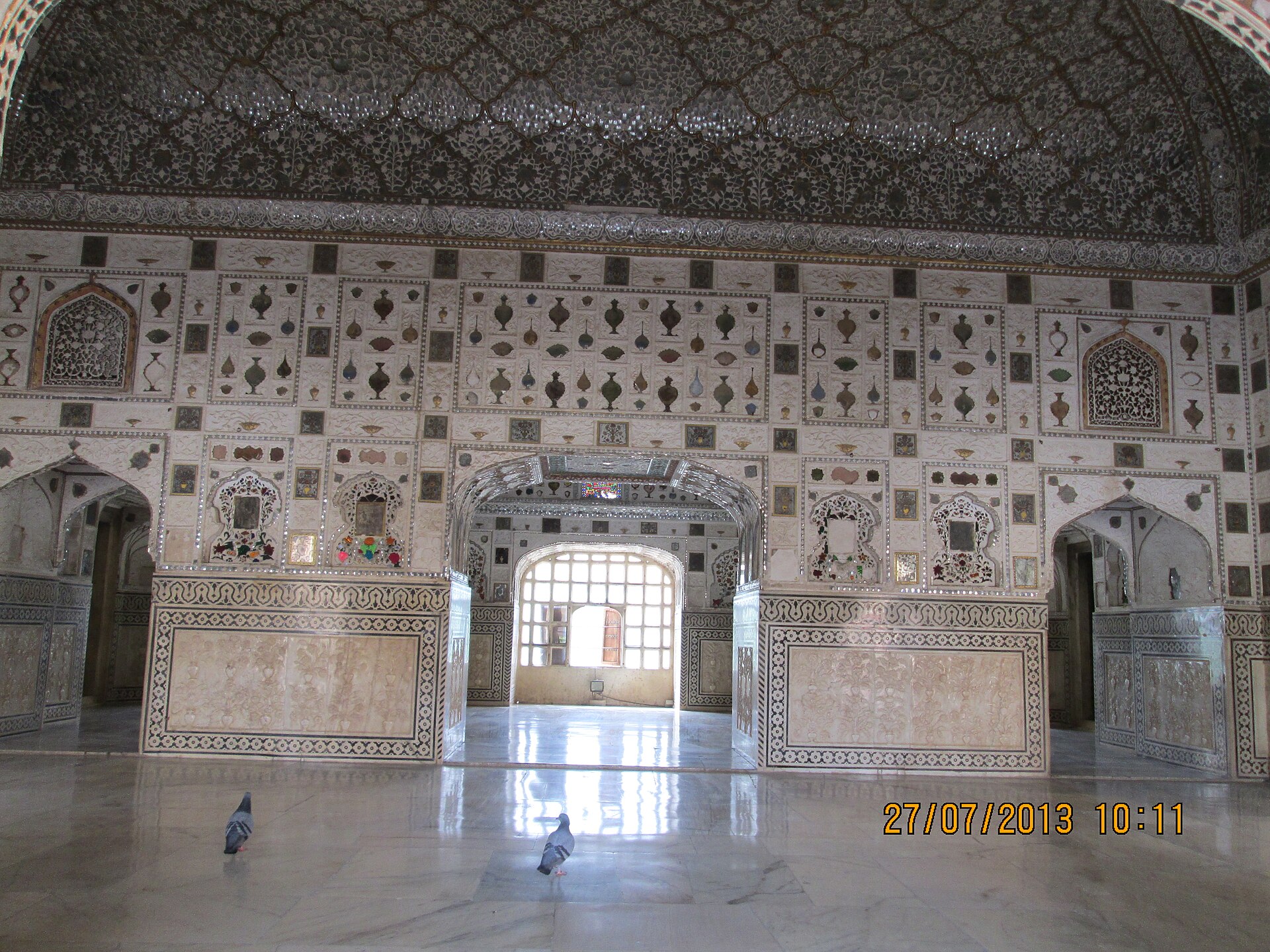
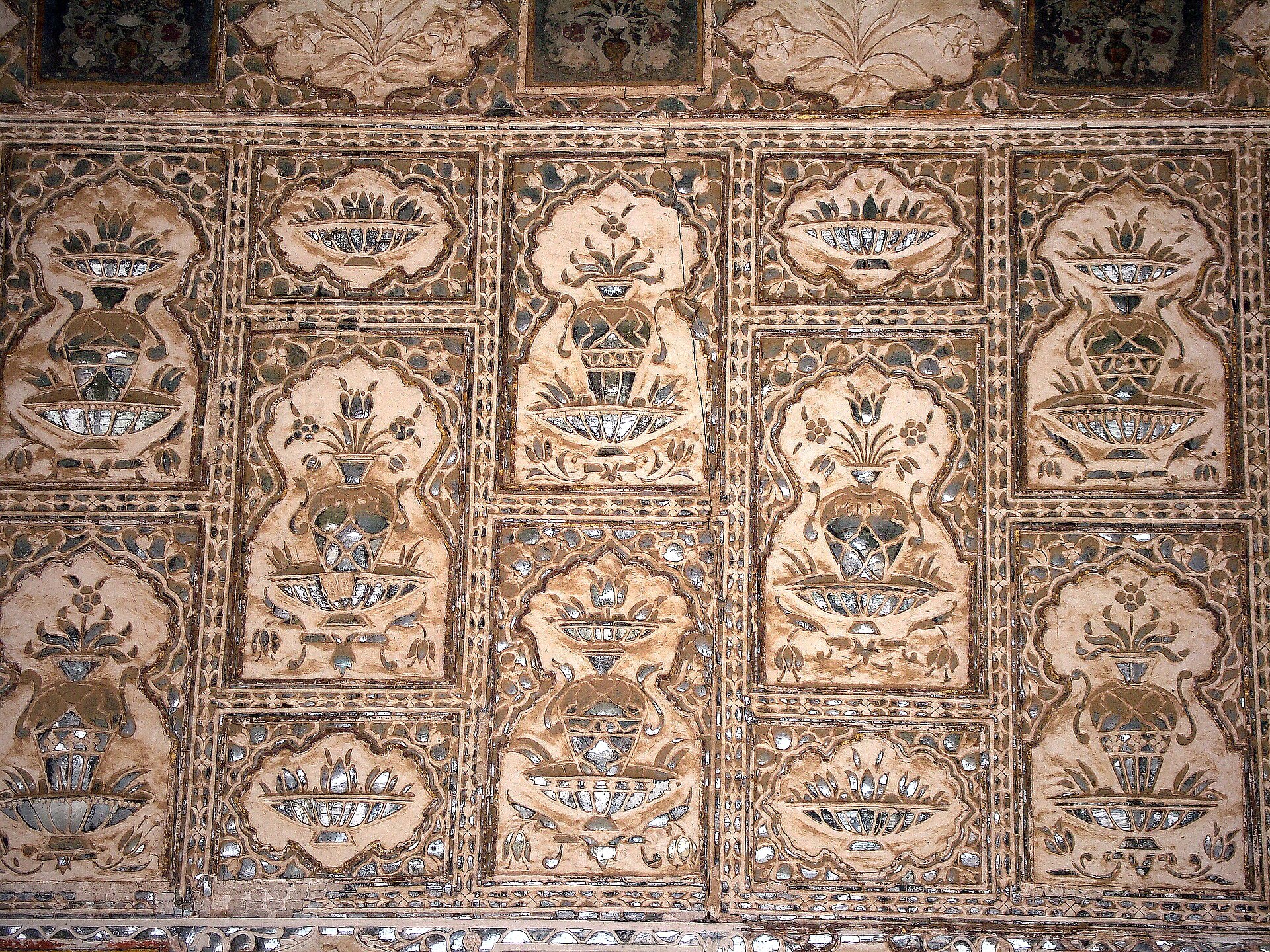
The most famous and dazzling of all the wonders of Amber is the Sheesh Mahal, the Palace of Mirrors or Hall of Mirrors, a chamber whose walls and ceilings are inlaid with countless thousands of tiny pieces of mirrored glass, set into intricate patterns of flowers and geometric designs. So dense is the mirror-work that even the light of a single candle, it is said, could be multiplied into a thousand points of light, filling the whole chamber with a magical, starry glow.
The Sheesh Mahal was created for the pleasure and the enchantment of the royal family, a chamber of surpassing beauty where the play of light upon the mirrors produced effects of extraordinary loveliness. It represents the height of the decorative art of the age, a fusion of Persian and Indian techniques executed with consummate skill. To stand within the Palace of Mirrors, surrounded by the glittering surfaces, is to enter a world of fantasy and enchantment, and it is little wonder that it is the most celebrated of all the marvels of Amber.
The technique of the mirror inlay, known as thikri work, involved setting countless small pieces of specially made mirror-glass into the plaster, often combined with colored glass and fine painting, to create surfaces of extraordinary richness and complexity. The craftsmen who created the Sheesh Mahal were masters of this demanding art, and the results have dazzled visitors for centuries. It is said that the mirrored chamber was designed so that the queen, who was not permitted to sleep in the open air, could gaze upon a ceiling that glittered like the star-filled night sky.
The Sheesh Mahal is often regarded as the single most beautiful chamber in all of Rajasthan, and its fame has spread far beyond the borders of India, making it one of the most celebrated interiors in the world. The play of light upon the countless mirrors, whether the light of the sun by day or of candles by night, produces effects of shifting, shimmering beauty that no photograph can fully capture. It must be experienced in person to be appreciated, and it never fails to astonish even the most well-traveled visitor.
The Hall of Pleasure
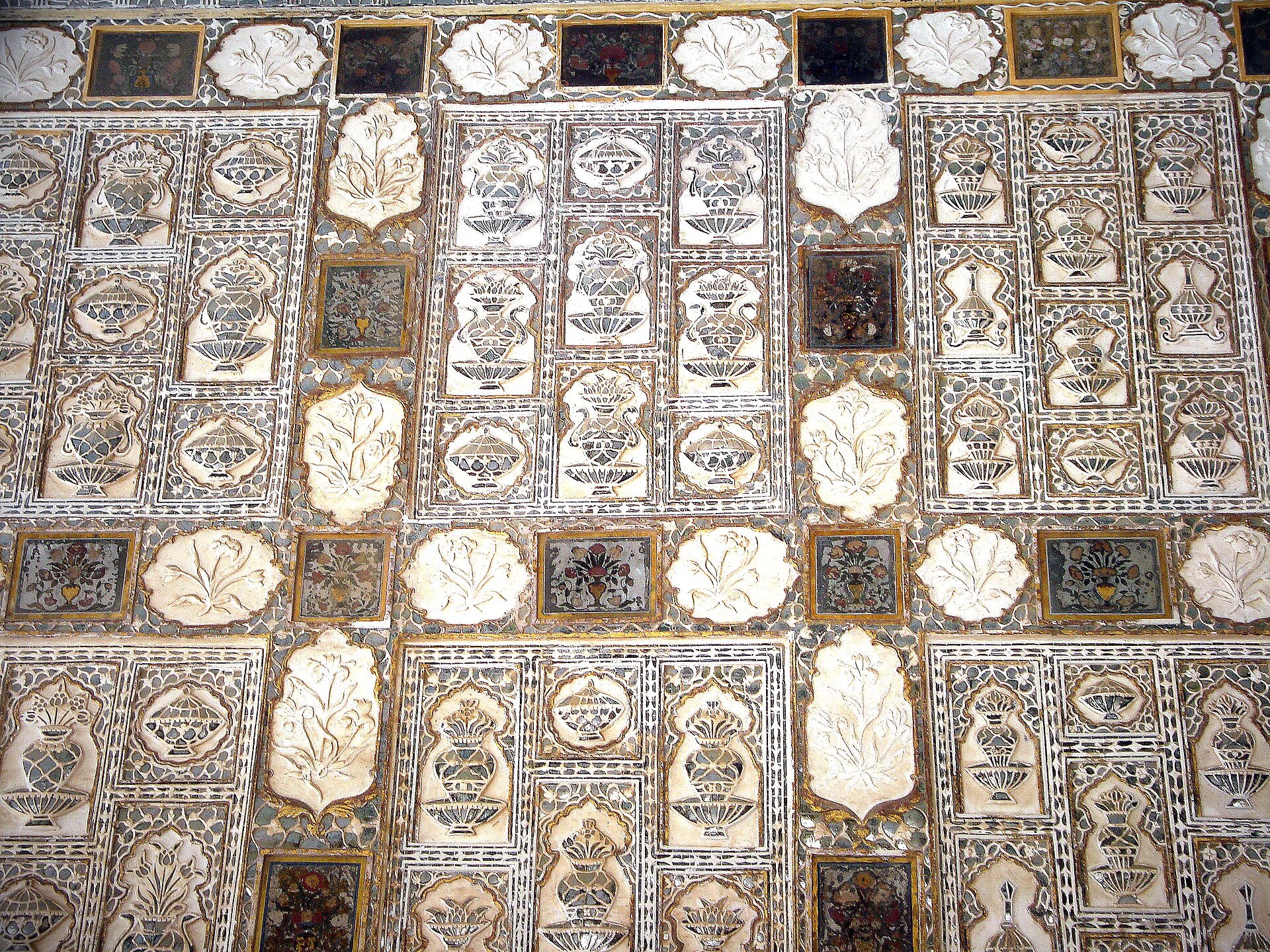
Facing the Palace of Mirrors across a garden courtyard is the Sukh Niwas, the Hall of Pleasure, a cool and elegant pavilion designed as a retreat from the fierce heat of the Rajasthan summer. The most remarkable feature of the hall is its ingenious cooling system, in which water was channeled through carved marble channels running through the building, so that the breeze passing over the water was cooled before it entered the chamber, a sophisticated early form of air conditioning.
The Hall of Pleasure, with its marble inlays and its cooling waters, was a place of rest and refreshment for the royal family, a sanctuary from the heat where they could relax in comfort amid beauty and coolness. The ingenuity of its water-cooling system reflects the sophistication of the builders of Amber, who understood how to make a palace not only beautiful but comfortable in the harsh climate of the desert. Together with the Sheesh Mahal, the Sukh Niwas forms the heart of the private royal apartments of the fortress.
The water-cooling system of the Sukh Niwas is a striking example of the sophisticated environmental engineering of the builders of Amber, who understood how to harness the cooling power of water and the movement of air to make their palace habitable in the fierce heat of the desert. Such systems, found in the finest palaces of India, reflect a deep practical knowledge of the local climate and a determination to combine beauty with comfort. The Hall of Pleasure was, in every sense, a sanctuary from the harshness of the world outside.
The garden that lies between the Sukh Niwas and the Sheesh Mahal, laid out in the formal Mughal style known as the charbagh, with its geometric beds and channels, completes the ensemble of the private royal apartments, providing a green and fragrant space at the heart of the palace. The combination of the mirrored hall, the cooling pavilion, and the formal garden created an environment of perfect refinement and delight, a private paradise for the royal family, sheltered from the heat and the cares of the world outside.
The Temple of Sila Devi
Within the fortress stands a temple dedicated to Sila Devi, a form of the great Hindu goddess, which was the private shrine of the Rajput rulers and a place of deep religious significance. The temple, entered through doors covered in silver, was the focus of the devotions of the royal family, who worshipped the goddess as their protector and the guardian of their dynasty. It is a reminder that the Kachwaha rulers, for all their alliance with the Muslim Mughals, remained devout Hindus, faithful to the gods of their ancestors.
The temple contains many fine details, including a carving of the god Ganesha made from a single piece of coral, and it was the setting for important religious ceremonies in the life of the court. The presence of so significant a temple at the heart of the fortress underlines the deep religious devotion of the Rajputs, and the way in which faith and rule were intertwined in their world. The Sila Devi temple remains a place of worship and pilgrimage to this day, a living link to the religious life of the old court of Amber.
The worship of the goddess at the Sila Devi temple was central to the religious life of the Kachwaha dynasty, and the goddess was regarded as the divine protector of the royal house and the guarantor of its fortunes in war. The image of the goddess is said to have been brought to Amber by Raja Man Singh himself, and her temple became one of the most sacred places in the fortress. The devotion of the warrior Rajputs to their goddess reflects the deep intertwining of faith and martial valor in their culture.
The animal sacrifices that were once offered to the goddess at the temple, in accordance with ancient tradition, have been discontinued in modern times, but the temple remains an active place of worship, drawing devotees who come to seek the blessing of Sila Devi. The continuity of worship at the temple, across the centuries and through all the changes in the fortunes of the dynasty and the nation, is a moving testament to the enduring power of faith and to the living heritage of the great fortress of Amber.
The Zenana: Women’s Quarters
The fourth and highest courtyard of the fortress was the zenana, the quarters of the royal women, who in the tradition of the age lived in strict seclusion, apart from the public life of the court. This was a private world, screened from the eyes of outsiders, where the wives and concubines of the ruler, together with their attendants and children, lived out their lives amid the beauty and comfort of the palace.
The zenana was cleverly designed so that the ruler could visit any of his queens without the others knowing, through a system of separate apartments arranged around a central courtyard, each with its own screened access. The latticed windows and screens of the zenana allowed the women to look out upon the world without being seen, preserving their seclusion while giving them a view of the ceremonies and the life of the court. The women’s quarters offer a fascinating glimpse into the private domestic world of a great Rajput palace.
The seclusion of women, known as the purdah system, was a deeply rooted feature of the society of the age, both among the Hindu Rajputs and the Muslim Mughals, and the architecture of the zenana was designed to make this seclusion possible while providing the women of the court with lives of comfort and beauty. Behind their screens and lattices, the royal women exercised considerable influence over the affairs of the court, and the zenana was a world of its own, with its own hierarchy, its own politics, and its own rich life.
The lives of the women of the zenana, though hidden from the public eye, were far from empty, for within their secluded world they enjoyed music, dance, poetry, and the company of one another, and the more powerful among them, the mothers and chief queens of the rulers, could wield great influence behind the scenes. The zenana was a center of intrigue and of culture, a world with its own rich texture of life, and its architecture, designed to combine seclusion with comfort and beauty, reflects the importance of this hidden but vital part of the court.
Rajput and Mughal Fusion
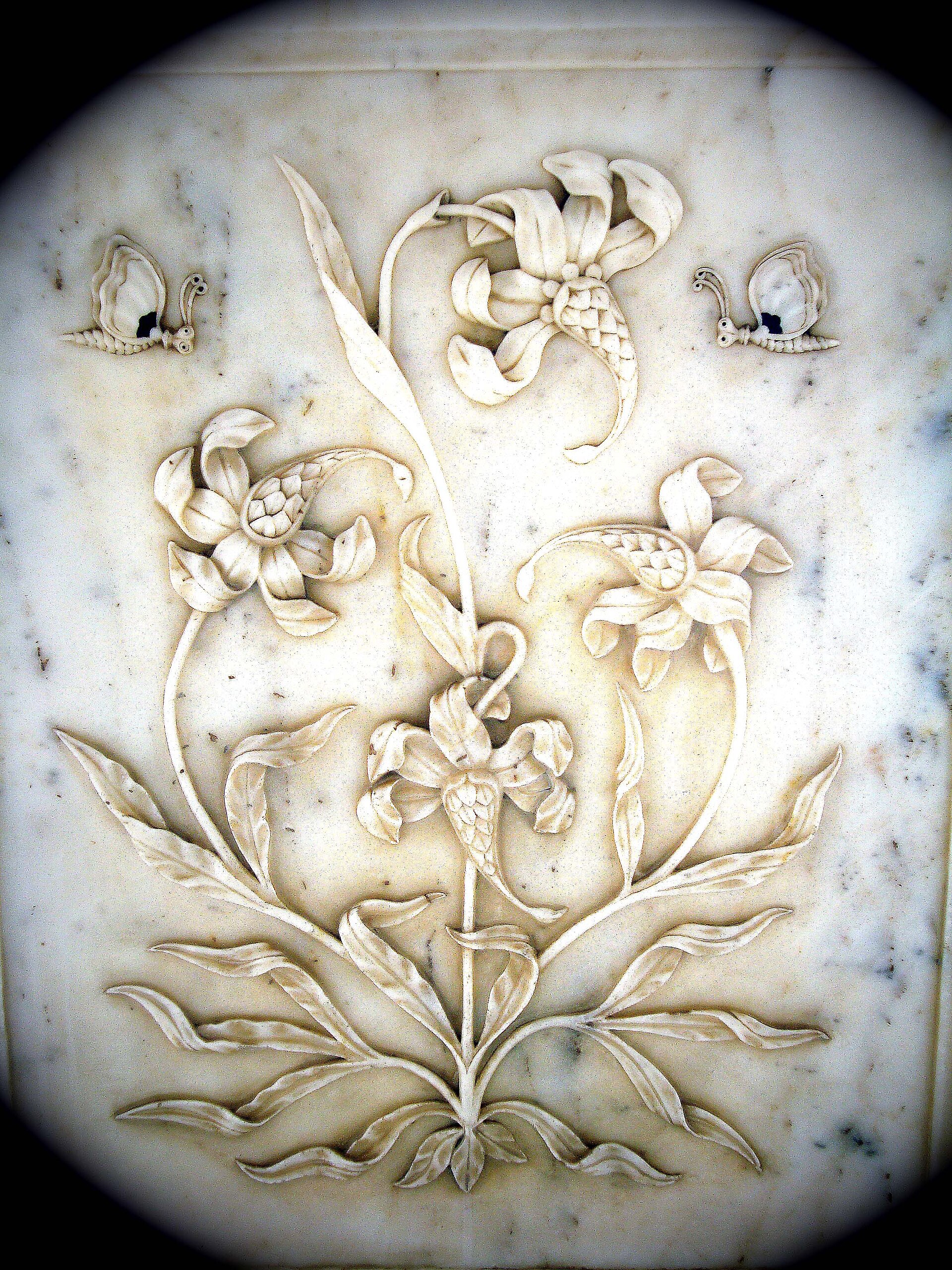
The architecture of Amber represents a magnificent fusion of two great traditions, the robust, martial style of the Rajputs and the delicate, refined ornament of the Mughals, brought together in the age when the Rajput princes served the Mughal emperors. From the Rajput tradition came the massive walls, the strong gates, and the overall conception of the hill fortress, while from the Mughal came the elegant pavilions, the fine inlay work, the gardens, and much of the decorative detail.
This blending of styles was made possible by the close alliance between the Kachwaha rulers and the Mughal court, an alliance that brought Rajput princes like Man Singh into the highest ranks of the empire and exposed them to the sophisticated culture of the Mughals. The result, at Amber, is a style of great richness and beauty, in which the strength of the Rajput and the grace of the Mughal are perfectly balanced. It is one of the finest expressions of the composite culture that flourished in the India of the Mughal age.
The composite Indo-Islamic culture that produced the architecture of Amber was one of the great cultural achievements of the Mughal age, a synthesis of Hindu and Muslim, Indian and Persian, elements that enriched every field of art and life. In architecture, this synthesis produced some of the most beautiful buildings in the world, from the Taj Mahal to the palaces of Rajasthan, and Amber is among its finest expressions. The fortress stands as a monument to an age of remarkable cultural exchange and creativity.
It is worth pausing to reflect on how remarkable it was that a Hindu Rajput dynasty, fiercely proud of its own traditions and faith, should have embraced so wholeheartedly the artistic culture of its Muslim overlords, producing in the process something new and beautiful that belonged fully to neither tradition but drew on both. This creative synthesis was the hallmark of the greatest age of Indian civilization, and Amber, in its harmonious blending of styles, is one of its most eloquent monuments.
The Passage to Jaigarh
High on the hill above Amber stands another great fortress, Jaigarh, the Fort of Victory, and the two are connected by a hidden subterranean passage that runs up the hillside between them. Jaigarh was the military stronghold that guarded and protected the palace of Amber below, and the secret passage was designed as an escape route, by which the royal family could flee to the safety of the upper fortress in time of danger or attack.
The relationship between the two forts, the palace of Amber below and the citadel of Jaigarh above, illustrates the classic arrangement of the Rajput hill fortress, in which the residence and the ultimate stronghold were separated but linked, so that the one could shelter the other in time of war. Jaigarh, grim and powerful, was the sword that guarded the jewel of Amber, and the hidden passage between them was the lifeline that bound the two together. Together they formed one of the strongest and most sophisticated fortress systems in all of India.
Jaigarh Fort, the citadel above Amber, is famous for housing the Jaivana, once the largest wheeled cannon in the world, a monster of a gun cast in the fortress foundry, a testament to the military power and technological sophistication of the Kachwaha state. The presence of so formidable a fortress and so mighty a cannon above the palace of Amber underlines the martial reality that lay behind the beauty of the royal residence. The Rajputs were, above all, warriors, and their palaces were guarded by fortresses of the utmost strength.
The subterranean passage between Amber and Jaigarh, wide enough in places for the passage of people and goods, was one of the secrets of the fortress, a hidden lifeline that could be used to move the royal family, the treasure, and the essential supplies to the safety of the upper fortress in time of siege. Such secret passages were a common feature of the great Rajput fortresses, reflecting the ever-present danger of war and the need to provide for escape and survival even in the most desperate circumstances.
Amber Today
Today Amber Fort is one of the most visited and most beloved monuments in all of India, drawing thousands of visitors each day, especially in the cool season, to marvel at its beauty and to explore its courtyards, halls, and temples. Many visitors ascend to the great gate of the fortress in the traditional manner, riding upon the backs of elephants up the winding path, a memorable and romantic approach to this most romantic of fortresses.
In the year 2013 Amber was inscribed upon the list of World Heritage Sites, as part of the group of Hill Forts of Rajasthan, in recognition of its outstanding importance as a masterpiece of Rajput military and palatial architecture. As the ancient capital of the Kachwaha Rajputs, and as one of the supreme achievements of the architecture of Rajasthan, Amber holds a place of the highest honor among the historic monuments of India.
The elephant rides up to the gate of Amber, though a subject of some controversy today on grounds of animal welfare, have long been one of the romantic features of a visit to the fortress, recalling the age when the great lords and their guests would ascend to the palace in stately procession upon richly caparisoned elephants. Whether by elephant, on foot, or by vehicle, the ascent to the great gate of Amber remains a memorable and dramatic approach to one of the most beautiful fortresses in the world.
The transfer of the capital from Amber to the newly built city of Jaipur in 1727, by the great ruler and astronomer Jai Singh the Second, marked the end of Amber’s role as the seat of government, but it ensured the preservation of the old fortress, which was left largely untouched thereafter. Thus, unlike so many royal residences that were rebuilt and altered by successive generations, Amber has come down to us essentially as it was in its heyday, a precious survival of the great age of Rajput palace-building.
If you would like to see exactly where this magnificent fortress stands upon the map, you can find it here:
View on Google Maps: 26.9855, 75.8513
From its hill above the shining waters of the Maota Lake, Amber Fort has watched over the land of the Kachwaha Rajputs for more than four centuries, and it stands there yet, the golden jewel of Rajasthan.
Castles Nearby
If the beauty of Amber has enchanted you, you may enjoy these other magnificent palace-fortresses:
The Jewel of Rajasthan
Amber Fort is one of the great treasures of India, a palace-fortress of surpassing beauty that ranks among the finest achievements of Rajput and Mughal architecture. Its soaring gates, its mirrored halls, its cooling pavilions and sacred temples, all set upon a hill above the shining lake, combine to create a place of romance and grandeur that few monuments anywhere can rival. As the ancient seat of the Kachwaha Rajputs, it is a fortress steeped in the proud history of the warriors of Rajasthan.
If you should travel to India, Amber is one of the essential sights of Rajasthan, a fortress-palace that lives up entirely to its fame. To climb to its great gate, to wander through its courtyards and halls, and to marvel at the glittering mirror-work of the Sheesh Mahal is an unforgettable experience. Amber Fort is a jewel of the East, and it deserves its place among the most beautiful and most cherished monuments of the world.
Whether you come for the glittering wonder of the Sheesh Mahal, for the magnificent painted gates, or for the sheer romance of the golden fortress reflected in its lake, Amber will reward your journey beyond all expectation, and you will carry away the memory of this jewel of Rajasthan as one of the great treasures of any journey to the incomparable land of India.
You May Like
Mafra, the Palace a King Built From a Vow