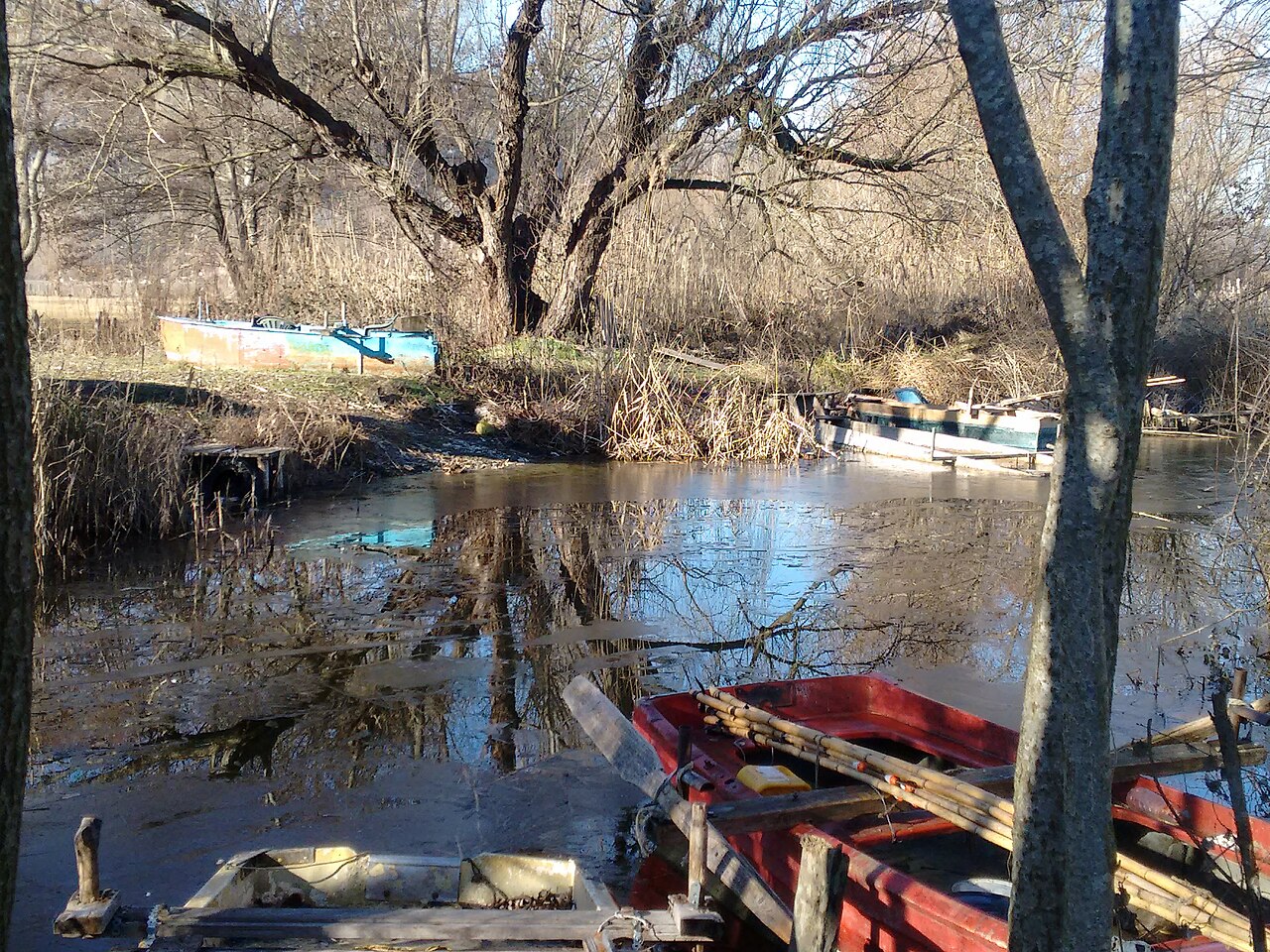
On the tranquil shore of Lake Orestiada in northern Greece, near the town of Kastoria, wooden posts rise from the shallow water like the ghosts of a village that vanished long ago. This is Dispilio, one of the oldest lakeside settlements in Europe, where more than seven thousand years ago a community of farmers and fishers built their homes on platforms over the water. The cold, oxygen-poor mud of the lakebed did something almost miraculous: it preserved wood, seeds, and other organic materials that would have rotted away anywhere else, giving archaeologists an extraordinarily vivid picture of Neolithic life. And here, among the waterlogged remains, one small object emerged that has provoked one of the most tantalizing debates in the study of the ancient world: a wooden tablet marked with mysterious signs, sometimes claimed to be among the oldest writing ever found.

Table of Contents
- A Village on the Water
- The Miracle of the Mud
- The Tablet That Sparked a Debate
- Writing, Proto-Writing, or Something Else?
- Daily Life Beside the Lake
- The Things They Left Behind
- Rediscovering a Sunken Village
- The Village Reborn
- Part of a Wider Neolithic World
- Why Dispilio Matters
- The Enduring Enigma
- Standing at the Water’s Edge
- Why Build a Home Over Water?
- What the Seeds Reveal
- Nearby in Europe’s Ancient Story
- Whispers From the Mud
A Village on the Water
Dispilio was built as a lakeside settlement, its houses raised on wooden piles driven into the bed of Lake Orestiada, or clustered along its marshy shore. Living on and over the water was a deliberate choice with many advantages: the lake provided fish, waterfowl, and reeds, offered a natural defense, and connected the community to the wider landscape through its shores and inlets. It was a way of life perfectly adapted to this watery corner of northern Greece.
The people who settled here around the seventh millennium BCE were part of the great Neolithic transformation, farmers who also fished, hunted, and gathered from the rich lake environment. Their pile-dwelling village, with houses standing above or beside the water, represents one of the oldest known settlements of its kind in Europe, a testament to the ingenuity with which early communities adapted to the varied landscapes they encountered.
The choice to build over water also placed the community in a landscape of remarkable beauty and abundance, ringed by hills and fed by the resources of the lake. Lake Orestiada, with its reed beds and teeming wildlife, would have provided not only food but the raw materials for building, weaving, and countless daily tasks. In choosing this spot, the settlers of Dispilio bound their fortunes to one of the richest environments northern Greece had to offer.
That deep connection to a specific body of water also gives Dispilio a distinct identity among Neolithic sites. Many early villages sat on hills or plains; Dispilio belonged to the lake, and its whole existence was oriented toward the water. This singular character, preserved so completely, is a large part of what makes the site so valuable and so vivid a window onto one particular way of being Neolithic.
The Miracle of the Mud
What makes Dispilio truly exceptional is preservation. In most archaeological sites, organic materials, wood, plant remains, textiles, and food, decay and vanish, leaving only stone, bone, and pottery behind. But the waterlogged, oxygen-starved mud of the lakebed at Dispilio sealed such materials away from the processes of decay, preserving them across seven thousand years in astonishing detail.
As a result, excavators have recovered the wooden posts of the houses themselves, along with seeds, fruits, nuts, and other plant remains, wooden objects, and even traces of food. This is the kind of evidence that archaeologists dream of, the perishable stuff of daily life that almost never survives. Dispilio offers a window into the Neolithic that is unusually complete, letting us glimpse not just the durable artifacts but the living texture of an ancient community.
For archaeologists, sites with this kind of preservation are precious beyond measure. So much of what we know about the past is skewed toward the durable, the stone and bone and fired clay that survive while everything else decays. At Dispilio, the balance is restored, and the perishable world of wood, plant, and food reappears, allowing a far fuller and more human reconstruction of Neolithic life than most sites can ever offer.
The lesson of Dispilio for archaeology as a whole is a humbling one: what usually survives is only a fraction of what once existed. By preserving the perishable, the lake reminds us how much is normally lost, and how partial our usual picture of the past really is. Every waterlogged site like this one is a rare corrective, hinting at the full richness of ancient life that ordinary conditions erase.

The Tablet That Sparked a Debate
Among the many finds at Dispilio, one has captured the world’s imagination above all others: a small wooden tablet inscribed with a series of engraved signs and symbols. Discovered in the waterlogged deposits and dated to around the sixth millennium BCE, the Dispilio Tablet has been the subject of intense fascination and fierce debate ever since. Some have hailed it as evidence of writing thousands of years older than the scripts of Mesopotamia and Egypt.
The claim is extraordinary, and extraordinary claims demand caution. Most scholars are careful to distinguish between true writing, a system that records language, and symbolic markings that may convey meaning without encoding speech. Whether the signs on the Dispilio Tablet represent an actual script, a system of proto-writing, ownership marks, or something else entirely remains genuinely uncertain and hotly contested. What is not in doubt is that the tablet is a remarkable and provocative artifact from the deep Neolithic past.
Part of what makes the tablet so compelling is precisely its ambiguity. It is old enough and marked enough to raise the most thrilling possibilities, yet enigmatic enough to resist easy answers. Into that gap between evidence and certainty rush both bold claims and careful skepticism, and the resulting debate has kept the small wooden object at the forefront of discussions about the origins of writing for years.
It is important, too, to treat the tablet with the same rigor as any other artifact, resisting the pull of sensational headlines in either direction. Neither the boldest claims that it rewrites the history of writing nor a hasty dismissal does justice to its genuine intrigue. The honest position is one of open, careful curiosity, acknowledging both how remarkable the object is and how much about it we still do not know.

Writing, Proto-Writing, or Something Else?
The debate over the Dispilio Tablet touches on one of the biggest questions in human history: when and how did writing begin? The conventional view places the origins of true writing in Mesopotamia and Egypt around five thousand years ago. If the marks at Dispilio were genuine writing, they would push that story back dramatically and relocate part of it to Neolithic Greece, a claim most specialists regard as unproven at best.
More cautiously, the tablet can be seen as part of a broader phenomenon of symbolic marking that appears across Neolithic southeastern Europe, sometimes called the Vinca signs or Old European symbols, found on pottery and other objects. These marks clearly meant something to the people who made them, but whether they constitute writing in the strict sense is far from settled. The Dispilio Tablet sits at the heart of this fascinating and unresolved puzzle.
It is worth remembering that the line between writing and other kinds of meaningful marking is genuinely blurry, and scholars disagree about where exactly it should be drawn. Systems of symbols can carry information, mark ownership, or aid memory without fully encoding spoken language. The Dispilio Tablet may belong somewhere along this spectrum, a step on the long road toward writing rather than writing itself, though even that remains uncertain.
This question of when marks become writing is not merely academic. Writing is one of the great thresholds of human history, the technology that made records, laws, literature, and accumulated knowledge possible. Any object that might illuminate its origins commands attention, and the Dispilio Tablet, however it is finally interpreted, has earned its place in that momentous conversation.

Daily Life Beside the Lake
The people of Dispilio lived a rich and varied life shaped by the lake and the surrounding land. They farmed cereals and pulses, kept domestic animals, and made full use of the aquatic environment, fishing, fowling, and gathering the resources of the water and its margins. The preserved plant remains reveal a diet that included a wide range of cultivated and wild foods, painting a picture of a well-nourished and resourceful community.
Their homes were built of wood, reeds, and clay, raised on piles or set along the shore, and inside them people carried out the familiar work of Neolithic life: cooking, grinding grain, making pottery, weaving, and crafting tools. The exceptional preservation at Dispilio means we know more about the everyday material world of this village than we do about almost any other Neolithic community, from the food they ate to the wood they built with.
The intimacy of this picture is what sets Dispilio apart. At most Neolithic sites, we infer daily life from fragments; here, the preserved remains let us almost see it, from the fish bones of a meal to the wooden posts of a home. The result is a portrait of a community that feels vividly real, its people recognizable across seven thousand years as fellow human beings making a life beside their lake.

The Things They Left Behind
The finds from Dispilio include a rich array of objects that illuminate the skills and interests of its inhabitants. There is pottery in various styles, tools of stone, bone, and antler, ornaments and beads, and, thanks to the waterlogging, rare wooden artifacts that almost never survive elsewhere. Musical instruments, figurines, and other items hint at the cultural and spiritual life of the community alongside its practical crafts.
Each of these objects adds a brushstroke to the portrait of Dispilio. The pottery connects the settlement to wider Neolithic traditions; the ornaments speak of personal adornment and identity; the tools reveal the daily work of survival. Together they show a community that was not merely scraping by but living a full, textured life, complete with art, craft, and meaning, on the shore of their northern Greek lake.
Some of the most poignant finds are the everyday wooden objects that virtually never survive at other sites, tools, implements, and fragments of the material world that would ordinarily have vanished without trace. Holding such items, or seeing them in a museum case, collapses the distance between past and present, offering a direct, tangible link to the hands that made and used them so very long ago.
Taken as a whole, this material culture reveals a community with both practical mastery and aesthetic sensibility, one that made not only what it needed but also what it found beautiful or meaningful. The people of Dispilio decorated, adorned, and expressed themselves, and in doing so they left behind an unusually complete record of the material and cultural world of a single Neolithic village.

Rediscovering a Sunken Village
Dispilio came to wider attention in the twentieth century, when falling lake levels first exposed traces of the ancient settlement and drew the interest of archaeologists. Systematic excavations, particularly from the 1990s onward, revealed the extent and importance of the site, uncovering the wooden posts, the preserved organic remains, and eventually the famous tablet. The work required specialized techniques suited to the challenges of a waterlogged environment.
Excavating a lakeside site like Dispilio is a demanding task, requiring care to recover and conserve fragile organic materials that begin to deteriorate the moment they are exposed to air. The efforts of the archaeologists who worked here transformed a submerged mystery into one of the best-documented Neolithic settlements in Greece, and brought the extraordinary preservation of the lakebed to light for the world to appreciate.
The falling water that first revealed Dispilio is a reminder of how much archaeology depends on chance as well as effort. Had the lake not receded, the settlement might have remained hidden indefinitely beneath the water. Once exposed, however, it demanded and received the specialized attention that waterlogged sites require, and the payoff for that careful work has been one of the richest Neolithic records in the country.

The Village Reborn
Today, visitors to Dispilio can experience something rare in archaeology: a reconstruction of the ancient lakeside village, with houses rebuilt on piles over the water in the manner of the original settlement. This open-air museum, known as the Dispilio Lakeside Settlement, allows people to walk among recreated Neolithic dwellings and imagine life as it was lived here seven thousand years ago.
The reconstruction brings the distant past to life in a way that ruins alone cannot. Standing on the wooden walkways above the water, surrounded by thatched houses on their piles, a visitor can grasp the reality of this vanished world, the daily rhythm of a community that built its home on a lake. It is one of the most evocative ways to encounter the European Neolithic anywhere on the continent.
The reconstructed village also serves an important educational role, making the distant Neolithic accessible and vivid to visitors of all ages. Rather than straining to imagine vanished houses from a scatter of postholes, people can walk among full-scale recreations and grasp intuitively how this lakeside community lived. It is a powerful example of how thoughtful reconstruction can bring the deep past to life without sacrificing scholarly care.
Part of a Wider Neolithic World
Dispilio did not exist in isolation. It was part of the broad Neolithic world of the Balkans and the Aegean, connected through shared traditions of pottery, farming, and symbolic marking to communities across the region. The signs on its famous tablet echo similar marks found on objects elsewhere in southeastern Europe, hinting at a shared symbolic culture that stretched across many communities.
Placing Dispilio within this wider context helps us understand both its uniqueness and its typicality. The lakeside setting and extraordinary preservation make it special, but the life it reveals, of farming, fishing, craft, and belief, was part of a broader pattern shared across the Neolithic Balkans. Dispilio is at once a singular treasure and a representative window into an entire era of European prehistory.
The shared symbolic marks found across the Neolithic Balkans raise fascinating questions about communication and contact between communities. Whether or not they amount to writing, they suggest that people across a wide region drew on a common repertoire of signs, hinting at networks of exchange and shared meaning that bound the scattered villages of Old Europe into something larger than the sum of their parts.
Understanding Dispilio in this broader frame also guards against isolating it as a mere curiosity. Its tablet and its way of life belong to a shared Neolithic world, and the site is most illuminating when read as one especially well-preserved chapter in the larger story of how the first farmers of southeastern Europe lived, connected, and expressed themselves.
Why Dispilio Matters
Dispilio’s importance rests on two extraordinary gifts. The first is preservation: the waterlogged mud has saved the perishable materials that vanish from almost every other site, offering an unusually complete picture of Neolithic daily life. The second is the tablet, which, whatever its ultimate interpretation, has placed Dispilio at the center of one of the most exciting debates in archaeology, the deep origins of symbolic communication and writing.
Even setting the tablet aside, Dispilio would be a site of major significance simply for the richness of what it preserves. Together, the preservation and the tablet make it one of the most remarkable Neolithic settlements in Europe, a place where the ordinary and the extraordinary meet in the mud of an ancient lake, and where the questions raised reach to the very roots of human culture.
In the end, Dispilio matters because it enriches our understanding of the Neolithic on two fronts at once, the everyday and the extraordinary. Its preserved remains flesh out the daily reality of early farming life with unmatched vividness, while its enigmatic tablet reaches toward the profound question of how humans first began to externalize thought in symbols. Few sites speak to both the ordinary and the momentous so powerfully.
The Enduring Enigma
At the heart of Dispilio lies an enigma that may never be fully resolved. The signs on the tablet, the meaning of the symbolic markings, the exact nature of the community’s beliefs, these remain tantalizingly out of reach, glimpsed but not grasped. That very uncertainty is part of the site’s enduring fascination, an invitation to wonder about the inner lives and minds of people seven thousand years gone.
Perhaps future discoveries and analyses will shed new light on the tablet and its mysterious signs. Perhaps they will remain forever ambiguous, a puzzle from the dawn of European settlement. Either way, Dispilio stands as a reminder of how much the deep past still has to tell us, and of how a single small wooden object, pulled from the mud of a Greek lake, can reopen the greatest questions about who we are and how we came to be.
There is something fitting about a site preserved by water also being defined by mystery. Just as the lake gave and then hid its village, so it offers us tantalizing glimpses while withholding final answers. Dispilio invites us not to the comfort of certainty but to the deeper pleasure of genuine wonder, standing at the edge of what can be known about our distant ancestors.
And perhaps that open-endedness is the truest gift of Dispilio. It does not hand us a tidy conclusion but keeps a great question alive, drawing each new generation back to the shore of the lake to look again at the signs on a small wooden tablet and wonder what its makers were trying to say across the vast, silent distance of seven thousand years.
Standing at the Water’s Edge
To visit Dispilio today is to stand at the meeting point of water, memory, and mystery. The reconstructed village, the peaceful lake, and the knowledge of what lies preserved in the mud below combine to create one of the most atmospheric archaeological experiences in Greece. Here the Neolithic feels close, its people almost present, their vanished village conjured back into being on the shore.
For anyone drawn to the origins of settled life, and to the great questions of how humans first began to record and communicate, Dispilio is an essential and unforgettable place. It is a village on a lake that time itself seemed determined to preserve, and in its waterlogged depths lie some of the most precious and provocative traces of the European Neolithic that we possess.
Kastoria and its lake make a beautiful setting for such an encounter, and the reconstructed settlement rewards the journey. To look out over the water knowing that a seven-thousand-year-old village lies preserved beneath and beside it is to feel the past pressing close, and to understand why Dispilio holds such a special place among the Neolithic sites of Europe.
Why Build a Home Over Water?
The decision to live on and over a lake might seem strange to modern eyes, but for the people of Dispilio it made excellent sense. The water offered a steady supply of fish and waterfowl, reeds for building and weaving, and easy transport by boat along the shore. It also provided a measure of safety, since a village raised on piles over the water was harder for wild animals or hostile neighbors to approach unseen.
Lakeside and pile-dwelling settlements appear at various points around Neolithic Europe, most famously later around the Alpine lakes, but Dispilio is among the earliest known examples anywhere on the continent. Its inhabitants were pioneers of a way of living that balanced the resources of land and water, farming the surrounding fields while drawing daily on the bounty of the lake at their doorstep.
This amphibious lifestyle shaped everything about the community, from the design of their homes to the rhythm of their days. To live at Dispilio was to live in constant relationship with the water, and that intimate bond with the lake is written into every aspect of the settlement that the mud has so faithfully preserved.
The success of this way of life is reflected in the settlement’s endurance and the richness of its remains. Far from a precarious foothold, Dispilio was a thriving community that had mastered its watery environment, turning the challenges of lakeside living into advantages. Its people had found, in the meeting of land and water, an especially favorable niche in the Neolithic world.
Later cultures around Europe’s lakes would echo this choice again and again, but Dispilio stands near the very beginning of the tradition. Its early date lends it particular importance, marking one of the first times that a European community committed so fully to a life lived over water, and its preserved remains let us study that pioneering choice in extraordinary depth.
What the Seeds Reveal
Because the waterlogged deposits preserved plant remains so well, Dispilio offers an unusually detailed record of what its people ate and grew. Excavators have recovered the seeds and fruits of cultivated cereals and pulses alongside a wide array of wild plants, nuts, and fruits gathered from the surrounding landscape. This wealth of botanical evidence lets researchers reconstruct the Neolithic diet with rare precision.
The picture that emerges is one of a varied, resilient food economy that combined farming with the harvesting of wild resources. Rather than relying on a single crop, the people of Dispilio spread their efforts across many sources of food, cultivating grains and legumes while also exploiting the rich natural larder of the lake and its shores. It was a strategy well suited to buffering the community against the failure of any one resource.
These preserved seeds are more than a dietary record; they are a direct connection to the hands that planted and gathered them seven thousand years ago. In the tiny, fragile remains of ancient meals, we touch the daily reality of Neolithic life at Dispilio, a reality that the lake’s mud has carried down to us across an immense gulf of time.
Studying these remains also allows researchers to trace how the people of Dispilio managed their environment over time, adapting their choices of crops and wild foods to changing conditions. The seeds are thus not just a snapshot but a record of ongoing decisions, of a community continually balancing the demands of farming and foraging to keep itself fed beside the lake.
Nearby in Europe’s Ancient Story
- The Hill in Thessaly Where Europe First Built a Town: The Story of Sesklo
- The Neolithic Village Built as a Set of Concentric Rings: The Story of Dimini
- Fish-Faced Idols on a Roaring River: The Mesolithic Mystery of Lepenski Vir
Whispers From the Mud
Dispilio endures as one of prehistory’s most evocative sites, a lakeside village saved by the very mud that swallowed it. Its preserved wood and seeds bring the Neolithic to life with rare intimacy, and its enigmatic tablet keeps alive one of the oldest and deepest questions we can ask: when did human beings first begin to record their thoughts in signs?
Whether or not the marks at Dispilio are truly writing, the site reminds us that the ancient world still holds surprises capable of reshaping our understanding of ourselves. In the whispers rising from the mud of a Greek lake, the earliest chapters of European life speak on, patient and mysterious, waiting for us to listen.
You May Like

Mafra, the Palace a King Built From a Vow