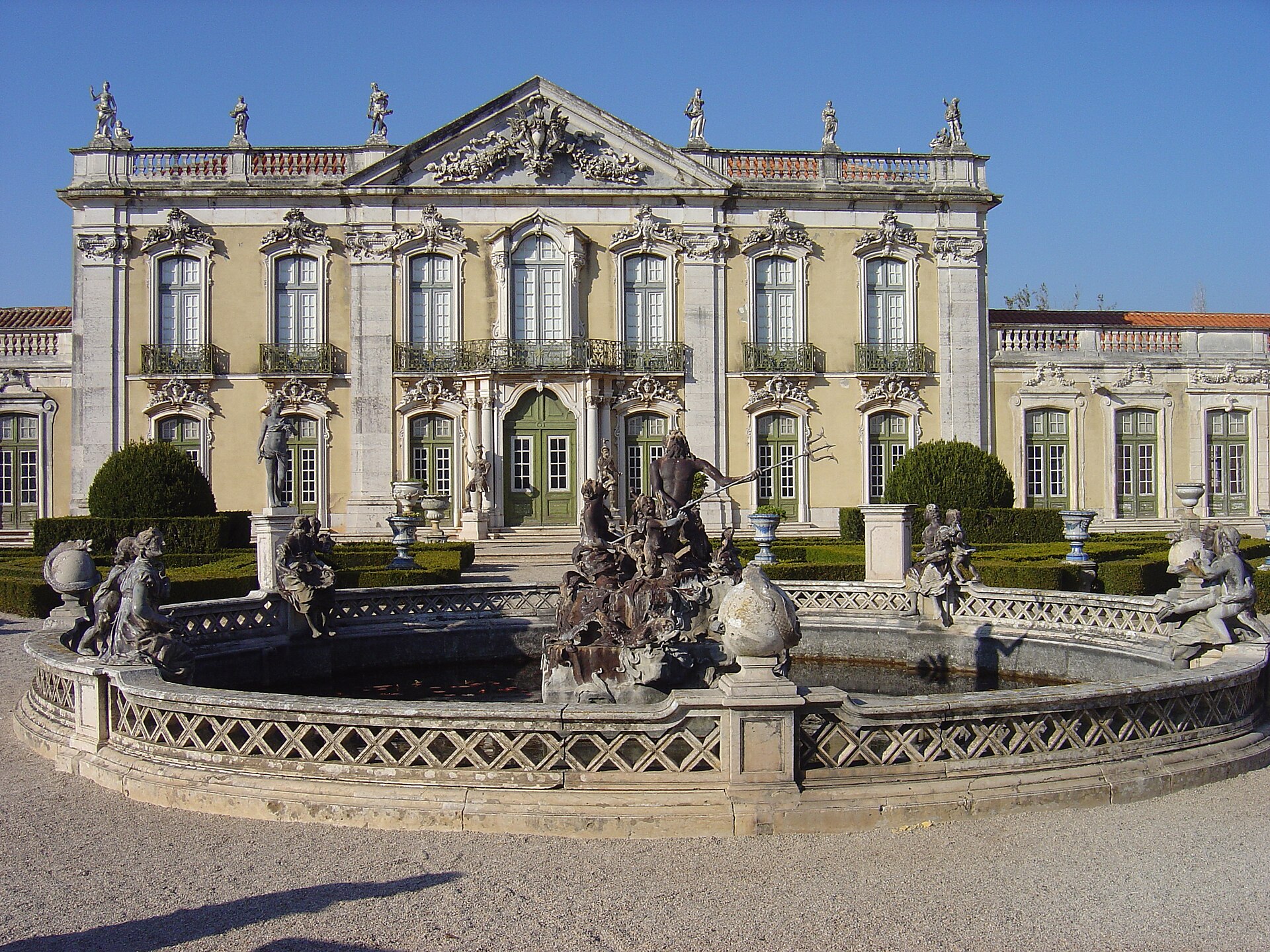
A short distance from Lisbon, in the town that gave it its name, stands a palace that seems to have drifted straight out of eighteenth-century France and settled improbably on Portuguese soil. The Palace of Queluz is Portugal’s most complete and charming Rococo residence, a low, rose-pink confection of a building wrapped around ornamental courtyards and opening onto some of the most delightful formal gardens in the country. Often called the Portuguese Versailles, it is a place of pure elegance and pleasure, built by a prince who wanted a summer retreat of exquisite refinement rather than a fortress of state.
Where the great palaces of Madrid or Vienna overwhelm through sheer scale, Queluz enchants through delicacy and grace. Its rooms are small and jewel-like, gilded and mirrored and painted with a lightness of touch that captures the very spirit of the Rococo, and its gardens are a fantasy of clipped hedges, statues, and fountains, threaded by a canal whose walls are lined entirely with painted tiles. Everything here is scaled to charm rather than to intimidate, and the effect is one of continuous, intimate delight.
Yet the story of Queluz is not only one of pleasure, for the palace witnessed some of the most poignant chapters in the history of the Portuguese monarchy. It became the beloved home of a queen who descended into madness, and it saw the birth and death of the prince who would become the first emperor of Brazil. Beneath its Rococo gaiety runs a thread of melancholy and drama that gives the palace a human depth beyond its considerable beauty.
To visit Queluz is to step into the vanished world of the eighteenth-century court at its most graceful and most intimate. This is the story of how a hunting lodge outside Lisbon grew into a palace of Rococo perfection, of the royal family who made it their summer paradise, and of the tumultuous history that unfolded amid its gilded rooms and tiled canals, in the most elegant of all Portugal’s royal residences.
In This Article
- The Portuguese Versailles
- From Hunting Lodge to Royal Retreat
- The Architects of a Rococo Jewel
- The Rose-Pink Palace and Its Courtyards
- The Throne Room and the Grand Interiors
- The Hall of Ambassadors
- The Don Quixote Chamber and a Royal Tragedy
- The Queen Who Descended Into Madness
- The Formal Gardens
- The Canal of Tiles
- The Robillion Pavilion and Garden Buildings
- Queluz and the Fortunes of the Monarchy
- Queluz Today: A Rococo Time Capsule
The Portuguese Versailles
The Palace of Queluz stands as the finest expression of the Rococo style in Portugal, a residence conceived entirely for elegance, pleasure, and the refined life of a summer court. Set in the town of Queluz between Lisbon and the hills of Sintra, it is a low, sprawling building of rose-pink and white, its wings embracing ornamental courtyards and gardens, and its whole character pitched to charm rather than to overwhelm the visitor with grandeur.
The comparison with Versailles, which has given Queluz its popular nickname, is apt in spirit if not in scale. Like the French palace, Queluz was designed as a country retreat where the monarchy could escape the formality of the capital and enjoy the pleasures of the garden and the season, and its architecture and decoration draw heavily on French models. Yet Queluz is far smaller and more intimate, a jewel box rather than a colossus, and therein lies much of its charm.
The palace belongs to the eighteenth century, the great age of the Rococo, and it embodies that style’s love of lightness, grace, curving line, and delicate ornament. Where the Baroque overwhelmed through drama and mass, the Rococo delighted through refinement and playfulness, and Queluz is one of the purest surviving examples of that sensibility anywhere in Europe, preserved with an unusual completeness.
For the visitor, the appeal of Queluz lies precisely in its human scale and its atmosphere of intimate elegance. One does not crane one’s neck at overwhelming vaults here, but moves through a sequence of small, exquisite rooms and out into gardens designed for strolling and delight. It is a palace to be enjoyed rather than merely admired, and it offers one of the most charming experiences of any royal residence in Portugal.
Part of the enduring appeal of Queluz lies in how completely it preserves the atmosphere of its age, for unlike many palaces that were repeatedly remodelled by later generations, Queluz has come down to us with its Rococo character largely intact. Walking through it, the visitor is carried directly back to the eighteenth century, to a world of gilded salons, painted ceilings, and formal gardens, experienced not as a museum reconstruction but as a living survival of a vanished way of courtly life.
From Hunting Lodge to Royal Retreat
The origins of Queluz were modest. The estate had come into the hands of the Portuguese royal family, and upon it stood a country house used as a hunting lodge, a simple retreat in the countryside outside Lisbon. It was from this unpretentious beginning that the elegant palace we know today would gradually grow, transformed over the course of the eighteenth century into a residence of the utmost refinement.
The decisive figure was the prince who would become King Pedro III, a younger son of the royal house who, lacking the burdens of the heir, had the leisure and the inclination to devote himself to the pleasures of building. He chose Queluz as the site for a summer palace of his own and, beginning in the mid-eighteenth century, set about transforming the old hunting lodge into an elegant Rococo residence, a project that would occupy much of his life.
The work proceeded in stages over several decades, as wings were added, gardens laid out, and interiors decorated in the latest and most refined taste. What had begun as a country house grew into a substantial palace, its low, spreading form wrapped around courtyards and opening onto formal gardens, all conceived in the light and graceful spirit of the age. The transformation was gradual but thorough.
Queluz was thus, from the start, a palace of pleasure rather than of state, built by a prince for his own delight and that of his family. This origin shaped its whole character, giving it an intimacy and a lightness quite different from the grand ceremonial palaces of the capital. It was a place for summers, for gardens and music and the relaxed life of the court, and that spirit never left it.
The Architects of a Rococo Jewel
The creation of Queluz was the work of several gifted hands who together gave the palace its distinctive character. The initial designs and much of the early construction were directed by the Portuguese architect Mateus Vicente de Oliveira, who established the graceful form of the palace and its principal facades in the Rococo taste that was then at its height across Europe.
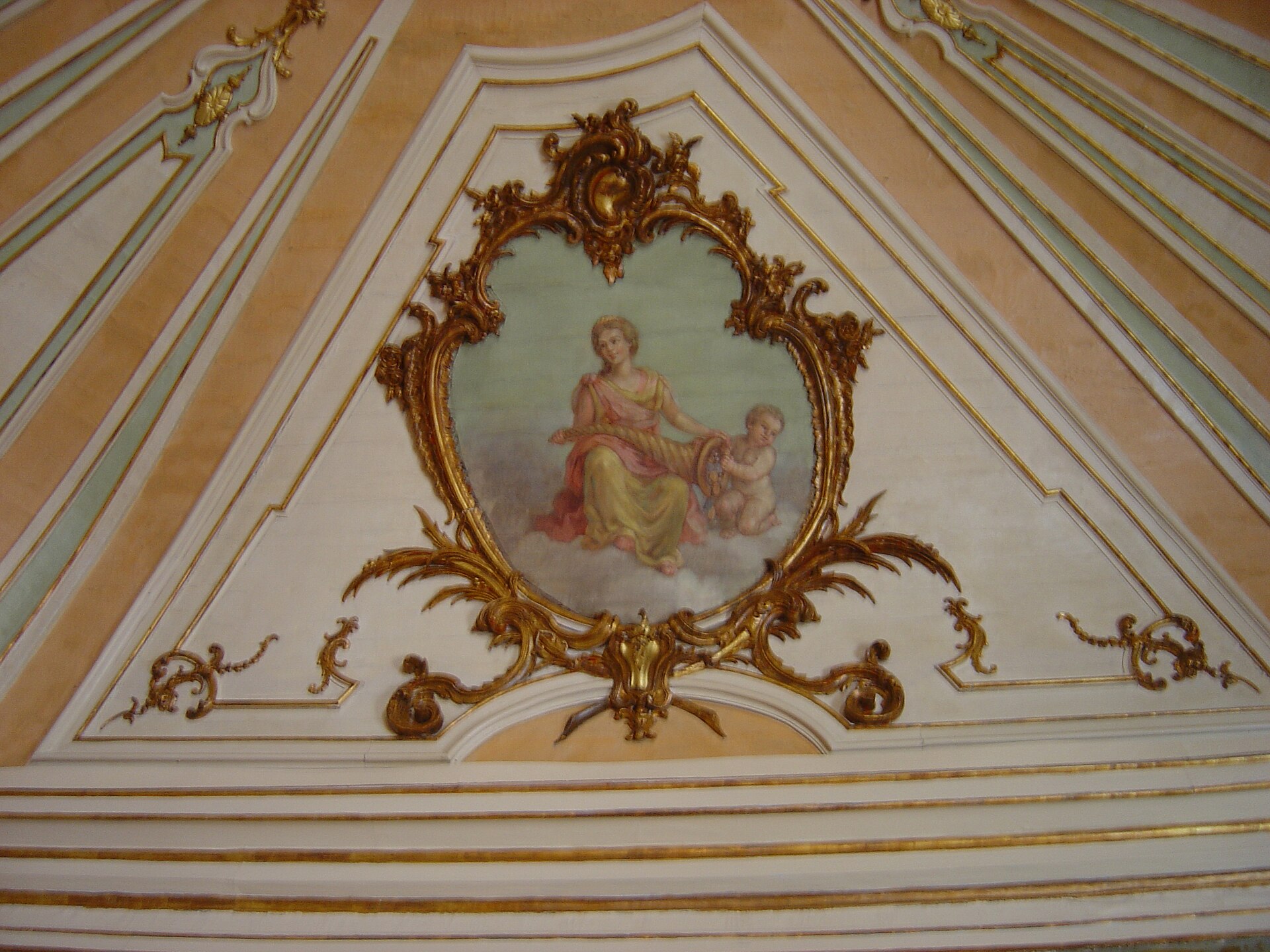
As the project developed, a French artist and designer, Jean-Baptiste Robillion, came to play a decisive role, and his contribution proved crucial to the palace’s final character. Trained in the French tradition and steeped in the elegance of the age of Louis XV, Robillion brought to Queluz a refinement and a Frenchness that pervade both its architecture and its gardens, and he was responsible for some of its most celebrated features.
Among Robillion’s achievements is the elegant pavilion that bears his name, a graceful garden wing of great sophistication, as well as much of the design of the ornamental gardens with their fountains, statues, and stairways. His hand can be felt throughout the palace, and it is largely thanks to him that Queluz possesses so completely the character of a French Rococo residence transplanted to Portuguese soil.
The collaboration of Portuguese and French talent gave Queluz a distinctive blend of influences, uniting the local building traditions with the latest French fashion. The result is a palace that is at once thoroughly of its age and thoroughly its own, a Rococo masterpiece shaped by the exchange of ideas across Europe. It stands as a testament to the cosmopolitan culture of the eighteenth-century court and to the talents of those who created it.
The Rose-Pink Palace and Its Courtyards
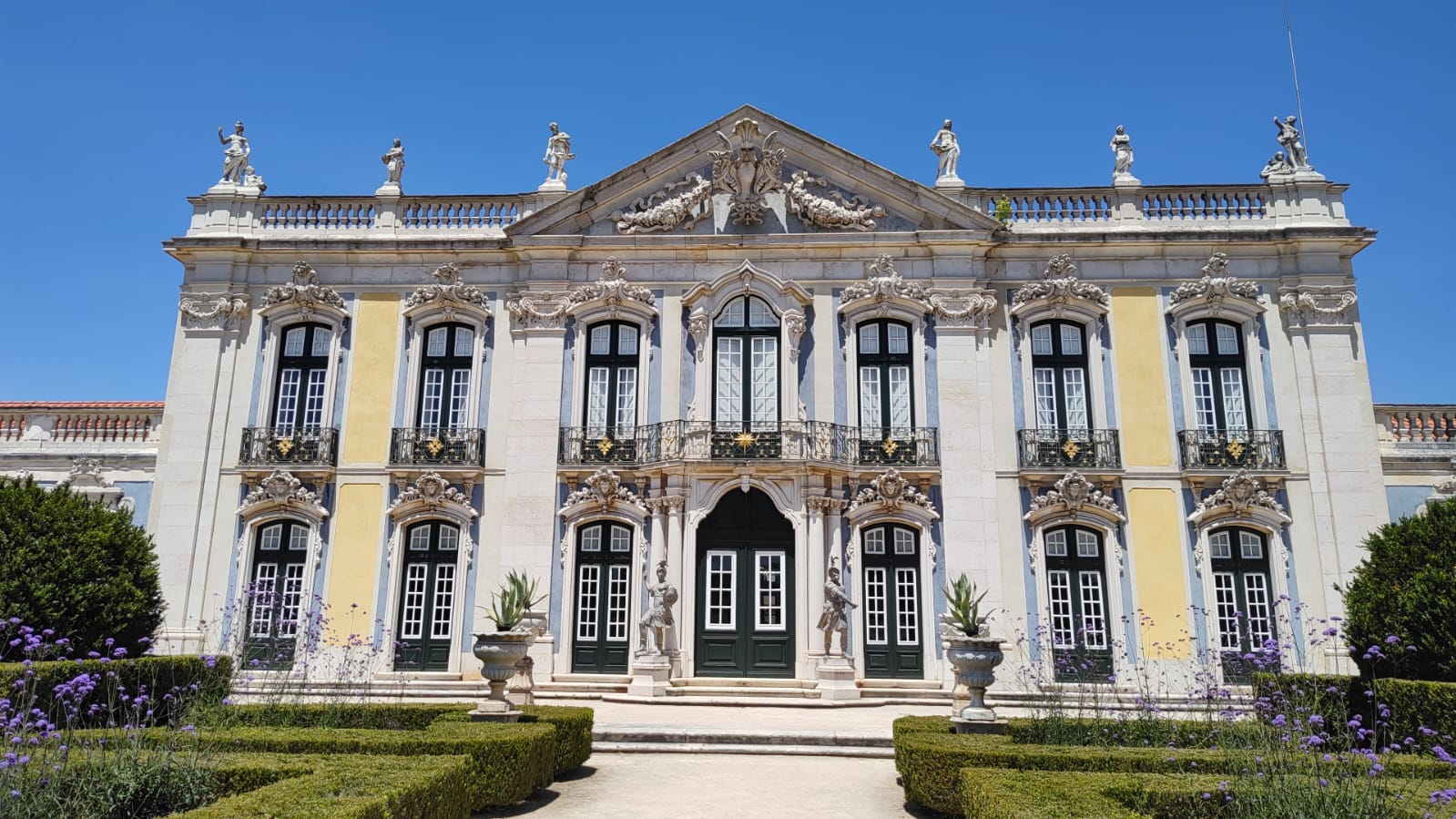
The exterior of Queluz presents one of the most charming faces of any Portuguese palace. Low and spreading rather than tall and imposing, its facades of rose-pink and white curve and project around a series of courtyards and gardens, adorned with sculpture, balustrades, and ornament in the graceful Rococo manner. The whole composition is designed to delight the eye and to blend palace and garden into a single harmonious whole.
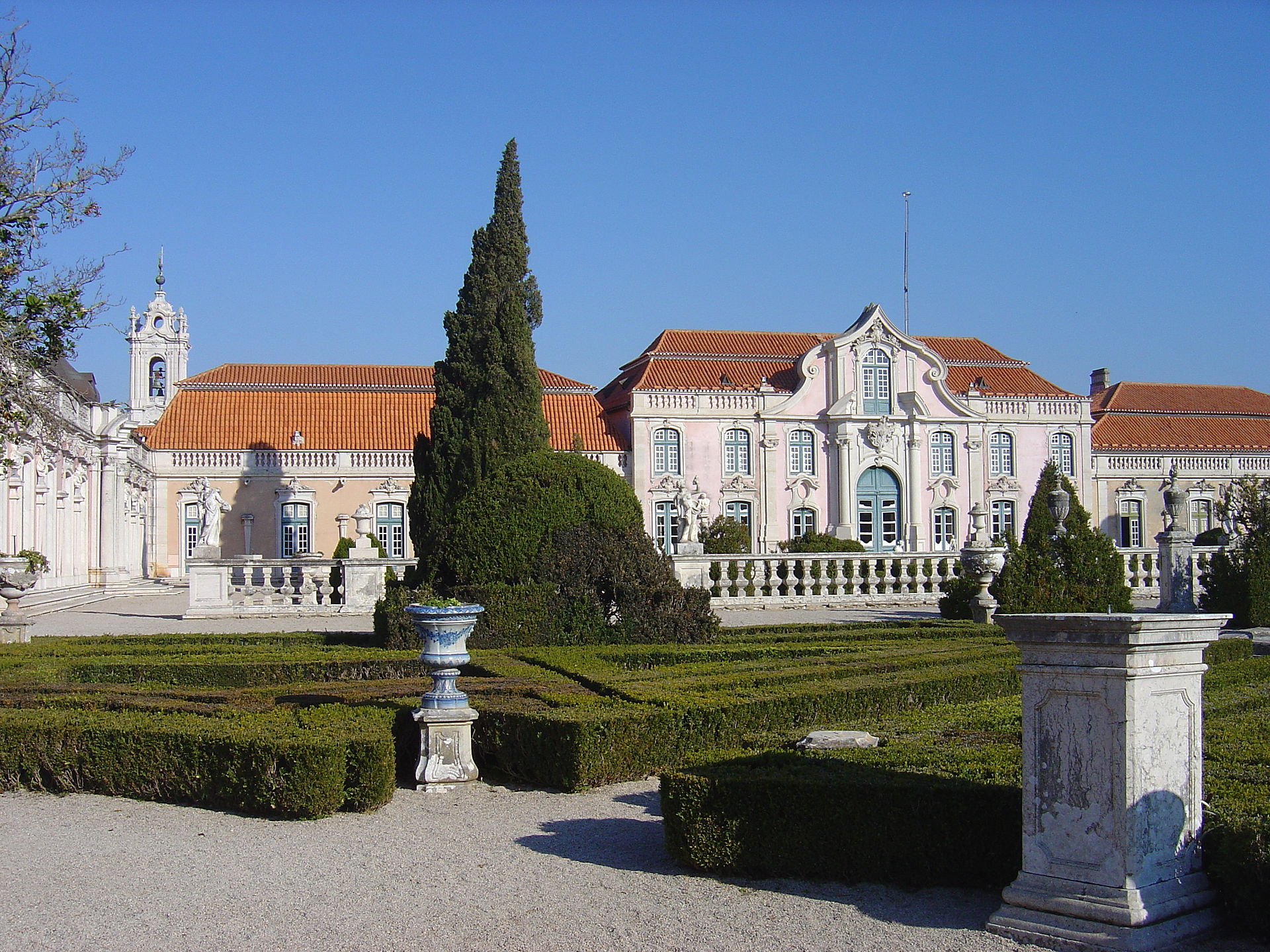
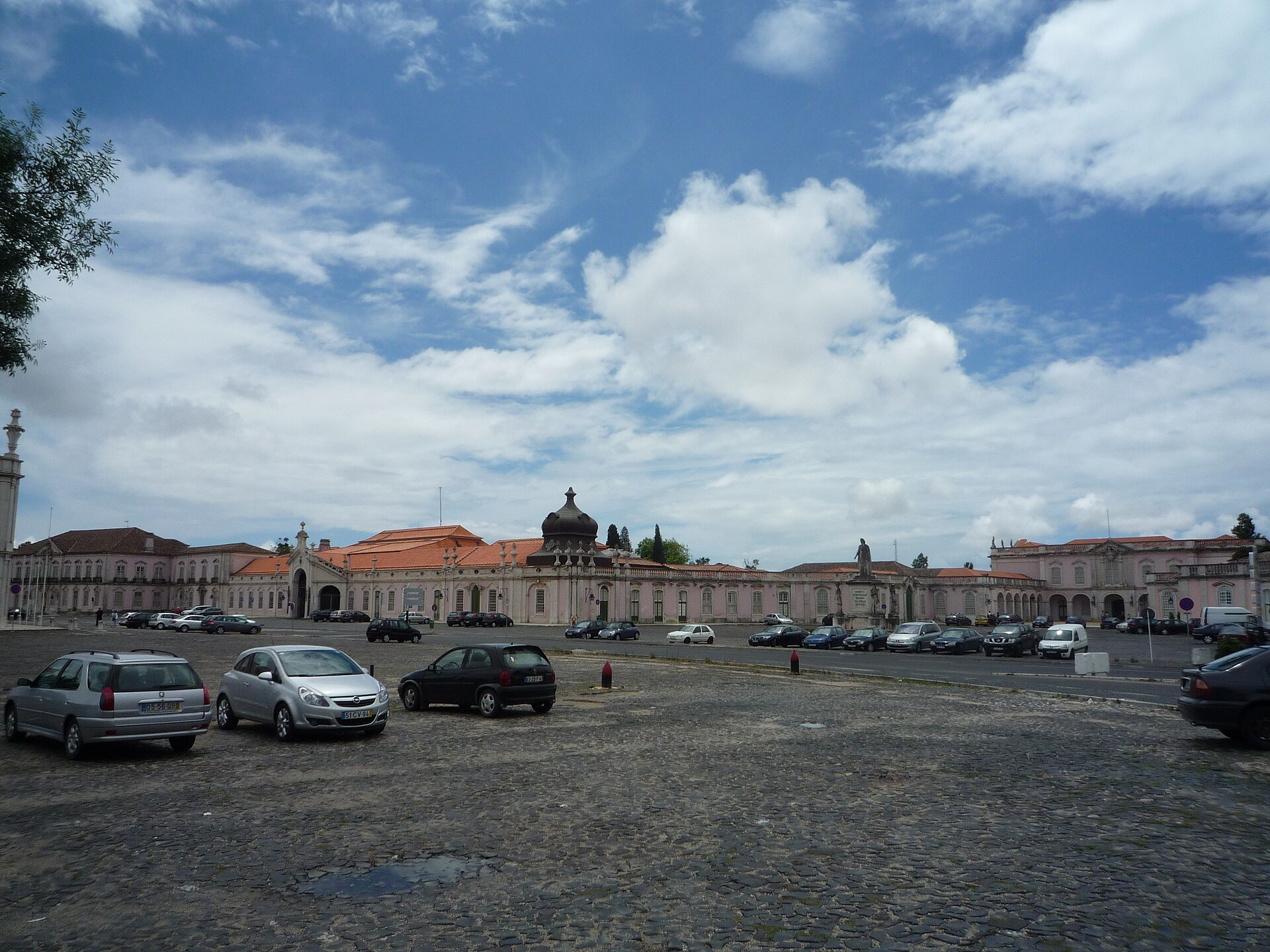
The palace is organised around several courtyards and forecourts, each with its own character, which link the various wings and open onto the surrounding gardens. This arrangement gives Queluz an air of openness and lightness, the interior and exterior flowing into one another, and it reflects the palace’s purpose as a summer residence where life could spill out of doors into the courtyards and gardens during the warm months.
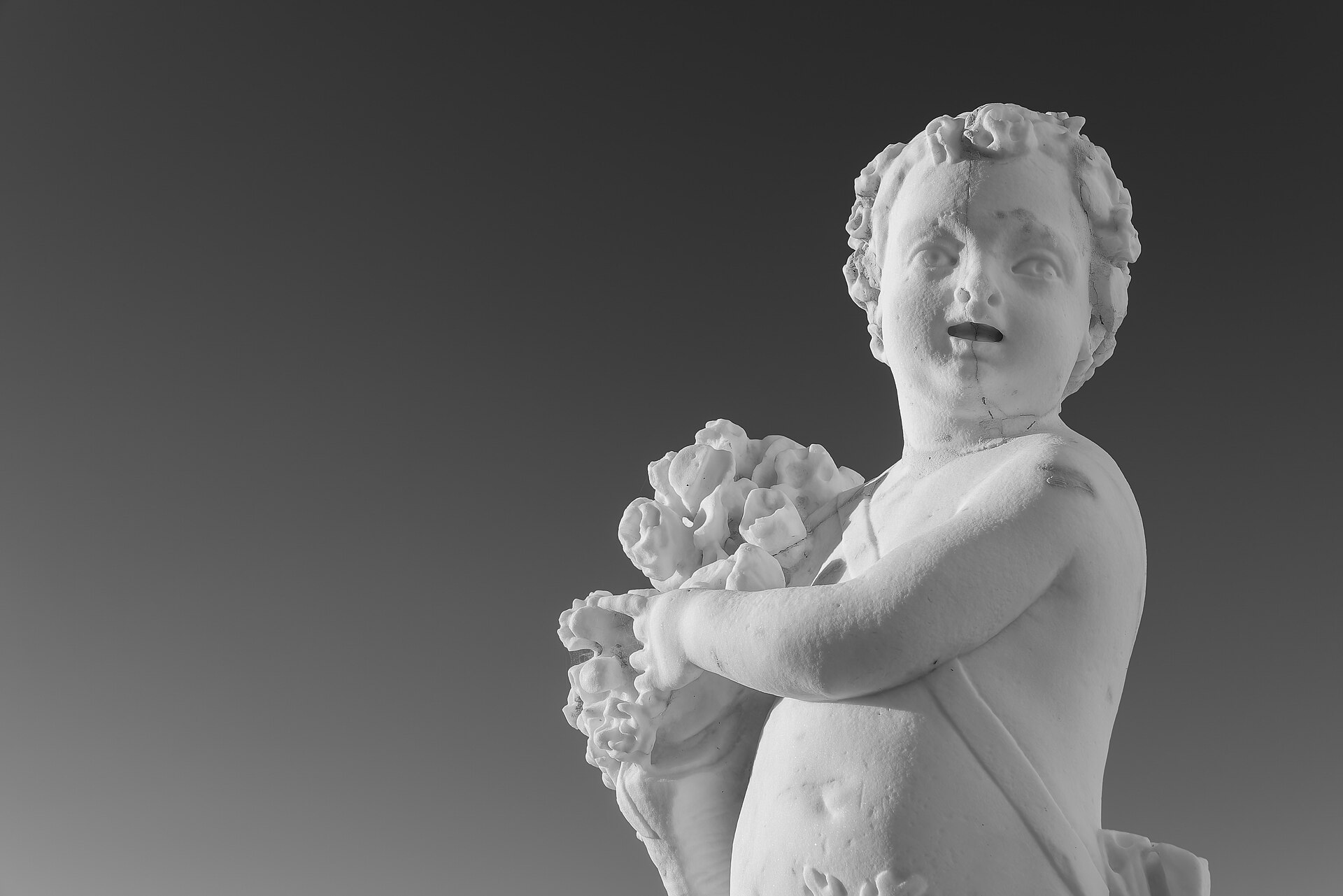
Sculpture and ornament abound on the facades, with statues, urns, and decorative details enriching the surfaces and crowning the balustrades. The rose-pink colouring, warm and soft, lends the palace a gentle, welcoming character quite different from the austere grandeur of many royal residences, and it harmonises beautifully with the greenery of the gardens and the blue of the Portuguese sky.
The overall effect is one of elegant informality, of a palace conceived for pleasure and comfort rather than for the display of power. Queluz does not seek to overawe; it seeks to charm, and its low pink facades, its courtyards, and its garden setting combine to create an atmosphere of graceful, intimate delight that is the very essence of the Rococo ideal of the country retreat.
The Throne Room and the Grand Interiors
Within its modest exterior, Queluz contains a sequence of state rooms of surprising splendour, the grandest of which is the Throne Room. Despite the intimate scale of the palace, this room achieves real magnificence, its walls and ceiling encrusted with gilded ornament, its surfaces alive with mirrors and carving, and great chandeliers hanging from a ceiling painted with allegorical scenes. It is the ceremonial heart of the palace.
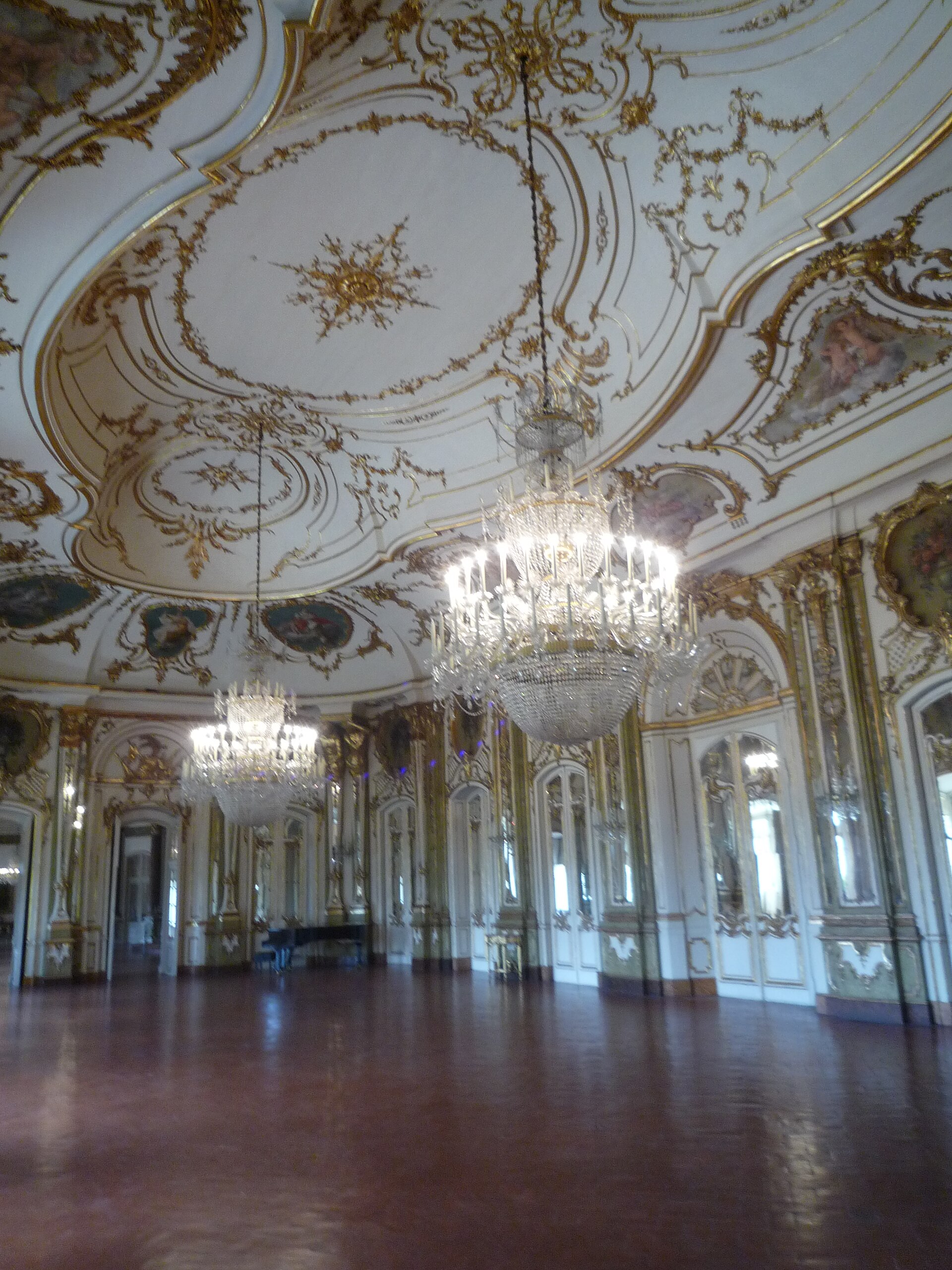
The Throne Room served for the most important occasions of the court, and its decoration was designed to impress within the graceful idiom of the Rococo. Gilded figures, mirrors, and elaborate ornament create an effect of shimmering richness, and the room glows with light reflected from its many surfaces. Even at the scale of Queluz, it conveys the majesty appropriate to a royal residence, achieved through refinement rather than sheer size.
Nearby lies the Music Room, another of the palace’s grand interiors, richly decorated and used for the concerts and entertainments that were so important a part of court life. Music was cherished at Queluz, and the room was designed as a fitting setting for it, its decoration as elegant and refined as that of the Throne Room, a space where the pleasures of the season found their most cultivated expression.
These grand rooms demonstrate that Queluz, for all its intimacy, was a genuine royal palace capable of the full splendour of court ceremony. The Rococo style, with its love of gilding, mirrors, and light, was perfectly suited to creating magnificence at a human scale, and the state rooms of Queluz are among its finest achievements, jewel-like spaces of shimmering elegance that delight the visitor today as they did the court of old.
The scale of these rooms, intimate by the standards of the great European palaces, is in fact one of their charms, for it allows the visitor to appreciate the exquisite detail of the decoration at close hand. Every panel, mirror, and gilded flourish repays close attention, and the effect of the whole is one of concentrated richness, a jewel-box splendour in which no surface is left plain and every element contributes to a single harmonious impression of Rococo elegance.
The Hall of Ambassadors
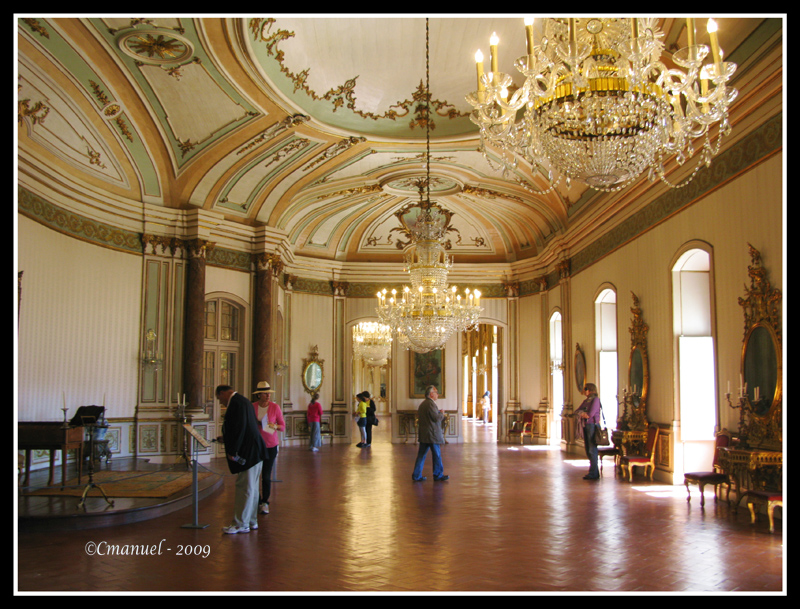
Among the most splendid of the palace’s rooms is the Hall of Ambassadors, the grand space in which foreign envoys were received and the most important ceremonies of state were held. Also known as the Hall of Mirrors, it is a room of dazzling richness, its walls lined with mirrors and gilded ornament, its ceiling painted with allegorical scenes, and its floor a chequerboard of marble, the whole designed to impress upon visitors the dignity of the Portuguese crown.
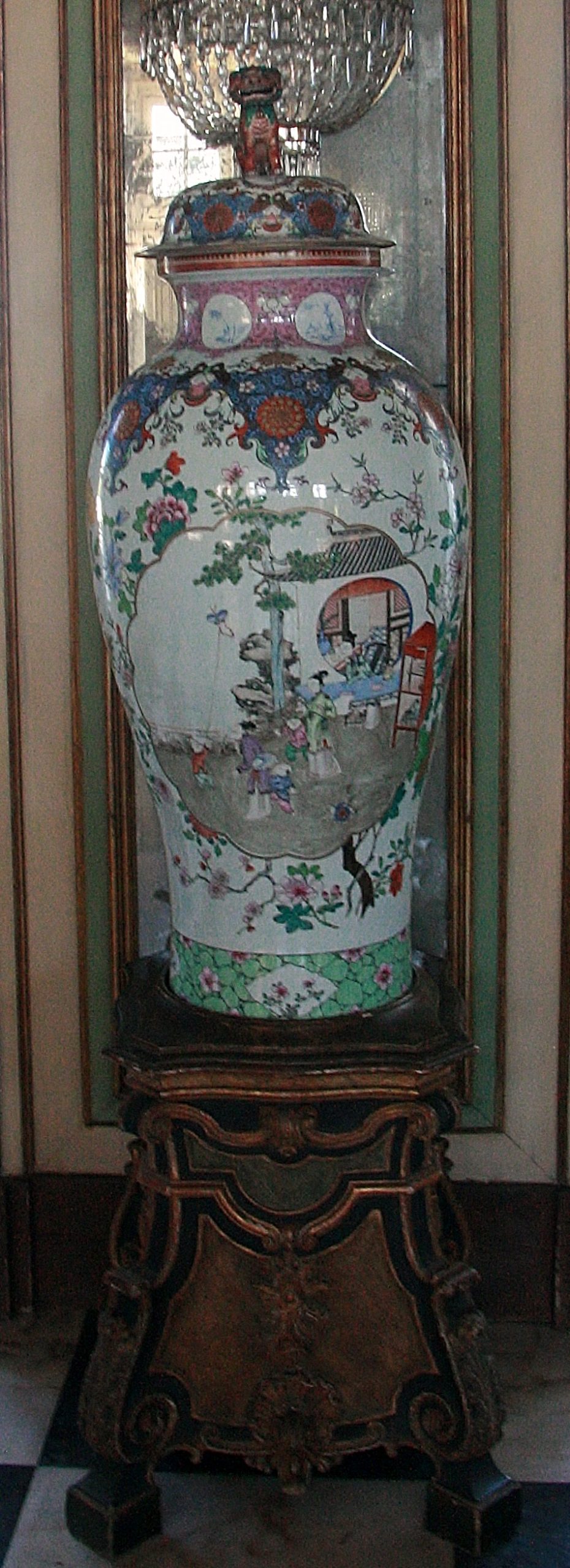
The room reflects the international character of court life, for it was here that the rituals of diplomacy were enacted, ambassadors presenting their credentials amid surroundings of the utmost splendour. The mirrors that line the walls multiply the light of the chandeliers and the gilded ornament, creating an effect of shimmering magnificence that rivals the grandest rooms of far larger palaces, achieved within the intimate scale of Queluz.
The painted ceiling of the hall depicts allegorical and mythological scenes in the manner beloved of the age, adding to the richness of the decoration and glorifying the monarchy through the language of classical allegory. Together with the mirrors, the gilding, and the marble floor, it creates one of the most magnificent interiors in Portugal, a room where the arts of painting, sculpture, and decoration combine in a single dazzling ensemble.
The Hall of Ambassadors demonstrates the sophistication of the Portuguese court and its place within the wider world of eighteenth-century European diplomacy and culture. It was a room designed to be seen by the representatives of foreign powers, and it was intended to convey the wealth, taste, and dignity of the Portuguese crown. It remains one of the highlights of a visit to the palace, a masterpiece of Rococo splendour.
The Don Quixote Chamber and a Royal Tragedy
One of the most remarkable and most poignant rooms of Queluz is the circular chamber known as the Don Quixote Room, named for the scenes from Cervantes’s great novel that adorn its walls. This unusual round room, richly decorated and crowned by a domed ceiling, is a masterpiece of Rococo design, but it is remembered above all for the royal drama that unfolded within it, which gives it a special place in the history of the palace.
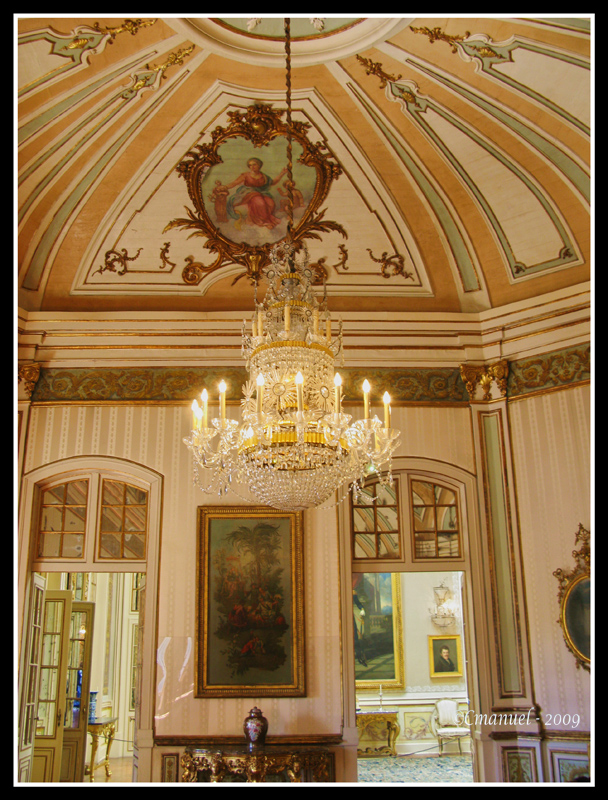
It was in this room that the prince who would become King Pedro IV of Portugal, and the first emperor of Brazil, was born. In one of history’s strange symmetries, it was also in this same room that, many years later, he died, having returned to the palace of his birth at the end of a turbulent life that had seen him rule an empire across the ocean and fight for the throne of his homeland.
The story lends the beautiful room an air of melancholy, a reminder of the human dramas that unfolded amid the Rococo splendour of the palace. Pedro’s life spanned the age of revolutions that transformed the Portuguese-speaking world, from the flight of the royal family to Brazil to the independence of that country and the civil wars of Portugal, and the room that saw both his birth and his death stands as a silent witness to that momentous history.
The Don Quixote Chamber thus unites, in a single space, the artistic brilliance of Queluz and the poignant human history it witnessed. Its decoration delights the eye, while its associations touch the heart, and it embodies the double character of the palace as both a place of Rococo pleasure and a stage for the drama of the Portuguese monarchy. It is among the most memorable rooms in the whole of the palace.
The Queen Who Descended Into Madness
Queluz is bound up with one of the most tragic figures in Portuguese royal history, Queen Maria I, who made the palace her principal residence and whose story casts a shadow of melancholy over its Rococo gaiety. Maria was the first queen to rule Portugal in her own right, a pious and conscientious monarch, but in her later years she was overtaken by a profound mental illness that plunged her into madness and made her incapable of ruling.
The queen spent her declining years at Queluz, and the palace became the setting for her tragic decline. Visitors and courtiers of the time left accounts of her suffering, and her cries were said to echo through the elegant rooms, a haunting contrast to the beauty of her surroundings. The palace of pleasure became, for the afflicted queen, a place of confinement and torment, and the memory of her suffering clings to it still.
Her illness had profound consequences for the monarchy, for it necessitated the regency of her son, the future King John VI, who governed in her name during her incapacity. It was during these years, with the queen mad and her son ruling as regent, that Portugal faced the great crisis of the Napoleonic invasions, which would drive the royal family to flee across the Atlantic to Brazil.
The story of Maria I gives Queluz a depth of human tragedy that its light and graceful architecture might otherwise belie. The contrast between the palace’s Rococo elegance and the queen’s terrible suffering is one of the most poignant in the history of any royal residence, and it reminds the visitor that behind the gilded rooms and charming gardens lay real lives marked by sorrow as well as splendour.
After the queen’s death and the return of the court from Brazil, Queluz gradually lost its position as a principal royal residence, though it remained bound to the memory of the monarchy and its dramas. The passing of the age of the eighteenth-century court left the palace as a survival from another era, and it is precisely this quality of belonging so completely to a vanished world that gives Queluz much of its evocative power for the modern visitor.
The Formal Gardens
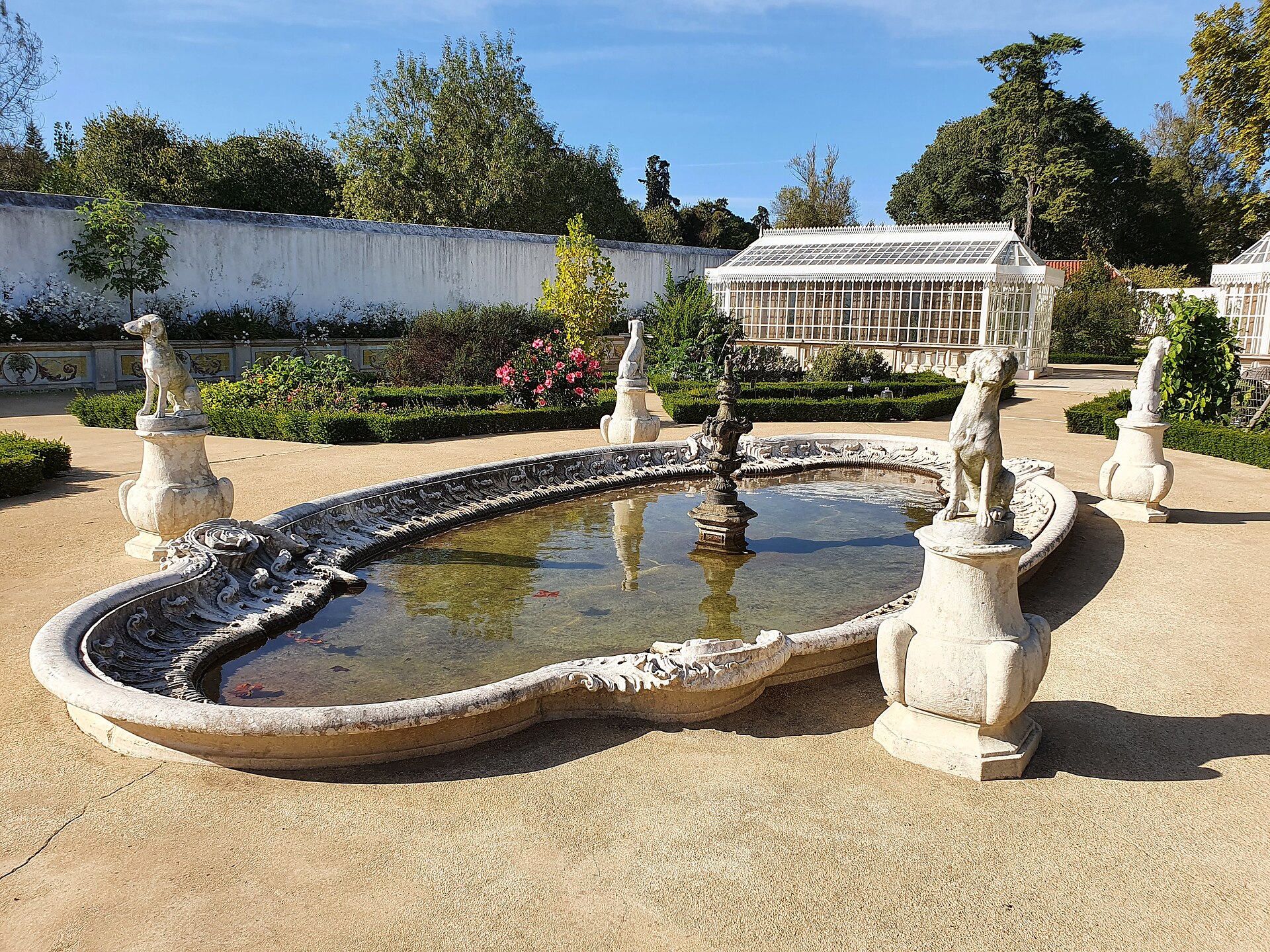
The gardens of Queluz are among the glories of the palace and one of the finest examples of formal Rococo garden design in Portugal. Laid out beside and below the palace, they are a fantasy of clipped box hedges, geometric parterres, gravel walks, ornamental fountains, and a wealth of statuary, all arranged in the elegant French manner and designed to be enjoyed as an extension of the palace itself.
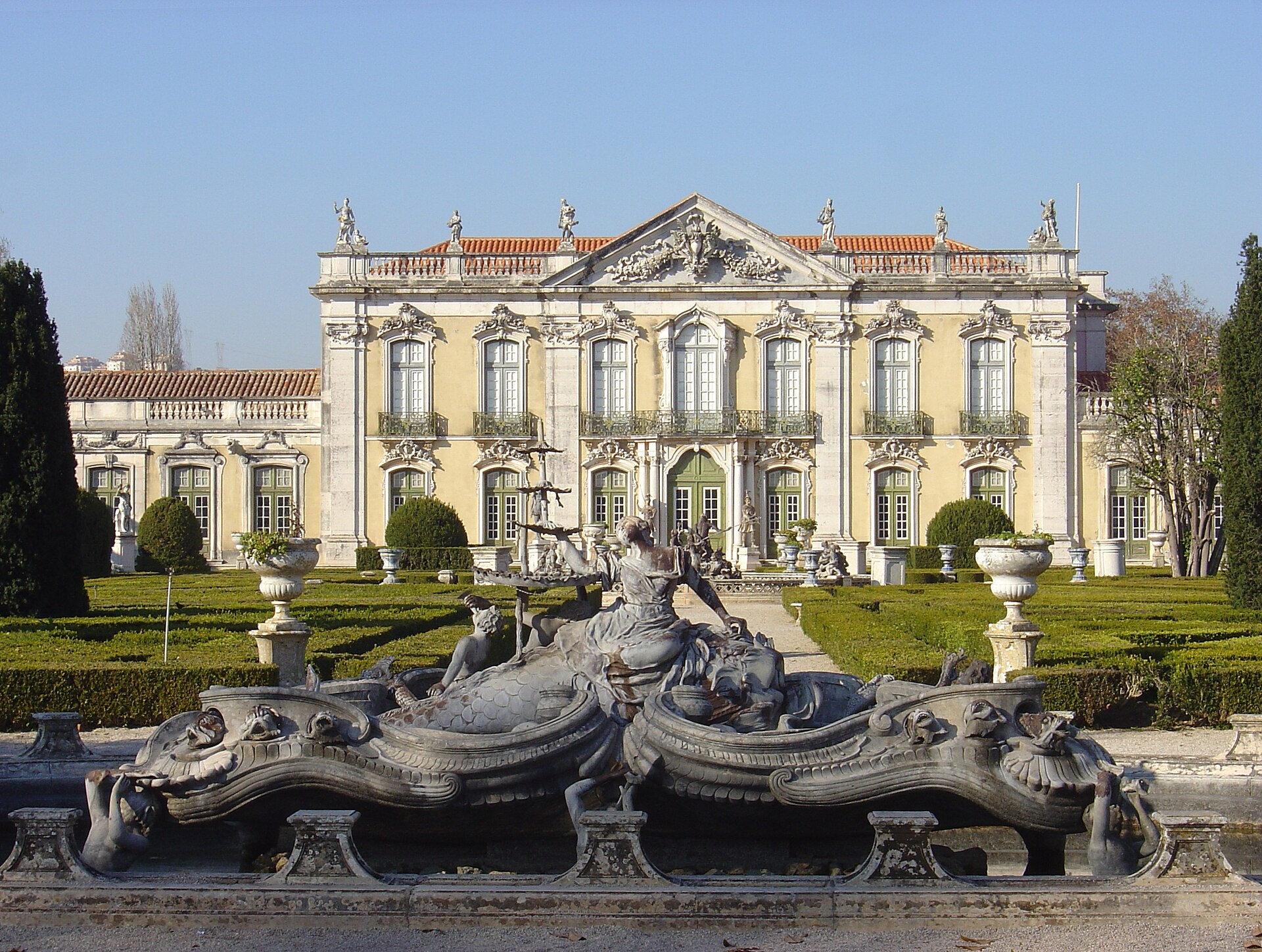
Sculpture is everywhere in the gardens, peopling the walks and fountains with mythological figures, allegories, and ornamental groups, many of them of fine quality. Among them are notable works imported from abroad, adding to the international character of the palace, and the interplay of statuary, greenery, and water creates a series of delightful scenes designed to charm the stroller at every turn.
The gardens were conceived as a setting for the pleasures of the summer court, a place for promenades, entertainments, and the enjoyment of the outdoors during the warm Portuguese months. Their formal geometry, softened by abundant planting and enlivened by fountains and sculpture, embodies the Rococo ideal of nature tamed and refined into a work of art, an outdoor complement to the elegant interiors of the palace.
Set against the rose-pink facades of the palace, the gardens complete the composition of Queluz as a unified work of Rococo art. The harmony of building and garden, of architecture and nature, is one of the chief delights of the place, and to walk in the gardens on a fine day, amid the hedges and fountains and statues with the pink palace rising beyond, is to experience the full charm of this most elegant of Portuguese royal residences.
The layout of the gardens follows the principles of the French formal tradition, with axial vistas, symmetrical parterres, and carefully composed perspectives designed to be admired from the palace windows and terraces. Yet the abundant Portuguese light and vegetation give them a character of their own, and the combination of French design and Portuguese setting produces an effect that is at once cosmopolitan and distinctly local, a garden that could exist nowhere else.
The Canal of Tiles
The single most celebrated feature of the gardens of Queluz is the extraordinary Canal of Tiles, a watercourse whose walls are lined entirely with painted ceramic tiles, the azulejos for which Portugal is famous. Along a stretch of the little river that flows through the grounds, the banks were faced with these glazed tiles, depicting scenes of ships, landscapes, and figures, so that the water flows between walls of shimmering blue and white and colour.
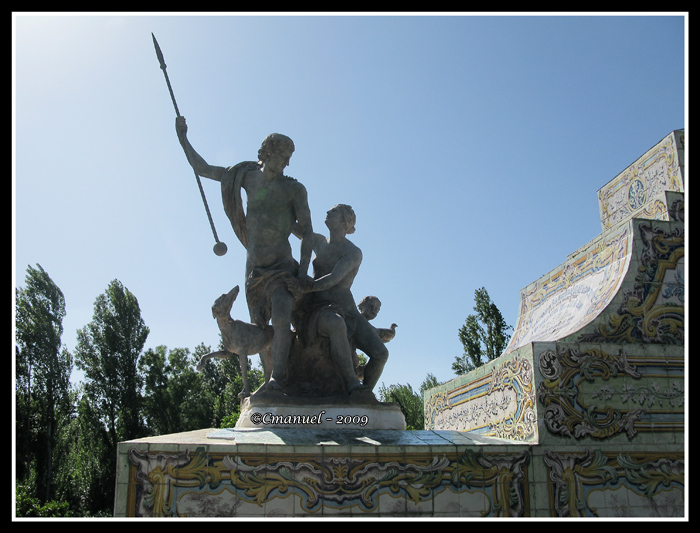
This unique creation transformed a simple watercourse into a work of art and a place of pleasure. On the tiled canal the royal family could take to small boats, gliding along the water between the painted walls, and the whole feature was conceived as a source of delight and diversion for the summer court. It is one of the most original and charming garden features anywhere in Europe.
The tiles themselves are masterpieces of the Portuguese ceramic art, their scenes vividly coloured and full of detail, and their setting along the canal shows the azulejo tradition applied on an ambitious and imaginative scale. Portugal’s long love of decorative tilework, itself a legacy of centuries of cultural exchange, finds in the Canal of Tiles one of its most delightful and unexpected expressions.
The Canal of Tiles captures perfectly the spirit of Queluz as a palace devoted to pleasure and refined amusement. It combines the beauty of the azulejo art with the delight of water and the pleasures of the garden, creating a feature that is at once a work of art and a source of joy. For many visitors it is the most memorable sight in the whole of the gardens, an emblem of the charm and inventiveness of the palace.
The Robillion Pavilion and Garden Buildings
Among the most admired features of Queluz is the elegant garden wing known as the Robillion Pavilion, named for the French designer who created it and one of the finest achievements of the whole palace. This graceful structure, with its columns, its double staircase, and its refined ornament, extends the palace toward the gardens and forms a magnificent architectural backdrop to the formal grounds, a masterpiece of Rococo design in its own right.
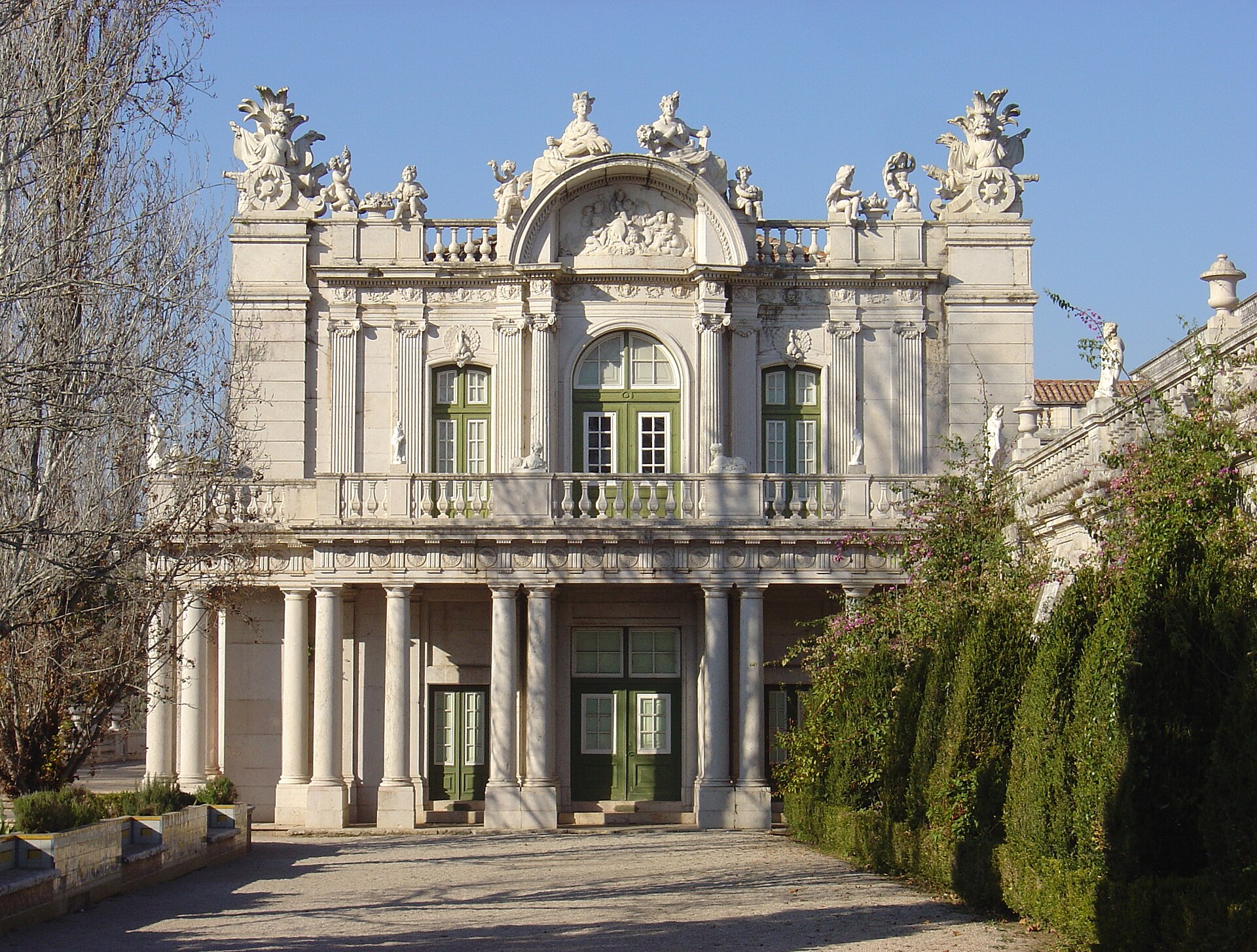
The pavilion demonstrates the sophistication that French taste brought to Queluz, its proportions and detailing displaying a refinement worthy of the great garden buildings of France. Its grand external staircase, richly ornamented, descends toward the gardens and provides one of the most striking views of the palace, uniting architecture and landscape in a single elegant composition that delights the eye from every angle.
Scattered through the gardens and grounds are other structures and features that added to the pleasures of the summer court, from ornamental cascades and fountains to shaded walks and decorative garden architecture. Each was conceived as part of the total composition of palace and garden, contributing to the atmosphere of refined delight that pervades the whole of Queluz and reflects its purpose as a residence devoted to pleasure.
Together these garden buildings and features complete the picture of Queluz as a Rococo paradise, a place where architecture, sculpture, water, and greenery were composed into a single harmonious work of art. The Robillion Pavilion above all stands as a symbol of the palace’s elegance and of the French-inspired refinement that gives Queluz its special character among the royal residences of Portugal.
Queluz and the Fortunes of the Monarchy
Queluz became the official residence of the Portuguese royal family in the late eighteenth century, and its history is closely bound up with the fortunes of the monarchy in a turbulent age. It was from this world of Rococo elegance that the royal family was forced to flee when the armies of Napoleon invaded Portugal, escaping across the Atlantic to Brazil and leaving the palace behind in the face of the French advance.
The flight to Brazil was one of the most dramatic episodes in Portuguese history, and it transformed the fortunes of the monarchy and of the Portuguese-speaking world. When the royal family eventually returned, they came back to a changed country and a changed world, and Queluz, though it remained a royal residence, would witness the further dramas of the nineteenth century, including the birth and death of the emperor-king Pedro in its Don Quixote chamber.
The palace suffered its share of misfortune over the years, including a serious fire in the twentieth century that damaged part of the building, though careful restoration has since repaired the harm. Through all these vicissitudes Queluz survived, preserving its Rococo interiors and gardens as a precious record of the world of the eighteenth-century court, one of the most complete to survive anywhere in Europe.
The history of Queluz thus mirrors the history of the Portuguese monarchy itself, from the confident elegance of the Rococo age through the upheavals of revolution, invasion, and the loss of Brazil. Behind the palace’s charming facades lie the memories of these great events, and to know its history is to see the graceful rooms and gardens in a richer light, as the setting for the drama of a nation and a dynasty.
The survival of Queluz through the centuries, and its careful preservation and restoration, allow it to serve today as one of the most valuable records of eighteenth-century court life anywhere in Europe. In its rooms and gardens the whole world of the Rococo monarchy is preserved, from the grandeur of state ceremony to the intimate pleasures of the summer season, making the palace not only a place of beauty but a document of a vanished civilisation.
Queluz Today: A Rococo Time Capsule
Today the Palace of Queluz is one of the treasures of the Portuguese royal heritage, open to visitors and preserved as one of the most complete Rococo palaces in Europe. Its state rooms, from the Throne Room and the Hall of Ambassadors to the poignant Don Quixote chamber, can be seen much as they were in the palace’s heyday, and its gardens, with their fountains, statues, and famous Canal of Tiles, spread out around the rose-pink building.
View the exact location on Google Maps
A visit offers an unusually complete immersion in the world of the eighteenth-century court. Because Queluz has survived with so much of its decoration and character intact, it functions almost as a time capsule of the Rococo age, allowing the visitor to move through the intimate, gilded rooms and out into the formal gardens as the royal family once did, and to sense the atmosphere of the summer court that once flourished here.
The palace lies a short journey from Lisbon, easily reached and well worth combining with the other wonders of the region, from the capital itself to the romantic hills of Sintra nearby. Part of the palace has at times served to host visiting heads of state, a continuation of its historic role, while the rest is given over to the public who come to admire its elegance and to walk in its charming gardens.
More than two centuries after a pleasure-loving prince transformed a hunting lodge into a Rococo jewel, Queluz endures as the most elegant of Portugal’s royal palaces and one of the finest expressions of its age anywhere in Europe. Graceful, intimate, and steeped in both beauty and history, it preserves the vanished world of the eighteenth-century court with a completeness and a charm that continue to enchant all who visit it.
Palaces Nearby
If the Rococo charm of Queluz has delighted you, these nearby royal palaces are the perfect companions to a visit:
You May Like
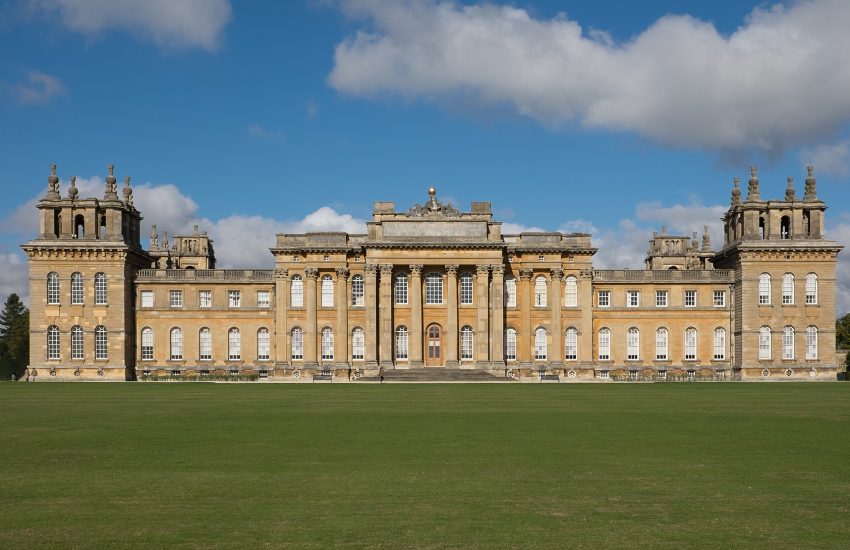
Blenheim Palace: The Baroque Masterpiece a Nation Built to Reward a Victory