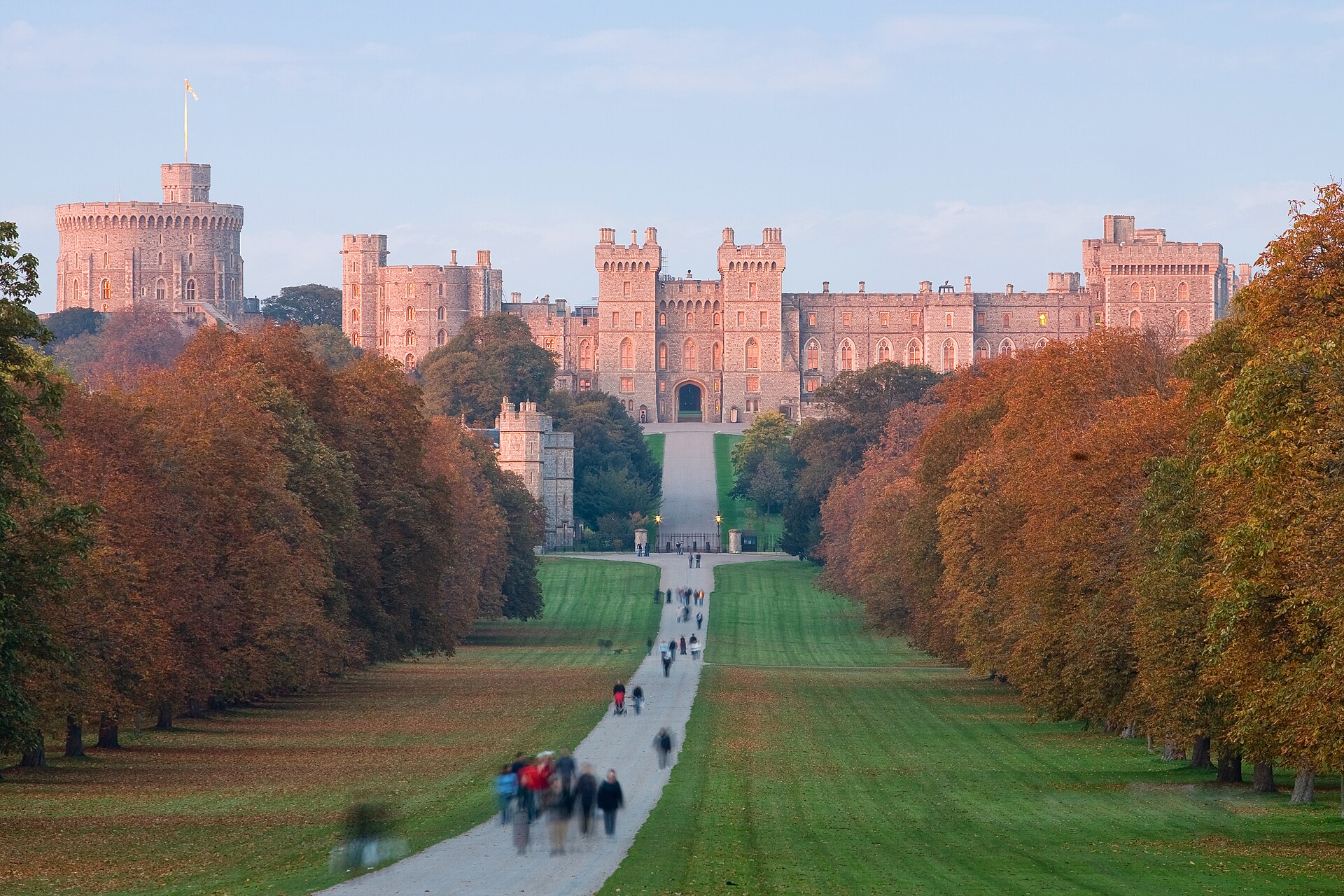
On a chalk bluff above the River Thames west of London rises a fortress that has been a home to the kings and queens of England for almost a thousand years. Windsor Castle is the oldest and largest inhabited castle in the world, a vast sprawl of towers, walls, chapels, and royal apartments that has grown and changed across nearly a millennium while never ceasing to be a working royal residence. From its round tower flies the royal standard when the sovereign is present, as it has for centuries, linking the England of today directly to the age of the Norman conquest.
Windsor is both a mighty fortress and a magnificent palace, and its long history is written in its very stones. Begun by William the Conqueror as a wooden stronghold to guard the approaches to his newly won capital, it was rebuilt over the centuries by a succession of monarchs, each leaving his or her mark, until it became the grand castle we know. Within its walls lie some of the greatest treasures of English history, from a chapel that is the spiritual home of the oldest order of chivalry to state apartments of dazzling splendour.
The castle is a place of ceremony, of chivalry, and of memory. It is the home of the Order of the Garter and the setting for its ancient rituals; it is the burial place of ten sovereigns, including some of the most famous in English history; and it has been the scene of royal weddings, funerals, and the great occasions of the monarchy across the ages. Few buildings anywhere are so saturated with the history of a nation and a crown.
To visit Windsor is to walk through the entire history of the English monarchy, from the Normans to the present day, within a single great fortress that has been continuously inhabited by royalty longer than any other in the world. This is the story of Windsor Castle, of the kings and queens who built and rebuilt it, of the chapel and the apartments and the great fire that nearly consumed them, and of the enduring royal home that stands above the Thames still.
In This Article
- The Oldest Inhabited Castle in the World
- William the Conqueror’s Fortress
- The Round Tower and the Medieval Castle
- Edward III and the Order of the Garter
- St George’s Chapel
- Kings, Queens, and Royal Occasions
- The State Apartments
- St George’s Hall and the Waterloo Chamber
- George IV and the Gothic Transformation
- The Great Fire of 1992
- The Long Walk and Windsor Great Park
- A Living Royal Home
- Windsor Today
The Oldest Inhabited Castle in the World
Windsor Castle holds a unique distinction among the great royal residences of the world: it is the oldest and largest castle still in use as a home. For some nine and a half centuries, since not long after the Norman conquest, it has been a residence of the English and later British monarchs, an unbroken occupation that no other castle can match. It is at once a monument of the deep past and a living royal palace of the present day.
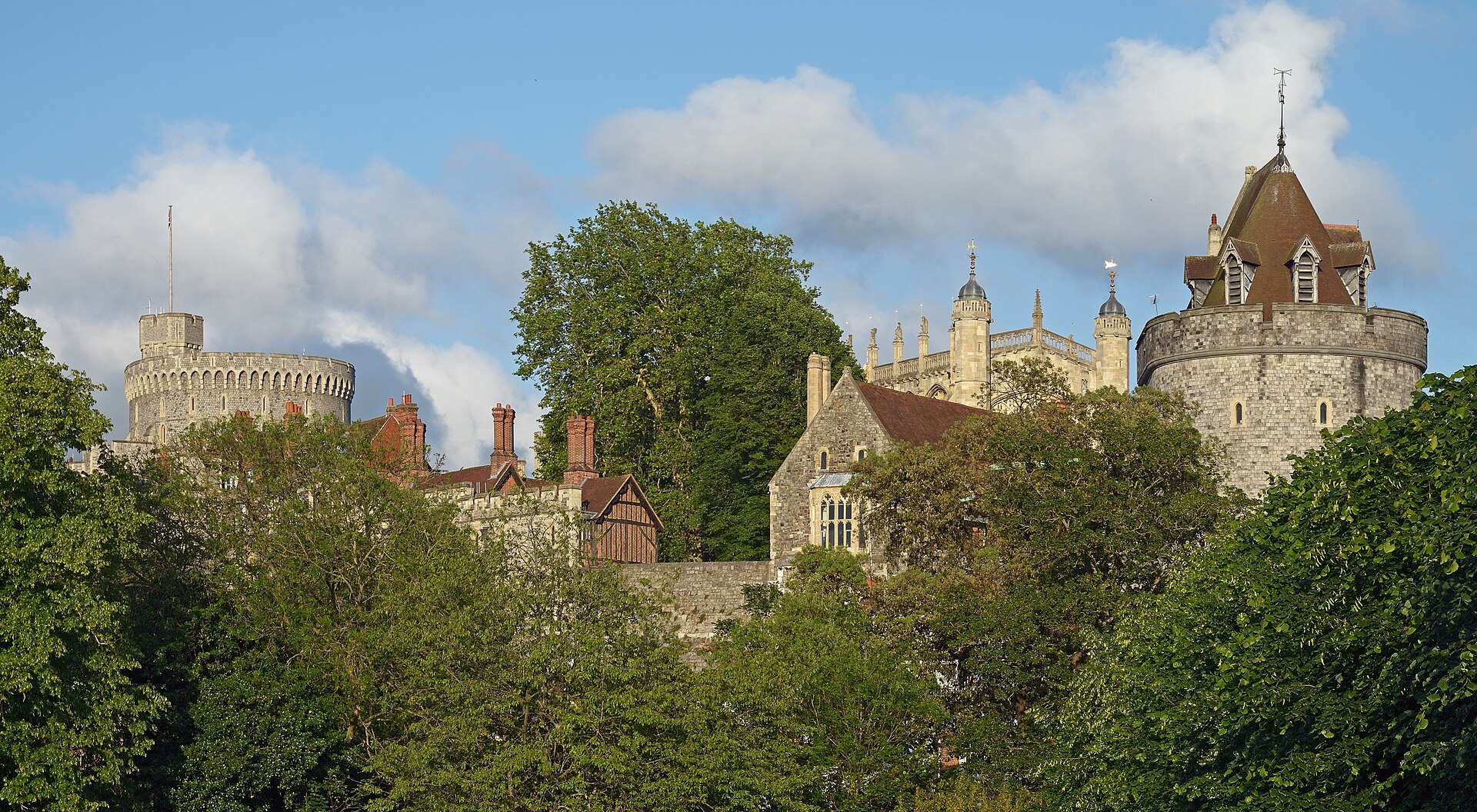
The castle is enormous, covering a vast site and comprising a great complex of buildings arranged around a central mound and several courtyards, or wards. At its heart rises the famous Round Tower, set upon the original mound, while around it spread the royal apartments, the chapels, the towers, and the walls that have accumulated over the centuries. The sheer scale of Windsor, sprawling across its ridge above the Thames, is one of its most impressive features.
What makes Windsor so remarkable is that, unlike so many great castles that have fallen into ruin or become mere museums, it has never ceased to be a genuine royal home. Monarchs have lived here in every century since it was founded, adapting and rebuilding it to suit the needs and tastes of their age, so that the castle is a living record of the changing life of the monarchy across nearly a thousand years of history.
The result is a building of extraordinary richness and complexity, in which the fortress of the Normans, the chivalric splendour of the Middle Ages, the Baroque magnificence of the Restoration, and the Gothic grandeur of the nineteenth century all coexist. Windsor is not a single work of one age but the accumulated creation of many, a palimpsest of English royal history, and therein lies much of its fascination and its unique character.
Because it has been continuously adapted rather than frozen at any one moment, Windsor also serves as an unrivalled record of the evolving relationship between the monarchy and the nation. Each phase of rebuilding reflects the priorities of its age, from the defensive needs of the Norman conquerors to the chivalric idealism of the Plantagenets, the classical ambitions of the Stuarts, and the romantic historicism of the nineteenth century. To read the castle is, in a real sense, to read the history of England itself, inscribed in stone upon a single commanding site above the river.
William the Conqueror’s Fortress
The origins of Windsor lie in the aftermath of the Norman conquest of England. Around 1070, in the years following his victory, William the Conqueror established a castle here as one of a ring of fortresses guarding the approaches to London, his newly won capital. The site, on a bluff above the Thames a day’s march from the city, was chosen for its strategic value, commanding the river and the surrounding country.
The first castle was a typical Norman motte-and-bailey stronghold, built quickly of earth and timber. A great mound, or motte, was raised, crowned by a wooden tower, and enclosed by defended courtyards, or baileys. This simple but effective design, imposed across England by the conquerors, allowed a castle to be thrown up rapidly to dominate the surrounding land, and it formed the nucleus from which the great stone castle would later grow.
The strategic position that recommended Windsor to William also ensured its lasting importance. Situated to guard London and set within good hunting country, it combined military value with the pleasures of the chase that were so dear to medieval kings. In time the fortress became not merely a stronghold but a favoured royal residence, and successive monarchs began the long process of rebuilding it in stone and expanding it to suit their needs.
From these Norman beginnings, the whole later history of Windsor unfolds. The mound raised by William still supports the Round Tower at the castle’s heart, and the layout of the wards still reflects the original design. The fortress that a conqueror built to hold down a newly subdued kingdom became, over the centuries, the beloved home of the dynasty that sprang from him, and it has remained a royal residence ever since.
The Round Tower and the Medieval Castle
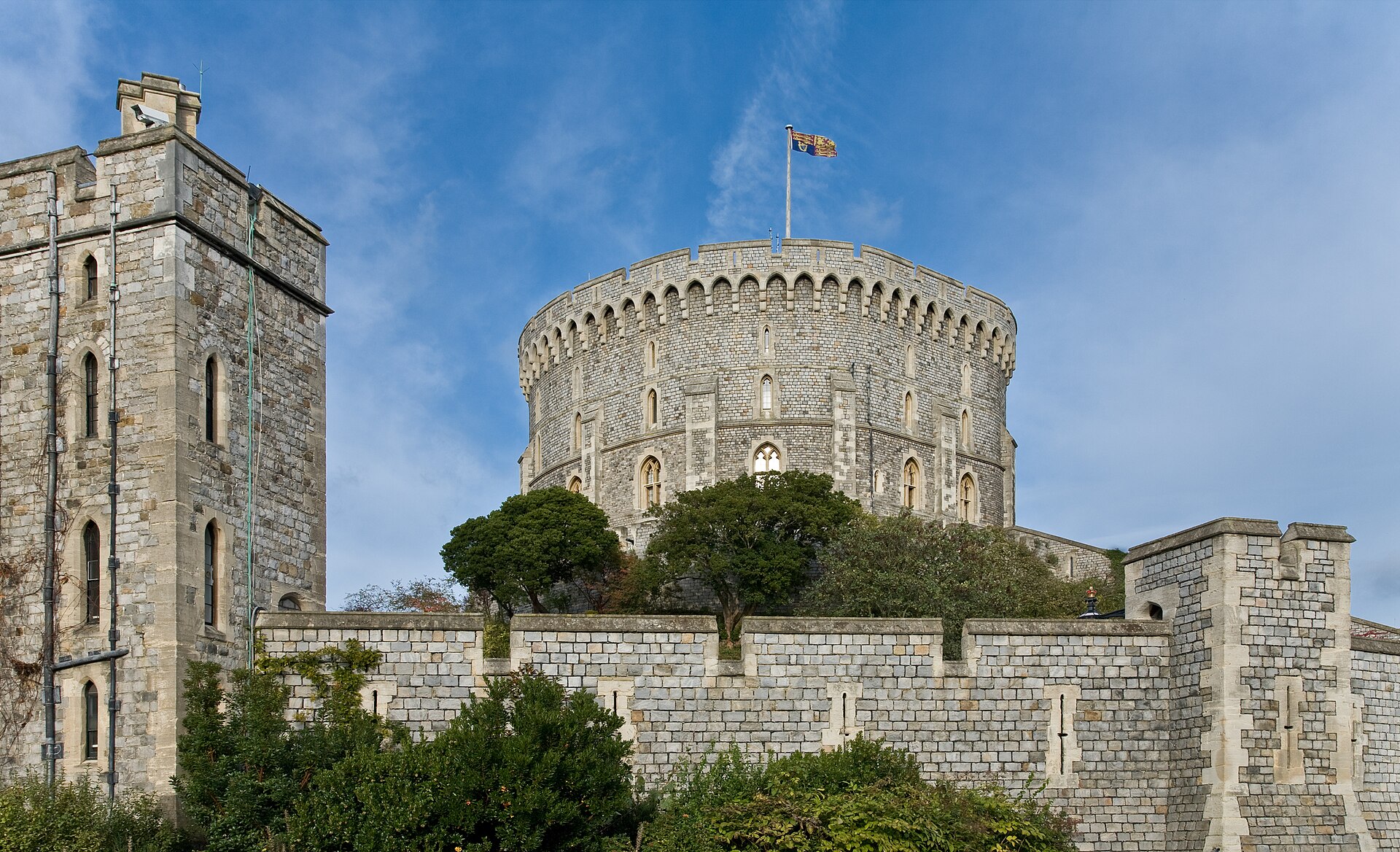
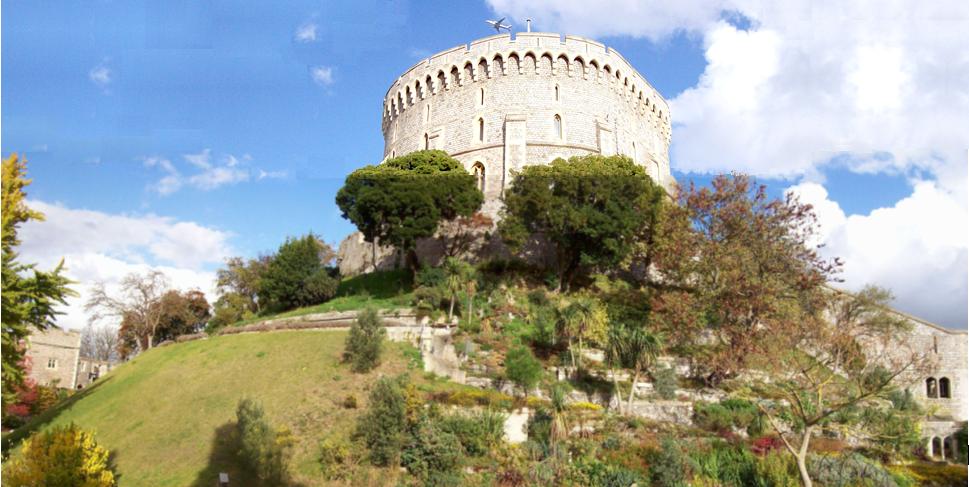
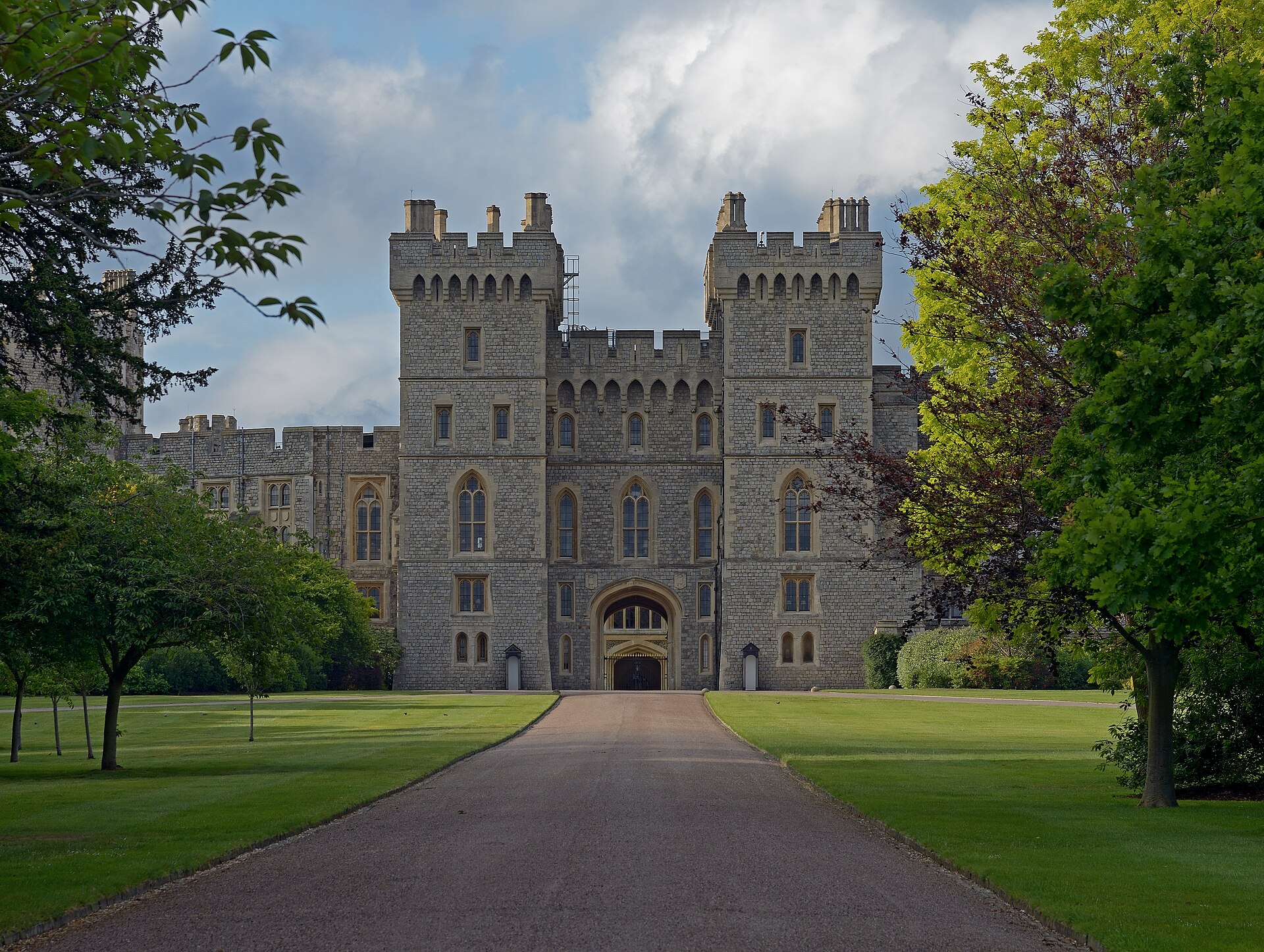
The most iconic feature of Windsor is the great Round Tower that rises from the original Norman mound at the centre of the castle, dominating its silhouette for miles around. Though it stands on William’s earthwork, the tower itself is the work of later centuries, begun in stone by the medieval kings and much heightened in the nineteenth century to give it the commanding profile it has today. It is from this tower that the royal standard flies when the sovereign is in residence.
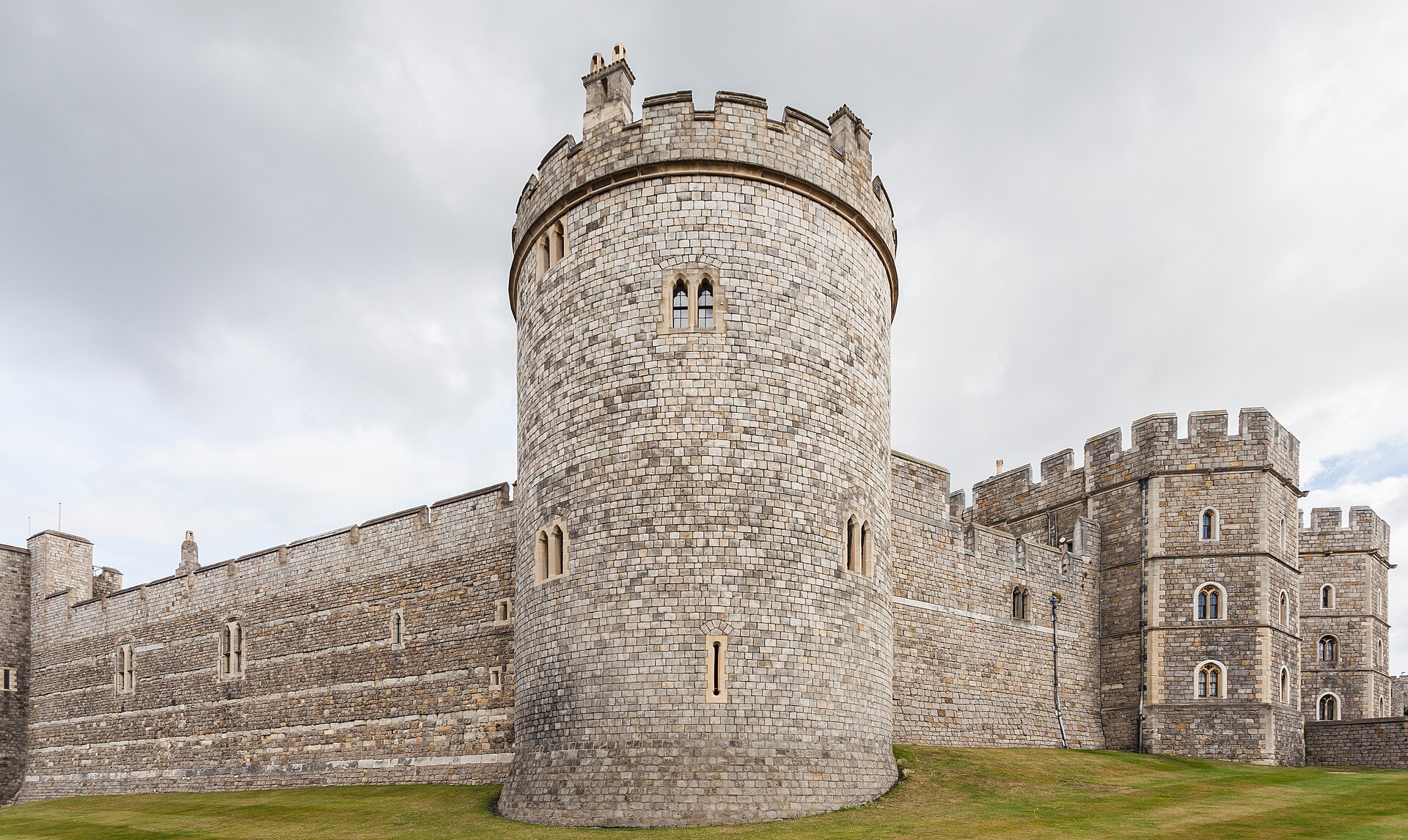
The transformation of the timber fortress into a mighty stone castle was the work of the medieval kings, above all Henry II in the twelfth century and Edward III in the fourteenth. They rebuilt the walls and towers in stone, raised the great keep, and constructed royal apartments and halls, turning the rough Norman stronghold into a formidable and magnificent castle fit for the kings of England.
The castle is arranged around three main courtyards, or wards, a design that reflects its long evolution. The Lower Ward contains the great chapel; the Middle Ward is dominated by the Round Tower on its mound; and the Upper Ward holds the royal apartments. This arrangement, developed over the medieval centuries, still governs the layout of the castle and gives it its distinctive form, a series of linked enclosures climbing along the ridge.
Throughout the Middle Ages Windsor served as both a fortress and a royal residence, a place of defence in troubled times and of splendour in peaceful ones. It witnessed sieges and celebrations, imprisonments and festivities, and it grew steadily in size and magnificence as one monarch after another added to it. By the end of the medieval period it had become one of the foremost castles in the kingdom, a worthy seat of the English crown.
Edward III and the Order of the Garter
One of the most important chapters in the history of Windsor was written by King Edward III in the fourteenth century. A monarch steeped in the ideals of chivalry and a great warrior king, Edward undertook a vast rebuilding of the castle, transforming it into a magnificent Gothic palace and making it the centre of his court. But his most enduring legacy at Windsor was the founding of an order of knighthood that survives to this day.
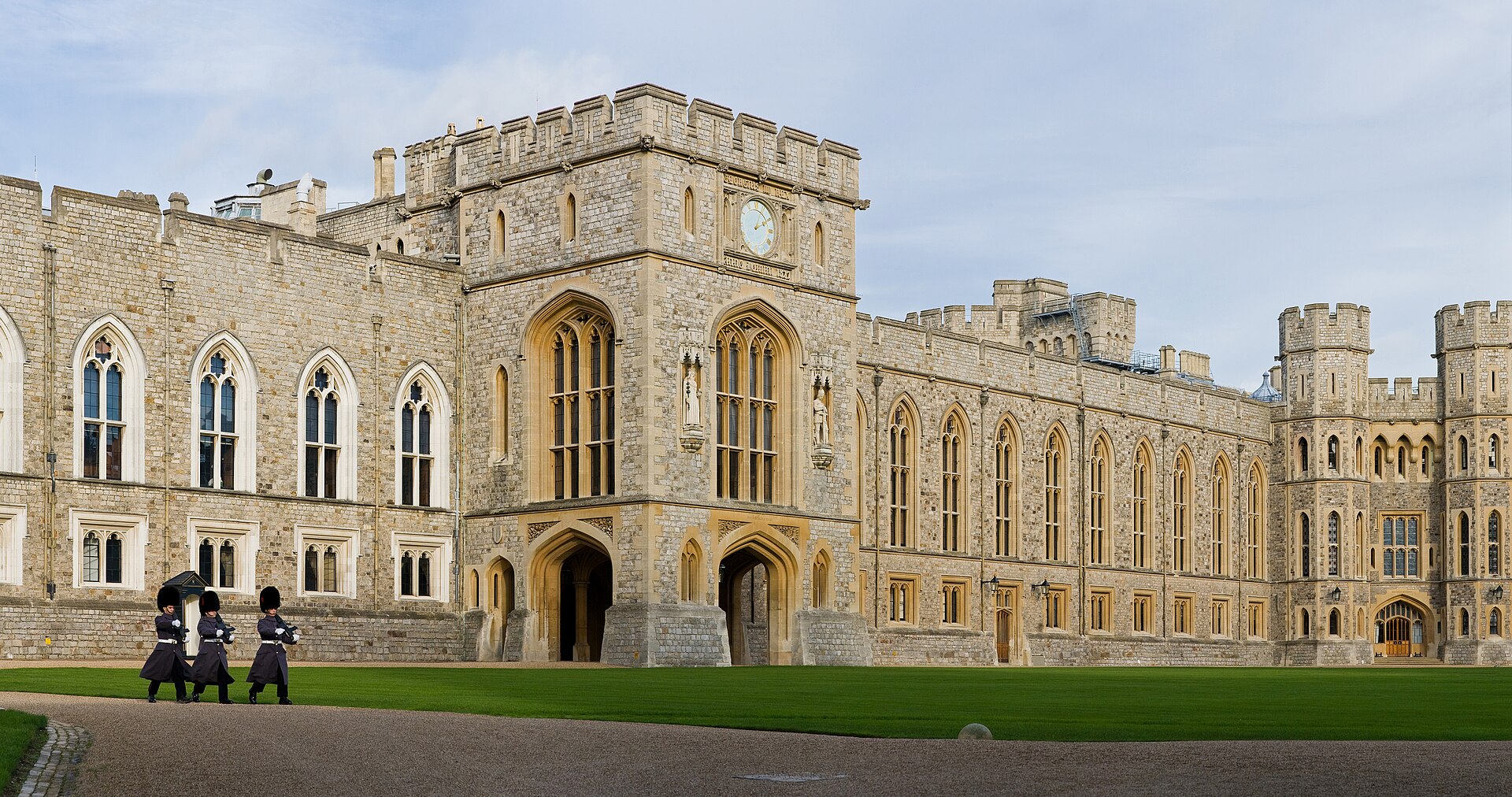
In the mid-fourteenth century Edward founded the Order of the Garter, the highest order of chivalry in England and one of the oldest and most prestigious in the world. Inspired by the legends of King Arthur and the Round Table, the order gathered the sovereign and a select company of knights in a brotherhood of chivalry, and Windsor was chosen as its home. The castle has been the spiritual seat of the Garter ever since.
The Order of the Garter gave Windsor a special character and a lasting role at the heart of English chivalric tradition. Its rituals, its ceremonies, and its symbolism became woven into the life of the castle, and its knights were, and remain, among the most honoured figures in the realm. The famous motto of the order, associated with a half-legendary incident at Edward’s court, became one of the mottoes of the English crown.
Edward’s foundation ensured that Windsor would be forever associated with the ideals of knighthood and honour. To this day the ceremonies of the Garter are held at the castle, with the knights processing in their robes to the great chapel, and the order remains a living link to the age of Edward III and the world of medieval chivalry. It is one of the oldest continuous traditions of the English monarchy, and Windsor is its home.
Edward III had been born at Windsor, and his deep attachment to the castle shaped his decision to make it the centre of his chivalric vision. He lavished enormous sums on its rebuilding, more than on any other secular project of his reign, creating apartments and halls of a magnificence intended to rival the palaces of France, against whose kings he waged his long wars. The Windsor of Edward III was one of the wonders of fourteenth-century Europe, and it set the pattern for the castle’s later role as a showpiece of royal grandeur.
St George’s Chapel
The spiritual heart of Windsor, and one of the supreme masterpieces of English architecture, is St George’s Chapel, the great church that stands in the Lower Ward of the castle. Built in the late medieval period in the elaborate Perpendicular Gothic style, it is one of the finest examples of that distinctively English manner of building, and it serves as the chapel of the Order of the Garter and a place of royal worship and burial.
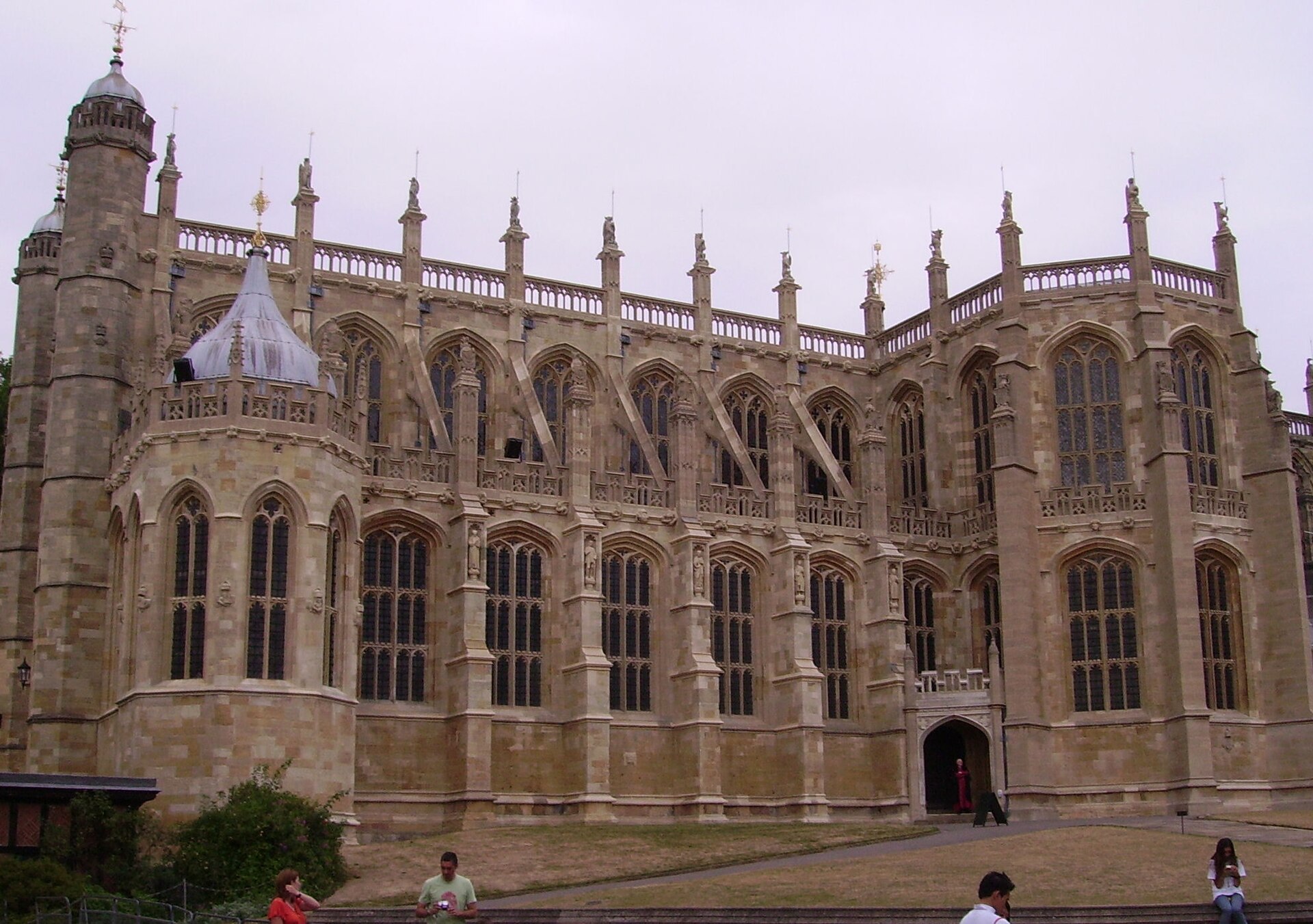
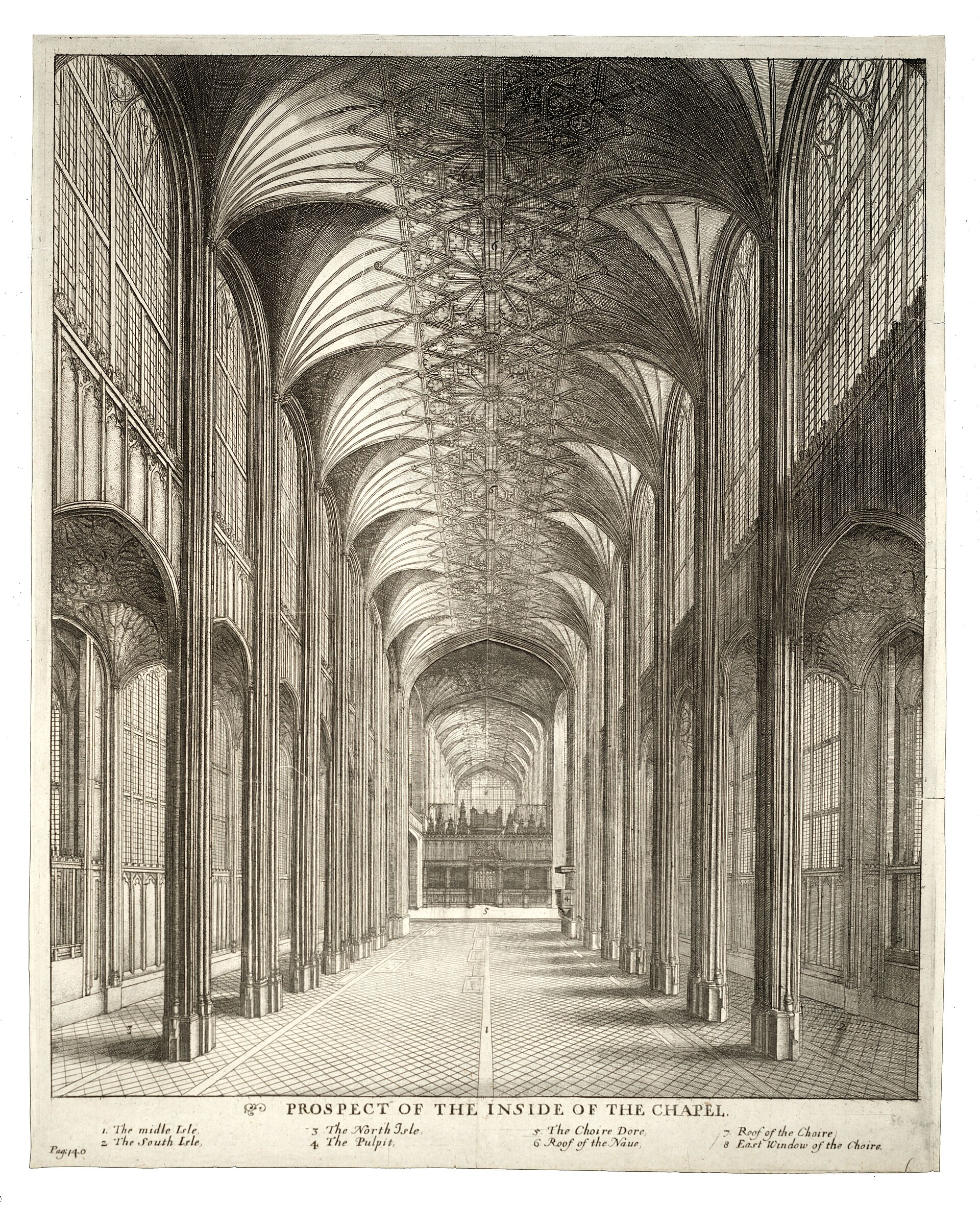
The chapel is a building of soaring beauty, its interior a marvel of intricate stone vaulting, its great windows filling the space with light, and its choir stalls richly carved and adorned with the banners and emblems of the Garter knights. The fan vaulting of the ceiling, spreading overhead in delicate stone tracery, is among the glories of English Gothic, and the whole interior conveys an atmosphere of majesty and devotion.
As the home of the Order of the Garter, the chapel is the setting for the order’s most solemn ceremonies, and the stalls of the choir are hung with the heraldic banners of its knights, past and present. This connection to the ancient order gives the chapel a unique character, uniting the splendour of a great church with the pageantry of chivalry, and making it one of the most colourful and historic interiors in England.
St George’s Chapel is more than a chapel of chivalry, however, for it has also become one of the most important royal churches in the land. Over the centuries it has been the scene of royal weddings, christenings, and funerals, and it holds the tombs of many sovereigns. It stands at the very heart of the life of the castle and of the monarchy, a place where the great occasions of royal life, both joyful and solemn, have unfolded across the ages.
Kings, Queens, and Royal Occasions
St George’s Chapel is the last resting place of ten sovereigns of England and Britain, making it one of the most important royal mausoleums in the country. Among those buried here is Henry VIII, who lies in the choir alongside one of his queens, Jane Seymour, and the executed king Charles I, whose body was brought to Windsor after his death in the civil war. The chapel thus holds some of the most famous figures in English history.
In more recent times the chapel has continued to serve as a place of royal burial. King George VI was interred here, and in the twenty-first century Queen Elizabeth II, the longest-reigning monarch in British history, was laid to rest at Windsor after her death, joining her father, her husband, and other members of the royal family. The chapel remains the chosen burial place of the modern monarchy, deepening its historic role.
The chapel has also been the setting for great occasions of royal celebration. Royal weddings have been held here, bringing colour and joy to the ancient church, and the annual ceremonies of the Order of the Garter fill it with pageantry each year. From solemn funerals to joyful marriages, the chapel has witnessed the full range of the great moments of royal life across the centuries.
This combination of roles, as chapel of chivalry, royal church, and burial place of monarchs, gives St George’s Chapel a unique place in the life of the nation. To stand within it, surrounded by the tombs of kings and the banners of knights, is to feel the whole weight of English royal history, and to understand why Windsor, and its great chapel, occupy so central a place in the story of the monarchy.
The State Apartments
Beyond the chapel and the medieval fortifications lie the State Apartments of Windsor, a magnificent sequence of rooms in the Upper Ward that form the ceremonial heart of the modern castle. These grand chambers, used for state occasions and the reception of important guests, are among the finest royal interiors in Britain, richly decorated and filled with treasures from the royal collection.
The apartments as they exist today are largely the creation of two great campaigns of building. In the seventeenth century, King Charles II remodelled a set of rooms in the sumptuous Baroque style of his age, creating apartments of great splendour after the fashion of the continental courts he admired. Some of these Baroque rooms survive, adorned with painted ceilings and elaborate carving of the highest quality.
The State Apartments are hung with masterpieces from the royal collection, one of the greatest art collections in the world, including works by many of the supreme painters of European art. Fine furniture, tapestries, armour, and porcelain fill the rooms, and the whole sequence is designed to impress the visitor with the wealth, taste, and history of the British crown. It is a treasure house as much as a set of state rooms.
These rooms remain in active use for the ceremonial life of the monarchy, hosting state banquets, receptions, and the entertainment of visiting heads of state. When the sovereign receives important guests at Windsor, it is in these apartments that the great occasions unfold, amid surroundings that unite the accumulated splendour of centuries. They are a living stage for the ceremony of the modern crown, as well as a museum of its past.
St George’s Hall and the Waterloo Chamber
The grandest of all the rooms at Windsor is St George’s Hall, an immense chamber that serves as the ceremonial banqueting hall of the castle and the setting for the great feasts of the Order of the Garter. Enormously long and lofty, its ceiling emblazoned with the coats of arms of the Garter knights through the centuries, it is a room designed to overwhelm with its scale and its heraldic splendour, a fitting setting for the grandest occasions of state.
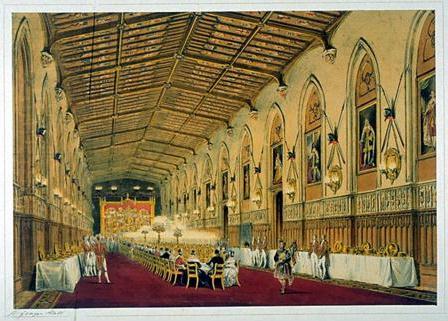
St George’s Hall can seat vast numbers of guests at a single great table, and it is here that state banquets are held when the monarch entertains visiting heads of state at Windsor. The array of armour and heraldry, the sheer length of the room, and the sense of ancient chivalric tradition combine to make it one of the most impressive interiors in the country, the very image of royal magnificence.
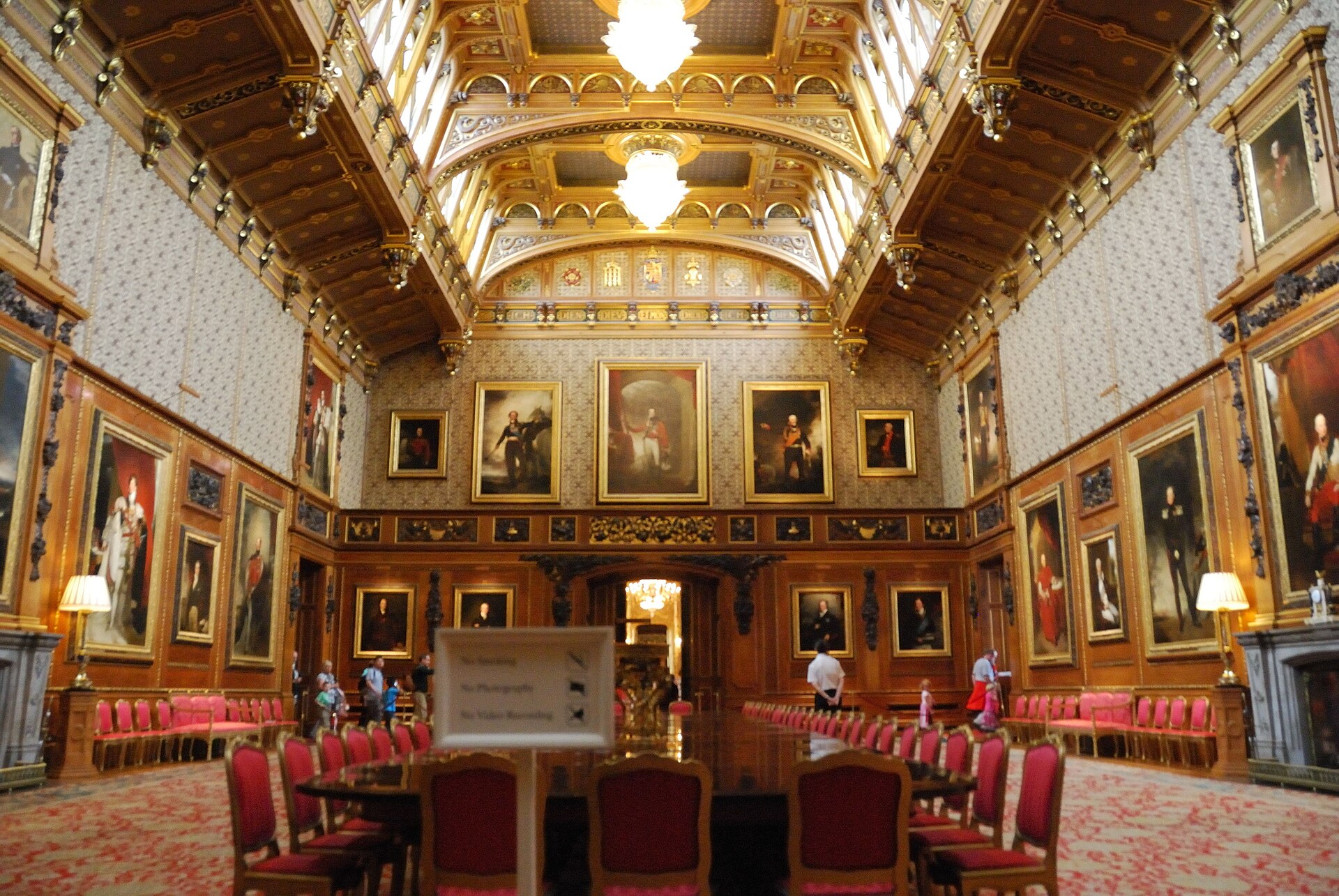
Nearby lies the Waterloo Chamber, a room created to commemorate the defeat of Napoleon and the great victory that ended his wars. Its walls are hung with a remarkable series of portraits of the sovereigns, statesmen, and commanders who together brought about that triumph, painted by one of the greatest portraitists of the age. The chamber is a monument in paint to one of the decisive moments of European history.
Together St George’s Hall and the Waterloo Chamber represent the ceremonial and commemorative grandeur of Windsor at its height. The one celebrates the ancient chivalry of the Garter, the other the great national victory over Napoleon, and both display the castle’s role as a stage for the projection of royal and national glory. They are among the most magnificent rooms in any royal residence in the world.
George IV and the Gothic Transformation
The Windsor we see today owes much of its dramatic appearance to a great remodelling carried out in the early nineteenth century under King George IV. A monarch of extravagant taste and a passion for building, George IV determined to transform the castle into a grander and more romantic vision of a medieval fortress, and he employed the architect Jeffry Wyatville to carry out the vast and costly work.
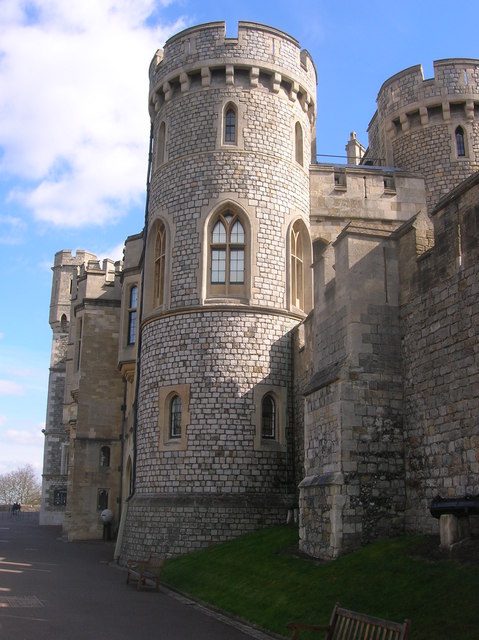
Wyatville’s transformation was sweeping. He raised the height of the Round Tower dramatically to give it the commanding silhouette it has today, remodelled the exterior of the castle to give it a more uniformly Gothic and picturesque appearance, and reshaped the royal apartments within. The result was to give Windsor the romantic, castellated grandeur that so impresses the visitor, a nineteenth-century vision of the medieval past.
George IV’s works also created some of the most magnificent of the castle’s interiors, including grand rooms in the Gothic and other styles, sumptuously decorated and furnished. His remodelling reflected the taste of the age for the medieval and the romantic, and it was carried out on a scale of expense that reflected the king’s notorious extravagance, but it gave Windsor much of its present character.
The transformation carried out under George IV was one of the most important in the castle’s long history, reshaping both its outward appearance and its interiors and creating the romantic image of Windsor that has endured ever since. It was the last great rebuilding of the castle before the modern age, and it completed the long process by which the Norman fortress became the grand royal palace we know today.
The cost of George IV’s works was staggering, funded by grants from Parliament that reflected the national importance attached to the castle, and the project was not fully completed until after the king’s death. Yet the expense bought a transformation so complete and so successful that the romantic outline it created has become the definitive image of Windsor, reproduced on countless views and recognised around the world. Few architectural gambles have so thoroughly succeeded in reshaping the public image of a great building.
The Great Fire of 1992
In the closing years of the twentieth century, Windsor Castle suffered a catastrophe that threatened one of the nation’s greatest treasures. In November 1992 a fire broke out in the Upper Ward, and before it could be brought under control it had raged through part of the castle, destroying or badly damaging several of the most important rooms, including St George’s Hall and the private chapel where the blaze had begun.
The fire was a national disaster, and images of the flames leaping from the castle and of firefighters battling to save it shocked the country. A great effort was made to rescue the works of art and treasures from the threatened rooms, and much was saved, but the damage to the fabric of the castle was severe. Some of its finest interiors lay gutted and ruined when the flames were finally extinguished.
The restoration that followed was one of the great conservation projects of the age. Over the following years the damaged rooms were painstakingly rebuilt, some restored to their previous appearance and others, such as a new roof for St George’s Hall, executed in a modern interpretation of the Gothic style. The work was completed within five years, and the restored castle was reopened, its wounds healed.
The fire and the restoration form a dramatic recent chapter in the long history of Windsor. That the castle could suffer such damage and yet be so completely restored is a testament to the skill of those who rebuilt it and to the importance placed upon this ancient royal home. The restored rooms stand today as a symbol both of the vulnerability of such treasures and of the determination to preserve them for the future.
The Long Walk and Windsor Great Park
Stretching away from the castle to the south is one of the most magnificent approaches to any royal residence, the great avenue known as the Long Walk. Running for some three miles in a dead straight line from the castle gates through the surrounding parkland, lined with trees, it provides a spectacular processional route and one of the most famous views of the castle, seen rising at the end of the avenue.
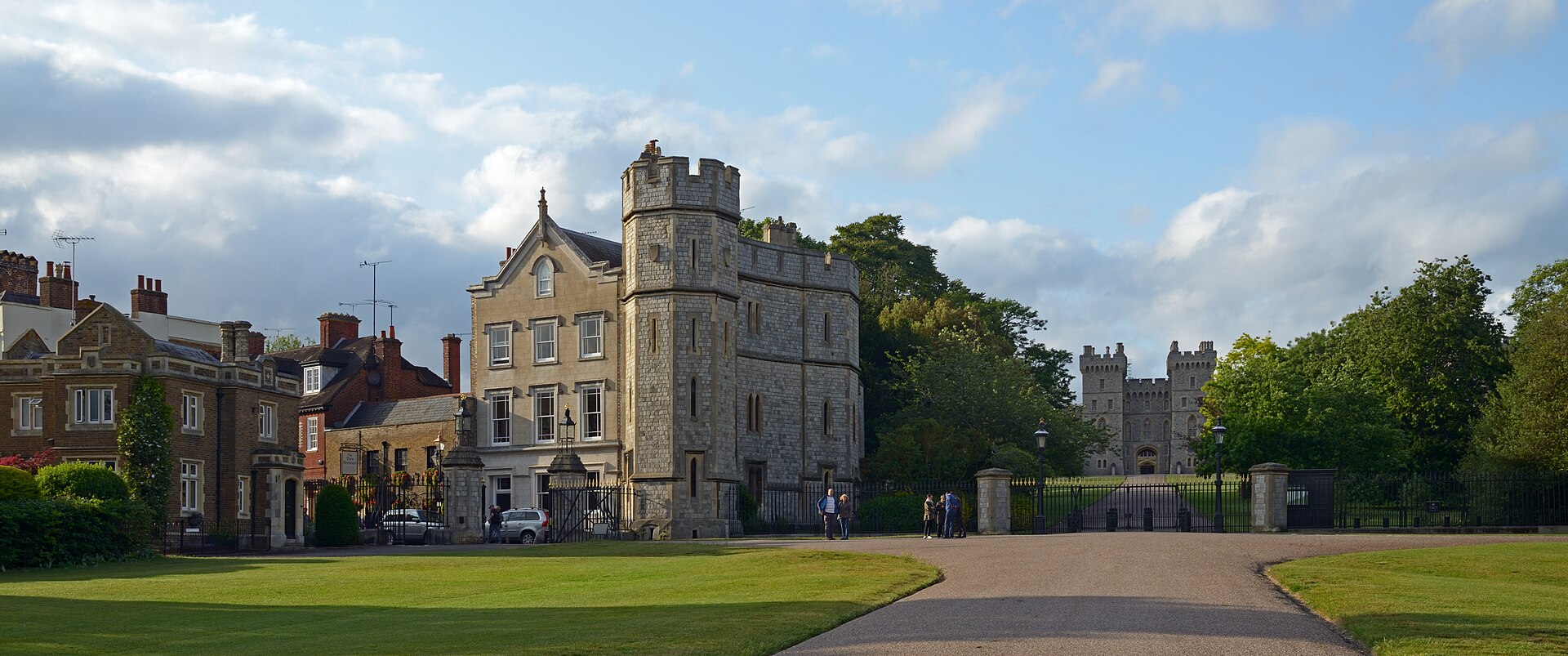
At the far end of the Long Walk, on a hill overlooking the castle, stands a great equestrian statue of King George III, known as the Copper Horse, which forms the focal point of the whole grand vista. From this point the view back along the avenue to the castle is one of the finest in England, a composition of art and landscape on a truly royal scale, designed to impress and to delight.
The Long Walk is part of the vast Windsor Great Park, an enormous royal park that surrounds the castle and preserves something of the ancient hunting forest that first drew the Norman kings to the site. The park is a landscape of woodland, lawns, lakes, and gardens, a green setting of great beauty that complements the grandeur of the castle and provides a haven for wildlife and a place of recreation.
Together the castle, the Long Walk, and the Great Park form a single magnificent ensemble, uniting architecture and landscape on a grand scale. The park recalls the origins of Windsor as a stronghold set in royal hunting country, while the Long Walk provides a ceremonial approach worthy of the great castle it serves. They are an essential part of the setting and the experience of Windsor, and among its greatest glories.
A Living Royal Home
Throughout its long history, and uniquely among the great castles of the world, Windsor has never ceased to be a genuine royal home, lived in and loved by the monarchs of England and Britain across the centuries. In the modern age it became especially associated with Queen Elizabeth II, who spent much of her time there and regarded it as a beloved retreat, particularly at weekends and during great family occasions.
The castle has been the setting for many of the most important events in the recent life of the monarchy, from state visits and ceremonies to royal weddings and, in time, funerals. It served as a refuge and a home for the sovereign, a place away from the formality of the capital, and its continued use as a residence kept it a living institution rather than a mere historic monument.
The presence of the sovereign at Windsor is marked, as it has been for centuries, by the flying of the royal standard from the Round Tower, a tradition that links the modern monarchy directly to its distant past. When the standard flies, it signals that the ancient castle is fulfilling its oldest and most essential function, as the home of the reigning monarch, just as it has done since the age of the Normans.
That Windsor remains a working royal residence, after nearly a thousand years, is perhaps its most remarkable feature of all. It is not a castle preserved as a relic but one still performing its original role, a home of kings and queens in an unbroken line stretching back to the conquest. This living continuity gives Windsor a resonance that no ruined or abandoned castle can possess, and lies at the heart of its unique significance.
Windsor Today
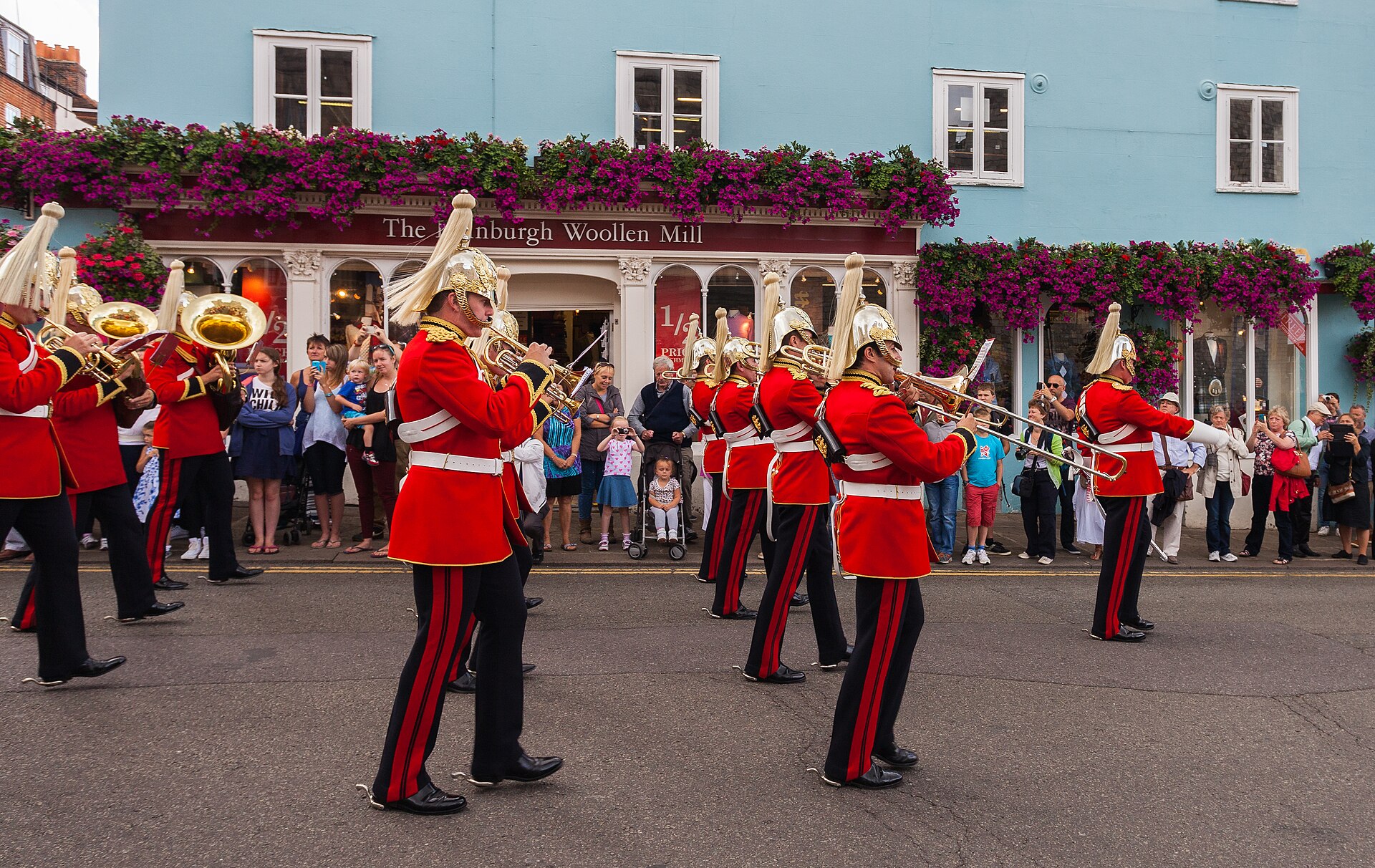
Today Windsor Castle is open to the public for much of the year, when the sovereign is not in residence, and it is one of the most visited historic sites in Britain. Visitors can explore the State Apartments with their treasures, admire the magnificence of St George’s Hall and the Waterloo Chamber, visit the great chapel of St George, and enjoy the spectacle of the Changing of the Guard, all within the walls of the ancient fortress.
View the exact location on Google Maps
Among the special treasures shown to visitors is a remarkable dolls’ house created for a queen in the early twentieth century, an exquisite miniature palace complete in every detail, which is one of the most popular attractions of the castle. The State Apartments, the chapel, and the other historic rooms offer an unrivalled journey through the art, history, and ceremony of the British monarchy.
The castle sits in the town of Windsor, a short journey west of London and easily reached, making it one of the most accessible of all the great royal residences. Its dramatic silhouette, rising above the Thames and dominating the surrounding country, is one of the iconic images of England, and the experience of exploring its wards, chapels, and apartments is among the great pleasures available to any visitor to the region.
Nearly a thousand years after William the Conqueror first raised a fortress on the bluff above the Thames, Windsor Castle endures as the oldest and largest inhabited castle in the world and one of the principal homes of the British monarchy. A fortress, a palace, a chapel of chivalry, and a royal mausoleum all in one, it stands as perhaps the supreme symbol of the continuity of the English crown, a living link between the age of the Normans and the present day.
The castle also plays a central role in the ceremonial calendar of the nation, hosting state visits by foreign heads of state, who are received with full royal pomp amid its historic surroundings. On such occasions the ancient traditions of hospitality and display that have always been associated with Windsor are brought vividly to life, and the castle fulfils its immemorial function as a stage on which the monarchy presents itself to the world, uniting the deep past with the living present.
Palaces Nearby
Not far from Windsor, along the same stretch of the Thames west of London, stands another of England’s great royal residences:
You May Like
The Palaces of Orchha: A Bundela Capital on the Betwa


2 thoughts on “Windsor Castle: A Thousand Years of Kings in the World’s Oldest Inhabited Castle”