Rising sheer from the plains of central India, a long flat-topped hill of yellow sandstone lifts the great fort of Gwalior high above the city that shares its name. Along the eastern edge of that rock, where the cliff falls away to the streets below, runs one of the most beautiful palace facades in India, a long wall of tawny stone studded with turquoise, green, and yellow tilework in the shapes of ducks, elephants, peacocks, and banana trees. This is the Man Mandir, the painted palace of the Tomar kings, and it is the jewel of one of the subcontinent’s mightiest forts.
Gwalior Fort has been called the pearl among the fortresses of India, and its history reaches back more than a thousand years. Kings of many dynasties held this rock, carved its cliffs with colossal images, raised temples on its heights, and fought over its command of the roads of central India. But of all the buildings on the plateau, it is the Man Mandir Palace, built at the turn of the sixteenth century, that draws the eye and stays in the memory.
The palace is the work of Raja Man Singh Tomar, a cultivated warrior-king who ruled Gwalior in its last great age of independence, and it fuses strength and delight in a way that is wholly its own. From the plain below, its round bastions and tiled walls look like a fortress dressed for a festival, and within, its courtyards, carved screens, and cool underground chambers speak of a court that loved music, beauty, and comfort as much as war.
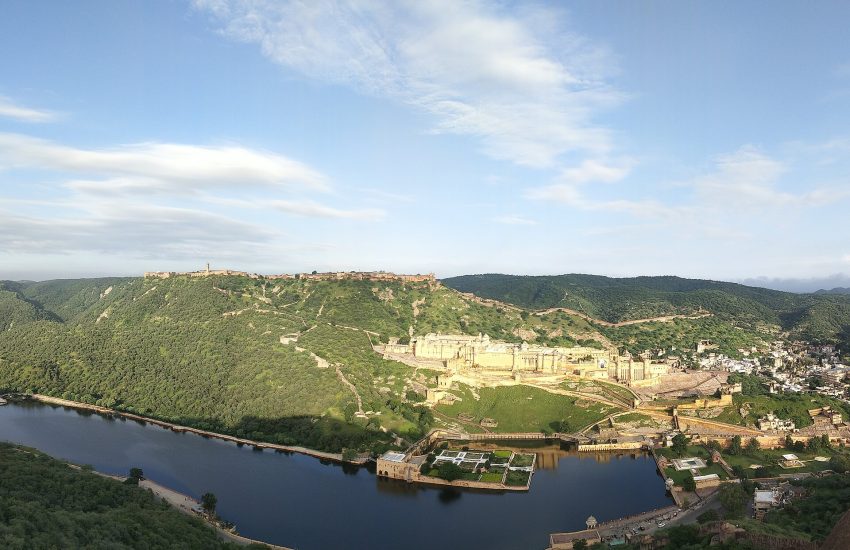
This is the second of a group of great Indian palaces in this series, following the hilltop fort of Amer, and it belongs to a different world, older, more central, and touched by its own distinctive history of Rajput kingship, Mughal conquest, and musical genius. To walk the Man Mandir is to enter the story of Gwalior, a rock that has watched over central India for a thousand years, and of the king who crowned it with a palace of colored stone.
In This Article
- The Painted Palace on the Rock
- Gwalior Fort: The Pearl of Fortresses
- The Tomar Dynasty
- Raja Man Singh Tomar
- The Hathi Pol and the Ascent
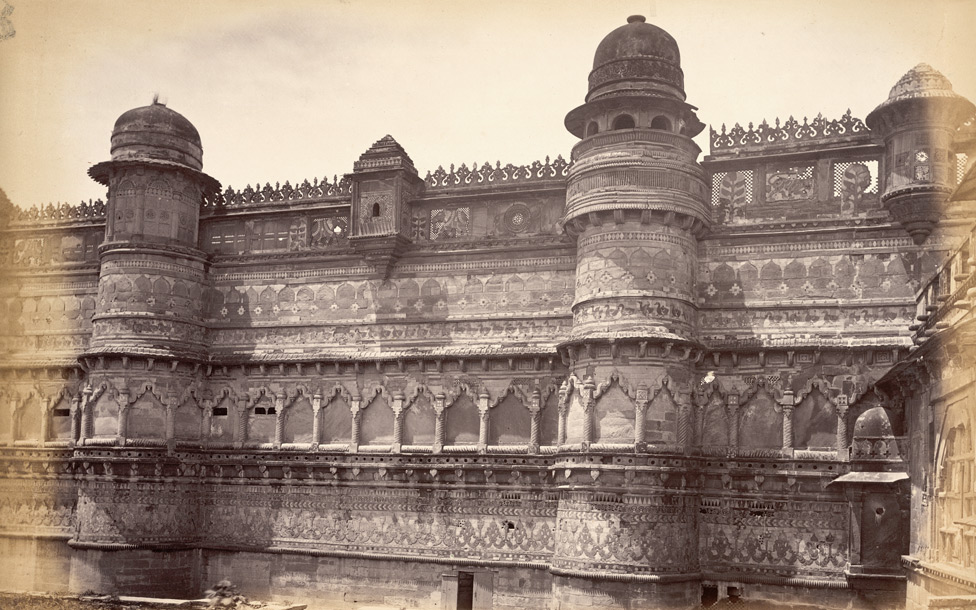
- The Facade of Tiles and Beasts
- Courtyards and Carved Screens
- The Cradle of Indian Classical Music
- The Chambers Below the Rock
- Conquest and the Mughal Centuries
- The Gujari Mahal and a Royal Romance
- The Fort and Its Monuments Today
- The Man Mandir: A Painted Crown Enduring
The Painted Palace on the Rock
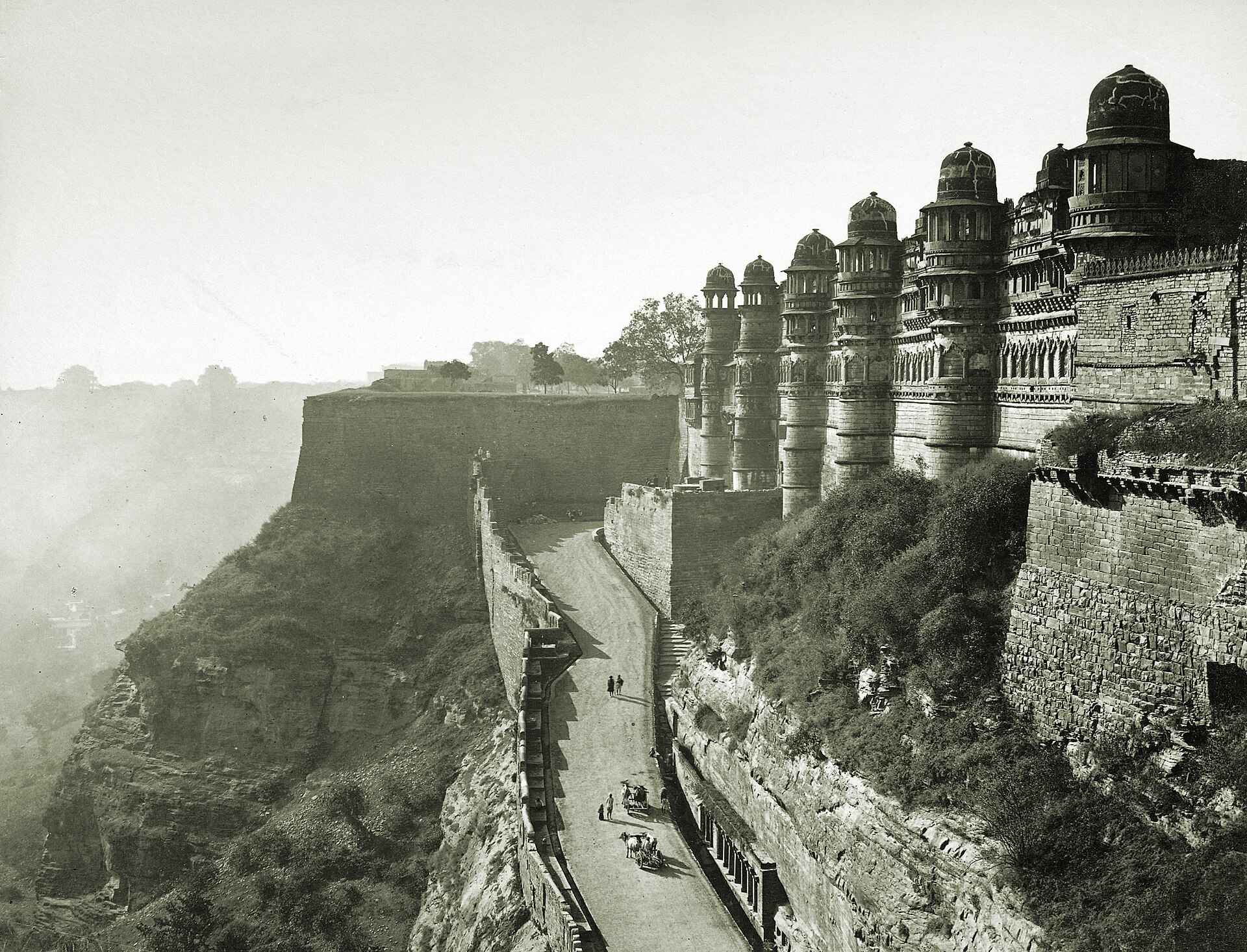
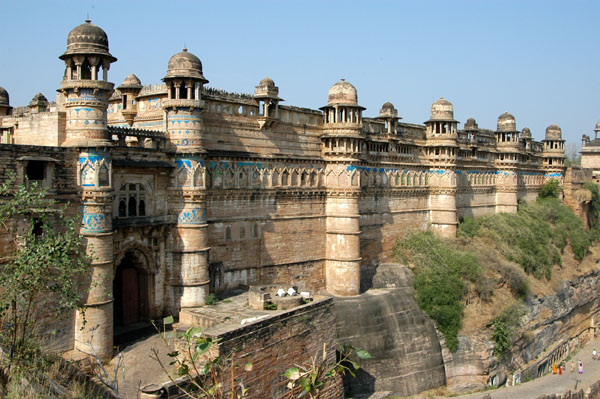
The Man Mandir is a palace built along the edge of the Gwalior plateau, its long eastern facade rising directly above the cliff so that from below it seems to grow out of the rock itself. Built of the local yellow sandstone and faced with glazed tiles, it presents to the world a face at once massive and playful, its round towers crowned with domed cupolas and its walls alive with color.
Behind that famous facade the palace is arranged around courtyards, with ranges of rooms rising through several storeys and descending, remarkably, into levels cut below the surface of the rock. This vertical arrangement, climbing above and burrowing beneath, gave the palace both airy upper apartments and cool subterranean chambers suited to the fierce heat of central India.
The building belongs to a distinctive tradition of Rajput palace architecture, related to but distinct from the forts of Rajasthan, and it is often regarded as one of the finest surviving examples of its kind from the period before the Mughal conquest. Its blend of strength, ornament, and ingenious planning marks it as a masterpiece of its age.
The tilework is the palace’s signature. Bands of glazed tiles in turquoise, green, and yellow run across the facade and around the courtyards, worked into figures of animals and plants, ducks in rows, elephants, tigers, peacocks, and stylized trees, that give the stern fortress an unexpected charm and gaiety found in few other buildings.
Together the massive towers, the colored tiles, and the hidden lower chambers make the Man Mandir a building of contrasts, a fortress that delights, a stronghold that sings. It is this combination, more than sheer size or age, that has made the palace the enduring symbol of Gwalior and one of the treasures of central Indian architecture.
Set beside Amer, the palace that opened this Indian group, the Man Mandir makes an illuminating contrast. Amer is all sprawling ascent and Mughal-influenced refinement, a palace of the age of the great emperors; the Man Mandir is older, more compact, and more purely of the Rajput world before the Mughal conquest, its ornament drawn from a Hindu vocabulary of beasts and tiles rather than Persian flowers. Seen together, the two palaces frame the moment when the courtly world of northern India was about to be transformed.
Gwalior Fort: The Pearl of Fortresses
The Man Mandir crowns the northeastern corner of Gwalior Fort, a vast walled enclosure that occupies the whole top of a long, steep-sided hill of sandstone. The fort is a world in itself, containing not only palaces but temples, tanks, and monuments spread across its plateau, the accumulated work of many centuries and many rulers.
The strategic value of the rock is obvious. Rising abruptly from the surrounding plain, with cliffs on every side, Gwalior commanded the routes of central India and could be held against great armies. Whoever controlled it held a key to the region, and its possession was contested by dynasty after dynasty through the long history of the subcontinent.
The fort’s origins are lost in legend, traditionally tied to a hermit who cured an early king and gave the place its name, but its recorded history stretches back well over a thousand years. Over that vast span it passed through the hands of many powers, each leaving its mark on the rock in stone and carving.
Among the fort’s wonders are the colossal images of Jain teachers carved into its cliffs, some of great size, and its ancient temples, including one of the oldest of its kind in India. These monuments make Gwalior a treasury of Indian art across many periods, of which the Man Mandir is the crowning secular achievement.
To reach the palace, the visitor climbs the long ascent to the plateau, passing through gates and along walls, with the plain falling away below. This approach, like the approach to any great hill fort, builds anticipation, and the first sight of the tiled facade of the Man Mandir at the top rewards the climb.
The best-known saying about Gwalior calls it the pearl among the fortresses of Hind, a phrase attributed to a Mughal emperor, and standing on the plateau it is easy to see why. The sheer sides of the rock, the length of the walls, and the wealth of monuments crowded onto the summit combine to make an impression that few forts in India can equal, and the Man Mandir is the setting in which that pearl is mounted.
The Tomar Dynasty
The palace was built by the Tomar dynasty, a Rajput line that ruled Gwalior in the fifteenth and early sixteenth centuries, during one of the fort’s greatest periods. Under the Tomars, Gwalior became a center of art, learning, and music, an independent kingdom that flourished in the interval between the great Muslim sultanates of the north.
The Tomar rulers were patrons as well as warriors, and their court cultivated the arts with notable devotion. It was under their rule that Gwalior gained its lasting fame as a home of Indian classical music, a reputation that would outlast the dynasty itself and shape the cultural history of the subcontinent.
Their kingdom occupied a strategic and contested position in central India, and the Tomars held their independence through a combination of arms and diplomacy amid powerful neighbors. The strength of Gwalior Fort was central to their survival, and the palaces they raised upon it proclaimed both their power and their refinement.
The dynasty’s greatest ruler, and the builder of the Man Mandir, was Raja Man Singh Tomar, under whom the kingdom reached its cultural height. His long reign around the turn of the sixteenth century was the golden age of Tomar Gwalior, and the palace he built stands as its most enduring monument.
The Tomar age did not long survive him. Within a generation of Man Singh’s death, Gwalior fell to the expanding Muslim powers of the north and was eventually drawn into the Mughal empire, ending the independent kingdom. But the palace endured, carrying the memory of the dynasty’s brilliant, doomed flowering into the centuries that followed.
There is a poignancy in the Tomar story that colors the whole palace. Here was a small independent kingdom that used a few decades of security to cultivate music, art, and architecture at the highest level, only to be swallowed by larger powers within a generation of its golden age. The Man Mandir is the monument of that brief brilliance, a reminder of how much a modest state could achieve when its rulers turned their wealth toward beauty.
Raja Man Singh Tomar
Raja Man Singh Tomar, who ruled Gwalior around the turn of the sixteenth century, was the builder of the Man Mandir and the greatest figure of his dynasty. A warrior, a patron, and a man of cultivated tastes, he gave his name to the palace, which is called the Man Mandir, the palace of Man, in his honor.
Man Singh was above all a patron of music, and his court became the most celebrated center of Indian classical music of its day. He is credited with fostering the development of dhrupad, a grave and majestic form of classical singing, and the musical tradition he nurtured at Gwalior influenced the whole later course of North Indian music.
His personal life is woven into the legend of the fort. He is remembered for his love of a spirited woman named Mrignayani, a commoner by tradition, for whom he is said to have built a separate palace and brought water by a special channel, a romance that has become part of the lore of Gwalior.
As a ruler he defended his kingdom’s independence with vigor, holding Gwalior against the pressure of the northern sultanates through much of his reign. The strength of his fort and the skill of his diplomacy preserved the Tomar kingdom through dangerous years, allowing its culture to flourish under his protection.
In the Man Mandir, Man Singh left a monument that captures his character, strong, beautiful, and touched with a love of art and pleasure. The palace of colored stone, home to music and romance as well as to power, is his truest memorial, and to walk its courts is to move through the world of one of central India’s most attractive kings.
The Hathi Pol and the Ascent
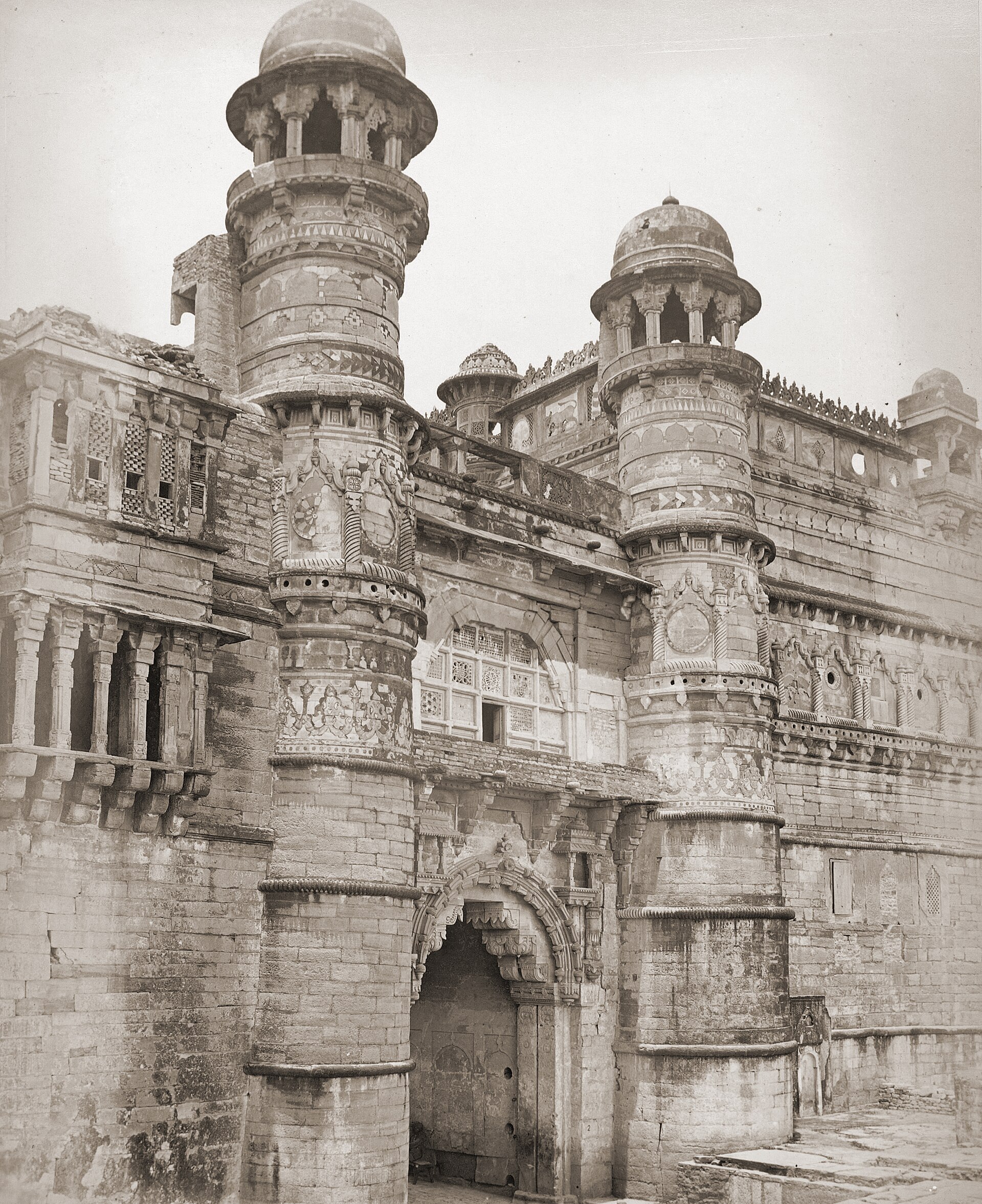
The Man Mandir is entered through the Hathi Pol, the Elephant Gate, the last of a series of gateways that guard the approach to the palace along the ascending path to the fort. Named, like many such gates in India, for the elephants that once passed through it, it forms the ceremonial threshold to the royal apartments.
The ascent to the fort passes through several successive gates, each a point of defense and a stage in the climb, so that reaching the palace meant winning through a graded sequence of barriers. This layered defense was the strength of the hill fort, forcing any attacker to fight for every gate on the long way up.
The Hathi Pol itself stands close against the Man Mandir, so that palace and gate form a single composition, the tiled facade rising directly above the entrance. Passing beneath it, the visitor moves from the world of the fort’s defenses into the world of the court, from rampart to palace in a single step.
The gates and walls of the approach were not merely functional but were built and decorated with care, for they were the face the fort showed to arriving visitors and the first test of its strength to any enemy. Their scale and solidity announced the power of the kingdom that held the rock.
To arrive at the Man Mandir through the Hathi Pol, having climbed the long ascent past gate after gate, is to experience the palace as it was meant to be reached, as the crowning reward at the summit of a fortified rock, the painted jewel set at the top of one of the strongest fortresses in India.
The Facade of Tiles and Beasts
The eastern facade of the Man Mandir, rising above the cliff, is the palace’s most famous feature and one of the glories of Indian architecture. Long and tall, punctuated by round towers capped with domed cupolas, it is decorated with bands of glazed tiles in brilliant turquoise, green, and yellow that stand out vividly against the tawny stone.
The tiles are worked into a menagerie of figures. Rows of ducks march across the wall, elephants and tigers appear, peacocks spread their tails, and stylized banana trees rise in green and yellow. This procession of animals and plants gives the fortress a festive, almost joyful character quite unlike the grim faces of most strongholds.
The technique of glazed tilework, applied here to the exterior of a Hindu Rajput palace, is a distinctive feature of Gwalior, and the survival of so much of it, still bright after five centuries, is remarkable. It represents a high point of a decorative craft that gave the palace its enduring popular name, the painted palace.
The round towers with their domed cupolas add to the effect, their curves softening the mass of the wall and their crowns giving the skyline a lively rhythm. Seen from the plain below, especially in the golden light of morning or evening, the whole facade glows, a wall of colored stone hung above the city.
This facade is the image of Gwalior that visitors carry away, and it deserves its fame. In it the two natures of the palace, fortress and pleasure-house, are perfectly fused, the strength of the towers and the gaiety of the tiles held together in a single unforgettable composition rising sheer from the living rock.
Spend a little time simply picking out the creatures in the tiles, the rows of ducks, the elephants, the peacocks, the banana trees, and the wall stops being a single dazzling surface and becomes a kind of storybook in stone. There is something disarming about a fortress that chose to decorate its mightiest face with a parade of friendly animals, and it tells you a good deal about the confidence and the good humor of the king who built it.
Courtyards and Carved Screens
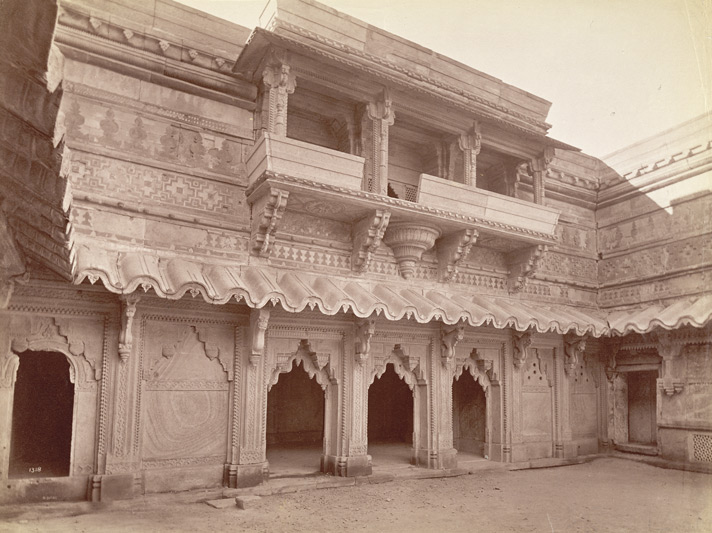
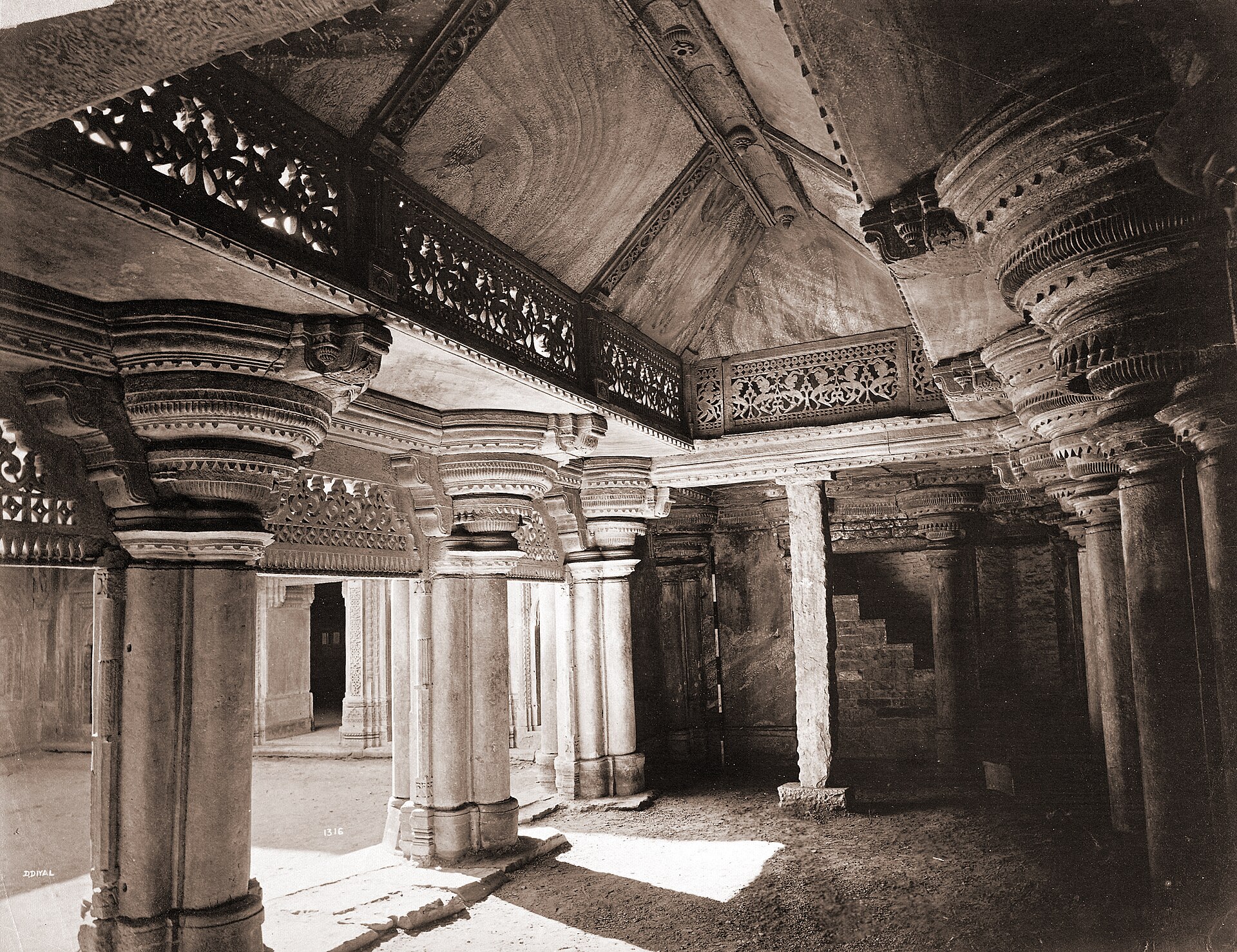
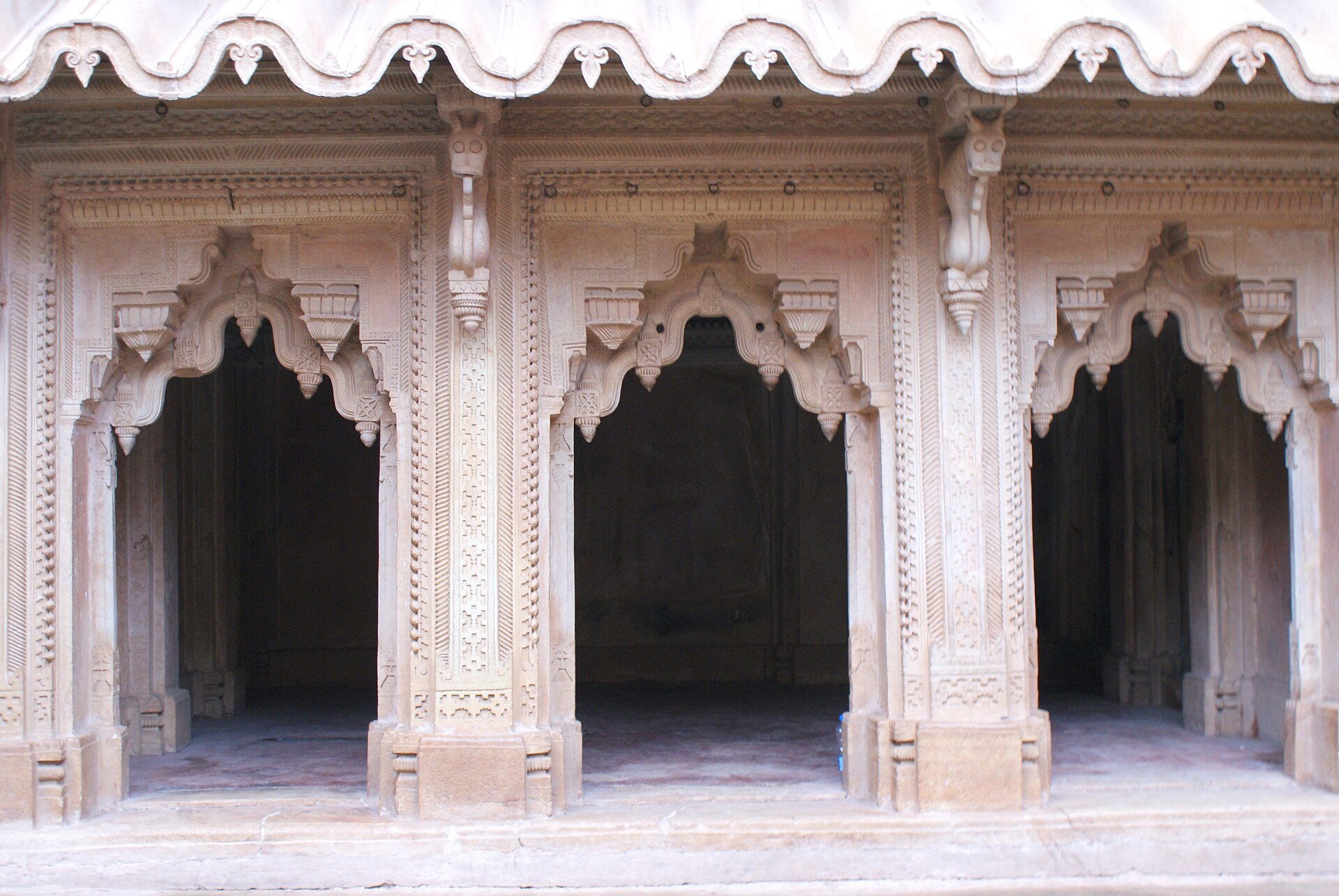
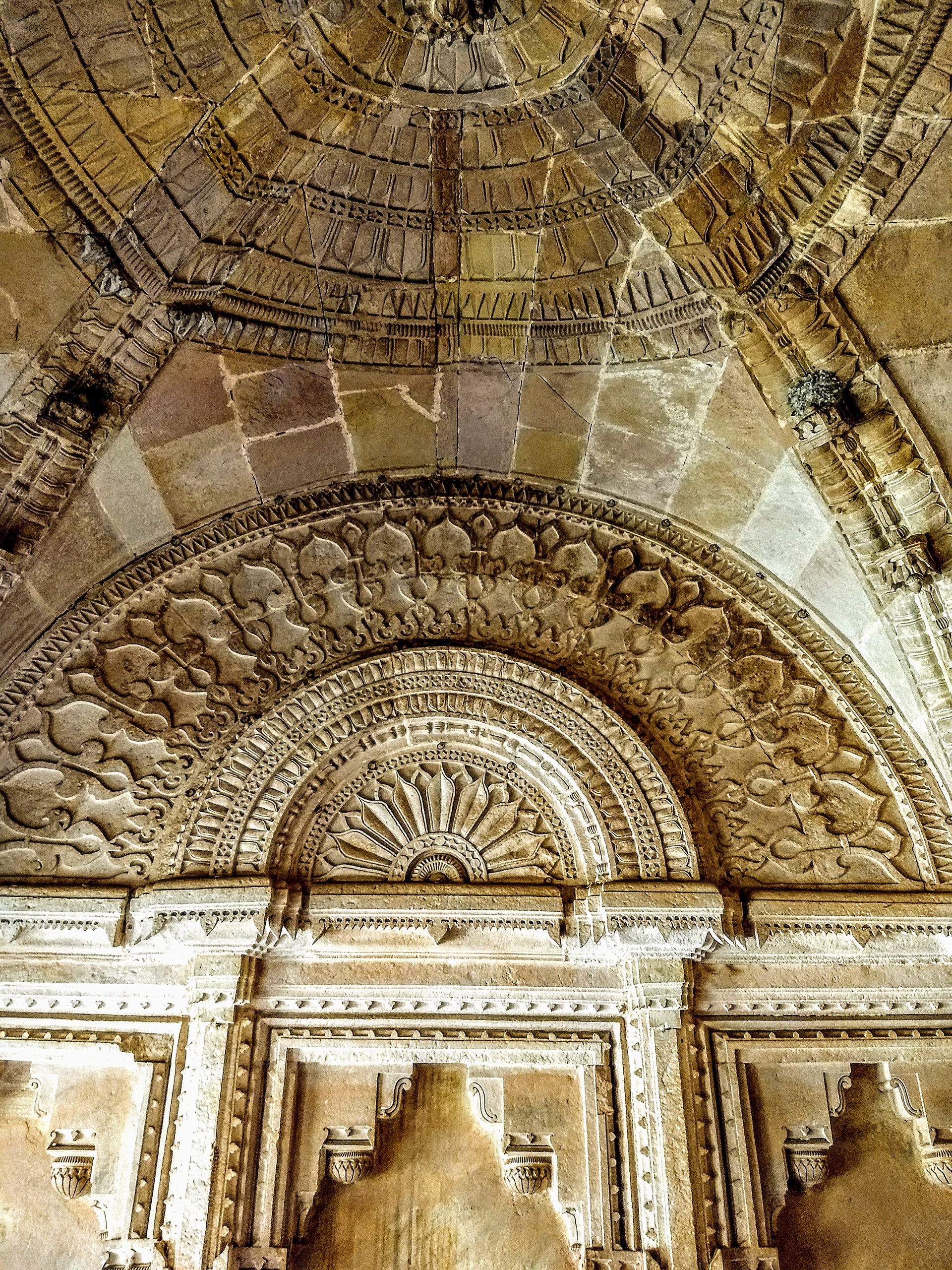
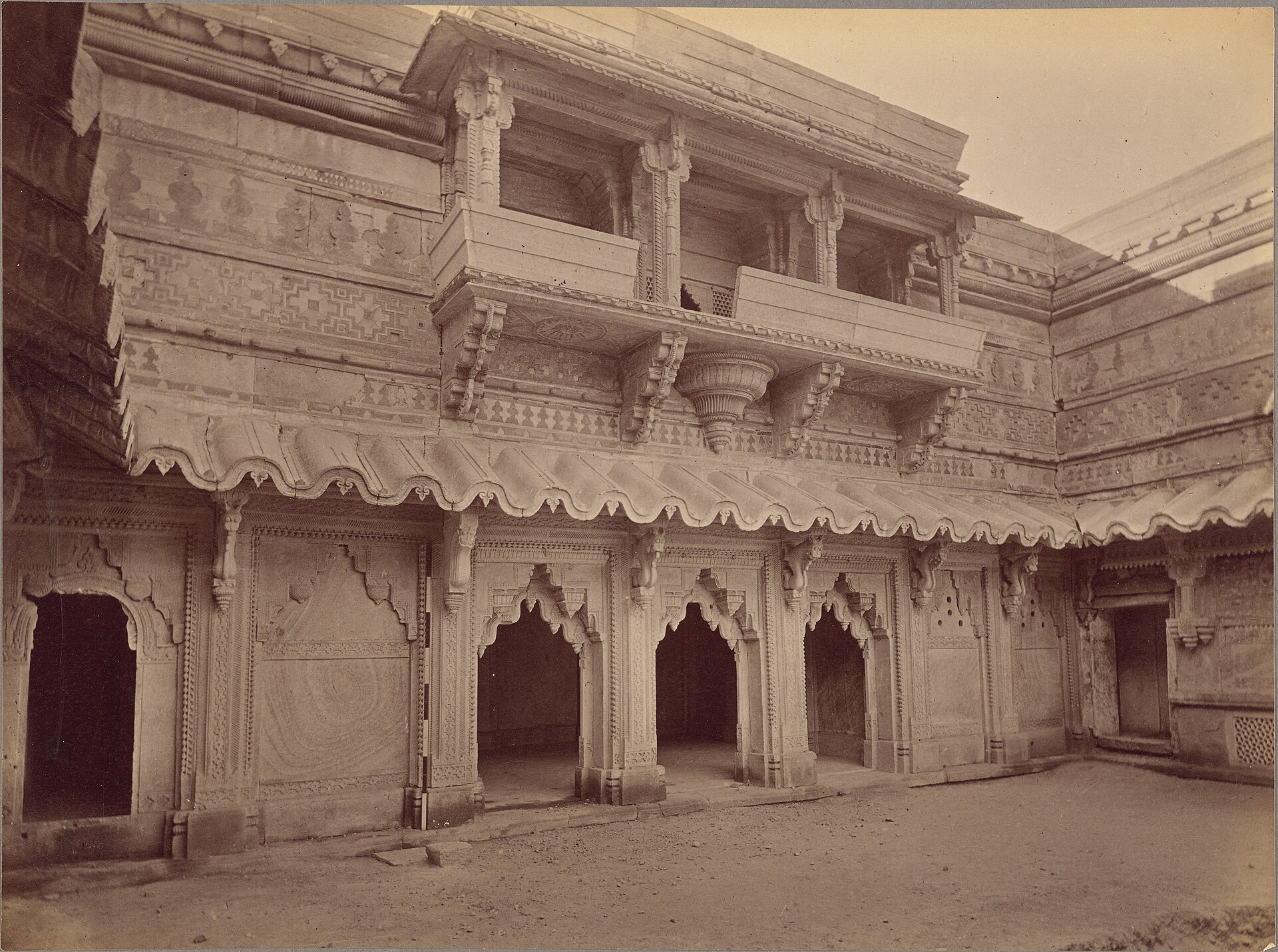
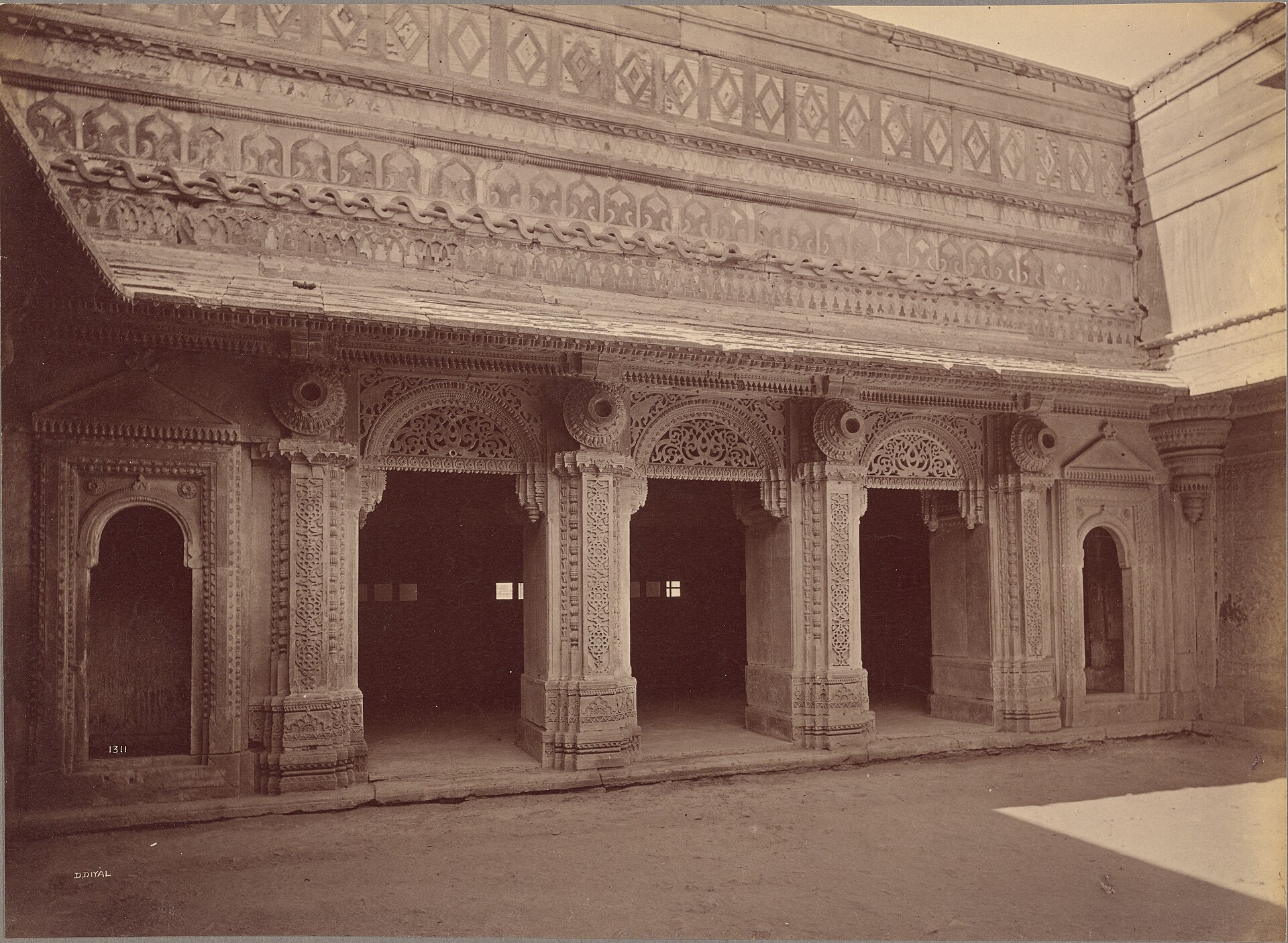
Within the walls the Man Mandir is arranged around courtyards, onto which open ranges of rooms rising through several levels. These interior spaces, quieter than the famous facade, reveal the domestic and ceremonial life of the palace, their walls and screens worked with fine carving in the sandstone of the fort.
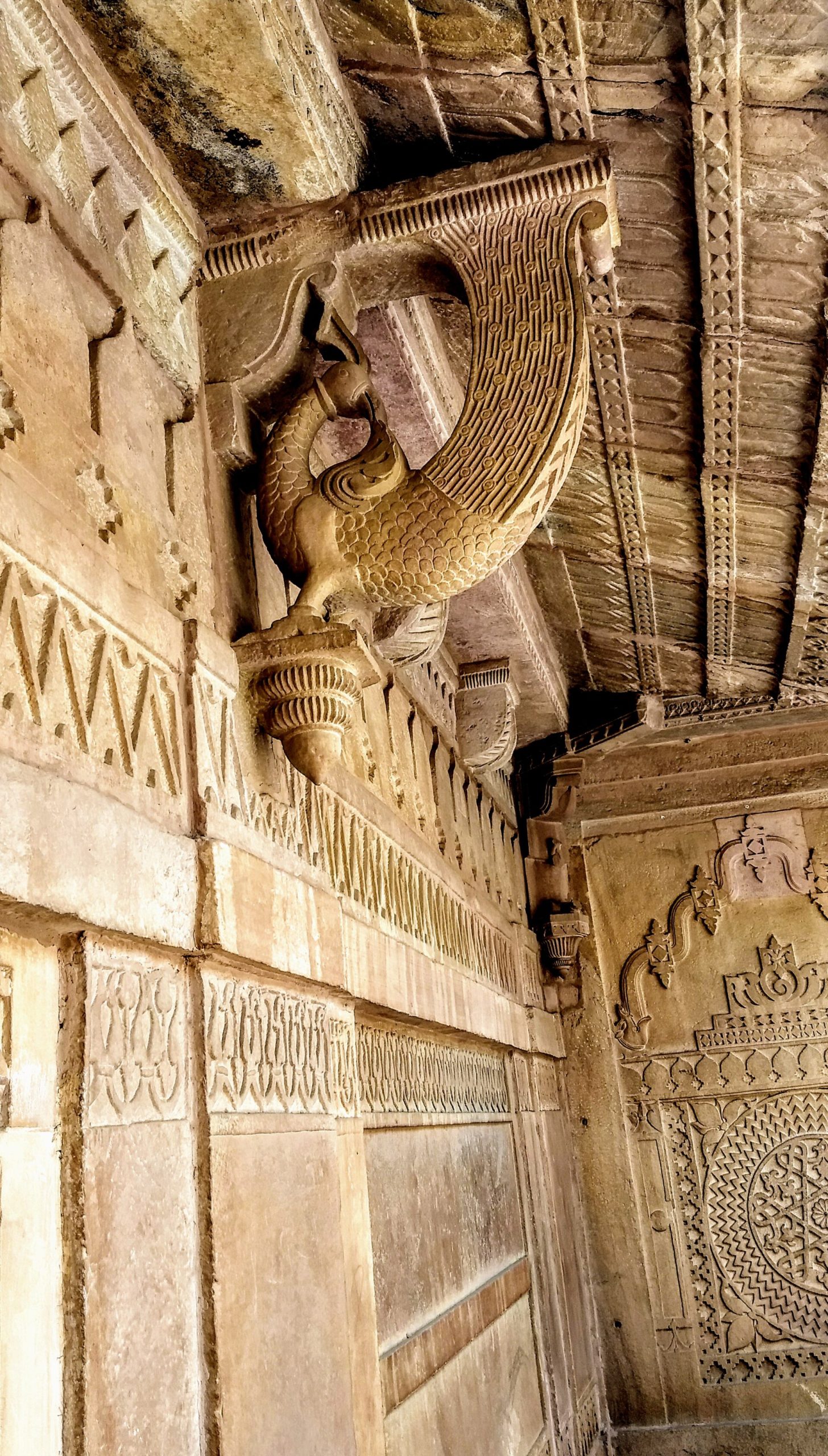
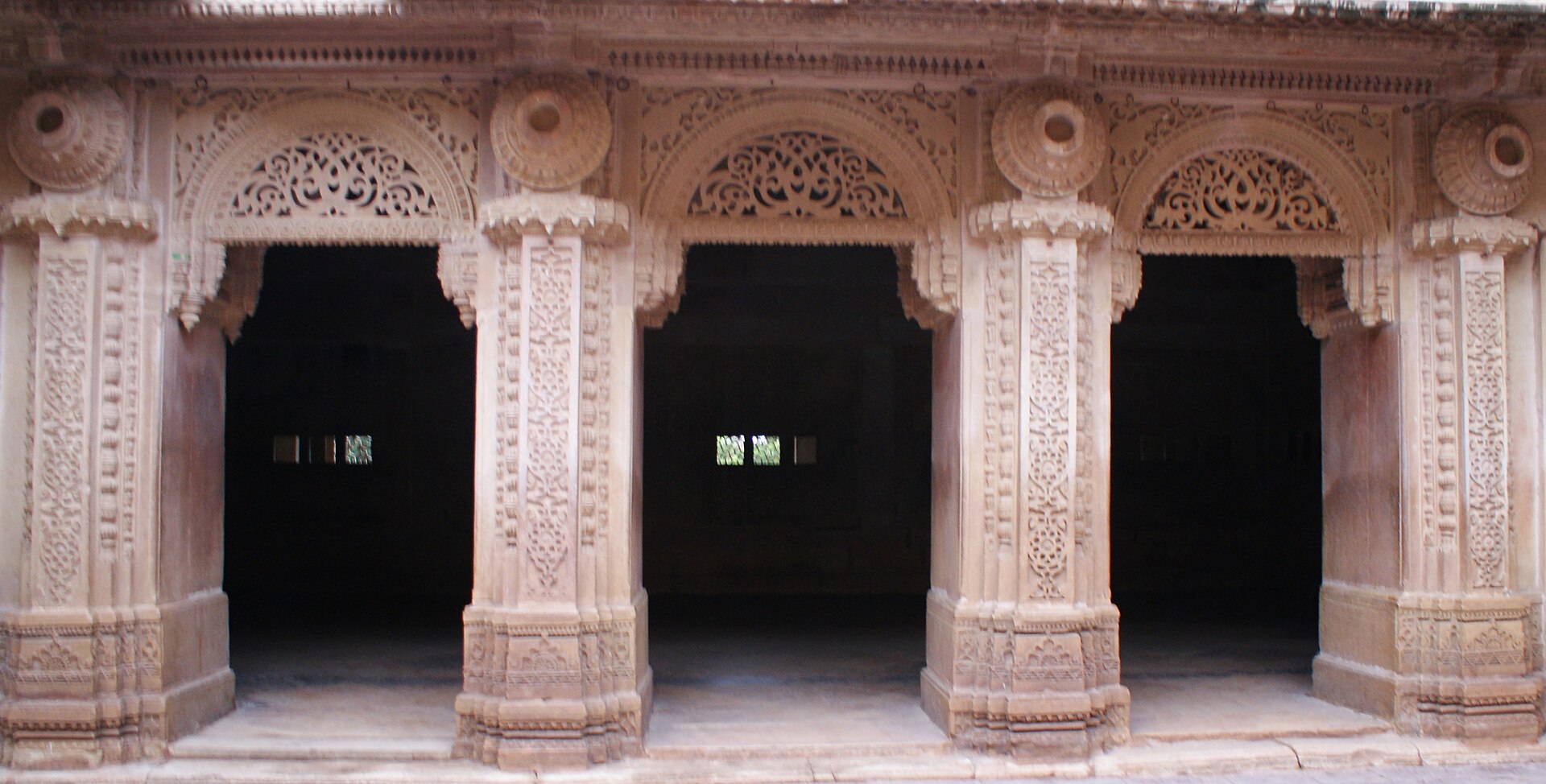
The courtyards are surrounded by carved pillars, brackets, and screens of stone, pierced into delicate lattices that admitted light and air while giving privacy. This carved stonework, in the Hindu tradition of the region, covers the palace with ornament, from geometric patterns to figures of animals and mythological beings.
Among the recurring motifs are peacock brackets, carved supports in the form of the bird whose image runs throughout the palace, and other creatures rendered with liveliness and skill. The carving continues indoors the theme of the tiled facade, so that the animal decoration unifies the whole building inside and out.
The upper courtyards caught the breeze and the light, serving as the airy apartments of the court, while screened galleries allowed the women of the palace to observe the life below unseen, as in the palaces of Rajasthan. The architecture everywhere reflects the intricate social arrangements of a royal household.
Moving through these courts, away from the drama of the facade, the visitor senses the palace as a place of daily life, of music and conversation and the passing of the seasons. The carved screens and pillars, softer and more intimate than the great tiled wall, preserve the human scale of the Tomar court.
The carving repays the kind of slow, close looking that most visitors, dazzled by the facade, forget to give it. In the brackets and screens of the inner courts, the same animals that parade across the tiled wall reappear in stone, rendered by sculptors with real wit and life, so that the decorative theme of the palace runs unbroken from the blazing exterior into its quietest inner rooms.
The Cradle of Indian Classical Music
Gwalior’s greatest gift to India may be neither its fort nor its palace but its music. Under the Tomar kings, and above all under Raja Man Singh, the court became the leading center of North Indian classical music, and the traditions nurtured here shaped the art for centuries to come, giving Gwalior a place in cultural history matched by few other cities.
Man Singh is closely associated with the development of dhrupad, the oldest and most austere form of North Indian classical singing, grave, majestic, and deeply spiritual. The music cultivated at his court set standards and forms that later musicians across the subcontinent would inherit, making Gwalior a fountainhead of the classical tradition.
The city’s musical fame did not end with the Tomars. Gwalior is remembered as the home of Tansen, the legendary singer of the following century who became one of the celebrated musicians of the Mughal court, and whose name still stands as the very symbol of musical genius in India. His tomb in the city remains a place of pilgrimage for musicians.
From Gwalior descends one of the great lineages of Indian classical music, a tradition of teaching and performance carried down through generations of masters. The Gwalior style is honored as one of the foundational schools of North Indian vocal music, and its influence reaches into nearly every branch of the living tradition.
To know this history is to hear the Man Mandir differently. The palace was not only a fortress and a residence but a place where some of the greatest music of India was made and heard, and its courtyards, now silent, once rang with the grave beauty of dhrupad sung for a king who loved it above all things.
It is worth pausing on how unusual this is. Many palaces are remembered for their architecture or their battles; comparatively few are remembered as the birthplace of an entire artistic tradition still living centuries later. When a musician in India today sings in the grave old style of dhrupad, or claims descent from the Gwalior school, there is a direct thread running back to the courts that once filled these very rooms with sound, which gives the silent palace a strange resonance.
The Chambers Below the Rock
One of the marvels of the Man Mandir lies not above but below, in the levels cut into the rock beneath the palace. Here, in cool subterranean chambers reached by stairs descending from the courtyards, the court could retreat from the ferocious heat of the central Indian summer into rooms that stayed cool through the hottest months.
These lower storeys were ingeniously ventilated and lit, with shafts and openings bringing air and a little light into the depths. The engineering that made habitable rooms below the surface of the rock reflects the same practical intelligence seen in the water-cooled halls of Amer, the builders bending the difficult climate to the comfort of the court.
The underground chambers carry a darker history as well. In later centuries, after Gwalior passed to the Mughals, the fort served as a state prison, and its lower rooms held royal captives. The palace built for music and pleasure became, in Mughal hands, a place of confinement for princes who had fallen from favor.
The most famous of these prisoners met a grim end here. It was at Gwalior that the Mughal emperor Aurangzeb had his brother, a rival for the throne, imprisoned and eventually put to death, one of several royal victims whom the fort’s dungeons claimed during the ruthless struggles for the imperial succession.
This layering of uses, pleasure palace above, prison and refuge below, gives the Man Mandir a haunting depth. To descend from the sunlit tiled courts into the cool, dim chambers cut in the rock is to move from one chapter of the fort’s history to another, from the music of the Tomars to the harsh politics of the Mughal age.
To descend into the lower chambers on a blazing central Indian afternoon is to understand at once why they were built. The temperature drops with each step, the noise of the world fades, and you enter a cool, dim, and curiously peaceful realm hidden inside the rock. That the same rooms later served as prison cells, holding doomed princes far from the light, only deepens the strange and layered atmosphere of the place.
Conquest and the Mughal Centuries
The independence of Tomar Gwalior did not survive long after Man Singh. In the decades following his reign the fort fell to the Muslim powers of the north, and in time it was absorbed into the expanding Mughal empire, which prized the great rock as a fortress and a prison and held it as a key stronghold of central India.
Under the Mughals the Man Mandir and the other palaces of the fort were maintained and used, but the character of the place changed. The seat of an independent Rajput kingdom became an outpost of a vast empire, its dungeons filled with political prisoners and its walls garrisoned by imperial troops.
The fort passed through further hands in the turbulent centuries that followed, held at various times by different powers as the Mughal empire declined and new forces rose in central India. Its strategic value ensured that it was always worth fighting for, and its command of the region kept it at the center of events.
In the colonial era Gwalior became associated with the Scindia dynasty, the Maratha rulers who made the city their capital and whose state endured into the twentieth century. The fort remained a symbol of the region’s power, though the Scindias built their own grand palace in the city below rather than on the ancient rock.
Through all these changes the Man Mandir survived, its tiled facade and carved courts enduring as the fort passed from Tomar to Mughal to Maratha and beyond. The palace outlasted every dynasty that held it, a constant presence on the rock while empires rose and fell around it, until it came at last to the modern age as a monument.
The Gujari Mahal and a Royal Romance
Below the main palace, within the fort, stands another building tied to the legend of Raja Man Singh, the Gujari Mahal, said to have been built for his beloved queen Mrignayani. According to the cherished local story, she was a woman of the Gujar community whom the king met and married, and for whom he raised a palace of her own.
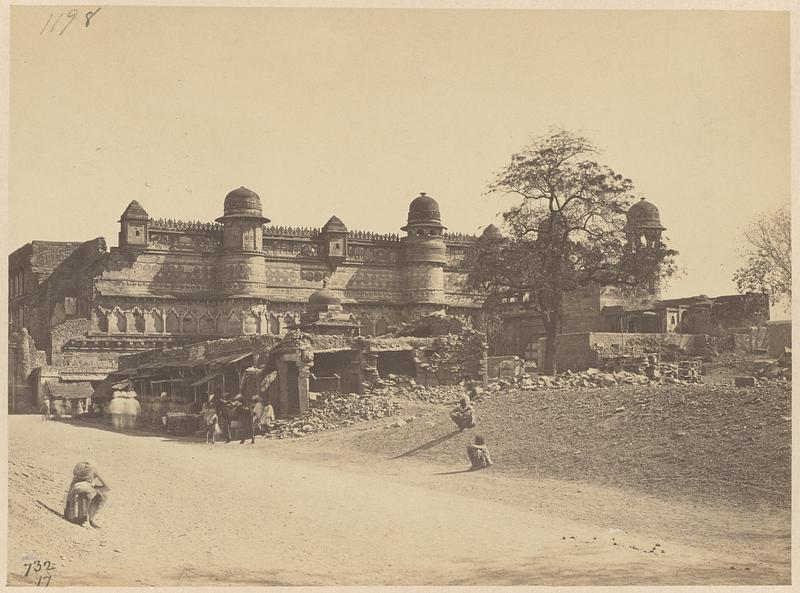
The tale holds that Mrignayani, a spirited woman of common birth, agreed to marry the king on certain conditions, among them that he build her a separate palace and bring to it the water of her home village by a special aqueduct. The Gujari Mahal is remembered as the fulfillment of that promise, a monument to a king’s devotion.
Whatever the exact truth behind the legend, the Gujari Mahal is a fine building in its own right, and today it houses an archaeological museum displaying sculpture and antiquities gathered from Gwalior and the surrounding region. Its collections make it a treasury of the art of central India across many centuries.
The romance of Man Singh and Mrignayani has become one of the most beloved stories of Gwalior, retold in song and legend, and it adds a human warmth to the history of the fort. It presents the great king not only as a warrior and patron but as a lover, and it ties the stones of the Gujari Mahal to a tale of the heart.
Together the Man Mandir above and the Gujari Mahal below frame the reign of Man Singh as an age of both grandeur and romance. The two palaces, one crowning the cliff and one nestled below, stand as monuments to a ruler remembered as much for his loves and his music as for his arms, the most human of Gwalior’s many kings.
The Fort and Its Monuments Today
Today Gwalior Fort and its palaces are protected monuments and among the leading attractions of central India, drawing visitors to the great rock and its treasures. The Man Mandir stands at the heart of the visit, its tiled facade and carved courts the highlight of a plateau crowded with wonders.
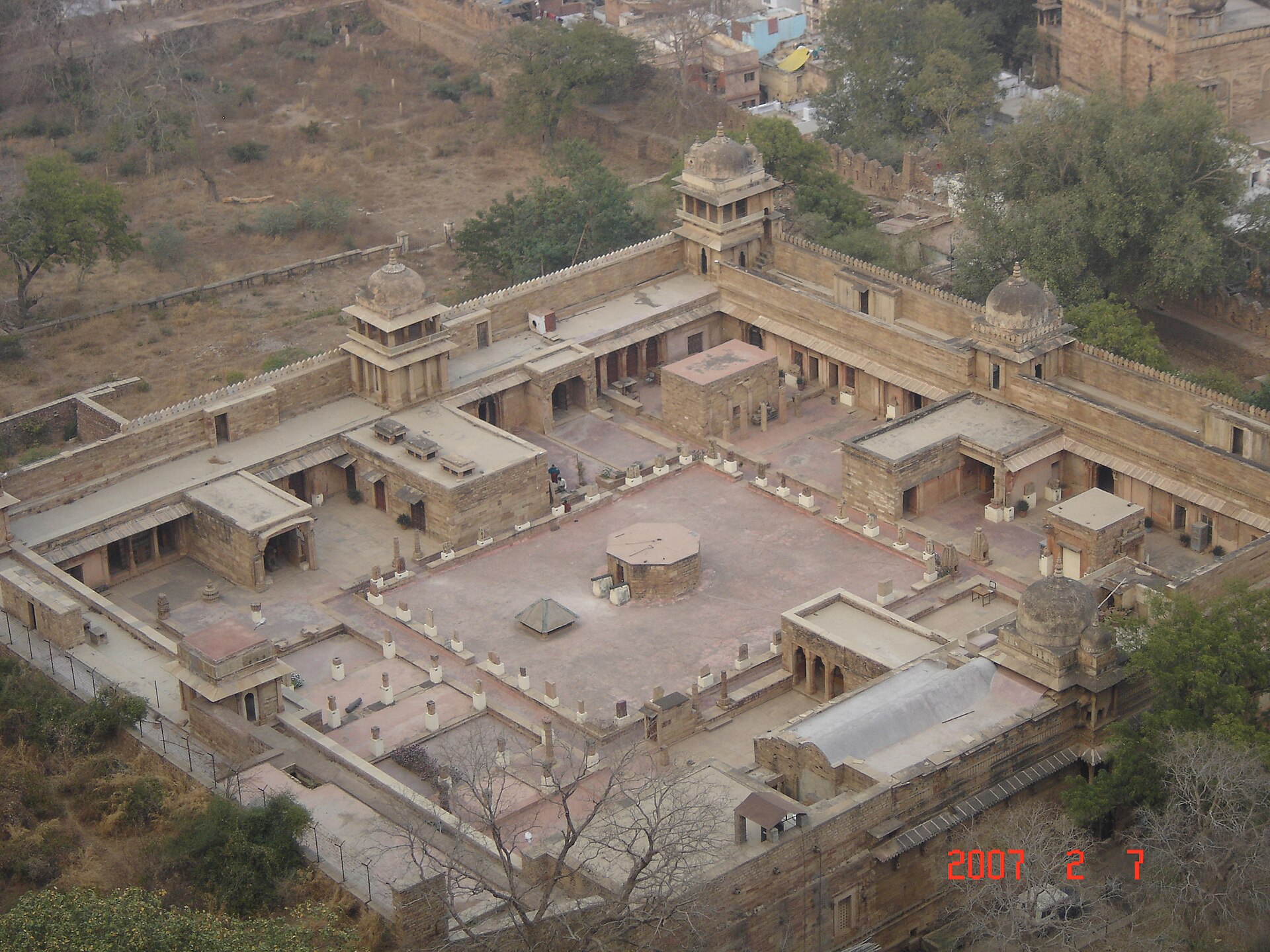
The fort offers far more than the one palace. Its ancient temples, its colossal Jain cliff carvings, its tanks and gates, and its other palaces make the plateau a vast open-air museum of Indian art and history, rewarding a full day of exploration. The Man Mandir is the jewel, but it is set among many other riches.
An evening sound-and-light show at the Man Mandir recounts the history of the fort against the backdrop of its illuminated walls, bringing the long story of Gwalior to life for modern audiences. The palace, floodlit above the city, is one of the defining sights of central India after dark.
The archaeological museum in the Gujari Mahal preserves and displays the sculptural heritage of the region, allowing visitors to trace the artistic traditions that shaped the fort’s monuments. Conservation of the palaces, temples, and carvings is an ongoing responsibility, given the age and richness of the site.
To visit Gwalior is to encounter one of the truly great fortresses of India, a rock that has been continuously significant for more than a thousand years. The Man Mandir, painted and carved on its cliff edge, is the crown of that long history, and it remains the enduring symbol of the city and its remarkable past.
The Man Mandir: A Painted Crown Enduring
The Man Mandir has outlasted every power that ruled from it, and it survives today in remarkable condition, its tiled facade still bright, its carved courts still standing, more than five centuries after Raja Man Singh raised it on the rock. Few palaces of its age have come down to the present so complete or so vivid.
View the exact location on Google Maps
Its significance has been increasingly recognized, and Gwalior Fort with its palaces and monuments stands among the great heritage sites of India, celebrated for its architecture, its history, and its central place in the story of Indian music. The fort is a source of deep local pride and a magnet for travelers and scholars alike.
For the people of Gwalior the fort and its painted palace are the emblem of their city, appearing on countless images and anchoring the identity of a place that has been important since ancient times. The rock and its crown of colored stone are inseparable from the idea of Gwalior itself.
The palace also keeps alive the memory of a particular kind of kingship, cultivated, artistic, and humane, embodied in Man Singh Tomar, the warrior who loved music and beauty. In an age of endless war, he built a fortress that sings, and that achievement still speaks to visitors who climb the rock to see it.
To stand before the Man Mandir today, watching the evening light warm its tiles above the city, is to feel the long reach of Gwalior’s history. Dynasties have come and gone, empires have risen and fallen, but the painted palace endures on its cliff, a crown of colored stone set on one of the great rocks of India.
If you can, time your visit to stay into the evening for the sound-and-light show, when the tiled facade is thrown into relief by the floodlights and the long history of the rock is told beneath the stars. Gwalior lies somewhat off the busiest tourist circuits of India, which means the fort is often less crowded than the great sites of Rajasthan, and the painted palace can be enjoyed at something closer to the pace it deserves.
Palaces Nearby
The Man Mandir belongs with the other great royal residences of India gathered here. Compare it with the hilltop fort of the Kachhwaha Rajputs near Jaipur, and watch this space for another Indian palace to join them soon.
You May Like
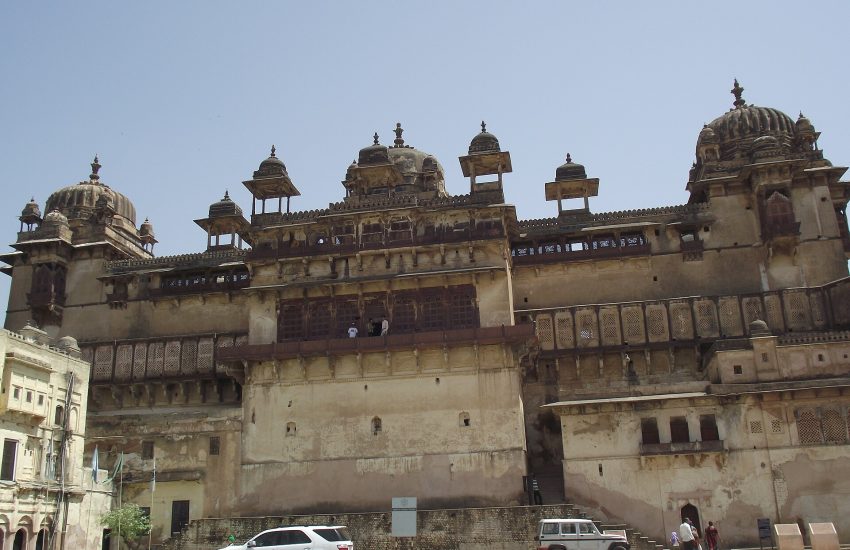
The Palaces of Orchha: A Bundela Capital on the Betwa