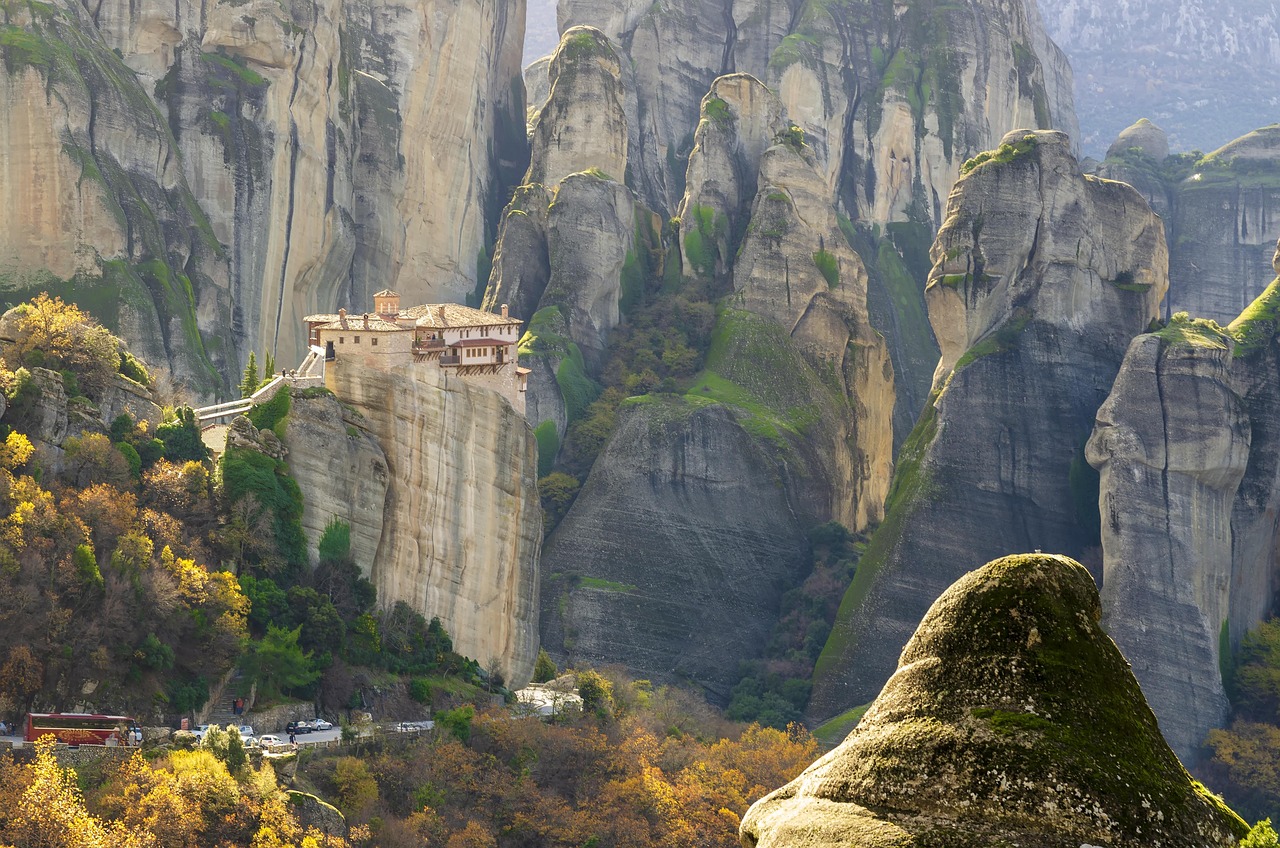
Meteora, in central Greece, is one of the most awe-inspiring sights in the Orthodox Christian world: ancient monasteries perched atop sheer rock pillars, seemingly suspended between earth and sky. A UNESCO World Heritage Site, it rewards both pilgrims and travellers. This guide gathers everything you need to plan a visit.
In This Series
Our Meteora collection covers the monasteries and the practical side of a trip:
More Meteora Guides
- The Monasteries of Meteora
- Exploring Meteora: Trails, Views & Visiting Tips
- Where to Stay at Meteora: Budget Guide to Kalambaka & Kastraki
Who Comes Here
Orthodox pilgrims, lovers of Byzantine art, hikers, and photographers all come to Meteora, drawn by its rare combination of deep spirituality and astonishing natural beauty.
When to Visit
Spring and autumn offer mild weather and lovely light. Summer is busier and hotter, while winter can bring snow that dusts the rocks beautifully but may affect access. Each monastery keeps its own opening days.
Getting There
The gateway town of Kalambaka is reachable by train from Athens and Thessaloniki, with the village of Kastraki even closer to the rocks. From either, the monasteries are a short drive or a scenic walk uphill.
Explore More Sacred Sites
- The Church of the Holy Sepulchre, Jerusalem
- The Church of the Nativity, Bethlehem
- The Vatican & St. Peter’s Basilica
- The Basilica of the Annunciation, Nazareth
- Santiago de Compostela
- Lourdes
- Fatima
- Mont-Saint-Michel
- Ephesus & the House of the Virgin Mary
- Assisi
- Guadalupe
- Saint Catherine’s Monastery & Mount Sinai
- All Christian Holy Sites – Complete Guide
You May Like