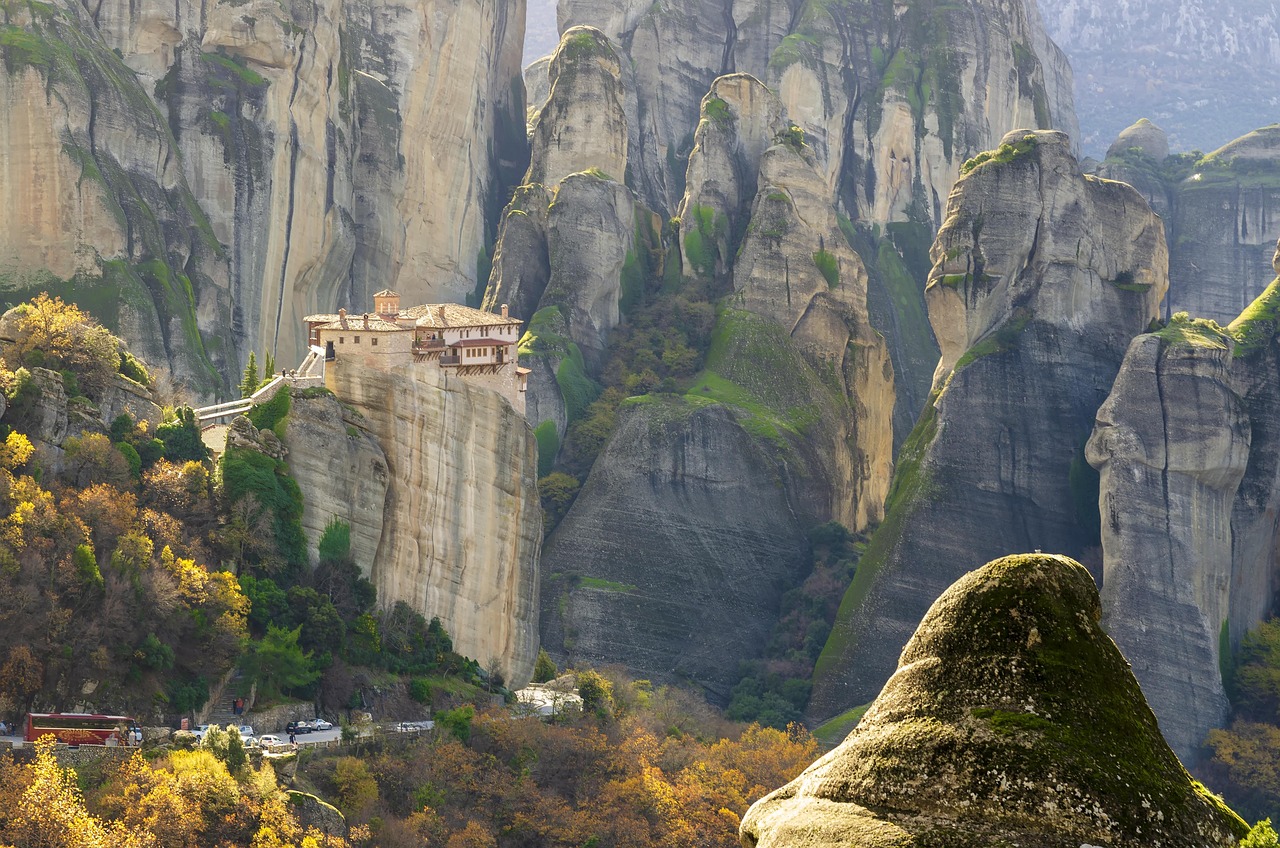
Rising from a plain in central Greece, the towering rock pillars of Meteora carry some of the most extraordinary monasteries in the Christian world. Perched on sheer summits hundreds of metres high, these Greek Orthodox communities have drawn monks, pilgrims, and travellers for centuries. The name Meteora itself suggests something “suspended in the air,” and few places live up to their name so completely.
Monasteries in the Sky
From around the fourteenth century, monks seeking solitude began to settle atop the great sandstone pillars, building monasteries that seemed to float above the world. At their height there were two dozen or more; today six remain active and open to visitors. Each holds chapels rich with Byzantine frescoes, small museums, and balconies with breathtaking views over the valley below.
A Place of Retreat and Prayer
For the monks and nuns who live here, Meteora is first of all a place of prayer and withdrawal from the world. In earlier centuries the only way up was by removable ladders or by nets and baskets hauled by rope, a striking image of the separation the monks sought. Today steps carved into the rock make access easier, but the sense of remoteness and devotion endures.
The Six Monasteries
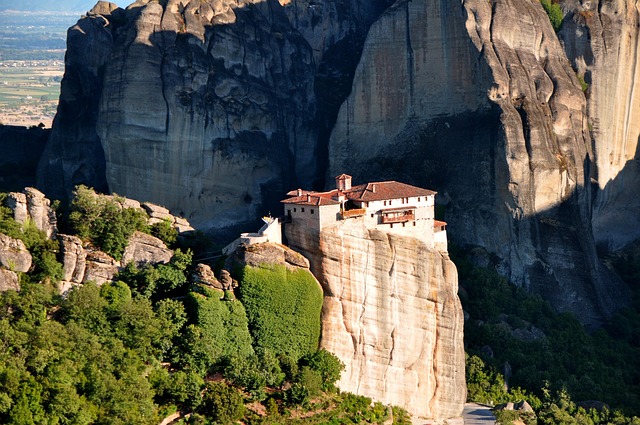
The active monasteries include the Great Meteoron, the largest and oldest, along with Varlaam, Roussanou, St. Nicholas Anapausas, St. Stephen, and Holy Trinity. Each has its own character and opening days, and several can be linked on foot or by a short drive along the winding road that connects them.
Visiting Respectfully
The monasteries are living religious communities, so modest dress is required: covered shoulders, and long skirts or trousers, with wraps often available at the entrance. Each charges a small entry fee and keeps its own visiting hours, with different monasteries closed on different days, so a little planning helps you see several in one trip.


One thought on “The Monasteries of Meteora”