
Tucked into the far eastern edge of India, where the subcontinent narrows into a thin corridor of land that leans toward Myanmar, lies an oval valley cupped by ring after ring of forested hills. This is Manipur, a word that means “the jewelled land,” and at its heart live the Meitei, a people whose story is one of the most distinctive in all of India. They are neither quite of the Gangetic plains nor of the wider hill world that surrounds them, but something of their own making: a valley civilization with its own script, its own ancient faith, a martial past, a dance so refined it became one of India’s classical forms, and a fierce sense of belonging to a place barely larger than a single district yet old beyond easy reckoning.
To understand the Meitei is to understand how a small people can hold an outsized culture. For most of recorded history they governed themselves as a kingdom, kept their own chronicles, fought off larger powers, and absorbed newcomers into a society organized around clan, ritual, and the rhythm of the agricultural year. Their neighbours to the west, the Assamese of the Brahmaputra valley, share with them the experience of the northeastern frontier, but the Meitei path runs along its own current. This is the story of who they are, where they came from, and how they have held onto themselves at the eastern gate of India.
- A valley ringed by blue hills
- The Meitei tongue and its own script
- The seven clans and the coming of a kingdom
- Sanamahi and the old faith
- The turn to Vaishnavism and a new devotion
- The Ras Lila and the dance that floats
- The floating lake and the dancing deer
- The women who marched and the markets they rule
- War, merger, and a restless modern state
- Sport, cinema, and a people on the move
- The table of the valley
- A people at the eastern gate of India
A valley ringed by blue hills
The land that shaped the Meitei is unusually neat for a place that produced so much. The Imphal valley is a flat, fertile oval roughly fifty kilometres long, sitting some seven hundred and ninety metres above sea level, and entirely surrounded by hills that rise in folded blue ranges on every side. Rivers drain down from those hills into the valley floor, feeding paddy fields and, in the south, pooling into a great freshwater lake. The hills belong largely to other peoples, the many Naga and Kuki-Zo communities whose villages crown the ridgelines, while the valley floor has long been the heartland of the Meitei.
That geography is the master key to Meitei history. A compact, defensible bowl of good rice land, watered and warm, allowed a dense settled population to grow where the surrounding terrain was rugged and divided. It gave the valley people the numbers and the surplus to build a kingdom, a court, and a literate culture, while the encircling hills both protected them and set them apart. The valley is barely a tenth of the state’s territory yet holds the majority of its people, a fact that has shaped politics, identity, and no small amount of conflict down to the present day.

The climate is gentler than the baking plains to the west. Monsoon rains green the valley from summer, mists settle over the hills, and winters can turn genuinely cold. Out of this watered, enclosed world the Meitei built a way of life tuned to the paddy calendar, to the lake and its fish, and to festivals that mark the turning of the seasons. Everything distinctive about them, from their food to their faith to their dance, grows out of this single, well-defined valley.
The Meitei tongue and its own script
The Meitei speak Meiteilon, also called Manipuri, a language that belongs to the Tibeto-Burman family rather than to the Indo-Aryan languages of most of northern India. This places it in the same broad linguistic world as many of the languages of the eastern Himalaya and of Myanmar, and it marks the Meitei as a bridge people, sitting where South Asia meets Southeast Asia. It is a tonal language, compact and musical, and today it is spoken by the great majority of the valley’s people and serves as a link tongue for many of the surrounding hill communities as well.
What sets Meiteilon apart from almost every other language of the northeast is that it possesses its own ancient script, the Meitei Mayek. This is an alphabet of striking visual character, with letters traditionally named after parts of the human body, a system that long predates the arrival of the Bengali-derived script that later came to be used for writing the language. For centuries the kingdom kept royal chronicles, the famous court records, and religious and astrological texts in this script, giving the Meitei a documented history that few small peoples can match.
The story of the script is also a story of loss and revival. As outside influences grew, the original Mayek was largely displaced by the Bengali script, the same writing used by their neighbours the Bengalis of the plains. In the twentieth century, however, a powerful cultural movement set out to recover the old letters, and today Meitei Mayek has been restored to schools and public signage, a deliberate act of a people reclaiming its own way of writing itself into the world.
The seven clans and the coming of a kingdom
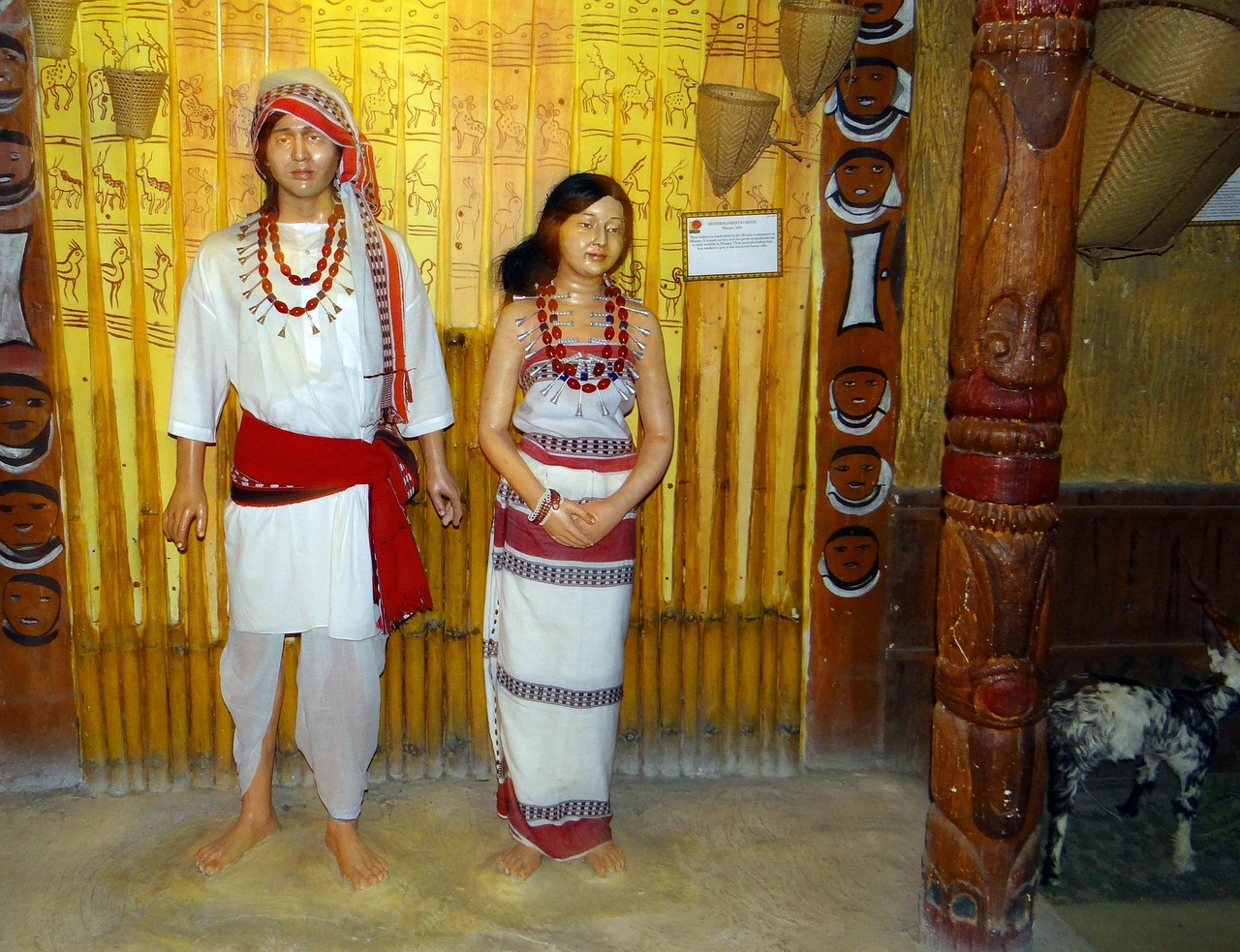
Meitei society remembers itself as the joining together of seven clans, the salai taret, each with its own origin, deity, and place in the social order. According to tradition the valley was once home to several principalities, and over time one of them, centred on the area that became Imphal, rose to bind the others into a single kingdom. The court chronicle, the Cheitharol Kumbaba, traces a line of kings stretching back to the early centuries of the first millennium, making it one of the longest continuous royal records in the region.
Whatever the precise dates, the pattern is clear enough. By the medieval period the valley was governed as a centralized kingdom with a king, a council, a hierarchy of officials, and a population organized for both farming and war. The state ran a remarkable institution known as the lallup, a system of compulsory labour and military service by which every able-bodied man owed the crown a portion of his time. This gave the kingdom an army and a workforce out of all proportion to its small size, and it allowed the Meitei to project power into the hills and beyond.
The kingdom was no quiet backwater. It fought, traded, and intermarried with the Shan and Burmese states to its east and with the Ahom kingdom of the Assamese to its west. Manipuri cavalry earned a fearsome reputation, and the valley is often credited as a cradle of the game played on horseback that the wider world would come to know as polo. For long stretches the Meitei kings were players in the wider politics of the eastern frontier, sometimes raiding, sometimes raided, but always a recognizable power in their jewelled valley.
Sanamahi and the old faith
Before any outside religion reached the valley, the Meitei followed their own ancestral faith, today usually called Sanamahism after Sanamahi, one of its central deities. It is a religion rooted in the household and the land, honouring a pantheon of gods and ancestral spirits, the forces of the hills and rivers, and the founding figures of the clans. The hearth itself is sacred, and the old rites bind family, clan, and place into a single web of obligation and reverence.
This indigenous faith carried the cosmology, the creation stories, and the ritual calendar of the valley for many centuries. Its priests and priestesses, the maibas and maibis, presided over healing, divination, and the great seasonal ceremonies, and they were the keepers of an oral and written lore that reached back into the kingdom’s earliest memory. The dances, chants, and festivals of this tradition are among the oldest layers of Meitei culture, and they never entirely vanished even when a new religion swept the court.
The persistence of the old faith is one of the quiet themes of Meitei history. Long after a newer devotion became dominant, families continued to keep a corner of the home for Sanamahi, and the seasonal rites of the indigenous calendar carried on alongside the imported festivals. In recent generations a strong revival has carried the old religion back into open practice, part of the same broad reclaiming of identity that restored the ancient script, so that the valley today holds both its ancestral gods and its later devotion in a layered, living whole.
The turn to Vaishnavism and a new devotion
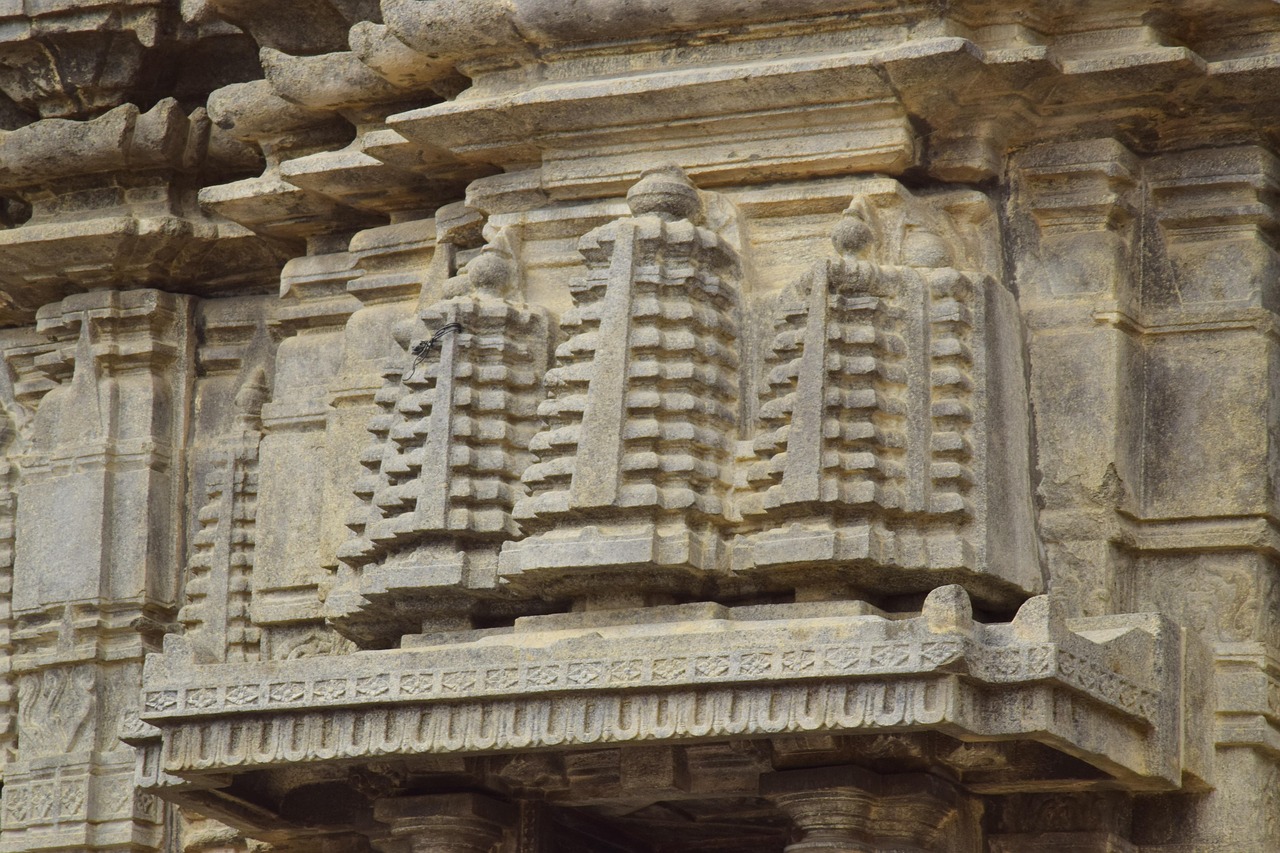
The great turning point in the religious life of the Meitei came in the early eighteenth century, when the kingdom embraced Vaishnavism, the devotional worship of the god Vishnu in his form as Krishna. Under an energetic king, the new faith was adopted as the religion of the court and then spread through the valley, brought by preachers from the plains and woven into the existing fabric of Meitei life. With it came the script, the texts, and the ritual idiom of the wider Hindu world, and the valley was drawn more closely into the religious civilization of the subcontinent.
The conversion was not a simple replacement of one faith by another. The new Vaishnava devotion settled over the older Sanamahi tradition, and the two have coexisted, sometimes uneasily and sometimes seamlessly, ever since. Krishna and Radha took their place in the spiritual imagination of the valley, but the ancestral deities were not forgotten, and many of the old rites continued under the surface of the new orthodoxy. The result is a religious culture of unusual depth, where an imported devotion and an indigenous faith share the same valley and often the same household.

What the turn to Vaishnavism gave the Meitei above all was an artistic vocabulary of extraordinary beauty. The stories of Krishna, his childhood, his flute, his dance with the cowherd girls, became the great subject of Meitei painting, music, and above all dance. The devotional life of the valley poured itself into performance, and out of that fusion of borrowed myth and native grace came the art form for which the Meitei are most celebrated across India and the world.
The Ras Lila and the dance that floats

Manipuri dance is one of the eight classical dance traditions recognized across India, and it is unlike any of the others. Where some classical styles are sharp, percussive, and grounded, the Manipuri style floats. Its movements are soft, rounded, and continuous, the body swaying in gentle curves, the feet gliding rather than stamping, the whole performance suffused with a devotional serenity. There is no harsh angularity, no aggressive rhythm beaten out by the heels, only a flowing, almost weightless grace meant to draw the watcher into worship.
The supreme expression of this art is the Ras Lila, the dance drama that retells the love of Radha and Krishna and the circle dance of Krishna with the cowherd maidens. Performed through the night in temple courtyards on festival occasions, the Ras Lila is a complete world of music, costume, and movement. The female dancers wear the unmistakable Manipuri costume, a stiff, richly embroidered cylindrical skirt called the kumin or potloi, shimmering with mirrorwork and crowned by a translucent veil, so that the dancer seems to drift across the floor like a lit lantern.

Behind the dancers stands the other great pillar of Manipuri performance, the drumming and singing of the pung cholom, in which male performers play a barrel drum slung across the body while leaping, spinning, and dancing in a display of athletic devotion. Together the gliding female grace and the vigorous male drumming make up a tradition that is at once gentle and powerful. Carried out of the valley by great teachers, Manipuri dance became known across India in the twentieth century and remains one of the most recognizable gifts the Meitei have given to the wider culture.
The floating lake and the dancing deer
To the south of the Imphal valley lies one of the natural wonders of the eastern Himalaya, Loktak, the largest freshwater lake in the northeast of India. What makes Loktak extraordinary is not merely its size but the floating masses of vegetation, soil, and organic matter that drift across its surface in great circular mats known as phumdis. These floating islands, some large enough to support huts and grazing, give the lake the look of a slowly shifting mosaic of green and water, a landscape found in few other places on earth.

On the largest of these floating mats sits Keibul Lamjao, often described as the only floating national park in the world. It exists for the sake of a single, almost mythical animal: the Sangai, the brow-antlered deer of Manipur, sometimes called the dancing deer for its delicate, springing gait across the spongy phumdi. Once thought extinct, the Sangai was rediscovered in the twentieth century and pulled back from the very edge of vanishing, and today it survives in this one floating habitat, a living emblem of the valley and a source of fierce local pride.
Loktak is also the working heart of the southern valley. Fishing communities live on and around it, building their lives upon the floating islands, harvesting fish and aquatic plants, and navigating a world half land and half water. The lake feeds the valley, regulates its waters, and gives the Meitei one of the images they hold most dear: the dancing deer stepping lightly across a floating meadow, a creature as improbable and as enduring as the people themselves.
The women who marched and the markets they rule
One of the most striking features of Meitei society is the prominence of its women, nowhere more visible than in the great markets of Imphal. The Ima Keithel, literally the Mother’s Market, is run entirely by women, thousands of them, in a sprawling complex of stalls selling everything from vegetables and fish to cloth and household goods. It is often called the largest all-women market in Asia, and it has been a centre of female economic power and social organization for generations, a place where women hold the purse strings of the valley’s daily life.
That economic strength has translated again and again into political force. Twice in the modern era the women of the valley rose in mass agitations remembered as the Nupi Lan, the Women’s War, first against unjust grain export policies and later against colonial economic measures that threatened the livelihood of ordinary families. These movements, led and sustained by women, became defining moments in the valley’s resistance to outside domination, and they cemented an image of Meitei women as guardians of the community’s survival.
This tradition has carried into recent times in the form of women’s collective movements that have stood at the forefront of the valley’s struggles over justice, dignity, and the conduct of armed forces in the region. The Meitei woman as trader, organizer, and protector is not a romantic flourish but a structural fact of the society, and it gives the valley a social texture quite different from many other parts of South Asia.
War, merger, and a restless modern state
The independent kingdom of the Meitei came to an end in stages. In the early nineteenth century the valley suffered a catastrophic period of occupation by Burmese forces, remembered as the Seven Years’ Devastation, which depopulated and traumatized the land before the kingdom was restored with outside help. Later in the century, after a dramatic confrontation, the kingdom passed under British paramountcy as a princely state, keeping its rajah but losing its independence in the wider imperial order.

The Second World War brought the outside world crashing into the valley with terrible force. Manipur became the scene of some of the fiercest fighting of the entire war in Asia, as the advance toward India was halted in and around Imphal and the neighbouring hills in 1944. The battles fought here were among the most decisive of the eastern theatre, and the valley that had been a quiet kingdom found itself, for a season, at the very hinge of a global conflict.
After India’s independence the princely state was merged into the new republic, a step that remains contested in local memory, and Manipur eventually became a full state of the Indian union. The decades since have been marked by long-running insurgencies, heavy security presence, and recurring tension between the valley and the hills, between the Meitei and the surrounding communities, and between the region and the distant central government. The jewelled valley has known more than its share of sorrow in the modern age, and questions of identity, autonomy, and belonging remain raw and unresolved.
Sport, cinema, and a people on the move
For all its troubles, Manipur has produced an astonishing record of achievement on the national and world stage, above all in sport. The valley has an almost unmatched tradition of producing boxers, weightlifters, footballers, and athletes who carry the name of their small state far beyond its hills. Manipuri sportswomen in particular have become national heroes, their victories celebrated as proof of a toughness and discipline bred in the valley, and sport has become one of the proudest channels through which the Meitei make themselves known to the rest of India.

There is a flourishing cultural life as well. Manipuri cinema and theatre have earned wide critical respect, and the valley’s filmmakers and dramatists have won recognition far beyond the northeast for work of unusual seriousness and beauty. The same artistic intensity that produced the classical dance flows into the modern arts, and the valley punches far above its weight in the cultural life of the country, drawing on a deep well of myth, music, and movement.
Like many people of the northeast, the Meitei have also become a people on the move, with students, professionals, and artists scattering to the cities of mainland India and to countries abroad. This dispersal has carried Meiteilon, the dance, the food, and the sense of valley identity into new places, even as it has sharpened the longing for home. The diaspora keeps the valley connected to the wider world while wrestling, as migrants everywhere do, with the slow erosion and stubborn persistence of a distinctive way of being.
The table of the valley
Meitei food is, like the language, a thing apart from the cooking of the Indian plains. It is built on rice, fish, and an abundance of leafy greens and herbs, and it is famous for being light on oil and rich in fermented flavours. The defining ingredient is ngari, fermented fish, whose deep, pungent savour underlies countless dishes and gives the cuisine its unmistakable character. Around it the valley cooks build stews, salads, and broths that taste of the lake, the paddy field, and the kitchen garden.
The signature dish is eromba, a robust mash of boiled vegetables, chillies, and fermented fish, pounded together into something earthy and fiery and utterly Meitei. Alongside it sit dishes like the herb-laden salad called singju, light vegetable broths, and steamed or boiled preparations that let the fresh ingredients speak for themselves. It is a cuisine of fermentation and freshness rather than heavy spicing, closer in spirit to the food of the eastern hills and Southeast Asia than to the curries of the plains.
Food in the valley is also festival, ritual, and memory. The great seasonal celebrations, the spring boat festivals, the autumn lights, and the indigenous rites of the old calendar each bring their own dishes and observances, and the table becomes one more place where the Meitei keep their distinctiveness alive. To eat in a Meitei home is to taste a small, self-contained culinary world that has guarded its own flavours against the homogenizing tide.
A people at the eastern gate of India
The Meitei stand at the eastern gate of India, a valley people who have managed, across two thousand years of recorded memory, to remain emphatically themselves. They built a kingdom in a bowl of rice land ringed by blue hills, gave themselves a script when few neighbours had one, kept their own ancestral faith and then folded a new devotion over it without losing the old, and shaped a dance so lovely it joined the small circle of India’s classical arts. Their women run the great market and have twice gone to war for the community’s survival, and their athletes carry the valley’s name to the farthest stadiums of the world.
Their story rhymes with those of their neighbours and yet refuses to merge with them. Like the Assamese they are a valley civilization of the watered northeast; like the Odia and the Bengalis they were drawn into the Vaishnava devotion that swept eastern India; and yet the Meitei remain unmistakably their own, a Tibeto-Burman people who became one of the classical cultures of the subcontinent. Theirs is a small valley with a very large soul.
What the future holds for that valley is uncertain. The tensions between hill and plain, the long shadow of insurgency and security rule, and the pressures of migration and modernity all bear down on a society that has already endured devastation, conquest, and merger. But if the history of the Meitei teaches anything, it is that a small people with a strong sense of itself can survive almost anything and come out the other side still dancing, still trading, still writing in its own ancient letters, still stepping lightly, like the Sangai, across the floating world it calls home.
You May Like
The Zaza, a Mountain People of Eastern Anatolia


One thought on “The Dancing Deer and the Jewelled Valley, the Story of the Meitei People of Manipur”
Comments are closed.