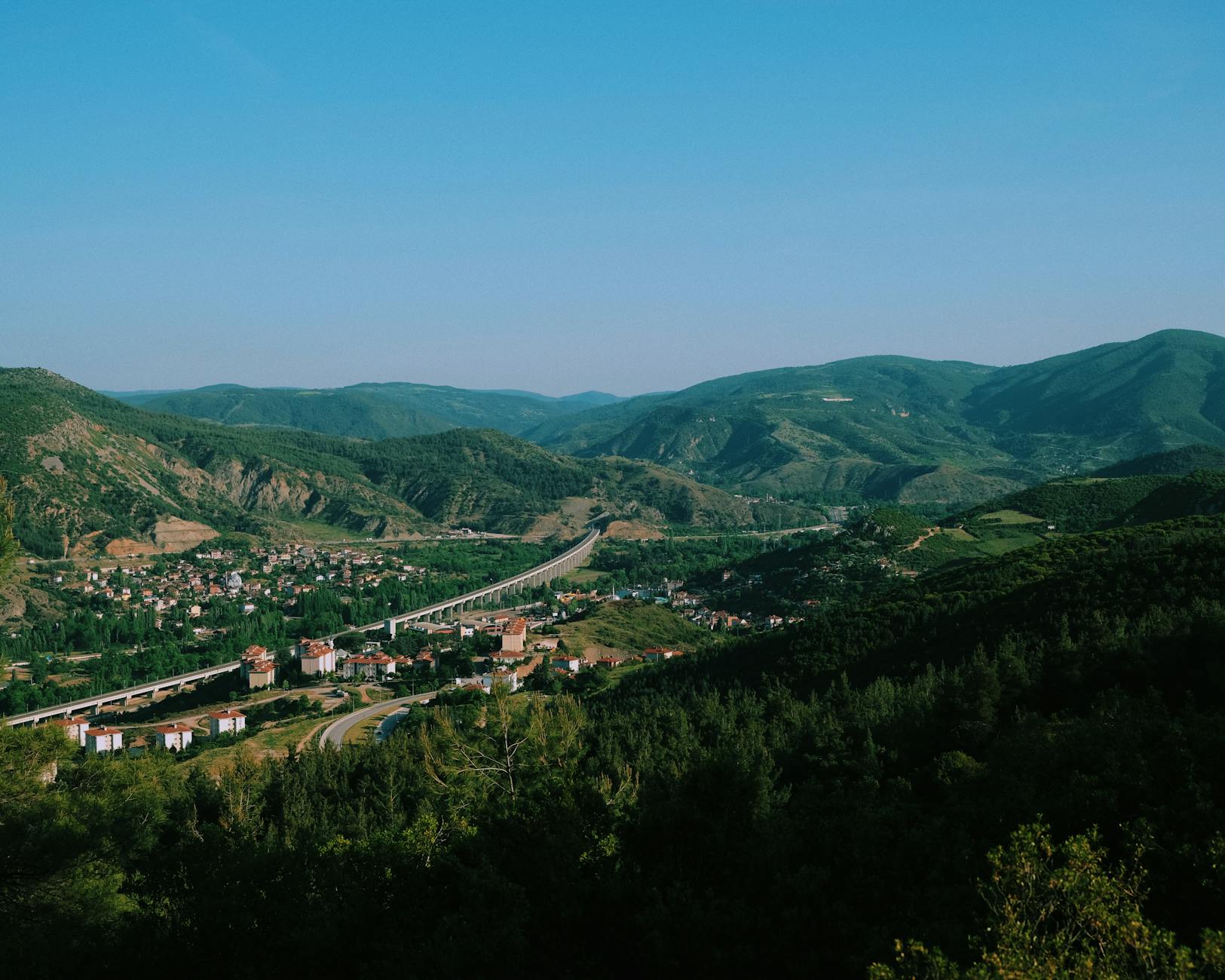
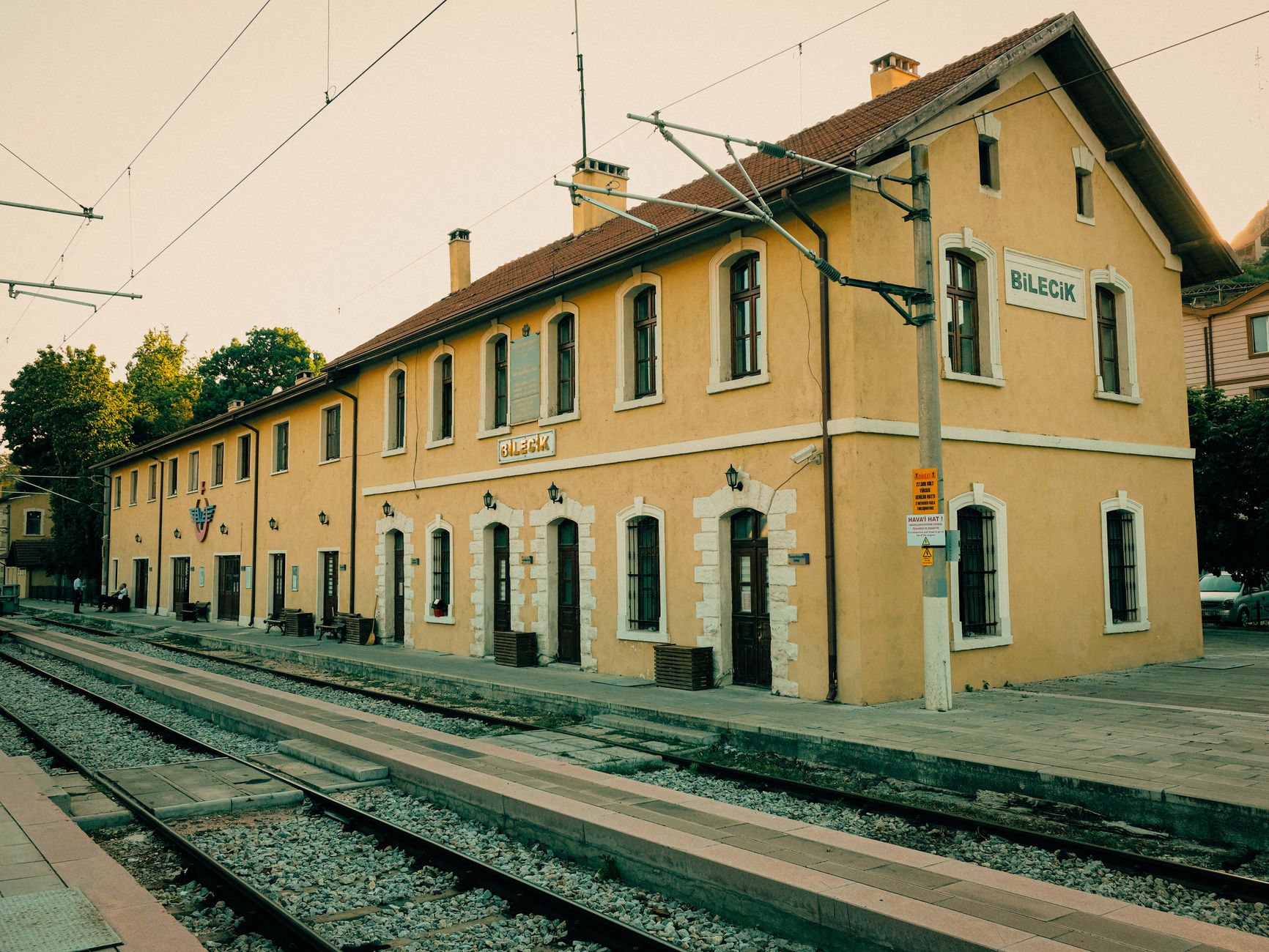
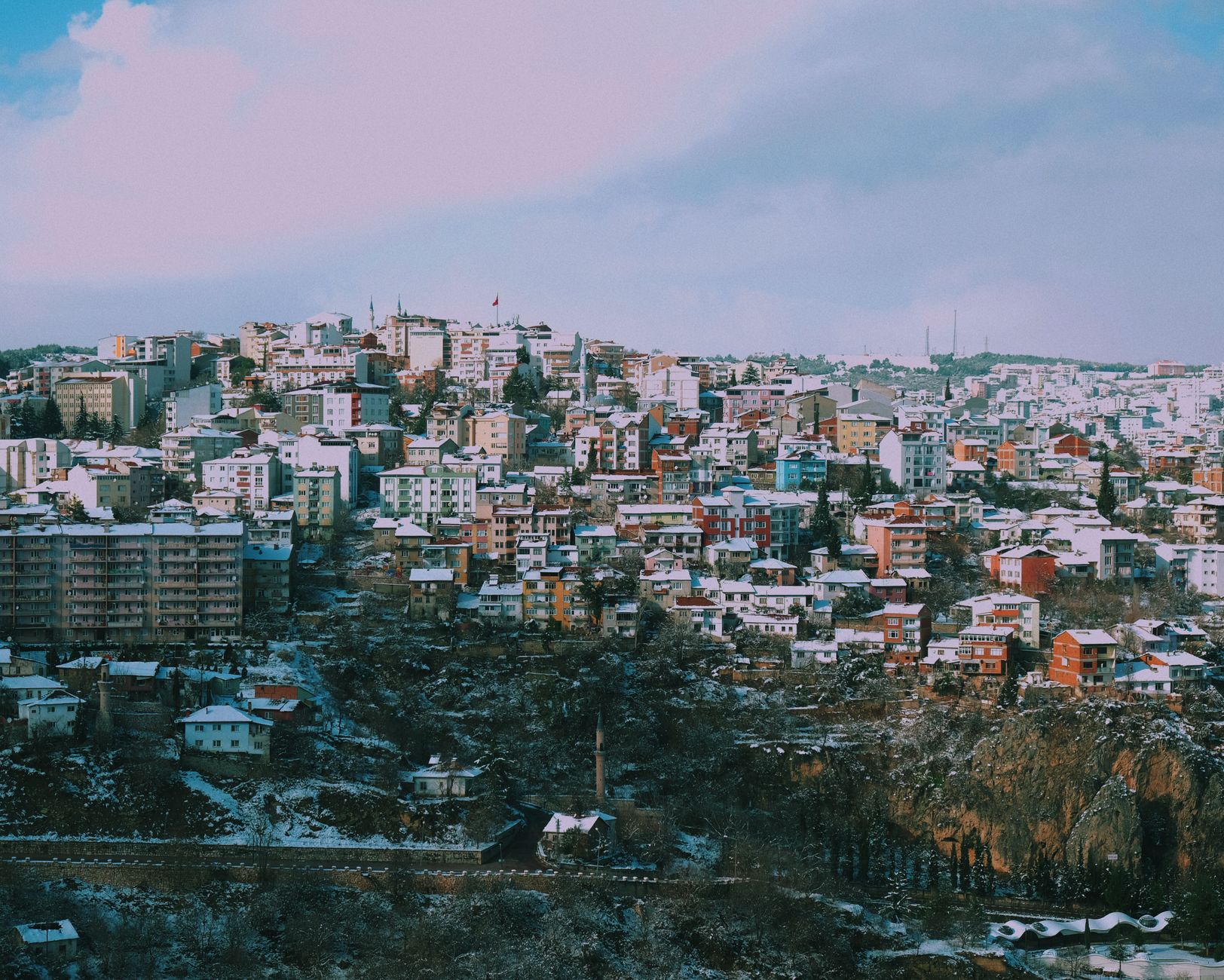
Bilecik is a city that has witnessed the history of the Egyptians, Hittites, Cimmerians, Lydians, Persians, Macedonians, Bithynia Kingdom, Roman Empire and finally the Ottoman Empire. We are going to Bilecik with its districts such as Söğüt, where the Ottoman Empire was born, Gölcük, which is covered with flowers both inside and on its surface, and Osmaneli, famous for its springs.
You can go on nature walks and auto-safaris in the beautiful plateaus around Bilecik, and relax in ponds, waterfalls and picnic areas. While historical houses and artifacts exhibit features that will make nature photographers happy, the decorative products of pottery workshops offer beauties that will attract your mind. We said that even if the summer season ends, the holiday does not end. This time we tour a part of Bilecik area.
Our stops include Osmaneli, Bilecik, Söğüt and Kınık…
When you leave Istanbul, you first come to Osmaneli, but the priority in the article is the province of Bilecik. The region, which has been the scene of many civilizations in history, experienced the transition period of the Egyptians, Hittites, Cimmerians, Lydians, Persians, Macedonians, Bithynia Kingdom and the Roman Empire. The city, known as “Belekoma” during the Eastern Roman period, was a tekfurlik and its surroundings were protected by castles.
Bilecik; The place where the Kayı tribe came from Central Asia with 400 tents, took root, settled down and founded the Ottoman Empire in Söğüt. The great leader Ataturk said the following in Bilecik during the War of Independence: “You defeated not only the enemy there, but also the bad luck of the Turkish nation.” A clock tower welcomes you in the city center. They say time is money, but it is unknown how valid this saying is in today’s traffic.
The clock tower, which has a rectangular dial with Latin numerals looking in four directions and each showing a different time, is 16 meters tall. The clock tower located in the garden of Bilecik Anatolian High School was built by Ertuğrul mutasarrıf (the highest administrative official of a sanjak) Musa Kazım in 1907. There is an electronic system that is not working today in the clock room of the square-plan tower, which has two floors made of cut stone and two floors and a wooden roof, which can be reached by a wooden spiral staircase.
When you go down the ramp from the road that sees the tower and follow the Söğüt sign to the left, you reach the town via a scenic route.
SöğütOn the left is the tomb of Ertuğrul Gazi in the garden. There are panels with information and photographs hanging on the walls of the tomb of Ertuğrul Gazi, the father of Osman Gazi, the founder of the Ottoman Empire, and the leader of the Kayı tribe. Various booklets and documents are also sold in the tomb. In the district center, there is the historical District Governor’s Fountain with blue mosaics. Under the monumental plane trees, Çelebi Mehmet Mosque, built in 1402, is also located here.
The District Governor’s Fountain next to the mosque in the tea garden has taps on three sides and a smooth wall on one side. The reason for this is that there is no tap in the direction of the qibla, so as not to disrespect the qibla while bending over and performing ablution.
Lake with flowers inside and out: When you go 14 km from GölcükSöğüt to Eskişehir road and turn left, you reach Rızapaşa village at the first junction. Continuing 5 km from the intersection, you continue on the middle section of the road that divides into three before entering the village with 18 houses, and after 4 km you come to a picnic area that is not obvious from a distance as a lake. The lake, whose interior and surface is covered with flowers, is surrounded by trees and wooden tables under which you can have a picnic.
Families who come to the area for a picnic on the weekend, where the surroundings of the Arabal lake can be tour, must be careful not to leave their garbage, because everywhere is spotless in the area where no one else is. The flowers that bloom in the spring, the flowers on the surface of the water, and the lake and its surroundings spread joy and enthusiasm around with their colorful views. The air is as clean as possible.
Wild ducks and mostly the angull bird can be seen in the lake and its dense vegetation, which is a kind of bird paradise. In my work titled “Turkey’s Bird Sanctuaries”, they said that the angut bird is a pure bird everywhere. I learned why in Söğüt Gölcük. If a male angut loses his mate while hunting or for any other reason, he will not mate with another female angut for 7 years. That’s why the numbers of Anguts are not increasing.
At the entrance of the small village, where there is not even a village grocery store, there is a delicious and cold drinkable spring water. You can also buy locally grown vegetables from the villagers. In the future, it is planned to clean the plants surrounding the lake and build a country restaurant on its shore. Water has decreased slightly this year.
Kınık village Now we leave Söğüt Gölcük and come to Kınık village in Pazaryeri district, which dates back to 1890. The village, where the Hittite, Phrygian and Persian states settled, BC. It remained under Roman rule in 74 and was conquered by the Turks with the victory of Manzikert. M.S. Byzantines settled in 1097. M.S. Turkmens dominated the region in 1273, and the Ottomans dominated the region during the reign of Yıldırım Bayezit.
The Ottoman period was relived by Çelebi Sultan Mehmet. Clay raw material, called “red soil” and used in pottery, is brought from Sarıbayır Balıklı locality, which is 7 km away from the marketplace and 1.5 km away from Kınık village, which is 35 km away from Bilecik province. This soil is rested for a day, homogenized by the transfer method, crushed and shaded by the machine.
Vases, amphorae, flowerpots, ashtrays, casseroles, decorative large vases, jugs, pitchers, cups and most commonly fish pans, also known as tiles, are made with the dough that can be worked by hand. Clay products fired at 800-850 degrees are decorated with various colors and glazed after underglaze decoration. It is fired again at 1000-1100 degrees and offered for sale. The entrances and gardens of many single-storey village houses are covered with pottery workshops.
Almost all of the village ladies work in this line of business. They find earthenware with patience and care. The most ordered ones are the fried fish, in which they cook trout in the oven, which is especially popular in Maşukiye village restaurants. The casserole dishes used for stews cooked with meat, eggplant, potatoes, peppers, tomatoes and onions are also used as rice pudding and fresh yoghurt containers.
The jugs called “bocuk”, used for water and red wine, are preferred by those who miss the earthy smell and bitter taste of the beverage. Our last stop in Bilecik, famous for its marble, tiles, quince, pomegranate, cherry, grape and touristic handicrafts made by skilled hands, is the Osmaneli district.
Kömürsu, Çilekli Yayla, Sofular, Batan in OsmaneliBozüyük; In the Pazaryeri district, you can take nature walks and auto-safari in Bilecik, which is famous for its plateaus such as Uzunçam and Kamçı. Additionally, if you want to relax in the ponds, waterfalls and picnic areas, as well as see historical houses, Osmaneli is waiting for you on the road with its effortless transportation. Roman, Byzantine and Seljuk ruins can be found in the district, which is located on the southern bank of the Sakarya River.
Osmaneli, formerly known as Lefke, was annexed to the Ottoman lands by Osman Gazi in 1308. The name Lefke means poplar grove and greenery. The same place is also called Pefka. Osmaneli is known as a stopping place on the Istanbul-Baghdad-Mecca road during the Ottoman period. The most interesting feature that has survived to this day is the architectural texture of Osmaneli.
The adjacent buildings in the Camii Kebir and Cedit neighborhoods attract attention with their facades and gardens that generally face directly to the street. While the ground floor (under canopy section) of houses suitable for raising silkworms is devoted to the tools and equipment used in raising silkworms; On the second floor, which can be reached by a wooden staircase, there are utility rooms, bay windows with sliding windows and silkworm breeding rooms.
Mansion-type houses with tiled roofs but no ceiling underneath can still be found. Another feature is the church from the Iznik-Greek Empire located within the Ottoman urban fabric. Unfortunately, the magnificent structure started to be destroyed, losing its roof and tiles. It is currently used as a shelter for sheep.
You May Like
Aspendos Ancient Theater Travel Guide