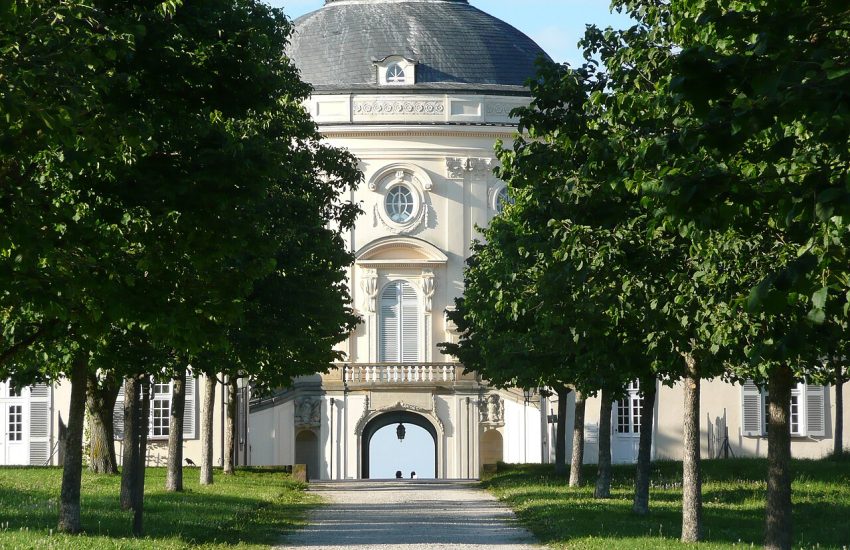
In the heart of the old town of Ettlingen, on the banks of the little river Alb just south of Karlsruhe, stands a palace with a remarkable secret. Behind its plain facades lies a former chapel painted by Cosmas Damian Asam, one of the greatest fresco painters of the German baroque, a room so dazzling that it has become one of the treasures of the region.
Ettlingen Palace was the widow seat of Margravine Sibylla Augusta of Baden Baden, the creator of Favorite Palace, and it was here that she spent the final years of her life in devotion and quiet retirement. Today the palace is a lively cultural centre, home to a museum, concerts and a famous summer theatre festival held in its courtyard.
In this article we will explore Ettlingen Palace from its turbulent history to its reconstruction under Sibylla Augusta, the Asam Hall, the courtyard and the town around it, and we will finish with practical tips for your visit.
In This Article
- A Palace in the Heart of Ettlingen
- Destruction and Rebuilding
- Four Wings Around a Courtyard
- The Courtyard and Its Festivals
- The Inner Facades
- The Fountain in the Courtyard
- The Palace Seen From Outside
- The Asam Hall
- Saint John of Nepomuk and Bohemian Faith
- Asam Art of Illusion
- The Museum and the Carriages
- Ettlingen Palace on Video
- Visiting Ettlingen Palace Today
A Palace in the Heart of Ettlingen

Ettlingen is a charming small town with a historic centre of narrow streets, colourful houses and squares. The palace stands right in the middle of it, its long facades facing the market and the river, so that it feels part of the everyday life of the town.
From the outside, the palace looks relatively simple, a large building with four wings around a courtyard, its walls plastered and its windows regularly spaced. Its modest appearance gives little hint of the splendour inside.
The river Alb flows past the palace, and the old town around it is a pleasure to explore, with cafes, shops and pretty corners at every turn.
What makes Ettlingen Palace special is its combination of an everyday town setting with one of the most spectacular baroque interiors in Baden, as well as its role as a cultural centre today.
Because it lies only a few kilometres from Karlsruhe, the palace is easy to visit, yet it remains less well known than the great residences of the region, making it a delightful discovery.
The market square in front of the palace is the social heart of Ettlingen, with cafes spilling onto the pavements and markets held on certain days. Sitting there with a coffee and looking at the palace is one of the simple pleasures of a visit.
The town has a long history reaching back to Roman times, and its streets reveal layers of the past, from medieval walls to baroque churches and nineteenth century houses.
Many visitors arrive expecting only a small museum and are amazed when they step into the Asam Hall, which is why Ettlingen is often described as one of the best kept secrets of the region.
Destruction and Rebuilding
A castle stood on this site in the Middle Ages, and in the sixteenth century it was rebuilt as a Renaissance residence for the margraves of Baden. For a time it was an important seat of the family.
In 1689, during the War of the Palatine Succession, French troops devastated the region, and Ettlingen, like many towns on the Upper Rhine, was burned. The palace was largely destroyed.
For several decades the ruins remained, until Margravine Sibylla Augusta decided to rebuild the palace as her widow seat, the residence to which she would retire after handing over power to her son.
Between 1727 and 1733, the palace was reconstructed under the direction of the court architect Johann Michael Ludwig Rohrer, who had already worked for the margravine at Rastatt and Favorite.
The rebuilt palace incorporated parts of the older structure, and its four wings around a courtyard echo the layout of the Renaissance residence that preceded it.
The destruction of 1689 was part of a wider campaign in which French forces burned towns and castles across the Palatinate and Baden, including Heidelberg and Mannheim. The scars of this war shaped the region for decades.
Sibylla Augusta’s decision to rebuild Ettlingen reflected her determination to restore the lands of Baden Baden after these disasters, and her widow seat became a symbol of renewal.
After the death of Sibylla Augusta in 1733, the palace continued to be used by the margravial family and later by the grand dukes of Baden for various purposes, including administration and housing officials.
In the nineteenth and twentieth centuries it served as barracks, offices and schools before being restored as a cultural centre for the town.
Four Wings Around a Courtyard
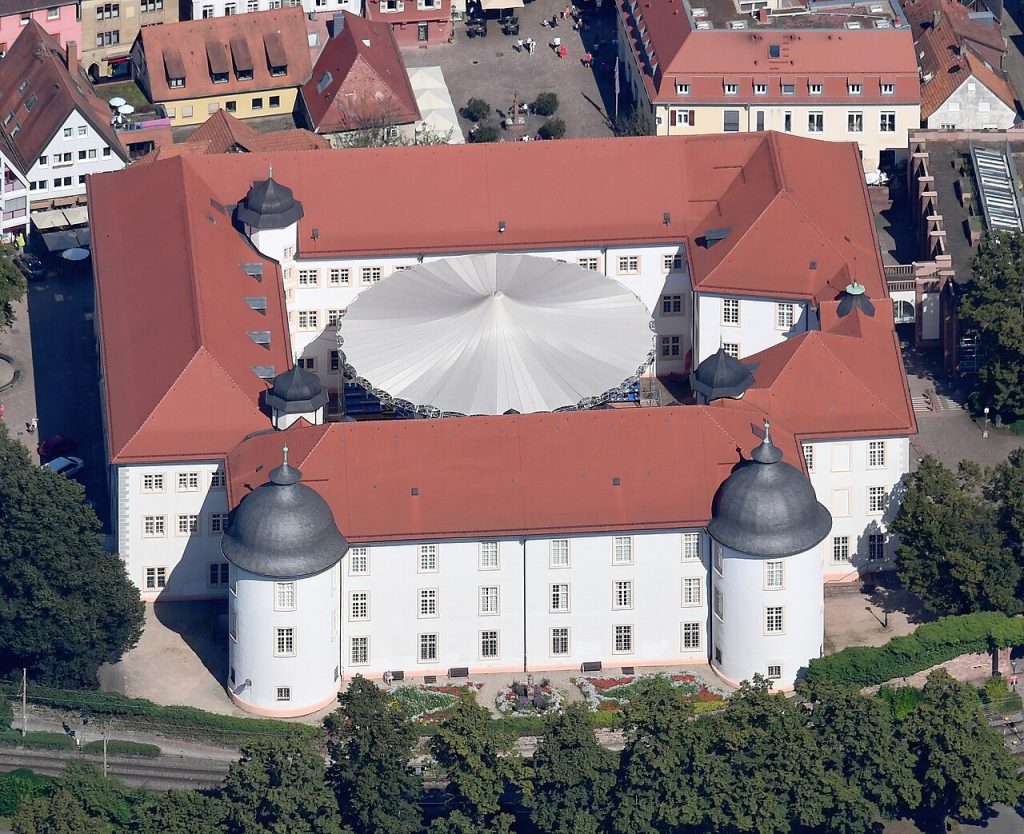
Seen from above, the palace forms a large square with four wings enclosing an inner courtyard. It sits at the edge of the old town, with the river and green spaces nearby, and its roofs dominate the skyline of Ettlingen.
The arrangement of wings around a courtyard is typical of German residences that developed from medieval castles, and it gives the building a strong, enclosed character.
Inside the wings, rooms served as apartments, offices and service spaces, and today they house the museum, galleries, offices and event spaces.
From the air you can also see how closely the palace is woven into the fabric of the town, with streets and houses pressing up against its walls.
The palace garden, once larger, now survives in part as green space along the river, providing a pleasant setting for walks.
The roofs of the four wings, with their dormer windows, give the palace a distinctive outline that is easy to recognise from the surrounding hills.
Its compact square plan makes it easy to explore, and the museum route leads you through several wings, giving a good sense of the building as a whole.
The Courtyard and Its Festivals

The inner courtyard of Ettlingen Palace is one of the most atmospheric spaces in the town. Enclosed by the four wings, it is quiet and sheltered, and its walls create a natural theatre.
Every summer the courtyard hosts the Ettlingen Palace Festival, a celebrated open air theatre festival with plays, musicals and operas performed under the stars. Thousands of visitors come each year, and the atmosphere on warm evenings is magical.
Outside festival time, the courtyard is a peaceful place to pause, with its fountain and benches inviting you to rest.
The surrounding facades, with their regular windows and doorways, provide a dignified backdrop that has made the courtyard a favourite location for concerts and events throughout the year.
The festival has a long tradition, and many famous actors and singers have performed in the courtyard over the years. Tickets often sell out, so it is wise to book early.
On festival nights, the lights, music and audience transform the old courtyard into a vibrant space that bridges the baroque past and the present.
Even if you cannot attend a performance, visiting the courtyard during festival season lets you see the stage and seating, giving a sense of how the space is transformed.
The Inner Facades

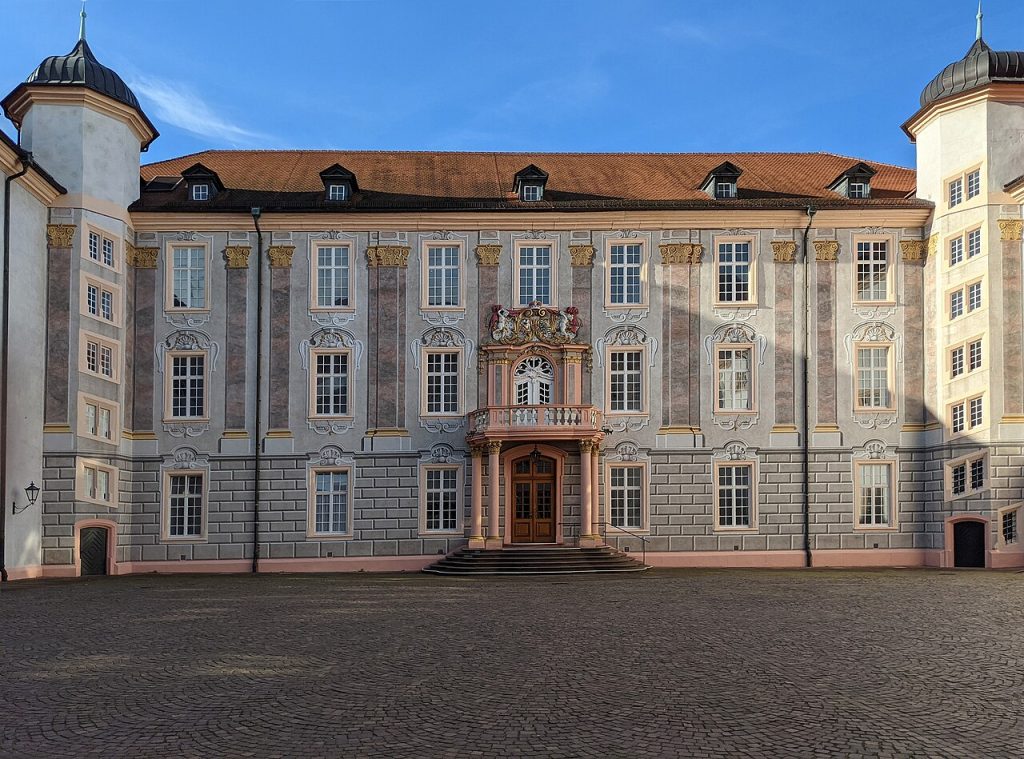
The inner facades of the palace are more decorated than the outer walls, with doorways, window frames and staircase towers that give the courtyard its character.
Looking closely, you can see traces of different building phases, from the Renaissance core to the baroque reconstruction under Sibylla Augusta.
The pale walls catch the light beautifully, and the courtyard changes mood throughout the day, from bright and lively at noon to warm and golden in the evening.
Photographers enjoy capturing the symmetry of the courtyard and the reflections of the sky in its windows.
Staircase towers in the corners of the courtyard once provided access to the upper floors, and some of them preserve their historic character.
The doorways around the courtyard lead to the museum, the Asam Hall and other spaces, so the courtyard serves as the natural starting point of any visit.
In winter, the courtyard is sometimes used for seasonal markets and events, adding to its role as a meeting place for the town.
The Fountain in the Courtyard

At the centre of the courtyard stands a fountain, adding the sound of water to the calm of the enclosed space. Fountains were important features of baroque palaces, symbolising abundance and life.
The fountain at Ettlingen has been restored and remains a focal point for visitors, especially in summer when its cool water offers relief from the heat.
Around the fountain, the courtyard opens up into a space for gatherings, and during the festival it is transformed into a lively stage and auditorium.
It is a pleasant spot to sit and absorb the history of the palace, imagining the margravine and her household moving across the courtyard nearly three centuries ago.
Children enjoy playing near the fountain, and on summer afternoons the courtyard often has a relaxed, almost village like atmosphere.
The fountain’s design reflects the baroque taste for allegory and ornament, and its sculpted details reward a closer look.
The Palace Seen From Outside

Walking around the outside of the palace, you can appreciate its size and its relationship with the town. The east side faces the river and the green spaces along it, while the other sides border streets and squares.
The facades are restrained, reflecting the practical needs of a widow seat rather than the display of a grand residence, but they have a quiet dignity that suits the town.
Details such as window frames, cornices and doorways show the hand of the court architect, and the proportions are carefully balanced.
From the bridge over the Alb, there is a fine view of the palace with the river in the foreground, one of the most picturesque scenes in Ettlingen.
The riverside walk along the Alb offers several fine viewpoints of the palace, especially in spring when the trees along the bank are in fresh leaf.
In the evening, when the palace is softly illuminated, it takes on a romantic appearance that makes a stroll through the old town especially enjoyable.
The palace also faces the town hall and other historic buildings, creating an attractive ensemble around the central squares.
The Asam Hall

The greatest treasure of Ettlingen Palace is the former palace chapel, known today as the Asam Hall. Its ceiling was painted in 1732 by Cosmas Damian Asam, one of the most celebrated fresco painters of the German baroque, who worked with his brother Egid Quirin Asam on many famous churches in Bavaria.
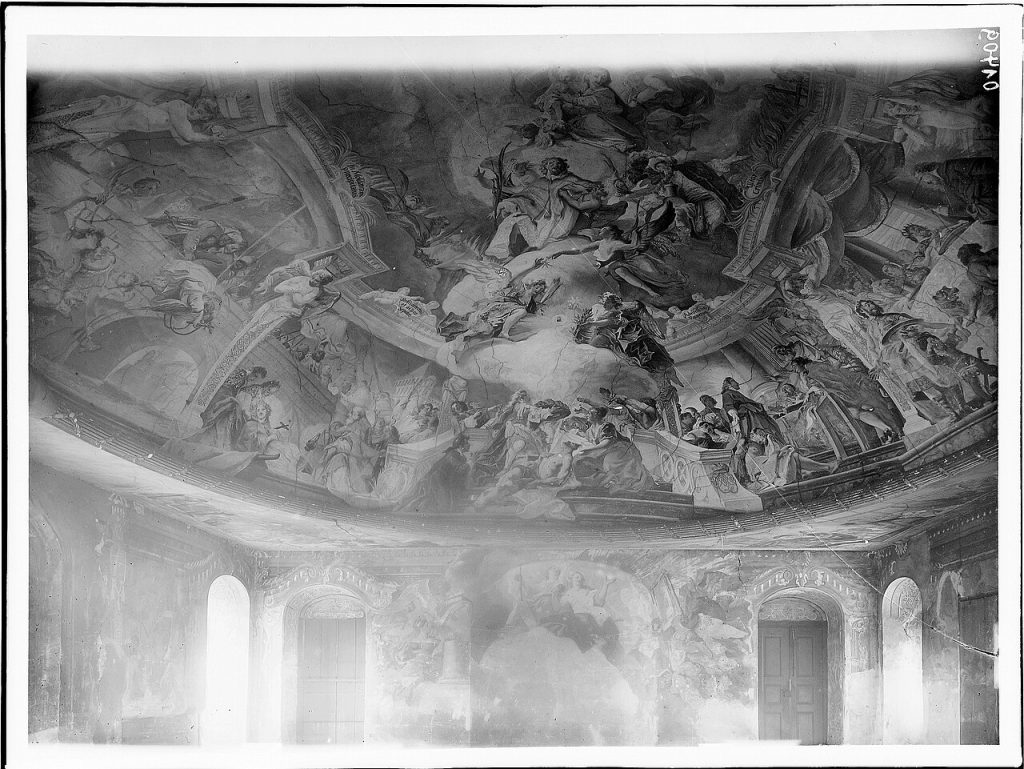
The fresco depicts scenes from the life of Saint John of Nepomuk, a Bohemian saint who was especially dear to Sibylla Augusta because of her Bohemian upbringing. The saint is shown in glory, surrounded by angels and allegorical figures, in a composition full of movement and light.
Asam was a master of illusion, and his painting seems to open the ceiling to the heavens, drawing the eye upward into a swirling world of clouds and figures.
The chapel was later deconsecrated and is now used as a concert and event hall, so its beauty can be enjoyed during performances as well as on visits.
Standing beneath the fresco, you can understand why the Asam Hall is considered one of the finest baroque interiors in Baden.
Asam completed the fresco in a remarkably short time, working quickly in fresh plaster as the technique required, a testament to his skill and experience.
The decoration of the hall also includes stucco and architectural elements that frame the painting and enhance the illusion of depth.
Concerts in the Asam Hall range from chamber music to choral performances, and the acoustics, combined with the splendour of the ceiling, create an unforgettable experience.
Saint John of Nepomuk and Bohemian Faith
Saint John of Nepomuk was a fourteenth century priest from Bohemia who, according to tradition, was thrown into the Vltava river in Prague for refusing to reveal the secrets of the confessional. He was canonised in 1729, just a few years before the fresco was painted.
His cult was extremely popular in the baroque age, especially in Bohemia and the Habsburg lands, and he became a patron saint of bridges and of discretion.
For Sibylla Augusta, who had grown up in Bohemia, the saint represented a link with her homeland and her deep Catholic faith. Choosing him as the subject of the fresco was a personal statement.
Statues of Saint John of Nepomuk can be found on bridges throughout central Europe, and Ettlingen’s fresco is one of the most beautiful artistic tributes to him.
In the fresco, Asam included scenes from the saint’s life and martyrdom, as well as allegories of the virtues he represented, especially silence and loyalty.
Visitors from Bohemia and the Czech Republic often feel a special connection to the fresco, which celebrates one of their most beloved saints far from his homeland.
Asam Art of Illusion

Cosmas Damian Asam trained in Rome and brought Italian techniques of illusionistic painting to southern Germany. His frescoes combine architecture, sculpture and painting into a single theatrical experience.
In Ettlingen, painted architecture rises from the cornice toward a bright sky, and figures seem to float freely in space. The colours are rich and luminous, with golds, blues and pinks creating a heavenly atmosphere.
The fresco was carefully restored in the twentieth century, and today its colours shine almost as brightly as when Asam completed it.
Art lovers often travel to Ettlingen specifically to see this work, which is less famous than Asam’s Bavarian churches but no less beautiful.
Looking up from different points in the hall, you will notice how the painted architecture seems to shift and change, a deliberate effect that keeps the eye moving across the ceiling.
Asam’s other famous works include the Asam Church in Munich and the abbey churches of Weltenburg and Rohr, and seeing his work in Ettlingen adds a fascinating chapter to his story.
The Museum and the Carriages

Today Ettlingen Palace houses the town museum, with collections covering local history, art and culture. Exhibitions trace the story of Ettlingen from its Roman origins through the Middle Ages and the baroque period to the present day.
Among the highlights are historic carriages and sleighs, which recall the era when horses were the main means of travel and princely households maintained large stables.
The museum also displays works by local artists and temporary exhibitions on a wide range of themes.
Visiting the museum gives you a broader understanding of the town and the role the palace has played in its life over the centuries.
The museum also organises guided tours and educational programmes for families and school groups, making it a lively place for learning about local history.
The carriage collection includes ceremonial coaches, travel carriages and winter sleighs, some richly decorated, which show the elegance and practicality of transport in earlier centuries.
Ettlingen Palace on Video

For a look at the palace before your visit, the video below presents Ettlingen Palace, its courtyard and its museum.
Watch for the Asam Hall and the courtyard where the summer festival takes place.
The video also gives a sense of the palace’s setting in the old town and its relationship with the river.
If the video inspires you, read on for practical tips.
Visiting Ettlingen Palace Today

Ettlingen Palace is open throughout the year, with the museum and the Asam Hall accessible during opening hours. Concerts and events are held regularly, especially in the Asam Hall and the courtyard.
Ettlingen is easy to reach by tram from Karlsruhe in about twenty minutes, making it a perfect half day trip from the city.
Plan to combine your visit with a walk through the old town and along the river Alb, and in summer check the programme of the palace festival for an unforgettable evening performance.
Ettlingen pairs well with Rastatt Palace and Favorite, which together tell the story of Margravine Sibylla Augusta and the baroque culture of Baden Baden.
Ettlingen has many good restaurants and cafes in the old town, where you can enjoy regional dishes and local wines after your visit.
Whenever you come, Ettlingen Palace offers a rich combination of history, art and culture, crowned by one of the most beautiful baroque frescoes in Baden.
View the location on Google Maps
Palaces Nearby
If Ettlingen has charmed you, Baden holds more remarkable palaces. Here are two more well worth adding to your journey:
- Rastatt Palace – the baroque residence of Turkish Louis and Sibylla Augusta, crowned by the Golden Man.
- Favorite Palace – the porcelain palace of Margravine Sibylla Augusta near Rastatt.
You May Like

Monrepos Lake Palace and the Rococo Retreat of Ludwigsburg