In the town of Rastatt, between Karlsruhe and Baden Baden, stands the oldest baroque residence on the Upper Rhine, a palace built in the image of Versailles by a celebrated general known to his contemporaries as Turkish Louis. Its long red sandstone wings, crowned by a golden statue of Jupiter, still dominate the town as they did three centuries ago.
Inside, the Hall of Ancestors and the state apartments recall the glory of the margraves of Baden Baden, while the nearby palace church is one of the finest baroque church interiors in the region. Rastatt was also the scene of a major peace treaty and, later, of dramatic events in the revolution of 1849.
In this article we will explore Rastatt from its founder to its halls, its church and its place in European history, and we will finish with practical tips for your visit.
In This Article
- A Versailles on the Upper Rhine
- Turkish Louis, a General and a Prince
- Domenico Egidio Rossi and the Building of the Palace
- The Garden Front and the Park
- The Golden Man on the Roof
- The Great Courtyard
- The Hall of Ancestors
- The State Apartments
- The Palace Church of the Holy Cross
- Sibylla Augusta and Her Faith
- Peace Treaties and Revolution
- Rastatt Palace on Video
- Visiting Rastatt Palace Today
A Versailles on the Upper Rhine
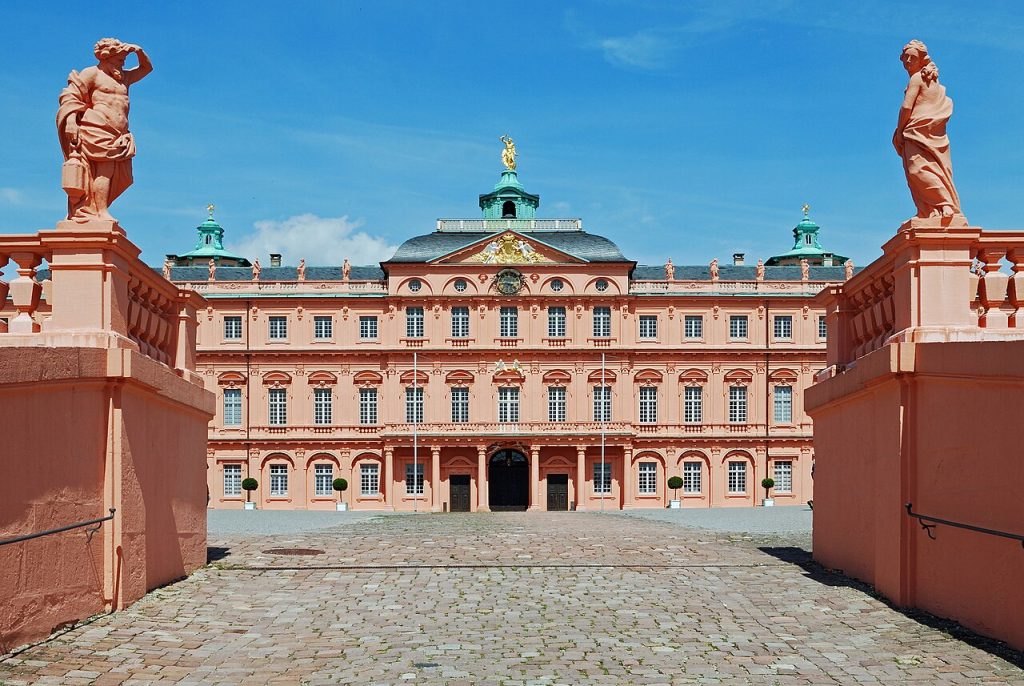
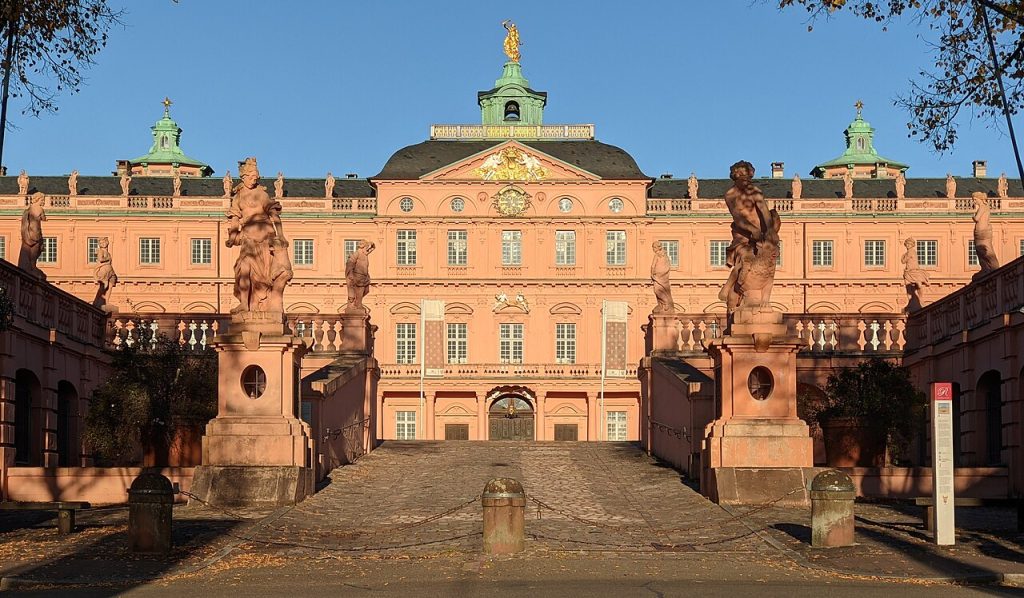
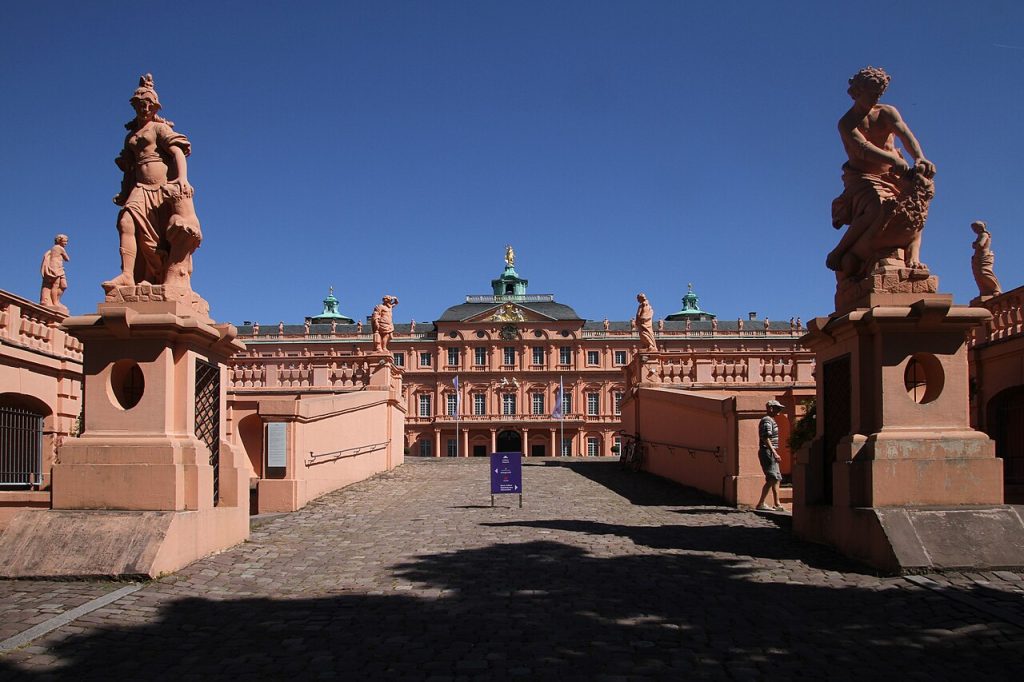
As you approach Rastatt Palace, its scale is immediately impressive. Three great wings enclose a vast courtyard, the Ehrenhof, opening toward the town, and the central building rises above them with its tall roof and statues.
The red sandstone of the facades gives the palace a warm, rich colour, especially in the late afternoon sun, and the whole complex has a stately, almost military character befitting its founder.
Rastatt itself is a pleasant town that grew up around the palace, with streets laid out on a regular plan and squares decorated with fountains. The palace remains its defining landmark.
What makes Rastatt special is its role as a model for later palaces in southwest Germany. It was the first great baroque residence of the region, and its influence can be seen in Karlsruhe, Mannheim and elsewhere.
The palace is less crowded than many better known residences, so you can enjoy its courtyards and halls in a relaxed atmosphere.
The palace is particularly striking when seen from the end of the main street, where its central building and golden statue close the view like a stage set.
Inside the complex, museums and exhibitions tell the stories of the margraves, the wars of the eighteenth century and the struggle for democracy in the nineteenth.
Turkish Louis, a General and a Prince
The palace was built for Margrave Ludwig Wilhelm of Baden Baden, one of the most famous generals of his age. As commander of imperial armies in the wars against the Ottoman Empire in the 1680s and 1690s, he won a series of victories that earned him the nickname Turkish Louis.
His military success brought fame and wealth, but his home territory had been devastated by French troops during the War of the Palatine Succession, and his old castle at Baden Baden lay in ruins.
Ludwig Wilhelm decided to build a new residence in Rastatt, on the plain of the Rhine, where he could create a modern palace and a new town according to the latest ideals of the baroque age.
He brought back from his campaigns a remarkable collection of Ottoman objects, the so called Turkish booty, which is now displayed in Karlsruhe and reflects his extraordinary career.
His most famous victory came at the Battle of Slankamen in 1691, where he defeated a large Ottoman army and secured the Habsburg position in Hungary.
Ludwig Wilhelm died in 1707, just as his new palace was being completed, so he had little time to enjoy the residence he had planned so carefully.
Domenico Egidio Rossi and the Building of the Palace
To design his residence, Ludwig Wilhelm turned to Domenico Egidio Rossi, an Italian architect who had worked in Vienna and Bohemia. Construction began around 1700 and the main building was largely complete by 1707.
Rossi created a palace with a central block and two long wings enclosing the courtyard, following the model of Versailles but adapted to the scale and resources of a German margraviate.
The town of Rastatt was laid out at the same time, with streets aligned on the palace, creating a unified ensemble of residence and town.
Rossi’s design proved influential, and later palaces in the region followed its example of grand courtyards and long wings embracing the visitor.
The red sandstone used for the facades came from local quarries, and its warm colour gives the palace a distinctive appearance that sets it apart from the pale stucco of many other baroque residences.
The Garden Front and the Park
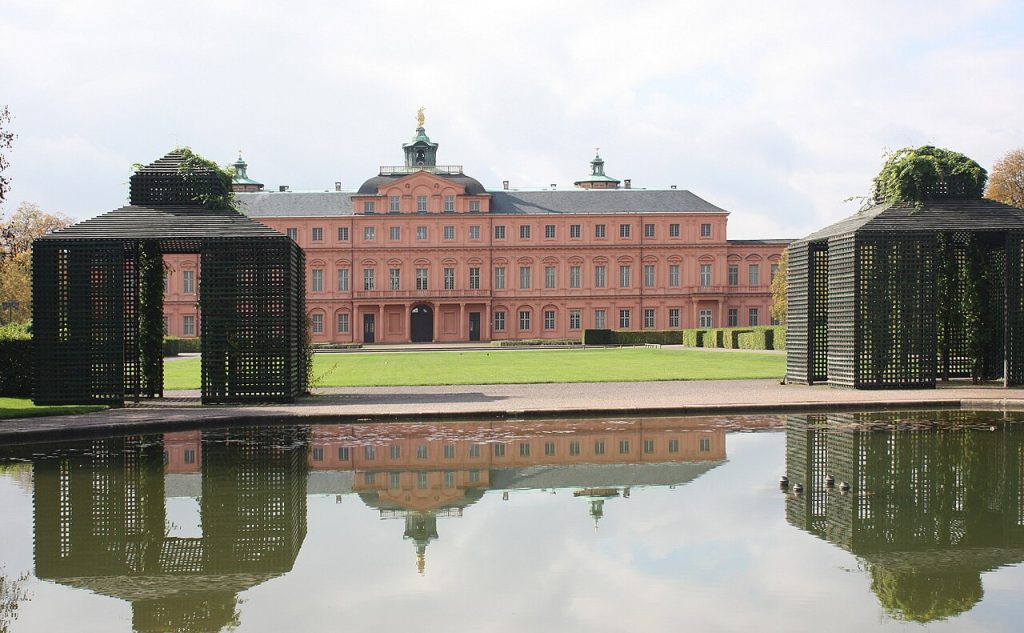
Behind the palace lies the garden front, facing a park that was once laid out as a formal baroque garden. Today it is a peaceful landscape of lawns, trees and paths.
From the park, the long rear facade of the palace can be seen in its full extent, its windows and pilasters creating a calm rhythm along the sandstone walls.
The park is a favourite place for walks, and its open spaces give a sense of the grandeur once enjoyed by the margraves and their guests.
In spring and summer, the garden is especially lovely, with flowers and greenery framing views of the palace.
Sculptures and decorative elements in the park recall its baroque origins, while the mature trees give it the character of a landscape garden.
The Golden Man on the Roof
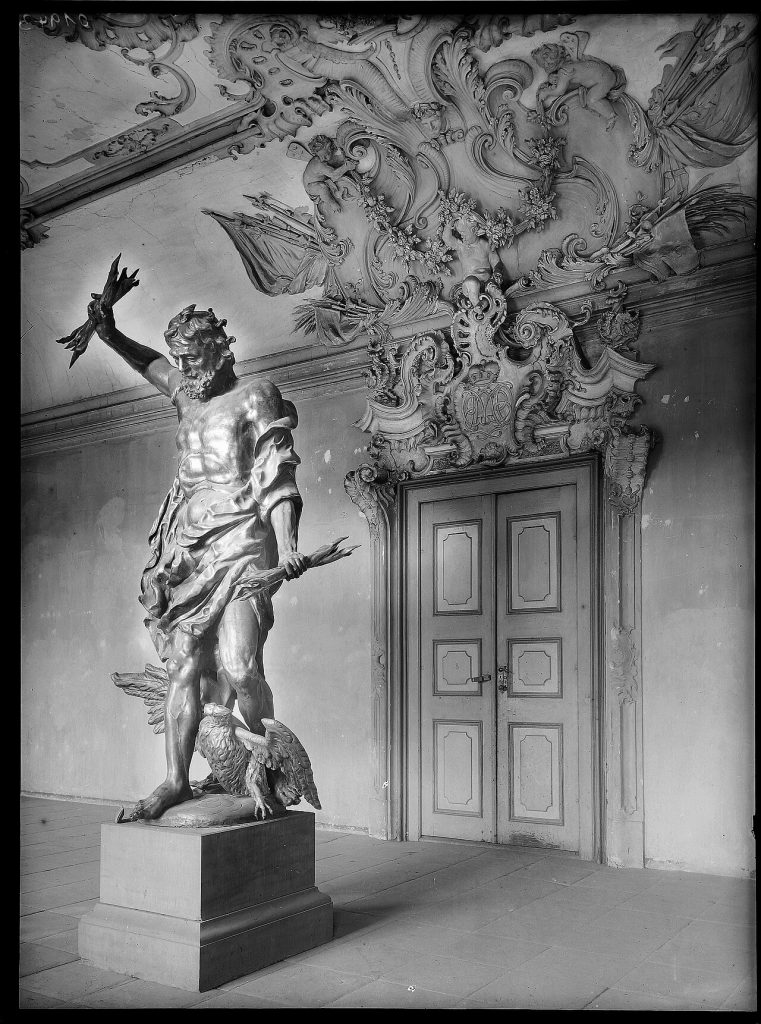
Crowning the central building of the palace is a gilded statue of Jupiter, known locally as the Golden Man. Holding thunderbolts, the king of the gods gazes out over the town, a symbol of the power and glory of the margrave.
The statue is visible from far away and has become a beloved emblem of Rastatt. Its gleaming gold catches the sunlight and gives the palace a distinctive silhouette.
The choice of Jupiter reflects the classical education of the court and the baroque habit of identifying rulers with the gods of antiquity.
Look for the Golden Man as you approach the palace, especially at sunset, when the gilding glows against the evening sky.
The current statue is a replacement of the original, carefully recreated to preserve this beloved landmark for future generations.
The Great Courtyard
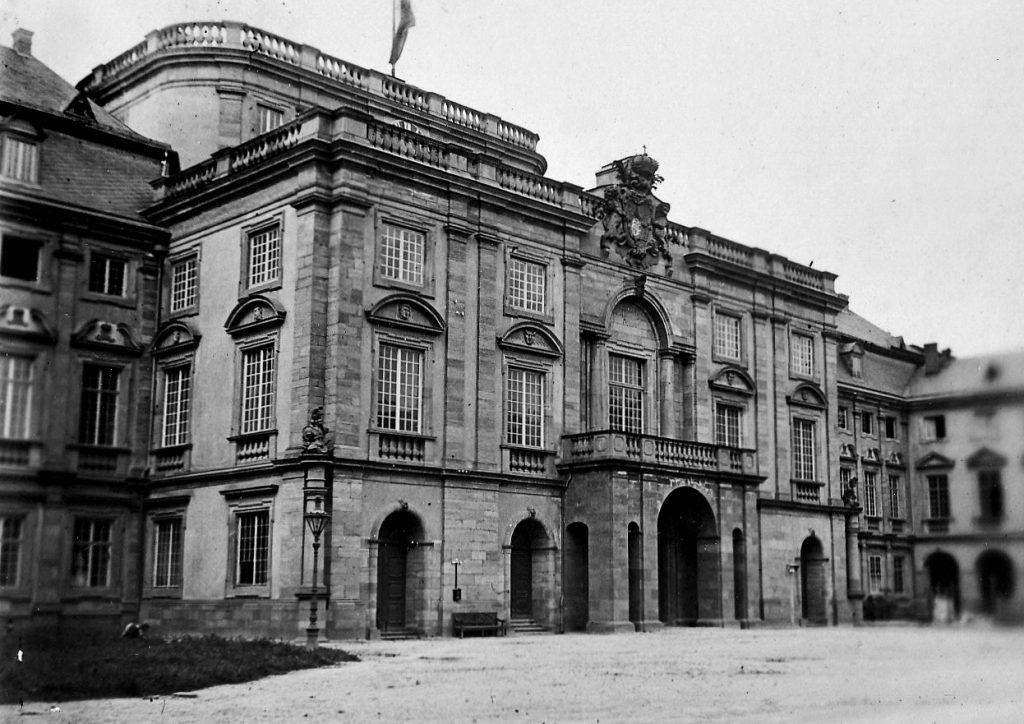
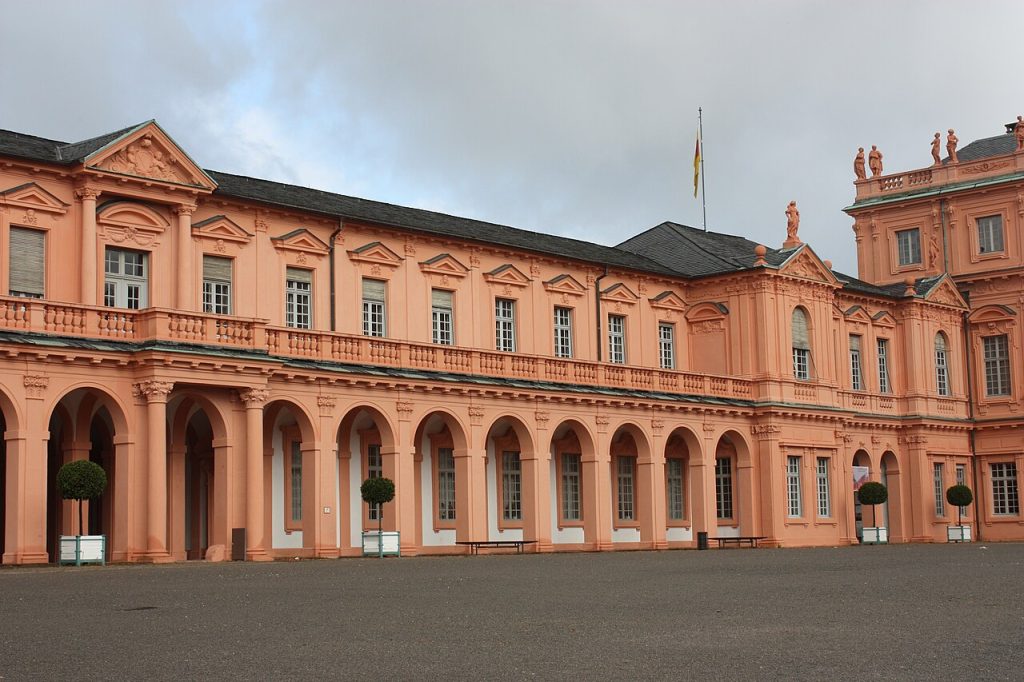
The Ehrenhof, or court of honour, is one of the largest of its kind in Germany. Enclosed by the central building and the two wings, it was designed to receive carriages and to impress visitors with its scale.
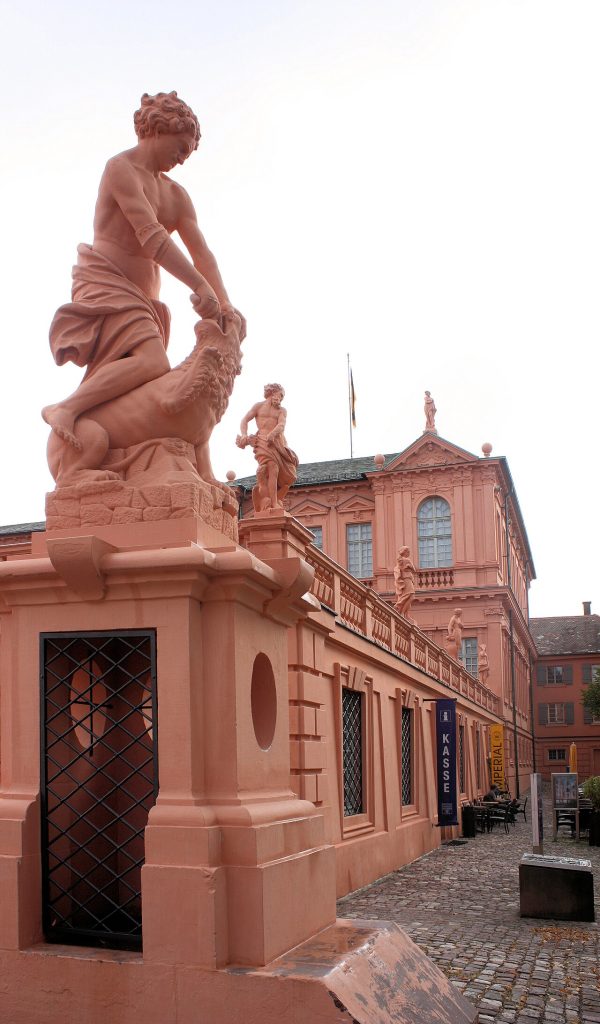
Statues and decorative details on the facades add life to the courtyard, and the central portal leads into the palace interiors.
Today the courtyard is used for events and festivals, and its open space is a pleasant place to pause and take in the architecture.
Standing in the middle of the courtyard, you can appreciate the symmetry of the design and imagine the arrival of guests in the days of the margraves.
The wings of the courtyard house museums and offices today, keeping the palace alive as a centre of culture and history.
The Hall of Ancestors
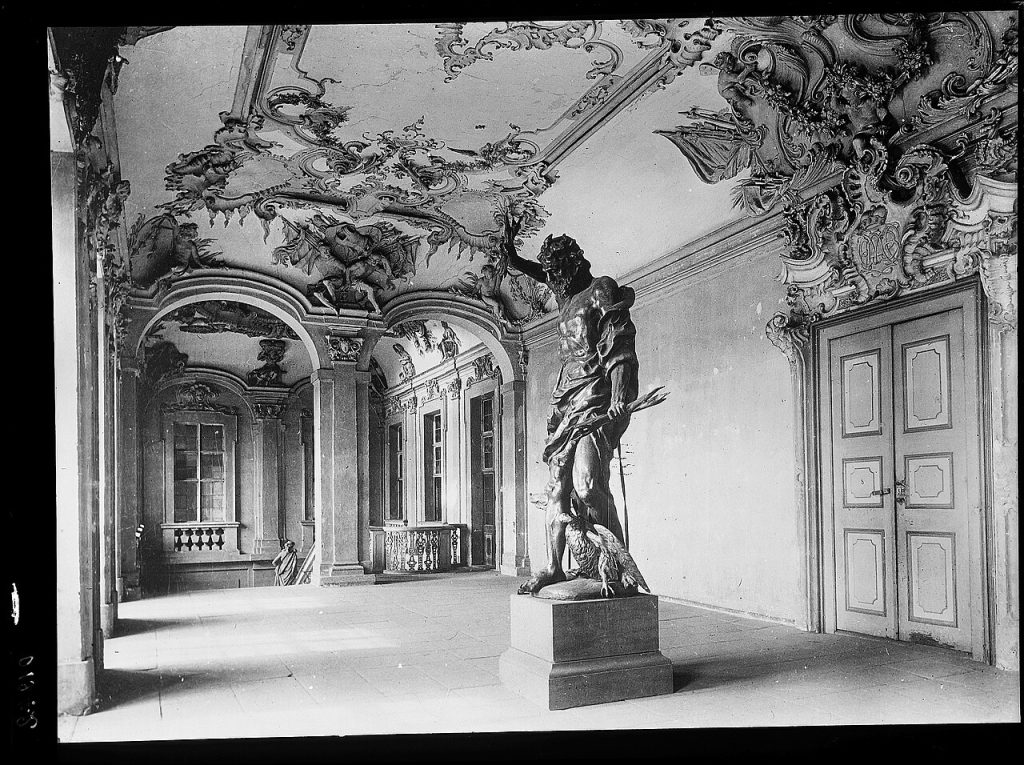
The most magnificent room in the palace is the Hall of Ancestors, a grand hall on the main floor decorated with stucco, paintings and sculpture. Its ceiling fresco celebrates the heroic deeds of Hercules, an allegory of the military triumphs of Turkish Louis.
Around the walls, sculptures of Ottoman prisoners in chains support the cornice, a dramatic reminder of the margrave’s victories in the Turkish wars. Portraits of the margraves and their ancestors complete the decoration.
The hall was used for receptions, banquets and ceremonies, and its splendour was meant to impress visitors with the glory of the house of Baden Baden.
Today it is the highlight of guided tours, and its rich decoration and dramatic imagery make a lasting impression.
The prisoners carved in stone are among the most memorable sculptures of the German baroque, their expressive faces and twisted bodies conveying both triumph and the human cost of war.
The hall’s acoustics make it a fine venue for concerts, which are held here on special occasions.
The State Apartments
On either side of the Hall of Ancestors lie the apartments of the margrave and the margravine, each a sequence of rooms decorated with stucco ceilings, paintings, tapestries and period furniture.
After the death of Ludwig Wilhelm in 1707, his widow, Margravine Sibylla Augusta, ruled as regent for her young sons and completed the decoration of the palace. Her taste shaped many of the interiors.
The rooms include audience chambers, bedrooms and cabinets, some with fine painted ceilings and lacquer panels inspired by East Asian art.
Guided tours lead through the apartments and explain the history of the family and the court, bringing the rooms to life with stories and details.
The margravine’s apartments are especially refined, with delicate decoration and furniture that reflect her personal taste and her interest in art and religion.
Some rooms preserve original tapestries and wall coverings, while others have been carefully restored based on historical documents.
The Palace Church of the Holy Cross
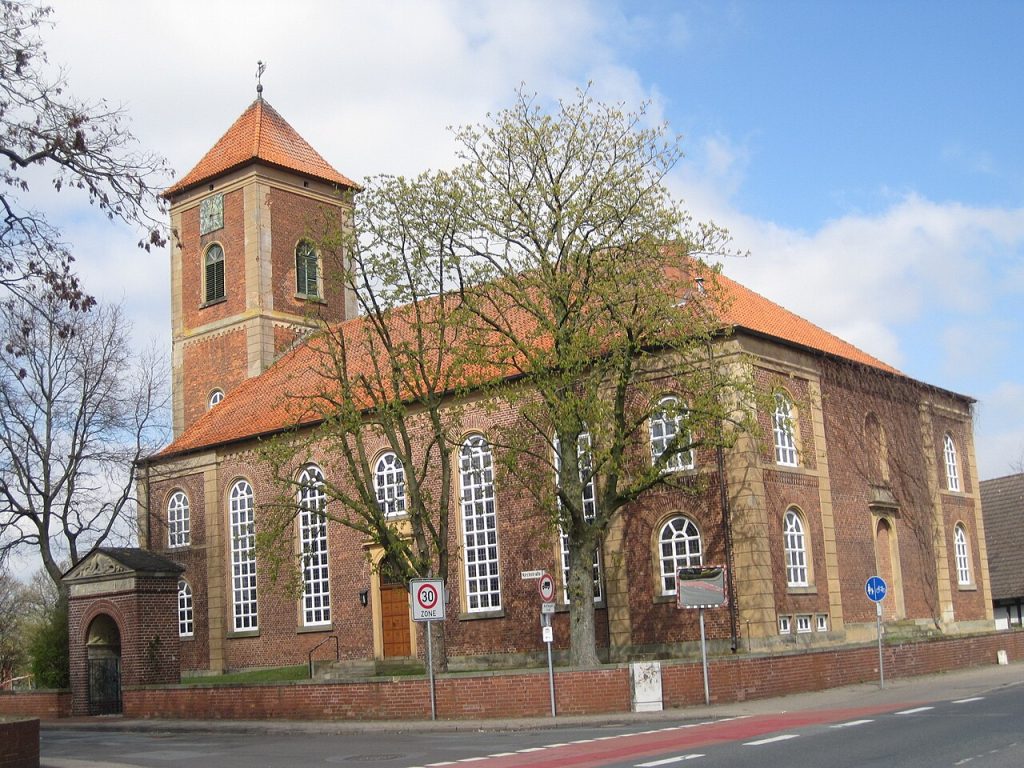
Next to the palace stands the Palace Church of the Holy Cross, built between 1720 and 1723 for Sibylla Augusta by the architect Johann Michael Ludwig Rohrer. It is one of the most beautiful baroque church interiors in Baden.
The church is richly decorated with frescoes, stucco and gilding, and its altar and furnishings reflect the deep piety of the margravine, who devoted much of her later life to religious works.
Light from the windows falls across the painted ceiling and the white and gold decoration, creating a luminous and uplifting atmosphere.
The church is still used for worship and concerts, and visitors can see it on guided tours or during special events.
The church’s altar contains a relic of the Holy Cross, which gave the church its name and made it an important place of devotion for the margravine.
Sibylla Augusta and Her Faith
Margravine Sibylla Augusta was a remarkable woman who governed the margraviate for nearly two decades after her husband’s death. She was an energetic ruler and a passionate patron of the arts and religion.
Besides the palace church, she built the delightful pleasure palace of Favorite nearby, famous for its collections of porcelain and faience, and a hermitage in its grounds where she retreated for prayer.
Her influence can be seen throughout Rastatt, and she is remembered as one of the most important figures in the history of Baden.
Visiting the palace church gives a personal insight into her world, combining artistic splendour with deep devotion.
After her regency ended, Sibylla Augusta retired to the nearby town of Ettlingen, where she continued her works of piety until her death in 1733.
Peace Treaties and Revolution
Rastatt Palace has played a role in European history far beyond its region. In 1714 it hosted the negotiations that led to the Treaty of Rastatt, which ended the war between France and the Holy Roman Empire in the War of the Spanish Succession.
Later, from 1797 to 1799, the Congress of Rastatt met here to negotiate peace with revolutionary France, though it ended in violence when French envoys were attacked as they left the town.
In 1849, Rastatt was the last stronghold of the Baden revolution, when democrats fought for a constitutional, united Germany. The fortress of Rastatt was besieged and surrendered to Prussian troops, ending the revolution.
Today the palace houses a memorial dedicated to the history of freedom movements in Germany, as well as a museum of military history, making it an important place for understanding the country’s past.
The memorial for the freedom movements tells the story of the democrats of 1848 and 1849 and connects it with later struggles for freedom in Germany, making it a place of reflection as well as history.
The military history museum displays uniforms, weapons and objects from many centuries, illustrating how war shaped the history of the region.
Rastatt Palace on Video
For a look at the palace before your visit, the video below presents Rastatt Palace and its highlights.
Watch for the courtyard, the Golden Man and the views of the long facades.
If the video inspires you, read on for practical tips.
Visiting Rastatt Palace Today
Rastatt Palace is managed by the State Palaces and Gardens of Baden Wurttemberg. The state apartments and the palace church can be visited on guided tours, while the museums in the palace have their own opening times.
Rastatt is easy to reach by train from Karlsruhe and Baden Baden, and the palace is a short walk from the station.
Plan at least half a day to see the palace, the church and the museums, and consider a visit to Favorite Palace just outside the town.
Rastatt pairs well with Karlsruhe, Bruchsal and Baden Baden, making it an excellent stop on a tour of the palaces of Baden.
Favorite Palace, a few kilometres away, is one of the most charming small palaces in Germany and well worth combining with a visit to Rastatt.
Whenever you come, Rastatt Palace offers a rich encounter with baroque splendour, European diplomacy and the history of German democracy, all in one remarkable building.
View the location on Google Maps
Palaces Nearby
If Rastatt has impressed you, Baden holds more remarkable palaces. Here are two more well worth adding to your journey:
- Karlsruhe Palace – the heart of the fan shaped city founded by the margraves of Baden.
- Bruchsal Palace – the residence of the prince bishops of Speyer, famous for its staircase by Balthasar Neumann.
You May Like
Karlsruhe Palace and the Fan Shaped City of the Margraves of Baden


