Few palaces have shaped a city as completely as Karlsruhe Palace. When Margrave Karl Wilhelm of Baden Durlach founded Karlsruhe in 1715, he placed his palace tower at the centre of a giant fan, with thirty two streets and avenues radiating outward like the rays of the sun. More than three centuries later, the city still follows this extraordinary plan.
The palace itself was rebuilt in the eighteenth century in an elegant baroque and early classical style, and it served as the residence of the margraves and later grand dukes of Baden. Destroyed in the Second World War and rebuilt, it now houses the Baden State Museum, while its park and gardens remain a green heart of the city.
In this article we will explore Karlsruhe Palace from the founding of the fan city to its role as a grand ducal residence, through its architecture, its tower, its gardens and its museum, and we will finish with practical tips for your visit.
In This Article
- The Palace at the Heart of the Fan City
- Margrave Karl Wilhelm and the Founding of Karlsruhe
- Thirty Two Streets and a Single Tower
- Rebuilt in Stone by Karl Friedrich
- The Palace Tower and Its View
- The Palace From Above
- Fire and Reconstruction
- The Baden State Museum
- The Palace Garden
- Fountains and Waterways
- Where Garden Meets Forest
- Karlsruhe Palace on Video
- Visiting Karlsruhe Palace Today
The Palace at the Heart of the Fan City
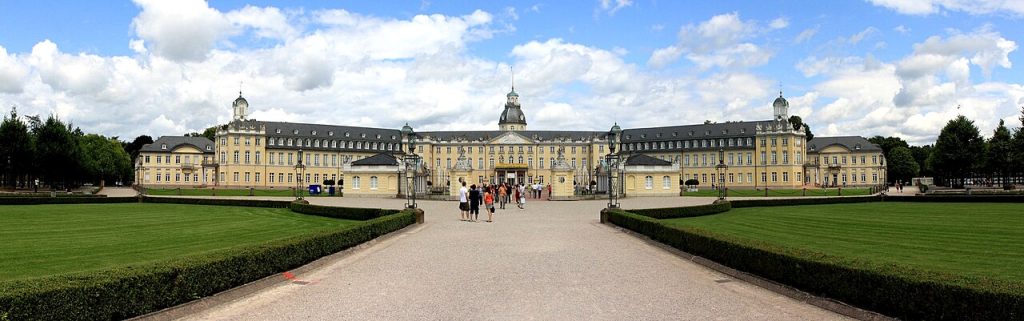
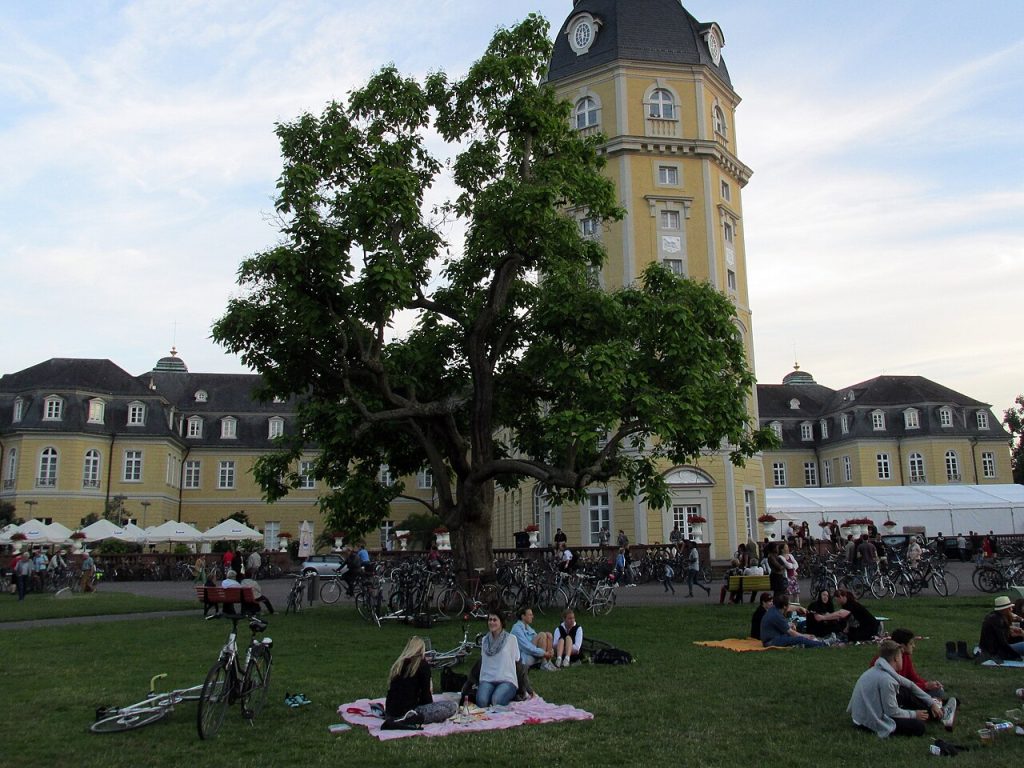
Standing on the square in front of Karlsruhe Palace, you face a long, symmetrical building with two great wings reaching out toward the city. Behind you, streets radiate in a fan shape, each one aligned on the palace tower, a reminder that the whole city was designed around this single point.
The palace is painted in soft tones and decorated with pilasters, window frames and a central projection marked by a balcony and the coat of arms of Baden. Its wings embrace the forecourt in a gesture of welcome.
Karlsruhe is a lively university city, home to Germany’s highest courts, and the palace sits at the centre of its cultural life, surrounded by museums, gardens and squares.
What makes the palace special is its relationship with the city. Few places in Europe show so clearly how a ruler could impose a vision of order and harmony on an entire urban landscape.
On sunny days, the palace square fills with students, families and visitors, who stroll among the fountains and enjoy the views along the avenues.
The palace square is also home to sculptures and monuments, including a statue of the city’s founder, and in summer it becomes a lively gathering place for open air events and festivals.
Many visitors are surprised by how green Karlsruhe is, with the palace garden, the botanical garden and the forest all within walking distance of the city centre.
Margrave Karl Wilhelm and the Founding of Karlsruhe
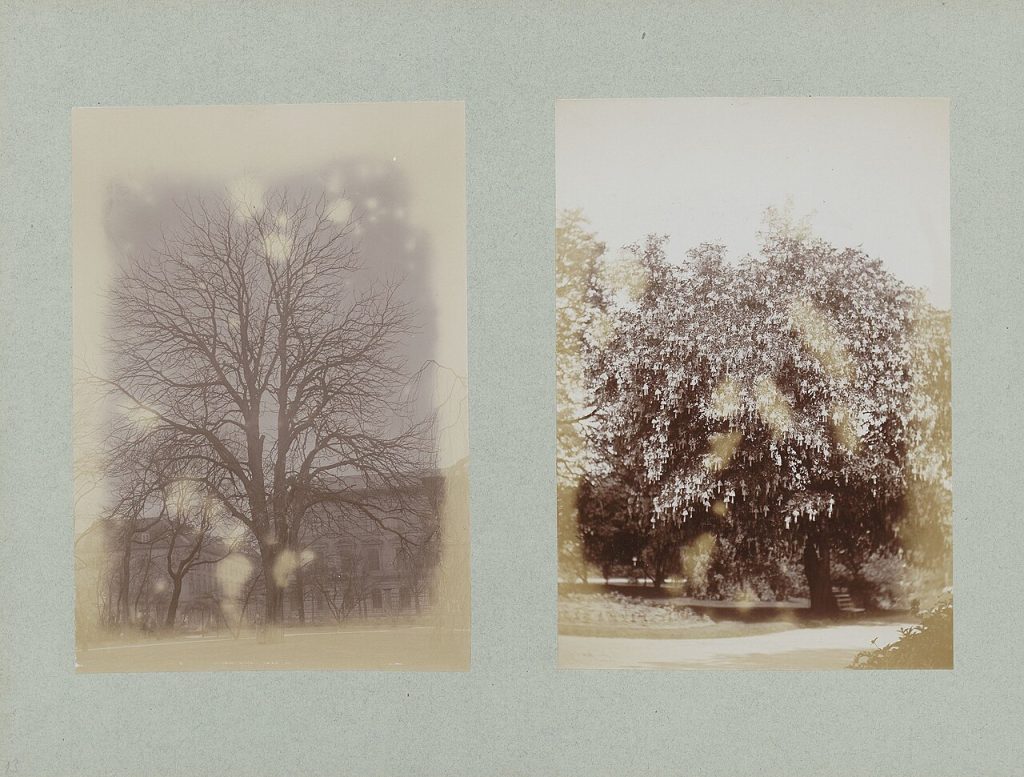
According to legend, Margrave Karl Wilhelm of Baden Durlach fell asleep under a tree while hunting in the Hardt forest and dreamed of a palace surrounded by a city shaped like a fan. Whether or not the story is true, he founded Karlsruhe, meaning Charles’s rest, in 1715 as his new residence.
The margrave wanted to escape the cramped old town of Durlach and create a modern capital that reflected the ideals of the baroque age, order, symmetry and princely power.
He invited settlers to the new city by offering free land and religious tolerance, and Karlsruhe quickly grew around the palace.
The original palace was largely built of wood and was later replaced by the stone building that we see today, but the fan plan created by Karl Wilhelm has endured.
The founder’s grave lies beneath the pyramid on the market square, which has become one of the symbols of Karlsruhe, aligned with the palace tower along the main axis of the city.
Karl Wilhelm was also a lover of flowers, especially tulips, and he maintained extensive gardens and greenhouses around the palace.
Thirty Two Streets and a Single Tower
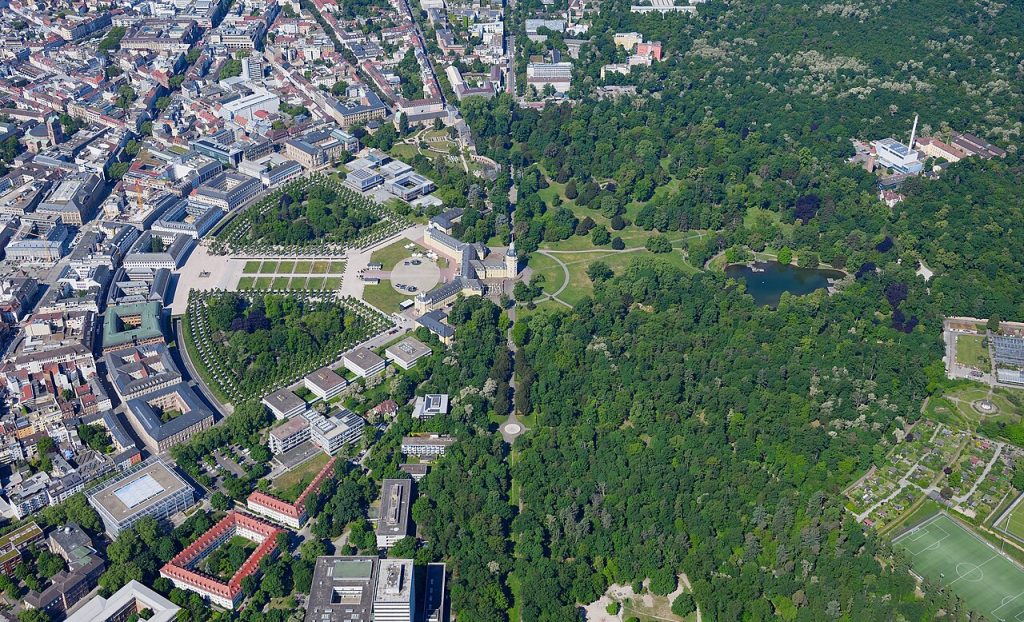
From the air, the plan of Karlsruhe is breathtaking. The palace tower stands at the centre of a circle, with thirty two straight lines radiating from it. To the south, nine of these lines form the streets of the city, while the others extend northward as avenues through the forest.
This design expressed the absolute ruler at the centre of his world, with everything arranged around and directed toward his residence. It was a bold statement of baroque political philosophy.
Today the fan plan gives Karlsruhe its unique character, and many visitors enjoy climbing the palace tower to see the radiating streets and avenues for themselves.
The plan also influenced later city designs elsewhere, and it is often mentioned as one of the inspirations for the layout of Washington DC.
Walking along any of the radiating streets, you will find that the palace tower appears at the end of the view, a constant reminder of the central role of the ruler in the city’s design.
The geometry of the plan is so precise that it can be traced on modern maps and satellite images, a lasting legacy of baroque town planning.
Rebuilt in Stone by Karl Friedrich
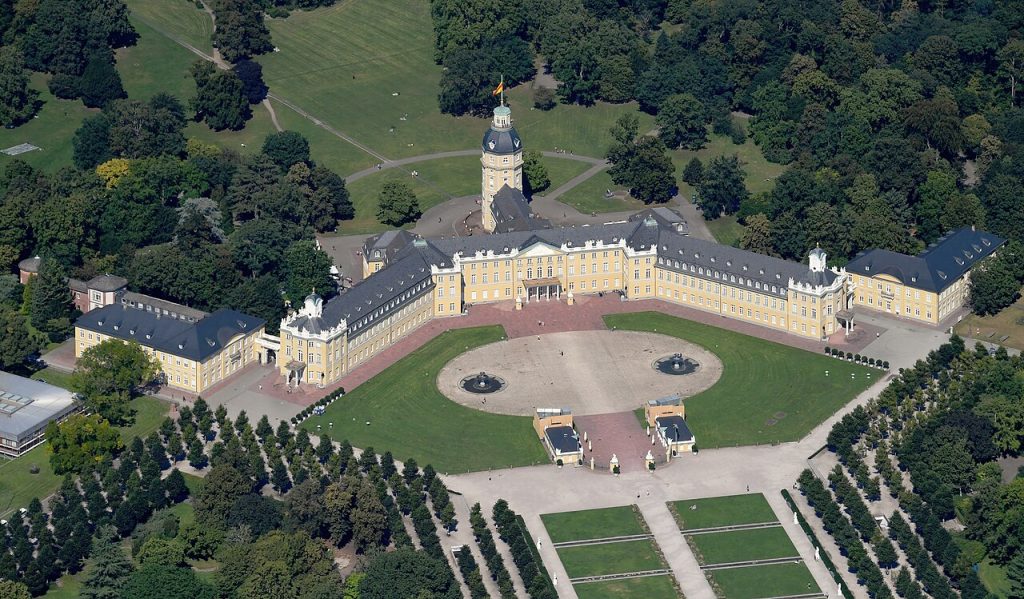
The original wooden palace soon proved inadequate, and between 1749 and 1781 Margrave Karl Friedrich rebuilt it in stone. Architects including Leopoldo Retti and Friedrich von Kesslau designed the new building, which combined late baroque grandeur with the emerging classical style.
Karl Friedrich was an enlightened ruler who reformed government, abolished serfdom and encouraged education. Under his long reign, Baden grew from a margraviate into a grand duchy, gaining territory and prestige.
The new palace reflected this growing status, with spacious state rooms, elegant facades and a dignified central tower that remained the focal point of the city.
In the nineteenth century the grand dukes of Baden continued to live here, and the palace became the centre of a modern constitutional state until the end of the monarchy in 1918.
Karl Friedrich’s reign lasted more than seventy years, one of the longest in European history, and he became a model of the enlightened ruler admired by thinkers of the time.
The rebuilt palace combined grand reception rooms with comfortable apartments, reflecting a new balance between ceremony and private life that was typical of the later eighteenth century.
The Palace Tower and Its View
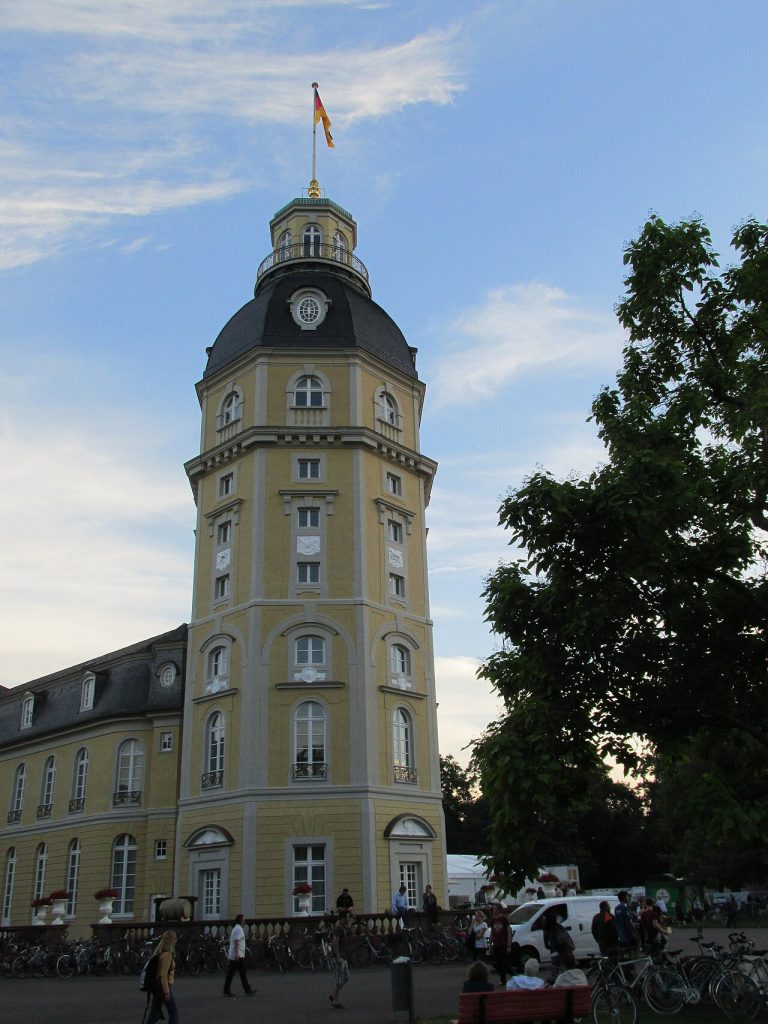
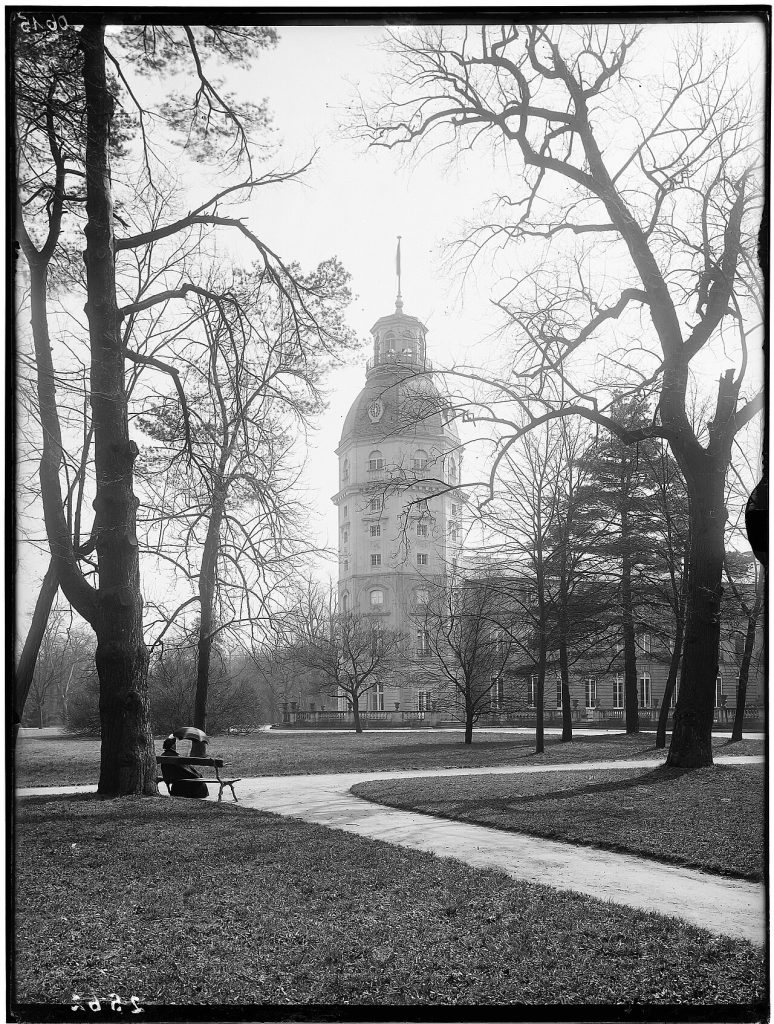
The tower rising from the centre of the palace is the point from which the whole city was laid out. Climbing it today rewards you with a spectacular view of the fan shaped streets, the palace gardens and the surrounding forest.
From the top you can see how the avenues stretch into the Hardt forest to the north, while the city spreads out to the south in its perfect geometric pattern.
The view is especially impressive on clear days, when you can see across the Rhine plain to the hills of the Black Forest and the Palatinate.
The tower is accessible through the Baden State Museum, and it is one of the most popular attractions for visitors to Karlsruhe.
Climbing the tower is a highlight for many visitors, and the panorama from the top is one of the best ways to understand the unique character of Karlsruhe.
The Palace From Above
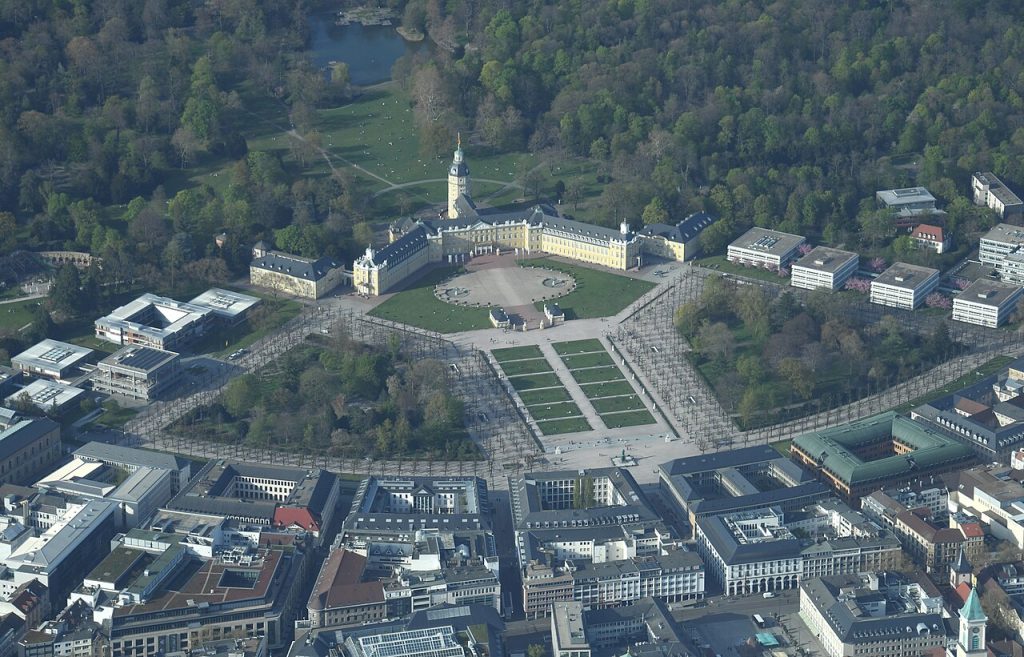
Aerial views of Karlsruhe show the palace as the hub of a great wheel, its wings opening toward the city and its gardens extending into the green to the north. It is one of the most striking urban images in Europe.
The palace square in front of the building is laid out with lawns, fountains and paths, forming a transition between the palace and the city streets.
Behind the palace, the Schlossgarten blends into the forest, so that the palace stands at the meeting point of city and nature.
Seeing the palace from above helps you appreciate the boldness of the founder’s vision and the care with which later generations preserved it.
The view from above also reveals how modern Karlsruhe has grown beyond the original fan, while still respecting the historic plan at its heart.
Fire and Reconstruction

During the Second World War, Karlsruhe was heavily bombed, and in 1944 the palace was burned out. Its interiors, with their rich decoration and furnishings, were lost.
After the war, the exterior of the palace was rebuilt to its historic appearance, while the interior was adapted for use as a museum. The facades, roofs and tower once again dominate the city as they did before.
Today the Baden State Museum occupies the palace, presenting collections that span thousands of years of history, from antiquity to the present day.
The reconstruction preserved the palace’s role as the symbolic centre of Karlsruhe, and it remains one of the city’s most beloved landmarks.
Photographs from the war years, displayed in the museum, show the burned out palace and the extent of the destruction, making the restored building all the more impressive.
The rebuilding of the palace was part of a wider effort to restore the identity of Karlsruhe after the war, and it remains a symbol of the city’s resilience.
The Baden State Museum

The Baden State Museum is one of the most important cultural history museums in southwest Germany. Its collections include archaeological finds from the ancient Mediterranean, medieval art, treasures of the margraves and grand dukes, and objects illustrating everyday life in the region.
Among the highlights is the Turkish booty, a collection of Ottoman objects captured in the late seventeenth century by Margrave Ludwig Wilhelm of Baden, known as Turkish Louis. It includes weapons, textiles, tents and decorative objects of great beauty.
The museum also displays the crown jewels and regalia of Baden, as well as portraits and objects associated with the ruling family.
Modern exhibitions and interactive displays make the museum engaging for visitors of all ages, and temporary exhibitions explore a wide range of themes.
The Turkish booty is one of the most important collections of Ottoman art outside Turkey, and it offers a fascinating window into the encounters between Europe and the Ottoman world.
Other sections of the museum explore the history of Baden, from the Roman period through the Middle Ages to the democratic movements of the nineteenth century.
The Palace Garden
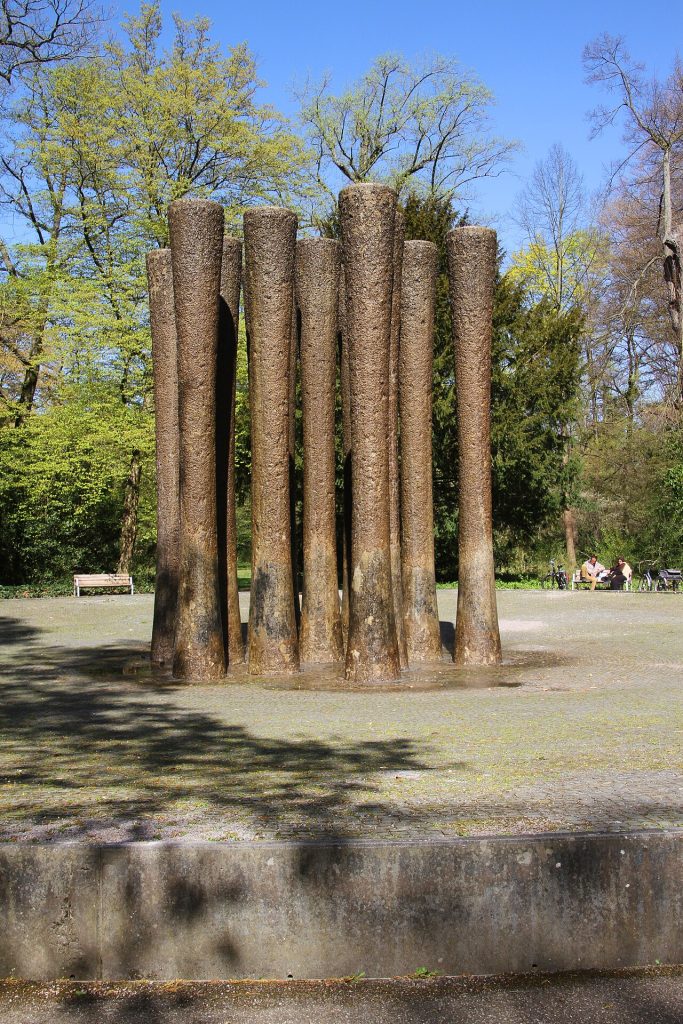
Behind the palace stretches the Schlossgarten, a large park that combines formal elements near the building with a more natural landscape further away. It is one of the most popular green spaces in Karlsruhe.
Paths lead through lawns, flower beds and groves of trees, past ponds and sculptures. In summer, students and families gather here to relax, picnic and enjoy the sunshine.
The garden is also home to the Botanical Garden, with historic glasshouses containing exotic plants, and to the Majolika manufactory, which produces colourful ceramics.
From the garden, you can enjoy fine views of the rear facade of the palace and its tower, framed by trees.
The Majolika manufactory, founded in 1901, still produces hand crafted ceramics, and its blue tiled path, the Blue Line, leads from the palace through the garden to the workshop.
Fountains and Waterways

Water features add life to the palace garden, from small fountains near the palace to ponds and streams in the landscape park.
On warm days, the sound of water and the shade of the trees make the garden a cool refuge from the heat of the city.
Ducks, swans and other birds inhabit the ponds, and the reflections of trees and sky create beautiful scenes in every season.
The waterways also reflect the eighteenth century love of combining architecture with nature, a theme that runs through many German palace gardens.
Benches along the water invite you to rest and enjoy the view, and in autumn the colours of the trees reflected in the ponds are especially beautiful.
Where Garden Meets Forest
One of the unique features of Karlsruhe is the way the palace garden merges with the Hardt forest to the north. The radiating avenues continue into the woods, creating long, straight paths that are perfect for walking and cycling.
This connection with the forest recalls the founding legend of the city and the hunting traditions of the margraves.
Today the forest is a popular recreation area, and walking along one of the avenues away from the palace gives you a vivid sense of the scale of the original plan.
Looking back toward the palace tower from deep in the forest, you can see how every path leads home to the centre.
Cyclists especially enjoy the long straight avenues, which make it easy to explore the forest and the surrounding countryside.
Karlsruhe Palace on Video

For an overview of the palace and its unique setting, the video below presents Karlsruhe Palace and the fan shaped city around it.
Watch for the views of the radiating streets and the palace gardens.
If the video inspires you, read on for practical tips.
Visiting Karlsruhe Palace Today
The palace and the Baden State Museum are open throughout the year, except on Mondays. The palace square and garden are freely accessible and are lovely places to spend time.
Karlsruhe is easy to reach by train, and the palace is a short tram ride or walk from the central station.
Plan at least half a day to see the museum and climb the tower, and longer if you want to explore the garden and the Botanical Garden.
Karlsruhe pairs well with Bruchsal, Schwetzingen and Rastatt, all within easy reach, making the region ideal for exploring the palaces of Baden.
There are cafes and restaurants around the palace square, and the city centre with its shops and markets is just a short walk away.
Whenever you visit, Karlsruhe Palace offers a fascinating combination of history, urban planning and green space, and it is the perfect starting point for exploring the city.
View the location on Google Maps
Palaces Nearby
If Karlsruhe Palace has fascinated you, Baden holds more remarkable palaces. Here are two more well worth adding to your journey:
- Schwetzingen Palace – the summer residence of the Electors Palatine with its enchanted gardens and garden mosque.
- Bruchsal Palace – the residence of the prince bishops of Speyer, famous for its staircase by Balthasar Neumann.
You May Like


