On the cathedral hill of Bamberg, one of the most beautiful old towns in Germany, a grand baroque palace faces the four towered cathedral across a sloping square. The New Residence was the seat of the prince bishops of Bamberg, churchmen who were also secular rulers, and its rooms, halls and rose garden are among the treasures of a city listed in its entirety as a UNESCO World Heritage Site.
Built around 1700 by the Dientzenhofer family of architects for the powerful Schonborn prince bishop Lothar Franz, the palace contains more than forty state rooms, a spectacular Imperial Hall painted with portraits of emperors and a garden of thousands of roses with one of the finest views in Franconia.
In this article we will explore the New Residence from the prince bishops who built it to its painted halls and its famous rose garden, and we will finish with practical tips for your visit to Bamberg.
In This Article
- A Palace on the Cathedral Hill
- The Prince Bishops of Bamberg
- Lothar Franz von Schonborn and His Building Passion
- The Dientzenhofer Architects
- Wings, Courtyards and the Renaissance Core
- Staircases and the Approach to the State Rooms
- The Imperial Hall
- Melchior Steidl and the Art of Illusion
- More Than Forty State Rooms
- Fireplaces, Tapestries and Fine Details
- The Rose Garden Above the Rooftops
- The New Residence on Video
- Visiting the New Residence Today
A Palace on the Cathedral Hill
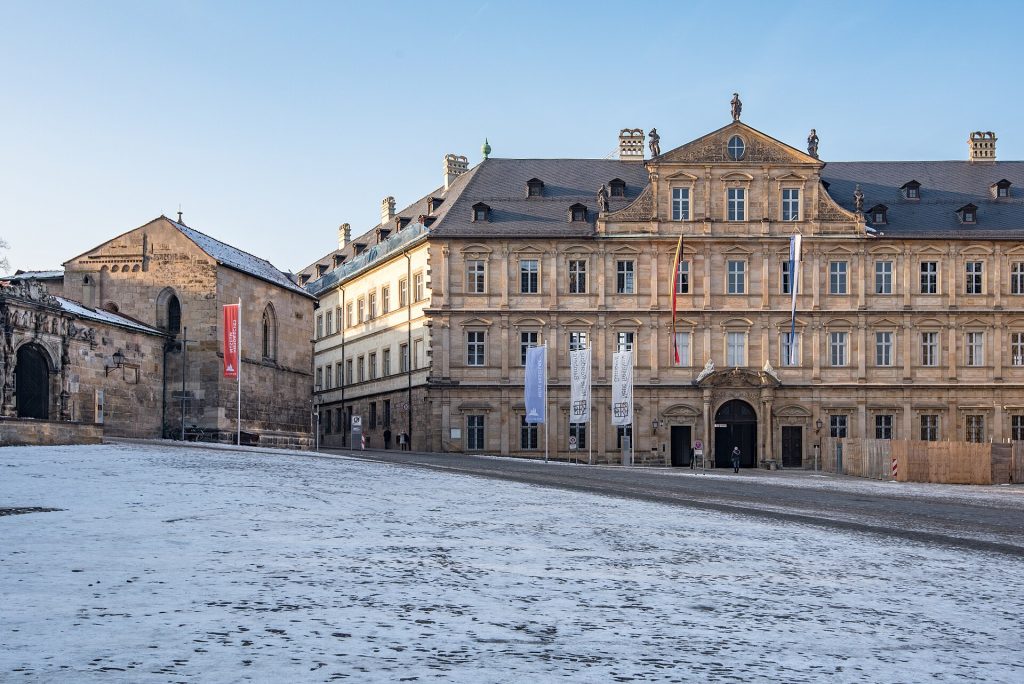
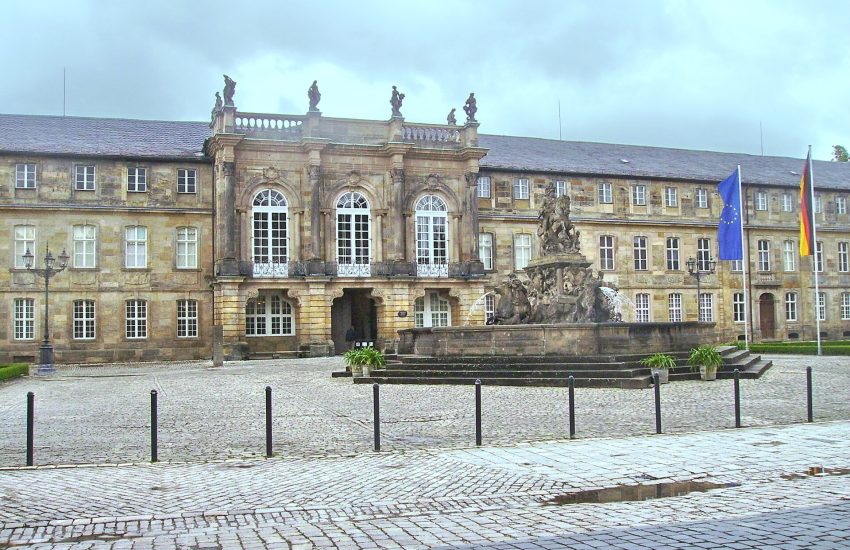
Climb up from the river through the old streets of Bamberg and you arrive at the Domplatz, one of the most remarkable squares in Germany. On one side rises the medieval cathedral with its four towers, on another the half timbered Old Court, and along the third stretches the long baroque front of the New Residence.
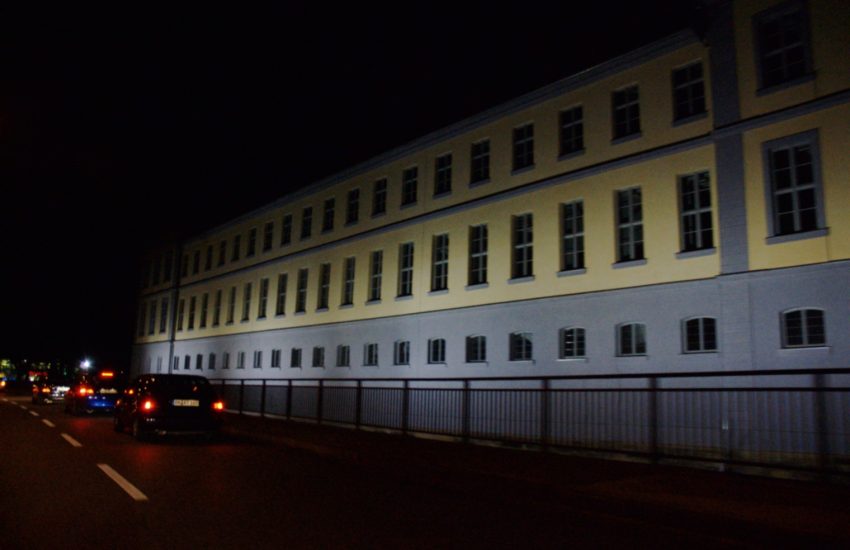
The palace is built in an L shape, with long wings framing the square, and its facades are richly articulated with pilasters, window frames and sculpture. Its scale and grandeur make it the dominant secular building on the hill.
The square slopes gently, and from its upper end you can take in the whole ensemble of cathedral, old court and new palace, a striking illustration of how spiritual and worldly power were intertwined in the old prince bishoprics of the empire.
Bamberg itself is a delight to explore, with its bridges, half timbered houses, breweries and the famous old town hall built in the middle of the river. The New Residence is one of the highlights of any visit.
What makes the palace special is the combination of its setting, its splendid interiors and the rose garden behind it, which offers a peaceful retreat with sweeping views over the rooftops of the city.
The Domplatz is especially atmospheric early in the morning or in the evening, when the day visitors have left and the light softens on the old stones. It is a wonderful place to sit and absorb the history of the city.
Many visitors combine a tour of the palace with a slow walk around the cathedral hill, discovering hidden courtyards, quiet lanes and unexpected views of the river and the city below.
The Prince Bishops of Bamberg
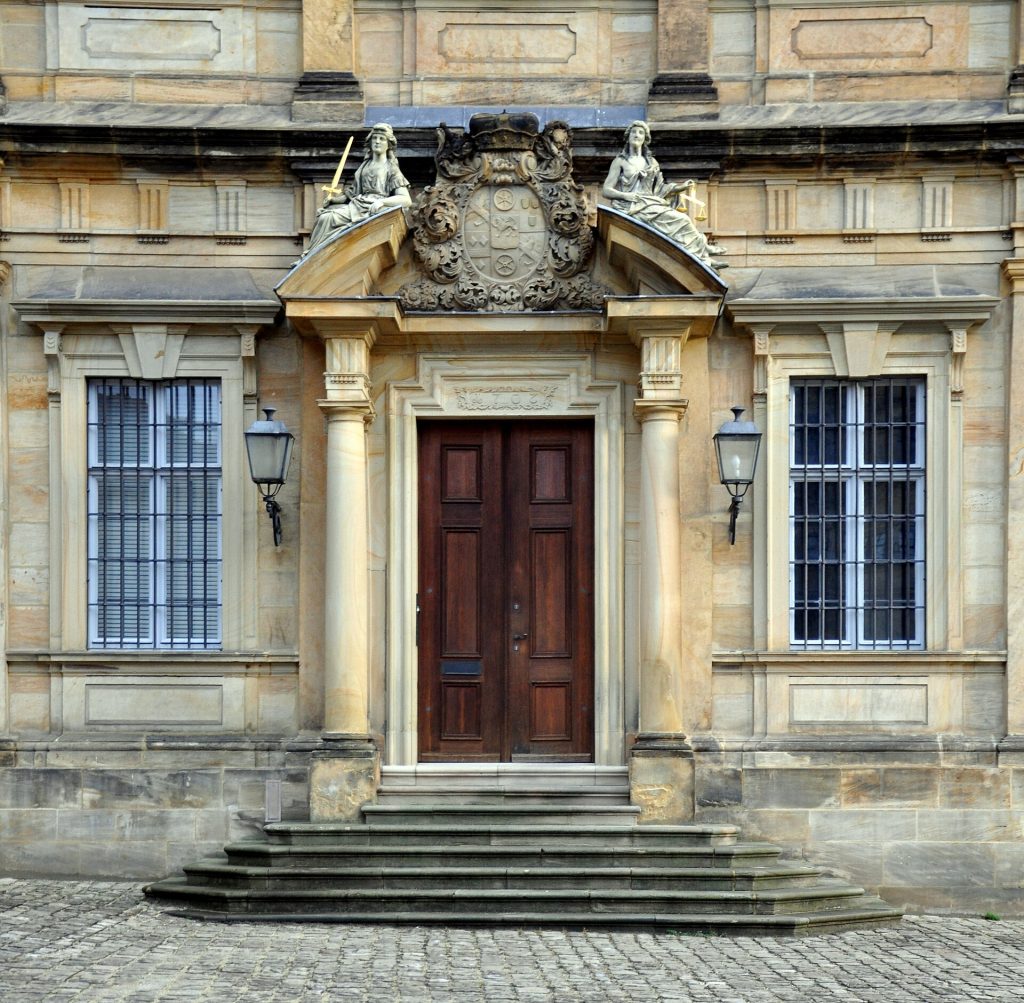
For centuries Bamberg was ruled by prince bishops, churchmen who governed both the diocese and a secular territory within the Holy Roman Empire. They were bishops and princes at the same time, with courts, armies, administrations and palaces of their own.
The bishopric was founded in 1007 by Emperor Henry II, who made Bamberg one of the most important centres of the empire. Henry and his wife Kunigunde were later canonised and are buried in the cathedral, just across the square from the palace.
The prince bishops lived at first in the Old Court beside the cathedral, a complex of medieval and Renaissance buildings. As their wealth and ambitions grew, they began to build a new residence that would match the splendour of other European courts.
The first parts of the New Residence were built at the beginning of the seventeenth century, in the Renaissance style, but the great transformation came a century later under one of the most ambitious builders of the baroque age.
The prince bishops ruled Bamberg until 1802, when their territory was secularised and absorbed into Bavaria, ending nearly eight centuries of ecclesiastical rule.
The cathedral treasury and the Diocesan Museum, close to the palace, display precious objects from the time of Henry II and Kunigunde, including liturgical vestments and works of medieval goldsmiths, which help tell the story of the bishopric from its very beginnings.
The power of the prince bishops was not only spiritual. They collected taxes, administered justice and maintained armed forces, and their court was a centre of political as well as religious life.
The cathedral itself, with its famous Bamberg Horseman statue and the tomb of Henry and Kunigunde carved by Tilman Riemenschneider, is a must see and lies only a few steps from the palace entrance.
Lothar Franz von Schonborn and His Building Passion
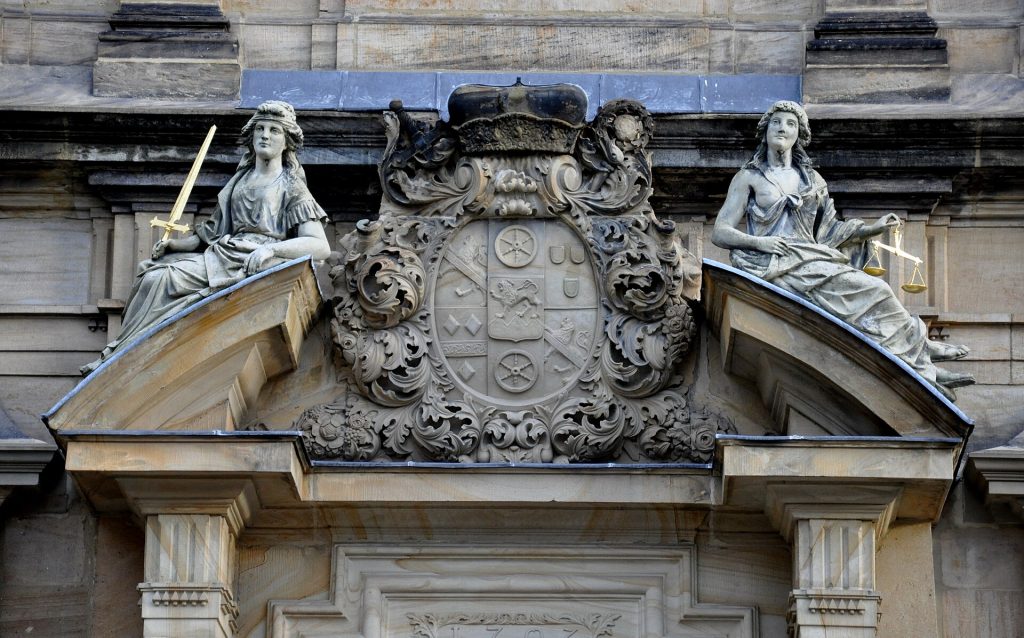
The man behind the baroque New Residence was Lothar Franz von Schonborn, prince bishop of Bamberg from 1693 and also archbishop and elector of Mainz. He was one of the most powerful churchmen in the empire and a member of the Schonborn family, famous for their passion for building, which contemporaries called the Schonborn building worm.
Lothar Franz was a great patron of architecture and art. Besides the New Residence, he built the magnificent Weissenstein Palace at Pommersfelden near Bamberg, and members of his family were responsible for the Wurzburg Residence and many other baroque buildings in Franconia.
He wanted his residence in Bamberg to express the power and prestige of his office, and he spared no expense in its construction and decoration. The coats of arms of the Schonborn family can be seen above the portals of the palace.
Under his patronage, Bamberg became one of the centres of Franconian baroque, and the influence of his building projects can still be seen across the region.
His portrait hangs in the palace, a reminder of the forceful personality who shaped so much of the architecture of southern Germany.
Weissenstein Palace at Pommersfelden, Lothar Franz’s private summer residence, is famous for its spectacular staircase and is often visited together with Bamberg. Comparing the two buildings shows how the prince bishop used architecture to express both his public office and his personal taste.
The Schonborn family produced several prince bishops and archbishops in the eighteenth century, and their patronage created a remarkable network of palaces, churches and gardens across Franconia and the Rhineland.
The Dientzenhofer Architects
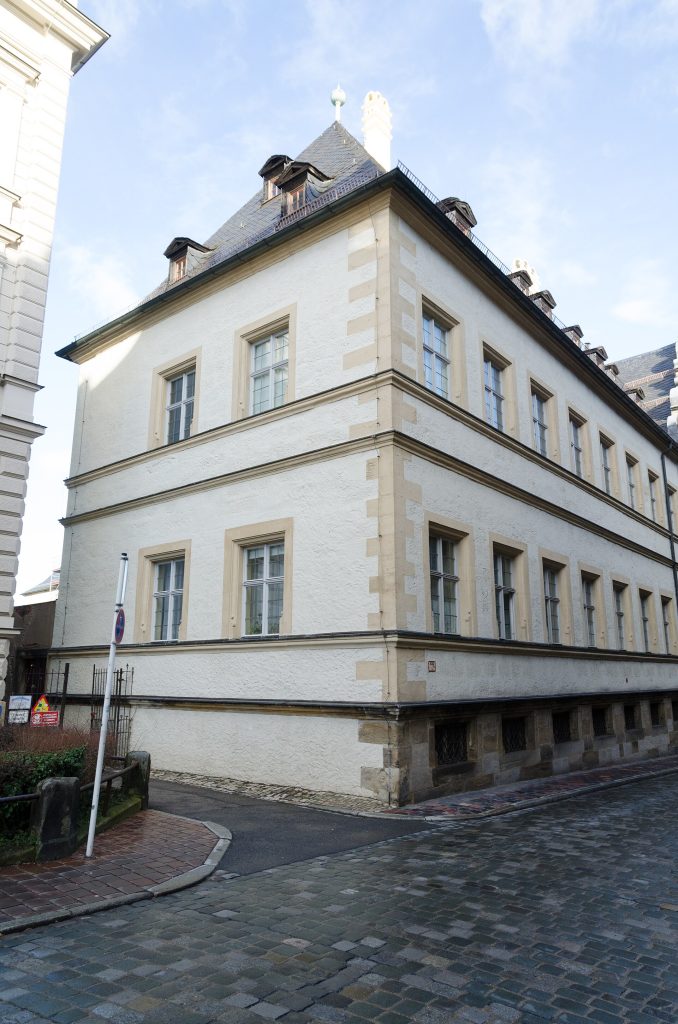
To build his palace, Lothar Franz turned to Johann Leonhard Dientzenhofer, a member of a remarkable family of architects from Bavaria who worked across Franconia and Bohemia. Between 1697 and 1703, Dientzenhofer added two great new wings to the existing Renaissance buildings, creating the impressive L shaped palace we see today.
The Dientzenhofer family produced several of the leading architects of the baroque period. Johann Leonhard’s brothers and relatives built churches and palaces in Prague and elsewhere, and their work defined the look of baroque central Europe.
At Bamberg, Johann Leonhard designed facades of great dignity, with strong vertical accents, elaborate window frames and sculpted portals. Inside, he created spacious staircases and long suites of state rooms suitable for a princely court.
The new wings were joined to the older Renaissance parts of the residence, and the contrast between the two periods can still be seen in the courtyard and in the different characters of the facades.
Johann Leonhard Dientzenhofer died in 1707, shortly after completing the palace, but his work at Bamberg remains one of his greatest achievements.
Look out for the elegant window frames and the sculpted figures above the portals, which show the high quality of the stonework. The pale sandstone used for the facades glows warmly in the sun.
The palace’s long facade along the square is one of the most photographed views in Bamberg, especially when framed together with the cathedral towers.
Wings, Courtyards and the Renaissance Core
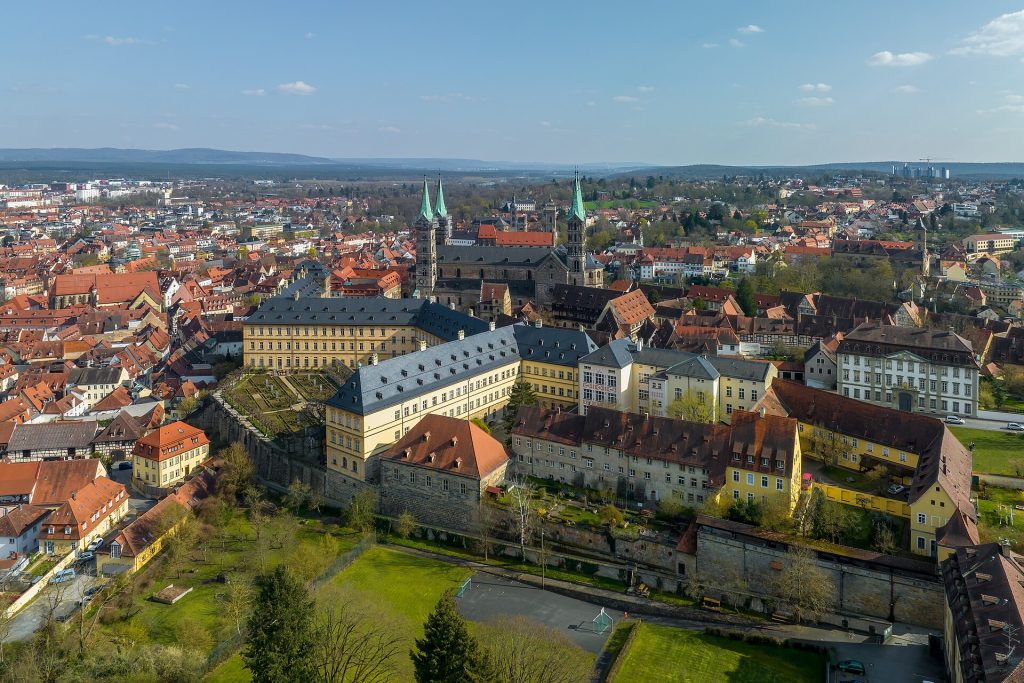
The New Residence is made up of four wings around an inner courtyard. The two older wings, built between 1602 and 1611 for Prince Bishop Johann Philipp von Gebsattel, show the forms of the late Renaissance, while the two baroque wings by Dientzenhofer face the Domplatz with their grander facades.
Seen from the air, the palace forms a large irregular complex, its roofs and courtyards fitting into the dense fabric of the cathedral hill. Its size reflects the importance of the prince bishops and the many functions their residence had to fulfil.
The courtyard is quieter than the square outside, and here you can see how the different building phases meet. Doorways and staircases lead to the state rooms, the gallery and the administrative areas.
Today parts of the palace house the State Library of Bamberg, with its precious medieval manuscripts, as well as the Bavarian State Painting Collections gallery, so the building remains a lively centre of culture and learning.
Walking around the outside of the palace, along the narrow lanes of the cathedral hill, you can appreciate how skilfully the architects fitted such a large building into the historic townscape.
The State Library, housed in the palace, holds treasures such as manuscripts from the time of Henry II, some of which are listed in the UNESCO Memory of the World register. Exhibitions occasionally present these precious documents to the public.
Inside the courtyard, look for the older Renaissance details, such as stair towers and window frames, which reveal the earlier history of the residence before its baroque expansion.
Staircases and the Approach to the State Rooms
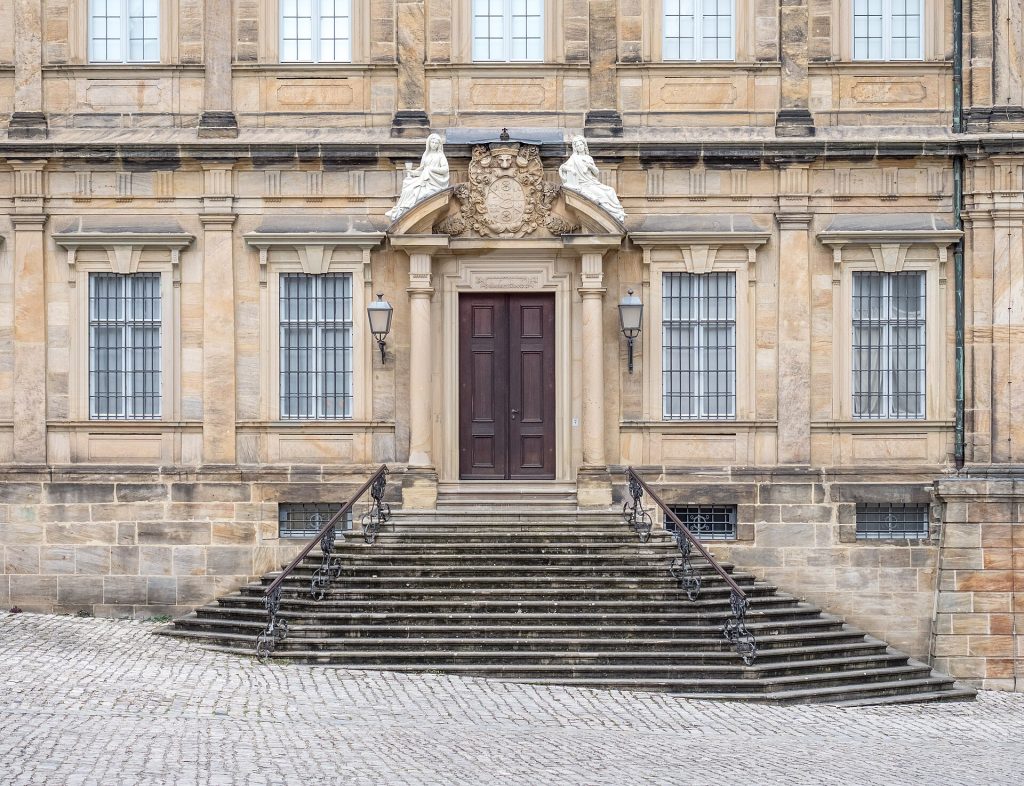
Inside the palace, broad staircases lead to the state rooms on the upper floors. Their architecture is solid and dignified, designed to impress visitors as they climbed toward the apartments of the prince bishop.
Baroque staircases were important ceremonial spaces. The route from the entrance to the audience chamber was carefully planned, and the rank of a visitor determined how far the prince bishop would come to meet him.
Along the way, portraits, sculptures and decorative details reminded visitors of the power and prestige of their host. Light from the windows fell across the steps, creating a sense of ascent and anticipation.
Today visitors follow the same route on guided tours, climbing the stairs to discover the splendid rooms above.
The staircases also connected the state rooms with the private apartments and the service areas, allowing the complex daily life of the court to function smoothly behind the scenes.
The Imperial Hall
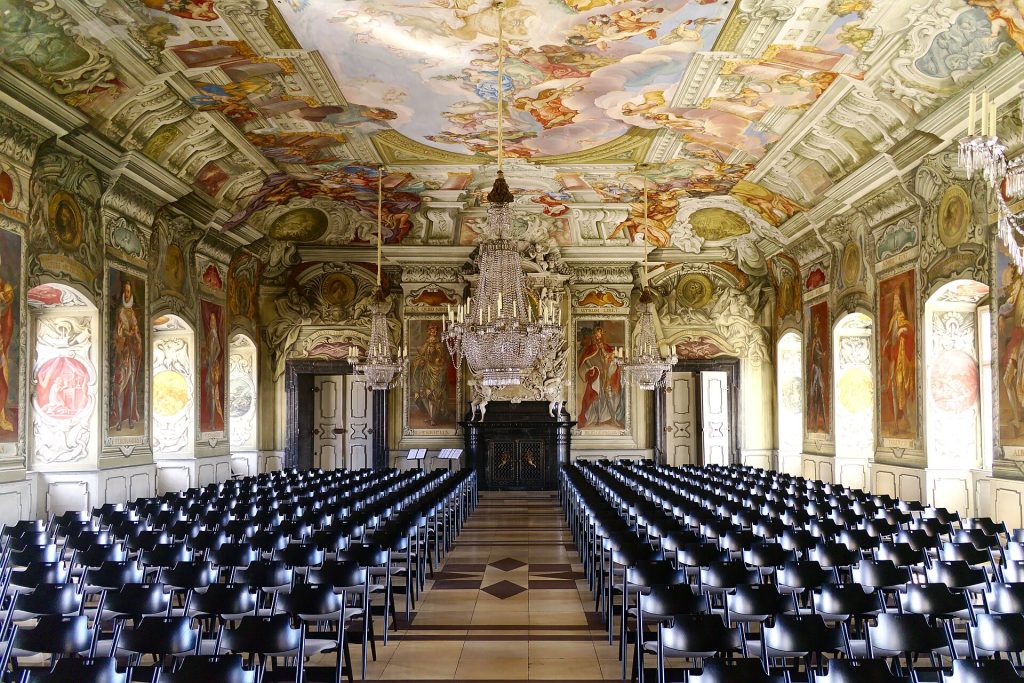
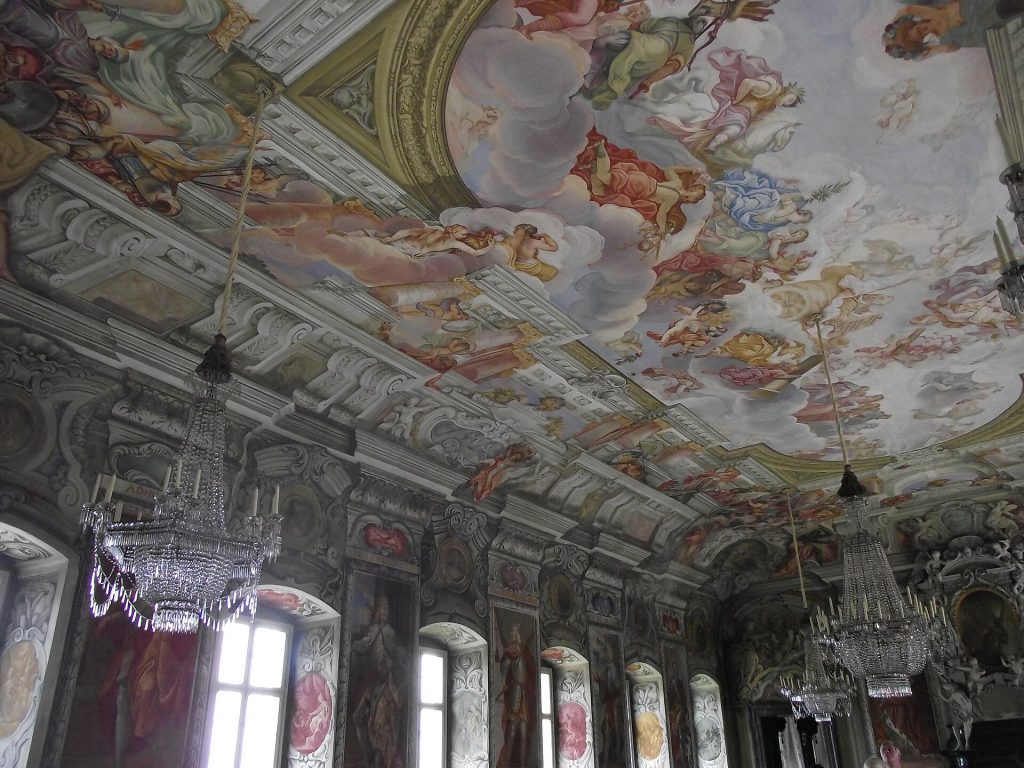
The most famous room in the New Residence is the Imperial Hall, the Kaisersaal, a grand banqueting and reception hall on the main floor. Its walls and ceiling were painted between 1707 and 1709 by the Tyrolean artist Melchior Steidl, creating one of the most impressive baroque interiors in Franconia.
Along the walls appear sixteen life size portraits of emperors of the Holy Roman Empire, set within painted architecture that creates an illusion of depth and grandeur. The emperors seem to stand in niches, watching over the guests who once gathered in the hall.
The ceiling is filled with an allegorical painting celebrating the virtues of good government, with figures floating in a painted sky. The combination of real and painted architecture creates a powerful effect of space and light.
The choice of emperors as the theme of the hall was deliberate. Bamberg had been founded by an emperor, and the prince bishops wished to emphasise their close ties to the imperial tradition and their own place within the empire.
Standing in the hall today, surrounded by the painted emperors, you can sense the political and ceremonial world of the baroque empire in a uniquely vivid way.
The hall was used for important banquets and receptions, including those held during visits by emperors and other princes. Long tables would be set beneath the painted ceiling, lit by candles and attended by servants in livery.
Restoration work has preserved the colours of the frescoes, and the hall now appears much as it did when the prince bishops entertained their guests three centuries ago.
The hall’s windows look out over the Domplatz and the cathedral, linking the painted emperors inside with the medieval heart of the city outside.
Melchior Steidl and the Art of Illusion

Melchior Steidl was one of the leading fresco painters of southern Germany around 1700. Trained in the Tyrol and influenced by Italian masters, he specialised in illusionistic painting that made flat walls and ceilings appear to open into vast architectural spaces.
In the Imperial Hall, Steidl used perspective to create painted columns, balconies and niches that seem to project from the walls. Seen from the right point in the room, the illusion is almost perfect, and the painted architecture blends seamlessly with the real.
His colours are rich and warm, with deep reds, golds and blues that give the hall a festive atmosphere. The figures are lively and expressive, full of movement and gesture.
Steidl’s work at Bamberg is considered one of his masterpieces, and it shows how artists of the baroque period used painting to transform architecture into a stage for power and celebration.
Steidl also worked on other projects in Franconia and Bavaria, but nowhere did he have such a grand stage as in the Imperial Hall at Bamberg.
Many visitors find themselves walking slowly around the hall to see how the illusion changes from different viewpoints, a playful effect that Steidl clearly intended.
More Than Forty State Rooms

Beyond the Imperial Hall, the New Residence contains a long sequence of state rooms, more than forty in all, furnished with period furniture, tapestries, paintings and decorative objects from the seventeenth and eighteenth centuries.
The rooms include audience chambers, bedrooms, cabinets and salons, each decorated according to its function and importance. Some preserve their original baroque decoration, while others were refurbished in later periods.
Among the most beautiful are the rooms with fine stucco ceilings and rich wall hangings, where the prince bishops received guests and conducted the business of their state.
In the nineteenth century, after Bamberg became part of Bavaria, the palace served as a residence for members of the Bavarian royal family. King Otto of Greece, a Bavarian prince who had ruled Greece, lived here in exile after he was deposed in 1862, and some rooms recall his time.
Guided tours take you through the most important rooms, and the guides explain the history and significance of each space and its furnishings.
Some rooms display Chinese and Japanese porcelain, lacquer and textiles, reflecting the fascination of baroque courts with the arts of East Asia.
The rooms associated with King Otto of Greece contain furniture and objects from the nineteenth century, offering a fascinating contrast with the baroque splendour of the prince bishops.
The tours are relaxed and informative, and guides often share anecdotes about the prince bishops and the later royal residents that bring the rooms to life.
Fireplaces, Tapestries and Fine Details
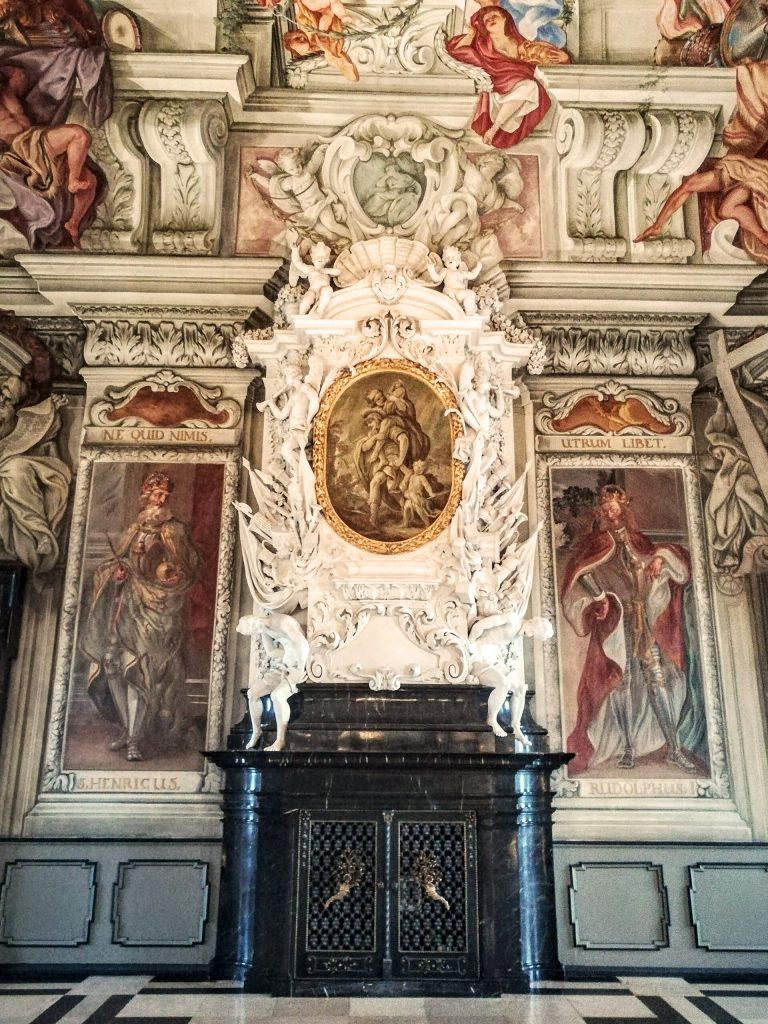
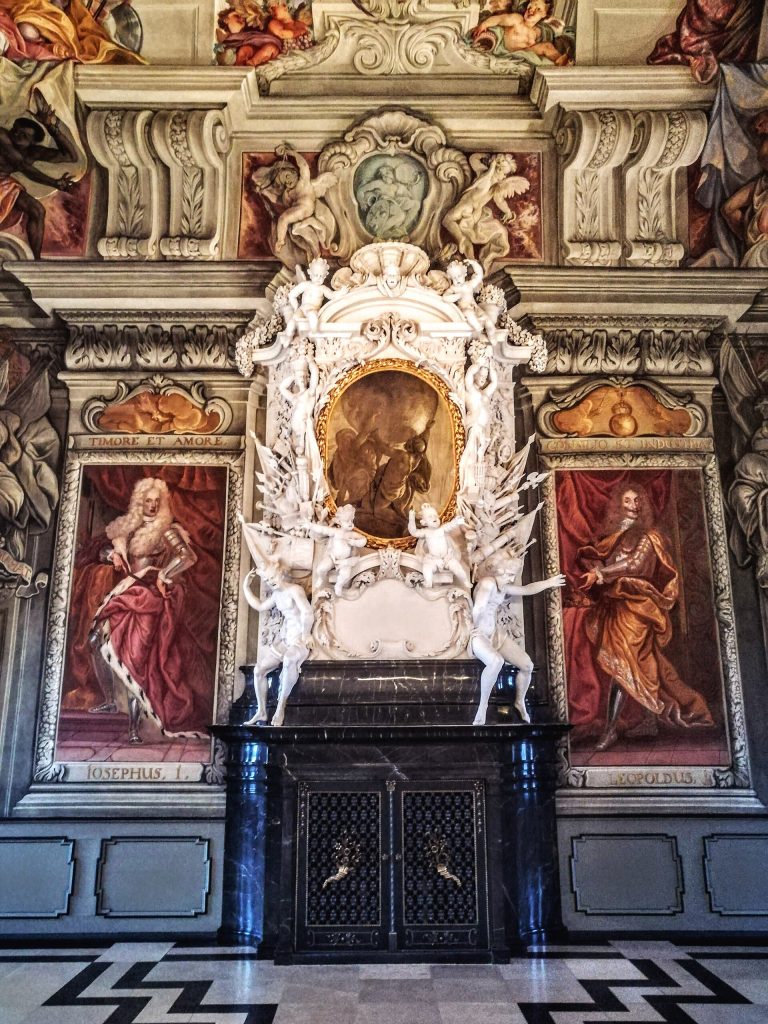
The state rooms of the New Residence are full of fine details that reward close attention. Elaborate fireplaces, some decorated with mythological scenes such as the story of Aeneas or figures of Atlas, served both as heating and as centrepieces of the rooms.
Tapestries woven in Flemish and French workshops cover some of the walls, depicting historical and mythological stories in rich colours. They were among the most precious furnishings of any baroque palace.
Parquet floors, carved doors, gilded frames and painted ceilings add to the sense of luxury, and the furniture includes fine cabinets, tables and chairs made by skilled craftsmen.
Many of these objects were collected by the prince bishops over generations, and they show the high standard of taste and craftsmanship at the court of Bamberg.
The tapestries were especially valuable because they combined art with warmth and comfort, helping to insulate the stone walls during the cold Franconian winters.
Some of the fireplace overmantels contain sculpted or painted scenes that tell stories from ancient history and mythology, offering subjects for conversation among the prince bishop’s guests.
The Rose Garden Above the Rooftops
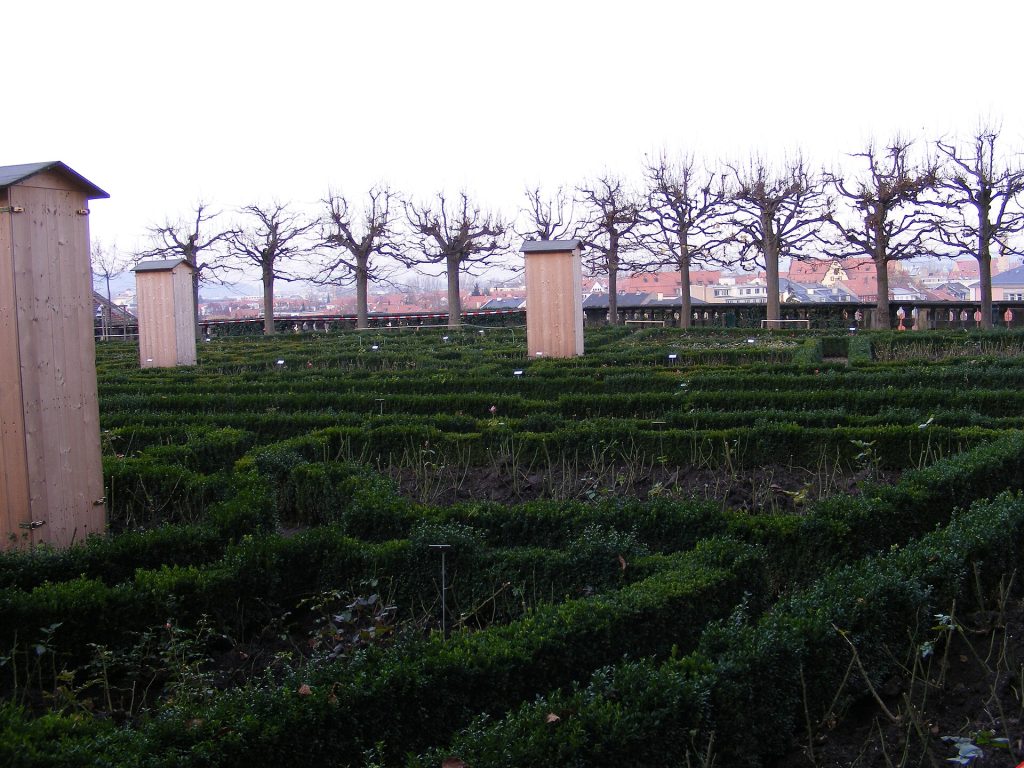
Behind the New Residence lies one of the loveliest spots in Bamberg, the Rose Garden. Laid out in the eighteenth century as a baroque garden for the prince bishops, it is planted with thousands of roses in many varieties, arranged in formal beds around a central fountain.
The garden is decorated with sculptures by Ferdinand Tietz, the court sculptor of the prince bishops, depicting mythological figures and allegories. A rococo pavilion offers a shady spot to rest and enjoy the view.
From the edge of the garden, you look out over the red roofs of Bamberg, the church towers and the monastery of Michelsberg on its hill. It is one of the finest views in the city, especially in the evening light.
In early summer, when the roses are in full bloom, the garden is filled with colour and fragrance, and it becomes a favourite place for locals and visitors alike.
The garden is open to the public and free to enter, so even if you do not have time for a tour of the palace, it is well worth stepping in to enjoy the roses and the view.
The rococo pavilion in the garden houses a small cafe in the warmer months, where you can enjoy a coffee or a cold drink while looking out over the roses and the city.
Photographers love the garden for its combination of flowers, statues and views, and it is one of the most popular spots in Bamberg for a souvenir picture.
The garden is particularly magical in June, when the roses reach their peak, but it is beautiful from late spring to autumn, with something always in flower.
In autumn, late flowering roses mingle with the golden colours of the trees, and the view over the city is especially beautiful in the soft light.
The New Residence on Video
For a closer look at the palace before your visit, the video below presents the New Residence, its state rooms and its gardens.
Watch for the Imperial Hall with its painted emperors and the rose garden with its views over the city.
The video also gives a sense of the palace’s setting on the cathedral hill, which is one of its most memorable features.
If the video inspires you, read on for practical tips on visiting Bamberg and the palace.
Visiting the New Residence Today
The New Residence is managed by the Bavarian Palace Administration, and the state rooms can be visited on guided tours throughout the year. Tours usually last about an hour and take in the Imperial Hall and the most important apartments.
The palace also houses a branch of the Bavarian State Painting Collections, with works by old masters, including German baroque and Netherlandish painters, displayed in elegant rooms.
Bamberg is easy to reach by train from Nuremberg, Wurzburg and other cities in Franconia. From the station, a pleasant walk through the old town and across the river brings you to the cathedral hill.
Plan to spend at least a full day in Bamberg, combining the New Residence with the cathedral, the Old Court, the old town hall and a visit to one of the city’s famous breweries, where you can try the local smoked beer.
If you are exploring Franconia, the New Residence pairs well with the Wurzburg Residence and the palaces of Ansbach and Bayreuth, which together offer a rich panorama of baroque and rococo art in southern Germany.
Combined tickets are available for several Bavarian palaces, which can be good value if you plan to visit more than one residence during your trip.
Bamberg has many cosy guesthouses and hotels, so consider staying overnight to enjoy the old town in the evening, when the illuminated cathedral and palace make an unforgettable sight.
Whenever you come, the New Residence offers a wonderful insight into the world of the prince bishops and the splendour of Franconian baroque.
View the location on Google Maps
Palaces Nearby
If the New Residence has fascinated you, Franconia is rich in princely palaces. Here are two more well worth adding to your journey:
- The Wurzburg Residence – the masterpiece of the prince bishops of Wurzburg, with its famous staircase and Tiepolo frescoes.
- The Ansbach Residence – the rococo seat of the margraves of Brandenburg Ansbach, with its tile hall and mirror cabinet.
You May Like


One thought on “The New Residence of Bamberg and the Prince Bishops of Franconia”