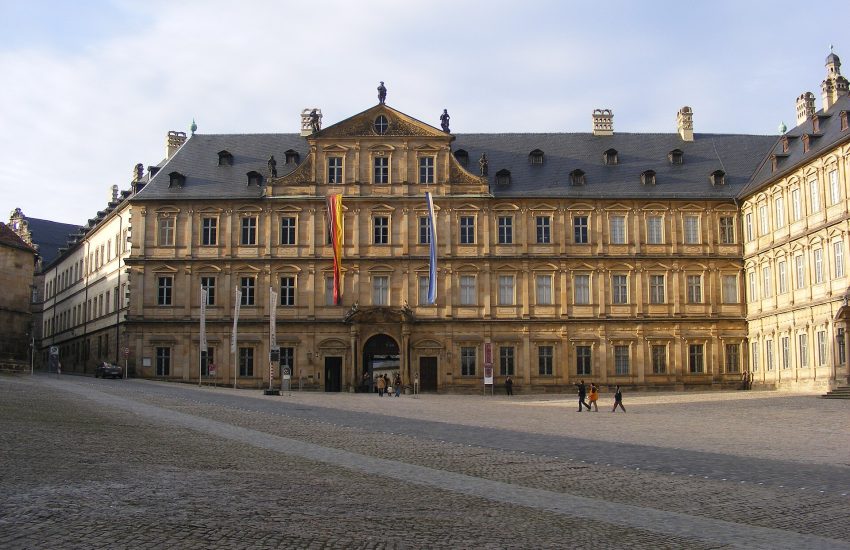
In the Franconian town of Bayreuth, famous today for Richard Wagner and his festival, stands a palace that tells the story of one of the most remarkable women of the eighteenth century. The New Palace was built for Margravine Wilhelmine, the gifted sister of Frederick the Great of Prussia, and her husband Margrave Friedrich, and its interiors are the finest expression of a unique style known as Bayreuth Rococo.
Behind its long, elegant facade lie rooms of extraordinary imagination: a hall of gilded palm trees, a cabinet covered in shards of mirror, grotto rooms encrusted with shells and stones, and apartments filled with porcelain, silk and painted decoration. Behind the palace stretches a peaceful court garden with a long canal.
In this article we will explore the New Palace from the fire that led to its creation to its fantastical rooms and gardens, and we will finish with practical tips for visiting Bayreuth.
In This Article
- A Rococo Palace in the Town of Wagner
- Margravine Wilhelmine, Sister of Frederick the Great
- From Fire to a New Residence
- Joseph Saint Pierre and the Bayreuth Style
- Wings, Courtyards and the Palace Square
- The Palm Room
- The Grotto Rooms
- Shells, Stones and Fantasy
- Mirror Shards, Wall Panels and Cabinets
- Golden Rooms and the Music of the Court
- The Court Garden and Its Canal
- The New Palace on Video
- Visiting the New Palace Today
A Rococo Palace in the Town of Wagner

Bayreuth is a lively town in Upper Franconia, surrounded by green hills and forests. Most visitors know it for the Wagner Festival, held every summer in the Festival Theatre on the Green Hill, but the town’s golden age came a century earlier, under the margraves of Brandenburg Bayreuth.
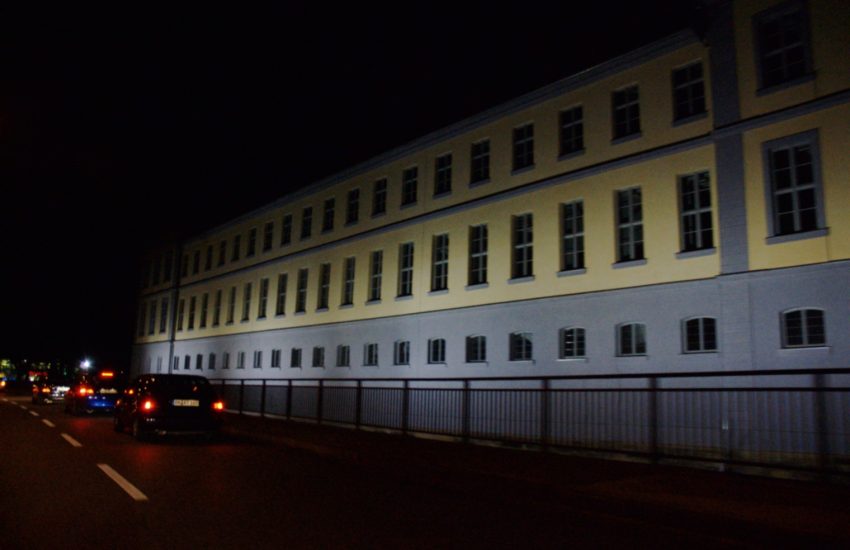
The New Palace stands on the edge of the old town, its long facade facing a quiet street, with the court garden stretching behind it. From the outside it looks dignified and restrained, with pale walls and evenly spaced windows.
Inside, however, the palace reveals a world of fantasy and elegance that is quite unlike anything else in Germany. The decoration combines natural motifs, exotic themes and playful illusions, reflecting the personal taste of Margravine Wilhelmine.
What makes the New Palace special is the sense that it was shaped by a single, highly cultivated personality. Wilhelmine was a writer, composer, patron and designer, and her spirit fills every room.
Together with the Margravial Opera House and the Hermitage just outside the town, the palace forms one of the most fascinating ensembles of rococo art in Europe.
The town’s streets still carry the imprint of the margravial era, with elegant houses, churches and squares that were built or remodelled during Wilhelmine’s lifetime.
For visitors interested in the history of art and music, Bayreuth offers a rare chance to see two great cultural periods, the rococo court and the age of Wagner, side by side in a single small town.
In summer, when the festival brings music lovers from around the world, the town is busy and lively; outside the festival season it is quieter, making it an ideal time to explore the palaces at leisure.
Margravine Wilhelmine, Sister of Frederick the Great
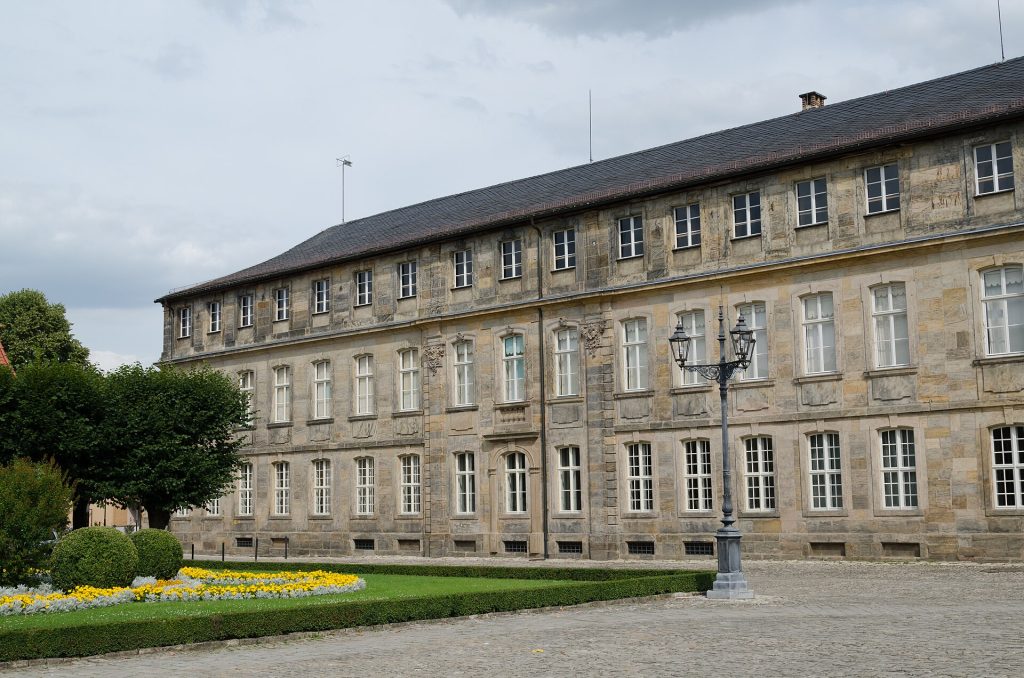
Wilhelmine was born in 1709 as a princess of Prussia, the favourite sister of the future Frederick the Great. She grew up at the strict and often harsh court of her father, King Frederick William I, and shared with her brother a love of music, literature and the arts.
In 1731 she married Friedrich, the heir to the small margraviate of Brandenburg Bayreuth. At first she found the provincial court dull and poor, but she soon set out to transform Bayreuth into a centre of culture that could rival the great courts of Europe.
Wilhelmine composed music, including an opera, wrote famous memoirs that give a vivid and often witty picture of court life, and corresponded with Voltaire and other leading thinkers of the Enlightenment. She also took a keen personal interest in architecture and design.
Together with her husband, she commissioned the Margravial Opera House, the Hermitage gardens and the New Palace, leaving Bayreuth with an artistic legacy far greater than its size might suggest.
She died in 1758, only a few years after the New Palace was completed, but her influence on its interiors remains visible everywhere.
Her memoirs, written in French, are still read today for their sharp observations of court life and their candid portraits of her family, including her famously difficult father and her beloved brother.
Frederick the Great visited Bayreuth several times, and the close bond between brother and sister is reflected in their correspondence, which reveals shared tastes in music, philosophy and art.
Wilhelmine was also a keen gardener and designer of landscapes, and the Hermitage outside Bayreuth, with its sun temple, fountains and grottoes, shows her love of fantasy and theatrical effects.
From Fire to a New Residence
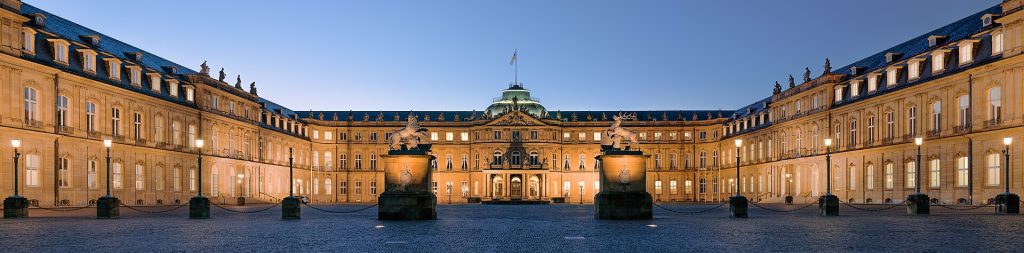
For centuries the margraves lived in the Old Palace in the centre of Bayreuth. In 1753 a fire badly damaged that building, and Margrave Friedrich decided to build a completely new residence rather than repair the old one.
Work began immediately, and the new palace rose with remarkable speed. To save time and money, existing buildings on the site, including an older garden palace and other structures, were incorporated into the new complex.
Within a year the main building was ready to be occupied, and the decoration of the interiors continued over the following years under the close supervision of Wilhelmine and the margrave.
The speed of construction is one reason for the palace’s long, low form. It was conceived as a series of connected buildings rather than a single monumental block.
Some historians suggest that the fire was a welcome opportunity for the margrave and margravine, who had long wished for a more modern and comfortable residence suited to their tastes.
The Old Palace was later repaired and used for other purposes, and it still stands in the town centre, a reminder of the earlier history of the margraviate.
The rapid construction meant that the decoration had to keep pace, and teams of craftsmen worked simultaneously in different rooms to complete the interiors.
Joseph Saint Pierre and the Bayreuth Style
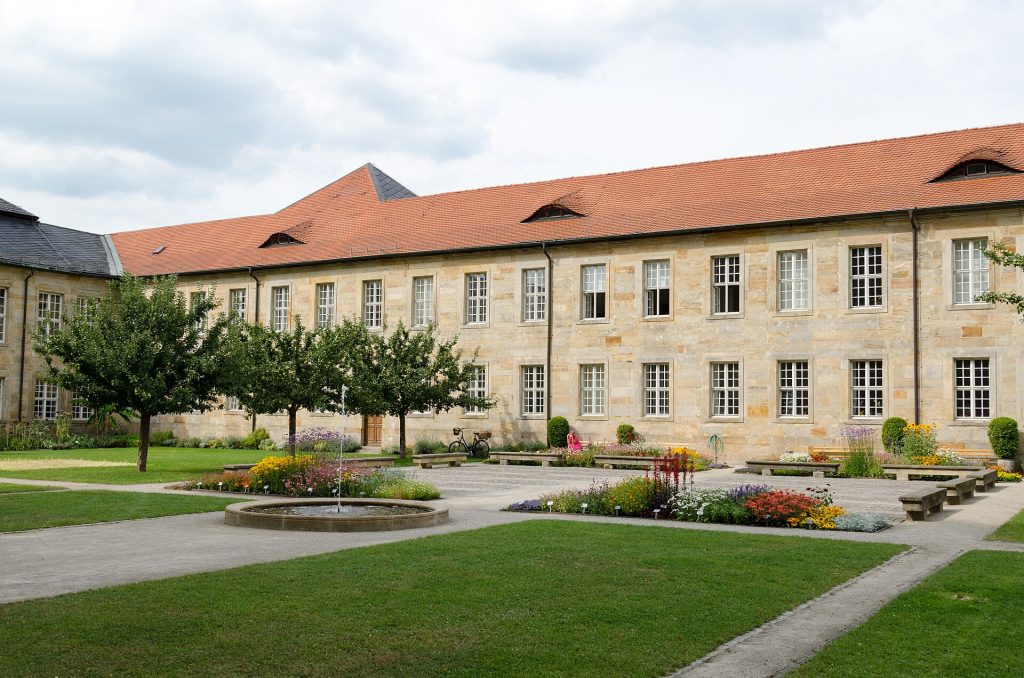
The architect of the New Palace was Joseph Saint Pierre, a French born builder who worked for the margraves and also contributed to the Margravial Opera House. He designed the long facade and the overall layout of the palace.
The style that developed in Bayreuth under Wilhelmine and Friedrich became known as Bayreuth Rococo. It is lighter, more naturalistic and more whimsical than the rococo of other German courts, with a strong emphasis on motifs from nature such as plants, flowers, shells and birds.
Decorators, stuccoists and painters worked closely with the margravine, translating her ideas into ornament and colour. The result is a set of interiors that feel personal and surprising, full of invention and humour.
Saint Pierre’s restrained facades provide a calm frame for this exuberant interior world, a contrast that makes the discovery of the rooms all the more delightful.
Among the craftsmen who worked on the interiors were the stuccoist Jean Baptiste Pedrozzi and the court sculptor Johann Schnegg, whose skill brought Wilhelmine’s ideas to life in plaster, wood and gold.
The Bayreuth style also influenced later buildings in the region, and its playful spirit can be seen in churches, pavilions and townhouses throughout Upper Franconia.
Many details, such as door handles, window catches and stove decorations, were designed in the same playful spirit as the larger ornament, giving the palace a remarkable unity of style.
Wings, Courtyards and the Palace Square
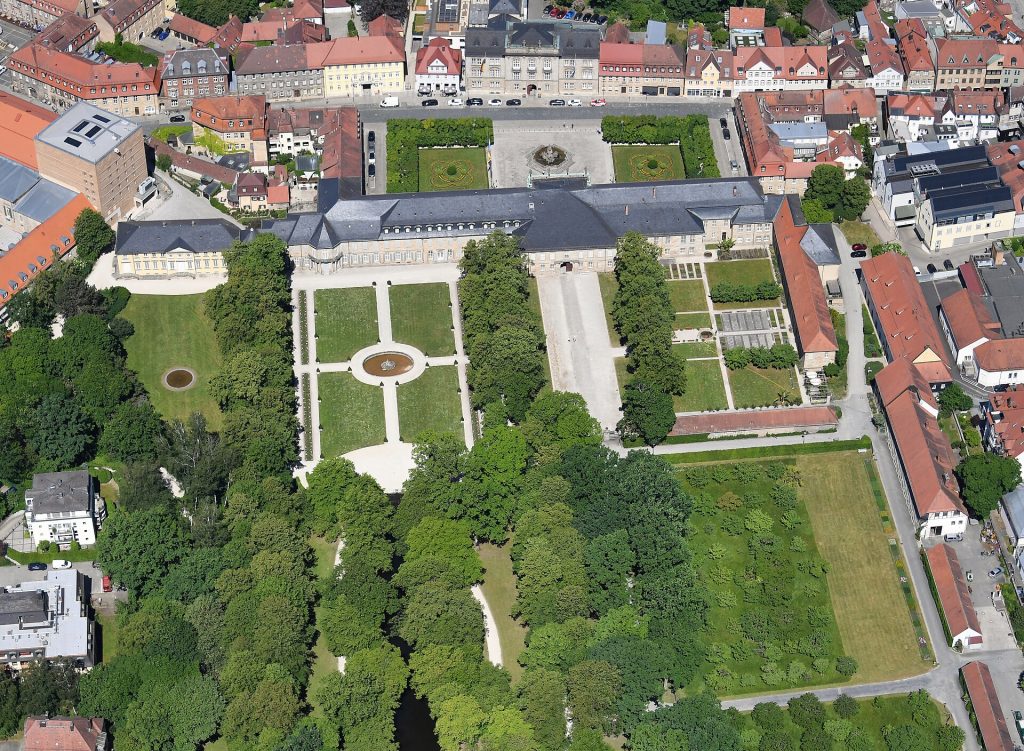
The New Palace consists of a long main wing and several side buildings, arranged along the street and around courtyards. From above, you can see how the different parts were linked together to form a coherent residence.
In front of the palace lies a square with a fountain and monuments, while behind it the court garden opens out. The palace thus forms a link between the town and the green landscape of the garden.
The north wing and other side buildings housed kitchens, offices and service areas, as well as apartments for members of the court.
Walking around the outside of the palace, you can appreciate how it fits into the fabric of the town and how its long facade creates a stately backdrop for the streets around it.
The square in front of the palace is a pleasant place to begin or end your visit, with cafes nearby and views of the long facade.
The kitchens and service buildings, though less spectacular than the state rooms, are a reminder of the many people who worked behind the scenes to keep the court running.
Some side buildings now house offices and exhibitions, giving the palace complex new uses while preserving its historic character.
The Palm Room
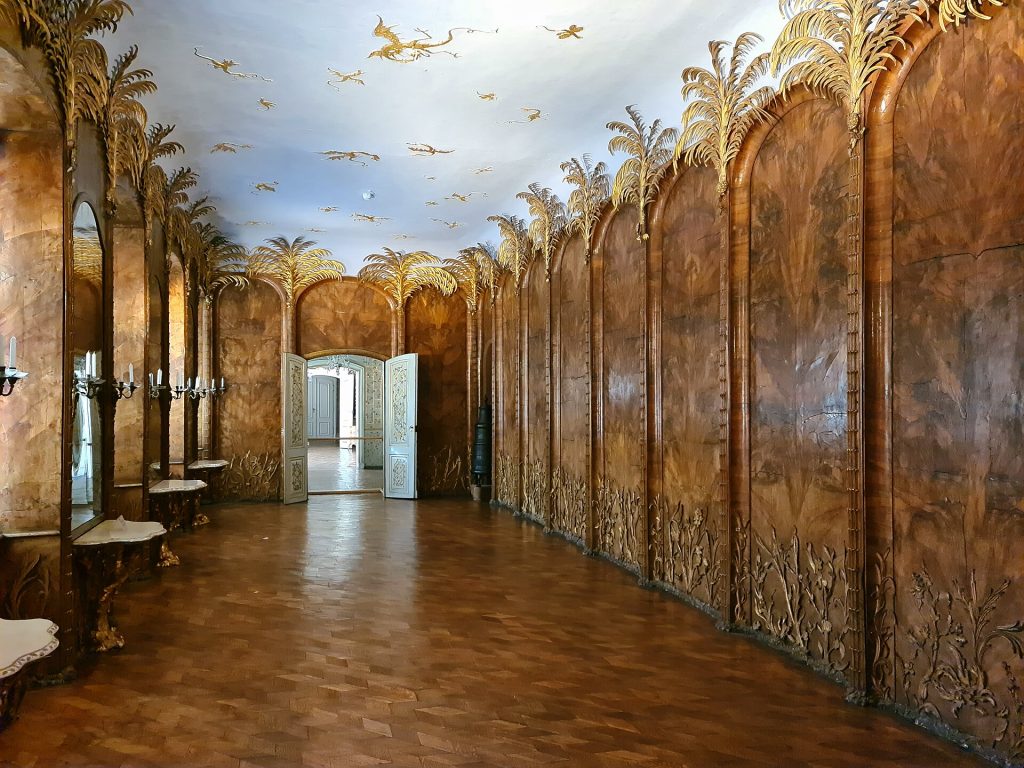
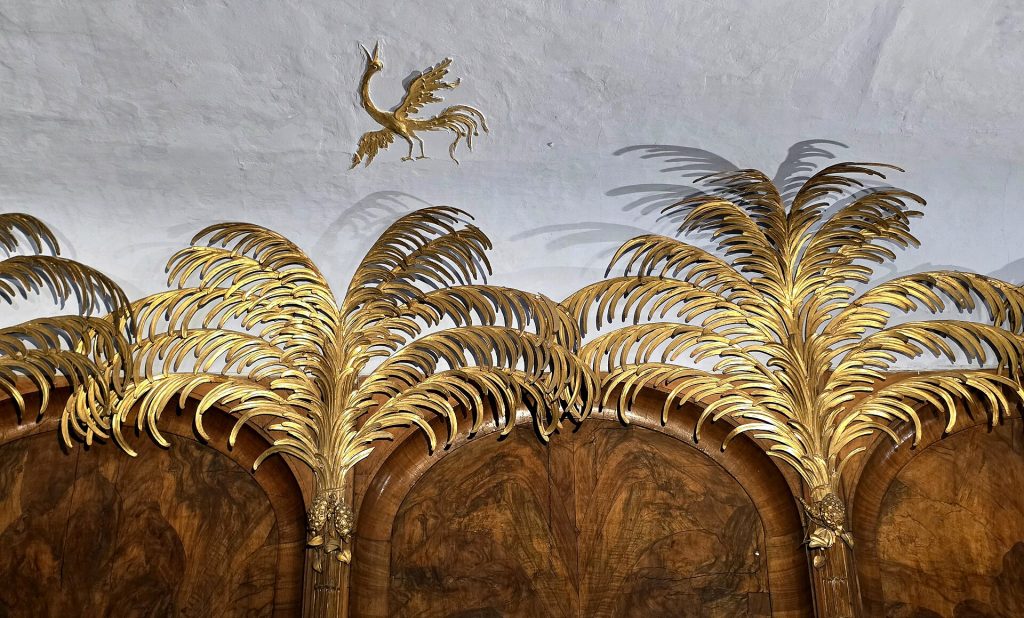
One of the most famous rooms in the New Palace is the Palm Room. Its walls are panelled in wood, and gilded palm trees seem to grow from floor to ceiling, their fronds spreading across the walls in elegant curves.
The palms create the illusion of an exotic grove, a fantasy of distant lands brought to life in a Franconian palace. The combination of warm wood and gleaming gold gives the room a rich and intimate atmosphere.
The Palm Room is a perfect example of Bayreuth Rococo, where natural forms become ornament and the boundary between architecture and nature dissolves.
It was used as a reception room and for gatherings of the court, and visitors today are often enchanted by its unusual and poetic design.
The palms were carved and gilded by skilled craftsmen, and their trunks and leaves are rendered with remarkable naturalism, as if the room had been transformed into a tropical garden.
Combined with the wooden panelling, the gilded palms give the room a warm, almost magical glow, especially in the soft light of late afternoon.
Many visitors consider the Palm Room the most beautiful single room in Bayreuth, and it is certainly one of the most memorable interiors of German rococo.
The Grotto Rooms
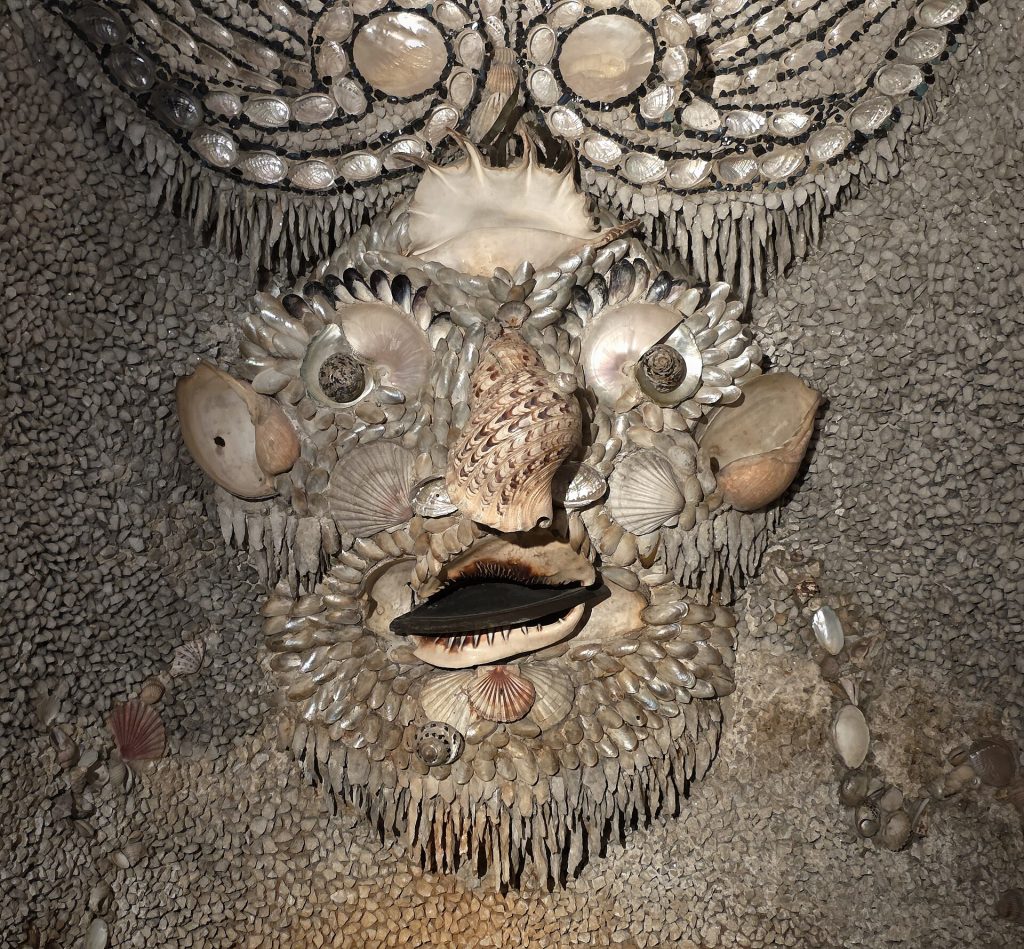
On the ground floor of the palace lie the grotto rooms, among the most magical spaces in Bayreuth. Their walls and ceilings are encrusted with shells, stones, minerals and glass, arranged into patterns and figures that glitter in the light.
Grottoes were a favourite feature of baroque and rococo palaces, offering cool retreats in summer and evoking the mysterious world of caves, springs and sea creatures. In Bayreuth they are especially rich and imaginative.
The rooms were used for relaxing in the heat of summer, for small gatherings and for surprising guests with their strange beauty. Some grottoes also included water features, adding to the illusion of a natural cave.
Today, after careful restoration, the grotto rooms once again sparkle, and they are one of the highlights of any visit.
The grottoes also reflect the fascination of the age with the natural sciences, as collectors gathered shells and minerals from around the world and displayed them as marvels of creation.
On hot summer days the grottoes still feel pleasantly cool, just as they did for the court more than two centuries ago.
Shells, Stones and Fantasy
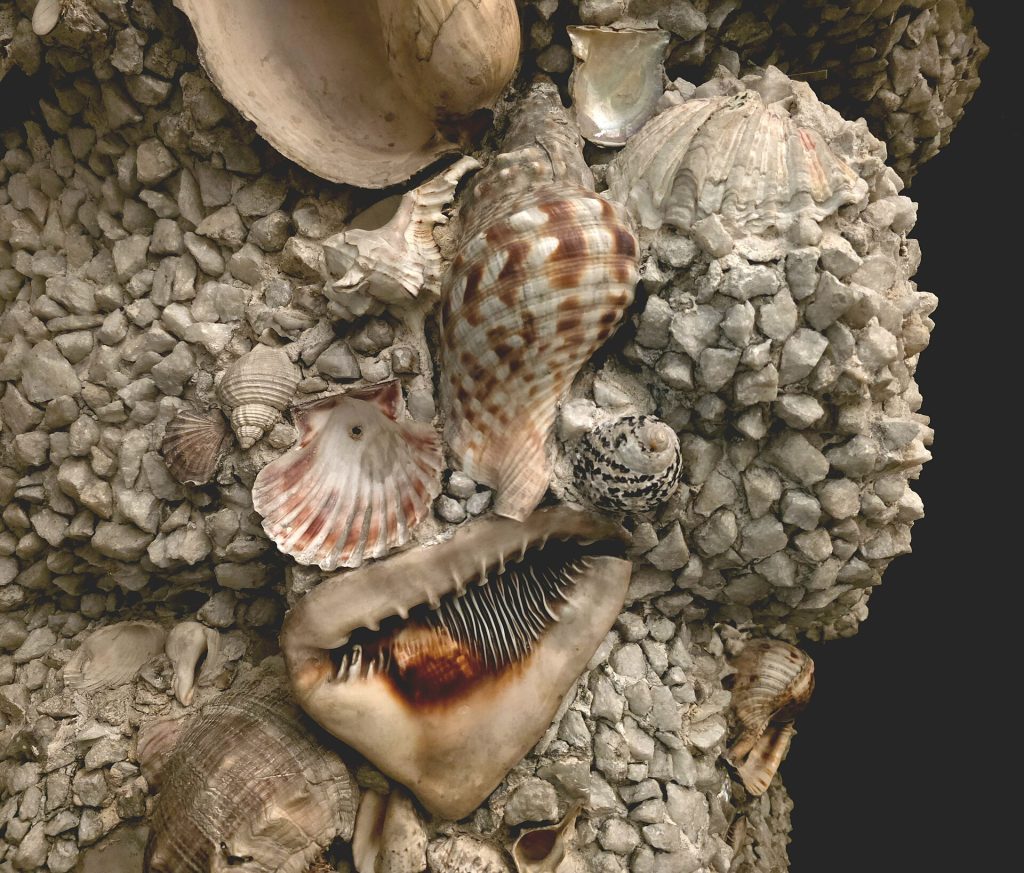
Looking closely at the grotto walls, you will see shells of many shapes and colours, pieces of coloured glass, minerals and stones, all set into plaster to create a rich, shimmering surface.
Some areas form geometric patterns, while others depict figures, masks or natural scenes. The craftsmanship is extraordinary, and each section must have taken many hours of patient work.
The materials came from many places, some local, some imported, reflecting the wide network of trade and the passion of the court for rare and curious objects.
The grotto rooms are a reminder that rococo art was not only about elegance and gold, but also about wonder, surprise and the playful imitation of nature.
Restoration of the grottoes was a painstaking task, as each piece had to be cleaned, secured or replaced while preserving the original design.
Visitors often linger here longer than expected, discovering new details in every corner of these glittering rooms.
Mirror Shards, Wall Panels and Cabinets
Among the most famous rooms in the New Palace is the Mirror Shard Cabinet, a small room whose walls are covered with irregular fragments of mirror set into gilded frames. The effect is dazzling and slightly mysterious, as light breaks into countless reflections.
According to tradition, Wilhelmine herself had a hand in designing the cabinet, and it reflects her love of unusual effects and her sense of humour.
Other rooms feature decorated wall panels with painted or inlaid motifs, as well as cabinets in the Chinese and Japanese style, filled with porcelain and lacquer.
These small rooms were used for private conversation, reading and the display of treasures, and they reveal the more intimate side of court life.
The Japanese cabinet, with its lacquer panels and porcelain, reflects the passion for East Asian art that swept through European courts in the eighteenth century.
In some rooms, painted panels show flowers, birds and landscapes, adding to the sense of a world in which art and nature merge.
The Mirror Shard Cabinet is small, but its impact is enormous. Standing inside, surrounded by fragments of reflected light, many visitors feel as if they have stepped into a kaleidoscope.
Golden Rooms and the Music of the Court
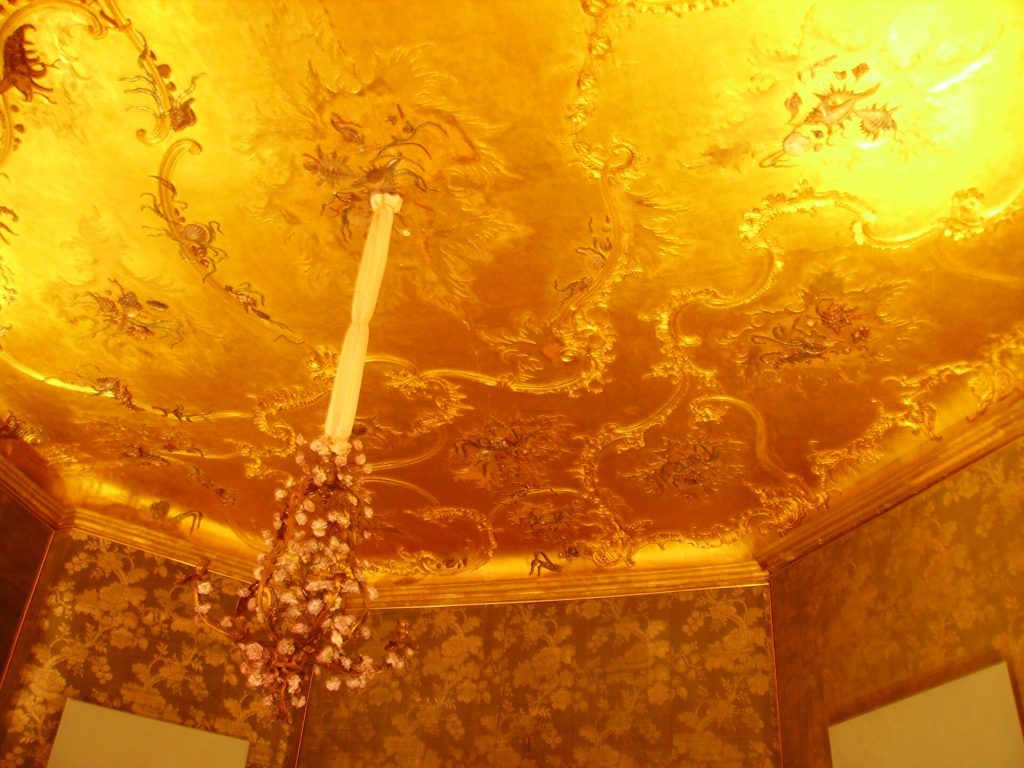
Music played a central role in Wilhelmine’s life, and several rooms in the palace were associated with music and performance. The Old Music Room and other salons were richly decorated, with gilding, stucco and portraits.
Wilhelmine played the lute and composed music, and she brought talented musicians and singers to Bayreuth. Concerts in the palace and performances in the opera house made the town a musical centre long before Wagner arrived.
The golden rooms of the palace, with their gleaming ornament and soft colours, provided a perfect setting for chamber music and court entertainments.
Imagining the sound of a harpsichord or a string ensemble in these rooms helps bring the court of Bayreuth vividly to life.
The Margravial Opera House, completed in 1748, was the grandest expression of Wilhelmine’s love of music and theatre, and its magnificent wooden interior has been restored to its original splendour.
It was partly because of this opera house, with its large stage, that Richard Wagner first considered Bayreuth as the home for his festival, although he eventually built his own theatre on the Green Hill.
Concerts are still held in Bayreuth’s historic venues, and the Bayreuth Baroque Festival in the opera house celebrates the music of Wilhelmine’s era each autumn.
The Court Garden and Its Canal

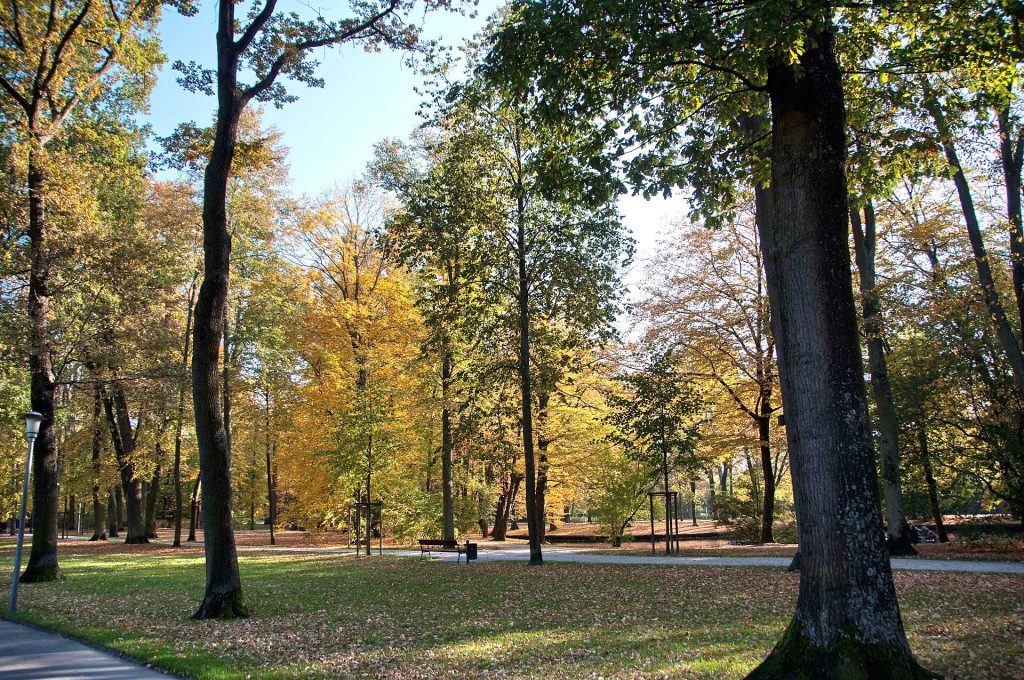
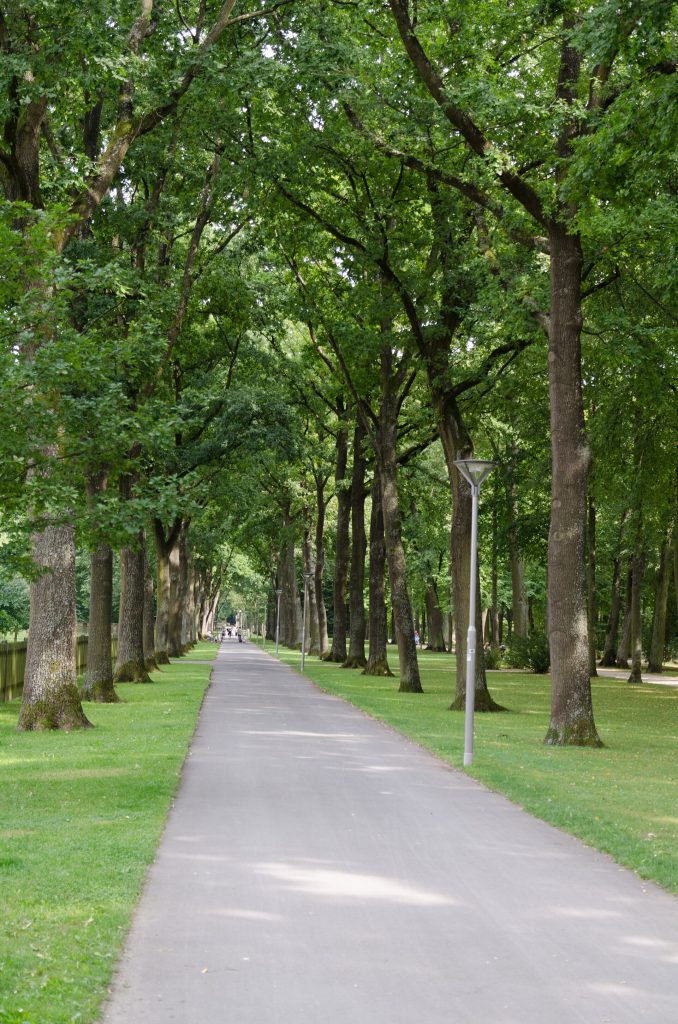
Behind the New Palace lies the Hofgarten, the court garden, originally laid out in the baroque style and later transformed into an English landscape park. A long canal runs through the garden, with islands, bridges and lawns along its banks.
The garden is a peaceful place for walking, with old trees, meadows and views back to the palace. In summer it is popular with locals who come to relax, read or picnic.
From the garden, a path leads toward the Richard Wagner Museum at Villa Wahnfried, which borders the park, linking the two great periods of Bayreuth’s cultural history.
The canal and its reflections are especially lovely in the soft light of morning and evening, and the garden offers a calm contrast to the richly decorated rooms of the palace.
In spring the garden is full of blossom and birdsong, and in autumn the colours of the trees reflected in the canal make it one of the most beautiful parks in Franconia.
Benches along the canal invite you to sit and enjoy the view, and the garden is a lovely place to end a day of sightseeing in Bayreuth.
Swans and ducks glide on the water, and the gentle sounds of the park make it feel far removed from the bustle of the town.
The New Palace on Video
For a glimpse of the palace before your visit, the video below presents the New Palace and its rooms.
Watch for the Palm Room and the grotto rooms, which are among the highlights of Bayreuth Rococo.
The video also gives a sense of the palace’s setting in the town and its relationship with the garden behind it.
If the video inspires you, read on for practical tips on visiting Bayreuth.
Visiting the New Palace Today
The New Palace is managed by the Bavarian Palace Administration and is open throughout the year. Visitors can explore the state rooms, the grotto rooms and the Wilhelmine Museum, which presents the life and work of the margravine.
The palace also houses collections of faience and porcelain from Bayreuth and other Franconian manufactories, as well as paintings and furniture.
Bayreuth is easy to reach by train from Nuremberg, about an hour away. The palace lies within walking distance of the station and the old town.
Plan to combine your visit with the Margravial Opera House, a UNESCO World Heritage Site and one of the finest baroque theatres in Europe, and with the Hermitage, Wilhelmine’s summer retreat a short drive or bus ride east of the town.
Allow at least two hours for the palace and the garden, and a full day if you want to see the opera house and the Hermitage as well.
Whenever you visit, the New Palace offers a fascinating encounter with one of the most creative women of the eighteenth century and the playful elegance of Bayreuth Rococo.
Combined tickets for the Bavarian palaces of Bayreuth are available and offer good value if you plan to see the New Palace, the opera house and the Hermitage.
There are plenty of restaurants and beer gardens in Bayreuth where you can enjoy Franconian food and local beer after your visit.
View the location on Google Maps
Palaces Nearby
If the New Palace has captivated you, Franconia holds more remarkable palaces. Here are two more well worth adding to your journey:
- The New Residence of Bamberg – the baroque palace of the prince bishops on the cathedral hill of Bamberg.
- The Ansbach Residence – the rococo seat of the margraves of Brandenburg Ansbach, with its tile hall and mirror cabinet.
You May Like
The Ansbach Residence and the Rococo Court of the Margraves