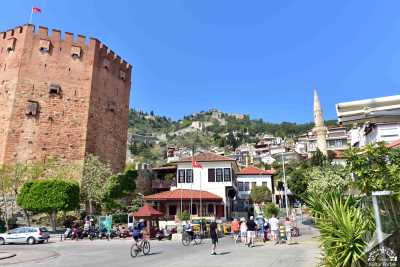
The building, which is one of the unique examples of Seljuk art, is the symbol of Alanya. It is a defense and surveillance structure built to protect the port where trade takes place and to prevent attacks that may come to the castle from land.
According to the inscription on the northern façade, it was built by the Seljuk Sultan Alaeddin Keykubat in 1226, by an architect named Ebu Ali from Aleppo. In the inscription on the southern façade of the building, Alaeddin Keykubat is praised with qualities such as “the ruler of nations, the sultan of the world’s sultans, the protector of justice, the sultan of the land and the two seas, the helper of Muslims.”
Antalya Provincial Directorate of Culture and Tourism

The building is 29 meters in diameter and 33 meters high, and was built with stone and brick materials on an octagonal plan. Contrary to its simple appearance from the outside, it has a very complex plan inside. The plan of each floor of the five-storey building is different. A cistern is placed along the height of the first floor, on top of the octagonal pillar in the center, which is the main support of the building. On each floor, there are beveled observation portholes and visored openings opening to the outside, built for defense purposes. On the ground and first floors, there are spaces in the form of vaulted iwans opening to vaulted corridors. Above the first floor, there is a mezzanine floor consisting of a narrow and low corridor surrounding the building and small rooms opening to it. The second, third and fourth floors are open terraces. On the second floor above the mezzanine, there is an open courtyard surrounded by large vaulted spaces, two on each side of the octagon. On the third floor, there are three small spaces on each side and the terraces they open onto. The fourth floor consists of trenches and openings made for defense purposes and a terrace that allows walking.
Kızılkule is also used as the Ethnography Museum. The entrance and first floors of the five-storey tower are designed as a museum. Cultural and artistic events such as painting exhibitions and classical music concerts are also held in the historical building from time to time. From the top floor of the tower, you can watch the fascinating view of the east side of the city and the residential texture of the historical peninsula.
Source: “Red Kule Ethnography Museum”, Antalya from Past to Today [II. Volume], Antalya Provincial Directorate of Culture and Tourism (2012) – “K. Sonkaya, “Red Tower Ethnography Museum”, Alanya Promotion Booklet [in], Republic of Turkey Ministry of Culture and Tourism, General Directorate of Promotion (2016)
Places to Visit in Antalya
Source: Antalya Provincial Culture and Tourism Directorate