In 1381, when Devlet Hatun, daughter of Kula Germiyan bey Süleyman Şah, who was attached to the Germiyanoğulları principality during the time of Kula Anatolian principalities, married Yıldırım Beyazıt, the son of the Ottoman sultan Murat I, as a result of Süleyman Şah’s giving to the Ottomans as dowry It is observed that the development and cultural activities increased in Kula during the time of Suleiman Shah. Among these, Gürhane madrasah can be shown. Kula, who was under the rule of the Ottomans after the death of Süleyman Şah, was transferred to the Kula Germiyanoğulları principality as a result of the giving of the old lands of the Anatolian Principalities to them by Timur in 1402, but after the death of Germiyanoğlu Bey Yakup Bey in 1428, it was again under the rule of the Ottomans and as a district of Kütahya Province. He joined the Ottoman administration. It remained under Kütahya until 1896 and after this date it was connected to Manisa.
PRIMARY FOOTPRINTS:
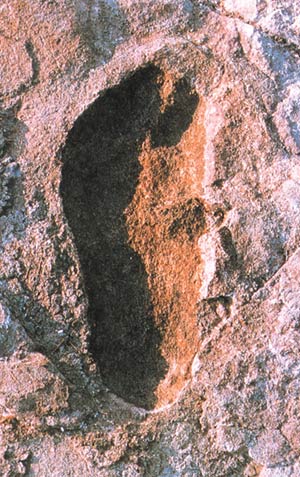
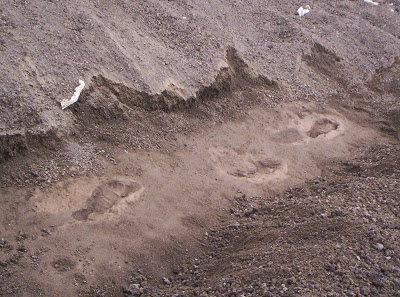
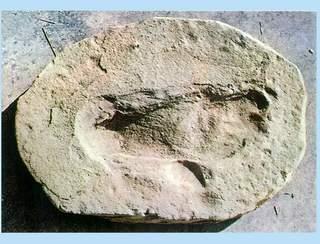
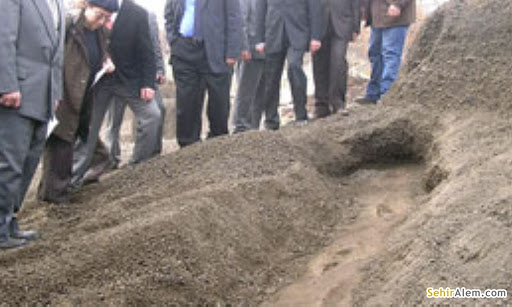
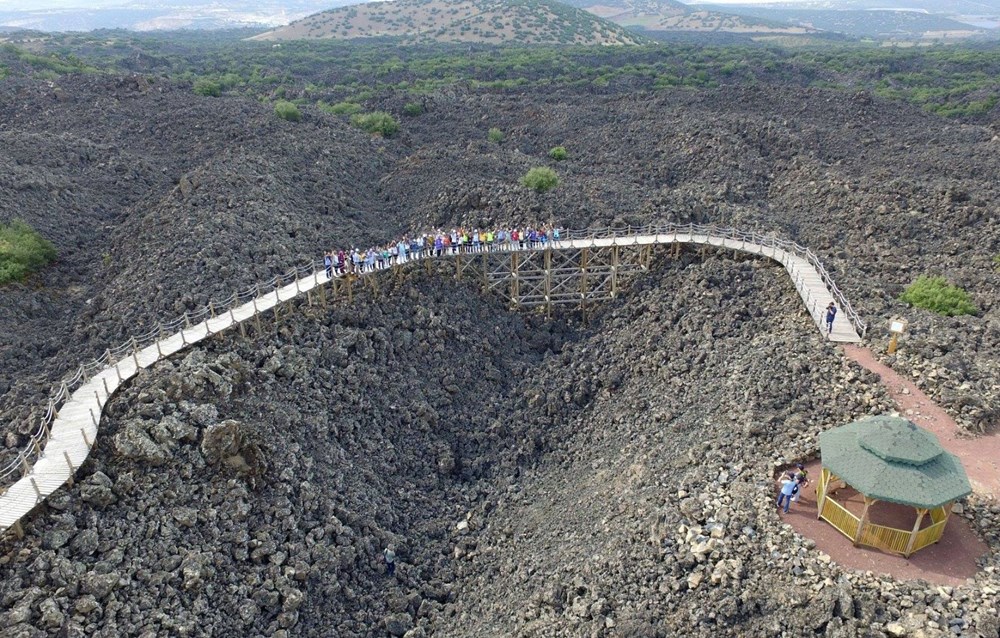
Named Katakekaumene (Burned Region) by the famous historian Strabo and traveling around 2000 years ago, the youngest volcanic cones of Asia Minor are located in Kula region where lava flows are located; Primitive human footprints have been found. Primitive human footprints can be seen near the Divlit Tepe cone, one of the 68 volcanic cones in the region. Here, besides the primitive human footprints, the footprints of animals, the traces of the burden carried by the primitive people and the traces of the primitive people sitting on the ground are also encountered. The length of the steps of the primitive people, whose footprints are found, is 75-80 cm. is up. Fossil primitive human footprints measure 41-42 shoe sizes. Two of the tracks belong to two primitive people who walked side by side. They walked down the hill. There is also a trace of a small child, which has walked in the opposite direction towards the hill. After the traces are formed, the basaltic slags that came out of the Divlit Tepe volcano and formed a cover over them; It is used in briquette production and construction works.
In 1968, the footprints of this cover layer were revealed while the slags were dug and removed from the field by dozer. The staff of the General Directorate of Mineral Research and Exploration realized that these footprints, which were sometimes taken from the field and smuggled abroad to museums and sometimes taken to homes as souvenirs by the surrounding villages, could not be preserved for a long time, and removed about 60 of them; they moved and exhibited it to the same general directorate (Natural History Museum).
Samples taken from volcanic lavas near primitive human footprints were determined to be 20,000 years old in age determination measurements in laboratories. Considering that there is a maximum ± 5,000 years of error in the measurements, it is seen that these traces are at most 25,000 years old and 15,000 years old as the most recent. Strabon also reported that the volcanoes in the Kula region had started to indifaa 15-16 thousand years ago and continued burning for 2,000 years, as a result of his research 2,000 years ago.
These traces seen near the Divlit Tepe cone show us that Ancient Stone Age primitive people lived within the boundaries of Katakekaumene (Kula and its surroundings). Since it is known that primitive people lived in herds in caves and tree cavities in this period, considering the suitability of Yanık Region to this environment, it should not be considered a prophecy to say that these were the living areas of primitive human communities.
Primitive human footprints are found near the Divlit Tepe cone, one of the volcanic cones of the 3rd and most recent volcanic period. About 2,000 years ago, the cone of Divlit Tepe first sprayed fine-grained ash and tuffs and passed out in a period of silence. These fine-grained volcanic products scattered around the environment turned into a thick mud layer with the effect of the rains. At this point, primitive people living in the region walked barefoot on these muds by chance. After a short while, the volcano was reactivated and this time the black basaltic slags it sprayed covered the footprints on the muds, forming a cover of approximately 5-10 meters thickness and ensured that these precious traces were preserved until today.
As a result of the researches, it was understood that primitive people lived around Kula along with the regions of Antalya, Isparta, Samsun, Burdur and Gaziantep. As a result of the researches carried out in Kula, BC. Marble reliefs and inscriptions indicating 56 years have been found. The following is written on one of these reliefs:
Abdi Memluk, who brought a prayer specific to Sun Platez, Mentlamus and King Men, orders this prayer in order to introduce the majesty and power of «Demas, Jupiter». Depicting the Mabut “Lunus” or Men, the order in this relief, according to the date of the 256th year by the Sulukts BC. It shows 56 years.