B.C. The discovery of a few coins that were printed in the L. century and introduced Kula to neighboring countries confirms the above date. Thus, Kula’s M.O. It is understood to exist in L. century. In ancient times, Kula was a part of Meonya (Menye). Meonia occupied a place between Mysien and Lydia. An important traffic route since ancient times; Sardes would start from Salihli and pass over Menye-Sandal-Gölde to Gediz and then upwards towards Uşak. The capital Maionia was in place where the present Menye. It shows that Kula and its surroundings are a very old settlement area and witnessed many historical events. Remains of tomb and brick fragments seen in the Musalca locality of Kula are indications of the existence of an old Lydian city here.
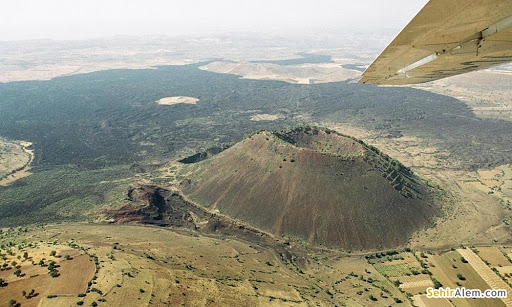
There are primitive human-like fossil footprints in 4 places in the world, in France, Italy and Hungary, apart from our country. In order to protect these precious footprints near the Divlit Tepe volcano cone, the Turkish Historical Society has been declared a protected area by the General Directorate of Antiquities and all activities are prohibited.
In order to go to Kula, which is located on the İzmir-Ankara E 23 highway, you can take buses from Ankara to İzmir or buses from İzmir to Ankara. Manisa – Kula 124 km, Izmir – Kula 120 km. If you want to come to Kula from Manisa, you have to take the Turgutlu – Salihli buses or Manisa-Salihli buses that depart every 20 minutes from the Manisa Garage, and then transfer to Kula from there. Kula minibuses run between Kula and Salihli. Minibuses are available every 15 minutes.
According to the information of the Manisa Museum Directorate officials, its history dates back to the old city of Sardes. As evidence of this, the findings and tombstones found in the region based on the information of the Manisa museum authorities are used.
Where is Kula