To the south of the temples, a basilica-shaped church and a monastery were found, abandoned in the 7th century AD.
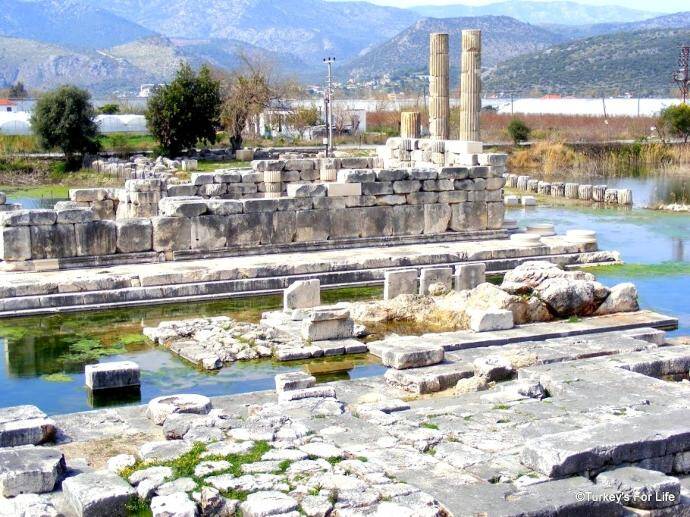
During the excavations, inscriptions that can shed light on the history of Lycia and help to solve the writing were found among the ruins of the temple. The most important of these inscriptions tells about the visit of Alexander the Great (Alexandros in Greek, Alexander in English) to Letoon. The inscription, written in Aram, Greek and Lycian languages and describing the mythological founder of Caunos, “Basileus”, is an archaeological discovery that can shed light on the Lycian writing.
In the city, no traces of remains belonging to the 8th century AD are seen. It is thought that the city was abandoned because of the beginning of the Arab raids and the brutal attitude of Christianity towards the pagan structures.
In addition, the inscription of the 4th century BC written in three languages found in the temple of Leto in 1973 gives detailed information about the function of Letoon. On one side of the book, there are inscriptions in Aramaic and on the other side in Greek and Lycian. In the writings in the Lycian language, it is written that “Pixodares ruled for the first time in 358 BC as the Karian and Lycian satrap, established good relations between the Hekotomnid dynasty and the Lycians, appointed his men to the governors of Lycia, Archon and Xanthos”. Another inscription tells about Alexander the Great’s visit to Letoon.
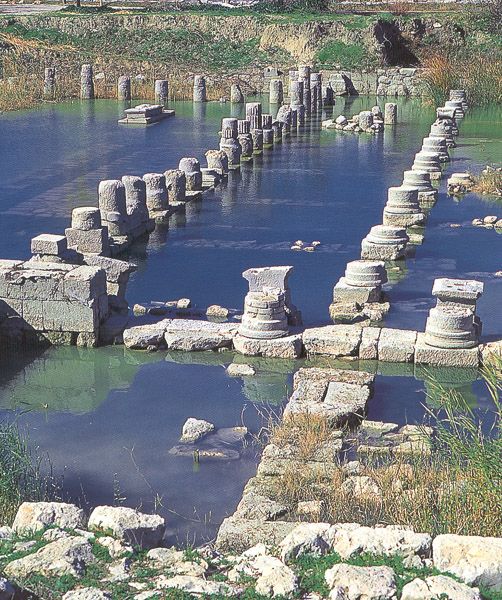
The high groundwater level makes excavations difficult and it is not possible to prevent the excavated areas from being submerged again after a while. A very large Greek planned theater without a stage, the temples of Leto, Apollo, Artemis, the nympheum and agora filled with earth due to floods are the only works of the city to be seen.
In the Lycia region, there are many ancient ruins other than those mentioned above. From time to time, new finds are added to these. Some of these belong to small settlements and others to protection walls. Most of them are also very difficult to reach. Other ancient places within the borders of Antalya province are as follows: Sura (Sura), Gürses (ancient name unknown), Trysa (Gölbaşı), Istlada (Kapaklı, Hayıtlı, Hayran), Apollonia (Kılıçlı, Kılınçlar), Aperlai ( Eaves pier), Isında (Belenli), Phellos (Felen, Yayla), Nisa (Meryemlik).