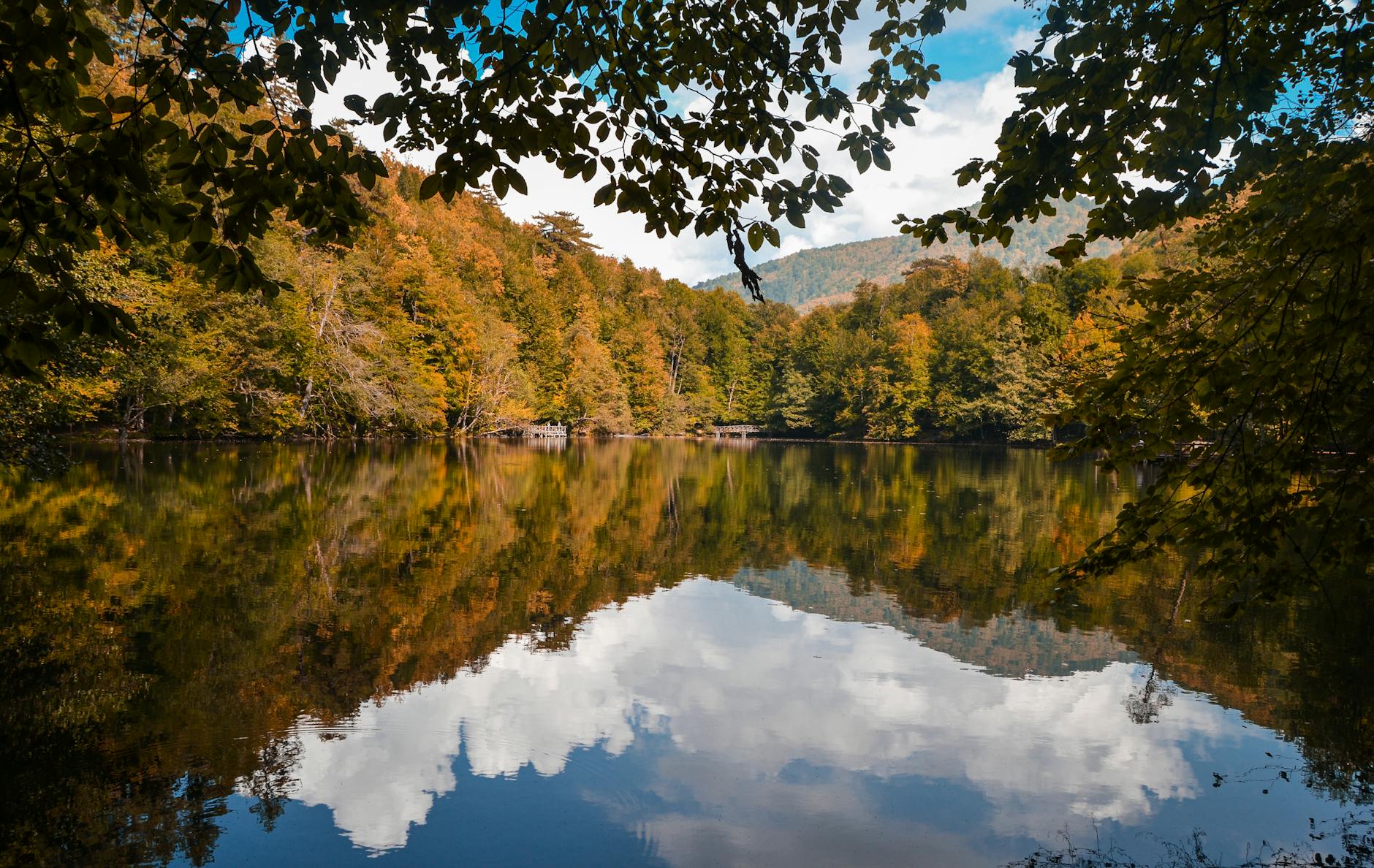
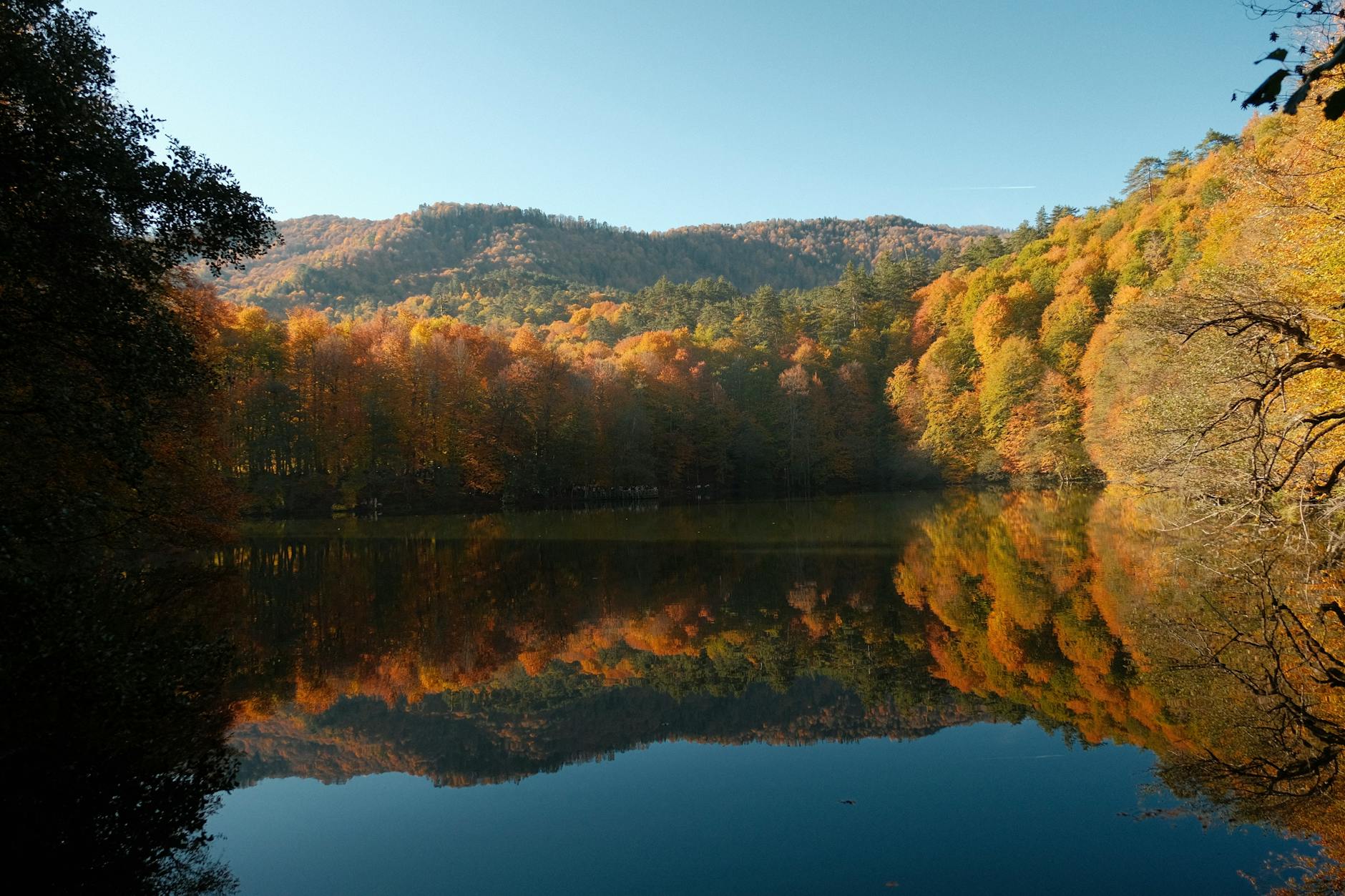
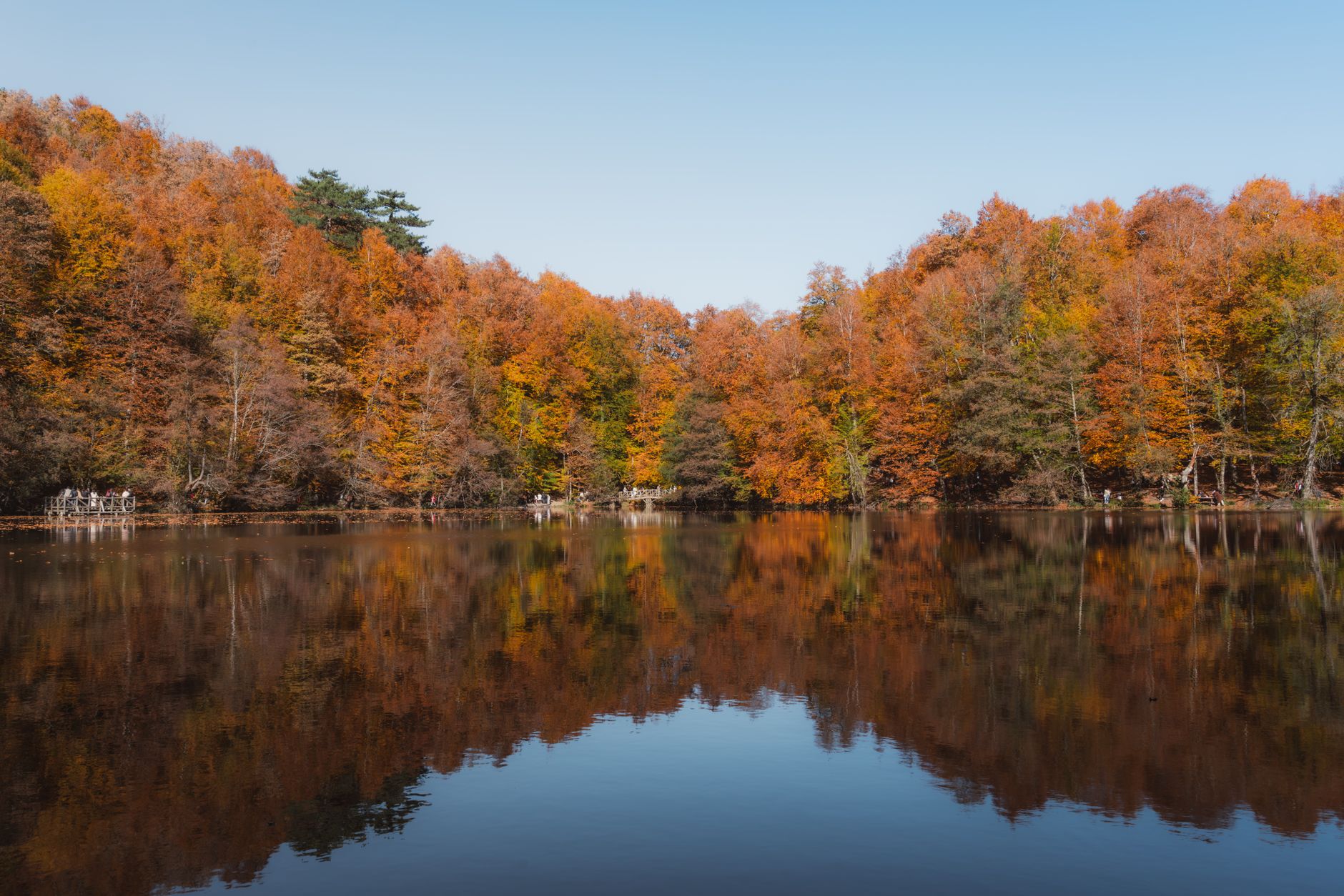
Yedigöller consists of seven lakes of various sizes. Four of these lakes are large and three are relatively small and dry up during the hot summer months. The 550-hectare area, which includes these seven lakes, was protected as a National Park in 1965. The area of the national park is 2019 hectares. Limestone and serpatine host rocks dominate the basin.
The highest point in Yedigöller is 1488 m. Eğrikiriş Hill, the lowest point is 465 m. Kirazçatı. The names of the lakes formed by valley blockage as a result of landslides are Büyükgöl, Seringöl, Deringöl, Nazlıgöl, Sazlıgöl, Küçükgöl, İncegöl and Sazlıgöl. These lakes are 100 m. It is on two plateaus with height differences. Average 780 m. The largest of the lakes on the plateau at an altitude is Büyükgöl. Its surface area is 22.5 decares and its deepest point is 15 m.
Deringöl, in the southeast of Büyükgöl, is 20 m. It is connected to Büyükgöl with its long flowing section. The lake, which has a surface area of 9.8 decares, is used for breeding purposes to raise live trout in Yedigöller and is surrounded and protected. To the north of Büyükgöl is Seringöl. 100 m from the other plateau. is in height. The largest lake of this plateau is Nazlıgöl.
It is called “Waterfall Lake” because the large amount of water leaking from the bottom rises to the surface in the northeast of the lake and causes a waterfall to form. It is located in Sazlıgöl, İncegöl and Küçükgöl on the same plateau. The park and its surroundings are a mixture of coniferous and deciduous trees.
The main tree species are beech, hornbeam, oak, alder, maple, elm, aspen, yellow and black pine, and fir trees are tall and have smooth trunks. Among the wild game animals there are bear, pig, wolf, fox, marten, squirrel, roe deer and rabbit, and among the birds suitable for hunting are wild duck, wild pigeon and partridge. There are also elegant swans floating coyly over Büyükgöl.
At certain times of the year, sportive angling is possible for a fee. 23 cm between 01 April and 01 September. provided that it is not below . The national park’s deer breeding farm is one of the most successful examples in Turkey. Kapankaya region has beautiful views of the lakes as well as its unique landscape beauties.
You May Like
Amasya Hotel Pension Accommodations