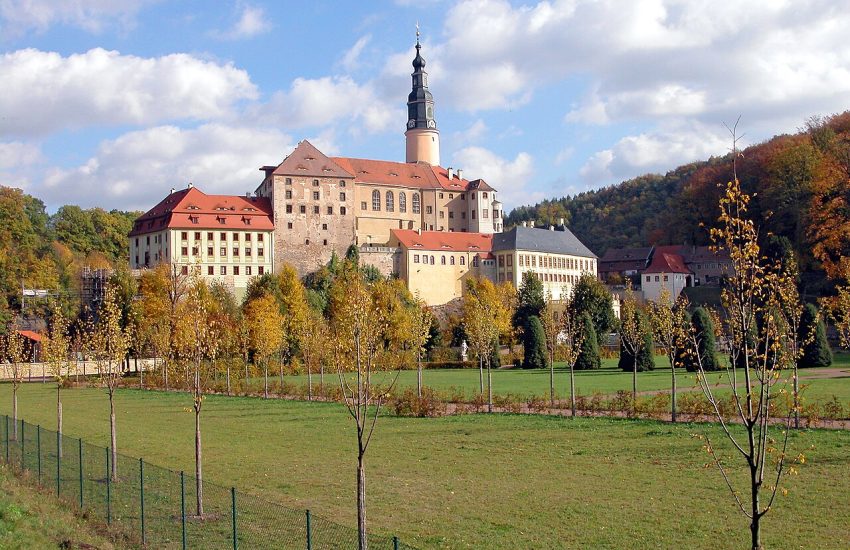
High on a porphyry rock above the town of Altenburg in eastern Thuringia stands a palace whose history stretches from medieval emperors to the dukes of Saxe Altenburg. Altenburg Palace grew over a thousand years from an imperial castle into a sprawling residence, and it is famous for a dramatic event in 1455, when two young Saxon princes were kidnapped from its walls.
Today the palace houses a museum with state rooms, a richly decorated palace church with a famous baroque organ, and the German Playing Card Museum, a fitting attraction in the town where the card game Skat was invented.
In this article we will explore Altenburg Palace from its imperial origins to the kidnapping of the princes, its church and organ, its state rooms and its gardens, and we will finish with practical tips for your visit.
In This Article
- A Palace on a Rock Above Altenburg
- From Imperial Castle to Ducal Residence
- Towers With Strange Names
- The Kidnapping of the Princes
- Courtyards and Wings
- The Palace Church
- The Trost Organ
- The State Rooms
- The German Playing Card Museum
- The Palace Garden
- Altenburg and the Lindenau Museum
- Altenburg Palace on Video
- Visiting Altenburg Palace Today
A Palace on a Rock Above Altenburg
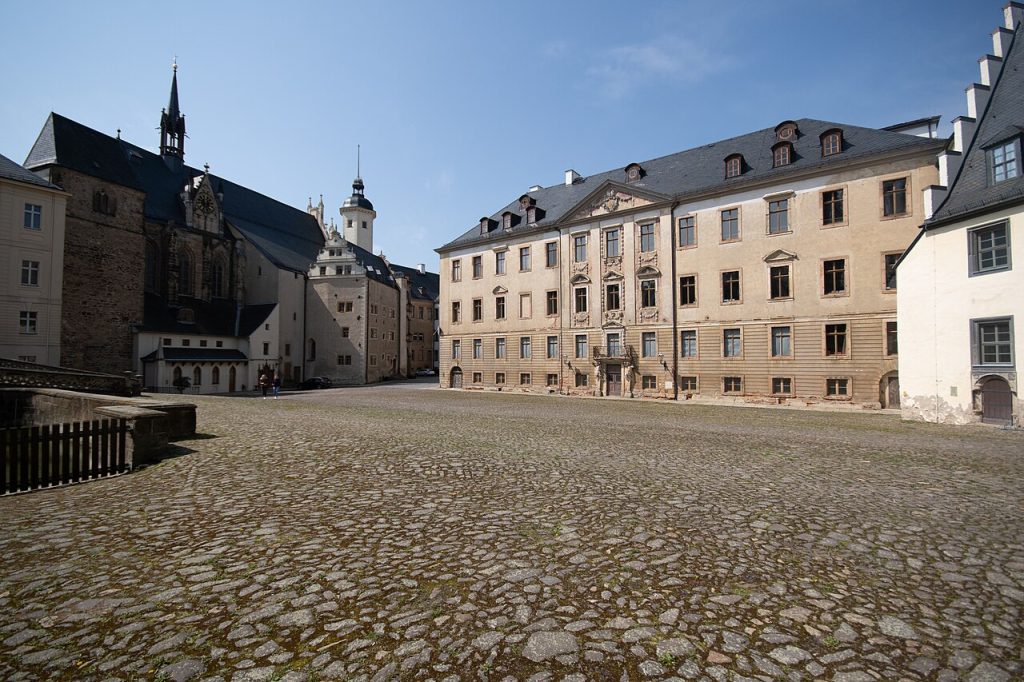
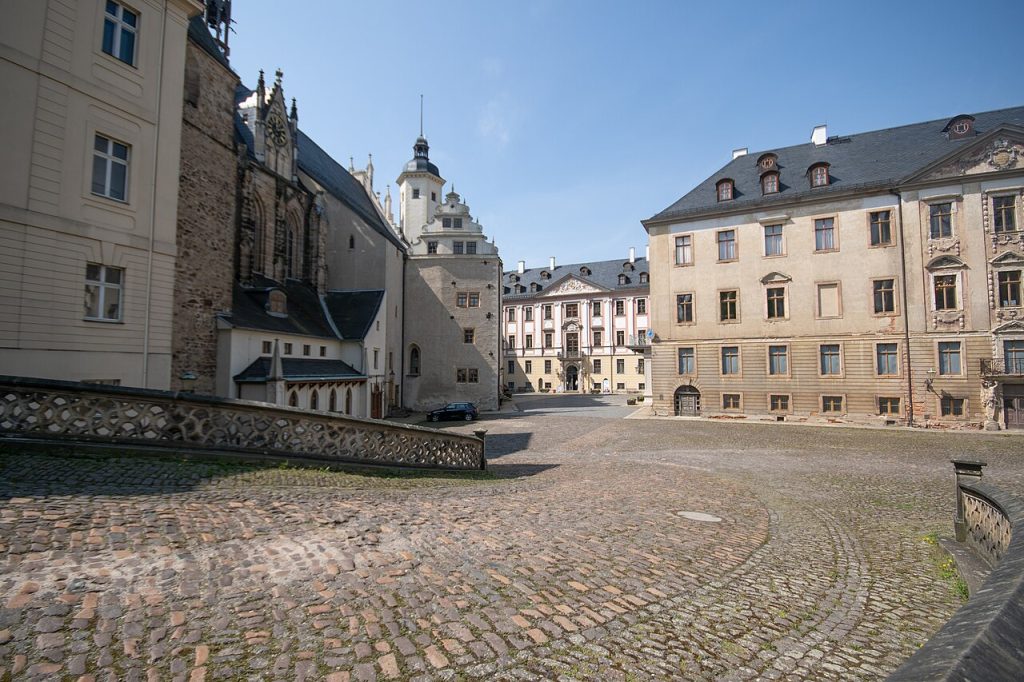
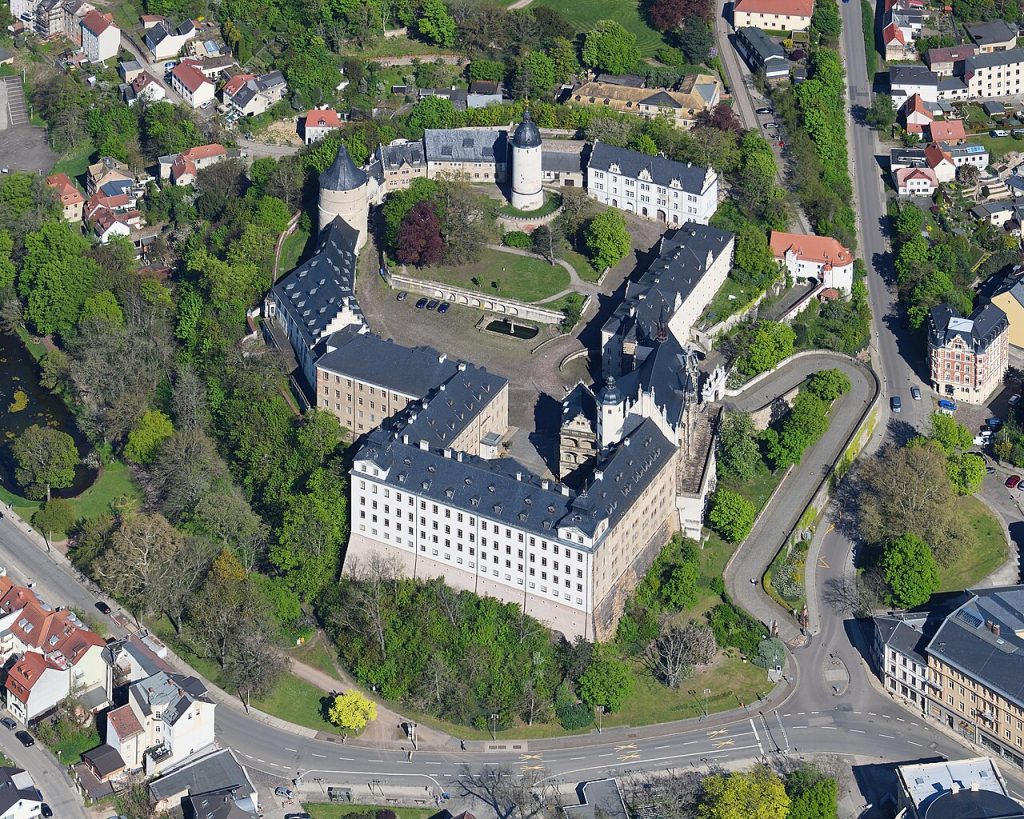
Approaching Altenburg, you see the palace rising on its rocky hill above the old town, its long wings, towers and roofs creating a dramatic silhouette against the sky.
The palace complex is large and varied, with buildings from many centuries grouped around courtyards, giving it a picturesque and slightly mysterious character.
What makes Altenburg special is the depth of its history, from the Holy Roman emperors who stayed here in the Middle Ages to the dukes who lived here until the twentieth century.
The porphyry rock on which the palace stands has a reddish colour, and in the evening light the whole hill seems to glow above the town.
The palace is less known internationally than Wartburg or the Weimar palaces, which makes it a rewarding discovery for travellers who enjoy quieter places.
The town below is full of historic buildings, with a market square, Renaissance houses and narrow streets climbing toward the palace.
The palace is also a living cultural centre, with concerts, exhibitions and festivals throughout the year.
Many visitors are surprised by how much there is to discover, from medieval towers to baroque halls and a world famous organ.
From Imperial Castle to Ducal Residence
Altenburg was an important imperial castle in the Middle Ages, and emperors such as Frederick Barbarossa stayed here when travelling through the eastern parts of their realm.
Later the castle passed to the Wettin family, the rulers of Saxony, who made it one of their residences.
From the seventeenth century, Altenburg became the seat of the dukes of Saxe Altenburg and later of Saxe Gotha Altenburg, who transformed it into a baroque residence.
The dukes of Saxe Altenburg ruled until the end of the monarchy in 1918, and the palace remained their main seat.
Under the dukes, Altenburg became a centre of culture, with a court theatre, music and art collections.
Barbarossa held court at Altenburg several times and supported the development of the town as an imperial centre, granting it rights and privileges.
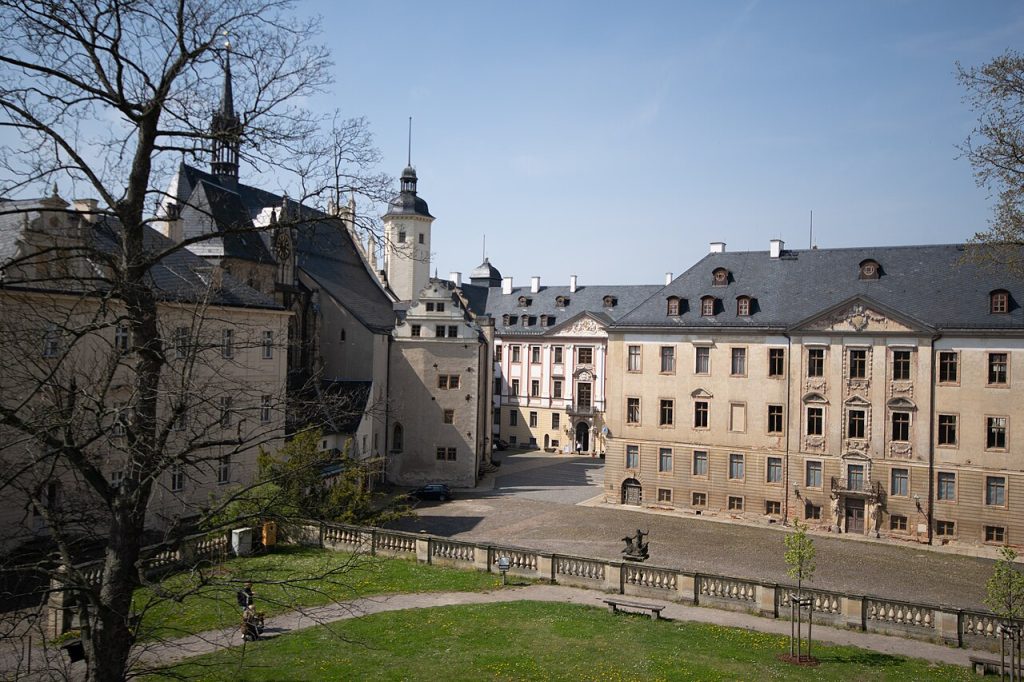
The baroque transformation in the seventeenth and eighteenth centuries gave the palace much of its present appearance, with long wings and elegant interiors added to the medieval structure.
Towers With Strange Names
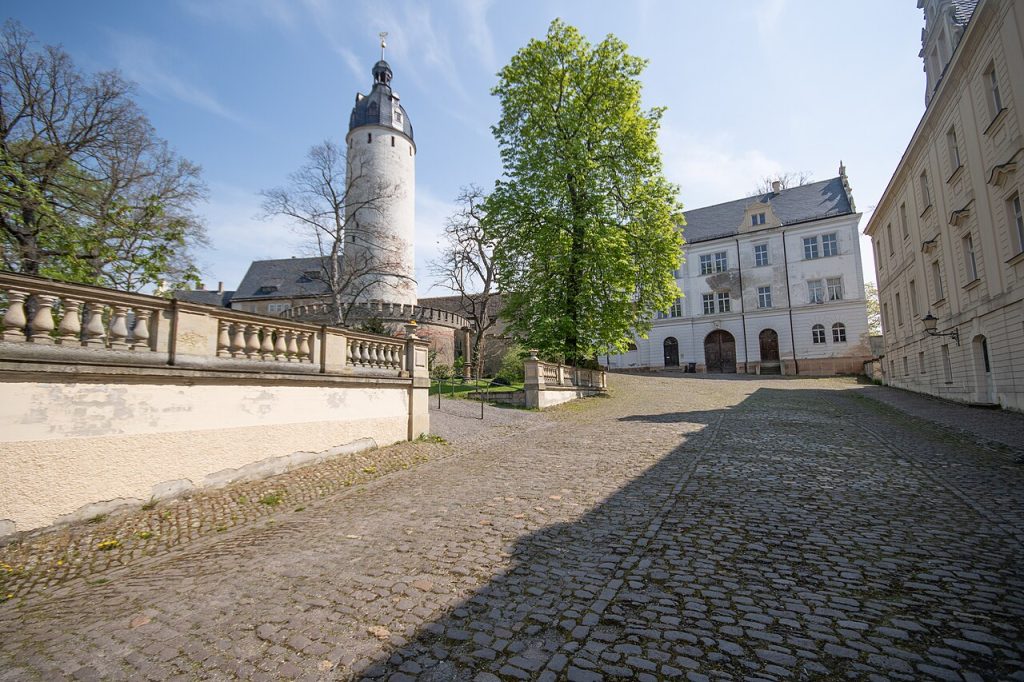
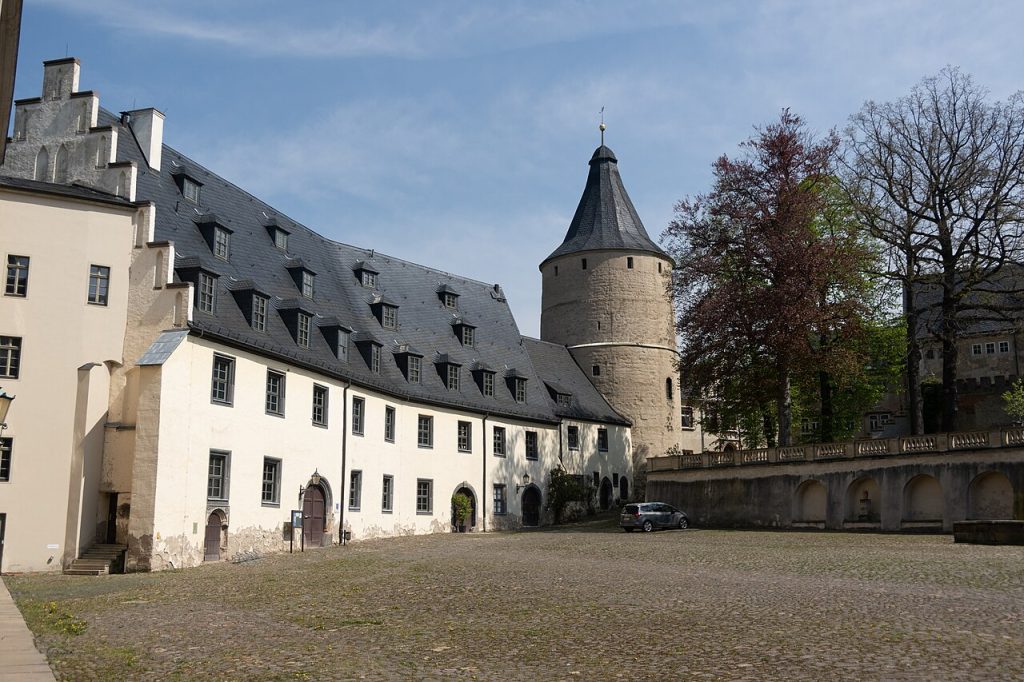
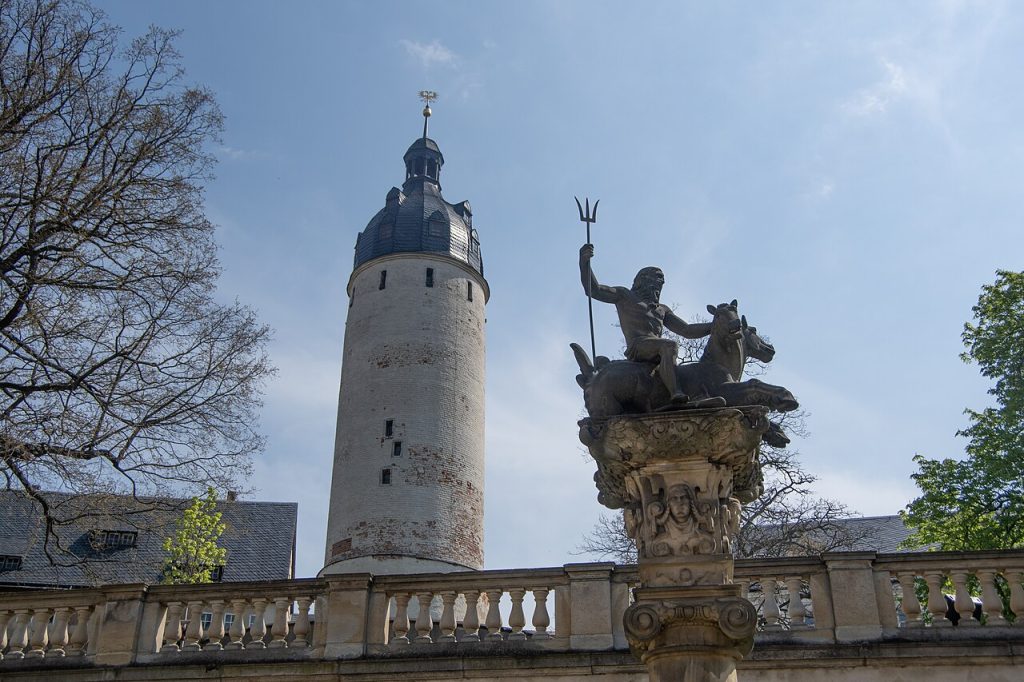
Two of the oldest structures at Altenburg Palace are its medieval towers, which have unusual names. The Mantelturm, or Mantle Tower, is a massive round tower from the early castle, and the Flasche, or Bottle, owes its name to its distinctive shape.
These towers are reminders of the defensive origins of the palace, when it was a fortress guarding the town and the surrounding countryside.
Together, the towers give the palace its characteristic skyline, visible from far away.
The Hausmannsturm, another tower, served as a watchtower and home for the tower keeper, who kept watch over the town.
The Bottle tower in particular puzzles visitors, and local legends offer various explanations for its name and shape.
Climbing one of the towers, when open, rewards you with fine views over Altenburg and the surrounding landscape.
The Kidnapping of the Princes
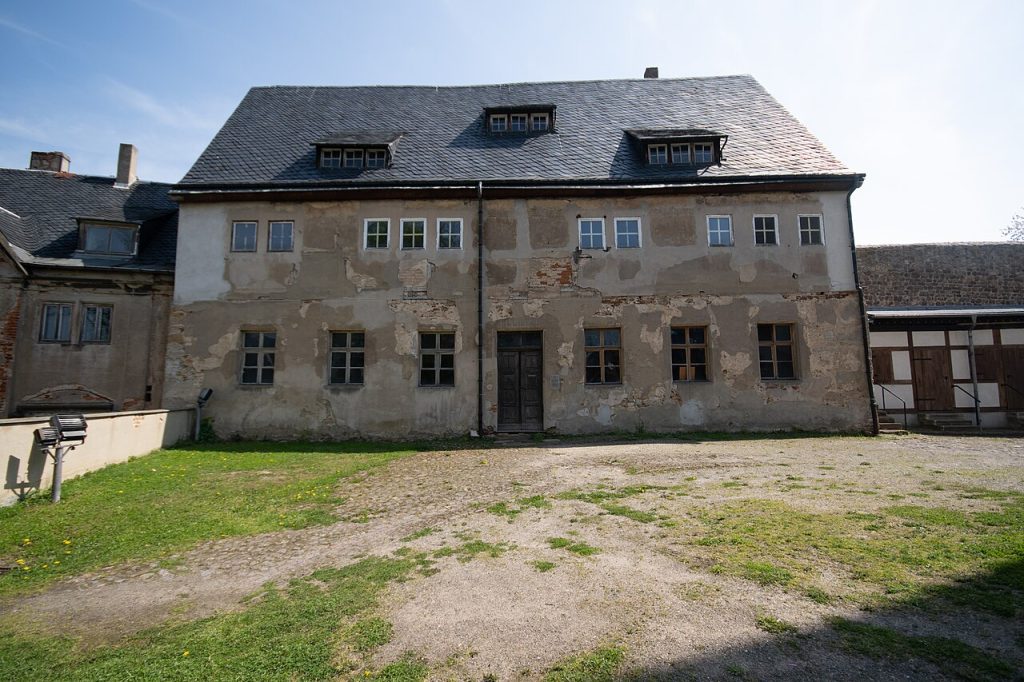
The most famous event in the history of the palace took place in July 1455. A knight named Kunz von Kaufungen, who had a dispute with Elector Frederick II of Saxony, climbed into the castle at night with his accomplices and kidnapped the elector’s two young sons, Ernst and Albrecht.
The kidnappers fled with the princes, but they were soon caught, and Kunz was later executed.
The princes were returned safely, and they later became the founders of the two main branches of the house of Wettin, the Ernestine and Albertine lines.
The kidnapping, known in German as the Prinzenraub, became a famous legend, and it is still commemorated in Altenburg with plays and festivals.
Kunz von Kaufungen had fought for the elector in a war but felt he had been cheated of his reward, which led him to plan this daring act of revenge.
Kunz was captured in a nearby forest, reportedly with the help of a charcoal burner.
Visitors can see the place where the kidnappers are said to have entered the castle, and exhibitions in the palace tell the dramatic story.
Every few years, Altenburg stages a festival recreating the kidnapping, with costumed actors, music and medieval markets.
Courtyards and Wings
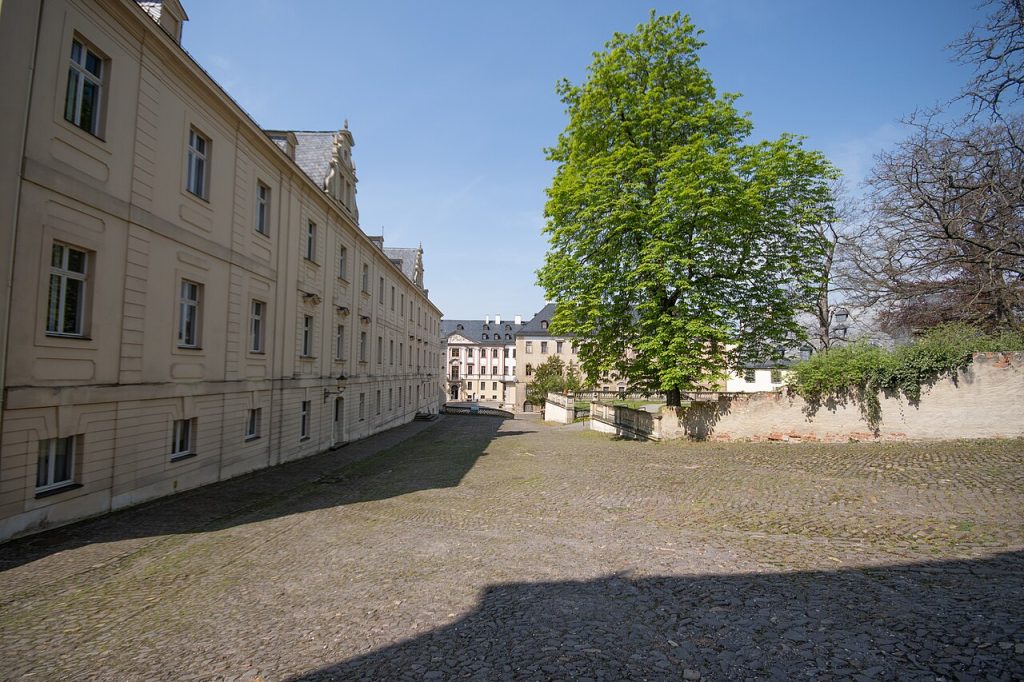
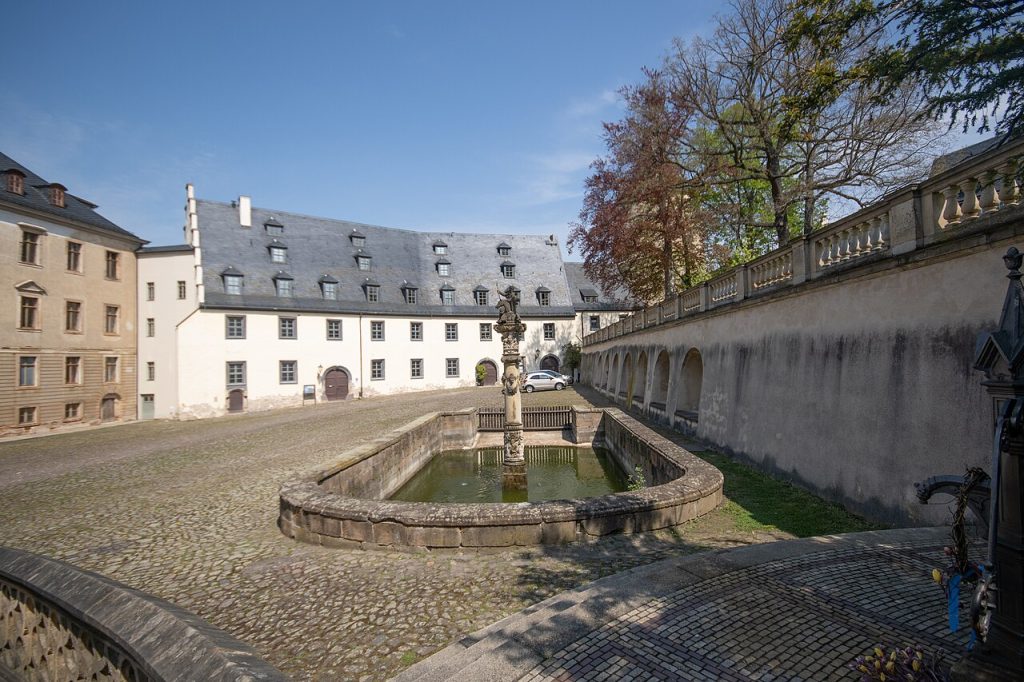
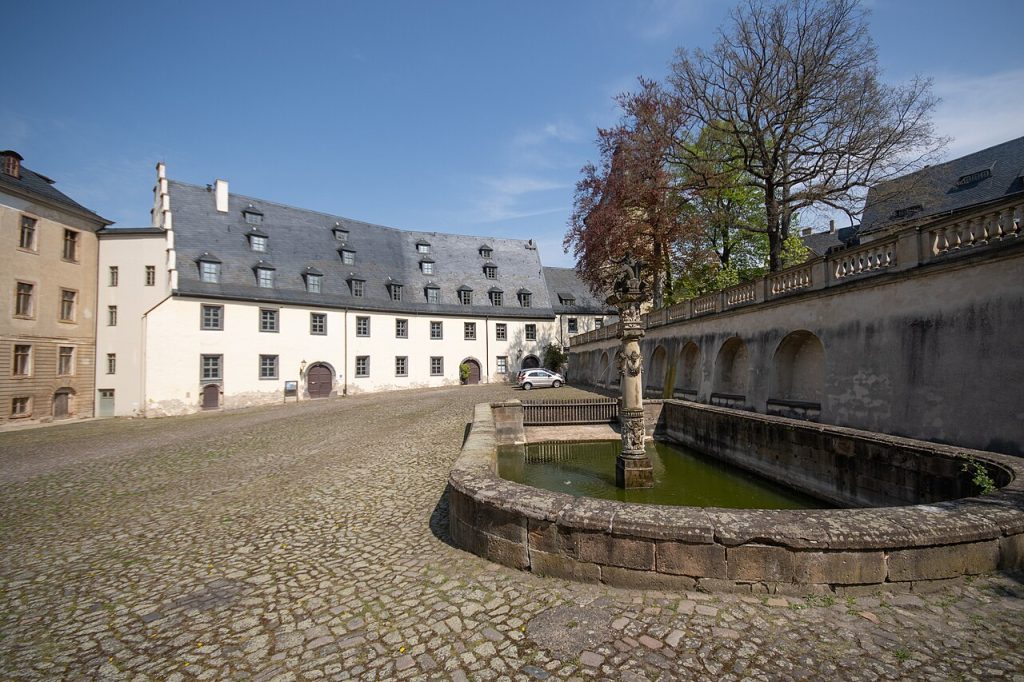
The palace is arranged around several courtyards, surrounded by wings built in different periods. Walking through them, you can trace the development of the residence over a thousand years.
Gateways, staircases and terraces connect the different parts of the complex, inviting exploration.
From the terraces of the palace there are wide views over the roofs of Altenburg and the surrounding countryside.
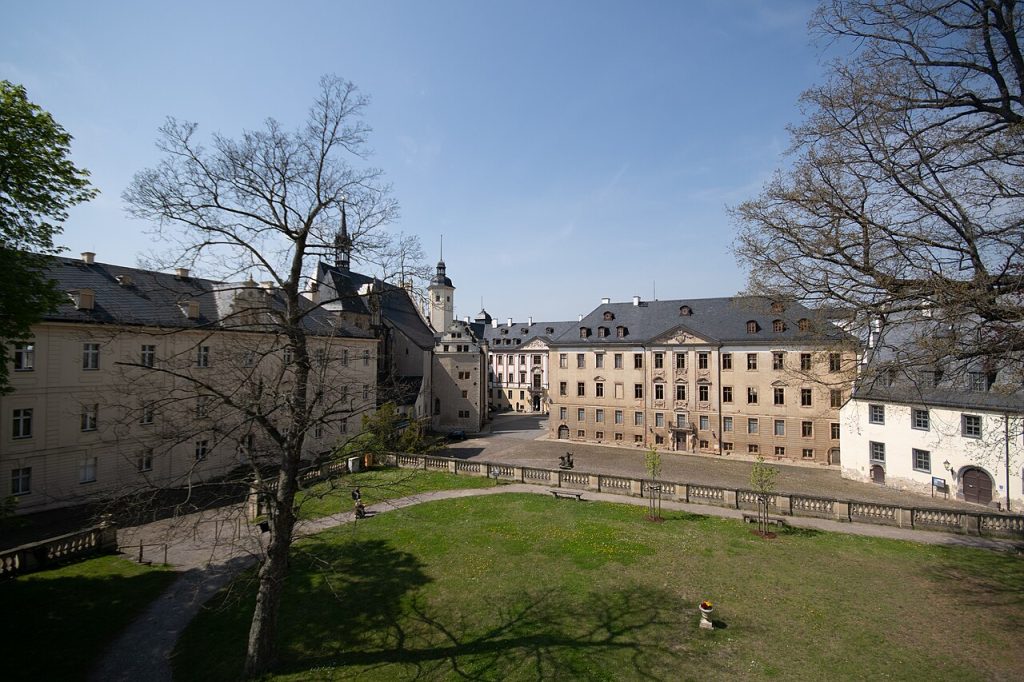
The main courtyard is framed by baroque wings, while older parts of the castle stand nearby, creating a varied and picturesque ensemble.
The courtyards are used for events and festivals, especially in summer, when the palace comes alive with music and visitors.
The Palace Church
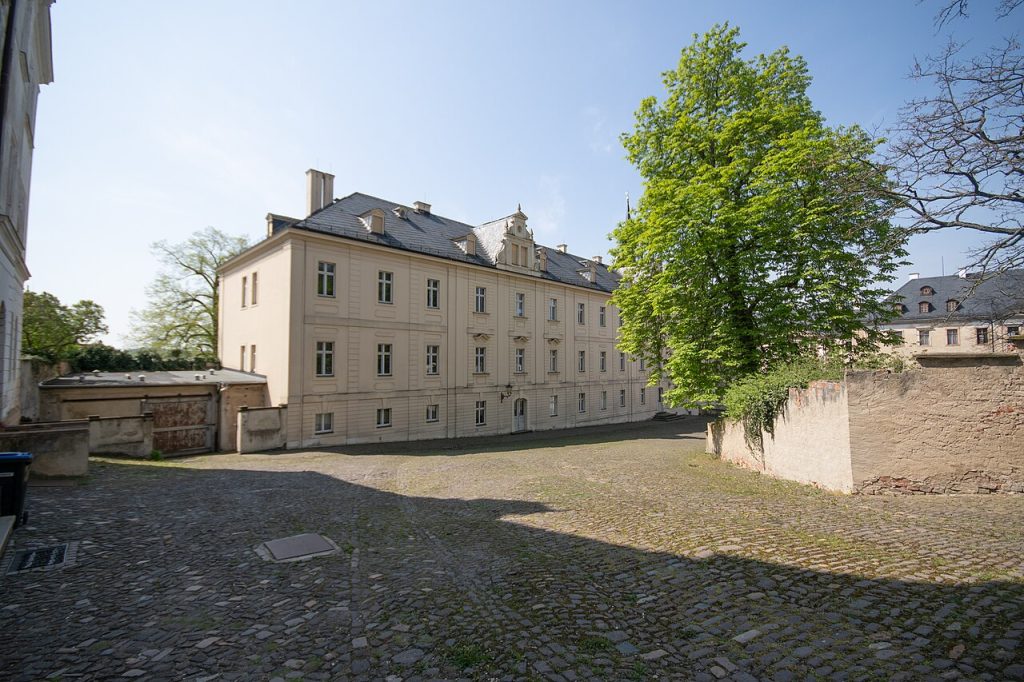
One of the highlights of Altenburg Palace is the palace church, a late Gothic building with a richly decorated baroque interior. It served as the court church of the dukes and is still used for services and concerts.
Its interior combines Gothic architecture with baroque decoration, creating a space of great beauty and atmosphere.
The church’s late Gothic vaults, with their intricate rib patterns, are among the finest in Thuringia.
The church contains beautiful vaults, carved altars, galleries and memorials to members of the ducal family.
The church is also connected with the Prinzenraub legend, as the rescued princes are said to have given thanks here after their return.
The Trost Organ
The palace church houses one of the most famous baroque organs in Germany, built between 1735 and 1739 by the organ builder Tobias Heinrich Gottfried Trost.
Johann Sebastian Bach played the organ in 1739 and praised its quality, and it is still considered one of the finest instruments of its time.
The organ is played regularly in concerts and services, attracting organists and music lovers from around the world.
Its rich and varied sound fills the church and gives listeners a vivid impression of the music of Bach’s era.
The organ’s case is richly decorated with carved and gilded ornament, matching the baroque splendour of the church interior.
Hearing the Trost organ in its original setting is one of the most memorable experiences at Altenburg.
The State Rooms
The palace museum includes a series of state rooms and apartments from the baroque and later periods, furnished with period furniture, paintings, porcelain and decorative objects.
The Festive Hall, with its elegant decoration, was used for receptions and celebrations, and it remains a venue for concerts and events.
Portraits of the dukes and duchesses introduce visitors to the people who lived here over the centuries.
Other rooms reflect the private life of the ducal family, with bedrooms, studies and salons decorated in different styles.
The museum also displays weapons, armour and objects related to the history of the palace and the region.
The German Playing Card Museum
Altenburg is known as the city of playing cards, and the palace houses the German Playing Card Museum, one of the largest collections of its kind in the world.
The popular card game Skat was developed here in the early nineteenth century.
The museum displays thousands of cards from many centuries and countries, showing how card design and games have changed over time.
Exhibits also explain the techniques of card making and the history of Altenburg’s card factories.
For anyone who enjoys games, the museum is a fascinating and unexpected highlight of a visit to the palace.
The Palace Garden
Below the palace lies a garden with paths, lawns and flower beds, as well as an orangery and a teahouse.
The garden offers views of the palace on its rock and of the town below, and it is a pleasant place for a walk.
In summer, the garden is full of colour, and in autumn the trees glow with warm tones.
The orangery and teahouse recall the elegant pleasures of court life, when the ducal family and their guests enjoyed walks and refreshments in the garden.
Altenburg and the Lindenau Museum
The Lindenau Museum houses a remarkable collection of early Italian paintings, one of the most important outside Italy, assembled by the statesman Bernhard von Lindenau.
The market square, the town hall and the old churches add to the charm of the town.
Altenburg is also known for its Skat fountain and its playing card traditions, which give the town a distinctive identity.
Altenburg also has a lively cultural scene, with a theatre, concerts and festivals that continue the traditions of the former residence town.
Altenburg Palace on Video
For a look at the palace and its history, the video below presents Altenburg Palace.
If the video inspires you, read on for practical tips.
Visiting Altenburg Palace Today
The palace museum and the Playing Card Museum are open throughout the year, except on Mondays.
Altenburg lies in eastern Thuringia, about forty kilometres south of Leipzig, and is easy to reach by train or car.
Plan at least half a day to see the palace, the church, the museums and the garden, and check the programme for organ recitals on the Trost organ.
Whenever you visit, Altenburg Palace offers a rich and varied journey through a thousand years of history.
Combine your visit with Leipzig and other Thuringian palaces such as Molsdorf and Heidecksburg.
There are cafes and restaurants in the old town, and the palace is also a popular venue for weddings and events.
View the location on Google Maps
Palaces Nearby
If you have enjoyed this palace, the region holds more remarkable residences. Here are two more well worth adding to your journey:
- Lichtenwalde Palace – the baroque palace with a garden of four hundred fountains near Chemnitz.
- Augustusburg Hunting Palace – the Renaissance crown of the Ore Mountains.
You May Like
Rammenau Baroque Palace and the Rural Splendour of Upper Lusatia