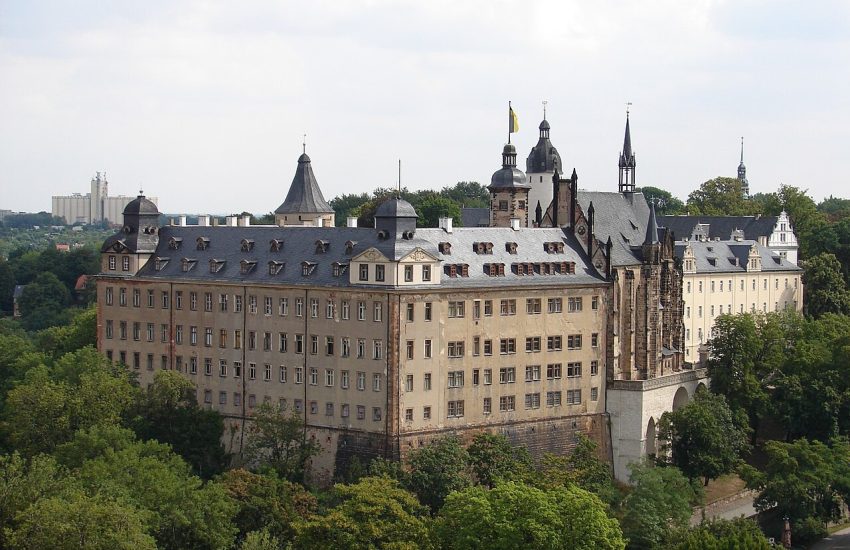
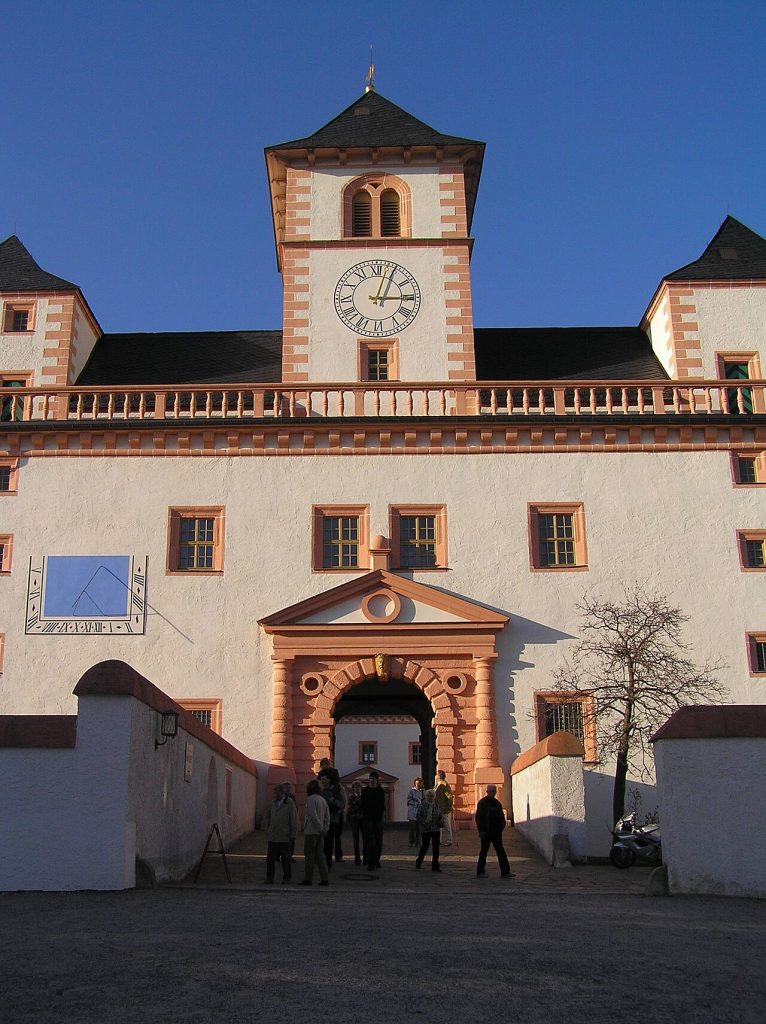
On a hilltop in the foothills of the Ore Mountains in Saxony, visible from far across the landscape, stands a vast Renaissance palace that locals call the Crown of the Ore Mountains. Augustusburg was built in the 1570s as a hunting palace for Elector August of Saxony, one of the most powerful princes of his time, and its four corner buildings around a great courtyard still dominate the countryside.
Inside, visitors can see a beautiful palace church with an altarpiece by Lucas Cranach the Younger, historic halls, a deep well house and several museums, including one of the largest collections of historic motorcycles in Europe.
In this article we will explore Augustusburg from the elector who built it to its architecture, its church, its museums and its views, and we will finish with practical tips for your visit.
In This Article
- A Palace Crowning a Hill
- Elector August of Saxony
- Hieronymus Lotter and the Renaissance Design
- The Great Courtyard
- The Palace Church
- Halls and Apartments
- The Well House
- The Motorcycle Museum
- Carriages and Other Collections
- Views Over the Ore Mountains
- The Town and the Ore Mountains
- Augustusburg on Video
- Visiting Augustusburg Today
A Palace Crowning a Hill

As you approach Augustusburg, the palace appears on the summit of the Schellenberg hill, its pale walls and roofs rising above the trees. On a clear day it can be seen from many kilometres away.
The palace is enormous, with four large corner buildings connected by wings around a square courtyard, giving it the appearance of a small fortified town.
Below it, the little town of Augustusburg climbs the slopes, with houses and streets leading up to the palace gates.
What makes Augustusburg special is its scale, its setting and the variety of things to see, from Renaissance art to modern motorcycles.
Augustusburg is one of the most visited palaces in Saxony, attracting families, history lovers and motorcycle enthusiasts alike.
The approach to the palace, whether by car, bus or the historic funicular, builds anticipation as the walls and roofs appear above the trees.
The views from the palace terraces stretch across the Ore Mountains and the hills of central Saxony, one of the finest panoramas in the region.
Elector August of Saxony

The palace was built for Elector August of Saxony, who ruled from 1553 to 1586. He was a capable and ambitious ruler who strengthened the Saxon state and built up its economy and administration.
August was a passionate hunter, and the forests around the Schellenberg were rich in game. He decided to build a large hunting palace on the hilltop, replacing an older castle that had been damaged by lightning.
He was also a keen collector of art, scientific instruments and curiosities, and he founded the famous Dresden Kunstkammer, the origin of the Dresden State Art Collections.
August’s wife, Anna of Denmark, was known for her interest in medicine, gardening and household management, and she is affectionately remembered as Mother Anna in Saxony.
August’s reign is often seen as a golden age for Saxony, with a prosperous economy based on mining, trade and agriculture.
The palace was named Augustusburg in honour of the elector, and the town below took the same name.
His love of order and administration is reflected in the clear, rational plan of the palace, which expresses the power and stability of his rule.
He travelled frequently between his many residences, hunting lodges and estates, and Augustusburg was one of his favourite places.
Hieronymus Lotter and the Renaissance Design
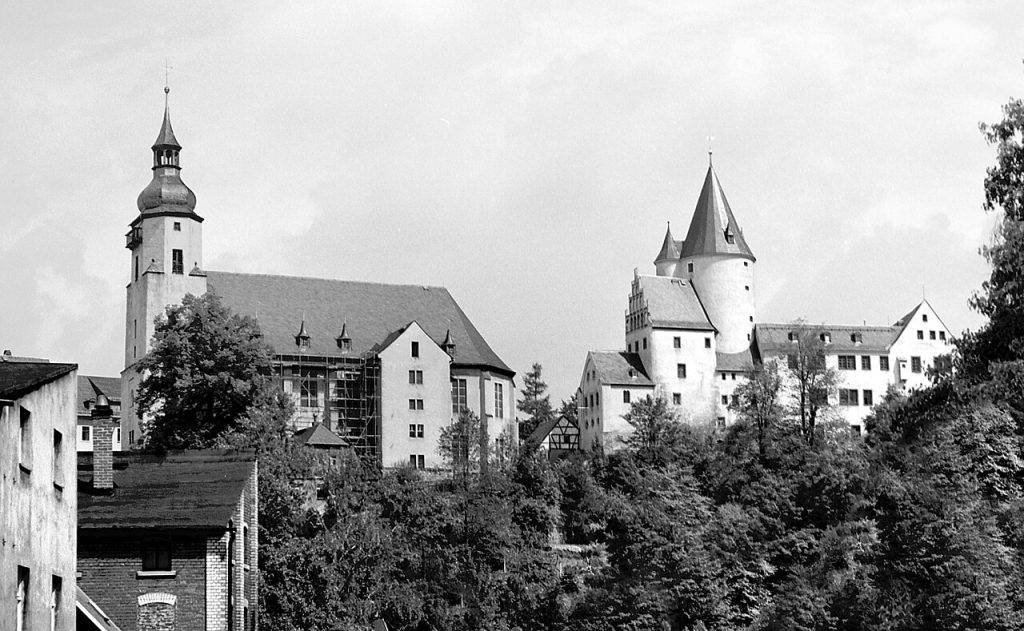
The palace was built between 1568 and 1572 under the direction of Hieronymus Lotter, a merchant and builder from Leipzig who also designed the Old Town Hall in Leipzig.
Lotter created a symmetrical plan with four corner houses connected by wings around a large courtyard.
The construction was remarkably fast for such a large building, thanks to the elector’s resources and the work of hundreds of craftsmen.
The palace reflects the Renaissance ideals of order and symmetry, combined with the practical needs of a hunting residence.
Lotter faced many challenges, including the difficult hilltop site and the need to finish quickly, and he was eventually replaced before the work was completed.
Its clear geometry and grand scale made it one of the most impressive palaces of its time in Germany.
The builders reused materials from the older castle on the site, and parts of its foundations were incorporated into the new palace.
The Great Courtyard

At the heart of the palace lies a large square courtyard, one of the largest palace courtyards of the German Renaissance.
In the days of the elector, the courtyard was the centre of activity during hunting parties, with horses, hounds and huntsmen assembling here.
Today the courtyard is used for events, markets and festivals, and in summer concerts bring the palace to life.
Standing in the courtyard, you can appreciate the symmetry of Lotter’s design and the scale of the palace.
The courtyard is also the starting point for guided tours, and information panels explain the history and functions of the different buildings.
The Palace Church

One of the treasures of Augustusburg is the palace church, a fine example of early Protestant church architecture, bright and harmonious, with galleries and a richly decorated ceiling.
The altarpiece, painted in 1571 by Lucas Cranach the Younger, shows Elector August and his family kneeling before the crucified Christ, a vivid portrait of a Protestant princely family.
The church was designed for preaching, with the pulpit given a prominent place, reflecting the importance of the word in Lutheran worship.
Concerts and services are still held in the church, and its acoustics make it a special place to hear music.
The Cranach altarpiece is one of the most important works of Protestant art in Saxony, and its detailed portraits of the elector’s family are fascinating to study.
The church’s simple, bright interior reflects the Lutheran emphasis on clarity and the word, while its decoration shows that beauty still had a place in worship.
Halls and Apartments
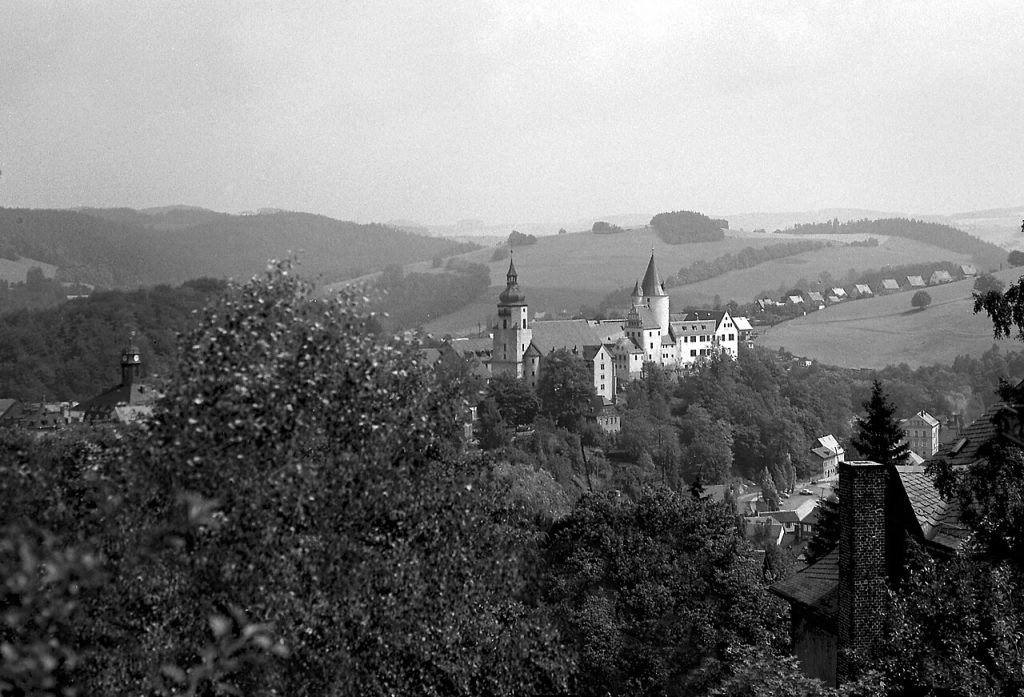
Inside the corner houses and wings, visitors can see historic halls and apartments from the time of the elector and later periods.
Some rooms are decorated with Renaissance paintings, including hunting scenes that recall the original purpose of the palace.
The Hare House, one of the corner buildings, is famous for its painted decoration showing hares in comic scenes, a playful touch in a princely residence.
The palace contains several halls that were used for banquets and receptions during hunting parties, decorated with paintings and the elector’s coats of arms.
Exhibitions in the rooms tell the story of the palace, the elector and his court, with objects from the electoral household.
The Well House

High on its hill, the palace needed a reliable supply of water. A well was dug through the rock, reaching around one hundred and thirty metres, and a great wheel driven by animals was used to raise the water.
The well house, with its wooden treadwheel, is one of the most fascinating technical monuments of the palace and of sixteenth century Saxony.
Animals walked inside the great wheel to turn it, lifting buckets of water from the depths of the well, a demanding and time consuming process.
Visitors can see the well and learn how water was raised from such a depth in the sixteenth century.
The Motorcycle Museum

One of the most surprising attractions at Augustusburg is its motorcycle museum, one of the largest and most important in Europe.
The collection includes well over a hundred motorcycles from the late nineteenth century to modern times, with a special focus on machines made in Saxony, once a centre of motorcycle manufacturing.
Famous Saxon brands such as DKW and MZ are well represented, telling the story of an important industrial tradition.
Even visitors with no special interest in motorcycles often find the museum fascinating, both for the design of the machines and for the history they represent.
The museum displays motorcycles in historic settings, with workshops, petrol stations and advertisements that recreate the atmosphere of past decades.
Carriages and Other Collections

The palace also houses a museum of historic carriages, displaying coaches and sleighs, some of them used by the Saxon court.
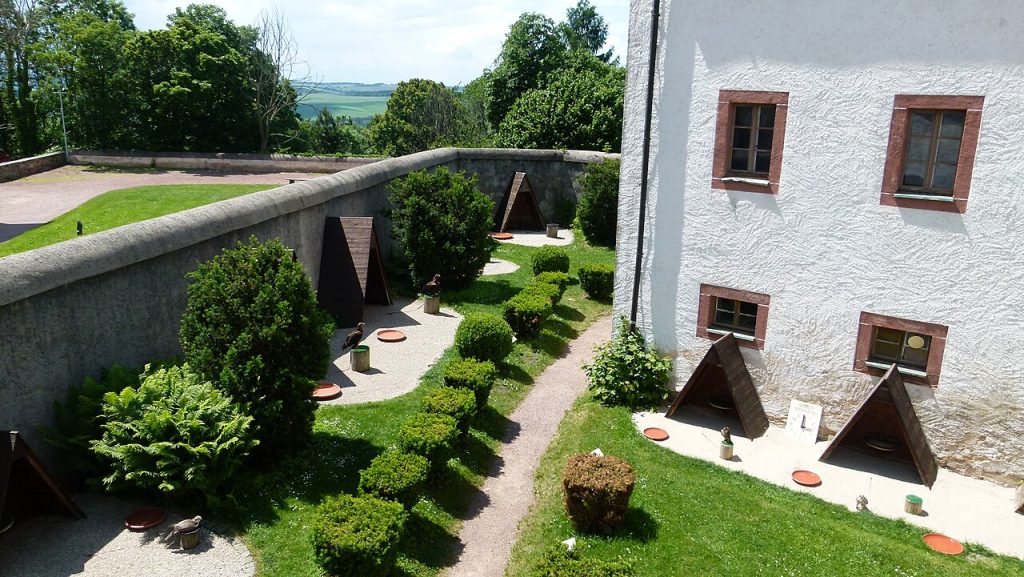
Other exhibitions focus on hunting and wildlife, and birds of prey are kept at the palace, with falconry demonstrations that recall the hunting traditions of the electoral court.
Some carriages are richly decorated with gilding and painted panels, showing the splendour of court ceremonies and travel.
The variety of collections makes Augustusburg a destination where visitors of all ages can find something of interest.
Views Over the Ore Mountains

From the terraces and towers of the palace, there are sweeping views over the Ore Mountains and the hills of central Saxony.
At sunset, the light over the mountains is especially beautiful, and the palace walls glow warmly in the evening sun.
The palace’s position made it a landmark for travellers and a symbol of electoral power across the region.
Many visitors consider the view one of the best reasons to make the climb up to Augustusburg.
The Town and the Ore Mountains
The small town below the palace grew up to serve the electoral court, and a historic funicular railway, opened in 1911, connects it with the valley below.
The Ore Mountains are famous for their mining history and for wooden toys and nutcrackers, and the Ore Mountain Mining Region is a UNESCO World Heritage Site.
Small cafes in the town serve local specialities, including cakes and dishes from the Ore Mountains.
A visit to Augustusburg can easily be combined with exploring the villages, museums and landscapes of the Ore Mountains.
Augustusburg on Video
For a look at the palace and its collections, the video below presents Augustusburg Hunting Palace.
If the video inspires you, read on for practical tips.
Visiting Augustusburg Today

Augustusburg Palace and its museums are open throughout the year, with different opening times in summer and winter.
The palace lies about fifteen kilometres east of Chemnitz and can be reached by car, bus or the funicular railway.
Plan at least half a day, and combine your visit with Lichtenwalde Palace and its garden of fountains, a short drive away.
Whenever you visit, Augustusburg offers a rich and varied experience, from Renaissance splendour to modern technology, on one of the most beautiful hilltops in Saxony.
Combined tickets give access to all the museums in the palace, and there are restaurants and cafes, making it easy to spend a whole day there.
View the location on Google Maps
Palaces Nearby
If you have enjoyed this palace, the region holds more remarkable residences. Here are two more well worth adding to your journey:
- Lichtenwalde Palace – the baroque palace with a garden of four hundred fountains near Chemnitz.
- Altenburg Palace – the thousand year old residence on its rock above Altenburg.
You May Like
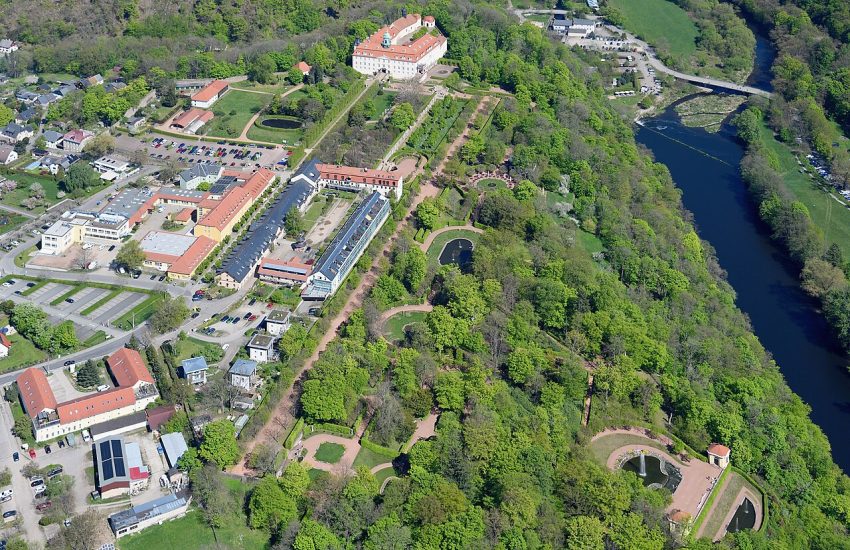
Lichtenwalde Palace and Its Garden of Four Hundred Fountains