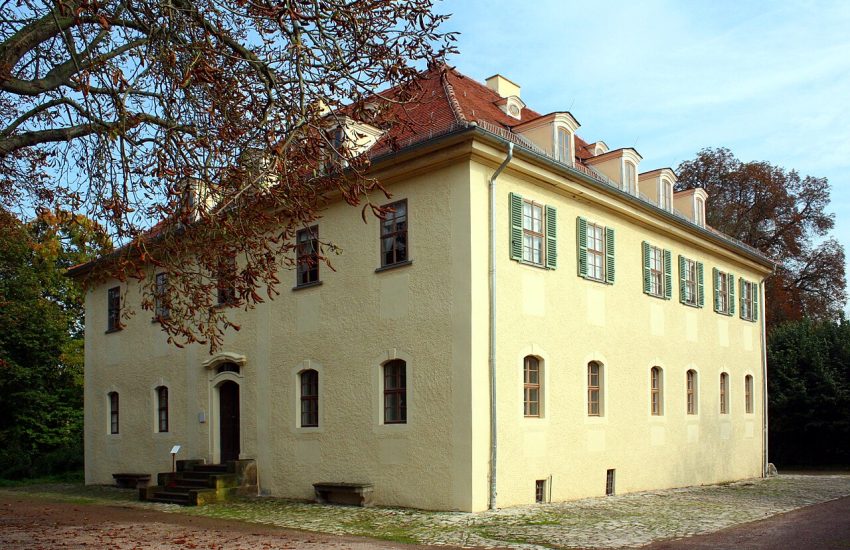
Above the half timbered town of Schmalkalden, on the southwestern slopes of the Thuringian Forest, stands one of the best preserved Renaissance palaces in Germany. Wilhelmsburg Palace was built in the late sixteenth century as a hunting residence and secondary seat for Landgrave Wilhelm IV of Hesse Kassel, and its interiors have survived with remarkably few changes for more than four hundred years.
Inside you will find painted halls, ornate stucco ceilings, a giant hall decorated with figures of heroes and one of the earliest Protestant palace chapels, whose altar, pulpit and organ are stacked one above the other. The chapel organ is among the oldest playable wooden organs in Europe.
In this article we will explore Wilhelmsburg from the landgrave who built it to its painted rooms, its chapel and its terraced garden, and we will finish with practical tips for your visit.
In This Article
- A Renaissance Palace Above Schmalkalden
- Landgrave Wilhelm IV of Hesse Kassel
- Four Wings and a Courtyard
- The Inner Courtyard
- The Giants Hall
- Painted Rooms and Stucco Ceilings
- Masterpieces of Renaissance Stucco
- The Palace Chapel
- The Renaissance Organ
- The Terrace Garden
- Schmalkalden and the Reformation
- Wilhelmsburg on Video
- Visiting Wilhelmsburg Today
A Renaissance Palace Above Schmalkalden

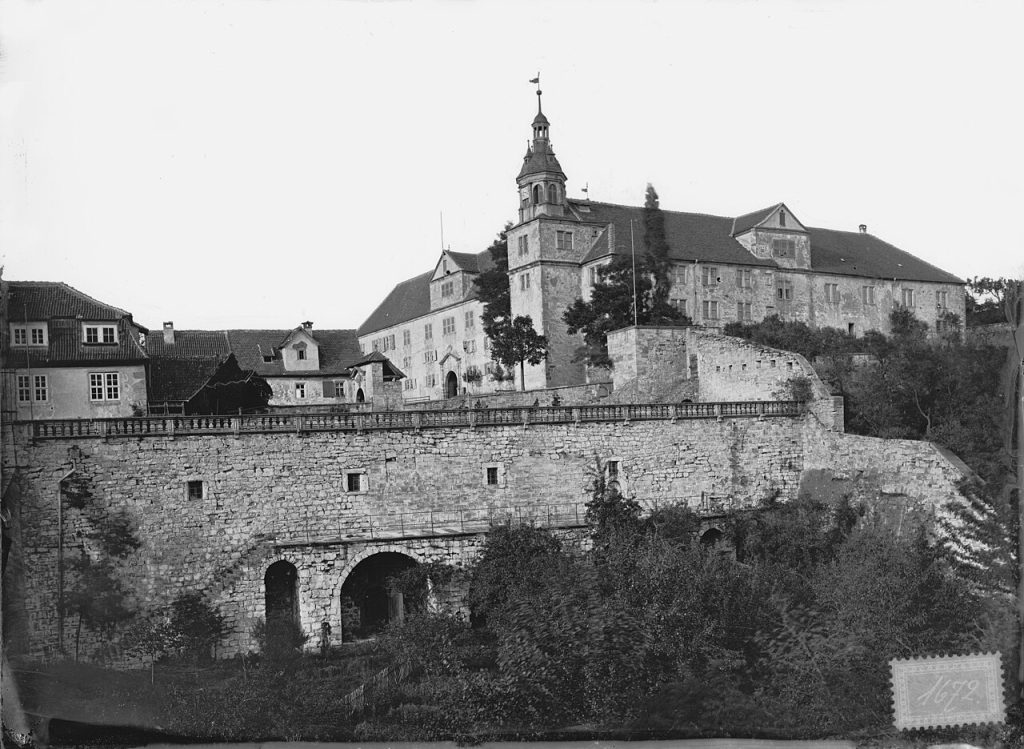
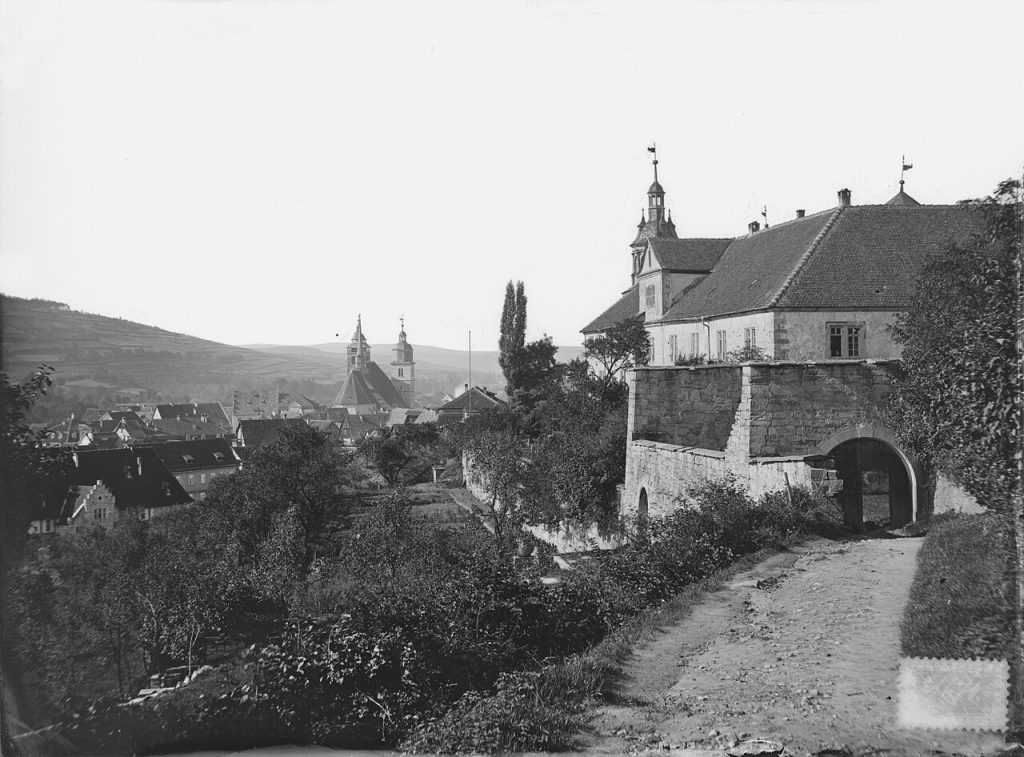
As you approach Schmalkalden, the palace appears on a hill above the rooftops, a long white building with gables, towers and a steep roof. Below it, the old town spreads out with crooked lanes, half timbered houses and a large Gothic church.
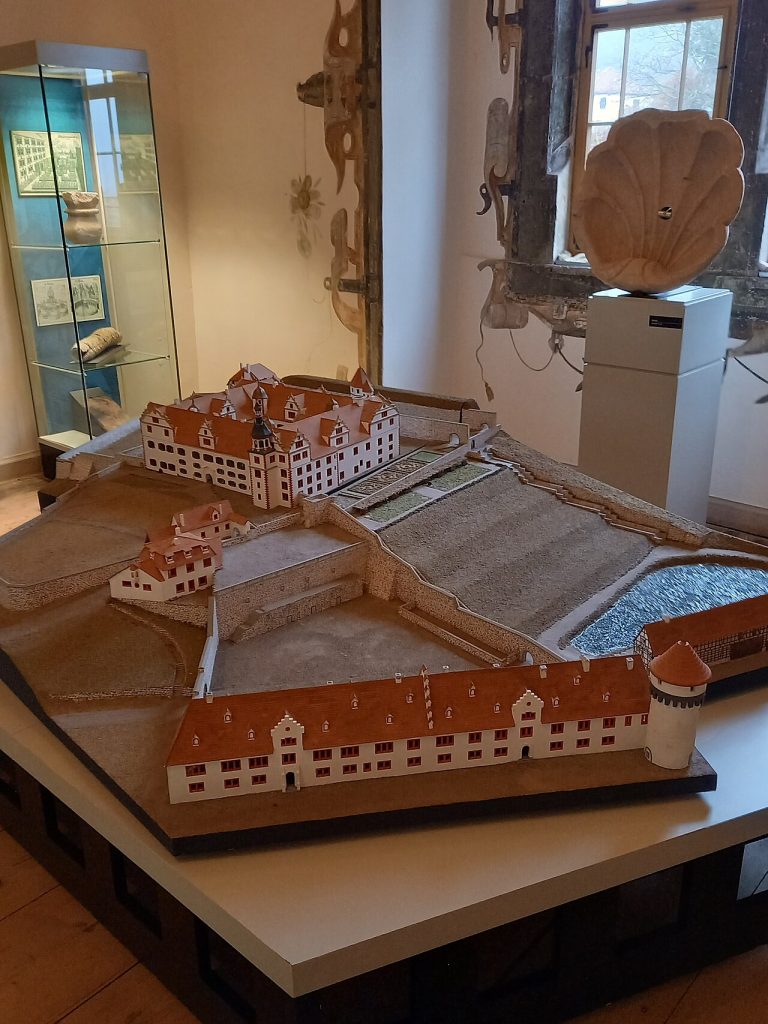
The palace forms four wings around an inner courtyard, a classic Renaissance layout that gives it a compact, fortress like appearance from outside.
Schmalkalden is one of the most charming small towns in Thuringia, and it played an important role in the history of the Reformation as the meeting place of the Protestant princes of the Schmalkaldic League.
What makes Wilhelmsburg special is the authenticity of its interiors. Few palaces in Germany allow you to experience the world of the late sixteenth century so directly.
Walking through its rooms, you see the colours, patterns and images that the landgrave and his court saw, almost untouched by later fashions.
The palace is also a peaceful place, rarely crowded, where you can take your time and enjoy the details.
The walk up from the town to the palace takes only a few minutes, and with every step the views over the rooftops and the surrounding wooded hills become wider.
Schmalkalden lies in a green valley surrounded by forests, and the combination of palace, old town and landscape makes it one of the most picturesque destinations in southern Thuringia.
Many travellers discover the town while hiking or cycling in the Thuringian Forest, and the palace is a natural highlight of any visit to the region.
Landgrave Wilhelm IV of Hesse Kassel
The palace was built for Wilhelm IV of Hesse Kassel, known as Wilhelm the Wise, who ruled from 1567 to 1592. He was one of the most learned princes of his age, with a passion for astronomy, mathematics and natural science.
Wilhelm built an observatory in Kassel and corresponded with leading scholars, including the Danish astronomer Tycho Brahe. His interest in science and learning shaped the culture of his court.
Schmalkalden belonged jointly to Hesse and the counts of Henneberg, and after the Henneberg line died out in 1583, Hesse gained full control. Wilhelm decided to build a new residence here, both as a symbol of his authority and as a base for hunting in the surrounding forests.
Construction began in 1585 and the palace was largely completed by 1590, a remarkably short building period for such a large and richly decorated residence.
Wilhelm died in 1592, only a few years after the palace was finished, but his successors continued to use it as a hunting lodge and secondary residence.
His wife, Sabine of Wurttemberg, shared his interest in culture and religion, and the couple’s coats of arms appear in several places in the palace.
Wilhelm was also a careful administrator who kept detailed records of his lands and finances, an approach that helped Hesse Kassel become one of the most stable states in the region.
The landgrave’s scientific interests are reflected in the decoration of the palace, where images of the heavens, the seasons and the elements remind visitors of the order of the universe as it was understood in his time.
His court was a meeting place for scholars, artists and musicians, and Wilhelmsburg was designed to host them in comfort and style during the hunting season.
Four Wings and a Courtyard

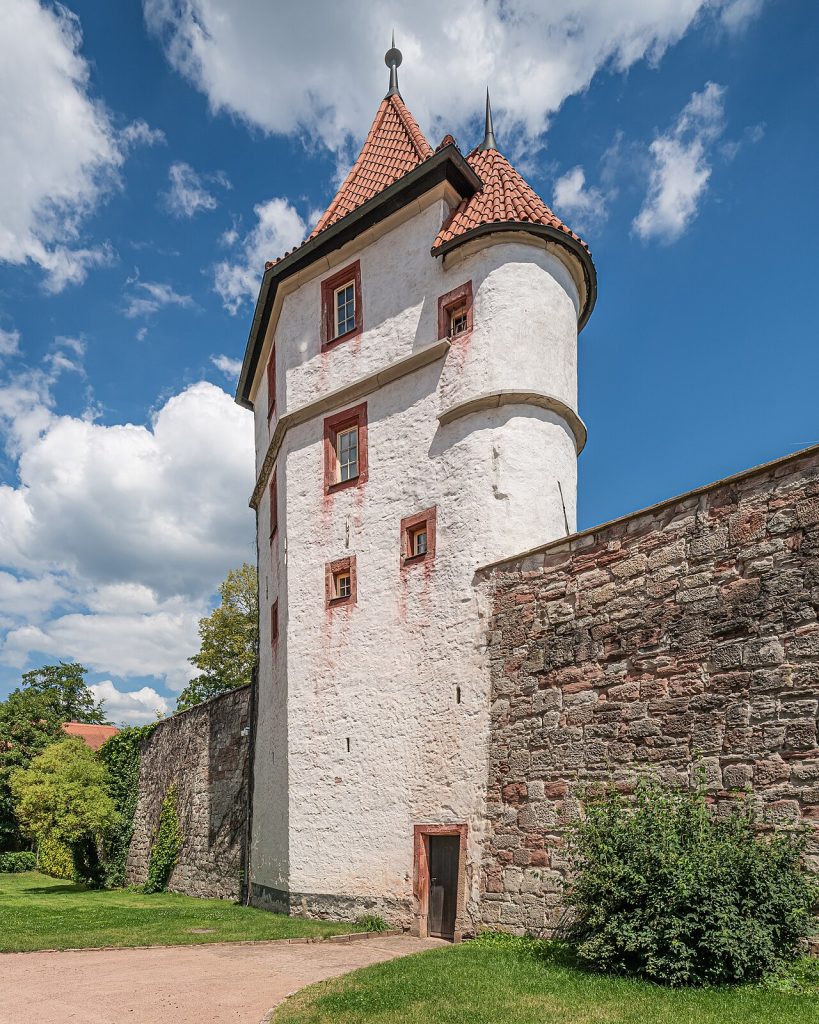
The palace consists of four wings arranged around a rectangular courtyard. The exterior is relatively plain, with white walls, regular windows and decorative gables, while the courtyard facades are more richly articulated.
The architects and builders came from Hesse and other parts of Germany, and they created a building that combined comfort, representation and practicality.
Staircase towers at the corners of the courtyard connect the different floors, a typical feature of Renaissance palaces in Germany.
The palace stands on the site of an older castle, and some medieval remains were incorporated into its foundations.
Because the palace was used only occasionally after the death of Wilhelm IV, it was never modernised in later styles, which is why its Renaissance character has survived so well.
Today it is recognised as one of the most important Renaissance monuments in central Germany.
The steep roofs were designed to shed the heavy snow of the Thuringian Forest winters, a practical detail that also gives the palace its distinctive outline.
The thick walls of the lower floors kept the interiors cool in summer and warm in winter, making the palace comfortable for hunting parties in every season.
From the outside, the palace seems almost austere, but this simplicity makes the richness of the interiors all the more surprising when you step inside.
The Inner Courtyard
The inner courtyard is the heart of the palace, enclosed by the four wings and open to the sky. Its facades, staircase towers and doorways create a harmonious and intimate space.
In the days of the landgraves, the courtyard was the centre of daily life, where servants, officials and visitors crossed between the different parts of the palace.
Today it is used for concerts, theatre performances and festivals, especially in summer, when its enclosed space creates a wonderful atmosphere.
Looking up from the courtyard, you can see the gables and roofs of the palace framing the sky, a classic image of German Renaissance architecture.
Doors and portals around the courtyard are decorated with carved stone frames, coats of arms and inscriptions that record the building history of the palace.
On quiet days the courtyard is wonderfully peaceful, and it is a good place to sit and absorb the atmosphere before or after a tour.
The Giants Hall
The largest room in the palace is the Giants Hall, a vast banqueting hall on the upper floor. Its name comes from the larger than life figures of heroes and rulers painted on the walls.
The hall was used for banquets, receptions and celebrations, and it could accommodate large numbers of guests during the landgrave’s hunting parties.
Its wooden ceiling and painted decoration have survived remarkably well, and walking into the hall you feel transported back to the late sixteenth century.
The painted figures, inspired by ancient history and mythology, were meant to express the virtues and power of the ruling family.
Concerts and events are still held in the Giants Hall, bringing it back to life with music and conversation.
The hall’s long windows look out over the town and the hills, so that guests at the landgrave’s banquets could enjoy views across his territory.
Standing in the middle of the hall and looking around at the painted heroes, you can imagine the noise and colour of a sixteenth century banquet, with music, toasts and long tables loaded with game from the day’s hunt.
Painted Rooms and Stucco Ceilings
Throughout the palace, rooms are decorated with wall paintings, ornamental patterns and stucco ceilings of exceptional quality. Many were created by artists from the Netherlands and Germany working in the latest Renaissance style.
The decoration includes floral motifs, grotesques, mythological scenes and allegories, combined into rich and colourful schemes.
Some rooms served as apartments for the landgrave and his family, while others were used for guests and court officials.
The White Hall, the Table Room and other spaces each have their own character, with different colours, patterns and functions.
Because the decoration has survived largely unchanged, the palace offers a rare chance to see how a Renaissance residence looked and felt.
The colours used in the paintings were made from natural pigments, and their survival over four centuries is a testament to the skill of the painters and to the care with which the palace has been preserved.
Many visitors are surprised by the brightness of the colours, which challenge the common idea that interiors of the past were dark and gloomy.
Masterpieces of Renaissance Stucco

The stucco work at Wilhelmsburg is among the finest of its period in Germany. Craftsmen created elaborate ceilings with ribs, medallions, fruit garlands and figures, many of them painted and gilded.
These ceilings were not only decorative but also displayed the wealth and taste of the landgrave, who wanted his palace to rival the courts of Italy and the Netherlands.
Looking up, you can discover a wealth of details, from tiny faces and animals to complex geometric patterns.
Conservators have carefully restored the ceilings, preserving their original colours and forms.
Some ceilings include small figures of animals, plants and mythical creatures hidden among the ornament, and spotting them is part of the pleasure of a visit.
The Palace Chapel

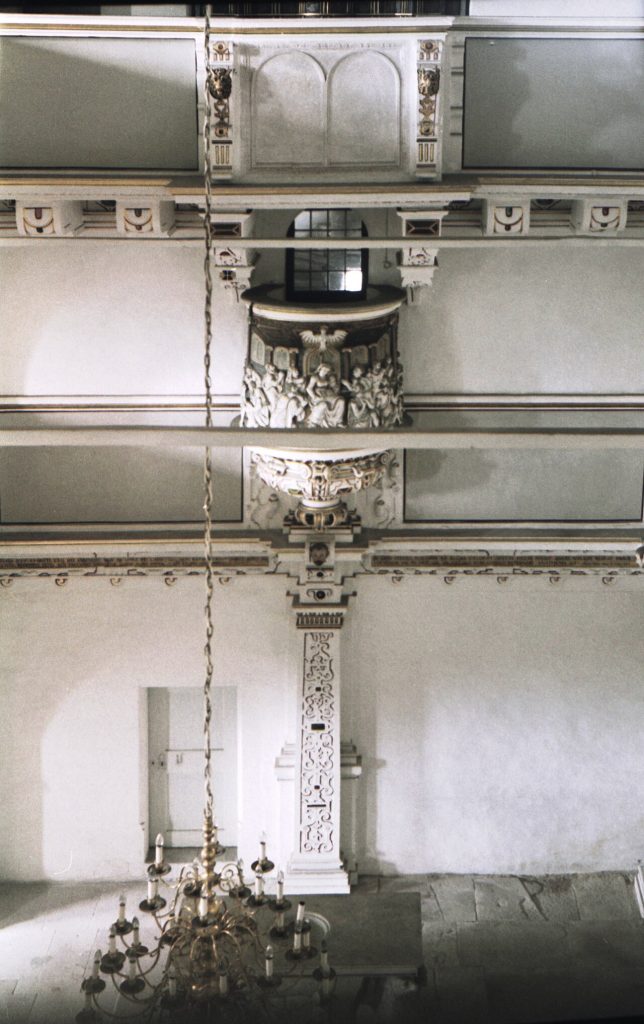
The palace chapel is one of the most important features of Wilhelmsburg and one of the earliest Protestant palace chapels in Germany. Completed in 1590, it reflects the new ideas of the Reformation about worship and church architecture.
In the chapel, the altar, the pulpit and the organ are arranged one above the other on the same axis, a design that emphasised the word of God and the importance of preaching. This arrangement later became a model for many Protestant churches.
The chapel is richly decorated with stucco, paintings and gilding, showing that Protestant simplicity did not exclude beauty.
Galleries around the walls allowed the landgrave and his court to attend services from above.
The chapel remains a calm and impressive space, and services and concerts are occasionally held here.
The chapel at Wilhelmsburg influenced the design of many later Protestant churches and chapels in Hesse and Thuringia, making it a key monument in the history of church architecture.
The Renaissance Organ
The organ in the chapel is a treasure in its own right. Built around 1590, it is one of the oldest playable organs in Europe and has a case and pipes largely made of wood.
Its soft, warm sound is quite different from the powerful tone of later baroque organs, giving listeners a unique impression of the music of the late Renaissance.
Concerts on the organ are held regularly, attracting music lovers and organists from around the world.
Hearing the organ in the chapel for which it was built is one of the most memorable experiences at Wilhelmsburg.
The instrument has been carefully restored to preserve its original character, and organists value it as a unique source for understanding how music of the late sixteenth century sounded.
The Terrace Garden

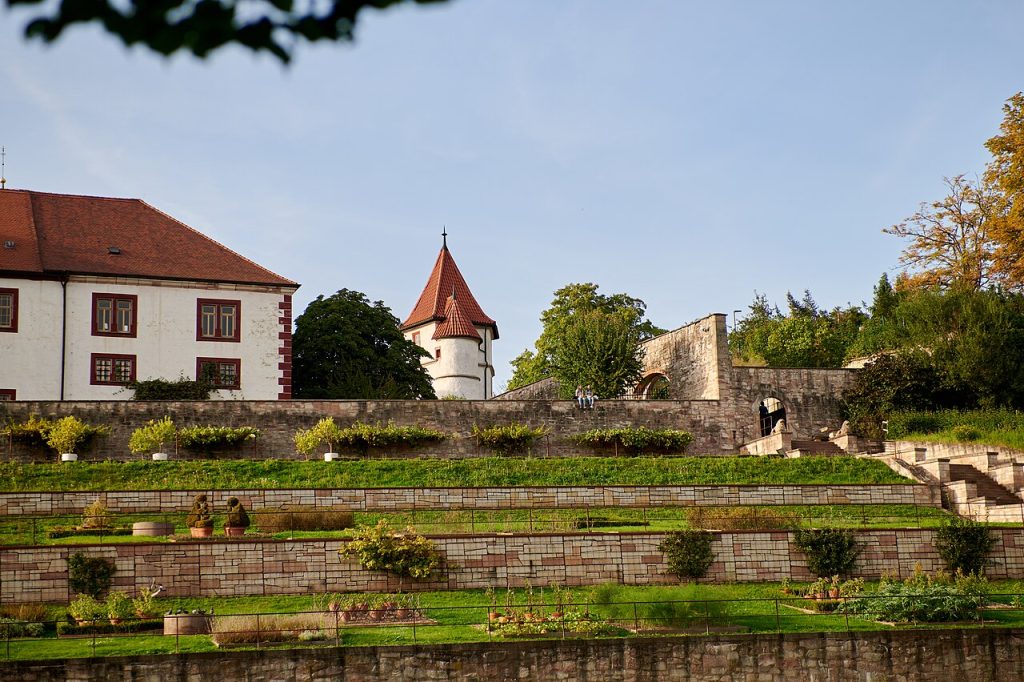
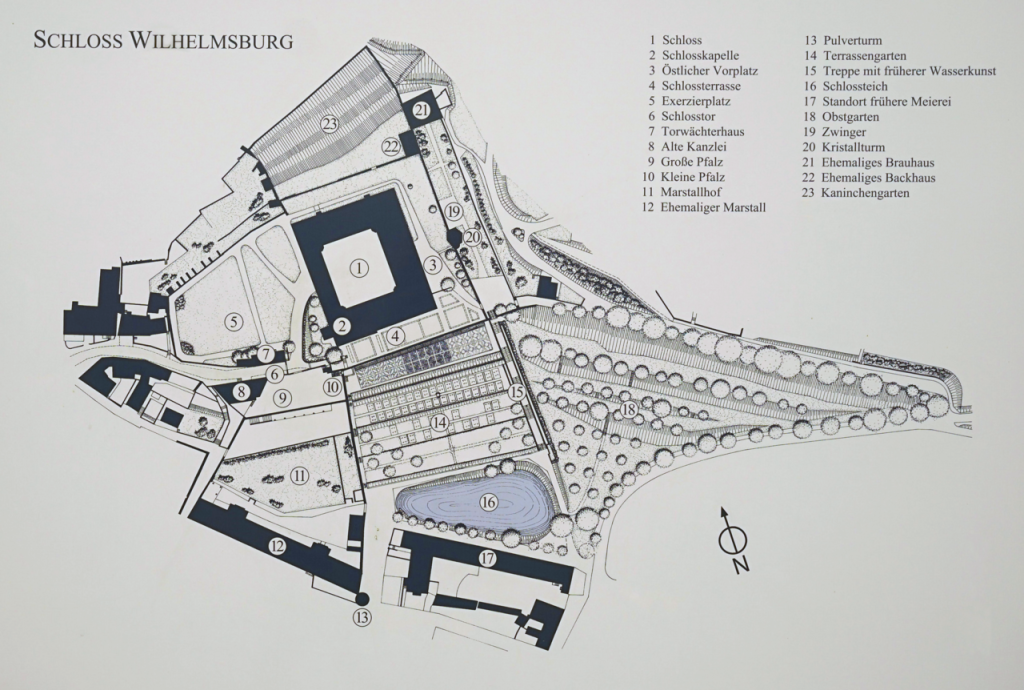
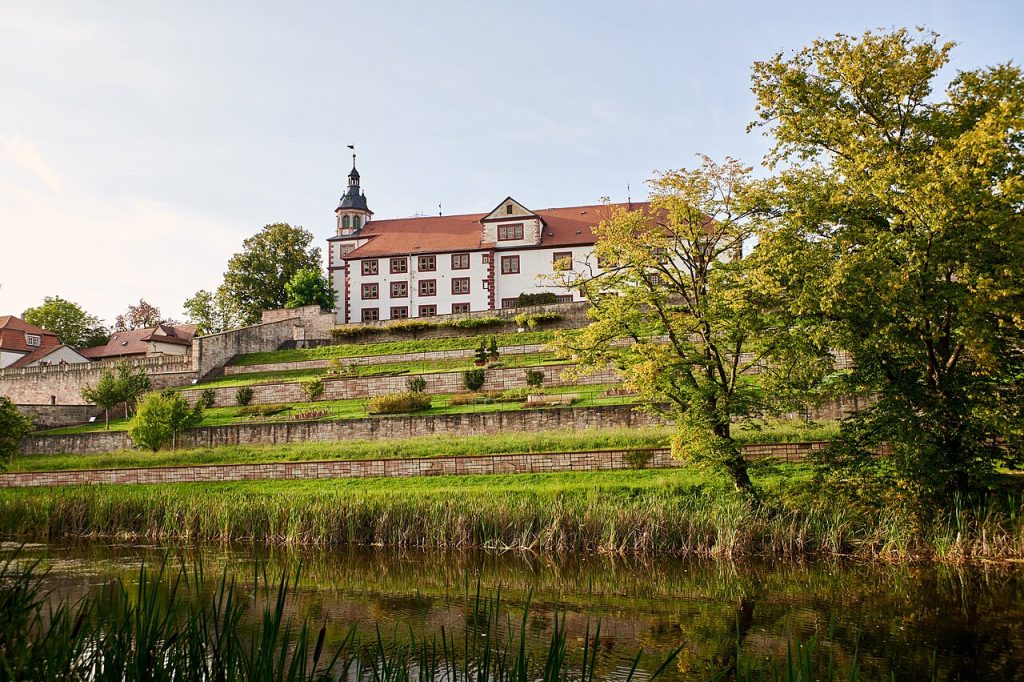
Around the palace lies a terraced garden, laid out on the slopes of the hill. Its terraces, paths and flower beds offer fine views over Schmalkalden and the surrounding hills.
The garden was restored in recent years based on historical evidence, recreating the appearance of a Renaissance garden with geometric beds and plants of the period.
It is a pleasant place to rest after visiting the interiors, and in summer it is full of colour.
From the terraces, you can look down on the old town and imagine the landgrave’s view over his newly acquired territory.
In the warmer months, the garden is a lovely place for a picnic or a quiet moment, with benches overlooking the town and the hills.
Schmalkalden and the Reformation
The town below the palace is closely linked with the history of the Reformation. In 1531 Protestant princes and cities formed the Schmalkaldic League here to defend their faith against the emperor.
Martin Luther visited Schmalkalden in 1537 and wrote the Schmalkald Articles, an important statement of Protestant beliefs.
The old town preserves many half timbered houses and historic buildings from this period, including the house where Luther stayed.
A walk through the town complements a visit to the palace, giving a fuller picture of Schmalkalden’s role in German history.
The town hall, the church of Saint George and the Lutherhaus are among the most interesting buildings in the old town, all within a short walk of each other.
Wilhelmsburg on Video
For a look at the palace and its Renaissance rooms, the video below presents Wilhelmsburg Palace in Schmalkalden.
Watch for the Giants Hall, the painted rooms and the chapel.
If the video inspires you, read on for practical tips.
Visiting Wilhelmsburg Today
Wilhelmsburg Palace is managed by the Thuringian Palaces and Gardens Foundation and houses a museum that is open throughout the year, except on certain days.
The palace lies above the old town of Schmalkalden, a short but steep walk from the market square. Schmalkalden is easy to reach by car or train from Erfurt, Eisenach and Meiningen.
Plan at least two to three hours for the palace, the chapel and the garden, and allow time to explore the old town below.
Check the programme for organ concerts and events in the Giants Hall, which offer a special way to experience the palace.
Combine your visit with Elisabethenburg in Meiningen and Molsdorf Palace near Erfurt for a journey through the princely heritage of Thuringia.
Whenever you visit, Wilhelmsburg offers a rare and authentic encounter with the world of the German Renaissance.
Guided tours are available in German and on request in other languages, and audio guides help visitors explore the palace at their own pace.
View the location on Google Maps
Palaces Nearby
If you have enjoyed this palace, the region holds more remarkable residences. Here are two more well worth adding to your journey:
- Elisabethenburg Palace – the residence of the theatre duke of Meiningen in southern Thuringia.
- Molsdorf Palace – the rococo pleasure palace of Count Gotter near Erfurt.
You May Like
Elisabethenburg Palace and the Theatre Duke of Meiningen