In the heart of Weimar, the small Thuringian city that became the capital of German classical culture, stands the residence of the dukes of Saxe Weimar. The City Palace was rebuilt at the end of the eighteenth century under the eye of Johann Wolfgang von Goethe himself, and its elegant classical halls became a symbol of the age of Goethe and Schiller.
Part of the UNESCO World Heritage Site Classical Weimar, the palace houses the Palace Museum, with state rooms, poets rooms and art collections, and it is currently undergoing a major restoration that will bring its splendour back to life.
In this article we will explore the City Palace from its medieval tower to its classical rebuilding, its halls and its connection with Goethe, and we will finish with practical tips for your visit.
In This Article
- A Palace at the Heart of Classical Weimar
- The Dukes of Saxe Weimar
- Fire and Rebuilding
- The Palace Courtyard
- The Wings of the Palace
- The West Side
- A View From the West
- The Entrance and the Gentz Staircase
- The Palace by Night
- The Palace From the Bridge
- The Poets Rooms
- Weimar City Palace on Video
- Visiting the City Palace Today
A Palace at the Heart of Classical Weimar

The City Palace stands on the edge of the old town, beside the river Ilm and the park that Goethe helped design. Its long wings enclose a large courtyard, and a tall medieval tower rises at one corner.
Weimar is a small city, but in the decades around 1800 it was the centre of German literature, with Goethe, Schiller, Herder and Wieland all living here.
What makes the palace special is its connection with this golden age, when poets and princes shaped German culture together.
Walking around the palace today, you can still sense the atmosphere of a small court that punched far above its weight. Weimar had only a few thousand inhabitants around 1800, yet visitors came from all over Europe to meet the poets and thinkers who lived here, and the palace was the stage on which the dukes received them.
The palace is also a good starting point for exploring the town, since many of the most important sites of classical Weimar lie within a few minutes walk, from Goethe’s House on the Frauenplan to the theatre square with the famous statue of Goethe and Schiller.
The palace has witnessed many turning points in German history, from the age of the dukes through the Weimar Republic, whose constitution was drafted in the nearby National Theatre in 1919, to the present day.
The Dukes of Saxe Weimar

The dukes of Saxe Weimar, a branch of the Wettin dynasty, ruled a small state in Thuringia and made Weimar their residence.
Duchess Anna Amalia, who acted as regent for her son, invited writers and artists to the court and laid the foundations of Weimar’s cultural fame.
Her son Duke Carl August continued this tradition, bringing Goethe to Weimar in 1775 and making him a minister of state.
Anna Amalia’s salon brought together writers, musicians and scholars in an informal atmosphere, and her love of music and literature set the tone for the next half century. The library that bears her name, with its famous rococo hall, is one of the treasures of Weimar today.
Carl August was an energetic and curious ruler who travelled widely, took an interest in science and politics, and gave Goethe considerable freedom and responsibility. Their friendship shaped both the government of the duchy and the cultural life of the court.
The Wettin family, to which the dukes of Saxe Weimar belonged, was one of the oldest dynasties in Germany, and its branches ruled many states in Saxony and Thuringia.
Fire and Rebuilding

In 1774 a devastating fire destroyed much of the old palace, and for years the ducal family lived elsewhere.
The rebuilding began in 1789, with Goethe overseeing the work as head of the building commission.
Architects including Johann August Arens, Nikolaus Friedrich Thouret and Heinrich Gentz created a palace in the new classical style, completed in 1803.
Goethe took a close personal interest in the work, discussing plans with the architects, choosing materials and supervising the decoration. For him, the palace was an opportunity to express his ideas about art and architecture in a building of state.
The rebuilding took more than a decade, partly because of the political upheavals of the French Revolution and the wars that followed, which strained the finances of the small duchy.
The new palace was not only a home for the ducal family but also a symbol of the duchy’s revival after the fire, and its completion was celebrated as a triumph of taste and good government.
The Palace Courtyard
The wings of the palace enclose a large courtyard, open on one side toward the park and the river.
The courtyard was the setting for ceremonies and arrivals, and today it is a quiet space where visitors can appreciate the scale of the building.
From here you can see the different periods of the palace, from the medieval tower to the classical wings.
The courtyard is also a place where you can appreciate how the palace grew over time, with the older Renaissance parts standing beside the newer classical wings in a harmonious but varied ensemble.
On summer evenings, events and performances are sometimes held here, bringing life back to a space that once welcomed ducal guests and processions.
Looking up at the windows around the courtyard, you can imagine the comings and goings of courtiers, servants, poets and visiting princes in the decades around 1800.
The Wings of the Palace
The palace consists of several wings built at different times, the oldest dating from the Renaissance and the newest from the nineteenth century.
The east wing, rebuilt in the classical style, contains the most important state rooms.
The west wing and the south wing were completed later, giving the palace its present form.
Each wing served different purposes, from state rooms and private apartments to offices, kitchens and service quarters, reflecting the complex life of a princely household.
The south wing, completed in the nineteenth century, closed the courtyard and gave the palace the shape it has today, with its long facades facing the town and the park.
Some parts of the palace still house offices and collections of the Klassik Stiftung, which cares for the heritage of classical Weimar.
The West Side
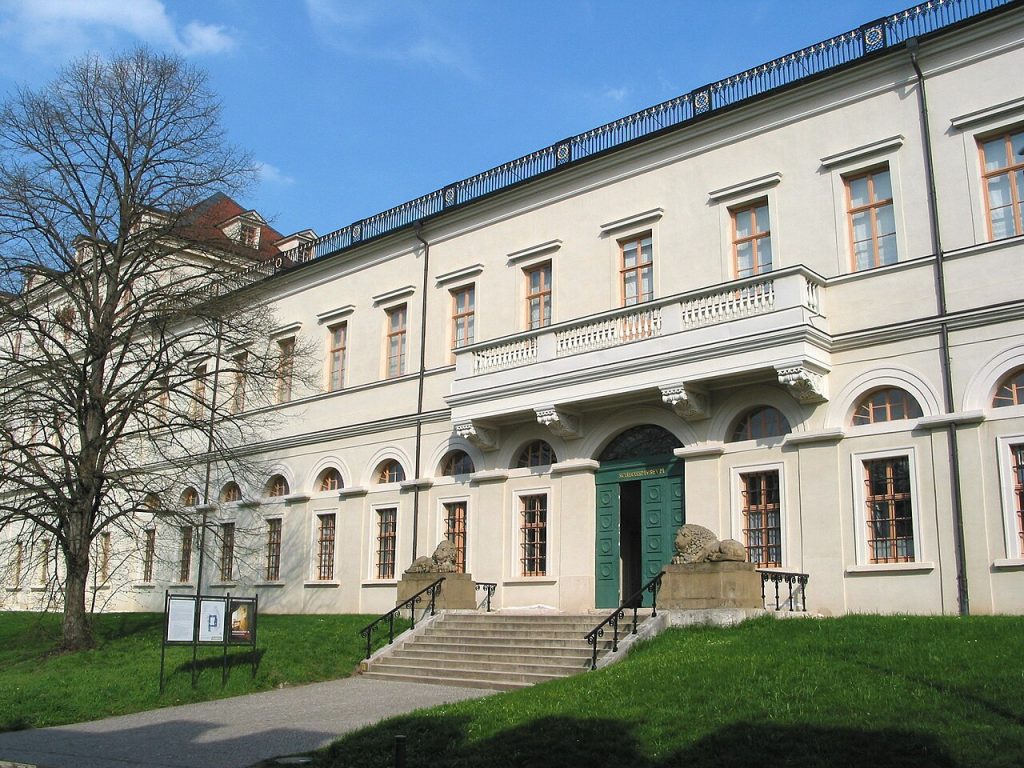
The west side of the palace faces the town, its long facade marked by regular windows and restrained decoration.
From this side, visitors approached the palace from the streets of Weimar.
The classical style of the facade reflects the ideals of order and harmony that Goethe championed.
The calm, regular rhythm of the windows and the absence of excessive ornament reflect the classical belief that beauty lies in proportion and harmony rather than decoration.
This sober elegance was a deliberate choice, expressing the ideals of reason and moderation that were central to the Enlightenment and to Goethe’s own thinking.
The facade was restored in recent years, and its clean surfaces and crisp details once again convey the clarity of the original design.
A View From the West

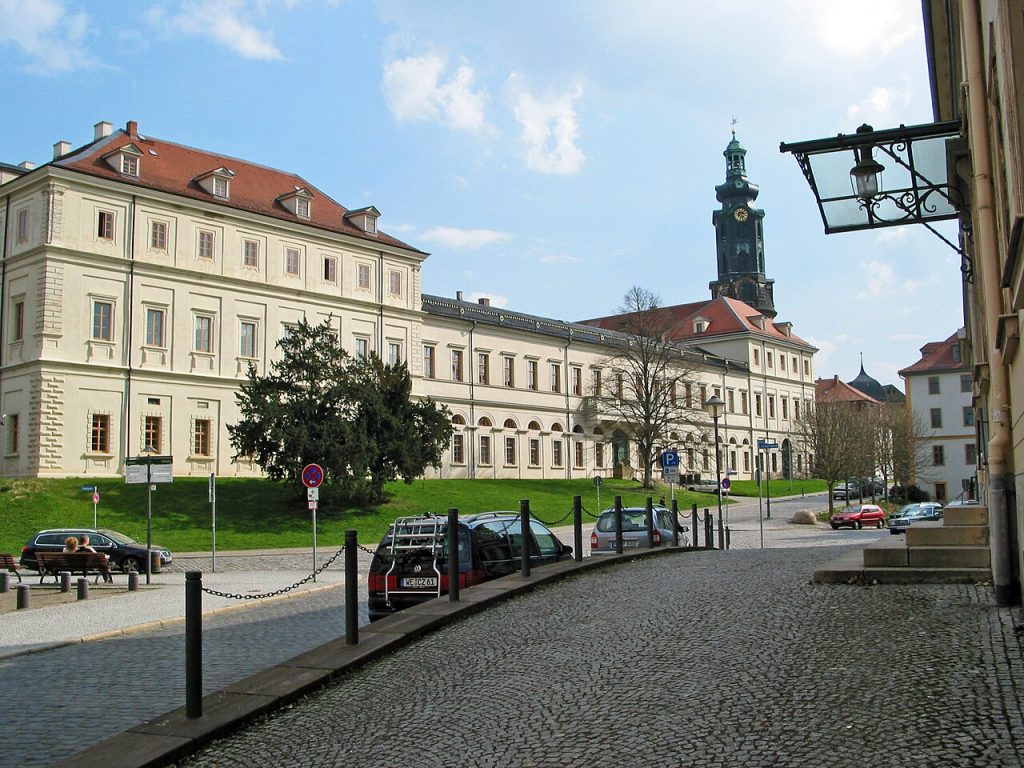
Seen from the west, the palace appears as a long, calm building with the tower rising above it.
This view shows how the palace dominates the edge of the old town.
It is one of the classic images of Weimar.
Artists and photographers have captured this view for more than two centuries, and it appears on countless prints, postcards and paintings of Weimar.
At sunset, the light falls warmly across the facade and the tower, giving the palace a golden glow that makes it especially photogenic.
From the west, you can also see how the palace relates to the market square and the old streets of Weimar, which lead directly to its gates.
The Entrance and the Gentz Staircase
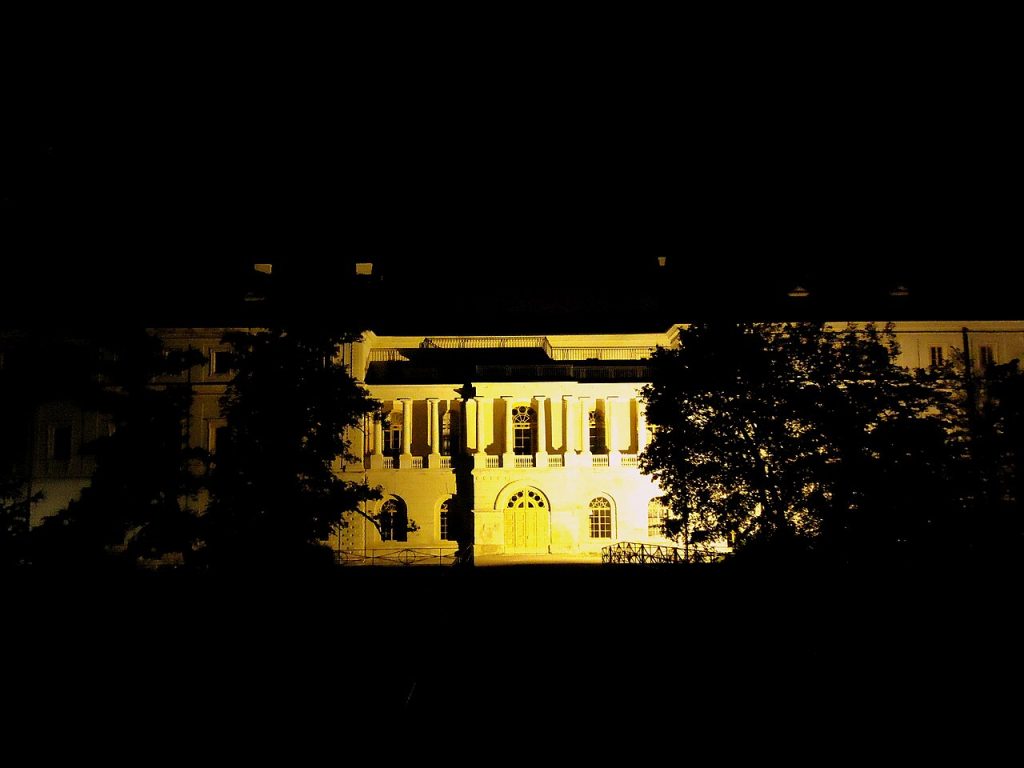
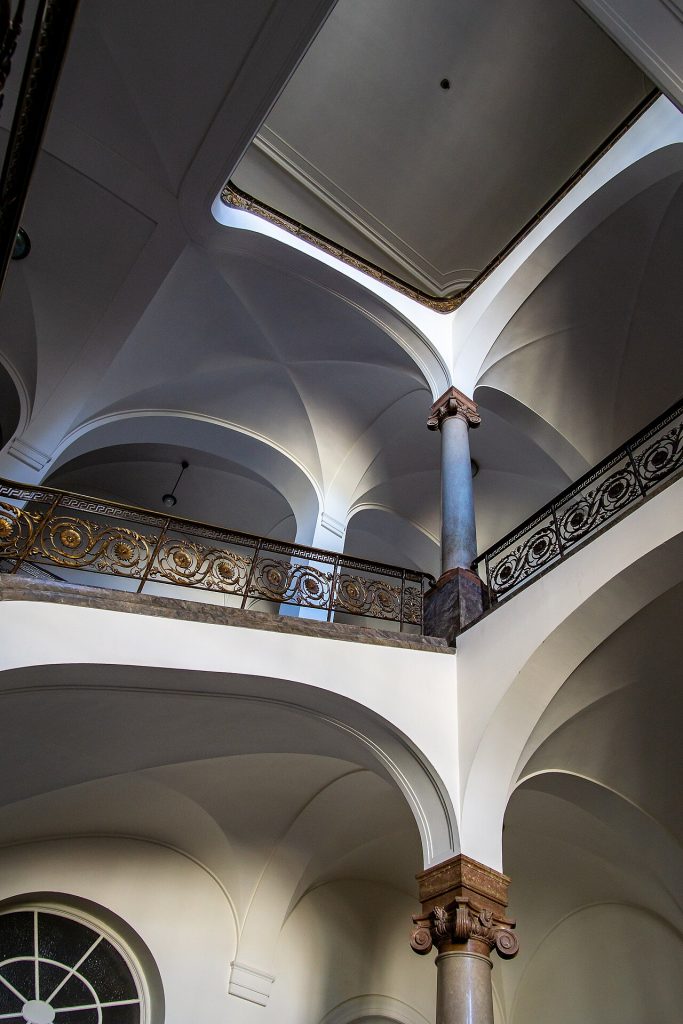
Inside, the most celebrated space is the grand staircase designed by Heinrich Gentz, a masterpiece of German classicism with columns, light and noble proportions.
It leads up to the Festive Hall, also designed by Gentz, a magnificent room with columns and galleries that is one of the finest classical interiors in Germany.
These spaces express the ideals of clarity and beauty that defined the age of Goethe.
Gentz, a Berlin architect who had studied in Italy and Paris, brought a new sophistication to the palace. His staircase is admired for the way it uses light, space and simple forms to create a sense of dignity and calm.
The Festive Hall, with its white columns and gallery, was the setting for court balls, concerts and receptions. Its proportions are so harmonious that it is often cited as one of the most beautiful classical rooms in Europe.
Other state rooms, decorated in the classical style with painted ceilings, fine furniture and elegant stoves, complete the sequence of representative spaces on the main floor.
The careful restoration of these interiors has revealed original colours and details, allowing visitors to see them much as Goethe and Carl August knew them.
The Palace by Night
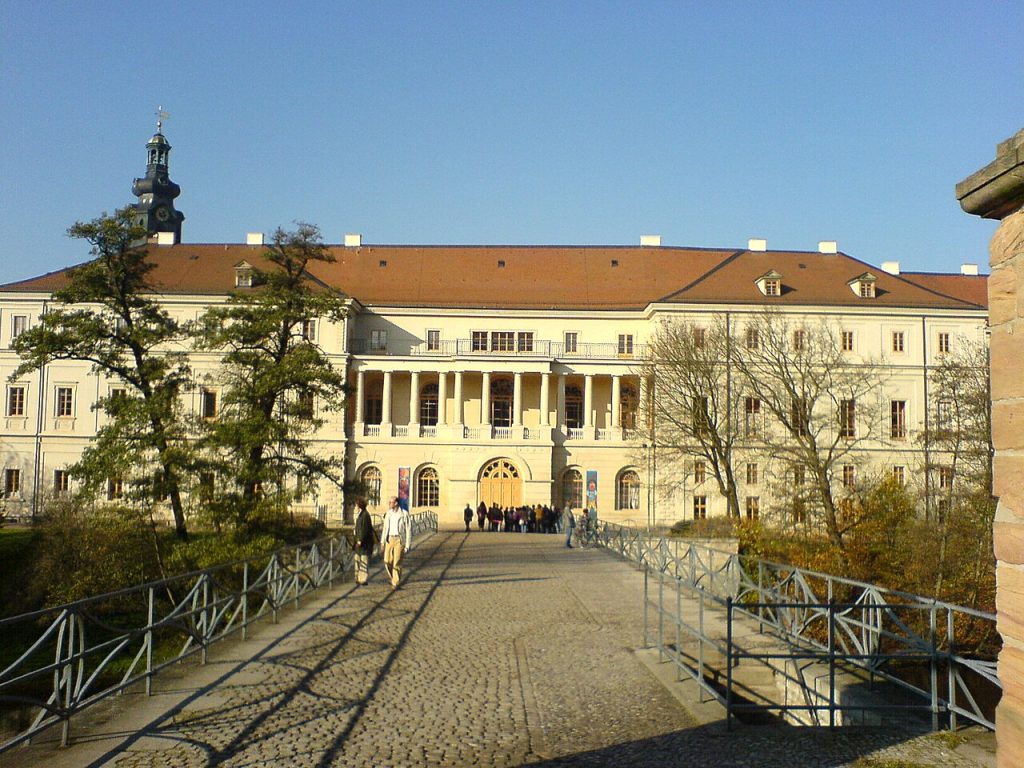
In the evening, when the palace is illuminated, its facades and tower glow softly above the river and the park.
An evening walk along the Ilm, with views of the palace, is one of the most romantic experiences Weimar offers.
The illuminated palace reminds visitors of the festive evenings of the ducal court.
During festivals and special events, the courtyard and the park are sometimes illuminated, creating a magical setting for concerts and performances.
The tower, lit from below, stands out against the night sky as a landmark that can be seen from many parts of the town.
Many hotels and restaurants are within walking distance, so an evening stroll to see the illuminated palace is easy to include in a visit.
The Palace From the Bridge

From the bridge over the Ilm, there is a fine view of the palace with the river in the foreground.
This view connects the palace with the Park on the Ilm, where Goethe’s Garden House stands.
The park and the palace together form one of the most important ensembles of classical Weimar.
The Park on the Ilm, laid out under Carl August and Goethe, is one of the finest landscape gardens in Germany, and a walk from the palace through the park to Goethe’s Garden House is one of the essential experiences of Weimar.
Along the river, small monuments and garden buildings recall the friendships and ideas of the classical age.
The Roman House, a small classical villa built for Carl August in the park, can also be seen from the riverside paths and is another example of the classical taste of the court.
The Poets Rooms

In the nineteenth century, Grand Duchess Maria Pavlovna, a Russian princess, created memorial rooms in the palace dedicated to Goethe, Schiller, Wieland and Herder.
These Poets Rooms are decorated with paintings illustrating scenes from the writers works, a unique tribute to the literary glory of Weimar.
They show how the ducal family honoured the poets who made their small court famous throughout Europe.
Maria Pavlovna, a daughter of the Russian tsar Paul I, brought great wealth and a deep love of the arts to Weimar. She supported musicians such as Franz Liszt and helped Weimar remain a cultural centre long after the death of Goethe.
The paintings in the Poets Rooms were created by leading artists of the nineteenth century and illustrate famous scenes from works such as Faust, Wallenstein and Oberon.
Visiting these rooms, you understand how deeply the reputation of Weimar was tied to its writers, and how proudly the ducal family embraced this legacy.
Weimar City Palace on Video

For a look at the new City Palace and its restoration, the video below presents the palace in Weimar.
Watch for the state rooms and the courtyard.
If the video inspires you, read on for practical tips.
The video also gives a glimpse of the ongoing restoration, which is one of the largest heritage projects in Thuringia.
Visiting the City Palace Today

The City Palace is part of the Klassik Stiftung Weimar and is currently undergoing a major restoration, so parts of the building and museum may be closed. Check the current opening status before you travel.
The palace lies on the edge of the old town, a short walk from Goethe’s House, Schiller’s House and the Duchess Anna Amalia Library.
Plan to combine your visit with the Park on the Ilm, Belvedere Palace and Tiefurt House, which together tell the story of classical Weimar.
Weimar is easy to reach by train from Erfurt, Leipzig and Berlin.
Even during the restoration, the exterior of the palace, the courtyard and the park can be enjoyed, and temporary exhibitions often present the history of the building and its collections.
Weimar is a compact city that is best explored on foot, and a day or two here allows you to visit the main palaces, houses and museums at a relaxed pace.
View the location on Google Maps
Palaces Nearby
If you have enjoyed this palace, central Germany holds more remarkable residences. Here are two more well worth adding to your journey:
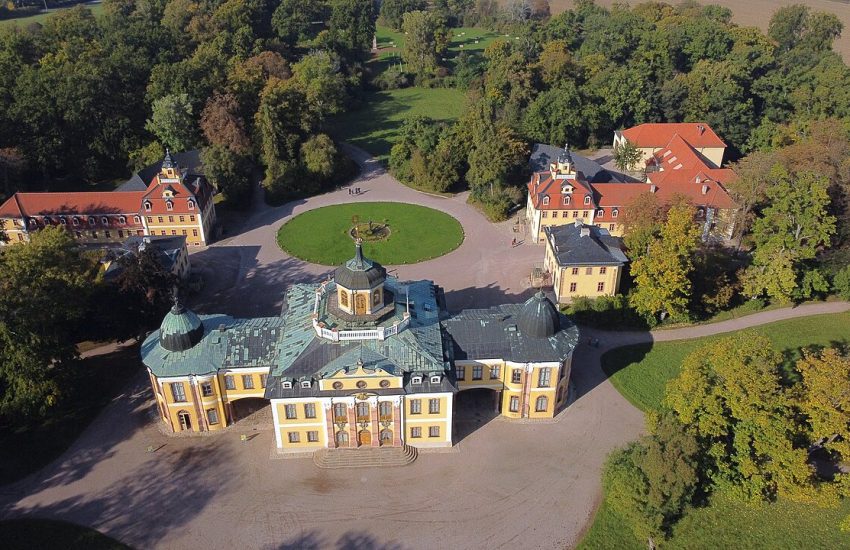
- Belvedere Palace – the rococo summer retreat of the dukes of Weimar.
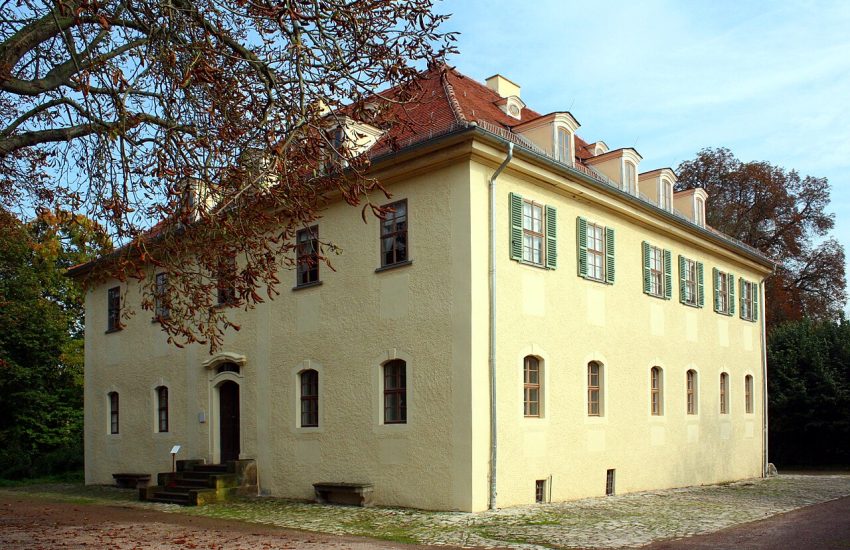
- Tiefurt House – the country retreat of Duchess Anna Amalia and her court of muses.
You May Like