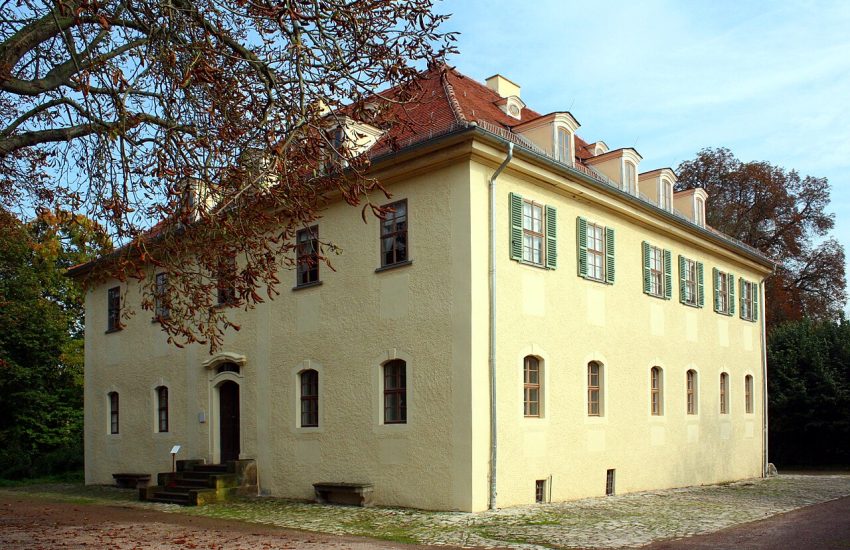
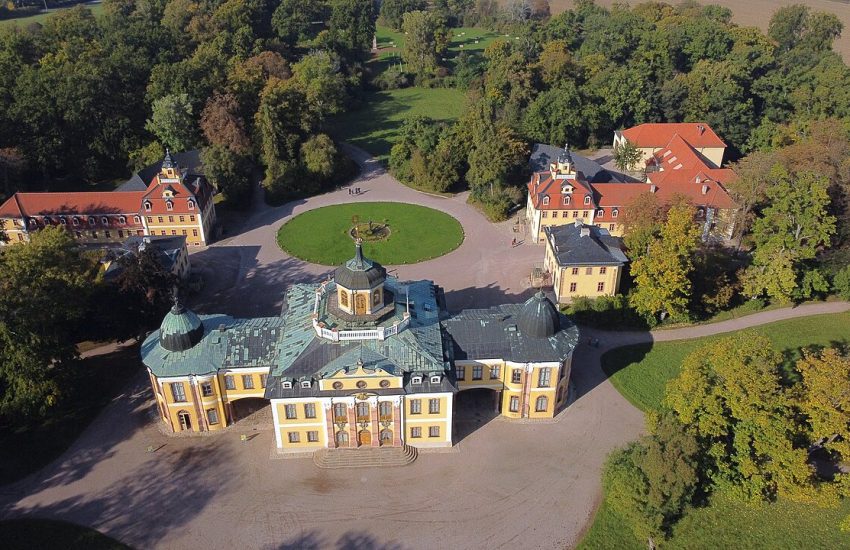
On the shore of a quiet lake east of Dessau, surrounded by one of the most beautiful landscape gardens in Europe, stands a palace that changed German architecture. Worlitz Palace, completed in 1773, is considered the first neoclassical building in Germany, a clear and elegant country house inspired by the villas of England and Italy.
It was built for Prince Leopold III Friedrich Franz of Anhalt Dessau, an enlightened ruler who wanted to turn his small principality into a garden kingdom of beauty, learning and prosperity. The palace and its park are the heart of the Dessau Worlitz Garden Realm, a UNESCO World Heritage Site.
In this article we will explore Worlitz from the prince who dreamed it to its architect, its interiors and its famous park, and we will finish with practical tips for your visit.
In This Article
- A Country House in a Garden Kingdom
- Prince Franz and the Enlightenment
- Erdmannsdorff and the First Neoclassical Palace
- The Palace in Its Park
- Across the Lake
- Views of the Palace
- The Classical Facade
- Interiors of the Enlightenment
- The Palace Today
- The Garden Side
- Antique Sculpture
- Worlitz on Video
- Visiting Worlitz Today
A Country House in a Garden Kingdom
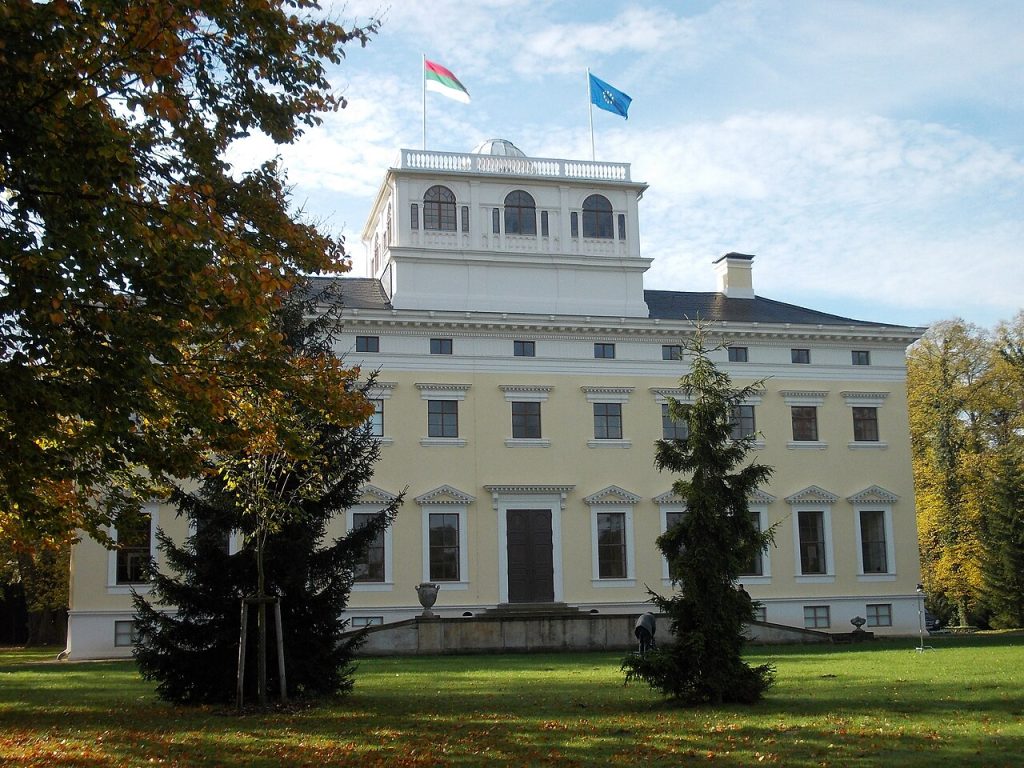
Approaching Worlitz Palace, you see a pale, dignified building with a columned portico, set among lawns and trees near the water. Its calm, classical lines are quite different from the playful rococo palaces of the same period.
Around it stretches the Worlitz Park, with lakes, canals, bridges, temples and follies that invite endless exploration.
What makes Worlitz special is its role as a manifesto of the Enlightenment, where architecture, gardens and education were combined to improve life for everyone.
The palace and park were conceived together as a single work of art, where architecture, landscape and nature were meant to educate and delight visitors.
Today, Worlitz is one of the most popular destinations in Saxony Anhalt, attracting visitors who come to walk, take boat trips and enjoy the peaceful atmosphere.
Visitors often describe Worlitz as a landscape of ideas, where every building, view and path carries a meaning connected with the values of the Enlightenment: reason, tolerance, education and the harmony of humanity and nature.
Prince Franz and the Enlightenment
Leopold III Friedrich Franz, known affectionately as Father Franz, ruled Anhalt Dessau from 1758 to 1817. Deeply influenced by the ideas of the Enlightenment, he travelled widely in England, Italy and France.
Inspired by English country houses and landscape gardens, he set out to transform his lands into a harmonious landscape where beauty and usefulness went hand in hand.
He reformed agriculture, built schools and opened his gardens to the public, an unusual gesture for a prince of his time.
Franz was deeply influenced by the writings of Jean Jacques Rousseau and the ideals of the English gardens he had seen at Stowe and Stourhead.
His friendship with Erdmannsdorff and his journeys through Europe gave him the knowledge and vision to create something new in Germany.
He was known for his close relationship with his subjects, often walking through his lands, talking with farmers and supporting improvements in agriculture, forestry and schools.
Under his rule, the small principality of Anhalt Dessau became famous throughout Germany as a model of enlightened government.
Erdmannsdorff and the First Neoclassical Palace

The palace was designed by Friedrich Wilhelm von Erdmannsdorff, a friend of the prince who had travelled with him and studied ancient architecture in Rome.
Built between 1769 and 1773, the palace was inspired by English Palladian houses, with a simple block, a portico of columns and restrained decoration.
It is considered the founding building of German neoclassicism, a style that would later shape Berlin, Munich and many other cities.
Erdmannsdorff also designed many other buildings in the Garden Realm, including temples, garden houses and churches, giving the whole region a unified classical character.
His influence can be seen in later architects such as Karl Friedrich Schinkel, who shaped the architecture of Berlin in the nineteenth century.
The Palace in Its Park

The palace stands at the heart of the Worlitz Park, one of the first English landscape gardens on the European continent.
Lawns slope gently toward the lake, and paths lead through groves of trees to bridges and viewpoints.
From many points in the park, the palace appears framed by trees and water, a carefully composed picture.
The park covers more than one hundred hectares and is divided into several garden areas, each with its own character and highlights.
Among the most famous features are the Gothic House, an early example of the Gothic revival in Germany, and the Stein island with its artificial volcano, which was set alight on special occasions.
Other highlights include the Pantheon, the Temple of Venus, the Floral Temple and numerous bridges, each designed in a different style and offering a different view of the lake.
Across the Lake

The lake in front of the palace is one of the most beautiful features of the park. Small ferries carry visitors across the water, as they did in the prince’s time.
From the water, you can see the palace, the temples and the Gothic House reflected in the still surface.
Gondola trips on the lake are one of the most enjoyable ways to experience the park.
The ferries are operated by hand with ropes, a charming tradition that has been preserved for more than two centuries.
The lake was created by damming an old arm of the river Elbe, and its shores were carefully shaped to create picturesque views.
From the water, the palace, the church and the Gothic House appear in carefully composed views, a reminder that the park was designed as a series of living paintings.
Views of the Palace

The palace is designed to be seen from many angles, and each view reveals a different aspect of its architecture.
From the front, the portico dominates, while from the garden side the facade opens toward the lawns.
Photographers love the palace in every season, especially in autumn when the trees glow with colour.
The park’s designers placed the palace so that it could be seen from many points across the water, creating surprising perspectives as visitors moved through the landscape.
In winter, when the trees are bare, the outlines of the palace and the park buildings stand out clearly against the sky.
The Classical Facade
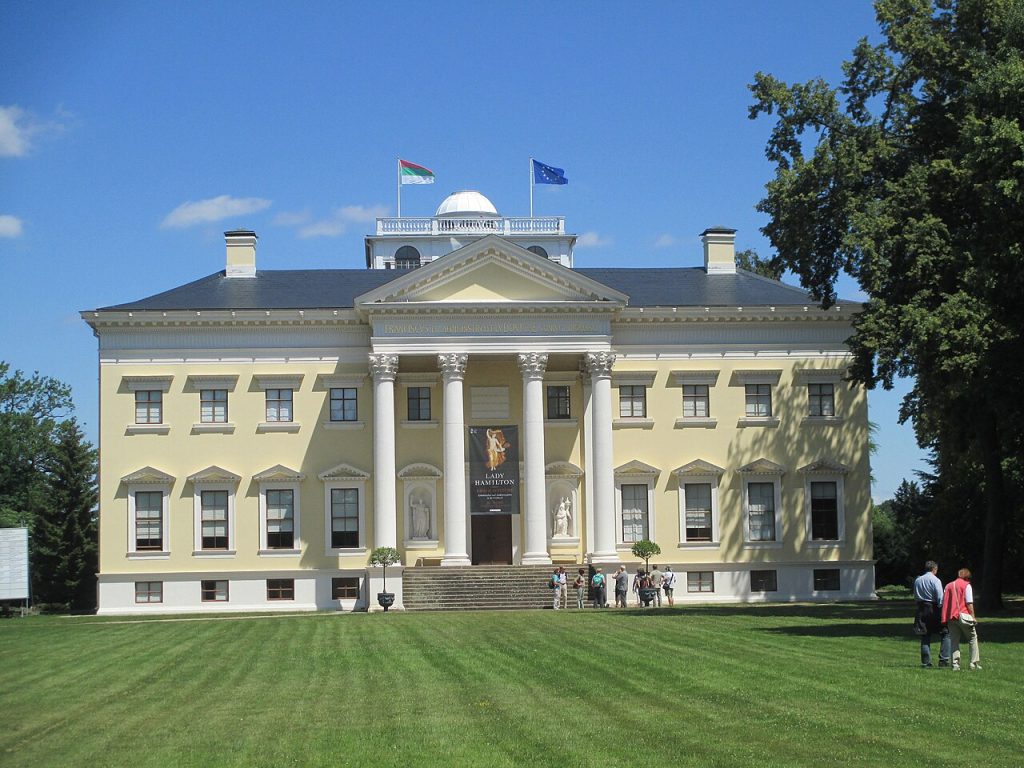
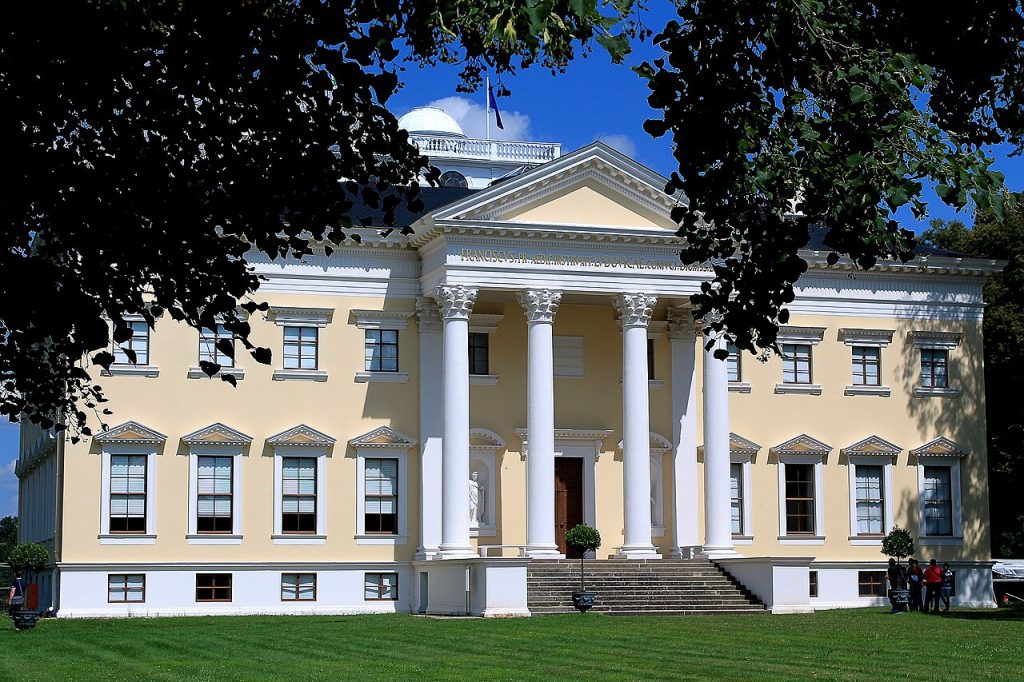
The facade of the palace is simple and harmonious, with a central portico of columns, a pediment and evenly spaced windows.
This restraint was revolutionary at the time, when most German palaces were decorated in the exuberant rococo style.
The pale colour and clean lines give the palace a calm dignity that matches the ideals of the Enlightenment.
The portico, with its four columns, recalls the temples of ancient Rome and the Palladian villas of the Veneto, which Erdmannsdorff had studied on his travels.
The side facades continue the restrained classical language, with pilasters and simple window frames that emphasise proportion over ornament.
Interiors of the Enlightenment

Inside, the palace is decorated in the early neoclassical style, with elegant rooms inspired by ancient Rome and the English country house.
The rooms contain antique sculptures, paintings, Wedgwood ceramics and fine furniture, many acquired by the prince on his travels.
The palace also included modern comforts such as a lift for food, showing the prince’s interest in practical innovation.
The rooms were arranged for comfort as well as display, with libraries, cabinets and family apartments that reflected the prince’s interest in learning and domestic life.
Painted ceilings, stucco decoration and fine wallpapers give each room its own character, while the overall effect is light and harmonious.
The dining room, with its elegant decoration and antique inspired details, was the setting for meals with the prince’s family and guests, many of whom came to admire his gardens.
The Palace Today

After careful restoration, the palace interiors have been returned to their original appearance and are open to visitors.
Guided tours explain the ideas behind the decoration and the life of the princely family.
The palace is part of the Cultural Foundation Dessau Worlitz, which cares for the entire Garden Realm.
The restoration of the palace was one of the major heritage projects in eastern Germany after reunification, and it has revealed many original details.
The Garden Side

The garden side of the palace faces the park and offers views across the lawns toward the water.
From here, the prince and his guests could step directly into the landscape that surrounded their home.
This close connection between house and garden was one of the key ideas of the English country house.
From the garden side, paths lead directly to the lake and the ferry landings, inviting visitors to begin their exploration of the park.
The garden side is particularly beautiful in late spring, when the trees around the palace are in full leaf and the lawns are fresh and green.
Antique Sculpture

The prince collected ancient and classical style sculptures, which decorate the rooms and halls of the palace.
Figures such as Ganymede and cupids reflect the love of antiquity that inspired the whole project.
These sculptures connect the palace with the classical world that Erdmannsdorff and the prince admired in Italy.
The prince also collected paintings, prints and decorative objects from England and Italy, and many of these are displayed in the palace.
Some of the antique sculptures were bought in Rome, where the prince and Erdmannsdorff visited excavations and collections and met leading scholars such as Johann Joachim Winckelmann.
Worlitz on Video

For a look at the palace and the garden realm, the video below presents Worlitz Palace.
Watch for the classical facade and the park.
If the video inspires you, read on for practical tips.
Visiting Worlitz Today

The Worlitz Park is open all year and free to enter, while the palace and other buildings can be visited on guided tours from spring to autumn.
Worlitz lies about fifteen kilometres east of Dessau and is easy to reach by car, bus or bicycle.
Plan a full day to explore the park, take a gondola ride on the lake and visit the palace and the Gothic House.
Combine your visit with Oranienbaum and Mosigkau to experience the full richness of the Dessau Worlitz Garden Realm.
Boat trips on the lake, guided tours of the park and seasonal events make Worlitz a lively place throughout the warmer months.
Whenever you visit, Worlitz offers a unique glimpse into the ideals of the Enlightenment, expressed in architecture, gardens and the landscape itself.
View the location on Google Maps
Palaces Nearby
If you have enjoyed this palace, central Germany holds more remarkable residences. Here are two more well worth adding to your journey:
- Oranienbaum Palace – the Dutch style palace with its Anglo Chinese garden near Dessau.
- Mosigkau Palace – the rococo palace of Princess Anna Wilhelmine near Dessau.
You May Like