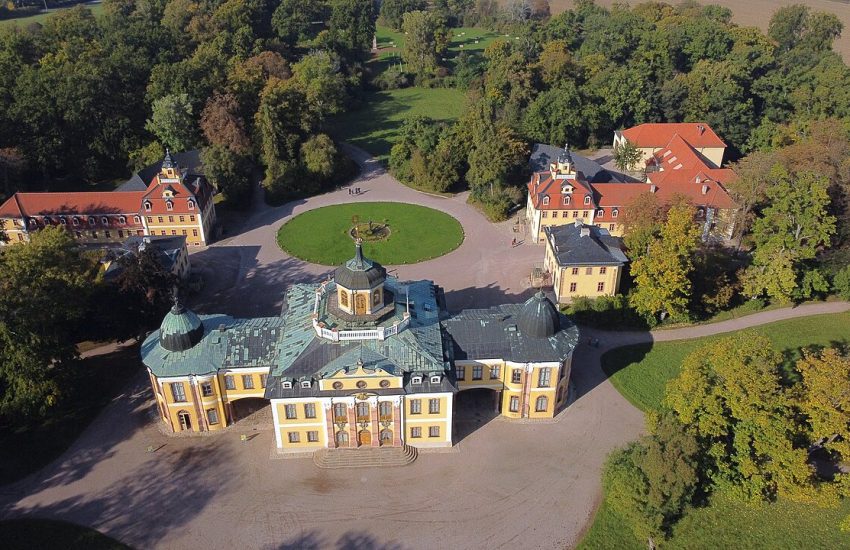
On a bend of the river Ilm just outside Weimar stands a modest house that once hosted the brightest minds of German literature. Tiefurt House was the summer retreat of Duchess Anna Amalia of Saxe Weimar, and here she gathered her famous court of muses, with Goethe, Wieland and Herder among her guests.
Unlike grand baroque palaces, Tiefurt is small and intimate, a former farmhouse transformed into a charming country residence surrounded by a romantic landscape park. It is part of the UNESCO World Heritage Site Classical Weimar.
In this article we will explore Tiefurt from the duchess who loved it to its rooms, its park and its literary legacy, and we will finish with practical tips for your visit.
In This Article
- A Country House on the Ilm
- Duchess Anna Amalia
- The Tiefurt Museum
- The Garden Side of the House
- The Tiefurt Park
- The Court of Muses
- The House and Its Wings
- Tiefurt Through the Seasons
- Walks Along the River
- Monuments in the Park
- The House Today
- Tiefurt on Video
- Visiting Tiefurt Today
A Country House on the Ilm
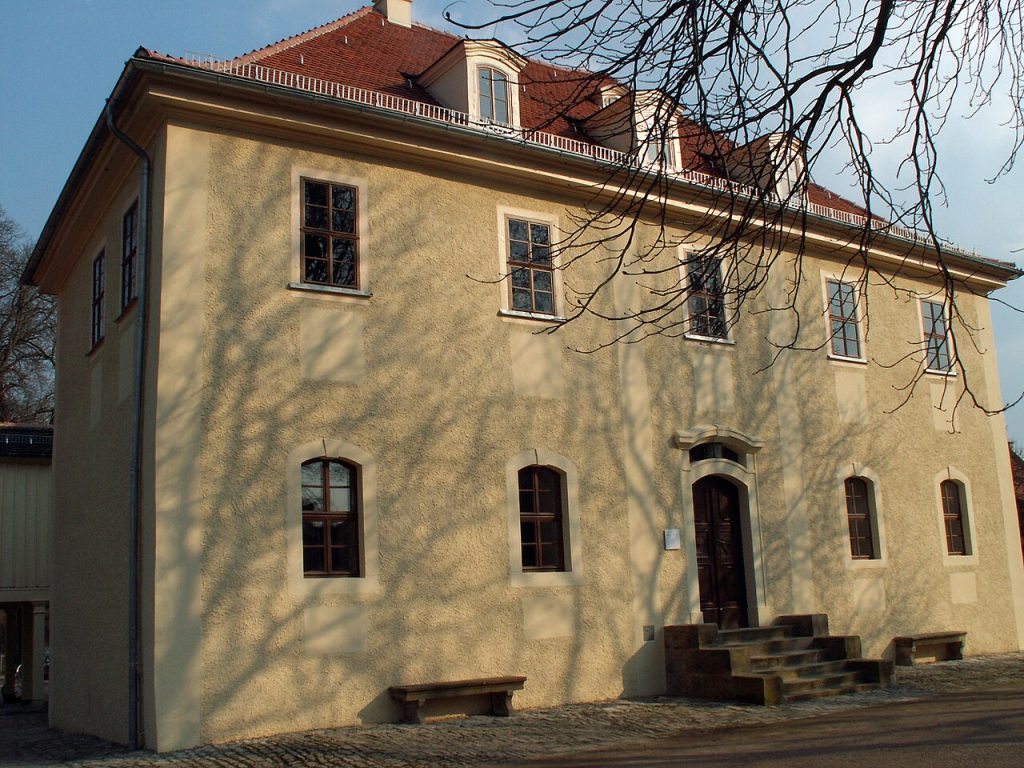
Arriving at Tiefurt, you see a simple, elegant house set in a green park beside the river. Its modest scale and quiet atmosphere make it feel more like a manor house than a palace.
The surrounding park stretches along the Ilm, with meadows, trees and small monuments hidden among the greenery.
What makes Tiefurt special is its intimacy and its role as a meeting place for some of the greatest writers of the age.
The house stands only a short distance from the centre of Weimar, yet it feels like a world apart, surrounded by meadows and trees and the gentle sound of the river.
Its modest size makes it easy to explore, and many visitors find it one of the most charming and personal places in the whole Weimar area.
The name Tiefurt refers to a ford across the river, and the village grew up around this crossing long before the duchess made it famous.
Duchess Anna Amalia

Anna Amalia of Brunswick Wolfenbuttel became duchess of Saxe Weimar through marriage and ruled as regent for her son Carl August after her husband’s early death.
A cultured and musical woman, she brought writers, artists and musicians to Weimar and laid the foundations of its cultural golden age.
After her son came of age, she retired from politics and devoted herself to art, music and conversation, spending her summers at Tiefurt from 1781.
Anna Amalia was a talented musician and composer herself, and she wrote music for the theatre performances held at her court.
She also built up a remarkable library, which became the foundation of the Duchess Anna Amalia Library, one of the most famous libraries in Germany.
Her portrait, showing an intelligent and lively woman, can be seen in several museums in Weimar.
After her death in 1807, Tiefurt remained a place of memory for her family and friends.
The Tiefurt Museum

Today Tiefurt House is a museum that preserves the rooms as they were in Anna Amalia’s time, with furniture, paintings and personal objects.
Visitors can see the duchess’s salon, music room and private apartments, decorated in the elegant style of the late eighteenth century.
The intimate scale of the rooms gives a vivid sense of the relaxed and creative atmosphere of the court of muses.
Among the objects on display are musical instruments, paintings and items of furniture that belonged to the duchess and her circle.
The decoration of the rooms, with delicate wallpapers and painted ceilings, reflects the refined but relaxed taste of the late eighteenth century.
The rooms were furnished in a style that combined elegance with comfort, reflecting the duchess’s wish to create a home rather than a showpiece.
The Garden Side of the House

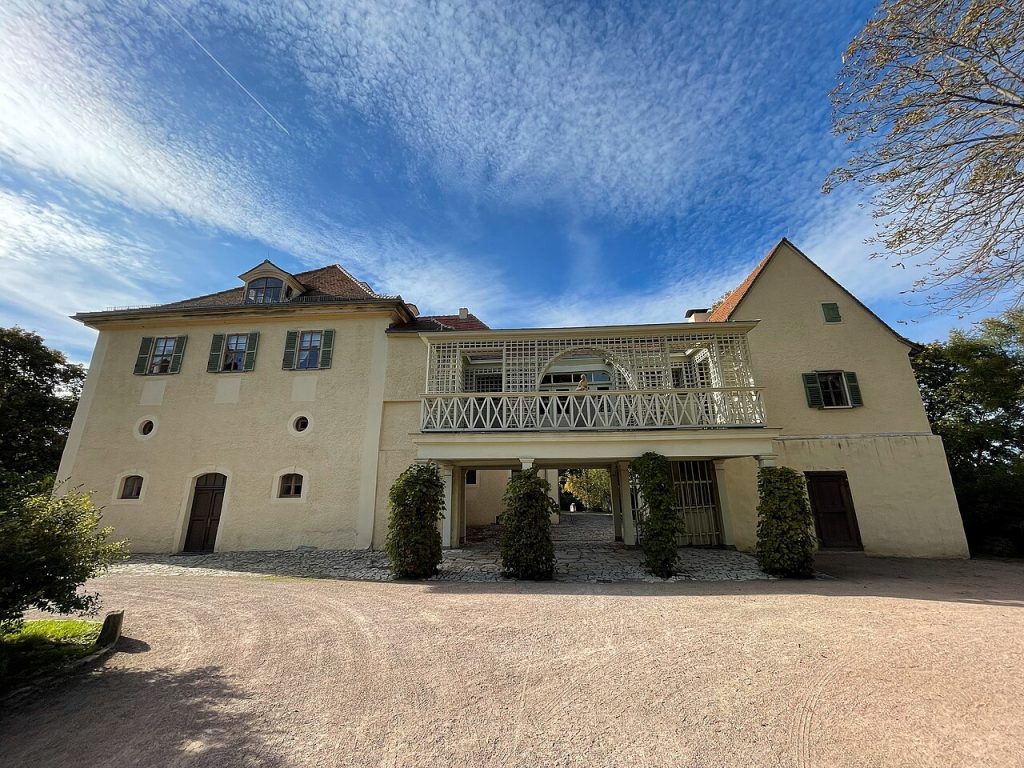
The rear of the house faces the park, opening onto lawns and paths that lead toward the river.
From here, the duchess and her guests could step directly into the landscape for walks and conversations.
The simplicity of the architecture suits the natural beauty of the setting.
The lawn behind the house was used for outdoor gatherings, readings and performances, and it remains a peaceful place to sit and enjoy the view.
Looking back at the house from the park, you can appreciate how naturally it sits in the landscape, almost like a part of the meadows and trees.
The Tiefurt Park
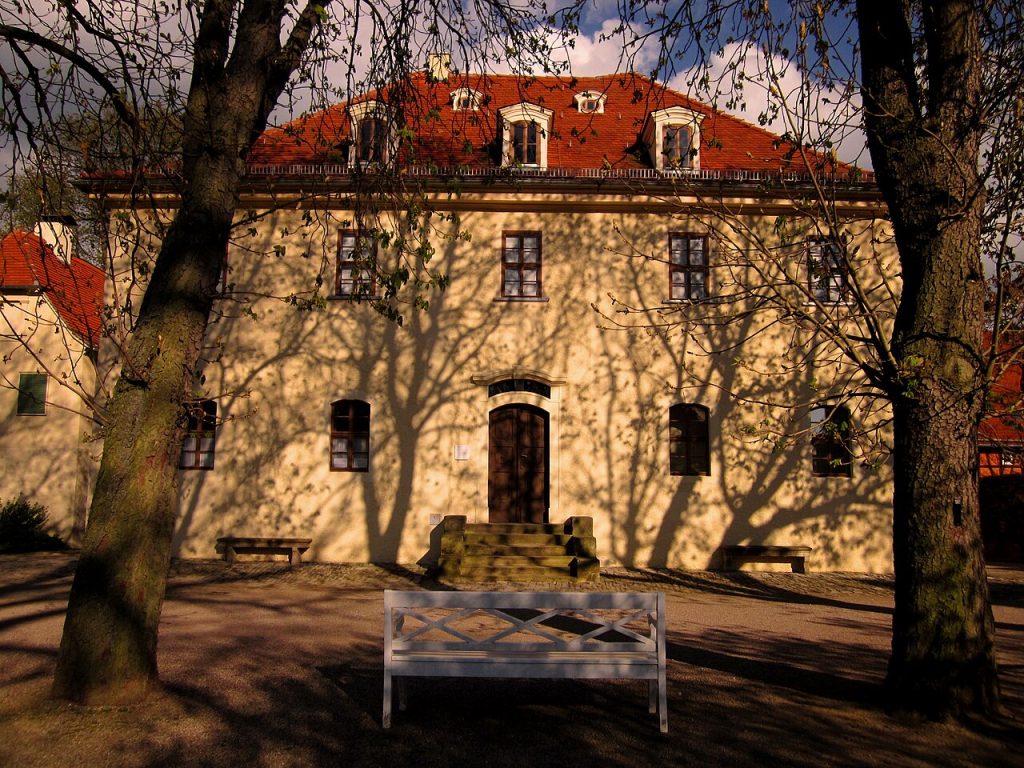
The park at Tiefurt is one of the earliest landscape gardens in Thuringia, laid out along the winding river Ilm.
Meadows, groves and paths create a natural, romantic landscape, enriched with small monuments and garden buildings.
Among them is a temple of the muses and one of the earliest monuments to Mozart, erected in 1799.
The park was laid out in the 1780s, at a time when the English landscape style was becoming fashionable in Germany, and Tiefurt was one of its earliest examples in Thuringia.
Paths lead along the river, across small bridges and through groves of trees, revealing new views at every turn.
The Mozart monument, with its simple inscription, is one of the earliest memorials to the composer anywhere in the world.
The park was designed with the help of the duchess’s son, Prince Constantin, and later enlarged and refined, becoming one of the most poetic gardens in Thuringia.
The Court of Muses

At Tiefurt, Anna Amalia hosted a circle of writers, musicians and thinkers known as the court of muses.
Goethe, Wieland, Herder and many others gathered here to read, perform plays, make music and discuss ideas.
The circle even produced a handwritten journal, the Tiefurt Journal, with poems and essays by its members.
Amateur theatre performances were a favourite pastime of the circle, and plays were sometimes staged in the open air, with the park as a natural backdrop.
Goethe wrote several works for these performances, and the informal setting allowed the poets and guests to experiment and play.
The Tiefurt Journal, written by hand and circulated among the members of the circle, is a precious record of their wit, creativity and friendship.
The circle also included musicians and artists, and evenings at Tiefurt often combined readings, music and conversation late into the night.
The House and Its Wings

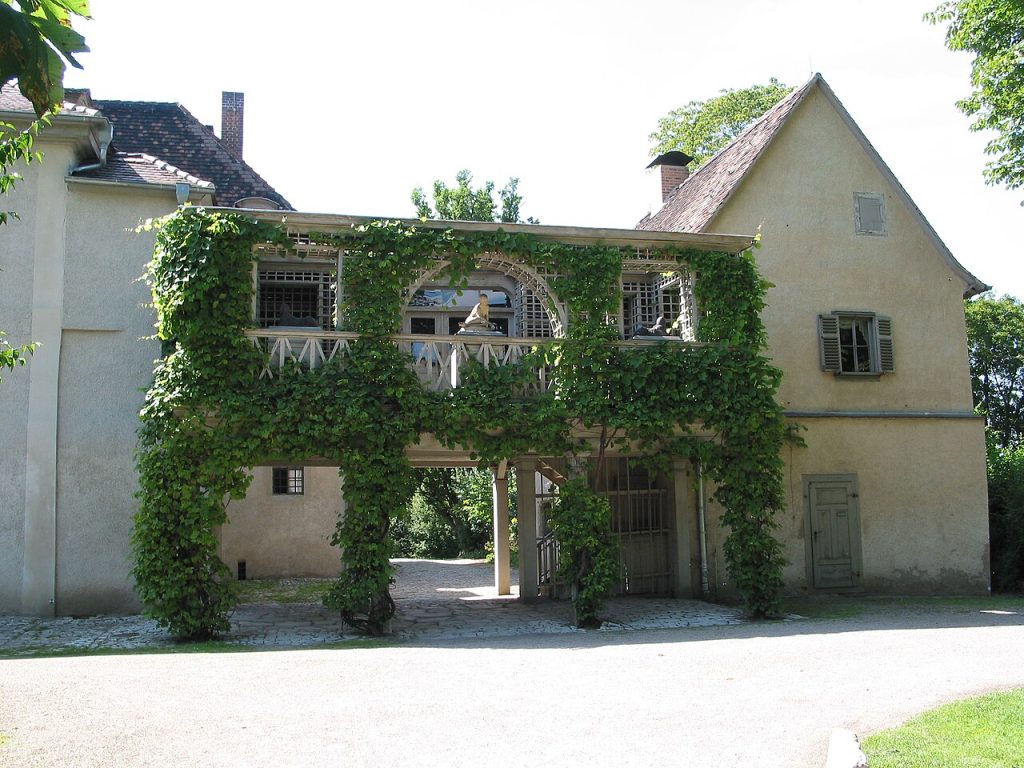
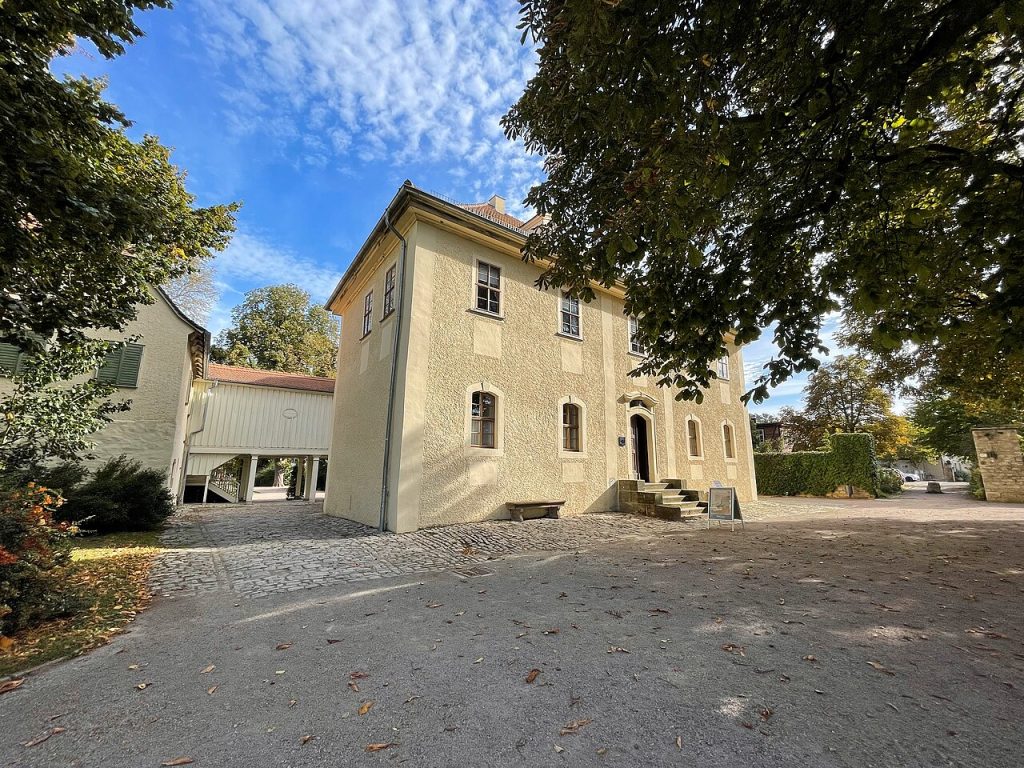
The house was originally a tenant farmhouse, which was adapted into a residence for the ducal family.
Its wings and outbuildings were gradually transformed to suit the needs of the duchess and her household.
The result is an unpretentious yet elegant ensemble that perfectly fits the rural setting.
The simple architecture of the house reflects the duchess’s wish for a relaxed country life, far from the formality of the court in Weimar.
Outbuildings once housed servants, kitchens and stables, supporting the life of the small summer court.
Walking around the house, you can see how the old farm buildings were gradually adapted, a reminder of Tiefurt’s humble origins.
Tiefurt Through the Seasons

In spring, the meadows of the park are full of wildflowers, and the trees along the river come into leaf.
Summer brings long evenings, when concerts and readings are sometimes held in the park, echoing the gatherings of the court of muses.
In autumn, the park glows with colour, and in winter it has a quiet, poetic beauty.
Each season offers a different mood, and many visitors return to see the park in spring blossom or autumn colour.
The river, with its reflections of trees and sky, adds to the poetic atmosphere that inspired the writers of the court.
Walks Along the River

Paths follow the river Ilm through the park and beyond, linking Tiefurt with the Park on the Ilm in the centre of Weimar.
Walking this route, you follow in the footsteps of Goethe and his friends, who often made the journey on foot.
The walk takes about an hour and offers beautiful views of the river valley.
Along the way, you pass meadows, woods and small villages, and you can understand why the poets found inspiration in this gentle landscape.
Cycling along the Ilm valley is also a popular way to explore the area.
Monuments in the Park

Small monuments scattered through the park commemorate friends of the duchess and important figures of the age.
They reflect the eighteenth century fashion for gardens of memory, where nature and remembrance were combined.
Discovering them is one of the pleasures of a walk at Tiefurt.
Some monuments honour members of the ducal family, while others celebrate friendship, poetry and music.
Their simple forms and inscriptions invite quiet reflection, in keeping with the spirit of the place.
The temple of the muses, a small classical building, celebrates the arts that Anna Amalia loved and supported throughout her life.
The House Today
The house has been carefully restored by the Klassik Stiftung Weimar and is open to visitors from spring to autumn.
Its rooms, furniture and objects allow visitors to imagine the lively gatherings of Anna Amalia’s circle.
The museum also explains the history of the house and the role of Tiefurt in the cultural life of Weimar.
Visits are often guided, and the guides share stories about the duchess, her guests and the events that took place at Tiefurt.
The restoration has preserved original wallpapers and furnishings, making the house one of the most authentic interiors of the period in Weimar.
Tiefurt on Video
For a look at the house and park, the video below presents Tiefurt near Weimar.
Watch for the house, the river and the park.
If the video inspires you, read on for practical tips.
The video also shows the gentle landscape of the Ilm valley around the house.
Visiting Tiefurt Today
Tiefurt House is open from spring to autumn, while the park can be visited throughout the year.
It lies about three kilometres east of the centre of Weimar and can be reached by bus, bicycle or on foot along the Ilm.
Combine your visit with the City Palace, Belvedere Palace and the houses of Goethe and Schiller for a complete picture of classical Weimar.
Bring time to linger in the park, which is one of the most peaceful places in the Weimar area.
There is a small cafe near the house, and the park offers plenty of places to rest and enjoy the view of the river.
Whenever you visit, Tiefurt offers a peaceful and moving encounter with the world of Anna Amalia and the poets of classical Weimar.
View the location on Google Maps
Palaces Nearby
If you have enjoyed this palace, central Germany holds more remarkable residences. Here are two more well worth adding to your journey:
- Belvedere Palace – the rococo summer retreat of the dukes of Weimar.
- Weimar City Palace – the residence of the dukes of Saxe Weimar, at the heart of classical Weimar.
You May Like