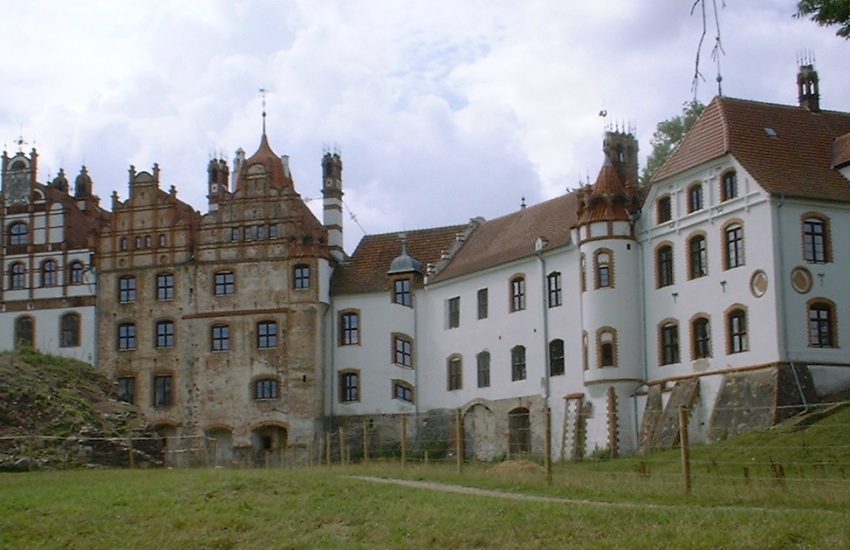
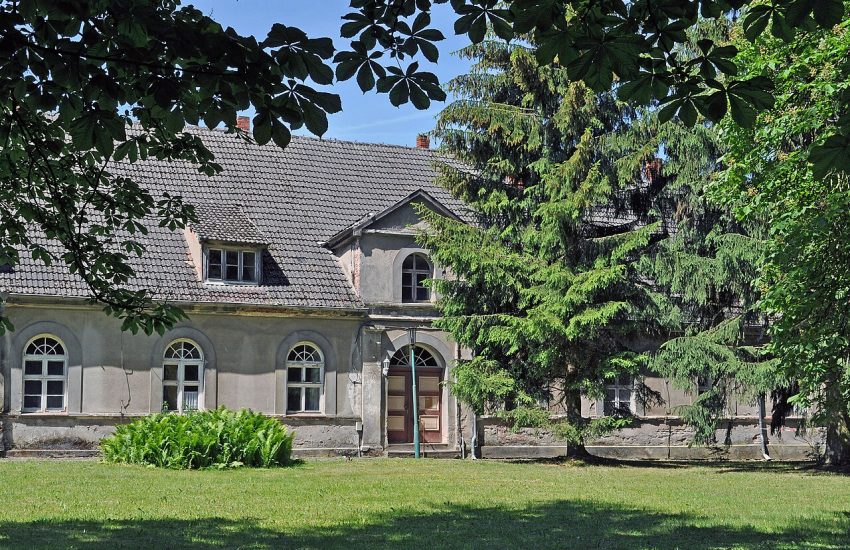
Say Ludwigsburg to most Germans and they picture the enormous Baroque palace outside Stuttgart with its blooming gardens. Say it to someone from Greifswald and they will point you east along the Bodden shore, past fields and reed beds, to a quiet brick house in the village of Loissin. This Ludwigsburg is older, smaller and far less visited than its Swabian namesake, and it is the only palace of the ducal house of Pomerania that still stands in anything like its original Renaissance form. For a dynasty that ruled this coast for five hundred years and then vanished, that is a precious thing.
The house was begun in the 1570s by Duke Ernst Ludwig of Pomerania-Wolgast, who gave it his own name, and it was completed as a widow’s seat for his duchess, Sophia Hedwig of Brunswick. After the dukes died out in 1637 the house slipped quietly into the hands of noble families, then of the state, then of a farming cooperative, and finally of a band of volunteers who refused to let it rot. Today it stands restored on the outside and half-finished on the inside, with the Greifswald Bodden glittering a few minutes’ walk away.
This is a story about a lost dynasty and about the stubbornness of brick. Use the contents to find your way, but take the time to walk down to the water at the end; the setting is half the point.
In This Article
- A House Between the Fields and the Bodden
- The Griffins: Five Centuries of Pomeranian Dukes
- Duke Ernst Ludwig and His Name on the Gate
- Renaissance in Brick
- Sophia Hedwig and the Widow’s Seat
- Gables, Portals and Stone From Gotland
- Inside: Vaults, Beams and Painted Fragments
- 1637: The Dynasty Dies Out
- Swedes, Nobles and a Working Estate
- The Park and the Lime Avenue
- Caspar David Friedrich’s Coast
- Cooperative Farm and Crumbling Walls
- Thirty Years of Rescue
- Ludwigsburg on Video
- Visiting Ludwigsburg Palace Today
- Palaces Nearby
A House Between the Fields and the Bodden
Start by placing yourself. Greifswald lies at the mouth of the little river Ryck, where it enters the Greifswald Bodden, a wide and shallow bay sheltered from the open Baltic by the islands of Rügen and Usedom. Follow the southern shore of the bay eastward for about ten kilometres and you reach Loissin, a village of a few streets, and just beyond it the small settlement of Ludwigsburg, which consists of the palace, its farm buildings and a handful of houses.
The land here is flat and fertile, which is why dukes and nobles wanted it, and the bay provided fish, a harbour and a view. Now, stop here at the edge of the village and look at the house across the fields. It is a long, two-storey block of dark red brick with a steep roof and a tall gable, plain and solid, nothing like the stucco palaces of the Baroque. This is what power looked like on the Baltic coast around 1580: brick, height and a good position.
The Griffins: Five Centuries of Pomeranian Dukes
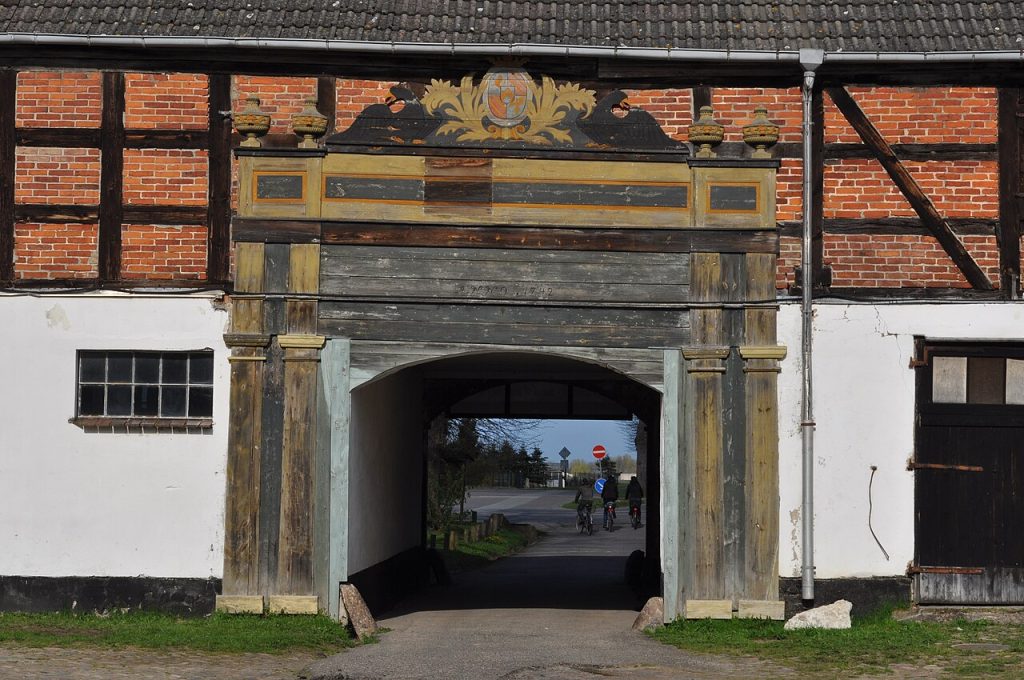
The dukes of Pomerania are one of the forgotten dynasties of Europe. Known as the Griffins after the heraldic beast on their shield, they ruled the coast between Mecklenburg and Prussia from the twelfth century until 1637, surviving the Teutonic Knights, the Hanseatic League, the Reformation and endless partitions among brothers. By the sixteenth century the duchy was divided into a western half ruled from Wolgast and an eastern half ruled from Stettin, and the Wolgast line built itself a scatter of Renaissance residences along the coast.
Almost all of those residences are gone. The great castle at Wolgast was demolished, the palace at Stettin was rebuilt in the twentieth century, Barth and Ueckermünde survive only in fragments. Ludwigsburg is the one place where you can still see a Griffin palace more or less as the dukes left it, and that is the reason preservationists talk about it with such urgency.
Duke Ernst Ludwig and His Name on the Gate
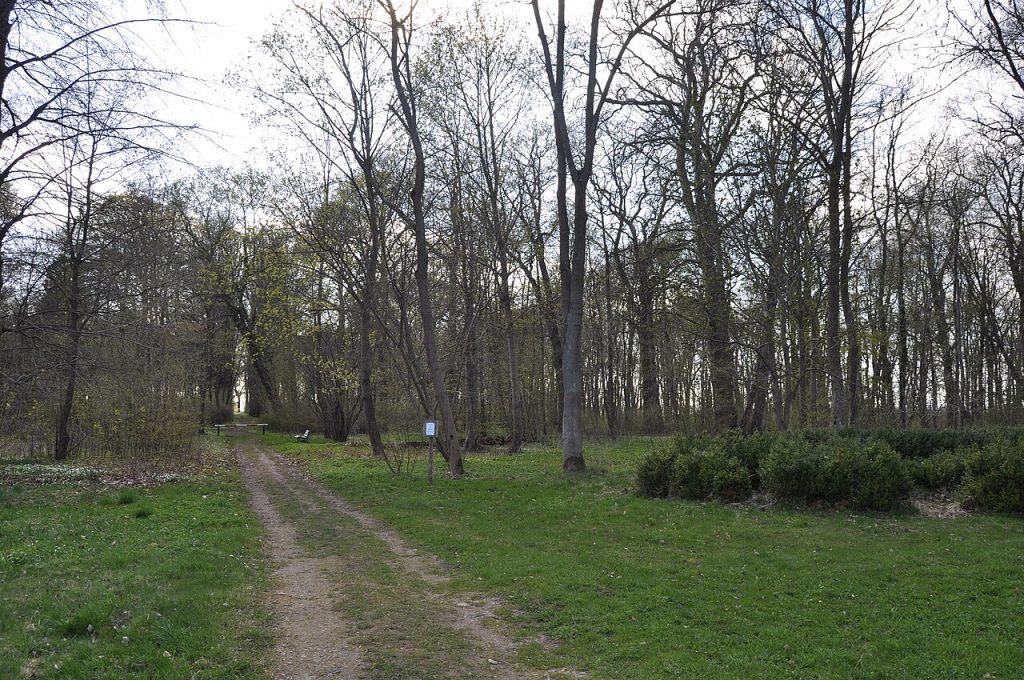
Duke Ernst Ludwig of Pomerania-Wolgast was born in 1545 and ruled the western duchy from 1569 until his death in 1592. He was a Renaissance prince in the north German mould: educated, Lutheran, fond of building and chronically short of money. In 1577 he began a new house on the ducal estate here, which was then called by an older Slavic name, and he renamed the place Ludwigsburg after himself. A dated stone over the portal records the beginning of the work.
The duke seems to have intended the house as a country retreat within easy reach of Greifswald, where he spent much time, and as a hunting lodge for the forests and marshes along the bay. Work went on for over a decade, interrupted by lack of funds, and the building you see today was probably not complete when Ernst Ludwig died in 1592 at the age of forty-six. What finished it was a widow’s need for a home.
Renaissance in Brick
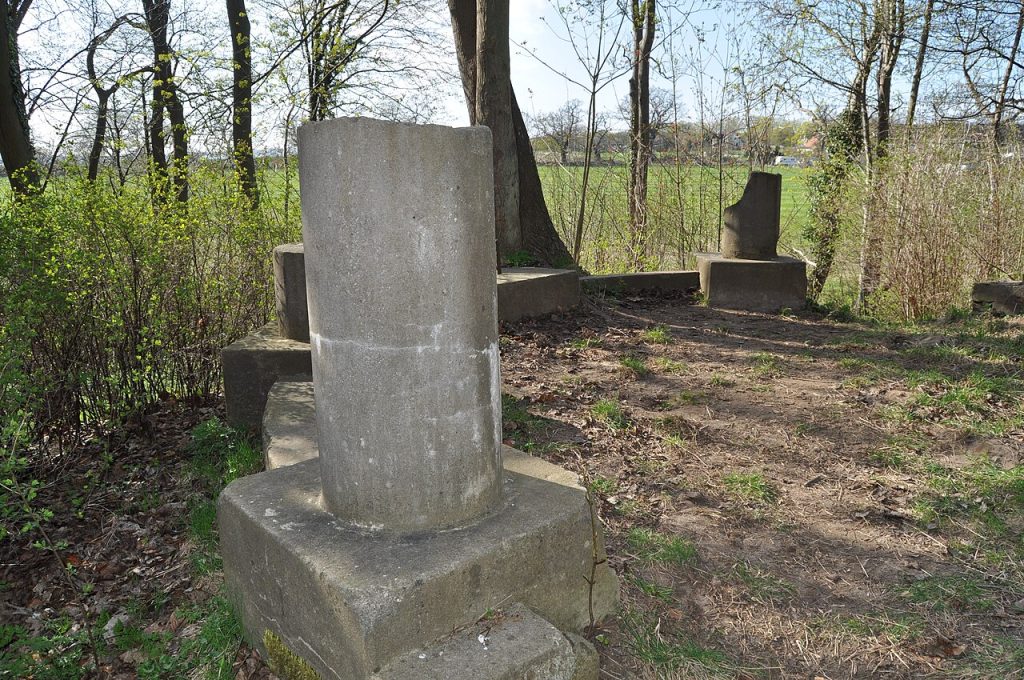
Look at the walls and you understand the regional dialect of architecture at once. The Italian Renaissance was a style of cut stone; in the brick lands of the Baltic it had to be translated. Masons here worked in fired clay, using moulded bricks for cornices and window surrounds, glazed bricks for accents and imported limestone only for the finest carving. The result is a Renaissance that looks heavier and warmer than its southern models, closely related to what the Danes and Swedes were building across the water at the same time.
At Ludwigsburg the brickwork is laid in long bands, with string courses marking the floors and large rectangular windows set in stone frames. Early paintings show that the walls were once partly rendered and coloured, so the stark red you see today may be more severe than the dukes intended. Even so, the proportions and the materials are those of the 1580s, and few buildings in Pomerania can claim as much.
Sophia Hedwig and the Widow’s Seat
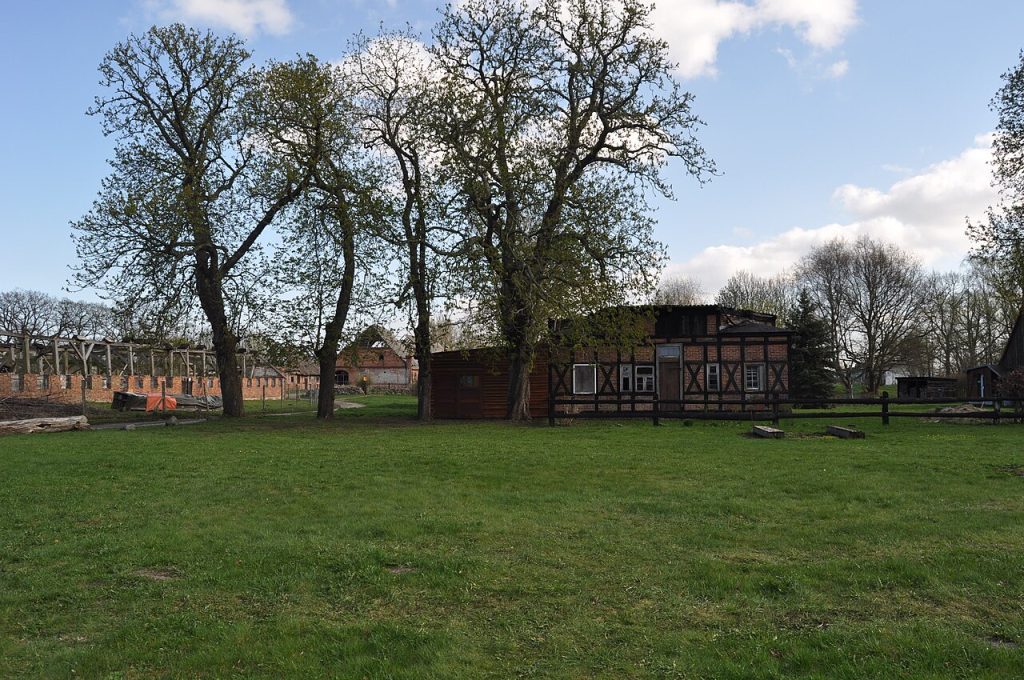
Here is the person who gave the house its soul. Sophia Hedwig was a princess of Brunswick-Wolfenbüttel, married to Ernst Ludwig in 1577, the same year the building began. When the duke died she was still in her thirties, with a young son, Philipp Julius, who would be the last duke of Wolgast. Under the terms of her marriage contract she was entitled to a residence of her own, and Ludwigsburg was assigned to her as her Witwensitz, her widow’s seat.
She completed the house and lived here for long stretches until her own death in 1631, running the estate, keeping a small court and watching the duchy slide toward catastrophe as the Thirty Years’ War approached. Now, stop here on the garden side and imagine the household of a dowager duchess: ladies-in-waiting, a chaplain, a steward, cooks, grooms, perhaps forty people in all, filling these rooms with the business of a minor court while the great world burned beyond the bay.
Gables, Portals and Stone From Gotland
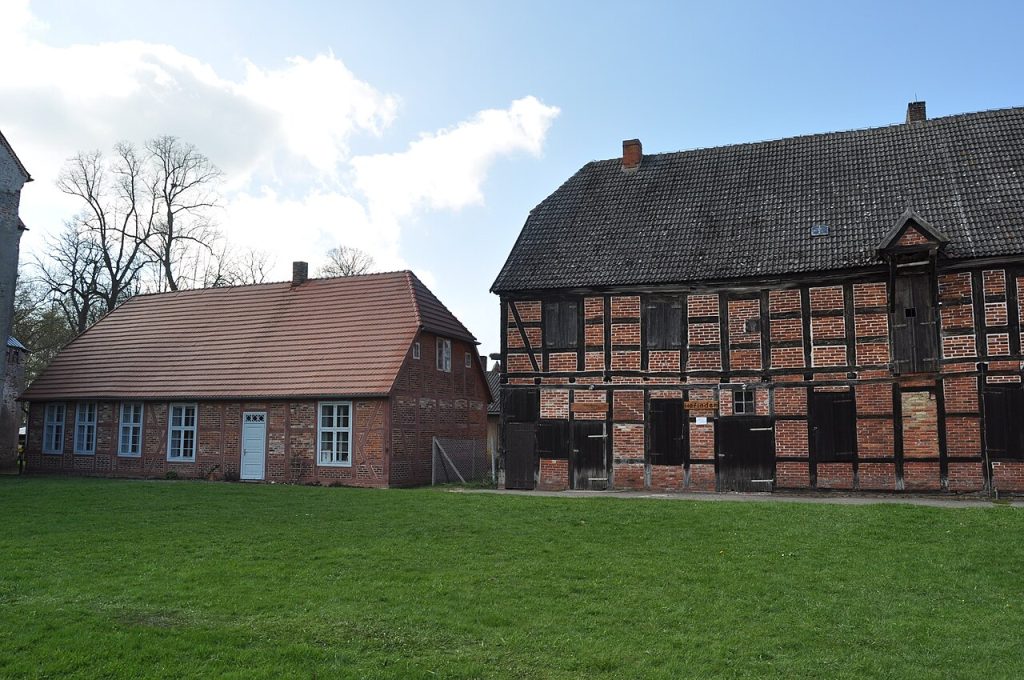
The showpiece of the exterior is the gable. Northern Renaissance builders loved gables and treated them as the place for display, stacking pilasters, volutes, obelisks and scrollwork up to the ridge. At Ludwigsburg the main gable has been partly rebuilt over the centuries but still carries its Renaissance outline and some of its original stone ornament. The pale stone used for the finest carving almost certainly came by ship from Gotland, the Swedish island whose limestone was the standard luxury material of the Baltic.
Look also at the portal with its rounded arch and the remains of heraldic carving, and at the small stone tablets set into the brick. Several of them carry inscriptions, mottoes and dates that have been worn by four centuries of salt wind. A good pair of binoculars is worth bringing; the upper storeys hold details that are easy to miss from the ground.
Inside: Vaults, Beams and Painted Fragments
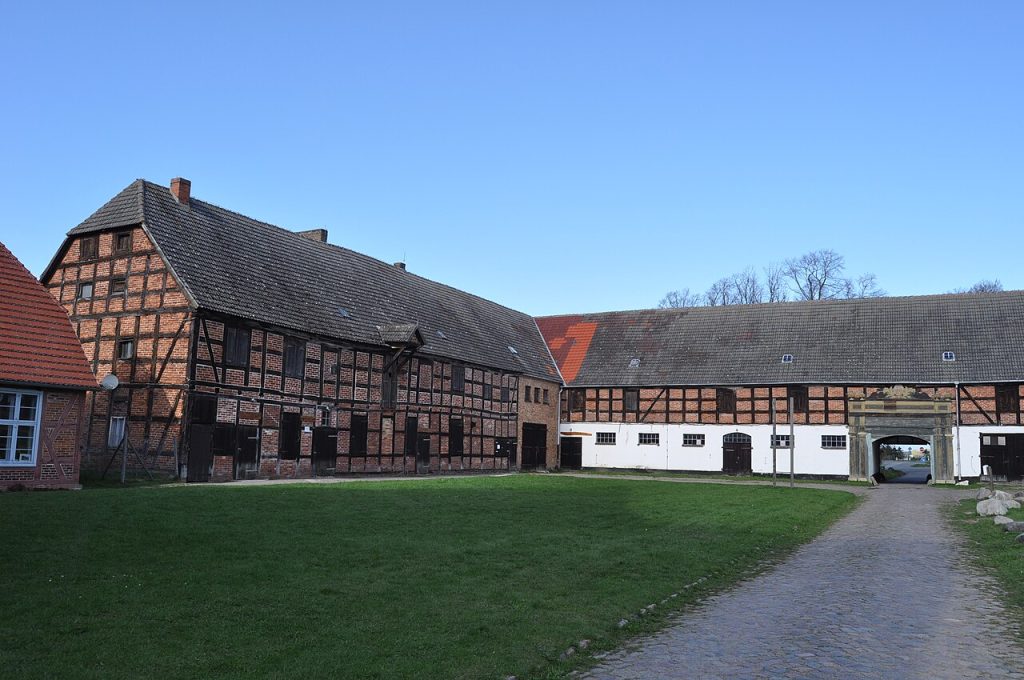
If the house is open, go in with the right expectations. This is not a furnished museum but a building under long-term restoration, and that is part of its fascination. The ground floor has vaulted rooms that served as kitchen and stores, the upper floor held the living quarters with great beamed ceilings, and in several places conservators have uncovered fragments of Renaissance wall painting and painted beams beneath whitewash and plaster.
The best moment is to stand in one of the upper rooms with the windows open toward the bay and the beams above you. The volunteers who care for the house have installed a small exhibition on the dukes, the duchess and the building’s later history, and they can point out the details: a sixteenth-century door, a scrap of painted frieze, the marks of a stove that heated the dowager’s apartment. It is archaeology you can walk through.
1637: The Dynasty Dies Out
The Thirty Years’ War destroyed Pomerania. Imperial troops under Wallenstein occupied the duchy in the 1620s, then the Swedes under Gustavus Adolphus landed in 1630 and made it their base for the German war. Villages emptied, towns were burned and the population fell by more than half. In the middle of this misery the last duke, Bogislaw XIV, died childless in 1637, and five hundred years of Griffin rule simply stopped.
The inheritance was fought over for eleven more years until the Peace of Westphalia gave western Pomerania, with Greifswald and Ludwigsburg, to Sweden, and the east to Brandenburg. For the house on the bay this meant the end of its life as a princely residence. There was no longer a dynasty to use it. The widow’s seat became just another estate, and its long second life as a manor farm began.
Swedes, Nobles and a Working Estate
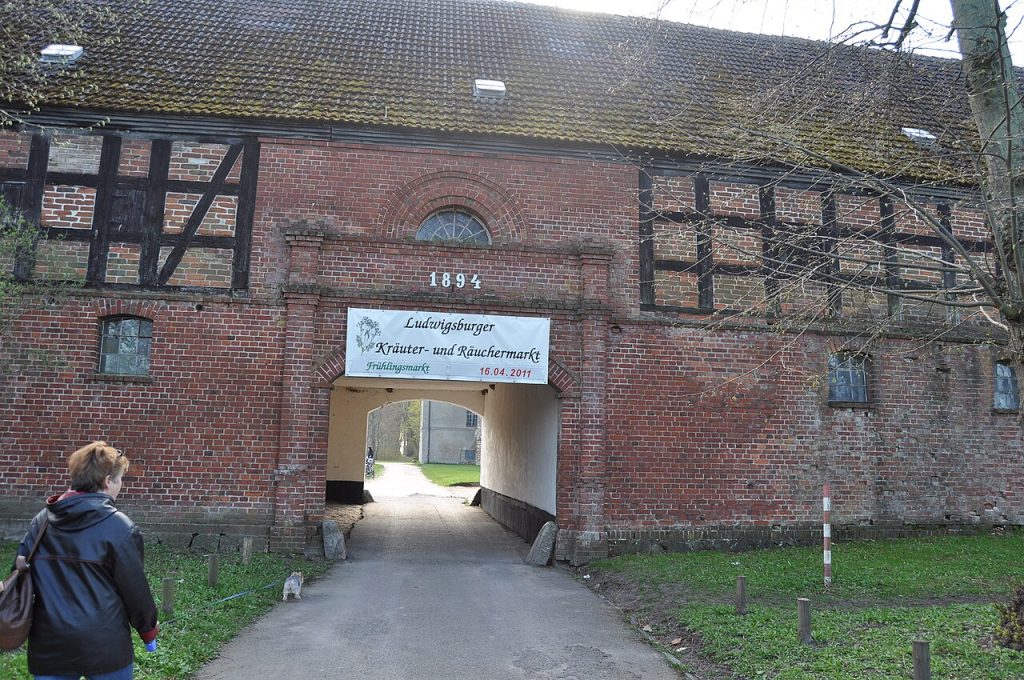
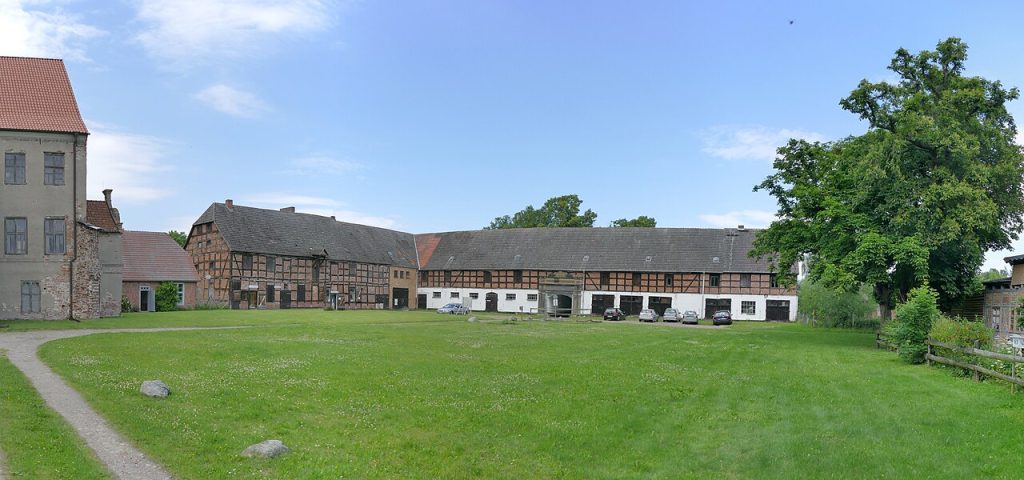
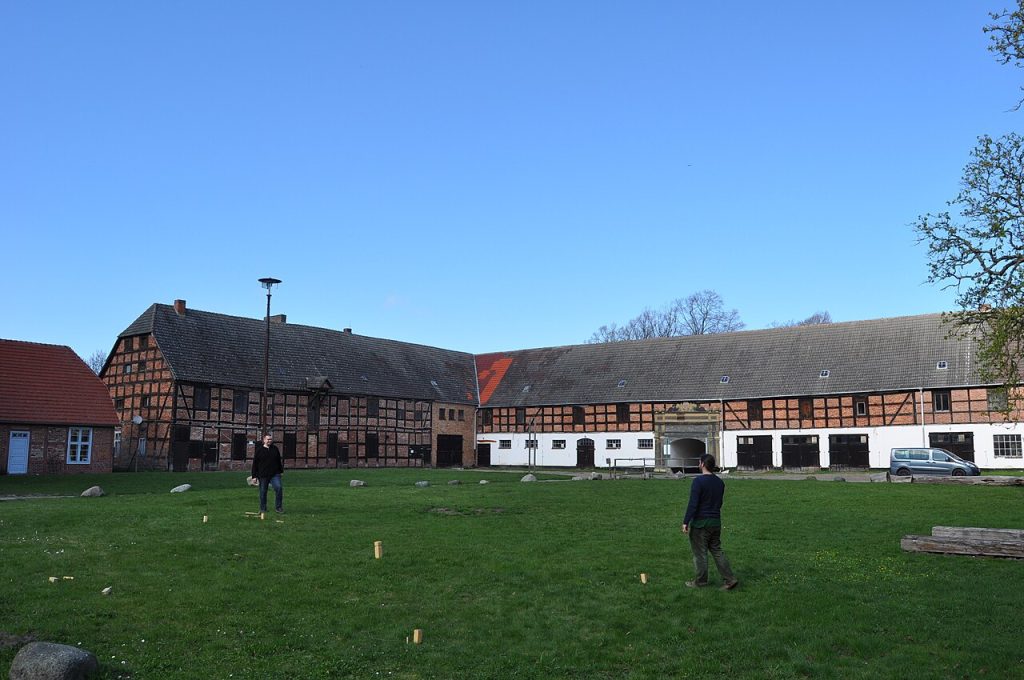
Under the Swedish crown the estate was granted and sold to a succession of noble families who used the palace as a working manor house. The Renaissance rooms were adapted for comfortable eighteenth-century living, barns and stables grew around the courtyard, and the land was farmed for grain and cattle. In 1815 the province passed to Prussia and the pattern continued; the owners of Ludwigsburg were country gentlemen, not courtiers, and they left the house largely as they found it.
This is why Ludwigsburg survived when grander houses did not. Nobody had the money or the ambition to tear down the brick palace and replace it with a Baroque or neo-Gothic showpiece. The farm buildings around it, some of them handsome in their own right, tell the story of this long agricultural chapter, and the big stone barn near the house is worth a look on its own.
The Park and the Lime Avenue
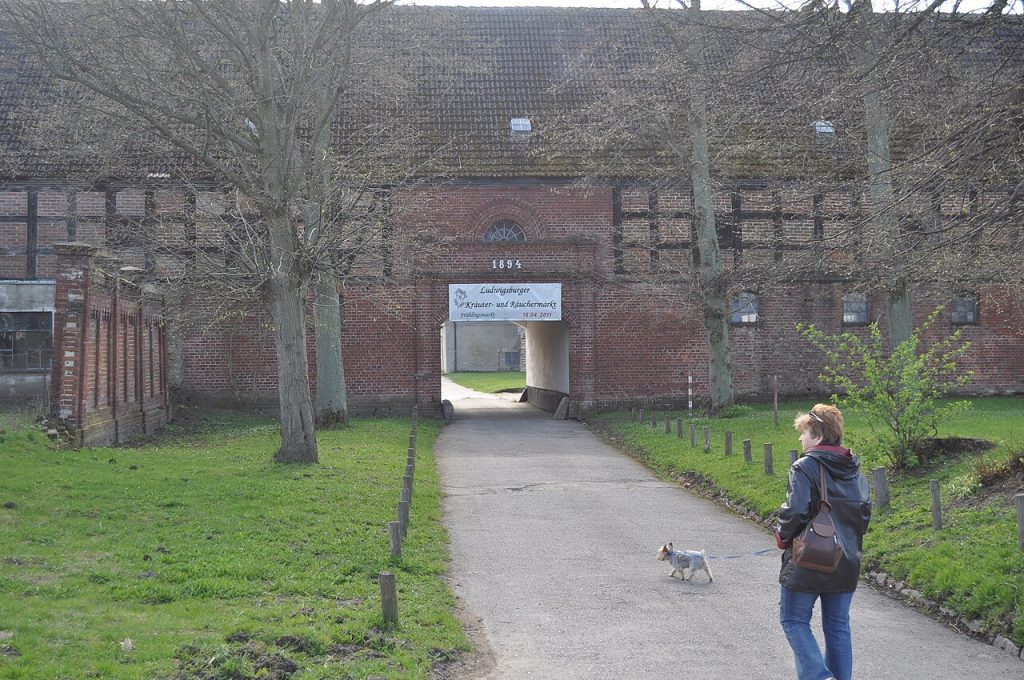
Walk around the house to find the remains of the park. An avenue of ancient limes approaches from the village, and behind the palace a landscape garden was laid out in the nineteenth century with lawns, a pond and groups of trees running down toward the bay. Like so many East German parks it was overgrown and neglected for decades, and the volunteers are gradually reopening the paths and views.
Now, stop here under the limes and look back at the gable. This is the view that the dukes would have had arriving on horseback, and it is still the best angle for a photograph. Then follow the path toward the water. In ten minutes you are on the shore of the bay, with Rügen a low line on the horizon and the towers of Greifswald faintly visible to the west on a clear day.
Caspar David Friedrich’s Coast
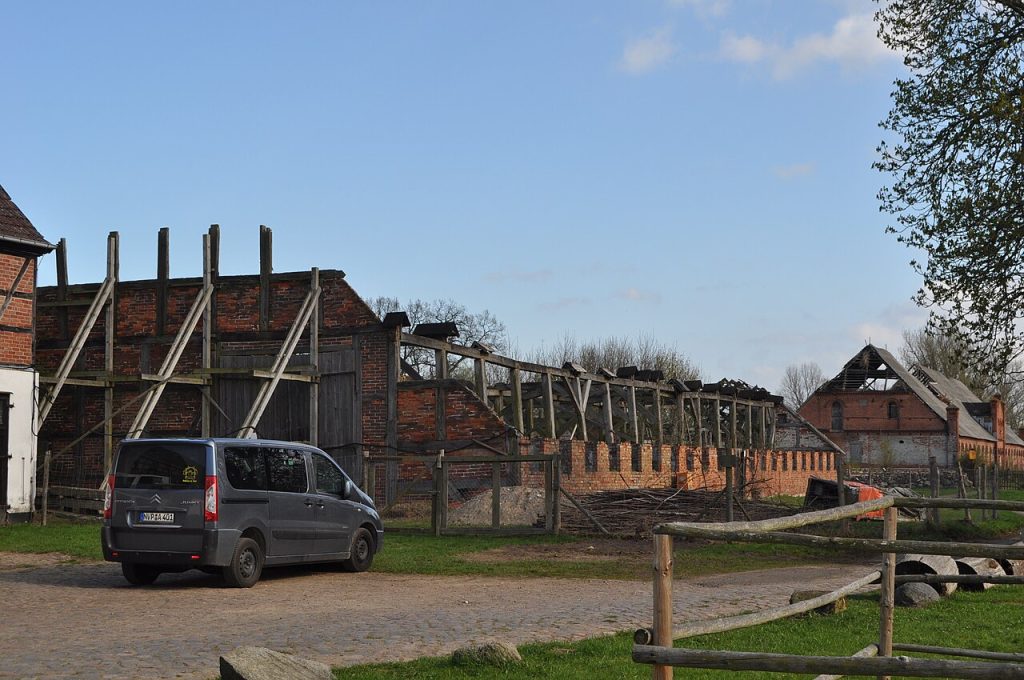
You cannot stand on this shore without thinking of Caspar David Friedrich, the great painter of the German Romantic movement, who was born in Greifswald in 1774 and spent his childhood among these meadows, reeds and skies. His paintings of the Greifswald Bodden, with the town’s silhouette rising out of the mist, and his views of the ruined abbey at nearby Eldena, made this flat coast into one of the iconic landscapes of European art.
Friedrich would have known Ludwigsburg as a farm with an old brick house; there is no evidence he ever painted it. But the light he painted is the light you will see here on an autumn afternoon, with low sun across the water and the horizon dissolving into haze. If you have visited the Pomeranian State Museum in Greifswald, which holds several of his works, the connection will be impossible to miss.
Cooperative Farm and Crumbling Walls
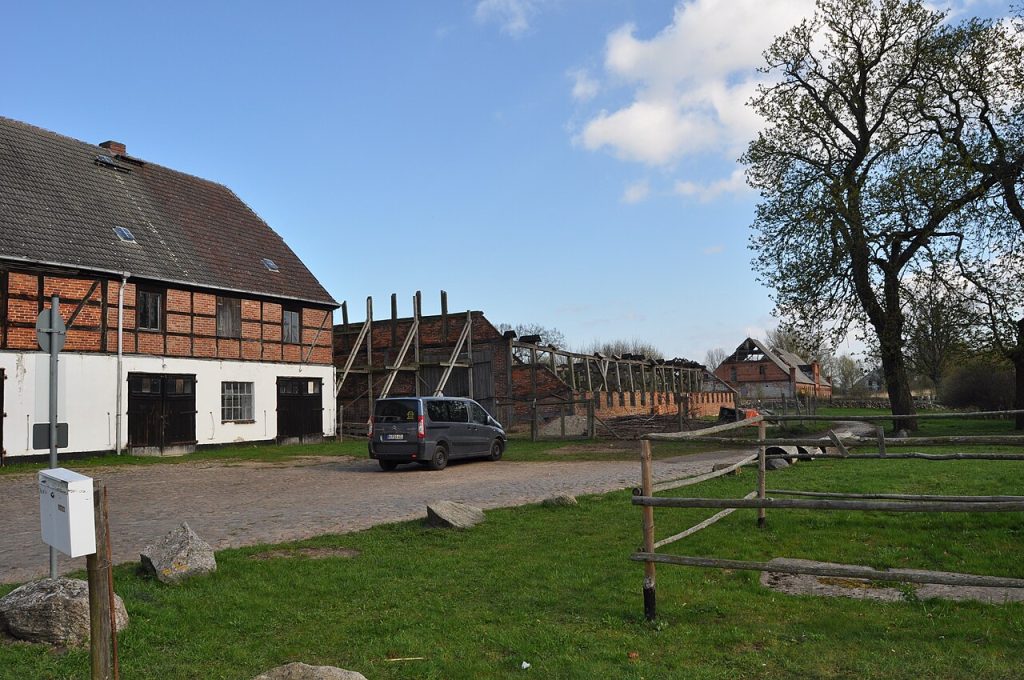
After 1945 the estate was expropriated and the palace became the property of the state and the local agricultural cooperative. Families moved into the upper rooms, the ground floor was used for storage and workshops, and the roof, the eternal weak point of every old building, was patched rather than repaired. By the 1980s water was running down the inside of the walls, the gable was cracking and parts of the house were too dangerous to use.
When the GDR collapsed in 1990 the house was empty, listed as a monument but with no owner able or willing to pay for it. Experts gave it a few winters before structural failure. That it did not fall is due to the people in the next chapter, and to the sheer stubbornness of sixteenth-century brick.
Thirty Years of Rescue
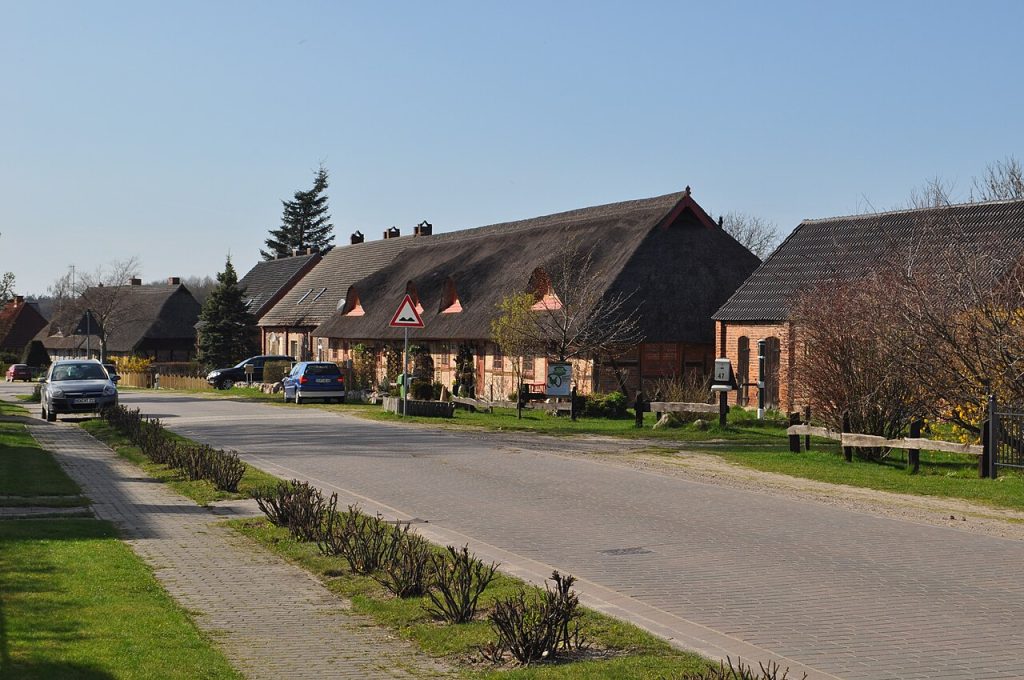
In the 1990s local residents and friends of the house in Greifswald founded an association to save Ludwigsburg. The first task was the roof, which was renewed with grants from the state and from monument foundations; then the gable was secured, the brickwork repointed and the windows replaced. Since then the work has moved inside, one room at a time, as money allows. The association runs guided tours, concerts, a summer festival and craft markets to pay for the next stage.
It is a slow story and an unfinished one, and that is precisely why I like to bring visitors here. At the Swabian Ludwigsburg you see what unlimited money can do. At the Pomeranian Ludwigsburg you see what a few dozen determined people can do with very little, and the result, a Renaissance palace that still stands on its bay after four hundred and fifty years, is in its own way just as impressive.
Ludwigsburg on Video
Before you plan your trip, take a few minutes to see Ludwigsburg Palace near Greifswald in motion. The video below gives a good sense of the setting, the scale of the buildings and the atmosphere of the grounds.
Visiting Ludwigsburg Palace Today
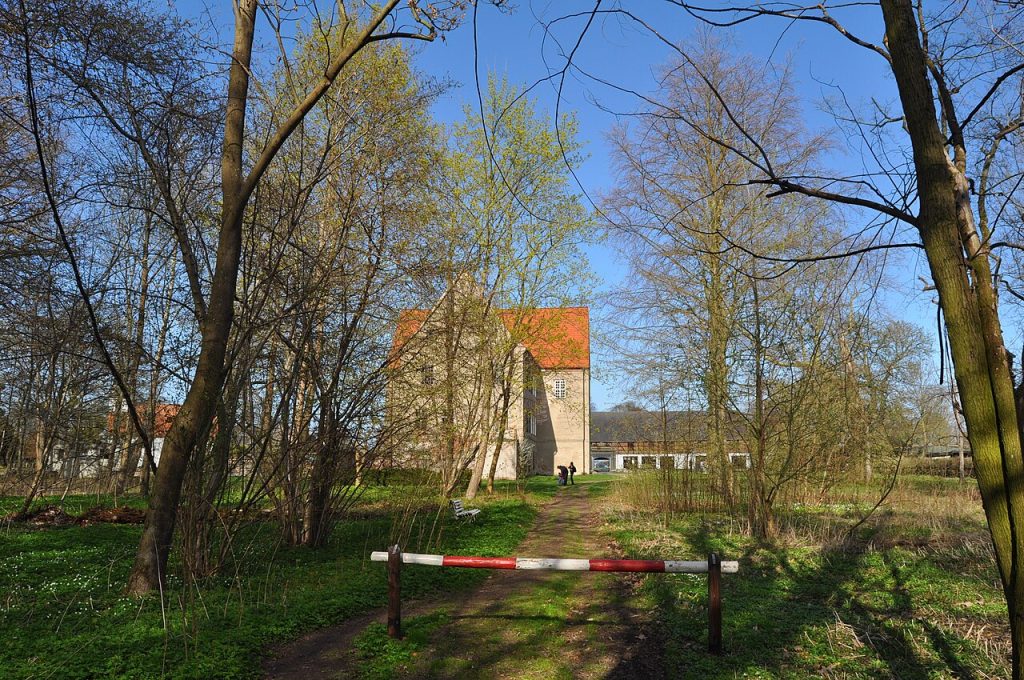
Ludwigsburg lies in the municipality of Loissin, about twelve kilometres east of Greifswald along the southern shore of the Greifswald Bodden. The exterior and the park can be seen at any time; the house itself opens for guided tours and events organised by the association, mainly between May and October, with a programme of concerts and a summer festival. Check the current opening times before you drive out, and bring cash for the donation box, because every euro goes into the next room. Allow about an hour for house, park and a walk to the shore.
Greifswald is the natural base, with trains to Berlin, Stralsund and Rostock and a lovely old town. From there a regional bus runs toward Loissin on weekdays, but a bicycle along the Bodden shore is the most pleasant way to arrive. Here is the exact spot: Ludwigsburg Palace on Google Maps.
Palaces Nearby
If you have enjoyed this palace, the region holds more remarkable residences. Here are two more well worth adding to your journey:
You May Like