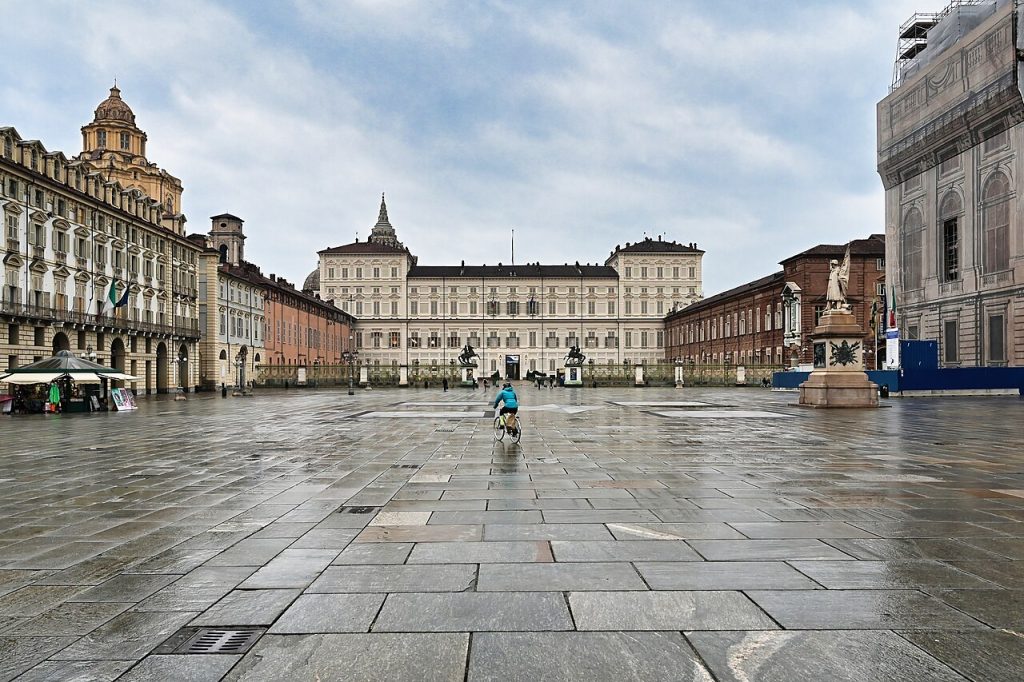
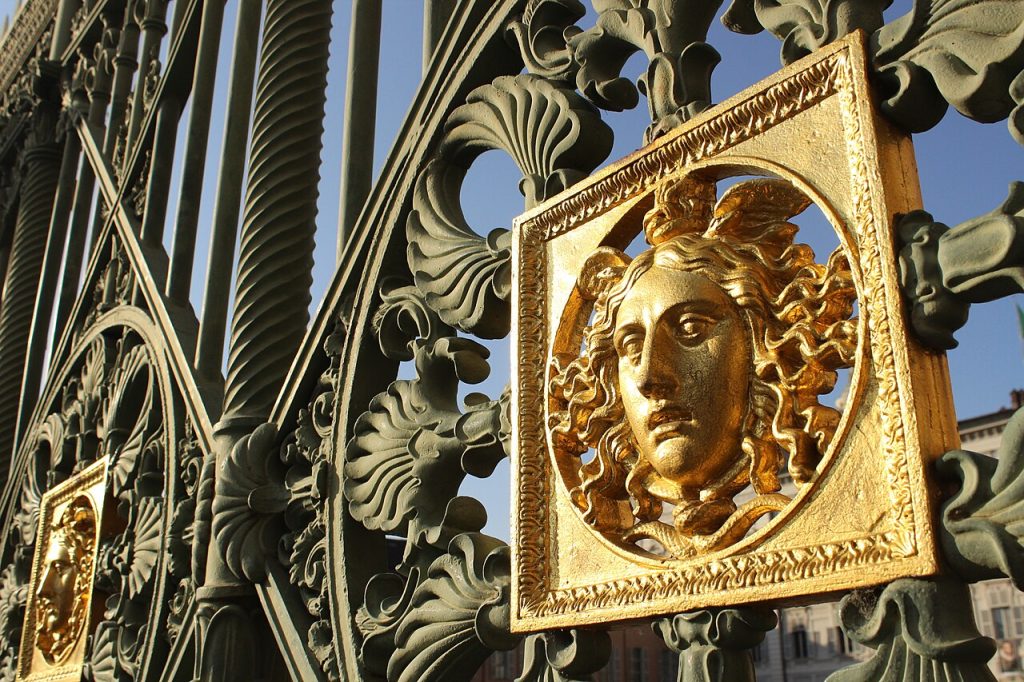
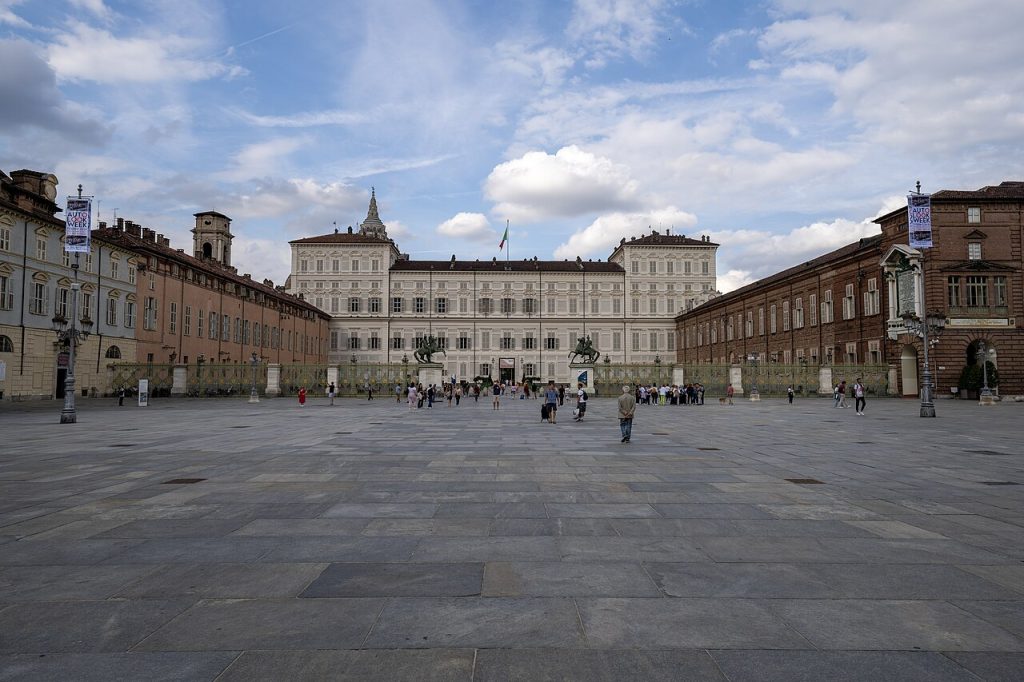
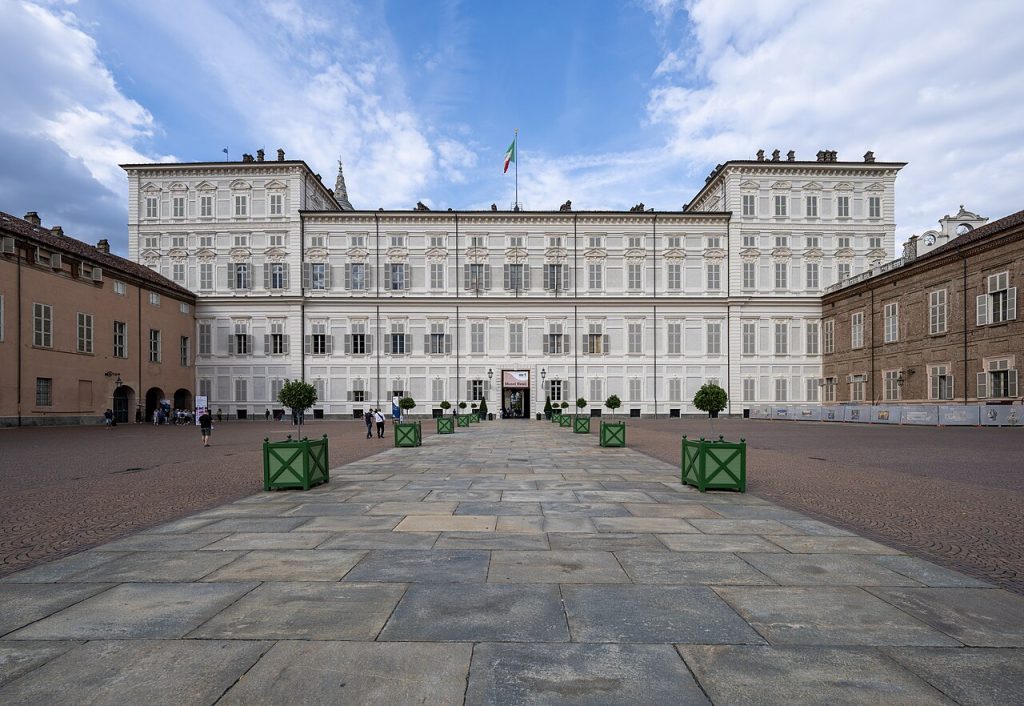
At the north end of Piazza Castello, the square at the heart of Turin’s grid of straight Baroque streets, behind a railing with gilded gates and two bronze statues of the Dioscuri, stands a long plain palace of pale stucco with a slightly projecting centre and a roofline that promises little. It is the Palazzo Reale, the Royal Palace of Turin, the principal residence of the House of Savoy from 1646 to 1865, the dynasty that rose from counts of the Alpine passes to dukes of Savoy, kings of Sardinia and, in 1861, kings of Italy, and the palace from which Victor Emmanuel II governed the new kingdom until the capital moved to Florence and then Rome.
The plainness is deliberate and the interiors are not: inside are the state rooms of three centuries, the throne room, the ballroom, the Chinese cabinet and the Scissors Staircase of Filippo Juvarra, the Royal Armoury with the finest collection of arms in Italy, the Royal Library with Leonardo’s self-portrait, Guarini’s Chapel of the Holy Shroud, built to hold the relic that the Savoy brought from Chambéry and burned in 1997 and restored in 2018, and the gardens laid out by André Le Nôtre. The palace is the head of the Savoy residences of Piedmont, a World Heritage group of twenty-two palaces, castles and hunting lodges around Turin, and the first of the two Turinese houses in this series, with Stupinigi, the hunting lodge, to follow.
Walk with me from the square through the gates and the hall of the Swiss Guards, up the Scissors Staircase to the state rooms, the armoury and the chapel, with the dukes, the kings and the shroud in order. The contents are below.
In This Article
- Piazza Castello and the Plain Facade
- The House of Savoy Comes Down From the Mountains
- 1563: Turin Becomes the Capital
- 1646 to 1660: Christine of France Builds the Palace
- Guarini’s Chapel of the Holy Shroud
- 1713: Dukes Become Kings
- Juvarra and the Scissors Staircase
- The State Rooms and the Chinese Cabinet
- The Royal Armoury and the Library
- Le Nôtre’s Gardens
- 1861: The First Capital of Italy
- 1946: The End of the Monarchy
- The Musei Reali and the Fire of 1997
- Turin on Video
- Visiting the Royal Palace of Turin Today
- Palaces Nearby
Piazza Castello and the Plain Facade
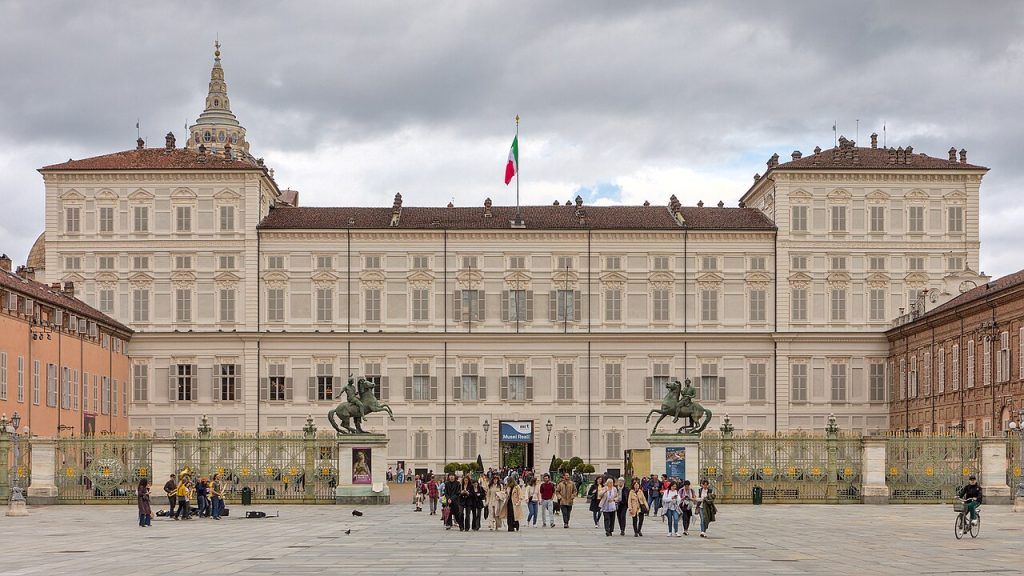
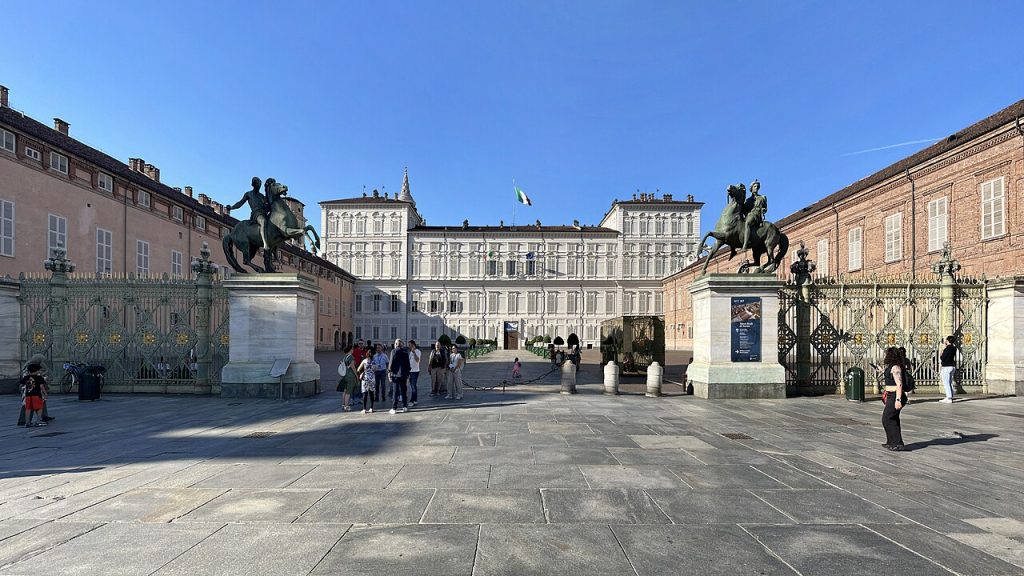
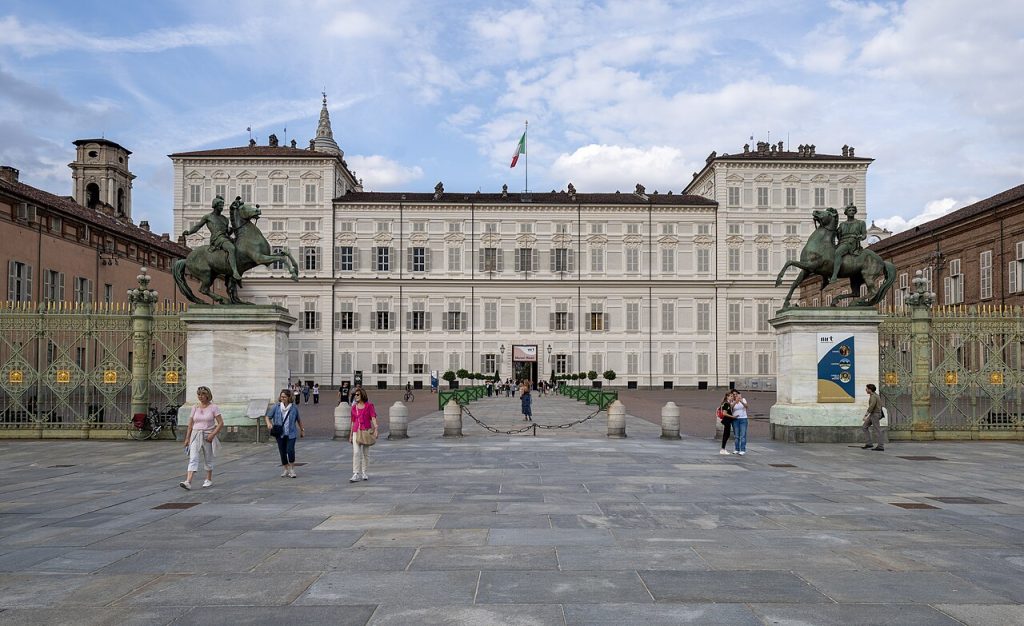
Piazza Castello is the centre of Turin, a vast rectangle around the Palazzo Madama, the mediaeval castle with a Baroque front, from which the city’s straight streets run to the river, the hills and the Alps, and its north side is closed by the Royal Palace behind the Piazzetta Reale, a forecourt separated from the square by a railing of 1842 with gilded gates and the bronze Castor and Pollux of Abbondio Sangiorgio. The facade, built in the 1650s and plain even for its time, is two storeys of stucco with a central section of three bays slightly forward under a pediment, and it was left undecorated because the dukes spent their money inside and on the fortifications. The whole square, with the palace, the castle, the Royal Theatre, the State Archives and the arcades, is the Savoy’s capital in one view.
Now, stop here at the gates between the Dioscuri and look at the facade. The House of Savoy was the oldest reigning dynasty in Europe and one of the poorest, and it built like a family that counted its money and expected to be judged on its rooms, not its walls.
The House of Savoy Comes Down From the Mountains
The House of Savoy began with Humbert the White-Handed, a count in the Alps around 1000, and grew by holding the passes between France and Italy, the Mont Cenis and the Great St Bernard, and taxing everything that crossed them: by 1400 the counts held Savoy on the French side, Piedmont on the Italian and the Vaud on Lake Geneva, with their capital at Chambéry, and in 1416 the emperor made them dukes. They were a mountain dynasty, French-speaking, poor, warlike and endlessly patient, marrying into every court and switching sides in every war, and they held the Holy Shroud, acquired in 1453, as their greatest treasure. In the sixteenth century the French occupied Savoy and Piedmont for twenty-three years, and when Duke Emmanuel Philibert recovered his lands in 1559 he made a decision that changed the dynasty.
He moved the capital over the Alps to Turin, and the Savoy became Italian.
1563: Turin Becomes the Capital
Emmanuel Philibert, Iron Head, the general who had won Saint-Quentin for Spain and recovered his duchy at the peace of Cateau-Cambrésis, moved his court from Chambéry to Turin in 1563, because Turin was defensible, Italian and the centre of the lands he meant to keep, and he and his successors spent the next two centuries turning a small Roman-plan town of fifteen thousand people into a Baroque capital of straight streets, uniform facades and squares, with a citadel, a palace quarter and the Savoy residences in a ring around it. The dukes lived at first in the bishop’s palace beside the cathedral, then in the Palazzo San Giovanni on the site of the present palace, and in 1584 Charles Emmanuel I began the Piazza Castello and the plan of a new ducal palace.
Turin’s grid, its arcades and its palaces are the Savoy’s work, and the city is the most complete Baroque capital in Italy because a single dynasty built it to a single plan.
1646 to 1660: Christine of France Builds the Palace
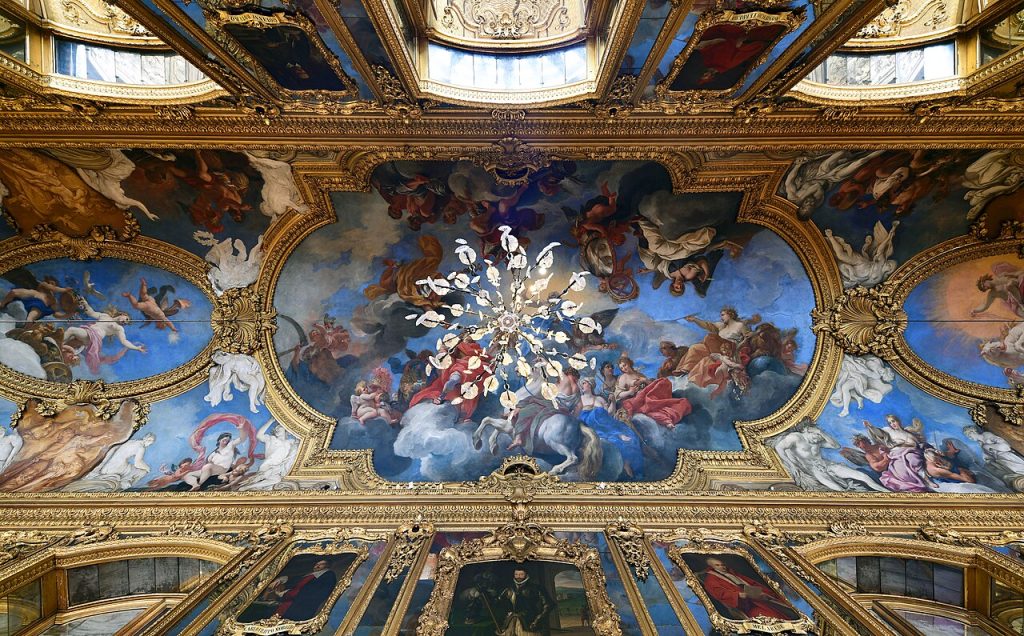
The palace was built by a woman. Christine of France, daughter of Henri IV and Marie de’ Medici, sister of Louis XIII, married Duke Victor Amadeus I in 1619 and on his death in 1637 governed Savoy as regent for her sons for twenty-six years, through civil war with her brothers-in-law and the Thirty Years’ War, as the first Madama Reale. In 1646 she commissioned the architect Amedeo di Castellamonte to replace the old ducal palace with a new one on Piazza Castello, and the main block with its plain facade, its hall of the Swiss Guards and its first state rooms was built between 1646 and 1660, with a gallery linking it to the cathedral and the shroud. Christine’s son Charles Emmanuel II and his widow, the second Madama Reale, Marie Jeanne of Savoy-Nemours, continued the decoration into the 1680s.
The palace’s French plan and its Italian decoration are Christine’s legacy, and the Savoy’s two regent duchesses, both French, gave Turin its Baroque court.
Guarini’s Chapel of the Holy Shroud
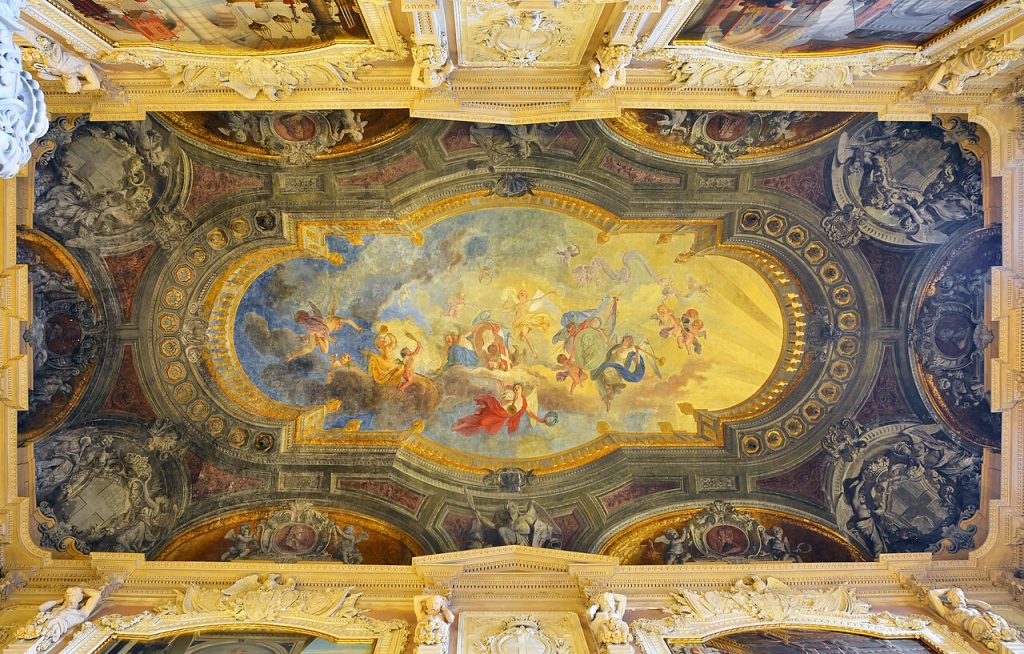
The Savoy’s greatest treasure was the Holy Shroud, the linen cloth with the image of a crucified man that the family had acquired in 1453 and kept at Chambéry until 1578, when Emmanuel Philibert brought it to Turin, and in 1668 Charles Emmanuel II commissioned the Theatine priest and mathematician Guarino Guarini to build a chapel for it between the palace and the cathedral, raised to the level of the palace’s first floor so that the dukes could reach it from their apartments. Guarini’s chapel, finished in 1694 after his death, is a round room of black marble with a dome of interlaced ribs rising in a spiral of hexagons to a star, one of the most daring structures of the Baroque and one of the most beautiful spaces in Italy. The shroud lay in its altar from 1694 to 1993.
On the night of 11 April 1997 a fire destroyed the chapel’s interior; the shroud, by then in the cathedral, was saved by a fireman who broke its case with a hammer, and the chapel was restored over twenty-one years and reopened in September 2018. Now, stop here under Guarini’s dome and look up at the star: the restoration recut every rib.
1713: Dukes Become Kings
Victor Amadeus II, duke from 1675, changed sides twice in the War of the Spanish Succession, defended Turin against the French in the siege of 1706 with his cousin Prince Eugene and was rewarded at the Peace of Utrecht in 1713 with the Kingdom of Sicily, exchanged in 1720 for the poorer but nearer Kingdom of Sardinia; the Savoy were kings at last, and the palace of Turin became a royal palace. Victor Amadeus hired the Sicilian architect Filippo Juvarra, whom he had met in Messina, to make the palace, the city and the residences around it worthy of a crown, and Juvarra’s twenty years in Turin, from 1714 to 1735, gave the Savoy their Baroque.
Victor Amadeus abdicated in 1730, tried to take the throne back a year later and was imprisoned by his son in the castle of Rivoli until his death, the only Savoy king to end as his successor’s prisoner.
Juvarra and the Scissors Staircase
Juvarra’s most famous work in the palace is the Scala delle Forbici, the Scissors Staircase, built in 1720 to link the first and second floors in a space too small for a conventional stair: two flights rise from opposite sides, cross each other in the air on a single landing and arrive at the top in a scissors movement, with the structure seemingly unsupported and the walls painted with trompe-l’oeil architecture. It is a piece of Baroque engineering as much as design, and Juvarra put his motto, Vincit malignos invidos, he conquers the envious, in the stucco. He also designed the Chinese cabinet, the state rooms’ decoration, the royal apartments’ plan and, outside the palace, the Superga basilica, Stupinigi and the facade of Palazzo Madama.
Now, stop here on the landing where the flights cross and look at the structure. There is nothing holding it up but geometry, and it has held for three hundred years.
The State Rooms and the Chinese Cabinet
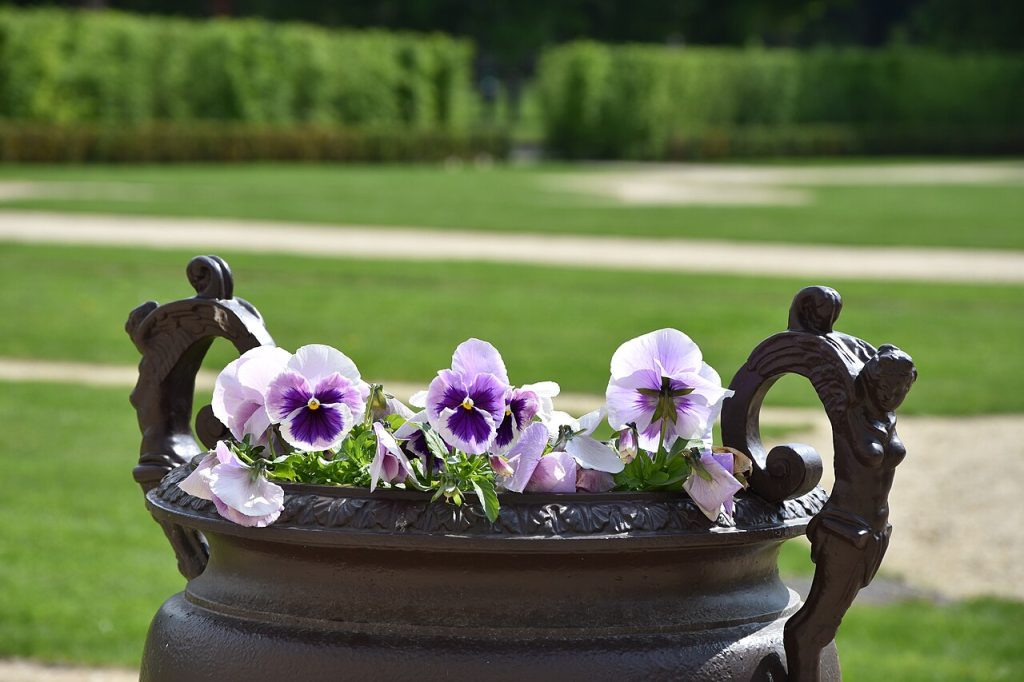
The first floor is the piano nobile, a sequence of state rooms along the facade and the courtyard: the hall of the Swiss Guards with its frieze of the Savoy’s history, the hall of the Pages, the throne room with its gilded ceiling of 1660 and its canopy of 1831, the audience room, the council room, the Chinese cabinet of 1736 by Juvarra with Chinese lacquer panels set in gilded Rococo frames, the ballroom of 1835 by Pelagio Palagi with its Neoclassical columns, the dining room and the queen’s and king’s apartments with their alcoves and chapels. The decoration spans the Baroque of the 1660s, the Rococo of Juvarra and the Neoclassicism of Charles Albert’s reign in the 1830s and 1840s, when Palagi redecorated half the palace, and the rooms are among the richest in Italy.
Look for the Chinese cabinet, for the ceiling paintings by Daniel Seiter and for Palagi’s ballroom, which was the last great room the Savoy built before they became kings of Italy and left.
The Royal Armoury and the Library
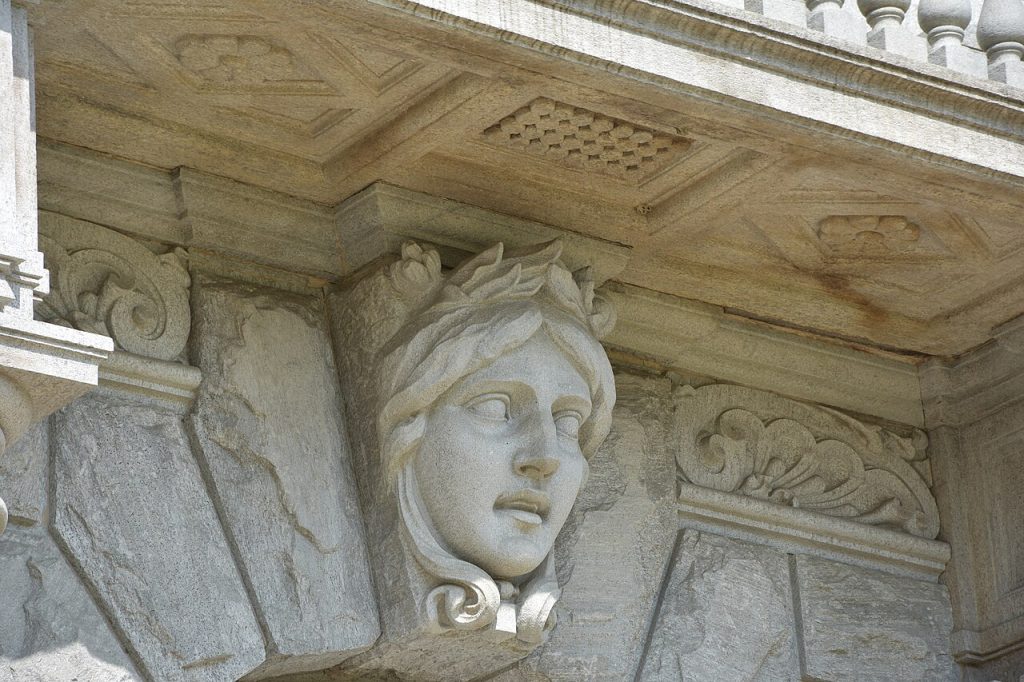
Charles Albert, king from 1831 to 1849, opened the Royal Armoury in 1837 in the Beaumont Gallery, a long hall designed by Juvarra and painted by Claudio Beaumont with the story of Aeneas, which runs from the palace along the square toward the State Archives: the collection of some five thousand pieces, armour of the Savoy and their knights, the arms of the Piedmontese army from the Turkish wars to the Risorgimento, oriental weapons and the mounted figures of knights in full armour on stuffed horses, is the finest in Italy and one of the finest in Europe. Beside it the Royal Library, also Charles Albert’s, holds two hundred thousand volumes, the Savoy’s manuscripts and, in a climate-controlled vault shown on rare occasions, Leonardo da Vinci’s red-chalk self-portrait and his Codex on the Flight of Birds.
The armoury and the library are the Savoy’s statement that they were a military and a learned dynasty, and both are now part of the Musei Reali.
Le Nôtre’s Gardens
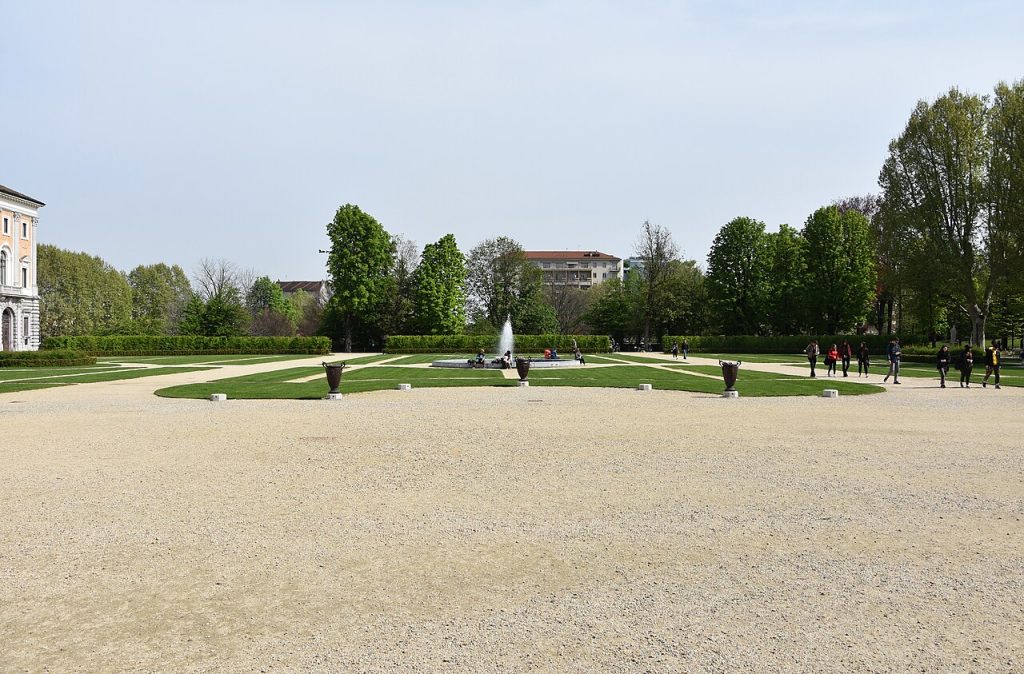
Behind the palace lie the Royal Gardens, laid out in 1697 to a design by André Le Nôtre, Louis XIV’s gardener at Versailles, sent to Turin at the request of the second Madama Reale, with parterres, avenues, a fountain of the Nereids and Tritons by Simone Martinez of 1750 and the old bastions of the city walls, which the Savoy kept as a raised walk with views to the Alps. The gardens were neglected in the twentieth century and restored between 2016 and 2021, with the parterres replanted, the fountain repaired and the Ducal Garden beside the palace reopened, and they are free to enter and the best place in central Turin to see the mountains.
The gardens also link the palace to the Royal Theatre, the State Archives and the Palazzo Chiablese, and the whole quarter, the Zona di Comando, was the Savoy’s command centre: palace, chapel, theatre, archives, armoury and gardens in one enclosure.
1861: The First Capital of Italy
Charles Albert gave Piedmont a constitution in 1848, went to war with Austria for Italy, lost at Novara in 1849 and abdicated, and his son Victor Emmanuel II, with Cavour as prime minister and Garibaldi in the field, united the peninsula in a decade: Lombardy in 1859, the centre and the south in 1860 and, on 17 March 1861, the proclamation by the parliament sitting in Palazzo Carignano of Victor Emmanuel II as King of Italy. The Royal Palace of Turin was the first royal palace of the kingdom for four years, and the king received the ambassadors of Europe in its throne room. In 1865 the capital moved to Florence to placate the rest of Italy and in 1871 to Rome, and Victor Emmanuel moved with it, leaving Turin bitter and the palace a secondary residence.
The Savoy had taken eight hundred years to come down from the mountains to a throne and four to leave the city that had made them kings; Turin has never quite forgiven Rome.
1946: The End of the Monarchy
The palace remained a residence of the Savoy kings, used for visits and ceremonies, through the reigns of Umberto I, assassinated at Monza in 1900, and Victor Emmanuel III, who reigned from 1900 to 1946 through two wars and the fascist dictatorship and whose compromises with Mussolini destroyed the dynasty’s standing. On 2 June 1946 Italy voted by referendum to become a republic, Umberto II, who had reigned for a month, went into exile in Portugal and the Savoy were forbidden to enter Italy until 2002. The palace passed to the state in 1946 and became a museum, and the Savoy’s Turin became the city of Fiat, the Mole Antonelliana and the shroud.
The dynasty that had held the Alpine passes for a thousand years ended in a Lisbon hotel; the palace it left in Turin is the most complete record of its rise.
The Musei Reali and the Fire of 1997
Since 2014 the palace, the Royal Armoury, the Royal Library, the Chapel of the Shroud, the Royal Gardens, the Sabauda Gallery of paintings, moved into the palace’s Manica Nuova wing in 2014, and the Archaeological Museum have been united as the Musei Reali di Torino, one of the largest museum complexes in Italy, with a single ticket and a route that runs from the Roman theatre under the gardens to the Savoy’s state rooms. The fire of 1997 that gutted Guarini’s chapel was the great trauma of the palace’s modern history, and the chapel’s reopening in 2018 after a twenty-one-year restoration was the great triumph; the Savoy residences of Piedmont, with the palace at their head, have been a World Heritage site since 1997.
Now, stop here in the hall of the Swiss Guards at the end of the visit and look at the frieze of the Savoy’s history painted in 1660. The family that commissioned it believed it would reign for ever, and for a dynasty that began as toll collectors on a mountain pass and ended as kings of Italy, the frieze is not far wrong.
Turin on Video
Visiting the Royal Palace of Turin Today
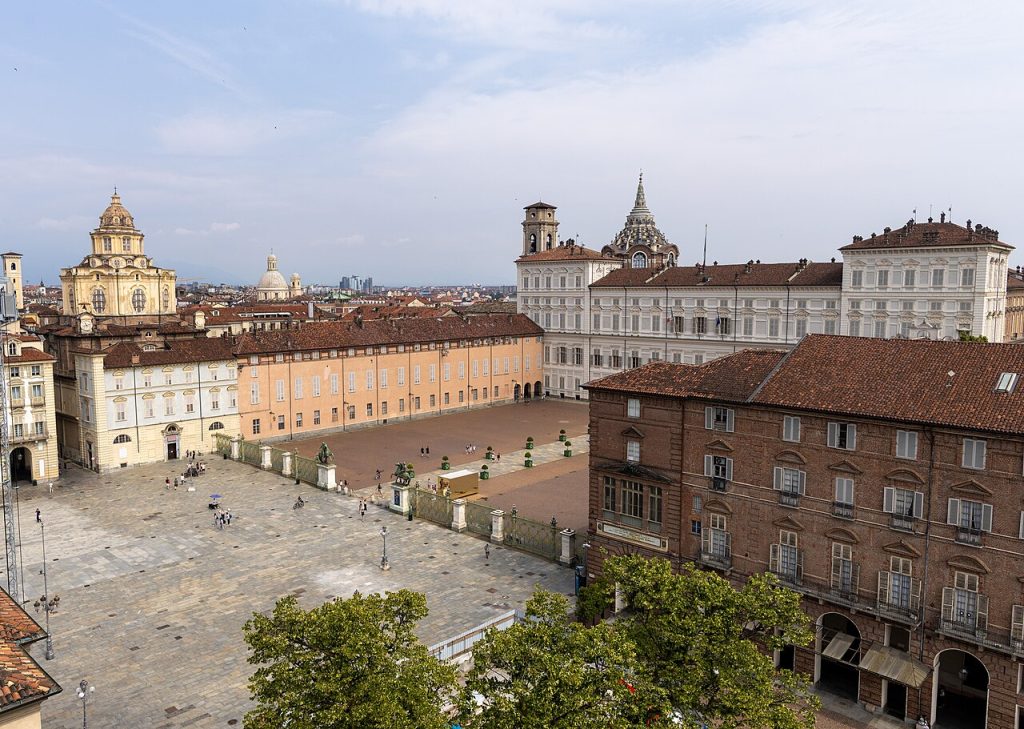
The Musei Reali are open Tuesday to Sunday, with a single ticket covering the Royal Palace’s state rooms, the Royal Armoury, the Chapel of the Holy Shroud, the Sabauda Gallery, the Archaeological Museum and the Royal Gardens; the Royal Library is visited separately on announced days and the Leonardo self-portrait is shown only on special occasions. Allow a half day, start with the palace and the chapel in the morning, and end in the gardens with the view of the Alps. The Holy Shroud itself is in the cathedral next door and is displayed only in rare public expositions; a reproduction and the history are shown in the Museum of the Shroud. Combine the palace with Palazzo Madama across the square and with the Egyptian Museum, the second largest in the world, five minutes away.
The palace is on Piazza Castello in the centre of Turin, ten minutes’ walk from Porta Nuova station and five from Porta Susa by tram; Turin is an hour from Milan by train. Stupinigi is twenty-five minutes by bus or car to the south-west, and the Ducal Palace of Mantua two and a half hours by train. Here is the exact spot: Royal Palace of Turin on Google Maps.
Palaces Nearby
You May Like
The Ducal Palace of Urbino and the Court of Federico da Montefeltro