In this article
- More than a screen on the wall
- From a flickering glass tube to a sheet of glass
- How a picture is built from millions of dots
- LCD and LED: light shone through a filter
- OLED: when every pixel makes its own light
- Resolution, refresh rate, and the numbers that matter
- HDR and colour: why newer TVs look so vivid
- The smart TV: a computer behind the screen
- The quiet cleverness of the remote
- Getting the best picture from your set
- Where the television is going
The television has been the glowing centrepiece of the living room for the better part of a century, and in that time it has changed almost beyond recognition. The bulky, warm wooden box that families once gathered around, with its rounded glass screen and a handful of fuzzy channels, has flattened into a vast, razor-thin panel that hangs on the wall like a painting and holds the entire output of the world’s film and television industries behind it. It is one of the most quietly dramatic technological transformations of the modern home.
And yet most of us buy one, hang it up, and never think about the extraordinary engineering involved in making a picture appear. This article is a tour of the television: what it really is, the strange and clever history of how moving images first reached the home, how a modern screen conjures a picture out of millions of tiny coloured lights, the difference between the LCD, LED, and OLED panels you keep seeing advertised, and what all those numbers—4K, 120Hz, HDR—actually mean for what you see.
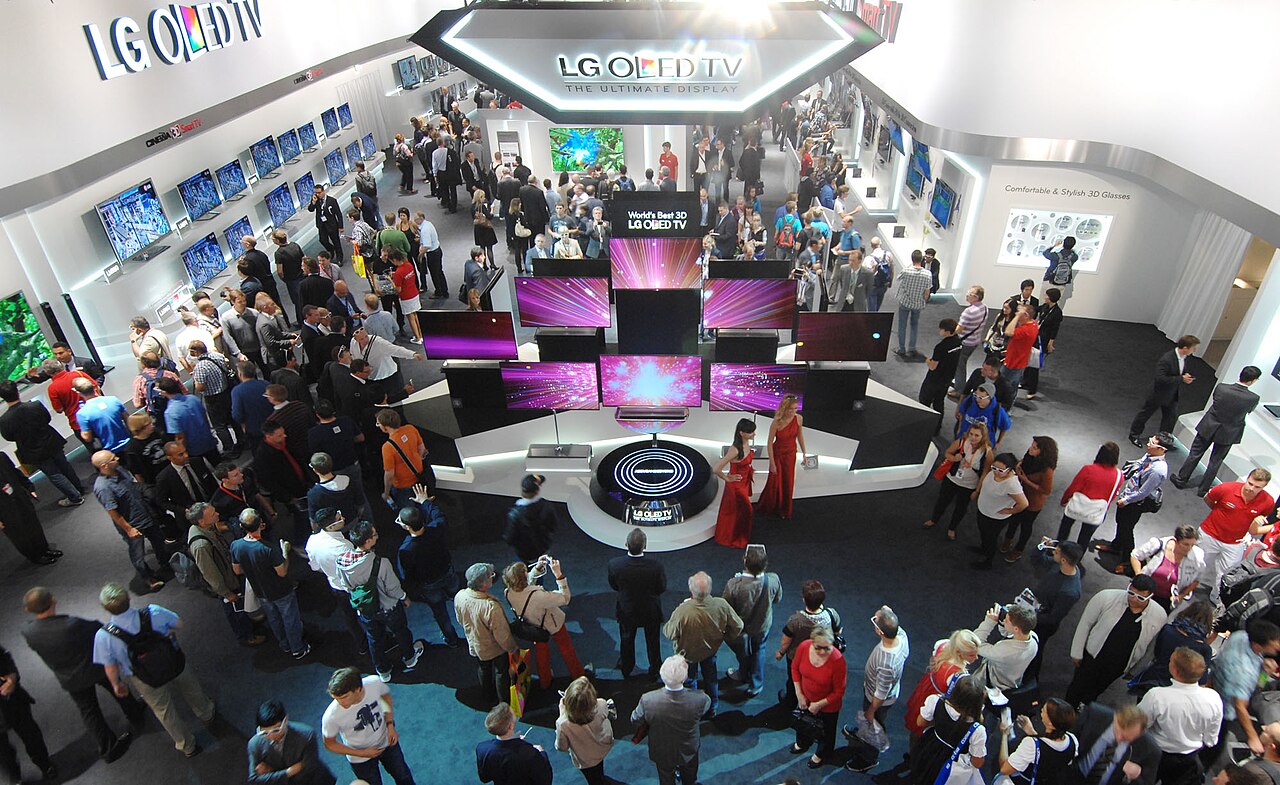
More than a screen on the wall
At its most basic, a television is a device for turning a transmitted signal into moving pictures and sound. For most of its history that was the whole story: a broadcaster sent out a signal, and the set in your home decoded it and painted it on the screen. The modern television still does this, but it has become something much larger—a screen that can take an image from dozens of sources, from an aerial or a cable box to a games console, a streaming app, or a phone screen mirrored wirelessly across the room.
What has stayed constant is the fundamental challenge: how do you create a convincing moving image? The answer, in every television ever made, relies on two quirks of human perception. The first is that our eyes cannot resolve very small dots from a distance, so a picture made of enough tiny coloured points looks like a smooth, continuous image. The second is persistence of vision: show us a rapid sequence of still images and our brain blends them into smooth motion. Every television, from the oldest to the newest, is really just an extremely sophisticated machine for exploiting those two facts.
From a flickering glass tube to a sheet of glass
The earliest televisions were built around a remarkable and rather alarming piece of technology called the cathode-ray tube, or CRT. This was a large, heavy glass vacuum tube that fired a beam of electrons at the back of a screen coated in phosphor, a material that glows when struck. By steering that beam back and forth across the screen incredibly fast, line by line, the set could paint a complete picture many times a second. The depth of those old sets—the reason they were boxes rather than panels—was simply the length of tube needed for the electron gun to fan its beam across the whole screen.
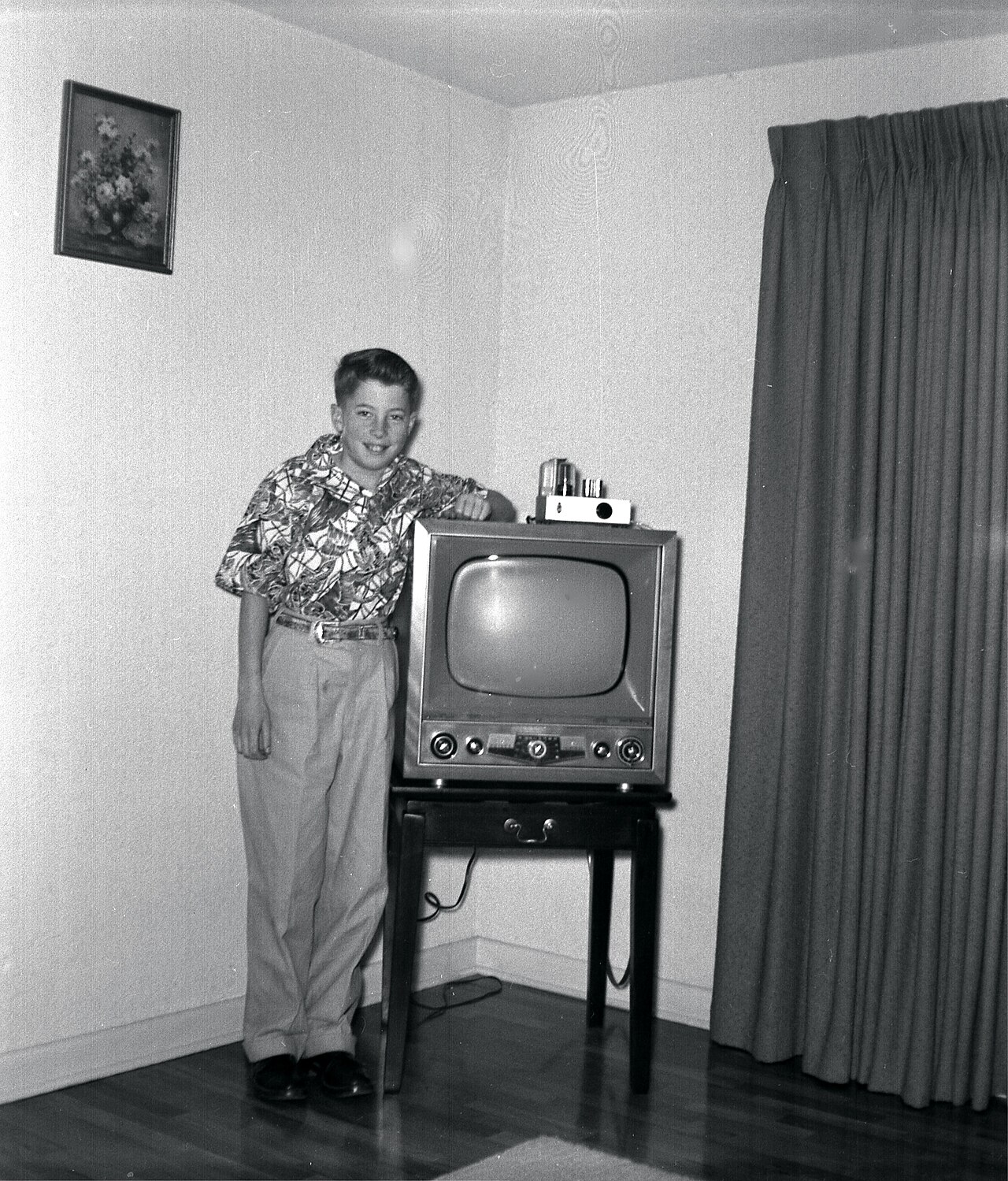
The first sets showed only black and white, with small, often circular screens and pictures that flickered and rolled. Watching television was a communal event partly because the sets were expensive and rare; a single one might serve a whole neighbourhood. Colour arrived in stages through the mid-twentieth century, achieved by coating the screen with three different phosphors—red, green, and blue—and using a more elaborate system to light them in the right combinations.
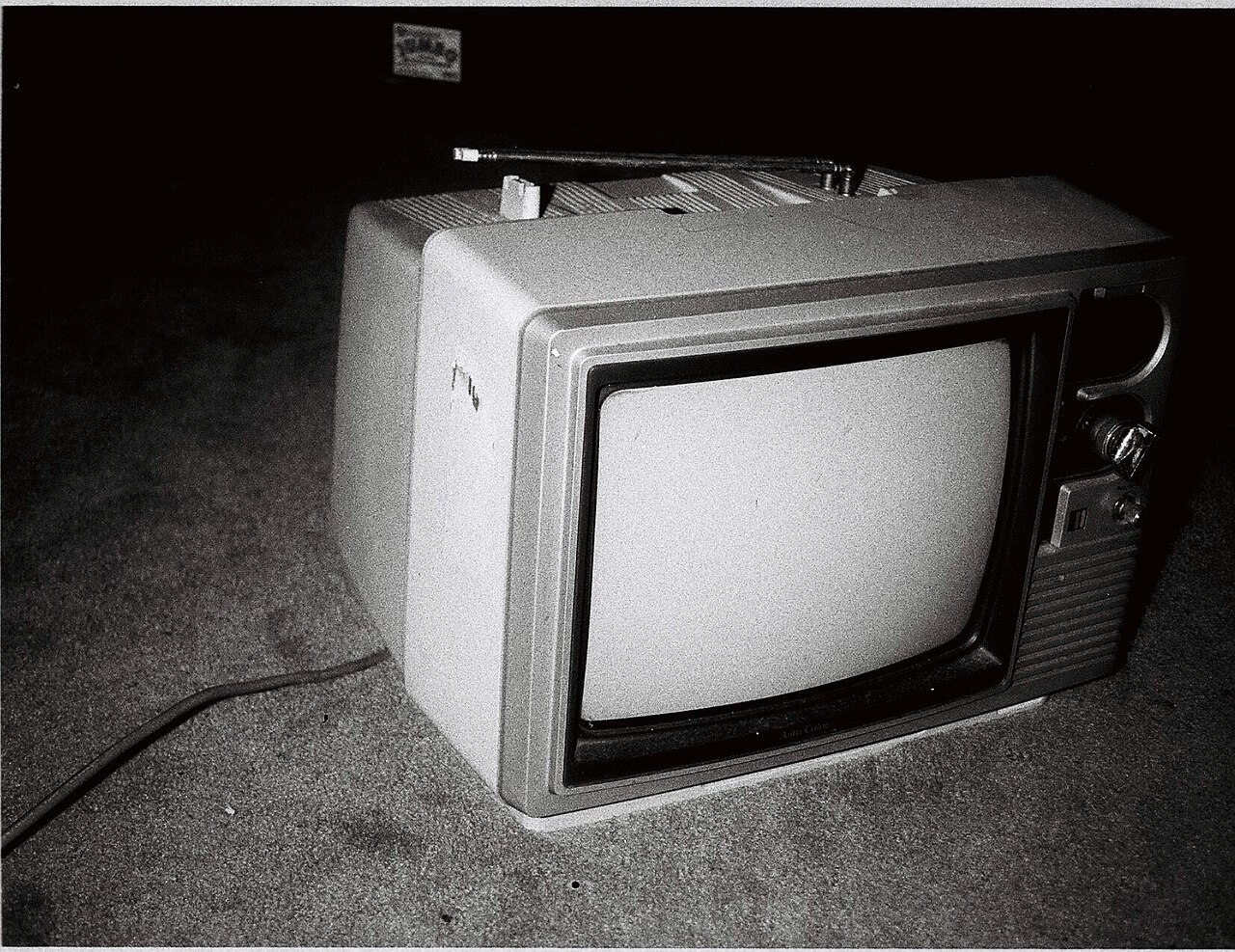
For decades the CRT reigned, growing larger and heavier until a big one took two people to lift. The flat-panel revolution that finally killed it arrived around the turn of the millennium, when LCD and plasma screens made it possible to build a large display only a few centimetres thick. The change was astonishingly fast: within a handful of years the deep glass box that had defined the living room for fifty years was gone, replaced by panels slim enough to hang on the wall. It is one of the most complete and rapid technology replacements in everyday life.
How a picture is built from millions of dots
Every image on a modern screen is built from a grid of tiny points called pixels, short for picture elements. A 4K television has roughly eight million of them arranged in a fine grid. On its own a pixel is just a dot, but the clever part is that each pixel is itself made of three even tinier sub-pixels: one red, one green, and one blue. By varying the brightness of these three primary colours, a single pixel can produce virtually any colour the eye can see—bright red by lighting only the red sub-pixel, white by lighting all three fully, black by switching them all off.

If you ever get close enough to a screen showing a white image and look very carefully, you can sometimes make out these red, green, and blue stripes or dots. Step back, and your eye blends them into a single seamless colour. This additive mixing of three colours of light is the foundation of every colour screen, whether it is a television, a phone, or a computer monitor. The differences between display technologies—LCD, LED, OLED—come down almost entirely to one question: how is each of those millions of sub-pixels made to light up?
LCD and LED: light shone through a filter
The most common type of television is the LCD, the liquid crystal display, and understanding it clears up one of the biggest sources of marketing confusion. An LCD does not produce its own light. Instead, it has a constant, even backlight shining from behind, and in front of that light sits a layer of liquid crystals—a strange substance that can twist when an electric current is applied, acting like microscopic shutters that either let the backlight through or block it. A colour filter over each shutter gives it its red, green, or blue tint.
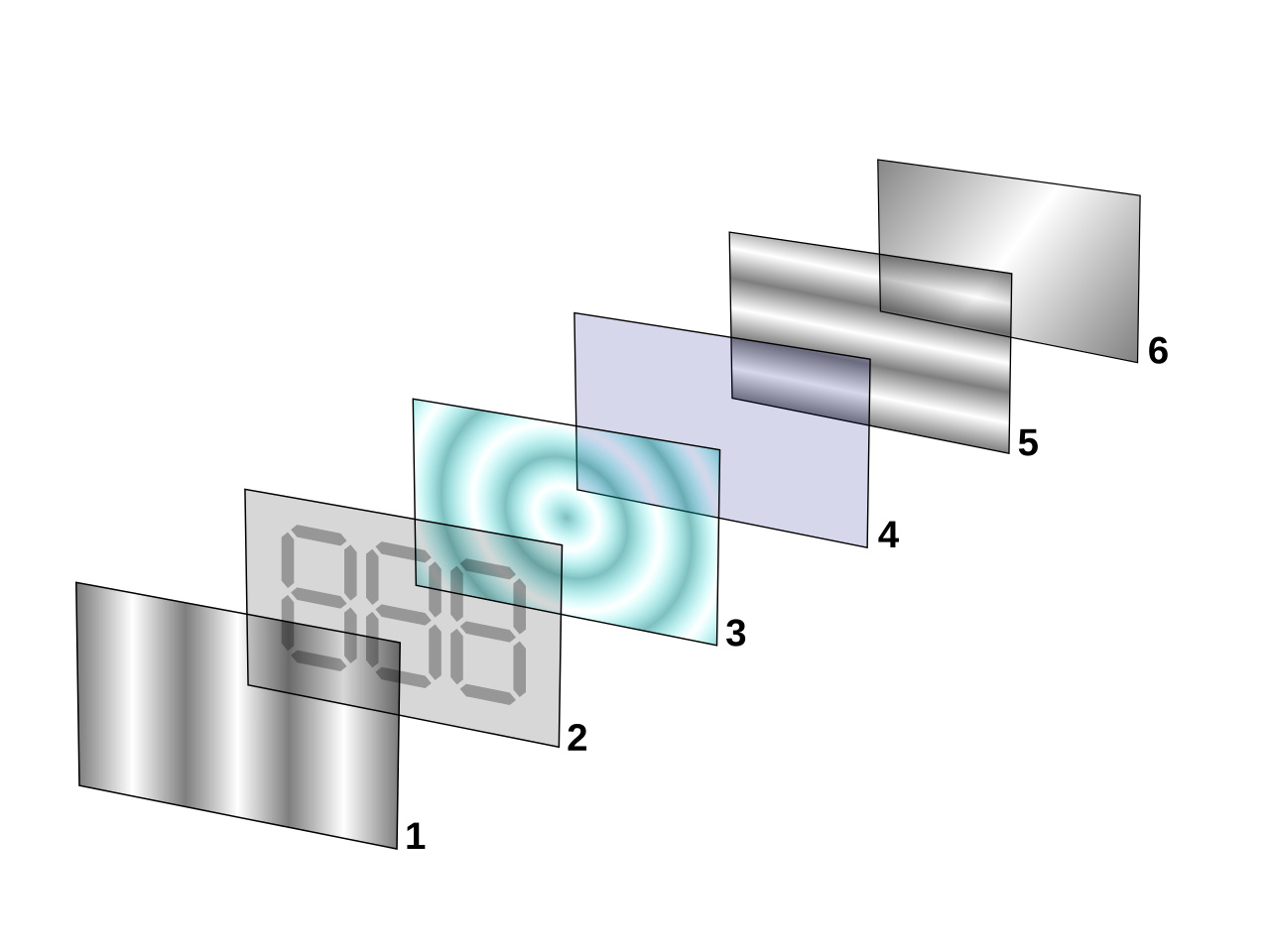
Here is the confusing bit: a so-called “LED TV” is simply an LCD television whose backlight is made of light-emitting diodes (LEDs) rather than the older fluorescent tubes. The picture is still produced by the liquid crystal layer; the LEDs just provide the light behind it. This matters because the great weakness of LCD is that the backlight is always on. To show black, the liquid crystals try to block all the light, but they can never block it completely, so blacks look more like dark grey. Better LCD sets fight this by dividing the backlight into zones that can dim independently behind dark parts of the image—a technique called local dimming—and the most advanced use tiny “mini-LEDs” to make those zones extremely fine.
OLED: when every pixel makes its own light
OLED, the organic light-emitting diode, takes a fundamentally different and more elegant approach. There is no separate backlight at all. Instead, every single sub-pixel is made of an organic material that produces its own light when electricity flows through it. This sounds like a small distinction, but it changes everything about the picture.
Because each pixel makes its own light, a pixel showing black is simply switched off entirely—producing a perfect, absolute black rather than a dim grey. The contrast between the brightest and darkest parts of the image is therefore essentially infinite, which is why OLED pictures have a depth and richness that LCD struggles to match. Switched-off pixels also use no power, and because there is no backlight layer, OLED panels can be made astonishingly thin—some little thicker than a few sheets of paper. The trade-offs are that OLEDs are more expensive to make, generally cannot get quite as blindingly bright as the best LCDs, and carry a small theoretical risk of “burn-in,” where a static image left on screen for a very long time can leave a faint ghost. For most viewers, though, the perfect blacks make OLED the picture-quality benchmark.
Resolution, refresh rate, and the numbers that matter
Television marketing is a blizzard of numbers, but a few genuinely matter. Resolution is the count of pixels, and it has marched steadily upward: the old standard definition gave way to high definition (often called 1080p, with about two million pixels), then to 4K or Ultra HD (about eight million), with 8K now appearing at the high end. More pixels mean a sharper, more detailed image, though the benefit depends heavily on screen size and how close you sit—beyond a point the eye simply cannot resolve the extra detail.
Refresh rate, measured in hertz, is how many times per second the screen updates the image. Most televisions run at 60Hz, while higher-end sets and those aimed at gamers offer 120Hz, which makes fast motion—sport, action films, video games—look noticeably smoother and clearer. Screen size, measured diagonally in inches, is the most obvious number of all, though the right size depends on how far away you sit. These figures are useful, but it is worth knowing that a cheaper 4K set with a poor panel can easily look worse than a well-made set with fewer pixels; the quality of the display technology often matters more than the raw numbers on the box.
HDR and colour: why newer TVs look so vivid
One of the most meaningful recent improvements has nothing to do with pixel count. High dynamic range, or HDR, is about the range of brightness and the richness of colour a television can display. An HDR set can show very bright highlights—the glint of sun on water, a bright lamp in a dark room—at the same time as deep, detailed shadows, much closer to the way the human eye perceives a real scene. Older “standard dynamic range” screens had to compress everything into a much narrower band, crushing the brightest and darkest details.
Alongside HDR, modern sets can reproduce a far wider range of colours, often using technologies like quantum dots—microscopic particles that emit extremely pure colours—to make reds redder and greens greener than older screens could manage. The practical upshot is that a good HDR image, fed with content actually made in HDR, can look strikingly more lifelike and three-dimensional than the same scene in standard format. For many viewers, the jump to HDR is more visible than the jump from HD to 4K.
The smart TV: a computer behind the screen
Today almost every television sold is a “smart” TV, which simply means it has a computer built in and connects to the internet. Behind the screen sits a modest processor, some memory, and storage, running an operating system much like a simplified version of the one on your phone. This is what lets the television run apps for streaming services, browse menus, and play video pulled from the internet rather than only from a broadcast signal.

This shift has quietly changed what a television is. It is no longer a passive receiver of whatever a broadcaster chooses to send; it is an on-demand window onto vast libraries of content you summon at will. The downside is that these built-in systems vary in speed and polish, can feel sluggish as they age, and often come laden with advertising and data collection—which is why many people bypass the set’s own software entirely and plug in a separate, faster streaming device. Underneath, though, the smart TV is the same convergence story we see everywhere in technology: a single-purpose appliance quietly turning into a general-purpose connected computer.
The quiet cleverness of the remote
The humble remote control deserves a moment of appreciation, because it works in a genuinely clever way. A traditional remote communicates with the television using infrared light—a colour of light just beyond what the human eye can see. When you press a button, an LED on the front of the remote flashes out a rapid, invisible pattern of pulses, a coded message that the receiver on the television reads and obeys. This is why an old remote needs a clear line of sight to the set and will not work through walls.
You can even see this hidden light: point a remote at a phone camera, which is sensitive to infrared, press a button, and you will often see the LED blinking on the phone screen. Newer remotes increasingly use radio signals like Bluetooth instead, which do not need line of sight and allow features like voice control, where a microphone in the remote lets you simply ask the television what to play. It is a small object, but it neatly encapsulates how invisible technologies quietly shape everyday convenience.
Getting the best picture from your set
Most televisions leave the factory configured to look punchy and over-bright on a shop shelf under harsh lighting, which is rarely the best setting for a real living room. The single biggest improvement many people can make costs nothing: turning off the aggressive “dynamic” or “vivid” picture mode and choosing a more accurate one, often labelled “cinema,” “movie,” or “filmmaker” mode, which shows the image far closer to how it was intended to look.
A common culprit behind that oddly artificial, soap-opera look is motion smoothing, a feature that invents extra frames to make motion appear smoother but gives films an unnatural, video-like quality; turning it off restores the proper cinematic feel. Beyond settings, controlling the light in the room helps enormously—LCD sets look washed out in bright glare, while OLEDs reveal their deep blacks best in a dimmer room. None of this requires spending money; it is simply a matter of knowing that the out-of-the-box picture is usually not the best one the set can produce.
Where the television is going
The screen technologies keep advancing. New variations such as QD-OLED combine the perfect blacks of OLED with the pure, bright colours of quantum dots, and an emerging technology called MicroLED promises the self-lighting perfection of OLED without its drawbacks, though it remains hugely expensive for now. Resolutions continue to climb toward 8K, even as many question how much sharper a screen the human eye can usefully appreciate at normal viewing distances.
Perhaps the more interesting changes are in form and function. Screens are being made that roll up, that are transparent when switched off, and that grow ever larger and thinner. At the same time the television is dissolving into the broader world of internet-delivered content, blurring with the computer and the phone until the “channel” is an almost forgotten concept. Whatever shape it takes, the television endures because it answers a deep and simple human want: a window, somewhere in the home, onto stories and images from everywhere else. The glass has changed almost completely; the reason we gather in front of it has not.