In this article
- The most misunderstood box in the kitchen
- Invented by accident: a melted chocolate bar
- How it actually heats your food
- The magnetron: the heart of the machine
- A tour of the parts inside
- Cold spots, spinning plates, and common myths
- Is it safe? Radiation, metal, and real risks
- Clever things to do with it beyond reheating
- Where the microwave goes next
The microwave oven is one of the strangest success stories in the history of household technology. It sits on kitchen counters all over the world, used countless times a day to reheat coffee, defrost dinner, and make popcorn, and yet almost nobody has the faintest idea how it works. Worse, it is surrounded by a thick fog of myth and suspicion—rumours about radiation, about it destroying nutrients, about the dangers of standing too close—most of which are simply wrong. Few appliances are so widely used and so poorly understood.
This article aims to clear that fog. The microwave is genuinely fascinating: it was invented entirely by accident, it heats food using a principle utterly different from any other oven, and at its core sits a piece of wartime radar technology. We will look at how it really cooks, what the mysterious component called the magnetron does, why your food sometimes comes out scalding at the edges and frozen in the middle, and which of the scary stories about it are true and which are nonsense.
The most misunderstood box in the kitchen
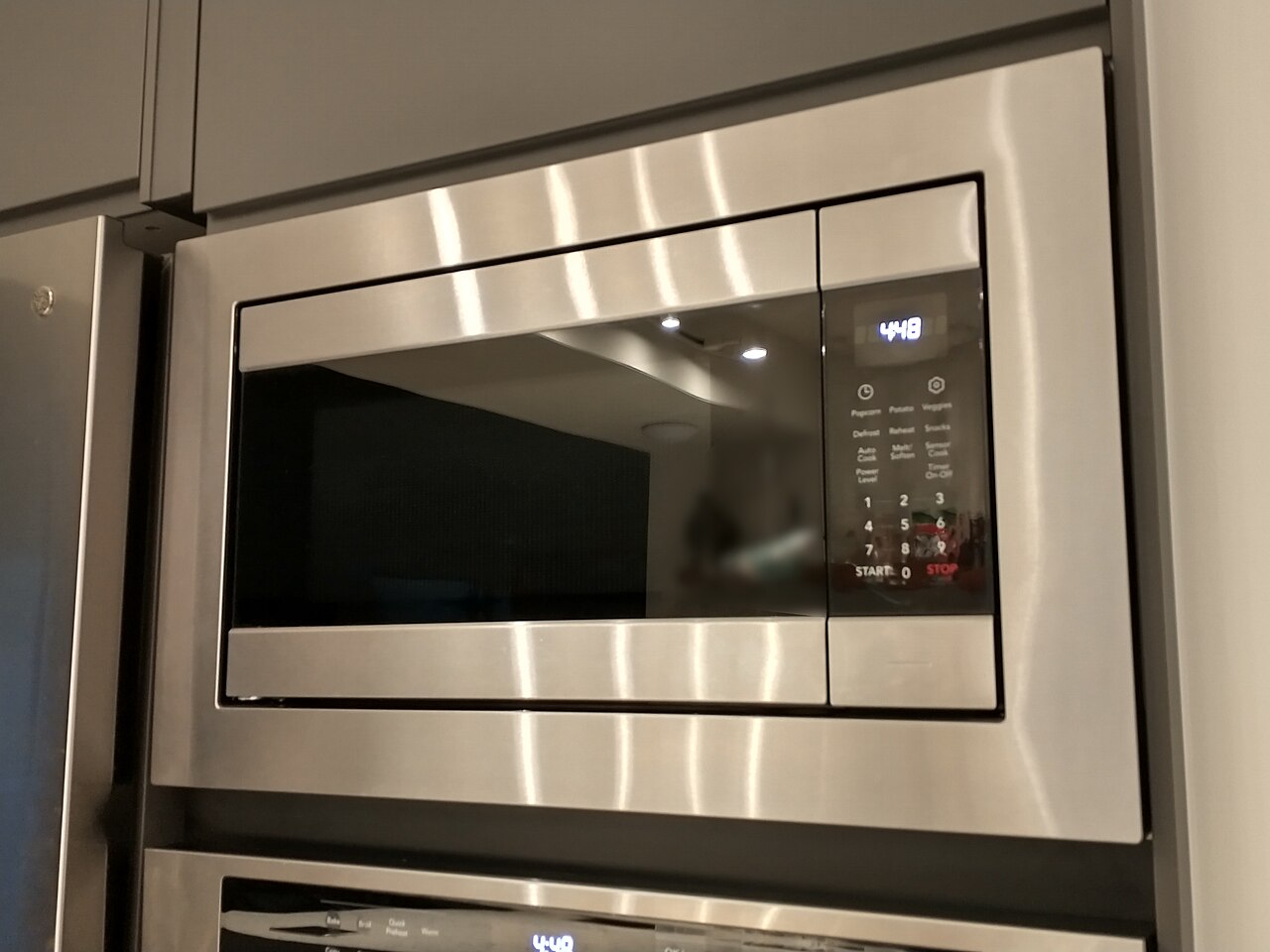
To understand what makes the microwave special, it helps to think about how every other way of cooking works. A conventional oven, a stove, a grill, a campfire—all of them heat food from the outside in. They warm the air or the surface around the food, and that heat slowly conducts inward, which is why a roast takes hours and the outside browns long before the centre is done. The microwave throws this entire approach out of the window.
Instead of heating the air around your food, a microwave reaches directly into the food itself and makes the water inside it heat up. There is no flame, no hot element, no warm air—the energy is delivered straight into the food as invisible waves. This is why a microwave can heat a bowl of soup in ninety seconds while the bowl itself stays relatively cool, and why it is so spectacularly fast compared to a conventional oven. It is also the source of nearly all the confusion, because it is so unlike any cooking method humans had used for the previous few hundred thousand years.
Invented by accident: a melted chocolate bar
The origin story of the microwave is one of the great accidents of science. During the Second World War, engineers were developing radar, which relies on a device called a magnetron to generate microwaves and bounce them off distant objects. The story goes that an engineer named Percy Spencer, working near an active magnetron, noticed that a chocolate bar in his pocket had melted. Intrigued rather than alarmed, he tried placing other foods near the device—popcorn kernels, which popped, and an egg, which reportedly exploded.
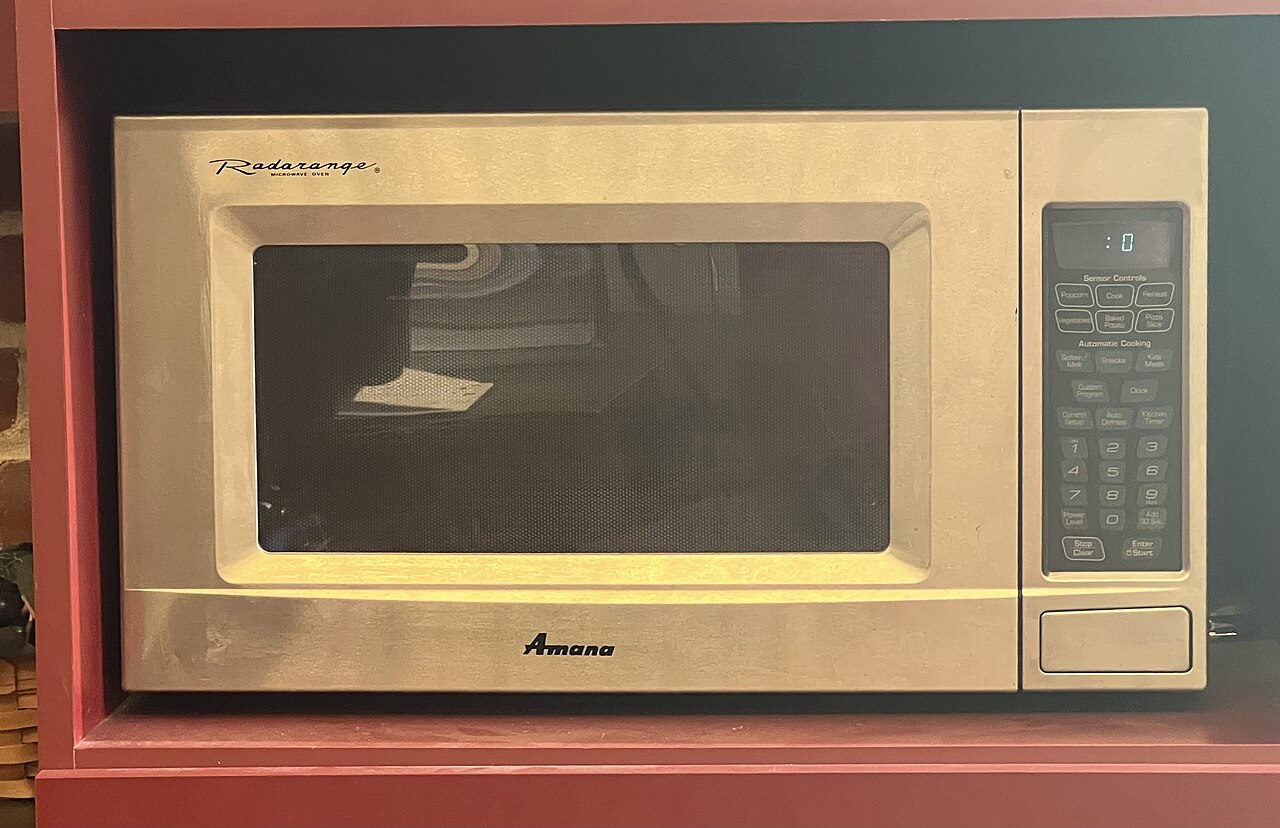
Spencer realised that the microwaves used for radar were heating the food, and the microwave oven was born from that observation. The first commercial models, which appeared in the years after the war, were enormous, expensive, and water-cooled—tall as a person and far too costly for a home. It took decades of refinement to shrink the technology and bring the price down to the point where, by the 1970s and 80s, the countertop microwave became an affordable fixture in ordinary kitchens. A device born from a melted chocolate bar and a piece of military radar gear had become one of the most common appliances on Earth.
How it actually heats your food
Here is the genuinely clever part. Microwaves are a form of electromagnetic radiation—the same broad family as radio waves, visible light, and infrared—but at a particular frequency that does something special to water. To understand it you need one fact about water: a water molecule is electrically lopsided, with a slightly positive end and a slightly negative end. Scientists call this a polar molecule.
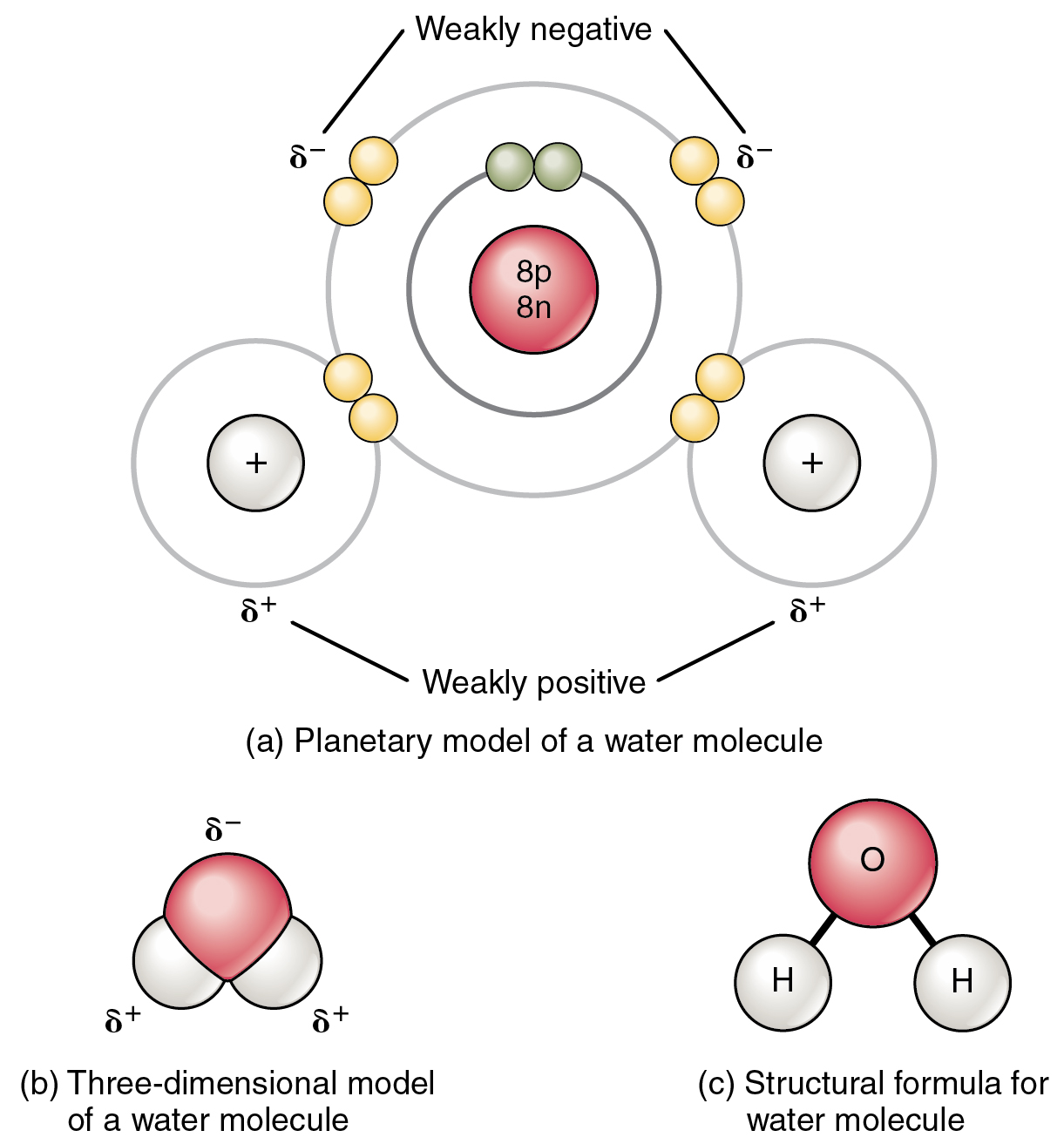
The microwaves inside the oven are an electromagnetic field that flips its direction billions of times every second. Because water molecules are electrically lopsided, they try to align themselves with this rapidly flipping field, twisting back and forth furiously to keep up. That frantic molecular jiggling is heat—temperature, at the smallest scale, is simply how fast molecules are moving. So the microwaves do not “add heat” in any conventional sense; they make the water molecules in your food vibrate violently, and that vibration is the warmth you feel. This is why foods high in water heat quickly and why very dry materials, or items with no water at all, barely warm up.
It also explains one of the appliance’s quirks. Because the energy targets water specifically, the microwave is brilliant at heating moist food fast but useless at browning or crisping it, since browning requires the very high surface temperatures that only dry heat produces. A microwaved chip is hot and soggy, never crisp. The microwave excels at one job—rapidly heating water-containing food—and is poor at almost everything else a conventional oven does well.
The magnetron: the heart of the machine
The component that actually produces the microwaves is the magnetron, and it is the same fundamental device invented for radar. It is a sealed metal cylinder, usually with cooling fins, that takes in high-voltage electricity and converts it into a stream of microwaves at the precise frequency that excites water. It does this using a carefully shaped cavity and a strong magnet that forces electrons to whirl around in a way that radiates microwave energy—an elegant piece of physics packed into a fist-sized lump of metal.
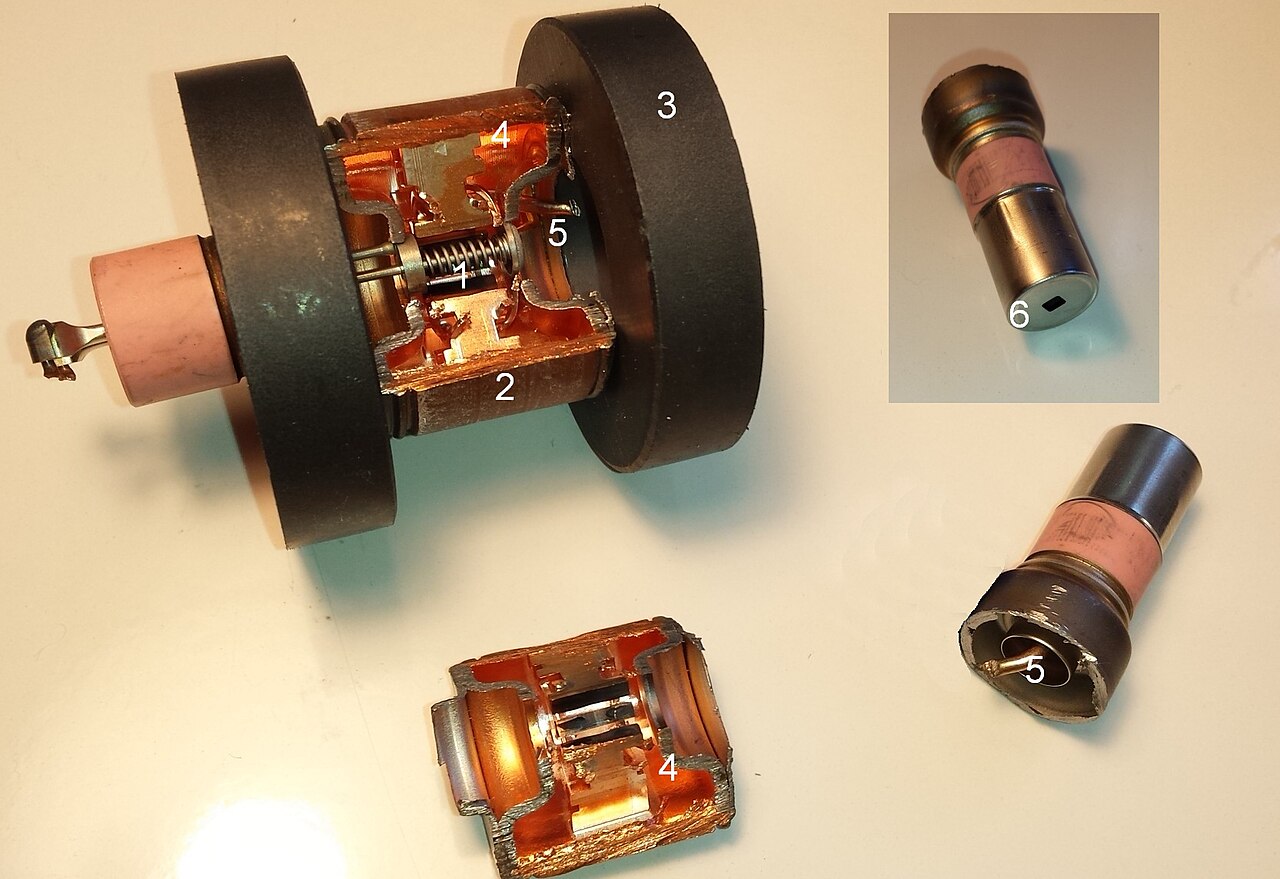
The microwaves the magnetron generates are funnelled through a metal channel called a waveguide into the cooking chamber, where they bounce around off the metal walls and pass through the food. The magnetron is the part that needs serious electricity, which is why a microwave draws a lot of power despite its small size, and it is the component most likely to eventually fail in an ageing oven. It is a remarkable thought that the device gently warming your leftovers is a direct descendant of the equipment that once scanned the skies for enemy aircraft.
A tour of the parts inside
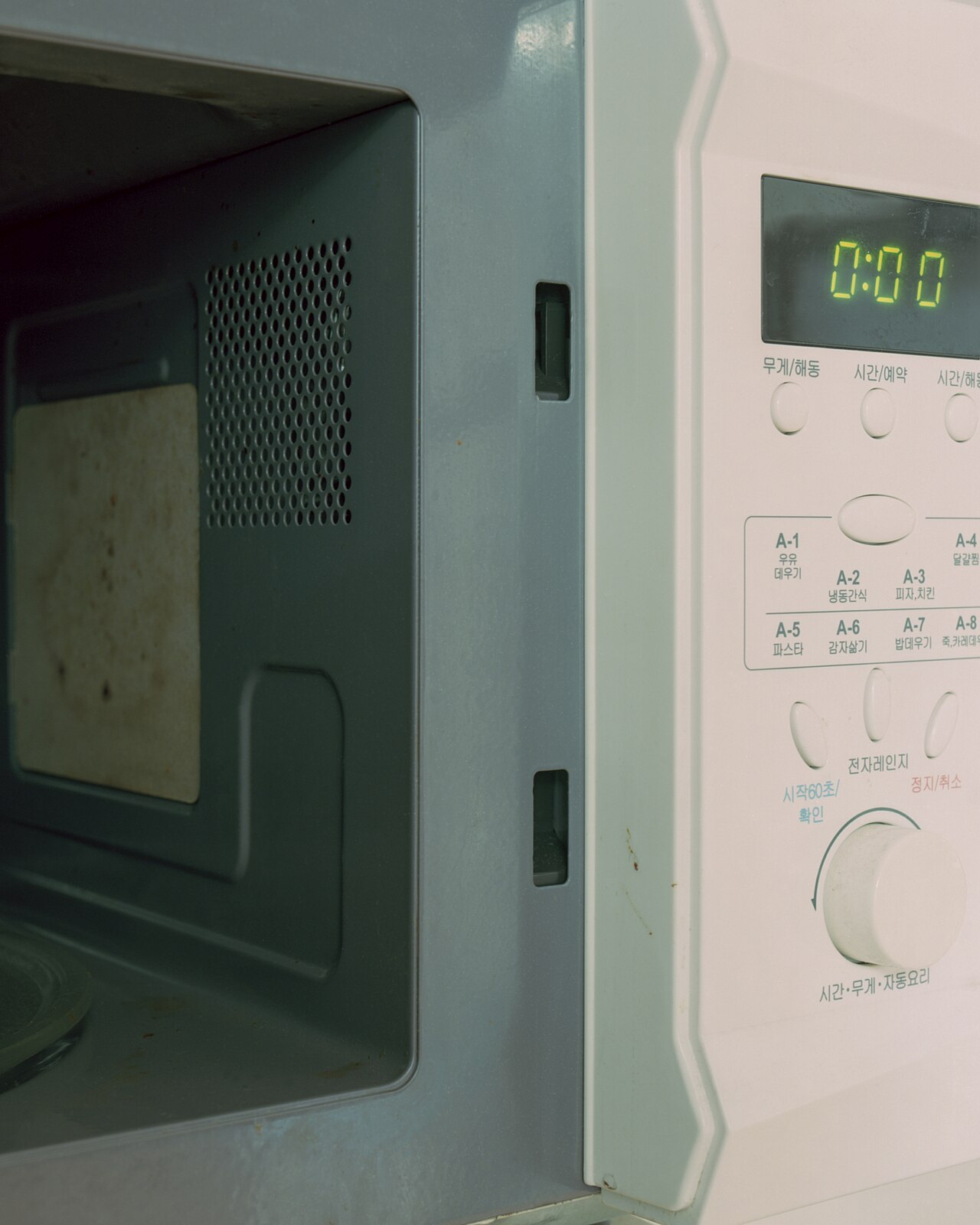
Beyond the magnetron, a microwave is a fairly simple machine. The cooking chamber is a metal box, and the metal is crucial: microwaves cannot pass through it, so they stay trapped inside, bouncing around until they are absorbed by the food. The window in the door looks transparent, but it has a fine metal mesh embedded in it, with holes small enough to block the relatively large microwaves while letting visible light through—which is how you can watch your food without the energy escaping.
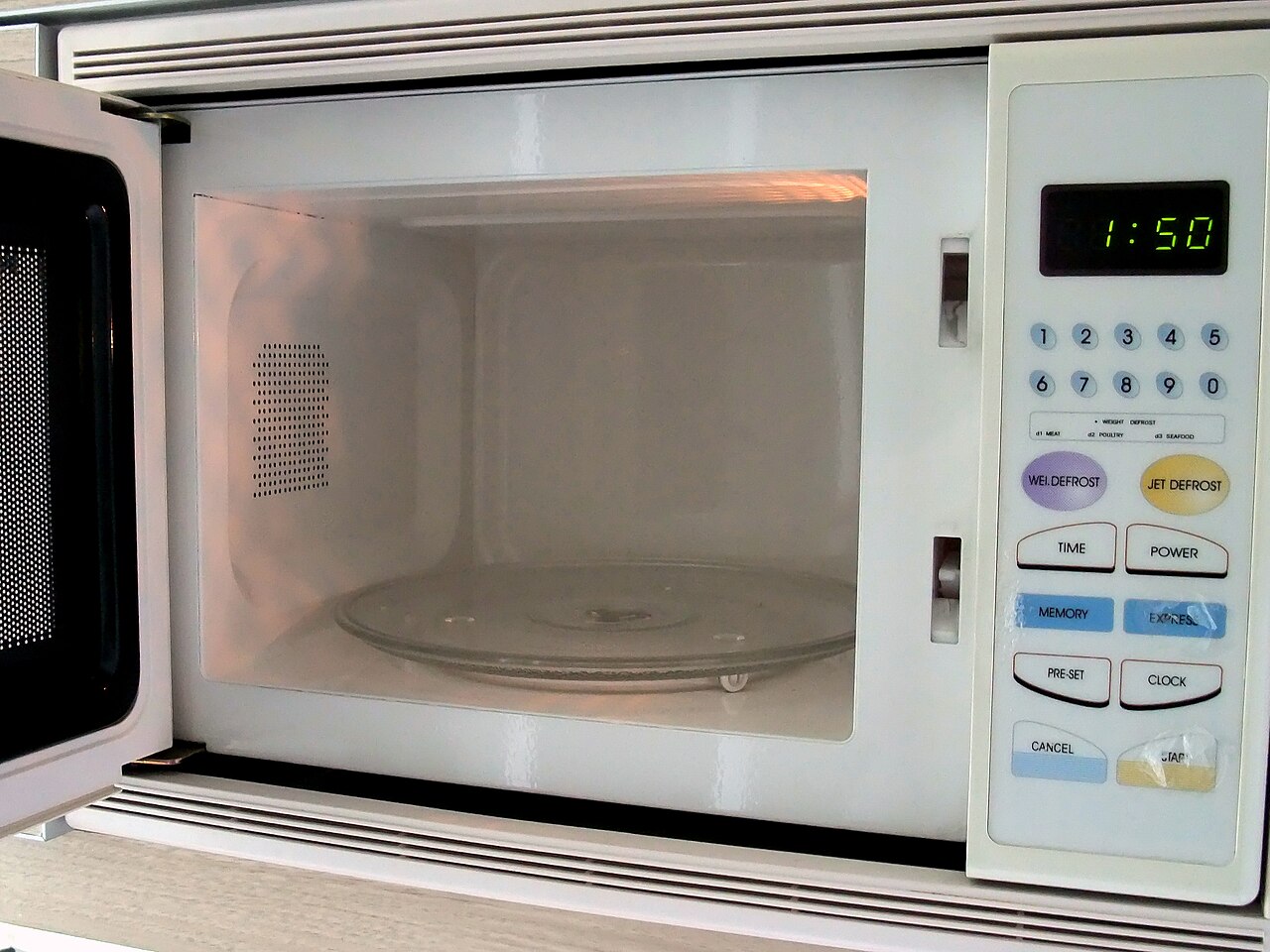
The familiar turntable solves a real problem. Because the microwaves bounce around and form a fixed pattern of stronger and weaker spots inside the chamber, some places cook faster than others. Spinning the food slowly on the turntable moves it through these hot and cold zones so it heats more evenly. A transformer steps the household voltage up to the high level the magnetron needs, a cooling fan keeps the magnetron from overheating, and a set of safety interlock switches instantly cuts the power the moment the door is opened—a vital feature we will come back to. The control panel at the front is a small computer that simply tells the magnetron how long and how powerfully to run.
Cold spots, spinning plates, and common myths
The uneven heating most people grumble about is not a fault—it is a direct consequence of the physics. The microwaves form a standing-wave pattern in the chamber, with peaks of intense energy and troughs of almost none, rather like the way ripples in a pond can reinforce or cancel each other. Food sitting in a peak heats fast; food in a trough barely warms. This is precisely why stirring food halfway through and letting it stand for a moment afterwards genuinely helps: it lets the heat even out by conduction. Setting a lower power level does not actually reduce the strength of the microwaves; instead the oven simply switches the magnetron on and off in cycles, giving the heat time to spread between bursts.
One of the most persistent myths is that microwaving destroys the nutrients in food. In reality, all cooking affects nutrients to some degree, and because microwaving is so fast and often uses little or no water, it can actually preserve certain vitamins better than prolonged boiling, which leaches them away. The microwave is not some uniquely destructive force; it is, if anything, one of the gentler ways to heat many foods.
Is it safe? Radiation, metal, and real risks
The word “radiation” frightens people, but it is badly misunderstood. Radiation simply means energy travelling as waves, and it comes in two broad types. Ionising radiation, like X-rays and the radiation from nuclear material, carries enough energy to damage atoms and DNA, and is genuinely dangerous. Microwaves are non-ionising—the same low-energy category as the radio waves and visible light around you all day. They cannot make your food or your body radioactive, and they do not damage cells in that way. A microwaved meal is in no sense irradiated in the dangerous sense of the word.
The real safety of the appliance comes from keeping the microwaves contained, which the metal box, the mesh-lined window, and the door interlocks all do extremely effectively—the energy simply stops the instant the door opens. The genuine hazards are mundane ones. Metal objects can cause sparks, because microwaves induce strong electrical currents in them that can arc and damage the oven. Sealed items like whole eggs can build up steam pressure and burst. And water can superheat past its boiling point without bubbling, then erupt violently when disturbed. These are real risks worth respecting, but they have nothing to do with mysterious radiation and everything to do with simple physics.
Clever things to do with it beyond reheating
Most people use a microwave for a tiny range of tasks, but it is more versatile than its reputation suggests. It is excellent for steaming vegetables in a covered bowl with a splash of water, cooking them fast while keeping more of their colour and nutrients than boiling. It can quickly soften butter, melt chocolate gently in short bursts, and revive stale bread for a few seconds. A damp sponge heated for a minute is sterilised by the steam, and a lemon warmed briefly gives far more juice.
The appliance does have firm limits, all flowing from the same physics. It cannot brown or crisp anything, so it will never replace an oven for a roast or a grill for a steak. It struggles with large, dense items where the centre stays cold, and it is poor at anything requiring dry heat. Knowing what it is genuinely good at—fast heating of moist food and a handful of gentle melting and steaming jobs—and what it simply cannot do is the key to getting the most from the box on your counter.
Where the microwave goes next
The microwave has changed surprisingly little in decades, but recent advances are addressing its oldest weakness: uneven, imprecise heating. Newer ovens are starting to replace the traditional magnetron with solid-state technology, using semiconductor components much like those in a phone or radio transmitter to generate microwaves. This allows far finer control—steering the energy to different parts of the food and adjusting it precisely—which could finally banish cold spots and even allow a microwave to brown and cook unevenly shaped meals properly.
Combination appliances that pair microwave speed with conventional or grilling heat are also becoming common, trying to deliver the best of both worlds. And like everything else in the kitchen, microwaves are sprouting sensors and connectivity, able to detect when food is done by sensing the steam it gives off and adjust automatically. Whatever refinements arrive, the underlying magic stays the same: a stream of invisible waves, born from wartime radar and discovered by a melted chocolate bar, reaching silently into your food to make its very molecules dance with heat. For all our suspicion of it, it remains one of the most genuinely ingenious machines we have ever casually parked on a kitchen counter.